An Indonesian meal has no separate courses. Steamed rice sits in the middle of the table, surrounded by a few dishes to share: meat or fish, a vegetable dish, often a soup, and always a small bowl of sambal, the chilli sauce found on every Indonesian table. People usually eat with a spoon in the right hand and a fork in the left, and there are no knives, because the food is already cut into small pieces. Cooking differs from island to island: rich, spicy coconut dishes from the Minangkabau of West Sumatra, sweeter food in Central Java, and pork dishes in Hindu Bali, while the long history of trade shows in dishes brought by Chinese, Indian, Arab and Dutch influences. In 2018 the tourism ministry promoted five national dishes: soto, satay, nasi goreng, rendang and gado-gado.
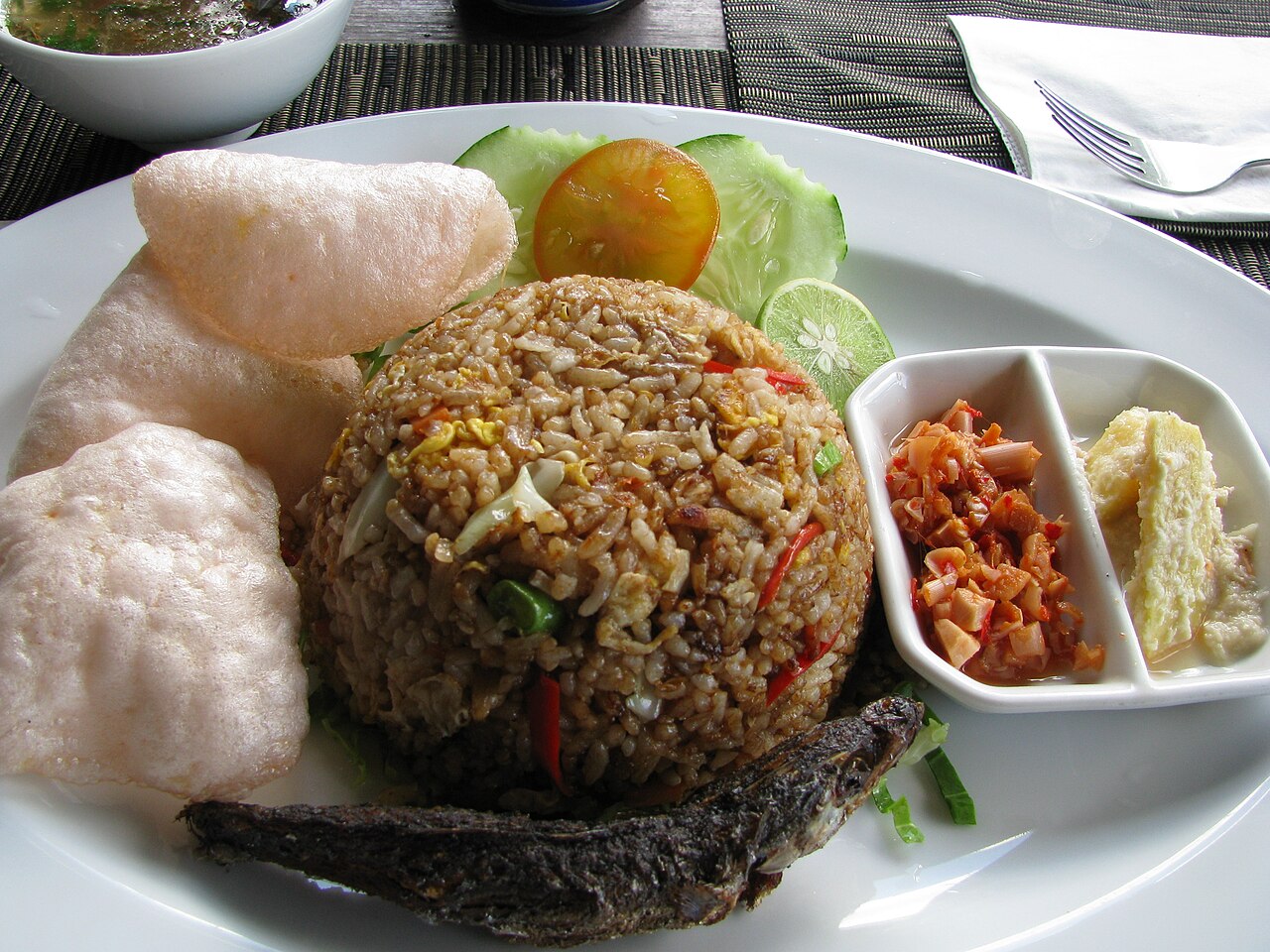
Fried rice, the everyday dish of Indonesia. Cooked rice (often from the day before) is stir-fried with shallots, garlic, chilli and kecap manis, a thick, sweet soy sauce, and topped with a fried egg, crispy fried shallots, cucumber and prawn crackers. People eat it for breakfast, lunch or a late supper from a street cart.
Kecap manis, the sweet soy sauce that gives nasi goreng its dark colour, was developed in Indonesia by adding plenty of local palm sugar to soy sauce.
The Minangkabau people of West Sumatra (also loved in Malaysia and Singapore)
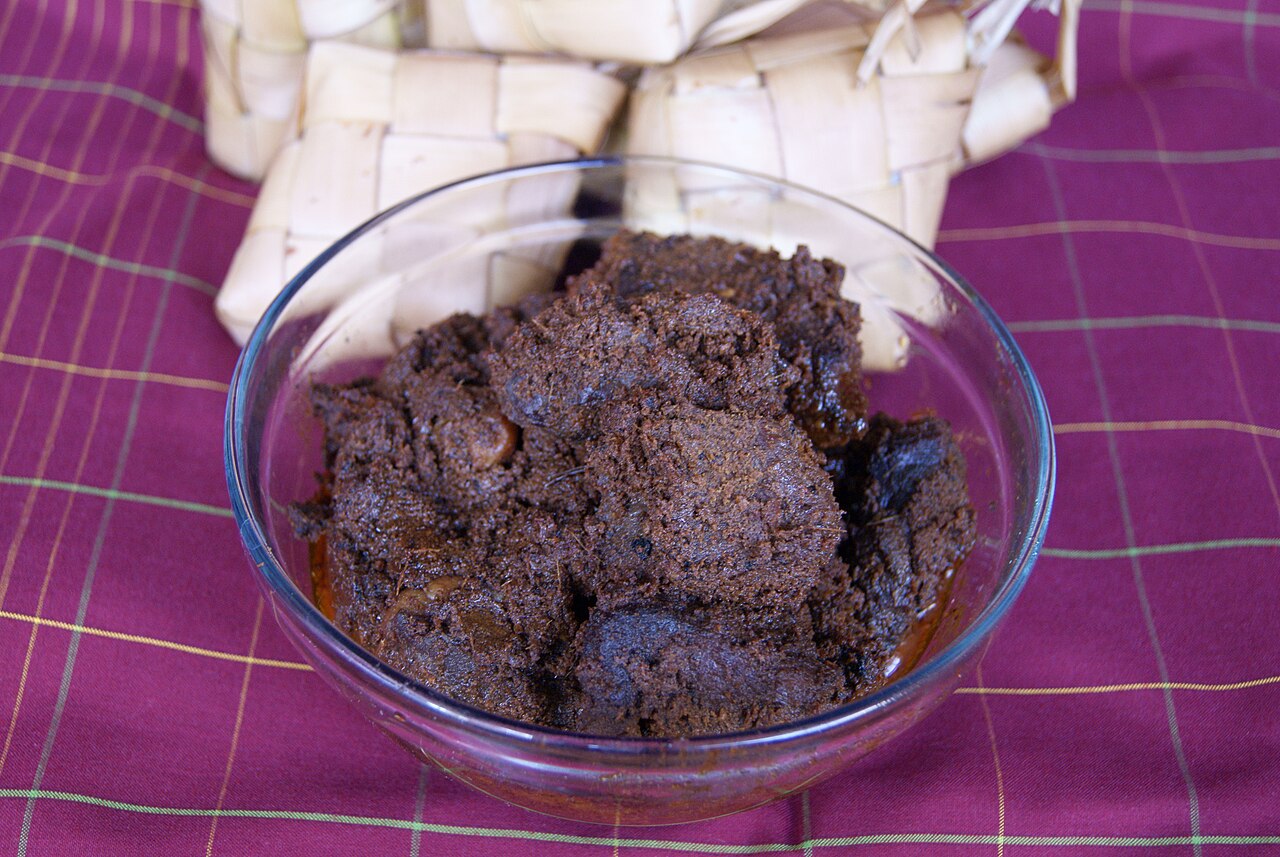
Beef slowly cooked for hours in coconut milk with ginger, galangal, lemongrass, turmeric and chilli, until the liquid has gone and the dark, spicy paste clings to the meat. Traditional rendang is almost dry, which helped it keep for a long time; it is served at weddings, festivals and Eid.
In a 2011 worldwide online poll by CNN International, rendang was voted the most delicious dish in the world.
Port cities of Java and Sumatra, now everywhere in Indonesia
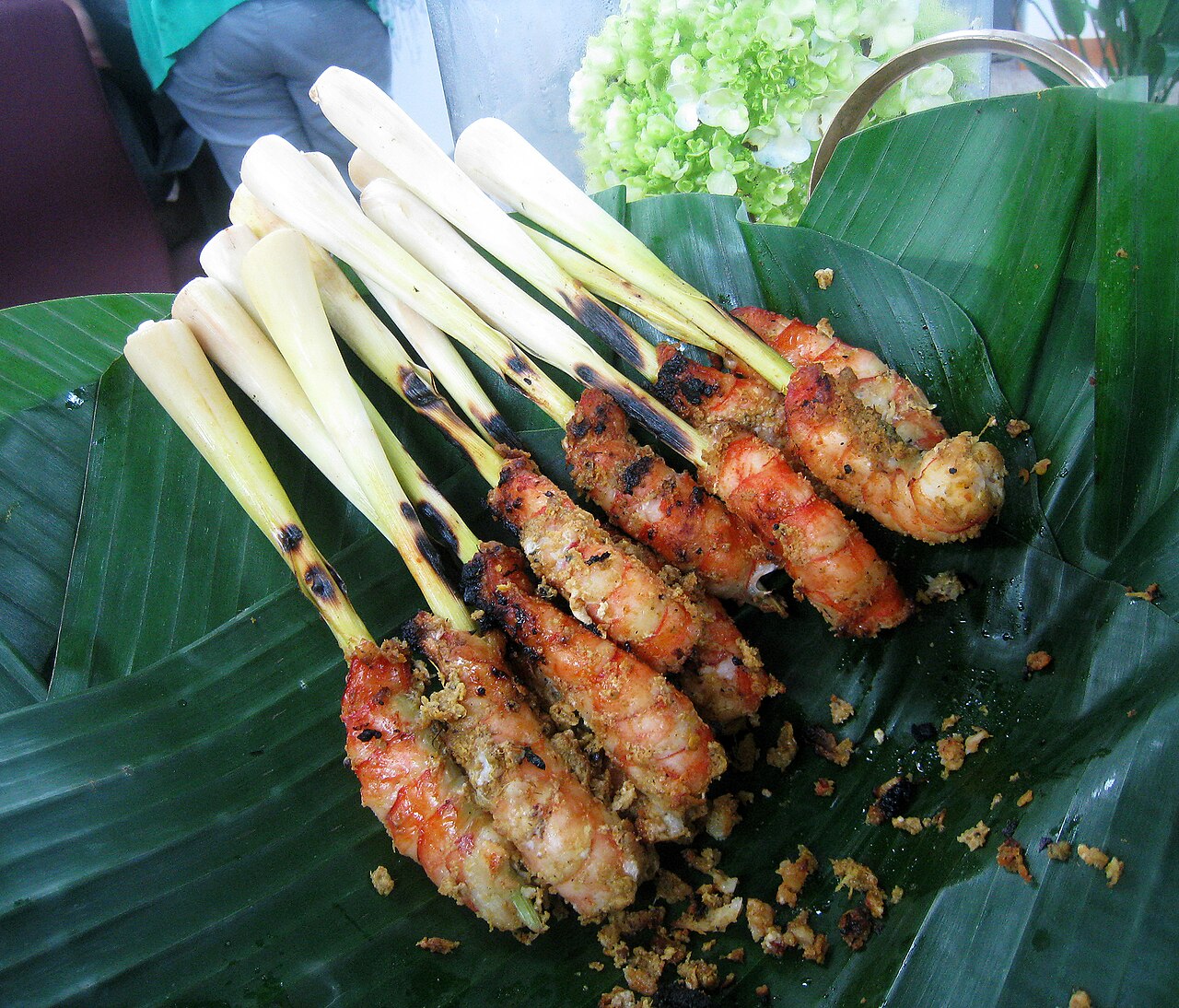
Small pieces of marinated chicken, goat or beef threaded on bamboo skewers and grilled over charcoal, usually served with a peanut sauce, rice cakes and sliced shallots. Satay sellers fan the glowing coals on their street carts in the evening. Sate Madura, from the island of Madura, is one of the best known styles.
Satay was shaped by many visitors: kebabs brought by Muslim traders, Indian spices and Chinese bamboo skewers all came together in the ports of the islands.
West Java and Jakarta (Sundanese and Betawi cooking), now all over Indonesia
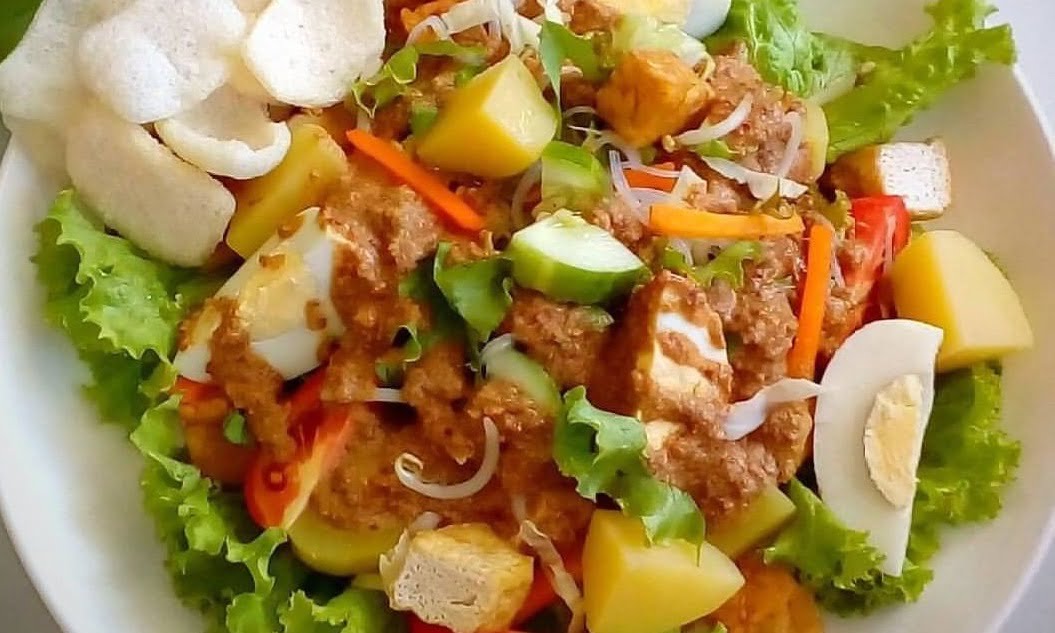
A warm salad of lightly boiled vegetables such as long beans, cabbage, bean sprouts and spinach, with potato, hard-boiled egg, fried tofu, tempeh and rice cake, all covered with a rich peanut sauce and topped with crispy crackers.
The name is often linked to 'digado', to eat something without plain rice, which is why gado-gado comes with rice cake instead.
Java, with many regional versions across Indonesia
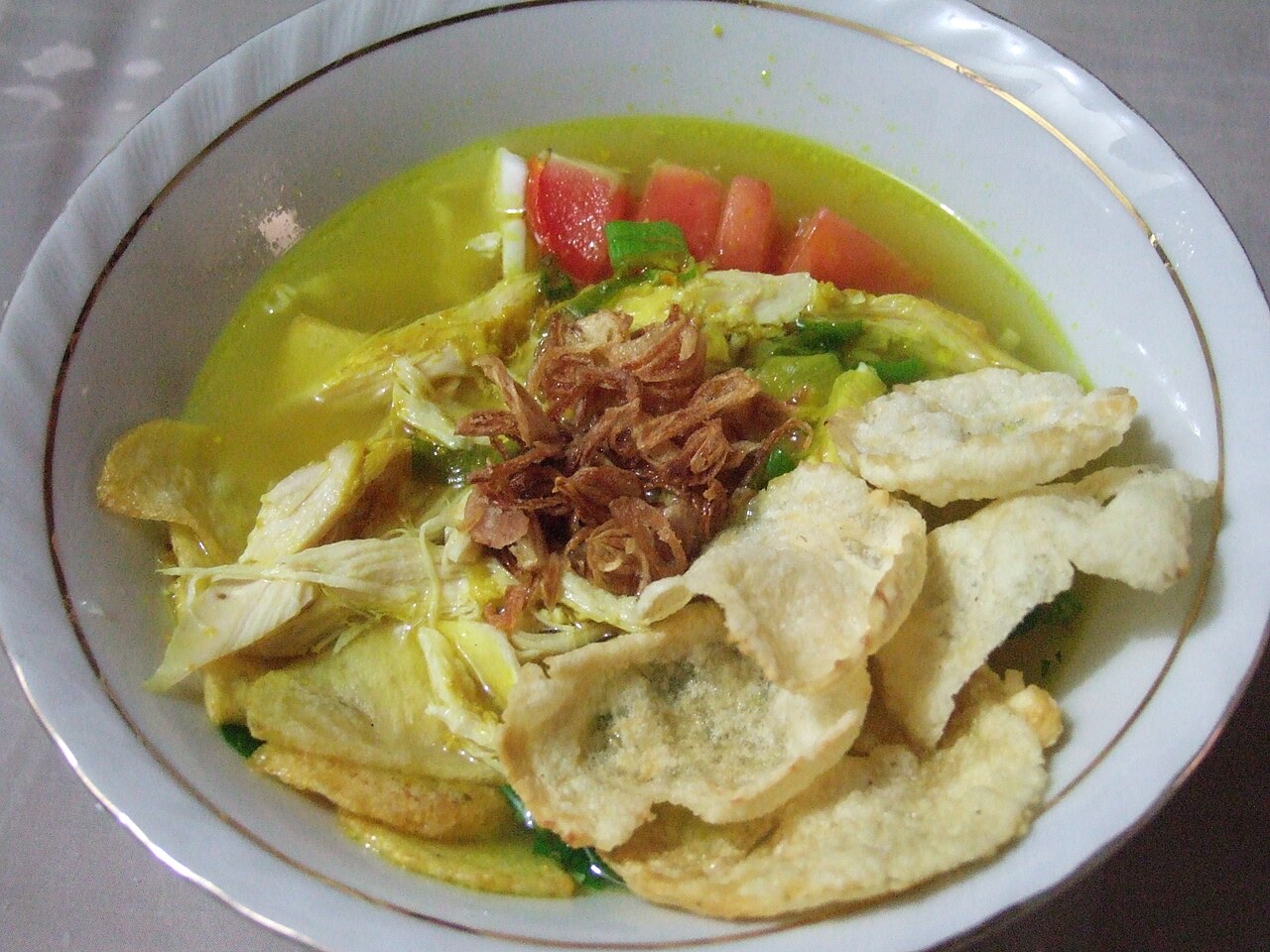
A fragrant yellow chicken soup coloured with turmeric and flavoured with lemongrass, ginger and lime leaves, served with shredded chicken, rice noodles, bean sprouts, boiled egg and fried shallots. Almost every region has its own soto, some clear, some with coconut milk.
One theory says soto grew from a Chinese tripe soup, caudo, sold in Semarang in the 1600s; others think it is a mix of Chinese, Indian and local cooking.
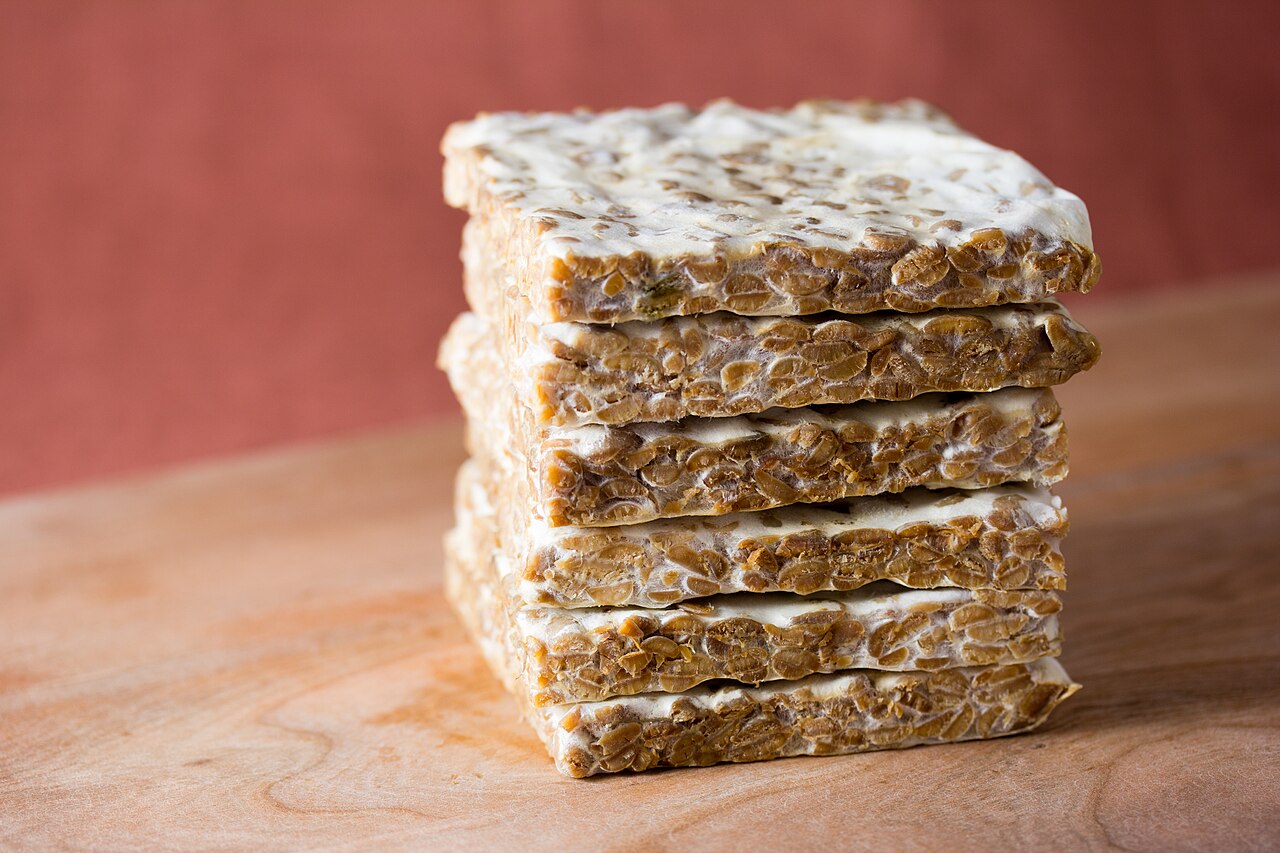
A firm cake of whole soybeans, fermented with a mould that binds them together. It has a nutty, earthy taste and is sliced and fried, simmered in sweet soy sauce or added to curries. Tempeh is an everyday source of protein across Java and a favourite of vegetarians around the world.
Unlike tofu, which is made from soy milk, tempeh keeps the whole bean, so it has more protein and fibre.
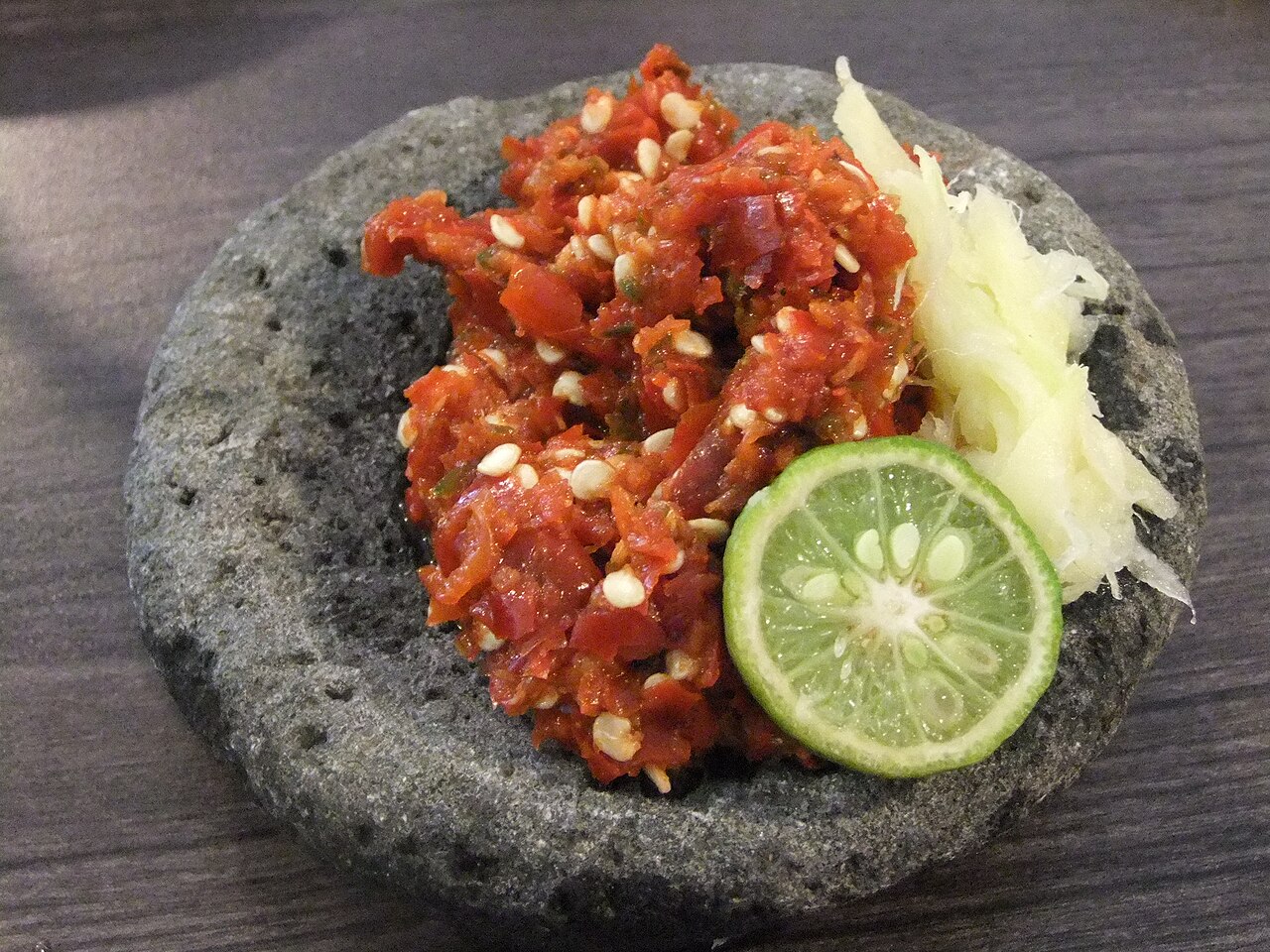
A chilli sauce or paste, usually ground by hand in a stone mortar with shallots, garlic, salt and often lime juice or tomato. Sambal terasi adds fried shrimp paste. There is a small dish of sambal on almost every Indonesian table, and people add as much as they like.
Between 212 and 300 different kinds of sambal have been reported across the islands, from mild to extremely hot.
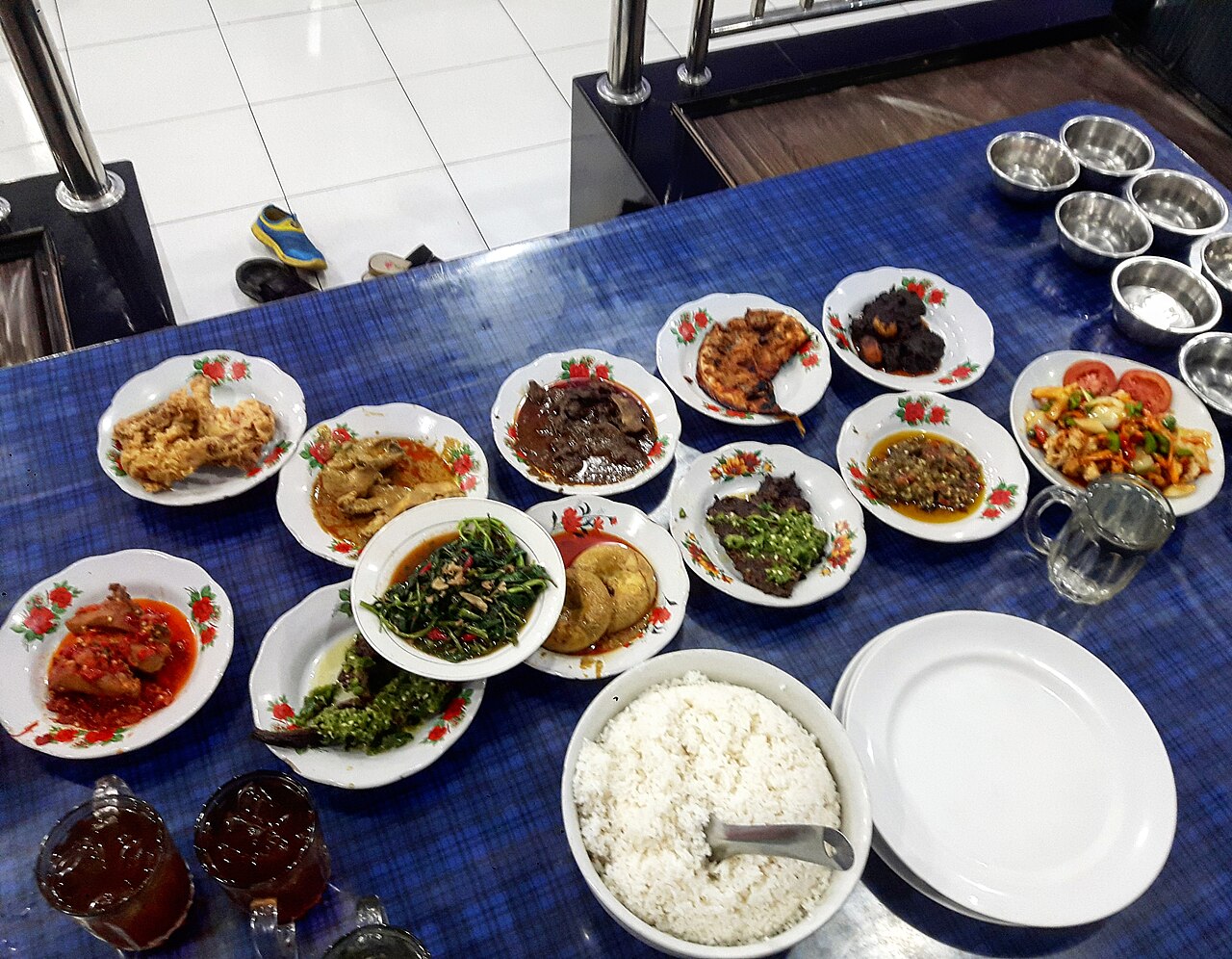
Rice served with a choice of rich, spicy Minangkabau dishes such as rendang, curried chicken, fish and cassava leaves. In Padang restaurants the dishes are stacked high in the front window.
In a traditional 'hidang' Padang restaurant you do not order: the waiter covers the table with many small plates, and you pay only for what you eat.
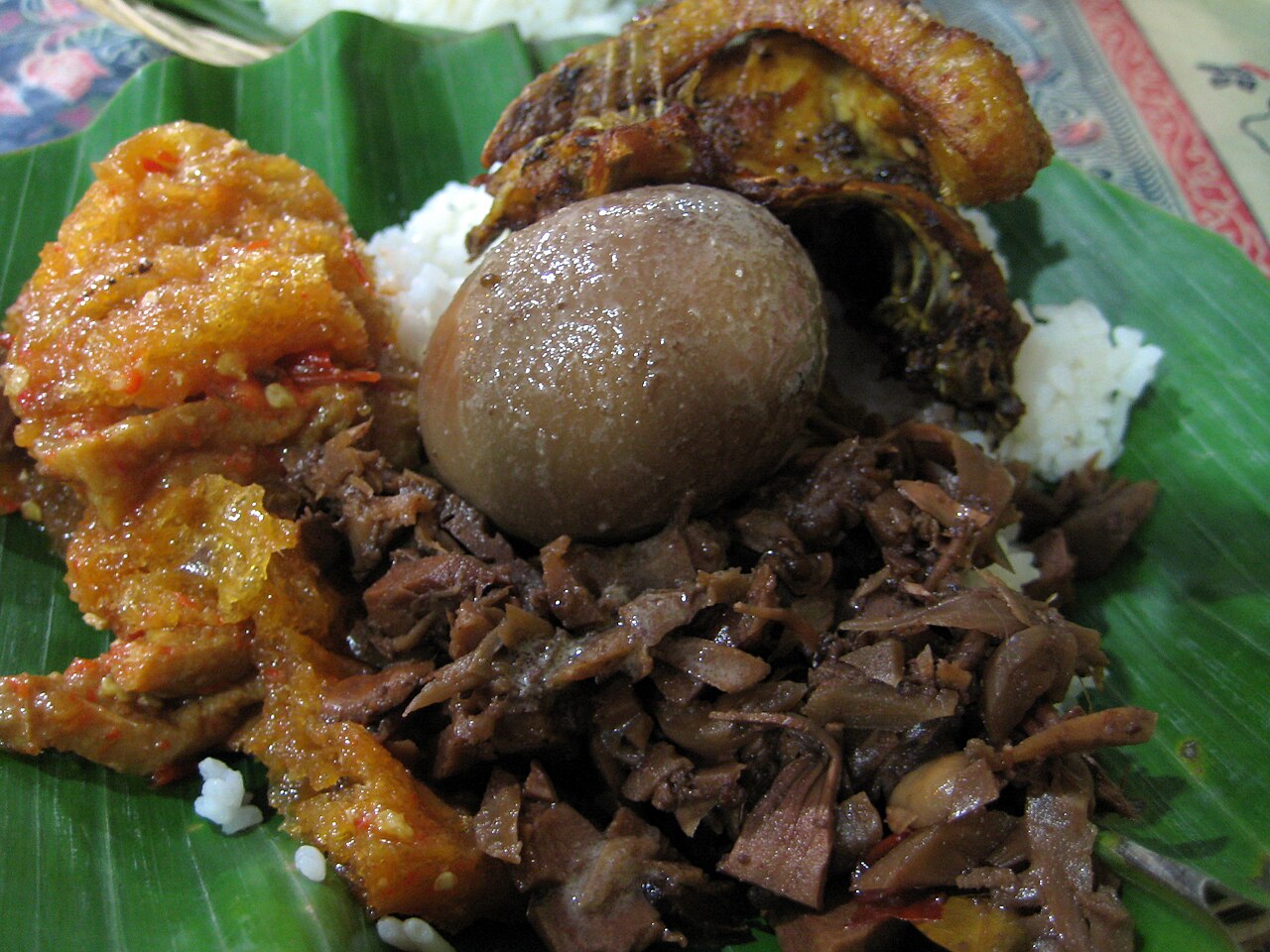
Young, unripe jackfruit stewed for several hours with palm sugar, coconut milk and spices until soft, sweet and brown. It is served with rice, chicken, egg and a spicy stew of beef skin.
Teak leaves are often cooked with the jackfruit, and they give gudeg its reddish-brown colour.
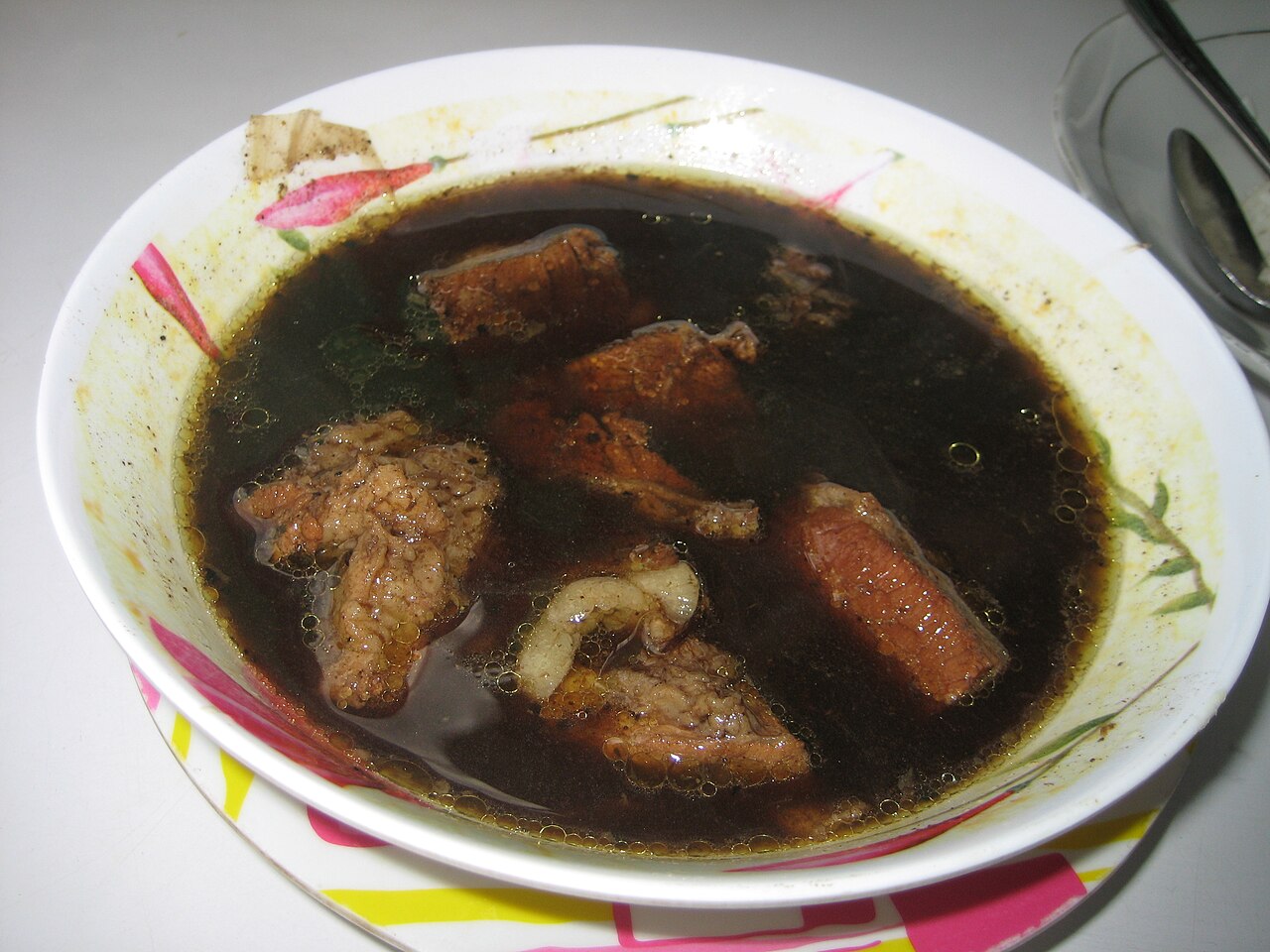
A beef soup made almost black by keluak, the seed of a tropical tree, which gives it a deep, nutty flavour. It is served with rice, bean sprouts, salted egg and prawn crackers.
Fresh keluak seeds contain a poison, hydrogen cyanide, and are made safe to eat by boiling and then fermenting them before they are sold for cooking.
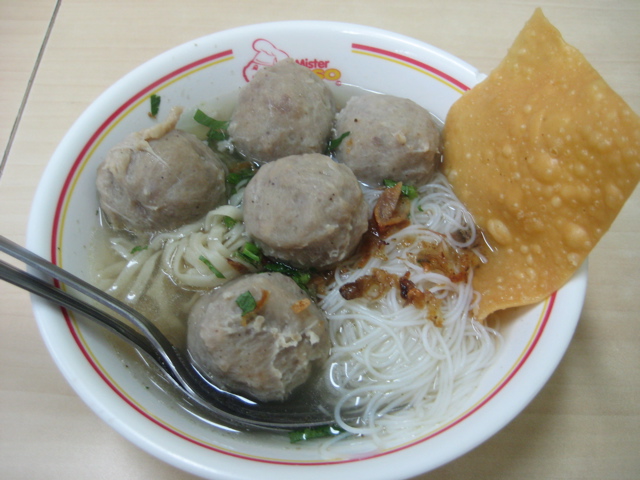
Soft, springy beef meatballs served in a clear hot broth, often with noodles, tofu and fried shallots. Bakso sellers push their carts through towns and villages, and many people enjoy it as an afternoon snack.
The word bakso can mean a single meatball or the whole bowl of meatball soup.
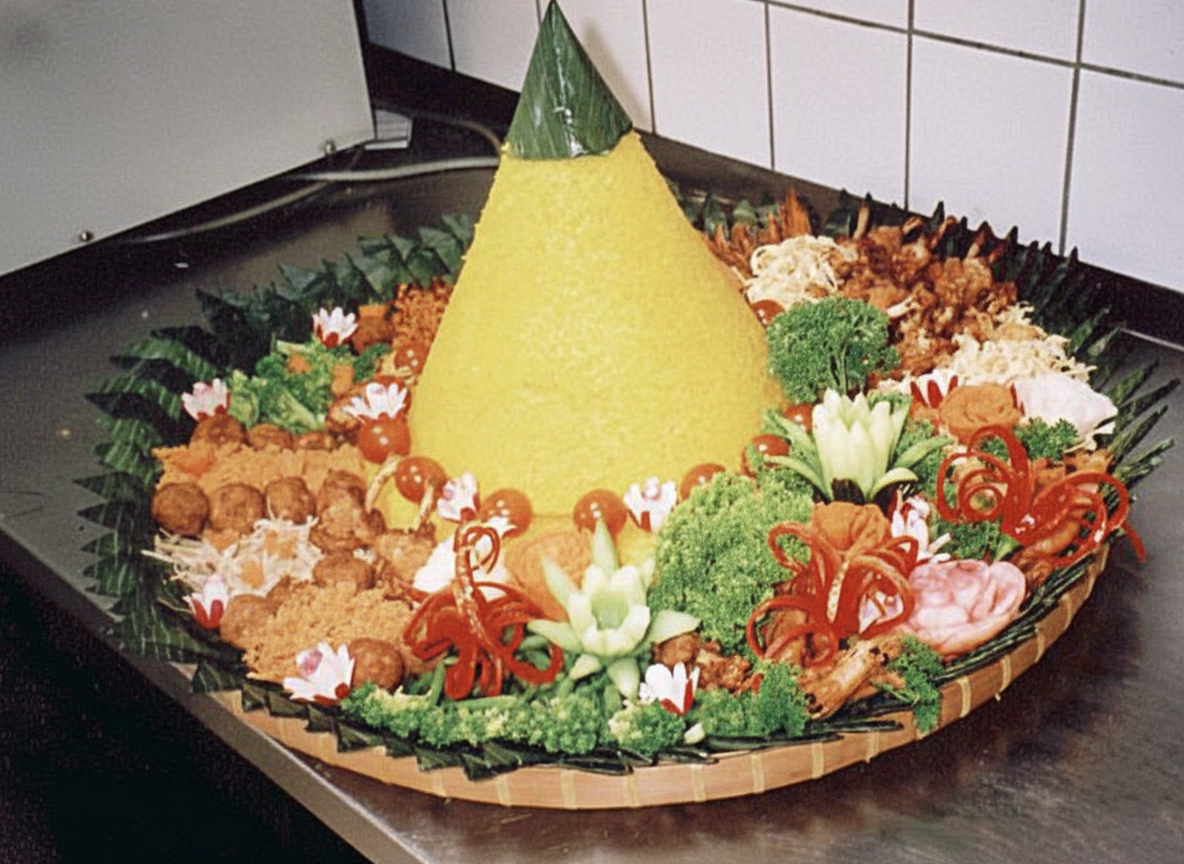
A tall cone of rice, often yellow with turmeric, set on a round bamboo tray and surrounded by vegetables, chicken, egg and other dishes. It is made for celebrations such as birthdays and parties, and for the slametan, a traditional communal feast.
Tumpeng is a symbol of gratitude. In the folklore of Java and Bali, the cone stands for life and the glory of God as the creator of nature, and the dishes around it for the harmony of nature.
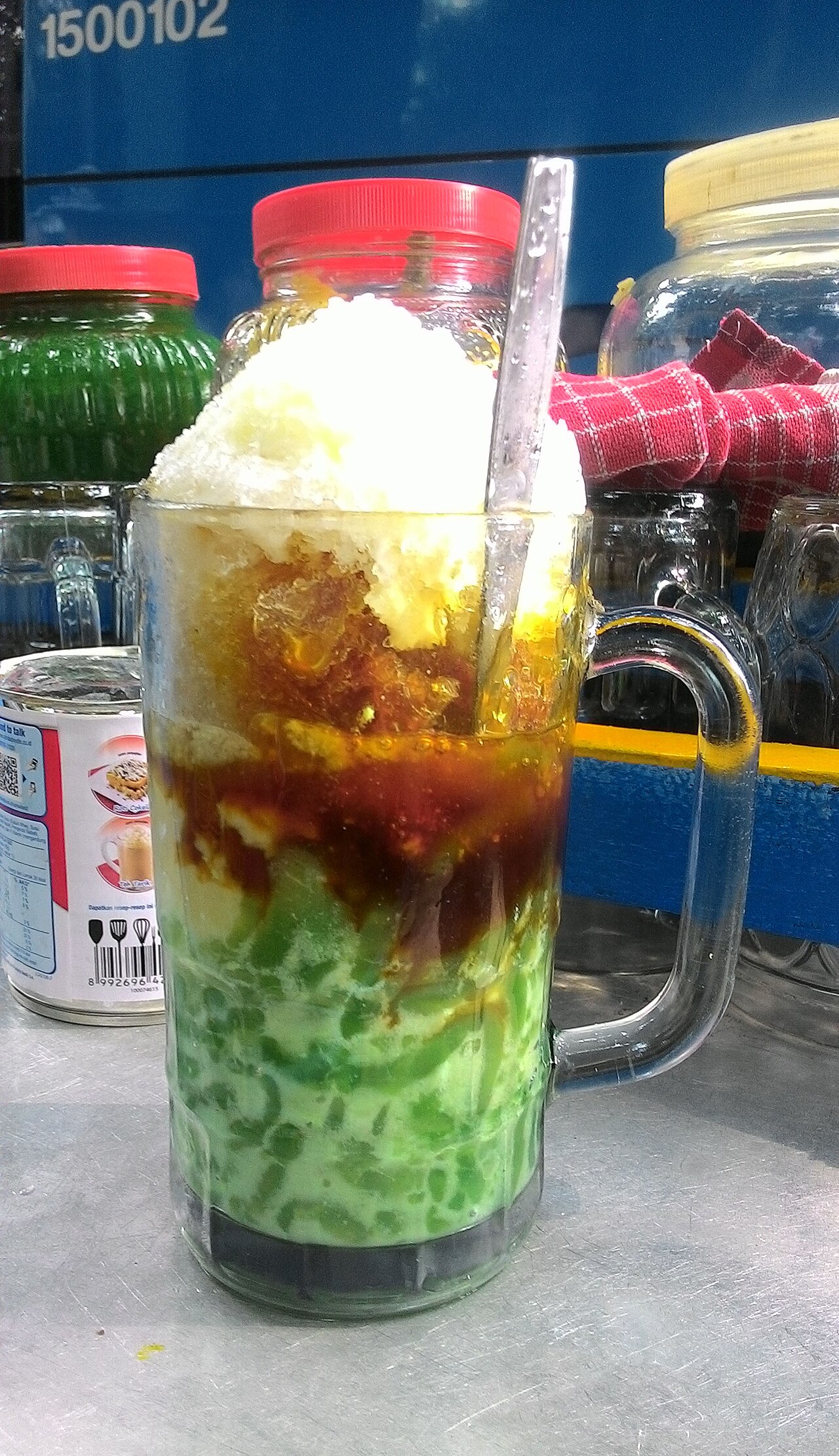
Soft green jelly strands flavoured with pandan leaf, served in coconut milk with palm sugar syrup and shaved ice. It is a favourite cold drink and dessert on a hot afternoon.
Traditional markets across Indonesia (also Malaysia and Singapore)
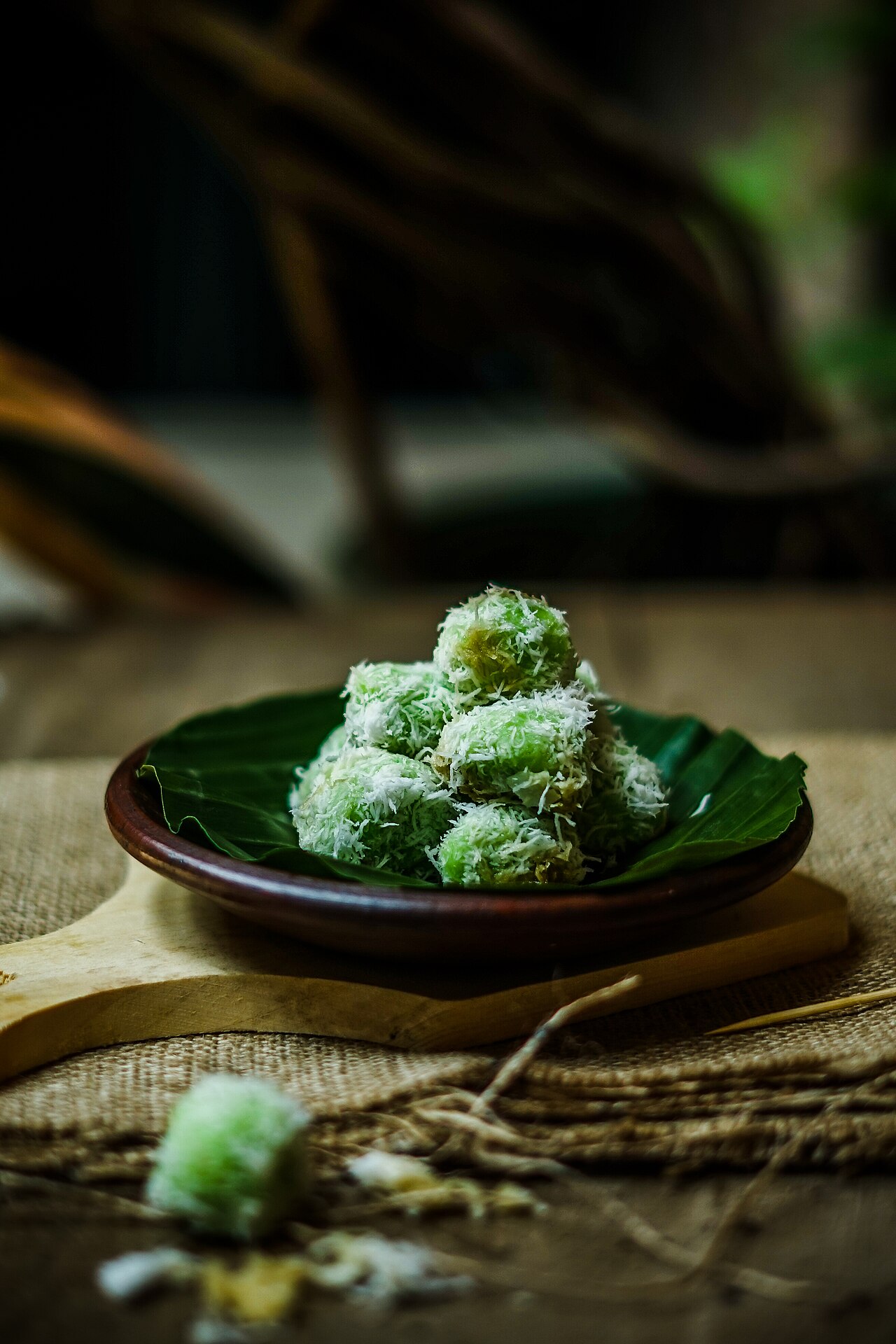
Small green balls of glutinous rice flour, coloured with pandan, filled with palm sugar and rolled in grated coconut. When you bite one, the melted sugar bursts in your mouth. They are soft and sticky, so older people and young children should take small bites and chew well.
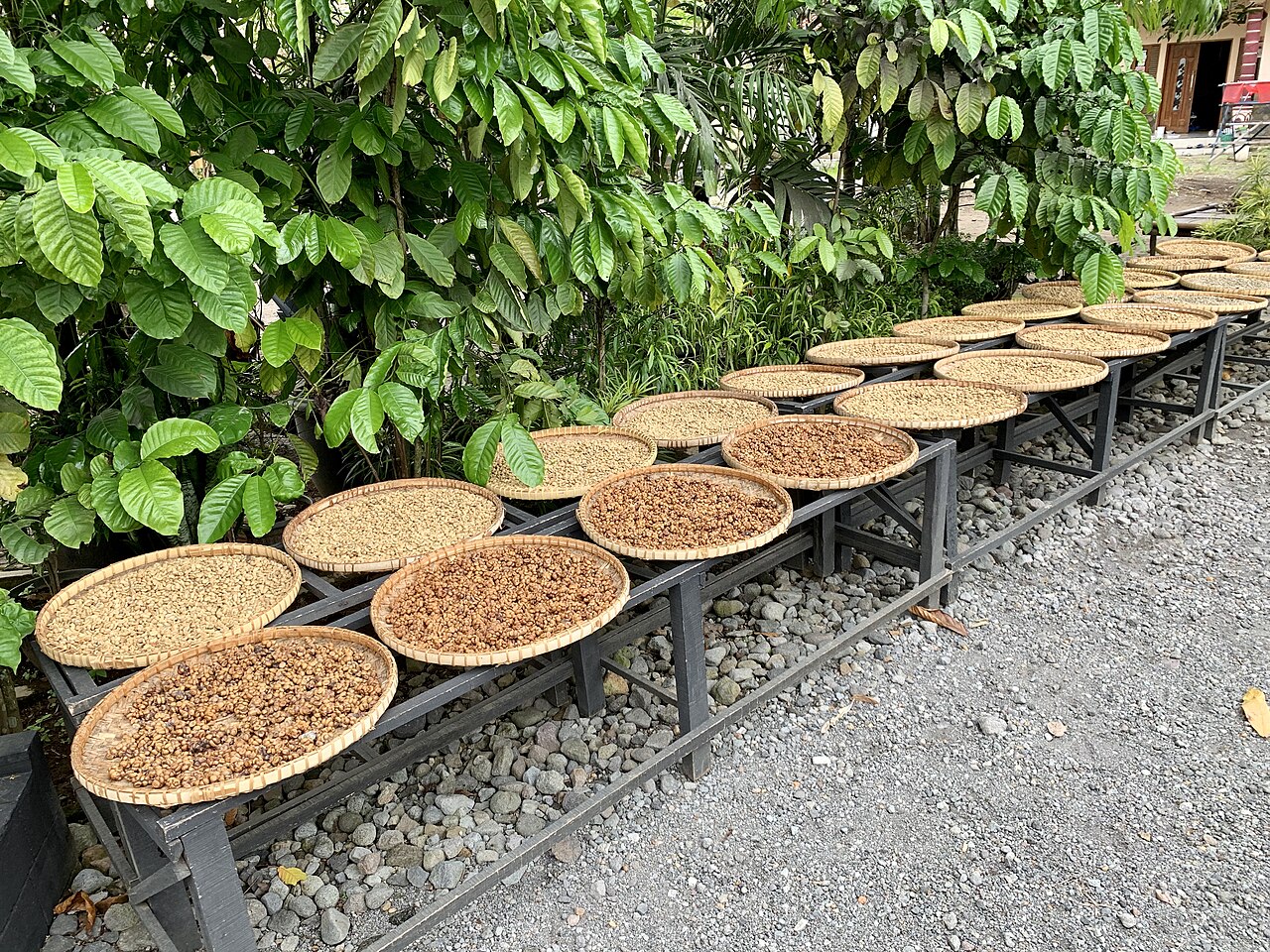
One of the most expensive coffees in the world, made from coffee cherries that have been eaten and passed by the Asian palm civet, a small wild animal. Once the beans were gathered from the droppings of wild civets. Today most kopi luwak comes from civets kept in small cages and force-fed coffee cherries, which raises serious animal welfare concerns. Investigations have also found coffee from caged animals sold as 'wild', so many visitors now choose to skip it and drink ordinary Indonesian coffee instead.
Kopi means coffee and luwak is the Indonesian name for the civet.
At the table in Indonesia
Use your right hand to eat, pass food and hand over money; the left hand is traditionally used for washing and is considered unclean.
Most meals are eaten with a spoon in the right hand and a fork in the left, used to push food onto the spoon. Knives are not normally used at the table.
When eating with your hand, as many people do in Padang restaurants and at home, use only your right hand; a bowl of water with lime is provided for washing your fingers.
Take food from the shared dishes with the serving spoon, not your own hand or spoon.
Many Indonesians are Muslim and do not eat pork or drink alcohol. During the fasting month of Ramadan, try not to eat or drink in front of people who are fasting during the day.