14 fun facts about the Dominican Republic
- 01
Hispaniola is one of only two islands in the Caribbean shared by two countries. The other is Saint Martin, divided between France and the Netherlands.
- 02
The highest point in the Caribbean, Pico Duarte (about 3,100 m), and the lowest, Lake Enriquillo (about 45 m below sea level), are only about 85 km apart.
- 03
Larimar, a sky-blue stone, is found only in the Dominican Republic, in the mountains near Barahona. Its name was made in 1974 from 'Larissa', the finder's daughter, and 'mar', the Spanish word for sea.
- 04
Dominican amber, fossil resin from an extinct tree, is almost always transparent and often holds tiny insects, plants and other creatures trapped millions of years ago.
- 05
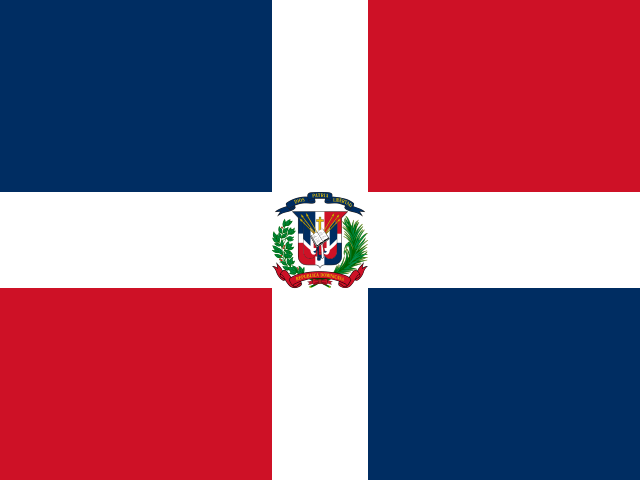
As of 2026, the Dominican flag is the only national flag in the world that shows a Bible. It sits open in the coat of arms at the centre of the white cross.
- 06
A traditional merengue band has three instruments said to stand for the country's three roots: the European accordion, the African tambora drum and the güira, a metal scraper linked to the Taíno. UNESCO listed merengue as Intangible Cultural Heritage in 2016.
- 07
Bachata was once looked down on as music of the poor, and its old name was 'amargue', bitterness, because so many songs are about heartbreak. UNESCO listed it as Intangible Cultural Heritage in 2019.
- 08
Baseball is by far the favourite sport. As of 2026, only the United States has more players in Major League Baseball, and in 2013 the Dominican team won the World Baseball Classic without losing a game.
- 09
The United Nations International Day for the Elimination of Violence against Women, 25 November, marks the date in 1960 when the three Mirabal sisters were murdered by the Trujillo dictatorship.
- 10
Every year from January to March, thousands of North Atlantic humpback whales come to Samaná Bay to give birth and raise their calves.
- 11
On the Samaná peninsula live descendants of free African Americans who arrived in 1824 and 1825, when Haiti ruled the island. Some of their descendants, mostly older people, still speak their own old form of English, Samaná English, which is now endangered.
- 12
The beach town of Sosúa was settled by about 800 Jewish refugees from Germany and Austria who received Dominican visas between 1940 and 1945. The town still has a synagogue and a Jewish museum.
- 13
The country uses the North American telephone system, with the calling code +1 and the area codes 809, 829 and 849. Area code 809 once covered much of the Caribbean.
- 14
The national bird, the palmchat or cigua palmera, lives only on Hispaniola, and the national flower, the Bayahibe rose, grows wild only in the Dominican Republic. The national tree is the West Indian mahogany.
Sources (18)
- Dominican Republic (Wikipedia)
- Pico Duarte (Wikipedia)
- Lake Enriquillo (Wikipedia)
- Area codes 809, 829, and 849 (Wikipedia)
- Mirabal sisters (Wikipedia)
- Merengue music (Wikipedia)
- Bachata (music) (Wikipedia)
- Bachata (Wikipedia en español)
- Baseball in the Dominican Republic (Wikipedia)
- The only country that has the Bible on its flag (Aleteia, 2025)
- Flag of the Dominican Republic (Wikipedia)
- Larimar (Wikipedia)
- Dominican amber (Wikipedia)
- Sosúa (Wikipedia)
- Samaná English (Wikipedia)
- Samaná, town (Wikipedia)
- Samaná Bay (Wikipedia)
- Barahona, Dominican Republic (Wikipedia)
Fun facts from nearby countries
More about the Dominican Republic
- The trip to the Dominican RepublicMap, story, food, phrases and a friendly quiz.
- Dominican foodThe dishes to try, with photos and recipes.
- Dominican Republic triviaQuestions and answers to read aloud or print.
- Dominican Republic word searchCities and dishes in large print.
- Dominican words crosswordLearn a few words while you solve it.
- Colour the flag of the Dominican RepublicPrint it or colour it in on the screen.
- Dominican rootsA family guide: history, recipes and words for the grandchildren.
- Before you goPhrases, customs and tips for travellers.
- Printable packLarge print, with a quiz and answers.