13 fun facts about Ethiopia
- 01
Ethiopia has its own calendar with 13 months: twelve months of 30 days and a short thirteenth month, Pagume, of 5 or 6 days. It runs 7 or 8 years behind the Western calendar: New Year falls on 11 September (12 September in the year before a Western leap year), and on 11 September 2026 the year 2019 began.
- 02
Many Ethiopians count the hours from dawn instead of from midnight. 7 in the morning is '1 o'clock' in Ethiopian time, and noon is '6 o'clock', so to change Western clock time into Ethiopian time you take away 6 hours.
- 03
The Arabica coffee plant grows wild in the forests of southwestern Ethiopia. The story of Kaldi, the goatherd whose goats danced after eating coffee berries, is a legend, not history.
- 04
Lucy, a skeleton of a human ancestor who lived about 3.2 million years ago, was found in the Afar region in 1974. She was named after the Beatles song 'Lucy in the Sky with Diamonds', which was playing in the camp. In Ethiopia she is called Dinkinesh, 'you are marvellous'.
- 05
Amharic is written in its own script, called fidel, which grew out of the ancient Ge'ez script. Each letter stands for a whole syllable, and there are some 280 letters in all.
- 06
At the 1960 Olympic Games in Rome, Abebe Bikila won the marathon running barefoot. He became the first Ethiopian Olympic champion, and in 1964 in Tokyo he became the first person to win the Olympic marathon twice in a row.
- 07
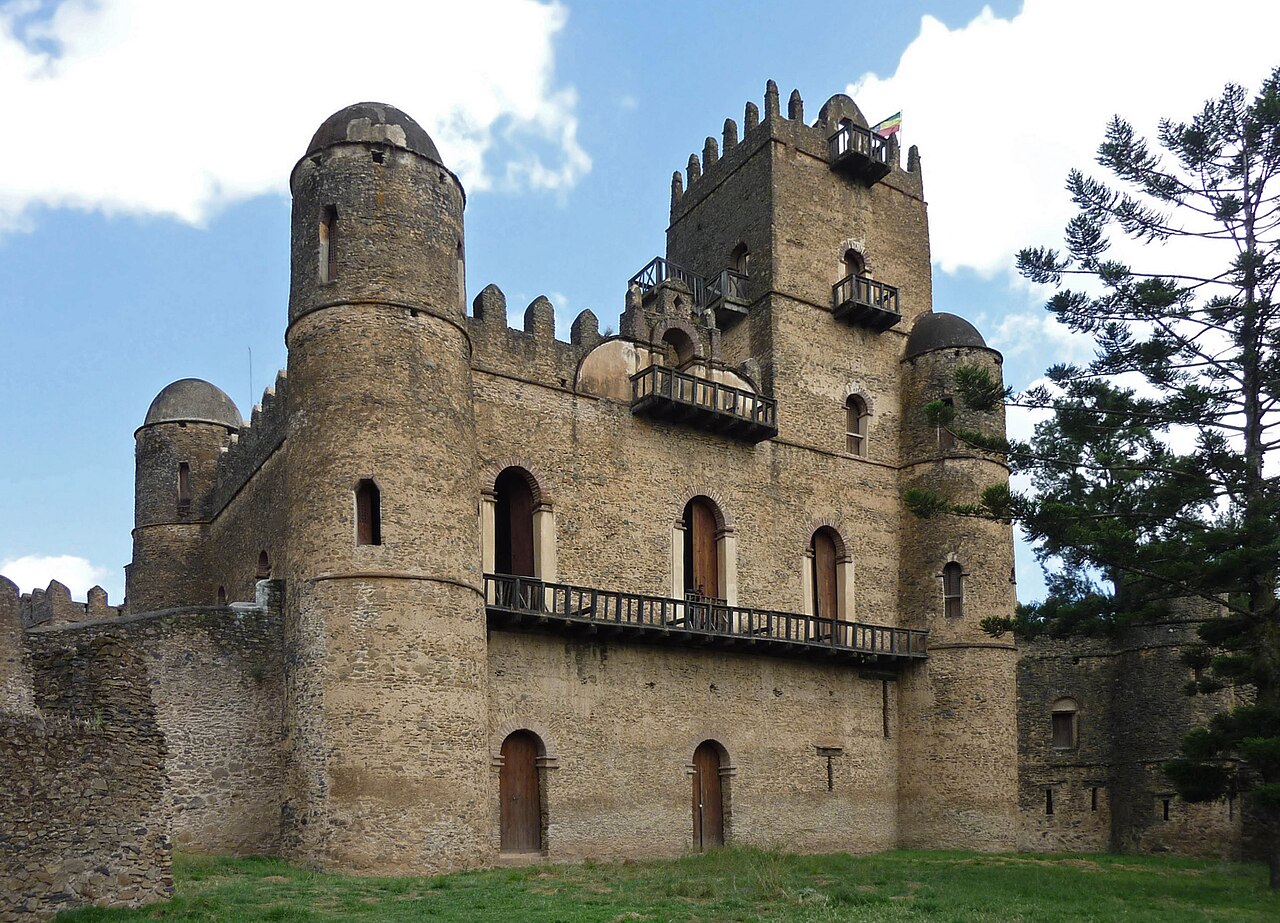
As of 2026, Ethiopia has 12 places on the UNESCO World Heritage List, from the churches of Lalibela to the Bale Mountains. The Meskel festival of the True Cross (added in 2013) and the Timkat festival of Epiphany (2019) are on UNESCO's list of intangible heritage too.
- 08
Dallol, in the Danakil Depression, has the highest average yearly temperature ever recorded for a place where people lived: about 35 °C, measured from 1960 to 1966. The land there lies more than 100 m below sea level and is covered in yellow, green and white salt and sulphur.
- 09
The gelada, a grass-eating monkey with a bright red patch on its chest, lives only in the Ethiopian highlands. The Ethiopian wolf, which also lives only in Ethiopia, is Africa's most endangered carnivore.
- 10
Ethiopian Airlines was founded in 1945 and made its first flights in 1946. As of 2025 it is Africa's largest airline, and Addis Ababa is one of the continent's busiest hubs for connecting flights.
- 11
Teff, the grain used for injera, is one of the smallest grains in the world. It is native to the highlands of Ethiopia and Eritrea and is naturally gluten free.
- 12
The name Abyssinia, once used for Ethiopia in English, comes from Habash, an old name for the people of the northern highlands. The Greek name Aithiopia was used by Homer and Herodotus long before it became the name of this country.
- 13
In June 1936, in exile after Italy's invasion, Emperor Haile Selassie spoke to the League of Nations in Geneva and asked the world to stand by his country. The speech made him a hero to opponents of fascism around the world; Time magazine had already named him its Man of the Year for 1935.
Sources (21)
- Ethiopia (Wikipedia)
- Amharic (Wikipedia)
- Ge'ez script (Wikipedia)
- Ethiopian calendar (Wikipedia)
- Enkutatash (Wikipedia)
- Time in Ethiopia (Wikipedia)
- Haile Selassie (Wikipedia)
- Second Italo-Ethiopian War (Wikipedia)
- Teff (Wikipedia)
- Coffee production in Ethiopia (Wikipedia)
- Kaldi (Wikipedia)
- Dallol (hydrothermal system) (Wikipedia)
- Lucy (Australopithecus) (Wikipedia)
- Abebe Bikila (Wikipedia)
- Ethiopian Airlines (Wikipedia)
- Gelada (Wikipedia)
- Ethiopian wolf (Wikipedia)
- Meskel (Wikipedia)
- Timkat (Wikipedia)
- List of World Heritage Sites in Ethiopia (Wikipedia)
- Ethiopia: properties on the World Heritage List (UNESCO)
Fun facts from nearby countries
More about Ethiopia
- The trip to EthiopiaMap, story, food, phrases and a friendly quiz.
- Ethiopian foodThe dishes to try, with photos and recipes.
- Ethiopia triviaQuestions and answers to read aloud or print.
- Ethiopia word searchCities and dishes in large print.
- Ethiopian words crosswordLearn a few words while you solve it.
- Colour the flag of EthiopiaPrint it or colour it in on the screen.
- Ethiopian rootsA family guide: history, recipes and words for the grandchildren.
- Before you goPhrases, customs and tips for travellers.
- Printable packLarge print, with a quiz and answers.