Almost every Ethiopian meal is built on injera, a large, soft, slightly sour flatbread made from teff, a tiny grain native to the highlands. Stews called wat, spicy with berbere or mild with turmeric, are spooned on top of the injera, and everyone tears off pieces with the right hand to scoop them up from one shared platter. Butter spiced with herbs, called niter kibbeh, gives many dishes their deep flavour. Orthodox Christians fast on Wednesdays, Fridays and during Lent, eating no meat, eggs or dairy, so Ethiopian cooking also has a great range of lentil, chickpea and vegetable dishes. Breakfast is often firfir or genfo, and a meal usually ends with the coffee ceremony.
A large, round sourdough flatbread with a spongy surface full of tiny holes, made from teff flour and water left to ferment for several days. It is cooked on one side only on a wide clay plate called a mitad. Injera is both the plate and the cutlery: stews are served on top of it, and more injera is rolled up on the side for scooping.
Teff grains are so small that a handful is enough to sow a field. Teff is gluten free, and pure white teff injera is seen as the finest and most expensive kind.
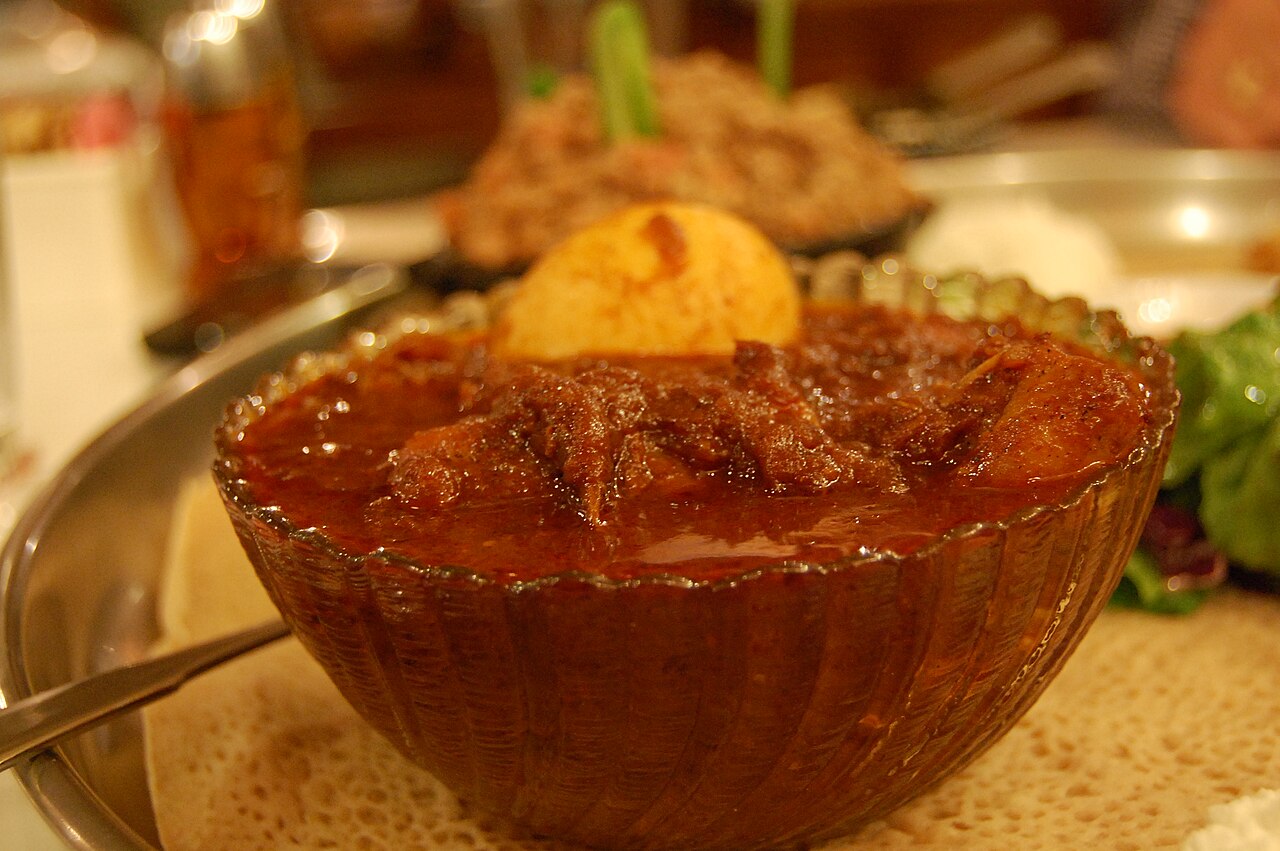
A deep red, spicy chicken stew made with a large amount of slowly cooked onions, berbere and spiced butter, with whole hard-boiled eggs added at the end. It is the dish of feast days, above all Christmas and Easter, when the long fast ends, and many people call it the national dish.
The onions are first cooked without any fat in a dry pot until they break down; this is what makes the sauce so thick.
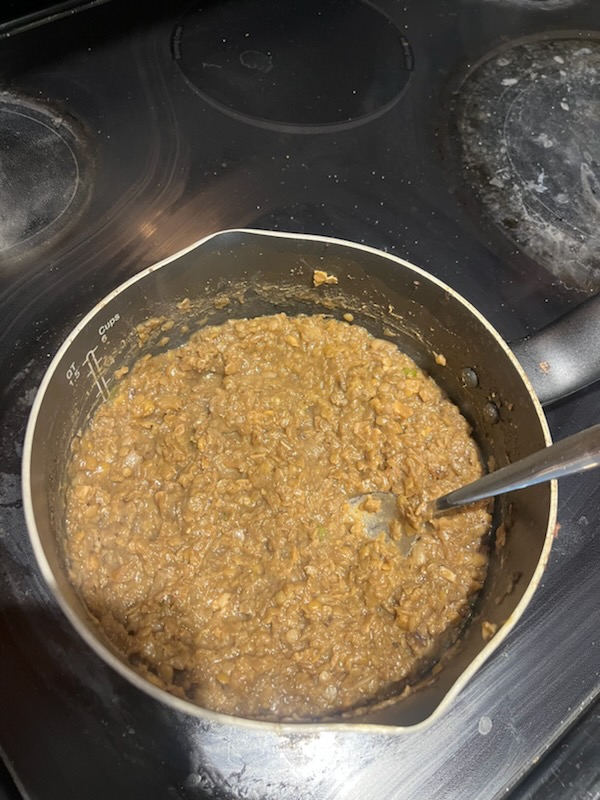
Split red lentils cooked with onions, garlic and berbere into a thick, spicy stew. Made with oil instead of butter, it contains no animal products, so it is one of the most popular dishes on the many fasting days.
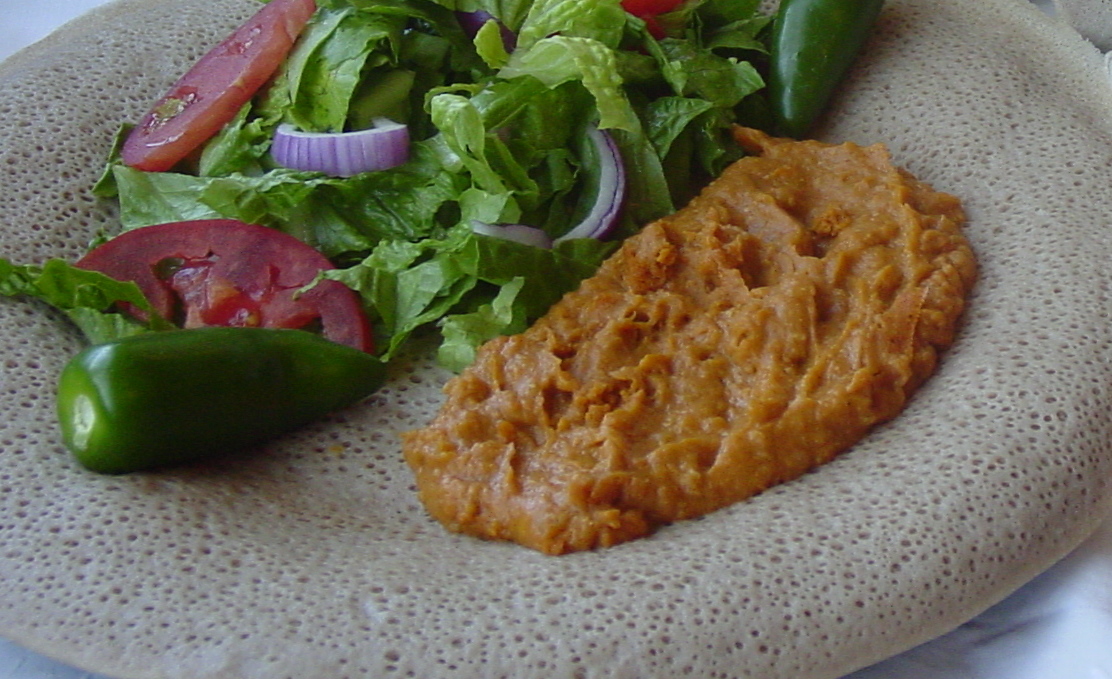
A smooth, thick stew made from powdered chickpeas or broad beans, cooked with onions, garlic and spices. It is cheap, quick and filling, eaten in homes every day, and often brought to the table still bubbling in a small clay pot.
Shiro stirred together with torn pieces of injera and eaten with a spoon is called shiro fit-fit.
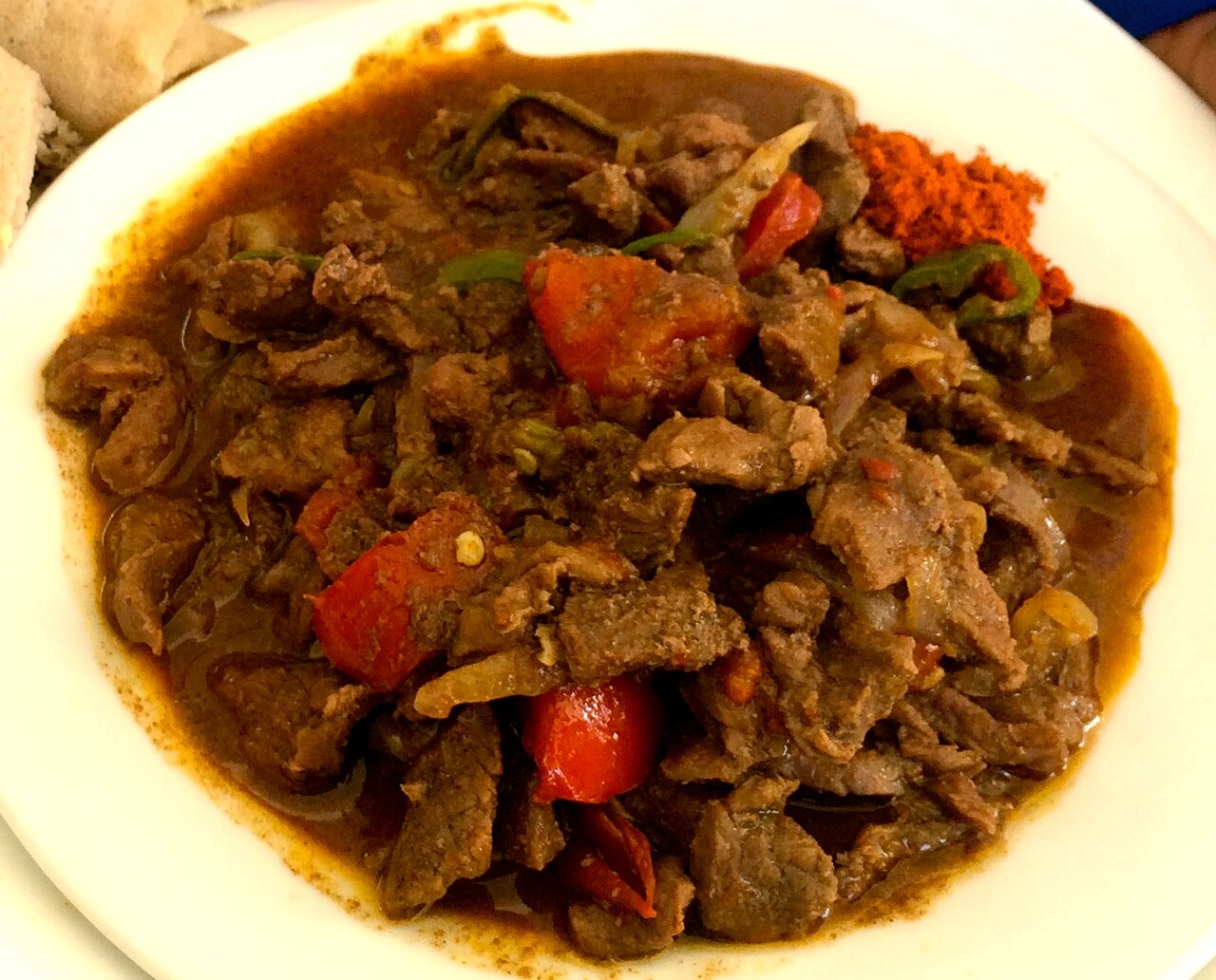
Pieces of beef, lamb or goat quickly fried with onions, green chillies, butter and sometimes rosemary. It can be mild or hot, and is often brought to the table sizzling in a small clay dish over coals.
Serving tibs has long been a way to honour a guest: an 18th-century European visitor wrote that it was served to pay a special compliment.
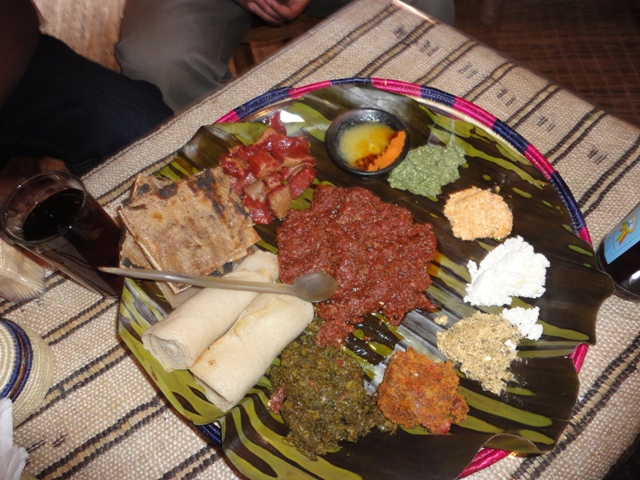
Finely minced beef mixed with a hot chilli powder called mitmita and warm spiced butter. It is traditionally eaten raw, served with mild fresh cheese, chopped greens and injera or kocho, a bread made from the false banana plant. Kitfo is a favourite for holidays such as Meskel.
Raw meat carries a risk of food poisoning. Anyone who is pregnant, very young, older or unwell should ask for kitfo fully cooked; lightly warmed kitfo, called leb leb, is still partly raw.
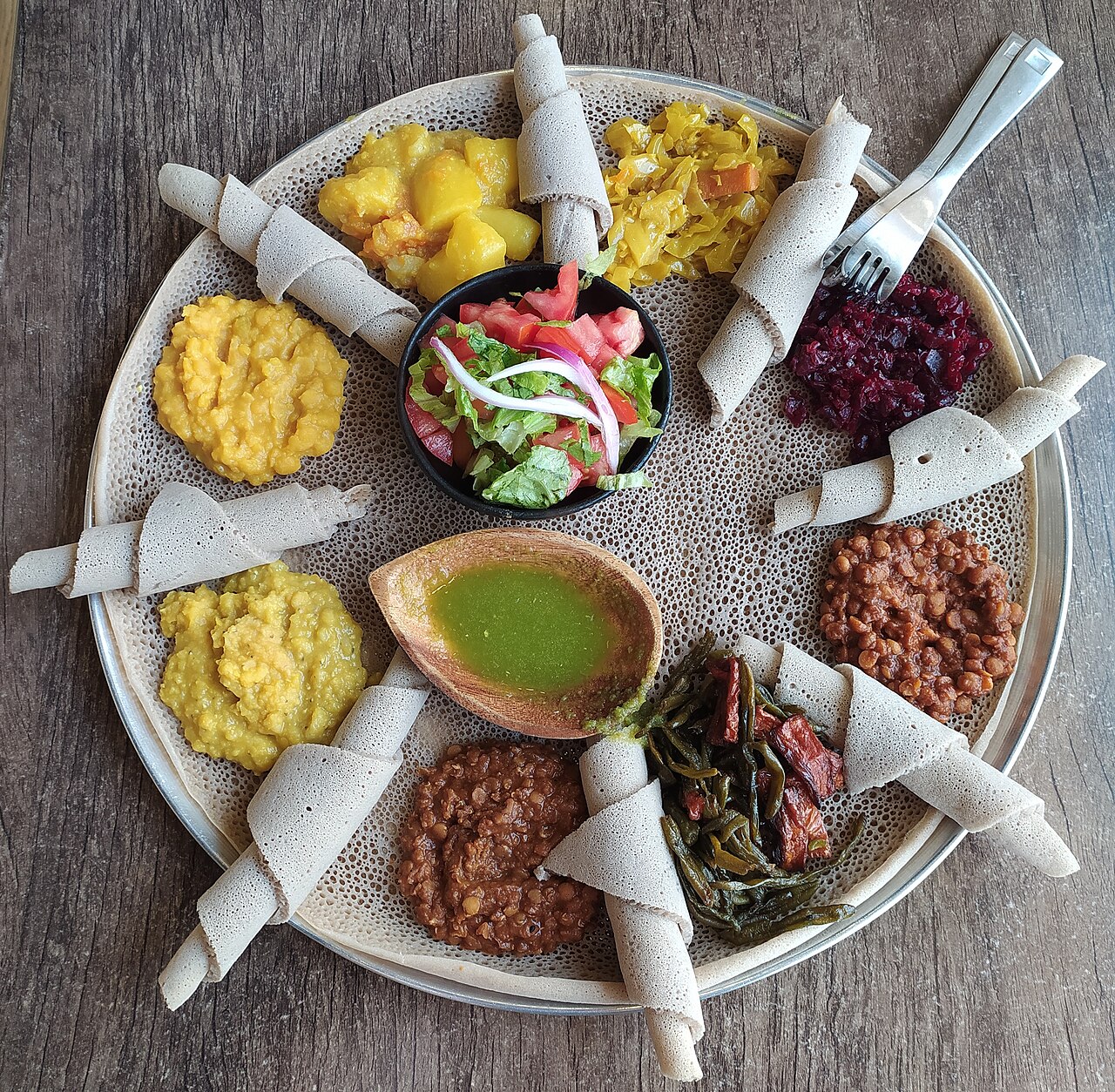
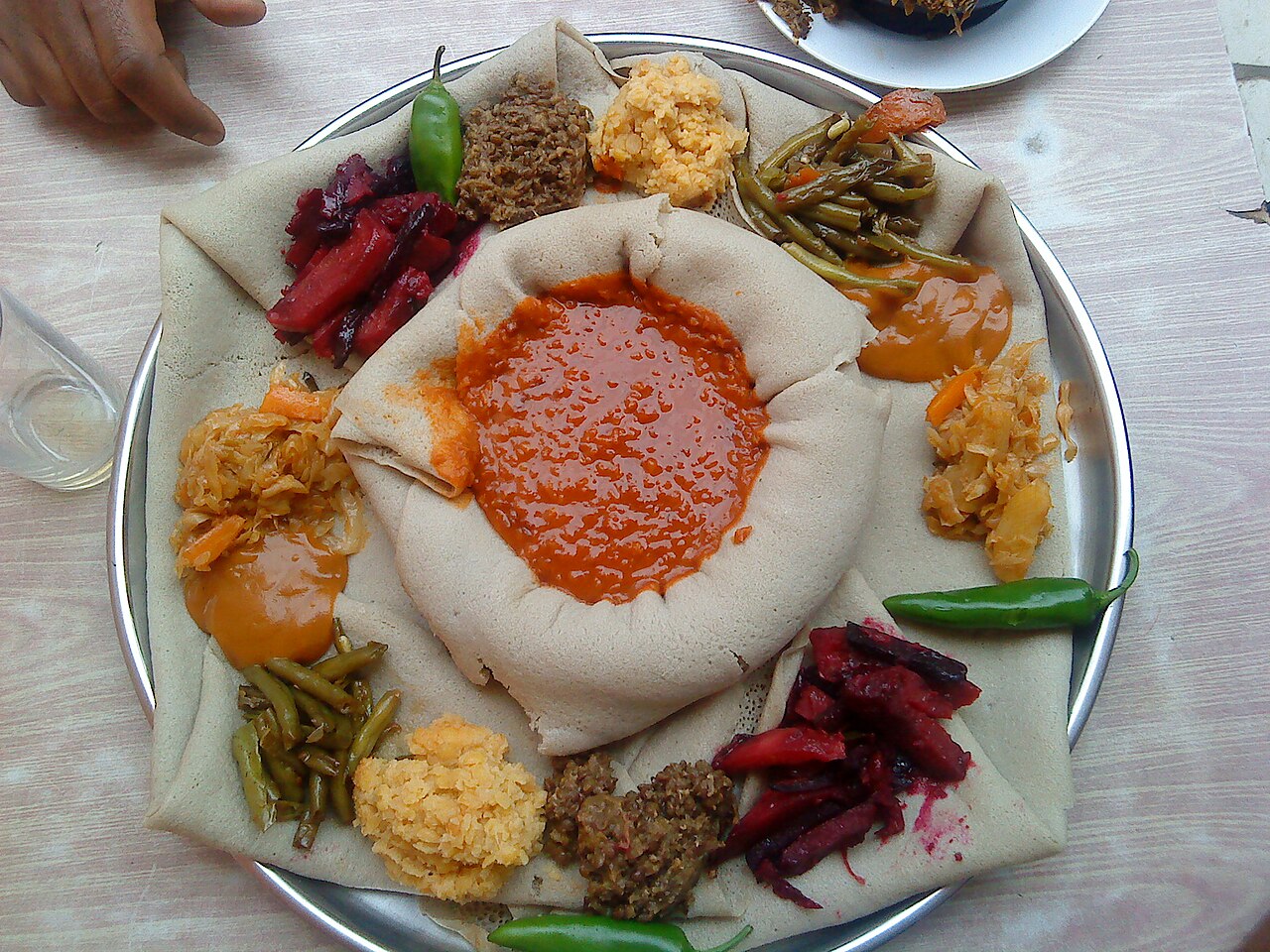
A large round of injera covered with small heaps of many different dishes: lentils, split peas, shiro, cabbage, greens, beetroot and more. The fasting version has no animal products at all, which makes it a favourite of vegetarians and vegans visiting Ethiopia.
Beyaynetu means 'of every kind' or 'assorted' in Amharic.
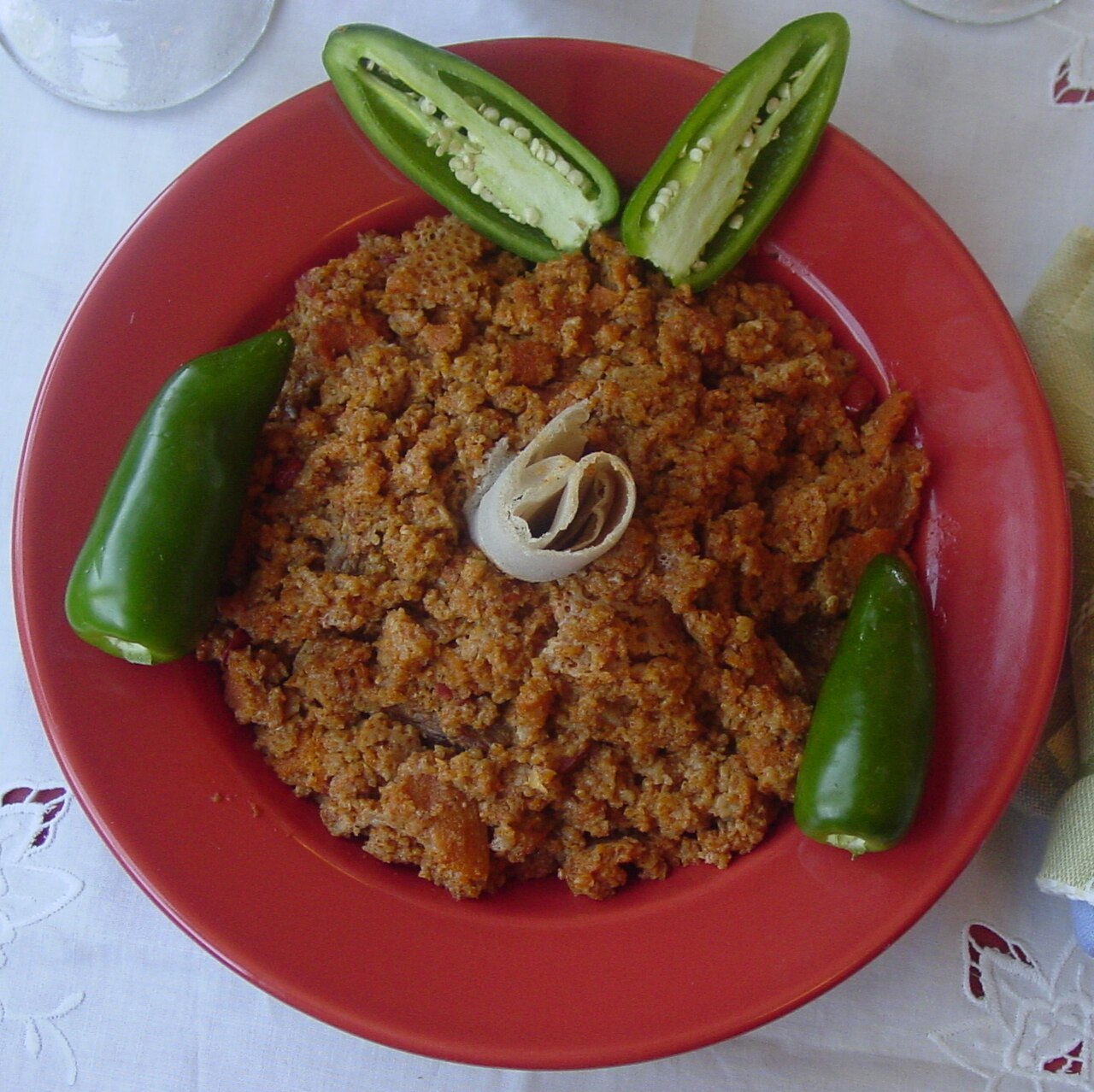
A popular breakfast of torn pieces of injera or bread fried with spiced butter, berbere and onions, or mixed with leftover wat. It is a good way to use yesterday's injera and is often eaten with a spoon.
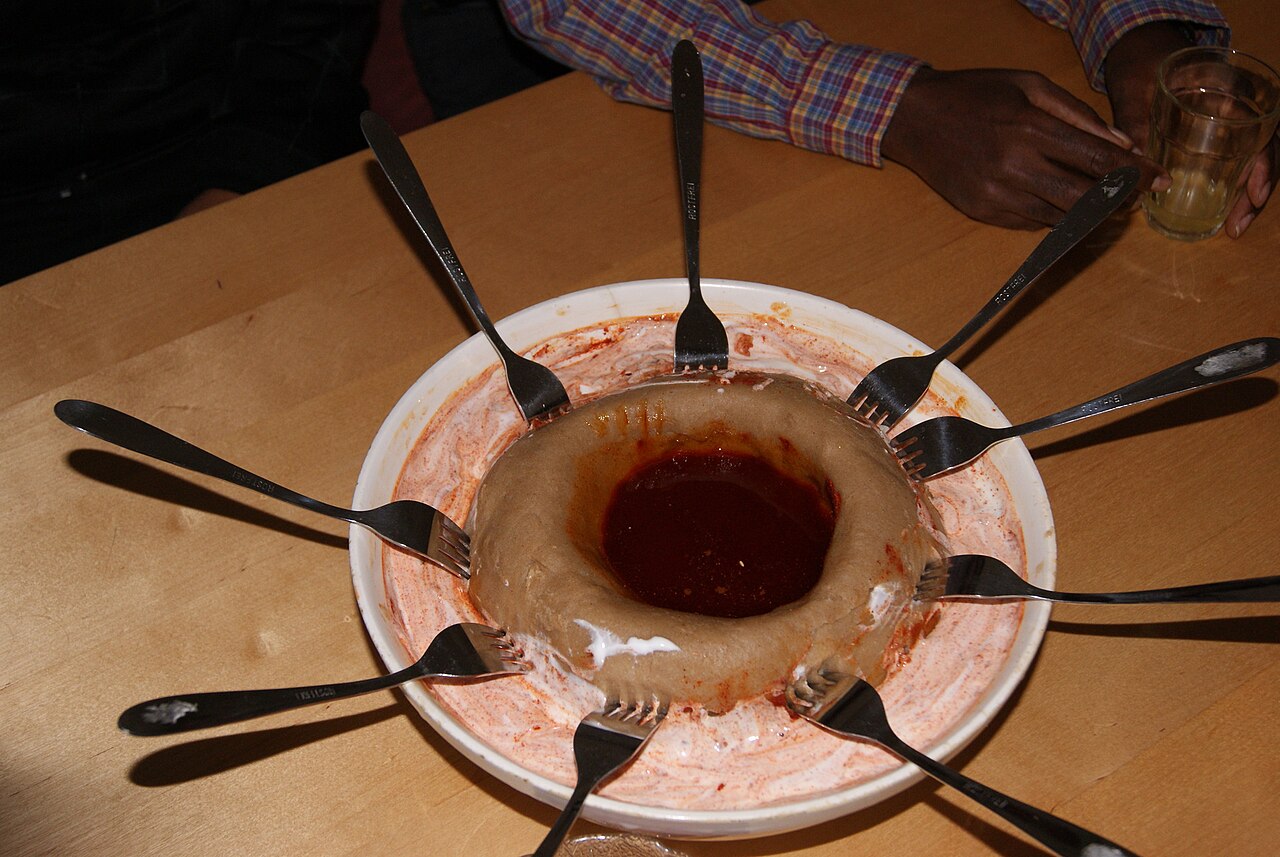
A thick porridge of barley or wheat flour, shaped into a mound with a hollow in the middle that is filled with spiced butter and berbere. Pieces are scooped from the edge and dipped into the butter. It is a breakfast for special days and is given to new mothers.
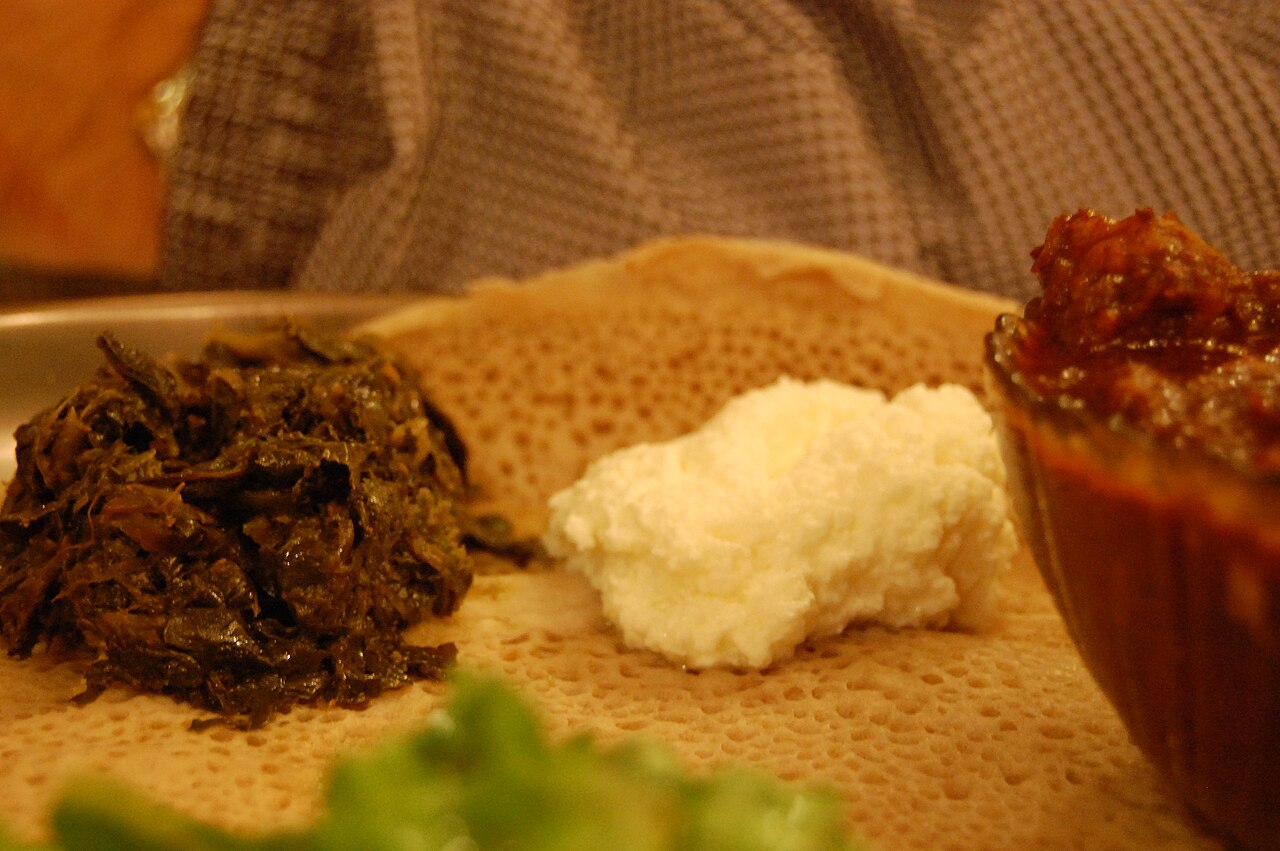
A soft, mild, crumbly fresh cheese made from buttermilk curds, a little like crumbled feta but much milder. It is served beside spicy dishes such as kitfo and doro wat to cool the mouth, often together with chopped greens called gomen.
Ayib has almost no taste of its own, which is exactly why it is served: it softens the heat of the chilli.
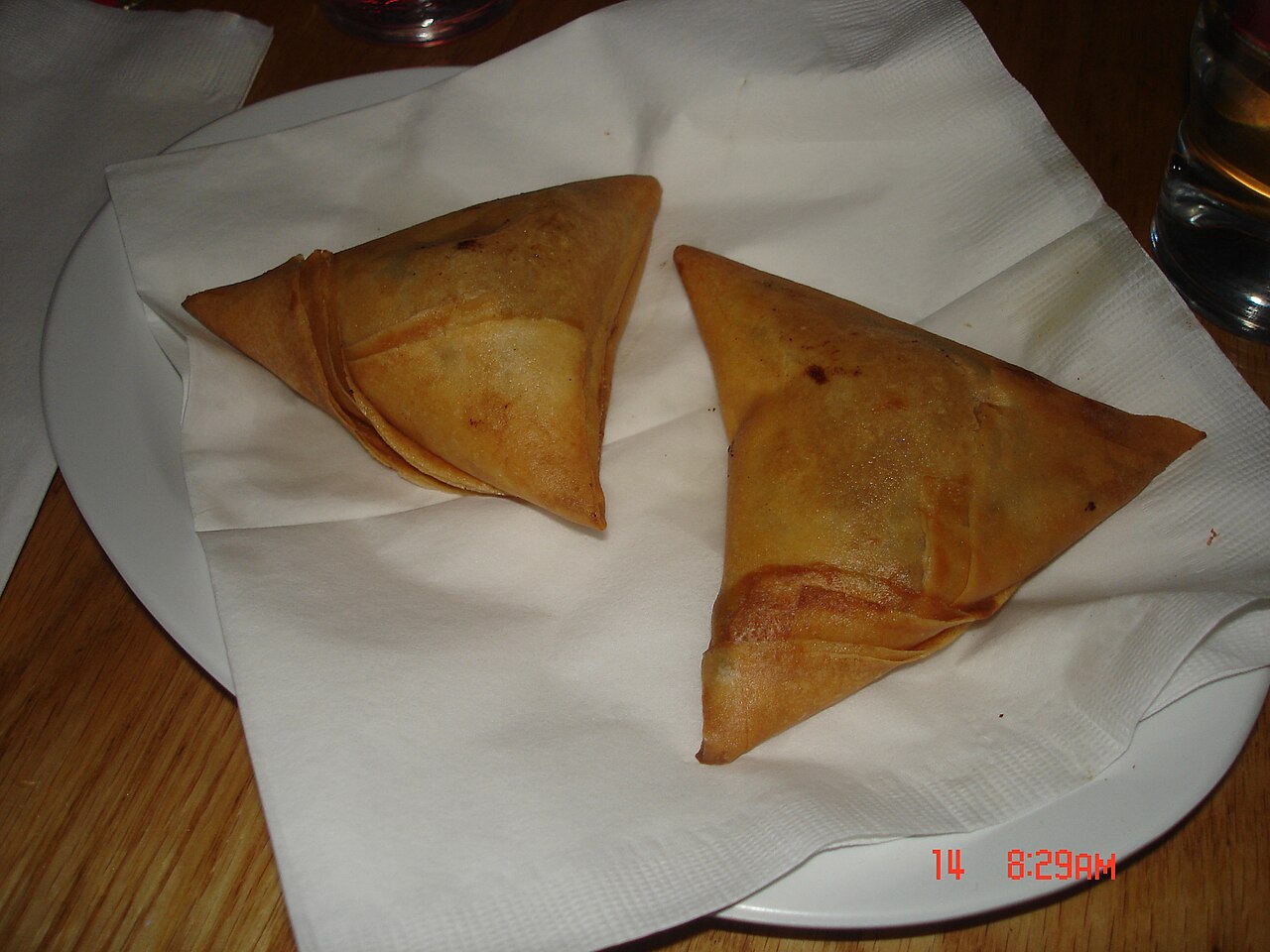
Crisp fried triangles of thin pastry filled with spiced lentils or minced meat, onion and green chilli. They are sold as a street snack and are a favourite at the evening meal that breaks the fast during Ramadan.
Sambusas are cousins of the Indian samosa; the same snack is known across the Horn of Africa, the Middle East and South Asia.
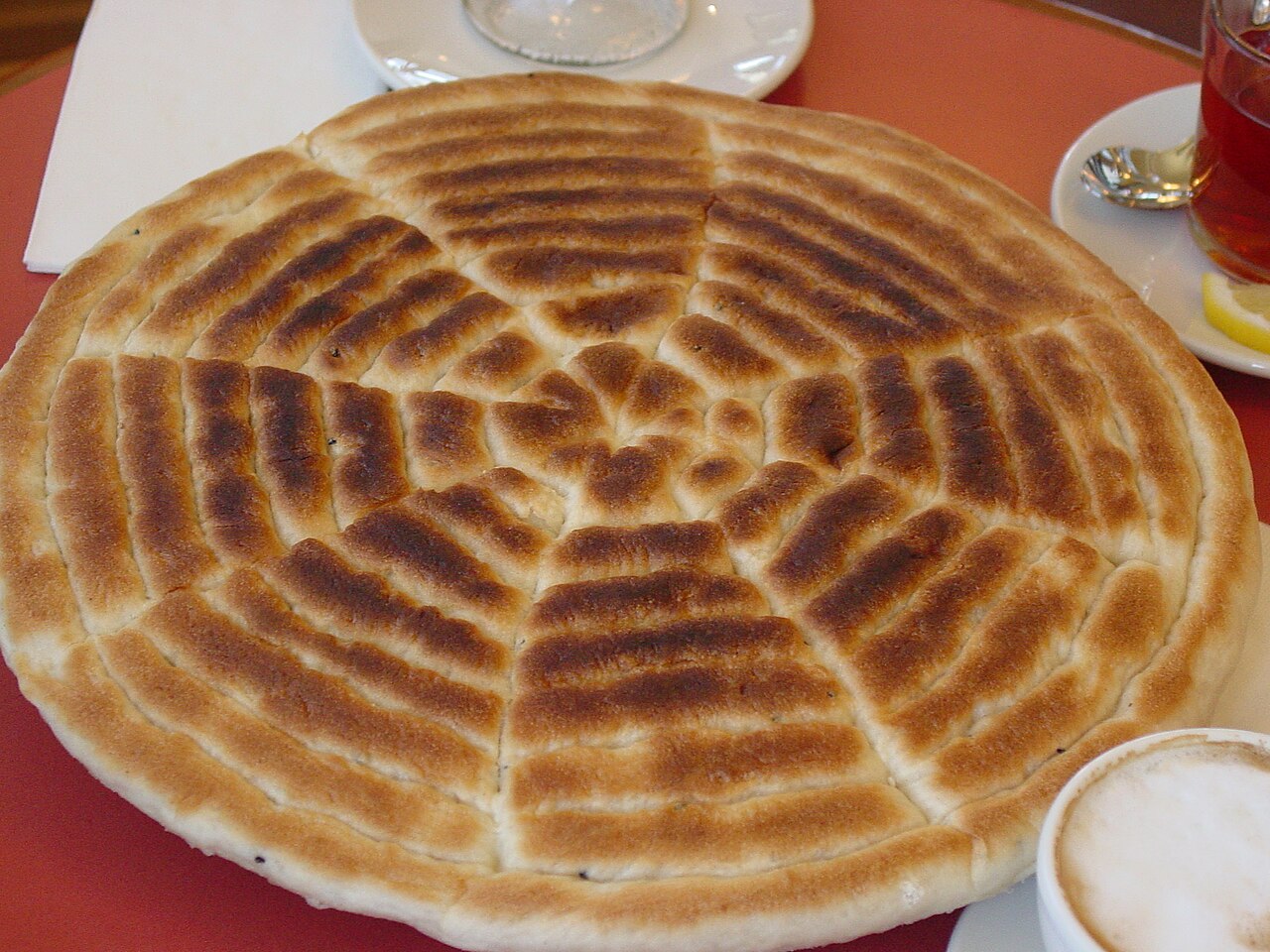
A round, slightly sweet bread for celebrations, often flavoured with cardamom or other spices. Before baking, the top is marked with a pattern that looks like a wheel with spokes, so each loaf looks like a decoration.
In Tigrinya, spoken in Tigray and Eritrea, the bread is called himbasha.
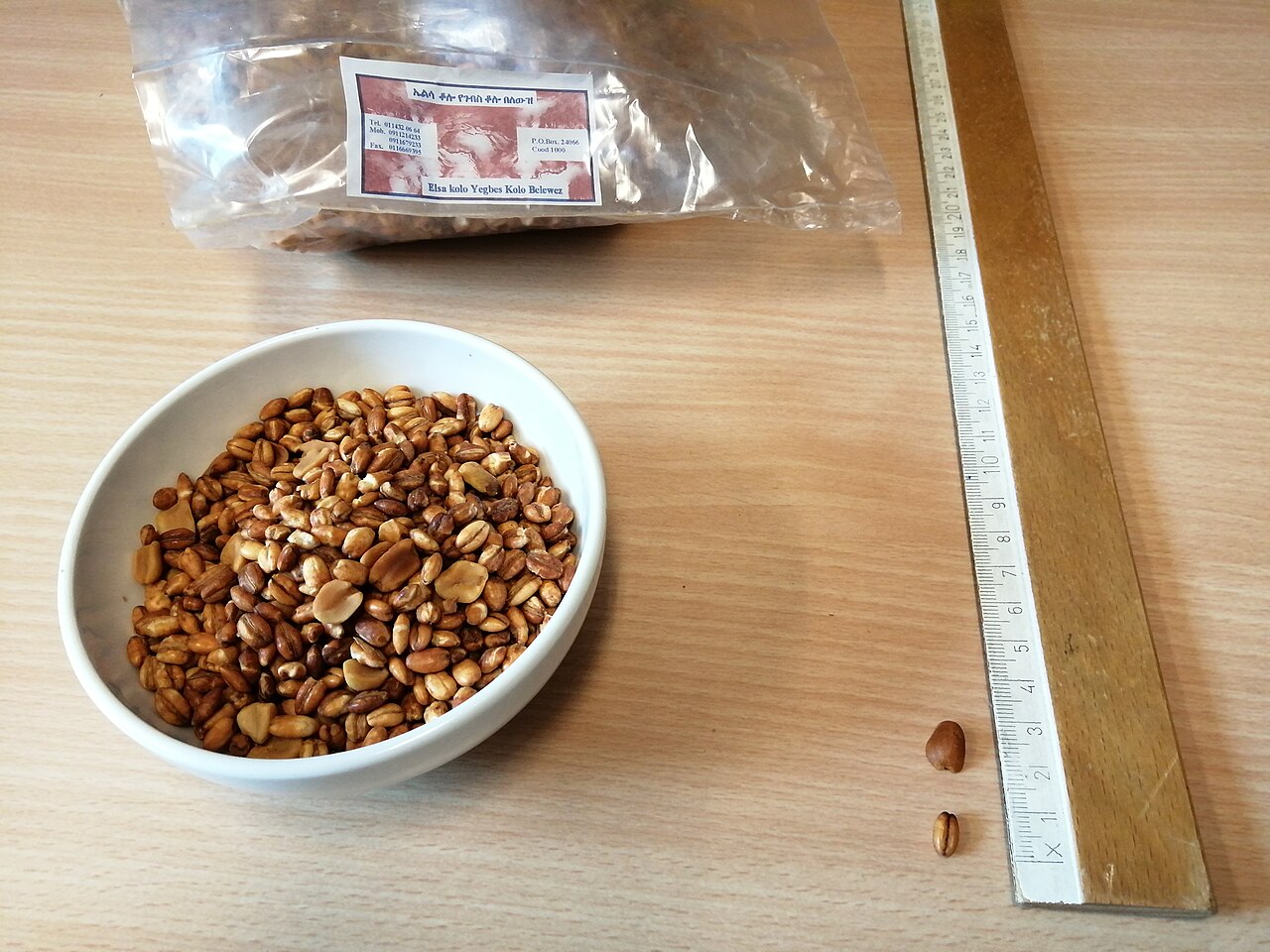
Small crunchy nuggets of spiced dough, fried or baked, eaten by the handful like pretzels. They are sold in paper cones at kiosks and taken on journeys.
Dabo means bread, and kolo is the name of the roasted barley snack served with coffee.
All of Ethiopia; the coffee plant grows wild in the southwestern highlands
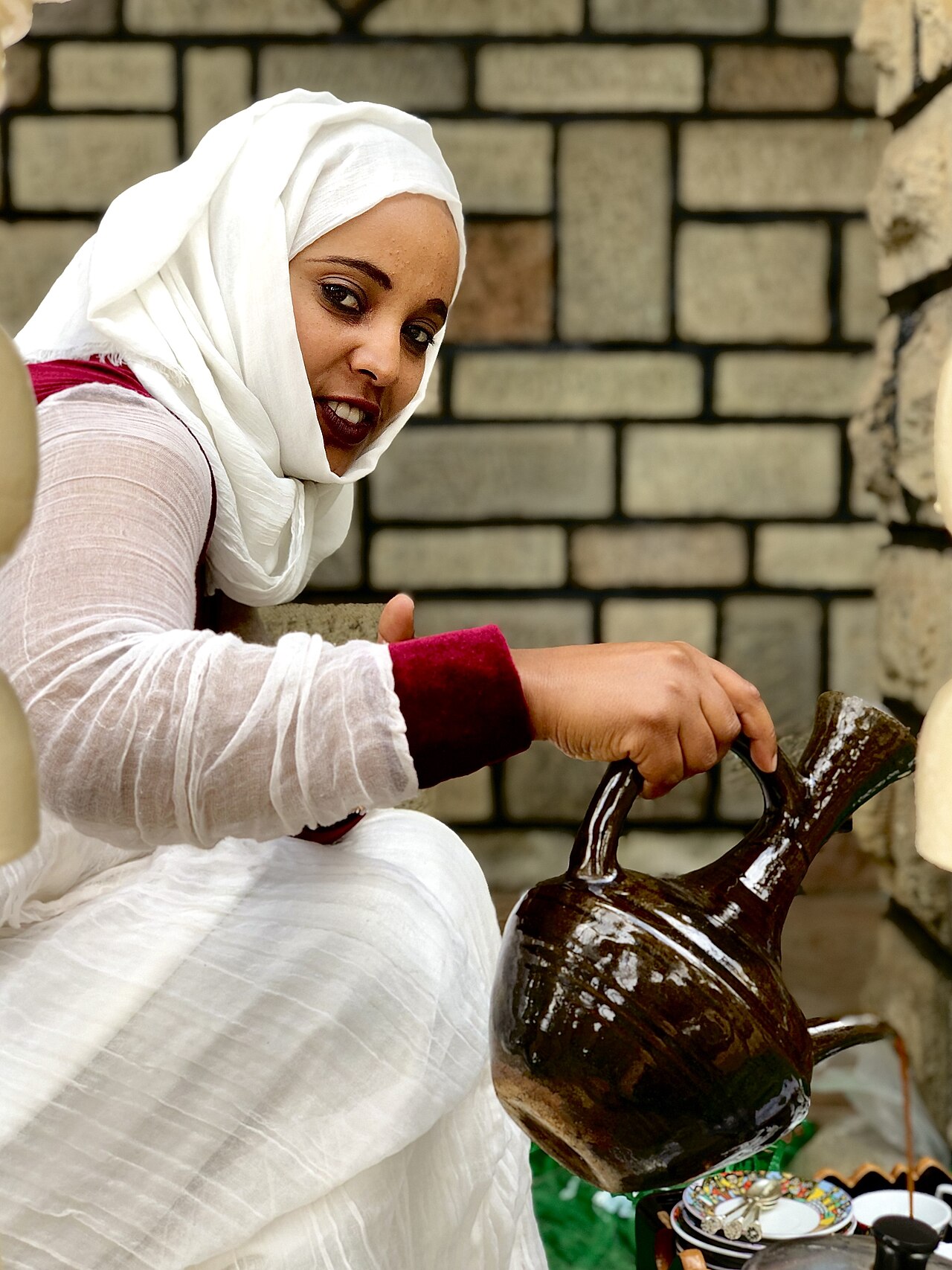
In the coffee ceremony, green beans are washed and roasted in a pan in front of the guests, who are invited to smell the smoke. The beans are ground by hand, boiled in a clay pot called a jebena and poured into small cups, often with sugar, and in some places with salt or butter. Incense burns and popcorn or roasted barley is served alongside. A full ceremony has three rounds, called abol, tona and bereka.
The famous story of Kaldi, a goatherd who noticed his goats dancing after eating coffee berries, is a legend: it was first written down in 1671, about two centuries after coffee drinking is first recorded, and the name Kaldi was only added in the 20th century.
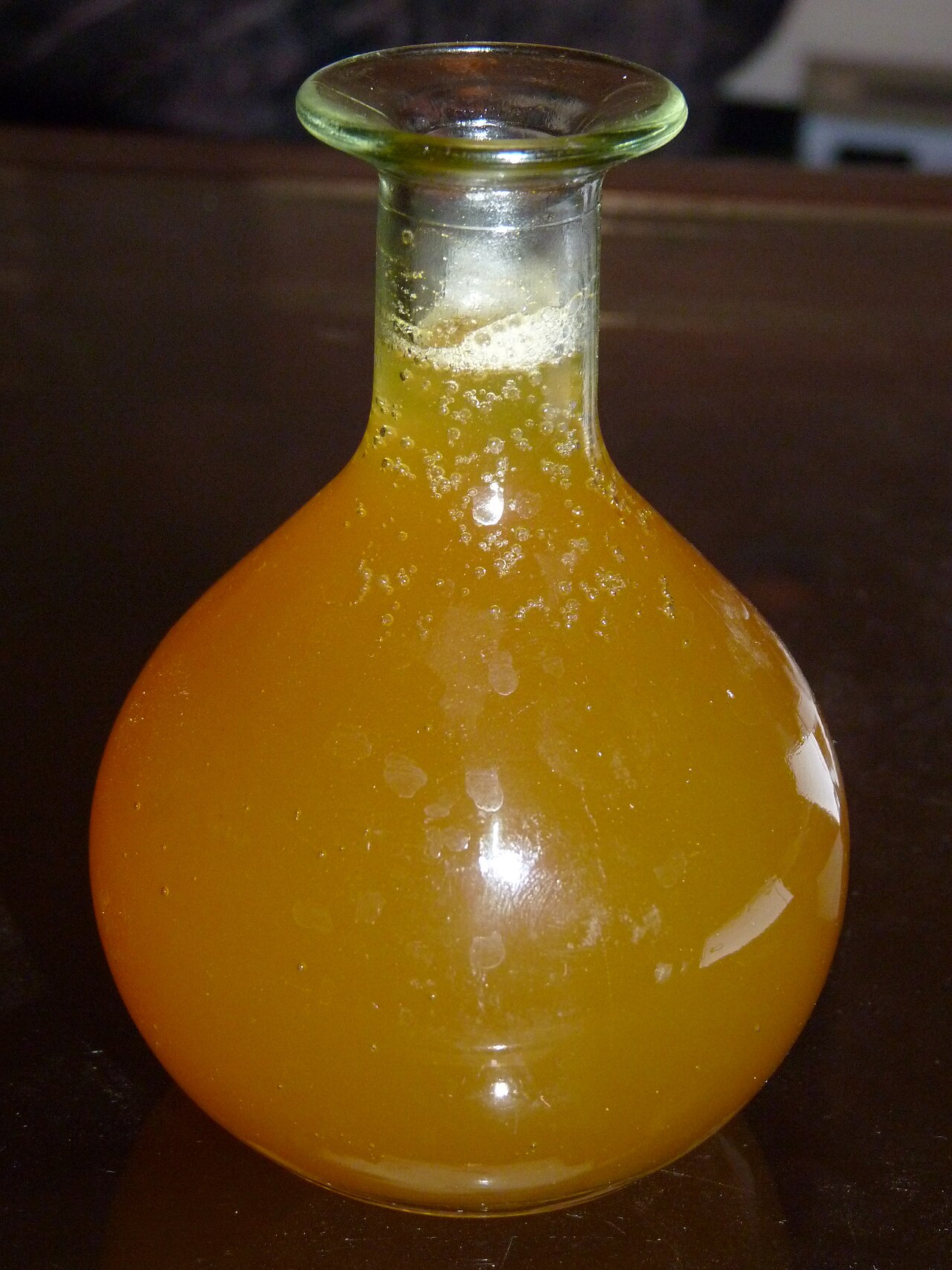
A golden honey wine, like mead, made from honey, water and the leaves and twigs of a shrub called gesho, which gives it a slight bitterness. It is served in a round glass flask called a berele, in homes and in tej houses, and usually has about 7 to 11 percent alcohol.
For centuries tej was a drink of kings and nobles, and honey was even paid as a tax. Today it is often called the national drink.
At the table in Ethiopia
Wash your hands before the meal. In many homes a jug of water and a basin are brought to you at the table.
Eat with your right hand only. Tear off a piece of injera, use it to pinch up some stew, and eat from the part of the shared platter in front of you.
Your host may lift a rolled mouthful to your lips. This is gursha, a sign of friendship and respect, and it is polite to accept it; you may return the gesture.
Wait for the host or the eldest person to begin. In many Christian and Muslim homes a short prayer is said first.
Many Orthodox Christians eat no meat, eggs or dairy on Wednesdays, Fridays and during Lent, and Muslims and Orthodox Christians do not eat pork. Ask before you bring food as a gift.
If you are invited to a coffee ceremony, take your time: it can last an hour, and it is polite to stay for more than one cup.