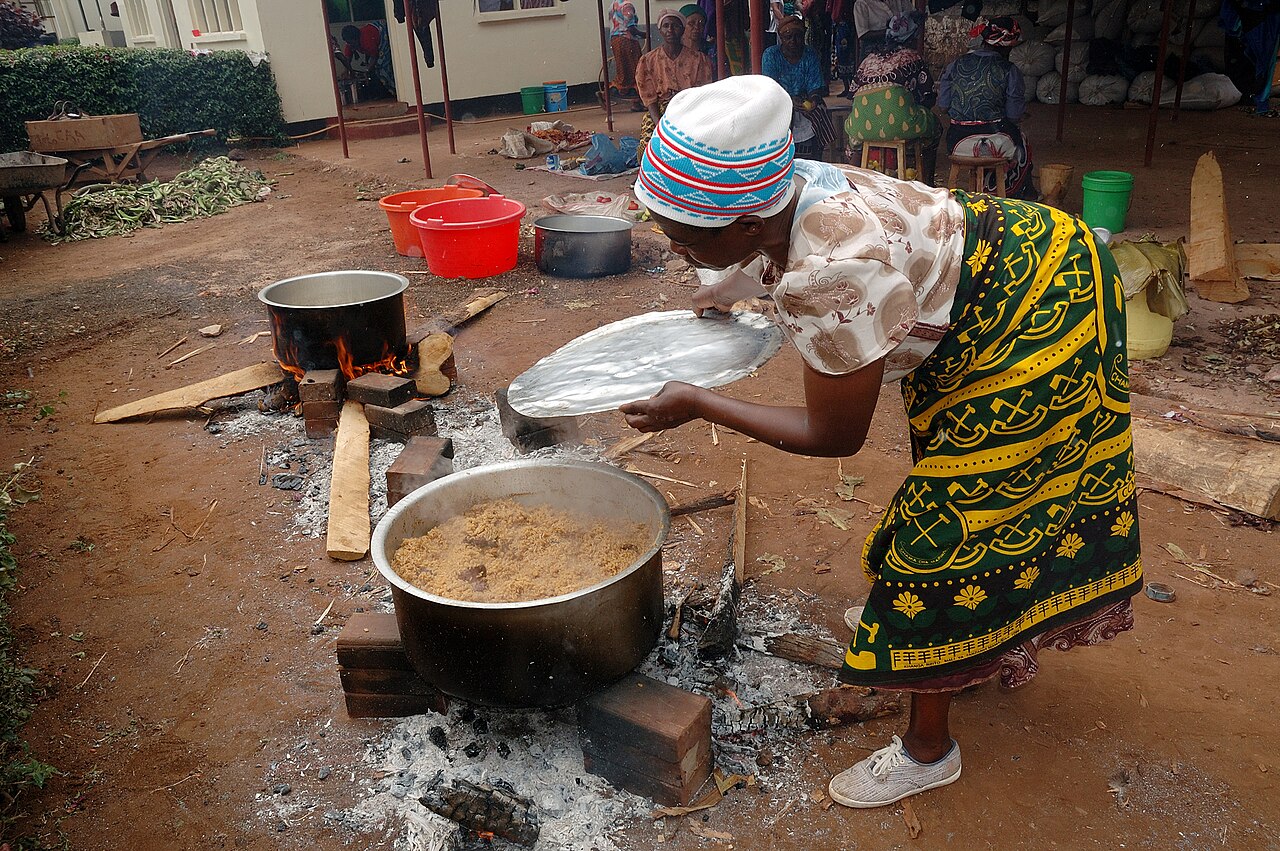
Tanzanian home cooking is filling and simple. On the mainland most meals are built around ugali, a stiff maize porridge, or rice, served with beans, greens, a stew, fish or grilled meat. Breakfast is often sweet tea with mandazi, chapati or vitumbua. On the coast and in Zanzibar, centuries of trade with Arabia and India show in the food: rice is cooked in coconut milk or with spices such as cloves, cardamom and cinnamon, and the evening markets sell grilled skewers and spicy soups. In the green highlands around Kilimanjaro, cooking bananas are the everyday staple.
All of Tanzania and much of East and Southern Africa
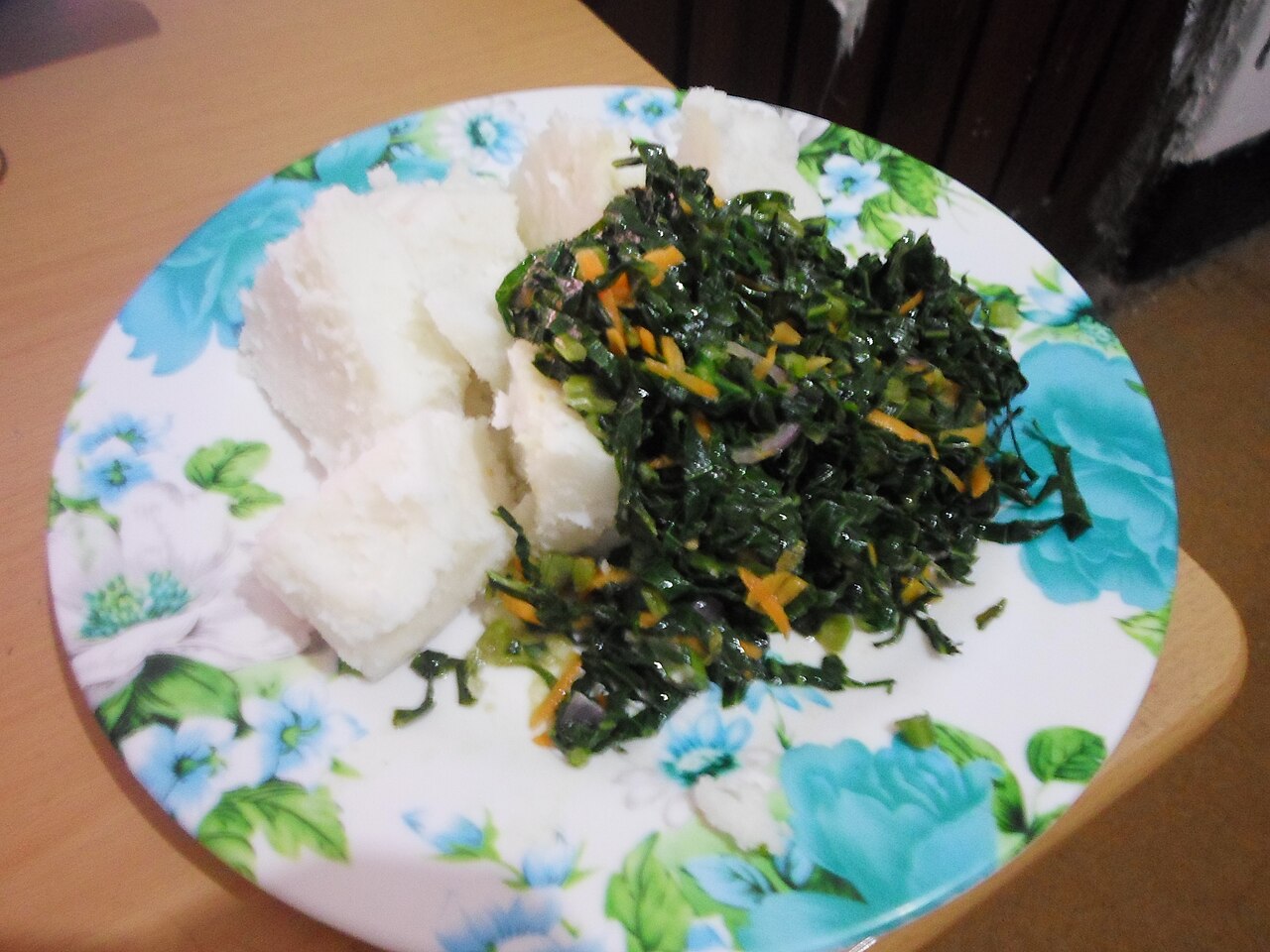
Maize flour cooked in boiling water until it becomes a firm, smooth dough. It is served in a mound, and pieces are pulled off with the right hand, rolled into a ball and used to scoop up beans, greens, fish or stew. It is the everyday staple of the mainland.
Maize came to Africa from the Americas. Before it, East Africans made similar porridges from sorghum and millet.
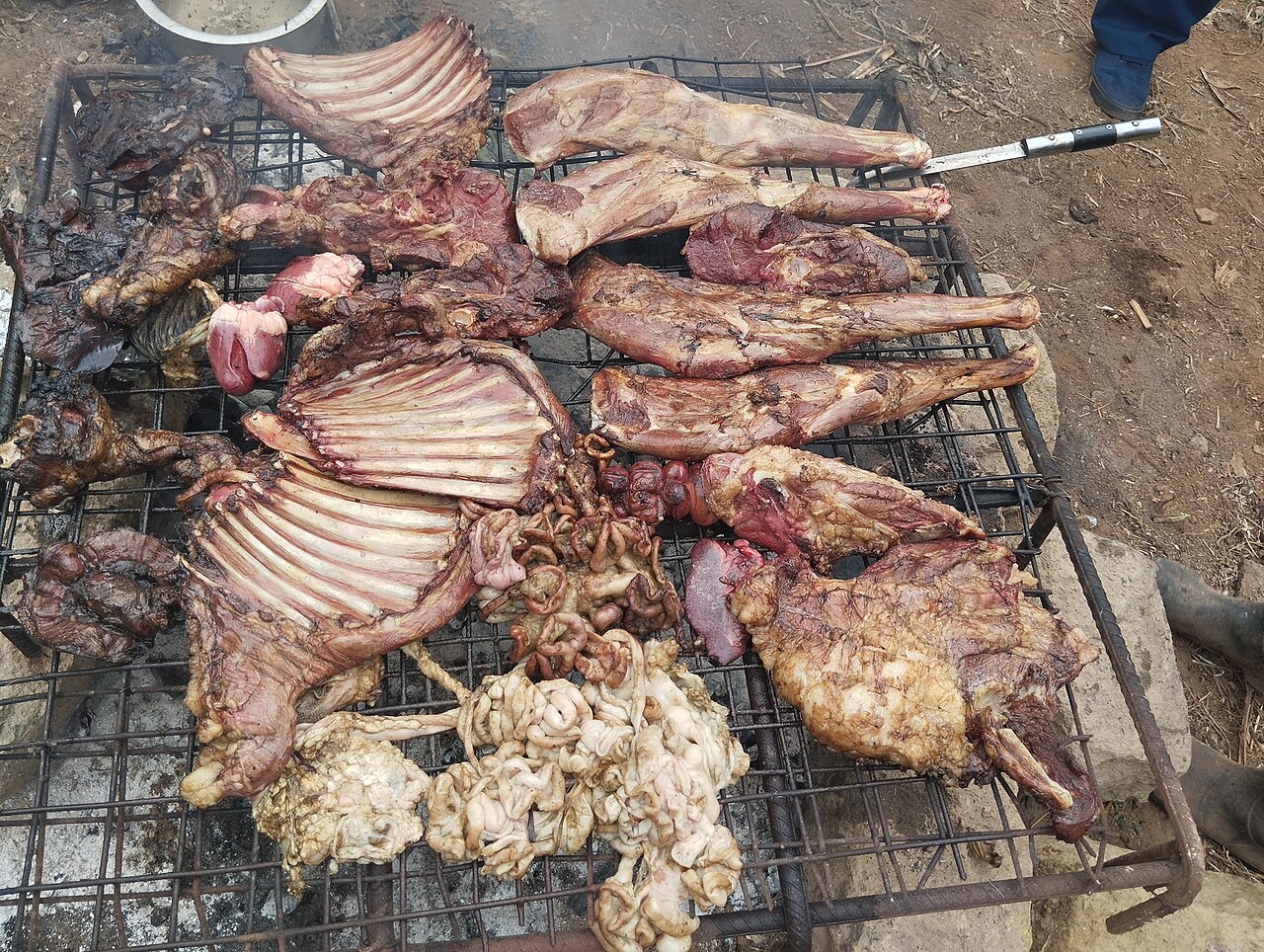
Goat meat, beef or chicken grilled slowly over charcoal with little more than salt, cut into bite-sized pieces and eaten with the hands, usually with ugali or grilled bananas and a fresh kachumbari salad.
Nyama choma simply means 'grilled meat' in Swahili.
All of Tanzania, especially the coast and the cities
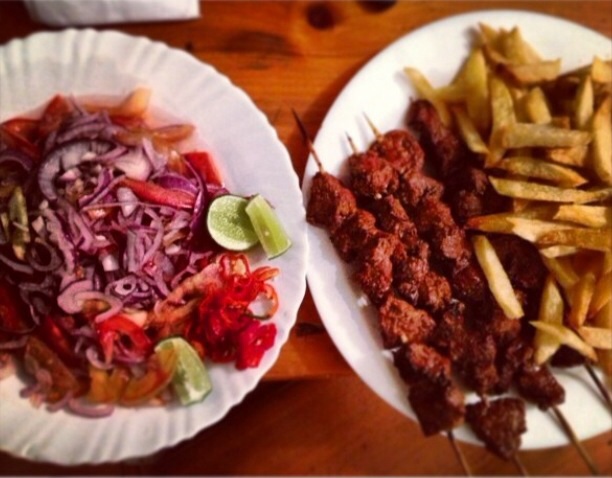
Small cubes of marinated beef or goat threaded onto skewers and grilled over charcoal. They are a favourite street food in the evening, often eaten with chipsi mayai and chilli sauce.
Said to have started at street stalls in Dar es Salaam; now eaten all over Tanzania
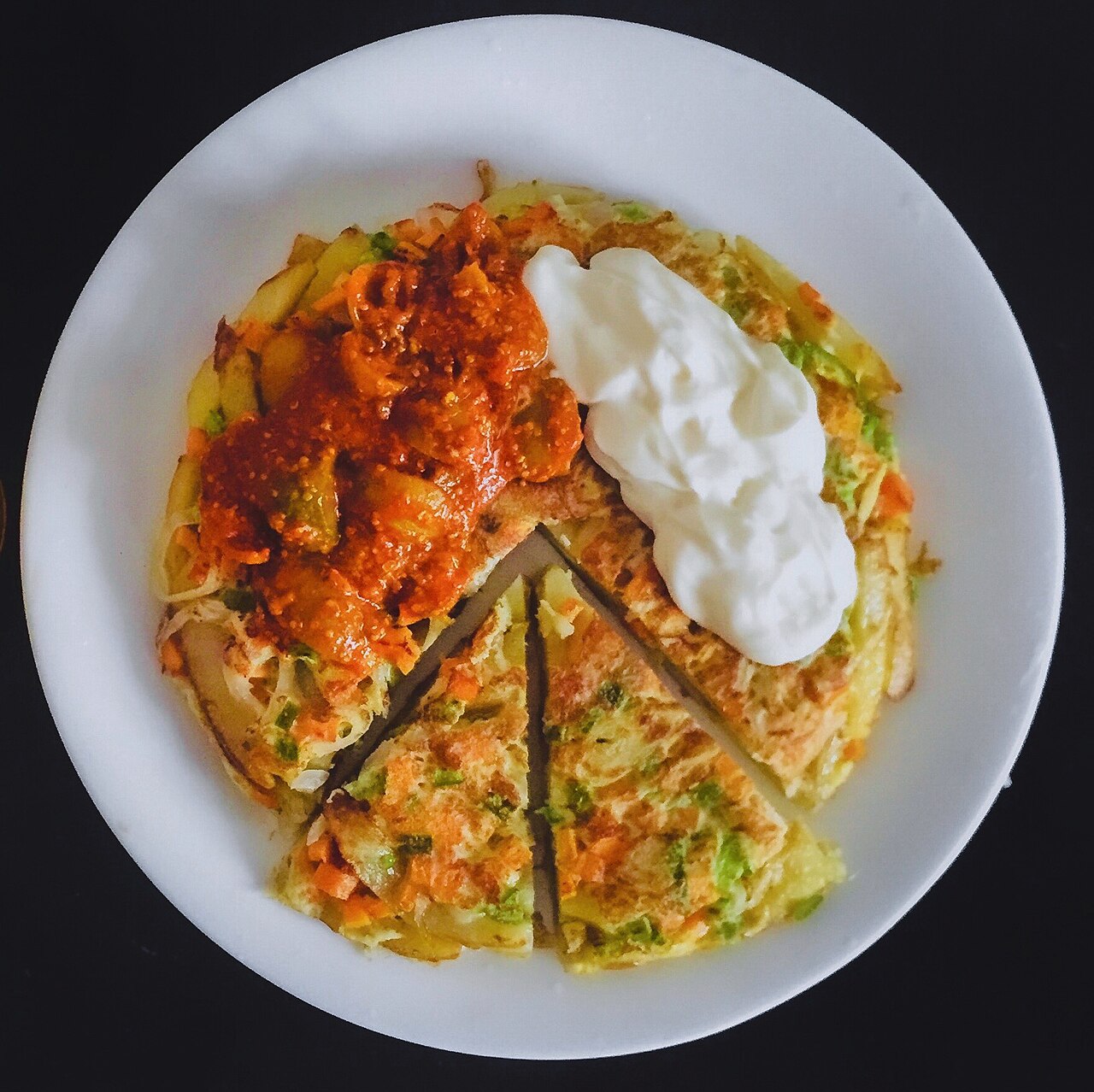
Freshly fried chips cooked into an omelette in the pan, so the egg holds the potatoes together like a flat cake. It is sold at food stands from big towns to small villages and served with kachumbari or chilli sauce.
The name means 'chips and eggs' in Swahili, and many people call it the unofficial national dish.
The Swahili coast and Zanzibar; now eaten all over Tanzania
Rice cooked in a meat broth with cumin, cardamom, cinnamon, cloves and black pepper, which turn it a warm brown. It is made with beef, chicken or goat and is the dish for weddings, Eid and other celebrations, served with kachumbari.
All of Tanzania; on the coast the beans are often cooked in coconut milk
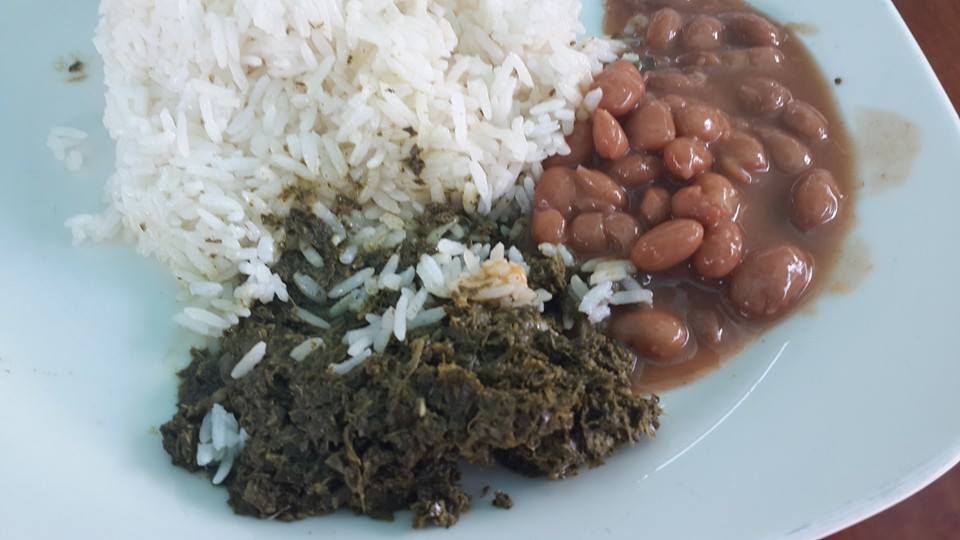
A plate of plain or coconut rice topped with a stew of red kidney beans, one of the most common everyday meals in homes and small restaurants across the country.
The northern highlands and the banana-growing regions; now eaten widely
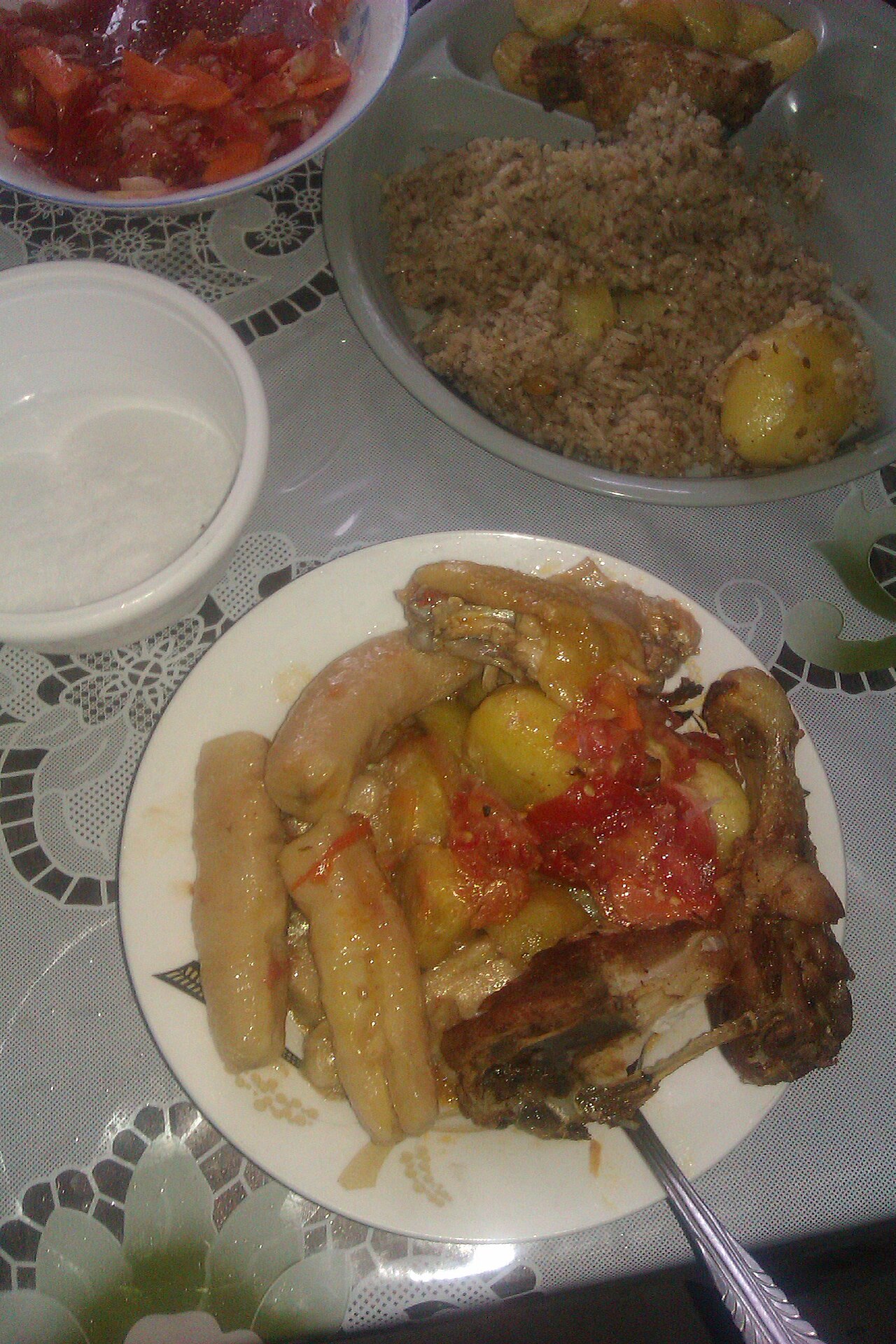
Green cooking bananas stewed with beef or goat, onions and tomatoes, sometimes with coconut milk, until the bananas are soft and have soaked up the sauce.
Tanzania grows many different kinds of bananas, used for soups, stews and chips.
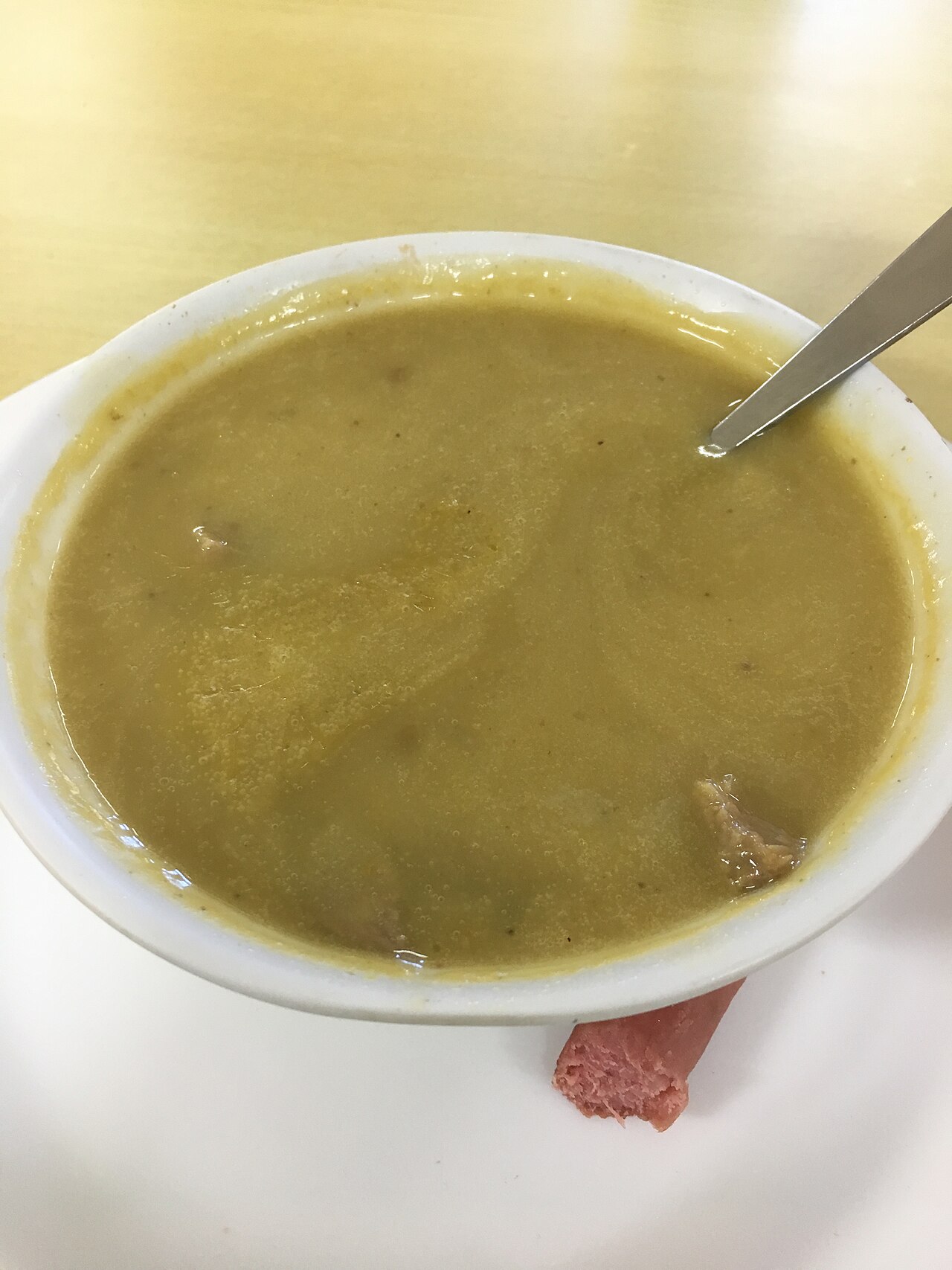
A thick, creamy soup of green bananas cooked with beef and then mashed, sometimes with potatoes and milk. It is eaten at any time of day and is traditionally given to new mothers because it is soft and nourishing.
A special wooden stick is traditionally used to mash the bananas into the soup.
Zanzibar, especially the evening market at Forodhani Gardens in Stone Town
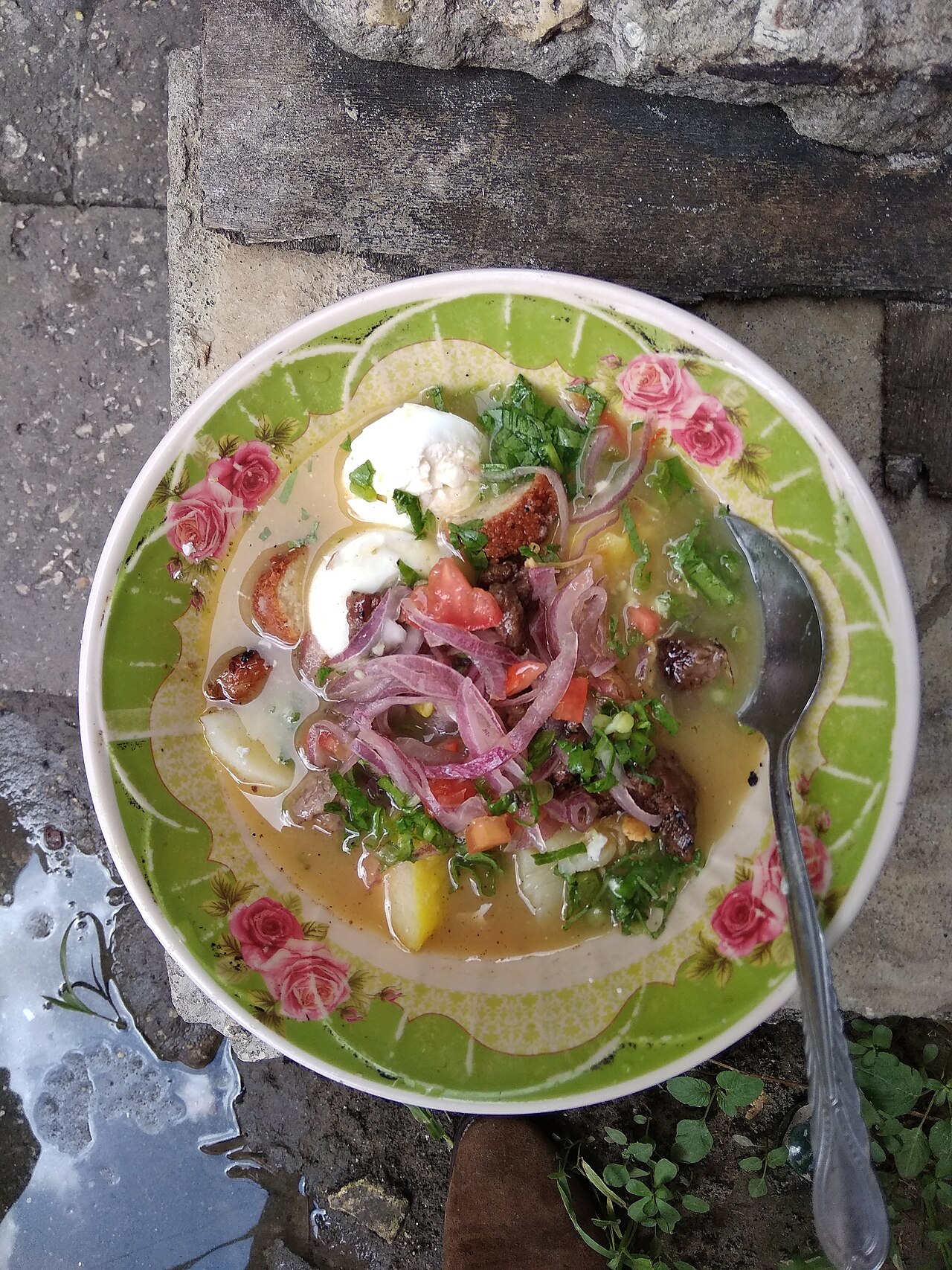
A tangy yellow soup thickened with flour and coloured with turmeric, flavoured with mango or tamarind, and poured over potatoes, crisp fritters, cassava crisps, boiled egg and small skewers, with coconut chutney and chilli on top.
All of Tanzania and the African Great Lakes region
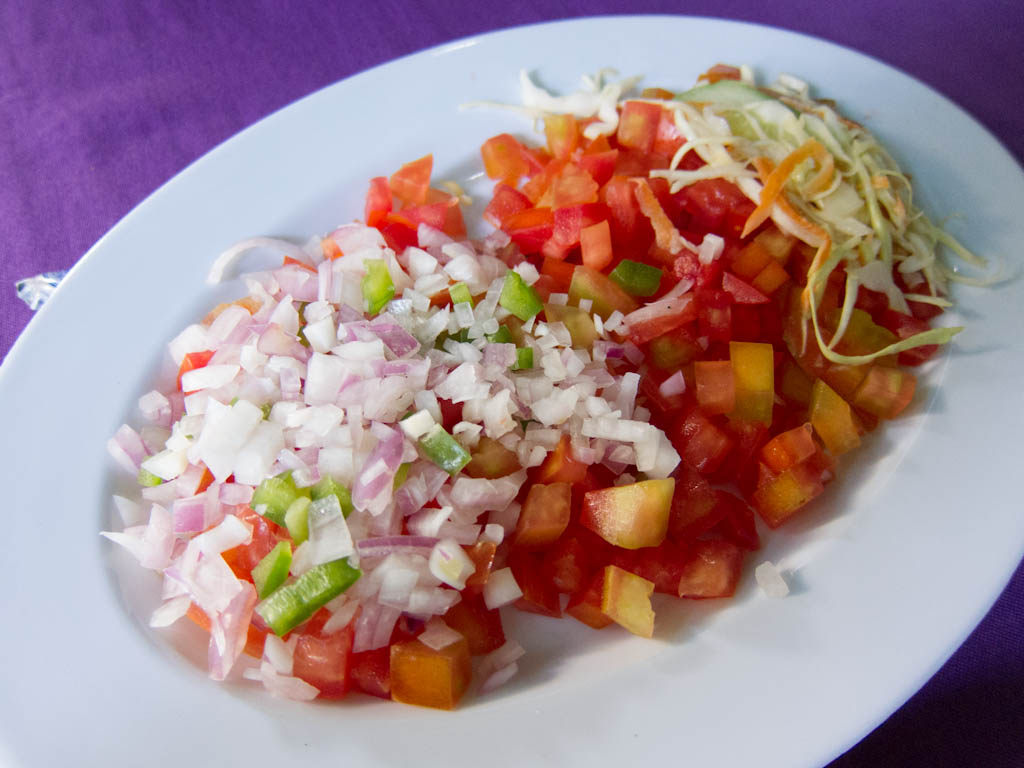
A fresh, uncooked salad of finely chopped tomatoes, red onion and chilli with lime or lemon juice and salt. It is served with pilau, nyama choma and chipsi mayai to add freshness.
Brought from the Indian subcontinent; now eaten all over Tanzania
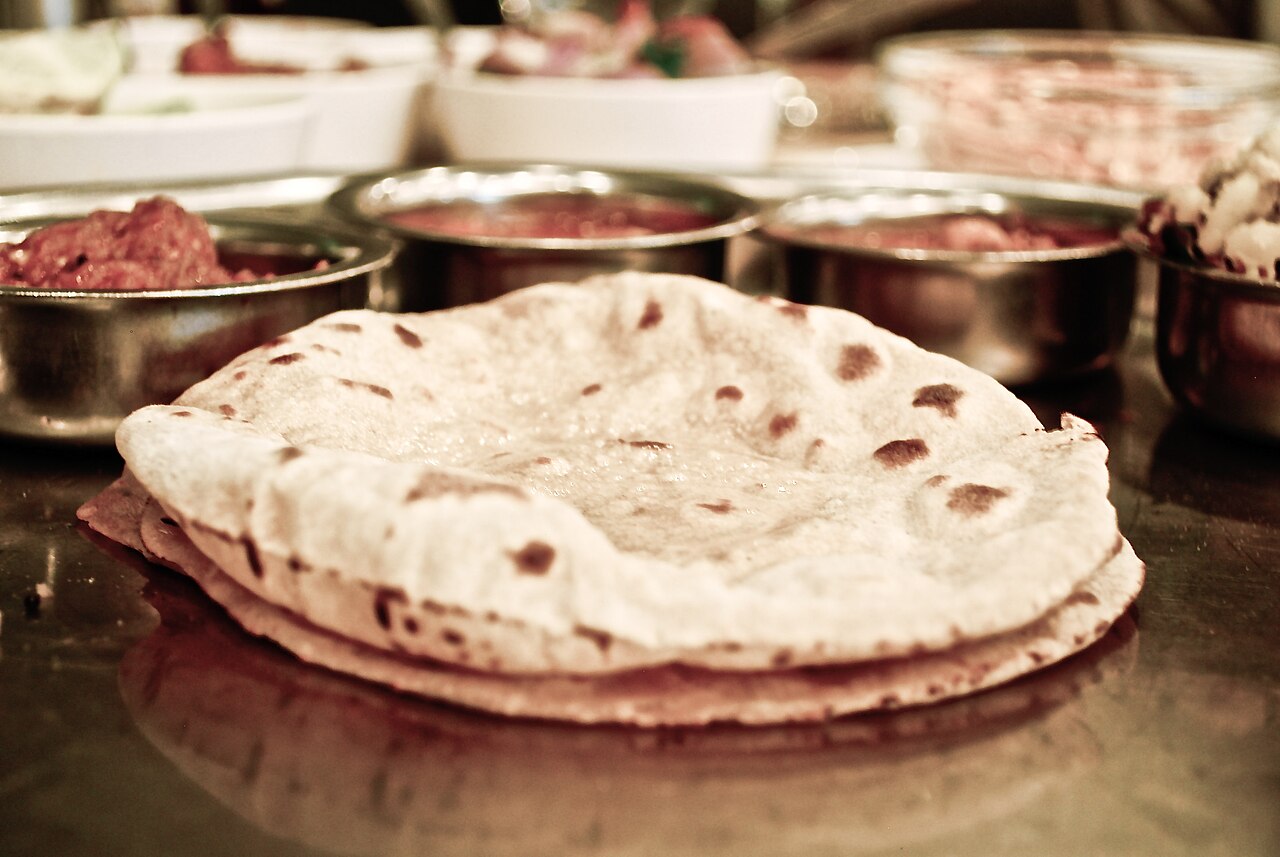
A soft, flaky flatbread of wheat flour, rolled, coiled and rolled again, then fried in a little oil on a flat pan. It is eaten with tea for breakfast or with beans and stews.
The Swahili coast of Tanzania and Kenya; now eaten all over East Africa
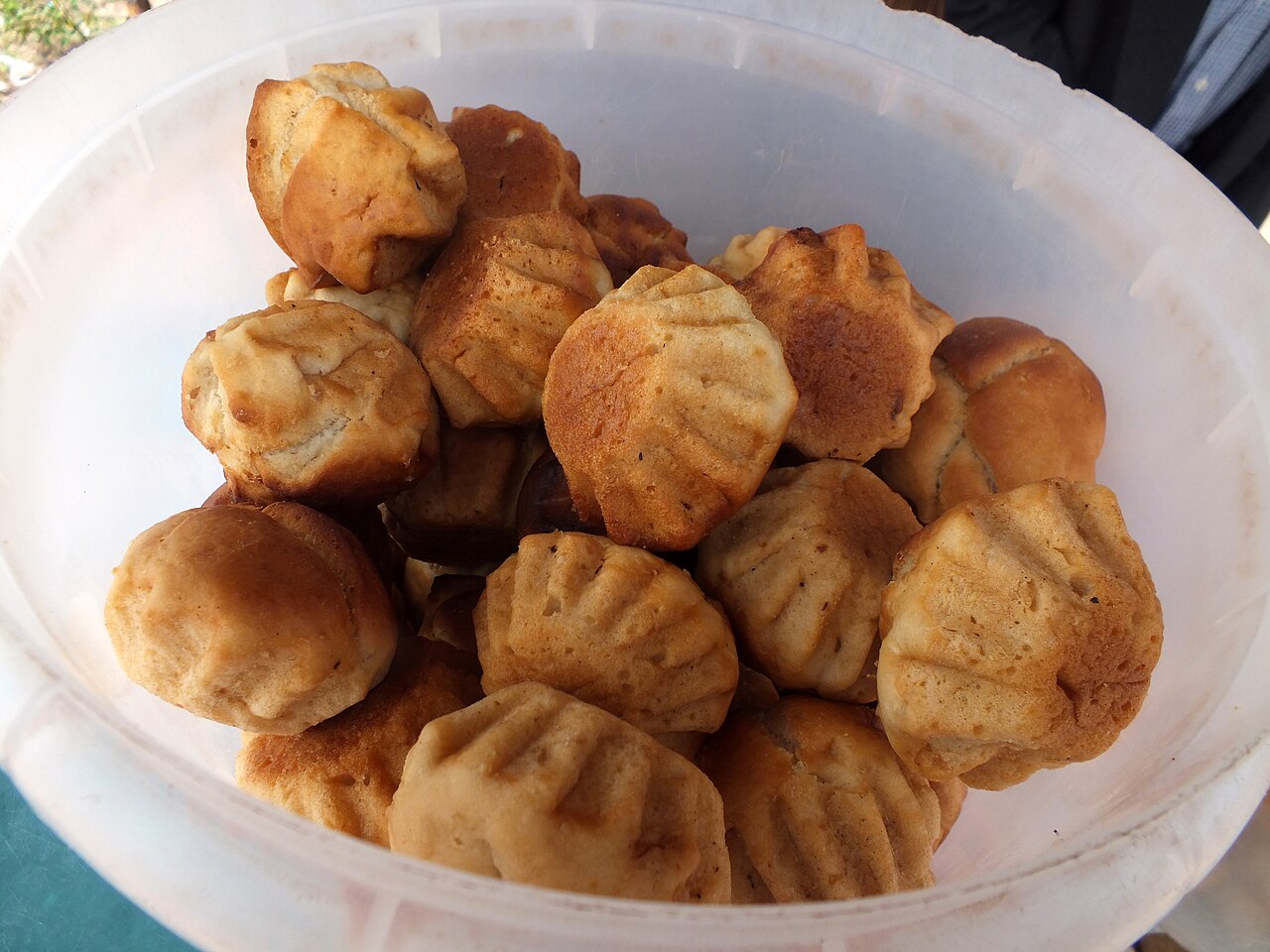
A lightly sweet fried dough, often shaped in triangles and sometimes flavoured with cardamom or coconut milk. It is less sweet than a doughnut and is eaten at breakfast with tea.
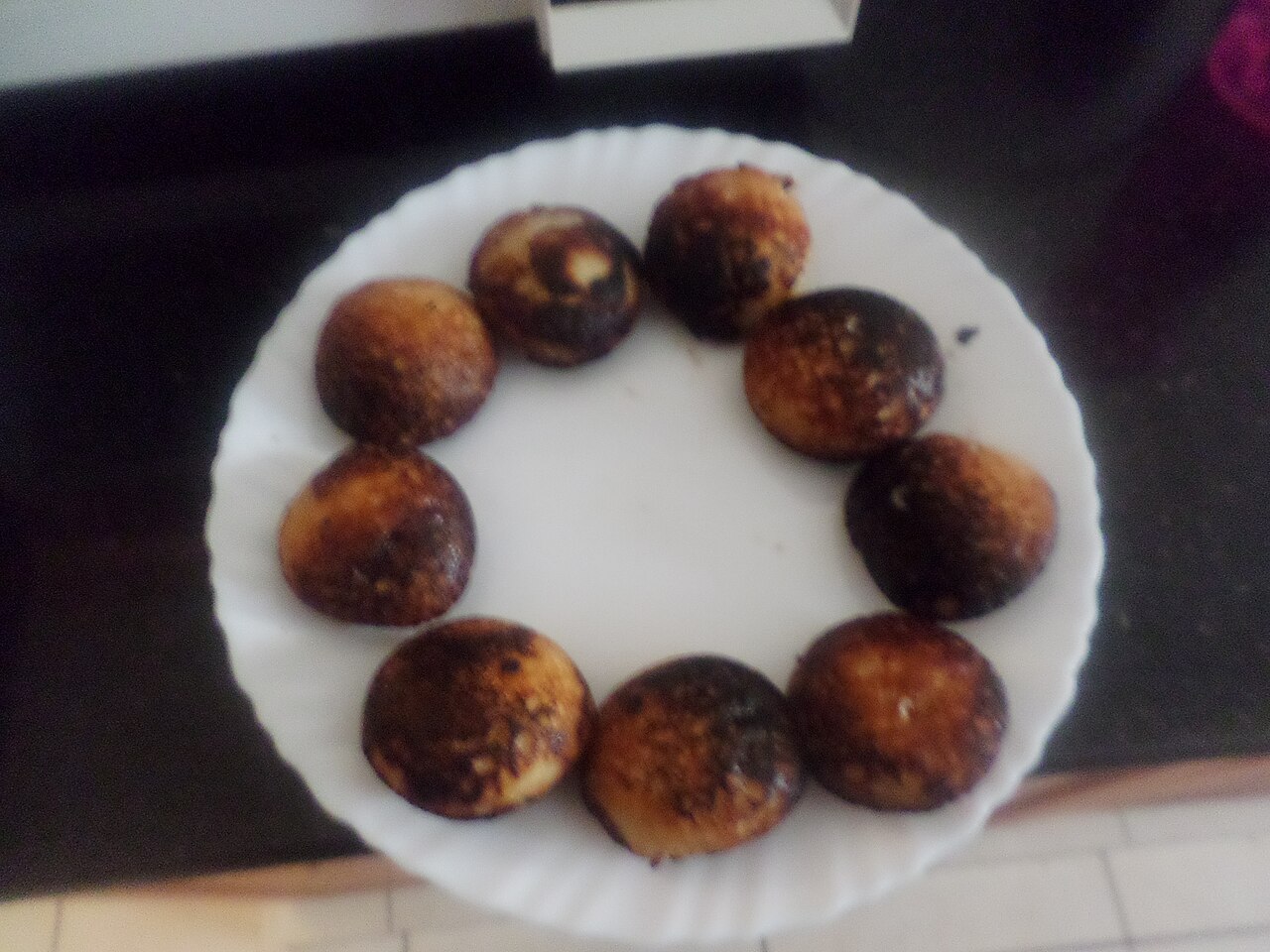
Small round cakes of rice flour and coconut milk, lightly sweet and flavoured with cardamom, cooked in a special pan with round hollows so they are crisp outside and soft inside. They are a favourite breakfast with tea.
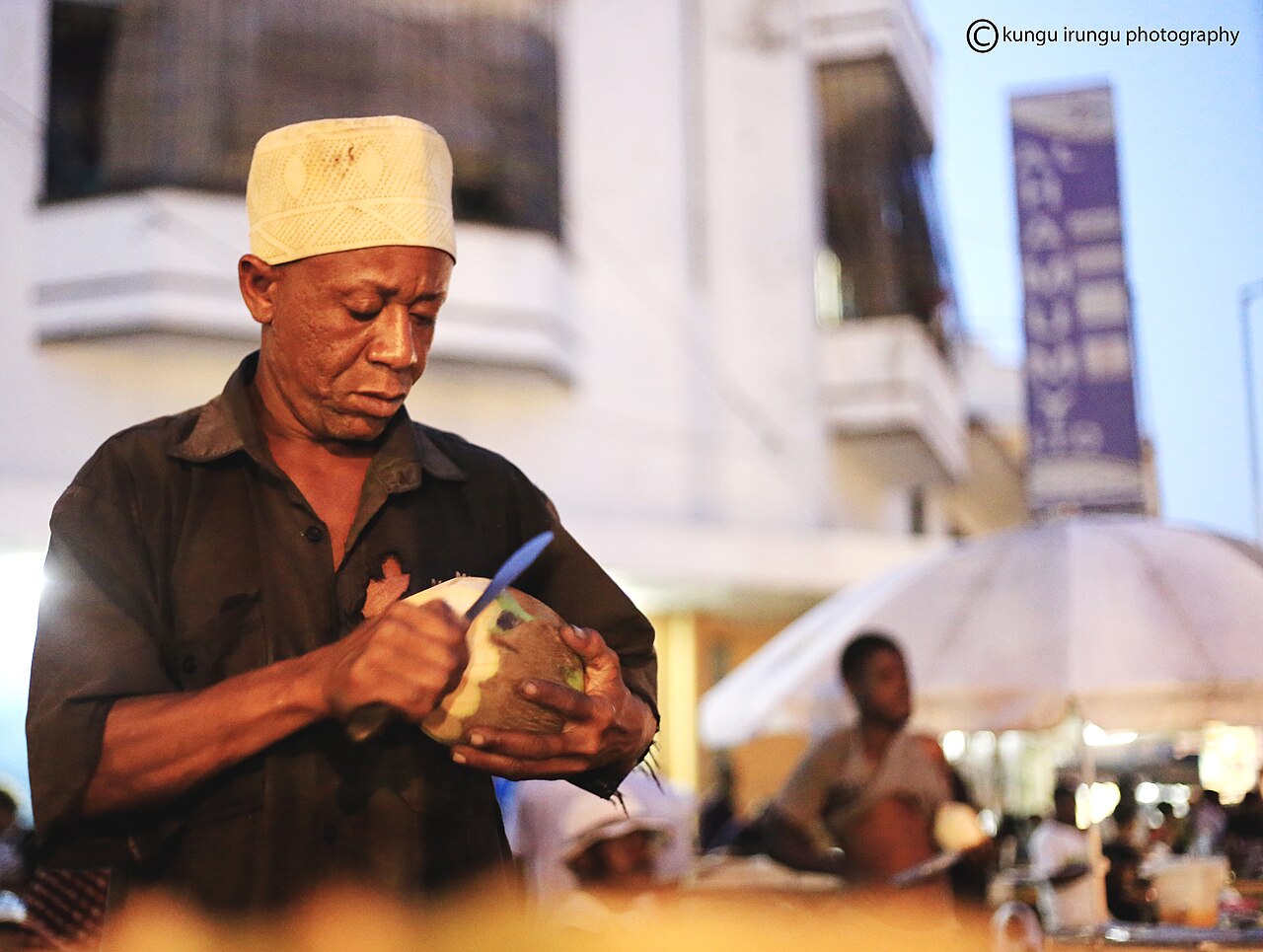
A young green coconut opened with a machete by a street seller and drunk straight from the shell with a straw. When it is empty the seller will often split it so you can scoop out the soft white flesh.
At the table in Tanzania
Wash your hands before and after the meal. In many homes a jug of water and a bowl are brought round for this.
Eat with your right hand, and pass and receive food and drink with your right hand too.
To eat ugali, pull off a small piece, roll it into a ball, press a dent in it with your thumb and use it to scoop up stew or beans.
Elders and guests are usually served first. Wait until the eldest person has started before you begin.
Accept tea or food when it is offered, even a little; refusing can seem unfriendly.
Much of the coast and almost all of Zanzibar is Muslim. Pork and alcohol are not served in many homes, and during Ramadan it is polite not to eat or drink in public in the daytime.