Namibian food follows two main paths. In the north, where most people live, the day's meal is oshifima, a stiff porridge of pearl millet or maize, eaten by hand with a relish of meat, wild spinach, dried fish or mopane worms. Across the whole country meat is plentiful, because the dry land is better for cattle, goats and sheep than for crops: it is grilled on the street as kapana, cooked for hours in a three-legged pot, or dried as biltong. German and Afrikaner settlers added dishes such as schnitzel and potjiekos, and the rains bring wild treats such as giant termite-hill mushrooms and Kalahari truffles.
Windhoek, especially the Katutura township, and markets across Namibia
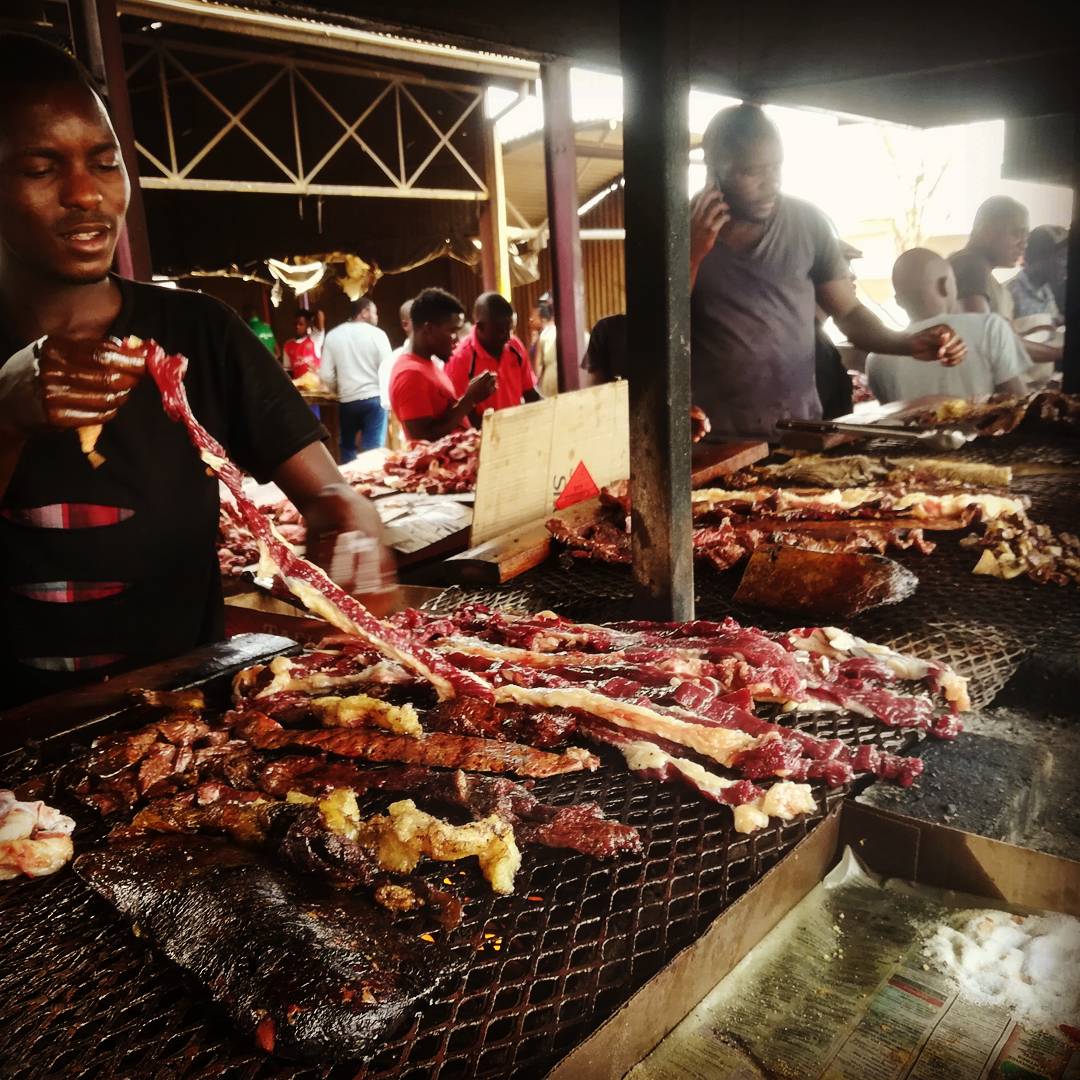
Small pieces of beef grilled on a hot metal plate over a wood fire at open-air markets, sold straight from the grill. It is dipped in a spice mix and eaten with a fresh salsa of onion, tomato and chilli, often with fat cakes. If you do not like it hot, say so.
The price is usually open to bargaining, and the traders compete noisily, each shouting that his meat is the best.
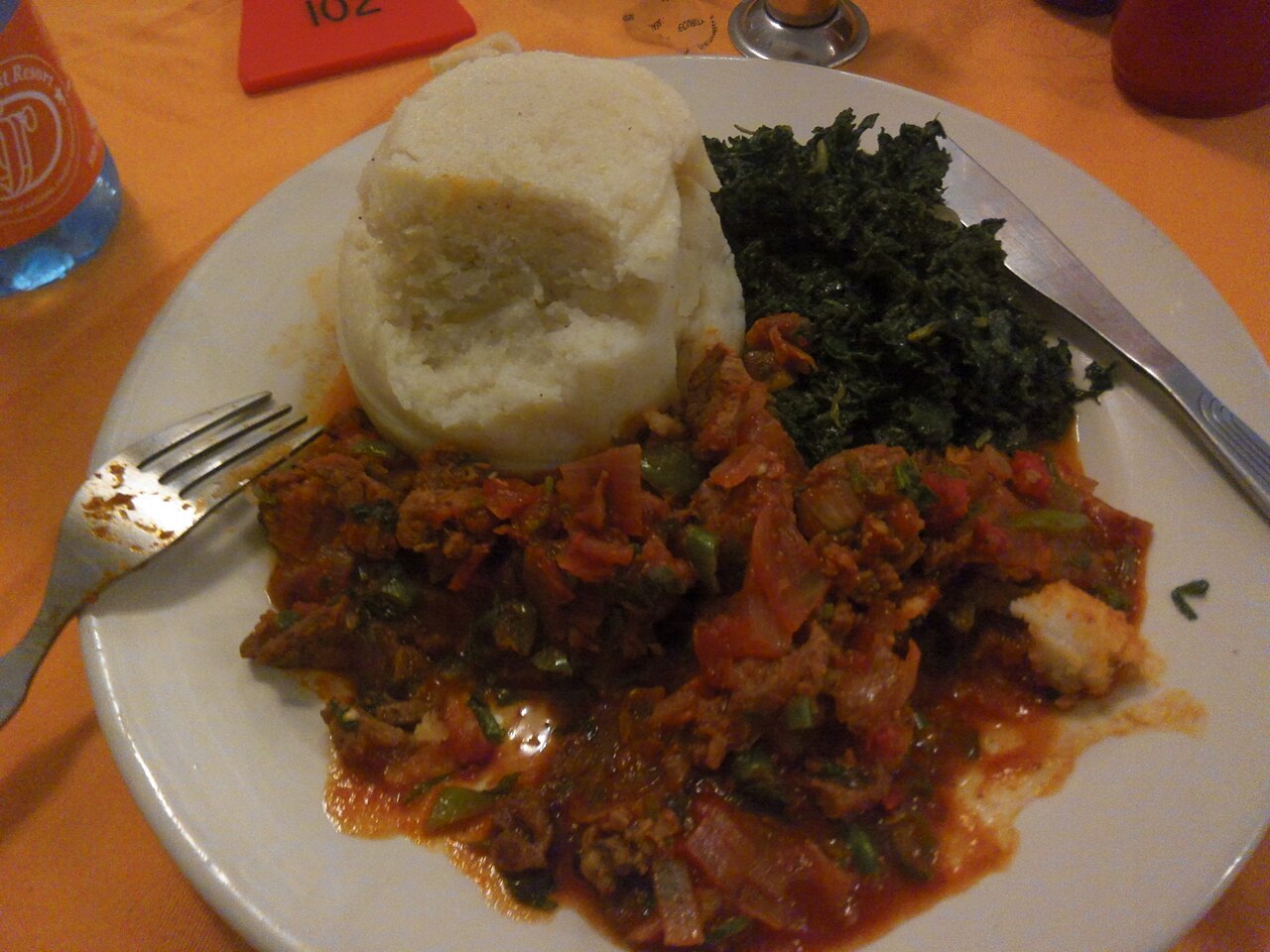
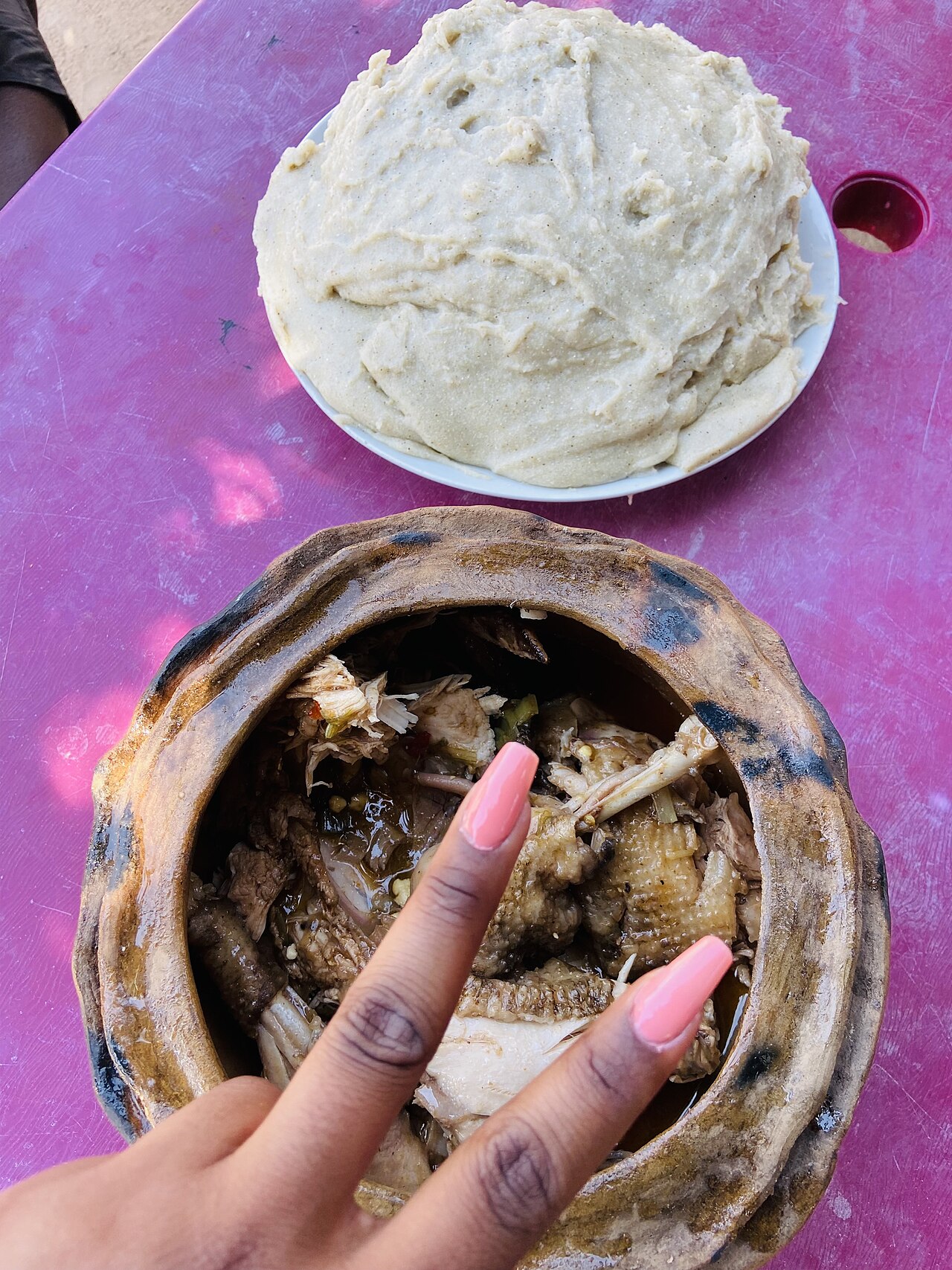
A stiff porridge made from mahangu (pearl millet) flour, maize meal or a mix of both, and the most important food in the north. A small piece is pinched off with the right hand, shaped with the fingers and used to scoop up meat, spinach or sauce.
Mahangu grows well in the hot, dry north where other grains fail, and the harvest is stored in large woven baskets lined with clay.
Northern and northeastern Namibia, and much of southern Africa
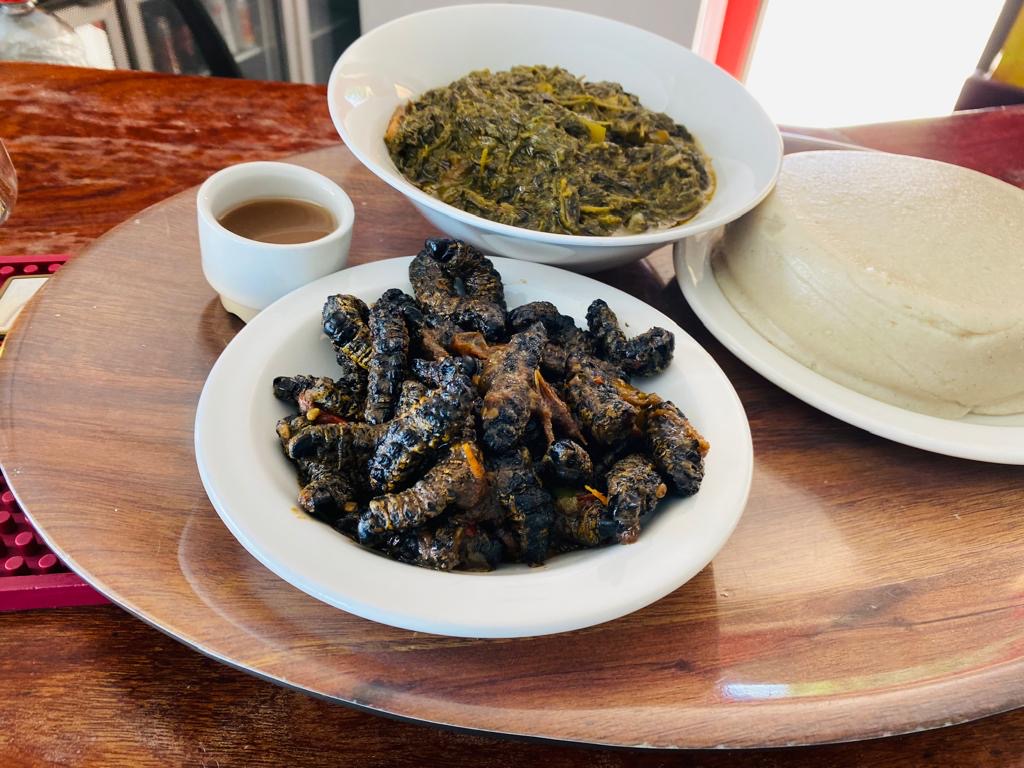
The large caterpillars of the mopane emperor moth, picked from mopane trees after the rains, boiled in salt water and dried in the sun. They are eaten as a crunchy snack or soaked and cooked with onion, tomato and chilli to serve with porridge. They are rich in protein and sold dried at northern markets such as Oshakati's.
About three kilograms of mopane leaves make one kilogram of worms, far less feed than cattle need for the same weight of beef.
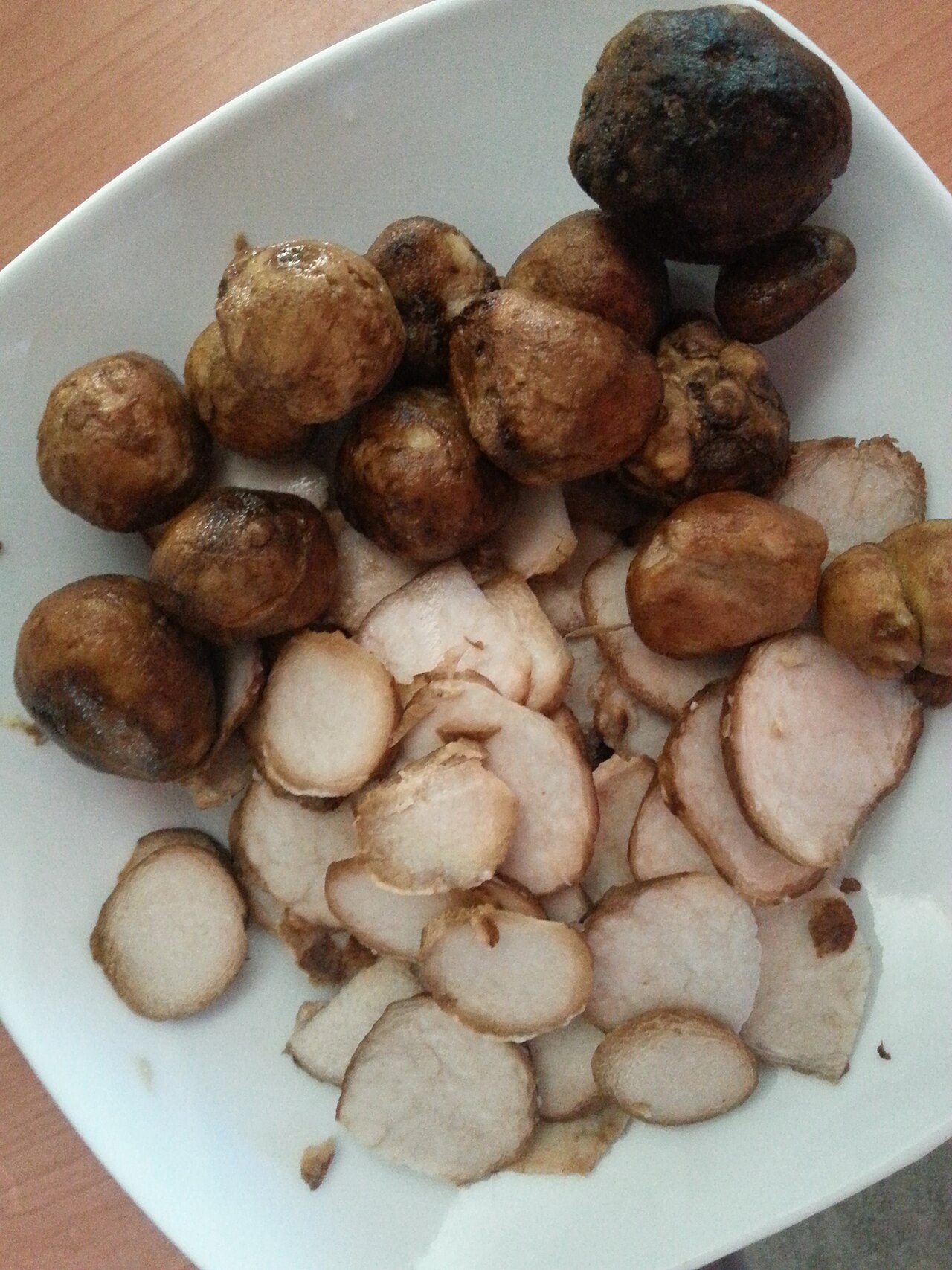
Wild desert truffles, up to about 12 cm across, that grow just under the sand after good rains and are found by the cracks they make in the ground. They have long been gathered and eaten by the San and other peoples of the Kalahari.
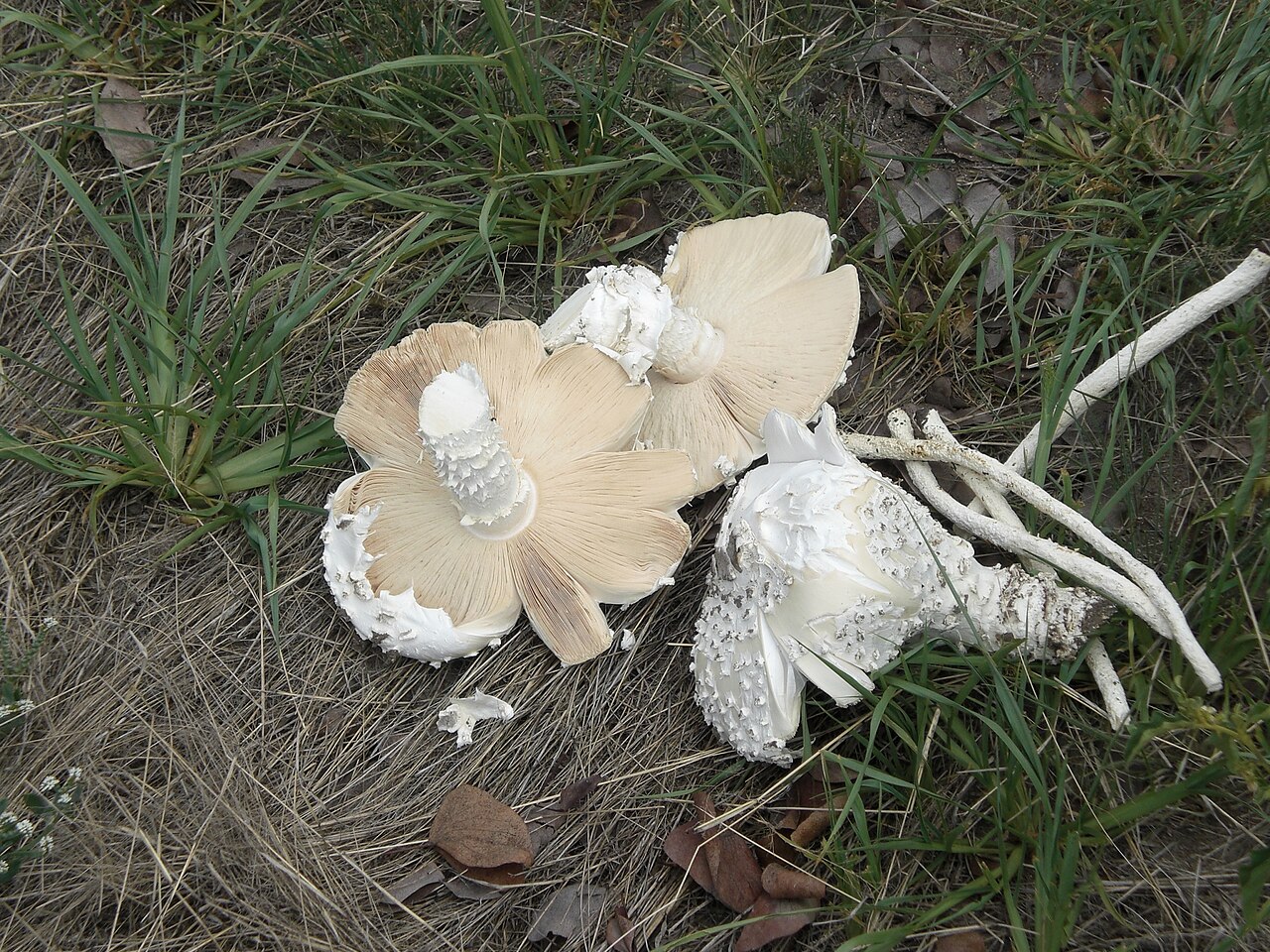
Huge white mushrooms that push up around termite mounds after heavy summer rains, mostly from January to March. The caps can grow to 40 cm across. They are sold at the roadside and fried or grilled while fresh.
Namibians see them as a symbol of growth and prosperity.
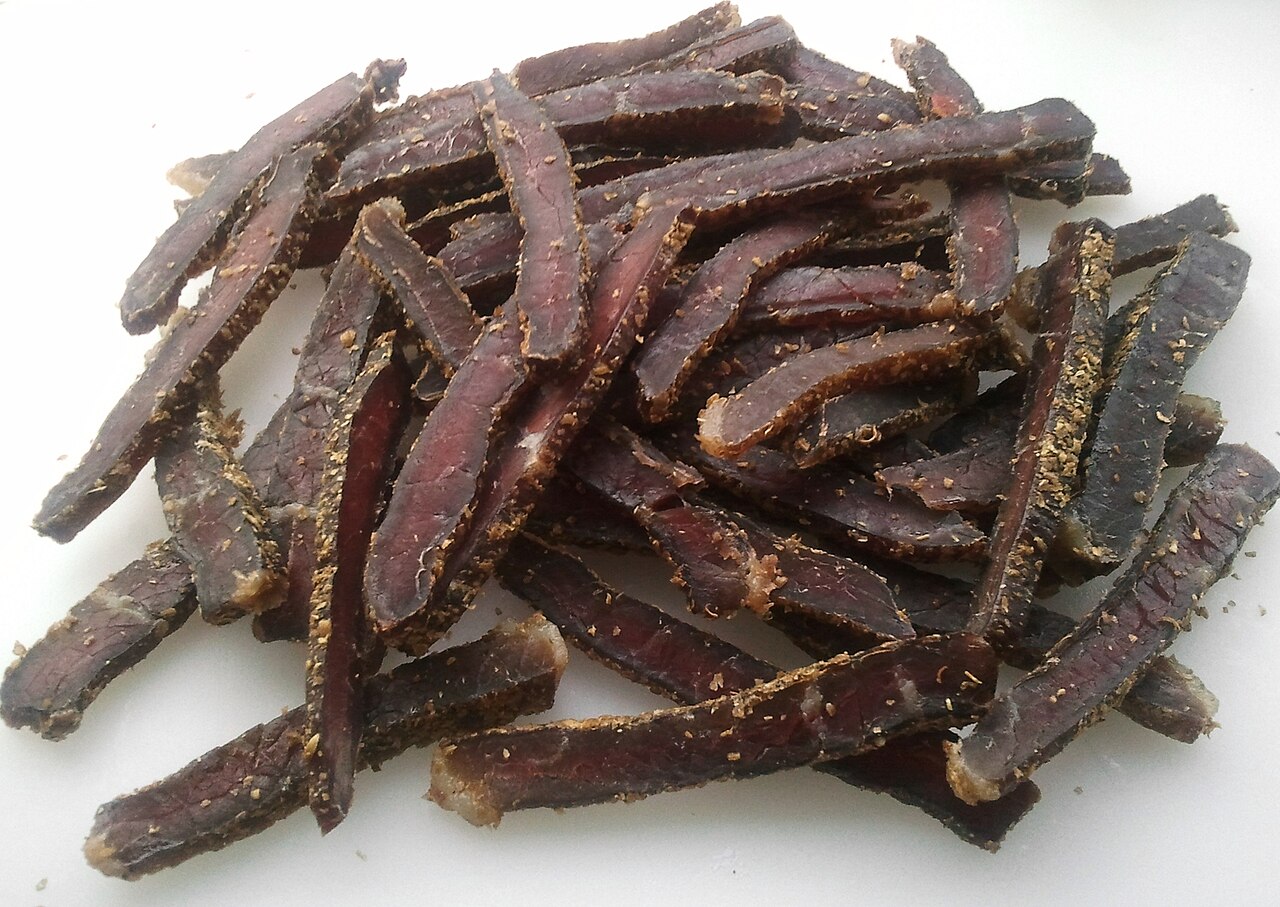
Strips of beef or game such as kudu or oryx, cured with salt, vinegar and spices and air-dried for several days. Namibians take it, and droewors (dried sausage), on long road trips. Because it is raw meat that is cured and dried rather than cooked, pregnant women are advised to avoid it.
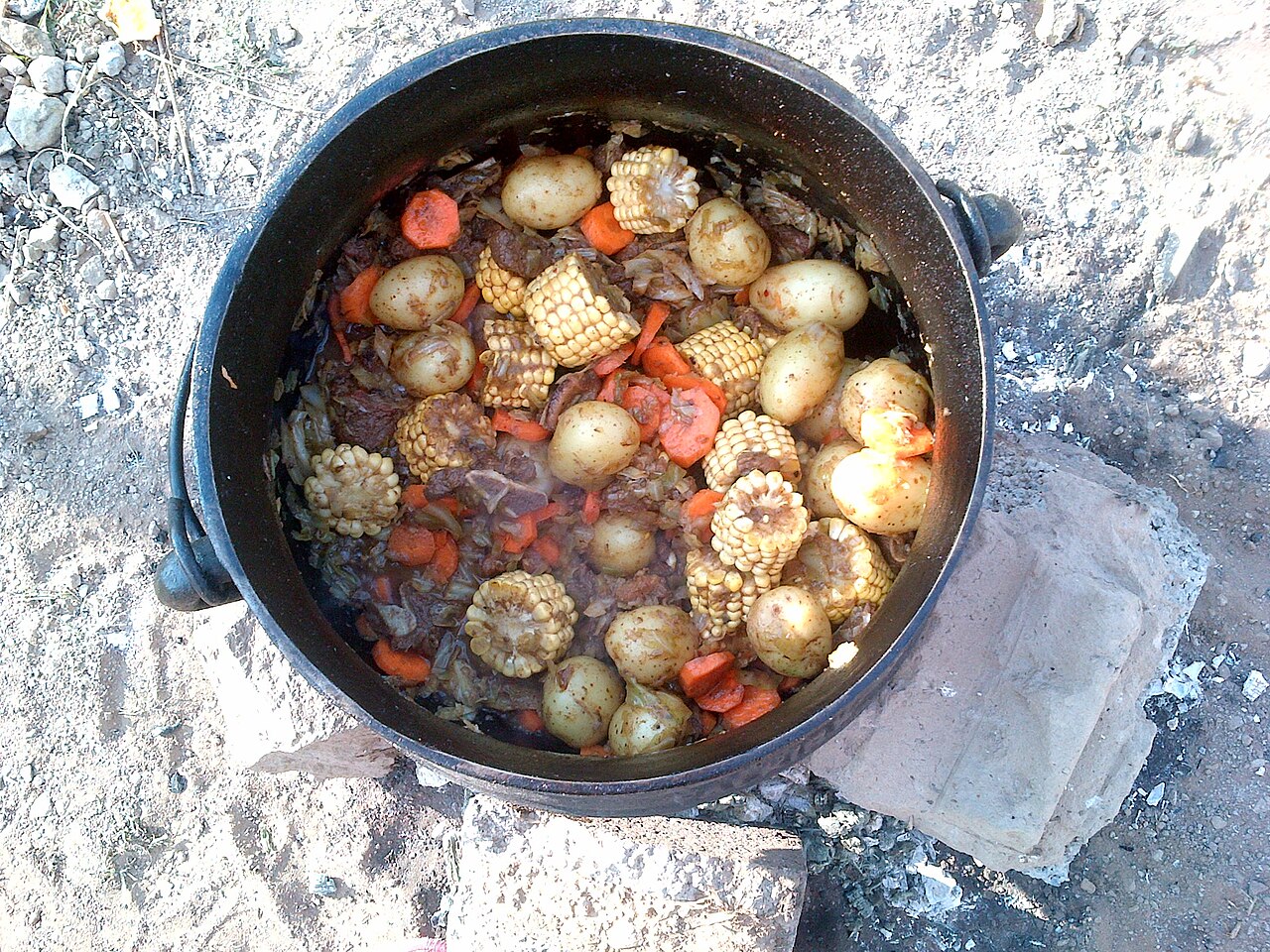
A stew of meat, vegetables and potatoes cooked slowly over a small fire in a three-legged cast-iron pot, the potjie. Lodges often cook one for their guests, and a host may make one for a special visit.
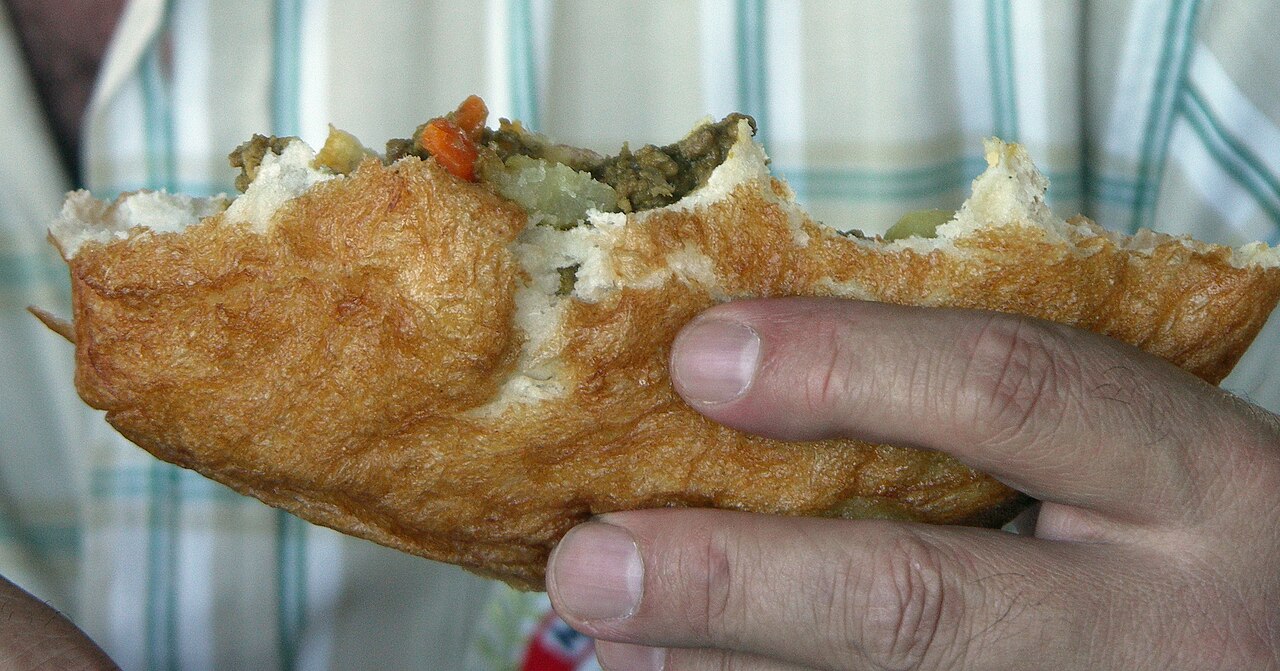
Balls of yeast dough deep-fried until golden, sold by street vendors all over the country. In Namibia they are also called 'junkies'. They are eaten with kapana, split and filled with mince, or with jam.
A stew of hardy free-range village chicken, boiled with a little water and salt and then fried in marula oil until tender and golden, a favourite of Ovambo homesteads, where the dish is cooked on an open fire.
The birds are nicknamed 'marathon runners' because they are so quick and wary that catching one means a long chase around the homestead.
Windhoek, Swakopmund and German-Namibian homes, from German settlers
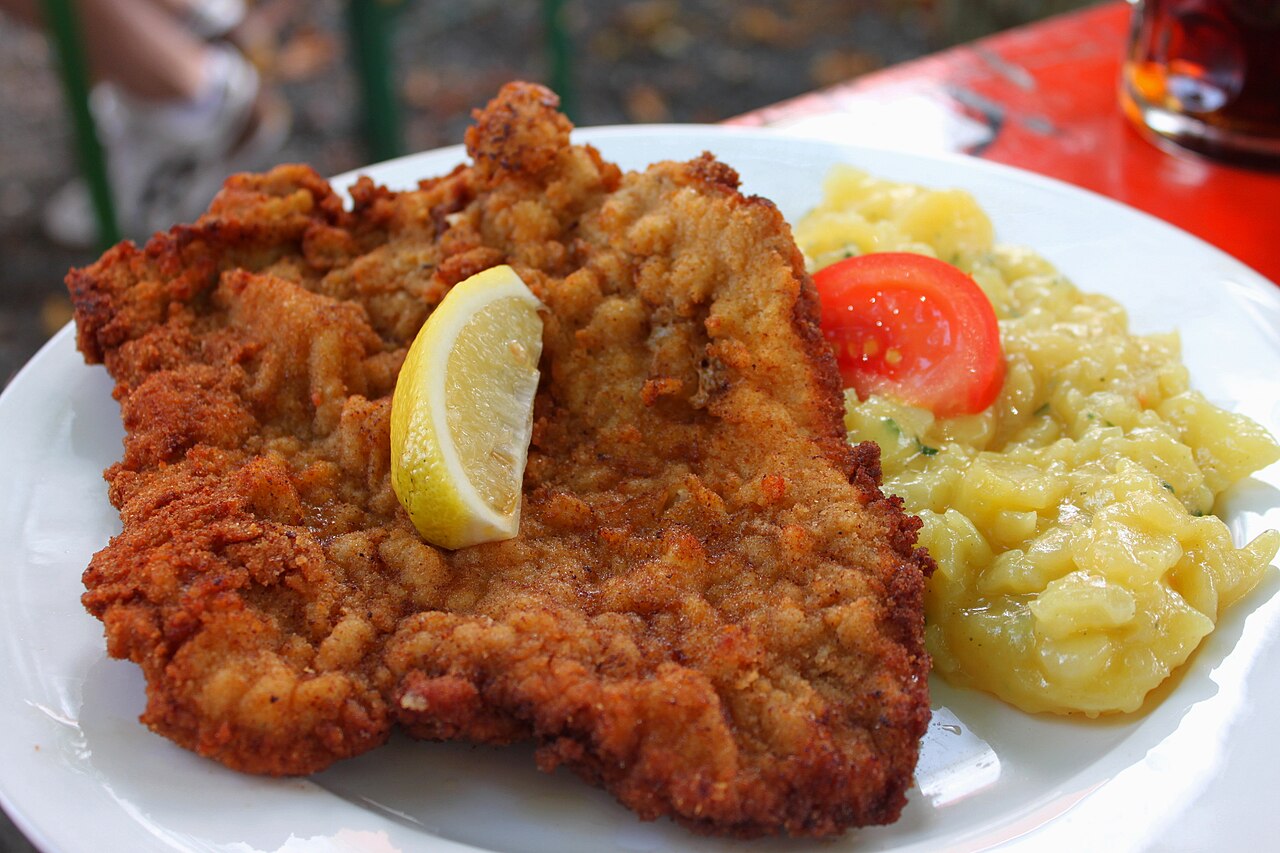
A thin slice of veal or pork, coated in breadcrumbs and fried golden, served with a lemon wedge and potatoes. It is one of the best-known dishes of German-Namibian cooking and appears on many restaurant menus.
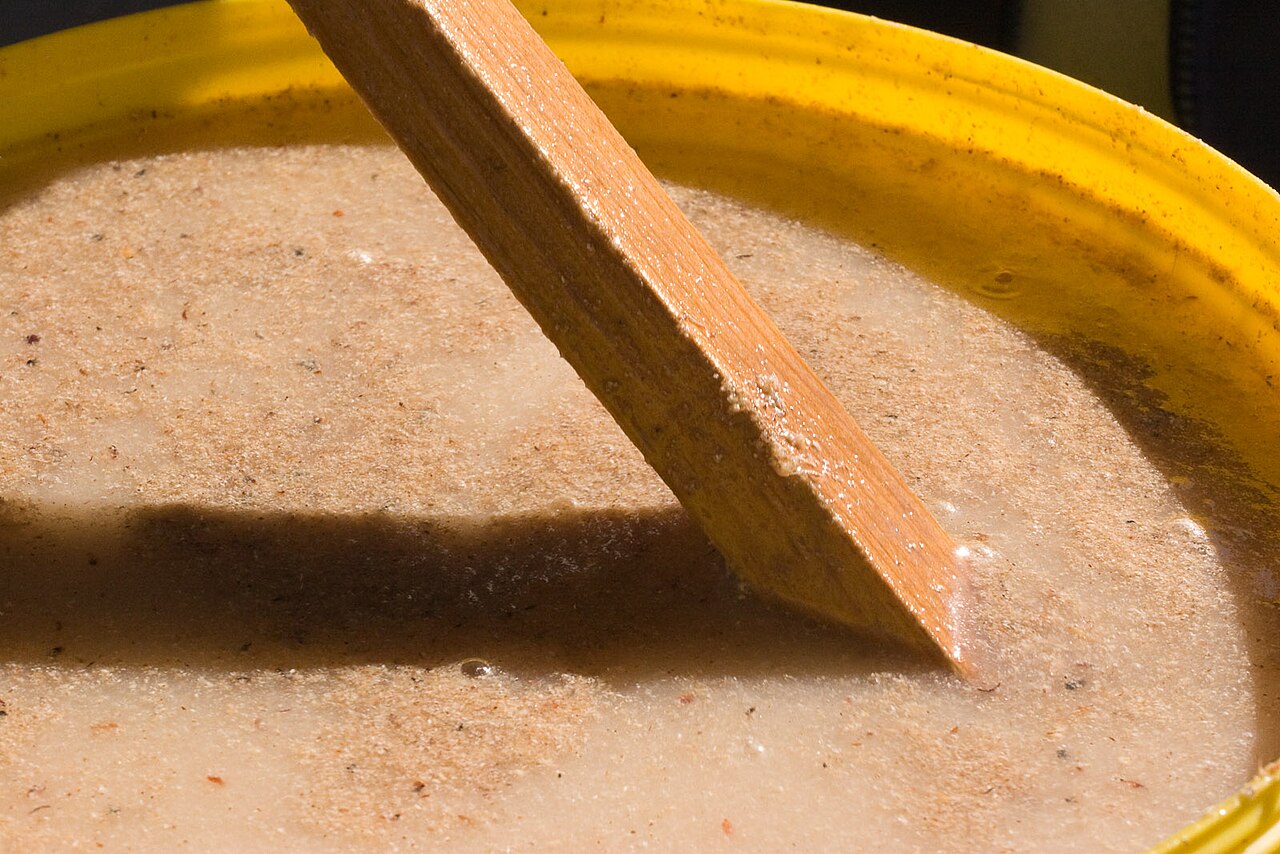
A thick, brown drink made from mahangu flour, bran and malted sorghum mixed with warm water and left to ferment for a few hours. It is sold at markets and roadside stalls and must be drunk within about six hours, before it turns sour.
At the table in Namibia
Wash your hands before eating.
Eat oshifima with your right hand only: pinch off a piece, shape it with your fingers and use it to scoop up the relish.
It is rude to refuse food outright. If you cannot eat more, decline politely, for example by saying you are full because you have just eaten.
A host who offers home-made food or drink often tastes it first in front of you, to show that it is good.
At kapana stalls and open markets the price is often open to friendly bargaining, but in shops and restaurants prices are fixed.