South African food mixes many traditions: the maize porridge and stews of Black African families, Dutch and French Huguenot baking, the spiced dishes of the Cape Malay community, whose ancestors came from Southeast Asia, and the curries of Durban's Indian South Africans. Everyday meals are often a starch such as pap or rice with meat or a stew and vegetables. At weekends and on holidays, family and friends gather round the fire for a braai, and a milk tart or malva pudding may follow.
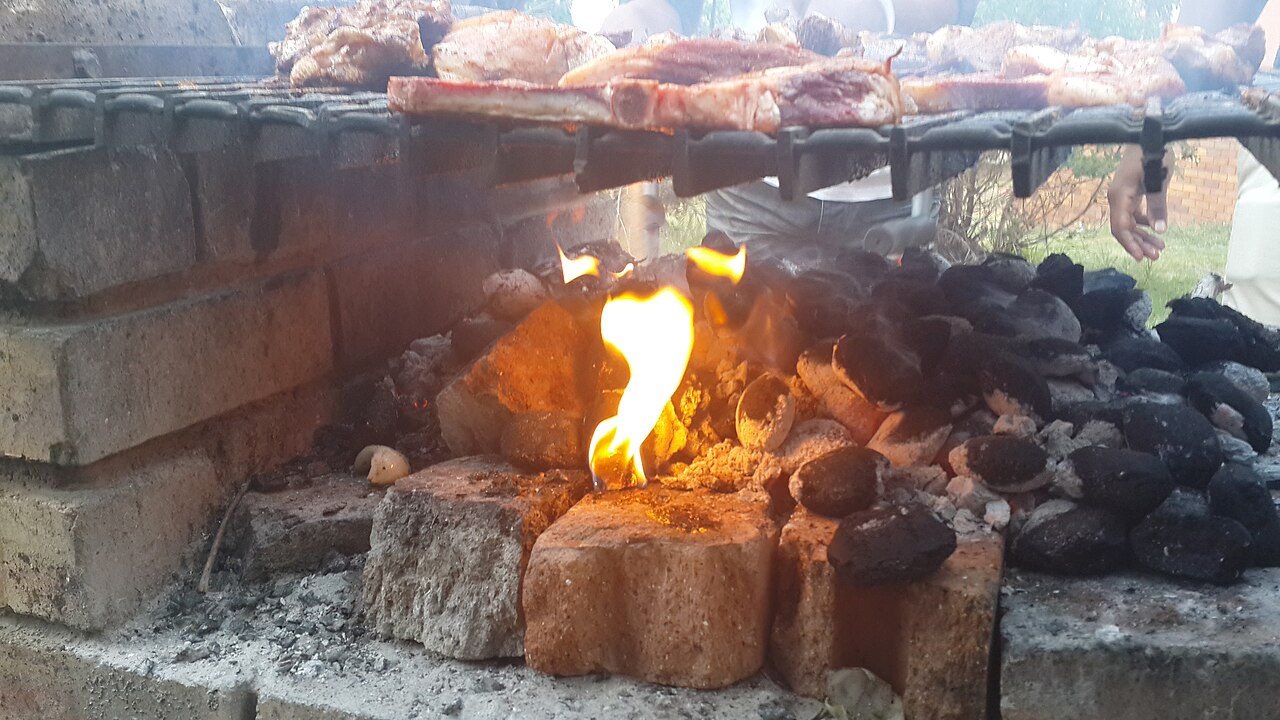
More than a barbecue: a social gathering where meat is grilled over wood or charcoal in the garden or at a picnic spot. Typical foods are boerewors, lamb chops, steaks and sosaties (spiced kebabs), with fish or rock lobster on the coast, served with pap, salads and chakalaka.
Heritage Day on 24 September is popularly called National Braai Day, a campaign meant to bring all South Africans together round the fire.
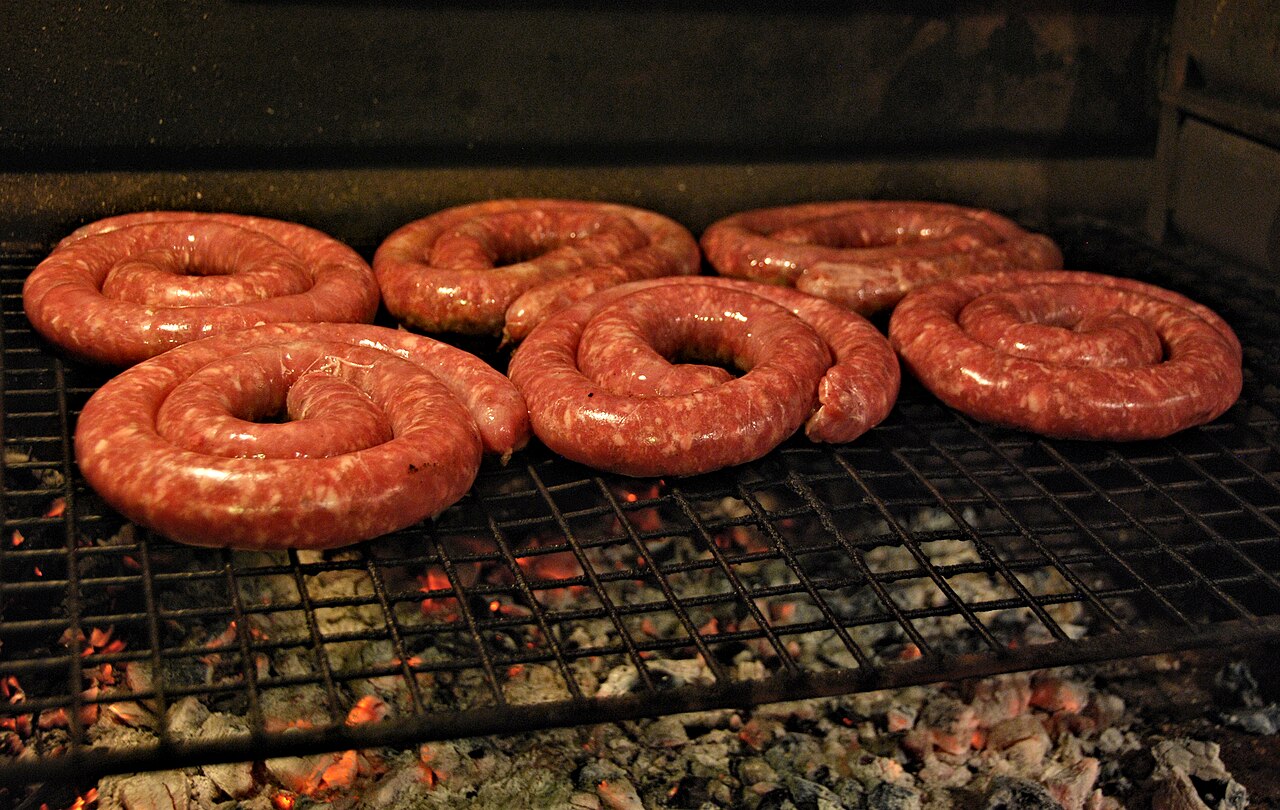
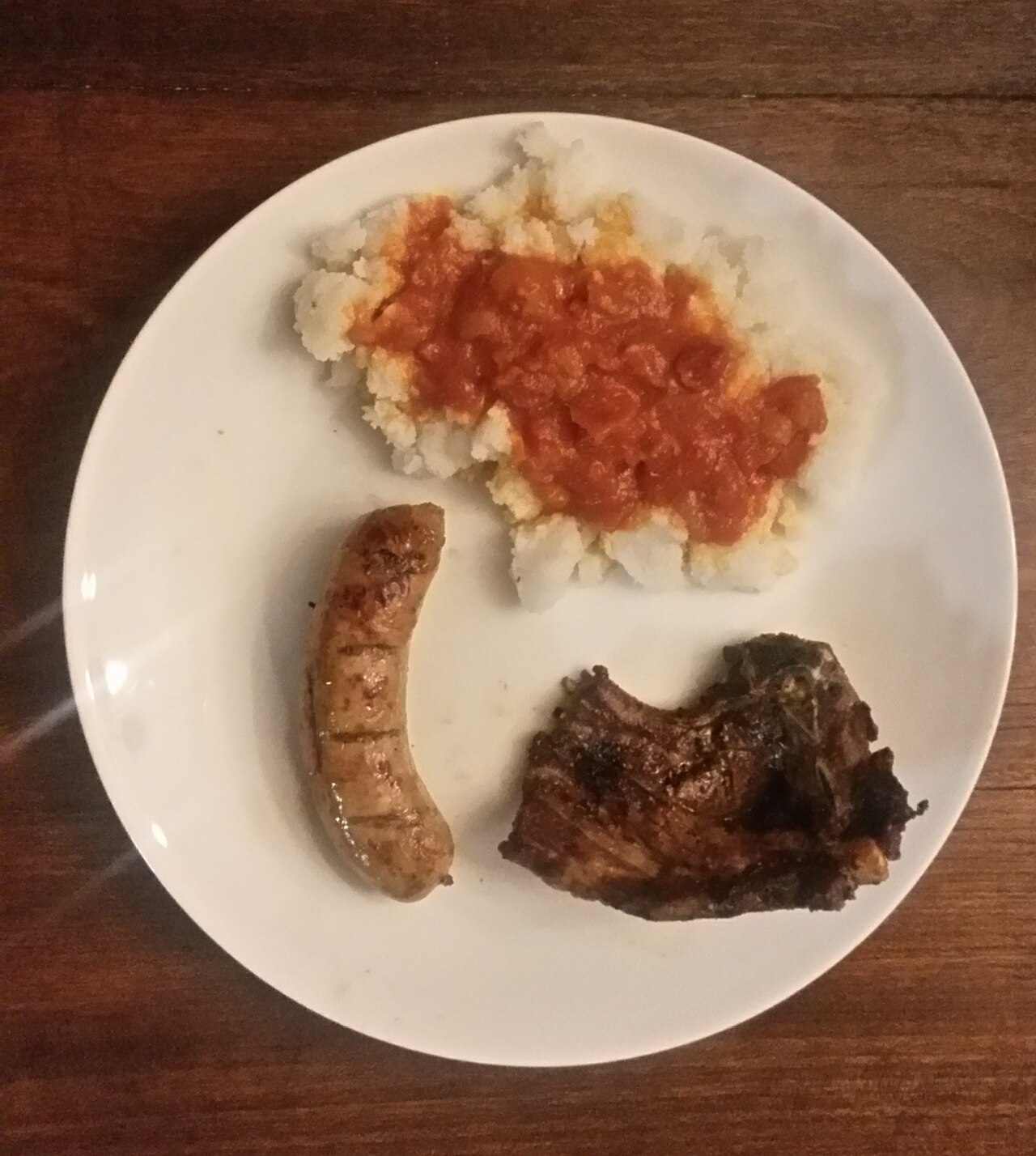
A thick, coiled sausage whose name means 'farmer's sausage' in Afrikaans. It is flavoured with toasted coriander seed, black pepper, nutmeg, cloves and allspice, and is usually grilled on the braai, or served in a bread roll as a 'boerie roll'.
By South African rules, boerewors must contain at least 90 percent meat.
Cape Town and the Western Cape, from Cape Malay cooking
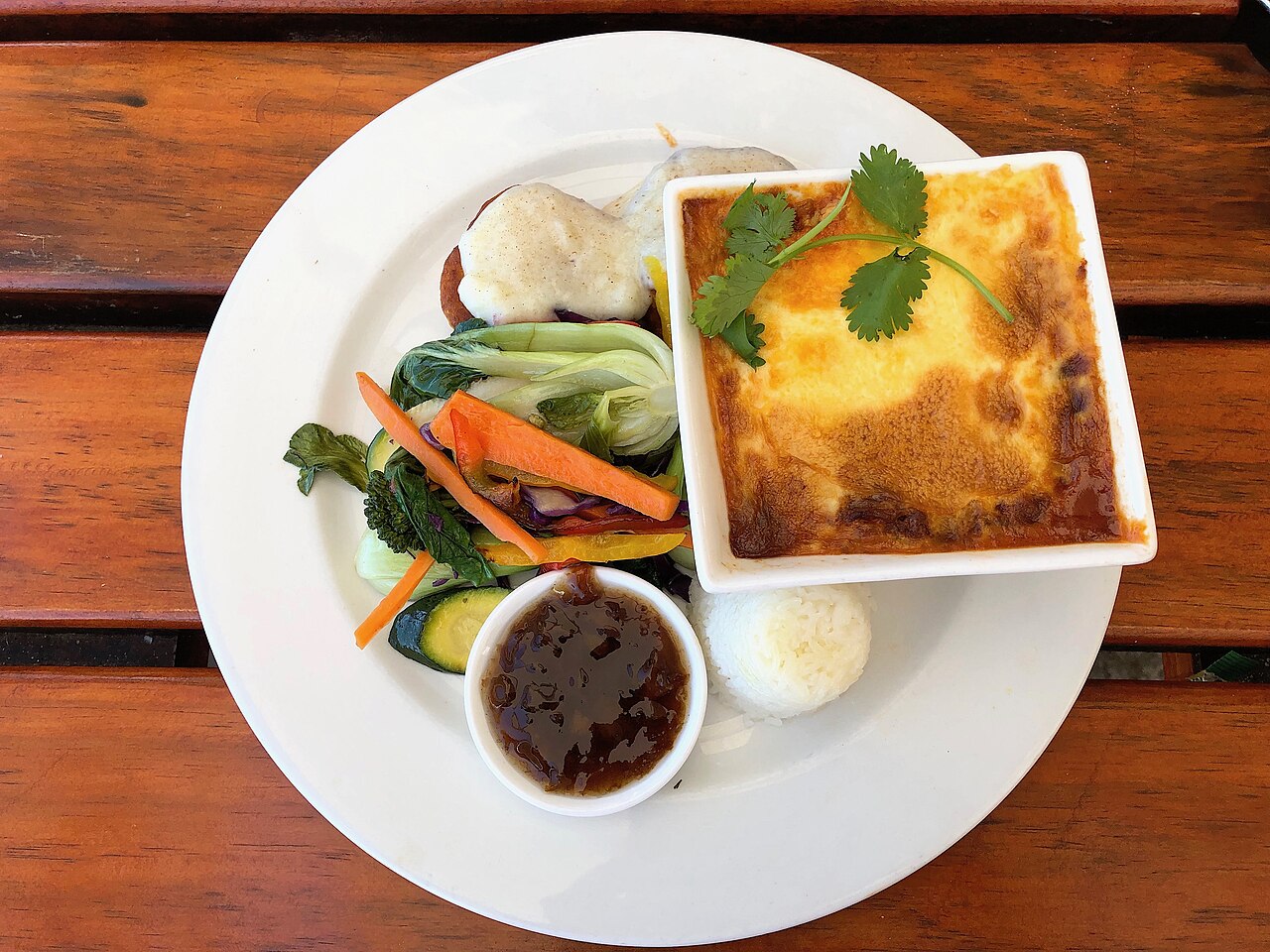
Gently curried minced beef or lamb with onions and dried fruit, baked under a golden layer of egg and milk. It is served with yellow rice and fruit chutney.
The name probably comes from a Malay word for curry spices.
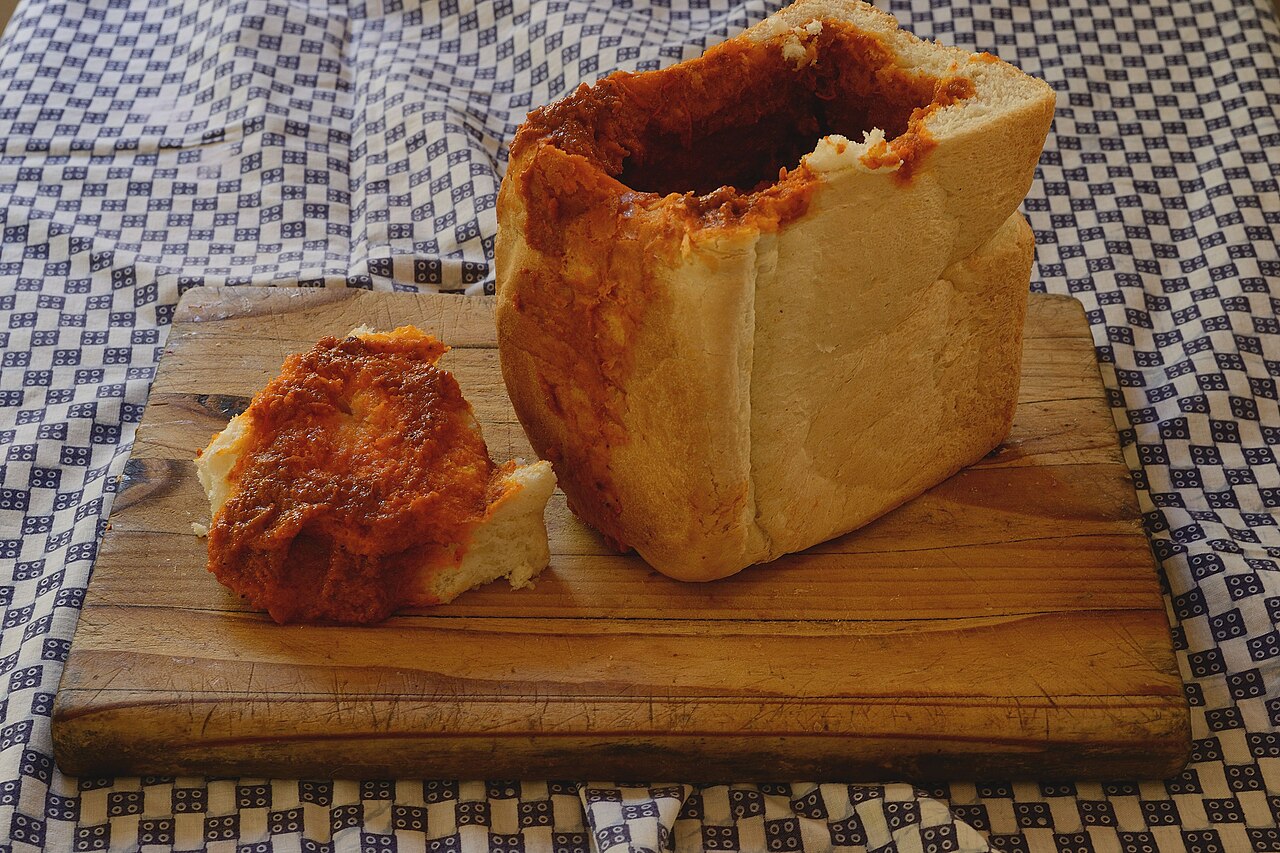
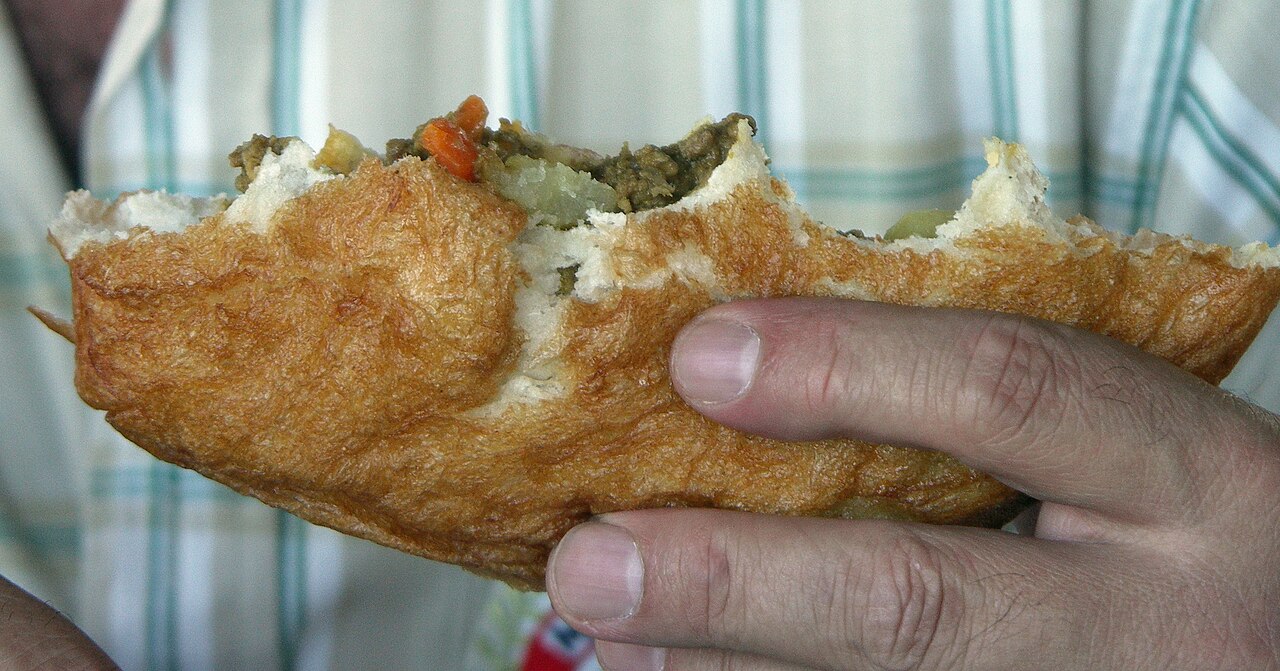
A hollowed-out loaf of white bread filled with a hot curry of mutton, chicken or beans. It comes as a quarter, half or full loaf, and is eaten with the fingers.
It dates from the 1940s in Durban. Nobody is sure where the name comes from, but 'chow' is South African slang for food.
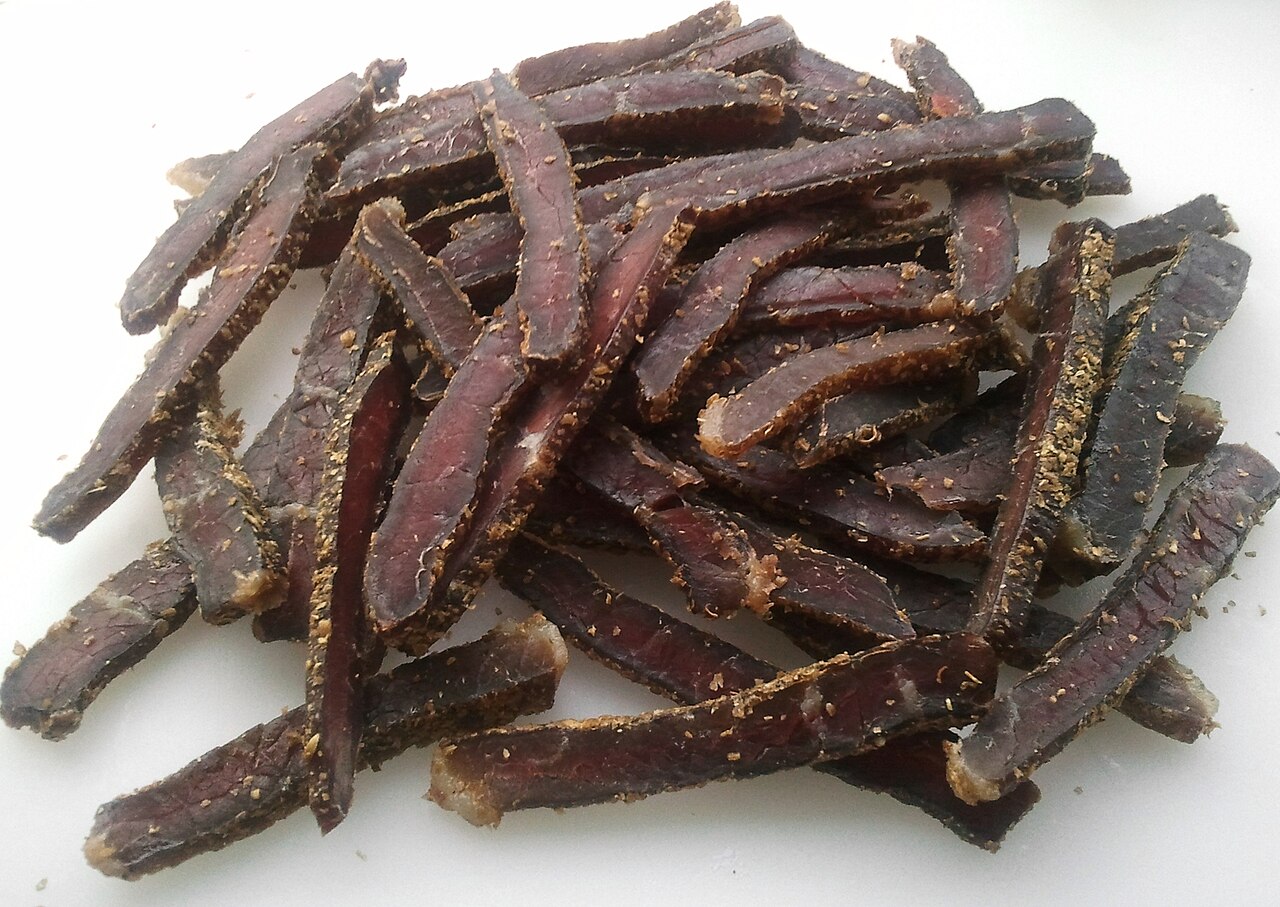
Strips of beef or game such as kudu or springbok, cured with vinegar, salt, coriander and black pepper, then air-dried for several days. It is thicker and more tender than jerky, which is dried with heat. Because it is raw cured meat, pregnant women are advised not to eat it unless it has been cooked until steaming hot.
The name is Afrikaans: 'bil' means buttock and 'tong' means strip.
Porridge of white maize meal, cooked soft for breakfast, stiff enough to hold its shape to eat with stews, or dry and crumbly. 'Pap en wors', pap with boerewors and a tomato and onion sauce, is a braai favourite.
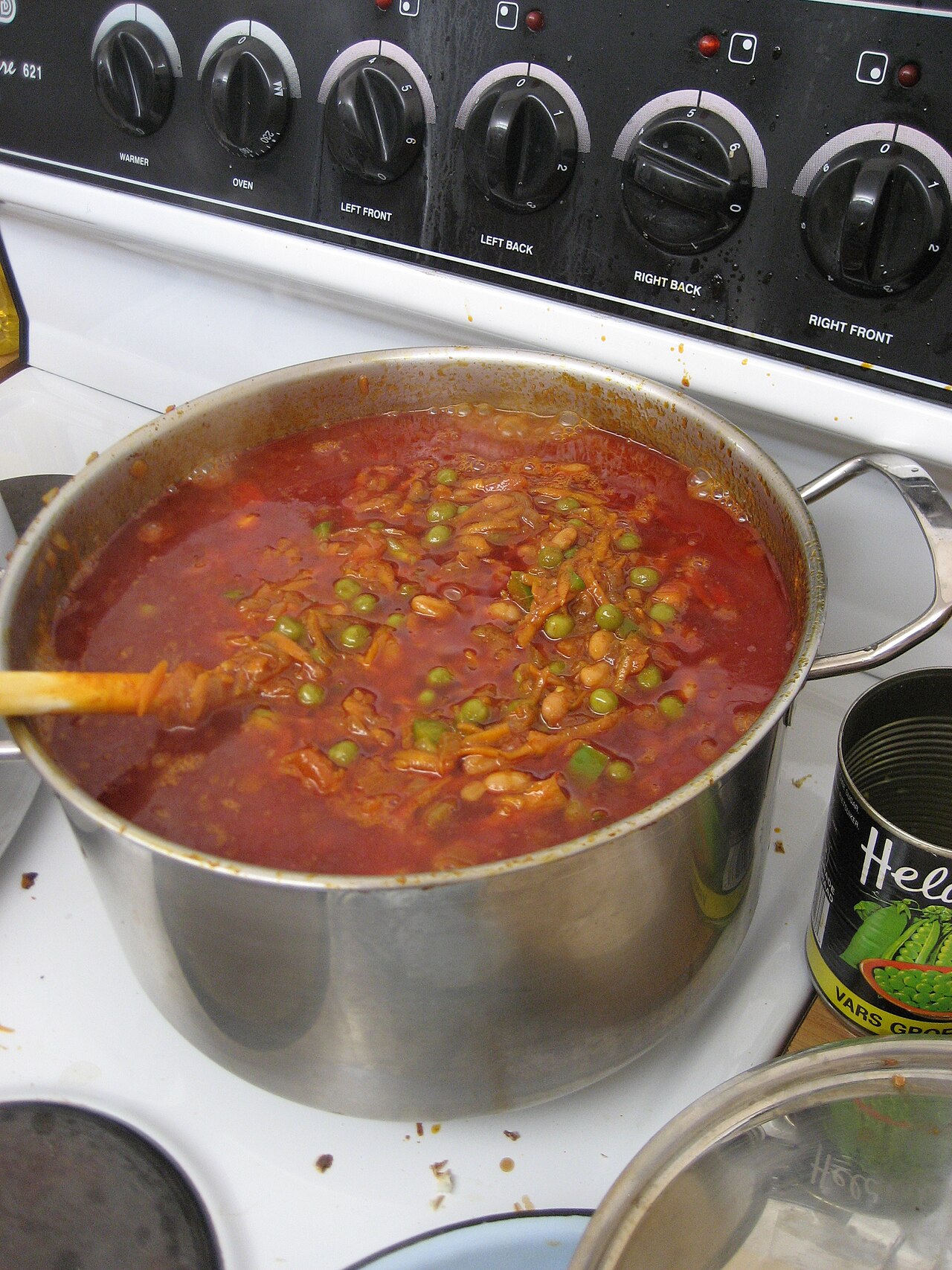
A spicy relish of onions, peppers, carrots, tomatoes and beans, flavoured with curry powder and chilli. It is served warm or cold with pap, bread, stews and braai meat.
It is said to have been created by mineworkers from Mozambique who cooked tinned tomatoes and beans with chilli to eat with their pap.
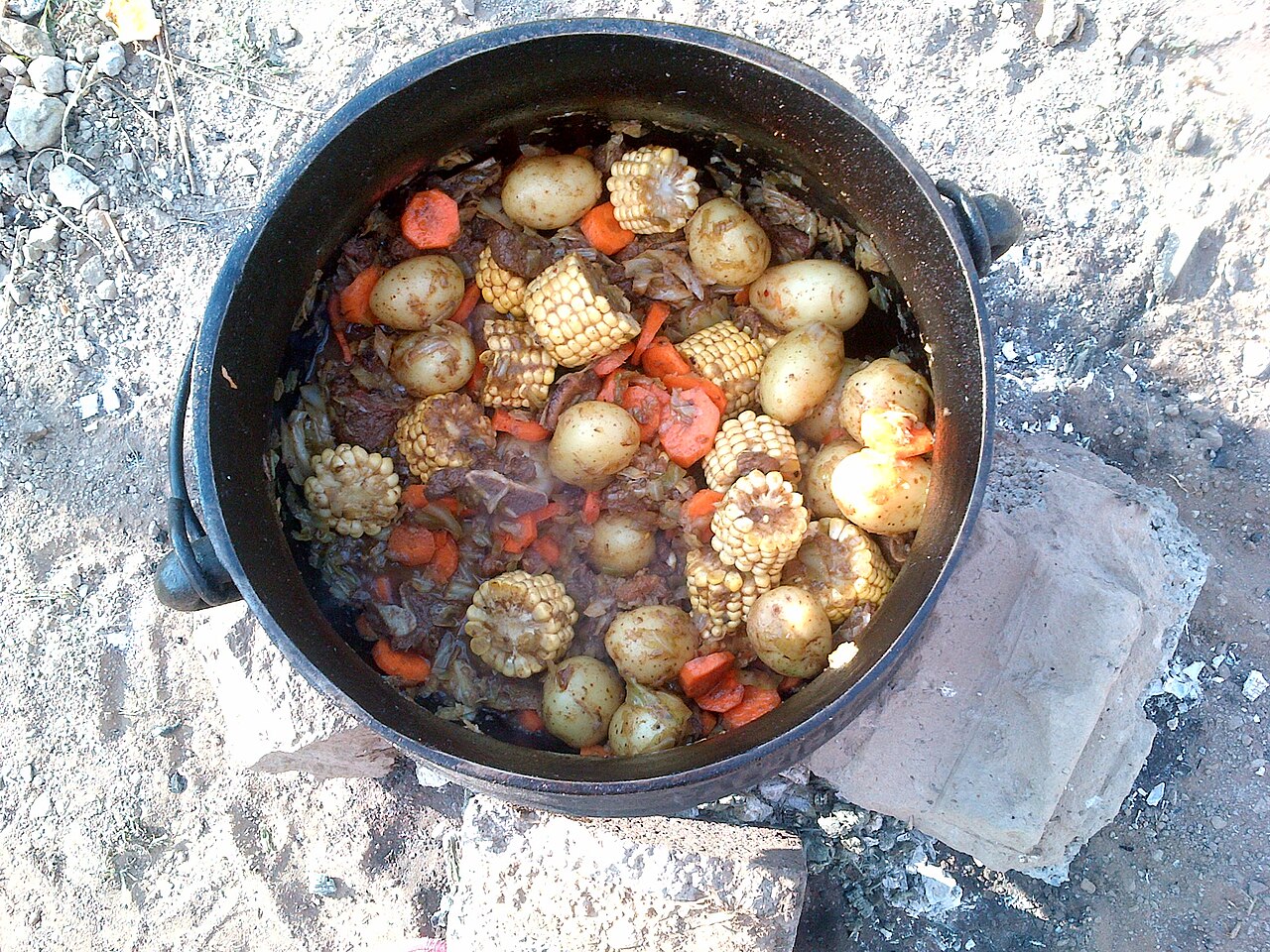
A stew of meat, vegetables and potatoes cooked slowly for hours over a small fire in a three-legged cast-iron pot, the potjie. The ingredients are laid in layers and, by tradition, not stirred.
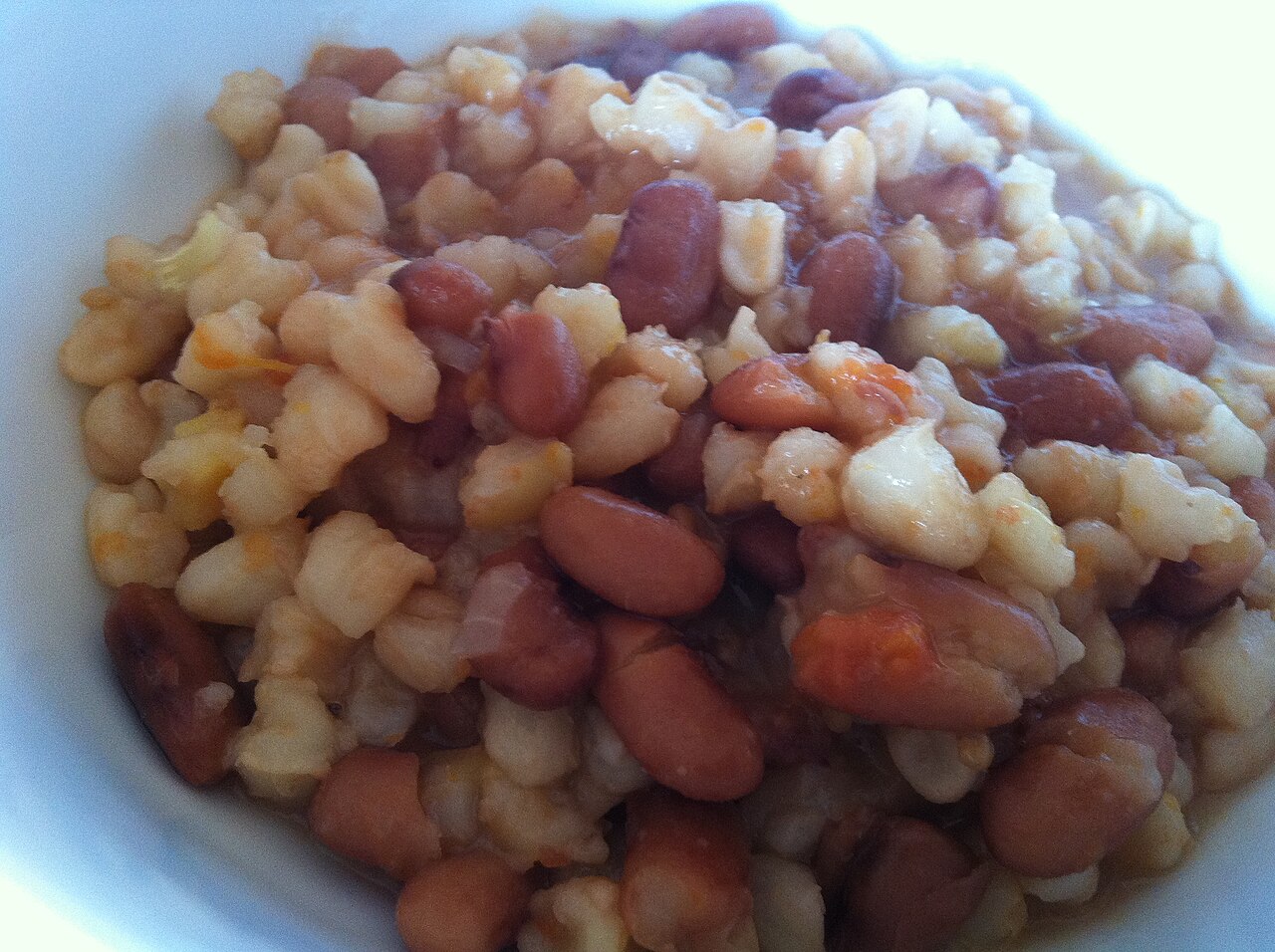
Samp (dried, crushed maize kernels) cooked slowly with sugar beans, butter, onions and chilli until soft and creamy. It is often eaten with chicken or a meat stew.
It is often said to have been Nelson Mandela's favourite dish.
A ball of yeast dough deep-fried until golden, like a doughnut without a hole. It is split open and filled with curried mince, or eaten with jam, syrup or cheese, and sold by street vendors and at taxi ranks.
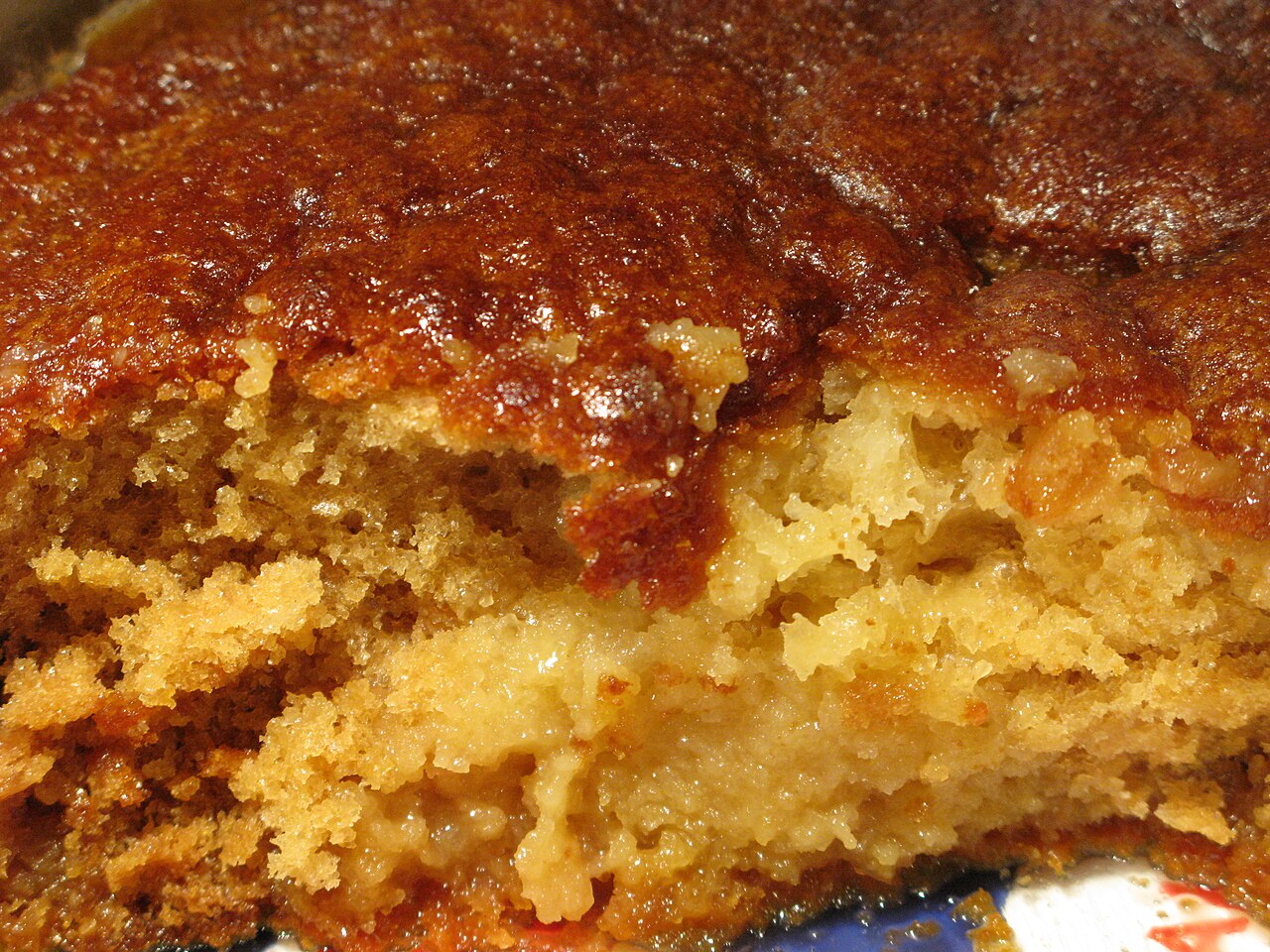
A soft, spongy baked pudding made with apricot jam. As soon as it comes out of the oven, a warm sauce of butter, sugar and cream is poured over it and soaks in. It is served warm with custard or ice cream.
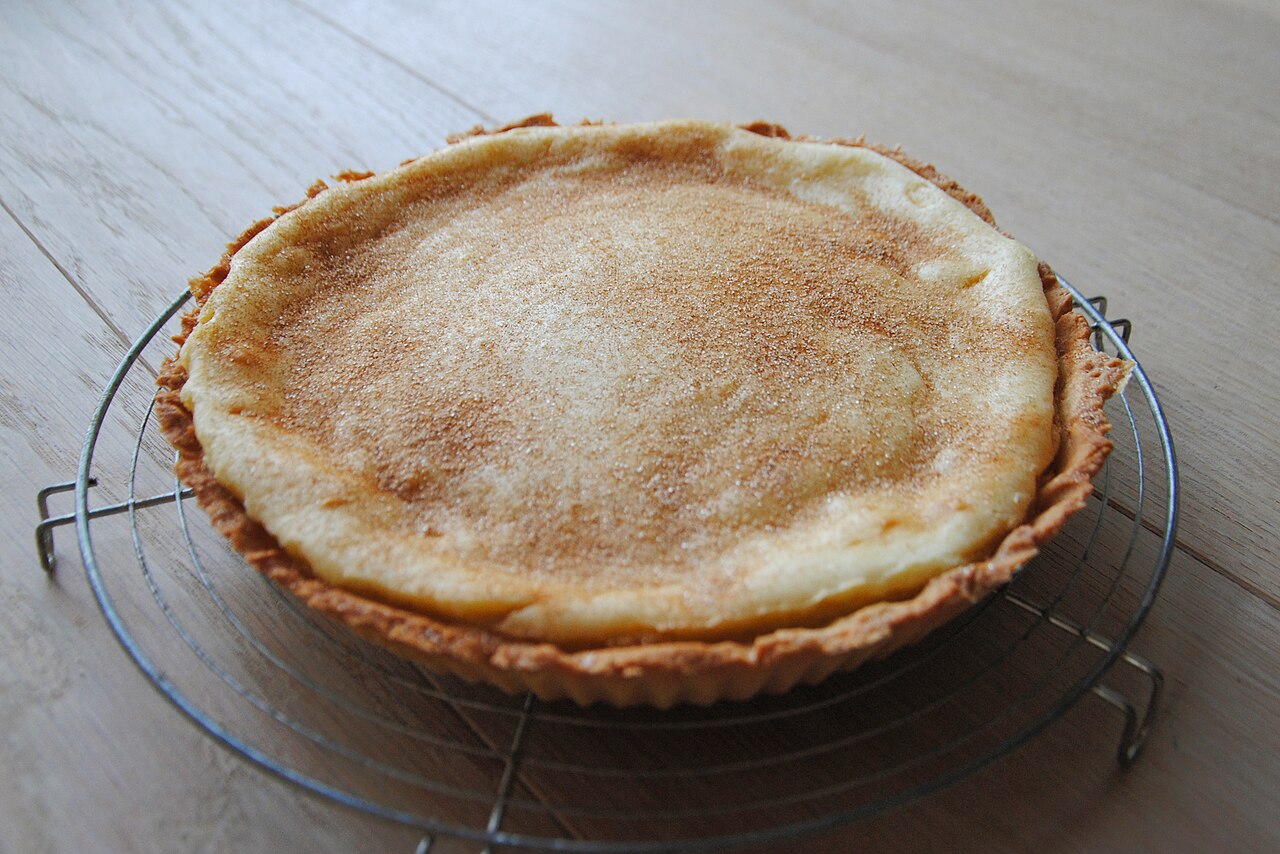
A sweet pastry case filled with a smooth, light custard of milk, flour, sugar and eggs, dusted with cinnamon. It has more milk and fewer eggs than a Portuguese custard tart, so it tastes of milk.
27 February is celebrated as National Milk Tart Day.
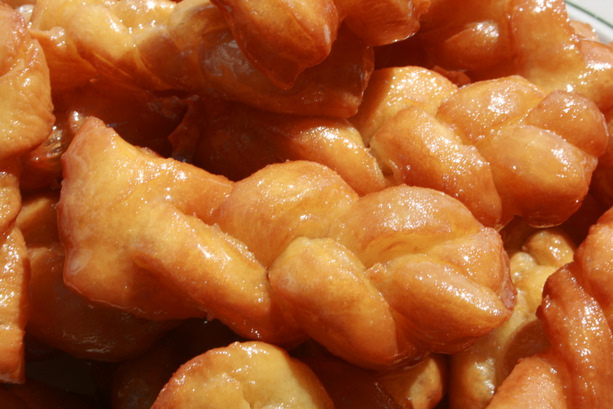
Plaited strips of dough, deep-fried and dropped straight into ice-cold sugar syrup, so they are crunchy outside and dripping with syrup inside. The Cape Malay koesister is a different treat: a spiced, fried dough ball rolled in coconut.
Koeksisters were often made and sold to raise money for churches and schools.
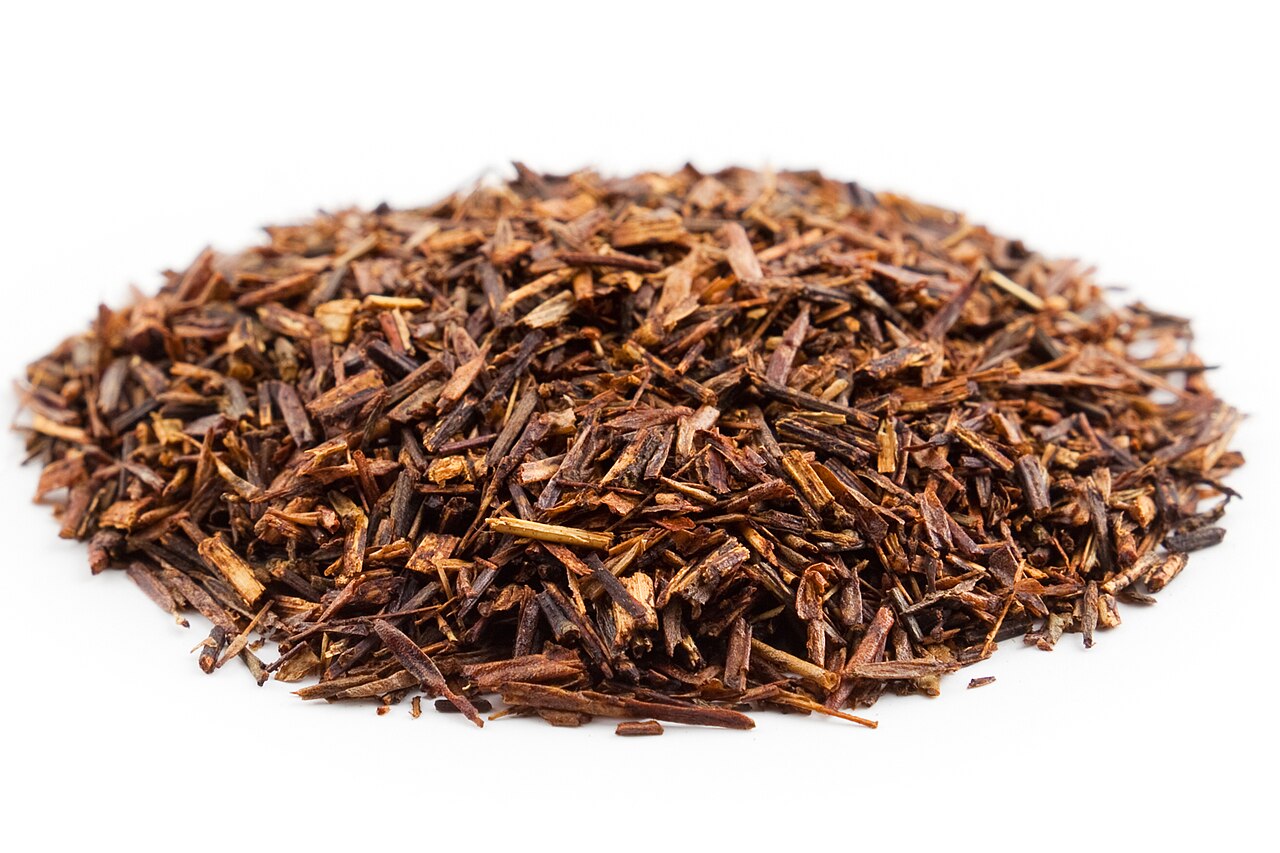
A red-brown herbal tea made from the leaves of the rooibos plant, which means 'red bush' in Afrikaans. It is naturally caffeine-free and is drunk hot with milk and sugar, plain, or iced.
Since 2021 the name rooibos has had protected designation of origin status in the European Union, like champagne.
If you are invited to a braai, ask what to bring. Guests often bring their own meat and drinks, and a bottle of wine for the host is a welcome gift.
Greet everyone when you arrive, not only your host.
Many white South Africans eat with a knife and fork, while in many Black and Indian South African homes people eat with a spoon or their fingers. Follow your host.
Try to finish what is on your plate; leaving a lot of food can suggest that you did not like it. Praise the cooking towards the end of the meal.
It is polite to receive things, such as a plate, with both hands held out together.