Norwegian food is simple and hearty, built on fish from the cold sea, lamb from the mountain pastures, potatoes, dairy and berries, with old ways of preserving food by salting, drying and curing. Breakfast is bread with cheese and toppings, lunch is often a packed 'matpakke' of open sandwiches, and the main hot meal, 'middag', is eaten early, often between 4 and 7 in the evening.
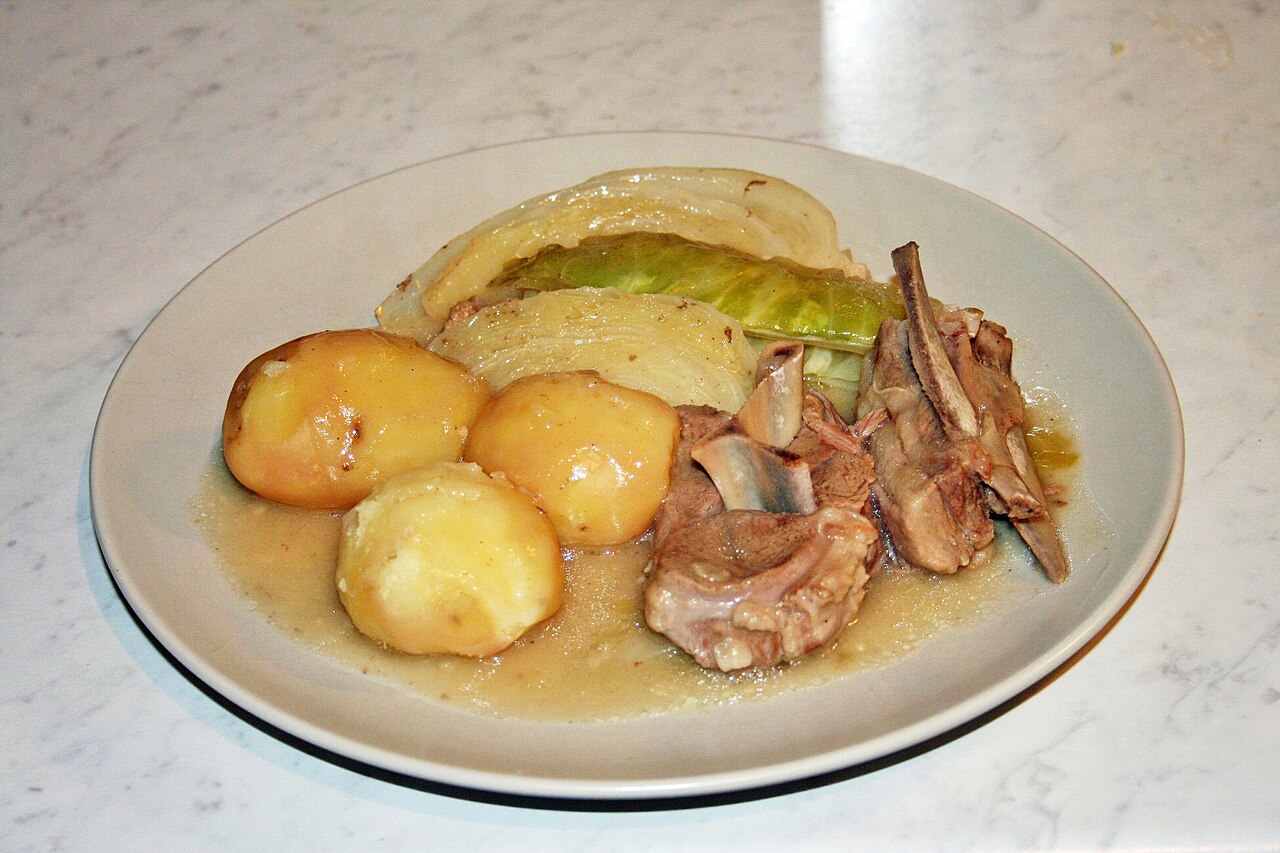
Mutton or lamb on the bone layered with cabbage and whole black peppercorns, then slowly simmered for hours and served with boiled potatoes. The name means 'mutton in cabbage'.
Fårikål was voted Norway's national dish on a radio programme in the 1970s and confirmed again in 2014. Its own feast day is the last Thursday in September.
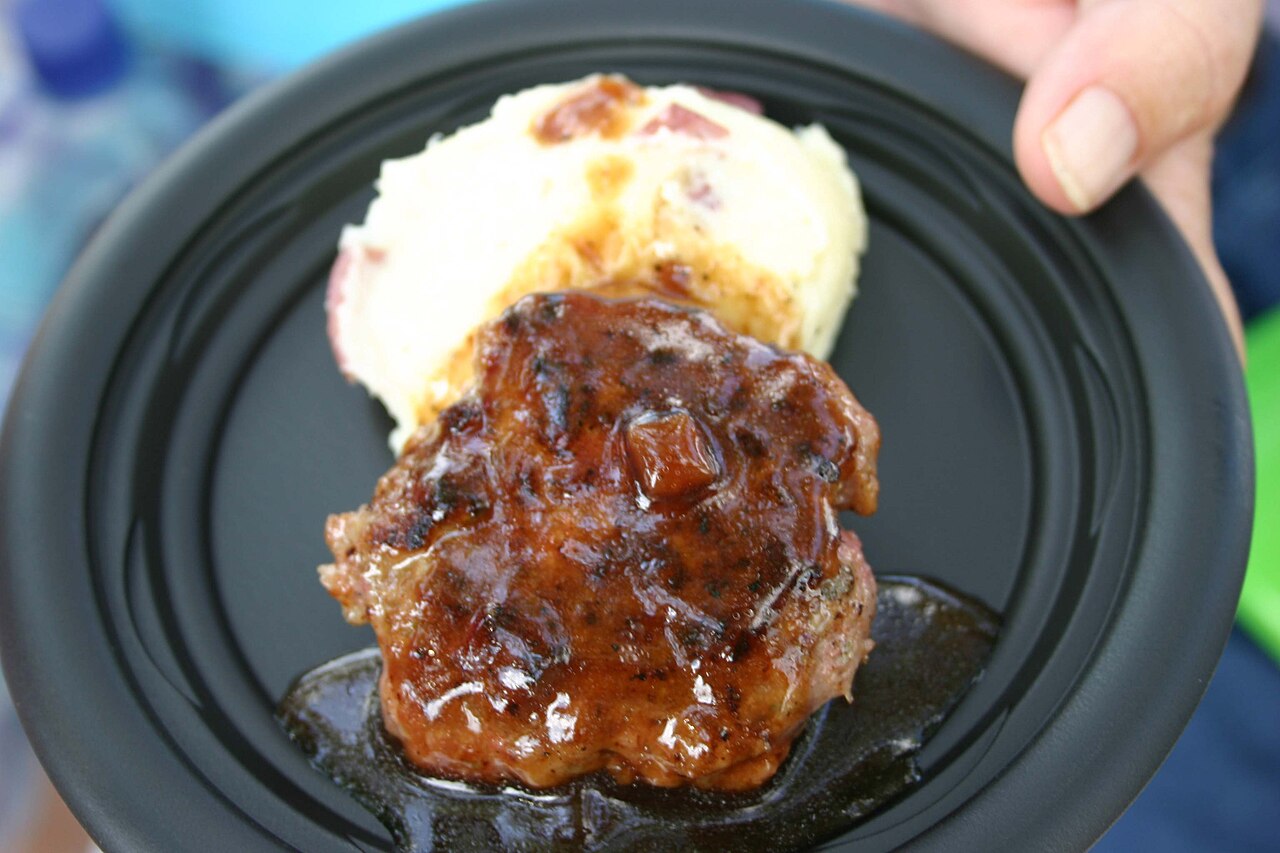
Flattened, oval meat patties, larger than meatballs, simmered in a brown gravy and served with boiled potatoes, creamed cabbage and lingonberry jam. A classic everyday dinner.
All of Norway; the name changes from region to region
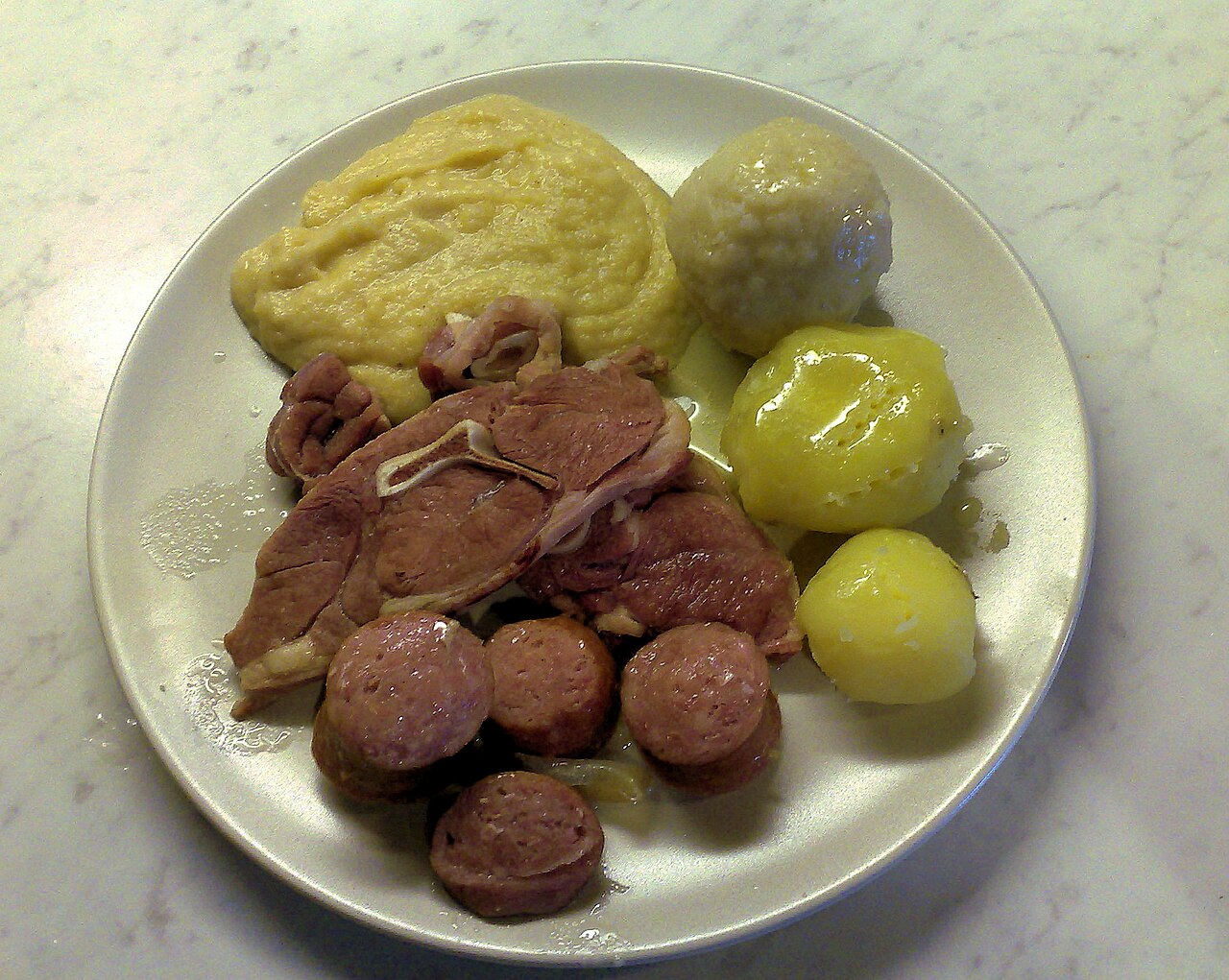
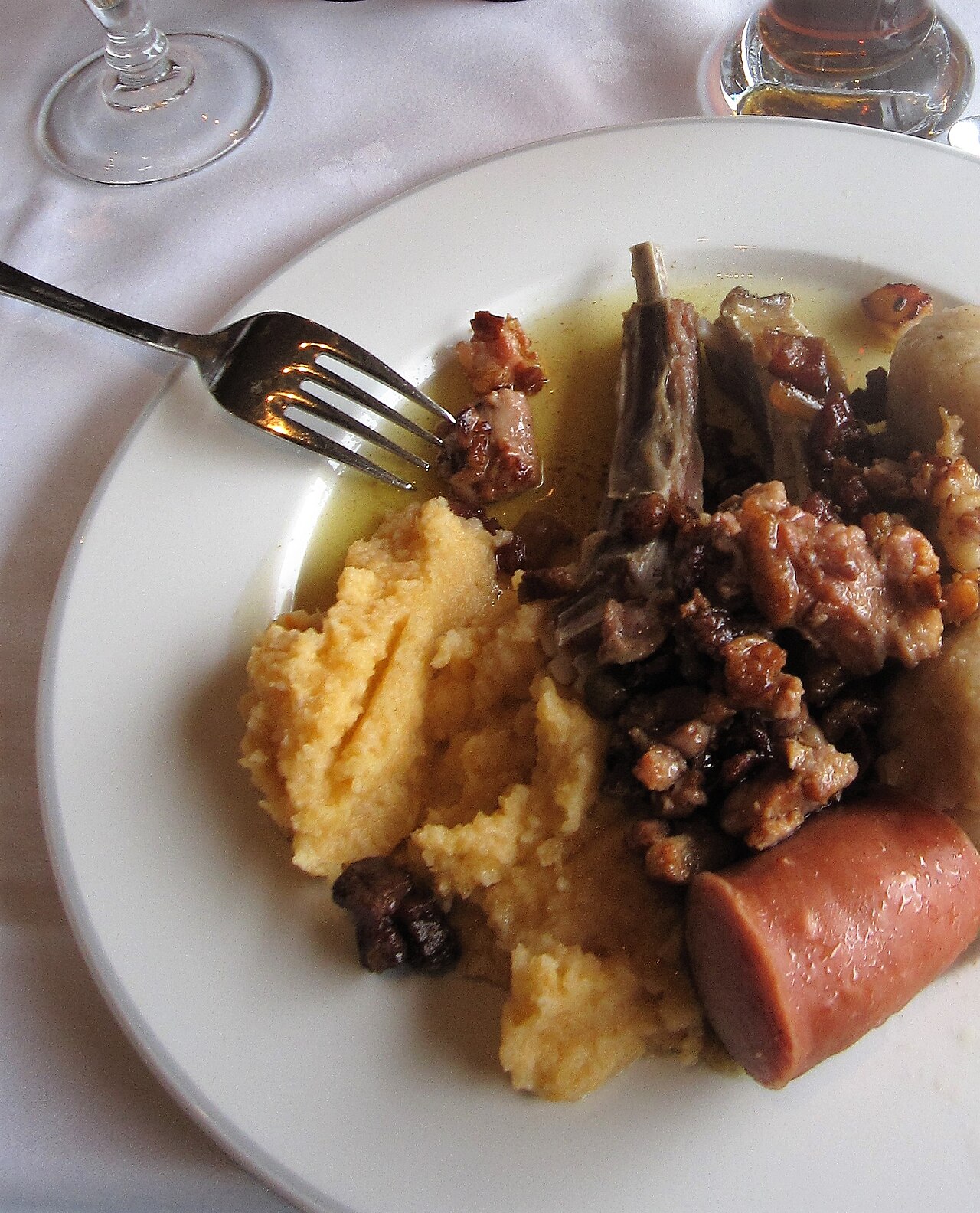
Large, soft dumplings of grated raw potato and flour, boiled and served with salted or boiled pork or lamb, sausages, melted butter and mashed rutabaga.
In western Norway raspeball is traditionally eaten on Thursdays, and many cafés serve it as the dish of the day.
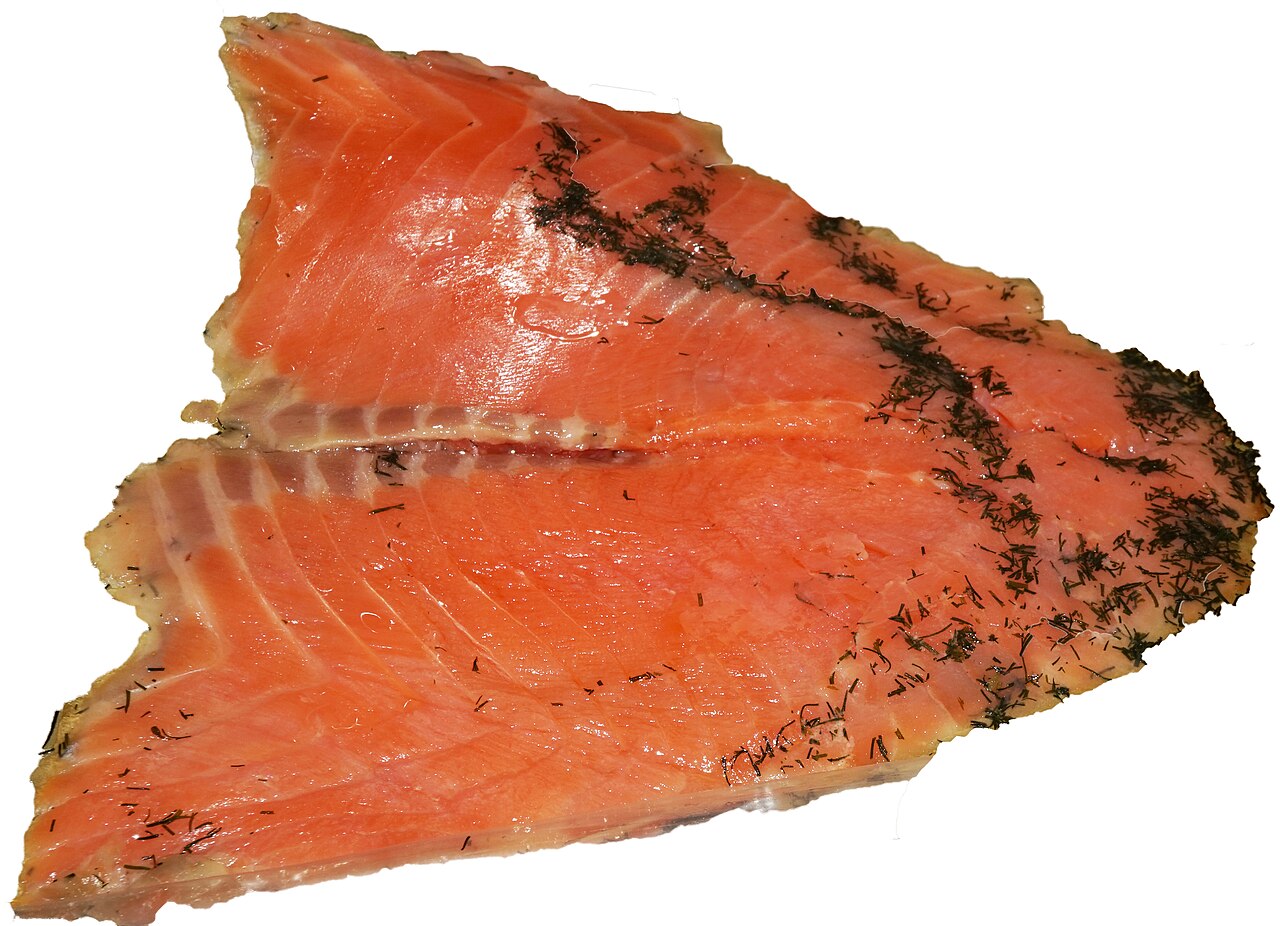
Raw salmon cured for a day or more in salt, sugar and dill, then sliced thin and served with a sweet mustard and dill sauce on bread or with potatoes. The name means 'buried salmon', from the old way of burying salted fish.
In 1985 a Norwegian campaign called Project Japan set out to sell Norwegian salmon to Japan. Over the following years raw salmon became a favourite sushi topping there and then around the world.
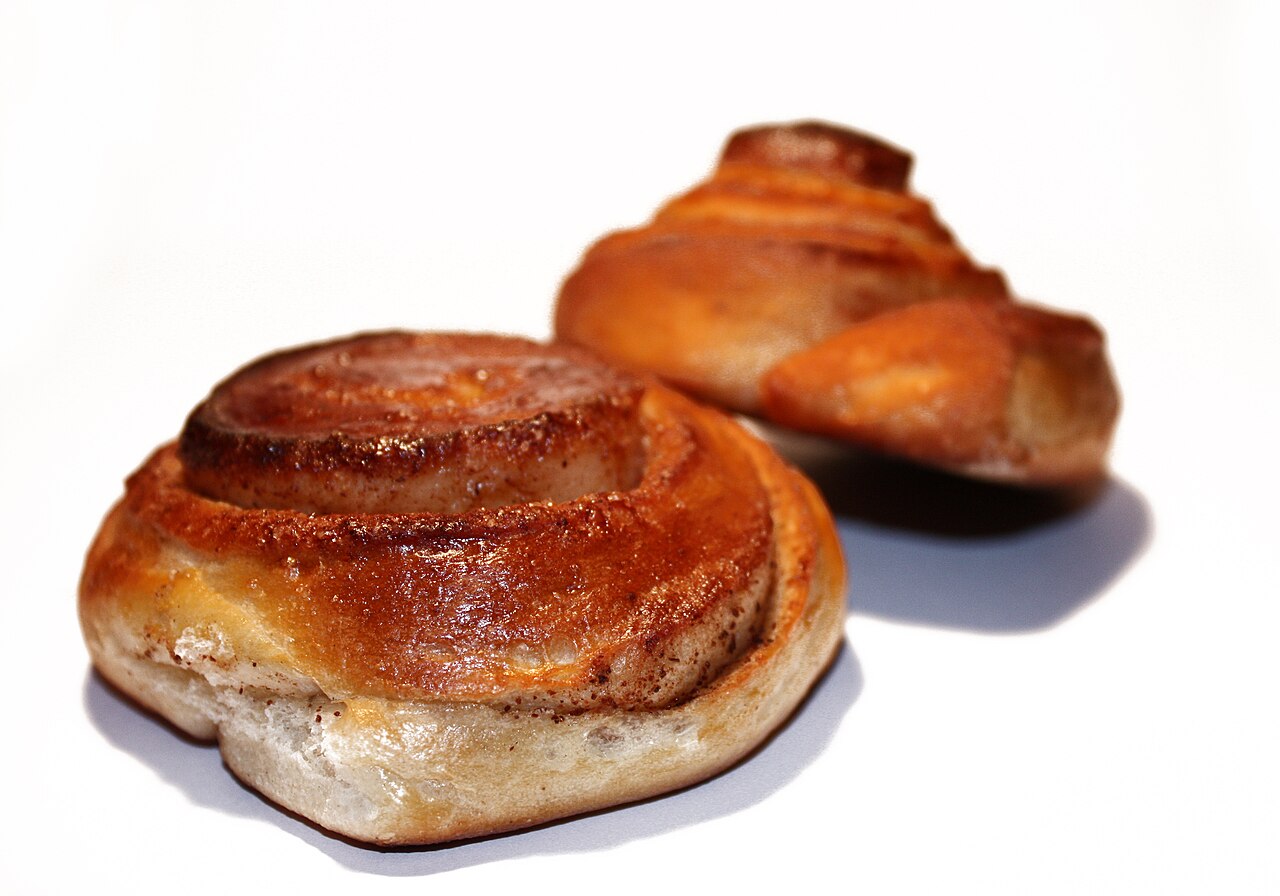
Soft yeast buns rolled up with butter, sugar and cinnamon, eaten with coffee at any time of day. In Bergen they are called skillingsboller.
Cinnamon buns spread from Germany to Scandinavia and are said to have reached Norway with Hanseatic traders through Bergen, where they became known as skillingsboller.
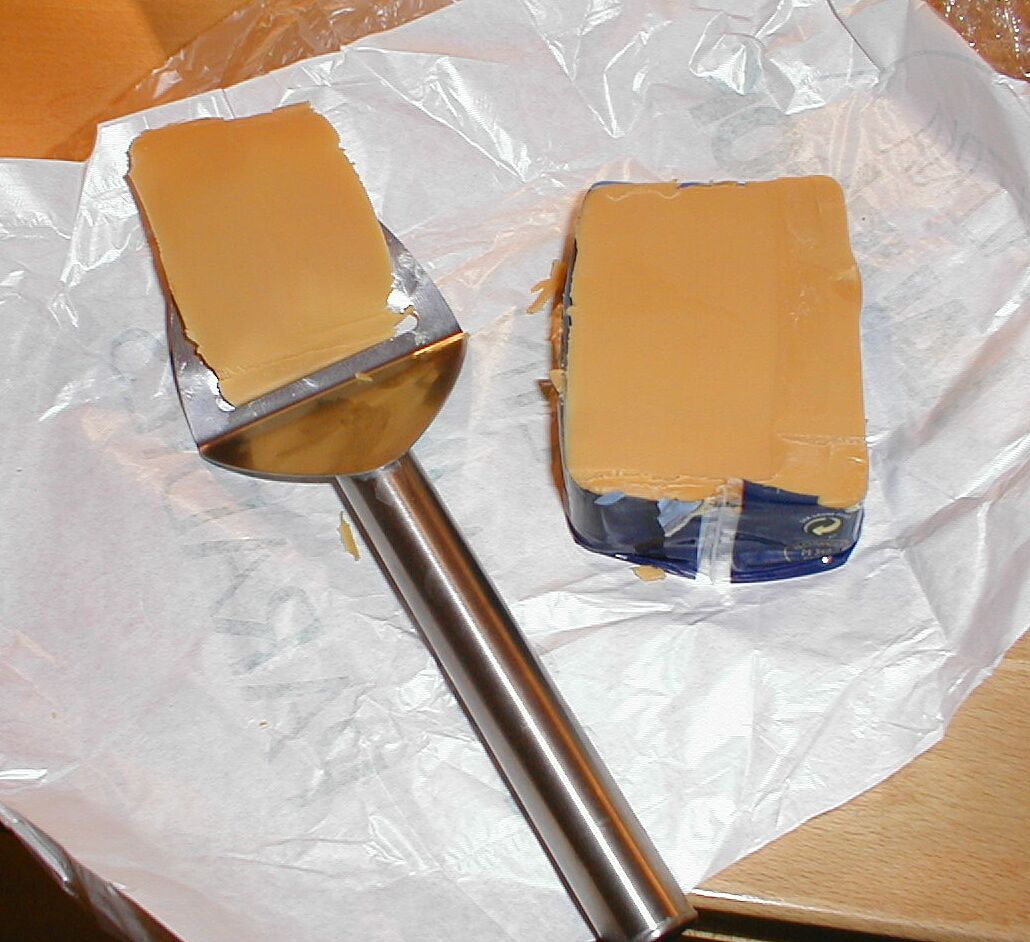
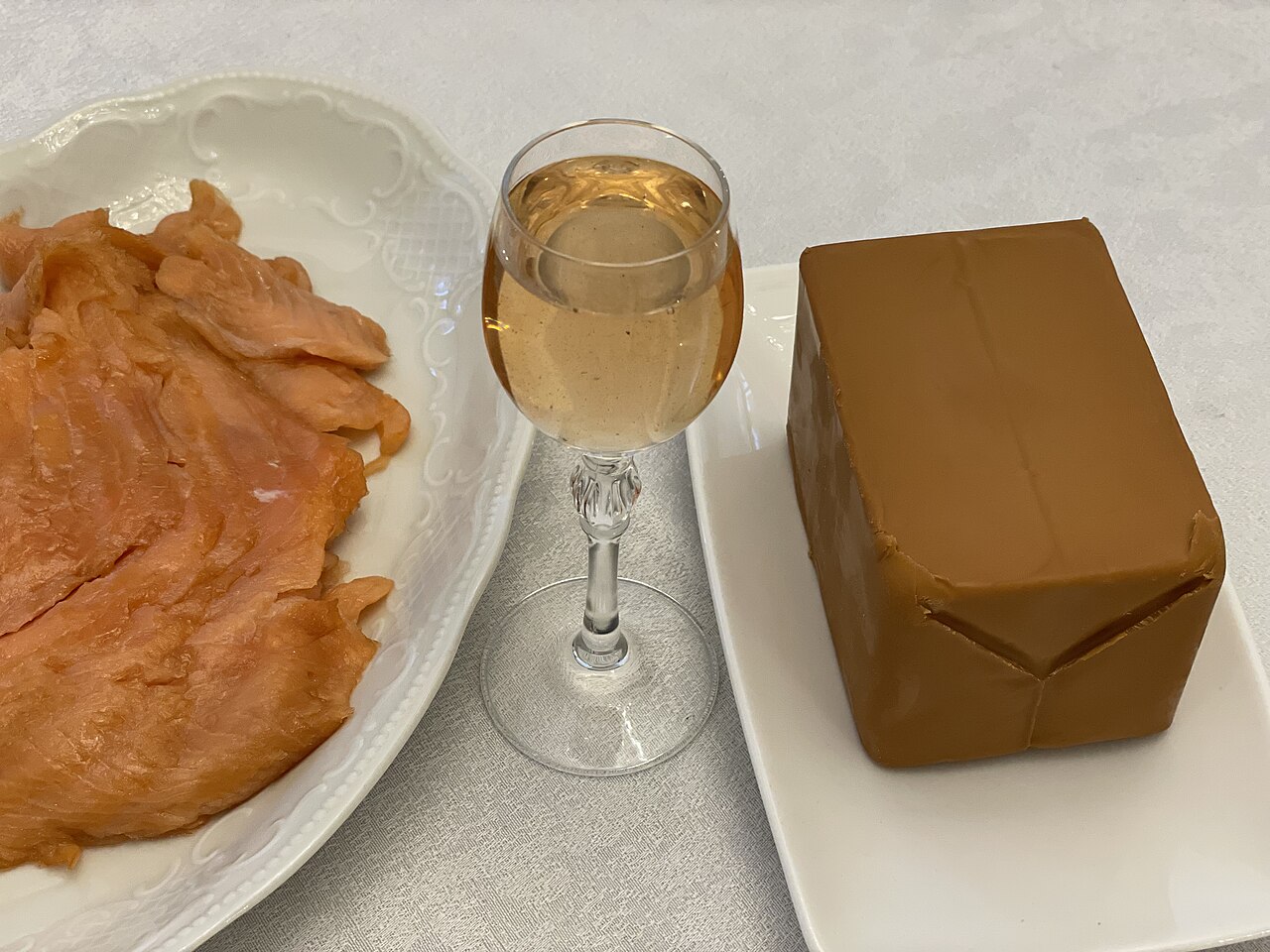
A sweet, caramel-coloured 'cheese' made by boiling whey, milk and cream until the milk sugars turn brown. It is sliced thin with a cheese slicer and eaten on bread, crispbread or warm waffles. The most popular kind, Gudbrandsdalsost, mixes cow's and goat's milk.
In January 2013 a lorry carrying 27 tonnes of brunost caught fire in the Brattli tunnel. The fatty, sugary cheese burned for days.
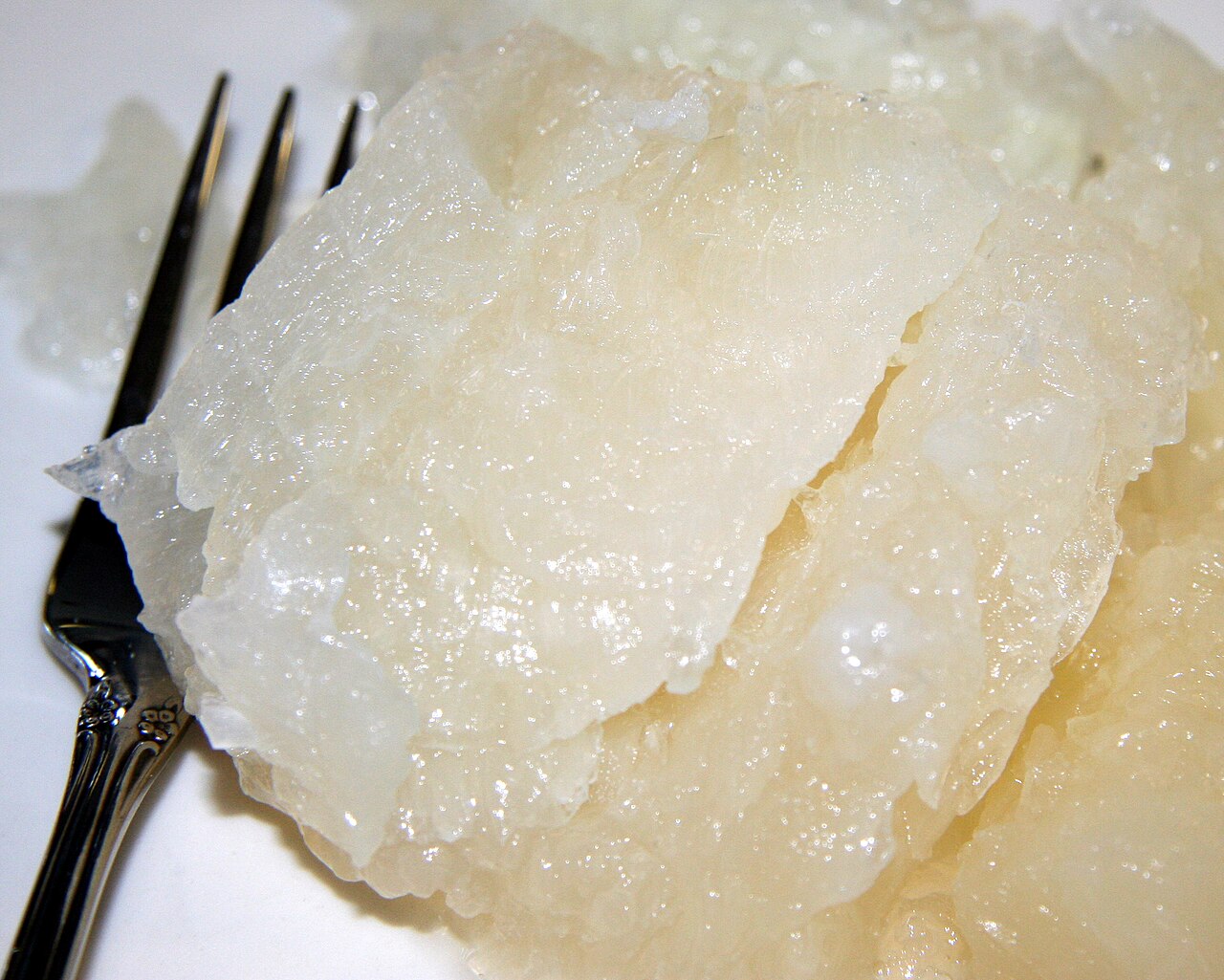
Dried whitefish, usually cod, soaked for days in water, then in lye, then in water again until it turns soft and jelly-like. It is served with boiled potatoes, mashed peas, bacon and melted butter. Lye is strongly caustic, and the fish is not edible until the lye has been fully soaked out, so buy lutefisk ready to cook rather than making it at home.
The name simply means 'lye fish'. Many Norwegian Americans in the Midwest still gather for lutefisk dinners in autumn and winter.
Salted and dried lamb ribs, soaked to remove the salt, then steamed for hours over a layer of birch sticks. It is served at Christmas with mashed rutabaga, potatoes and sausages.
The name means 'stick meat', probably from the birch sticks used in the pot.
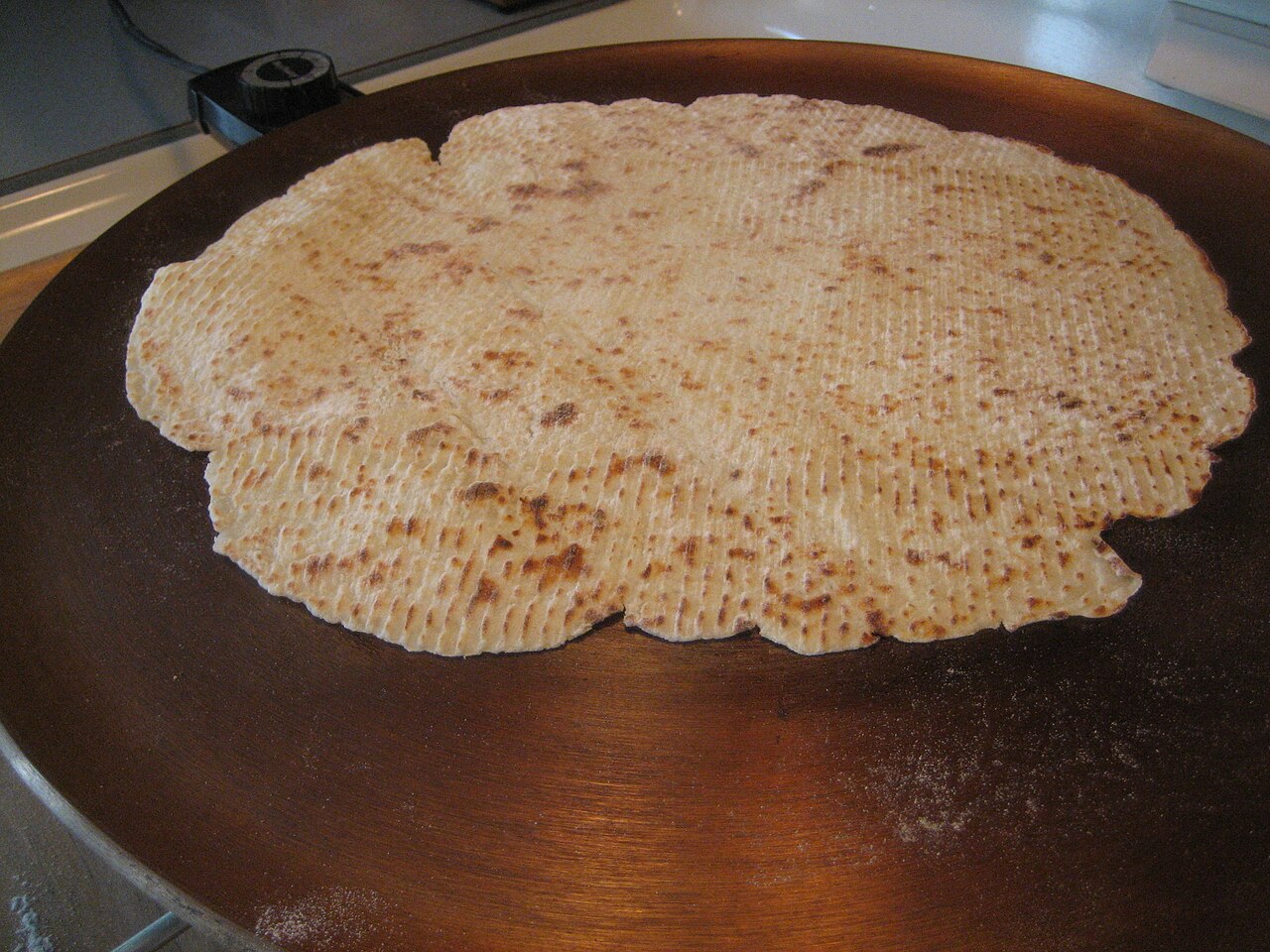
A soft, thin flatbread, often made with potato, flour and butter, cooked on a large griddle. It is spread with butter and sugar and rolled up, or wrapped around savoury fillings.
A small potato version, 'lompe', is wrapped around a hot dog to make 'pølse i lompe', a favourite Norwegian snack.
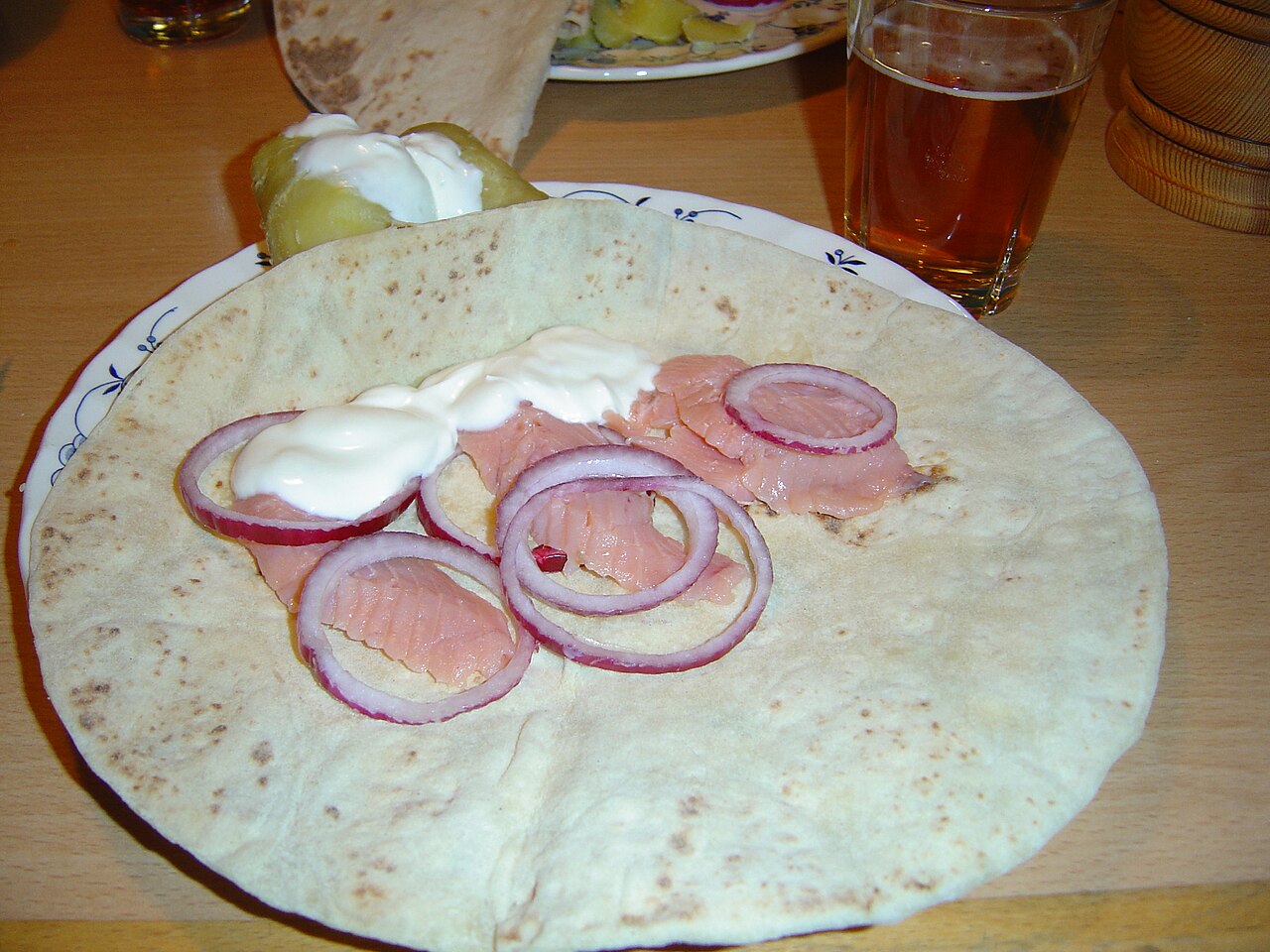
Trout or char salted and left to ferment for two to three months or longer, then eaten without cooking on flatbread or lefse with raw onion, sour cream and potatoes. It has a very strong smell. As a raw fish dish, it is best avoided by pregnant women, young children, older people and anyone with a weakened immune system.
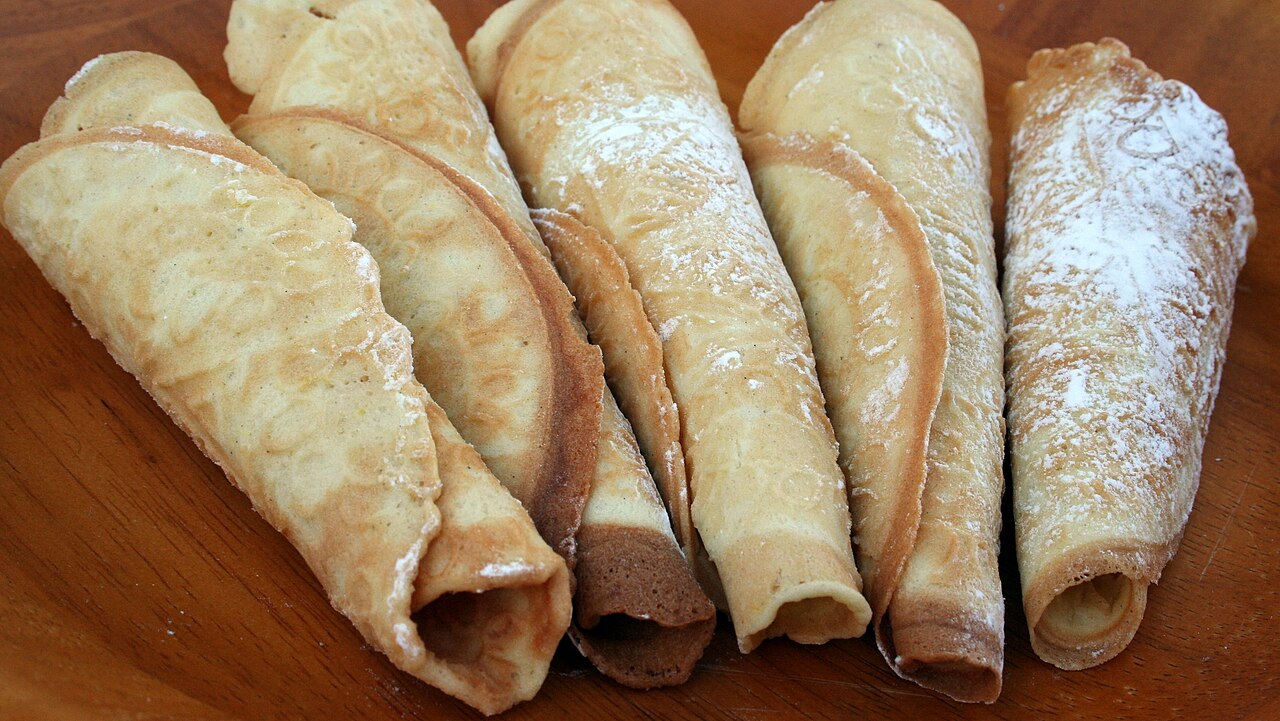
Thin, crisp wafers of flour, butter, eggs and sugar, baked in a patterned iron and rolled into cones while hot. They are often filled with whipped cream and made for Christmas.
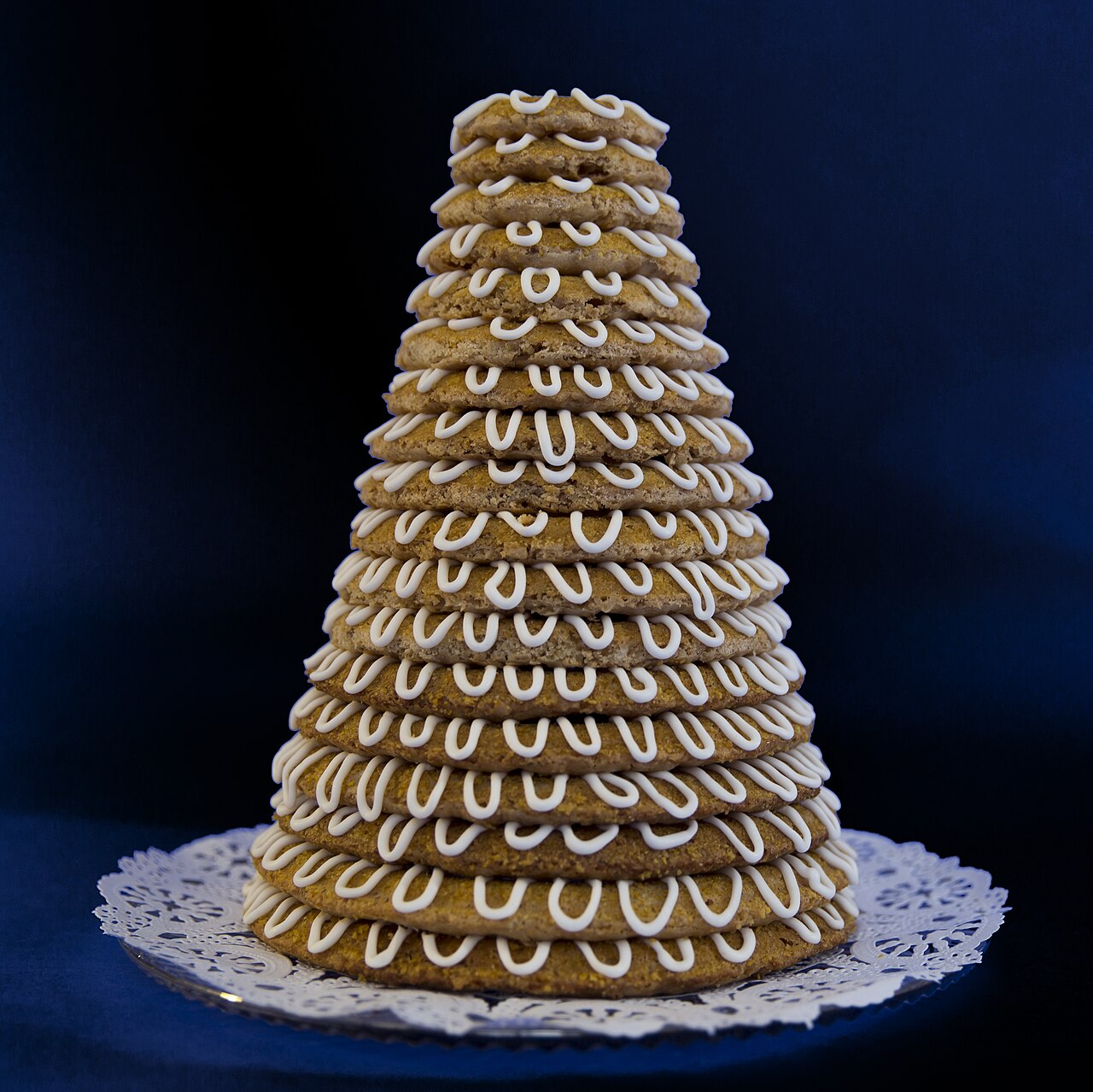
A tall tower of 18 or more rings of almond, sugar and egg white, held together with white icing, served on 17 May, at Christmas, weddings and christenings.
At weddings, it is said that the number of rings stuck to the top ring when the couple lift it shows how many children they will have.
All of Norway, especially the mountains and the north
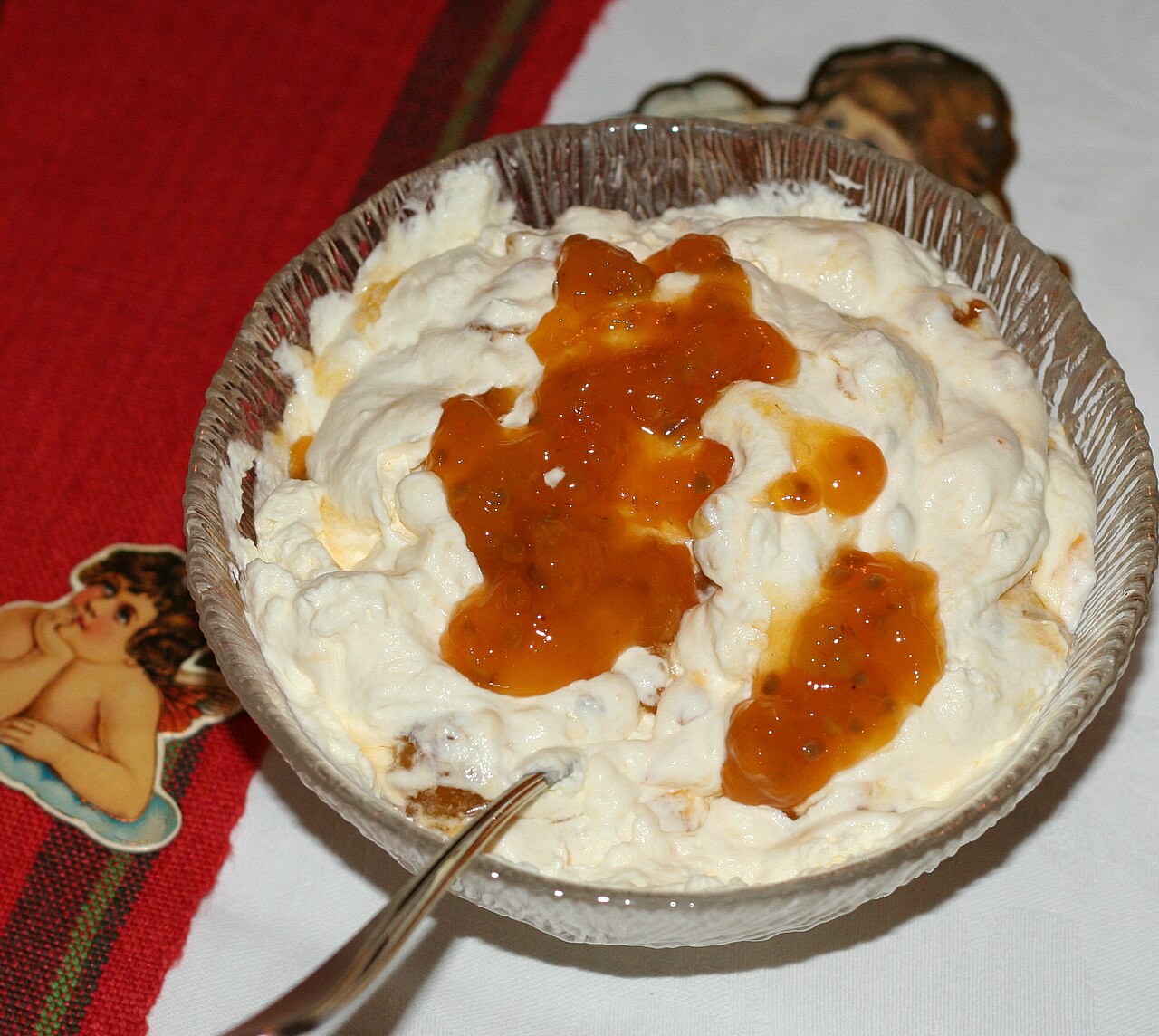
Cloudberries, golden wild berries of northern bogs and mountains, folded into sweetened whipped cream. It is served as a dessert and used to fill krumkake.
A strong spirit flavoured with caraway or dill, usually about 40 percent alcohol, drunk in small glasses with Christmas food such as pinnekjøtt and lutefisk. It is for adults only, and best enjoyed slowly and in small amounts.
Linie akevitt is sent by ship in oak barrels to Australia and back, crossing the equator twice, because the motion and changing temperatures are said to help it mature.
At the table in Norway
After a meal, thank the host with 'Takk for maten' (tahk for MAH-ten), 'thanks for the food'. The host may answer 'Vel bekomme', 'you are welcome'.
The hot main meal, 'middag', is eaten early, often between 4 and 7 in the evening, so plan dinner invitations accordingly.
Many Norwegians take a packed lunch, a 'matpakke' of simple open sandwiches, to work or school, rather than eating out.
When raising a glass, say 'Skål!' (SKOAL).
Tipping is not expected. If you are happy with the service in a restaurant, rounding up or leaving 5 to 15 percent is a kind extra, but it is entirely up to you.