World Stroll
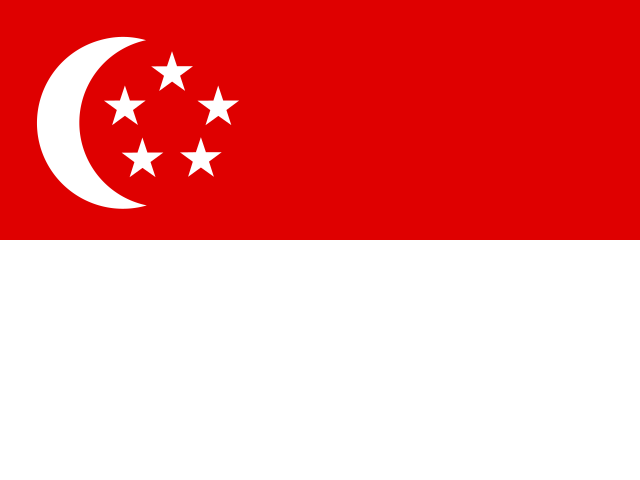
Flag of Singapore
Travel guide

Learn Singapore before you go

A whole country in one green, gleaming city: hawker stalls and skyscrapers, temples and mosques side by side, and four official languages on signs across town.
Take the full trip
CapitalSingapore
CurrencySingapore dollar (SGD)
Official languagesEnglish, Malay, Mandarin and Tamil; Malay is the national language
Drives on theLeft
Calling code+65

10 phrases to learn

In Singlish, Malay, Mandarin and Tamil. Capital letters show the stressed part. Tap the heart to practise a phrase later.

Can or not?
KEN or NOT
Is that possible? Can you do it? (Singlish)
Asking a favour, in a shop or at a stall
Can lah!
KEN LAH
Sure, no problem! (Singlish)
Agreeing to something in a relaxed way
Shiok!
SHEE-ok
That's great, that's delicious! (Singlish)
After a first bite of good food
Uncle, one kopi-O
UNG-kul, wun KOH-pee OH
One black coffee with sugar, please (Singlish)
Ordering at a coffee stall
Da bao, thank you
dah BOW, THANK yoo
To take away, thanks (Singlish)
When you want your food packed to go
Paiseh!
PIE-seh
Sorry, how embarrassing! (Singlish)
After a small mistake, like bumping into someone
Selamat pagi
suh-LAH-maht PAH-gee
Good morning (Malay)
In the morning
Apa khabar?
AH-puh KAH-bar
How are you? (Malay)
Greeting someone
Terima kasih
TREE-muh KAH-seh
Thank you (Malay)
Any time you are helped or served
Sama-sama
SAH-muh SAH-muh
You're welcome (Malay)
In reply to thanks

At the table

  • At a hawker centre, 'chope' (reserve) your seat first: locals leave a packet of tissues on the table to show it is taken, so do not sit where you see one.
  • Return your tray and plates to the tray return racks when you finish. It is expected, and you can be fined if you do not. Halal and non-halal racks are kept separate.
  • Most food is eaten with a fork in the left hand and a spoon in the right, using the fork to push food onto the spoon. If you eat with your hand, use only the right.
  • At Chinese meals, never stick your chopsticks upright in a bowl of rice: it looks like incense sticks at a funeral.
  • Respect religious food rules: Muslims do not eat pork or drink alcohol, and stalls marked 'halal' serve neither; many Hindus and some Buddhists avoid beef.
  • Tipping is not expected. Restaurants usually add a 10% service charge plus tax to the bill, shown by '++' after the price.

Local tips

Tap to ride

The MRT trains and buses are fast, cheap and air-conditioned. You can pay by tapping a contactless bank card or phone at the gates. Eating and drinking, even water, is not allowed in stations, on trains or on buses, and you can be fined for it.

Respect the rules

Singapore is famously tidy, and littering, spitting, jaywalking and smoking in non-smoking areas bring real fines. Vaping is illegal. There is no duty-free allowance for cigarettes: declare every pack on arrival and pay the tax, or you can be fined. Chewing gum is not sold in shops, and bringing it in is officially not allowed, so it is best to leave it at home.

Eat at hawker centres

The best and cheapest food is in hawker centres and coffee shops. Look for long queues of locals, check the hygiene grade displayed at each stall, reserve your seat with a packet of tissues, and return your tray when you are done.

No tipping needed

Tipping is not part of local culture. Restaurants and hotels add a 10% service charge plus tax (GST), shown as '++' after prices. Never offer a tip or gift to a police officer or any government official: it counts as bribery.

Beat the heat and rain

It is hot and humid all year, usually between about 23 and 32 °C, with short, heavy downpours almost every day. Carry water and an umbrella, and use the covered walkways and underground links between malls and stations. Tap water is safe to drink.

Visiting a home

Take off your shoes before entering a home; socks are fine. If you bring a gift, avoid white flowers, knives and clocks, which are linked to funerals and bad luck, and do not expect it to be opened in front of you. Many Muslims and some Hindus do not drink alcohol.

Emergency numbers

As of 2026, the official emergency numbers are 999 for the police and 995 for an ambulance or the fire service. Hospitals and pharmacies are excellent, but healthcare is expensive, so travel insurance is wise.

Plugs and power

Singapore uses the British three-pin plug (type G) at 230 volts. Adapters are sold in hardware stores and at the airport.

Dishes to try

  • Hainanese chicken rice: Gently poached chicken, usually served at room temperature, with rice cooked in chicken stock, ginger, garlic and pandan leaf. It comes with cucumber and a chilli and garlic sauce, usually with dark soy sauce and freshly ground ginger. It is widely considered one of Singapore's national dishes and is found in almost every hawker centre.
  • Chilli crab: Mud crabs stir-fried in their shells and served in a thick, sweet, savoury and only mildly hot sauce of tomato and chilli, thickened with swirls of egg. Diners crack the shells by hand and mop up the sauce with fried or steamed buns called mantou. Chilli crab is popular in both Singapore and Malaysia.
  • Katong laksa: Rice noodles in a rich, spicy coconut curry broth made with dried shrimp, usually topped with cockles or prawns. In the Katong style the broth is thickened with ground dried shrimp and the noodles are cut short so the whole bowl can be eaten with just a spoon. Laksa in its many forms is loved across Singapore, Malaysia and Indonesia.
  • Char kway teow: Flat rice noodles stir-fried over a very high flame with garlic, light and dark soy sauce, chilli, prawns, cockles, Chinese sausage, egg and bean sprouts. It was first cooked as a cheap, filling meal for labourers, and is still a hawker favourite.
  • Hokkien mee: Egg noodles and thin rice noodles fried with egg, prawns, squid and pork, then simmered in a rich stock of prawn heads and pork bones until it soaks into the noodles. It comes with sambal chilli and a small calamansi lime to squeeze over. In Singapore it is also called Hokkien prawn mee.
  • Bak kut teh: Pork ribs simmered for hours in a broth with garlic and spices. In Singapore the lighter Teochew style is popular, served with rice and pieces of fried dough (youtiao) to dip in the soup. It is usually eaten for breakfast or lunch, with Chinese tea.
  • Fish head curry: A whole head of red snapper stewed in a Kerala-style curry with vegetables such as okra and aubergine. It usually comes to the table in a clay pot and is shared, with rice or bread.
  • Satay: Small skewers of marinated chicken, mutton or beef grilled over charcoal and served with a slightly spicy peanut sauce, cucumber and onion. In Singapore, satay is a classic of the evening hawker scene, and there is also a Hainanese version made with pork and a pineapple sauce. Satay is popular across Southeast Asia and is a national dish in Indonesia and Malaysia.

Cities to see

  • Singapore (capital): Marina Bay and the Merlion, Colonial buildings and museums, Chinatown, Kampong Glam and Little India.
  • Queenstown: Singapore's first satellite town, Early public housing blocks, Offices of the APEC Secretariat.
  • Bukit Timah: Private houses and condominiums, Bukit Timah Road, one of the oldest roads, The way to Bukit Timah Hill.
  • Toa Payoh: The first HDB new town, A town centre with a mall and a hawker centre, The name means 'big swamp' in Hokkien.
  • Ang Mo Kio: A classic HDB town of the 1970s, Bishan-Ang Mo Kio Park nearby, Neighbourhood hawker centres.
  • Jurong East: Shopping malls around the MRT station, Jurong Lake Gardens and the Chinese Garden, The planned Jurong Lake District.

Landmarks and the city map are on the Singapore trip

Travel guides for nearby countries

  1. Before you go to MalaysiaNext stop · In Southeast Asia
  2. Before you go to IndonesiaNext door to Malaysia
  3. Before you go to the PhilippinesIn Southeast Asia

More about Singapore

Your next stop