Eating is often called a national pastime in Singapore, and it mixes Chinese, Malay, Indian and Peranakan cooking, with touches of Eurasian and Western food. Many of the best-known dishes are shared with Malaysia, each side with its own versions. Most people eat out often, and the heart of everyday eating is the hawker centre: a large, open-sided food court full of small stalls, each cooking one or two dishes, at low prices and under strict hygiene grading. Meals are informal, with no fixed courses: friends order from different stalls and share at one table. Singapore's hawker culture was added to UNESCO's list of the Intangible Cultural Heritage of Humanity in 2020. A typical day might start with kaya toast and coffee, bring chicken rice or noodles at lunch, and end with satay or chilli crab at night.
Created by Hainanese immigrants, now sold all over Singapore
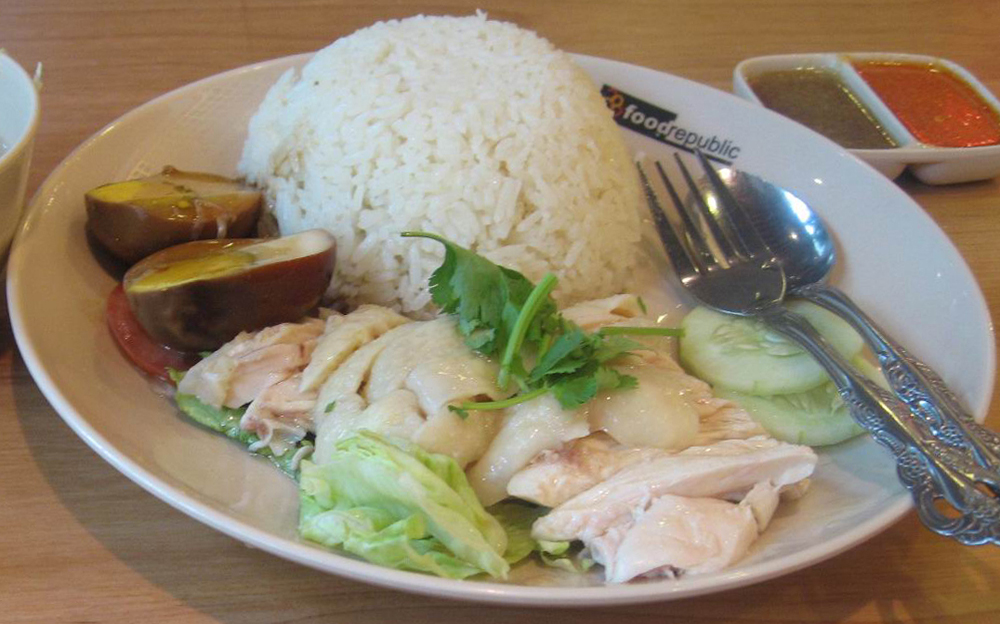
Gently poached chicken, usually served at room temperature, with rice cooked in chicken stock, ginger, garlic and pandan leaf. It comes with cucumber and a chilli and garlic sauce, usually with dark soy sauce and freshly ground ginger. It is widely considered one of Singapore's national dishes and is found in almost every hawker centre.
The dish was adapted from Wenchang chicken, a classic from Hainan island in southern China, by Hainanese people who settled in Southeast Asia.
Seafood restaurants, especially along the east coast
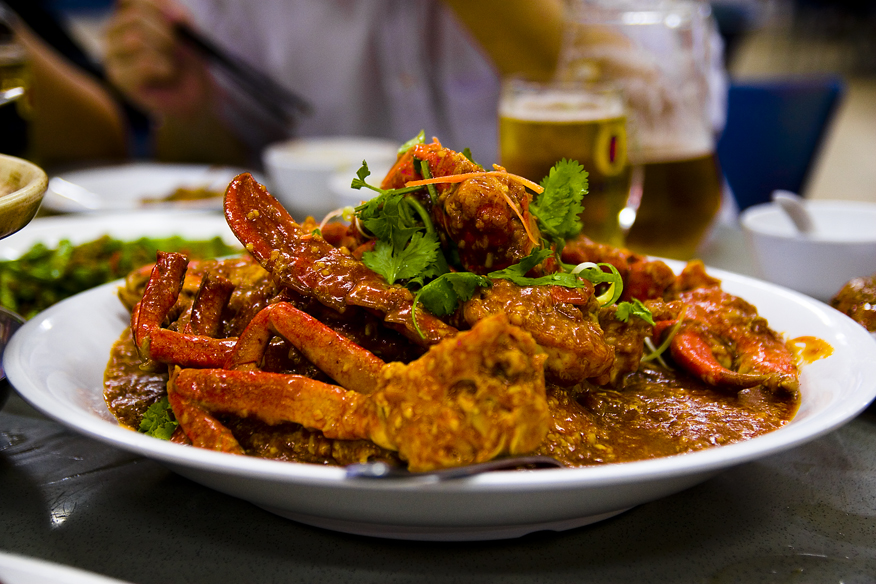
Mud crabs stir-fried in their shells and served in a thick, sweet, savoury and only mildly hot sauce of tomato and chilli, thickened with swirls of egg. Diners crack the shells by hand and mop up the sauce with fried or steamed buns called mantou. Chilli crab is popular in both Singapore and Malaysia.
In Singapore the dish is credited to Cher Yam Tian, who sold her chilli crab from a pushcart beside the Kallang River from 1956, before she and her husband opened a seafood restaurant.
Peranakan cooking, named after the Katong neighbourhood in the east
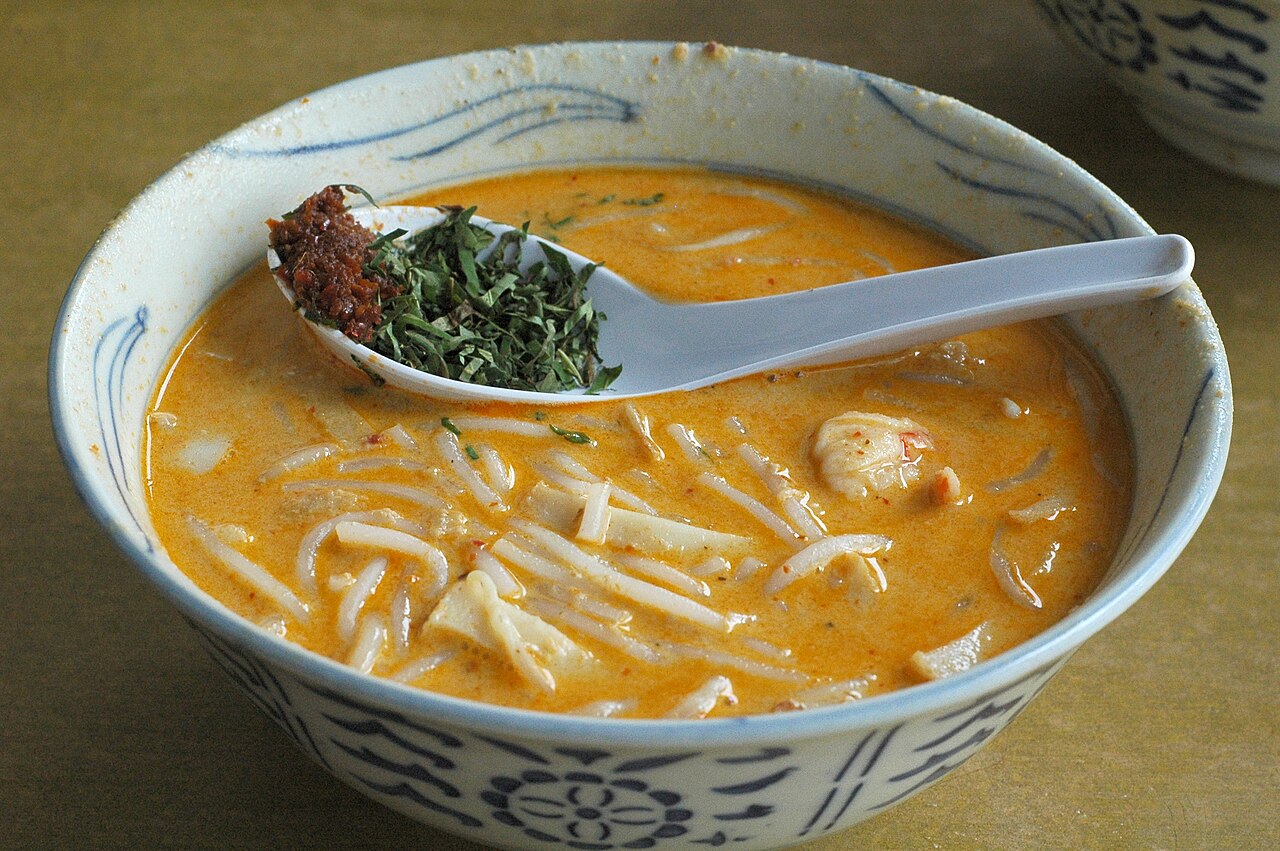
Rice noodles in a rich, spicy coconut curry broth made with dried shrimp, usually topped with cockles or prawns. In the Katong style the broth is thickened with ground dried shrimp and the noodles are cut short so the whole bowl can be eaten with just a spoon. Laksa in its many forms is loved across Singapore, Malaysia and Indonesia.
The word 'lemak' in 'laksa lemak' is a Malay cooking term for dishes rich with coconut milk.
Hokkien and Teochew hawkers, popular in Singapore and Malaysia
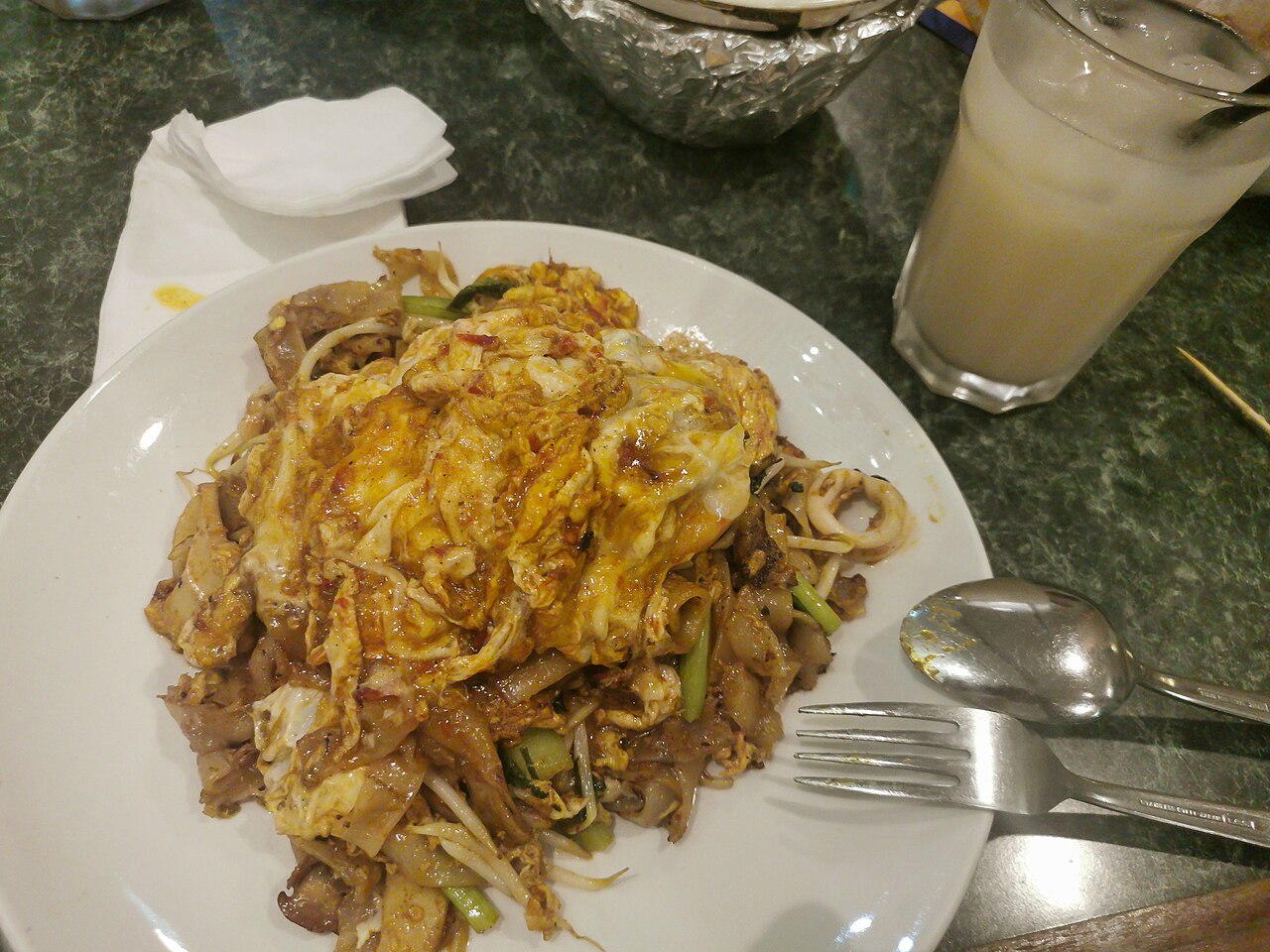
Flat rice noodles stir-fried over a very high flame with garlic, light and dark soy sauce, chilli, prawns, cockles, Chinese sausage, egg and bean sprouts. It was first cooked as a cheap, filling meal for labourers, and is still a hawker favourite.
In Hokkien and Teochew, 'char' means stir-fried and 'kway teow' means flat rice noodles.
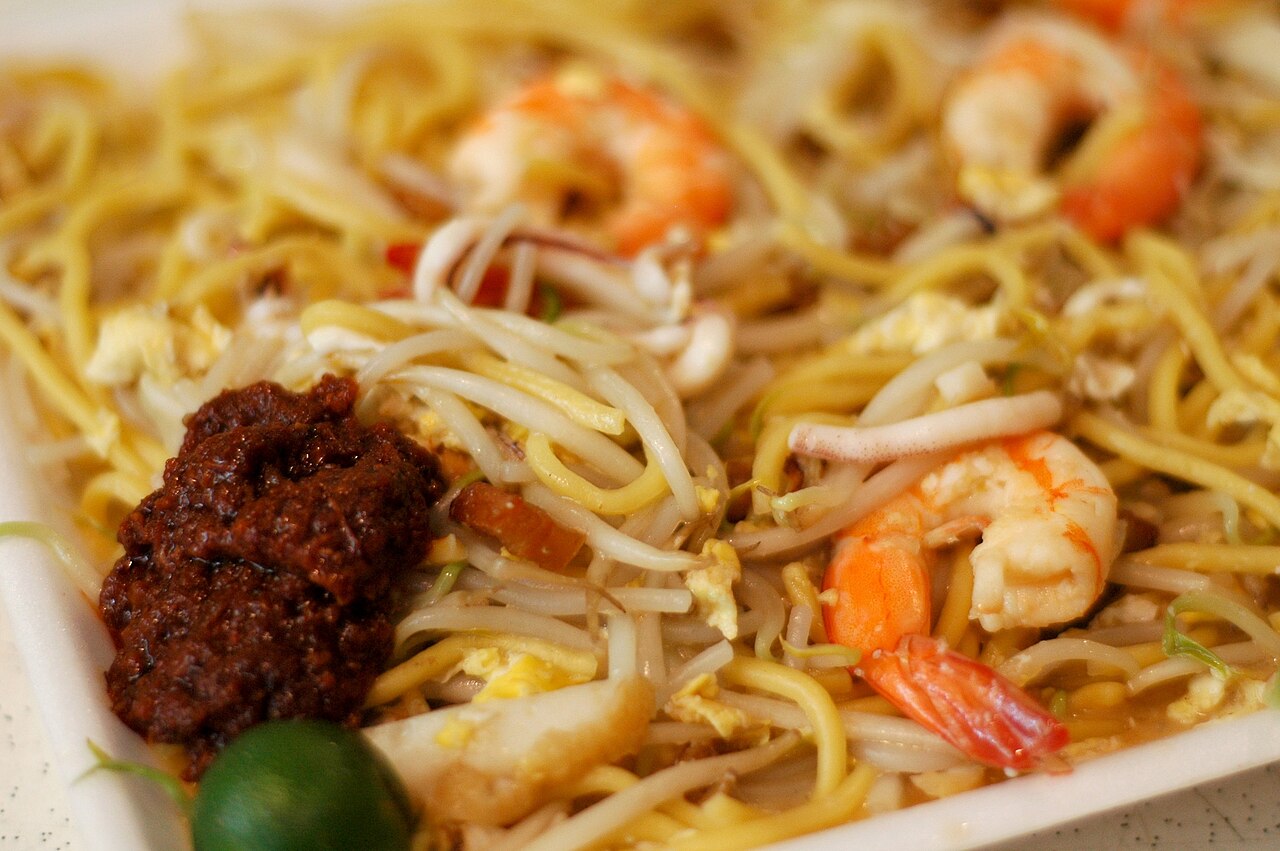
Egg noodles and thin rice noodles fried with egg, prawns, squid and pork, then simmered in a rich stock of prawn heads and pork bones until it soaks into the noodles. It comes with sambal chilli and a small calamansi lime to squeeze over. In Singapore it is also called Hokkien prawn mee.
The name means 'Fujian noodles', but this dish is not known in Fujian itself: it grew up in Singapore, reportedly from noodles fried on Rochor Road.
Hokkien and Teochew cooking, popular in Singapore and Malaysia
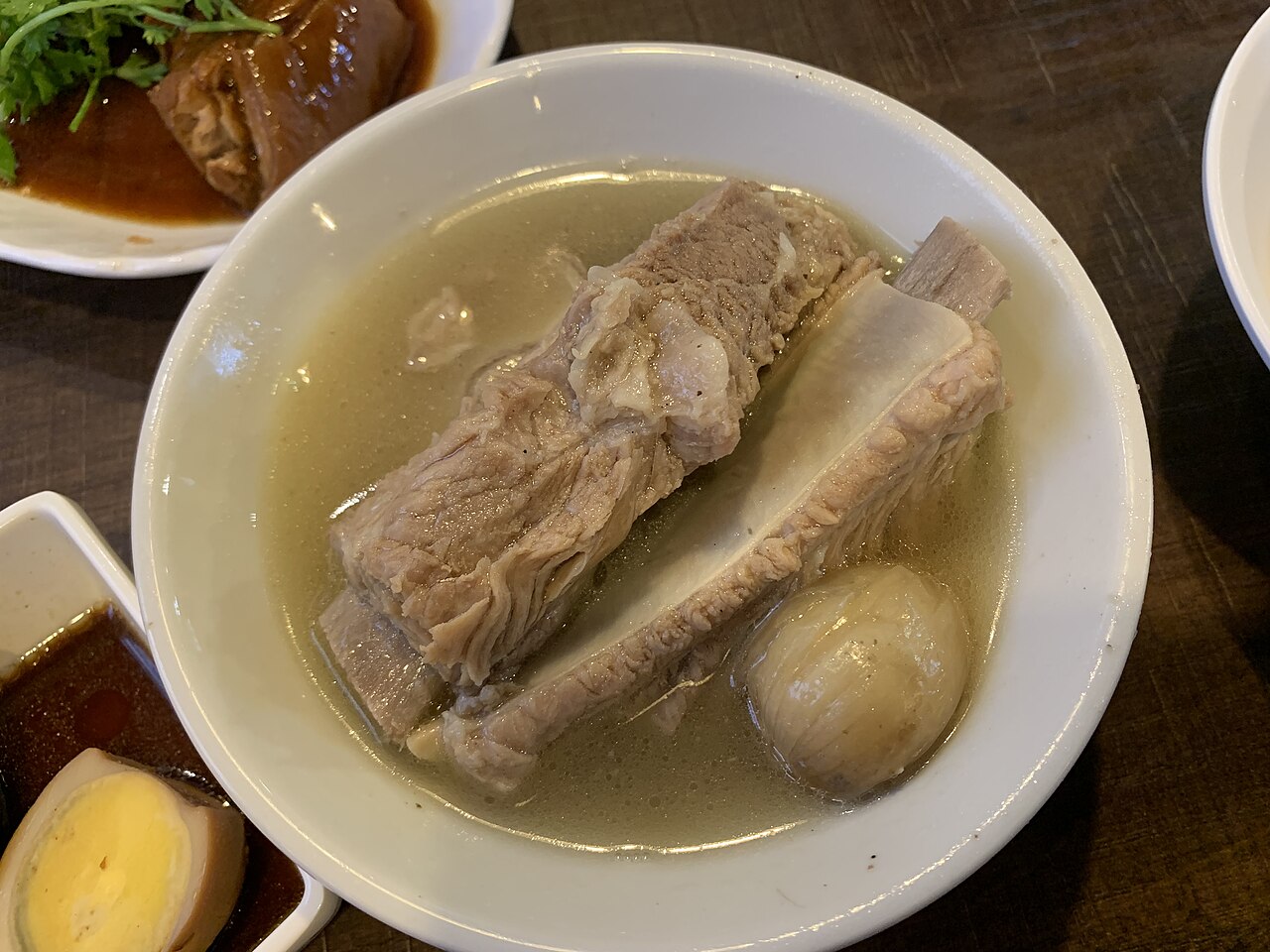
Pork ribs simmered for hours in a broth with garlic and spices. In Singapore the lighter Teochew style is popular, served with rice and pieces of fried dough (youtiao) to dip in the soup. It is usually eaten for breakfast or lunch, with Chinese tea.
The name means 'meat bone tea' in Hokkien, yet there is no tea in the soup: the tea is drunk alongside it.
Indian, Chinese and Malay cooks in Singapore and Malaysia
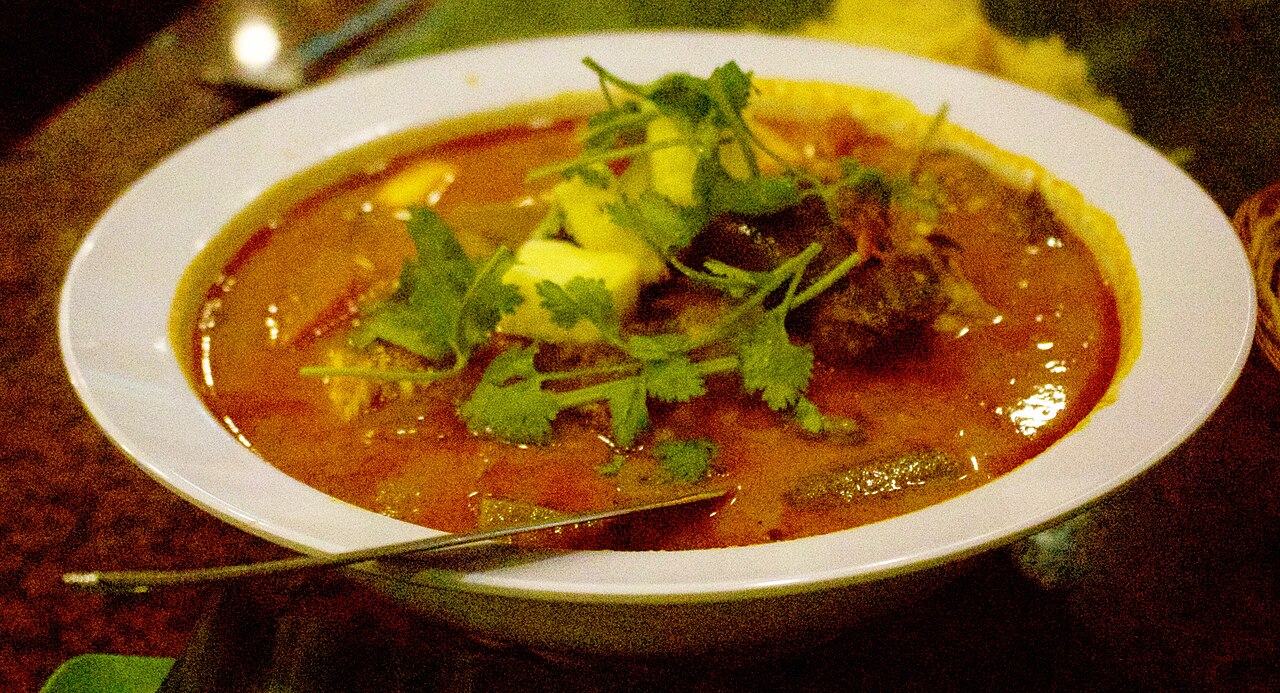
A whole head of red snapper stewed in a Kerala-style curry with vegetables such as okra and aubergine. It usually comes to the table in a clay pot and is shared, with rice or bread.
The dish is usually credited to M. J. Gomez, a cook from Kerala in India, who began selling it in Singapore in 1949 because his Chinese customers prized fish heads.
Malay and Javanese cooking, a hawker favourite in the evening
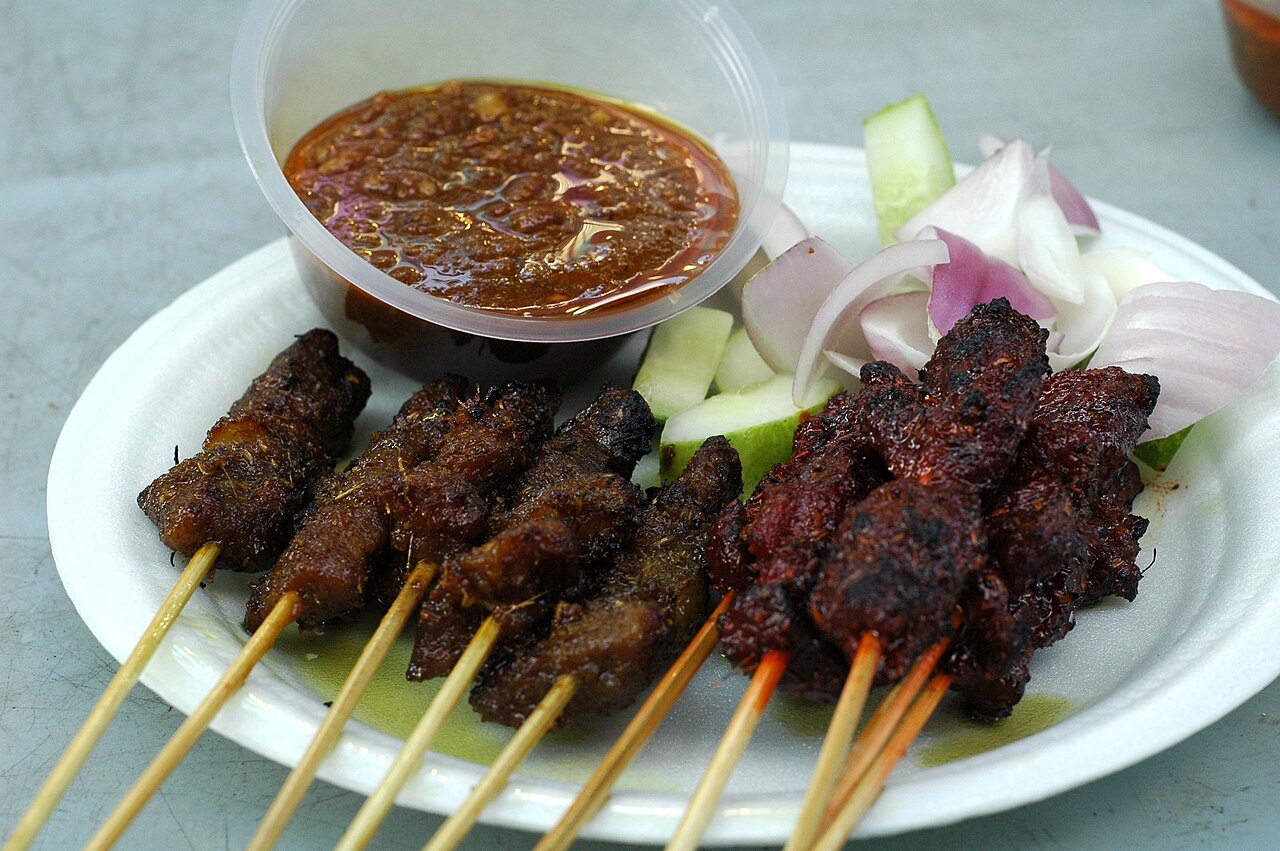
Small skewers of marinated chicken, mutton or beef grilled over charcoal and served with a slightly spicy peanut sauce, cucumber and onion. In Singapore, satay is a classic of the evening hawker scene, and there is also a Hainanese version made with pork and a pineapple sauce. Satay is popular across Southeast Asia and is a national dish in Indonesia and Malaysia.
The satay stalls at Lau Pa Sat, an old market hall among the skyscrapers near Raffles Place, are among the best-known places in Singapore to eat satay.
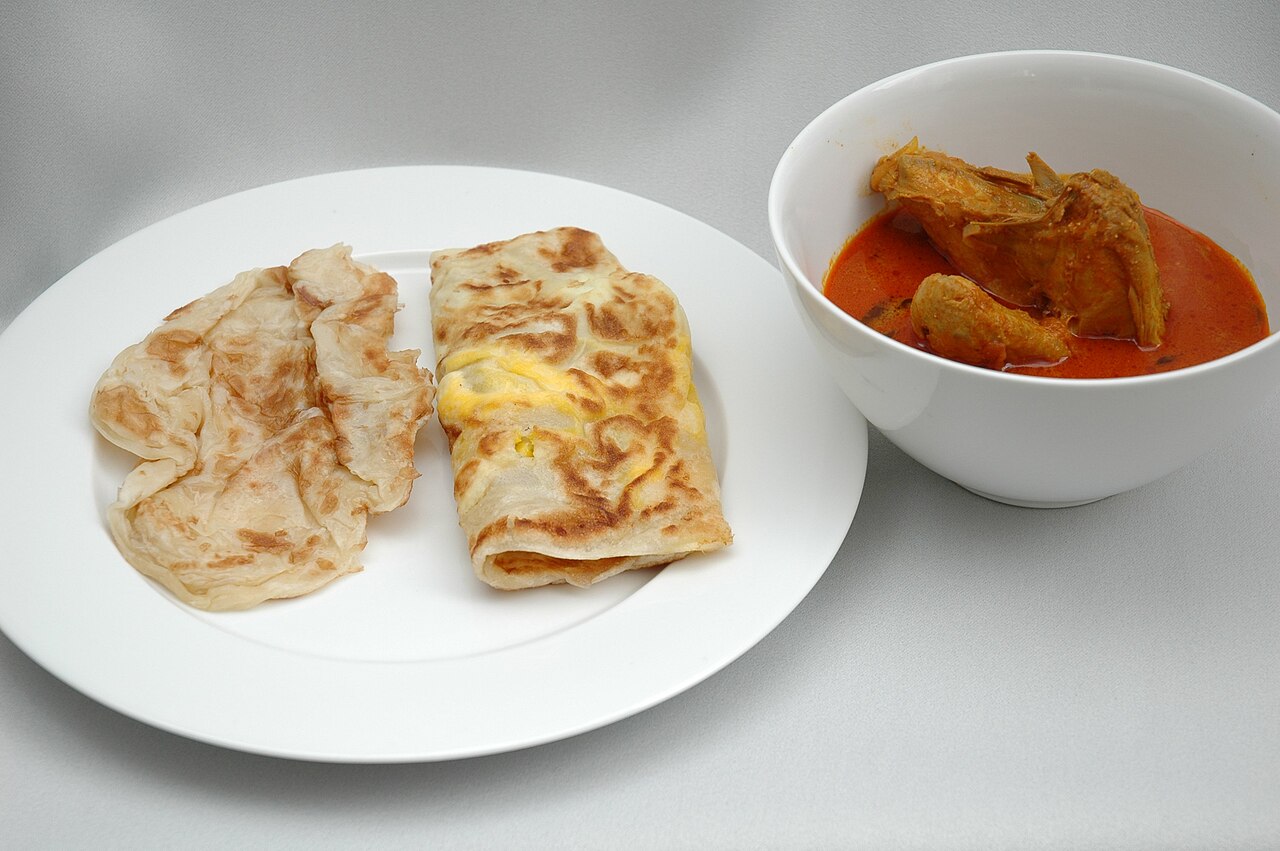
A flaky, chewy flatbread: the dough is tossed and stretched until paper-thin, folded and fried on a hot griddle. It is eaten plain or with egg, onion or cheese folded inside, always with a bowl of curry for dipping. Many prata shops stay open late into the night.
The Singapore name 'prata' comes from the Indian flatbread called paratha or parotta.
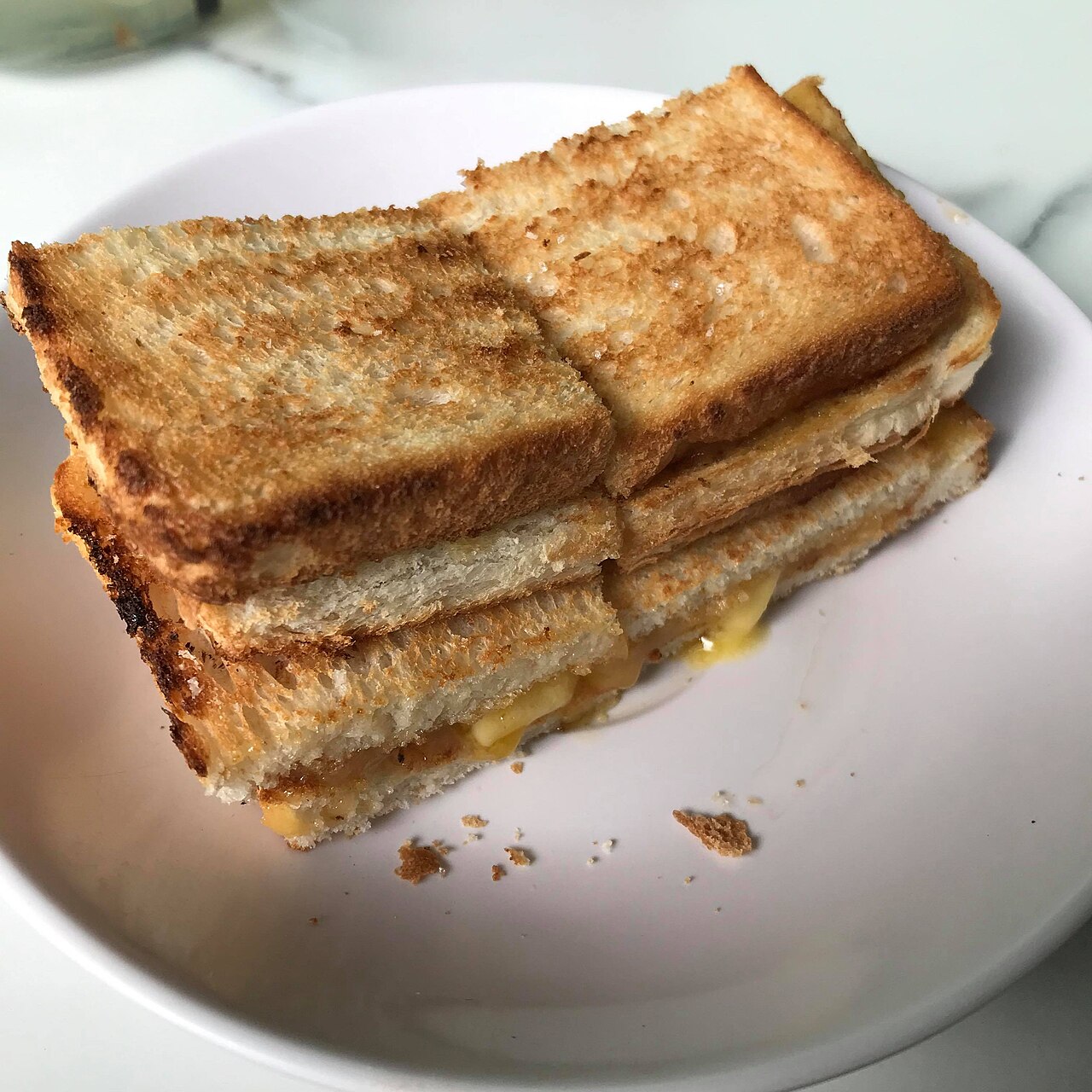
Slices of toasted bread filled with kaya, a sweet jam of coconut milk, eggs and sugar, often flavoured with pandan, and a thick slice of cold butter. It is usually eaten for breakfast with soft-boiled eggs and a cup of strong local coffee called kopi.
Hainanese cooks who worked on British ships are believed to have created kaya as a local stand-in for Western fruit jams.
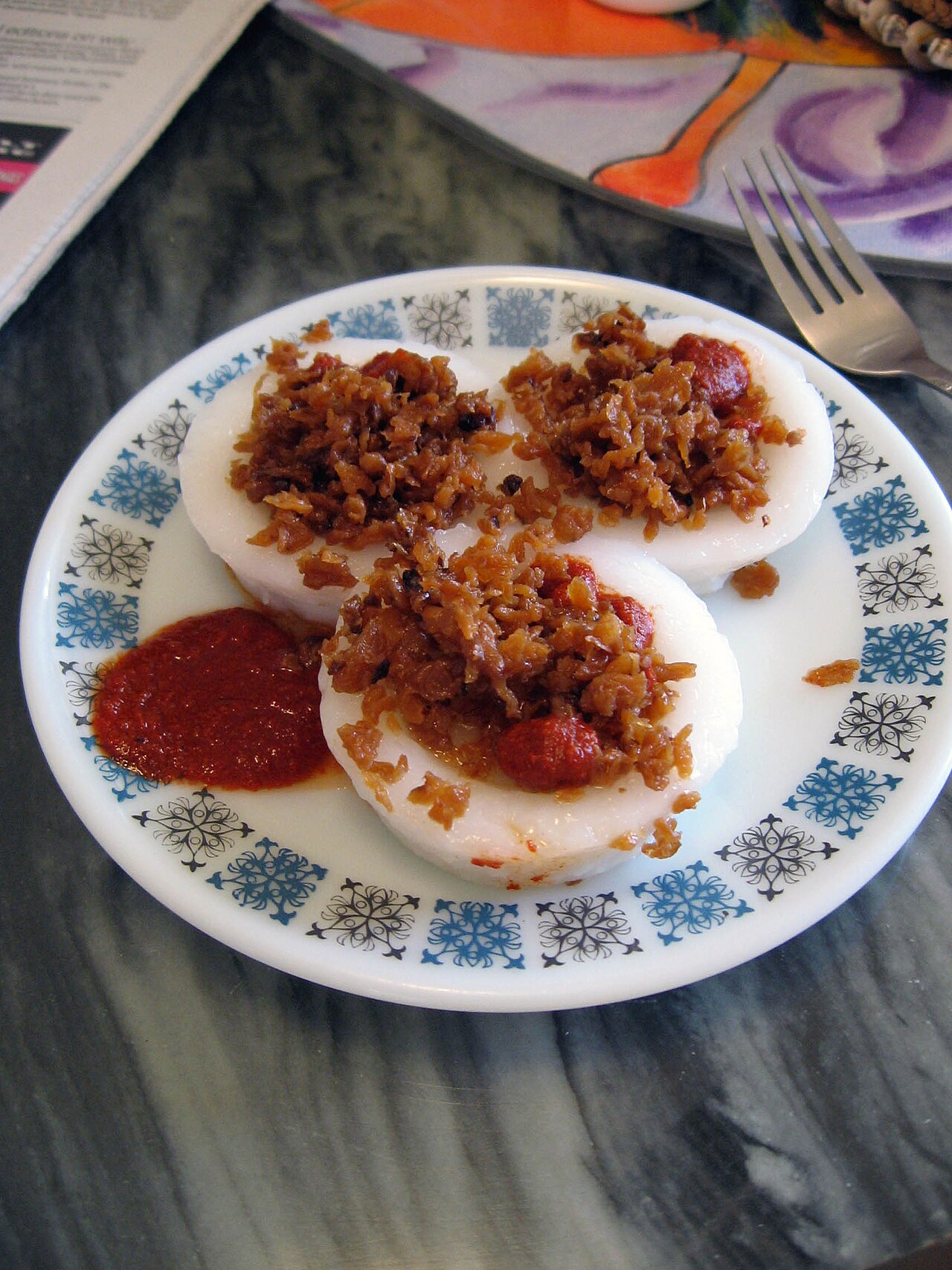
Small, soft, cup-shaped rice cakes, steamed in little moulds and topped with salty preserved radish fried in oil, with chilli sauce on the side. They are a cheap and much-loved breakfast in hawker centres.
The name means 'water rice cake', because the batter is just rice flour and water.
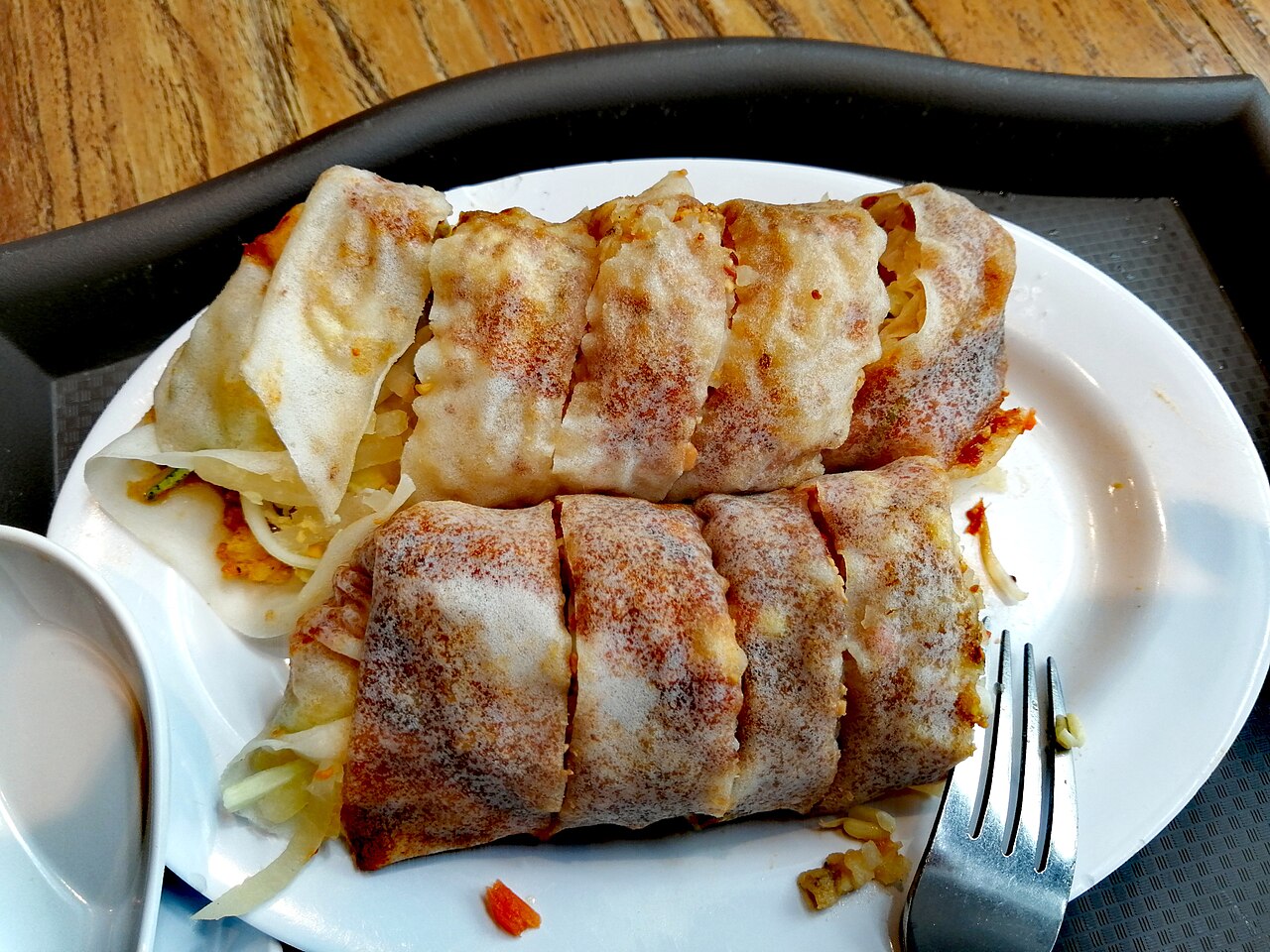
A fresh, unfried spring roll: a paper-thin crepe brushed with sweet sauce and rolled around stewed jicama (a crunchy root also called turnip), bean sprouts, lettuce, egg, peanuts and sometimes prawns or Chinese sausage. In Singapore and Malaysia, families hold 'popiah parties' at home, where everyone rolls their own.
The name means 'thin flatbread' or 'thin pancake' in Hokkien and Teochew.
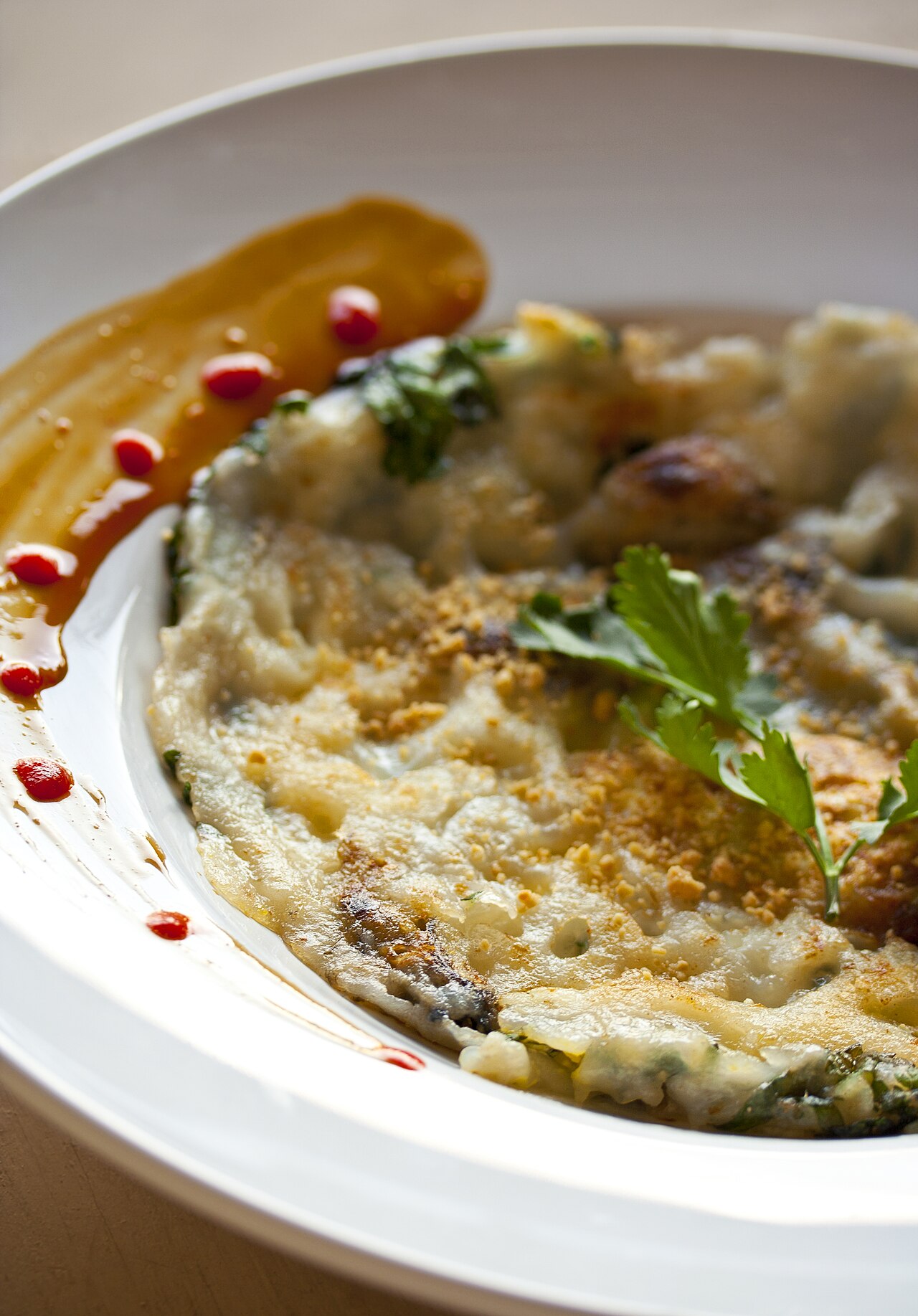
Small oysters fried with egg and a batter of sweet potato starch, which turns crisp at the edges and pleasantly chewy in the middle. It is sprinkled with spring onion and served with chilli sauce mixed with lime juice.
The starch is what gives the omelette its special chewy texture, quite unlike a Western omelette.
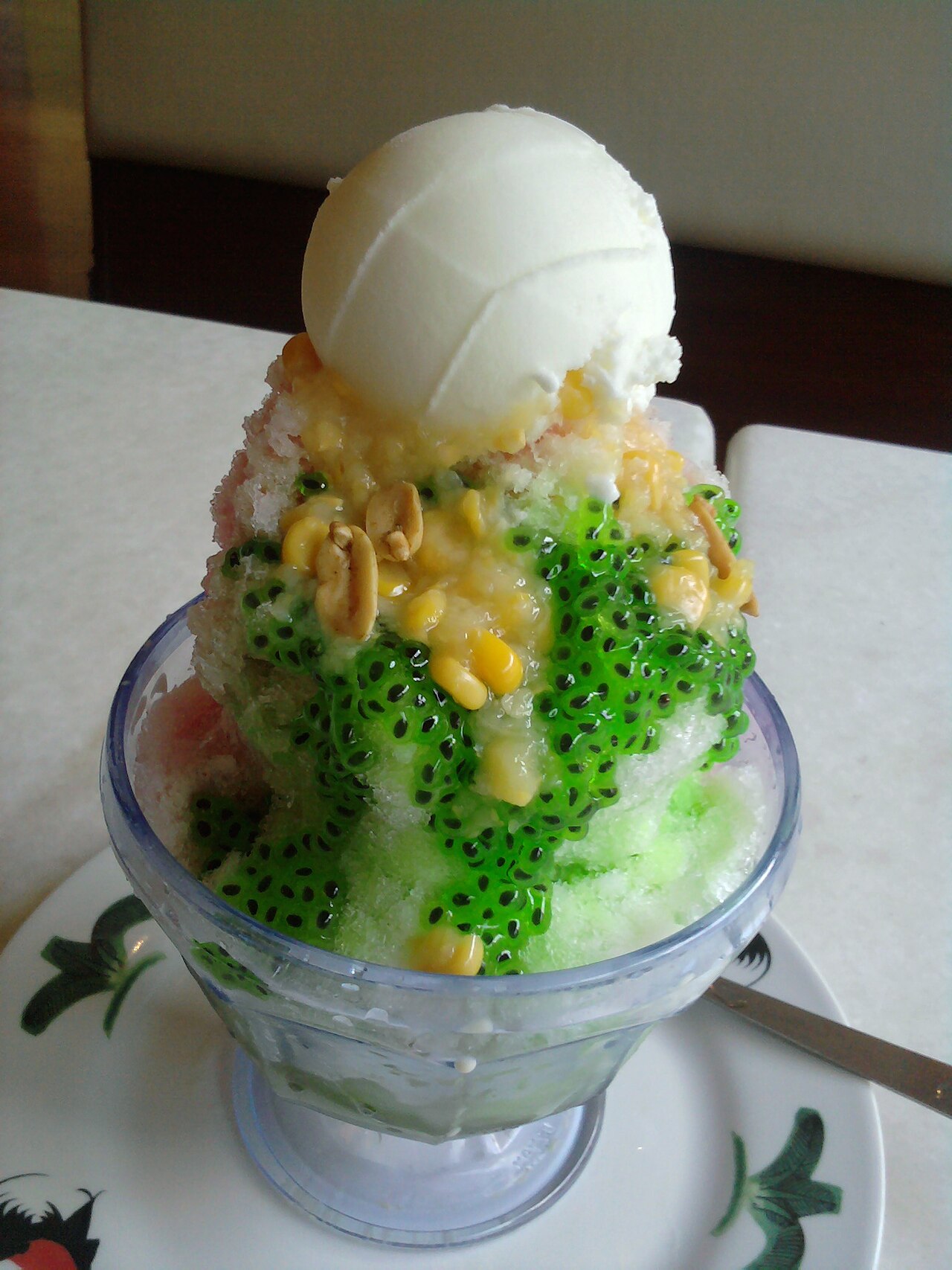
A mountain of shaved ice over red beans, sweet corn and jelly, drenched in brightly coloured syrups and evaporated or condensed milk. In the tropical heat it is one of the most popular hawker desserts.
'Kacang' is Malay for beans, after the red beans hidden under the ice.
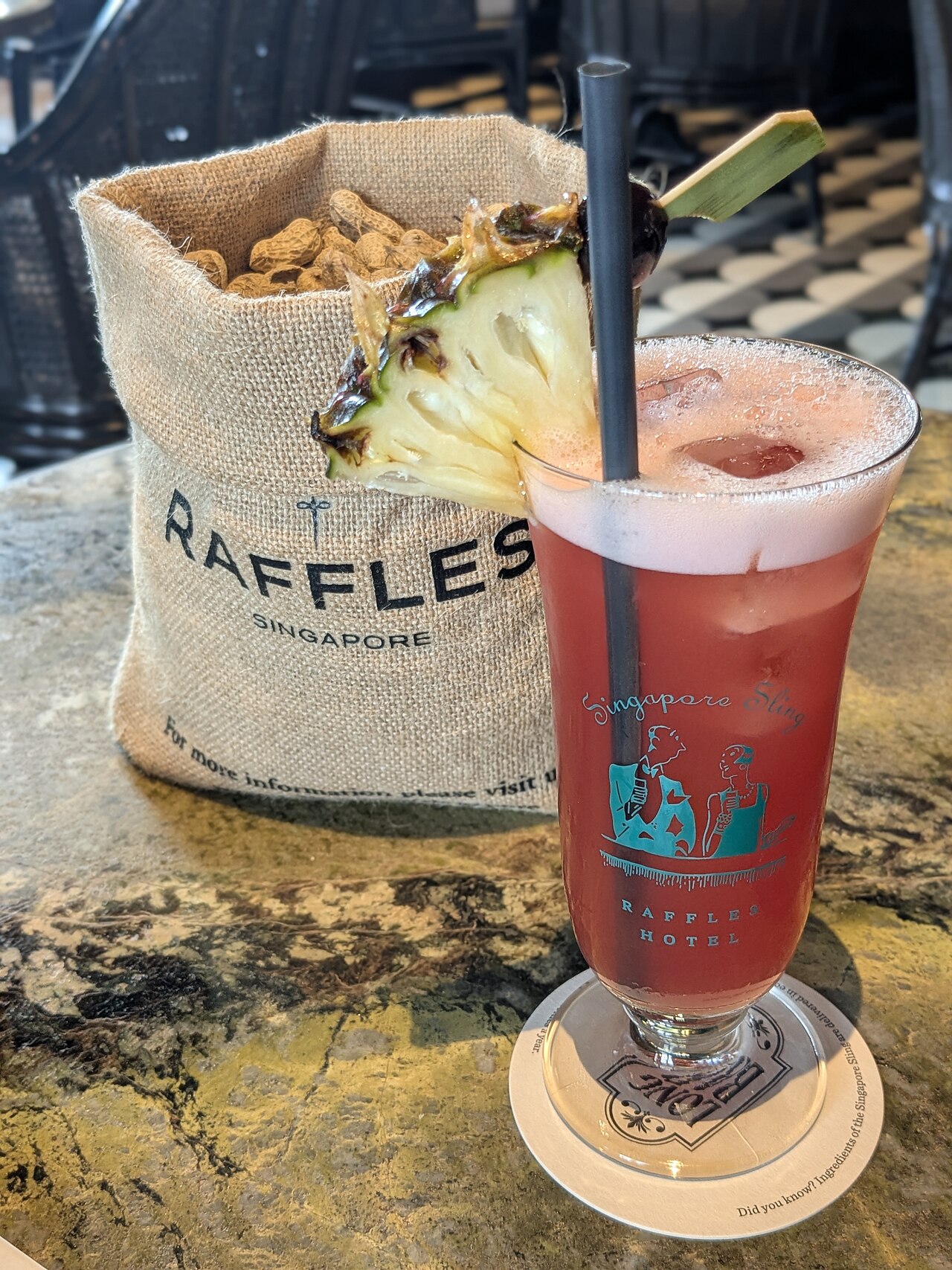
A long, pink cocktail made with gin, cherry liqueur and fruit juices such as pineapple and lime; recipes differ widely. It is usually said to have been created at the Raffles Hotel by the bartender Ngiam Tong Boon around 1915, though the exact date and the original recipe are debated. It contains alcohol.
At the Long Bar, guests traditionally throw their peanut shells on the floor, something not usually allowed anywhere in tidy Singapore.
At the table in Singapore
At a hawker centre, 'chope' (reserve) your seat first: locals leave a packet of tissues on the table to show it is taken, so do not sit where you see one.
Return your tray and plates to the tray return racks when you finish. It is expected, and you can be fined if you do not. Halal and non-halal racks are kept separate.
Most food is eaten with a fork in the left hand and a spoon in the right, using the fork to push food onto the spoon. If you eat with your hand, use only the right.
At Chinese meals, never stick your chopsticks upright in a bowl of rice: it looks like incense sticks at a funeral.
Respect religious food rules: Muslims do not eat pork or drink alcohol, and stalls marked 'halal' serve neither; many Hindus and some Buddhists avoid beef.
Tipping is not expected. Restaurants usually add a 10% service charge plus tax to the bill, shown by '++' after the price.