World Stroll
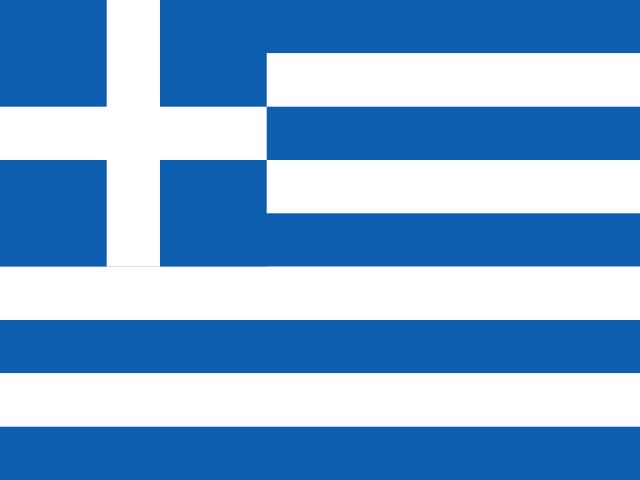
Flag of Greece
Family roots

Discover your Greek roots

Ancient temples, whitewashed islands and a sea that is never far away, in the country that gave the world democracy and the Olympic Games.

Greece sits at the southern tip of the Balkan peninsula, with the Ionian Sea to the west and the Aegean Sea to the east. It has thousands of islands and the longest coastline on the Mediterranean, yet about 80% of the country is mountains or hills.

Ancient Greece is often called the cradle of Western civilisation. Athens gave the world an early form of democracy, and Greek thinkers, playwrights and athletes gave us philosophy, theatre and the Olympic Games. Later the land was ruled by Rome, by the Greek-speaking Byzantine Empire and by the Ottomans, before modern Greece won its independence in 1830.

Questions to ask the older generation

Memories fade faster than photos. Ask these over a meal or a phone call, and write the answers down.

  1. Which town or region of Greece did our family come from? Was it near Thessaloniki, Patras, Heraklion?
  2. Who was the first in the family to leave Greece, when, and why?
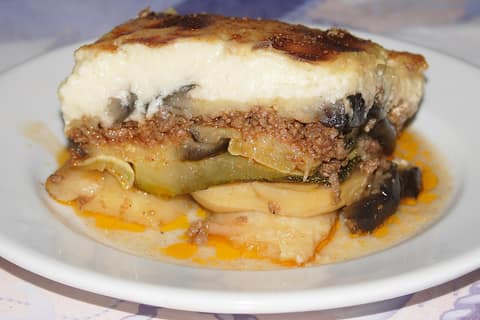
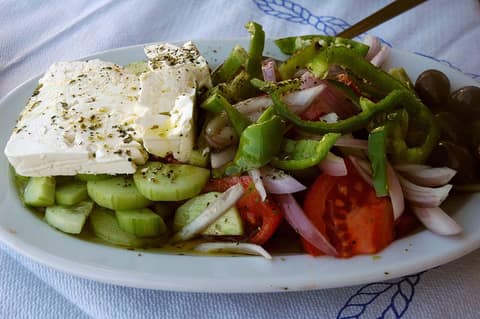
  3. Which dishes from Greece were cooked at home? Did anyone make Moussaka or Greek village salad?
  4. Does anyone in the family still speak Greek, or use a few words of it?
  5. Were there songs, prayers, games or holidays from Greece that the family kept?
  6. Are there old photos, letters or documents from Greece? Who has them?
  7. If you could visit Greece together, where would you go first?

A short history of Greece

Greece has one of the longest recorded histories in Europe, from Bronze Age palaces on Crete to classical Athens, yet the modern Greek state only became independent in 1830.

  1. 1900 BC

    The first palace at Knossos

    Around 1900 BC the Minoans built the first palace at Knossos on Crete, the centre of Europe's first great Bronze Age civilisation.
  2. 508 BC

    Democracy begins in Athens

    The statesman Cleisthenes set up a system in which the citizens of Athens voted on their own laws, the first democracy known in history.

  3. 480 BC

    Thermopylae and Salamis

    King Leonidas of Sparta and his men died holding the pass of Thermopylae. Soon after, the Greek fleet crushed the Persian navy at Salamis.

  4. 336 BC

    Alexander the Great becomes king

    Alexander became king of Macedon at the age of 20. Before his death in 323 BC he had conquered the Persian Empire and reached India, spreading Greek language and culture.

  5. 1821

    The War of Independence begins

    Greeks rose up against Ottoman rule. The revolution is remembered every 25 March, now Greece's Independence Day.

  6. 1896

    The first modern Olympics

    Athens hosted the first modern Olympic Games in the marble Panathenaic Stadium. A Greek water carrier, Spyridon Louis, won the marathon.

  7. 1974

    Democracy returns

    The military dictatorship of the colonels, in power since 1967, collapsed. In a referendum that December, Greeks voted to abolish the monarchy.

  8. 2004

    Athens hosts the Olympics again

    The Summer Olympics returned to Athens in August 2004, more than a century after the first modern Games.

Family recipes to cook together

Greek words to teach the grandchildren

Basics

  • nai (ναι)NEHyes
  • óchi (όχι)OH-heeno
  • efcharistó (ευχαριστώ)ef-hah-ree-STOHthank you
  • parakaló (παρακαλώ)pah-rah-kah-LOHplease; also 'you're welcome'
  • signómi (συγγνώμη)see-GNOH-meesorry

Food and drink

  • neró (νερό)neh-ROHwater
  • psomí (ψωμί)psoh-MEEbread
  • krasí (κρασί)krah-SEEwine
  • kafés (καφές)kah-FESScoffee
  • logariasmós (λογαριασμός)loh-gahr-yahz-MOHSthe bill (in a restaurant)

Travel

  • leoforeío (λεωφορείο)leh-oh-foh-REE-ohbus
  • eisitírio (εισιτήριο)ee-see-TEE-ree-ohticket

Towns and regions

  • Athens, Attica: The Acropolis and the Parthenon, The National Archaeological Museum.
  • Thessaloniki, Central Macedonia: The White Tower, Byzantine churches.
  • Patras, Western Greece: One of Europe's largest carnivals, The Rio-Antirrio bridge.
  • Heraklion, Crete: Knossos, Venetian walls and harbour fortress.
  • Chania, Crete: The Venetian harbour, The old town.
  • Ioannina, Epirus: Lake Pamvotis, Its castle and Ali Pasha.
  • Nafplio, Peloponnese: The Palamidi fortress, Its neoclassical old town.
  • Kalambaka, Thessaly: The Meteora monasteries, Walks among the rocks.
  • Delphi, Central Greece: The ancient oracle of Delphi, Mount Parnassus.
  • Rhodes, South Aegean (Dodecanese): The medieval old town, The Palace of the Grand Master.
  • Corfu, Ionian Islands: The Venetian fortresses, The Liston promenade.
  • Fira, South Aegean (Cyclades): Views over the caldera, The cable car and steps down to the old port.

A heritage evening with the family

Cook one of the recipes, print the large-print pack about Greece, and finish with the big-screen quiz or the words crossword. Grandchildren can colour the flag.
More about Greece