World Stroll
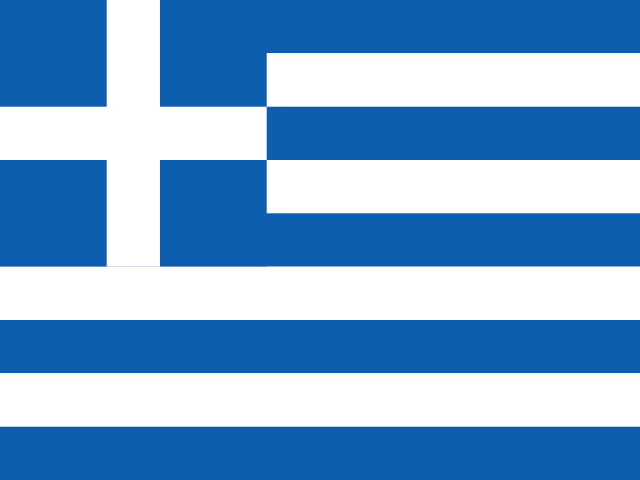
Flag of Greece
Food and recipes

Traditional Greek food: 17 dishes to try

Greek food rests on an ancient trio: wheat, olive oil and wine. Olive oil goes into almost everything, together with herbs like oregano, mint and dill, lemon, yogurt and cheese. Meals often begin with meze, small dishes put in the middle of the table and shared, followed by grilled meat or fish, a baked dish or a vegetable stew in olive oil.
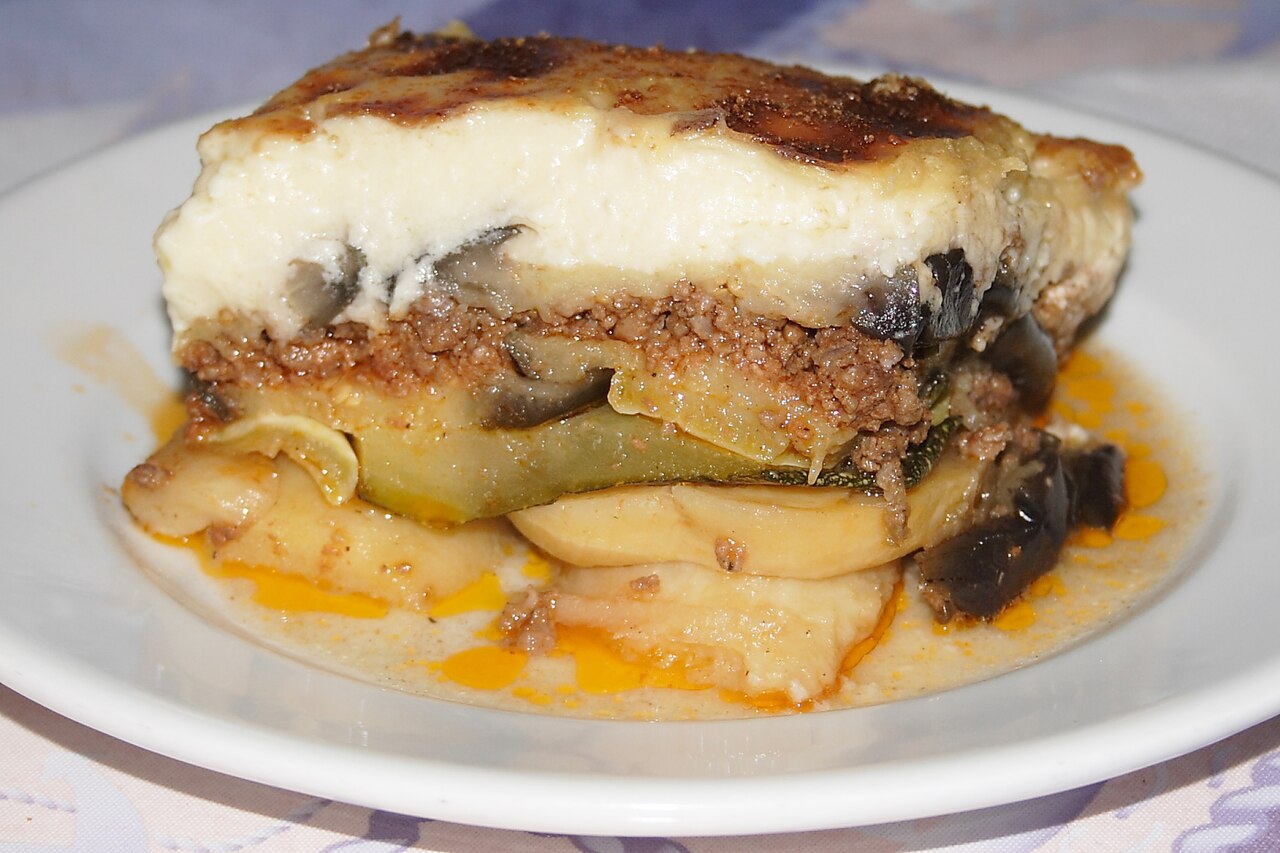
Moussaka
Photo: Robert Kindermann aka RobertK, CC BY-SA 2.5
Main courseRecipe

Moussaka

Mousakás (μουσακάς)
All of Greece (the modern Greek version dates from the 1920s)

Layers of fried or baked aubergine and a tomato and minced meat sauce, topped with a thick béchamel sauce and baked until golden.

Similar dishes are eaten across the Balkans and the Middle East. The Greek version with its creamy topping was created in the 1920s by the chef Nikolaos Tselementes.

How to make Moussaka

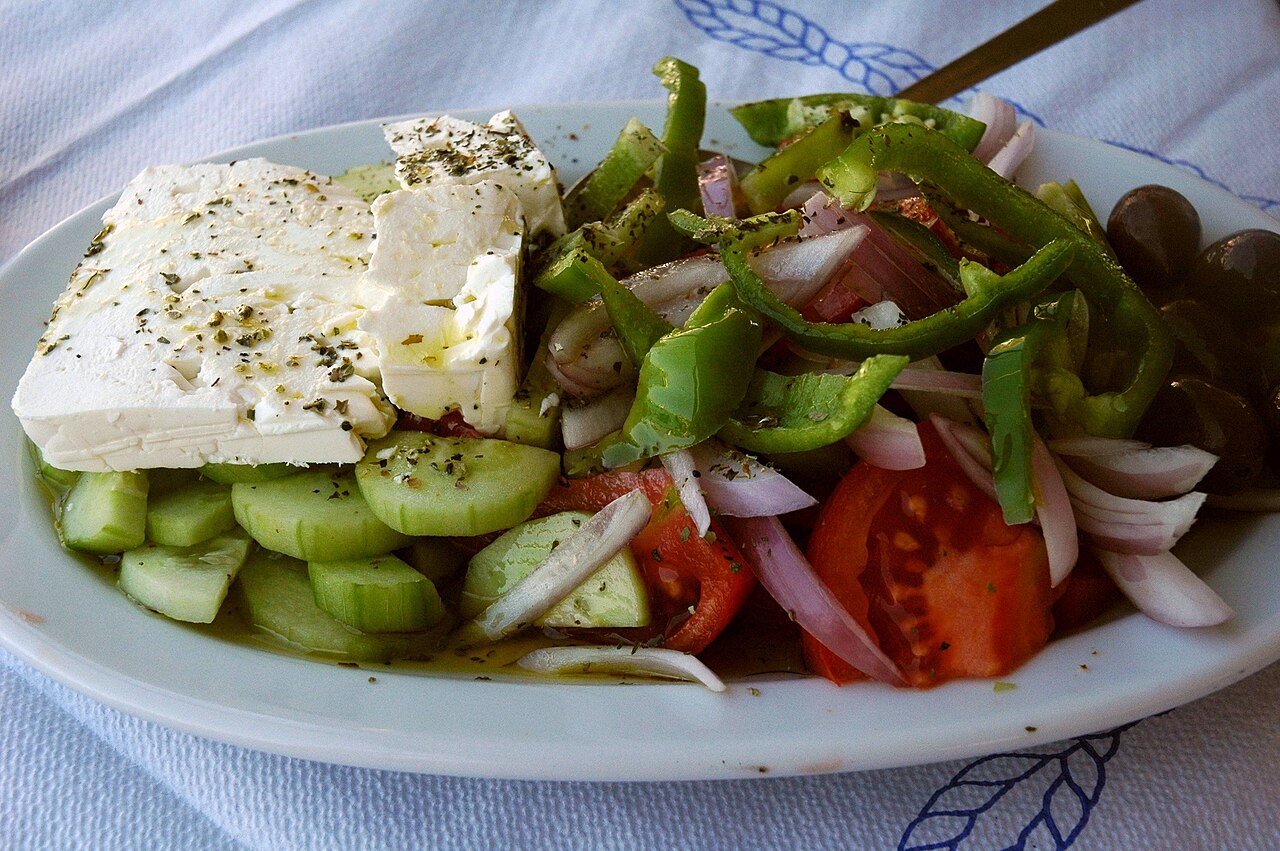
Greek salad
Photo: Jpatokal, CC BY-SA 4.0
StarterRecipe

Greek village salad

Choriátiki saláta (χωριάτικη σαλάτα)
All of Greece

Chunks of tomato, cucumber and onion with olives and a slab of feta, dressed with olive oil and dried oregano. A true Greek salad has no lettuce.

How to make Greek village salad

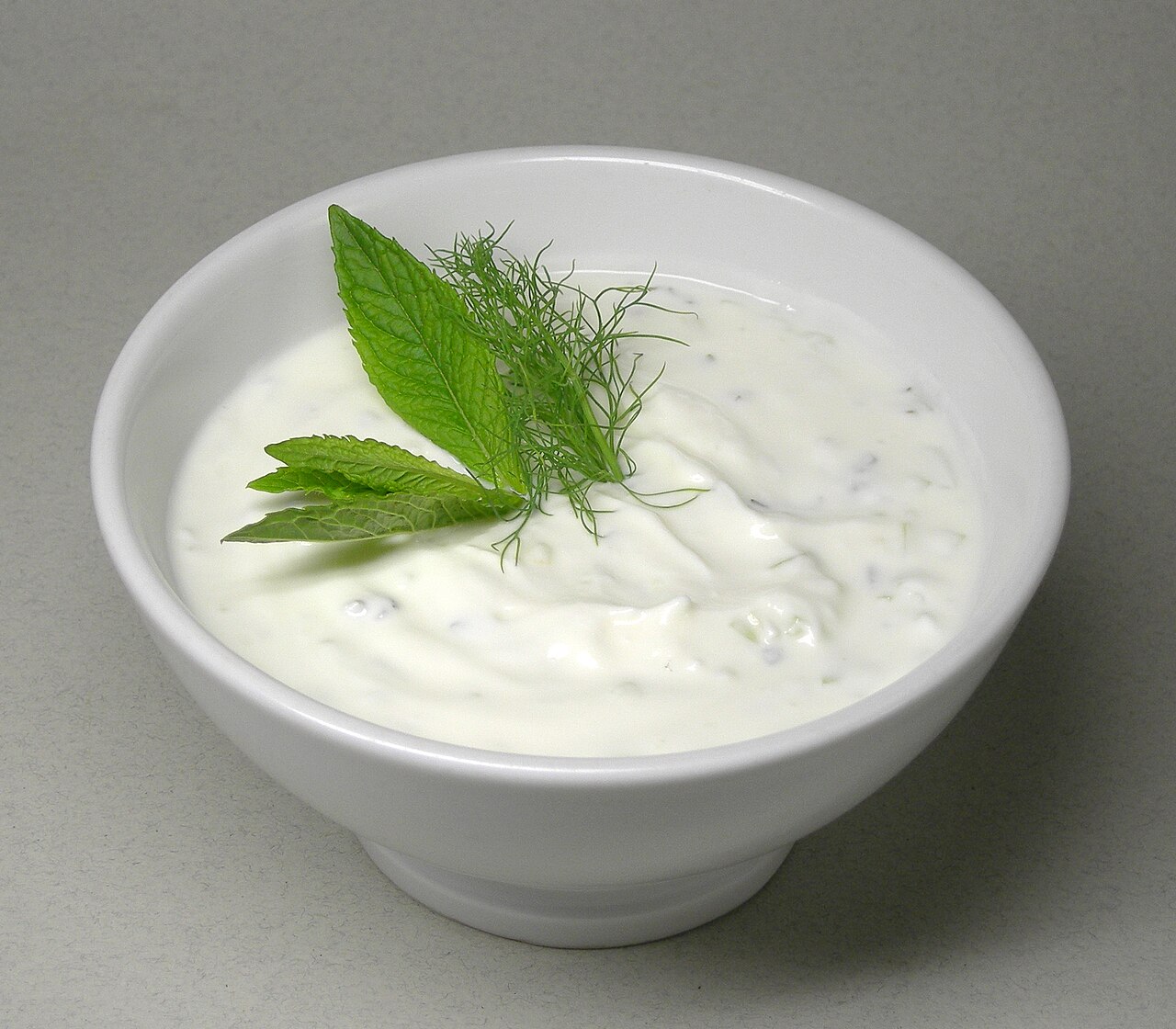
Tzatziki
Photo: Rainer Zenz, CC BY-SA 3.0
StarterRecipe

Tzatziki

Tzatzíki (τζατζίκι)
All of Greece

A cool dip of strained yogurt, grated cucumber, garlic, olive oil and a little vinegar or lemon, often with dill or mint. It is served as a meze and as a sauce for souvlaki and gyros.

How to make Tzatziki

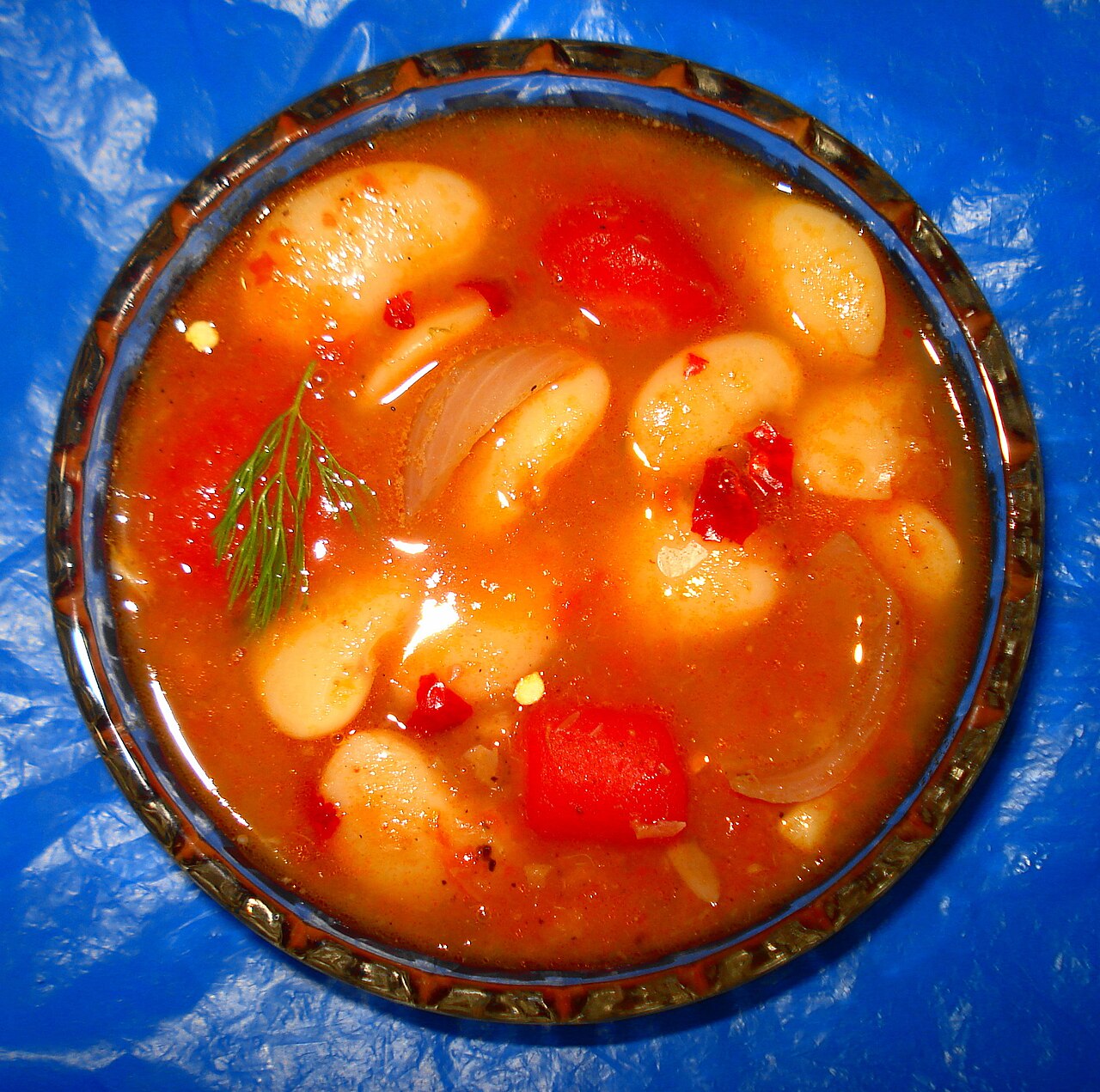
Fasolada
Photo: Miansari66, CC0
Main courseRecipe

Fasolada

Fasoláda (φασολάδα)
All of Greece

A thick soup of dried white beans simmered with tomato, carrot, celery, onion and plenty of olive oil. It is sometimes called the national food of the Greeks.

How to make Fasolada

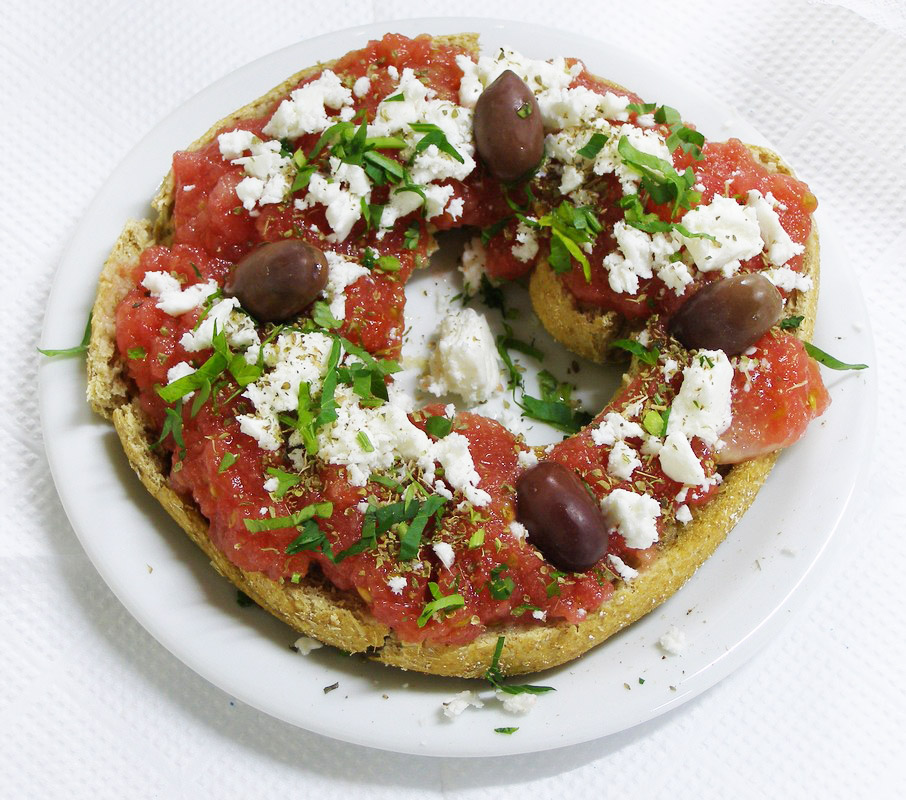
Dakos
Photo: Frente, CC BY-SA 3.0
StarterRecipe

Dakos

Ntákos (ντάκος)
Crete

A hard barley rusk softened with water or olive oil and topped with grated tomato, crumbled feta or mizithra cheese, oregano and olive oil.

It is also called koukouvagia, which means 'owl'.

How to make Dakos

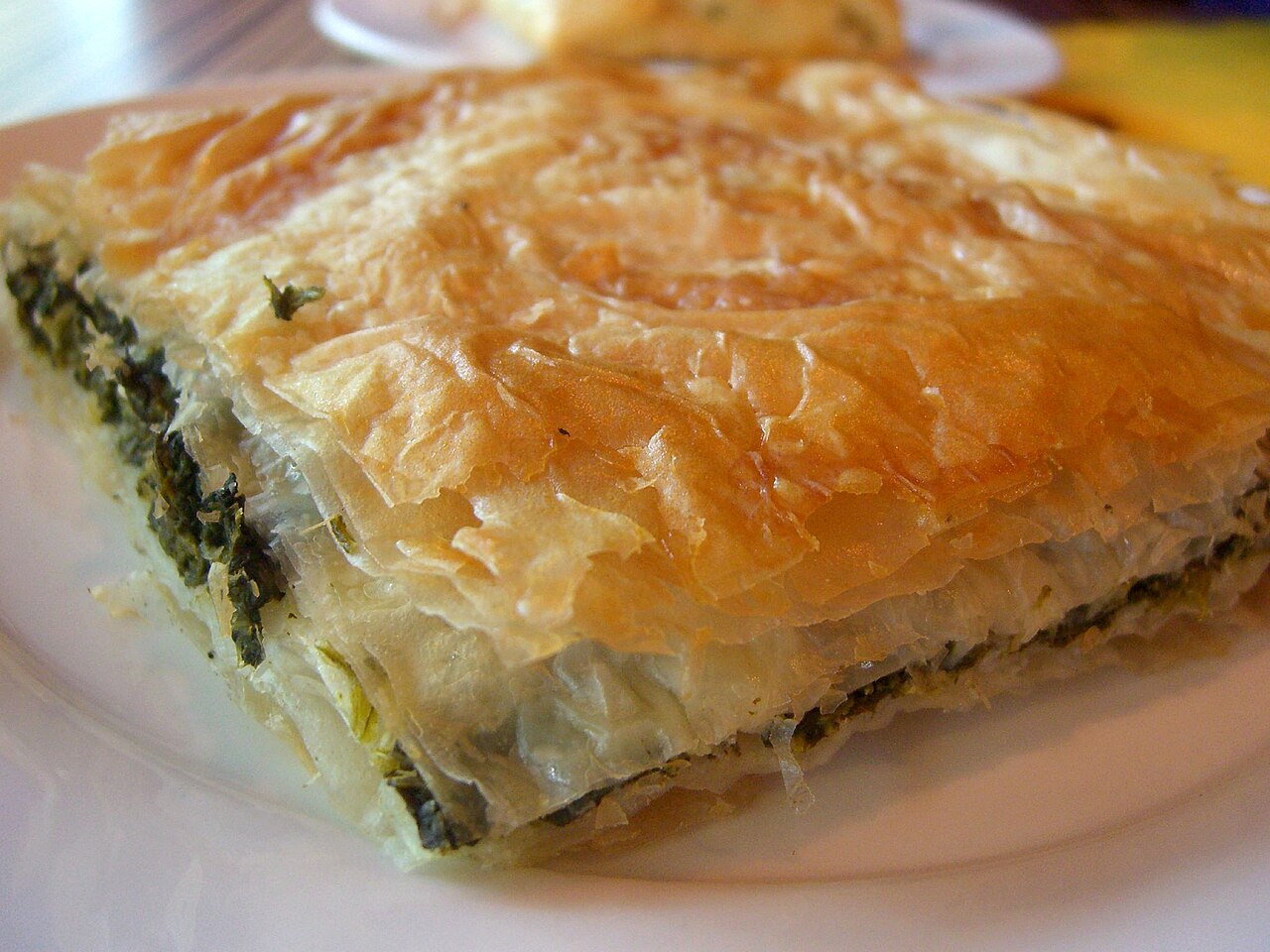
Savory spinach pie
Photo: Alpha, CC BY-SA 2.0
Snack

Spanakopita

Spanakópita (σπανακόπιτα)
All of Greece

A pie of crisp filo pastry filled with spinach, usually with feta and egg. A version without cheese and eggs is eaten during religious fasts.

The name simply means 'spinach pie', from spanáki (spinach) and píta (pie).

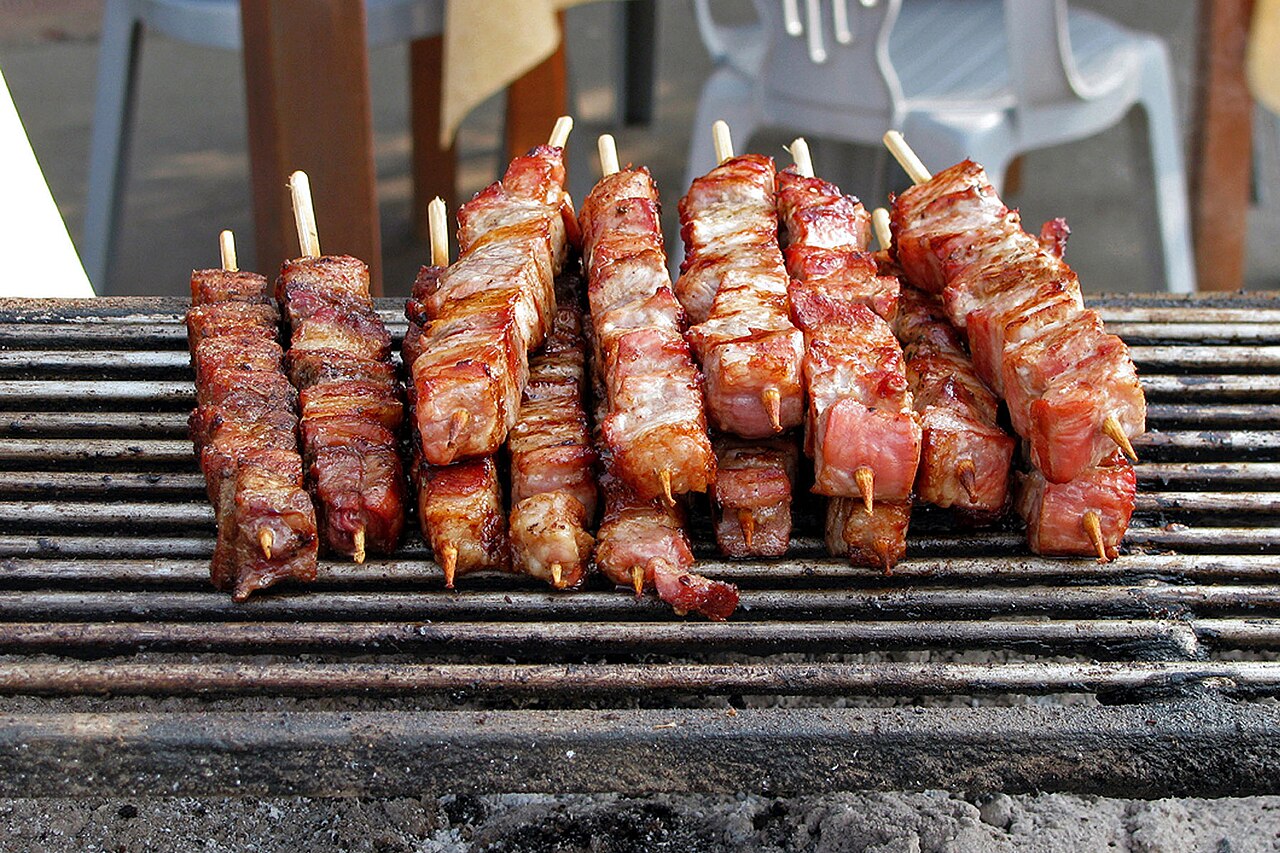
Souvlaki
Photo: EntaXoyas, CC BY-SA 3.0
Main course

Souvlaki

Souvláki (σουβλάκι)
All of Greece

Small pieces of meat, usually pork in Greece, grilled on a skewer and eaten straight off the stick or wrapped in pita with tomato, onion and tzatziki.

Around Athens it is often called kalamaki, 'little reed', after the skewer.

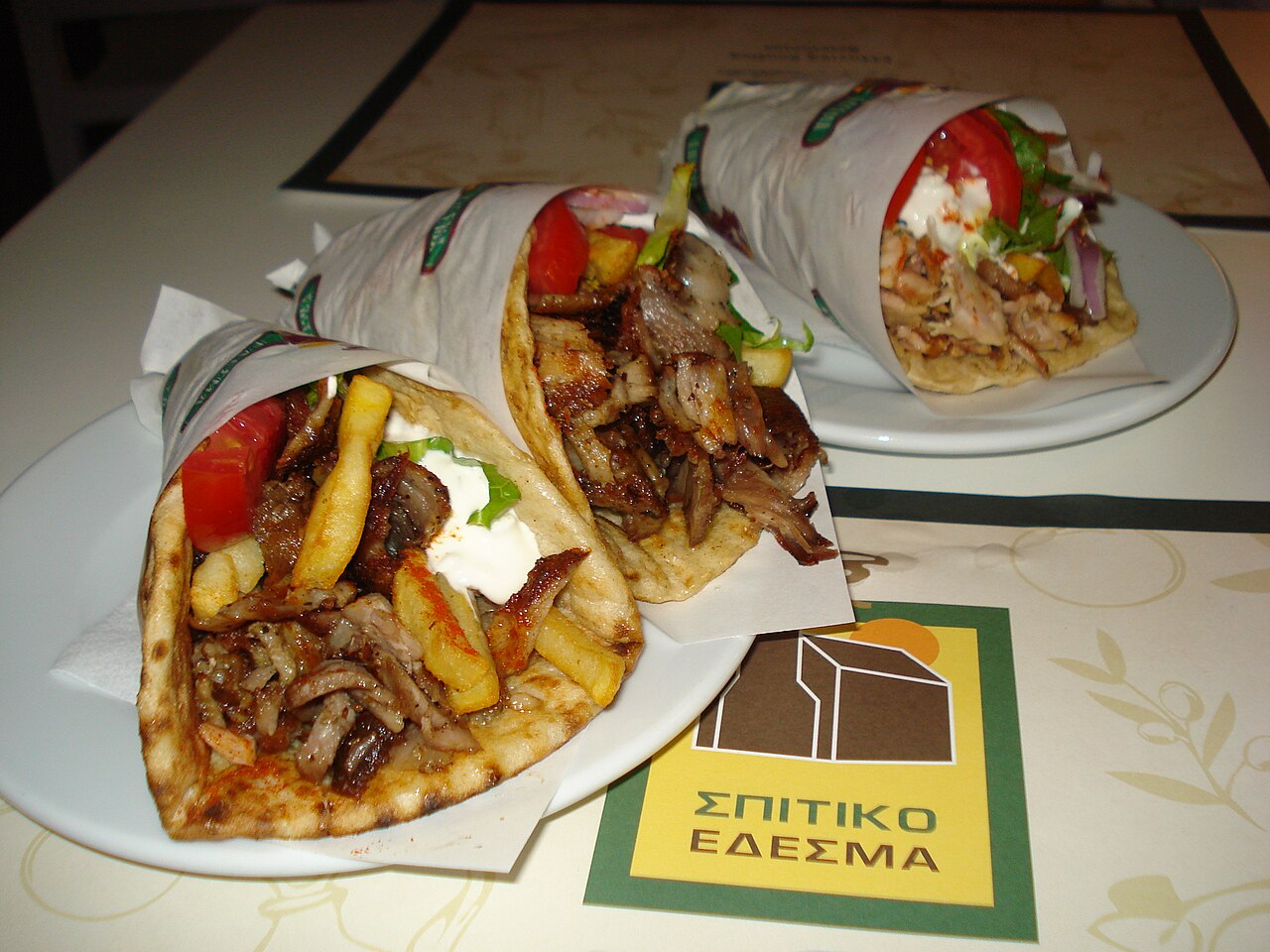
Gyros
Photo: Antonio Fajardo i López, CC BY-SA 3.0
Snack

Gyros

Gýros (γύρος)
All of Greece

Meat, traditionally pork in Greece, roasted on a turning vertical spit, sliced thin and wrapped in pita with tomato, onion, chips and tzatziki.

Gýros means 'turn', after the rotating spit.

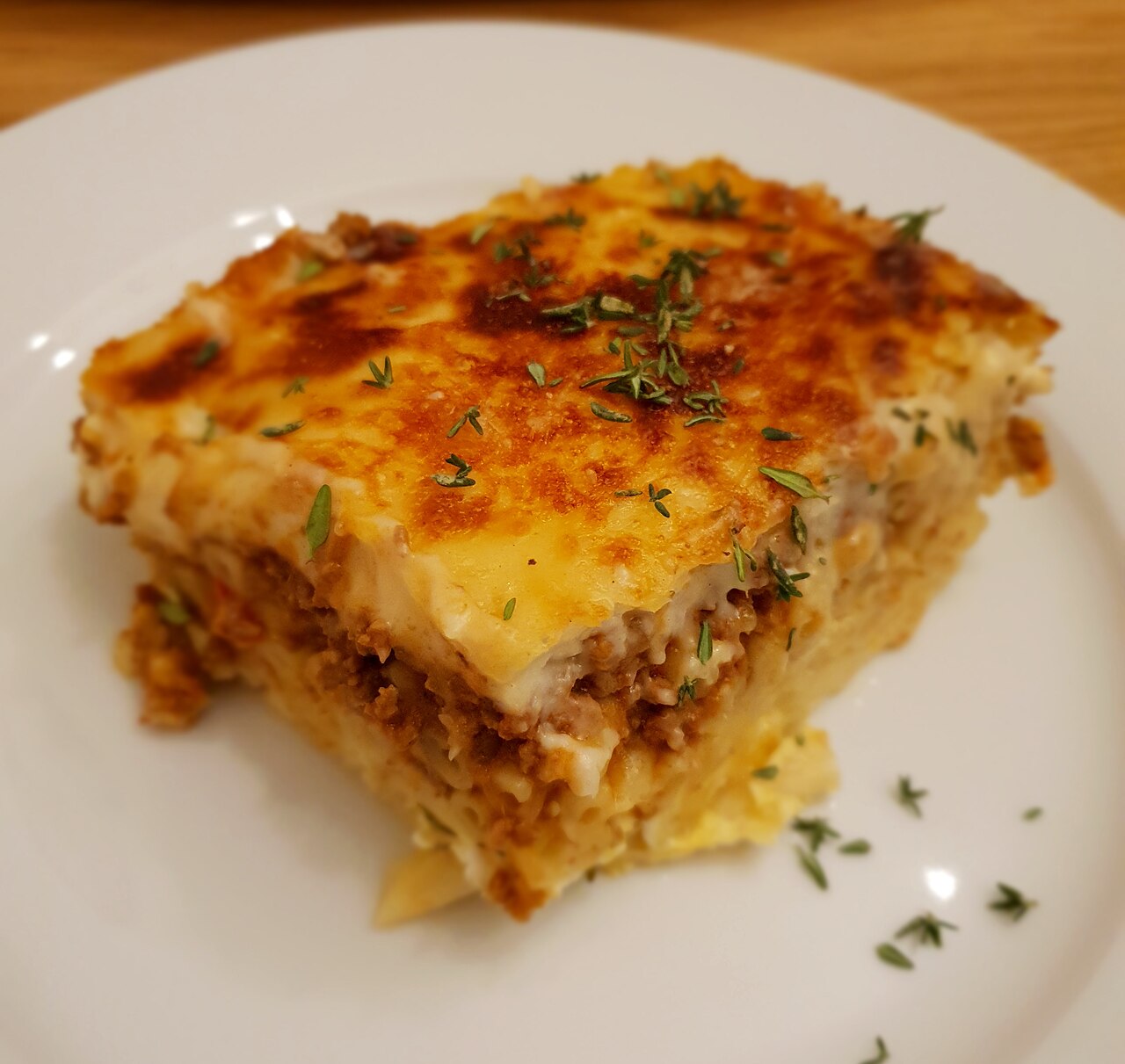
Pastitsio
Photo: Sam Bailey, CC BY-SA 4.0
Pasta

Pastitsio

Pastítsio (παστίτσιο)
Ionian Islands

A baked dish of tubular pasta, a minced meat and tomato sauce spiced with cinnamon, and a thick layer of béchamel on top.

Its name comes from the Venetian 'pasticcio', a baked pie, a reminder of Venice's long rule over the Ionian Islands.

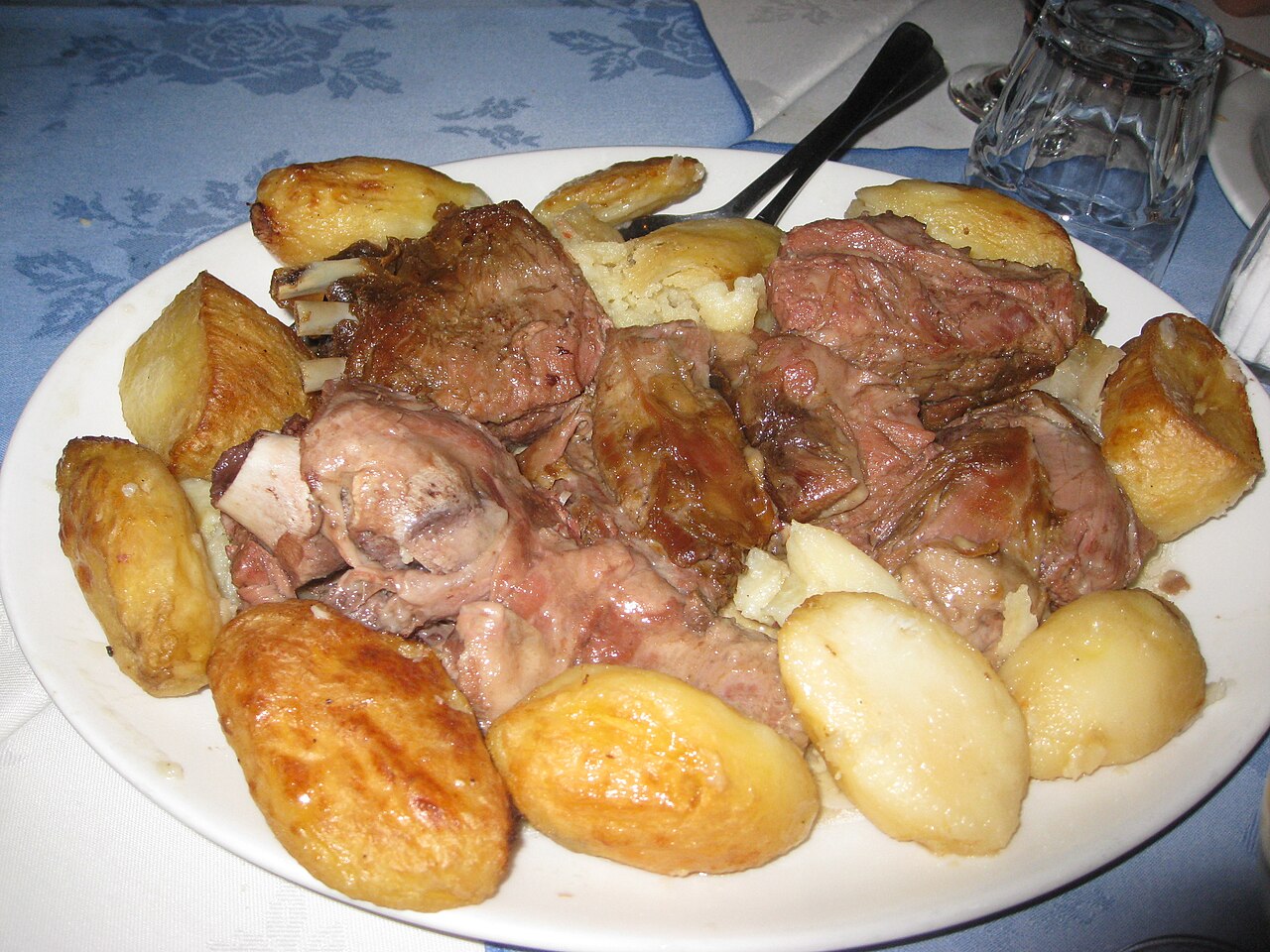
Kleftiko
Photo: Lord Mountbatten, CC BY-SA 3.0
Main course

Kleftiko

Kléftiko (κλέφτικο)
Mainland Greece and Cyprus

Lamb or goat marinated with garlic and lemon and slow-roasted in a parcel of paper with potatoes until it falls off the bone.

It is named after the klephts, outlaws of the Ottoman period, who are said to have cooked meat in covered pits so that no one would find them.

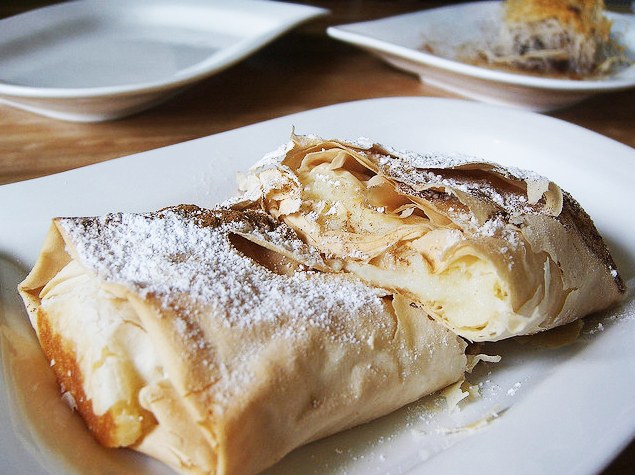
Bougatsa
Photo: avlxyz, CC BY-SA 2.0
Dessert

Bougatsa

Bougátsa (μπουγάτσα)
Northern Greece, especially Thessaloniki and Serres

Flaky filo pastry filled with semolina custard, dusted with icing sugar and cinnamon. In Thessaloniki it is a favourite breakfast. There are also savoury versions with cheese or meat.

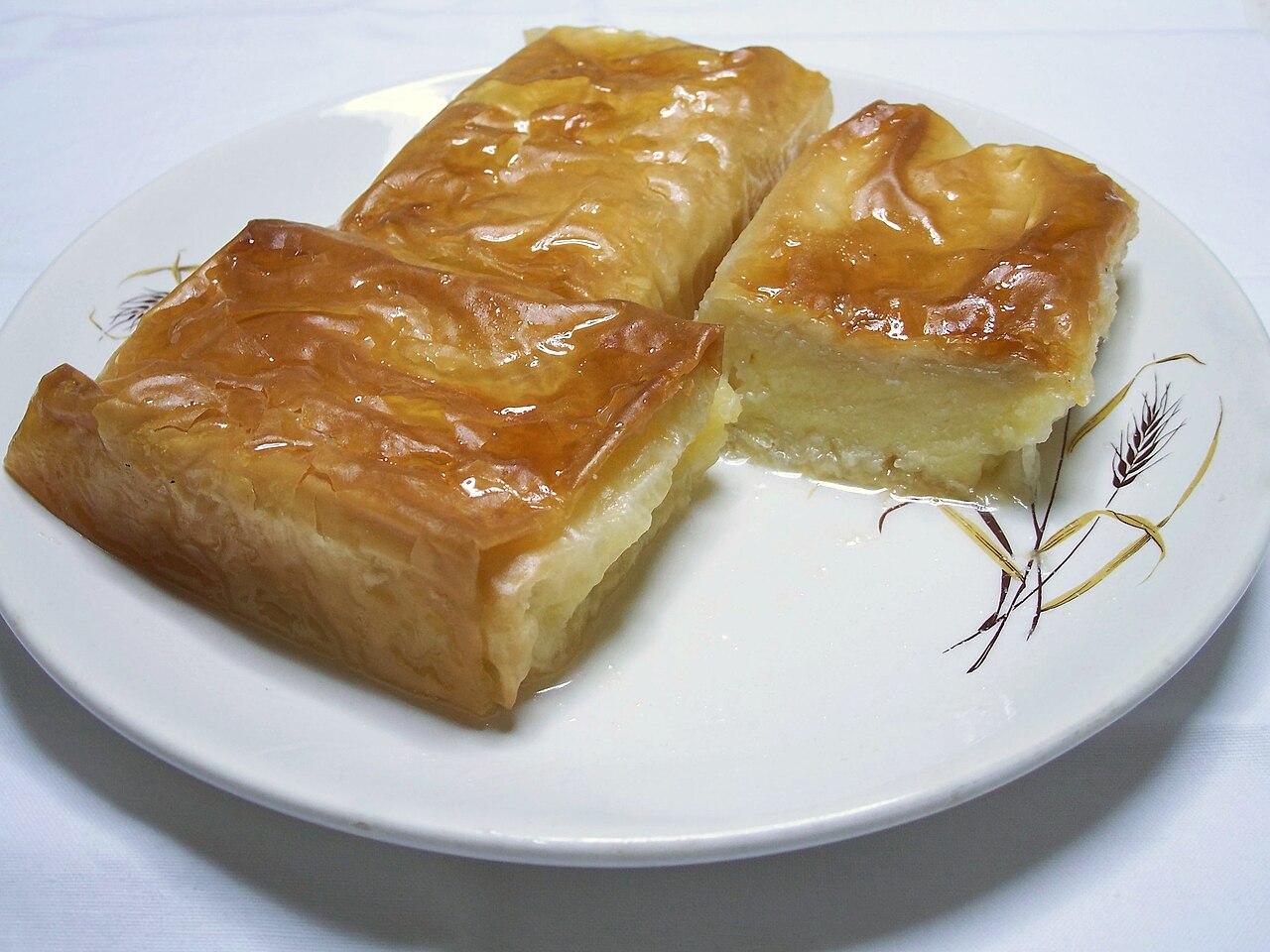
Galaktoboureko
Photo: Badseed, CC BY 3.0
Dessert

Galaktoboureko

Galaktoboúreko (γαλακτομπούρεκο)
All of Greece

Semolina custard baked between layers of filo pastry, then soaked in a sweet syrup, often flavoured with lemon or orange.

Lokma
Photo: elif ayse, CC BY 2.0
Dessert

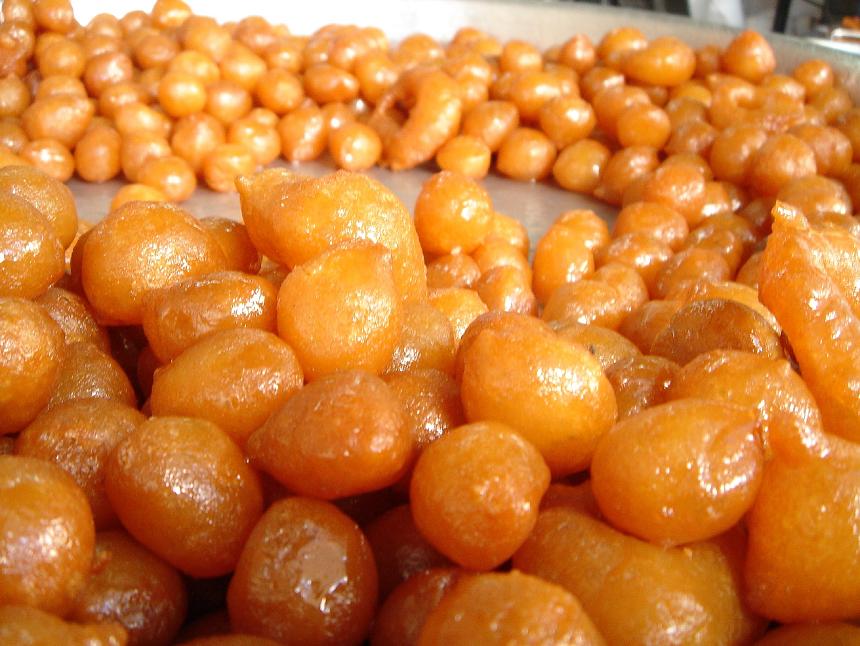
Loukoumades

Loukoumádes (λουκουμάδες)
All of Greece

Small balls of yeast dough fried until golden, then drenched in honey or syrup and sprinkled with cinnamon.

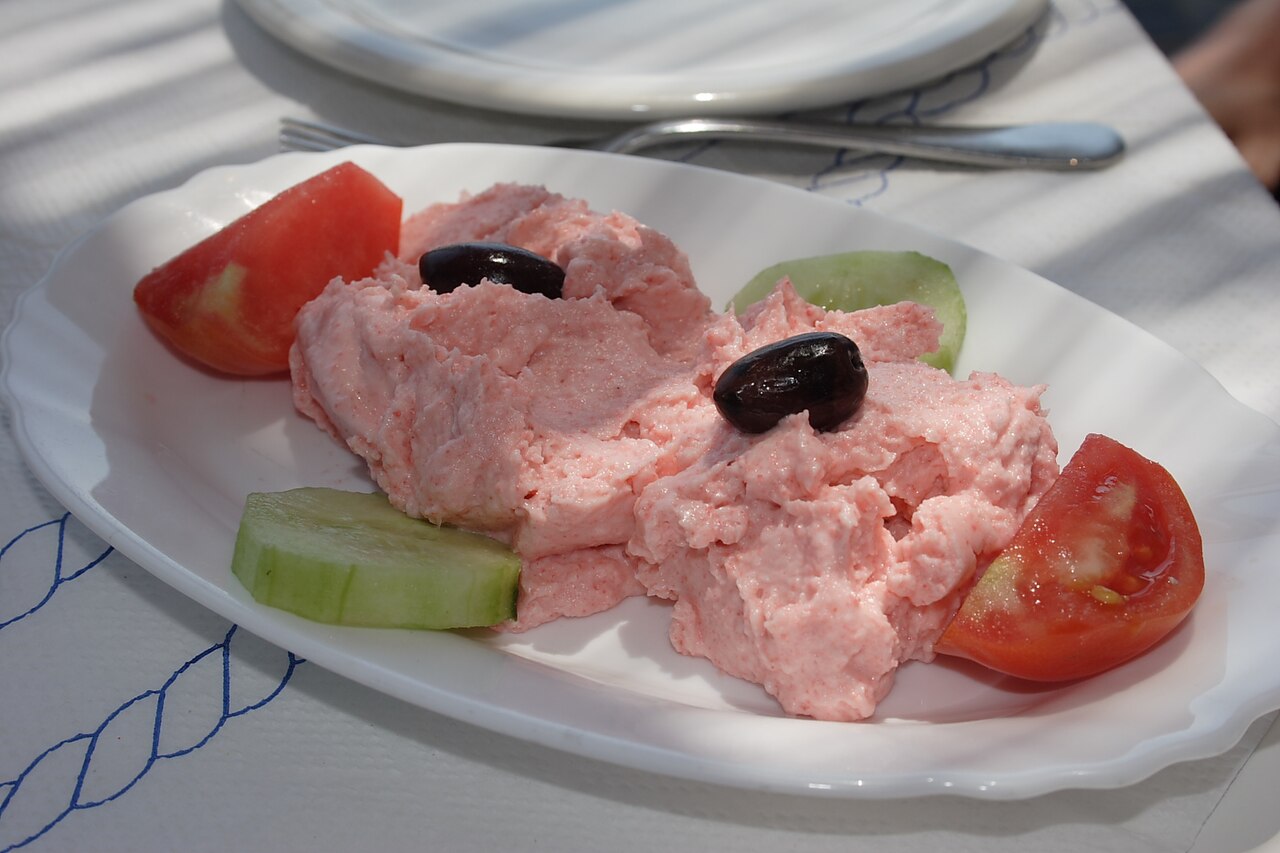
Taramasalata
Photo: Robert Kindermann, CC BY-SA 2.5
Starter

Taramosalata

Taramosaláta (ταραμοσαλάτα)
All of Greece

A creamy dip of salted, cured fish roe mixed with olive oil, lemon juice and bread or potato. Good versions are beige, not bright pink.

It is a traditional food for Clean Monday, the first day of Lent.

Feta
Photo: JJ Harrison, CC BY-SA 2.5
Snack

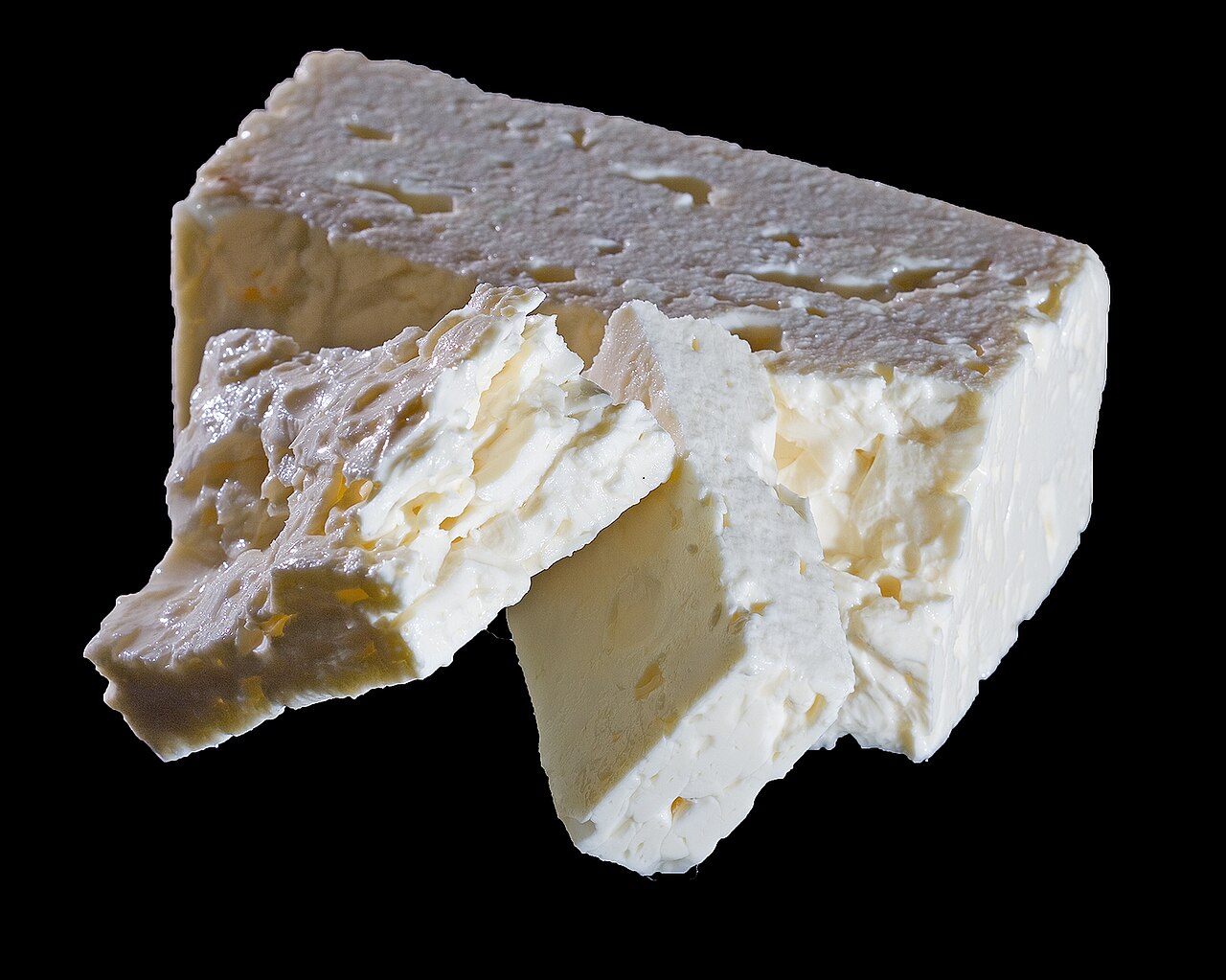
Feta

Féta (φέτα)
Mainland Greece and the island of Lesbos

A white, crumbly, salty cheese aged in brine, made from sheep's milk or sheep's milk with up to 30% goat's milk.

Since 2002 feta has had protected status in the European Union: only cheese made in the traditional way in the protected areas of Greece may use the name.

Ouzo
Photo: Udm, CC BY-SA 3.0
Drink

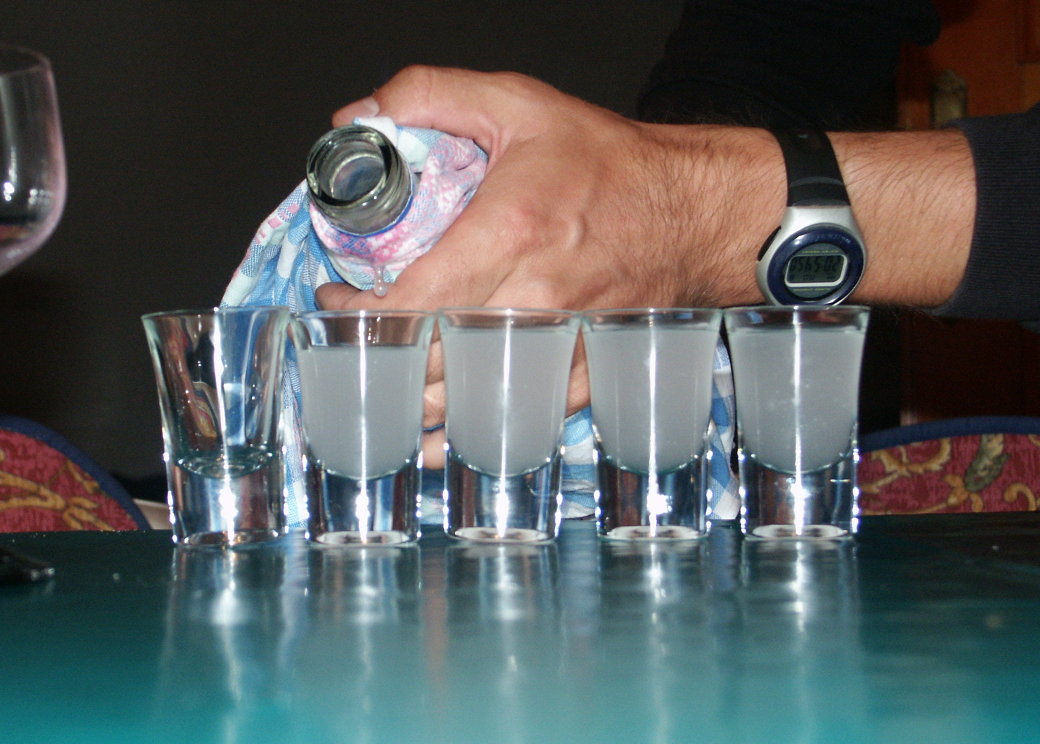
Ouzo

Oúzo (ούζο)
All of Greece (Lesbos is famous for it)

A dry spirit flavoured with anise. Mixed with water it turns cloudy white, and it is usually sipped slowly with a plate of meze.

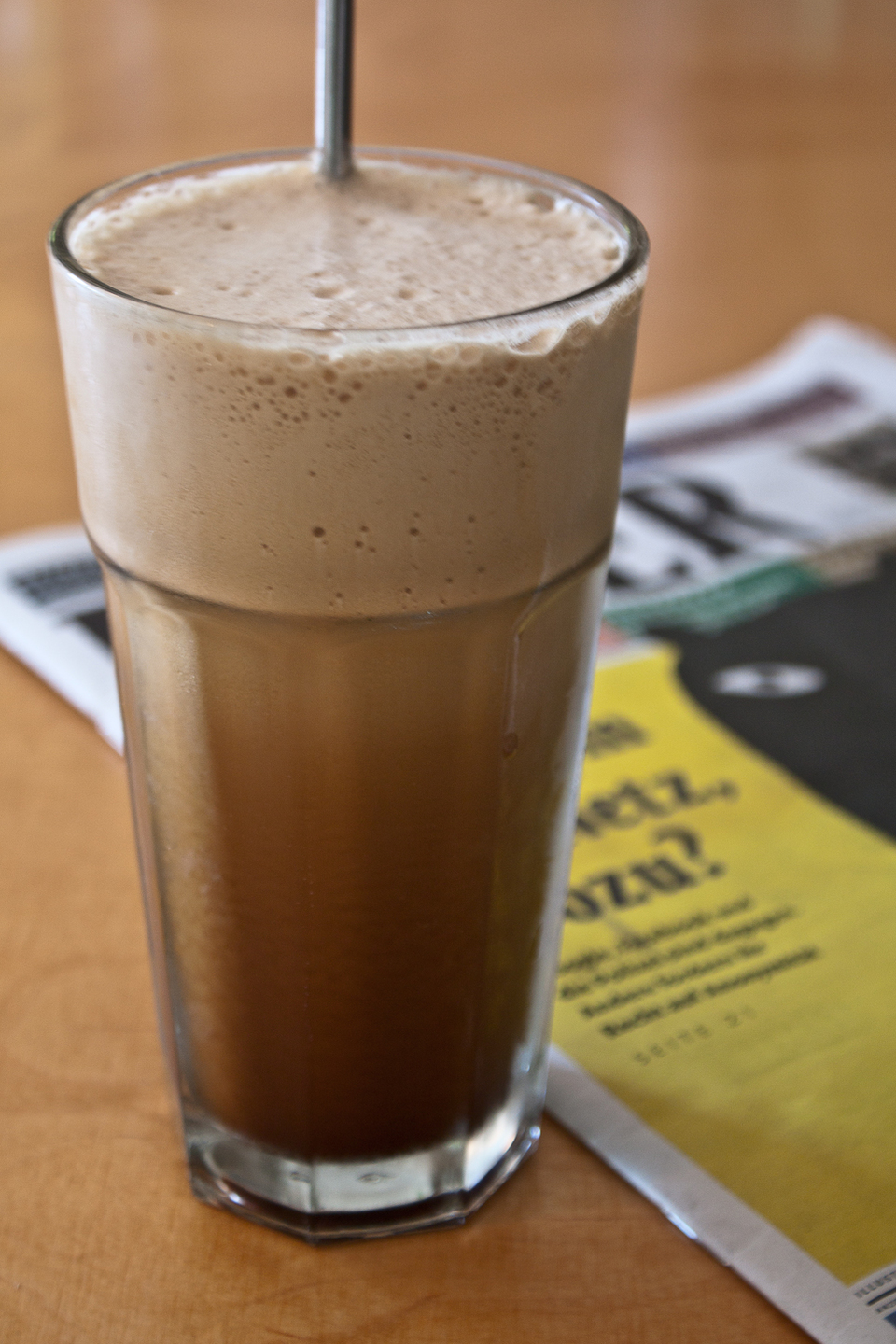
Frappé coffee
Photo: philleb, CC0
Drink

Frappé

Frapé (φραπέ)
Thessaloniki

Instant coffee shaken with water, sugar and ice into a thick foam, with milk if you like. It is one of the most popular coffees in Greece in summer.

The popular story says it was first made at the Thessaloniki International Fair in 1957, when a Nestlé employee shook instant coffee with cold water and ice.

At the table in Greece

  • Many dishes, especially meze, are put in the middle of the table and everyone shares.
  • Before eating, people wish each other 'Kalí órexi' (good appetite), and they say 'Stin ygeiá mas' (to our health) when they raise their glasses.
  • Ouzo is usually drunk slowly with water or ice and a little food, not on its own.
  • Many Greeks follow Orthodox fasts, so tavernas often offer 'fasting' versions of dishes without meat, eggs or cheese, especially during Lent.
  • On Clean Monday, the first day of Lent, families eat taramosalata, bread and other fasting foods, often outdoors.
Sources (18)

Keep eating your way around the world

  1. Albanian foodNext stop · Next door to Greece
  2. Montenegrin foodNext door to Albania
  3. Bosnian, Herzegovinian foodNext door to Montenegro

More about Greece

Your next stop