The Himalayas, the Taj Mahal, sacred rivers and a thousand kitchens, in the country with more people than any other.
India fills most of the South Asian subcontinent. In the north the Himalayas rise to Kangchenjunga, on the border with Nepal, the highest peak in the territory India administers; below them the wide plains of the Ganges hold some of the oldest cities on Earth. To the west lies the Thar Desert, the Deccan Plateau fills the centre and the south, and a long coastline runs from the Arabian Sea around to the Bay of Bengal.
People have built cities here for more than 4,500 years, from the Indus Valley to the Mauryan and Gupta empires, the Delhi Sultanate and the Mughals. Britain ruled much of the subcontinent until 1947, when British India was divided and India became independent. It became a republic in 1950, with the longest written national constitution in the world.
Questions to ask the older generation
Memories fade faster than photos. Ask these over a meal or a phone call, and write the answers down.
Which town or region of India did our family come from? Was it near Mumbai, Kolkata, Chennai?
Who was the first in the family to leave India, when, and why?
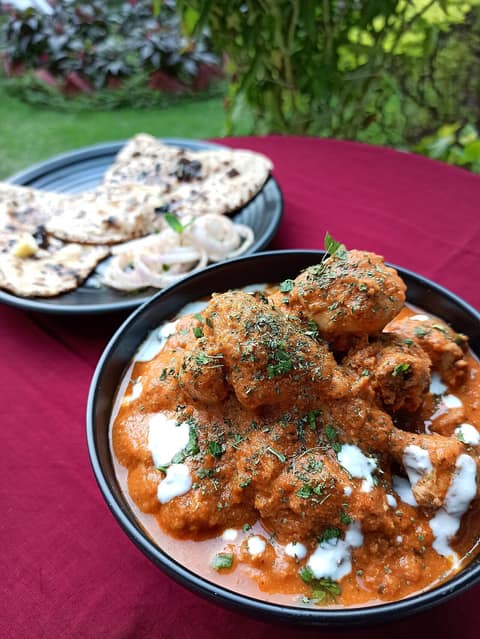
Which dishes from India were cooked at home? Did anyone make Masala dosa or Idli?
Does anyone in the family still speak Hindi, or use a few words of it?
Were there songs, prayers, games or holidays from India that the family kept?
Are there old photos, letters or documents from India? Who has them?
If you could visit India together, where would you go first?
A short history of India
India's story is one of the longest in the world. The first great cities rose in the Indus Valley more than 4,500 years ago. Later came the empires of the Mauryas and the Guptas, the Delhi Sultanate and the Mughals, then European traders and almost two centuries of British rule. In 1947 India became independent, and in 1950 it became a republic.
2600 BC
The Indus Valley cities flourish
From about 2600 BC, cities with straight streets, brick houses and covered drains grew along the Indus and its rivers. Harappa and Mohenjo-daro are in today's Pakistan; Dholavira and Lothal in Gujarat and Rakhigarhi in Haryana are in India. Their writing has still not been deciphered.
261 BC
Ashoka's war in Kalinga
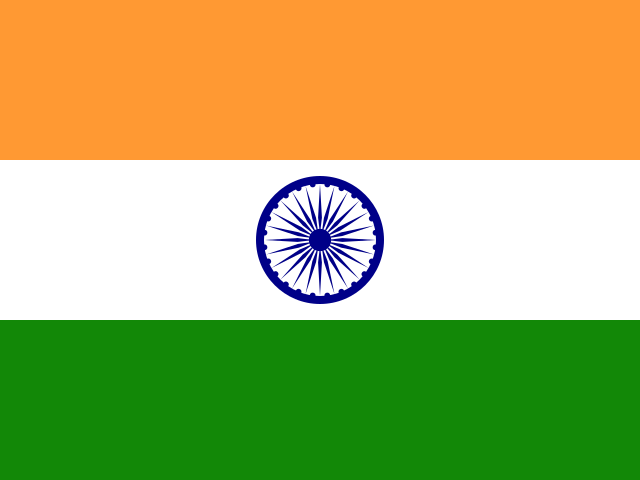
Around 261 BC the emperor Ashoka conquered Kalinga, in today's Odisha, at a terrible cost in lives. Filled with remorse, he turned to Buddhism and non-violence and carved his teachings on rocks and pillars across his empire. The wheel on India's flag comes from one of his pillars.
1206
The Delhi Sultanate is founded
Qutb ud-Din Aibak became the first sultan of Delhi. He began building the Qutb Minar, and his successor Iltutmish raised it higher. The sultanate ruled much of northern India for over 300 years.
1526
The Mughal Empire begins
On 21 April 1526 Babur defeated Ibrahim Lodi, the Sultan of Delhi, at the First Battle of Panipat, using cannons and firearms against war elephants. His Mughal dynasty ruled for more than 200 years.
1757
The Battle of Plassey
On 23 June 1757 Robert Clive's East India Company army defeated Siraj ud-Daulah, the Nawab of Bengal, helped by the betrayal of the Nawab's commander, Mir Jafar. It gave the company control of Bengal, the start of its rule in India.
1885
The Indian National Congress is founded
In December 1885, 72 delegates met in Bombay, today's Mumbai, to found the Indian National Congress. It became the main voice of the movement for self-rule and, later, independence.
1947
Independence and partition
On 15 August 1947 India became independent, and British India was divided into two countries, India and Pakistan. The provinces of Punjab and Bengal were split. Between 12 and 20 million people were displaced, and hundreds of thousands, by some estimates up to 2 million, died in the violence.
2023
Chandrayaan-3 lands near the Moon's south pole
On 23 August 2023 India's Vikram lander touched down on the Moon and released the Pragyan rover. India became the fourth country to land softly on the Moon and the first to do so near its south pole.