A free large-print PDF. Choose what goes in: facts, map, history, dishes and recipes, phrases, fun facts, a quiz with or without answers. Made for clubs, care homes, libraries and family afternoons.
India fills most of the South Asian subcontinent. In the north the Himalayas rise to Kangchenjunga, on the border with Nepal, the highest peak in the territory India administers; below them the wide plains of the Ganges hold some of the oldest cities on Earth. To the west lies the Thar Desert, the Deccan Plateau fills the centre and the south, and a long coastline runs from the Arabian Sea around to the Bay of Bengal.
People have built cities here for more than 4,500 years, from the Indus Valley to the Mauryan and Gupta empires, the Delhi Sultanate and the Mughals. Britain ruled much of the subcontinent until 1947, when British India was divided and India became independent. It became a republic in 1950, with the longest written national constitution in the world.
Today India is a federal republic of 28 states and 8 union territories, and as of 2023 it has the largest population in the world. It is home to Hindus, Muslims, Christians, Sikhs, Buddhists and Jains, and to hundreds of languages. The constitution names no national language: Hindi and English are the official languages of the central government, and 22 languages are recognised in its Eighth Schedule.
CapitalNew Delhi
PopulationMore than 1.4 billion (as of 2025), the largest in the world
Official languagesHindi and English for the central government; 22 languages are recognised in the constitution, and there is no single national language
CurrencyIndian rupee (₹)
AreaAbout 3.29 million km²
GovernmentFederal parliamentary republic, with a president as head of state and a prime minister leading the government
Highest mountainKangchenjunga, 8,586 m, on the border with Nepal: the highest peak in the territory India administers
Longest riverThe Ganges, about 2,525 km, the longest river flowing mostly through India
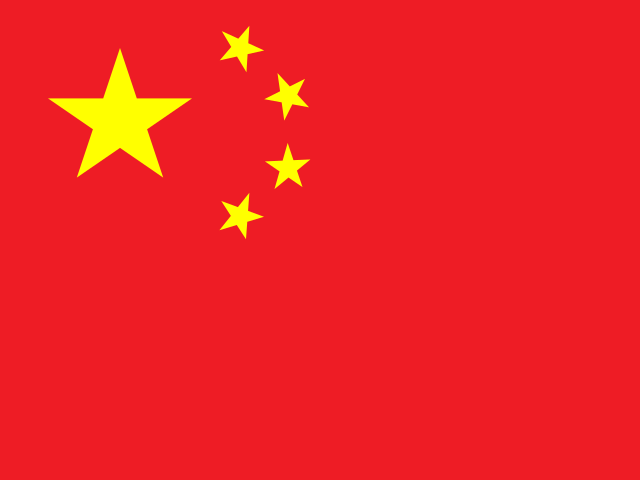
NeighboursPakistan, China, Nepal, Bhutan, Bangladesh and Myanmar. Across the sea: Sri Lanka and the Maldives, and near the Andaman Islands, Thailand and Indonesia
India's story is one of the longest in the world. The first great cities rose in the Indus Valley more than 4,500 years ago. Later came the empires of the Mauryas and the Guptas, the Delhi Sultanate and the Mughals, then European traders and almost two centuries of British rule. In 1947 India became independent, and in 1950 it became a republic.
2600 BC
The Indus Valley cities flourish
From about 2600 BC, cities with straight streets, brick houses and covered drains grew along the Indus and its rivers. Harappa and Mohenjo-daro are in today's Pakistan; Dholavira and Lothal in Gujarat and Rakhigarhi in Haryana are in India. Their writing has still not been deciphered.
322 BC
The Maurya Empire is founded
Around 322 BC Chandragupta Maurya took power in Magadha, in the Ganges valley. Under his grandson Ashoka, the empire controlled the main cities and routes of the subcontinent, except in the deep south.
261 BC
Ashoka's war in Kalinga
Around 261 BC the emperor Ashoka conquered Kalinga, in today's Odisha, at a terrible cost in lives. Filled with remorse, he turned to Buddhism and non-violence and carved his teachings on rocks and pillars across his empire. The wheel on India's flag comes from one of his pillars.
AD 320
The Gupta Empire begins
Chandragupta I came to the throne around 320 AD and made the Gupta kingdom an empire. Under the Guptas, scholars such as the astronomer Aryabhata did important work, and the place-value numerals that became today's 0 to 9 took shape. Some historians call it a golden age, though others dispute the label.
1206
The Delhi Sultanate is founded
Qutb ud-Din Aibak became the first sultan of Delhi. He began building the Qutb Minar, and his successor Iltutmish raised it higher. The sultanate ruled much of northern India for over 300 years.
1498
Vasco da Gama reaches Calicut
On 20 May 1498 the Portuguese explorer landed near Calicut, today's Kozhikode in Kerala, after sailing around Africa. It opened a sea route from Europe to India's spices.
1526
The Mughal Empire begins
On 21 April 1526 Babur defeated Ibrahim Lodi, the Sultan of Delhi, at the First Battle of Panipat, using cannons and firearms against war elephants. His Mughal dynasty ruled for more than 200 years.
1600
The East India Company is founded
On 31 December 1600 Queen Elizabeth I gave a group of London merchants a charter to trade in the East. The company began with trading posts and in time came to rule large parts of India with its own army.
1632
Work begins on the Taj Mahal
After his wife Mumtaz Mahal died in 1631, the Mughal emperor Shah Jahan ordered a white marble tomb for her in Agra. The mausoleum was finished around 1648 and the whole complex in 1653.
1757
The Battle of Plassey
On 23 June 1757 Robert Clive's East India Company army defeated Siraj ud-Daulah, the Nawab of Bengal, helped by the betrayal of the Nawab's commander, Mir Jafar. It gave the company control of Bengal, the start of its rule in India.
1857
The uprising of 1857
In May 1857 Indian soldiers of the company's army rose up at Meerut, and the revolt spread across northern and central India. It is also called the Indian Rebellion or the First War of Independence. It was put down, and in 1858 the British Crown took over from the company.
1885
The Indian National Congress is founded
In December 1885, 72 delegates met in Bombay, today's Mumbai, to found the Indian National Congress. It became the main voice of the movement for self-rule and, later, independence.
1930
Gandhi's Salt March
From 12 March to 6 April 1930, Mahatma Gandhi and 78 followers walked 387 km from his ashram in Ahmedabad to the sea at Dandi, where he made salt against the British salt tax. Thousands joined on the way, and the march drew attention around the world.
1947
Independence and partition
On 15 August 1947 India became independent, and British India was divided into two countries, India and Pakistan. The provinces of Punjab and Bengal were split. Between 12 and 20 million people were displaced, and hundreds of thousands, by some estimates up to 2 million, died in the violence.
1950
The Constitution comes into force
On 26 January 1950 India became a republic. The drafting committee of its constitution was chaired by B. R. Ambedkar. The day is celebrated every year as Republic Day.
2023
Chandrayaan-3 lands near the Moon's south pole
On 23 August 2023 India's Vikram lander touched down on the Moon and released the Pragyan rover. India became the fourth country to land softly on the Moon and the first to do so near its south pole.
There is no single Indian cuisine: every region has its own. The north eats more wheat breads, the south and east more rice, and spices such as turmeric, cumin and cardamom are used everywhere (chilli came only in the 1500s, with the Portuguese). A home meal is not served in courses: rice or roti, dal, vegetables, yoghurt, pickle and perhaps a sweet all arrive together, often in small bowls on a round metal tray called a thali. In Kerala a feast is served on a banana leaf. Vegetarianism is widespread but not universal: in a 2021 survey about 4 in 10 Indians called themselves vegetarian, with big differences between regions and communities.
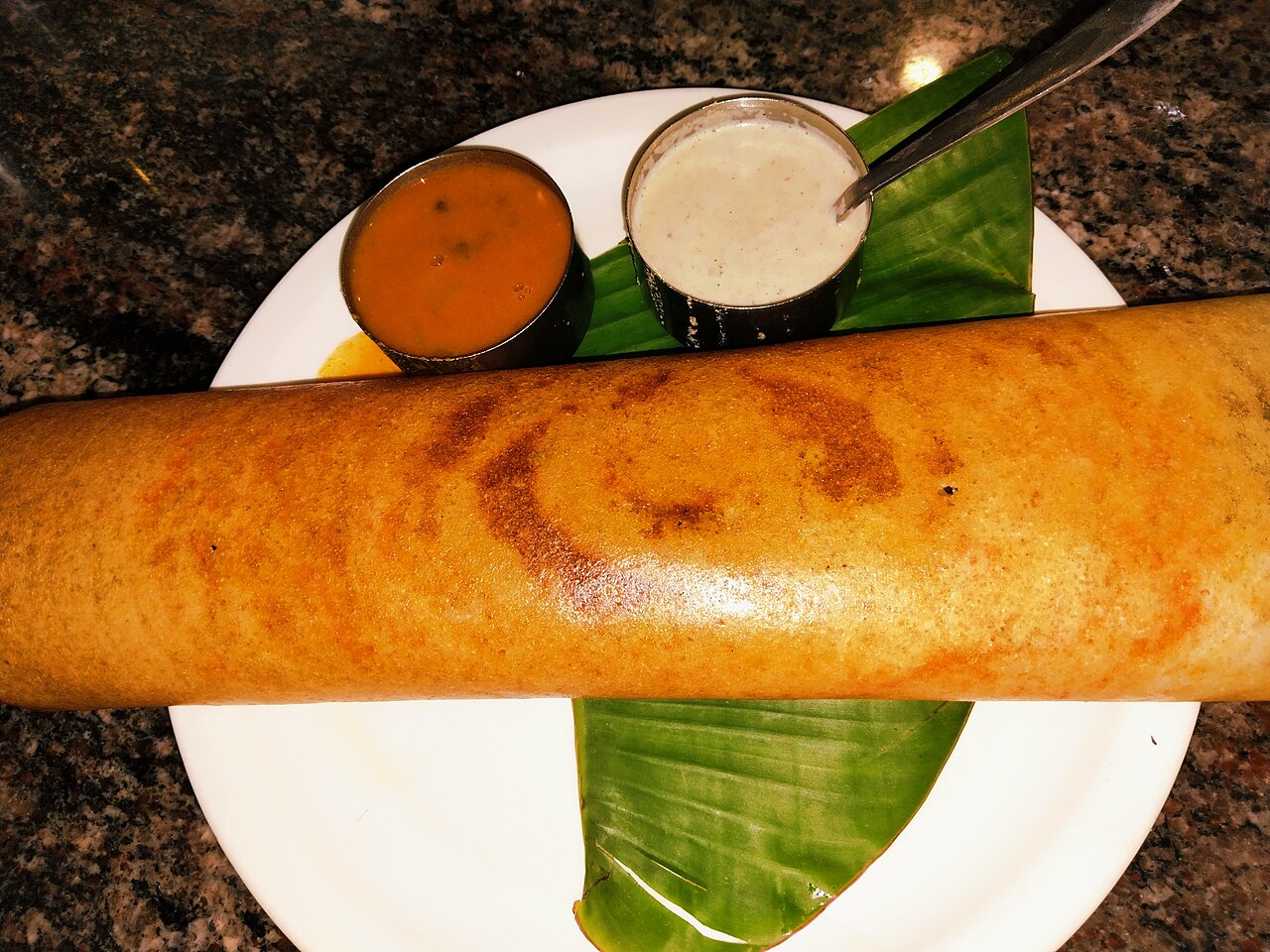
A large, thin, crisp pancake made from a fermented batter of rice and lentils, rolled around a spiced potato filling and served with coconut chutney and sambar, a lentil and vegetable stew. A favourite breakfast across the south.
The batter is left to ferment overnight, which gives the dosa its light, slightly sour taste.
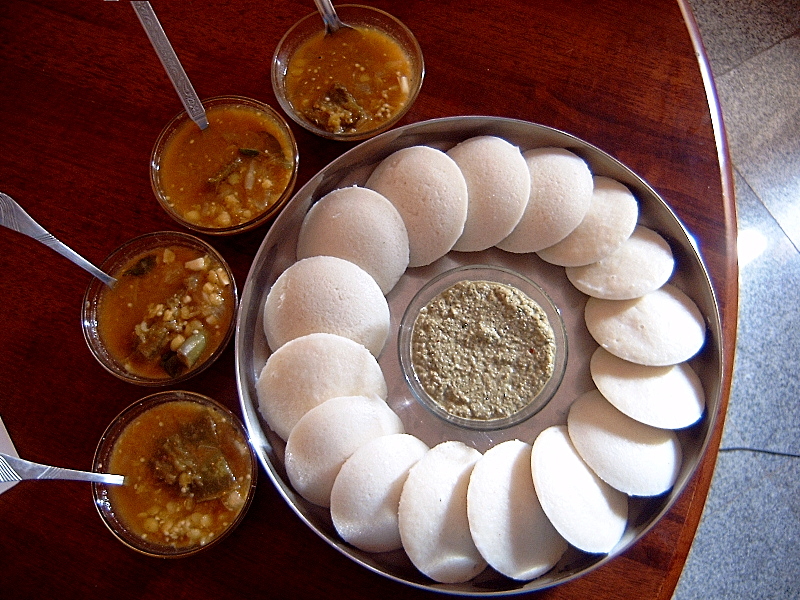
Soft, round, steamed cakes made from fermented rice and black lentils, about four parts rice to one part lentils. They are mild on their own and are eaten for breakfast with sambar and chutney.
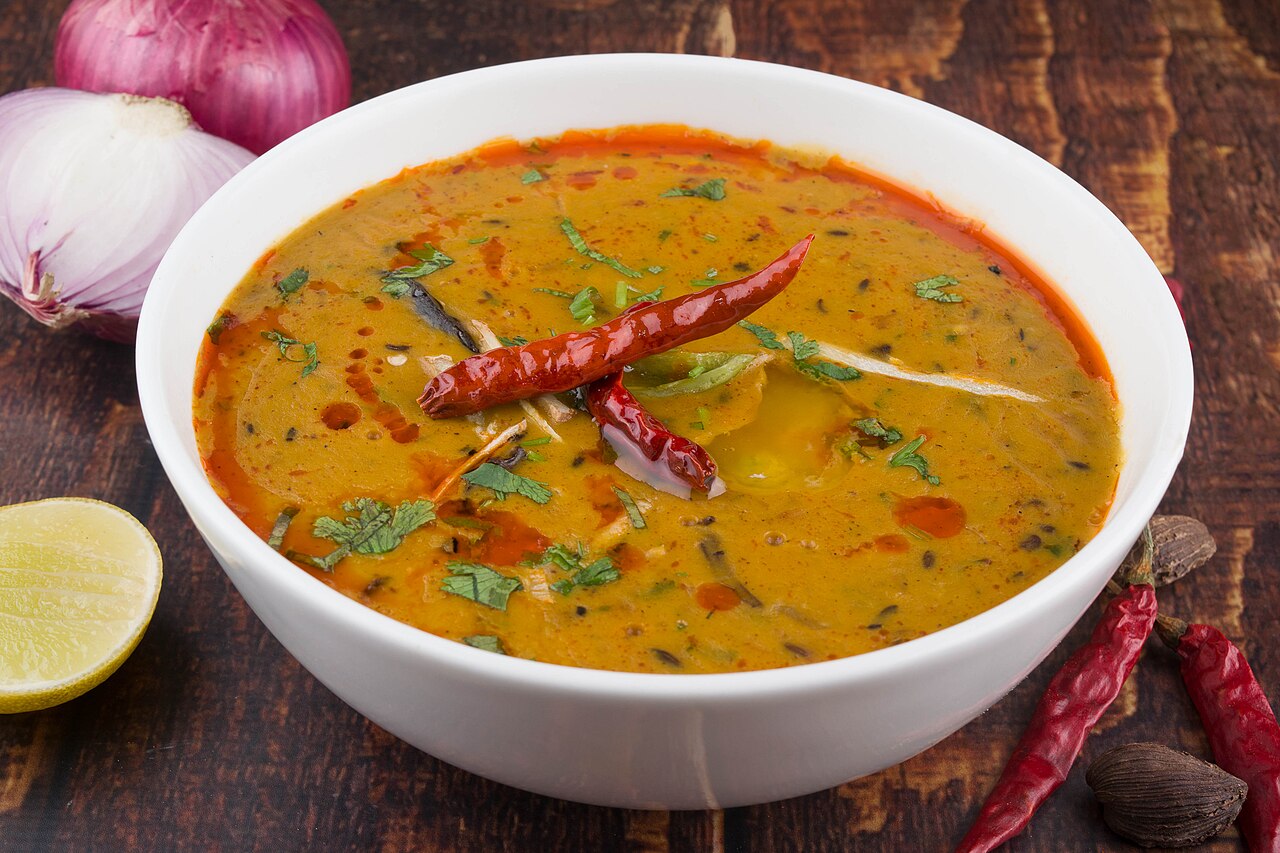
Dal means dried split lentils, peas or beans, and the soup made from them. For dal tadka, cooked lentils are finished with a tadka: spices, garlic and onion fried in hot ghee or oil and poured over the top. Eaten with rice or roti, it is one of India's everyday staples.
India is the largest producer of pulses, such as lentils and chickpeas, in the world.
See the recipe
Serves 4
1 h
Ingredients
200 g split red lentils (masoor dal), rinsed, or yellow split lentils (toor dal), soaked for 30 minutes
1 litre water
½ teaspoon ground turmeric
1 teaspoon salt
2 tablespoons ghee or vegetable oil
1 teaspoon cumin seeds
1 onion, finely chopped
3 cloves garlic and a thumb of ginger, finely chopped
1 tomato, chopped
½ teaspoon chilli powder (or less, to taste)
½ teaspoon garam masala
A handful of fresh coriander, chopped
Method
Put the lentils, water and turmeric in a pan, bring to the boil and skim off the foam.
Simmer, half covered, stirring now and then, until the lentils are soft and falling apart: about 25 minutes for red lentils, 40 to 50 minutes for toor dal. Add the salt and a little more water if it is too thick.
For the tadka, heat the ghee or oil in a small frying pan. Add the cumin seeds and let them sizzle for a few seconds.
Add the onion and fry until golden, then the garlic and ginger for 1 minute, then the tomato and chilli powder. Cook until the tomato is soft.
Pour the tadka over the dal, stir in the garam masala, sprinkle with coriander and serve with rice or roti.
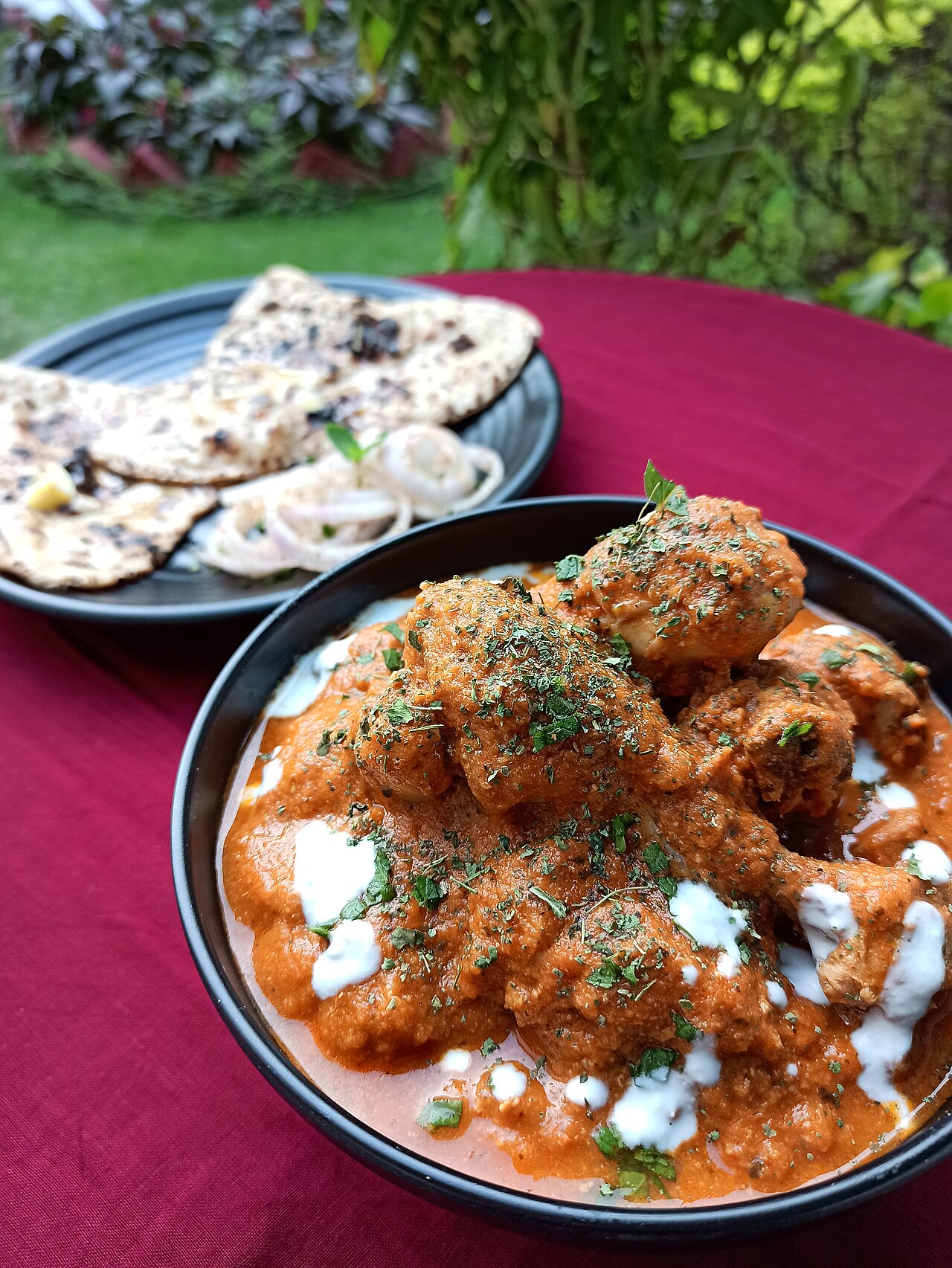
Pieces of tandoori chicken in a smooth, mild sauce of tomatoes, butter and cream, flavoured with garam masala and dried fenugreek leaves (kasuri methi). Usually eaten with naan.
It was popularised in the 1950s at the Moti Mahal restaurant in Old Delhi, by refugees from Peshawar. Who exactly invented it was argued over in court as recently as 2024.
See the recipe
Serves 4
1 h 30 min
Ingredients
600 g boneless chicken thighs, cut into large pieces
100 g plain yoghurt
1 tablespoon lemon juice
1 tablespoon grated ginger and 3 cloves garlic, crushed
2 teaspoons garam masala
1 teaspoon mild chilli powder (Kashmiri chilli if you can find it)
Mix the yoghurt, lemon juice, ginger, garlic, 1 teaspoon of the garam masala, the chilli powder and the salt. Coat the chicken and leave it in the fridge for at least 30 minutes.
Heat the grill or oven to high. Spread the chicken on a tray and cook for 15 to 20 minutes, turning once, until lightly charred and cooked right through, with no pink inside.
Meanwhile melt the butter in a pan, add the passata and sugar and simmer for 15 minutes, until thick.
Crumble in the fenugreek leaves, add the rest of the garam masala and stir in the cream.
Add the chicken to the sauce and simmer for 5 minutes. Taste for salt and serve with naan or rice.
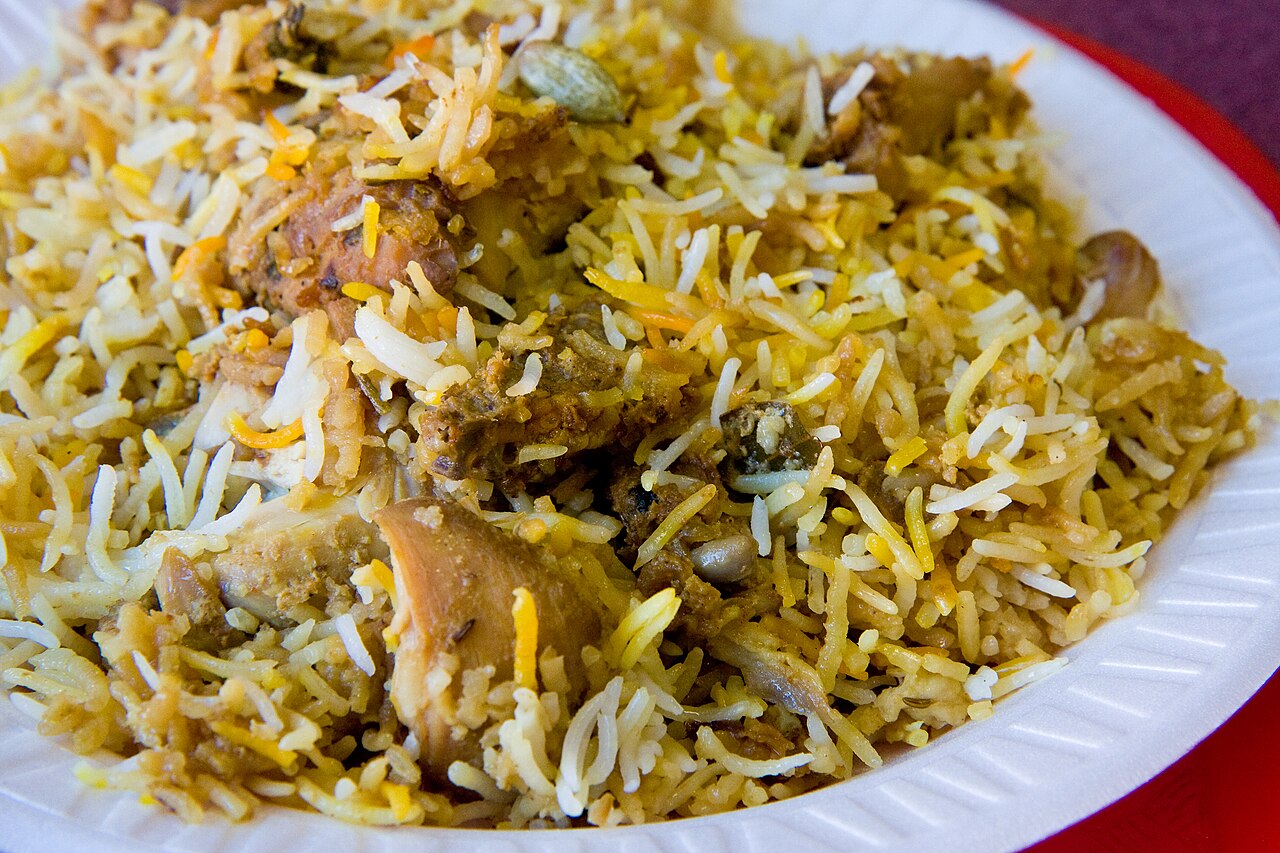
Long-grain rice and meat, often goat or chicken, layered with spices, saffron, fried onions and mint. In the kacchi style the meat goes into the pot raw, after marinating in yoghurt and spices, and cooks together with the rice in a pot sealed with dough, a slow method called dum.
Kashmir, from a Persian dish brought by the Mughals
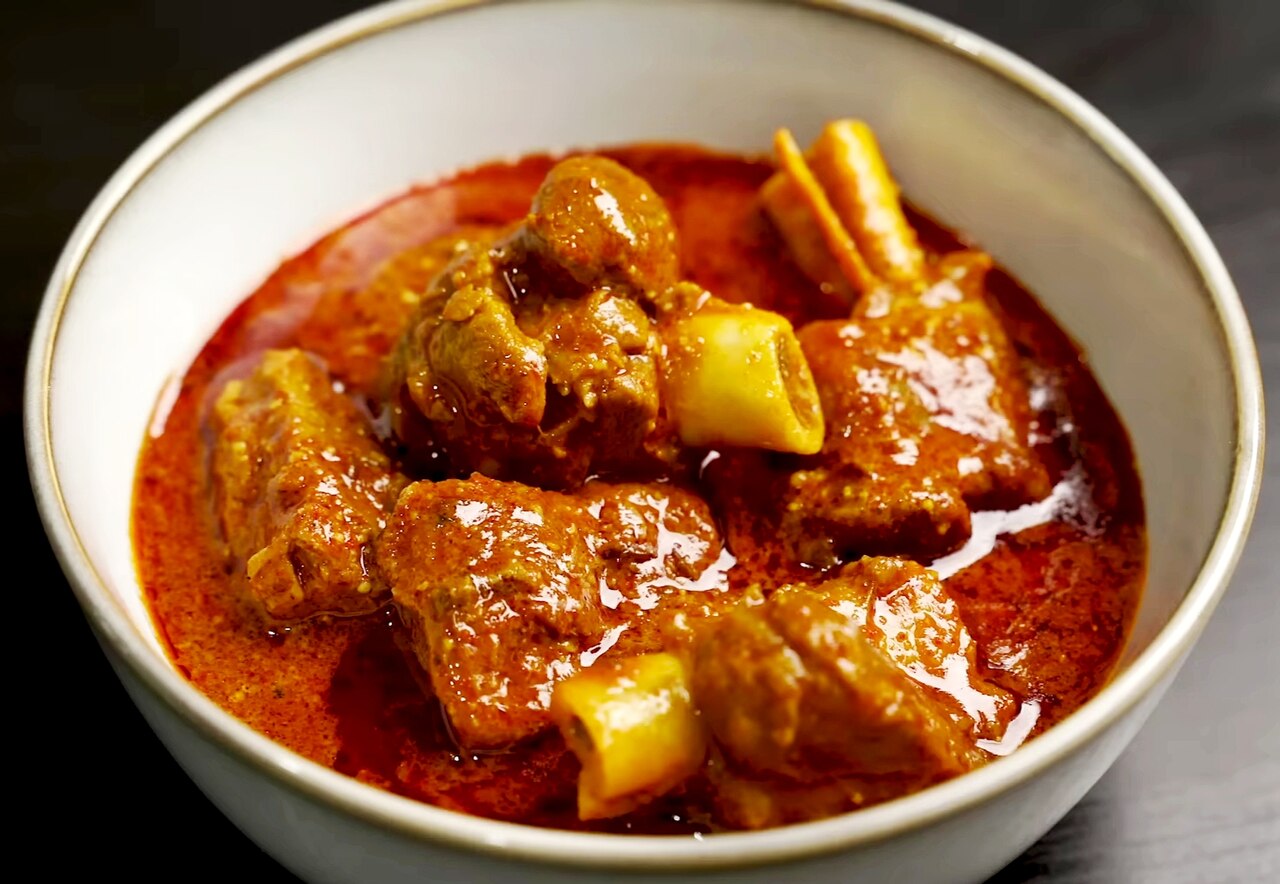
Lamb or goat braised slowly with garlic, ginger, cloves, bay leaves, cardamom and cinnamon. Its deep red colour comes from mild Kashmiri chillies or from ratan jot, a dried root.
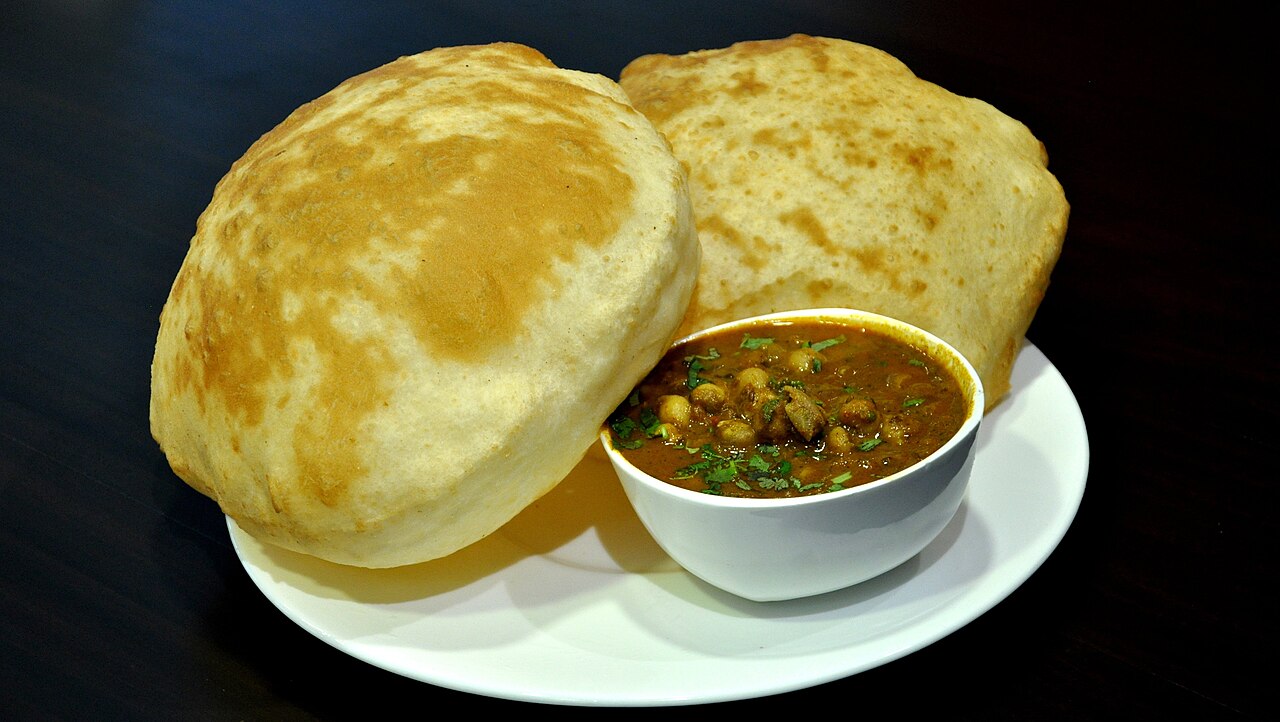
Spiced chickpeas in a thick gravy, served with bhature: large, puffy breads of fermented dough, deep-fried until they balloon. Mainly a hearty breakfast, and a favourite street food.
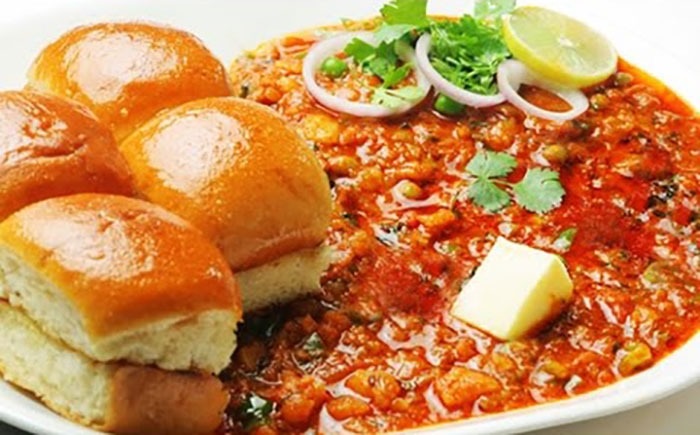
A thick, buttery mash of vegetables cooked with spices on a big griddle, eaten with soft bread rolls (pav) toasted in butter, with chopped onion and lime.
It began as a quick, filling lunch for the workers of Mumbai's textile mills.
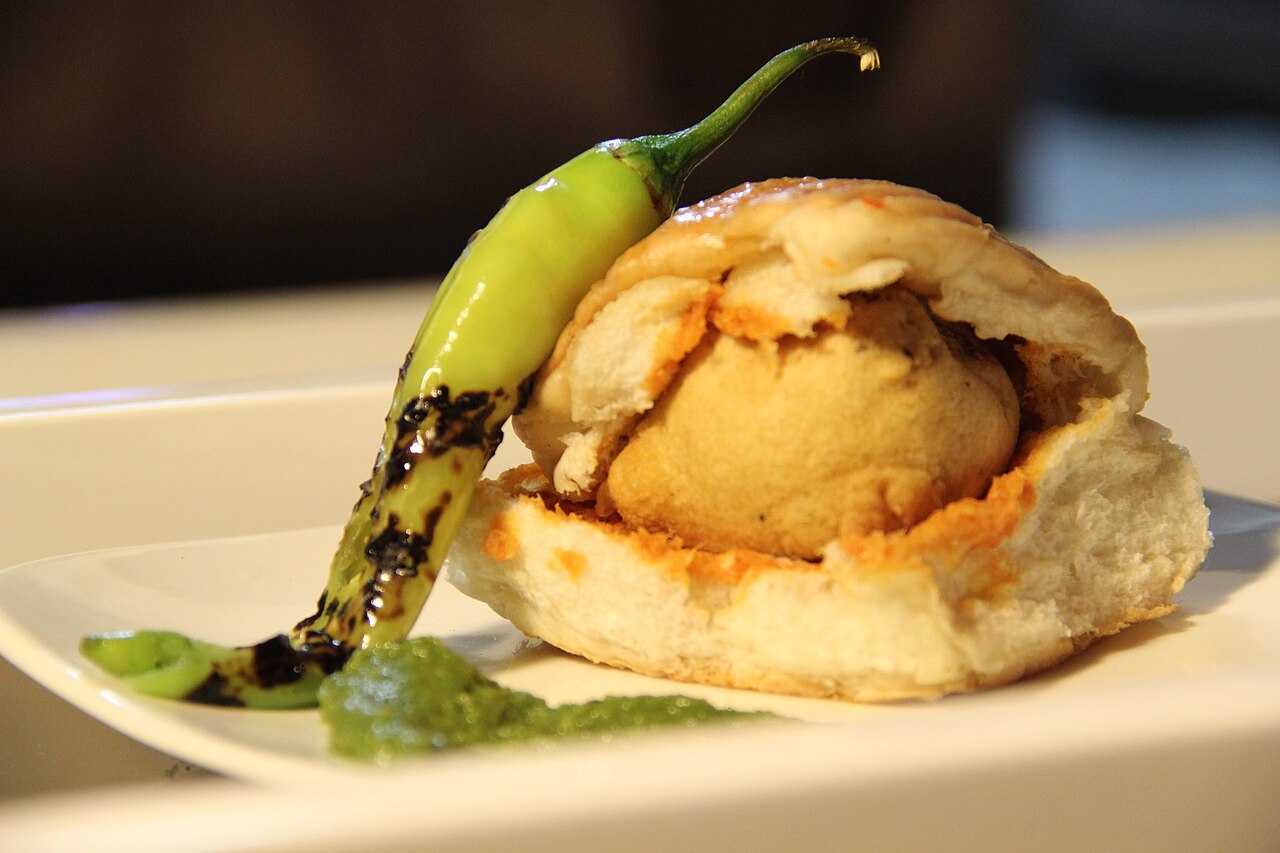
A spiced potato dumpling fried in chickpea batter, tucked into a bread roll with chutneys and a fried green chilli. Cheap, filling and easy to eat on the move.
Ashok Vaidya is often credited with opening the first vada pav stall, outside Dadar railway station in Mumbai, in 1966.
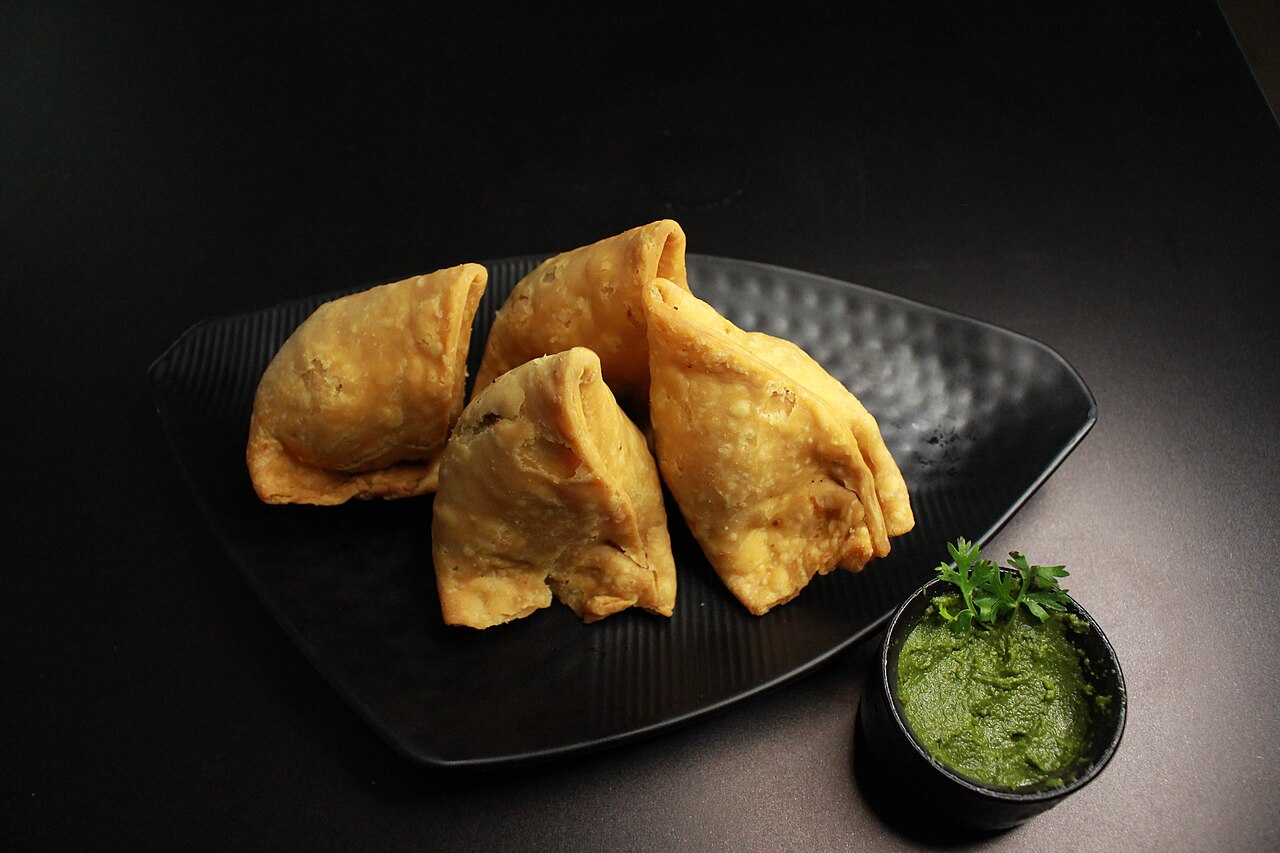
Came from Central Asia and the Middle East in the 1200s or 1300s
A triangular pastry, deep-fried until crisp, filled in India most often with spiced potatoes, onions and peas. Sold at tea stalls everywhere, with chutney.
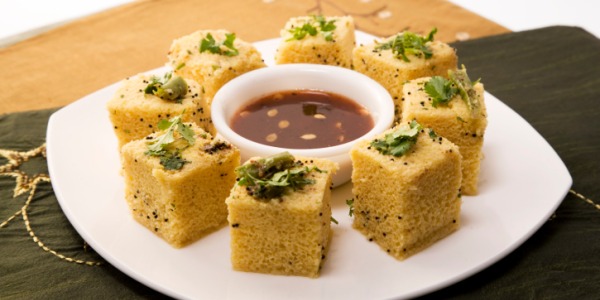
A soft, spongy savoury cake of fermented rice and chickpea batter, steamed, cut into squares and topped with mustard seeds, green chillies and fresh coriander.
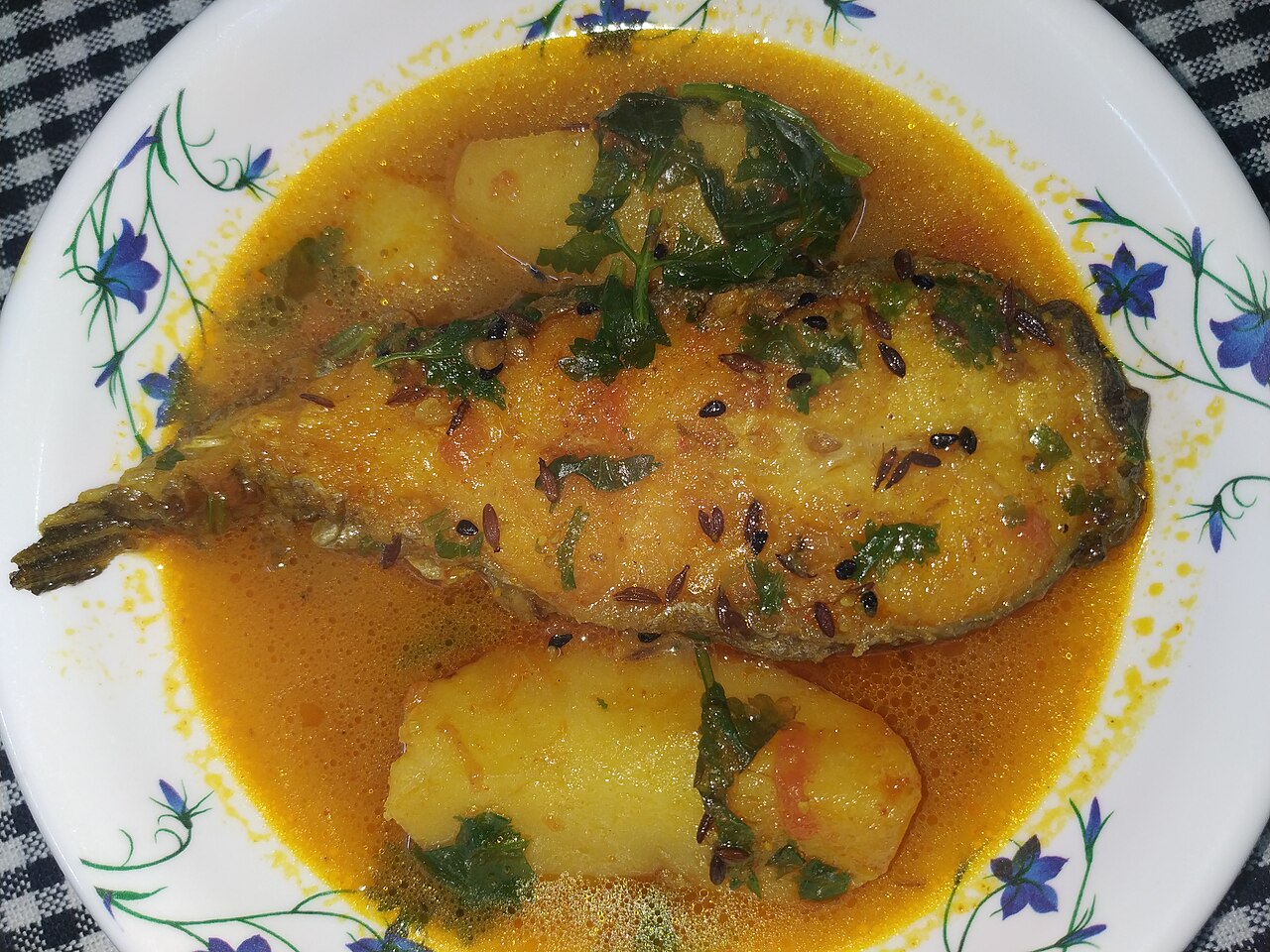
A light, spicy fish curry of river fish such as rohu or hilsa, cooked with turmeric, ginger, garlic and potatoes. In Bengal it is everyday comfort food, always eaten with rice.
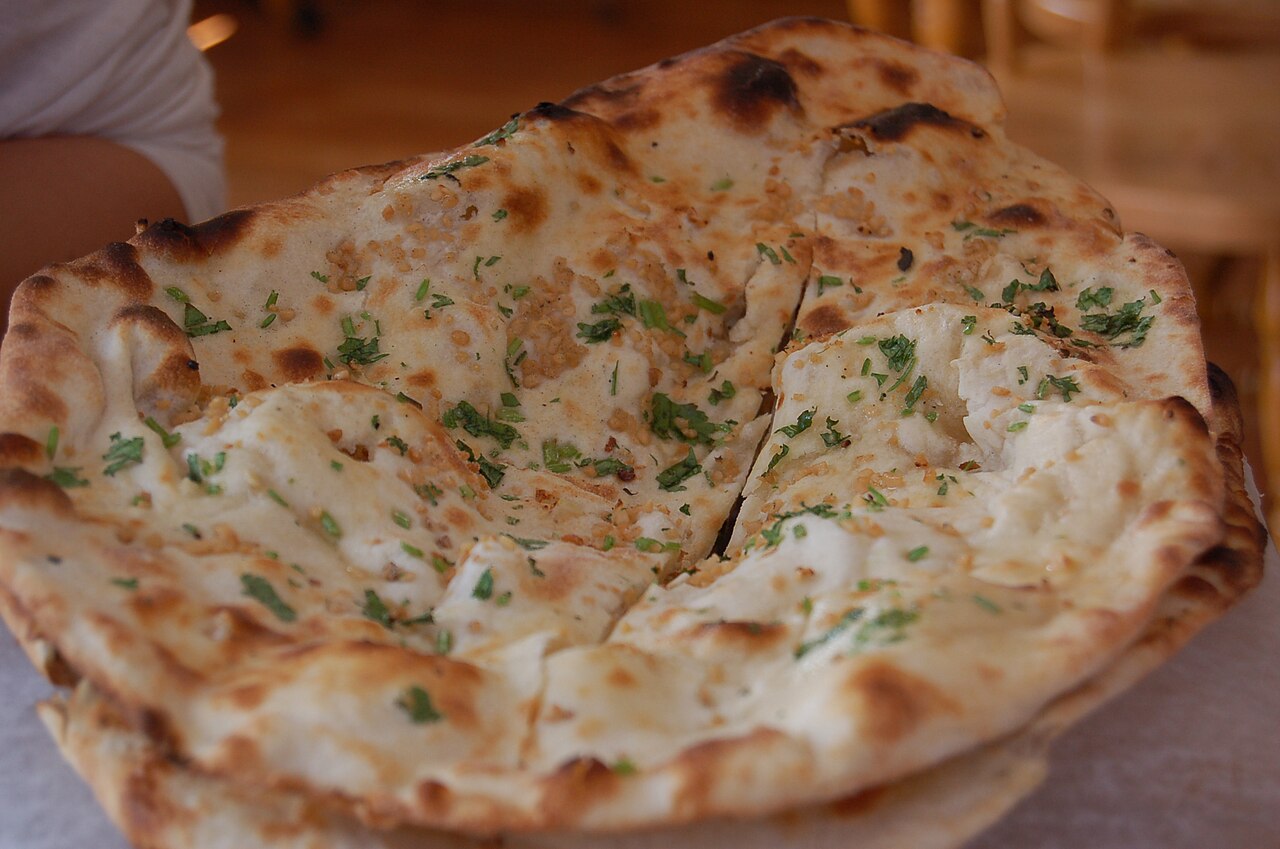
A soft, leavened flatbread slapped onto the inside wall of a very hot clay oven, the tandoor, where it puffs and chars in minutes. At home most Indians eat roti or chapati, unleavened breads cooked on a flat pan; naan is more of a restaurant bread.
The word naan comes from Persian, where it simply means bread.
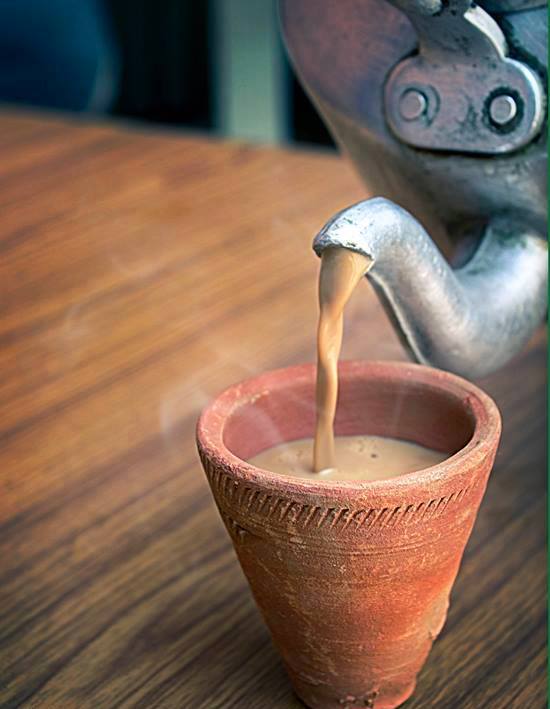
Black tea boiled with milk, sugar and spices such as cardamom, ginger, cinnamon and cloves. Sold in small cups by chaiwalas at stalls and railway stations across the country.
Tea drinking spread widely in India in the early 1900s, when the Indian Tea Association promoted it with tea breaks in factories and support for street tea sellers.
See the recipe
Serves 2
10 min
Ingredients
300 ml water
200 ml milk
2 teaspoons loose black tea (Assam is best) or 2 tea bags
3 green cardamom pods, lightly crushed
3 thin slices of fresh ginger
A small piece of cinnamon stick and 2 cloves
2 to 3 teaspoons sugar, to taste
Method
Put the water, cardamom, ginger, cinnamon and cloves in a small pan and bring to the boil. Simmer for 2 minutes.
Add the tea and simmer for 1 minute more.
Pour in the milk and sugar and bring back to the boil, watching carefully so it does not boil over. Let it rise and fall two or three times.
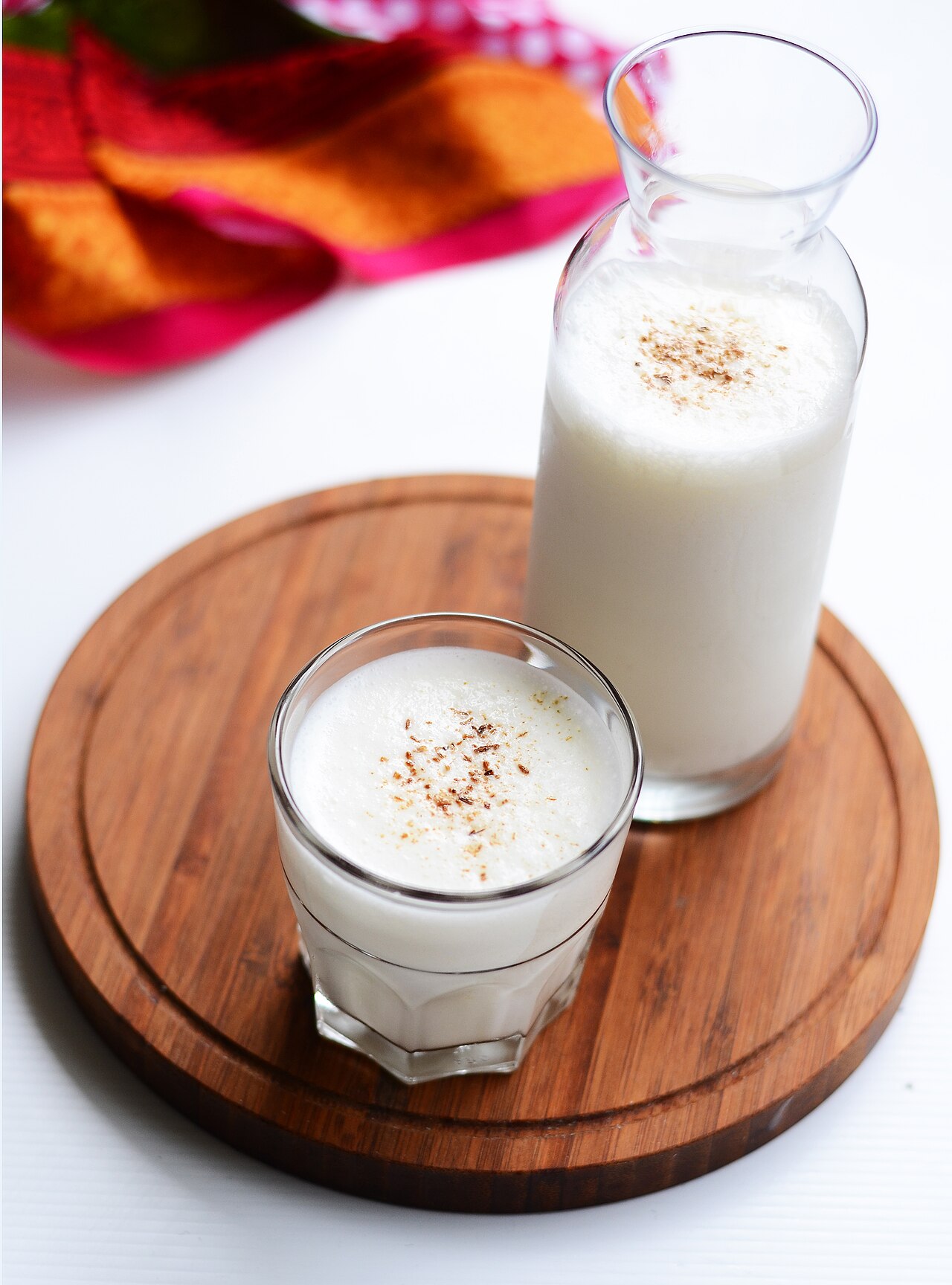
A cool yoghurt drink with the thickness of a smoothie. It can be salty, with cumin and black pepper, or sweet, with cardamom, rosewater or saffron. Mango lassi, made with ripe mango, is a favourite far beyond India.
See the recipe
Serves 2
5 min
Ingredients
250 g plain yoghurt, chilled (use pasteurised yoghurt and milk, as sold in shops)
250 g ripe mango flesh or canned mango pulp
100 ml cold milk
1 to 2 teaspoons sugar or honey, to taste
A pinch of ground cardamom
Method
Put the yoghurt, mango, milk and sugar in a blender.
Blend until smooth and frothy. Add a little more milk if it is too thick.
Pour into glasses, sprinkle with cardamom and serve straight away, well chilled.
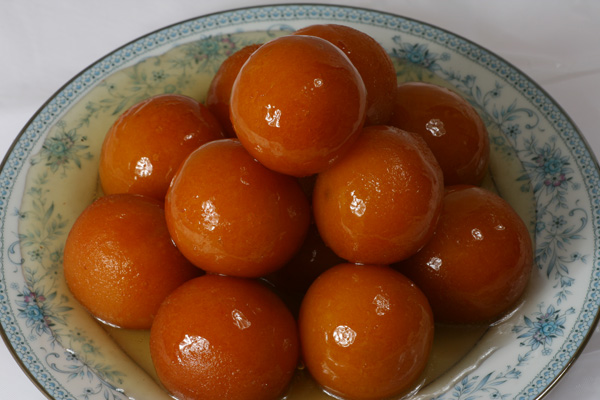
Small balls of khoya (milk cooked down to a soft dough) and flour, fried slowly in ghee or oil until dark brown, then soaked in a warm syrup scented with cardamom and rosewater.
Gulab comes from the Persian word for rosewater (in Hindi it means rose), and jamun is a dark purple fruit of about the same size and shape.
Eastern India: both West Bengal and Odisha claim it
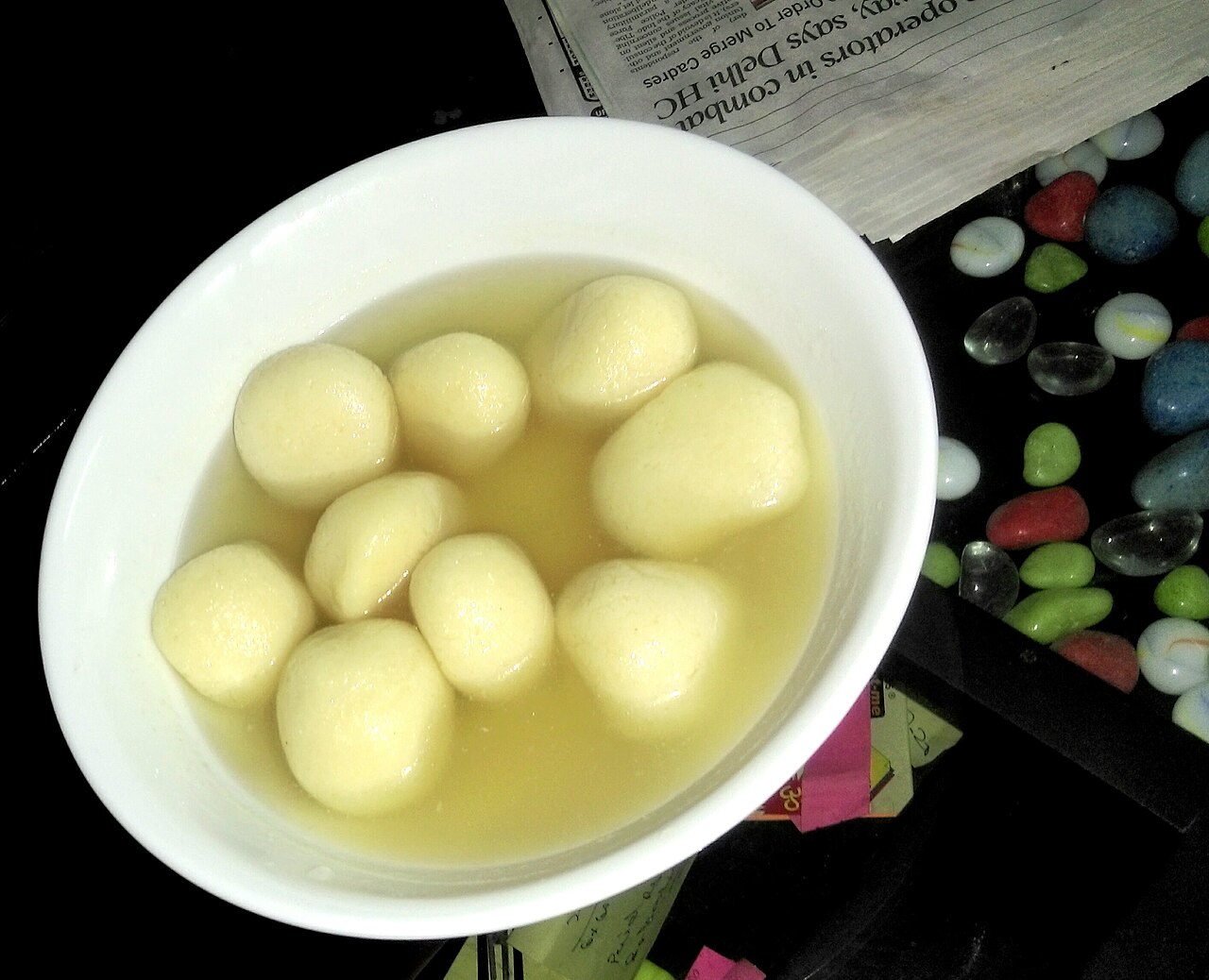
Soft, spongy balls of chhena, a fresh cheese, cooked in a light sugar syrup until they soak it up.
West Bengal received a geographical indication for its Banglar Rosogolla in 2017, and Odisha for its Odisha Rasagola in 2019.
Table manners
Many Indians eat with their hand, and only with the right one. The left hand stays dry and is used for passing dishes or holding a glass of water.
Wash your hands before and after the meal. Tear roti with the fingers of your right hand and use it to scoop up food; rice is mixed with curry and eaten with the fingertips.
Do not put food, a spoon or fingers that have touched your mouth back into a shared dish. Food that has touched someone's mouth is called jootha and should not be shared.
Whole spices such as cloves, bay leaves and cinnamon sticks are not eaten. Set them aside on your plate.
At a Kerala feast (sadya) on a banana leaf, the leaf is folded at the end of the meal. Which way you fold it is a message to the host, so watch what your neighbours do.
Many Hindus do not eat beef, many Muslims do not eat pork and many people are vegetarian. Ask before offering food, and expect separate spoons for vegetarian and non-vegetarian dishes.
India has dozens of cities with more than a million people. Delhi and New Delhi sit in the north, on the edge of the Ganges plain, with Agra and Jaipur close by. Mumbai is the great port and money city of the west coast, Kolkata the old British capital in the east, and the south has Chennai, the tech city of Bengaluru, Hyderabad and the spice port of Kochi.
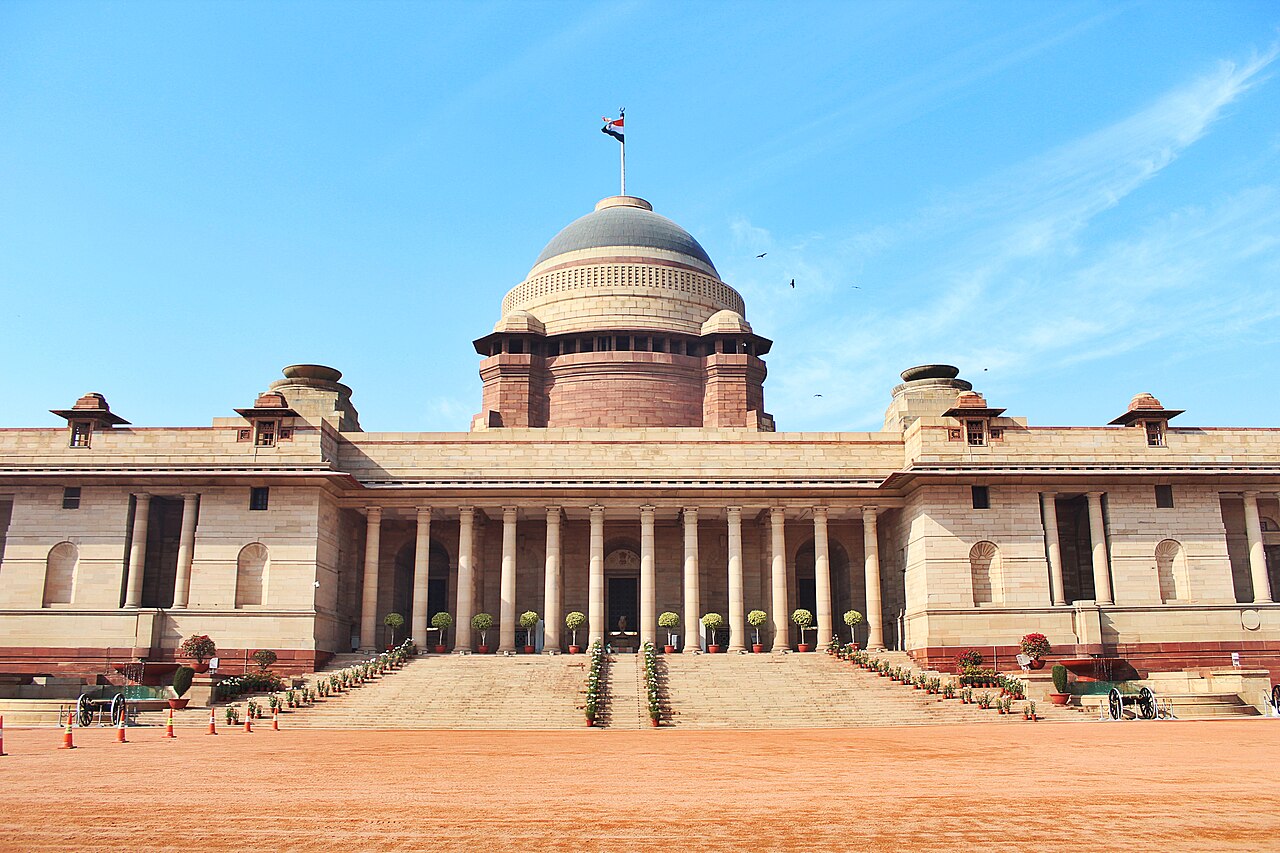
The capital, built by the British next to the old city of Delhi after they moved the capital here from Calcutta in 1911. Designed by Edwin Lutyens and Herbert Baker, it was inaugurated in 1931. Wide avenues lead to the President's palace, Parliament and India Gate, while Old Delhi's bazaars and the Red Fort are a short ride away.
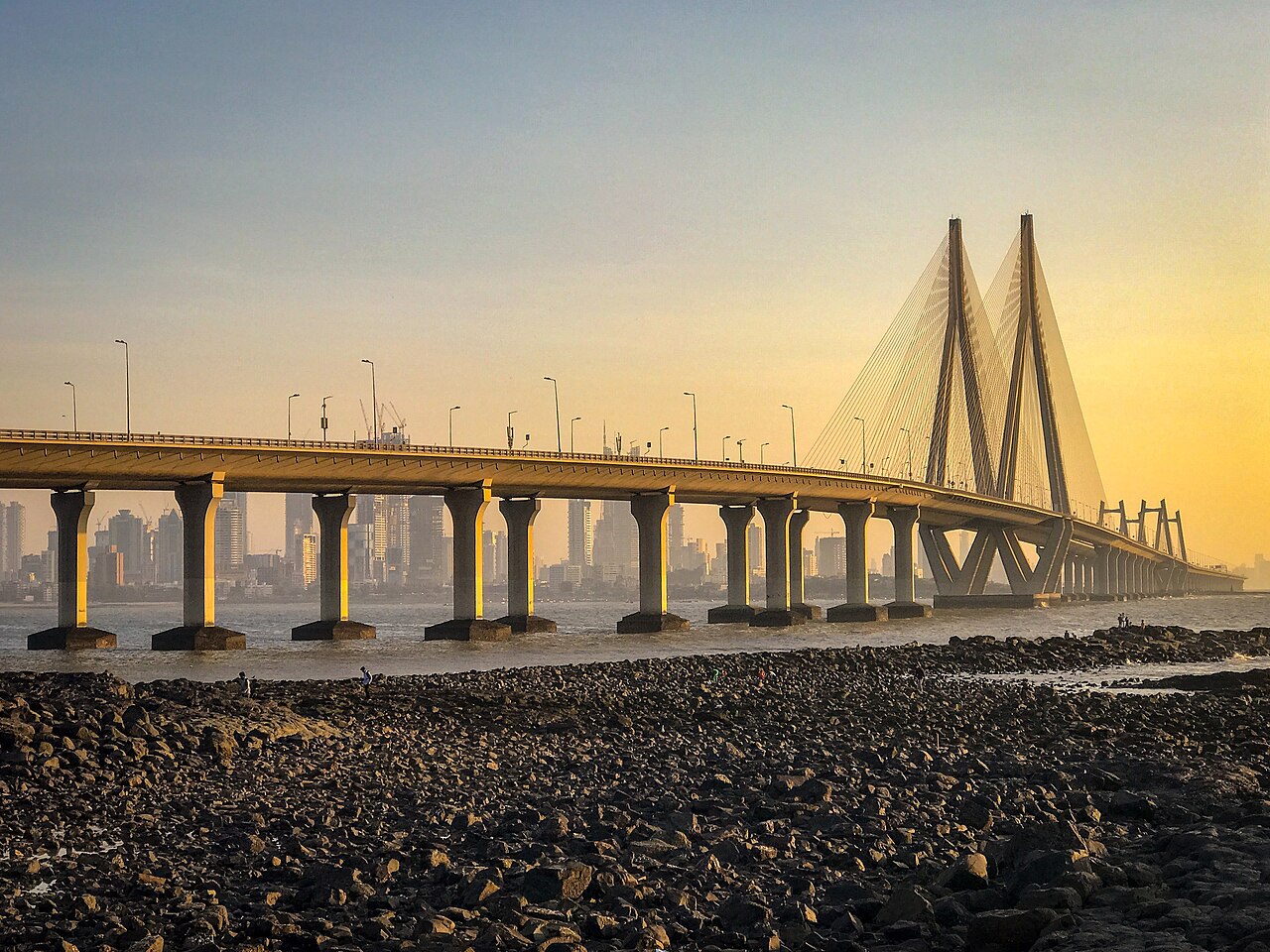
India's financial capital and one of its most populous cities, on the west coast. It grew on what were once seven islands and was called Bombay until 1995. It is the home of Bollywood, the Hindi film industry.
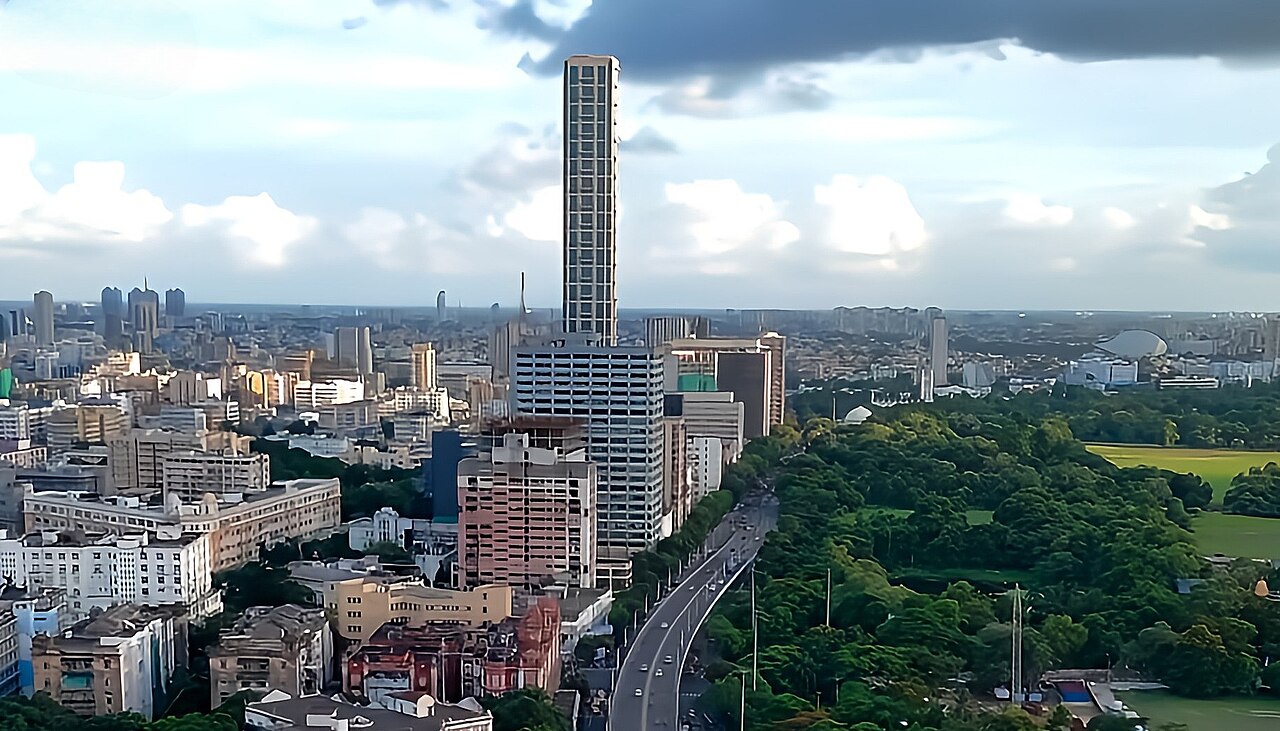
The capital of British India until 1911, on the Hooghly River. Called Calcutta until 2001, it is known as India's cultural capital, a city of writers, artists and scholars.
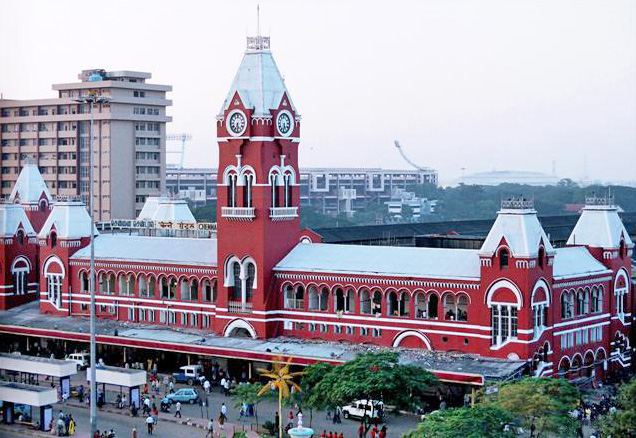
The capital of Tamil Nadu, on the Bay of Bengal, known as Madras until 1996. Fort St George, the first major English settlement in India, grew into the city. Today it has so many car factories that it is called the Detroit of India.
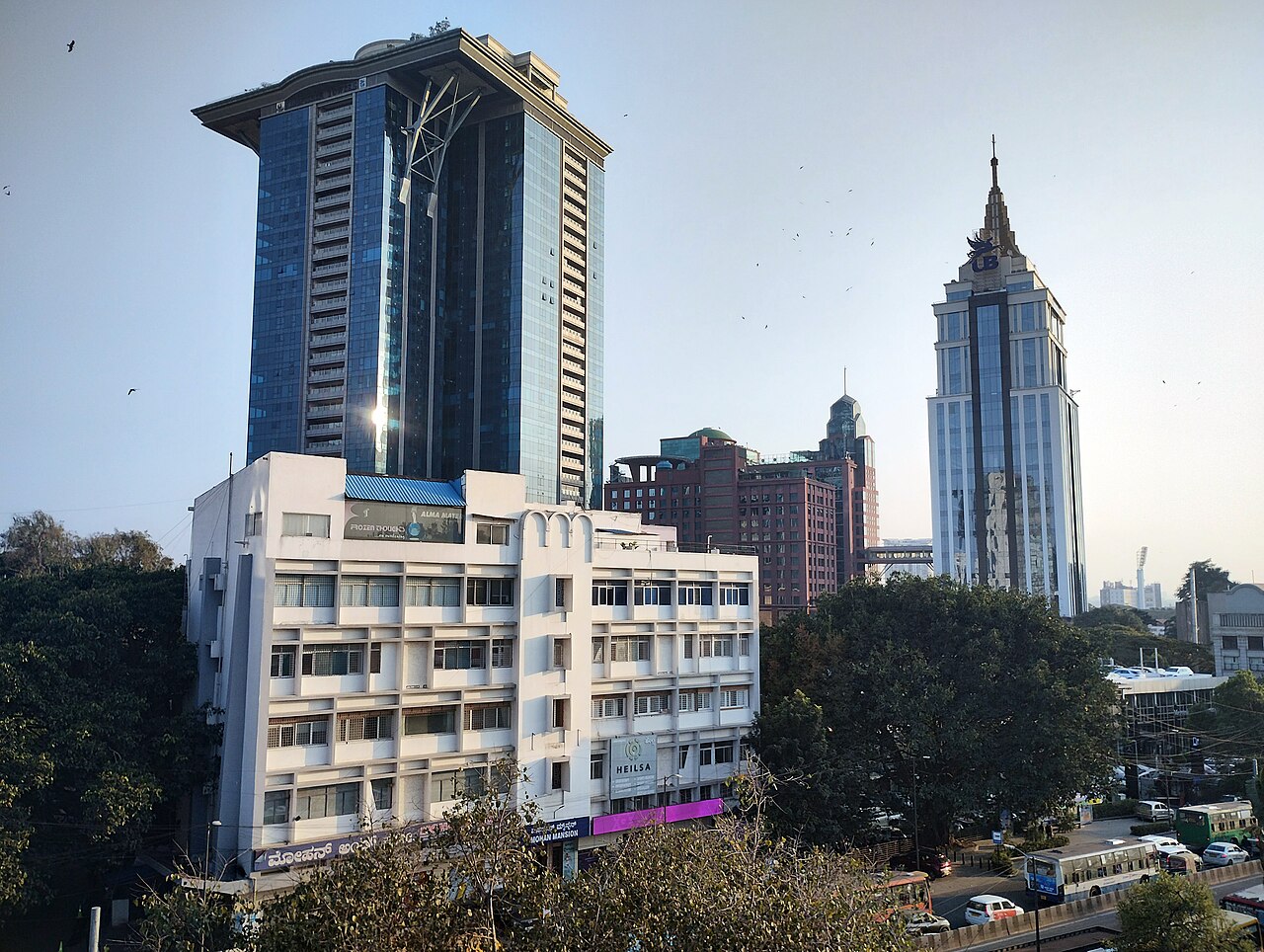
The capital of Karnataka, about 900 m up on the Deccan Plateau, so it is milder than much of India. Founded in 1537 and renamed from Bangalore in 2014, it is called India's Silicon Valley for its many software companies.
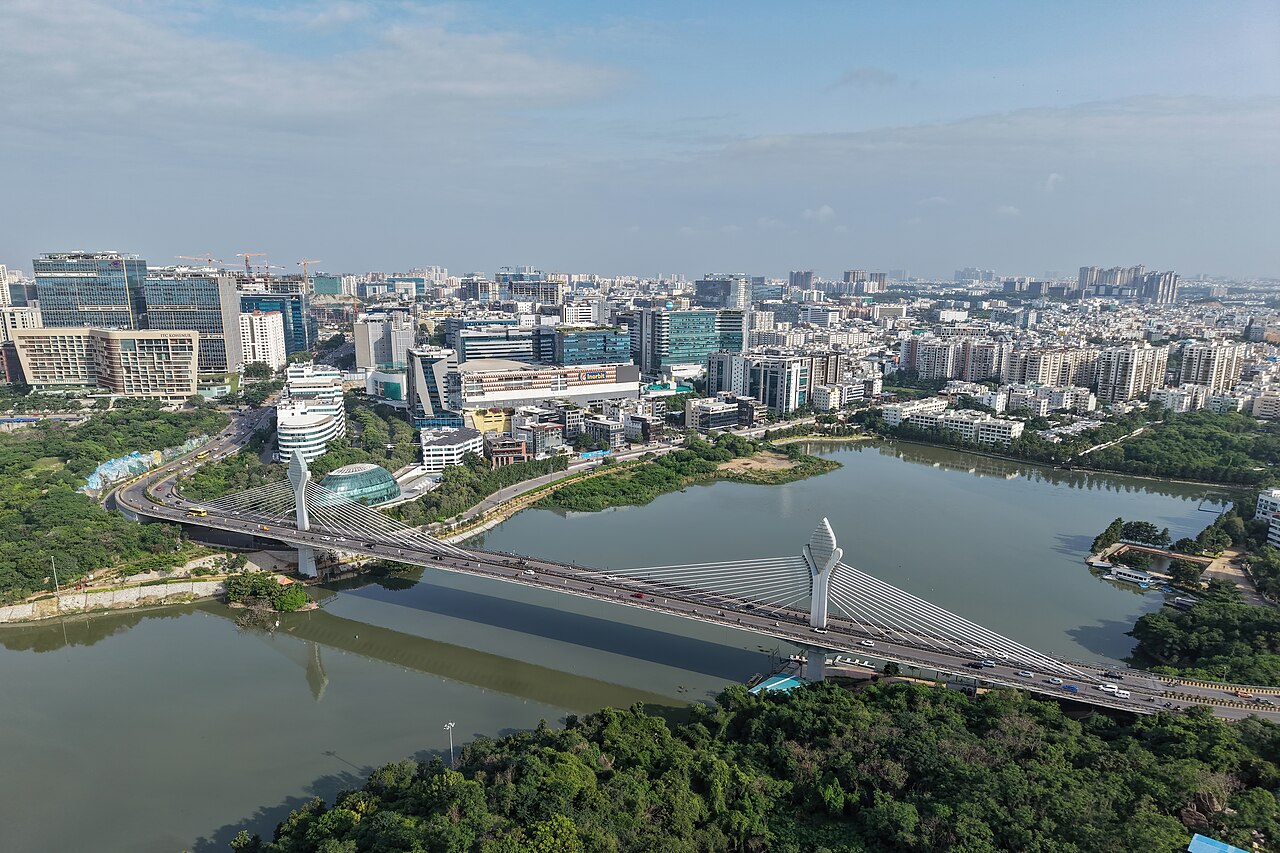
Founded in 1591 by Muhammad Quli Qutb Shah on the Musi River, near the fortress of Golconda. Known as the City of Pearls, it was once the world's only trading centre for Golconda diamonds. UNESCO lists it as a Creative City of Gastronomy.
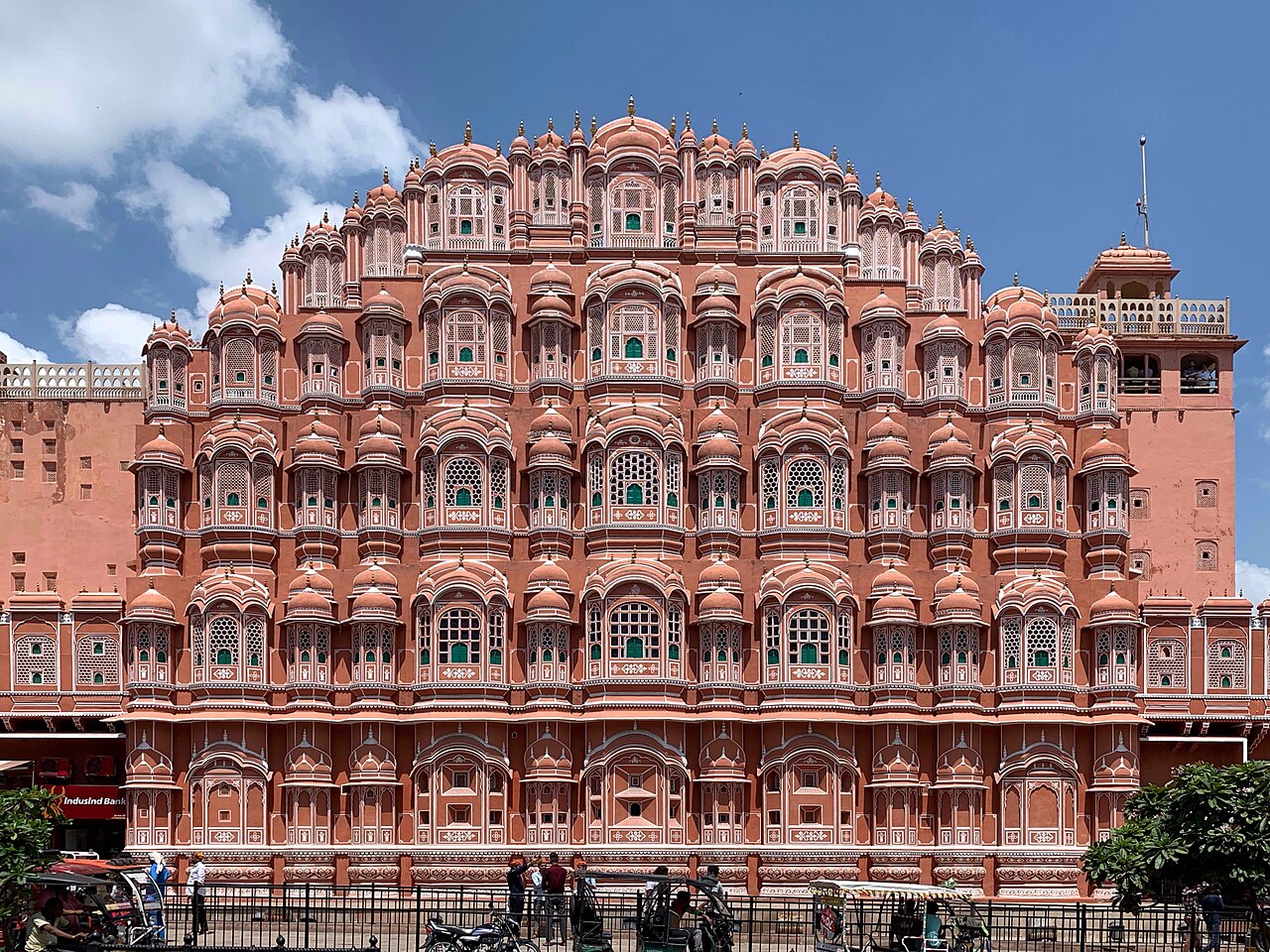
The capital of Rajasthan, founded in 1727 by Maharaja Sawai Jai Singh II as one of India's first planned cities. Its old city was painted pink to welcome the Prince of Wales in 1876, which is why it is called the Pink City.
A city on the Yamuna River, about 200 km by road southeast of Delhi, and for most of the 1500s and 1600s the capital of the Mughal Empire. With Delhi and Jaipur it forms the Golden Triangle, a popular tourist circuit.
One of the world's oldest continuously inhabited cities, on the Ganges and holy to Hindus. It is also called Kashi and Benares. Near the city is Sarnath, where the Buddha gave his first teaching.
A city in Punjab founded by Guru Ram Das, the fourth Sikh guru, and home to the Golden Temple, the holiest site of Sikhism. It lies about 28 km from the border with Pakistan.
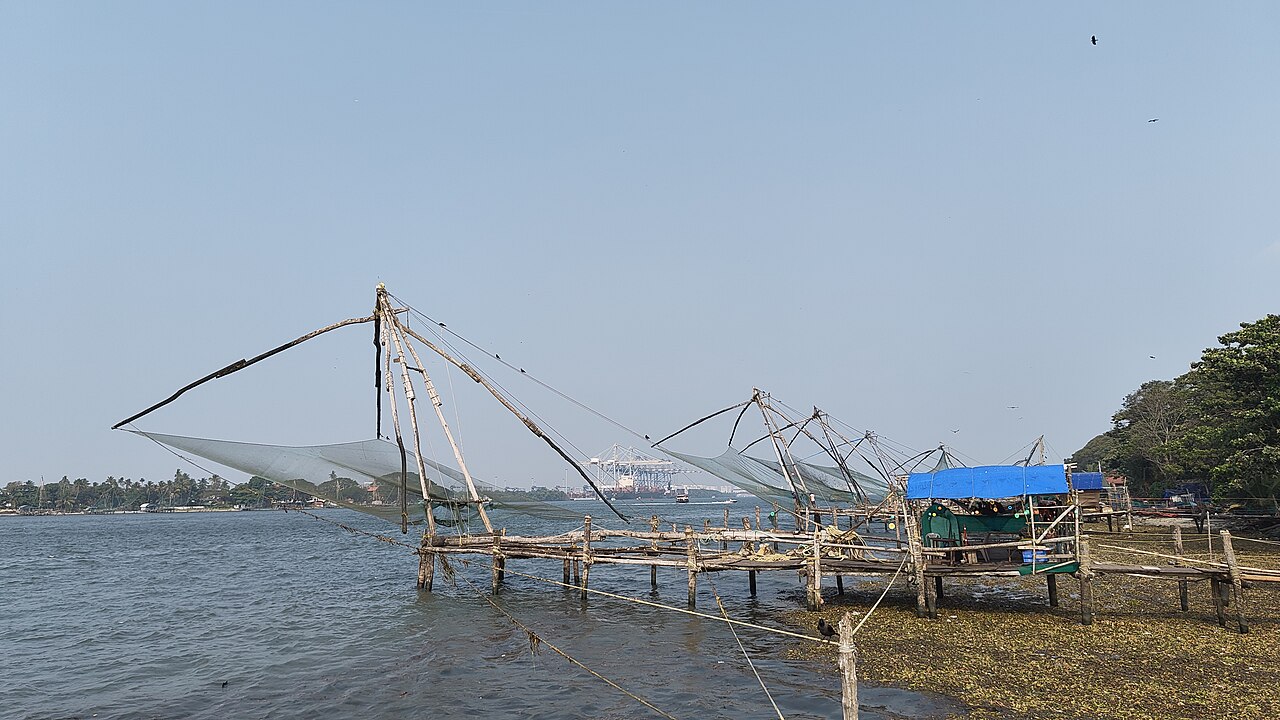
A port on the southwest coast that has traded spices with the world for centuries. Its old quarter has Portuguese, Dutch and British buildings, and the Paradesi Synagogue of 1568, the oldest active synagogue in the Commonwealth.
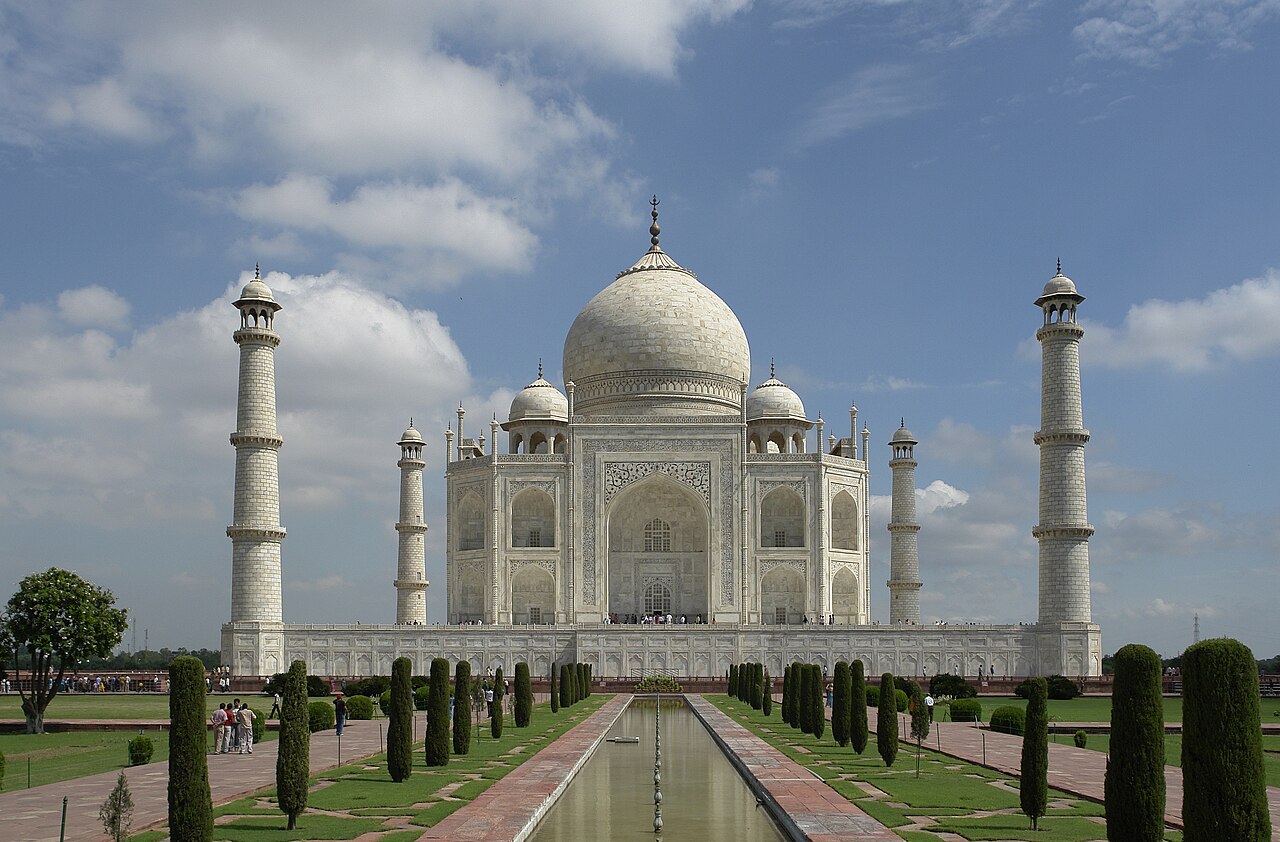
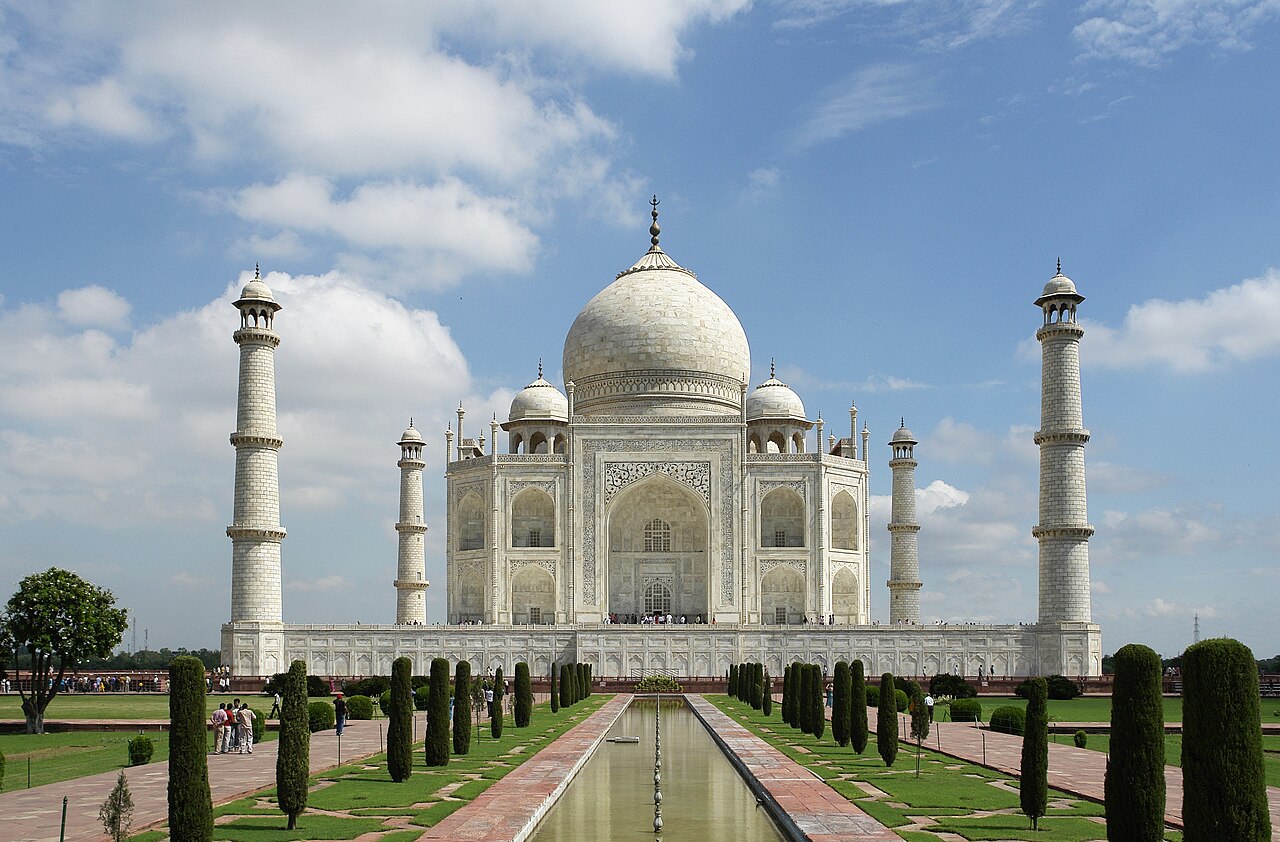
The white marble tomb that the Mughal emperor Shah Jahan built for his wife Mumtaz Mahal, on the bank of the Yamuna. The marble came from Makrana in Rajasthan and is inlaid with semi-precious stones. Work began in 1632 and the whole complex was finished in 1653. UNESCO calls it the jewel of Muslim art in India.
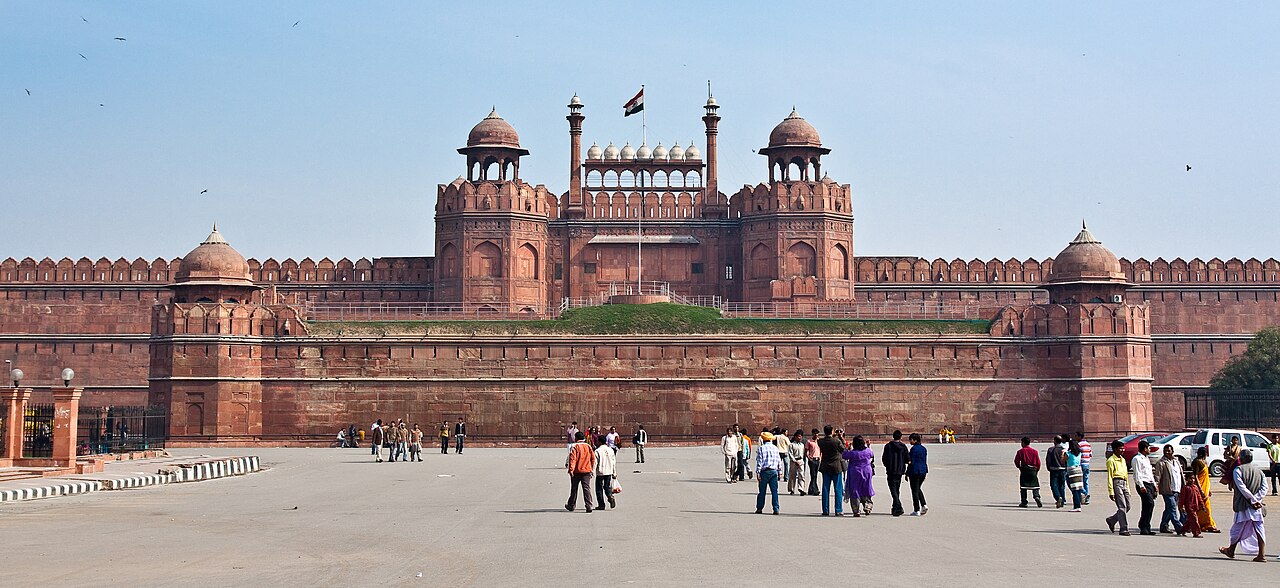
Shah Jahan's red sandstone palace fortress in Old Delhi, completed in 1648. Every year on Independence Day, 15 August, the Prime Minister raises the national flag here and speaks to the nation, as Jawaharlal Nehru did in 1947.
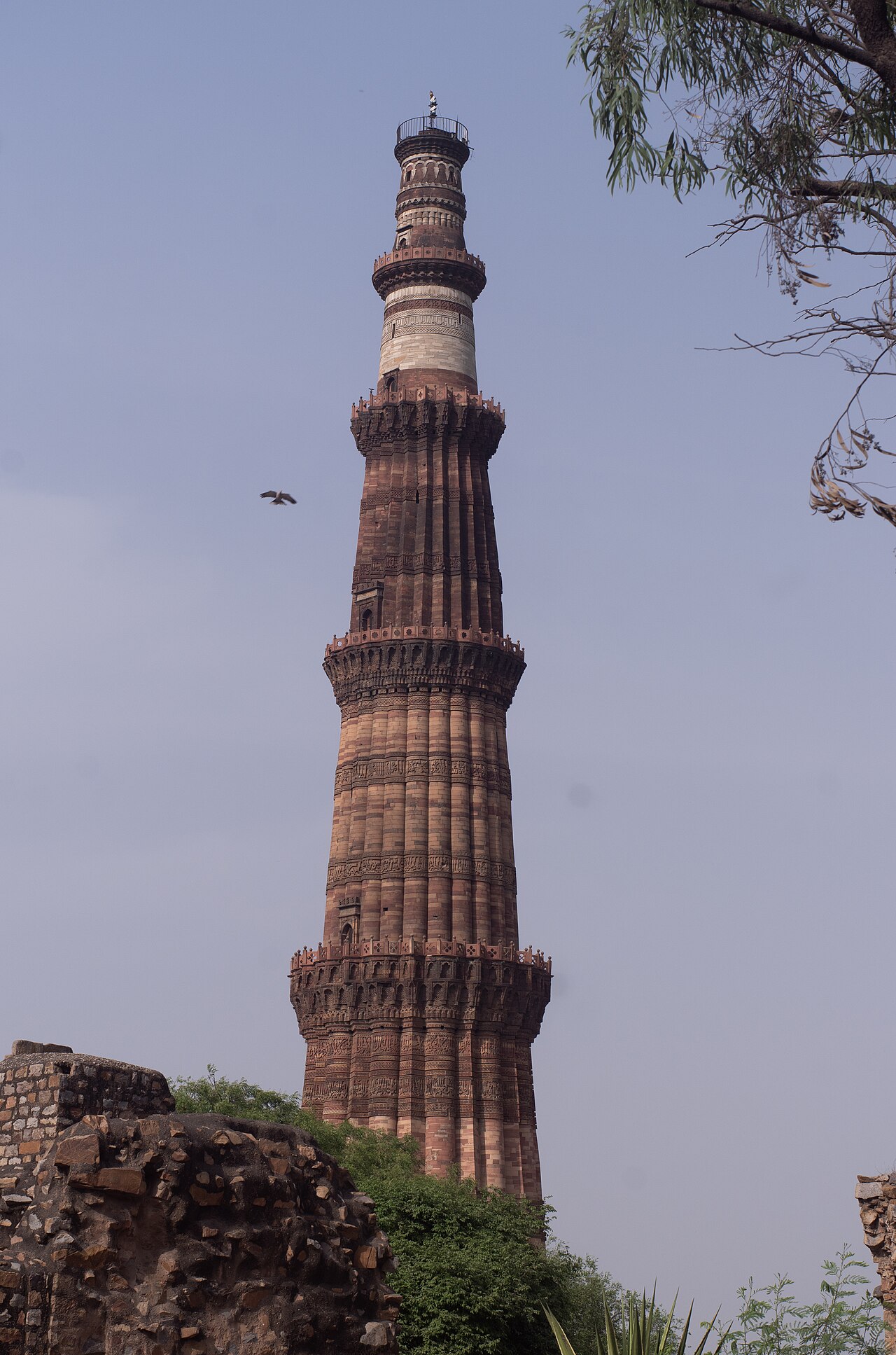
A 72.5 m tower of red and grey sandstone in Mehrauli, south Delhi. Qutb ud-Din Aibak began it in 1199, Iltutmish added three storeys, and the top was rebuilt after a lightning strike in 1369. In the courtyard of the mosque beside it stands an iron pillar with a Sanskrit inscription from the 4th century.
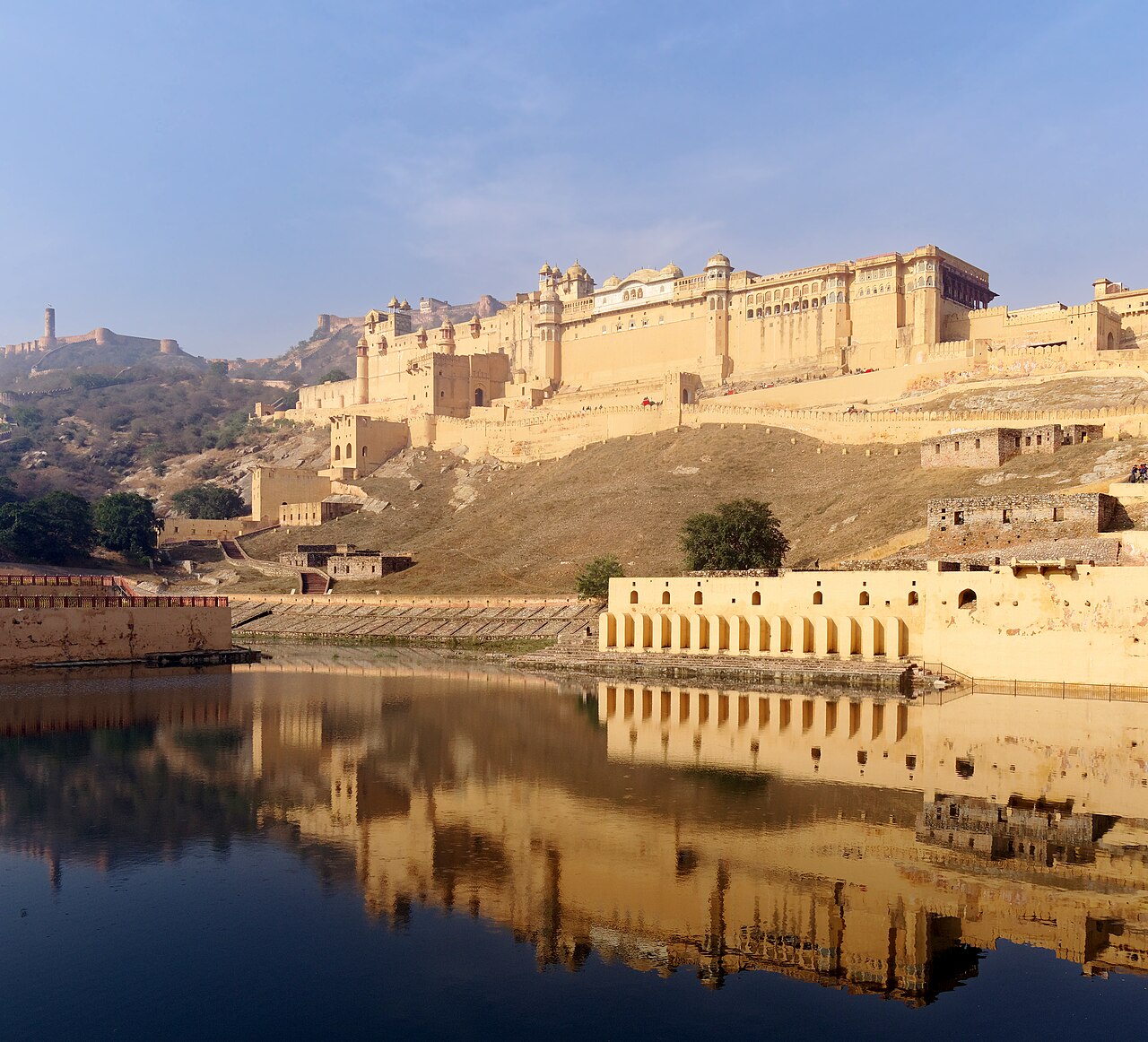
A hilltop palace fortress of red sandstone and marble, 11 km from Jaipur, finished by Raja Man Singh I in 1599. Inside are courtyards, gardens and a hall of mirrors. It is one of the six Hill Forts of Rajasthan on the UNESCO list.
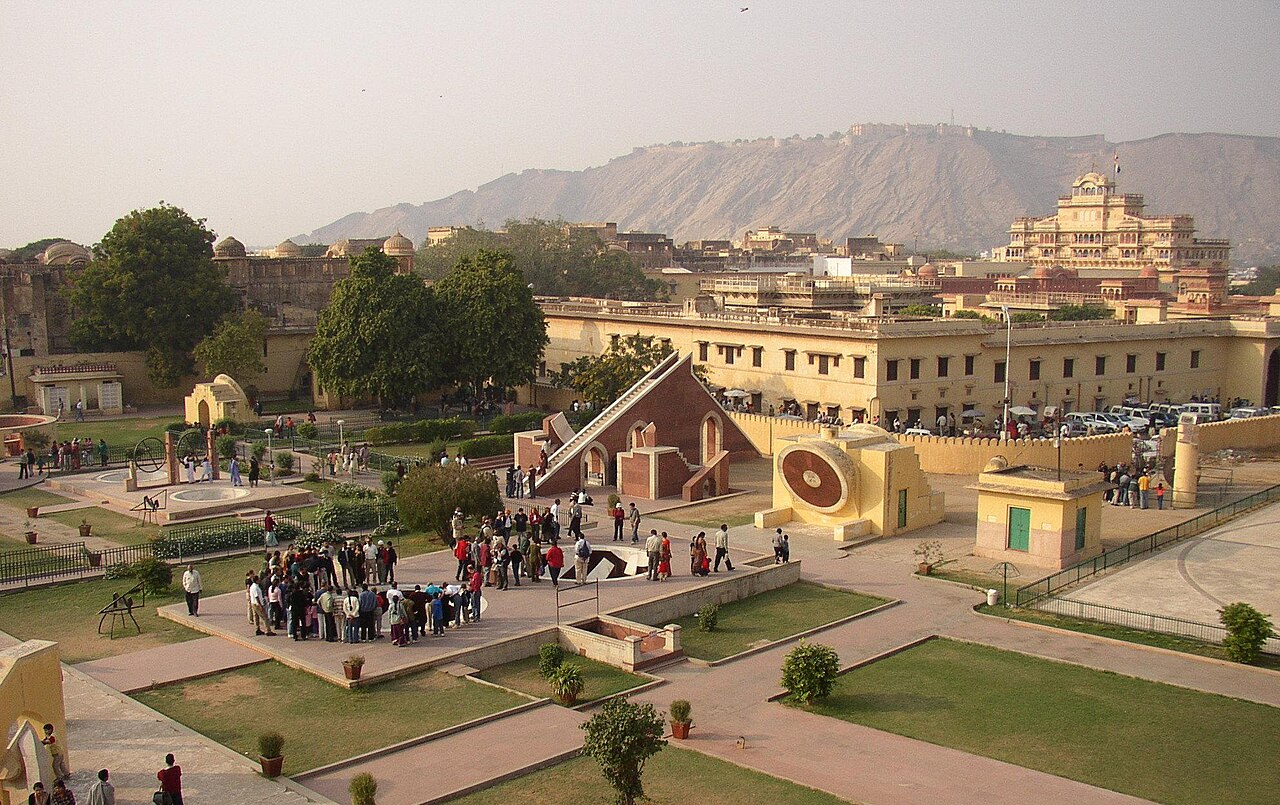
An open-air observatory of 19 giant stone instruments, completed in 1734 by Sawai Jai Singh II, the founder of Jaipur. They measure time, track the stars and predict eclipses, and its great sundial is the largest stone sundial in the world.
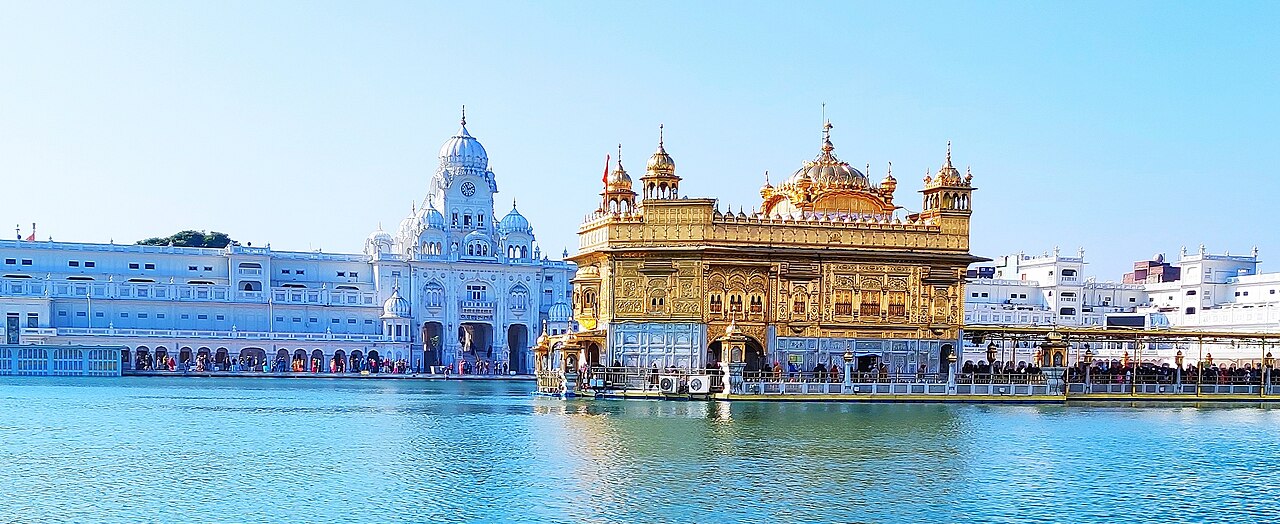
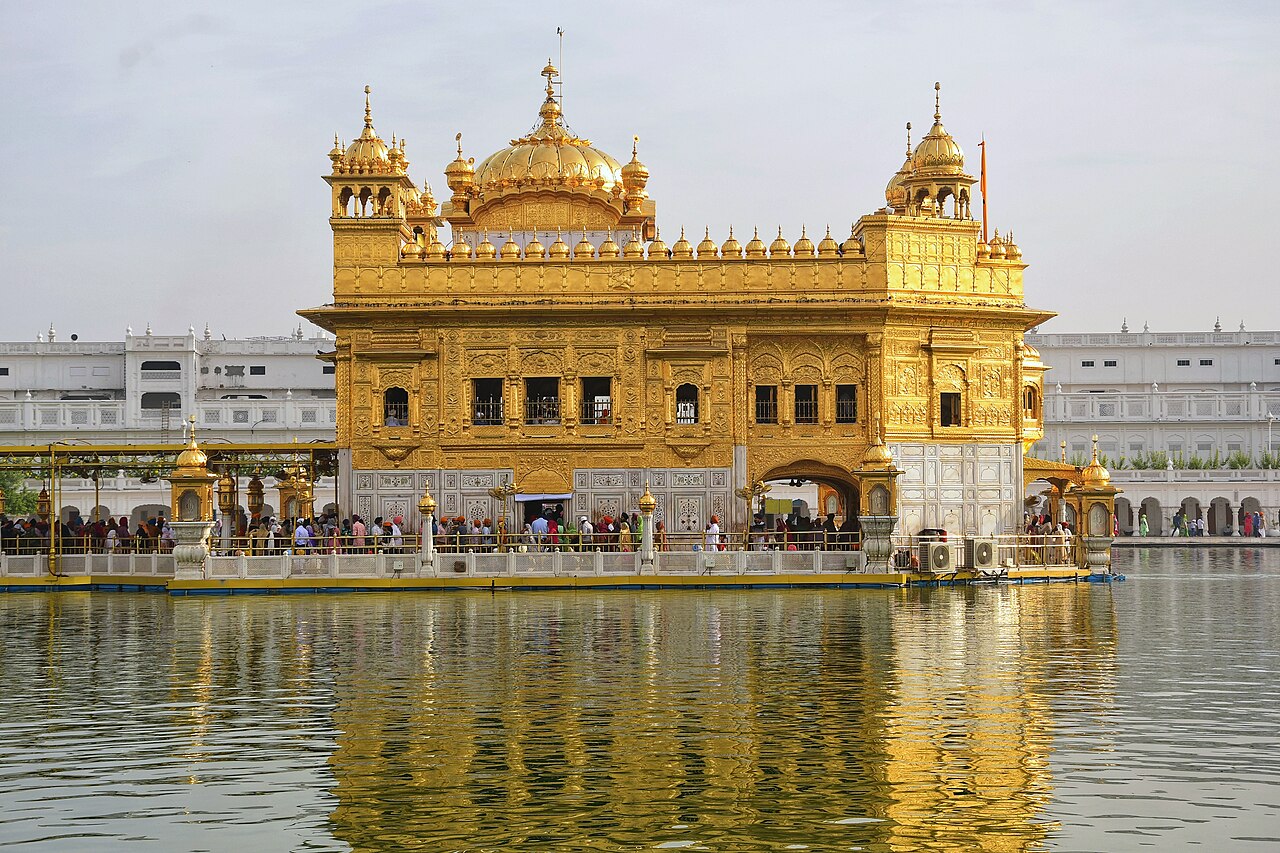
The holiest site of Sikhism, a gold-covered shrine in the middle of a sacred pool, the Amrit Sarovar. Maharaja Ranjit Singh had it covered in gold leaf in 1830. Its free community kitchen, the langar, serves more than 100,000 vegetarian meals a day to anyone who comes.
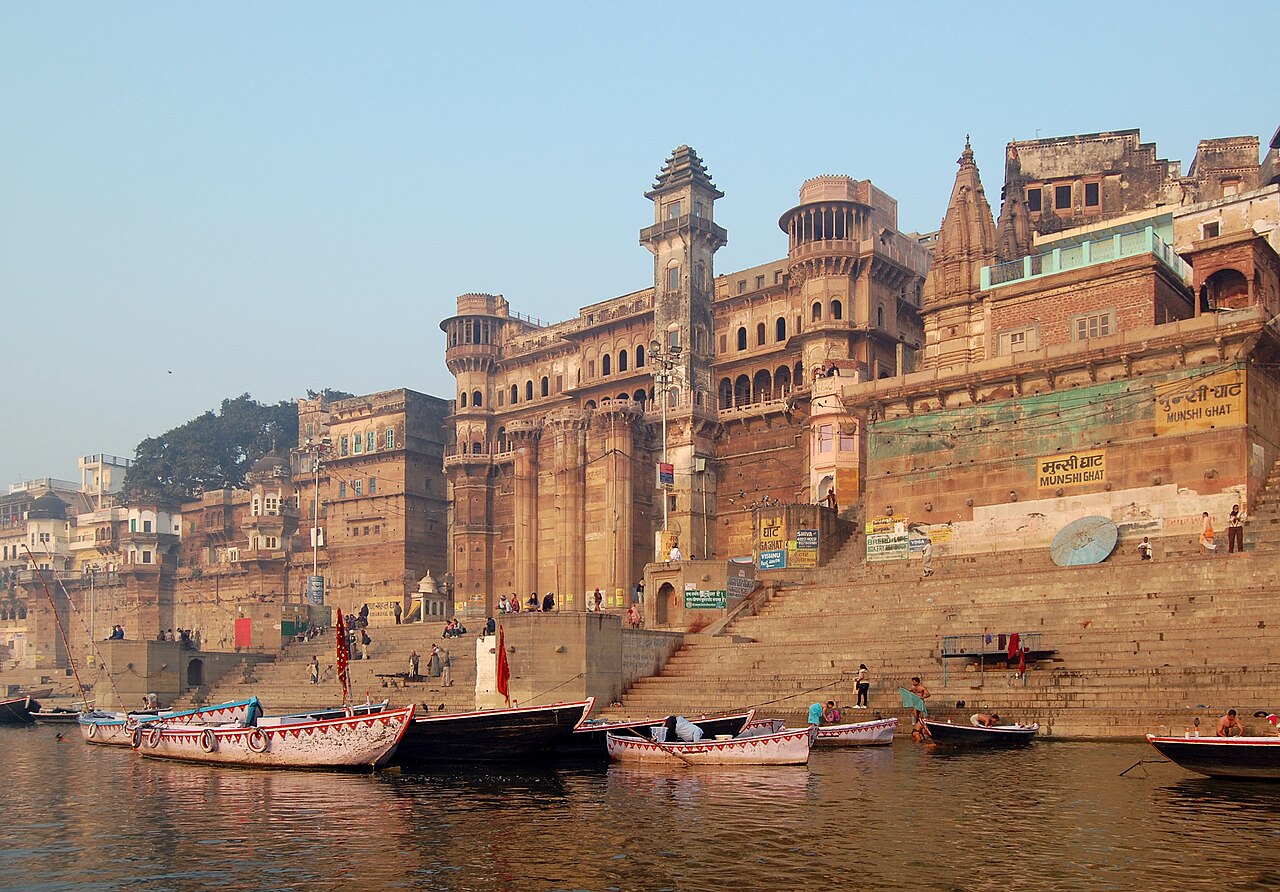
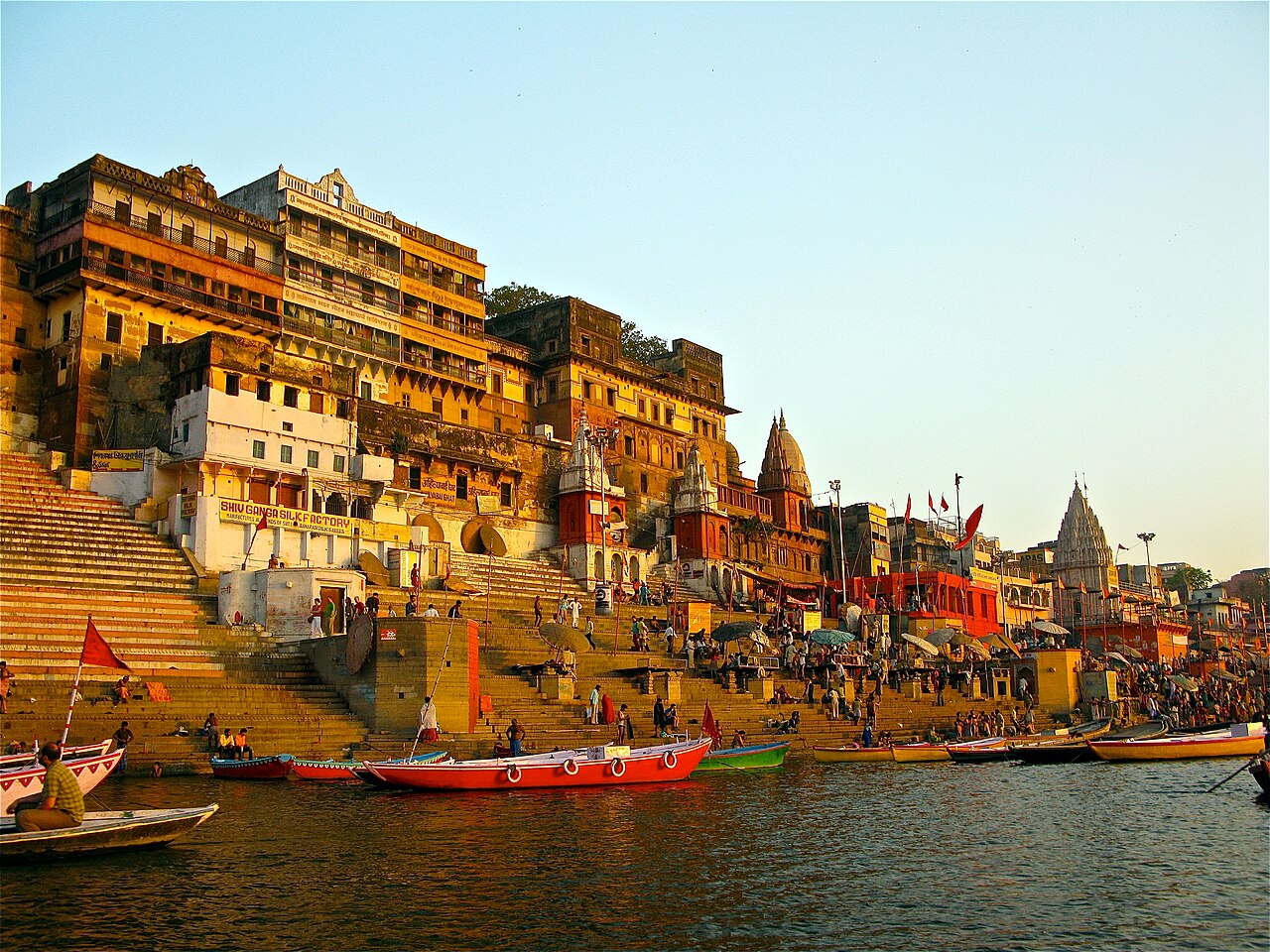
Stone steps that lead down to the Ganges along the whole riverfront, 84 ghats in all. Pilgrims bathe here at dawn, and every evening a fire ceremony is held at Dashashwamedh Ghat, the most popular. Manikarnika and Harishchandra are cremation ghats.
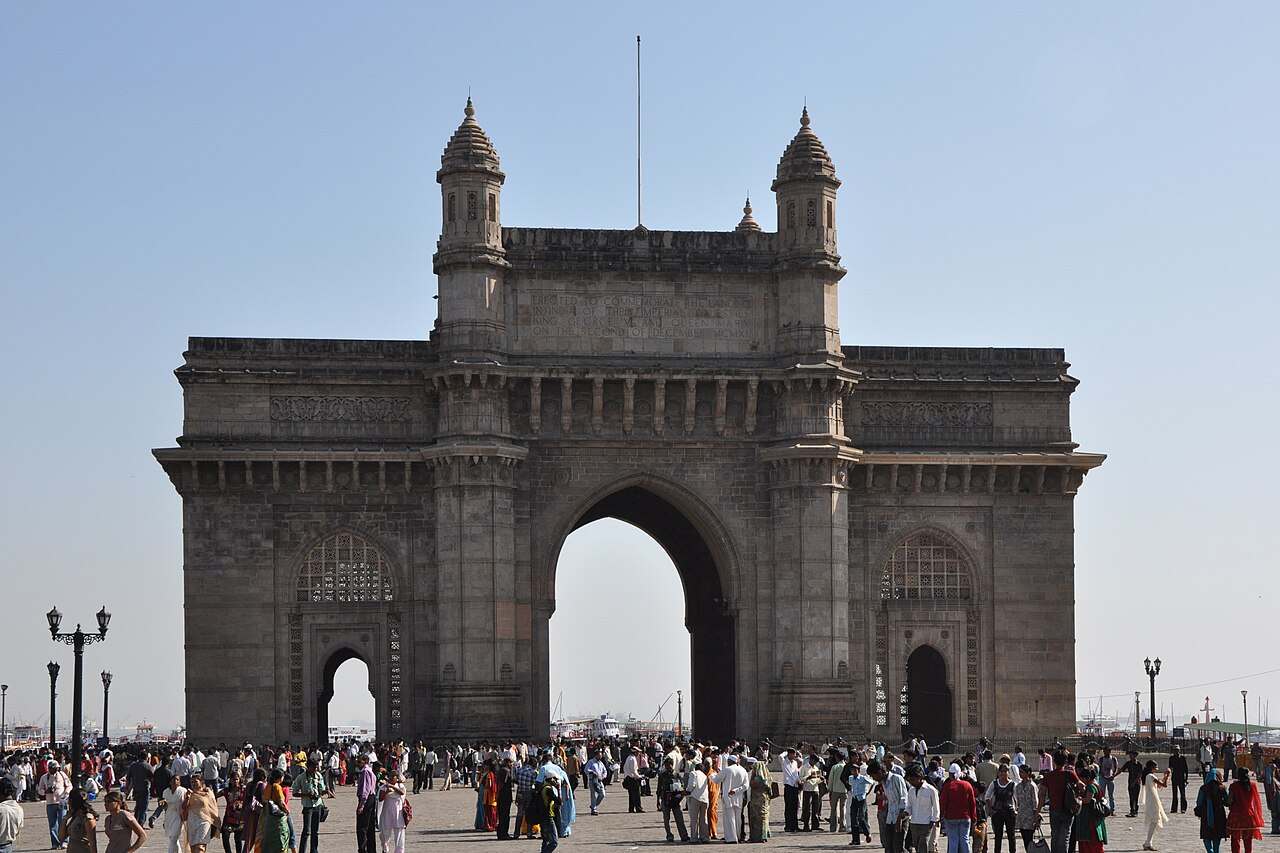
A great arch on Mumbai's waterfront, built to mark the landing of King George V in 1911 and finished in 1924. In 1948 the last British troops left India through it. Ferries to the Elephanta Caves leave from here.
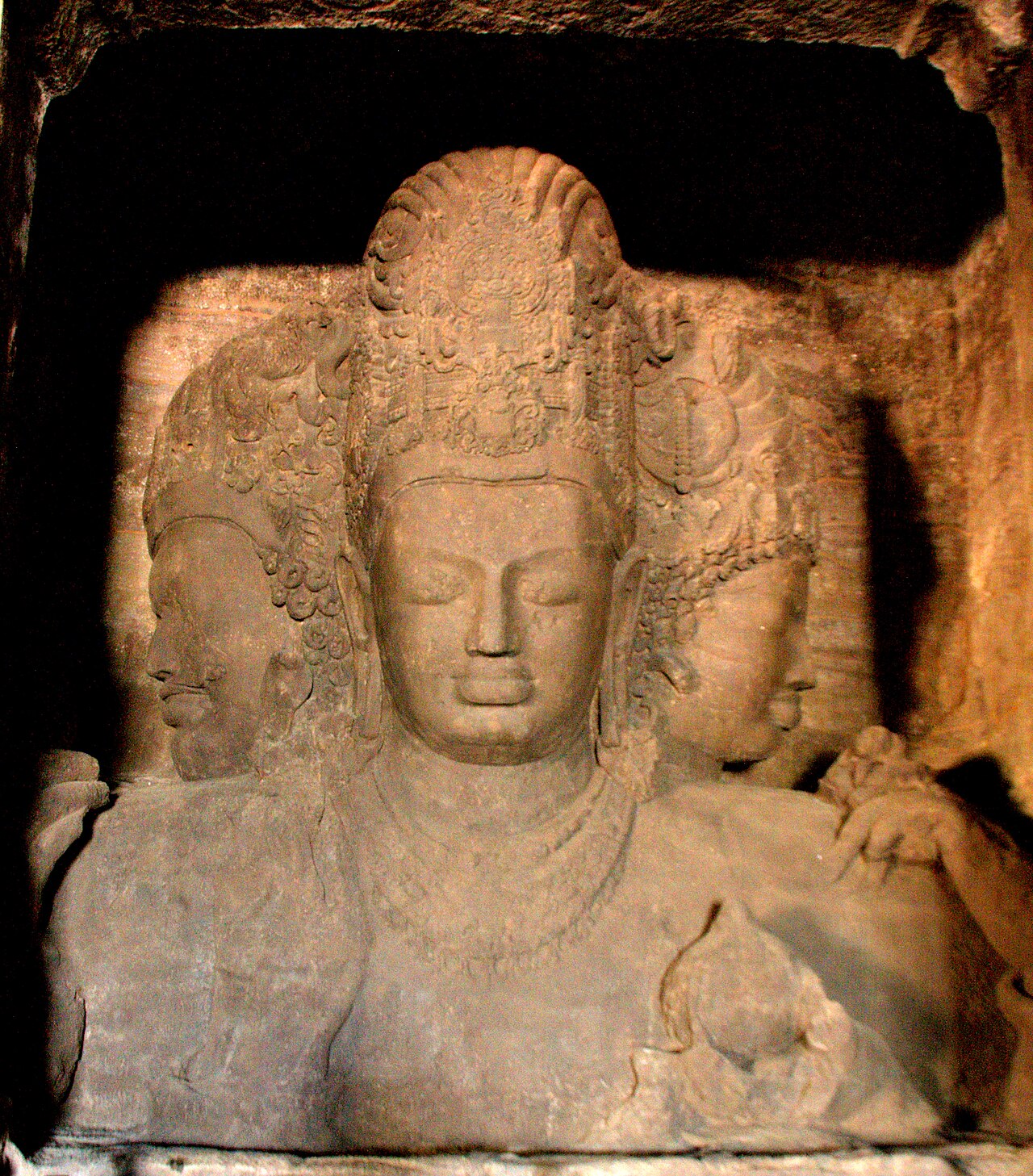
Temples cut into the rock of an island in Mumbai Harbour, about 10 km from the city, mostly in the 5th and 6th centuries and dedicated to the god Shiva. The most famous carving is a huge sculpture of Shiva with three faces, more than 5 m high.
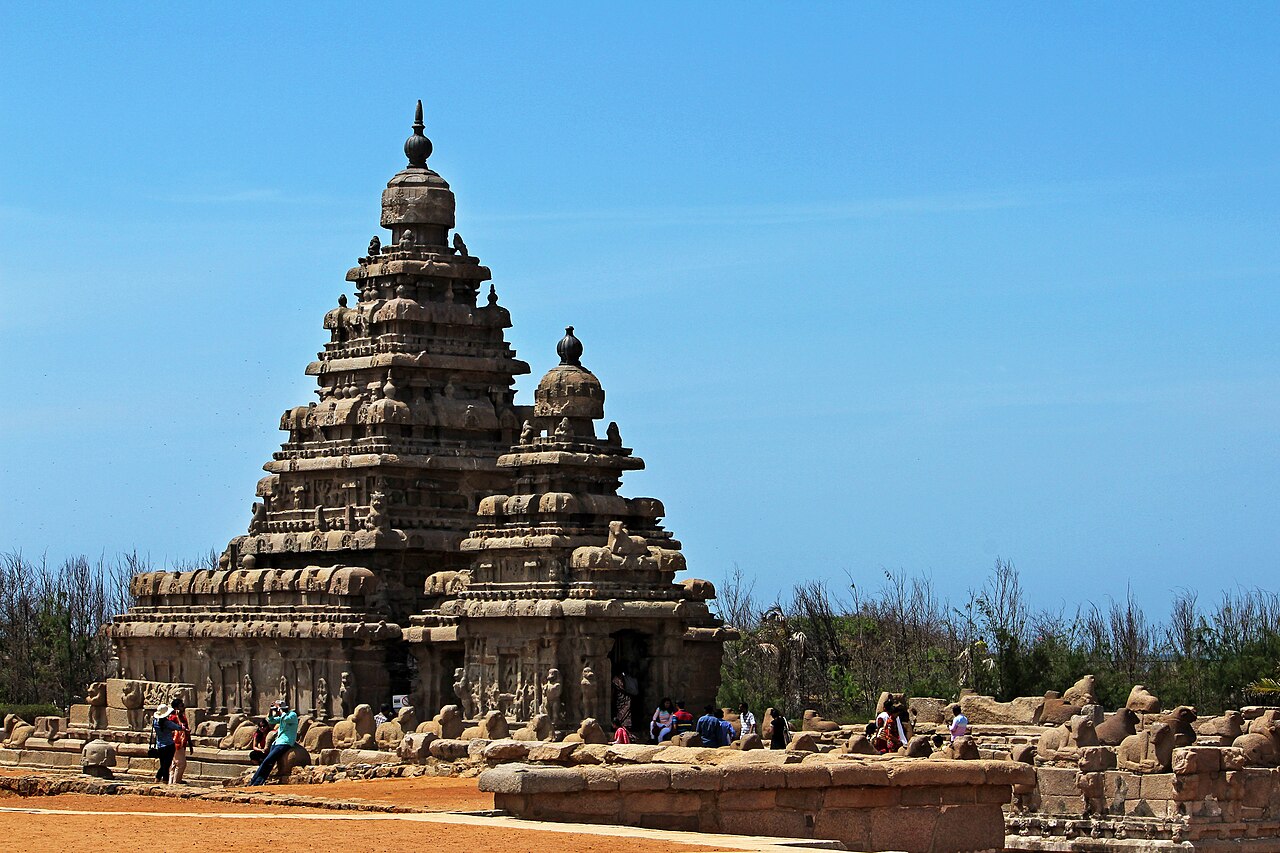
Temples, cave shrines and carvings made by the Pallava kings in the 7th and 8th centuries, about 60 km south of Chennai. They include the Shore Temple by the sea and Arjuna's Penance, one of the largest open-air rock reliefs in the world.
As of 2023, India has the largest population in the world. The United Nations estimated that it overtook China in April 2023.
02
More than 968 million people were eligible to vote in India's 2024 general election, held in seven phases over six weeks. As of 2024 it was the largest election ever held.
03
Chess most likely began in India. Its ancestor, chaturanga, is first known from the 6th or 7th century, and its name means 'four parts', after the four branches of an ancient army: elephants, chariots, horses and foot soldiers.
04
Snakes and ladders comes from India, where it was a game about virtue and vice called Moksha Patam. The ladders stood for virtues such as generosity, the snakes for vices such as anger.
05
The numbers we write every day, 0 to 9, were invented by Indian mathematicians and reached Europe through the Arab world. That is why they are called Hindu-Arabic numerals.
06
Shampoo, bungalow, jungle, pyjamas and loot are all English words that come from Hindi or Urdu. Shampoo first meant a head massage with oil.
07
As of 2024, Indian Railways employed about 1.25 million people, and in 2023 to 2024 it carried about 6.9 billion passengers.
08
India makes more feature films than any other country: 2,886 were certified for release in 2021 to 2022. Bollywood, in Mumbai, is only the Hindi-language part of it.
09
Mawsynram, a village in the hills of Meghalaya, gets about 11,870 mm of rain a year on average and is often called one of the wettest places on Earth.
10
The Kumbh Mela, a Hindu pilgrimage to bathe in sacred rivers, is on UNESCO's list of Intangible Cultural Heritage. At Prayagraj in 2025 an estimated 660 million people took part, according to official figures.
11
In 2004 Darjeeling tea became the first product in India to receive legal protection as a geographical indication, like Champagne.
12
The International Day of Yoga, 21 June, was proposed by India and adopted by the United Nations in December 2014.
13
India's constitution is the longest written national constitution in the world.
14
In 2023 India became the first country to land a spacecraft near the Moon's south pole.
Most visitors need a visa. Apply for the e-Visa only on the Government of India's website, indianvisaonline.gov.in, at least 4 days before you arrive. Other sites that promise a faster visa charge extra and may misuse your data.
Drink sealed bottled water
Tap water is not safe to drink, and many visitors use bottled water even for brushing their teeth. Check that the cap's seal is unbroken, skip ice unless you know it was made with safe water, and choose hot, freshly cooked food at stalls.
Cover up at places of worship
Wear clothes that cover your shoulders and knees, and take off your shoes before entering a temple, mosque or someone's home. At the Golden Temple everyone must also cover their head and wash their feet; free head scarves are provided at the entrance.
Pick your season
For much of India, the cooler, dry months from October to March are the most comfortable. April to June can be very hot, and the monsoon brings heavy rain from June to September. In northern cities, air pollution can be severe from October to February, which matters if you have heart or lung problems.
Book trains early
Trains tend to fill up early, especially from mid-April to mid-June and around festivals. Most seats can be booked up to 60 days ahead (as of 2026), and visitors with a foreign passport can book seats from a special tourist quota further ahead, so book as soon as your plans are fixed, and choose an air-conditioned class for comfort.
Keep away from dogs and monkeys
Street dogs and monkeys are common, and rabies is present in India. Do not feed or touch them, and if you are bitten or scratched, see a doctor the same day.
Greet with namaste
Press your palms together in front of your chest, bow slightly and say namaste: a polite greeting for everyone, with no touching. Outside the big cities, do not offer to shake hands with someone of the opposite sex unless they offer first, and use your right hand to give and take things.
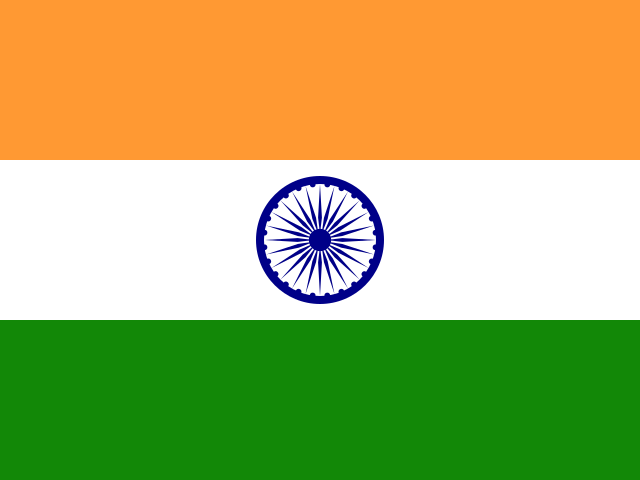
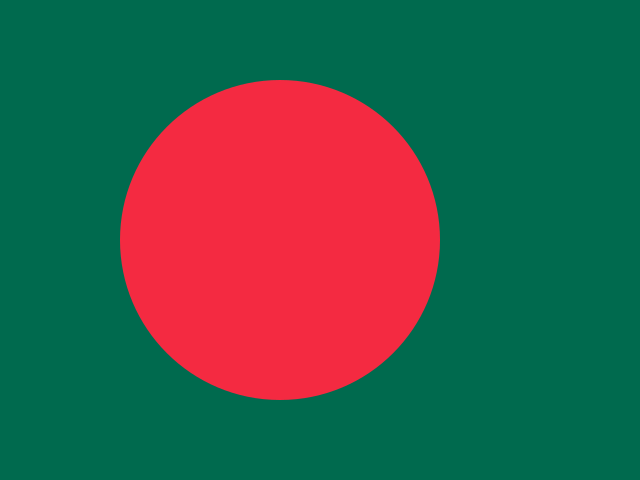 Bangladesh
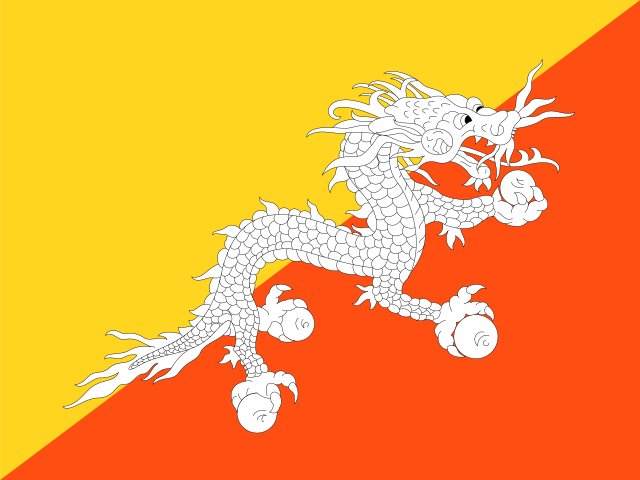 Bhutan
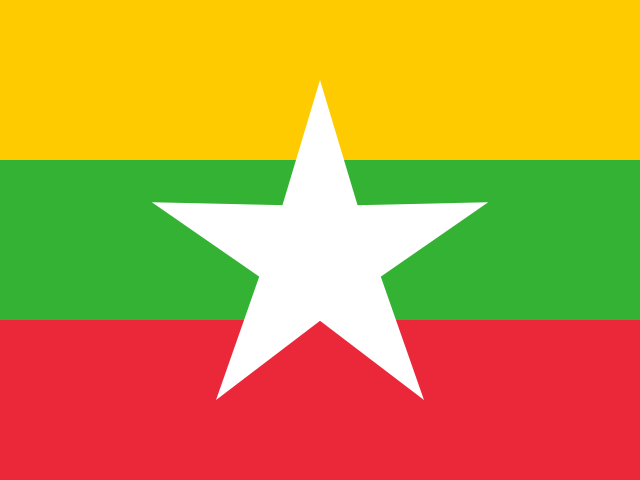 Myanmar
 China
China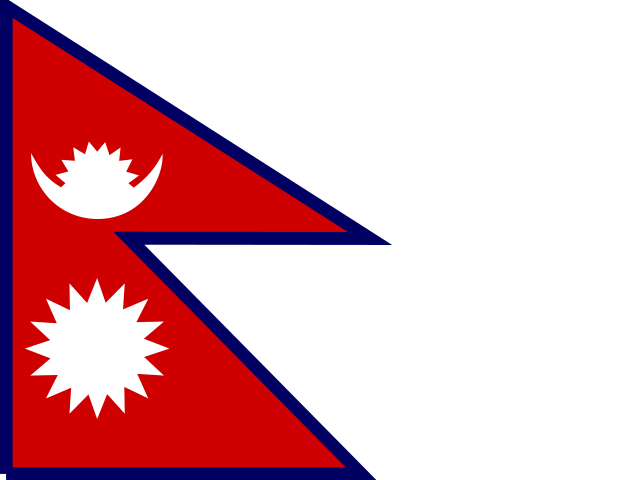 Nepal
Nepal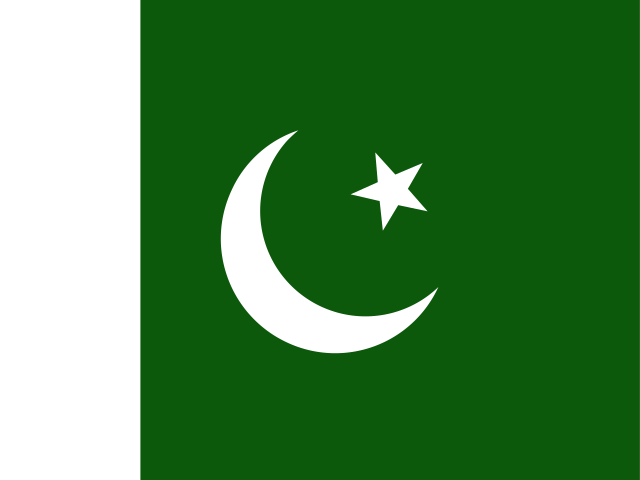 Pakistan