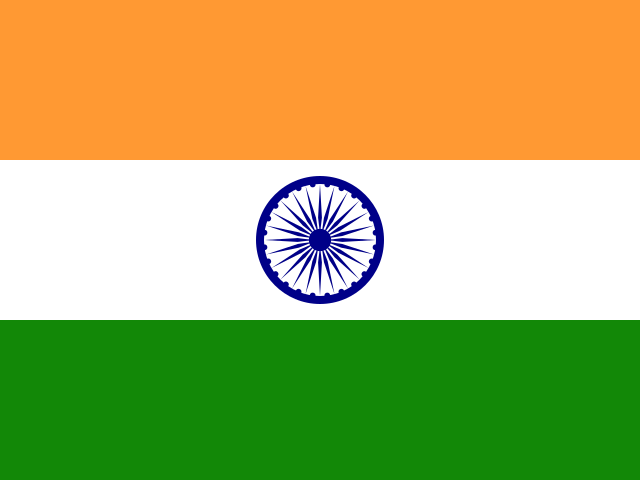
India trivia: 54 questions and answers
The country at a glance
What is the capital of India?
- A. Mumbai
- B. New Delhi
- C. Kolkata
- D. Bengaluru
Show the answer
New Delhi. New Delhi is the capital. Mumbai is the largest financial centre, and Kolkata was the capital of British India until 1911.
What is the currency of India?
- A. Taka
- B. Indian rupee
- C. Rupiah
- D. Dinar
Show the answer
Indian rupee. India pays in the Indian rupee, written ₹. The taka is Bangladesh's currency and the rupiah is Indonesia's.
Which is the highest mountain in India?
- A. Mount Everest
- B. Annapurna
- C. Kangchenjunga
- D. Nanda Devi
Show the answer
Kangchenjunga. Kangchenjunga, 8,586 m, stands on the border between Sikkim in India and Nepal. It is the third-highest mountain in the world. Everest and Annapurna are in Nepal.
History
Which ancient civilisation built planned cities with covered drains, such as Dholavira and Lothal, from about 2600 BC?
- A. The Indus Valley Civilisation
- B. The Maurya Empire
- C. The Gupta Empire
- D. The Mughal Empire
Show the answer
The Indus Valley Civilisation. The Indus Valley Civilisation built its great cities from about 2600 BC. Harappa and Mohenjo-daro are in today's Pakistan; Dholavira and Lothal are in Gujarat.
Filled with remorse after his bloody war in Kalinga, the emperor Ashoka turned to which religion?
- A. Islam
- B. Sikhism
- C. Buddhism
- D. Christianity
Show the answer
Buddhism. Ashoka embraced Buddhism and non-violence after the Kalinga war of around 261 BC, and carved his teachings on rocks and pillars across his empire.
In 1930 Gandhi walked 387 km to the sea at Dandi to protest against a British tax on what?
- A. Tea
- B. Salt
- C. Cotton
- D. Land
Show the answer
Salt. It was the tax on salt. At Dandi Gandhi made salt from the sea, breaking the law, and the Salt March drew attention around the world.
India became a republic on 26 January 1950, and the date is celebrated as Republic Day.
True or false?
Show the answer
True. True. The Constitution came into force on 26 January 1950, and the day is a national holiday.
India became independent from Britain on 26 January 1950.
True or false?
Show the answer
False. False. India became independent on 15 August 1947. On 26 January 1950 it became a republic, with its own constitution.
In 2023 India became the first country to land a spacecraft on the Moon.
True or false?
Show the answer
False. False. India was the fourth country to land softly on the Moon, but the first to land near its south pole, with Chandrayaan-3 on 23 August 2023.
Food and drink
What is a thali?
- A. A sweet made of milk solids
- B. A round tray of small dishes served together
- C. A clay oven for baking bread
- D. A spiced tea with milk
Show the answer
A round tray of small dishes served together. A thali is a round tray of small dishes served together: rice or roti with dal, vegetables, yoghurt, pickle and often a sweet, all at the same time.
Masala dosa, a South Indian favourite, is a thin, crisp pancake rolled around which filling?
- A. Minced lamb
- B. Spiced potatoes
- C. Sweet coconut and jaggery
- D. Fried fish
Show the answer
Spiced potatoes. The filling is spiced potatoes. The dosa is made from a fermented rice and lentil batter and served with coconut chutney and sambar.
Most people in India are vegetarian.
True or false?
Show the answer
False. False. In a 2021 Pew survey about 4 in 10 Indians called themselves vegetarian. It varies a great deal: among Hindus, from about 71 percent in the north to 18 percent in the east.
Butter chicken was made famous in the 1950s at a restaurant in Old Delhi.
True or false?
Show the answer
True. True. It was popularised at the Moti Mahal restaurant in Daryaganj, Old Delhi, by cooks who had come as refugees from Peshawar.
What is gulab jamun?
- A. A mango and yoghurt drink
- B. Steamed rice cakes
- C. Fried milk-dough balls in rose-scented syrup
- D. A spicy fish curry
Show the answer
Fried milk-dough balls in rose-scented syrup. Gulab jamun are fried milk-dough balls in rose-scented syrup. Gulab comes from the Persian word for rosewater (in Hindi it means rose), and jamun is a fruit of about the same size.
Chilli is used all over India today, but it is not native. Who brought it to India in the 1500s?
- A. The British
- B. The Portuguese
- C. The Mughals
- D. The Dutch
Show the answer
The Portuguese. The Portuguese brought chilli from the Americas in the 16th century, and it spread across the whole country.
Indians who eat with their hands traditionally use the right hand, keeping the left hand dry for passing dishes.
True or false?
Show the answer
True. True. Only one hand is used for eating. The left hand stays dry and is used to pass dishes or hold a glass of water.
Festivals and holidays
Durga Puja in which Indian city is on the UNESCO list of Intangible Cultural Heritage?
- A. Kolkata
- B. Mumbai
- C. Chennai
- D. Jaipur
Show the answer
Kolkata. Durga Puja in Kolkata, the great festival of Bengal, was added to the UNESCO list in 2021.
What does the Tamil word pongal mean?
- A. Boiling over
- B. New sun
- C. Sweet rice
- D. Happy harvest
Show the answer
Boiling over. Pongal means boiling over: families cook rice with milk and jaggery until it bubbles over the pot, a sign of plenty.
On the night before Holi, people light bonfires.
True or false?
Show the answer
True. True. The bonfire is called Holika Dahan and recalls the legend of Holika, who burned while the boy Prahlada was saved.
Diwali, the festival of lights, is celebrated in spring.
True or false?
Show the answer
False. False. Diwali falls in autumn, between mid-October and mid-November, around the new moon.
Cities
Which city was the capital of British India until 1911?
- A. Mumbai
- B. Chennai
- C. Kolkata
- D. Hyderabad
Show the answer
Kolkata. Kolkata, then called Calcutta, was the capital until 1911, when the British decided to move it to Delhi.
Which city is known as the Pink City?
- A. Varanasi
- B. Jaipur
- C. Chennai
- D. Amritsar
Show the answer
Jaipur. Jaipur's old city was painted pink to welcome the Prince of Wales in 1876, and the name stuck.
Landmarks
The Mughal emperor Shah Jahan built the Taj Mahal as a tomb for whom?
- A. His father Jahangir
- B. His wife Mumtaz Mahal
- C. His grandfather Akbar
- D. His teacher
Show the answer
His wife Mumtaz Mahal. It was built for his wife Mumtaz Mahal, who died in 1631. Shah Jahan himself was later buried beside her.
Where does India's Prime Minister raise the national flag every Independence Day, 15 August?
- A. The Gateway of India
- B. The Red Fort
- C. The Qutb Minar
- D. Amber Fort
Show the answer
The Red Fort. At the Red Fort in Old Delhi, a tradition that began with Jawaharlal Nehru in 1947.
The kitchen of the Golden Temple in Amritsar serves free meals to visitors of any faith.
True or false?
Show the answer
True. True. Its community kitchen, the langar, serves more than 100,000 vegetarian meals a day, free to anyone who comes.
What will you find at the Jantar Mantar in Jaipur?
- A. A white marble tomb
- B. Giant stone instruments for studying the sky
- C. Rock-cut temples on an island
- D. A gold-covered shrine in a pool
Show the answer
Giant stone instruments for studying the sky. It holds giant stone instruments for studying the sky, 19 in all, completed in 1734, including the largest stone sundial in the world.
The rock-cut Elephanta Caves near Mumbai are dedicated mainly to which Hindu god?
- A. Shiva
- B. Ganesha
- C. Vishnu
- D. Krishna
Show the answer
Shiva. They are dedicated mainly to Shiva. The most famous carving is a sculpture of Shiva with three faces, more than 5 m high.
Music and dance
In Kathakali, what colour is the face of noble heroes and gods?
- A. Green
- B. Blue
- C. White
- D. Yellow
Show the answer
Green. Green make-up with coral-red lips marks noble characters such as Krishna, Rama and Arjuna.
Carnatic music is the classical music of which part of India?
- A. The south
- B. The north
- C. The northeast
- D. The far west
Show the answer
The south. The south. Carnatic music belongs to South India; the classical music of the north is called Hindustani music.
The sitar became famous in the West in the 1960s, when bands such as The Beatles used it.
True or false?
Show the answer
True. True. Ravi Shankar made the sitar known abroad, and in the 1960s The Beatles and The Rolling Stones used it on their records.
The tabla is played with wooden sticks.
True or false?
Show the answer
False. False. The tabla is played with the fingers and palms of both hands.
Fun facts
According to UN estimates, India overtook China as the country with the most people in 2023.
True or false?
Show the answer
True. True. The United Nations estimated that India's population passed China's in April 2023, at about 1.43 billion.
Which board game grew from an ancient Indian game called chaturanga?
- A. Backgammon
- B. Chess
- C. Draughts (checkers)
- D. Go
Show the answer
Chess. Chaturanga is the ancestor of chess. Its name means 'four parts', after the four branches of an ancient army.
Snakes and ladders began in India as a game about what?
- A. Virtues and vices
- B. Farming seasons
- C. Trade routes
- D. Royal battles
Show the answer
Virtues and vices. It was about virtues and vices. In Moksha Patam, ladders stood for virtues such as generosity and snakes for vices such as anger.
Which of these English words comes from Hindi?
- A. Umbrella
- B. Coffee
- C. Shampoo
- D. Ketchup
Show the answer
Shampoo. Shampoo comes from the Hindi word chāmpo and first meant a head massage with oil. Bungalow, jungle and pyjamas also come from Hindi or Urdu.
In 2004 Darjeeling tea became the first product in India to be legally protected as a geographical indication.
True or false?
Show the answer
True. True. Like Champagne, only tea grown in the Darjeeling area may use the name.
India's constitution is one of the shortest national constitutions in the world.
True or false?
Show the answer
False. False. It is the longest written national constitution in the world.
Gifts to the world
Which Indian mathematician first wrote down rules for calculating with zero, in 628?
- A. Brahmagupta
- B. Ramanujan
- C. Panini
- D. Kalidasa
Show the answer
Brahmagupta. Brahmagupta gave rules for zero as a number in his book Brahmasphutasiddhanta, written in 628.
Which family board game is a version of the old Indian game pachisi?
- A. Ludo
- B. Monopoly
- C. Scrabble
- D. Draughts
Show the answer
Ludo. Ludo and Parcheesi are versions of pachisi, a race game on a cross-shaped board played in India since ancient times.
In which country did Gandhi first use his method of nonviolent protest, satyagraha?
- A. South Africa
- B. India
- C. Britain
- D. Kenya
Show the answer
South Africa. Gandhi lived in South Africa for 21 years and first used satyagraha at a protest in Johannesburg in 1906, then brought it back to India in 1915.
Sake Dean Mahomed, born in Patna, opened "shampooing" baths in Brighton in 1814.
True or false?
Show the answer
True. True. His baths offered Indian head and body massage with oils, and he became shampooing surgeon to two British kings.
Words
The Hindi word 'kal' can mean 'tomorrow'. What else can it mean?
- A. Today
- B. Yesterday
- C. Morning
- D. Noon
Show the answer
Yesterday. Kal means both yesterday and tomorrow; the rest of the sentence tells you which. Today is aaj.
What does the Hindi word 'paani' mean?
- A. Bread
- B. Tea
- C. Water
- D. Rice
Show the answer
Water. Paani means water. Bread is roti, tea is chai and rice is chawal.
In Hindi, 'haan' means 'no'.
True or false?
Show the answer
False. False. Haan means yes; no is nahin.
The Constitution of India makes Hindi the national language of India.
True or false?
Show the answer
False. False. The constitution names no national language. Hindi and English are the official languages of the central government, and 22 languages are recognised in its Eighth Schedule.
Phrases
How do you say 'thank you' in Hindi?
- A. Namaste
- B. Dhanyavaad
- C. Theek hai
- D. Maaf kijiye
Show the answer
Dhanyavaad. Dhanyavaad means thank you; shukriya is a warm everyday alternative. Namaste is hello, theek hai is OK and maaf kijiye is sorry.
You want to know the price of a scarf at a market stall. What do you ask?
- A. Aap kaise hain?
- B. Toilet kahan hai?
- C. Yeh kitne ka hai?
- D. Aapka naam kya hai?
Show the answer
Yeh kitne ka hai?. Yeh kitne ka hai? means 'How much is this?'. The others ask how someone is, where the toilet is and what their name is.
Namaste can be used to say both hello and goodbye.
True or false?
Show the answer
True. True. Namaste, from Sanskrit for 'bowing to you', works as a greeting and as a farewell, at any time of day.
When you greet someone with namaste, what do you do with your hands?
- A. Shake their hand
- B. Wave with one hand
- C. Press your palms together in front of your chest
- D. Put a hand on their shoulder
Show the answer
Press your palms together in front of your chest. You press your palms together in front of your chest, fingers pointing up, usually with a slight bow.
Local customs and tips
Where should you apply for an Indian e-Visa?
- A. Any agency that promises a faster visa
- B. The Government of India's official website
- C. From the airline when you board
- D. At a hotel in India after you arrive
Show the answer
The Government of India's official website. Apply on the Government of India's official website, indianvisaonline.gov.in, at least 4 days before you arrive. The government warns against sites that promise faster visas.
Tap water in India is generally safe for visitors to drink.
True or false?
Show the answer
False. False. Drink bottled water with an unbroken seal, and be careful with ice. Many visitors use bottled water even to brush their teeth.
At the Golden Temple, what must every visitor do besides taking off their shoes?
- A. Bring a gift
- B. Cover their head
- C. Wear white clothes
- D. Arrive before sunrise
Show the answer
Cover their head. Everyone must cover their head, as a sign of respect in Sikh tradition. Free head scarves are handed out at the entrance.
In which months does the monsoon bring heavy rain to most of India?
- A. December to February
- B. March to May
- C. June to September
- D. October to November
Show the answer
June to September. The summer monsoon lasts from June to September and brings more than 80 percent of India's yearly rain.
A street dog or monkey scratches you in India. What should you do?
- A. Wait to see if a fever starts
- B. See a doctor the same day
- C. Wash it and forget about it
- D. Worry only if it bleeds
Show the answer
See a doctor the same day. See a doctor the same day. Rabies is present in India and is fatal once symptoms start, but treatment straight after a bite or scratch prevents it.
Trivia from nearby countries
Answer key
The country at a glance
- B. New Delhi
- B. Indian rupee
- C. Kangchenjunga
History
- A. The Indus Valley Civilisation
- C. Buddhism
- B. Salt
- True
- False
- False
Food and drink
- B. A round tray of small dishes served together
- B. Spiced potatoes
- False
- True
- C. Fried milk-dough balls in rose-scented syrup
- B. The Portuguese
- True
Festivals and holidays
- A. Kolkata
- A. Boiling over
- True
- False
Cities
- C. Kolkata
- B. Jaipur
Landmarks
- B. His wife Mumtaz Mahal
- B. The Red Fort
- True
- B. Giant stone instruments for studying the sky
- A. Shiva
Music and dance
- A. Green
- A. The south
- True
- False
Fun facts
- True
- B. Chess
- A. Virtues and vices
- C. Shampoo
- True
- False
Gifts to the world
- A. Brahmagupta
- A. Ludo
- A. South Africa
- True
Words
- B. Yesterday
- C. Water
- False
- False
Phrases
- B. Dhanyavaad
- C. Yeh kitne ka hai?
- True
- C. Press your palms together in front of your chest
Local customs and tips
- B. The Government of India's official website
- False
- B. Cover their head
- C. June to September
- B. See a doctor the same day
More about India
- The trip to IndiaMap, story, food, phrases and a friendly quiz.
- Fun facts about IndiaSurprising facts, each one checked with a source.
- Indian foodThe dishes to try, with photos and recipes.
- India word searchCities and dishes in large print.
- Indian words crosswordLearn a few words while you solve it.
- Colour the flag of IndiaPrint it or colour it in on the screen.
- Indian rootsA family guide: history, recipes and words for the grandchildren.
- Before you goPhrases, customs and tips for travellers.
- Printable packLarge print, with a quiz and answers.