A free large-print PDF. Choose what goes in: facts, map, history, dishes and recipes, phrases, fun facts, a quiz with or without answers. Made for clubs, care homes, libraries and family afternoons.
Nepal is a landlocked country in the Himalayas, wedged between China to the north and India on the other three sides. In less than 200 km from south to north the land climbs from the hot, flat Terai plains, about 60 m above sea level, through green terraced hills to the highest mountain on Earth, Mount Everest, which Nepalis call Sagarmatha. Eight of the world's ten highest peaks stand in Nepal or on its borders with China and India.
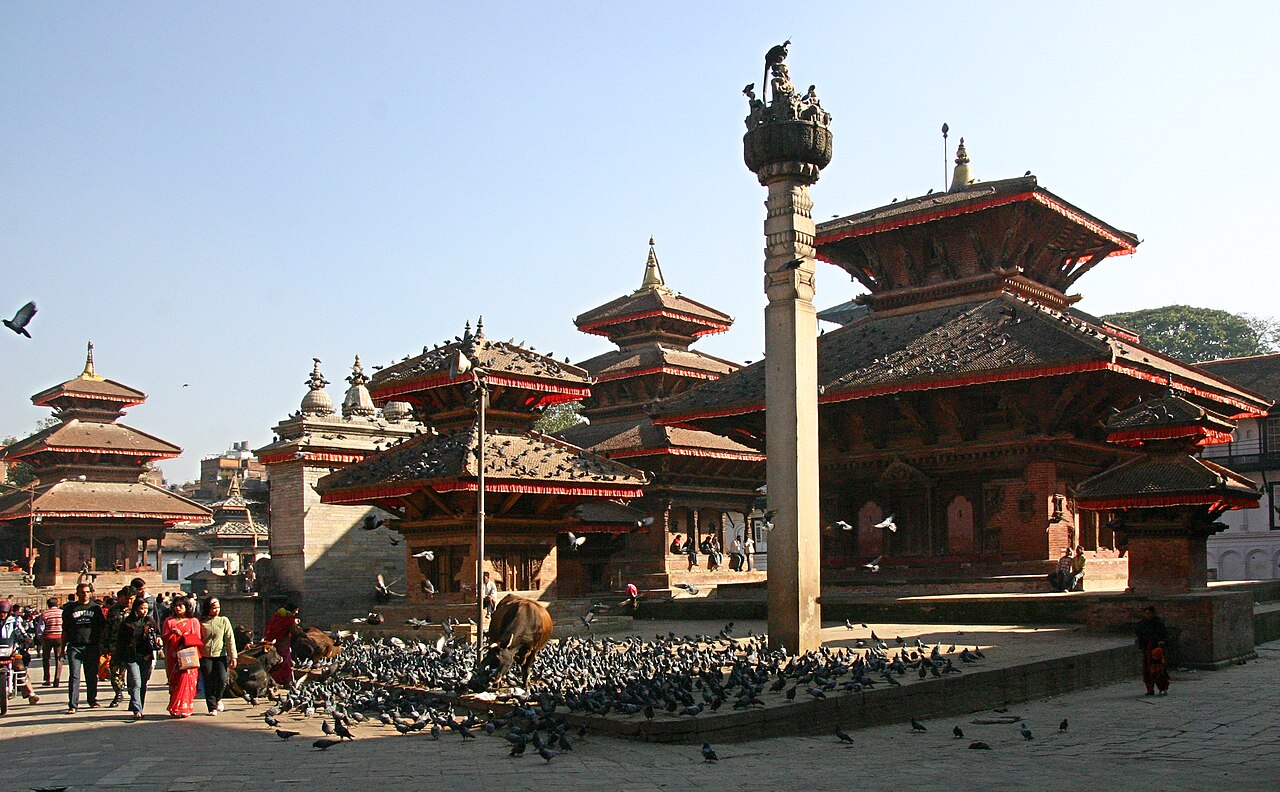
The Kathmandu Valley in the middle of the country was the heart of the old kingdoms. Its Newar craftsmen built pagoda temples, palaces and stupas that fill the royal squares of Kathmandu, Patan and Bhaktapur. In the 1760s the king of Gorkha, Prithvi Narayan Shah, conquered the valley and united many small states into one kingdom. Nepal was never colonised, and it was a kingdom until 2008, when it became a republic.
Today Nepal is a federal republic of seven provinces. Its people belong to more than 120 ethnic groups and speak more than 120 mother tongues. Most Nepalis are Hindu, and Buddhism is the second religion: the Buddha was born at Lumbini, in the south of the country. Visitors come for trekking, for the temples of the Kathmandu Valley, for the rhinos and tigers of Chitwan and for the view of the Annapurna range from the lakeside at Pokhara.
CapitalKathmandu
PopulationAbout 29 million (2021 census)
Official languageNepali, written in Devanagari script. The constitution also names every mother tongue spoken in Nepal a language of the nation
CurrencyNepalese rupee (रु)
AreaAbout 147,000 km²
GovernmentFederal parliamentary republic of seven provinces, with a president as head of state and a prime minister leading the government
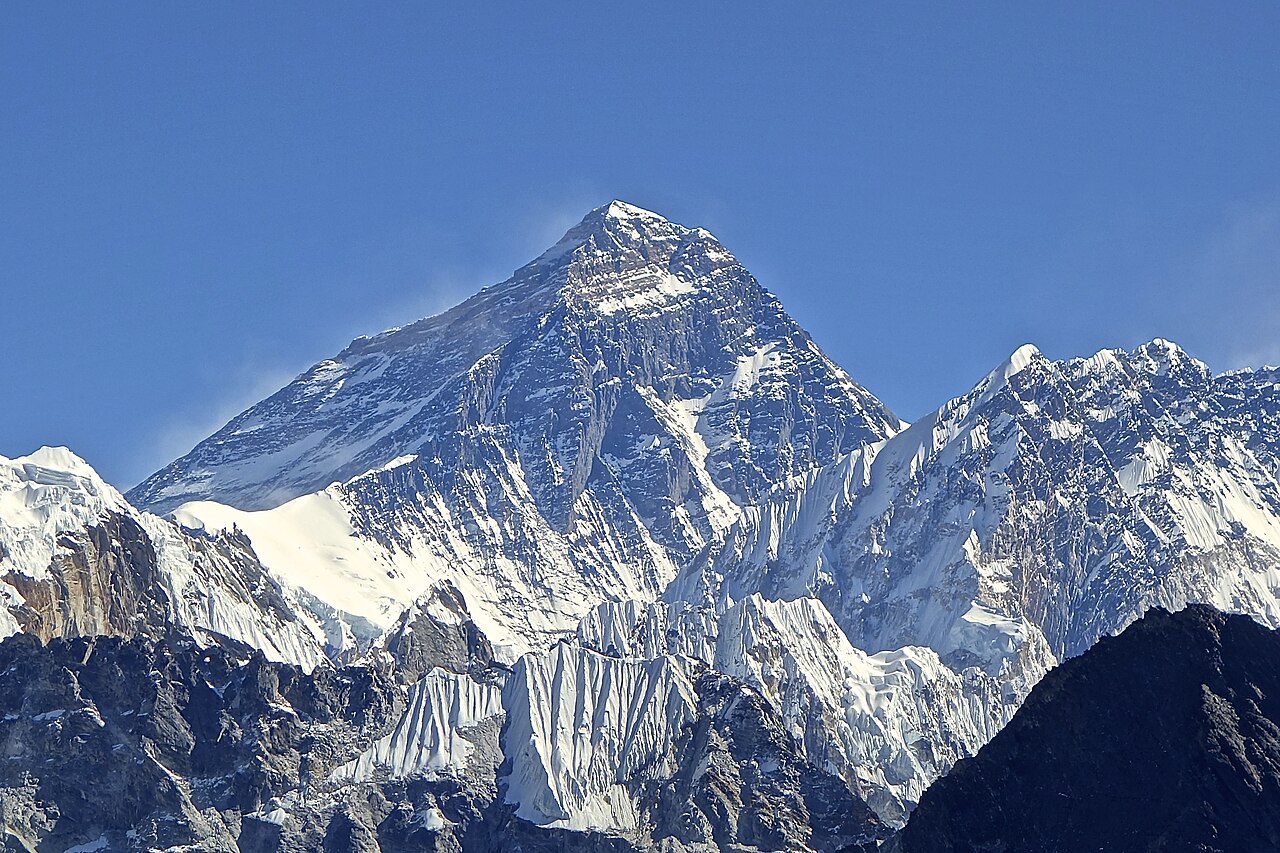
Highest mountainMount Everest (Sagarmatha), 8,848.86 m by the joint Nepal and China survey of 2020, on the border with China
Longest riverThe Karnali, about 507 km, the longest river in Nepal
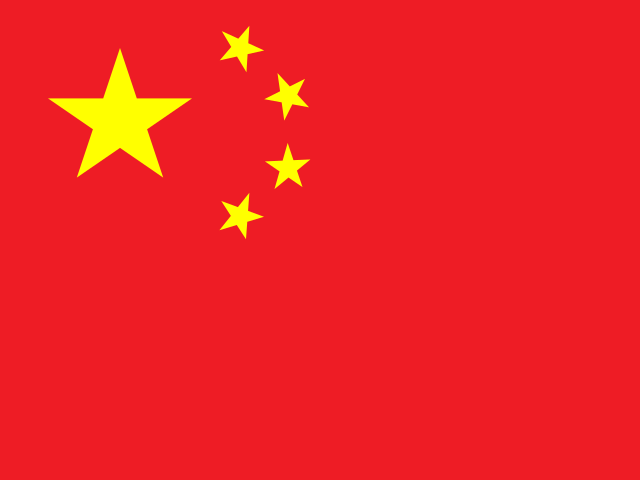
NeighboursChina (Tibet) to the north and India to the south, east and west. Bangladesh and Bhutan are close, but do not touch Nepal
Nepal's written history begins with a stone pillar set up by an Indian emperor at the Buddha's birthplace. For centuries the Kathmandu Valley was a rich land of Newar kings and craftsmen, until the king of Gorkha united the hills into one kingdom in the 1760s. Nepal kept its independence through the British era, then went through a century of Rana prime ministers, royal rule, a ten-year civil war and, in 2008, the end of the monarchy.
563 BC
The Buddha is born at Lumbini
According to Buddhist tradition, Queen Maya gave birth to Prince Siddhartha Gautama in the garden of Lumbini. The date is uncertain: it is often given as around 563 BC, and Nepal uses the traditional date of 623 BC. He left his royal life, became the Buddha and founded one of the world's great religions.
249 BC
Emperor Ashoka visits Lumbini
Around 249 BC the Mauryan emperor Ashoka made a pilgrimage to Lumbini and set up a stone pillar saying that the Buddha was born there. Its inscription is counted as the start of Nepal's recorded history.
AD 400
The Licchavi kings rule the valley
From around AD 400 the Licchavi dynasty ruled the Kathmandu Valley. They left temples and many stone inscriptions, and most of what is known about this period comes from them. The temple of Changu Narayan dates back to their time.
1482
The Malla kingdom splits into rival kingdoms
After the death of King Yaksha Malla in the early 1480s, his sons divided the kingdom, and by 1482 it had split apart. Kathmandu, Patan and Bhaktapur became rival kingdoms, and their competition filled the three Durbar Squares with palaces and temples.
1768
Prithvi Narayan Shah takes Kathmandu
The king of Gorkha, Prithvi Narayan Shah, entered Kathmandu on 25 September 1768 during the Indra Jatra festival, and Patan and Bhaktapur fell soon after. He is honoured as the founder of modern Nepal.
1814
The Anglo-Nepalese War begins
Nepal's expansion brought it into conflict with the British East India Company. The war of 1814 to 1816 ended with the Treaty of Sugauli, under which Nepal gave up recently conquered lands. The fighting also began the British army's long tradition of recruiting Gurkha soldiers.
1846
The Kot massacre brings the Ranas to power
On 14 September 1846 Jung Bahadur Kunwar and his brothers killed dozens of officials at the palace armoury in Kathmandu. He became Jung Bahadur Rana, and his family ruled as hereditary prime ministers for more than a century, while the kings had little power.
1951
Rana rule ends
A revolution supported by King Tribhuvan ended the Rana regime in 1951 and brought in parliamentary democracy. Nepal also began to open to foreign visitors.
1953
Tenzing Norgay and Edmund Hillary climb Everest
On 29 May 1953 the Sherpa climber Tenzing Norgay and the New Zealander Edmund Hillary became the first people confirmed to reach the summit of Mount Everest, as part of a British expedition.
1960
King Mahendra bans political parties
In 1960 King Mahendra dismissed the elected government and banned political parties. A partyless panchayat system governed Nepal for the next thirty years.
1990
The People's Movement restores democracy
In 1990 mass protests, the Jana Andolan, forced King Birendra to accept a new constitution with multiparty democracy and a king with limited powers.
1996
The civil war begins
On 13 February 1996 the Communist Party of Nepal (Maoist) began an armed insurgency against the monarchy. The war lasted ten years and cost about 17,000 lives.
2006
A peace accord ends the civil war
After mass protests in April 2006 restored parliament, the government and the Maoists signed the Comprehensive Peace Accord on 21 November 2006, and the Maoists joined peaceful politics.
2008
Nepal becomes a republic
On 28 May 2008 an elected Constituent Assembly abolished the monarchy, about 240 years after Prithvi Narayan Shah founded the kingdom. Nepal had been the world's last Hindu kingdom.
2015
A great earthquake strikes
On 25 April 2015 an earthquake of magnitude 7.8 killed nearly 9,000 people. Many old temples in the Kathmandu Valley were damaged or destroyed, and an avalanche killed climbers at Everest Base Camp.
2015
A new constitution creates seven provinces
On 20 September 2015 Nepal adopted its present constitution, which made the country a federal democratic republic divided into seven provinces.
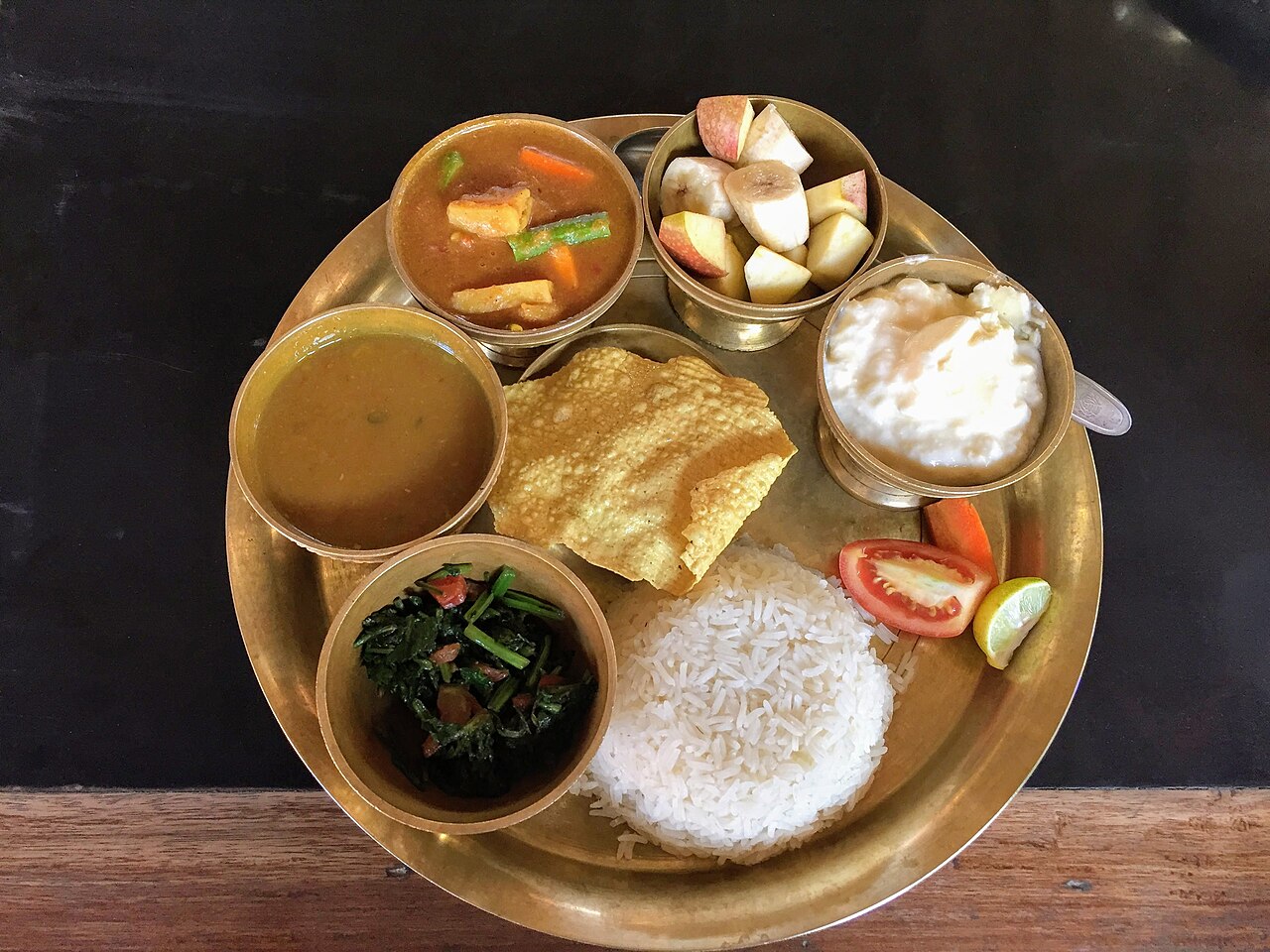
The everyday meal of Nepal is dal bhat: a plate of plain rice with lentil soup, a vegetable curry called tarkari and a spoon of sharp pickle (achar), often served on a metal tray with small bowls, and eaten twice a day, late in the morning and in the evening. In the hills and mountains, where rice grows poorly, a thick porridge of millet, maize or buckwheat called dhindo takes its place. Nepali curries are usually lighter than Indian ones, and are flavoured with ginger, garlic, cumin, turmeric and a Himalayan herb called jimbu. The Newar people of the Kathmandu Valley have the richest feast cooking, with dozens of small dishes, while the Tibetan-influenced north gave the whole country its favourite snack, momo dumplings. Most Hindus do not eat beef, and buffalo meat, called buff, is common instead.
The national meal: steamed rice (bhat) with a thin lentil soup (dal), served with vegetable curry, pickle and sometimes meat.
Nepalis often flavour the dal by frying jimbu, a dried Himalayan herb, in ghee and pouring it over the lentils.
See the recipe
Serves 4
45 min
Ingredients
300 g long-grain rice
200 g red or yellow lentils, rinsed
1 litre water for the lentils
1 teaspoon turmeric
2 tablespoons ghee or oil
1 teaspoon cumin seeds
3 cloves garlic, sliced
1 small piece ginger, grated
1 tomato, chopped
Salt and a handful of fresh coriander
Method
Rinse the rice and cook it in about 600 ml of water with a lid on, on low heat, for 15 to 20 minutes, until the water is absorbed.
Put the lentils in a pot with 1 litre of water, the turmeric and a pinch of salt. Simmer for 20 to 25 minutes until soft, stirring now and then, and add water if it gets too thick.
In a small pan heat the ghee, add the cumin seeds and, when they sizzle, the garlic and ginger. Fry for a minute, then add the tomato and cook until soft.
Pour the hot ghee mixture into the lentils, stir, season with salt and scatter over the coriander.
Serve the rice in the middle of the plate with the dal in a bowl beside it, and add a vegetable curry and a spoon of pickle if you have them.
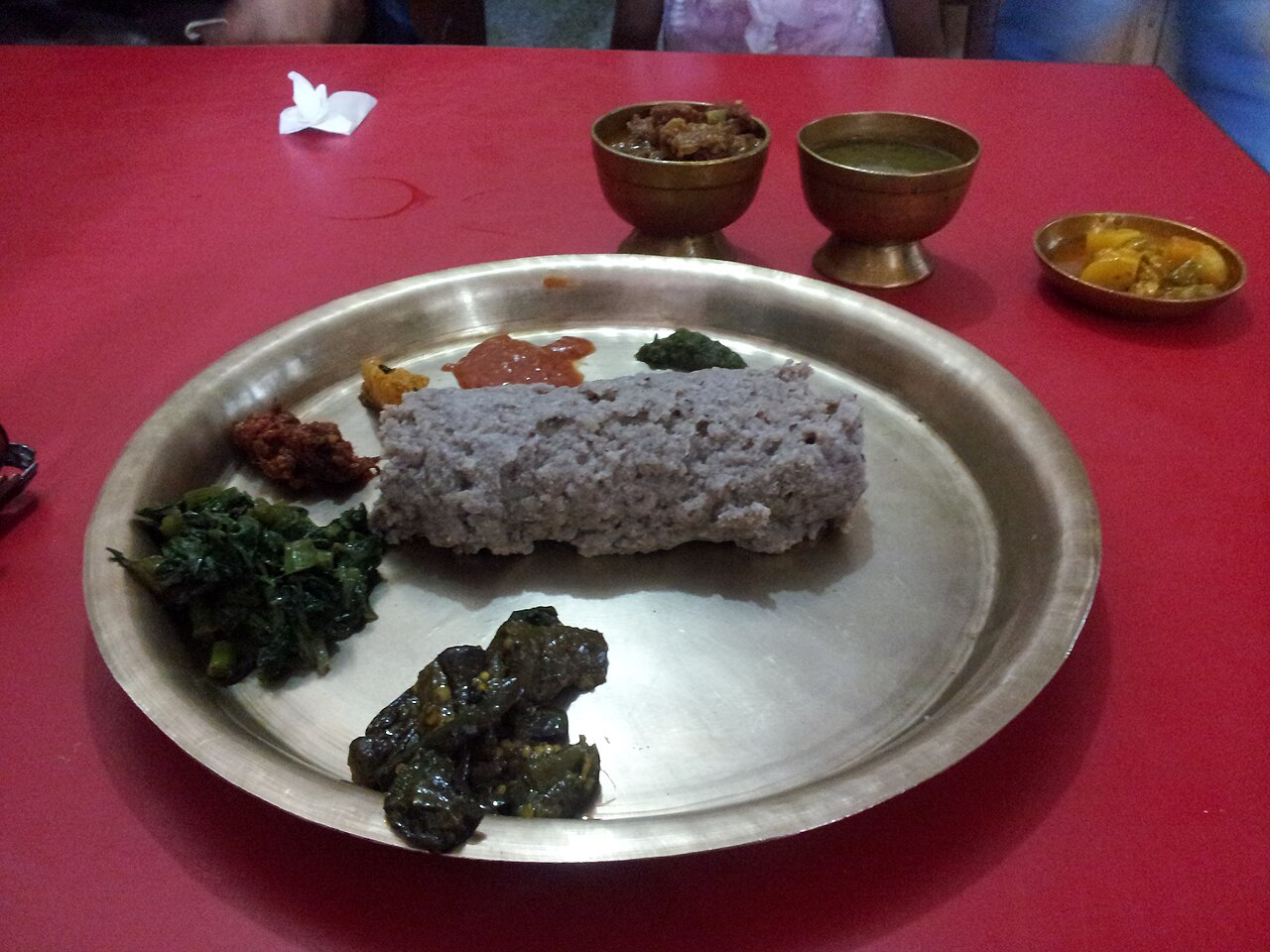
A very thick porridge made by stirring buckwheat, millet or maize flour into boiling water until it is stiff. A small ball is shaped with the fingers, dipped in soup or gundruk and swallowed.
Dhindo was long seen as poor people's food, but it now appears on city restaurant menus as a healthy traditional dish.
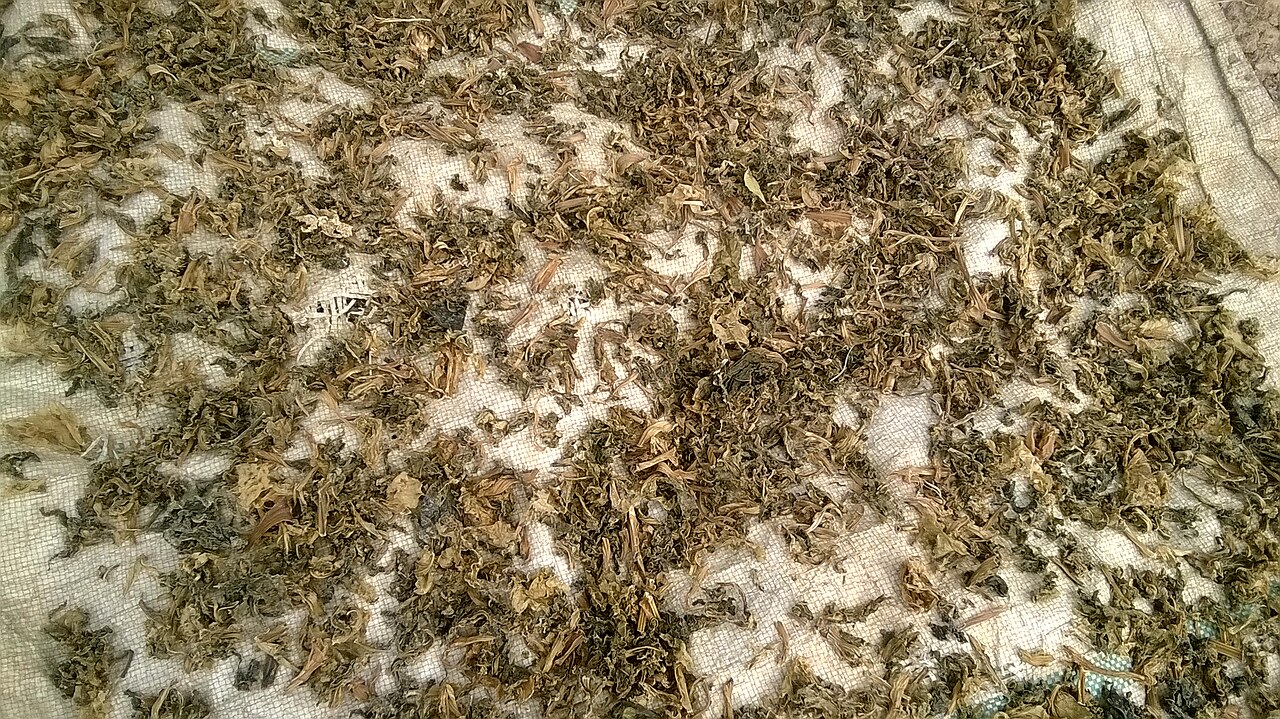
Leaves of mustard, radish and cauliflower that are fermented in a pot for about a week and then dried in the sun. It is cooked into a sour soup or a spicy pickle and keeps all winter.
Unlike sauerkraut or kimchi, no salt is added to the leaves before they ferment.
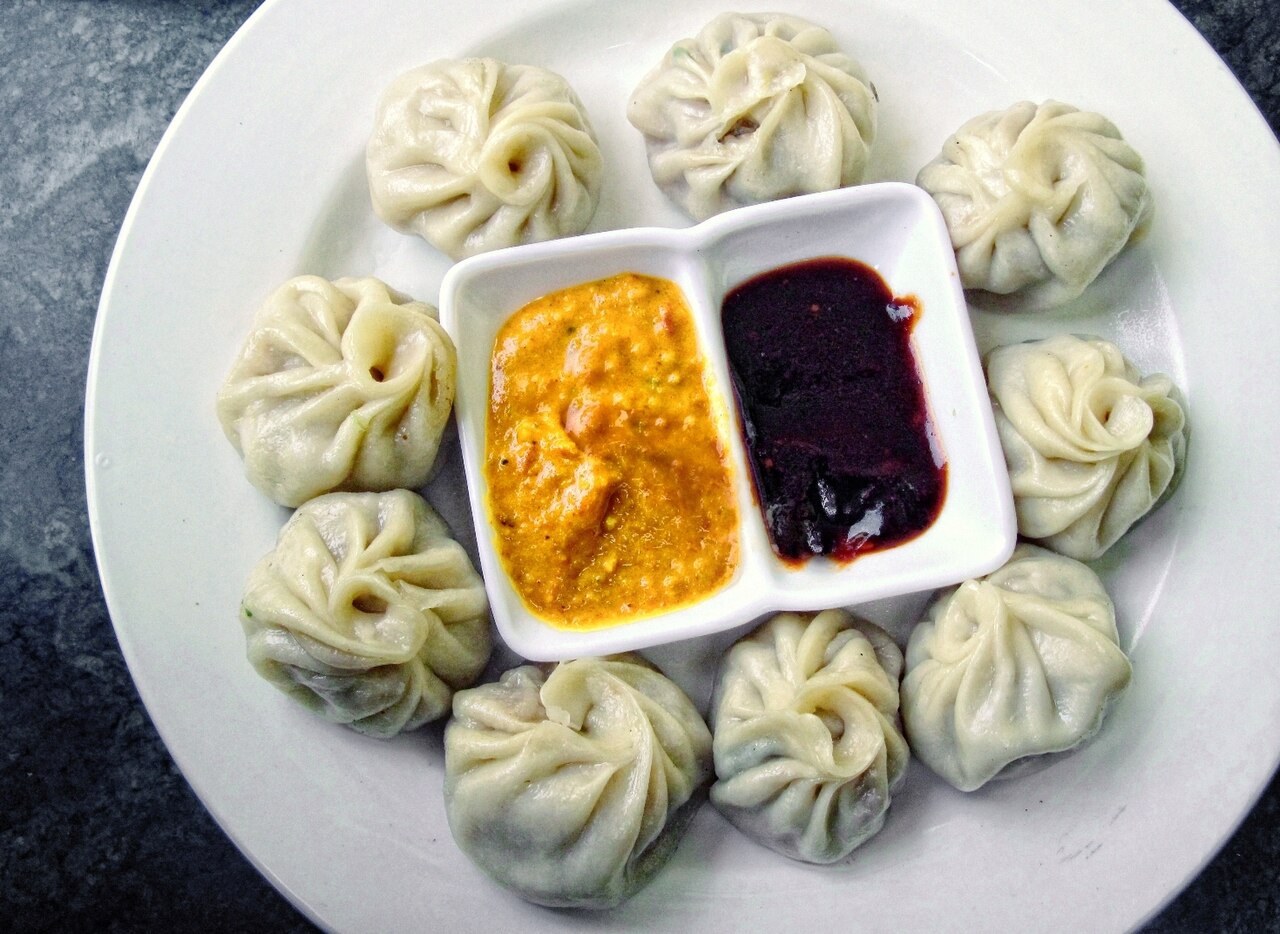
Small dumplings of thin wheat dough filled with spiced minced buffalo, chicken, pork or vegetables, steamed and served with a spicy tomato-based dipping sauce (achar). They are the most popular snack in the country.
Newar traders are often said to have brought momos over the mountains from Tibet, though historians still debate which way the recipe travelled.
See the recipe
Serves 4
1 h 30 min
Ingredients
300 g plain flour and about 150 ml water
400 g minced chicken or pork
1 onion, finely chopped
3 spring onions, finely chopped
3 cloves garlic and 1 piece ginger, grated
1 teaspoon cumin, half a teaspoon turmeric, salt
A handful of chopped coriander and 2 tablespoons oil
For the sauce: 3 tomatoes, 2 tablespoons toasted sesame seeds, 1 green chilli, salt and lemon juice
Method
Mix the flour with the water into a firm, smooth dough. Cover it and let it rest for 30 minutes.
Mix the meat, onion, spring onions, garlic, ginger, spices, coriander, oil and salt with your hand until sticky.
Roll small balls of dough into thin rounds about 8 cm across. Put a spoon of filling in the middle, pleat the edges together and pinch them closed at the top.
Steam the momos on an oiled steamer rack for 12 to 15 minutes, until the dough is shiny and the filling is cooked through.
For the sauce, char the tomatoes in a dry pan, then blend them with the sesame, chilli, salt and lemon juice. Serve the momos hot with the sauce.
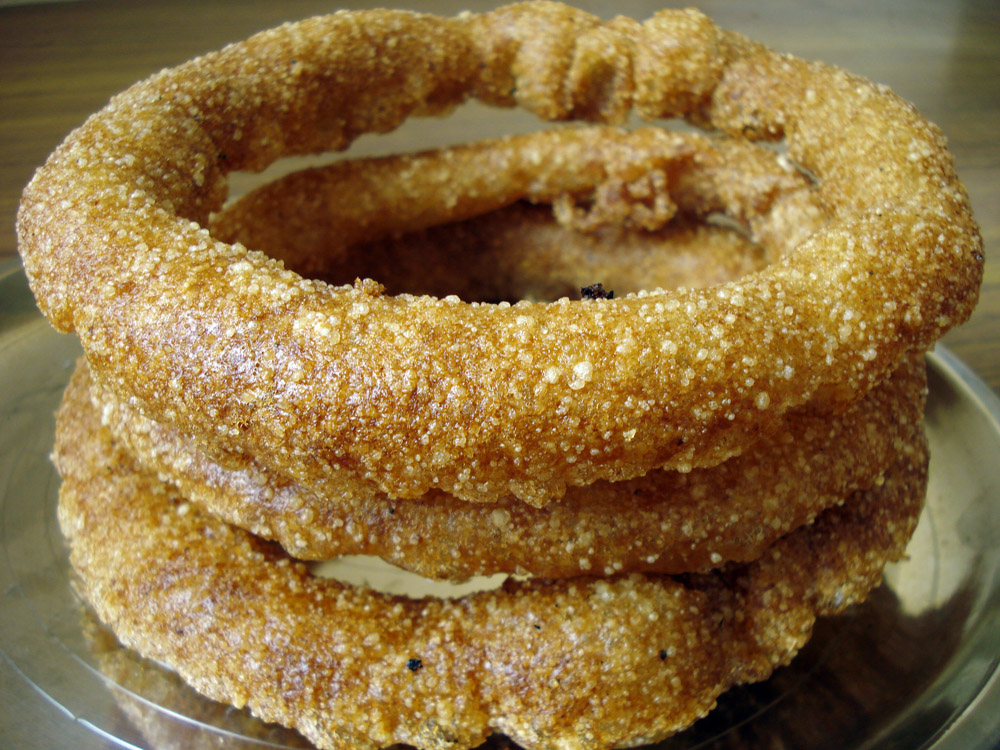
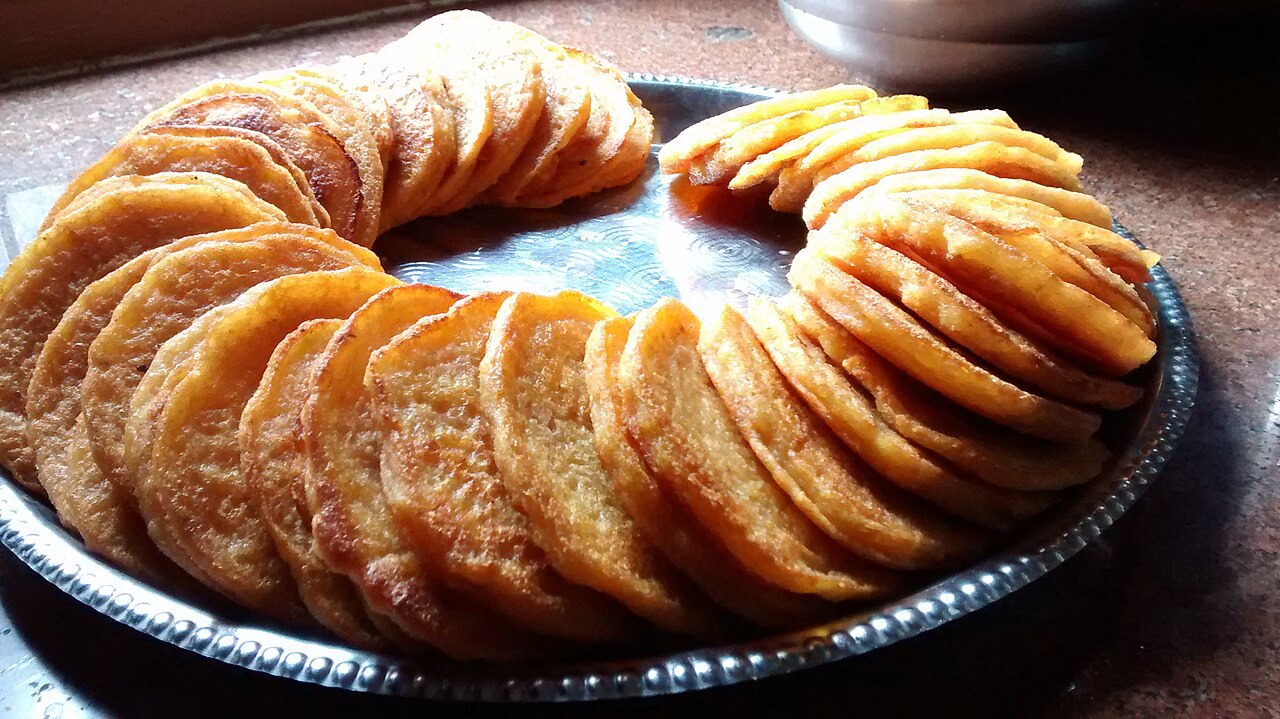
A sweet, ring-shaped bread made from a batter of rice flour, sugar and ghee, poured by hand into hot oil. Crisp outside and soft inside, it is made in large batches for the Dashain and Tihar festivals.
Sel roti keeps for about two weeks, so families often send it as a gift to relatives living far from home.
See the recipe
Serves 6
1 h
Ingredients
300 g rice flour (or rice soaked overnight and ground to a paste)
100 g sugar
2 tablespoons ghee or butter, melted
1 ripe banana, mashed (optional)
Half a teaspoon ground cardamom
About 250 ml milk or water
Oil for deep frying
Method
Mix the rice flour, sugar, ghee, banana and cardamom. Add the milk little by little to make a thick batter that pours slowly, like thick pancake batter.
Cover and let the batter rest for at least 2 hours, or up to 6 hours in a warm kitchen.
Heat the oil in a deep pan to about 175 °C. Test with a drop of batter: it should rise at once and sizzle gently.
Pour the batter in a thin ring into the oil, from your hand, a squeeze bottle or a small jug. Fry until light brown, turn it with a skewer, and fry the other side.
Lift out and drain on paper. Take care with hot oil, and keep children away from the pan.
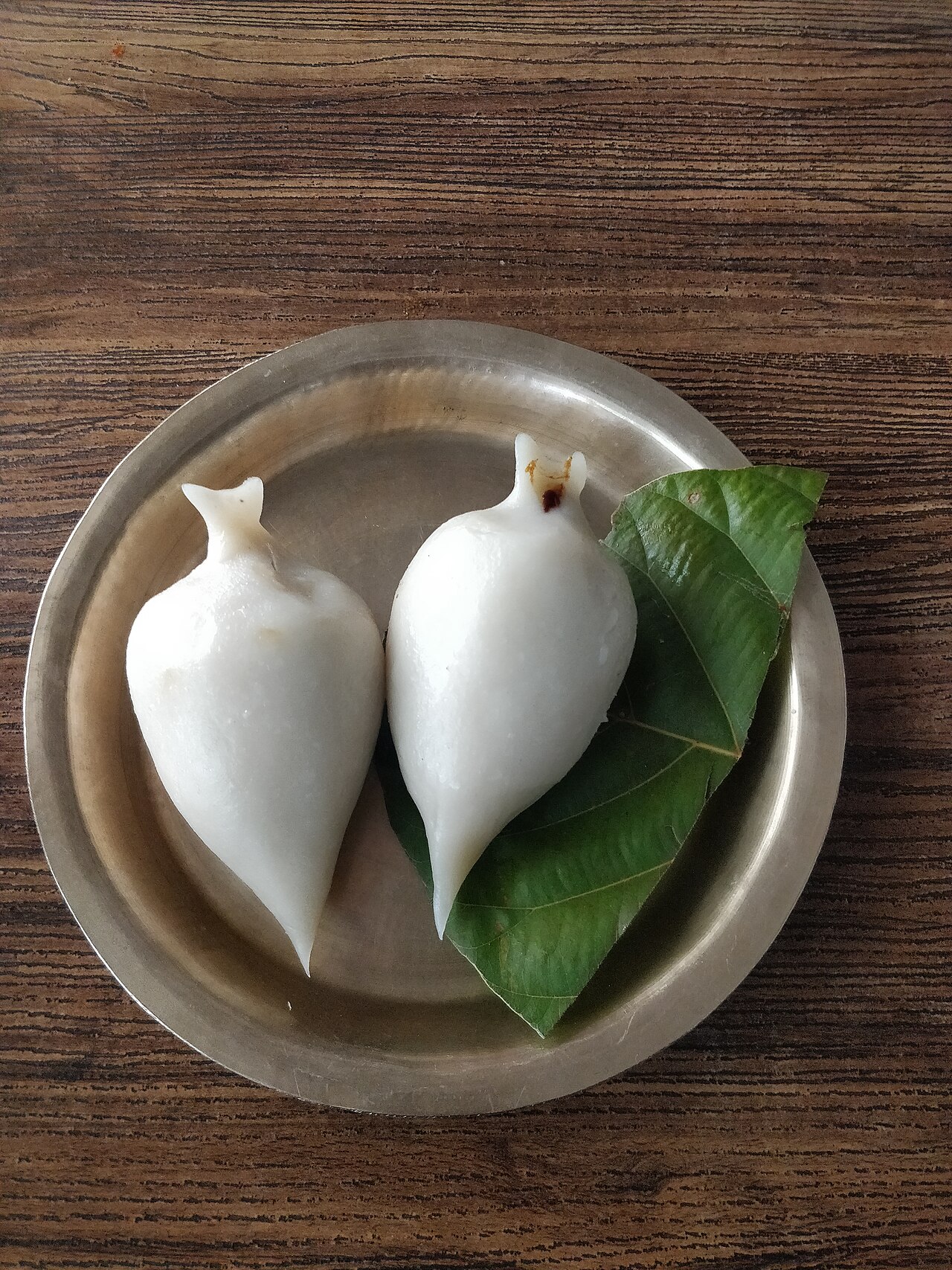
A steamed dumpling of glutinous rice flour with a pointed tip, filled with chaku (a dark molasses) and sesame, or with sweet milk solids called khuwa. It is the star of the Yomari Punhi festival at the end of the rice harvest.
In the Newar language the name means roughly 'liked bread', because everyone likes it.
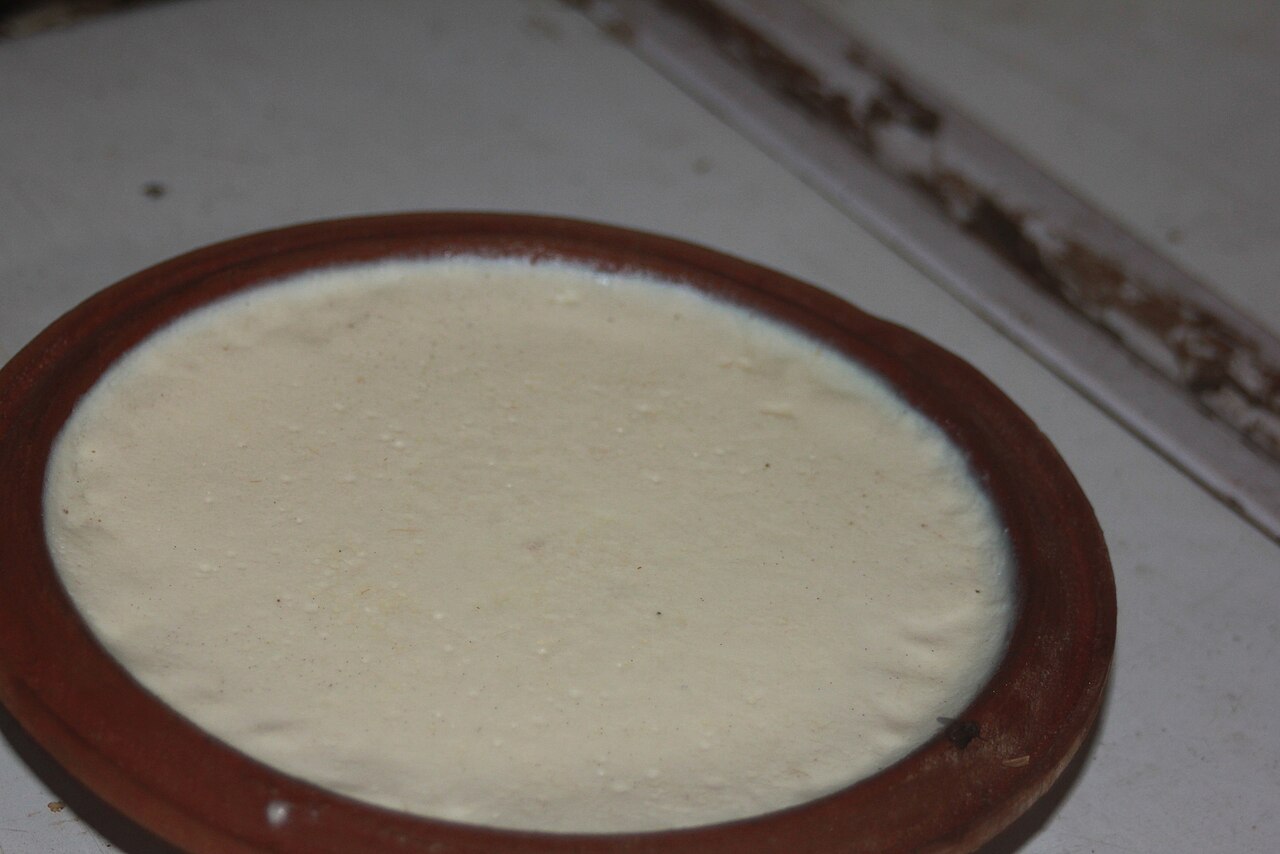
A thick, creamy, slightly sweet yoghurt from Bhaktapur, made from buffalo milk and set in clay pots. It is served at the end of Newar feasts and sold in pots all over the Kathmandu Valley.
Juju dhau means 'king of yoghurt'. A story says a Malla king held a yoghurt contest and liked Bhaktapur's best.
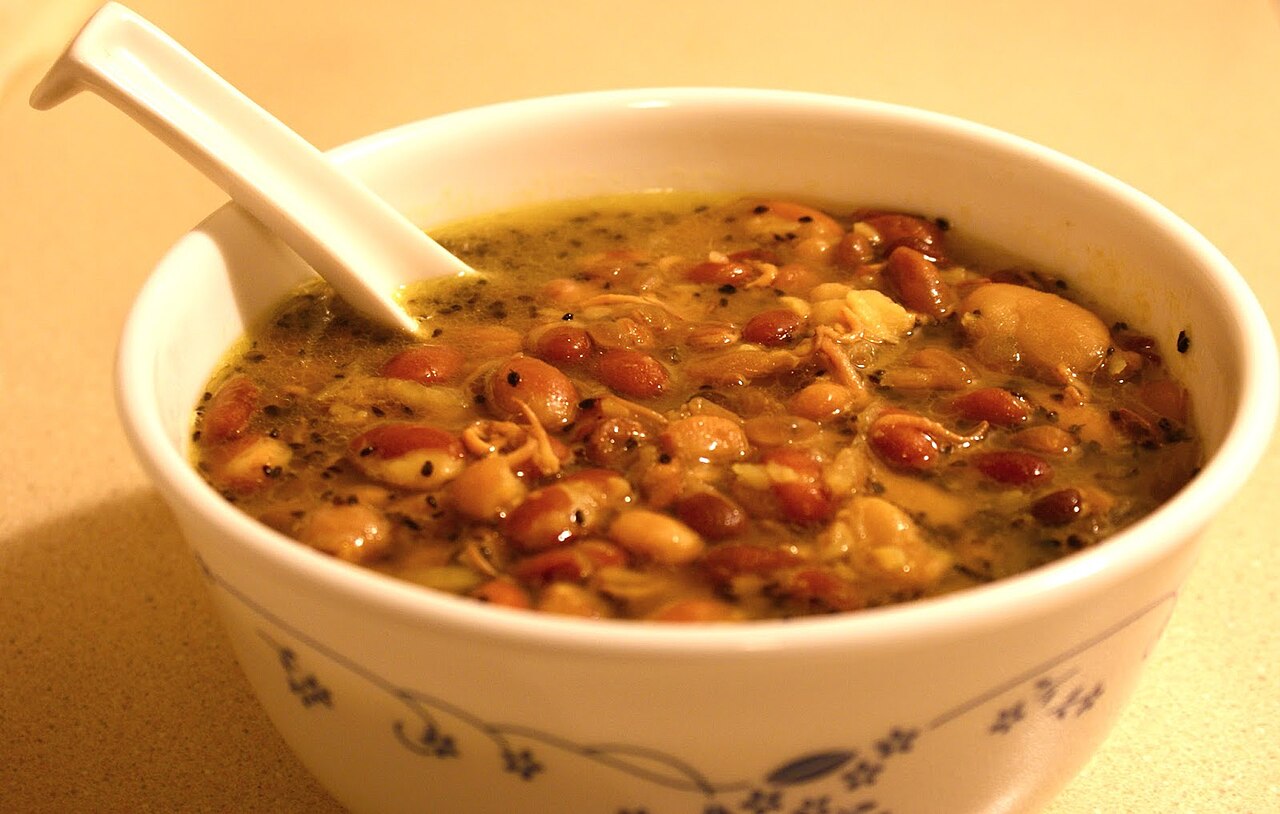
A thick soup of nine kinds of sprouted beans, such as chickpeas, soybeans, mung beans and peas, soaked for three or four days until they sprout and then cooked with spices and ajwain seeds.
It is eaten on Janai Purnima, a full moon festival that usually falls in August.
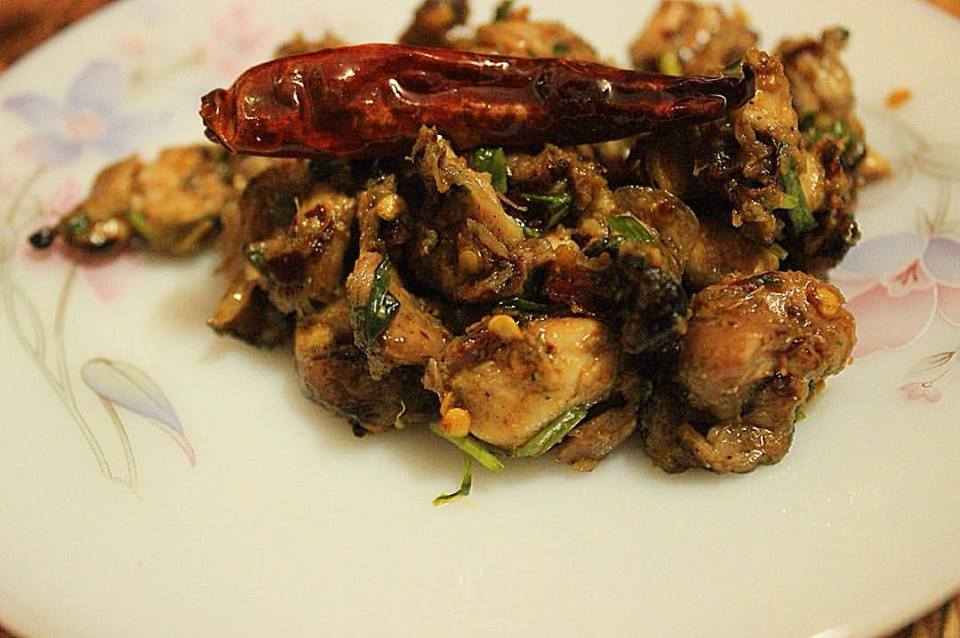
Spicy grilled buffalo meat, cut small and mixed with chilli, garlic, ginger and mustard oil. Traditionally the meat is charred over a straw fire; today chicken, duck or mushrooms are also used.
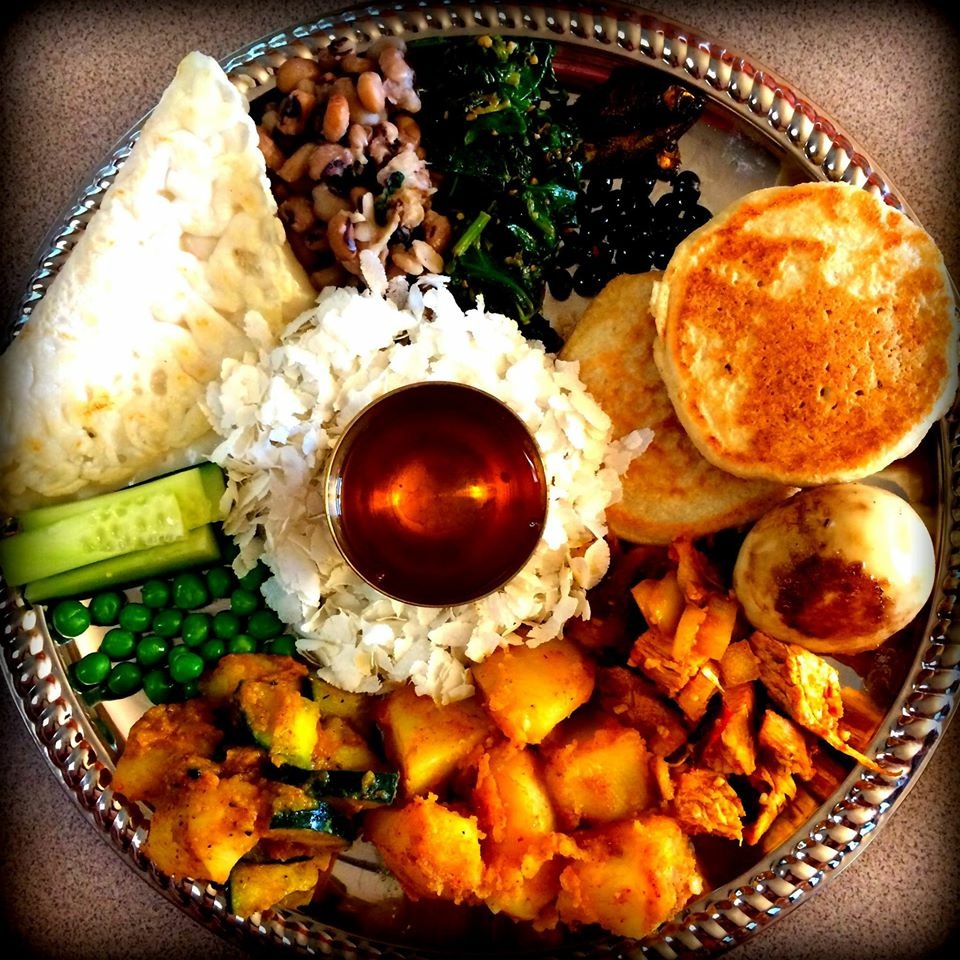
A Newar festival platter built around beaten rice (chiura), with roasted soybeans, choila, a lentil bara, a boiled and fried egg, fresh ginger, greens and pickle. It is served at festivals, family gatherings and religious ceremonies.
It began as farmers' food: everything on the plate could be carried to the fields and eaten cold.
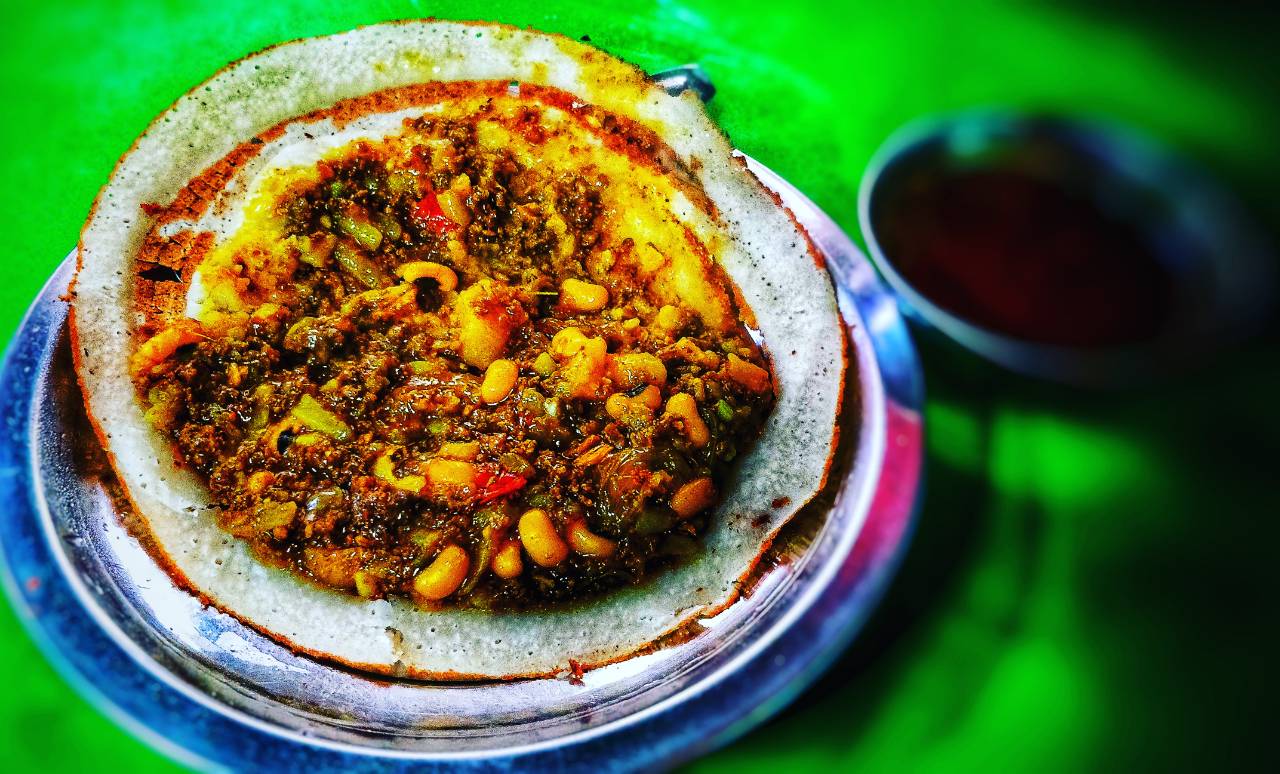
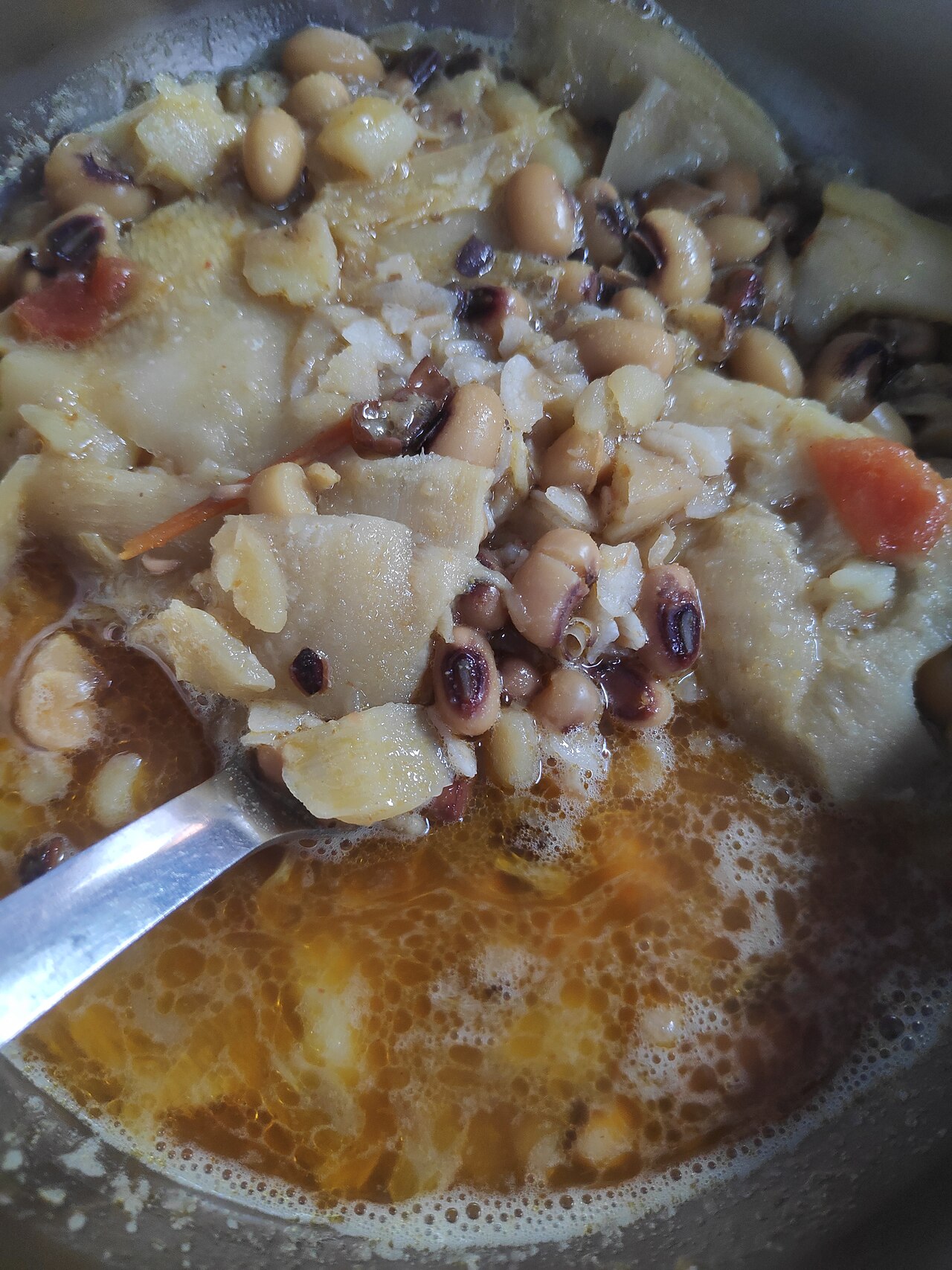
A sour, tangy curry of potatoes, black-eyed peas and tama, fermented bamboo shoots. With the peas it is called aloo tama bodi, and it is a favourite partner for rice.
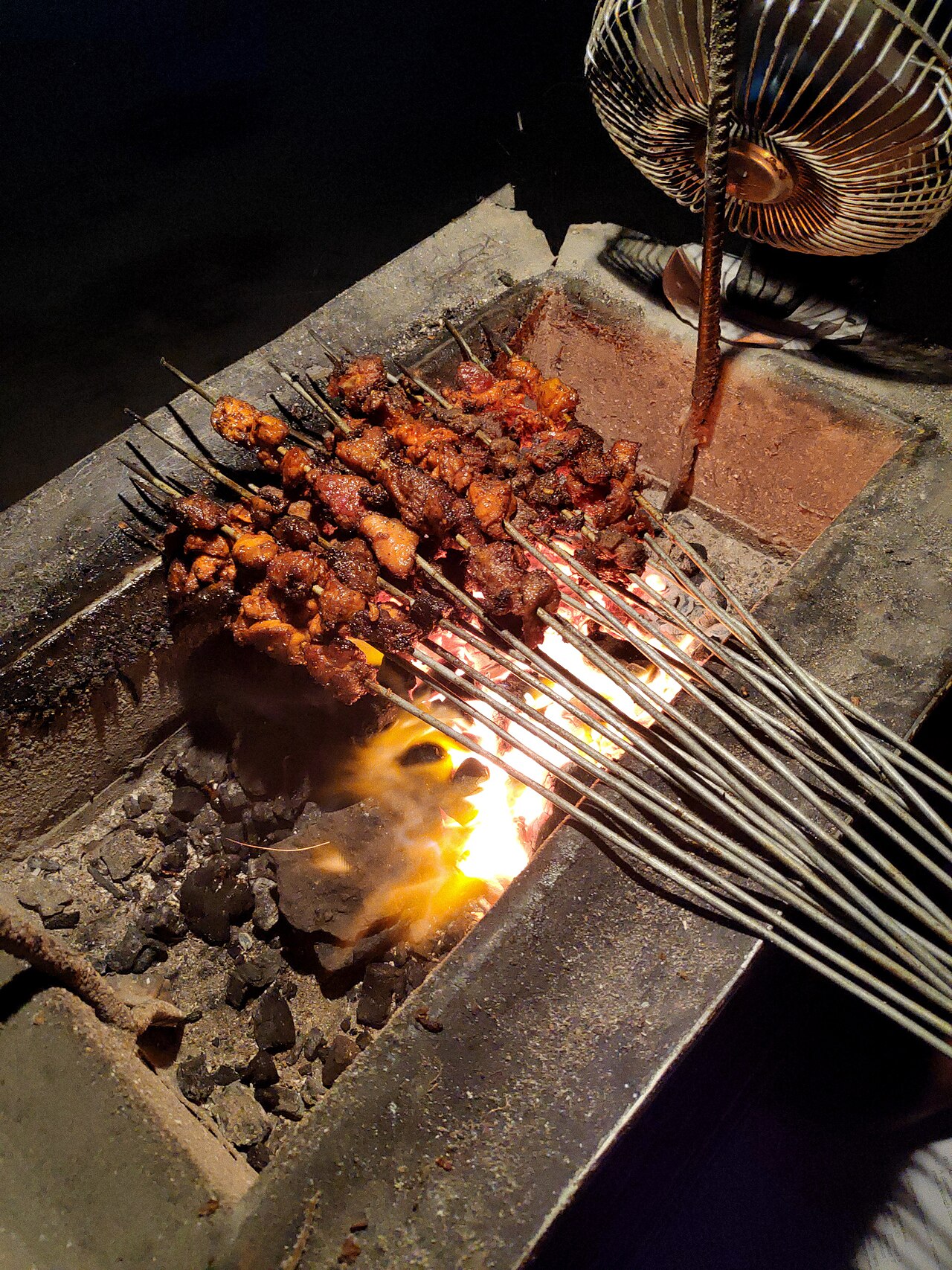
Pieces of goat, chicken, buffalo or pork marinated in spices, ginger, garlic and mustard oil, then grilled on skewers over charcoal. It is eaten with beaten rice, pickle and sliced onions.
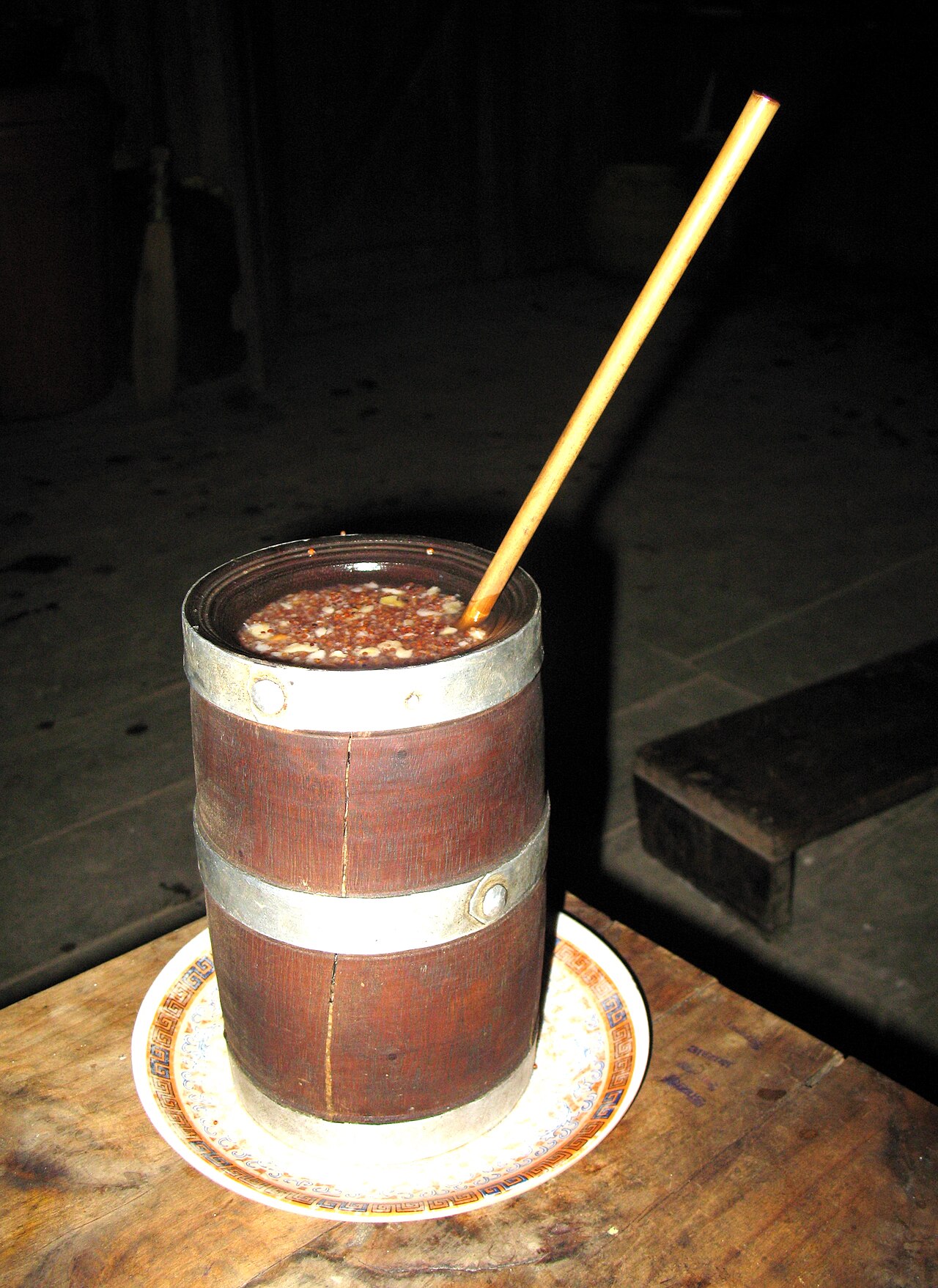
Fermented finger millet in a wooden or bamboo vessel, topped up with hot water and sipped through a bamboo straw. It is mildly alcoholic and is refilled several times.
Tongba is actually the name of the vessel. Offering it to a guest is a sign of respect among the Limbu.
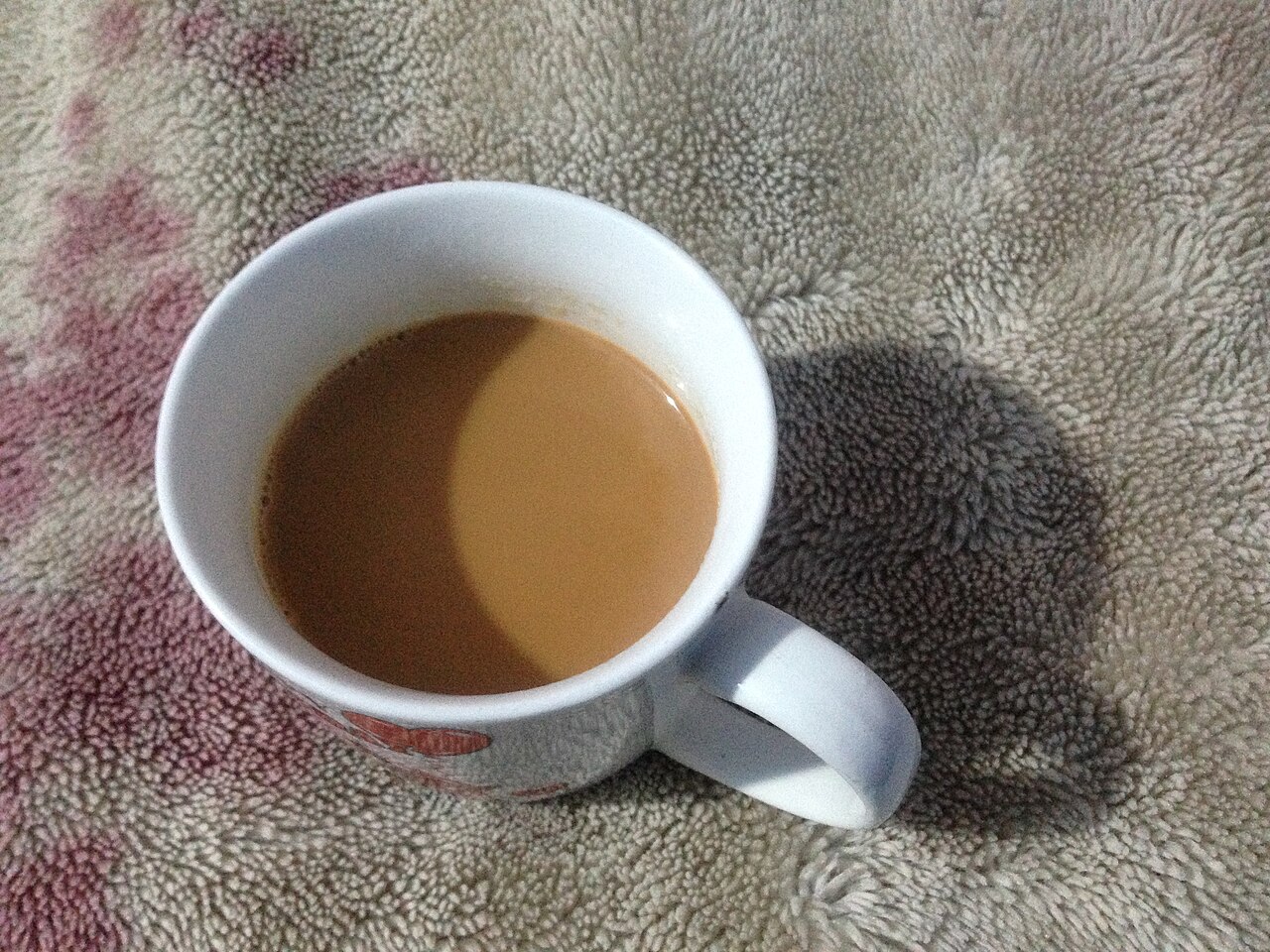
Sweet milk tea, boiled together with black tea and often spiced with ginger or cardamom. It is served at every roadside stall and trekking lodge, in small glasses.
See the recipe
Serves 2
10 min
Ingredients
250 ml water
250 ml milk
2 teaspoons black tea leaves
2 to 3 teaspoons sugar
2 cardamom pods, crushed, and a thin slice of ginger
Method
Bring the water to the boil with the cardamom and ginger and let it bubble for a minute.
Add the tea leaves and simmer for one minute.
Pour in the milk and sugar and bring it back to the boil, watching that it does not boil over.
Many Nepalis eat with their right hand. The left hand is not used for eating or for passing food.
Wash your hands before and after the meal. Mix rice and dal with your fingertips and push the food into your mouth with your thumb.
Do not touch food that other people will eat, and do not put anything that has touched your mouth back into a shared dish. Some strict Hindus consider such food impure.
Dal bhat is often refilled until you say you have had enough. The Nepali word for that is 'pugyo'.
Because Hindus hold cattle sacred, beef is not part of traditional Nepali cooking. Goat and chicken are the usual meats; buffalo is eaten by some communities but avoided by others, and some families are vegetarian.
Avoid touching shared water jugs and containers. Let your host pour water into your own glass or bottle.
Most Nepalis still live in villages, but the cities are growing fast. Three of the biggest, Kathmandu, Lalitpur and Bhaktapur, share the Kathmandu Valley, the old heart of the country. Pokhara is the base for the Annapurna mountains, while the busy cities of the southern Terai, from Nepalgunj to Biratnagar, sit close to the open border with India.
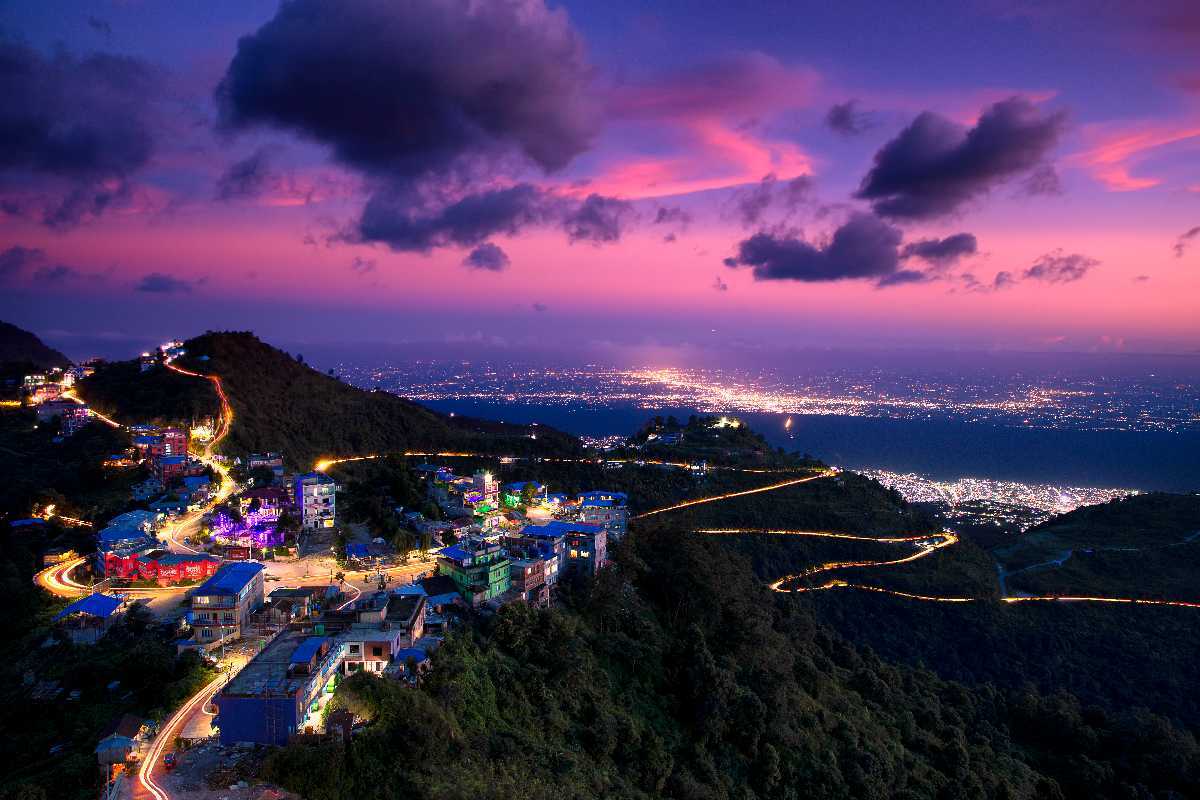
The capital and largest city, at about 1,300 m in the Kathmandu Valley, with about 850,000 people in the city itself (2021 census) and 3 to 4 million in the whole valley. Once called Kantipur, it is a crowded, lively city of temples, bazaars and courtyards, and the gateway to the Himalayas for most visitors.
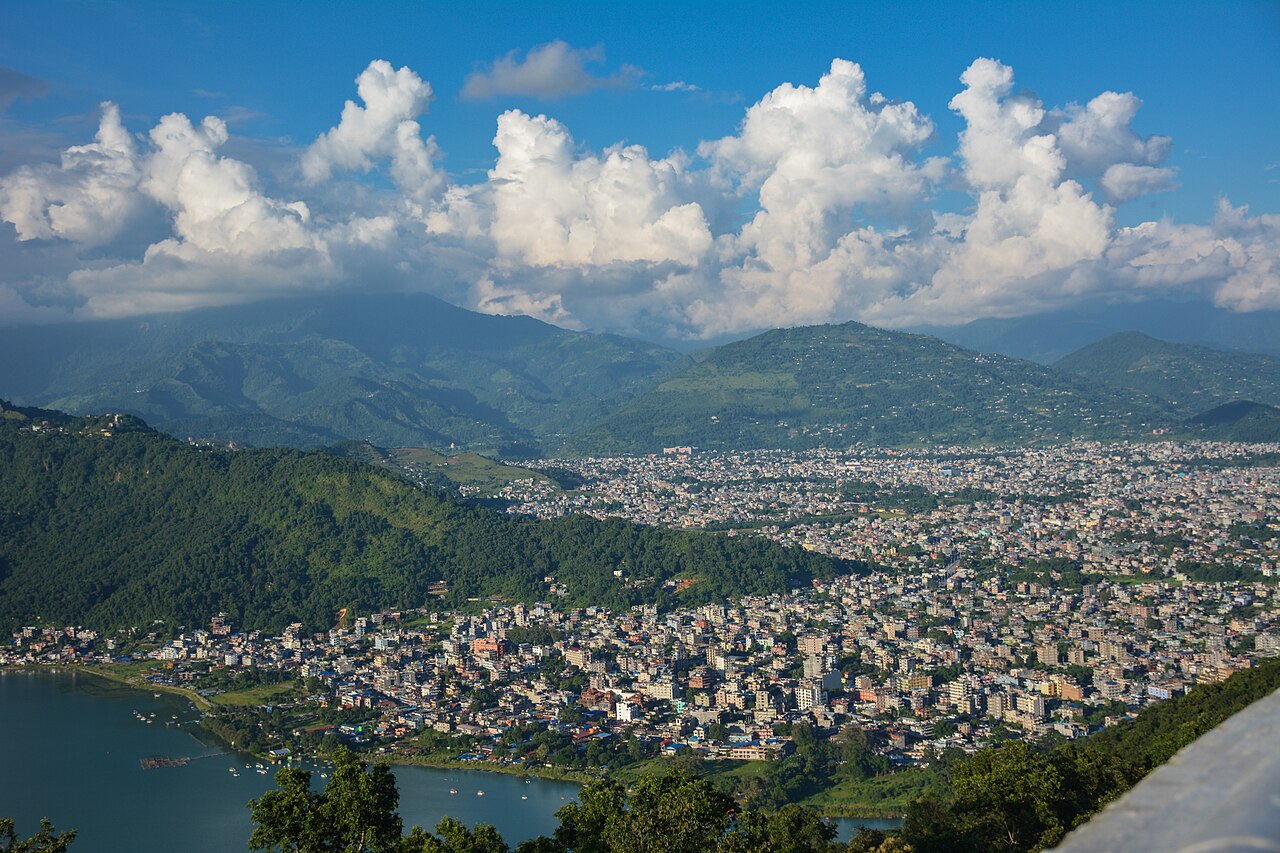
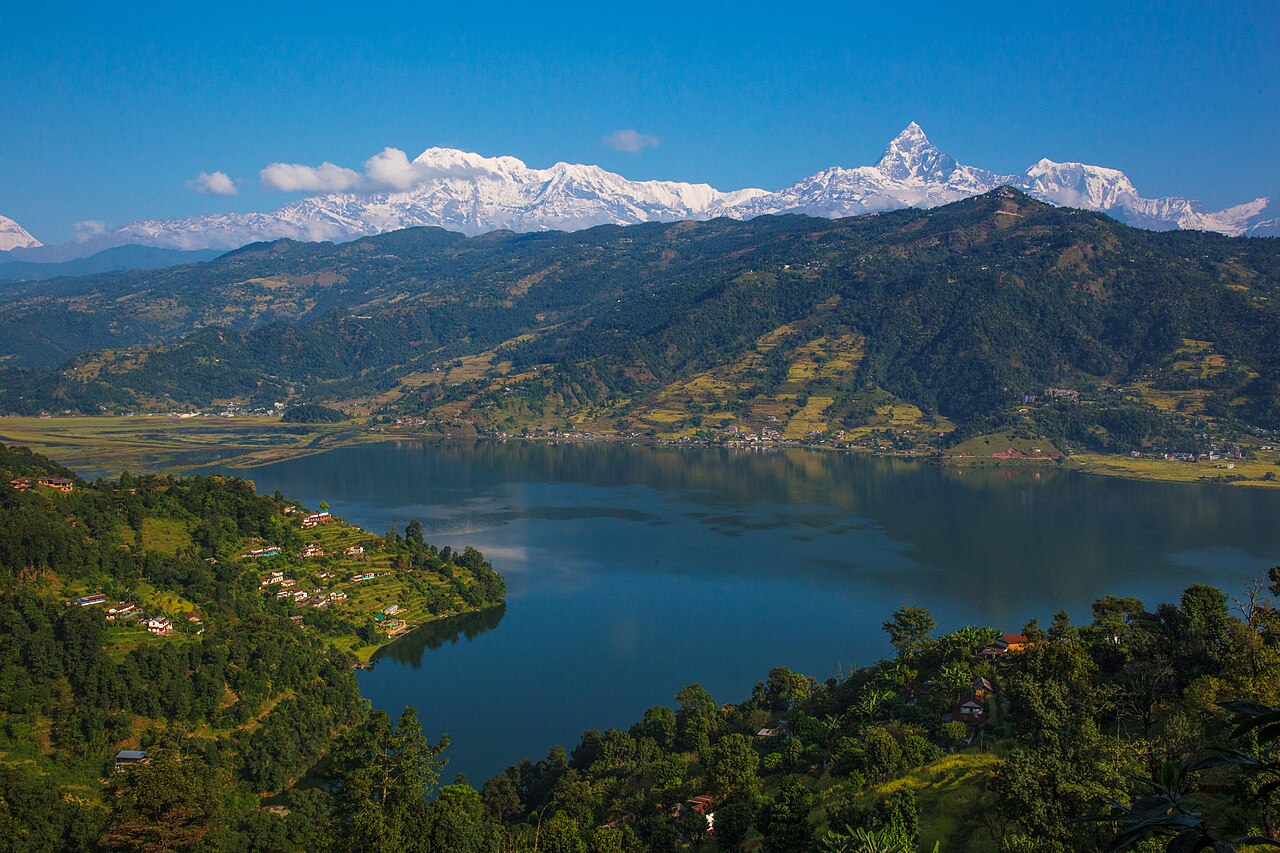
The second largest city, about 140 km west of Kathmandu (about 200 km by road), on the shore of Phewa Lake. The Annapurna range, including Machhapuchhre, rises only a few dozen kilometres to the north. In 2024 it was declared Nepal's tourism capital, and many Gurkha soldiers come from the surrounding hills.
Also known as Patan, and in Newar as Yala, this old royal city lies just across the Bagmati River from Kathmandu. It is famous for its metalworkers and woodcarvers, and legend says the emperor Ashoka marked its edges with four stupas.
The 'City of Devotees', about 13 km east of Kathmandu, was the capital of the whole valley until the kingdom split in the late 1400s. It is the best preserved Newar town, with brick lanes, famous potters and carved windows, and the smallest municipality in Nepal by area.
The third most populous city, on the bank of the Narayani River in the Chitwan district. It is a fast-growing trading town and the nearest city to Chitwan National Park.
The capital of Koshi Province in the far east, close to the Indian border. It is called the industrial capital of Nepal because the country's first large factory, the Biratnagar Jute Mills, was built here.
A busy border city in the south, joined to the Indian town of Raxaul. Most of Nepal's trade with India passes through it, which is why it is called the Gateway of Nepal.
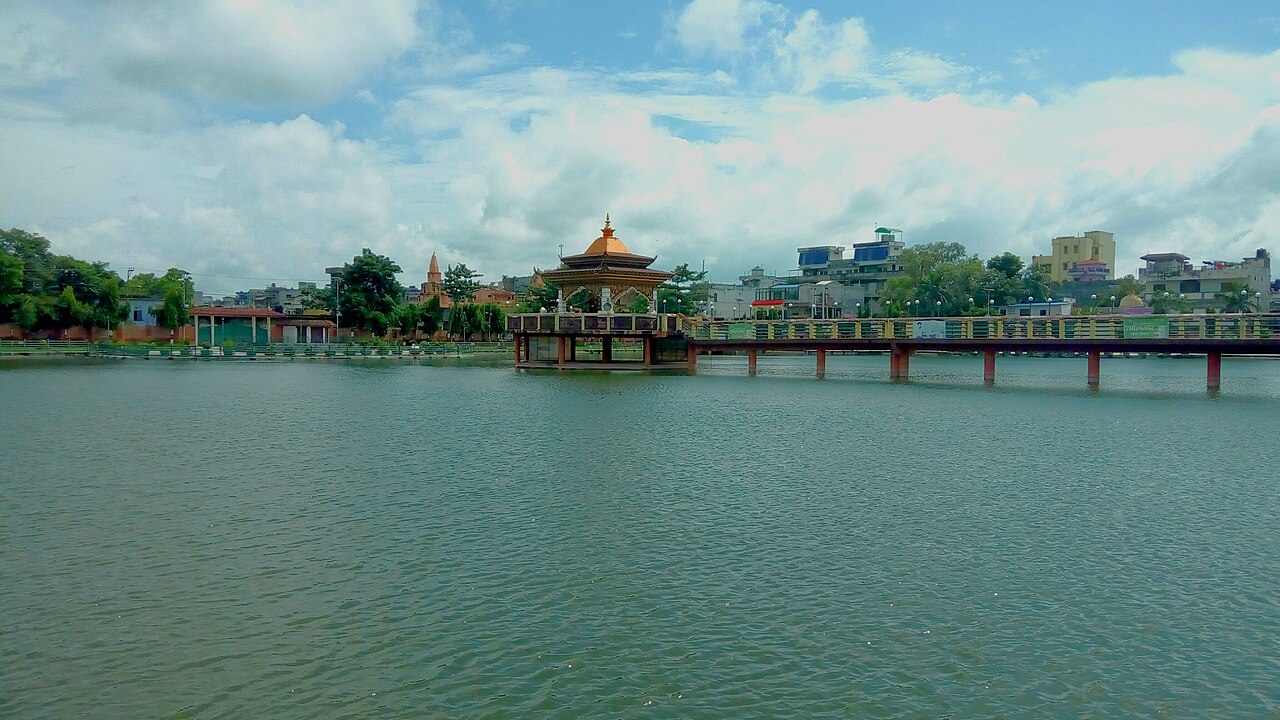
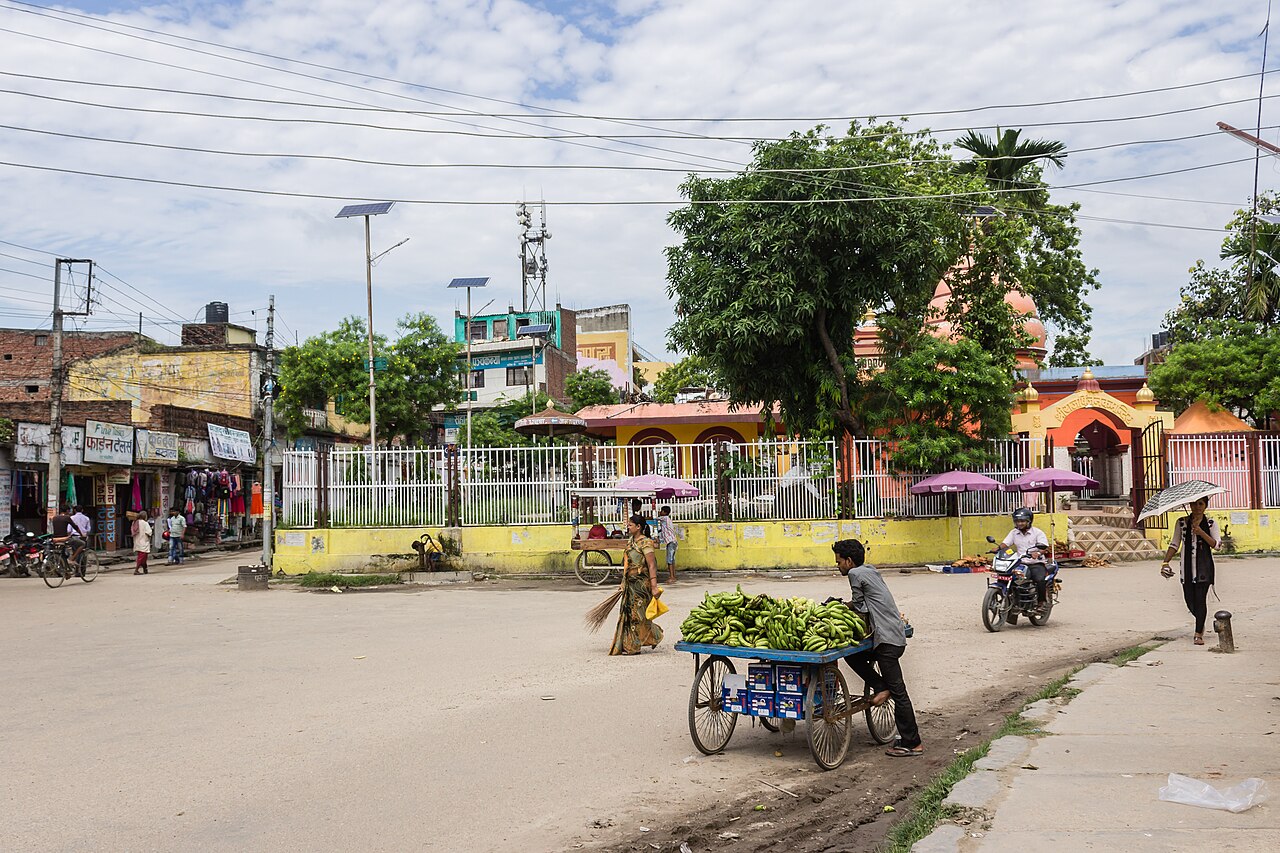
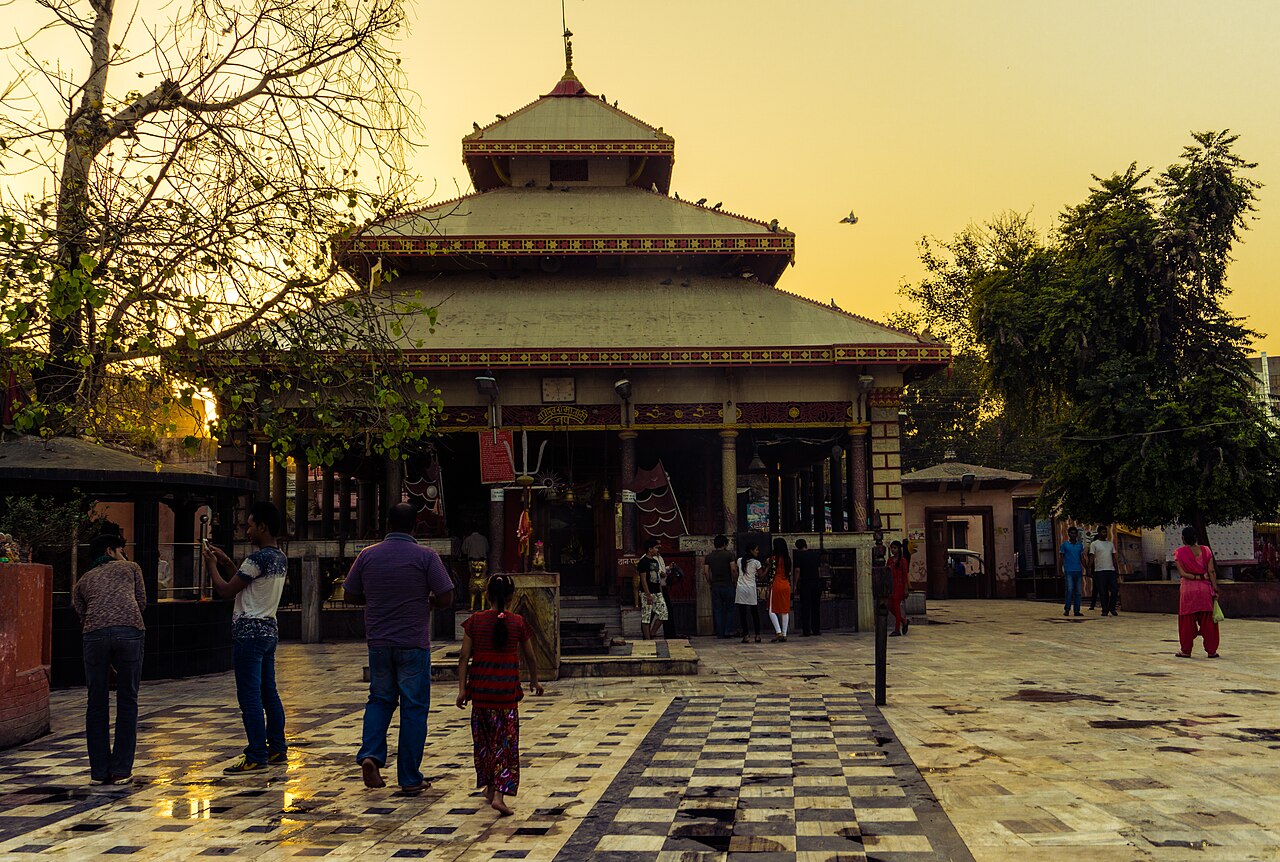
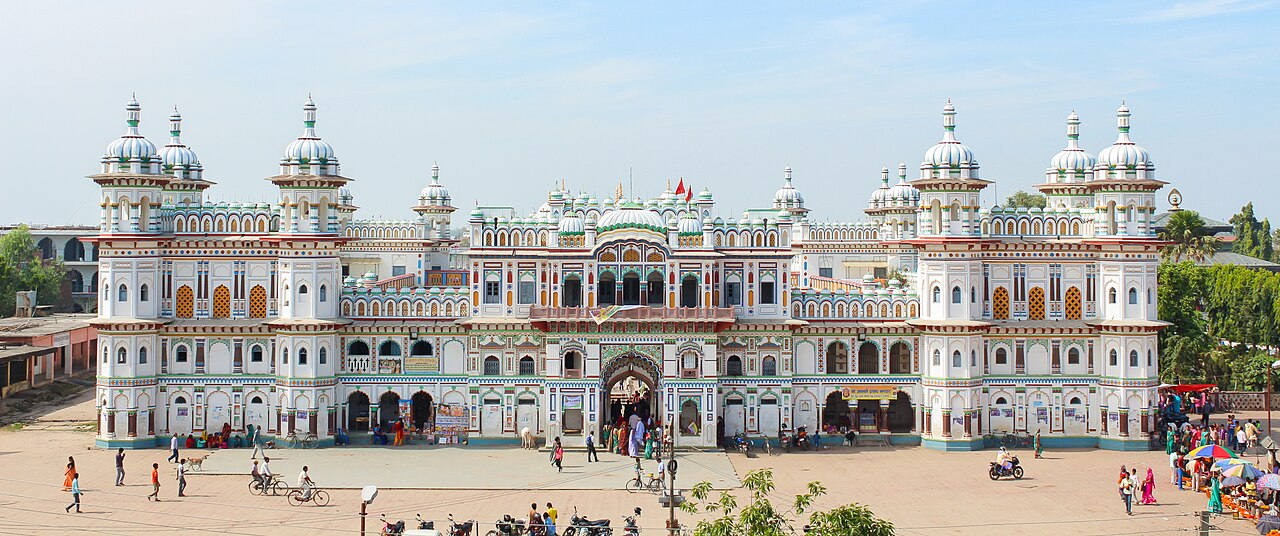
The capital of Madhesh Province, about 125 km southeast of Kathmandu as the crow flies (about 225 km by road), and the centre of the Maithili language and culture. Hindus honour it as the birthplace of the goddess Sita, wife of Rama.
The white marble Janaki Mandir
Colourful Mithila wall paintings
The Vivaha Panchami wedding festival of Rama and Sita
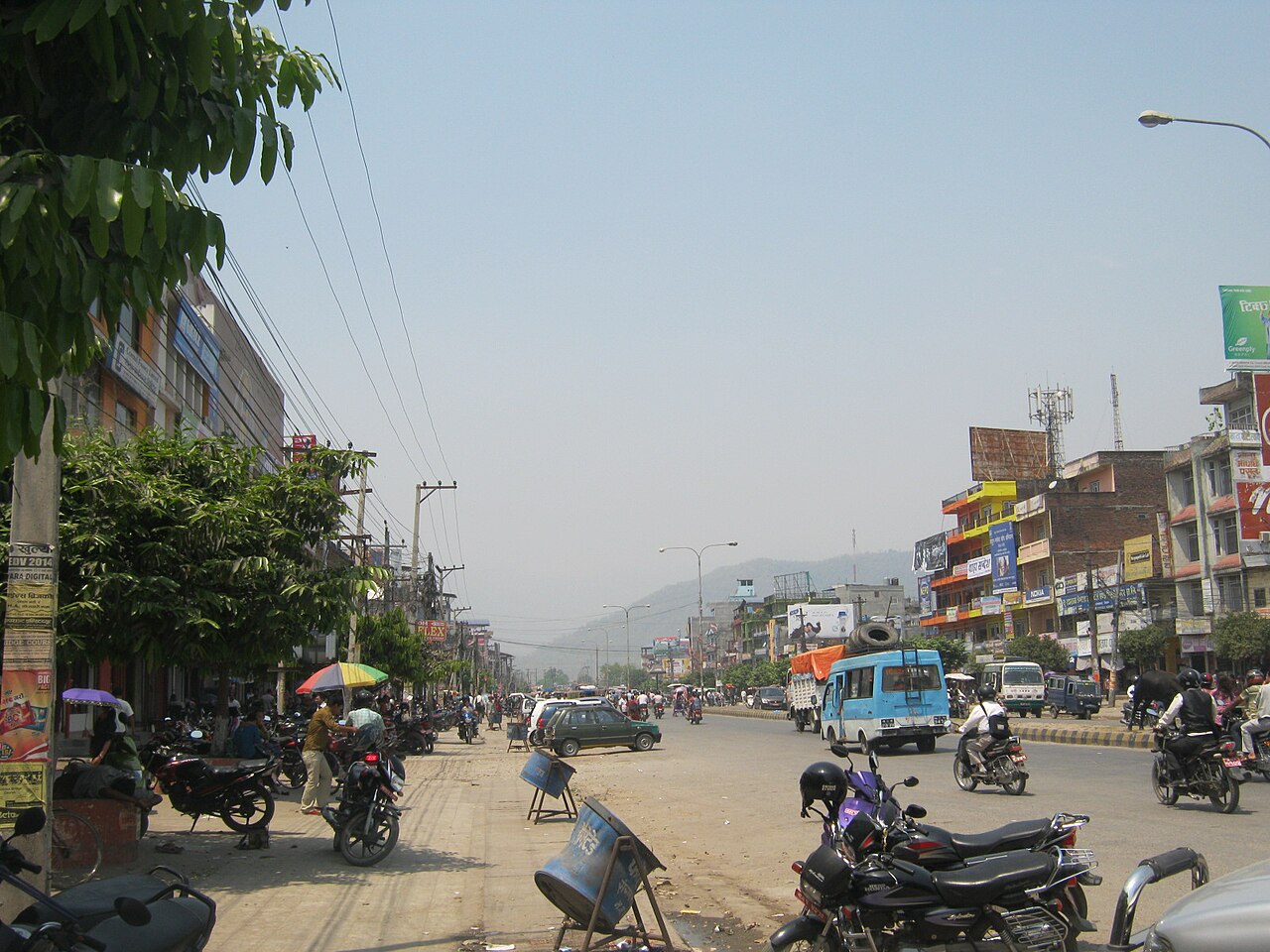
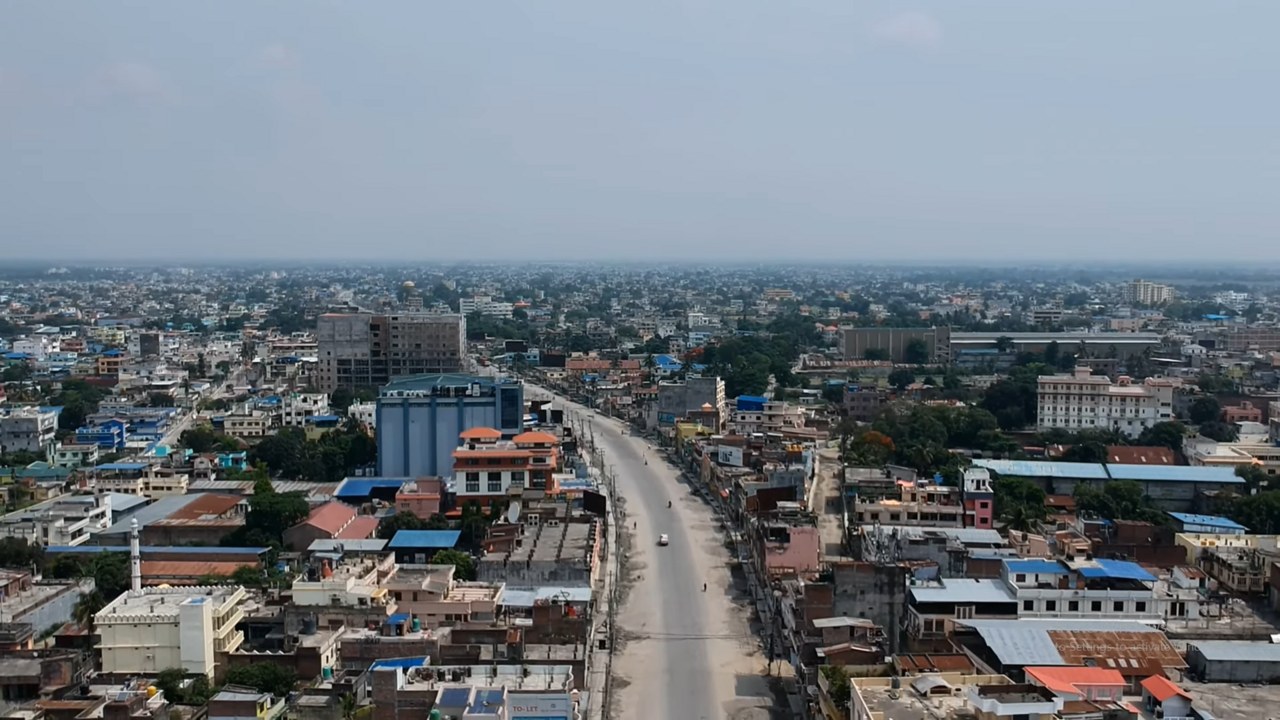
The main city of the mid-west, on the Terai plains near the border with the Indian state of Uttar Pradesh. It has a mixed Hindu and Muslim population, and many of its people speak Awadhi or Urdu as their first language.
A green city at the foot of the eastern hills, where the plains meet the mountains. A British Gurkha camp stood here from 1960 until the 1990s, and the town is known for its lively food scene.
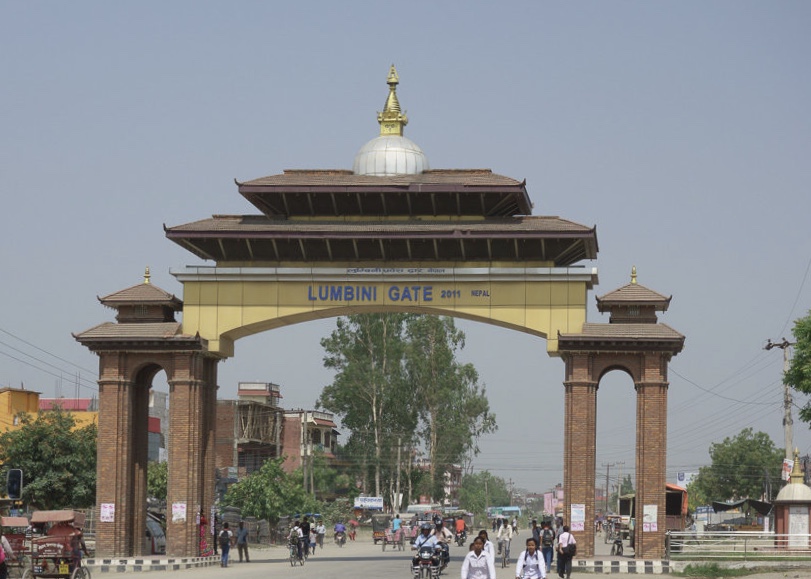
Still often called Bhairahawa, this border town was renamed in 1977 after the Buddha's given name, Siddhartha. It is the closest city to Lumbini, the Buddha's birthplace, about 20 km to the west.
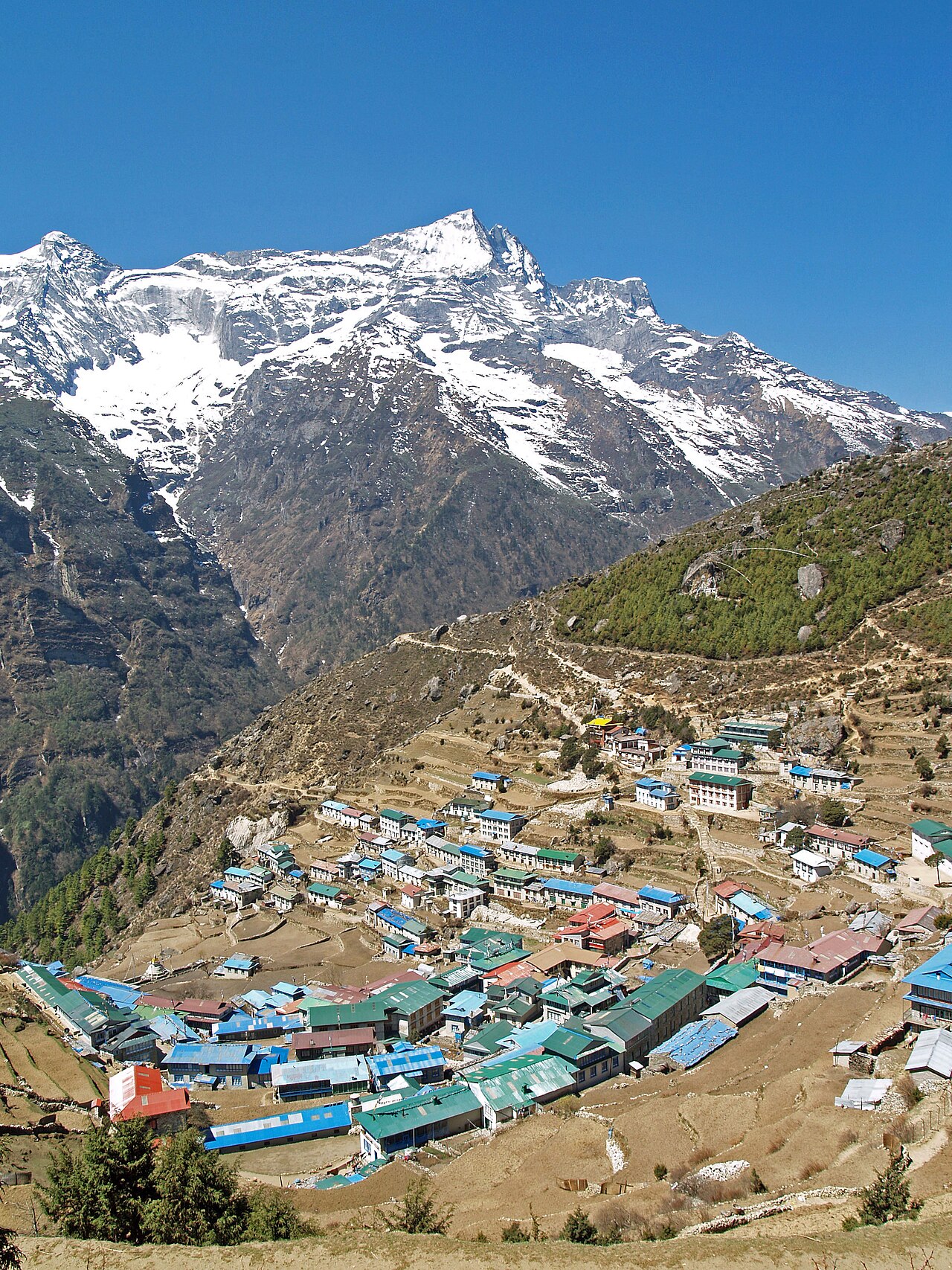
A small Sherpa town built on the side of a hill at about 3,440 m, the trading centre of the Khumbu region. Trekkers on the way to Everest Base Camp stop here for a day or two to get used to the altitude.
The highest mountain on Earth, 8,848.86 m by the joint Nepal and China survey of 2020, stands on the border with China inside Sagarmatha National Park. The park, founded in 1976, also holds Lhotse, Cho Oyu and Ama Dablam, glaciers, Sherpa villages and the monastery of Tengboche. Most trekkers fly to Lukla and walk up through Namche Bazaar.
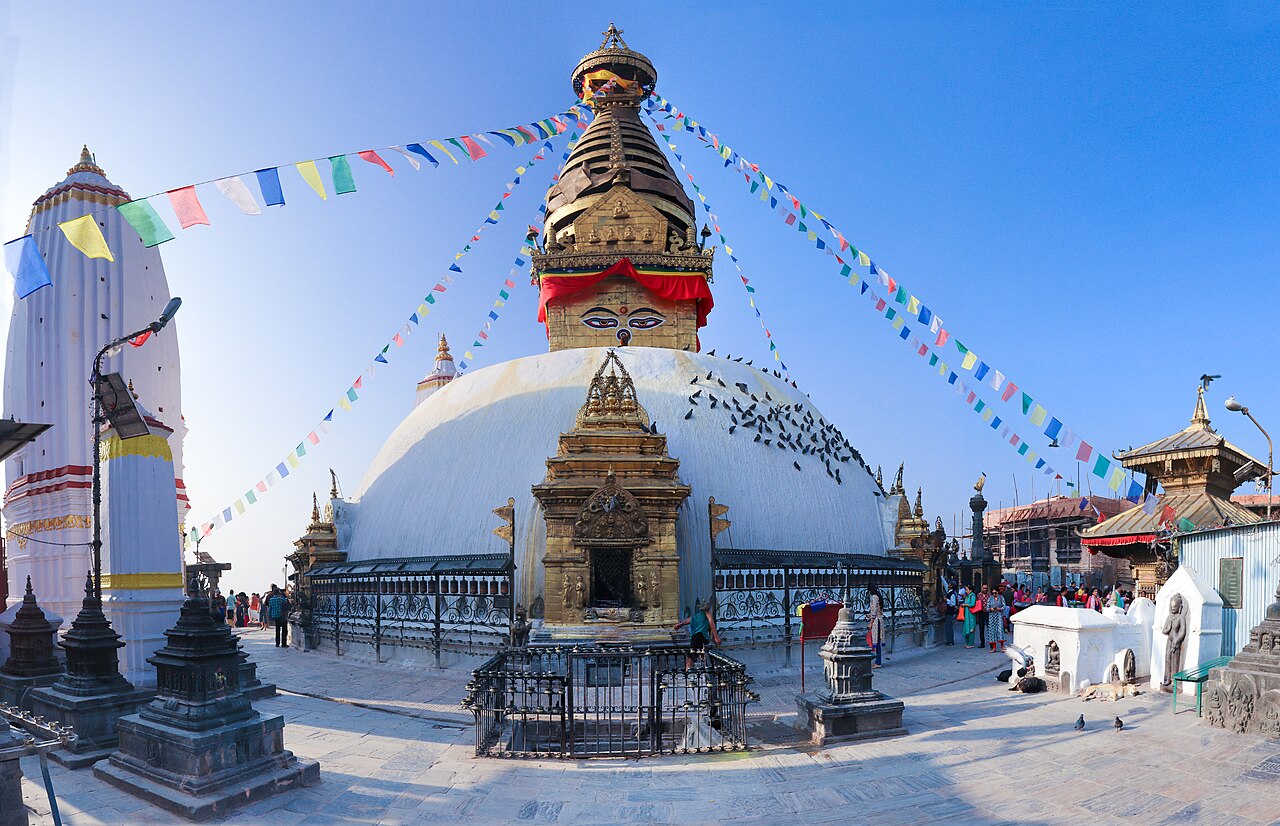
An ancient stupa on a hill west of Kathmandu, reached by a long stairway. The eyes of the Buddha are painted on all four sides of the gilded tower, looking out over the valley. Buddhists and Hindus worship here side by side, and troops of monkeys give it the nickname Monkey Temple.
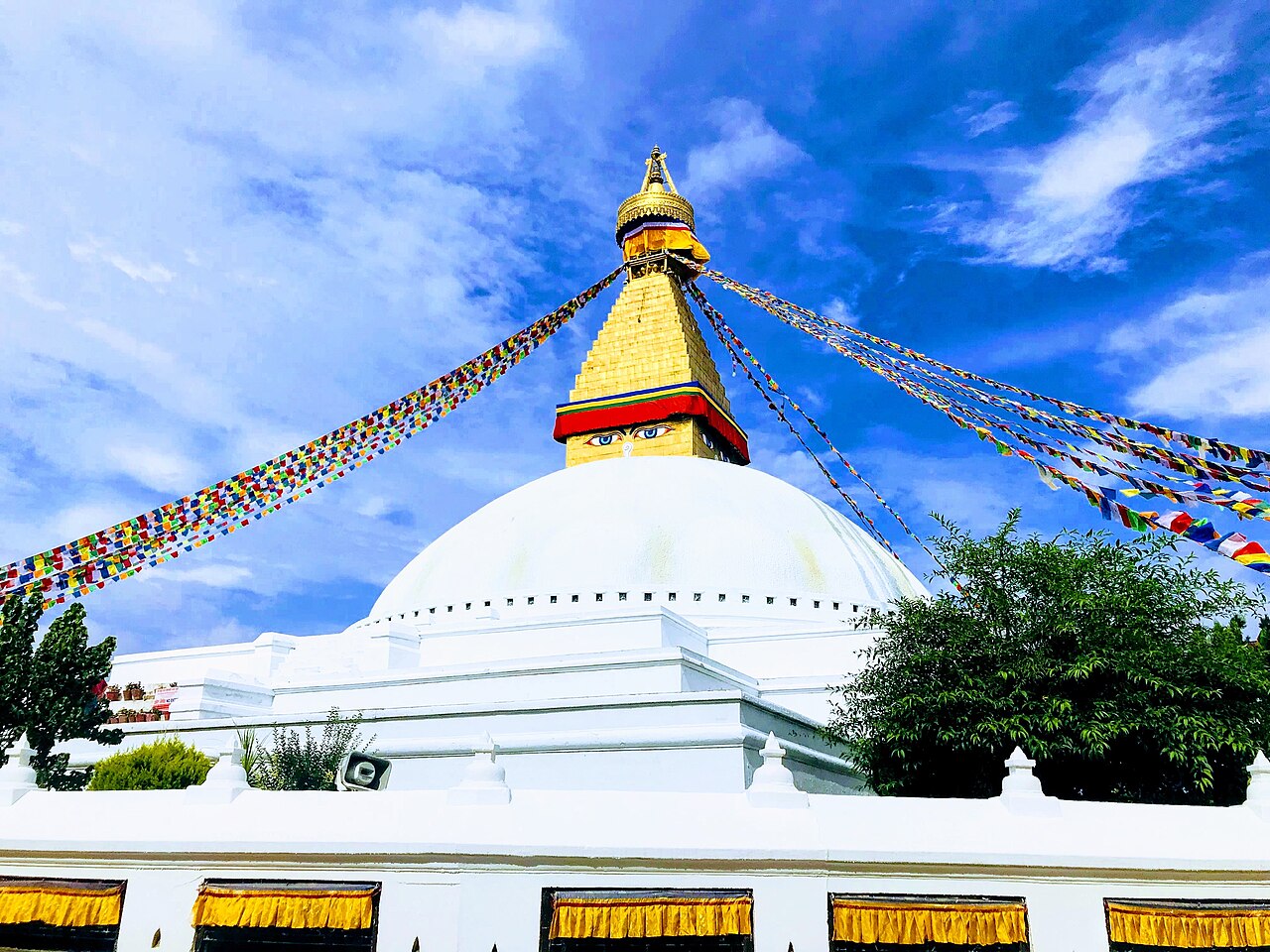
One of the largest stupas in the world, a huge white dome on the old trade route to Tibet. The present structure probably dates from the 14th century. After 1959 many Tibetan refugees settled around it, and more than 50 monasteries now surround the square, where pilgrims walk clockwise around the dome.
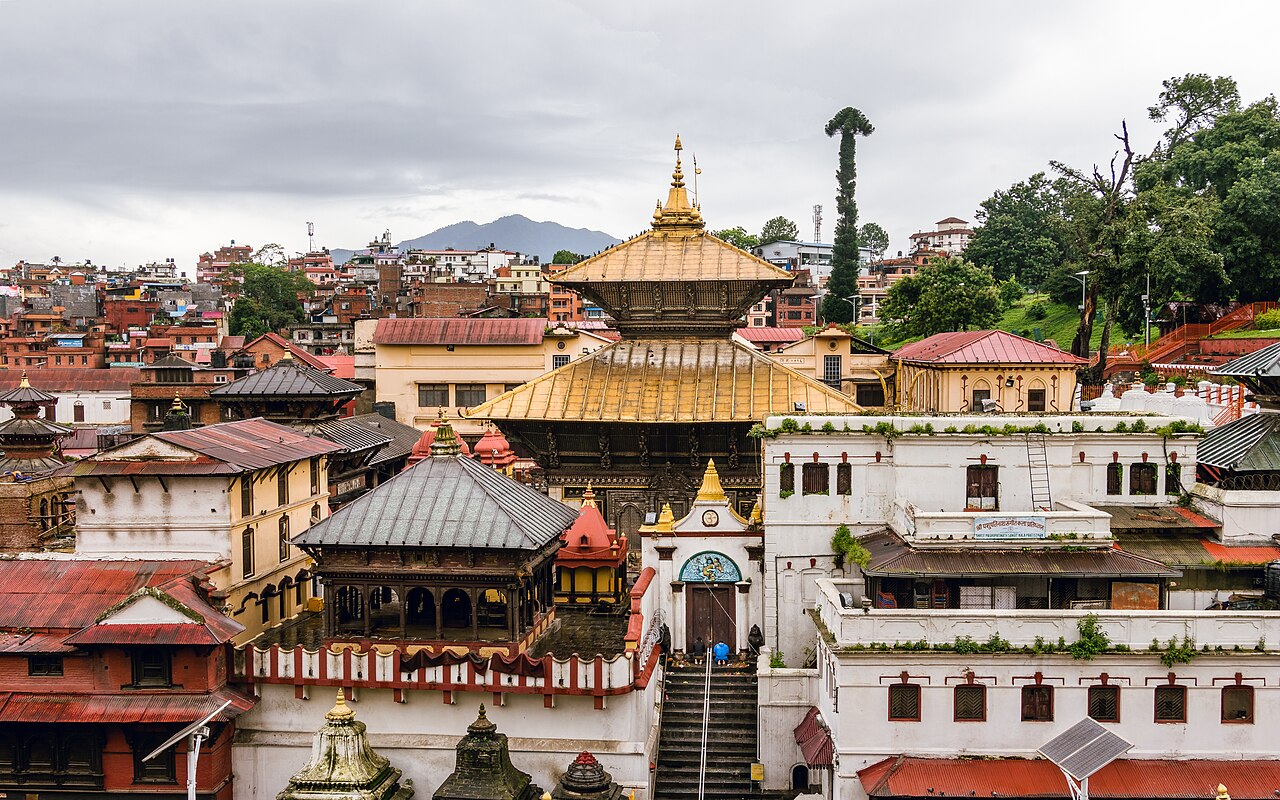
The holiest Hindu temple in Nepal, dedicated to Shiva as Pashupati, lord of the animals, on the banks of the sacred Bagmati River. Around the pagoda-roofed main temple are hundreds of smaller shrines, ashrams and the riverside platforms where open-air cremations take place.
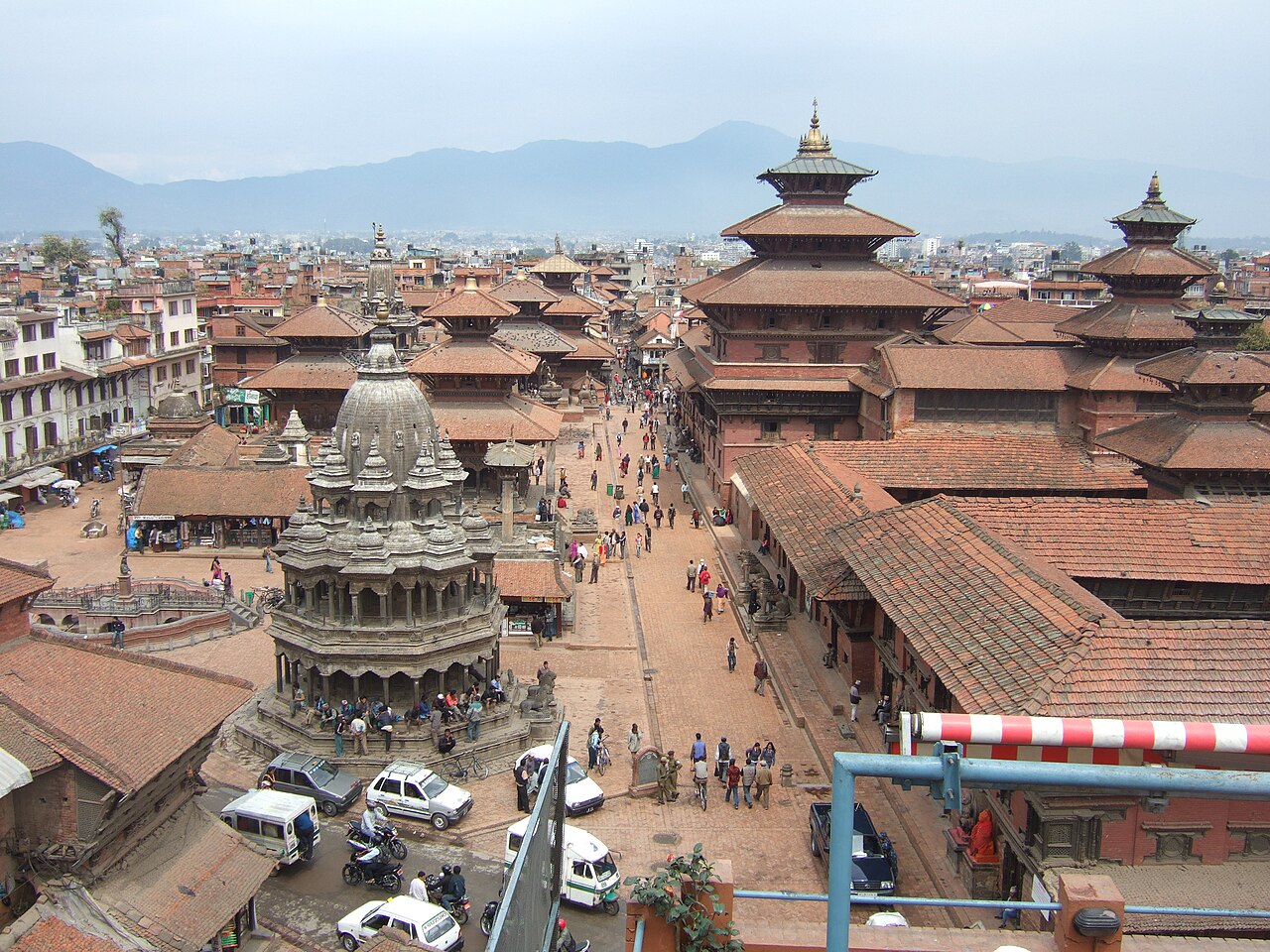
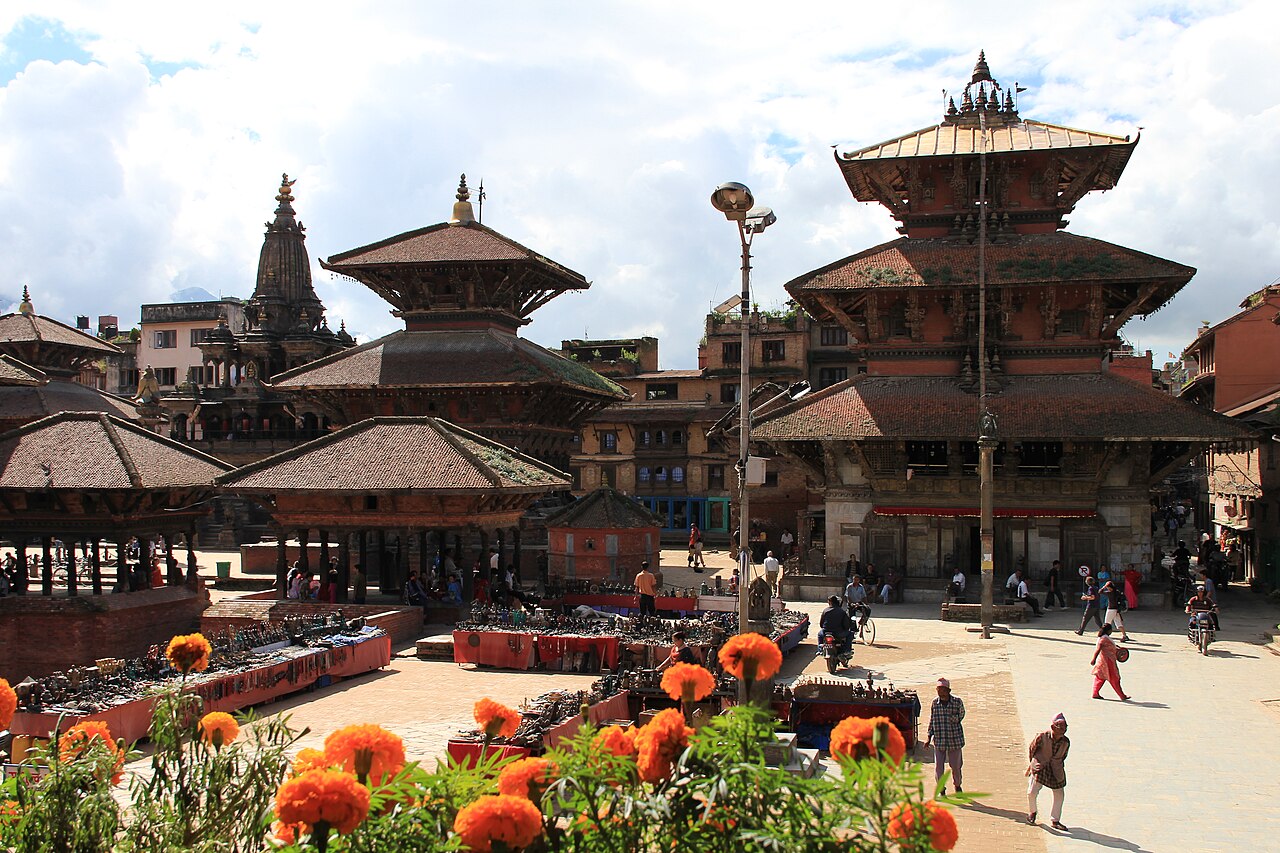
The royal square of Lalitpur, facing the old palace of the Malla kings. Most of its buildings date from the 1600s, including the stone Krishna Mandir, built in 1637. The palace now holds the Patan Museum, one of the best collections of Nepali art.
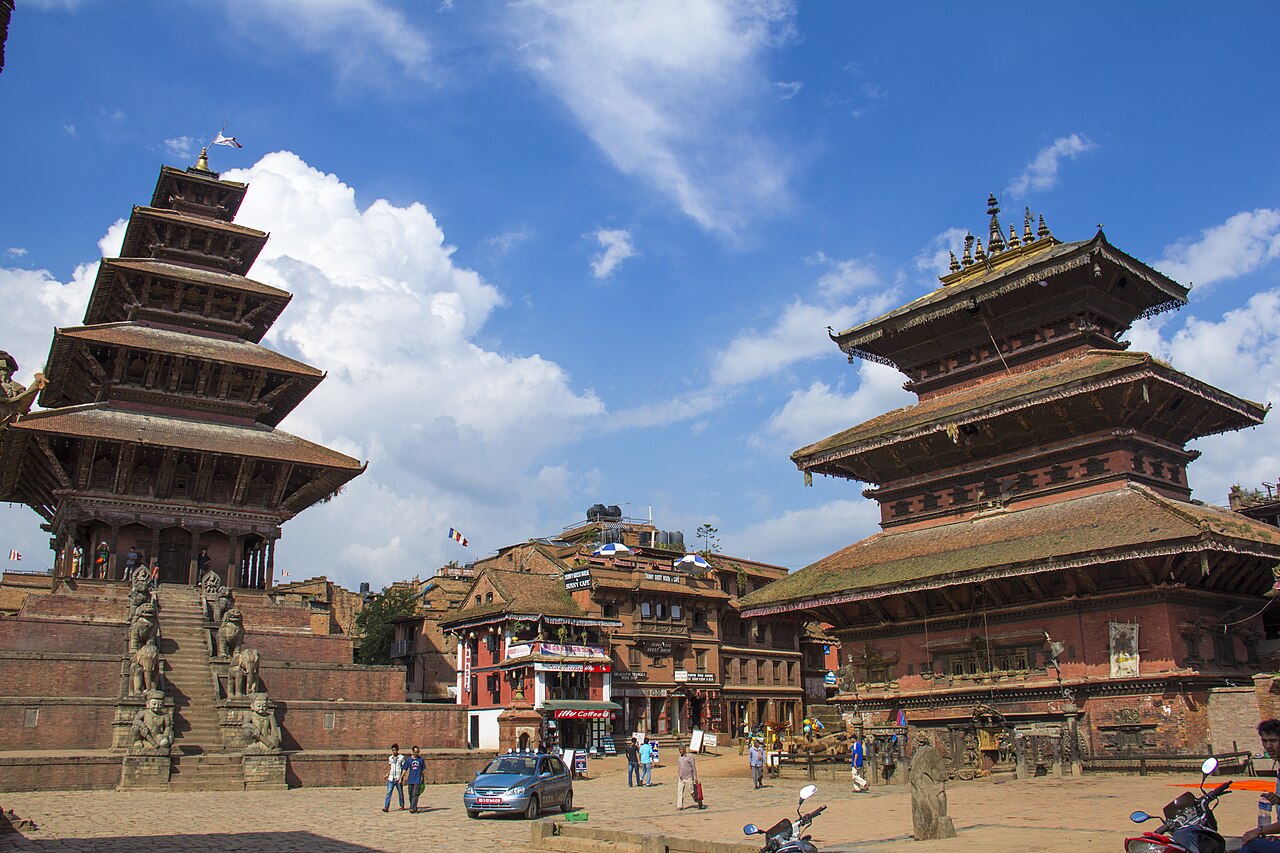
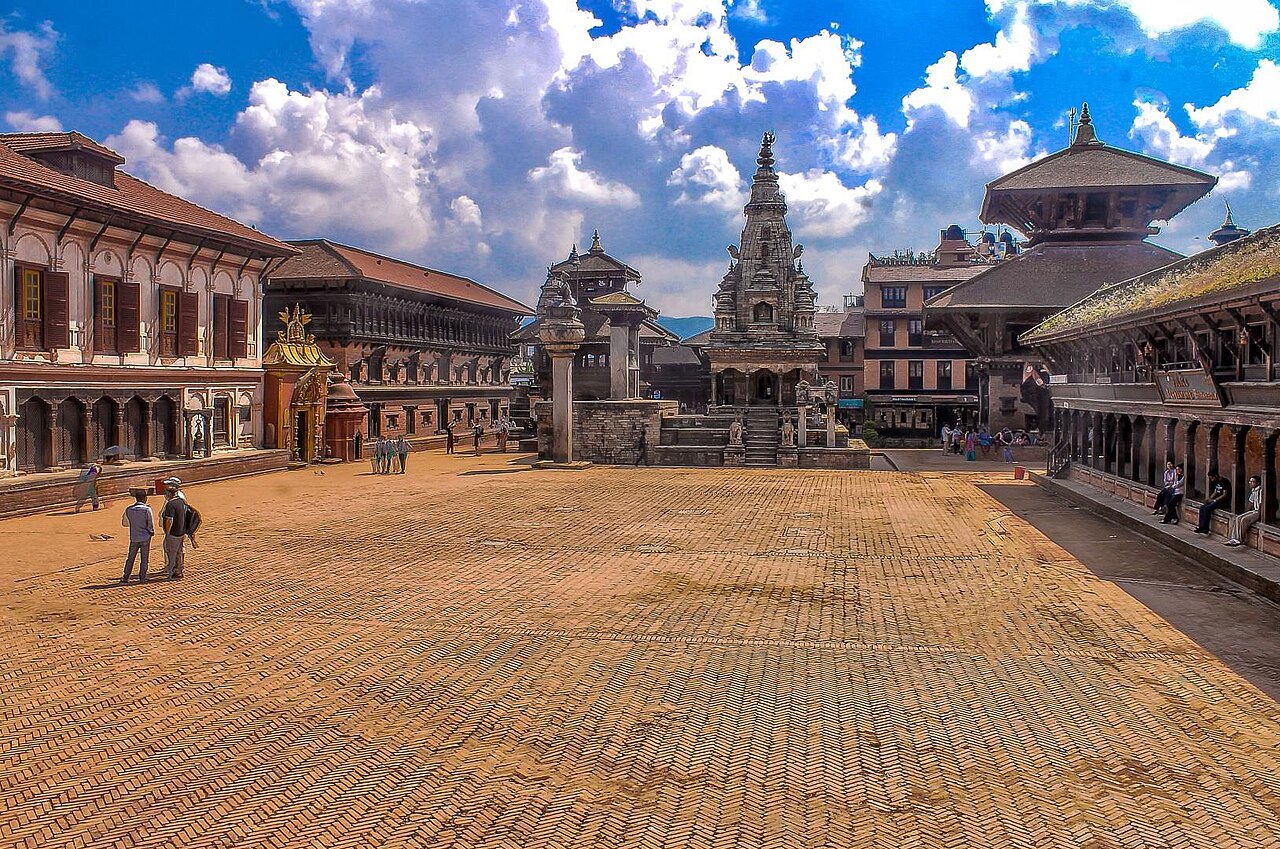
The palace square of Bhaktapur, entered through the gilded Golden Gate of the old royal palace. A short walk away stands the Nyatapola, a five-roofed pagoda completed in 1702, whose stairway is guarded by pairs of stone figures, beginning with two legendary wrestlers.
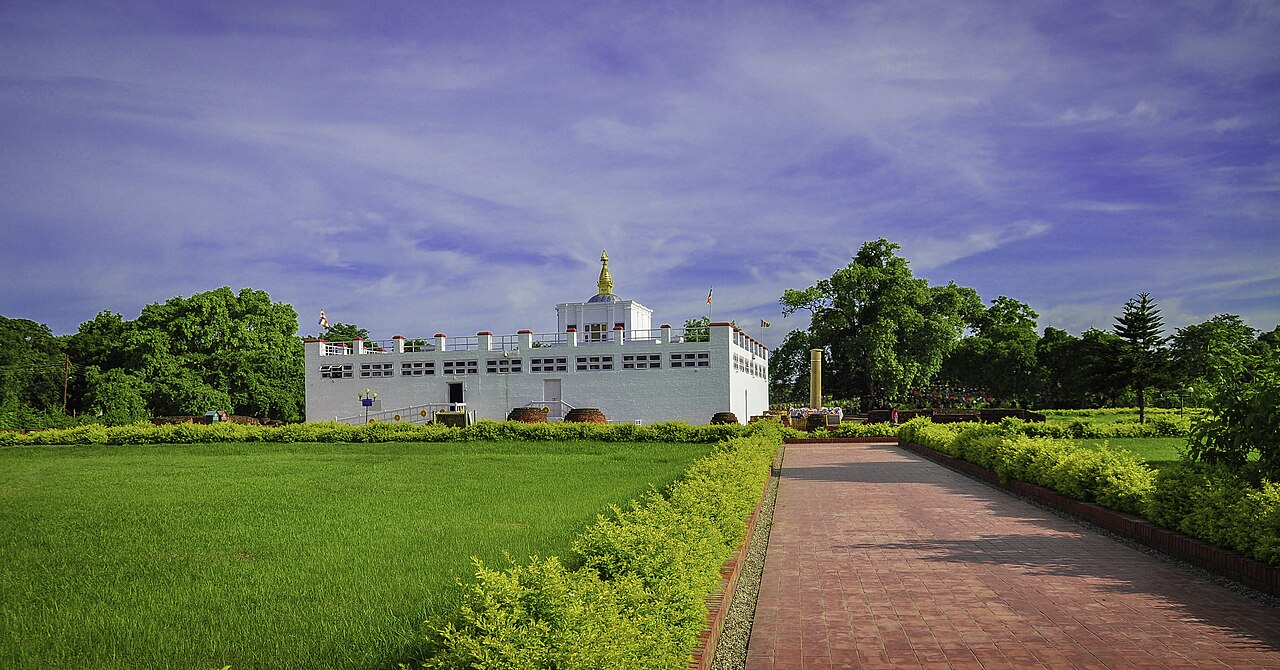
The garden where, according to Buddhist tradition, the Buddha was born, traditionally dated around 563 BC (Nepal uses 623 BC). The Mayadevi Temple marks the spot, next to the sacred pond and the stone pillar that the emperor Ashoka set up around 249 BC. Monasteries built by Buddhist countries from around the world line the park.
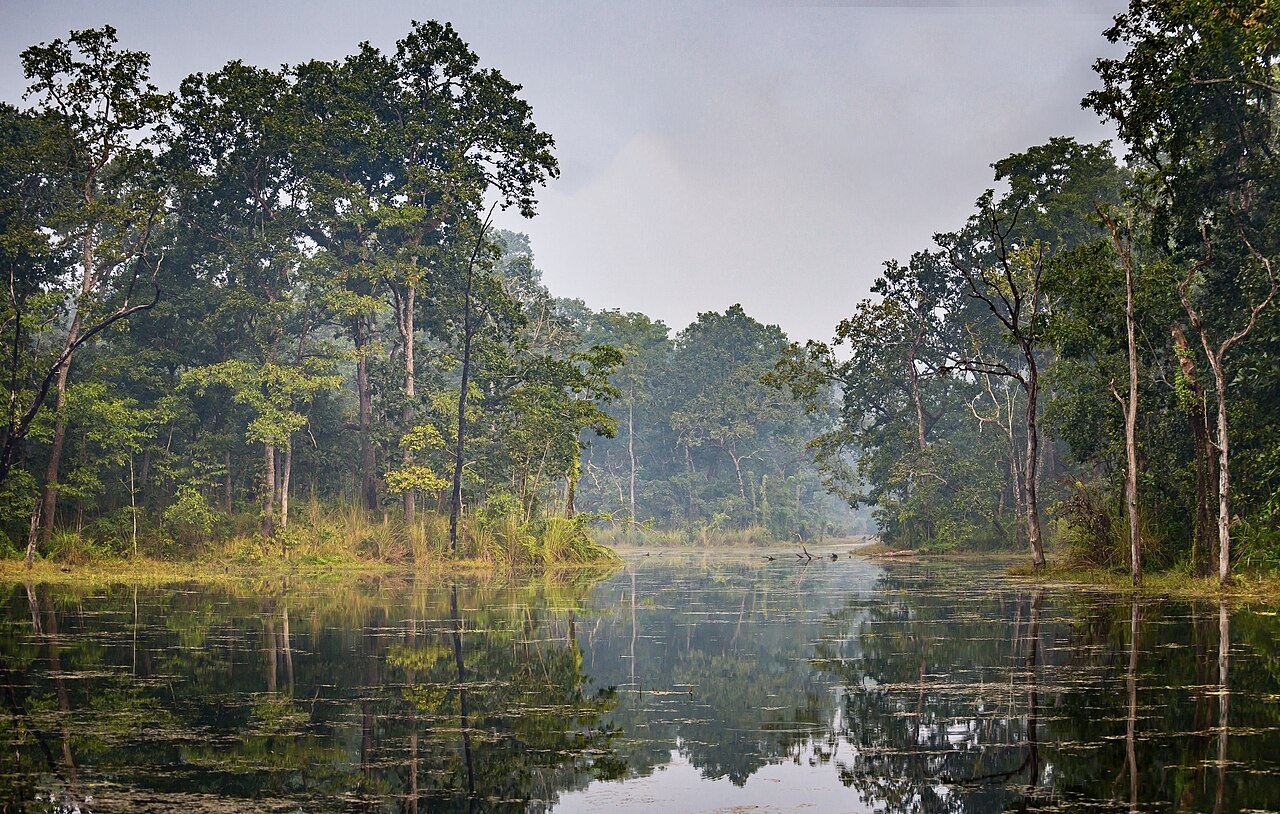
Nepal's first national park, founded in 1973 in the forests and tall grasslands of the southern plains. It is home to the Bengal tiger, the rare gharial crocodile and most of Nepal's greater one-horned rhinos, which were close to extinction in the 1960s.
A calm lake at the edge of Pokhara, about 5.7 km² in area, where the snow peak of Machhapuchhre is reflected in the water on clear mornings. Wooden boats take visitors to the small Tal Barahi temple on an island in the lake.
A dazzling white temple of stone and marble in Janakpur, dedicated to the goddess Sita. It was completed in 1910 and is also called the Nau Lakha Mandir, after its cost of nine lakh (900,000) gold coins. Pilgrims from Nepal and India crowd it for the festival of Rama and Sita's wedding.
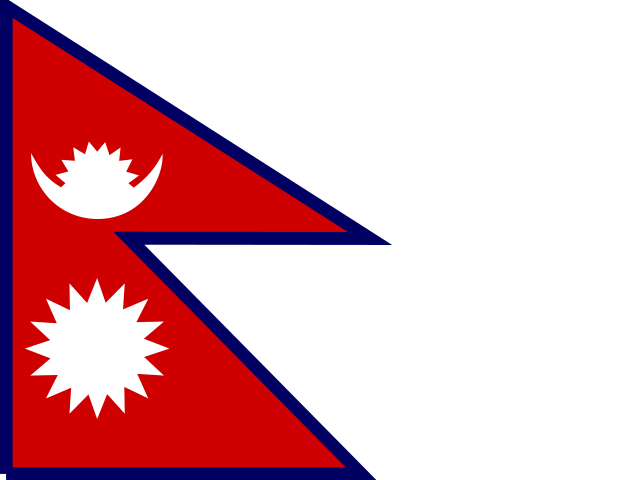
As of 2026, Nepal's flag is the only national flag in the world that is not rectangular. It is made of two stacked pennants, crimson with a blue border, with a white moon and sun.
02
Eight of the world's ten highest mountains, the eight-thousanders Everest, Kangchenjunga, Lhotse, Makalu, Cho Oyu, Dhaulagiri, Manaslu and Annapurna, stand in Nepal or on its borders with China and India.
03
In 2020 Nepal and China announced a joint new height for Mount Everest: 8,848.86 m. The old official figure, used for decades, was 8,848 m.
04
Nepal's clocks run 5 hours and 45 minutes ahead of UTC. As of 2026 it is one of only three time zones with a 45-minute offset.
05
Nepal's official calendar, Bikram Sambat, runs about 57 years ahead of the Western calendar. Its new year falls in mid-April, and the year 2083 began in April 2026.
06
In the Kathmandu Valley a young girl is chosen and worshipped as the Kumari, a living goddess. The Royal Kumari of Kathmandu lives in the Kumari Ghar on Durbar Square.
07
Nepal was never colonised by a European power. Under the Rana prime ministers it stayed independent between British India and Qing China.
08
Nepal's land rises from about 60 m above sea level in the Terai to 8,848.86 m at the top of Everest, one of the greatest height ranges of any country.
09
Gurkha soldiers from the hills of Nepal have served in the British and Indian armies for more than 200 years, since the Anglo-Nepalese War of 1814 to 1816.
10
A Newar artist from the Kathmandu Valley, Araniko (1245 to 1306), designed the White Stupa of the Miaoying Temple in Beijing for the court of Kublai Khan.
11
The Kali Gandaki river runs between Dhaulagiri and Annapurna, two peaks above 8,000 m, and its valley is sometimes called one of the deepest gorges in the world.
12
Since 2007, Nepal's banknotes have shown Mount Everest where the king's portrait used to be. The change came just before the country became a republic in 2008.
13
Chitwan National Park had only about 95 rhinos left at the end of the 1960s. Protection brought the number back to about 605 by 2015.
Citizens of many countries can get a tourist visa on arrival at Kathmandu airport and at the main land borders, for 15, 30 or 90 days. Rules and fees change, so check the Department of Immigration website (immigration.gov.np) before you travel. Citizens of India need no visa.
Trekking with a guide
Since April 2023 the Nepal Tourism Board has required foreign trekkers to hire a licensed guide in most national parks and conservation areas, and as of September 2026 the rule is widely enforced. The Everest region has had its own local rules, so check the latest before you book.
Climb slowly
Above about 3,000 m altitude sickness is a real danger even for fit people. Once you are that high, sleep no more than about 300 m higher each night, take rest days (Namche Bazaar is the classic stop on the Everest trail), and go down if headaches, nausea or breathlessness get worse.
Pick your season
The monsoon brings rain from June to September, and clouds often hide the mountains. Autumn, from October to December, has the clearest air and is the best time for mountain views; spring brings flowering rhododendrons.
Drink safe water
Tap water is not safe to drink. Use sealed bottled water, boiled water or water you treat yourself, and on treks fill up at the safe drinking water stations to avoid plastic bottles.
Right hand, shoes off, walk clockwise
Give and take things with your right hand, take off your shoes before entering a home or a temple, and do not point your feet at people or shrines. Walk clockwise around stupas and Buddhist prayer walls. Some Hindu temples do not admit non-Hindus: watch for signs.
Know the calendar
Nepal uses its own calendar, Bikram Sambat, about 57 years ahead of the Western one. Bus tickets, permits and official papers often show dates like 2083, so ask if a date looks strange.
Emergency number
The police emergency number in Nepal is 100. Buy a local SIM card from Nepal Telecom or Ncell with your passport, as coverage in the mountains is patchy.
 China
China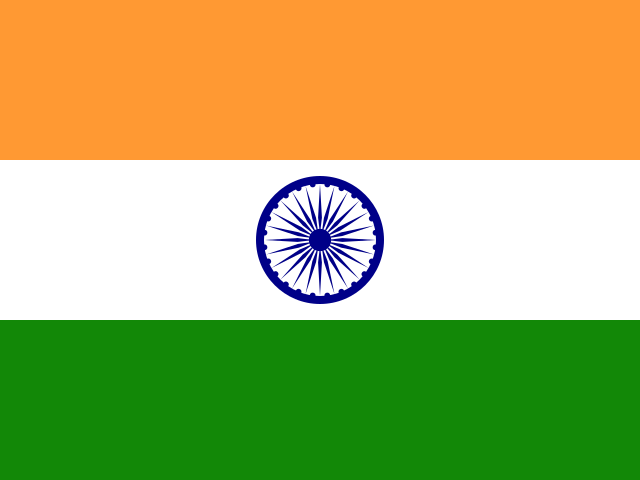 India
India