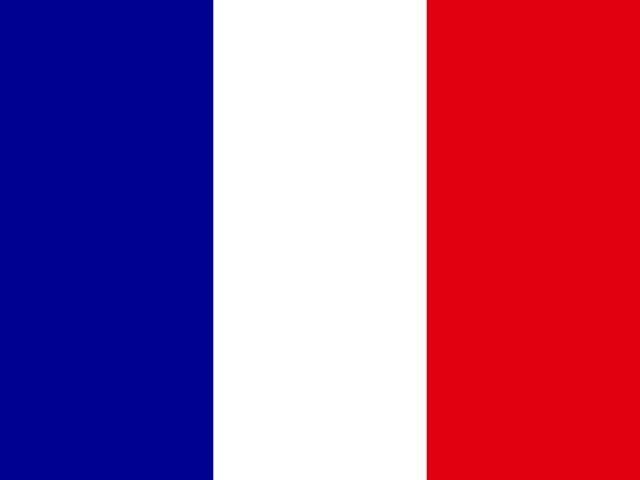
France trivia: 56 questions and answers
History
On which date do the French celebrate their national day, remembering the storming of the Bastille in 1789?
- A. 14 July
- B. 1 May
- C. 11 November
- D. 25 August
Show the answer
14 July. The Bastille was stormed on 14 July 1789, and 14 July is France's national day.
At which battle in 1815 was Napoleon finally defeated?
- A. Austerlitz
- B. Waterloo
- C. Marengo
- D. Jena
Show the answer
Waterloo. Napoleon's final defeat came at Waterloo, in present-day Belgium. Austerlitz, Marengo and Jena were among his victories.
In which city was Charlemagne crowned emperor on Christmas Day in the year 800?
- A. Paris
- B. Rome
- C. Reims
- D. Aachen
Show the answer
Rome. Pope Leo III crowned Charlemagne emperor in Rome on Christmas Day 800.
Which currency did euro notes and coins replace in France in 2002?
- A. The Deutsche Mark
- B. The French franc
- C. The Italian lira
- D. The Spanish peseta
Show the answer
The French franc. In 2002 euro notes and coins replaced the French franc.
In 1429 Joan of Arc helped the French army end the English siege of Orléans.
True or false?
Show the answer
True. True. The siege of Orléans was lifted in May 1429, during the Hundred Years' War.
The 2024 Games were the first Summer Olympics ever held in Paris.
True or false?
Show the answer
False. False. Paris had already hosted the Summer Olympics in 1900 and 1924, so 2024 was its third time.
Food and drink
Which port city is famous for the fish stew bouillabaisse?
- A. Lille
- B. Strasbourg
- C. Marseille
- D. Lyon
Show the answer
Marseille. Bouillabaisse comes from Marseille, where fishermen first made it from rockfish they could not sell.
Choucroute garnie, sauerkraut with sausages and smoked pork, is a speciality of which region?
- A. Brittany
- B. Alsace
- C. Provence
- D. Normandy
Show the answer
Alsace. Choucroute garnie comes from Alsace, on the border with Germany.
What is special about the way a tarte Tatin is made?
- A. It is baked upside down, with the pastry on top of the apples
- B. It is cooked without an oven, in a frying pan
- C. It is made without any sugar
- D. It is baked twice, a day apart
Show the answer
It is baked upside down, with the pastry on top of the apples. It is baked upside down, with the pastry on top of the apples, then turned out so the caramelised apples are on top.
What turns a croque monsieur into a croque madame?
- A. An egg on top
- B. A slice of tomato
- C. Smoked salmon
- D. Mustard instead of butter
Show the answer
An egg on top. A croque madame is a croque monsieur with an egg on top, fried or poached.
In 2022 UNESCO added the craft and culture of the French baguette to its list of intangible cultural heritage.
True or false?
Show the answer
True. True. The artisanal know-how and culture of baguette bread was inscribed in 2022.
On a French menu, the 'entrée' is the main course.
True or false?
Show the answer
False. False. In France the entrée is the starter. The main course is the 'plat principal'.
Camembert is made from sheep's milk.
True or false?
Show the answer
False. False. Camembert, from Normandy, is made from cow's milk.
Festivals and holidays
What do French families traditionally make on Candlemas, 2 February?
- A. Crêpes
- B. Macarons
- C. Croissants
- D. Madeleines
Show the answer
Crêpes. Candlemas, La Chandeleur, is the day of crêpes. By tradition you flip one with a coin in your other hand for luck.
Whoever finds the charm hidden in a galette des rois is crowned king or queen with a paper crown.
True or false?
Show the answer
True. True. The charm is called the fève, and the person who finds it in their slice wears the paper crown.
The Fête de la Musique is held on the shortest day of the year.
True or false?
Show the answer
False. False. It is held on 21 June, the summer solstice, the longest day of the year in the northern hemisphere.
In which city do families put candles on their windowsills on 8 December?
- A. Lyon
- B. Nice
- C. Bordeaux
- D. Lille
Show the answer
Lyon. Lyon's Festival of Lights honours the Virgin Mary, and today it also has light shows on the city's buildings.
Cities
Which city, founded by Greek settlers around 600 BC, is the oldest in France?
- A. Lyon
- B. Marseille
- C. Bordeaux
- D. Lille
Show the answer
Marseille. Marseille began as the Greek colony of Massalia around 600 BC.
Which French city is the official seat of the European Parliament?
- A. Lille
- B. Lyon
- C. Strasbourg
- D. Paris
Show the answer
Strasbourg. Strasbourg, on the German border, is the official seat of the European Parliament.
Toulouse is nicknamed the 'Pink City' because of its terracotta brick buildings.
True or false?
Show the answer
True. True. Its warm pinkish bricks gave Toulouse the name 'la Ville Rose'.
Landmarks
Which Paris museum is home to Leonardo da Vinci's Mona Lisa?
- A. The Musée d'Orsay
- B. The Louvre
- C. The Centre Pompidou
- D. The Musée Rodin
Show the answer
The Louvre. The Mona Lisa hangs in the Louvre, once a royal palace.
In which palace is the famous Hall of Mirrors?
- A. The Palace of Versailles
- B. The Louvre
- C. The Palace of the Popes
- D. The Élysée Palace
Show the answer
The Palace of Versailles. The Hall of Mirrors is in the Palace of Versailles, built by Louis XIV.
In which cathedral were most kings of France crowned?
- A. Strasbourg Cathedral
- B. Reims Cathedral
- C. Amiens Cathedral
- D. Notre-Dame de la Garde
Show the answer
Reims Cathedral. Most French kings were crowned in Reims Cathedral, the last one in 1825.
What is the Pont du Gard?
- A. A Roman aqueduct bridge
- B. A medieval castle
- C. A Gothic cathedral
- D. A royal palace
Show the answer
A Roman aqueduct bridge. The Pont du Gard is a Roman aqueduct bridge from the 1st century AD that carried water to Nîmes.
The Eiffel Tower was built for the world's fair of 1889 and was first meant to stand for 20 years.
True or false?
Show the answer
True. True. It was due to be taken down in 1909, but it proved useful and became the symbol of Paris.
Notre-Dame de Paris reopened in December 2024, five years after the fire of 2019.
True or false?
Show the answer
True. True. The cathedral reopened on 7 and 8 December 2024 after its restoration.
Mont-Saint-Michel is an abbey on a mountain peak in the Alps.
True or false?
Show the answer
False. False. Mont-Saint-Michel is a rocky tidal island off the coast of Normandy, in the northwest.
Music and dance
In which French region is the fest-noz, a night of traditional group dancing, at home?
- A. Brittany
- B. Provence
- C. Alsace
- D. Corsica
Show the answer
Brittany. The fest-noz, Breton for night festival, comes from Brittany and is on the UNESCO list of intangible cultural heritage since 2012.
Which instrument took over bal-musette dance music in Paris?
- A. The accordion
- B. The harp
- C. The trumpet
- D. The harpsichord
Show the answer
The accordion. Bal-musette began with a small Auvergne bagpipe called the musette, but accordion players, many of them Italian immigrants, took up the style, and the accordion became its sound.
The can-can was made famous at the Moulin Rouge in Paris.
True or false?
Show the answer
True. True. In the 1890s stars like La Goulue danced it at the Moulin Rouge, and the chorus-line French Cancan was devised there in the 1920s.
Fun facts
As of 2025, France is the most visited country in the world.
True or false?
Show the answer
True. True. France welcomes about 100 million foreign visitors a year.
Thanks to its overseas territories, how many time zones does France use, not counting Antarctica?
- A. 4
- B. 7
- C. 9
- D. 12
Show the answer
12. France uses 12 time zones (13 with its Antarctic claim), more than any other country.
Because of its shape on the map, mainland France is nicknamed...
- A. L'Hexagone
- B. La Botte
- C. Le Carré
- D. L'Étoile
Show the answer
L'Hexagone. Mainland France is called l'Hexagone because it looks roughly six-sided.
Which American monument was a gift from the people of France?
- A. The Liberty Bell
- B. The Statue of Liberty
- C. The Lincoln Memorial
- D. The Washington Monument
Show the answer
The Statue of Liberty. The Statue of Liberty was a gift from France, designed by Bartholdi with an iron frame by Gustave Eiffel.
The radio distress call 'Mayday' comes from a French phrase. What does it mean?
- A. Help me
- B. Good day
- C. Save the ship
- D. Stay away
Show the answer
Help me. Mayday comes from the French 'm'aider', which means help me.
The croissant's ancestor is the kipferl, a crescent-shaped pastry from Austria.
True or false?
Show the answer
True. True. A Viennese bakery in Paris made the kipferl popular around 1838, and French bakers later created the flaky croissant.
The Tour de France bicycle race was first held in 1953.
True or false?
Show the answer
False. False. The first Tour de France was held in 1903.
Gifts to the world
Louis Braille was a teenager when he worked out his reading system for blind people.
True or false?
Show the answer
True. True. He was 15, a pupil at the Royal Institute for Blind Youth in Paris, when he developed his code of raised dots in 1824.
Which painting gave Impressionism its name?
- A. Impression, Sunrise
- B. Water Lilies
- C. The Starry Night
- D. Luncheon on the Grass
Show the answer
Impression, Sunrise. A critic mocked Claude Monet's Impression, Sunrise, a view of Le Havre shown in Paris in 1874, and the name Impressionists stuck.
What does the name of the game pétanque come from?
- A. 'Feet planted'
- B. 'Little pig'
- C. 'Sunny square'
- D. 'Rolling stone'
Show the answer
'Feet planted'. Players must keep both feet on the ground inside a circle. The name comes from 'pieds tanqués', feet planted. The little wooden target ball is the cochonnet, the piglet.
Words
In a French restaurant, what does 'l'addition' mean?
- A. The bill
- B. The menu
- C. The waiter
- D. The tip
Show the answer
The bill. L'addition is the bill. Ask for it with 'L'addition, s'il vous plaît'.
How do you say 'bread' in French?
- A. Eau
- B. Pain
- C. Vin
- D. Fromage
Show the answer
Pain. Pain means bread. Eau is water, vin is wine and fromage is cheese.
What does 'église' mean?
- A. School
- B. Station
- C. Church
- D. Market
Show the answer
Church. Église means church.
A 'boulangerie' is a bakery.
True or false?
Show the answer
True. True. The boulangerie is where the French buy their daily baguette.
The French word 'sortie' means entrance.
True or false?
Show the answer
False. False. Sortie means exit. An entrance is an 'entrée'.
Phrases
You want to pay at the end of a meal. What do you say?
- A. Bon appétit
- B. Enchanté
- C. L'addition, s'il vous plaît
- D. Santé !
Show the answer
L'addition, s'il vous plaît. L'addition, s'il vous plaît means the bill, please.
What does 'Je ne comprends pas' mean?
- A. I'm not hungry
- B. I don't understand
- C. I can't find it
- D. I'm not ready
Show the answer
I don't understand. Je ne comprends pas means I don't understand.
How do you ask 'How much is it?' in French?
- A. Comment allez-vous ?
- B. Où sont les toilettes ?
- C. C'est combien ?
- D. Parlez-vous anglais ?
Show the answer
C'est combien ?. C'est combien ? means how much is it.
'Bon appétit' is said just before eating, like 'enjoy your meal'.
True or false?
Show the answer
True. True. Bon appétit means enjoy your meal.
'Enchanté' means 'excuse me'.
True or false?
Show the answer
False. False. Enchanté means nice to meet you. Excuse me is 'Excusez-moi'.
Local customs and tips
In France it is polite to say 'Bonjour' when you walk into a small shop.
True or false?
Show the answer
True. True. Greet the shopkeeper with bonjour when you arrive and au revoir when you leave.
What does 'service compris' on a French restaurant bill mean?
- A. Service is included in the price
- B. A 20% tip is expected
- C. Bread is charged extra
- D. Table service is not available
Show the answer
Service is included in the price. Service compris means service is included in the price: restaurant prices already include a 15% service charge.
On which day of the week is the Louvre closed?
- A. Monday
- B. Tuesday
- C. Wednesday
- D. Sunday
Show the answer
Tuesday. The Louvre is closed on Tuesday, so plan your visit for another day.
Which word for 'you' should you use with a stranger in France?
- A. Tu
- B. Vous
- C. On
- D. Il
Show the answer
Vous. Vous is the polite form. Tu is for family and friends.
Many shops in France are closed on Sundays.
True or false?
Show the answer
True. True. Sunday closing is the norm, though some tourist districts of Paris are exceptions.
Chrysanthemums are a good gift to bring to a dinner host in France.
True or false?
Show the answer
False. False. In France chrysanthemums are associated with funerals and graves. Bring wine, chocolates or other flowers.
Trivia from nearby countries
Answer key
History
- A. 14 July
- B. Waterloo
- B. Rome
- B. The French franc
- True
- False
Food and drink
- C. Marseille
- B. Alsace
- A. It is baked upside down, with the pastry on top of the apples
- A. An egg on top
- True
- False
- False
Festivals and holidays
- A. Crêpes
- True
- False
- A. Lyon
Cities
- B. Marseille
- C. Strasbourg
- True
Landmarks
- B. The Louvre
- A. The Palace of Versailles
- B. Reims Cathedral
- A. A Roman aqueduct bridge
- True
- True
- False
Music and dance
- A. Brittany
- A. The accordion
- True
Fun facts
- True
- D. 12
- A. L'Hexagone
- B. The Statue of Liberty
- A. Help me
- True
- False
Gifts to the world
- True
- A. Impression, Sunrise
- A. 'Feet planted'
Words
- A. The bill
- B. Pain
- C. Church
- True
- False
Phrases
- C. L'addition, s'il vous plaît
- B. I don't understand
- C. C'est combien ?
- True
- False
Local customs and tips
- True
- A. Service is included in the price
- B. Tuesday
- B. Vous
- True
- False
More about France
- The trip to FranceMap, story, food, phrases and a friendly quiz.
- Fun facts about FranceSurprising facts, each one checked with a source.
- French foodThe dishes to try, with photos and recipes.
- France word searchCities and dishes in large print.
- French words crosswordLearn a few words while you solve it.
- Colour the flag of FrancePrint it or colour it in on the screen.
- French rootsA family guide: history, recipes and words for the grandchildren.
- Before you goPhrases, customs and tips for travellers.
- Printable packLarge print, with a quiz and answers.