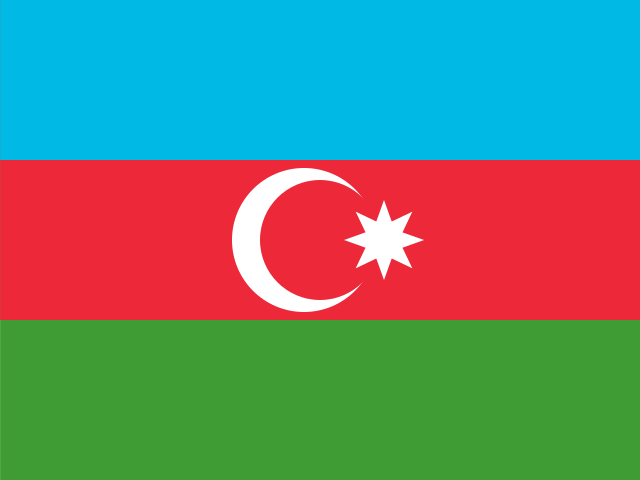
The Land of Fire on the Caspian shore, where flames rise from the hillsides, the old walled city of Baku meets glass towers, and tea comes in a pear-shaped glass.
Your trip to Azerbaijan
Ready for the trip?
10 questionsAbout 3 minutesNo timer
Explore Azerbaijan
You have explored 0 of 9 parts. Scroll on to discover the rest.
A free large-print PDF. Choose what goes in: facts, map, history, dishes and recipes, phrases, fun facts, a quiz with or without answers. Made for clubs, care homes, libraries and family afternoons.
Azerbaijan lies in the South Caucasus, where Eastern Europe meets Western Asia. The Caspian Sea, the world's largest inland body of water, forms its eastern edge, the snowy Greater Caucasus rises in the north, and broad plains along the Kura and Aras rivers fill the middle. Natural gas seeps out of the ground in so many places that flames have burned on its hillsides for centuries, which is why the country is often called the Land of Fire. A separate part of the country, the Nakhchivan Autonomous Republic, lies to the west and is cut off from the rest of Azerbaijan by a strip of Armenian territory.
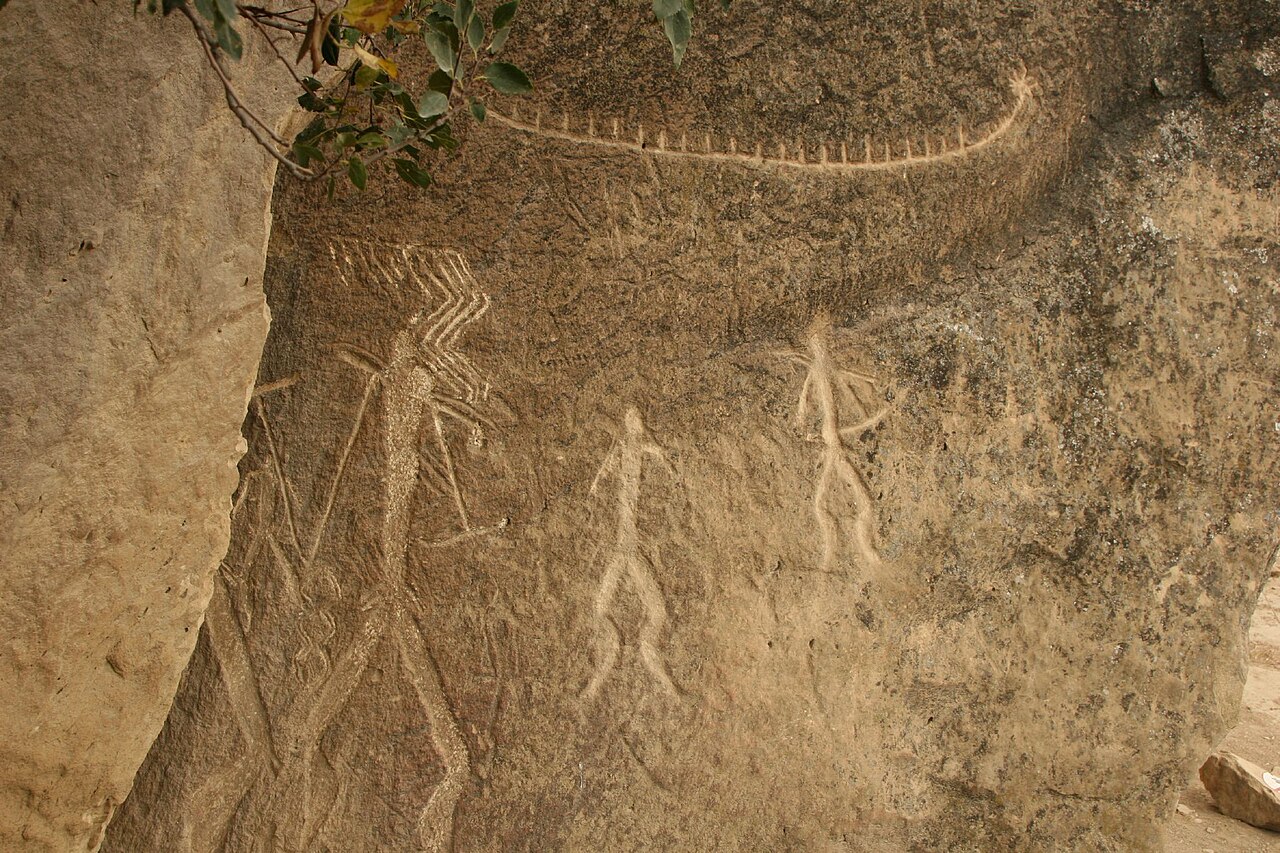
People have lived here since the Stone Age, and the rock carvings of Gobustan show hunters, dancers and boats from thousands of years ago. The land was later part of Caucasian Albania, a kingdom unrelated to the Albania in the Balkans, and then of Persian empires, the Arab caliphate and Turkic dynasties, while local rulers called the Shirvanshahs built palaces in Baku. The Russian Empire took the region in the early 1800s. In 1918 the Azerbaijan Democratic Republic was declared, but in 1920 it became part of the Soviet Union, and Azerbaijan regained its independence in 1991.
About 10.3 million people live in Azerbaijan, almost a quarter of them in Baku, the capital. Most people speak Azerbaijani, a Turkic language close to Turkish, and most are Muslim, though the state is secular. Since the late 1980s, Azerbaijan and Armenia have been in conflict over the Karabakh region: after wars in the early 1990s and in 2020, Azerbaijan took full control of the region in 2023, and as of September 2026 the two countries were still working towards a signed peace agreement. Oil and gas from the Caspian made Baku rich twice, around 1900 and again after 2000. Visitors come for the Old City of Baku, the mountain towns of Shaki and Quba, and a cuisine of saffron rice, herbs and endless tea.
CapitalBaku
PopulationAbout 10.3 million (official estimate for 1 January 2026)
Official languageAzerbaijani, as set out in the constitution. Russian is widely understood, and Lezgian, Talysh and other minority languages are spoken
CurrencyAzerbaijani manat (AZN, symbol ₼), divided into 100 qəpik
AreaAbout 86,600 km², including the Nakhchivan exclave
GovernmentRepublic with a strong elected president, who serves a seven-year term, and a one-chamber parliament, the Milli Majlis
Highest mountainBazardüzü, 4,466 m, in the Greater Caucasus on the border with Russia
Longest riverThe Kura, about 1,515 km in total. It rises in Türkiye, flows through Georgia and crosses Azerbaijan to the Caspian Sea
NeighboursRussia to the north, Georgia to the northwest, Armenia to the west, Iran to the south, and a short border with Türkiye from the Nakhchivan exclave. Across the Caspian Sea: Kazakhstan and Turkmenistan
The rock carvings of Gobustan, near Baku, show that people lived by the Caspian thousands of years ago. In ancient times the land north of the Aras river was part of Caucasian Albania, a kingdom that adopted Christianity in the 4th century, and it was often ruled by or tied to Persian empires. Arab armies brought Islam in the 7th century, Turkic peoples arrived from Central Asia from the 11th century, and slowly the Turkic language that became Azerbaijani spread across the region. Local dynasties such as the Shirvanshahs ruled from Shamakhi and Baku, the Safavids of Iran held the area for centuries, and in the early 1800s the Russian Empire took it. The oil boom, a short-lived republic, seventy years of Soviet rule and independence in 1991 followed. The conflict with Armenia over Karabakh has shaped the country since the late 1980s, and the two sides still tell parts of that story very differently.
1139
The great Ganja earthquake
In September 1139 one of the deadliest earthquakes in history struck the region around Ganja. Contemporary accounts speak of very many dead, though the numbers are disputed. Part of Mount Kapaz collapsed and blocked a river, and the water filled a valley to form Lake Göygöl, still one of the country's most beautiful sights.
1141
Nizami Ganjavi is born
Around 1141 the poet Nizami Ganjavi was born in Ganja, where he lived most of his life. Writing in Persian, the literary language of the region at the time, he became one of the great romantic poets of the Persian tradition. His 'Five Treasures', including the love story of Layla and Majnun, are loved from Iran to Azerbaijan and beyond.
1501
The Safavids take power
In 1501 the young Ismail I, leader of the Safavid order, was crowned shah in Tabriz and soon brought the lands of the Shirvanshahs under his rule. The Safavid dynasty ruled Iran and most of today's Azerbaijan for over two centuries and made Shia Islam the state religion. Ismail also wrote poems in the Turkic language that became Azerbaijani, under the pen name Khatai.
1828
The Aras becomes the border
After two wars between Russia and Qajar Iran, the treaties of Gulistan (1813) and Turkmenchay (1828) gave the lands north of the Aras river to the Russian Empire. The river became the border, and it still separates the Republic of Azerbaijan from the Iranian region also called Azerbaijan, where millions of Azerbaijani speakers live today.
1846
An oil well is drilled at Bibi-Heybat
People around Baku had collected oil from shallow pits for centuries. In 1846 a Russian engineer used a percussion drill to sink a 21-metre well at Bibi-Heybat, on the edge of Baku, and struck oil. It was one of the earliest drilled oil wells in the world, thirteen years before the famous Drake well in the United States.
1879
The Nobel brothers found Branobel
Robert and Ludvig Nobel, brothers of Alfred Nobel of the Nobel Prize, came to Baku in the 1870s and in 1879 set up the Branobel company. They built pipelines, storage tanks and one of the first successful oil tankers, the Zoroaster. Baku boomed, and by 1901 it produced more than half of the world's oil.
1918
The Azerbaijan Democratic Republic is declared
On 28 May 1918, after the collapse of the Russian Empire, the Azerbaijani National Council declared independence. The new republic had an elected parliament with members from many communities, gave women the vote, one of the earliest countries to do so, and founded Baku State University. 28 May is celebrated as Independence Day.
1920
Soviet rule begins
In April 1920 the Soviet Red Army entered Baku, and the Azerbaijan Soviet Socialist Republic was established on 28 April. For the next seventy years Azerbaijan was part of the Soviet Union. During the Second World War Baku's oil fields supplied most of the oil used by the Soviet army, and German forces tried and failed to reach them.
1990
Black January
On the night of 19 to 20 January 1990, as the Soviet Union was falling apart, Soviet troops entered Baku to crush the independence movement. According to official Azerbaijani figures, 147 civilians were killed and about 800 injured. 20 January is remembered every year as a national day of mourning.
1991
Independence is restored
On 18 October 1991 the Supreme Council of Azerbaijan adopted a declaration restoring the country's independence, and voters confirmed it in a referendum in December, just as the Soviet Union came to an end. In the same year Azerbaijan decided to return to the Latin alphabet.
1994
A ceasefire in the Karabakh war
From 1988, conflict grew over Nagorno-Karabakh, a region inside Azerbaijan with an Armenian majority, and it became a full war after 1991. About 30,000 people died and more than a million had to leave their homes, most of them Azerbaijanis. A ceasefire in May 1994 left Armenian forces in control of most of Karabakh and all or part of seven surrounding districts, all internationally recognised as part of Azerbaijan.
2006
Oil flows through the BTC pipeline
Caspian oil had long reached the world only through Russia. On 28 May 2006 the first oil pumped from Baku reached the Turkish port of Ceyhan on the Mediterranean, through the new Baku-Tbilisi-Ceyhan pipeline, about 1,768 km long, which crosses Azerbaijan, Georgia and Türkiye.
2012
Baku hosts Eurovision
Azerbaijan first took part in the Eurovision Song Contest in 2008 and won in 2011 with 'Running Scared' by Ell and Nikki. In May 2012 the contest was held at the new Baku Crystal Hall on the seafront, and Sweden won with 'Euphoria'.
2023
Azerbaijan takes control of Karabakh
The six-week war of 2020 and the ceasefire that ended it returned the seven districts and part of Karabakh to Azerbaijani control. In September 2023 a one-day Azerbaijani military operation ended the Armenian-run administration in the region, and almost all of Karabakh's Armenians, more than 100,000 people, left for Armenia. Armenia and many international observers call this an expulsion; Azerbaijan says the residents chose to leave.
2024
The COP29 climate summit in Baku
In November 2024 Baku hosted COP29, the United Nations climate change conference. After talks that ran past their planned end, it closed with an agreement on climate finance for developing countries. The choice of a major oil and gas producer as host was widely debated.
2025
A peace agreement is initialled
On 8 August 2025, at a meeting in Washington, the leaders of Armenia and Azerbaijan initialled the text of a peace agreement and signed a joint declaration. As of September 2026 the agreement had not yet been signed or ratified, and talks on the remaining steps continue.
Azerbaijani cooking brings together the lamb and dairy of shepherds, the fish and caviar of the Caspian, the fruit and nuts of the mountain valleys, and saffron, which is grown on the Absheron Peninsula around Baku. A meal often starts with a plate of fresh green herbs, white cheese, bread and pickles, followed by a hearty soup such as bozbash or piti, which can be a meal in itself. The main course might be kebabs, dolma or, on special days, plov, the saffron rice that is the pride of every host. Black tea follows the meal, served with lemon, sugar lumps and fruit preserves, and sweets such as pakhlava and shekerbura appear at every celebration, above all at Novruz, the spring New Year.
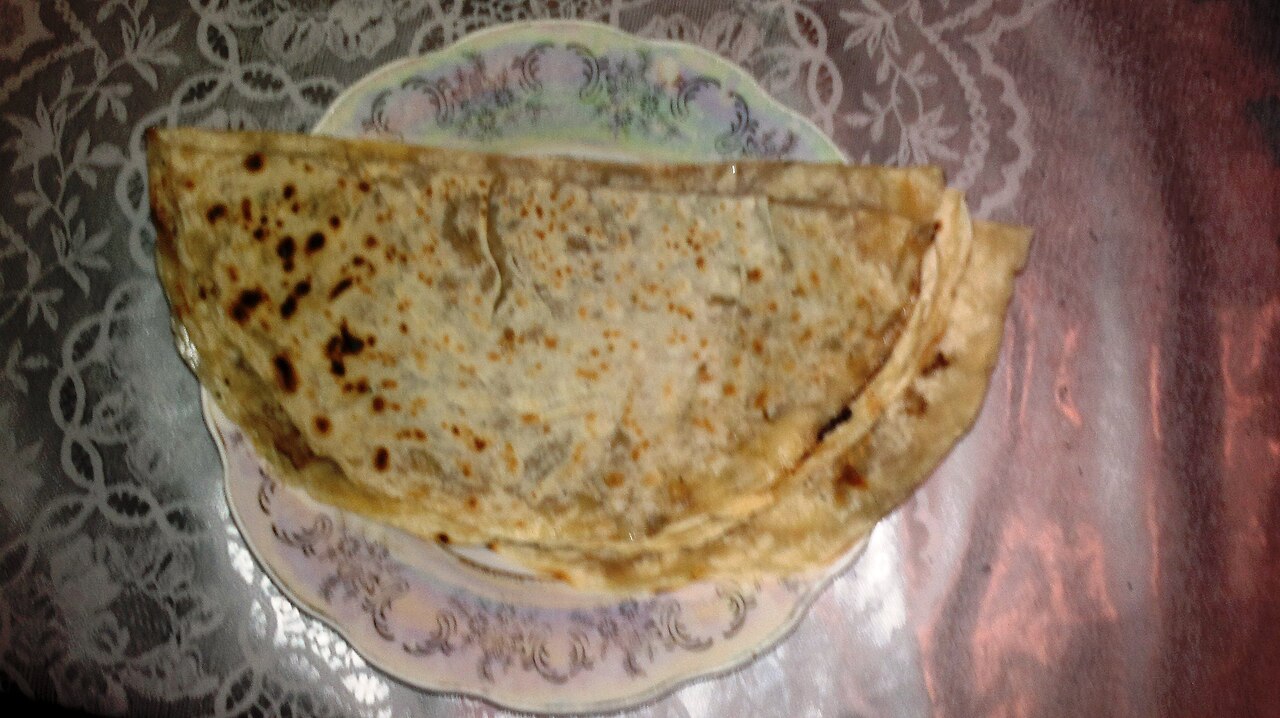
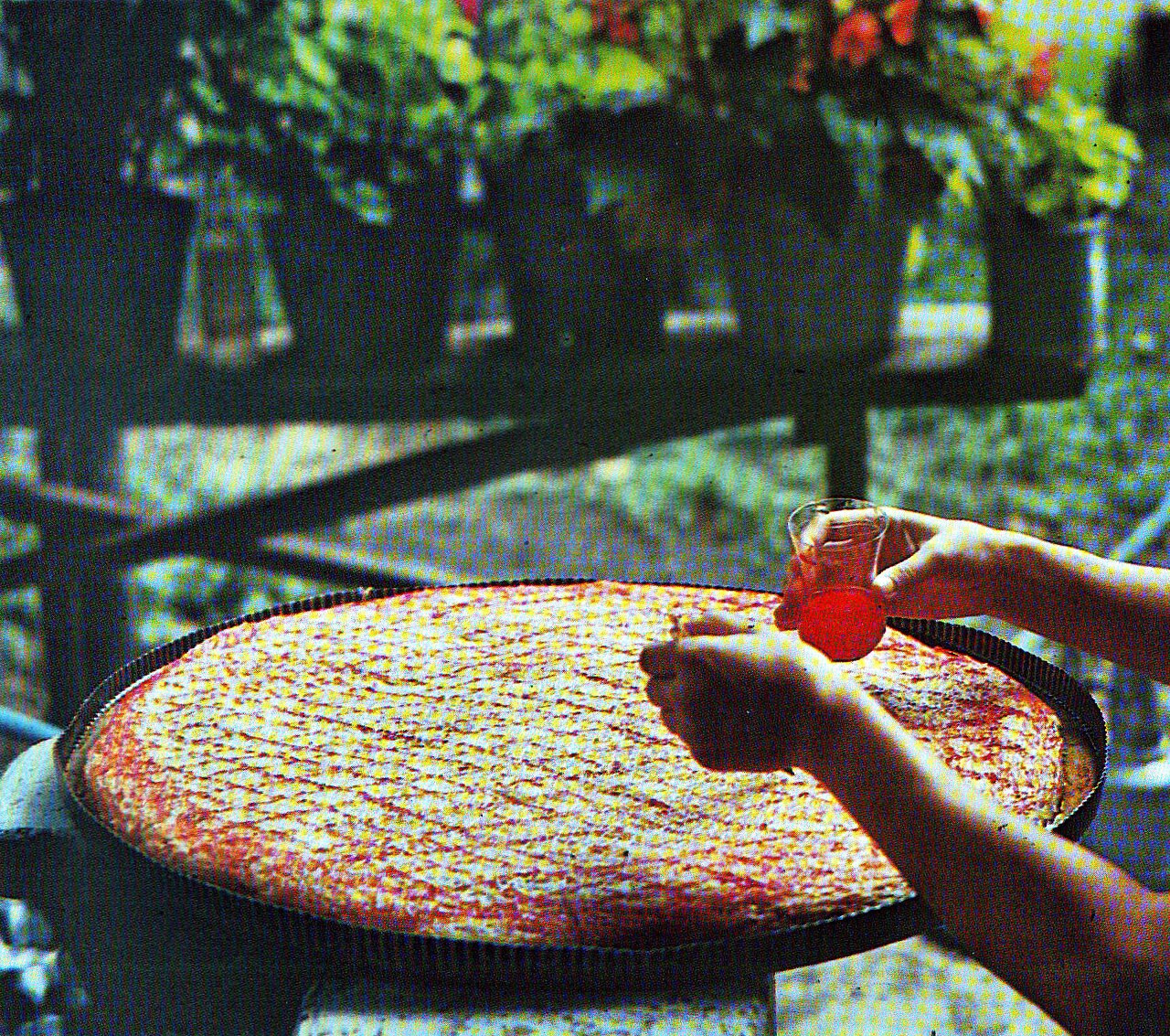
Very thin half-moons of dough filled with fresh herbs, minced lamb or pumpkin, cooked quickly on a dome-shaped griddle called a saj and brushed with butter. They are eaten hot, often with sumac and plain yoghurt, as a snack, a starter or a light meal.
Green qutab, filled with spinach, spring onions, coriander and dill, are especially popular in spring, when the new herbs appear.
See the recipe
Serves 4
1 h
Ingredients
250 g plain flour, plus extra for rolling
About 130 ml warm water and 1/2 teaspoon salt
200 g spinach, finely chopped
1 bunch each of spring onions, coriander and dill, finely chopped
40 g butter, melted, plus more for brushing
Salt, black pepper, and ground sumac to serve
Plain yoghurt to serve
Method
Mix the flour, salt and water into a firm, smooth dough. Knead for 5 minutes, cover and leave to rest for 20 minutes.
Mix the spinach, spring onions and herbs with a little salt and pepper, and squeeze out extra liquid with your hands. Stir in 2 tablespoons of the melted butter.
Divide the dough into 12 balls and roll each one out very thinly into a circle about 18 cm across.
Spread a spoonful of filling over half of each circle, fold it over into a half-moon and press the edges firmly together.
Cook the qutab in a dry, hot frying pan for 1 to 2 minutes on each side, until they have golden spots. Brush with butter, stack them, and serve warm with sumac and yoghurt.
All of Azerbaijan, a dumpling family found from the Caucasus to Central Asia
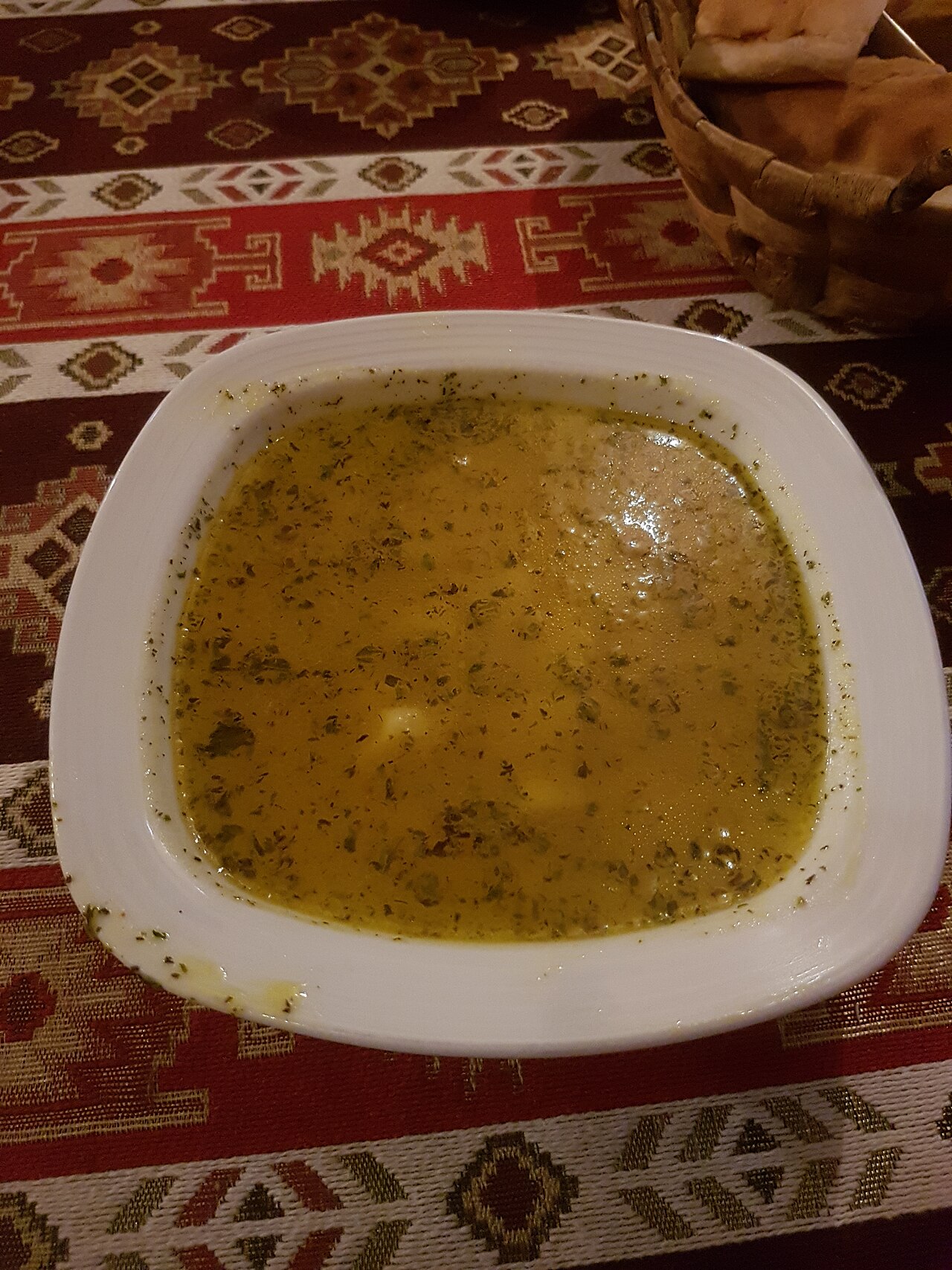
Tiny dumplings of lamb and onion, served in a clear meat broth sprinkled with dried mint, with vinegar on the side. Good cooks pride themselves on making the dumplings so small that many fit on one spoon.
The name is thought to come from Persian, where its first part means 'to boil', and relatives of dushbara are found under similar names from the Caucasus to Central Asia.
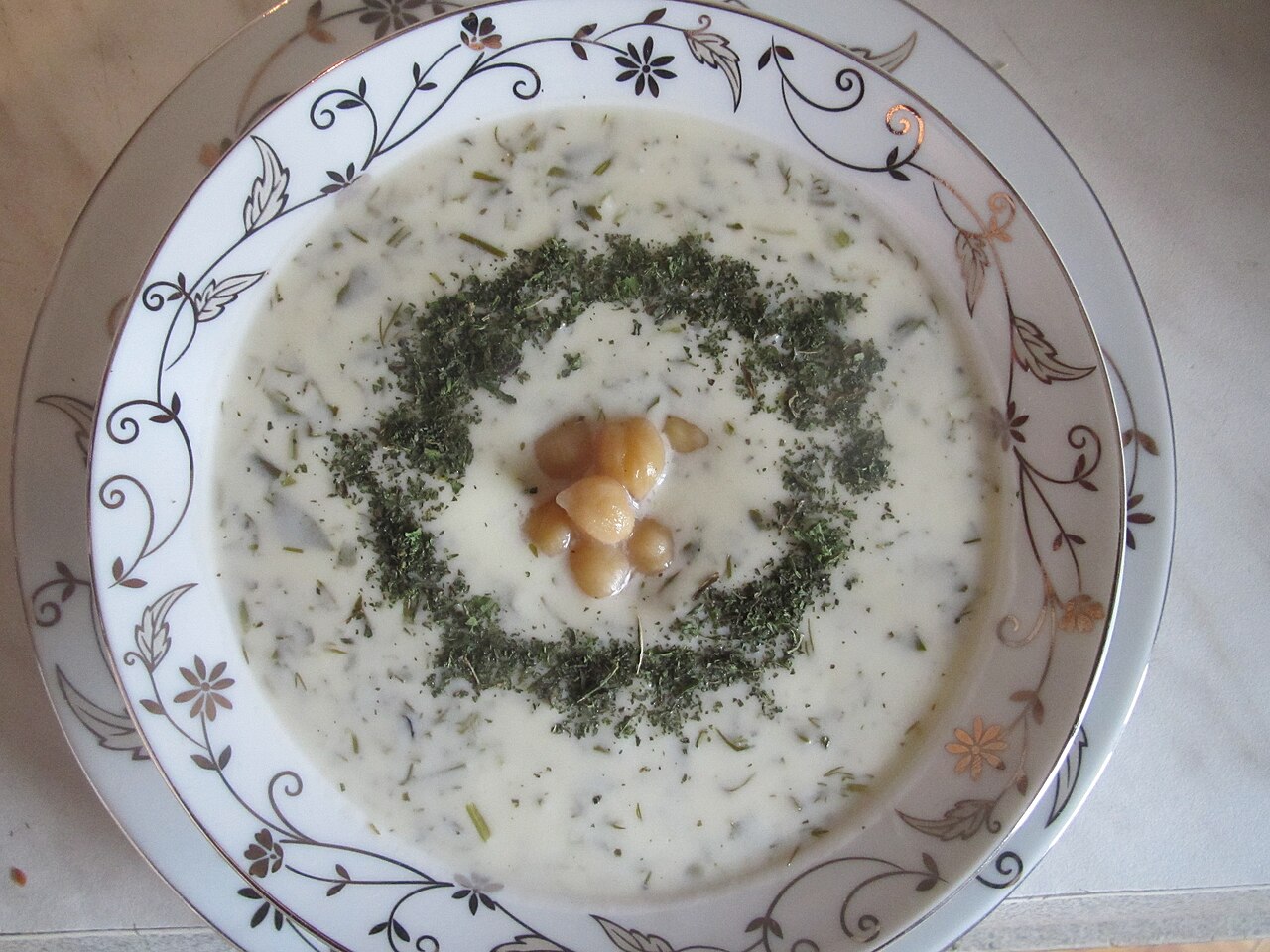
A soup of yoghurt cooked with rice or chickpeas and a large amount of green herbs such as coriander, dill, mint and spinach. It is eaten warm in winter and chilled in summer, and at weddings it is served between the meat courses to help digestion.
See the recipe
Serves 4
40 min
Ingredients
750 g plain yoghurt (not Greek-style)
500 ml water
1 egg
1 tablespoon plain flour
50 g short-grain rice, or 1 tin (400 g) chickpeas, drained
1 large bunch each of coriander and dill, and a small bunch of mint, finely chopped
100 g spinach, finely chopped
Salt
Method
Cook the rice in a little salted water until soft, or rinse the chickpeas, and set aside.
In a large pan, whisk the yoghurt with the egg and flour until smooth, then whisk in the water.
Put the pan over a medium heat and bring it slowly to a gentle boil, stirring all the time in the same direction so the yoghurt does not split. This takes about 10 to 15 minutes.
Once it bubbles, add the rice or chickpeas, the herbs and the spinach, with a little salt. Keep stirring and simmer for 5 to 8 minutes more.
Serve hot, or let it cool and chill it in the fridge for a refreshing summer soup.
All of Azerbaijan; bozbash soups are also loved in Armenia and Iran
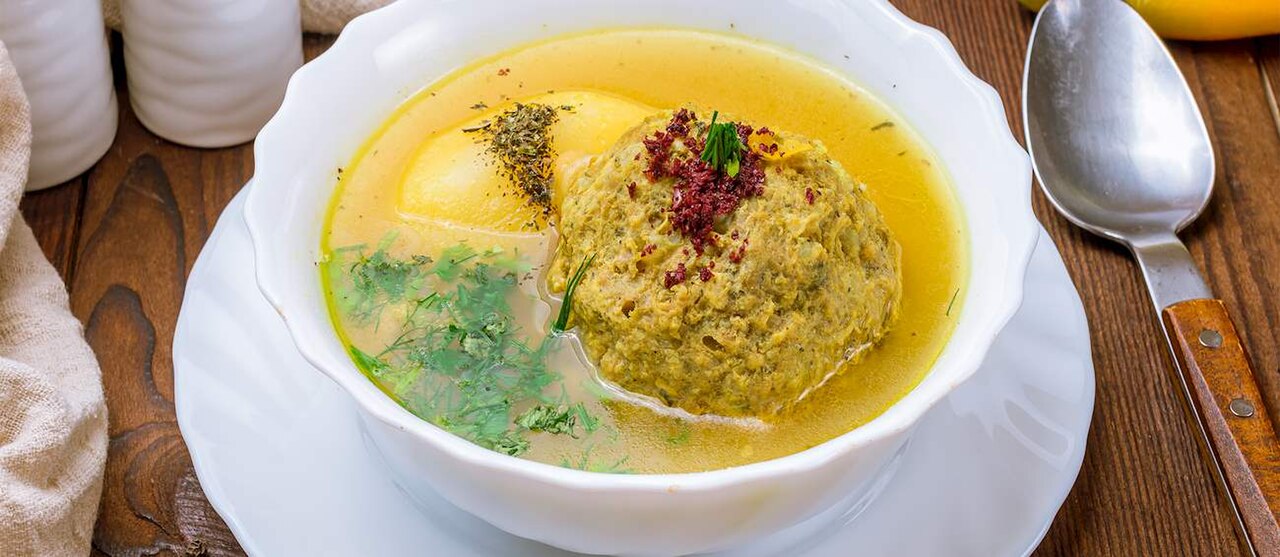
A rich soup with large lamb meatballs, often with a dried sour plum hidden inside, cooked with chickpeas, potatoes and saffron. The broth is often drunk first, and the meatballs and potatoes are eaten afterwards with bread as a second course.
The name probably comes from the Azerbaijani words boz, light grey, and baş, head, perhaps because of the pale colour of the cooked dish.
See the recipe
Serves 4
1 h 30 min
Ingredients
500 g minced lamb (or half lamb, half beef)
2 onions: 1 grated for the meatballs, 1 sliced
2 tablespoons rice, rinsed
8 dried sour plums, dried apricots or pitted prunes
1 tin (400 g) chickpeas, drained
3 medium potatoes, peeled and halved
1.5 litres water or light stock
A pinch of saffron soaked in 2 tablespoons hot water, or 1/2 teaspoon ground turmeric
Salt, black pepper, and dried mint to serve
Method
Mix the minced meat with the grated onion, rice, salt and pepper, and knead well.
Divide into 8 portions. Flatten each one in your palm, put a dried plum in the middle and roll it into a large, smooth ball.
Bring the water or stock to the boil with the sliced onion, add the chickpeas and potatoes and simmer for 10 minutes.
Lower the meatballs gently into the soup, cover and simmer for 40 minutes without stirring hard, so they keep their shape. Make sure the meatballs are cooked through in the middle.
Stir in the saffron water, taste for salt, and serve in deep bowls with a pinch of dried mint on top.
Shaki, in the northwest; similar pot stews are found across the Caucasus and Iran
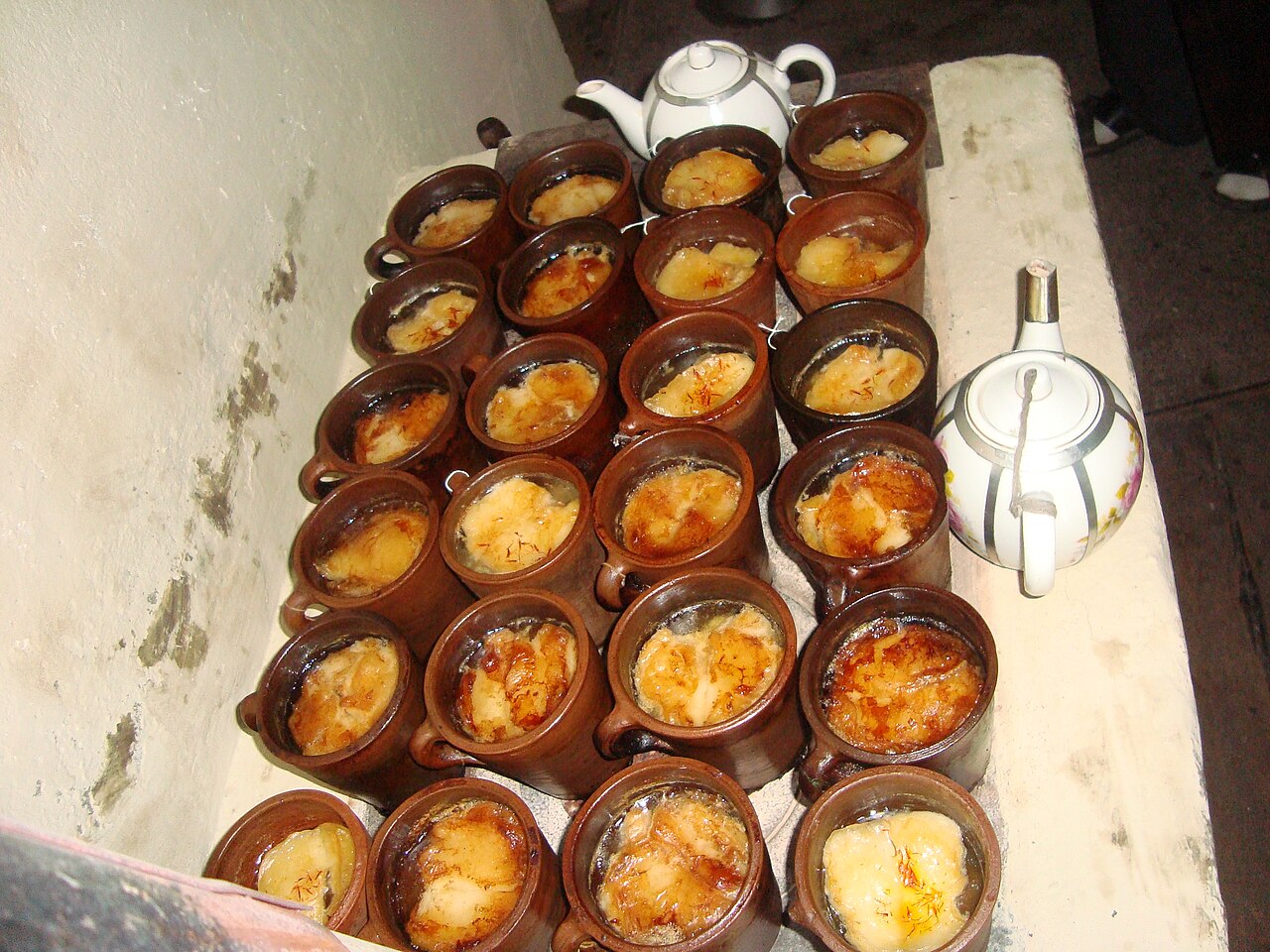
Lamb, chickpeas, potatoes and sour plums slow-cooked for hours in a small individual clay pot, flavoured with saffron and sealed with a piece of tail fat. It is eaten in two stages: first you crumble bread into a bowl and pour the broth over it, then you eat the meat and vegetables with sumac.
The name piti comes from the glazed clay pot it is cooked in, and in Shaki each diner gets a pot of their own.
All of Azerbaijan, with dozens of regional versions
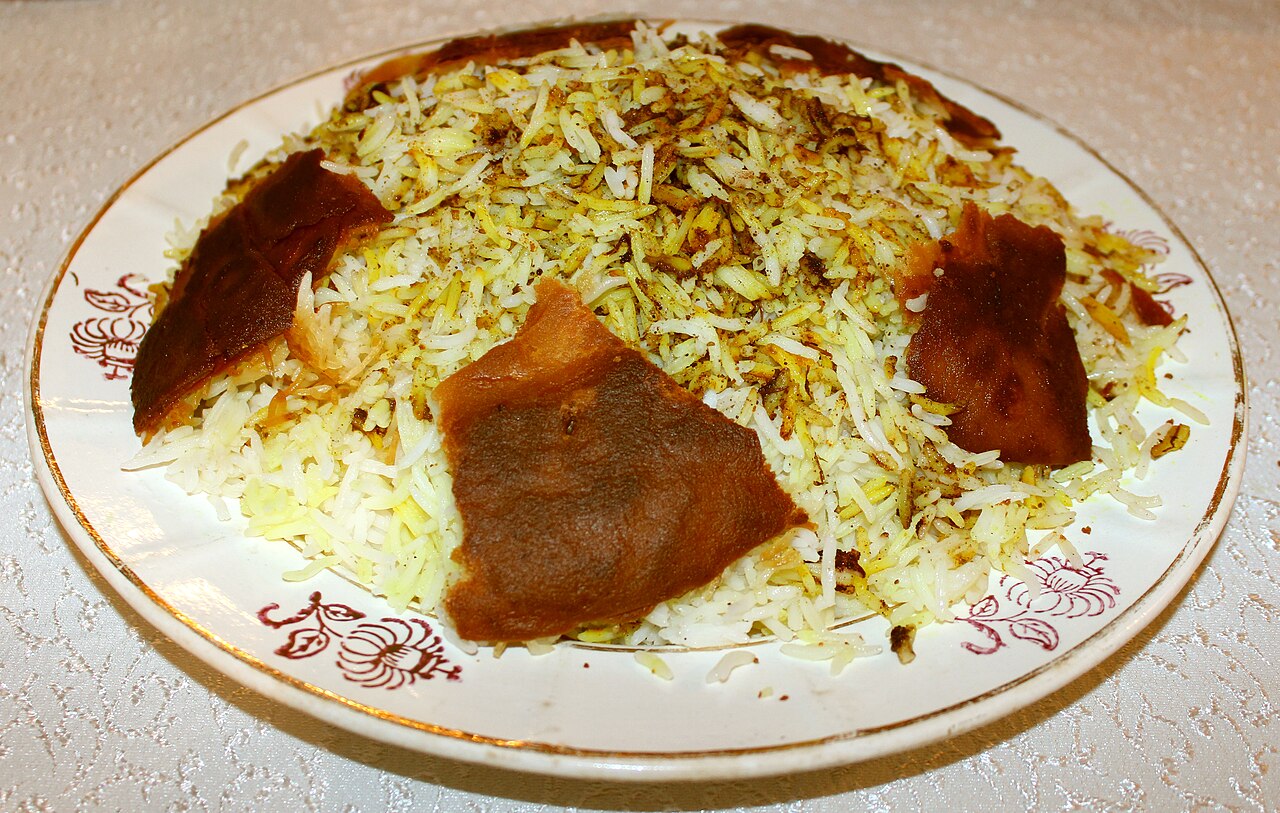
Long-grain rice steamed until each grain is separate and finished with saffron and butter. In Azerbaijan the rice is usually served with the gara, the topping of lamb or chicken, chestnuts, dried apricots, raisins and onions, on a separate platter, so each person can combine them. Shah plov, a festive version, is baked inside a golden crust of thin lavash bread that is cut open at the table.
Azerbaijani cooks speak of dozens of kinds of plov, some sources say over 200, named after what is served with the rice, from fish to eggs to sour fruit.
All of Azerbaijan; stuffed leaves and vegetables are loved across the Caucasus, the Middle East and the Balkans
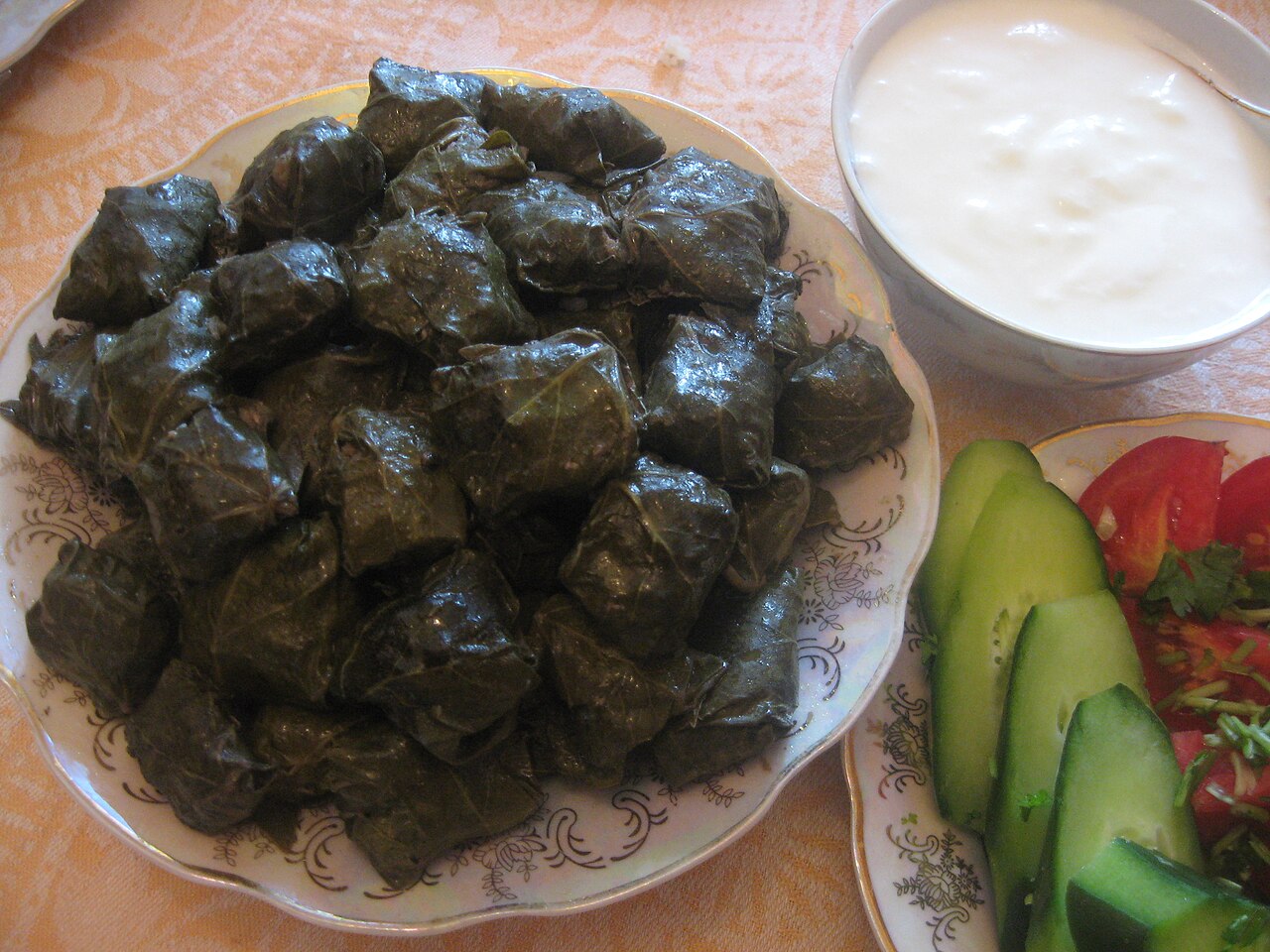
Young vine leaves wrapped around minced lamb, rice and herbs and simmered gently, then served warm with garlic yoghurt. In Azerbaijan dolma is usually folded into small neat parcels. Cabbage leaves, peppers, tomatoes and aubergines are stuffed the same way.
In 2017 UNESCO added the tradition of making and sharing dolma in Azerbaijan to its list of the Intangible Cultural Heritage of Humanity.
See the recipe
Serves 4
1 h 40 min
Ingredients
About 40 vine leaves in brine (one jar), rinsed
500 g minced lamb or beef
60 g short-grain rice, rinsed
1 onion, grated
1 small bunch each of coriander, dill and mint, finely chopped
Salt and black pepper
30 g butter
To serve: 300 g plain yoghurt mixed with 1 crushed garlic clove
Method
Mix the meat, rice, onion and herbs with salt and pepper and knead well.
Lay a vine leaf shiny side down, stalk towards you, and cut off the stalk. Put a heaped teaspoon of filling near the base.
Fold the bottom over the filling, fold in the sides and roll it up into a small, firm parcel. Repeat with the rest.
Line a heavy pan with a few spare leaves and pack the dolma in tightly, seam side down. Dot with the butter and add hot water to just cover them.
Put a small plate on top to hold them down, cover and simmer very gently for about 50 minutes, until the rice and meat are cooked. Serve warm with the garlic yoghurt.
All of Azerbaijan; also a speciality in neighbouring Armenia
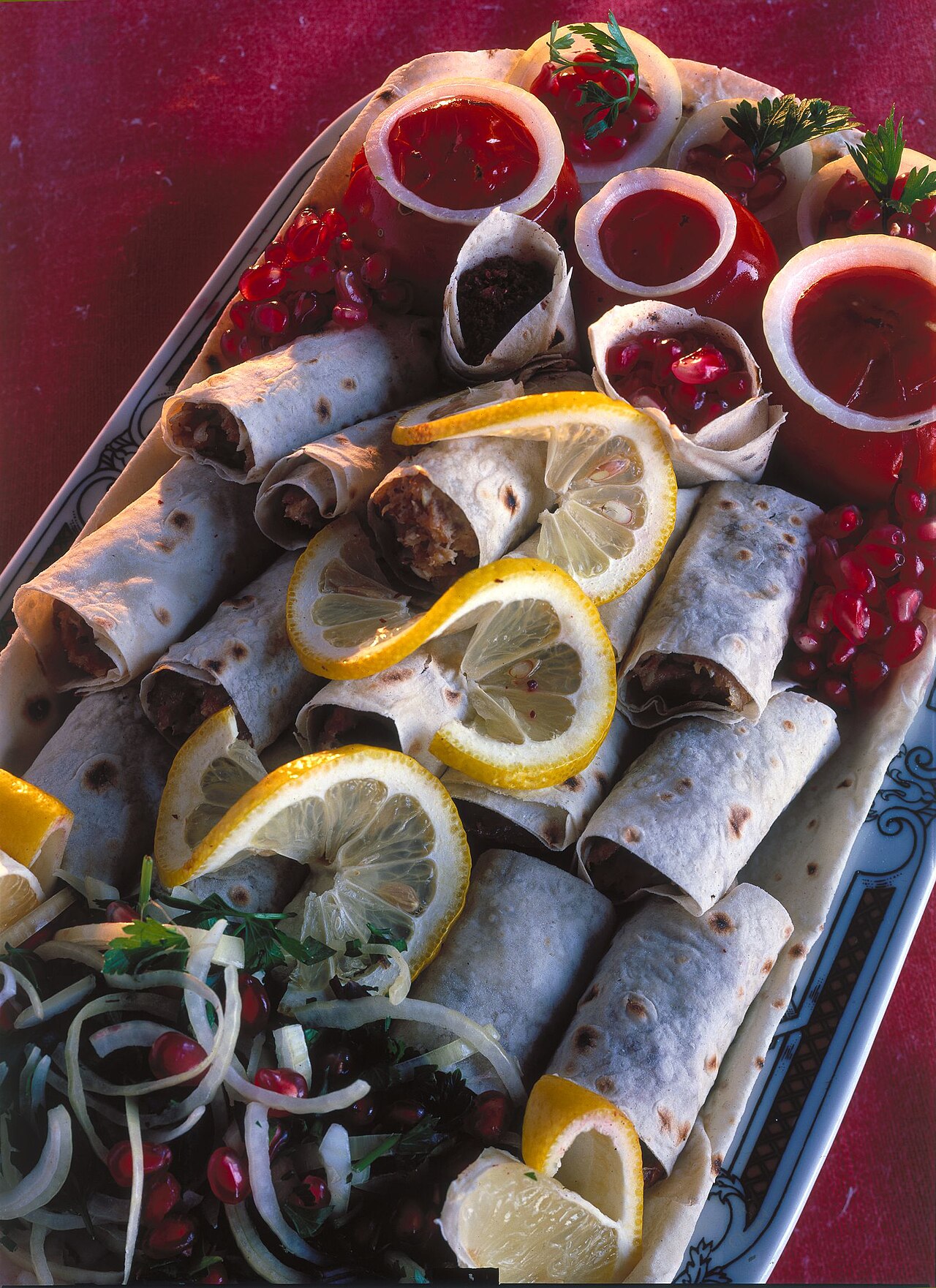
Minced lamb mixed with plenty of onion and a little tail fat, pressed around wide flat skewers and grilled over charcoal. It is wrapped in thin lavash bread with raw onion, sumac and herbs, and often comes with grilled tomatoes and pomegranate seeds.
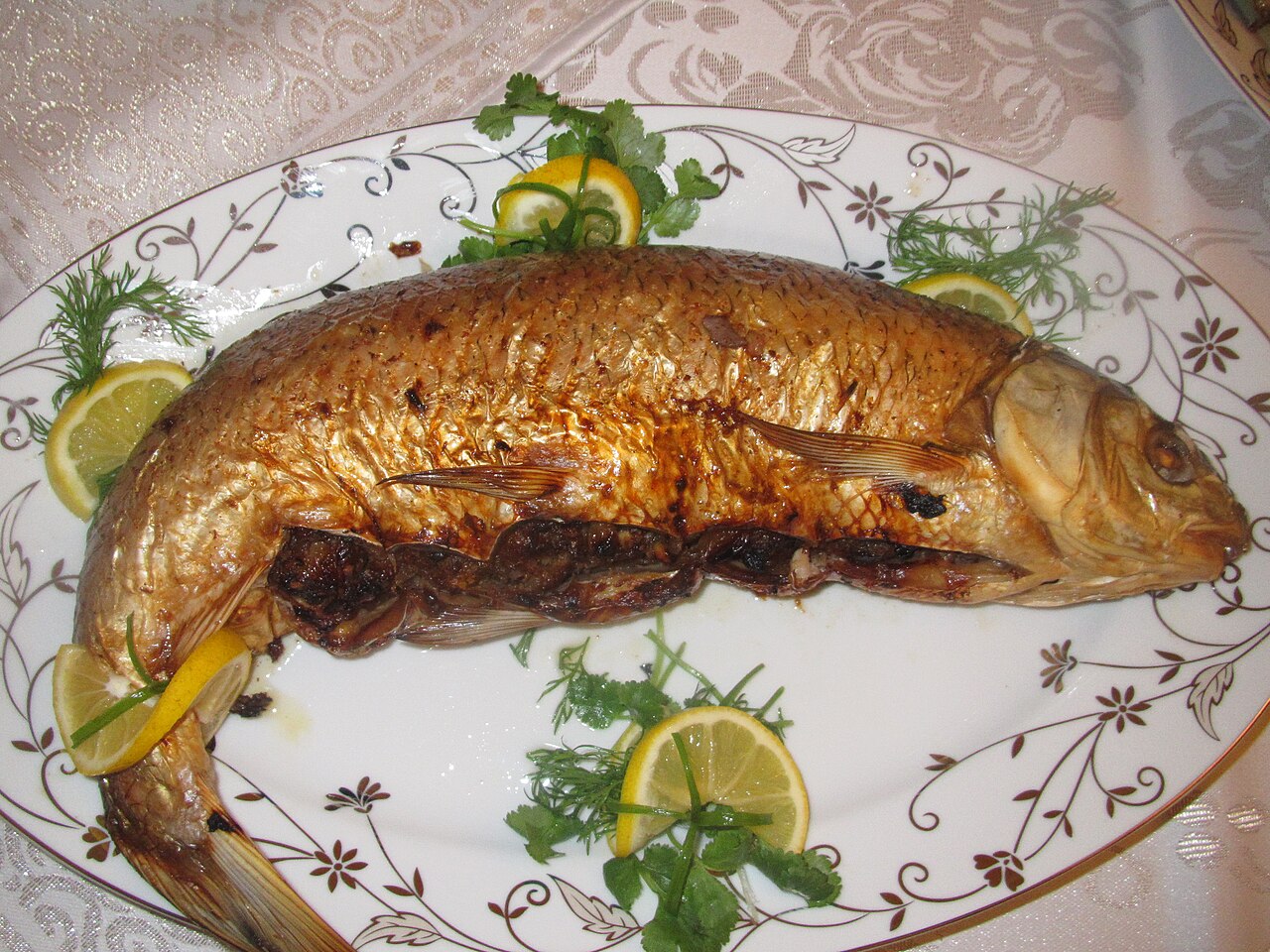
A whole fish from the Caspian, or a chicken, stuffed with a thick paste of ground walnuts, grated onion and sour plum or pomegranate syrup, then baked until golden. It is a festive dish of the south, made above all for Novruz.
The dish belongs to the Talysh people of the far south, who live on both sides of the border with Iran.
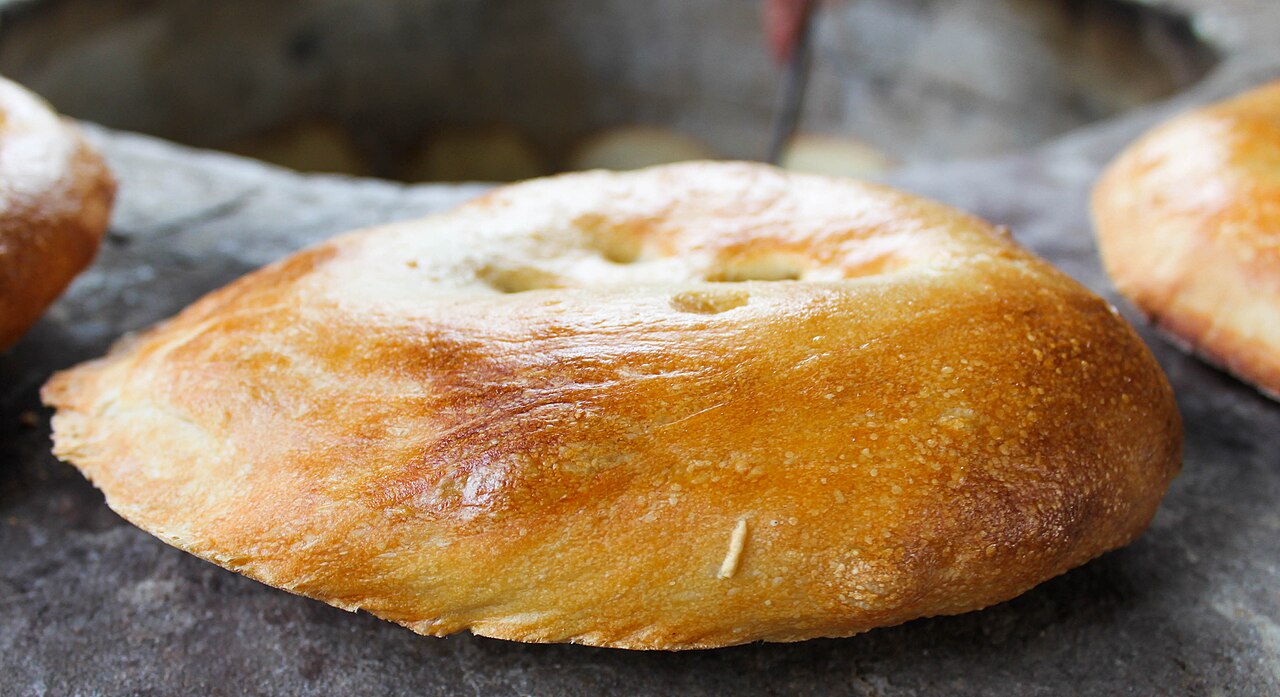
Round or oval loaves slapped onto the hot inner wall of a clay oven, the tandir, and baked in a few minutes until blistered and chewy. Thin lavash is baked the same way or on a saj griddle, and bread is treated with great respect: it should never be thrown away or left on the floor.
Bread baked on the walls of clay ovens like the tandir has been made across Central and West Asia for some five thousand years.
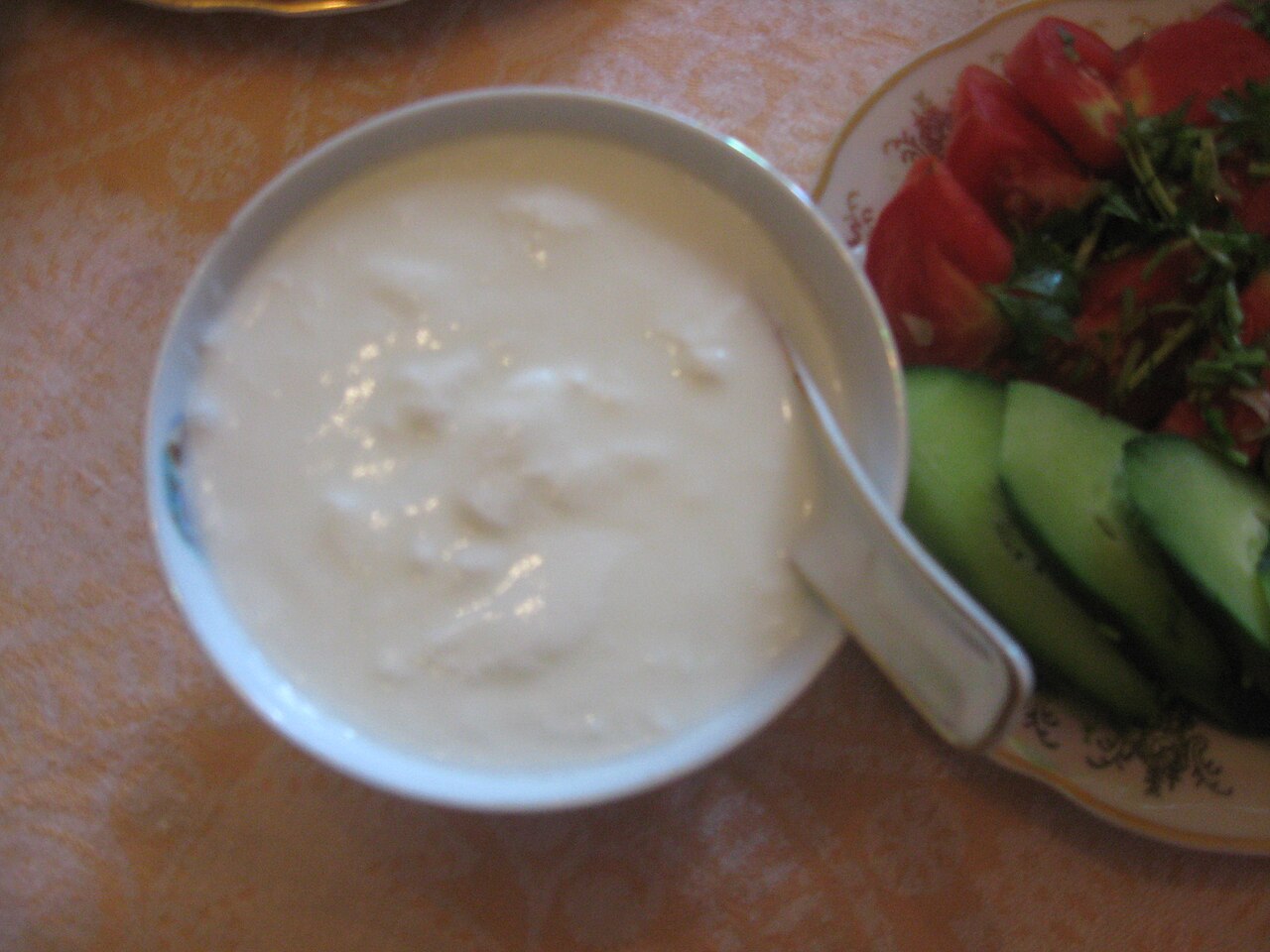
A thick homemade yoghurt, eaten plain with bread, stirred with garlic as a sauce for dolma and qutab, or thinned with water and salt to make the cold drink ayran. Strained, it becomes the thick cheese-like süzmə.
Qatiq is also the base of dovga soup and of many summer drinks.
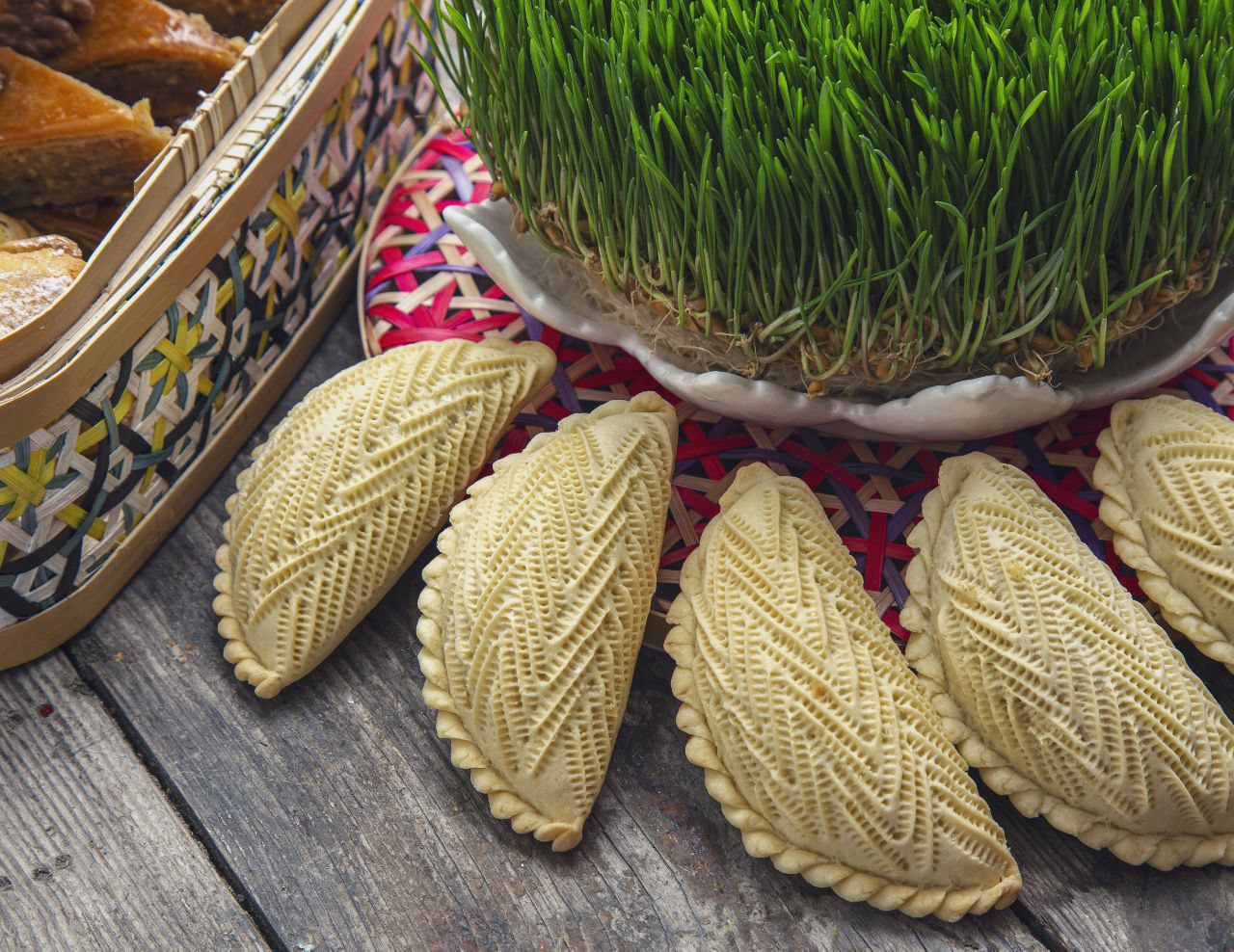
Half-moon pastries of buttery dough filled with ground almonds or walnuts, sugar and cardamom. The top is decorated with a fine pattern pinched with special tweezers called maggash. Families and neighbours often gather to make them together before Novruz.
Together with pakhlava and the round, salty shorgoghal, shekerbura is one of the three pastries every Novruz table should have. Its half-moon shape is said to stand for the moon or a flame.
A very sweet speciality of Shaki, made of a lacy web of rice-flour dough called rishta, layered with crushed hazelnuts, cardamom and coriander seed and soaked in syrup. It is made by professional halva makers, not at home, and takes a whole day. Visitors to Shaki carry boxes of it home.
The rishta is made by pouring batter onto a hot griddle through a funnel with eleven holes, drawing a fine web.
All of Azerbaijan; tea is also grown around Lankaran in the south
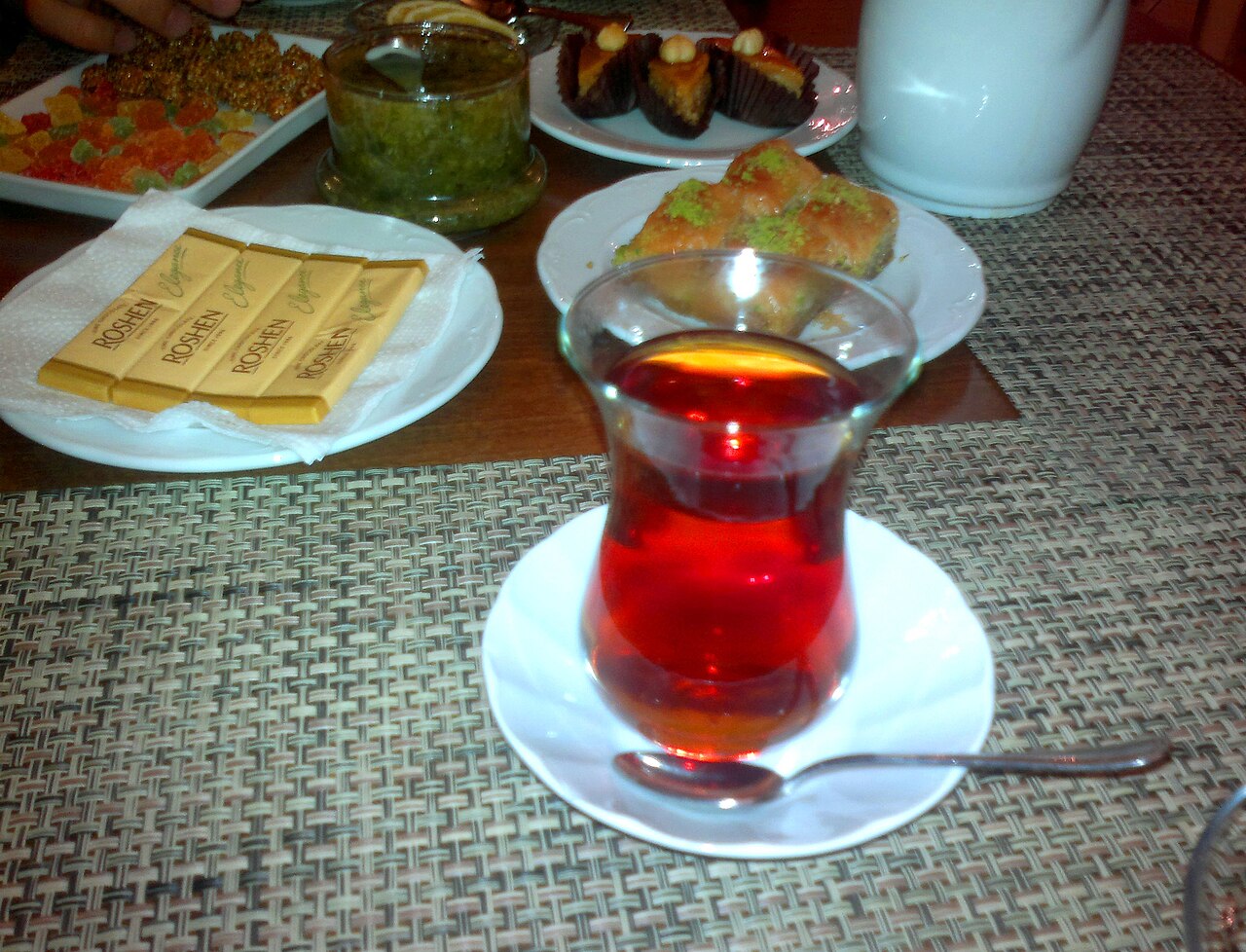
Strong black tea is the national drink, served all day long in small pear-shaped glasses called armudu. It comes with sugar lumps, slices of lemon and small dishes of fruit preserves, and it is offered to every guest as a sign of welcome.
Tradition says a guest should never leave a house without at least one glass of tea. At matchmaking visits, tea served without sugar is said to be a polite 'no'.
Table manners
Guests are welcomed with tea, usually before anything else. It is polite to accept at least one glass.
Bread is treated with great respect. Do not throw it away, put it on the floor or step over it; old bread is left in a clean place or given to birds.
Say 'nuş olsun', may it be good for you, to people who are eating, much like 'enjoy your meal'.
Take off your shoes when you enter a home unless your hosts tell you otherwise; slippers are often offered.
The eldest are served first and treated with great respect. At the end of the meal it is polite to thank your hosts warmly and praise the food, especially the plov.
Alcohol is legal and wine and beer are common, but many Azerbaijanis do not drink, so follow your hosts' lead.
About a third of Azerbaijan's people live on the Absheron Peninsula, in and around Baku and Sumgait, on the Caspian shore. Ganja and Mingachevir lie in the broad valley of the Kura, Shaki, Gabala and Quba in the green foothills of the Greater Caucasus, Shamakhi on the old road between them, and Lankaran in the wet, subtropical south near Iran. Far to the west, Nakhchivan is the capital of the country's exclave.
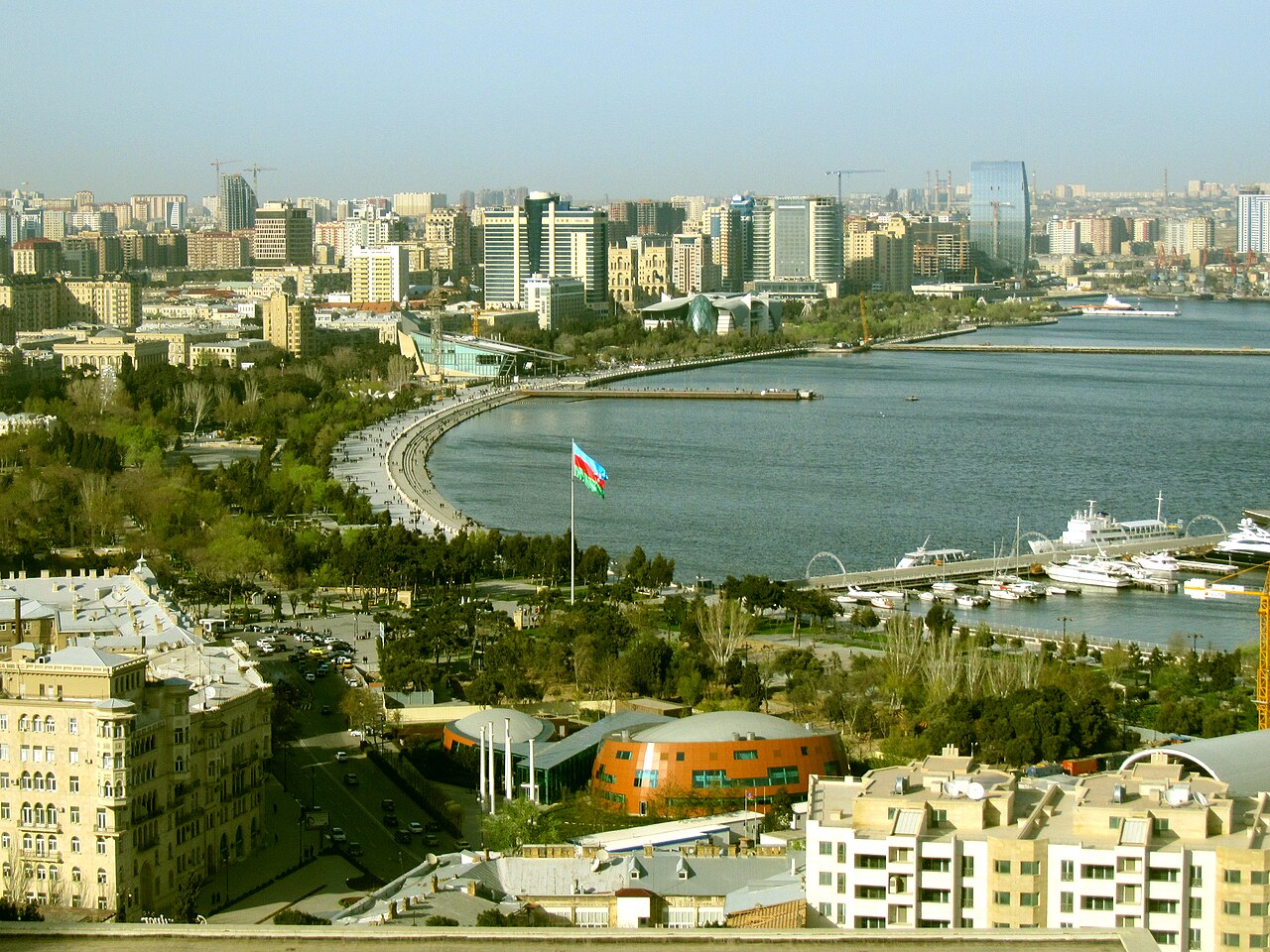
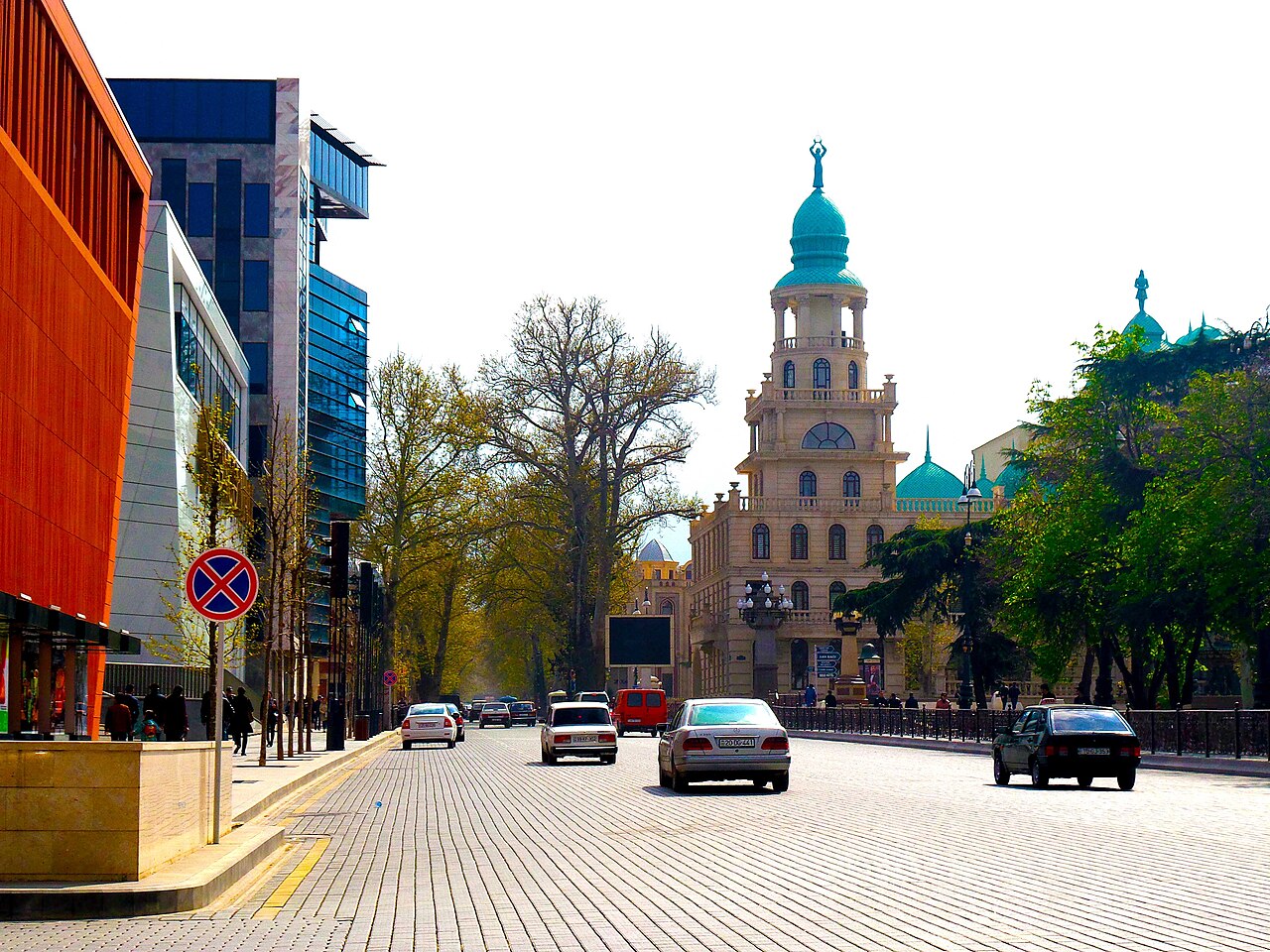
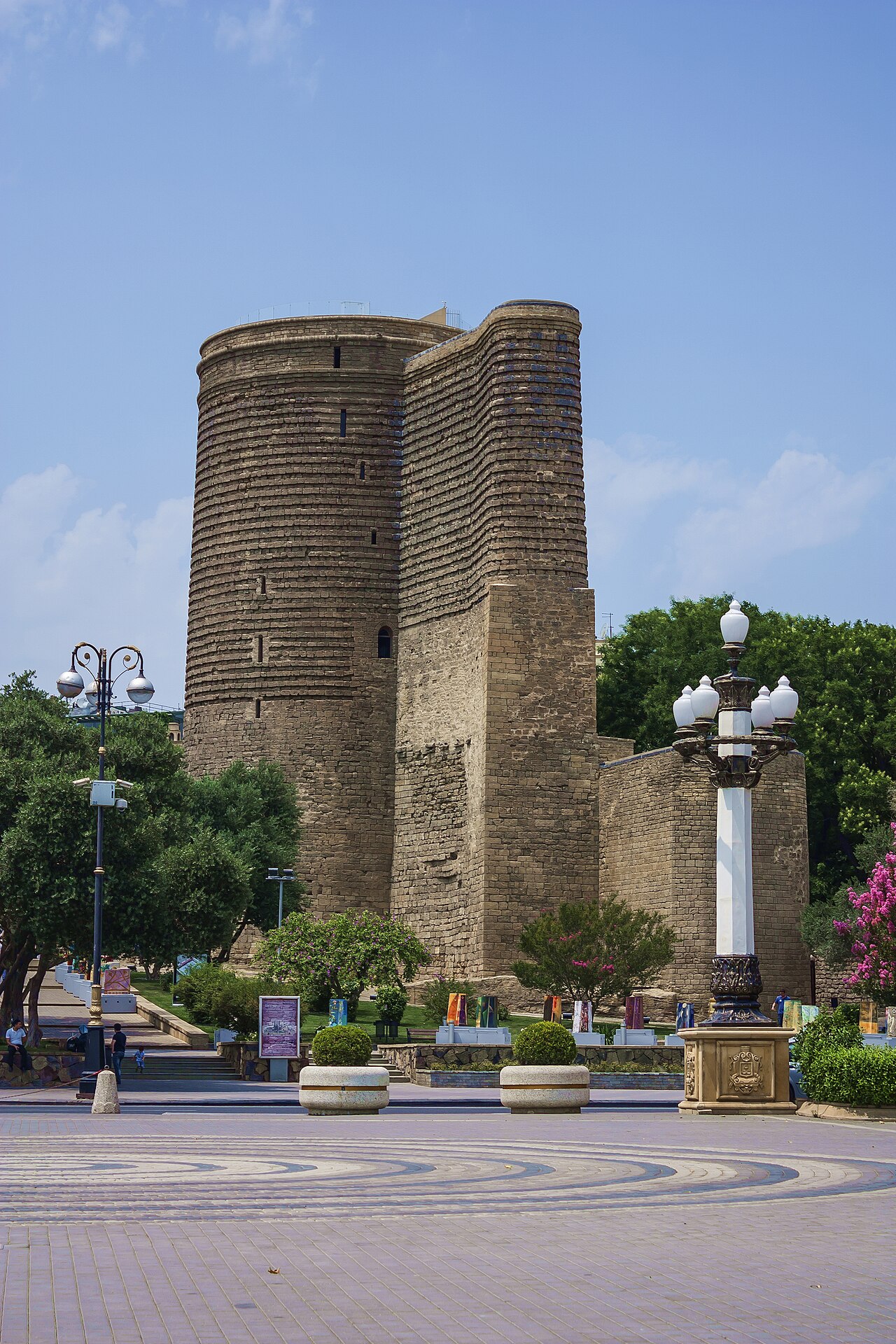
The capital and by far the largest city, with over two million people in the city and many more around it. The walled Old City, with its palace and the Maiden Tower, sits beside grand buildings of the first oil boom and glass towers of the second, and a long seaside boulevard runs along the bay. At about 28 metres below sea level, it is the lowest-lying national capital in the world.
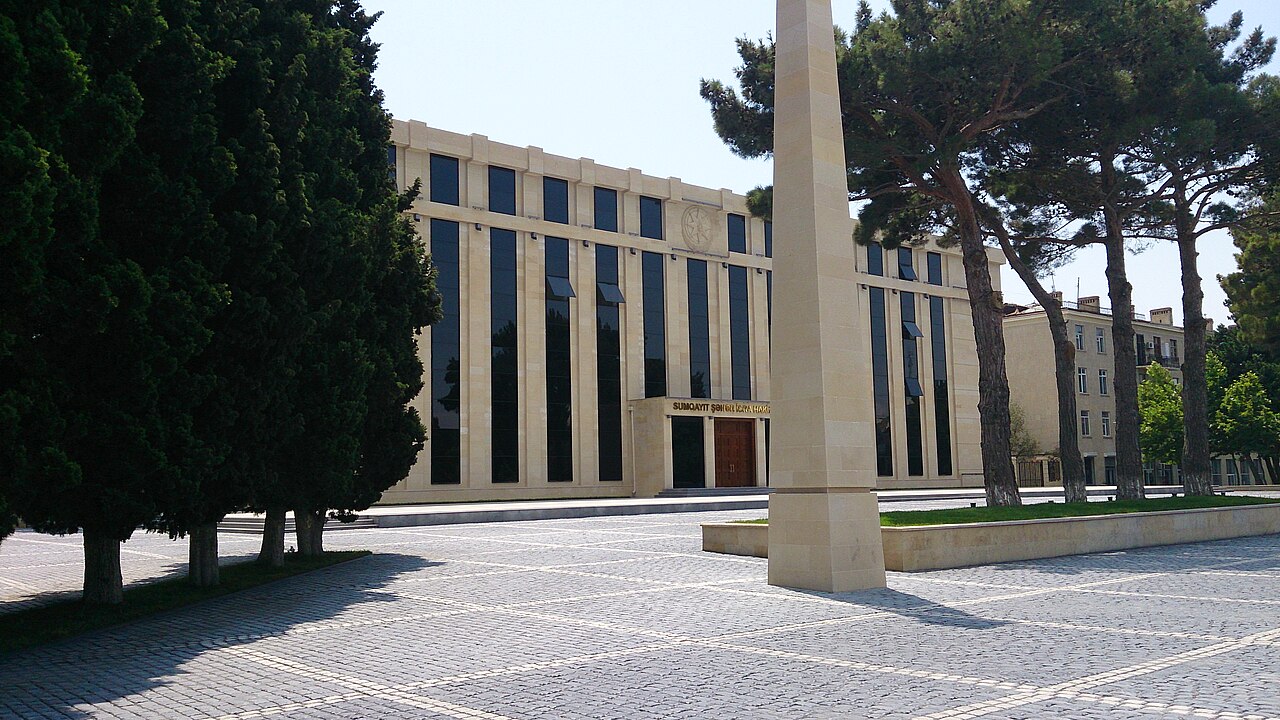
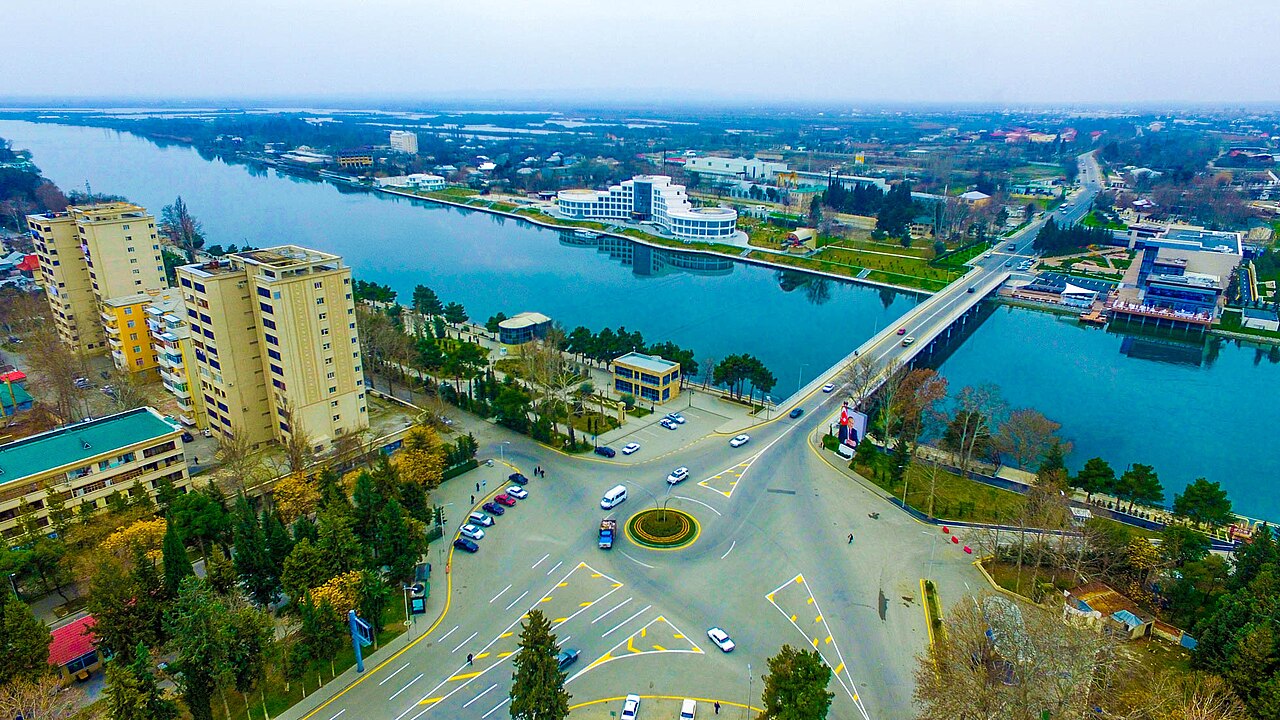
Azerbaijan's second-largest city, with about 430,000 people. It was founded in 1944 as a suburb of Baku, received city status in 1949 and grew into a major industrial centre in Soviet times. It is home to Sumqayit State University.
A historic city of about 335,000 people and the birthplace of the poet Nizami Ganjavi. It was the seat of the Ganja Khanate until 1804 and the temporary capital of the first republic in 1918, while Baku was not under its control. Lake Göygöl lies in the mountains to the south.
A city of about 106,000 people, built from 1948 around a great dam on the Kura. The Mingachevir Reservoir behind it is about 70 km long, and the power stations here give the city its nickname, the 'city of lights'.
Northwest, in the foothills of the Greater Caucasus
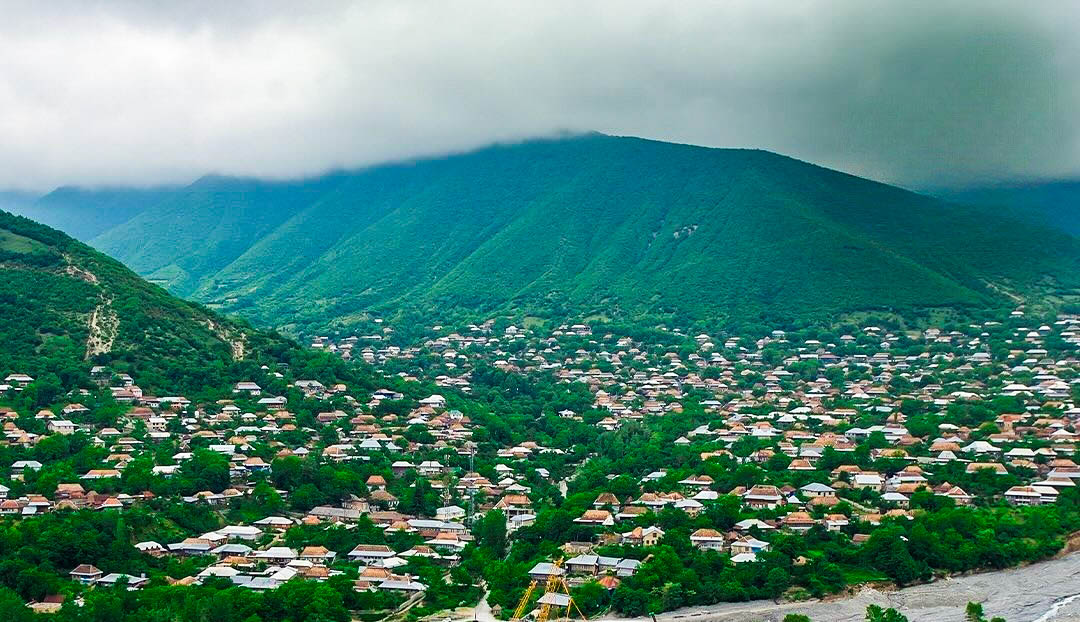
A green mountain town of about 68,000 people, about 240 km from Baku, once a rich stop on the Silk Road and a centre of silk making. Its historic centre, with the painted Palace of the Shaki Khans and old caravanserais where merchants once slept, has been a UNESCO World Heritage Site since 2019.
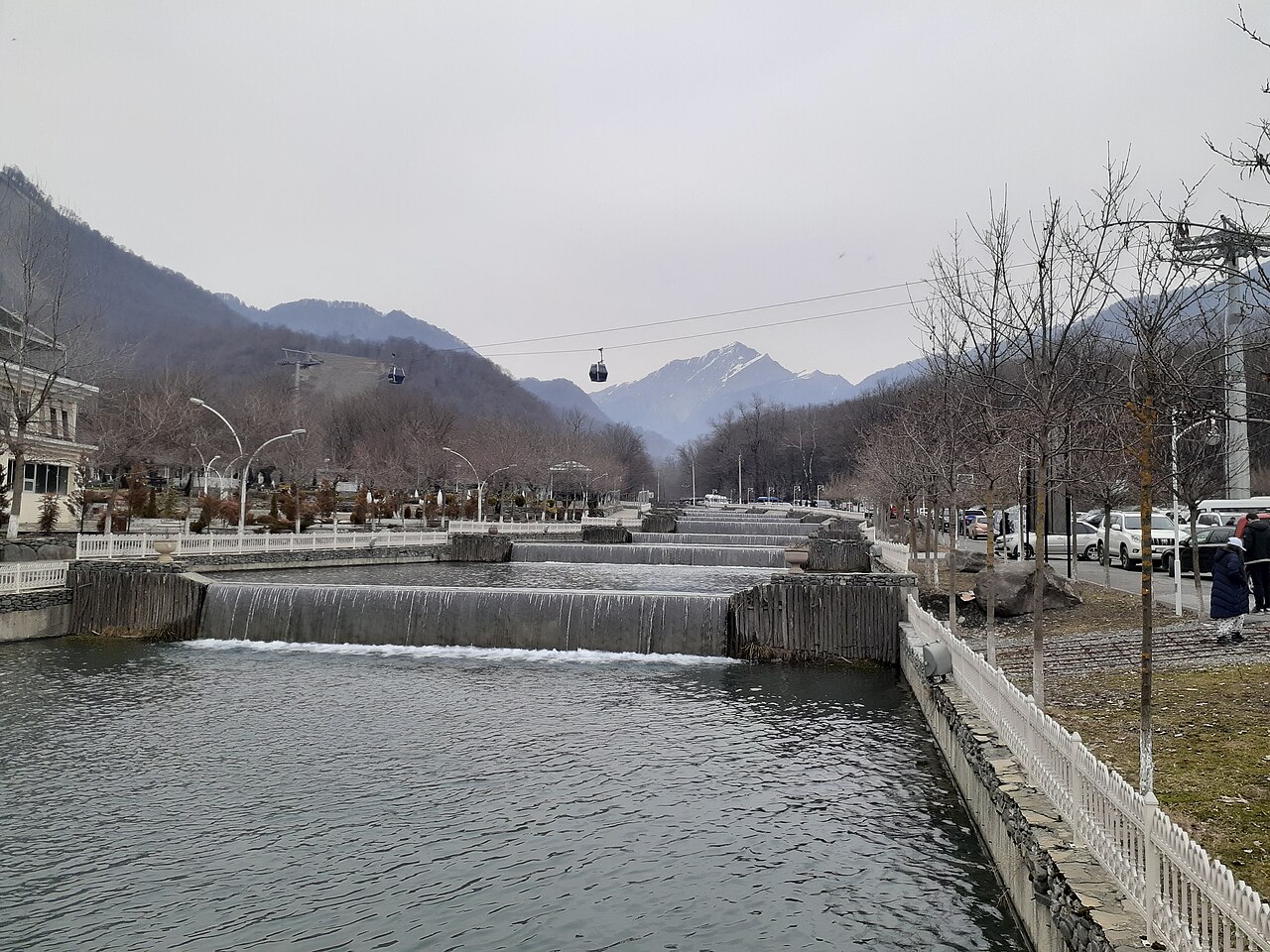
A small town among forests and mountains, named after the ancient city of Gabala, once the capital of Caucasian Albania, whose ruins lie about 20 km away. Today it is a popular mountain resort, and an international music festival of classical music and jazz has been held here since 2009.
A town of about 47,000 people at about 600 metres, long famous for its carpets. Across the river lies Qırmızı Qəsəbə, the Red Village, home to the country's community of Mountain Jews, and a winding road leads up to the high village of Khinalug.
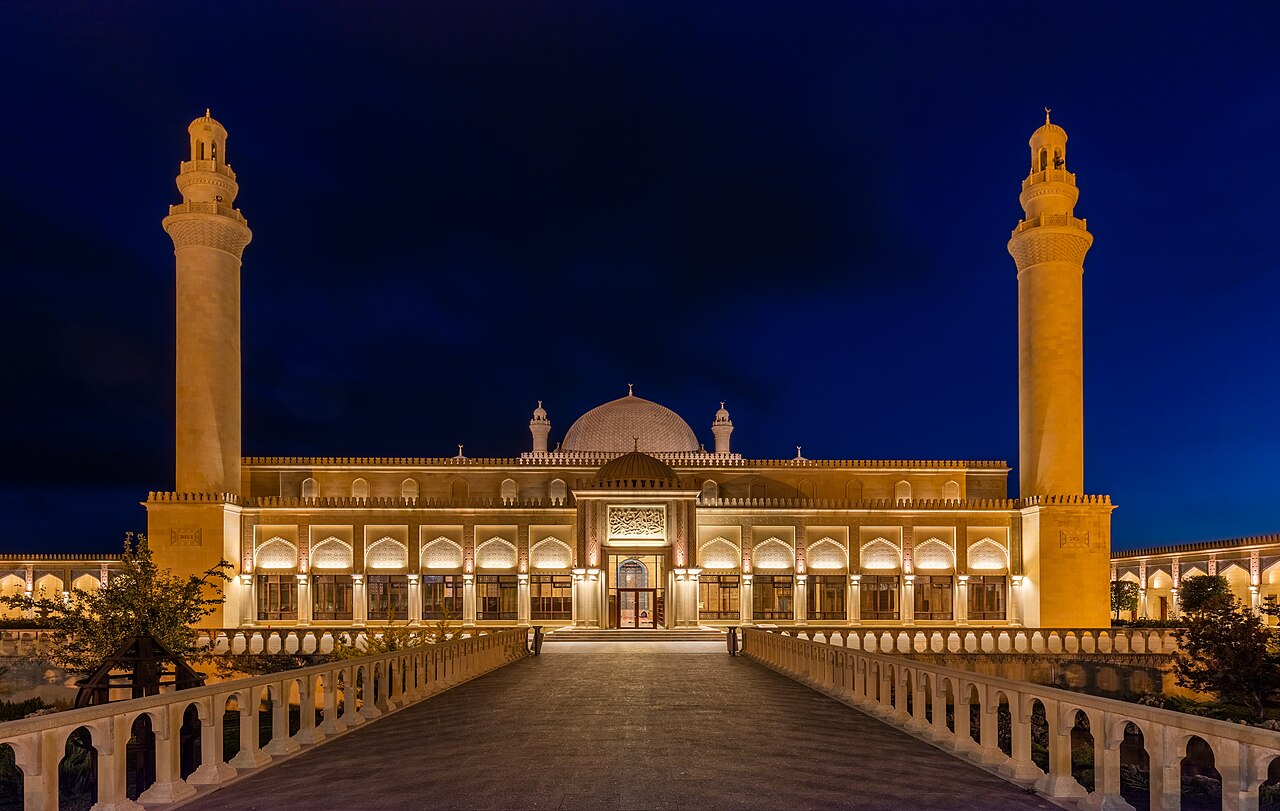
For centuries the capital of the Shirvanshahs and a busy Silk Road town, Shamakhi has been shaken by many strong earthquakes and rebuilt each time. Its Juma Mosque, first built in the 8th century, is one of the oldest mosques in the Caucasus. The hills around it are wine country, and the town is famous for its dancers.
A Caspian port of about 89,000 people with a warm, wet climate, where most people are Talysh. Tea plantations and citrus groves cover the lowlands, and the Talysh Mountains behind the town are covered in ancient Hyrcanian forest, part of which UNESCO added to its World Heritage List in 2023.
Capital of the Nakhchivan Autonomous Republic, the western exclave
The capital of Azerbaijan's exclave, about 450 km west of Baku and separated from the rest of the country by Armenian territory, so most visitors from Baku fly there. The city stands at about 870 metres, near the Aras river and the Iranian border, and is known for its medieval tomb towers, above all the Momine Khatun Mausoleum.
A massive stone tower, about 29 metres high, on the edge of Baku's Old City. It is usually dated to the 12th century, though some historians think its lower part is much older, and no one knows for certain what it was built for. Legends of a maiden who threw herself from the top gave it its name. Inside is a small museum, and the roof looks out over the Old City and the bay. It is part of a UNESCO World Heritage Site.
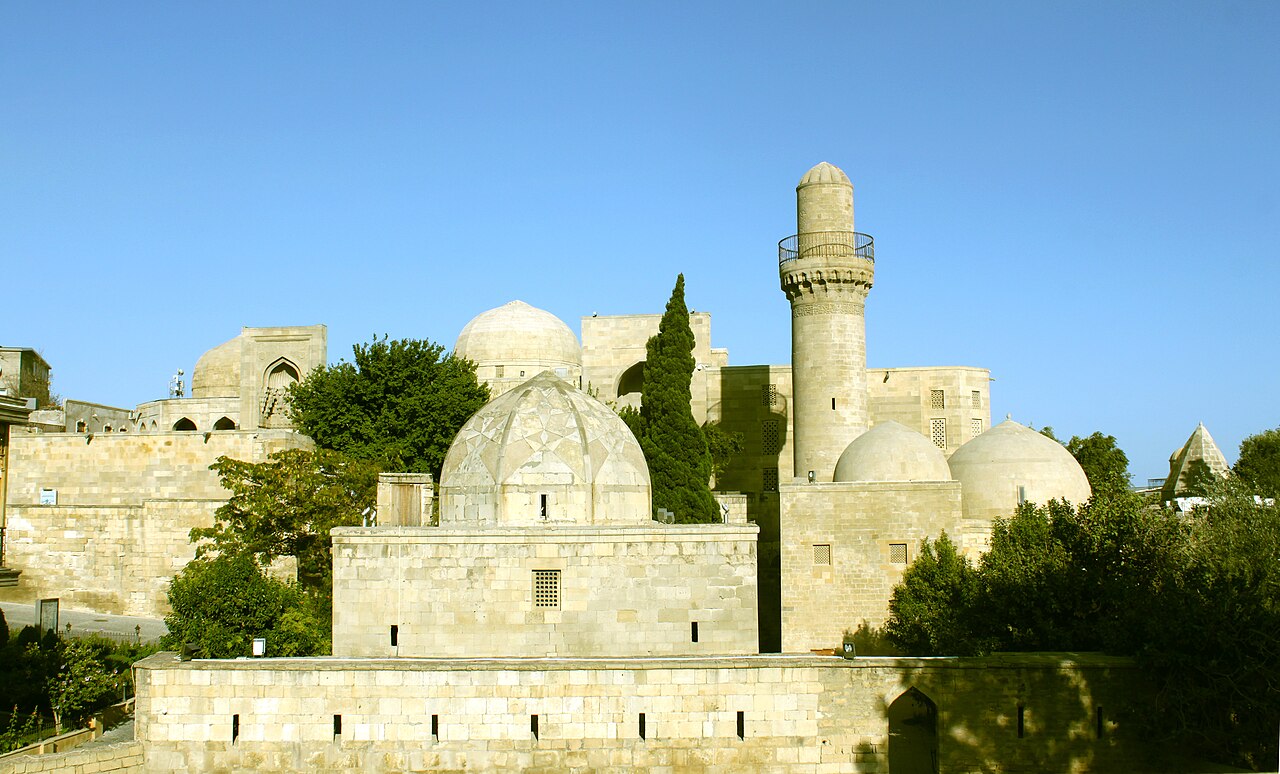
A 15th-century palace complex at the top of the Old City, built for the Shirvanshahs, who by then ruled from Baku rather than Shamakhi. It includes the palace, a court hall called the Divankhana, a mosque with its minaret, royal tombs and a bathhouse. Together with the city walls and the Maiden Tower, it has been on the UNESCO World Heritage List since 2000.
On rocky hills about 70 km southwest of Baku, more than 6,000 carvings show hunters, dancers, bulls, deer and reed boats, made over thousands of years from the Stone Age onwards. A modern museum explains them, and nearby are bubbling mud volcanoes and stones that ring like a drum when struck. It has been a UNESCO World Heritage Site since 2007.
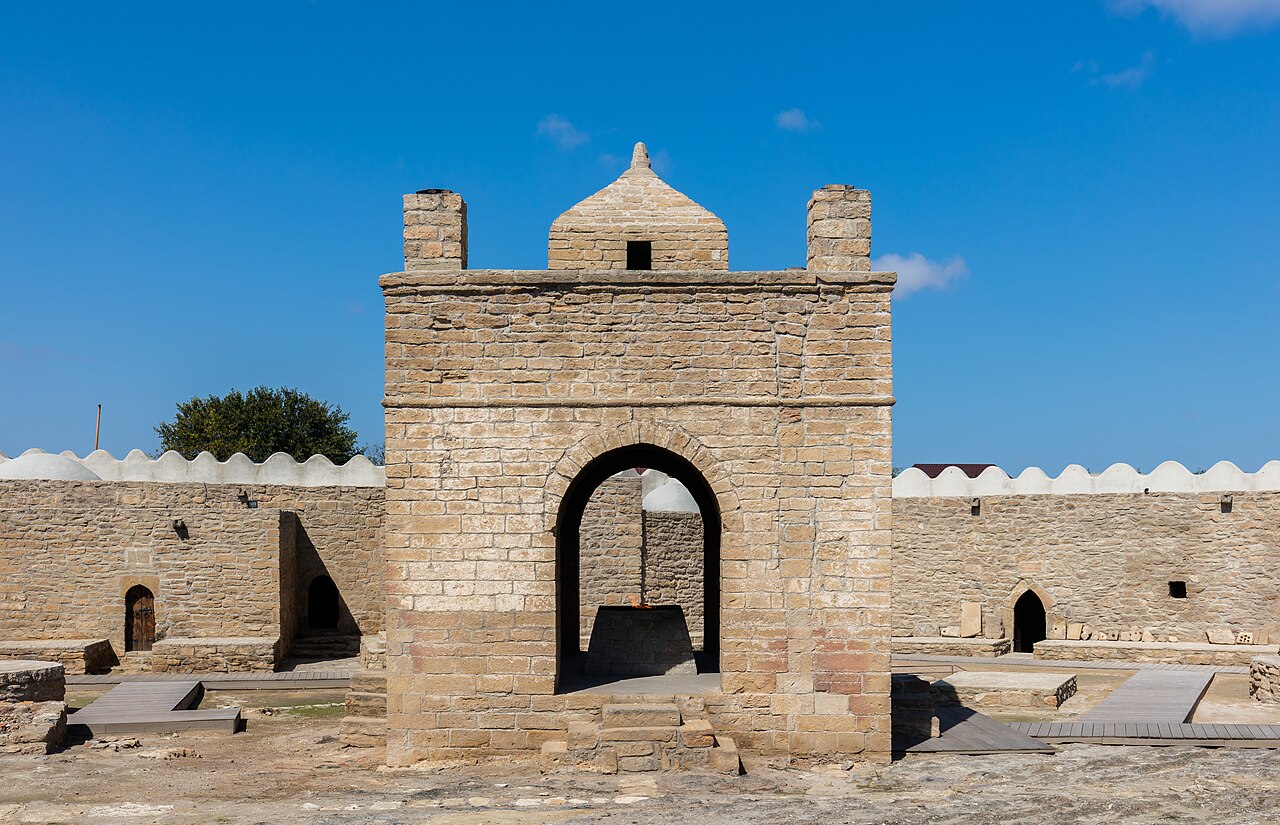
A walled, five-sided courtyard in the town of Surakhany, east of Baku, built in the 17th and 18th centuries around an altar where natural gas once burned. Traders and pilgrims from India worshipped here and lived in the small cells around the walls; historians still debate whether it began as a Hindu or a Zoroastrian shrine. The natural flame died out in 1969 after years of oil and gas extraction nearby, and it now burns on piped gas.
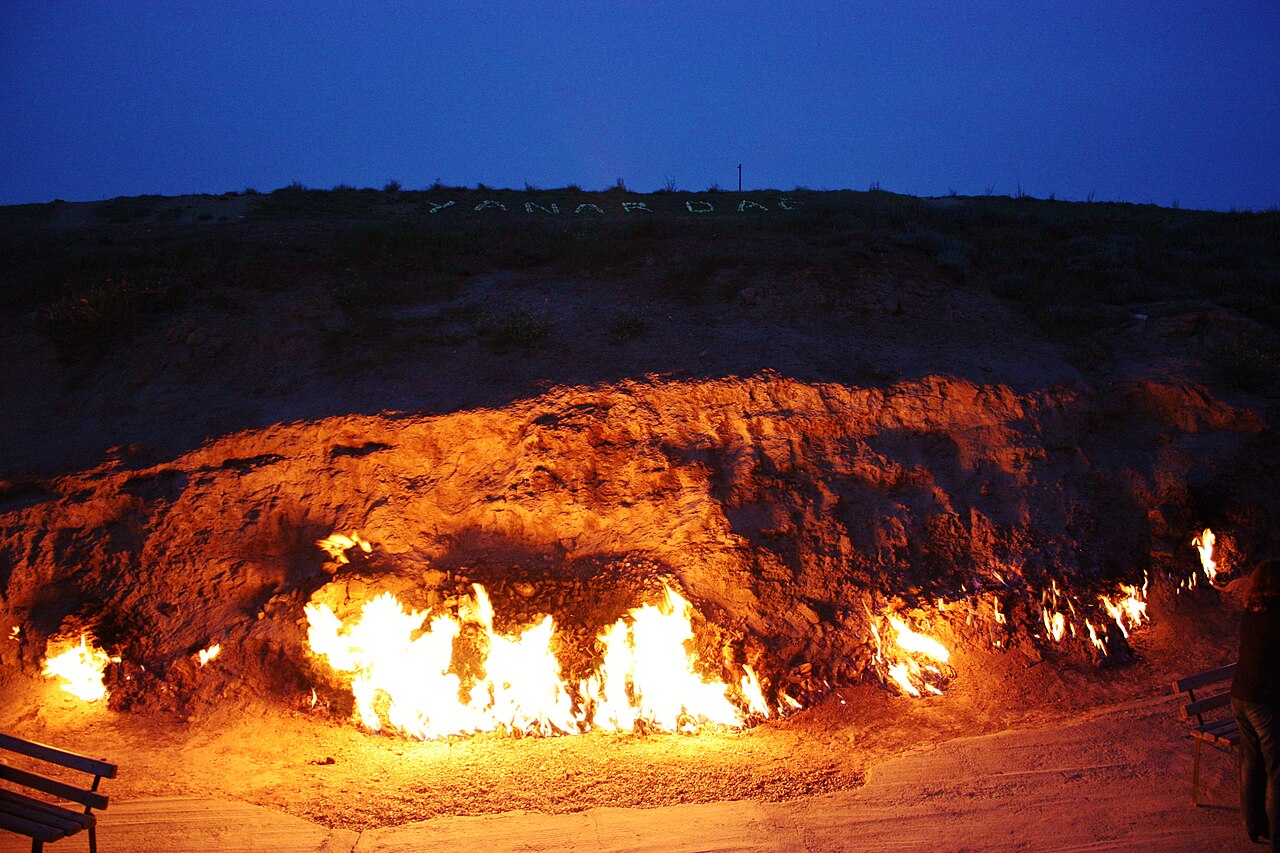
The 'burning mountain', a hillside north of Baku where a wall of flame up to 3 metres high burns day and night, fed by natural gas seeping out of the sandstone. Unlike the Ateshgah flame, it still burns naturally, and it is at its most striking after dark or in the rain and snow.
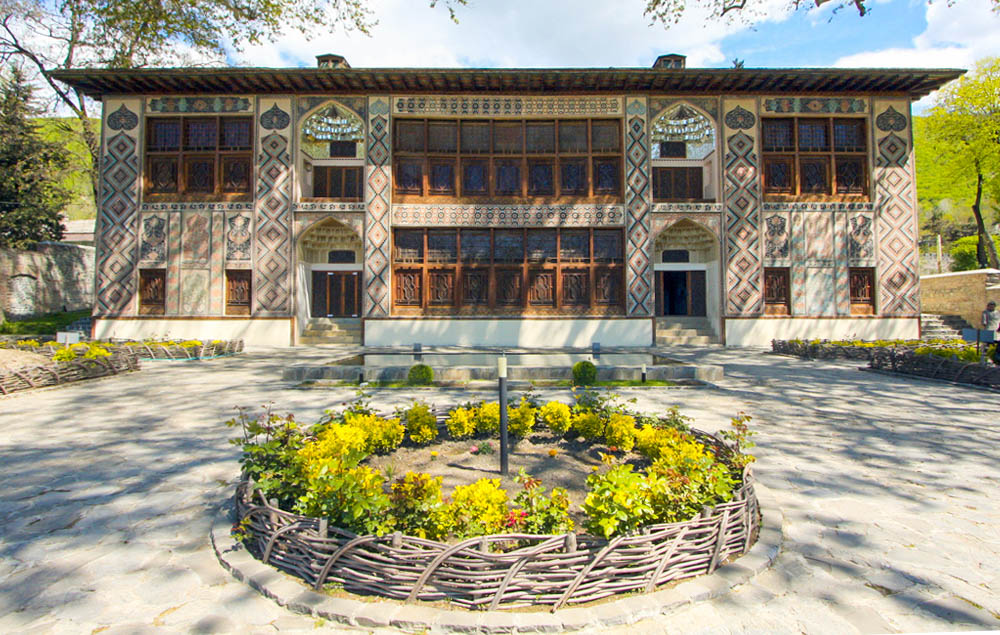
The summer palace of the khans of Shaki, completed in 1797. Its walls and ceilings are covered with bright paintings of flowers, hunting and battle scenes, and its windows are filled with shebeke, coloured glass set in wooden lattices assembled without nails or glue. It is part of the UNESCO World Heritage Site of Shaki's historic centre.
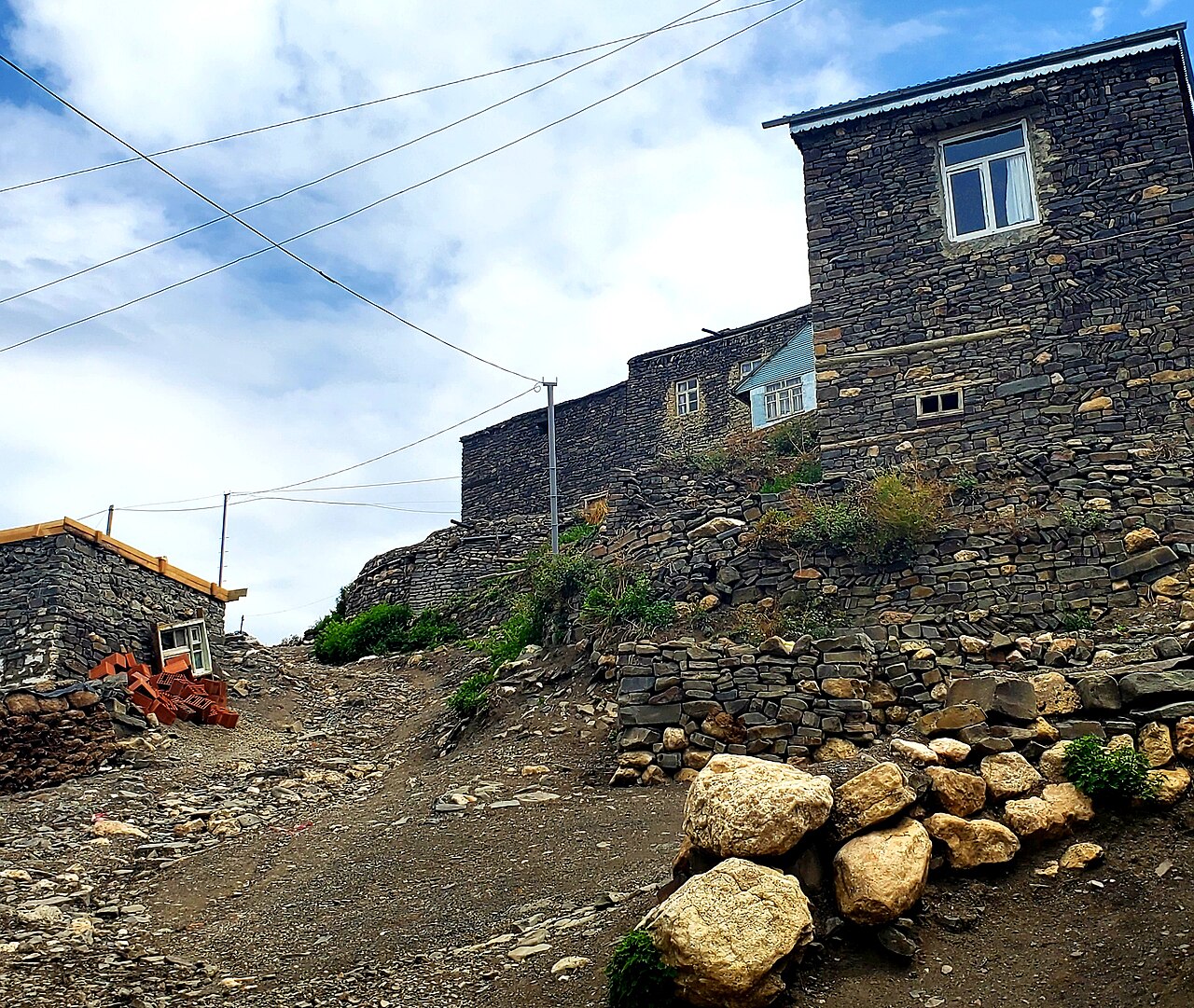
A stone village high in the Greater Caucasus, about 2,200 metres up, the highest village in Azerbaijan. Its roughly 2,000 people speak their own language, Khinalug, found nowhere else, and still move their flocks between summer and winter pastures along an ancient route. The village and that route became a UNESCO World Heritage Site in 2023.
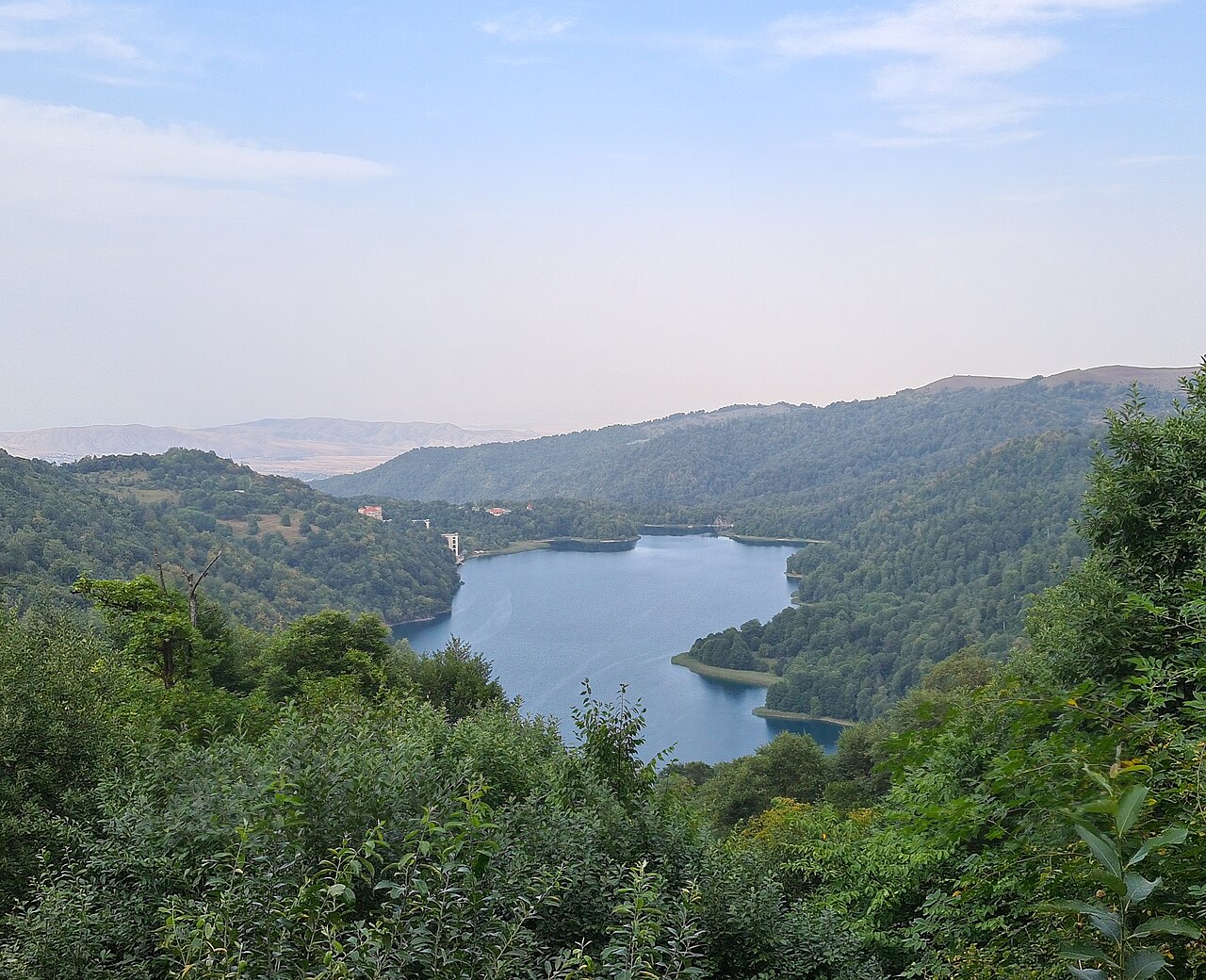
A clear mountain lake at about 1,550 metres in the Lesser Caucasus, south of Ganja. It formed after the great earthquake of 1139, when part of Mount Kapaz collapsed and blocked a river. The lake and the forests around it are protected as Göygöl National Park, the most visited national park in the country.
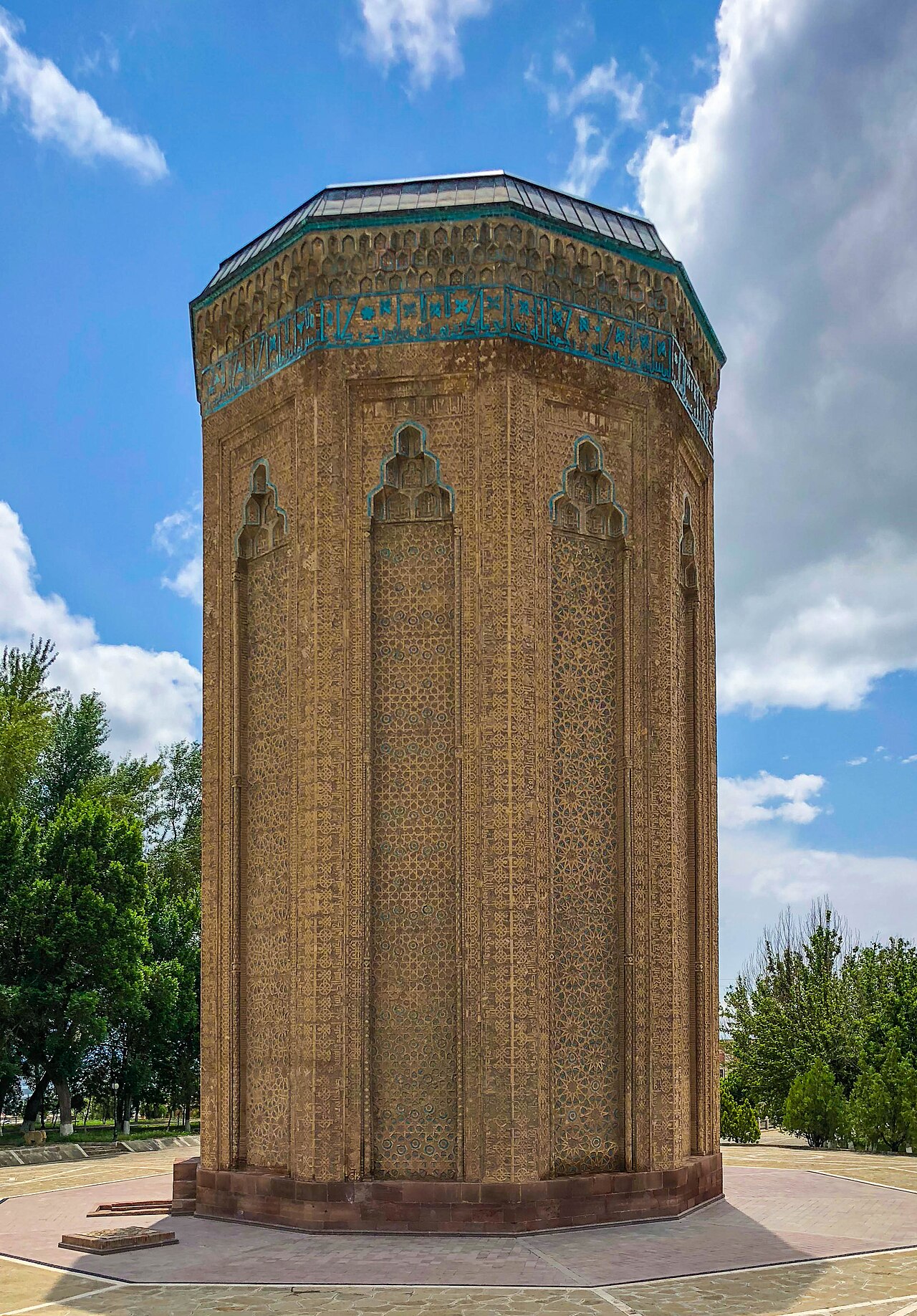
A ten-sided tomb tower built in 1186 by the architect Ajami Nakhchivani for Momine Khatun, the mother of a local ruler. It was once 34 metres high and is still about 25 metres tall, its brick walls covered with intricate geometric patterns and inscriptions from the Quran, picked out with blue-turquoise tiles.
Baku lies about 28 metres below sea level, which makes it the lowest-lying national capital in the world.
02
By 1901 the oil fields around Baku produced more than half of all the oil in the world.
03
Azerbaijan has hundreds of mud volcanoes, and by common estimates nearly half of all the mud volcanoes on Earth are found here, many of them around Gobustan.
04
A piece of Azerbaijani mugham music, played on the balaban, a wooden wind instrument, travels through space on the Voyager Golden Record, launched in 1977 with the Voyager spacecraft.
05
Azerbaijani has been written in three alphabets in one century: Arabic script until 1929, then Latin, then Cyrillic from 1939, and Latin again after 1991. Since 2001 the Latin alphabet, with letters such as ə, ğ and ı, has been the only official one.
06
Qırmızı Qəsəbə, the Red Village near Quba, had about 3,600 people in 2010, mostly Mountain Jews, and is widely described as the only town in the world with a mostly Jewish population outside Israel and the United States.
07
Robert and Ludvig Nobel ran one of the world's largest oil companies from Baku in the late 1800s, and their brother Alfred, founder of the Nobel Prizes, was one of its shareholders.
08
Azerbaijan won the Eurovision Song Contest in 2011, only its fourth time taking part, and hosted the contest in Baku the next year.
09
Formula One cars race through the streets of Baku, past the walls of the Old City. At about 6 km, it is one of the longest circuits on the calendar, and the first race there was held in 2016.
10
The chess world champion Garry Kasparov was born in Baku in 1963, when it was part of the Soviet Union.
11
Before Novruz, the spring New Year, families mark the last four Tuesdays of winter, each for one element: water, fire, wind and earth. On these evenings children jump over small bonfires.
12
UNESCO has listed several Azerbaijani traditions as intangible heritage, including mugham music, carpet weaving, and the making and sharing of dolma.
13
The Caspian Sea, on Azerbaijan's shore, is the largest inland body of water in the world. In Azerbaijani it is called Xəzər dənizi, the Khazar Sea, after a people who once ruled north of it.
14
Khinalug, a mountain village of about 2,000 people, has its own language, Khinalug, which is spoken nowhere else on Earth.
A few letters to know: ə sounds like the a in 'cat', x like the ch in Scottish 'loch', ı like the u in 'butter', q usually like a hard g, c like j, ç like ch, ş like sh, and ö and ü as in German. Stress usually falls on the last syllable. Pronunciation is written the way it sounds; the capital letters show where the stress goes. Audio is coming soon.
Greetings
salamsa-LAMhello
sağ olSAGH olthanks (also said as 'goodbye')
hələlikha-la-LIK (a as in 'cat')bye, so long
zəhmət olmasazah-MAT OL-ma-saplease (when asking for something)
Many visitors need a visa, which most can get online as an e-visa through the official ASAN Visa system, usually for a single stay of up to 30 days. Apply at least three days before you travel, check the rules for your nationality, and make sure your passport is valid for at least six months after you arrive.
Most visitors arrive by air
Most visitors arrive by air. Azerbaijan closed its land borders to most travellers in 2020 and has extended the closure many times since, so check the current rules before you plan any overland journey.
Register if you stay longer than 15 days
Visitors who stay in Azerbaijan for more than 15 days must register with the State Migration Service, online or in person; hotels often do this for you. If you do not, you may be fined when you leave.
Karabakh and the Armenian border
Areas near the border with Armenia and in the southwest still have landmines and unexploded shells, and official travel advice warns against visiting them. If you have ever visited Karabakh without the Azerbaijani government's permission, you may be refused entry, so ask an Azerbaijani embassy first.
Buying carpets
Carpets and antiques need an export certificate to leave the country. Reputable sellers can arrange it, or it can be obtained through the Azerbaijan National Carpet Museum in Baku. Keep your receipts.
Getting around Baku
The Baku Metro is cheap, clean and decorated with marble and mosaics; buy a rechargeable BakuCard at a station. For taxis, use a ride-hailing app or agree the fare before you get in, as overcharging is common.
Dress and photos
Baku is relaxed and modern, but dress more modestly in the countryside and cover your shoulders and knees in mosques, where women should also cover their hair. Do not photograph military sites or soldiers, and do not bring a drone: they are not allowed for visitors.
Emergency numbers
Dial 103 for an ambulance, 102 for the police and 101 for the fire service. The number 112 reaches the Ministry of Emergency Situations.
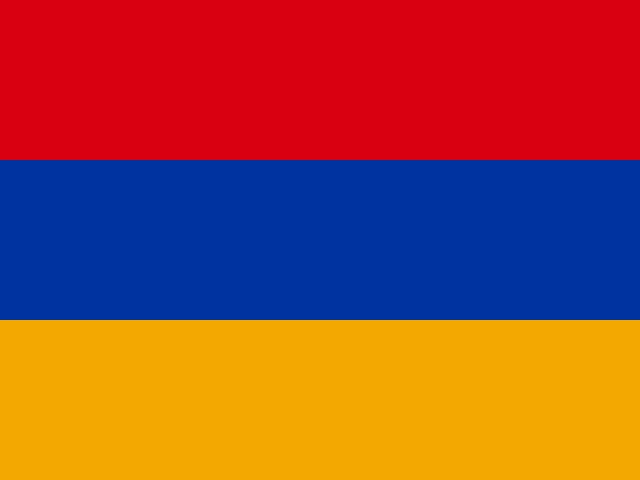 Armenia
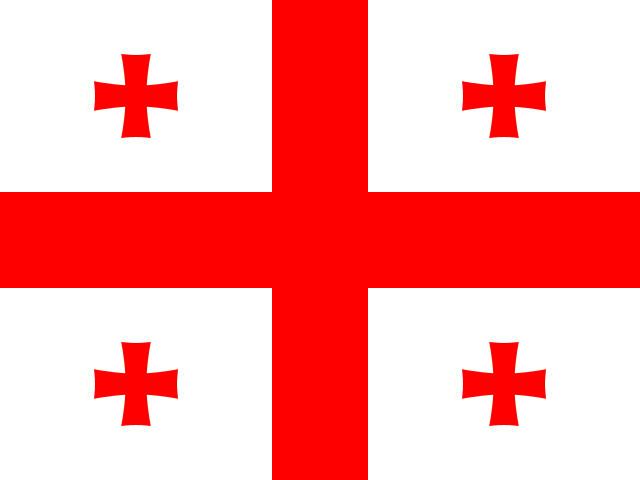 Georgia
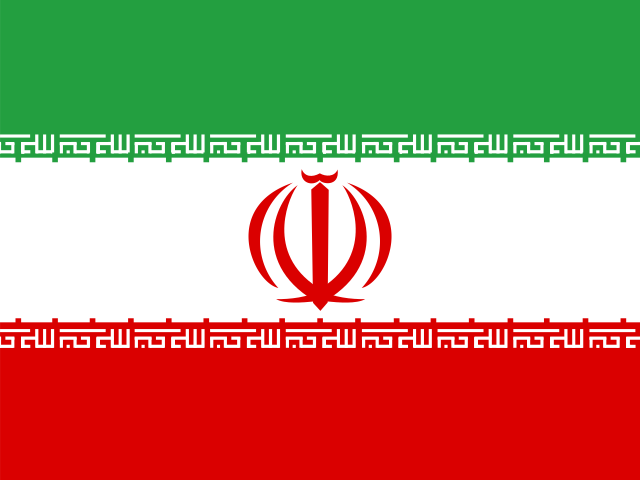 Iran
Iran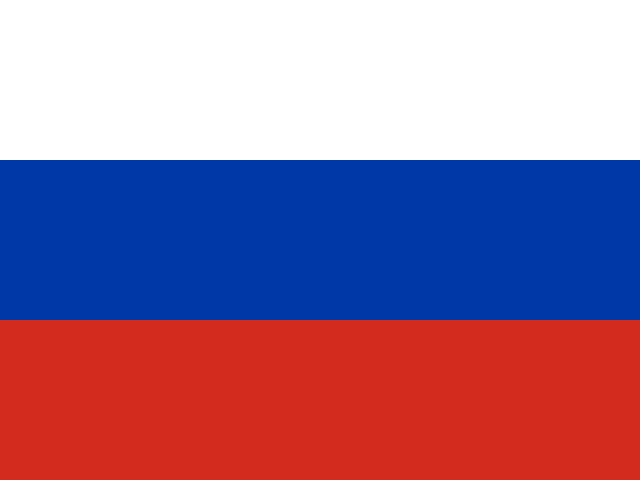 Russia
 Türkiye