A free large-print PDF. Choose what goes in: facts, map, history, dishes and recipes, phrases, fun facts, a quiz with or without answers. Made for clubs, care homes, libraries and family afternoons.
Türkiye, still widely called Turkey in English, is a large country where Europe meets Asia. A small corner, East Thrace, lies in Europe, while most of the land is the broad peninsula of Anatolia, also called Asia Minor. The Bosphorus, the Sea of Marmara and the Dardanelles divide the two parts, and the country has long coasts on the Black Sea, the Aegean and the Mediterranean. In 2022 the government asked the United Nations and other international bodies to use the name Türkiye, the country's own name for itself, and the UN agreed. Both names refer to the same country.
People have lived here for a very long time: Göbekli Tepe, near Şanlıurfa, is about 11,000 years old. Hittites, Greeks, Persians, Romans and Byzantines followed, and Turkish peoples arrived from the east after 1071. The Ottoman Empire ruled from Istanbul for centuries, and after it collapsed in the First World War, Mustafa Kemal Atatürk founded the Republic of Turkey in 1923, with Ankara as its capital.
About 86 million people live in Türkiye. Istanbul, with nearly 16 million, is by far the largest city, but Ankara is the capital. Most people are Turkish and Muslim. Kurds are the largest minority, often estimated at 15 to 20 percent of the population or more, and decades of armed conflict between the state and the PKK, a Kurdish militant group, gave way to a peace process: in 2025 the PKK announced that it would lay down its arms and dissolve, and in 2026 parliament passed a law to support the process. Visitors come for Istanbul, the fairy chimneys of Cappadocia, ancient cities such as Ephesus, the turquoise coast around Antalya, and the food.
CapitalAnkara
PopulationAbout 86 million (official figure for the end of 2025)
Official languageTurkish, as set out in the constitution. Kurdish, Arabic and other languages are also spoken
CurrencyTurkish lira (TRY, symbol ₺), divided into 100 kuruş
AreaAbout 784,000 km², mostly in Asia, with a small part (East Thrace) in Europe
GovernmentPresidential republic with an elected president and parliament (President Recep Tayyip Erdoğan, since 2014)
Highest mountainMount Ararat (Ağrı Dağı), 5,137 m, a dormant volcano in the far east
Longest riverThe Kızılırmak, about 1,355 km, the longest river entirely inside Türkiye. The Euphrates and Tigris rise in Türkiye but flow on into Syria and Iraq
NeighboursGreece and Bulgaria in Europe; Georgia, Armenia, Azerbaijan (its Nakhchivan exclave), Iran, Iraq and Syria in Asia. Across the sea: the island of Cyprus to the south, many Greek islands just off the Aegean coast, and Ukraine, Russia and Romania across the Black Sea
Anatolia is one of the oldest settled lands on earth. Hunter-gatherers raised the stone circles of Göbekli Tepe, and later came the Hittites, Greek cities along the coast, the Persians, Alexander the Great and the Romans. Byzantium became Constantinople, capital of the Eastern Roman Empire for over a thousand years. Turkish peoples arrived from Central Asia in the 11th century, the Ottomans rose from a small state in the northwest to a great empire, and after the First World War the modern republic was founded in 1923. Some chapters of this history, such as the fate of the Armenians in 1915 and the division of Cyprus in 1974, are still seen very differently by different sides.
9500 BC
Göbekli Tepe is built
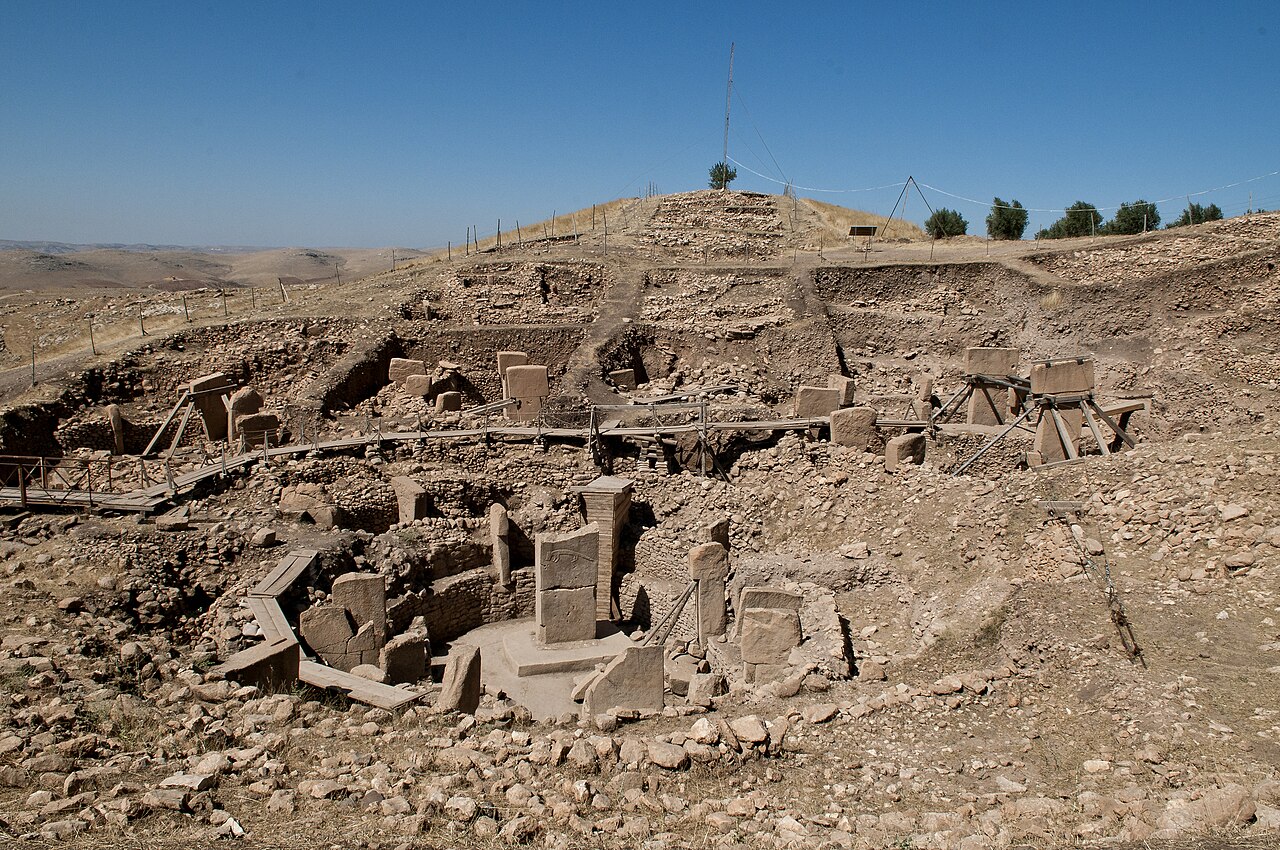
From about 9500 BC, people who still lived mainly by hunting and gathering built round enclosures of huge carved T-shaped stone pillars on a hill near today's Şanlıurfa. They are among the oldest known monumental buildings in the world, thousands of years older than Stonehenge or the pyramids.
1650 BC
Hattusa becomes the Hittite capital
Around 1650 BC the Hittite king Labarna moved his capital to Hattusa, near today's Boğazkale in central Anatolia, and took the name Hattusili. From here the Hittites ruled a great empire. A tablet found at Hattusa records their peace treaty with Ramesses II of Egypt, one of the oldest known peace treaties.
AD 330
Constantinople becomes the capital
The Roman emperor Constantine the Great rebuilt the old Greek city of Byzantium, founded about 660 BC, and in 330 made it the new capital of the empire under the name Constantinople. It remained the capital of the Eastern Roman, or Byzantine, Empire for over 1,100 years.
AD 537
Hagia Sophia is completed
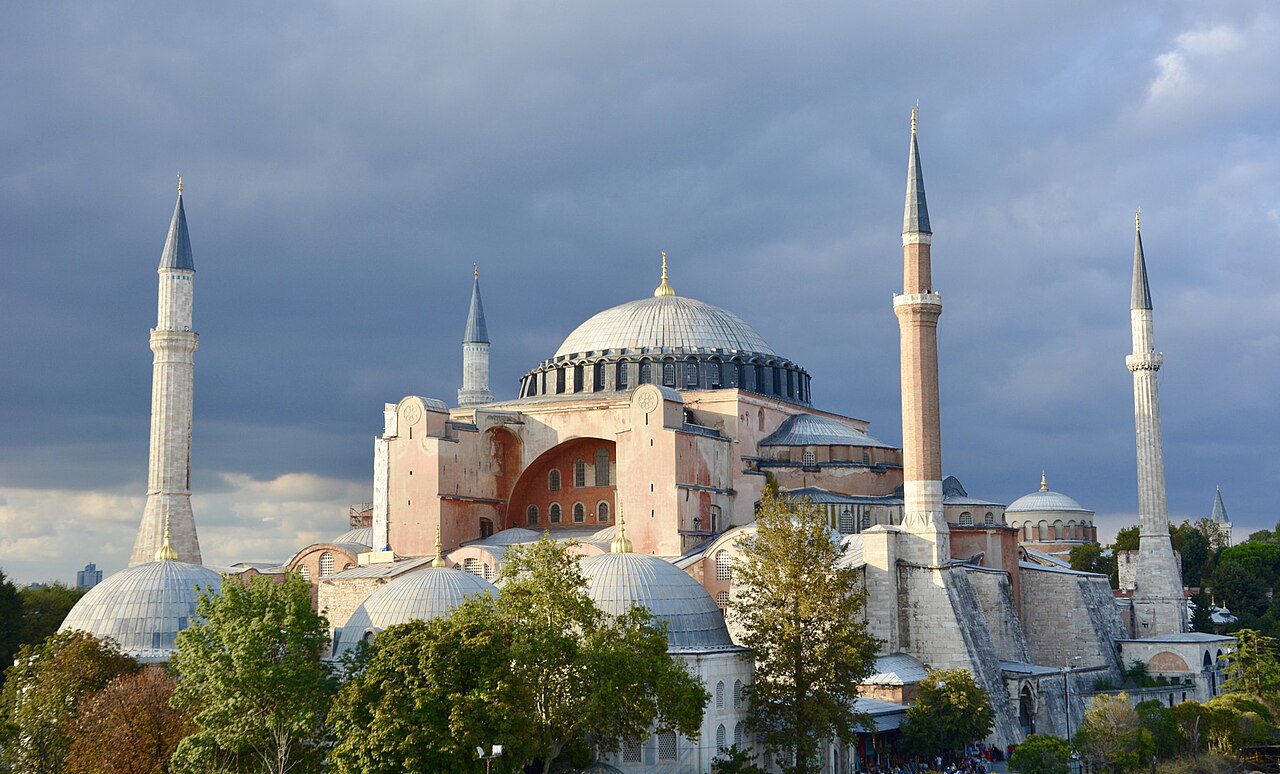
Emperor Justinian I had the great church of Hagia Sophia rebuilt in only about five years, and it was inaugurated on 27 December 537. Its huge dome made it one of the wonders of its age, and it was the cathedral of Constantinople for over 900 years.
1071
The Battle of Manzikert
On 26 August 1071 the Seljuk Turks under Sultan Alp Arslan defeated the Byzantine army near Malazgirt in eastern Anatolia and captured Emperor Romanos IV. The victory opened Anatolia to Turkish settlement, and the land slowly became Turkish in language and culture.
1299
The Ottoman state is founded
According to tradition, around 1299 Osman I founded a small state in northwestern Anatolia. His descendants, the Ottomans, took Bursa, then Edirne, and built an empire that at its height stretched from Hungary to Arabia and North Africa and lasted until 1922.
1453
The Ottomans take Constantinople
On 29 May 1453, after a siege of 53 days, the 21-year-old Sultan Mehmed II took Constantinople, and the last Byzantine emperor, Constantine XI, died in the fighting. Mehmed, known ever after as 'the Conqueror', made the city his capital and turned Hagia Sophia into a mosque.
1520
Suleiman the Magnificent becomes sultan
Suleiman I ruled from 1520 to 1566, the longest reign of any Ottoman sultan. Called 'the Magnificent' in Europe and Kanuni, 'the Lawgiver', in Turkish, he led armies to Vienna in 1529, and his architect Mimar Sinan built the Süleymaniye Mosque in Istanbul.
1915
The Gallipoli landings
On 25 April 1915, in the First World War, British, French, Australian and New Zealand troops landed on the Gallipoli peninsula to try to open the straits to Istanbul. After about eight months of fighting, with huge losses on both sides, the Allies withdrew in January 1916. A young officer, Mustafa Kemal, made his name here. Australians and New Zealanders remember 25 April as Anzac Day.
1915
The Armenian deportations and massacres
From April 1915, during the First World War, the Ottoman government deported the Armenian population of Anatolia, and between about 600,000 and 1.5 million Armenians died in massacres and death marches. Most historians and many countries call these events the Armenian genocide. The Turkish government rejects that term and describes the deportations as a wartime measure. Armenians remember the victims every year on 24 April.
1923
The Republic of Turkey is proclaimed
After the War of Independence, the Grand National Assembly made Ankara the capital on 13 October 1923 and proclaimed the Republic of Turkey on 29 October 1923. Mustafa Kemal, later given the surname Atatürk, 'father of the Turks', became its first president. 29 October is Republic Day.
1928
A new Latin alphabet
A law of 1 November 1928 replaced the Arabic script with a new alphabet of 29 Latin letters, including ç, ğ, ı, ö, ş and ü, which matches spoken Turkish very closely. Atatürk himself toured the country to teach it, and schools for adults opened everywhere.
1934
Women win the vote
Turkish women could vote in local elections from 1930, and on 5 December 1934 parliament gave them the right to vote and stand in national elections. In the election of February 1935, 17 women became members of parliament. This was ten years before women in France could vote.
1974
Cyprus is divided
In July 1974 a coup in Cyprus, backed by the military government in Athens, aimed at union with Greece. Türkiye then sent troops, and by mid-August they held more than a third of the island. Cyprus has been divided ever since, with a UN buffer zone between the Greek Cypriot south and the Turkish Cypriot north, which only Türkiye recognises as a state. Talks to reunite the island have so far failed.
2022
The UN adopts the name Türkiye
On 1 June 2022 the United Nations received a letter from the Turkish foreign minister asking it to use Türkiye instead of Turkey, and the change took effect at once. Many governments and organisations followed, while 'Turkey' remains the common name in everyday English.
2023
Earthquakes in the southeast
On 6 February 2023 two huge earthquakes, of magnitude 7.8 and about 7.5, struck southeastern Türkiye and northern Syria about nine hours apart. More than 53,000 people died in Türkiye alone, whole neighbourhoods in cities such as Antakya and Kahramanmaraş collapsed, and rebuilding is still going on.
Turkish cooking brings together the grain and dairy of the Central Asian steppe, the olive oil and fish of the Aegean and the Black Sea, the spice and kebabs of the southeast, and the refined dishes of the Ottoman palace kitchens. Breakfast, kahvaltı, is a big spread of cheese, olives, tomatoes, cucumbers, eggs, honey, jam and bread, with endless glasses of tea. A dinner often starts with meze, small cold and hot dishes to share, followed by soup, a main dish of meat or vegetables with rice or bulgur, and fruit or a sweet. Bread comes with every meal, and a small cup of Turkish coffee may end it.
All of Türkiye, especially the Aegean coast and Istanbul
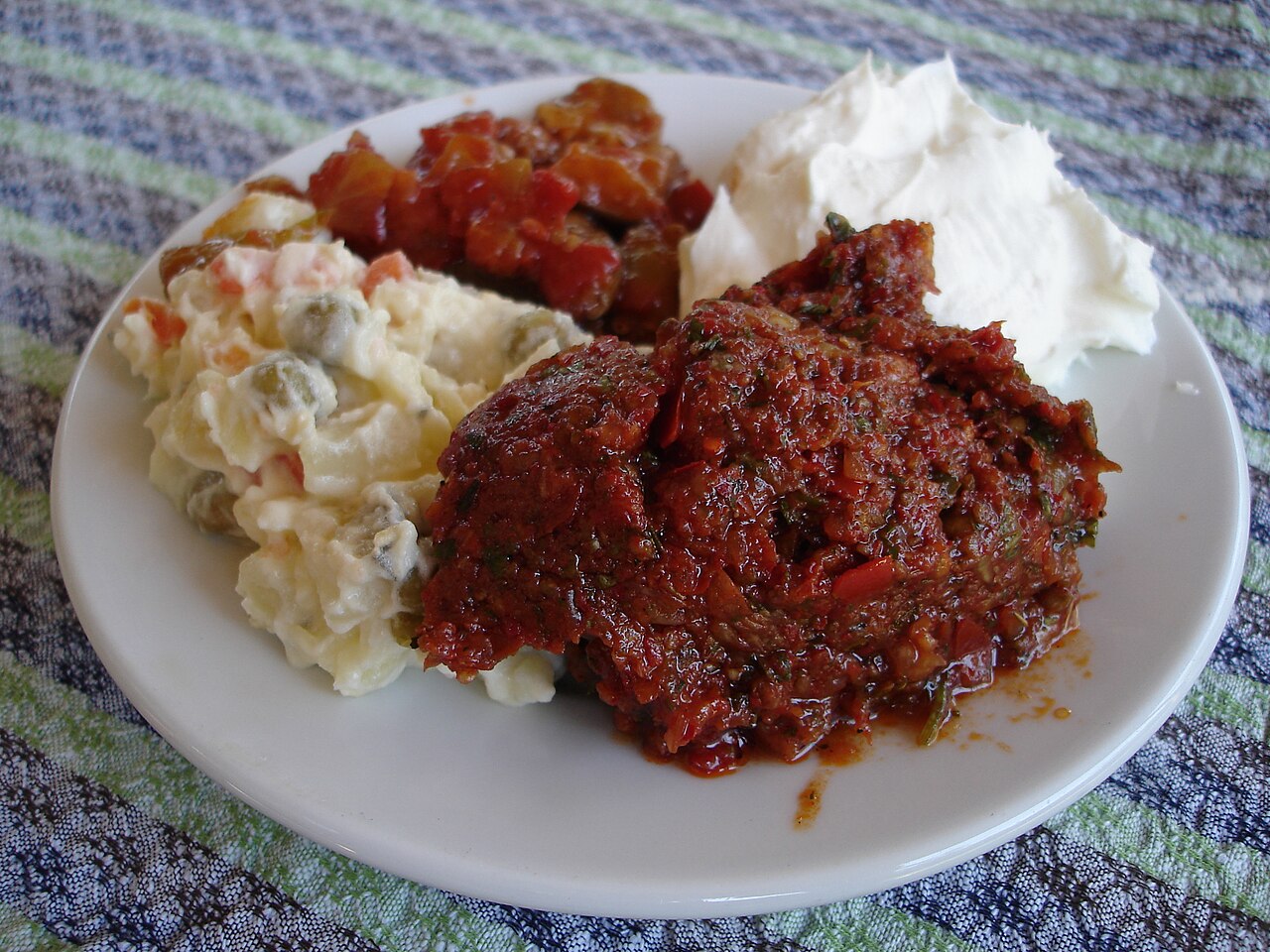
A spread of small dishes to share at the start of a meal: white cheese, melon, yoghurt with garlic and cucumber (cacık), smoky aubergine purée, stuffed vine leaves, spicy tomato dip, and vegetables cooked in olive oil. In a meyhane, a traditional tavern, meze can last all evening.
Many meze made with olive oil, called zeytinyağlı, are served cold or at room temperature, because they taste better once the oil has settled.
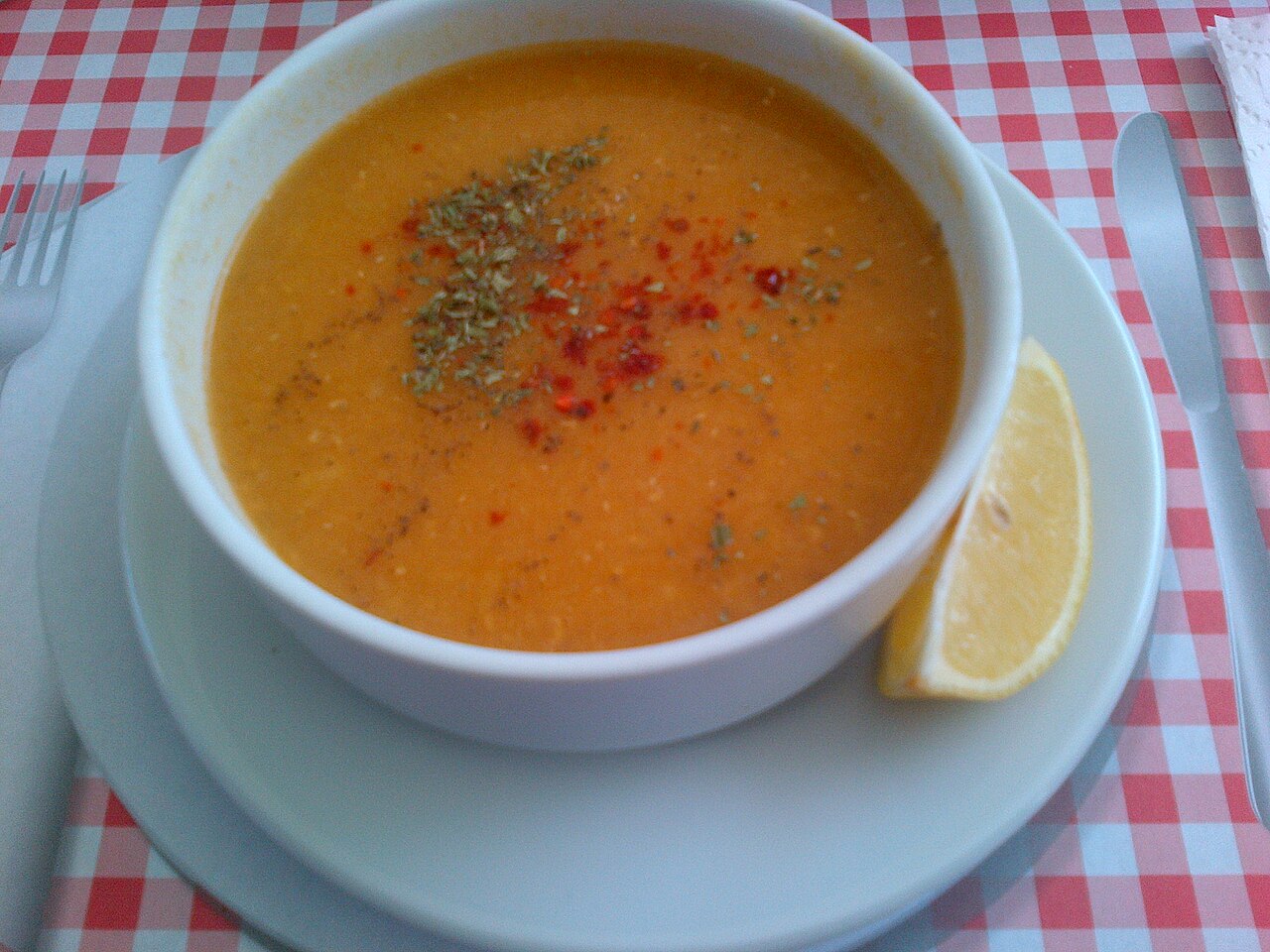
A smooth, golden soup of red lentils, onion and carrot, finished with butter and red pepper and served with a wedge of lemon. It is found in almost every Turkish home and in simple restaurants called lokanta, and some people even eat it for breakfast.
See the recipe
Serves 4
40 min
Ingredients
200 g red lentils, rinsed
1 onion, chopped
1 carrot, chopped
1 small potato, peeled and chopped
2 tablespoons olive oil
1 tablespoon tomato paste or red pepper paste
1.2 litres vegetable or chicken stock
1 teaspoon ground cumin, salt and black pepper
To finish: 30 g butter, 1 teaspoon paprika or pul biber (Turkish chilli flakes), 1 teaspoon dried mint, and lemon wedges
Method
Soften the onion and carrot in the olive oil over a medium heat for about 5 minutes. Stir in the tomato paste and cook for 1 minute more.
Add the lentils, potato and stock, bring to the boil, then simmer gently for 25 minutes, stirring now and then, until everything is very soft.
Blend until smooth, using a stick blender or a food processor, and season with cumin, salt and pepper. Add a little hot water if it is too thick.
Melt the butter in a small pan, take it off the heat and stir in the paprika and mint.
Serve the soup in bowls with a spoonful of the red butter on top and lemon wedges to squeeze in.
Named after the town of Menemen near İzmir, now eaten all over Türkiye
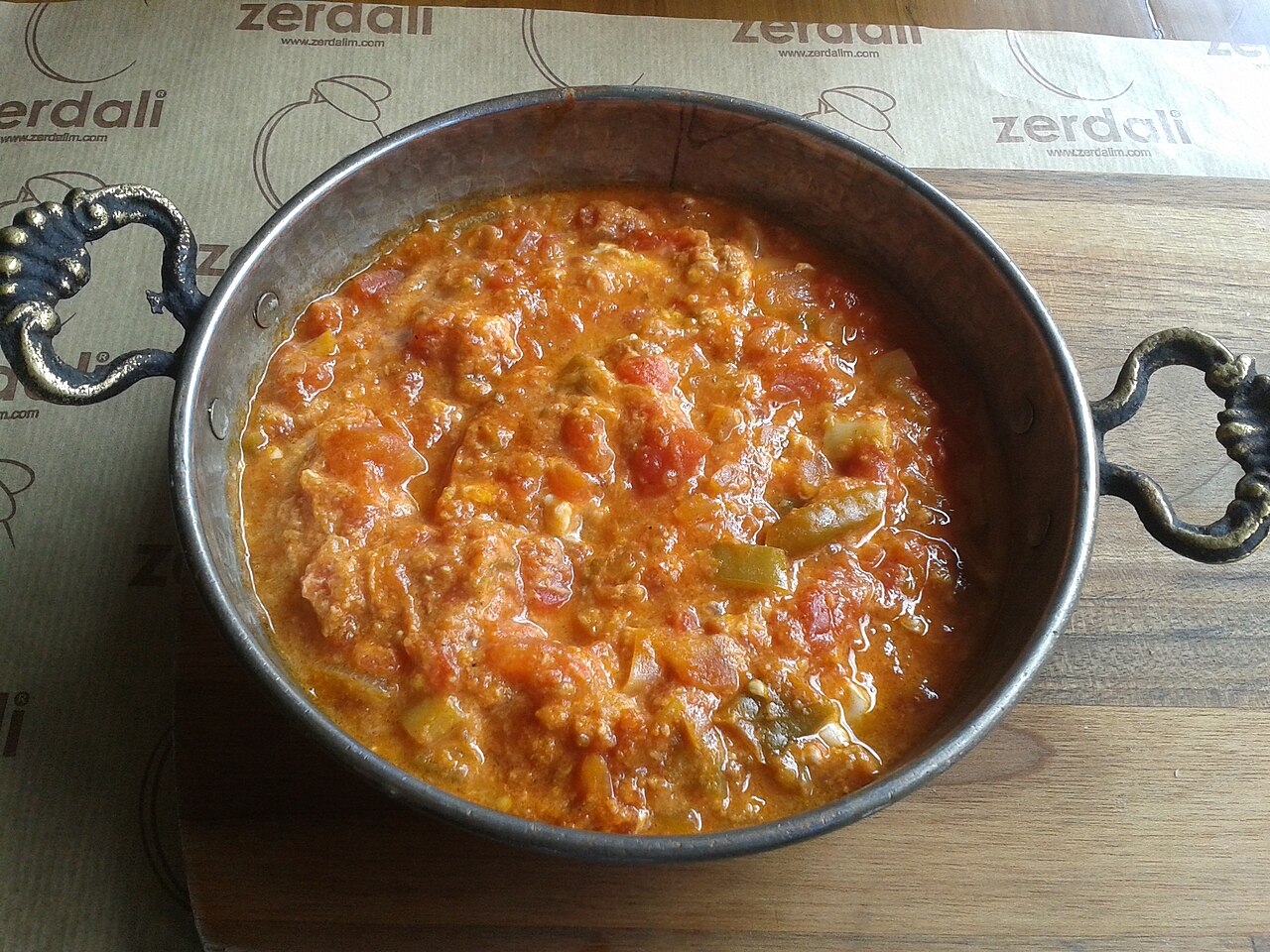
Eggs scrambled into a soft mixture of tomatoes, green peppers and olive oil, cooked and served in a small two-handled pan with plenty of bread for dipping. It is a favourite breakfast, and some cooks add sucuk, a spicy sausage, or white cheese.
Whether menemen should contain onions is a famous Turkish argument. In a 2018 online poll with more than 400,000 votes, the onion side won with just 50.6 percent.
See the recipe
Serves 2
20 min
Ingredients
2 tablespoons olive oil or butter
2 long green peppers (or 1 green bell pepper), thinly sliced
1 small onion, chopped (optional)
3 ripe tomatoes, peeled and chopped, or 1 tin (400 g) chopped tomatoes
4 eggs
Salt, black pepper and a pinch of chilli flakes
Crusty bread to serve
Method
Heat the oil in a frying pan and cook the peppers, and the onion if you like it, for about 5 minutes until soft.
Add the tomatoes with a little salt and simmer for 5 to 8 minutes, until most of the juice has cooked away.
Crack in the eggs and stir gently so they mix into the tomatoes in soft streaks.
Cook, stirring now and then, until the eggs are set to your liking. Turks often like them soft, but pregnant women, young children, older people and anyone with a weak immune system should cook them until firm, or use pasteurised eggs.
Season with pepper and chilli flakes and bring the pan to the table with bread.
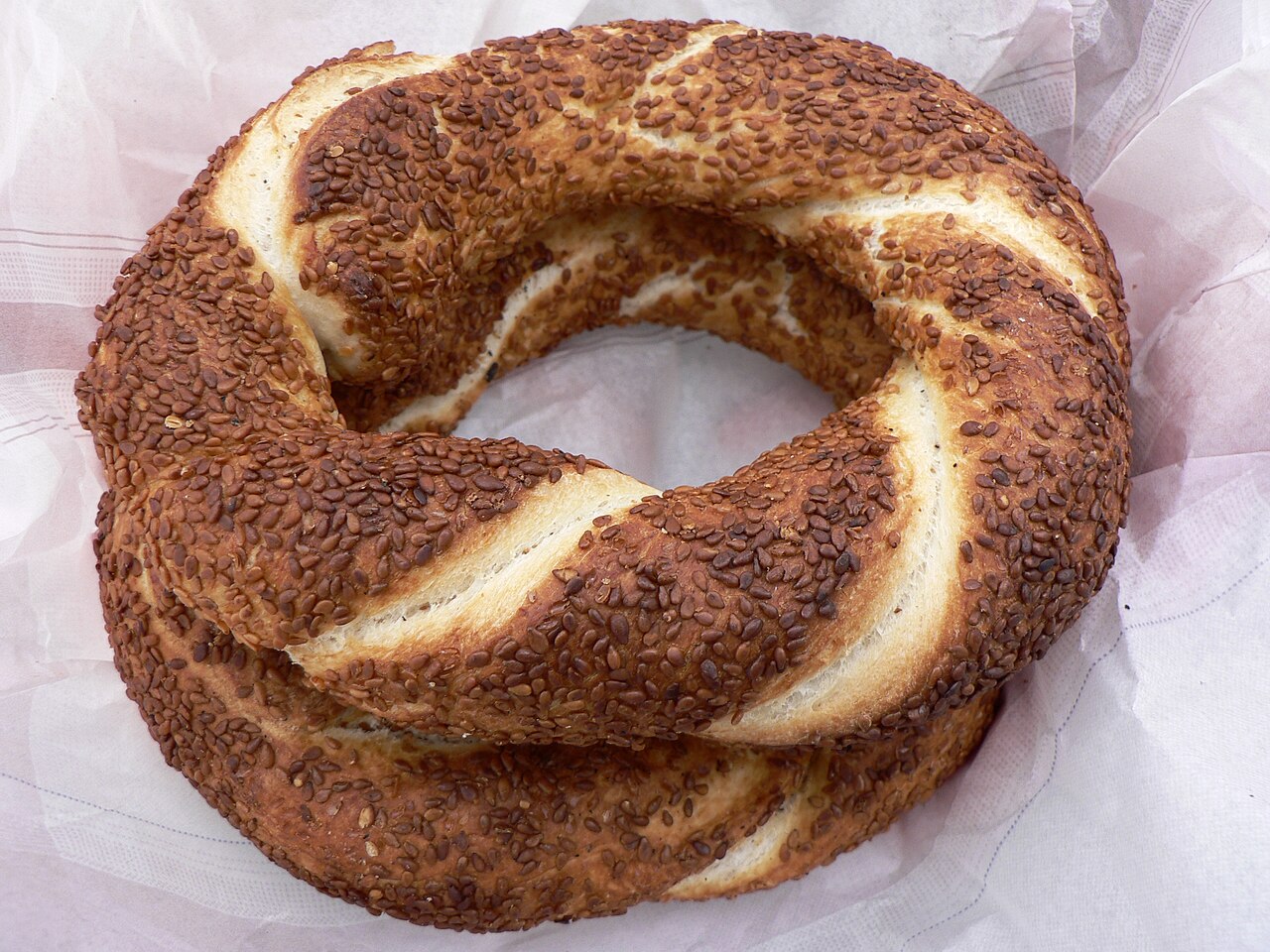
A ring of bread dipped in water and molasses and covered in sesame seeds, then baked until crisp and golden outside and soft inside. Street sellers carry piles of simit on trays on their heads or sell them from trolleys, and many people eat one with tea and white cheese for breakfast.
All of Türkiye, and especially popular on the Black Sea coast
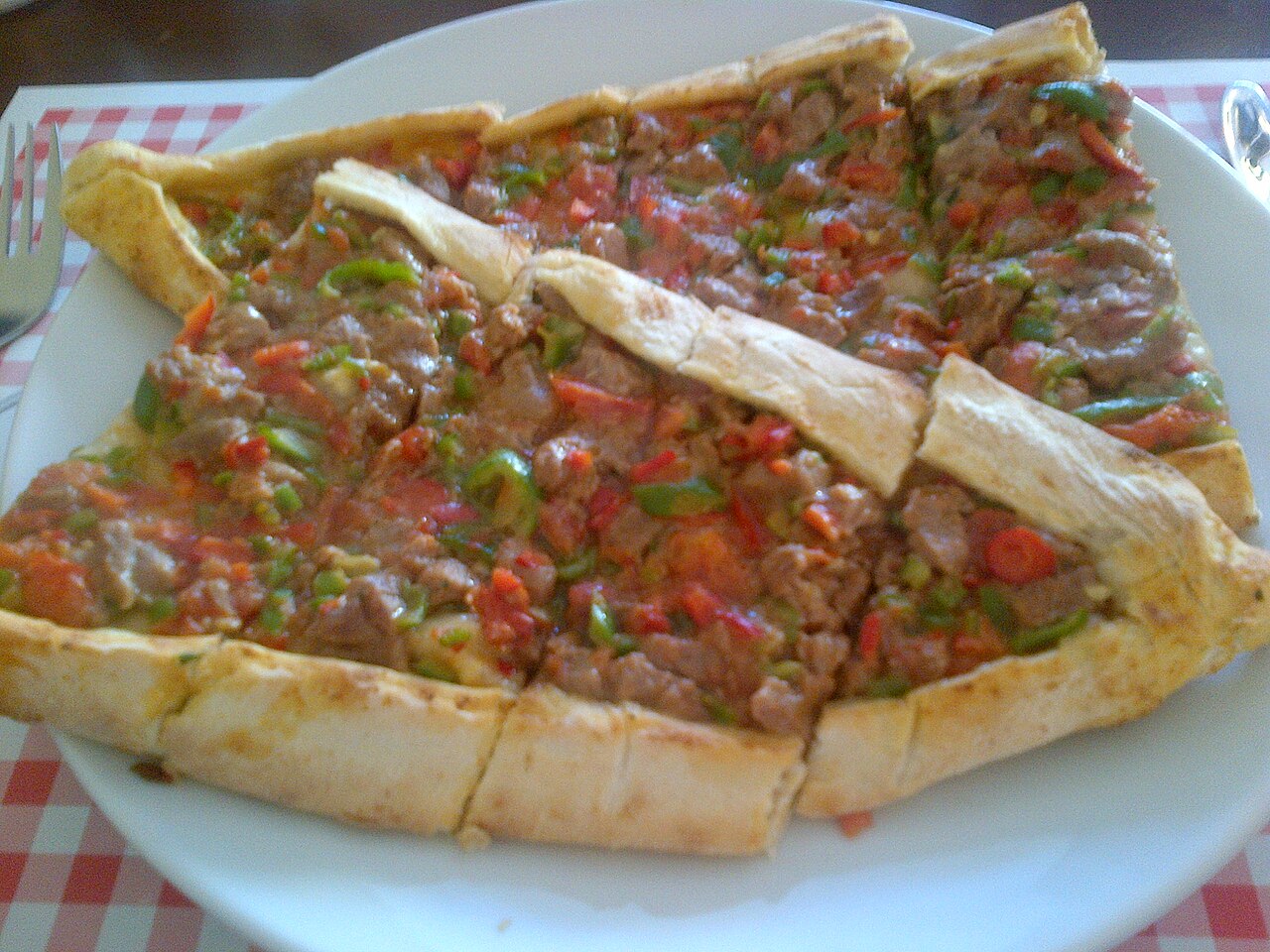
Flatbread baked at a high heat, traditionally in a wood-fired oven, usually long, with the edges folded in around a filling of minced meat, cheese, egg or sucuk sausage. The Black Sea version, Karadeniz pidesi, is famous all over the country. The person who makes it is a pideci.
Southeastern Türkiye, especially Gaziantep and Şanlıurfa; it is also loved in Syria, Lebanon and Armenia, and its roots are in the wider Levant
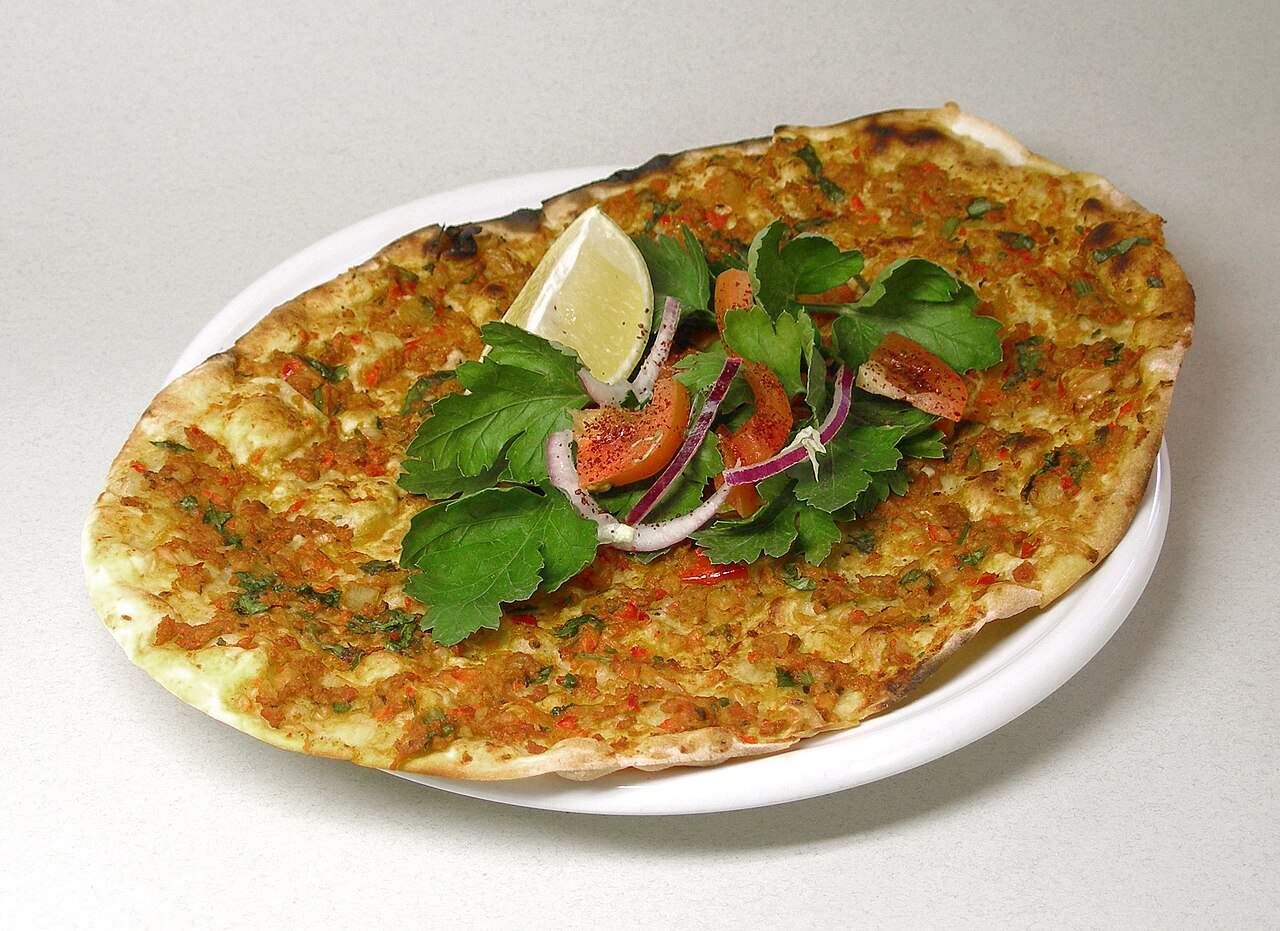
A very thin round of dough spread with minced meat, onion, tomato, pepper and herbs, baked in a very hot oven for a few minutes. It has no cheese. You squeeze lemon over it, add parsley and onion, roll it up and eat it with your hands.
Its name comes from Arabic lahm bi ajin, 'meat with dough'. In English it is sometimes called 'Turkish pizza', though it is really quite different.
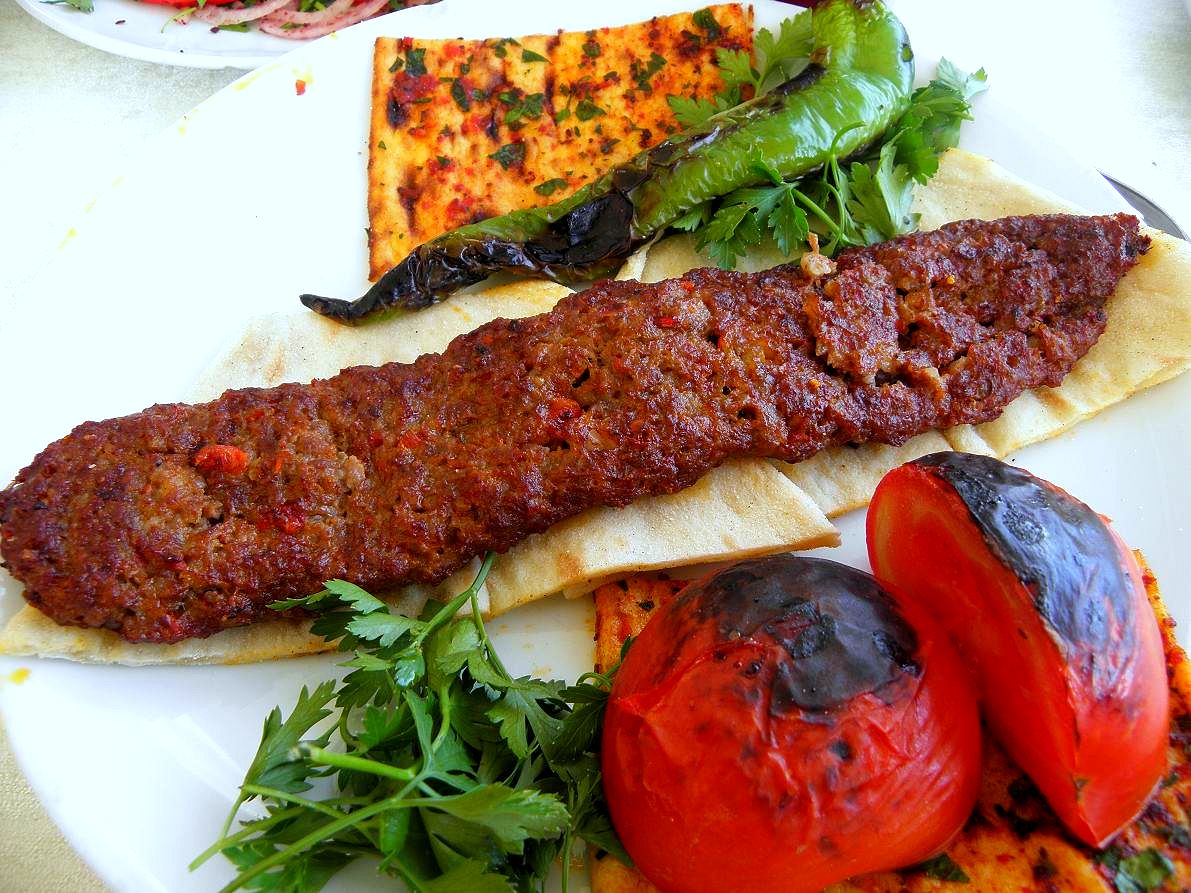
Lamb minced by hand with tail fat and red pepper, pressed onto a wide flat iron skewer and grilled over charcoal. It is served with flatbread, grilled tomatoes and peppers, and onions with sumac. Kebabs vary greatly from region to region, and many cities are proud of their own.
Since 2005 the name Adana kebabı has had protected status in Türkiye, and the traditional recipe is registered by the Adana Chamber of Commerce.
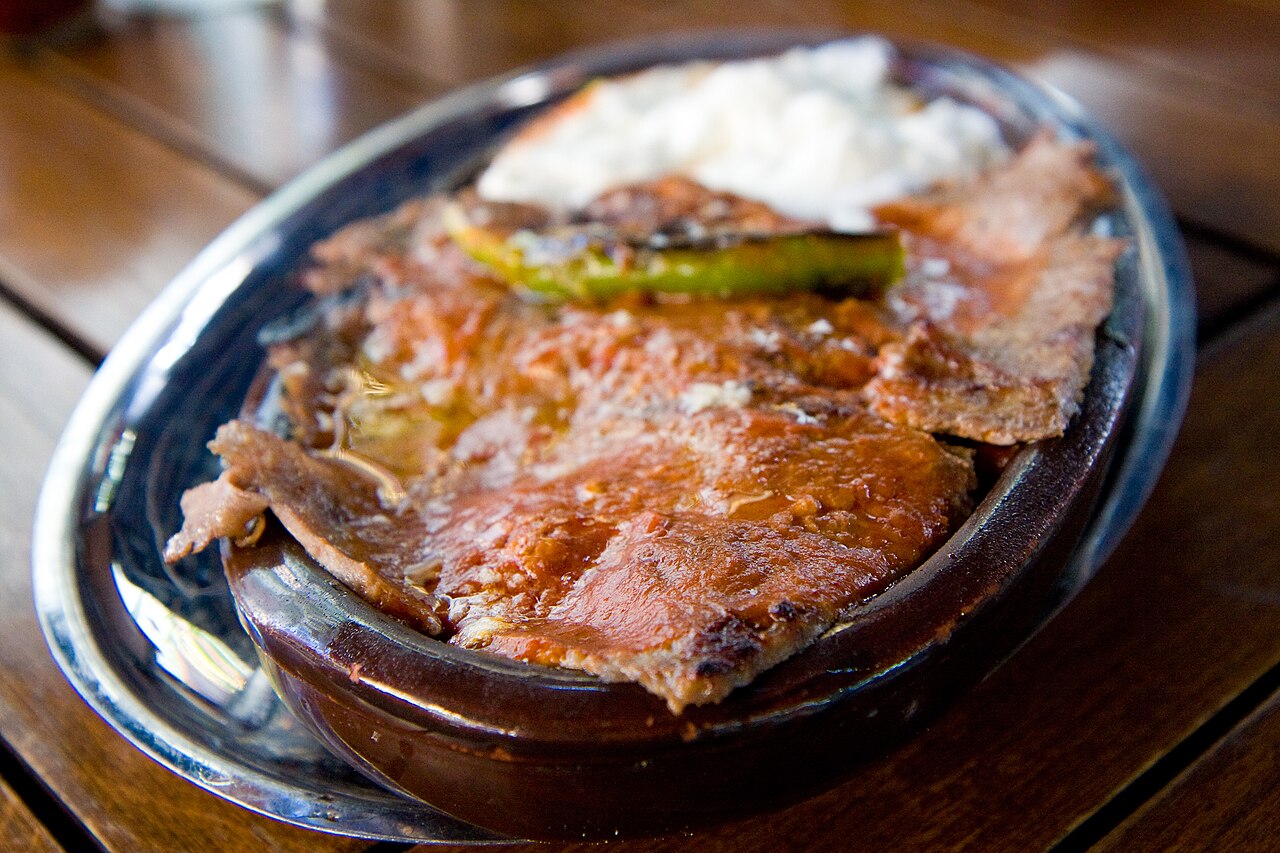
Thin slices of meat grilled on a vertical spit, laid over pieces of flatbread, covered with hot tomato sauce and sizzling melted butter, and served with thick yoghurt on the side.
It is named after İskender Efendi, who served it in Bursa in the late 19th century. His family still runs restaurants in the city.
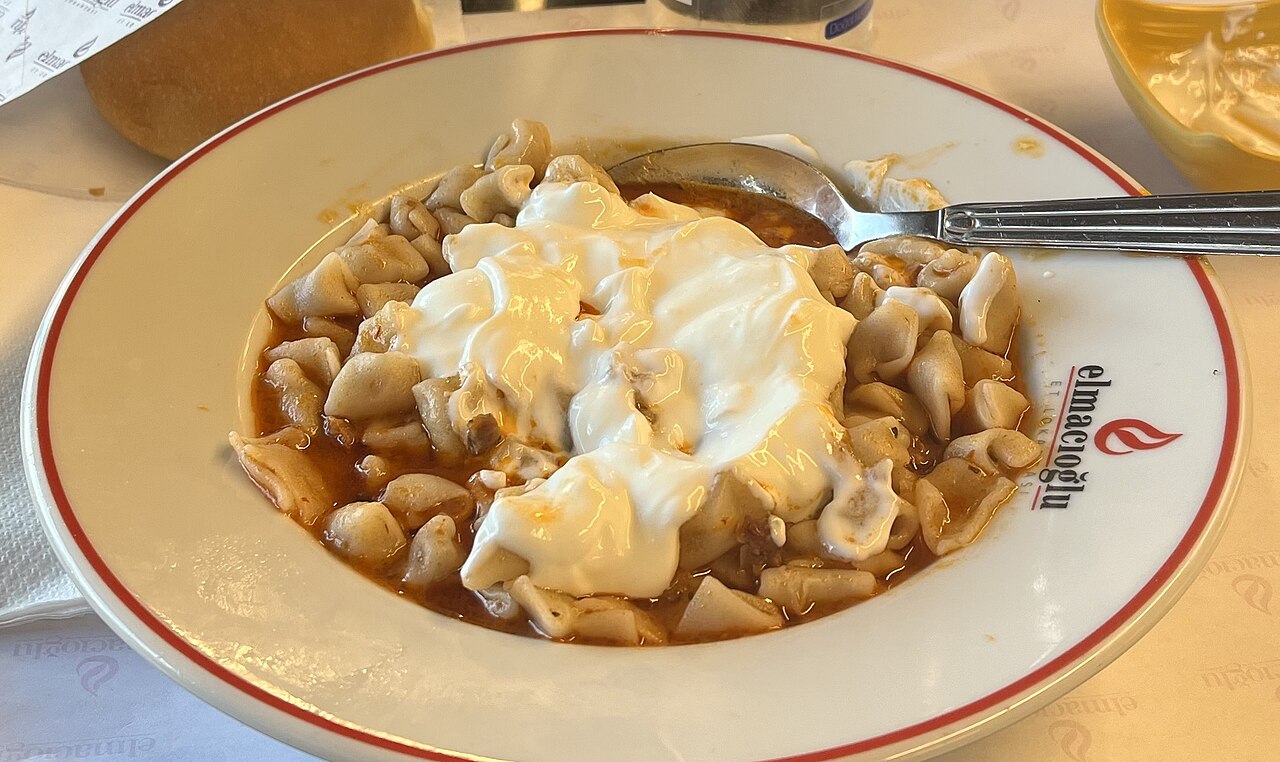
All of Türkiye, most famously Kayseri in central Anatolia
Tiny dumplings filled with spiced minced meat, boiled and served under garlic yoghurt with melted butter, red pepper flakes and dried mint. The dumplings came west with Turkic peoples along the Silk Road.
Unlike the large steamed manti of Central Asia, Turkish mantı are usually boiled or baked, and they are small, in Kayseri tiny.
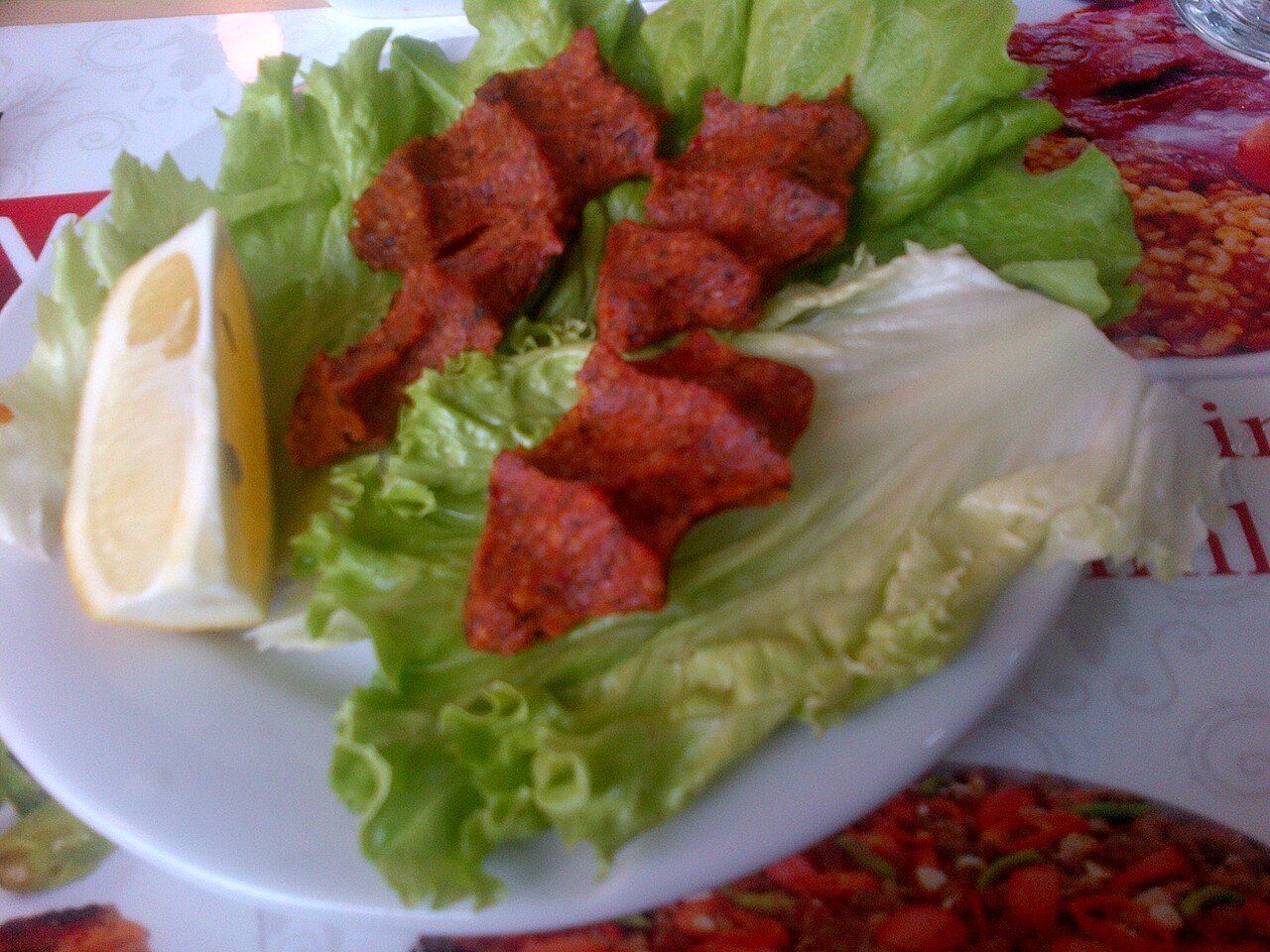
Fine bulgur kneaded for a long time by hand with onion, tomato and pepper paste and isot, the dark smoky pepper of Urfa, until it forms a soft, spicy paste. It is served in lettuce leaves with lemon. Its name means 'raw meatball', because the traditional version was made with raw minced meat. Since 2008 the raw-meat version may not be sold in Türkiye, and what you buy today is made without meat. Safety: never eat a home-made version with raw meat, which can carry parasites and bacteria.
Today çiğ köfte shops are everywhere in Turkish cities, and the meatless version is suitable for vegans.
See the recipe
Serves 6
1 h
Ingredients
200 g extra fine bulgur (köftelik bulgur)
150 ml hot water
2 tablespoons hot or mild red pepper paste (biber salçası)
1 tablespoon tomato paste
1 small onion, grated
2 tablespoons isot or other chilli flakes, to taste
1 teaspoon ground cumin, 1 teaspoon salt
3 tablespoons pomegranate molasses
3 tablespoons olive oil
4 spring onions and a bunch of parsley, finely chopped
To serve: lettuce leaves and lemon wedges
Method
Put the bulgur in a large bowl, pour over the hot water, cover and leave for 10 minutes. No meat is used in this version.
Add the pepper paste, tomato paste, grated onion, isot, cumin and salt. Wearing kitchen gloves, knead the mixture firmly for 15 to 20 minutes, until the bulgur is soft and it all sticks together like dough.
Knead in the pomegranate molasses and olive oil, then the spring onions and parsley. Taste and add more salt or pepper.
Take a walnut-sized piece and squeeze it in your fist to make the traditional finger-marked shape. Repeat with the rest.
Serve wrapped in lettuce leaves with a squeeze of lemon.
Ottoman palace and home cooking, now all of Türkiye
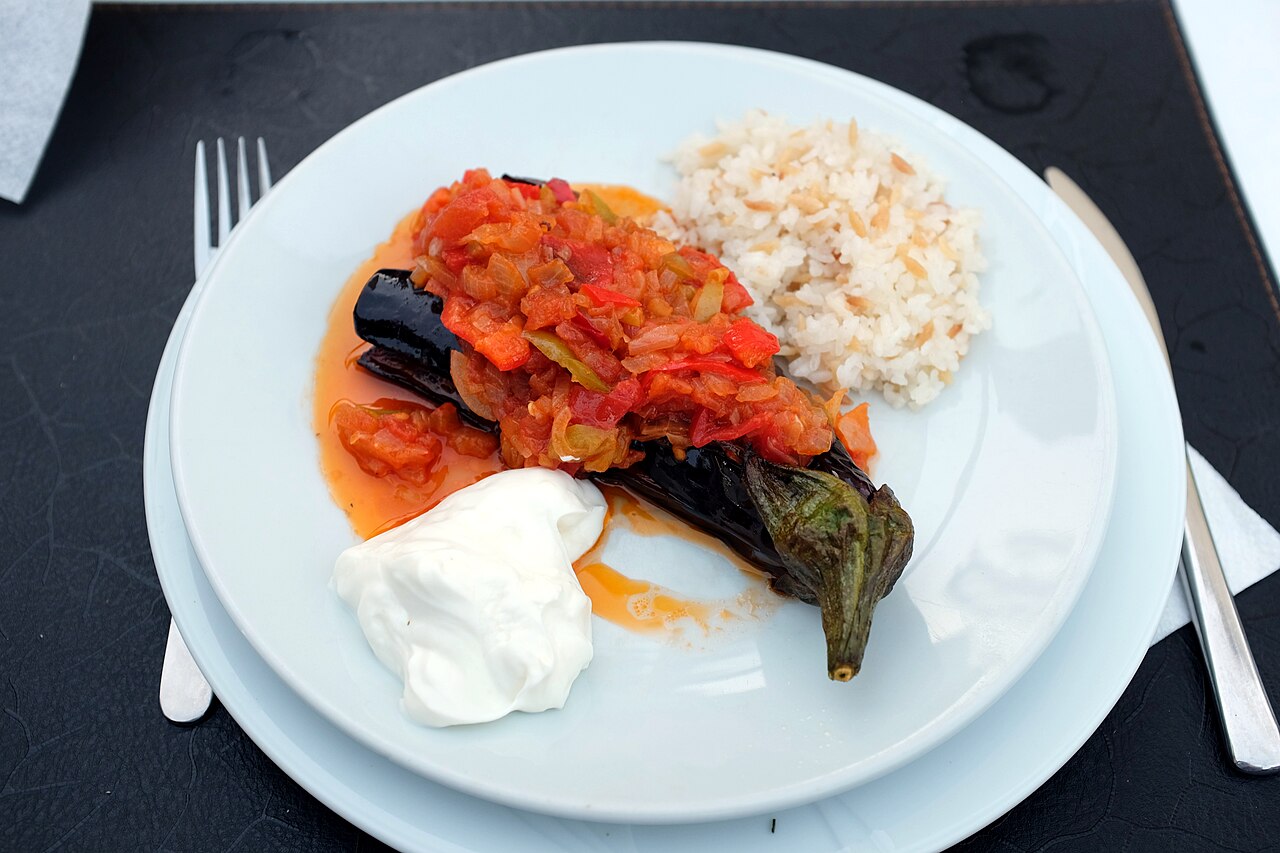
Whole aubergines, split and filled with onions, garlic and tomatoes, then cooked slowly in plenty of olive oil. It is served warm or at room temperature, often as part of a meal of vegetable dishes.
The name means 'the imam fainted'. Stories say he fainted with pleasure at the taste, or at the cost of all that olive oil.
See the recipe
Serves 4
1 h 30 min
Ingredients
4 medium aubergines
150 ml olive oil, divided
3 onions, thinly sliced
4 cloves garlic, sliced
4 ripe tomatoes, chopped (keep a few slices for the top)
1 green pepper, sliced
A small bunch of parsley, chopped
1 teaspoon sugar and salt to taste
150 ml hot water
Method
Peel the aubergines in stripes, leaving bands of skin, and soak them in salted water for 20 minutes. Dry them well.
Fry the whole aubergines in about 4 tablespoons of the oil, turning them, until soft and lightly browned. Lay them in a baking dish.
In the same pan, cook the onions slowly in 4 more tablespoons of oil for about 15 minutes until soft and sweet. Add the garlic, pepper and chopped tomatoes and cook for 5 minutes, then stir in the parsley, sugar and salt.
Heat the oven to 180°C (160°C fan). Slit each aubergine lengthways, open it like a boat and fill it with the onion mixture. Top with tomato slices.
Pour the rest of the oil and the hot water around the aubergines, cover with foil and bake for 40 minutes. Let them cool a little and serve warm or at room temperature.
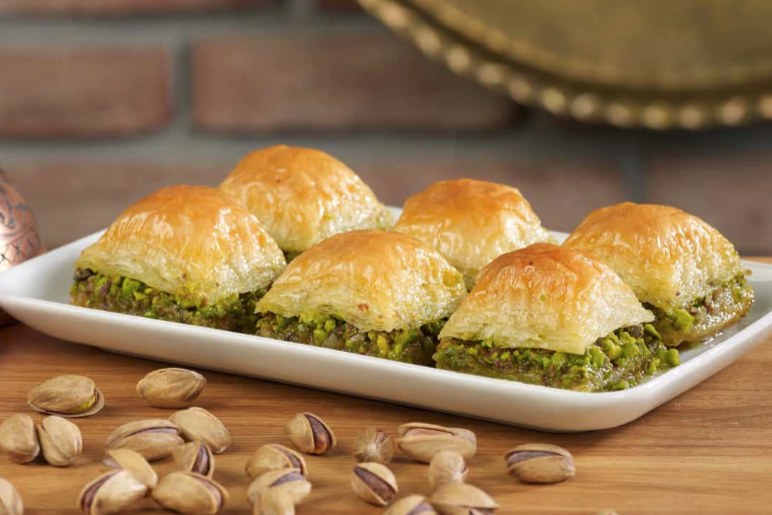
The Ottoman kitchens of Istanbul; Gaziantep is famous for its pistachio baklava
Many paper-thin layers of pastry brushed with butter, filled with chopped pistachios or walnuts, baked until crisp and soaked in syrup. Where it first came from is disputed, and Greeks, Turks and other peoples of the former Ottoman lands all have their own proud baklava traditions.
In 2013 Gaziantep baklava became the first Turkish product with a protected name in the European Union.
Hatay (Antakya) and the southeast; similar sweets are made across the Middle East
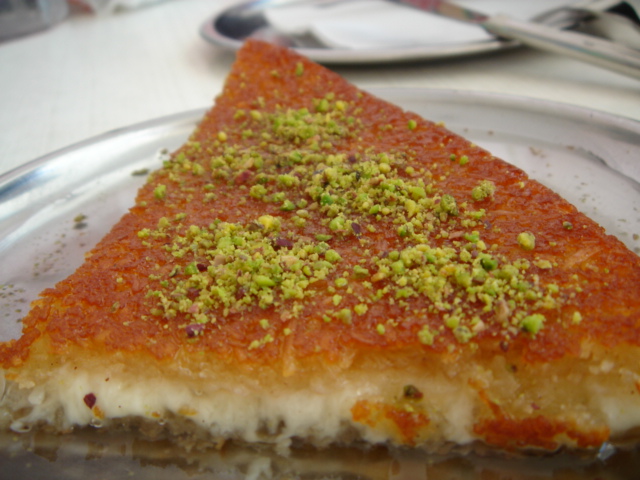
Fine strands of pastry baked in a small round pan around a layer of soft, stretchy local cheese, soaked in syrup and topped with pistachios. Since 2023 Antakya künefe has had a protected name in the EU. It is served very hot, when the cheese inside is still stretchy.
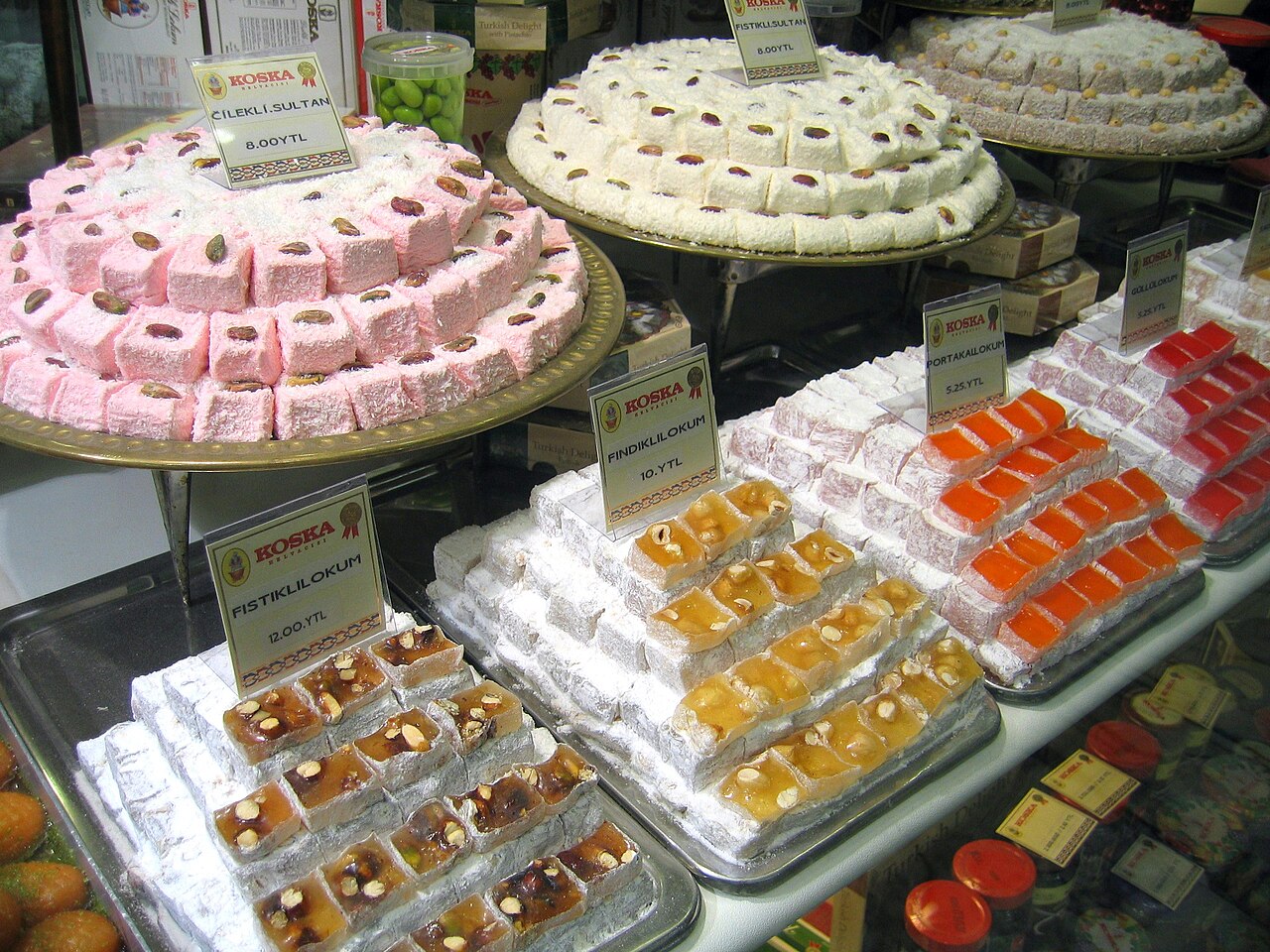
Soft, chewy cubes of starch and sugar flavoured with rosewater, lemon or mastic, often filled with pistachios or hazelnuts and dusted with icing sugar. It is offered to guests with coffee and on holidays.
The Hacı Bekir shop in Istanbul says it has made lokum since 1777, though historians say similar sweets are older.
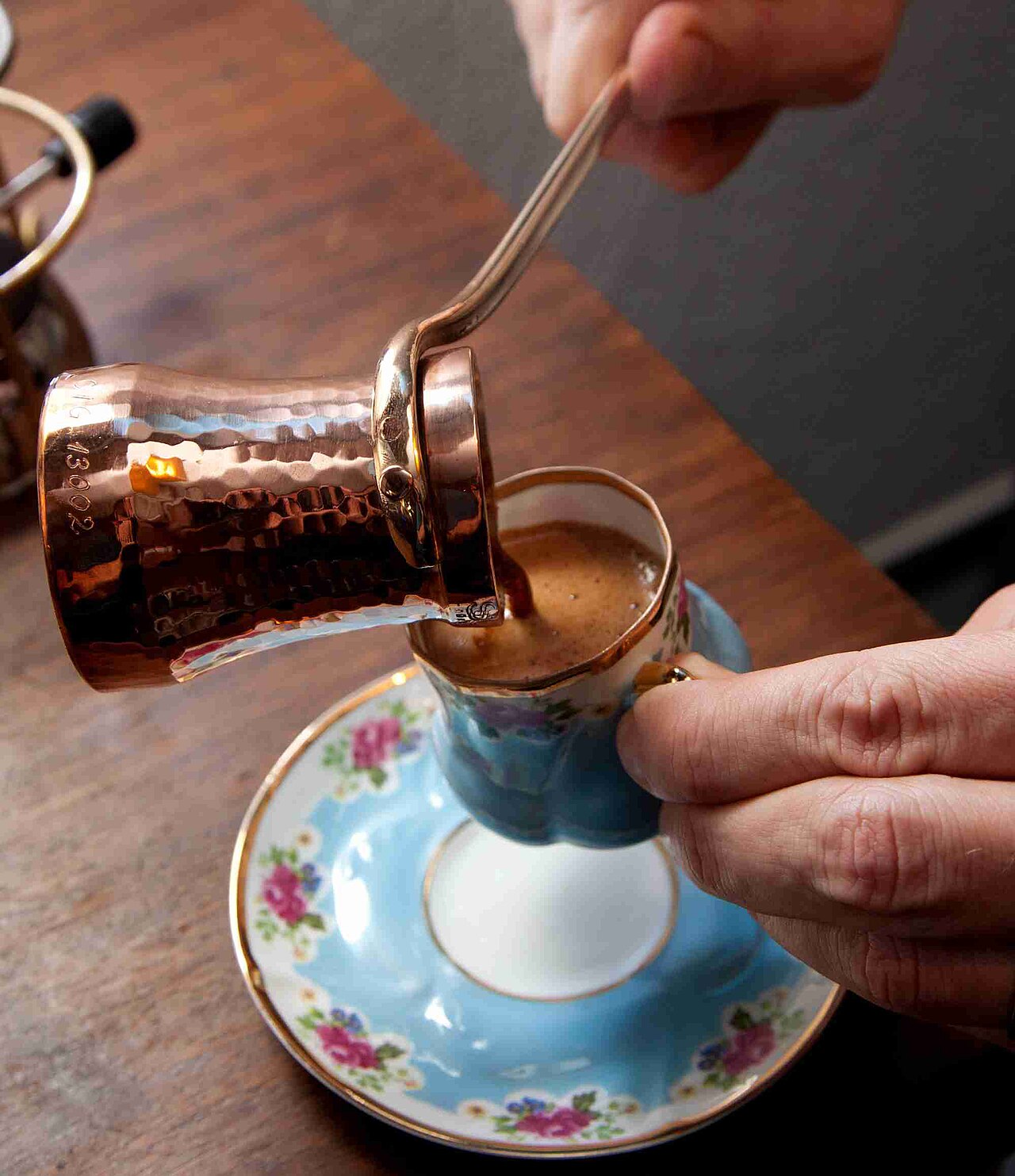
Very finely ground coffee boiled slowly with cold water, and sugar if wanted, in a small pot called a cezve until it foams. It is poured unfiltered into small cups and served with a glass of water and often a piece of lokum. Let the grounds settle and do not drink the last sip.
In 2013 UNESCO added Turkish coffee culture and tradition to its list of the intangible cultural heritage of humanity. Some people read fortunes in the grounds left in the cup.
Sugar to taste: none (sade), a little (orta) or sweet (şekerli)
Method
Put the cold water, coffee and sugar into a cezve or the smallest pan you have, and stir well once. Do not stir again after this.
Heat very slowly over a low heat. After 3 to 4 minutes a dark foam will rise.
Just before it boils, spoon some foam into each cup, then return the pot to the heat for a few seconds until it rises again.
Pour the coffee slowly into the cups so the foam stays on top. Serve with a glass of water and wait a minute for the grounds to settle before drinking.
All of Türkiye, and among Turkic peoples for about a thousand years
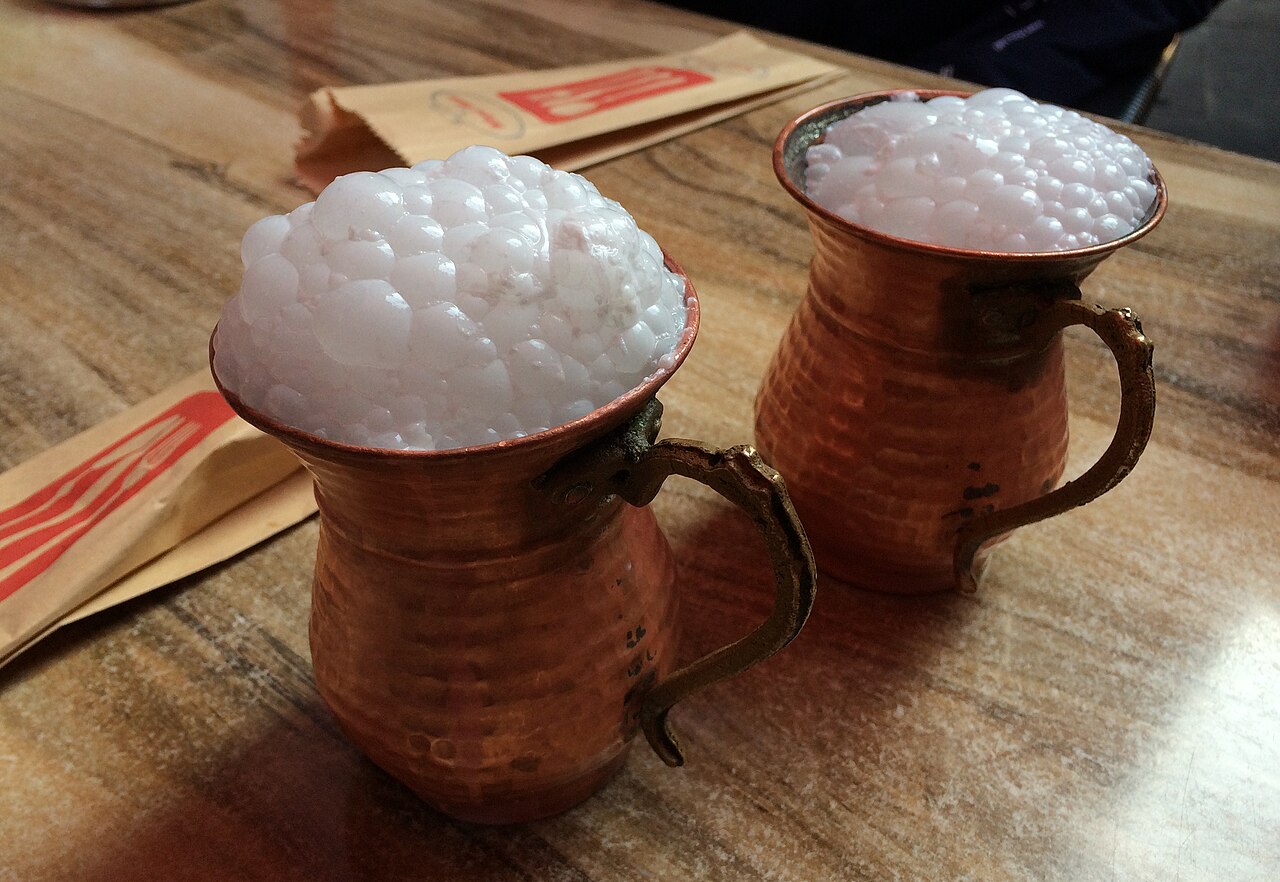
A cold, salty drink of yoghurt whisked with water, sometimes frothy on top. It goes with kebabs, lahmacun and pide, and is especially refreshing in summer.
In 2013 Prime Minister Erdoğan called ayran the national drink.
See the recipe
Serves 2
5 min
Ingredients
250 g plain whole-milk yoghurt
250 ml cold water
½ teaspoon salt
Ice cubes and a few mint leaves (optional)
Method
Put the yoghurt, water and salt in a jug.
Whisk hard, or blend for 30 seconds, until smooth and frothy on top.
Taste and add a little more water if you like it thinner.
Pour into glasses over ice and serve with mint, if you like, alongside grilled meat or pastries.
If you are invited to a Turkish home, bring a small gift such as flowers or sweets. Avoid wine unless you know your hosts drink, as many Turks do not drink alcohol.
Tea is offered everywhere: at home, in offices and even while you bargain in the bazaar. It is served in small tulip-shaped glasses, and accepting one is polite.
People say 'afiyet olsun', may it be good for you, to anyone who is eating, much like 'enjoy your meal'.
Take off your shoes just outside or inside the door when you enter a Turkish home, unless your hosts tell you to keep them on.
Blowing your nose or picking your teeth at the table is considered very rude; step away from the table instead.
Older people are served first and treated with great respect. During Ramadan, families and neighbours break the fast together at sunset with a meal called iftar.
Türkiye's big cities are spread across very different landscapes. Istanbul and Edirne lie in the European part, Bursa and İzmir look out on the Sea of Marmara and the Aegean, Antalya on the Mediterranean and Trabzon on the Black Sea. Ankara and Konya stand on the high plains of central Anatolia, Göreme among the rock formations of Cappadocia, and Gaziantep and Şanlıurfa in the hot southeast, close to the Syrian border.
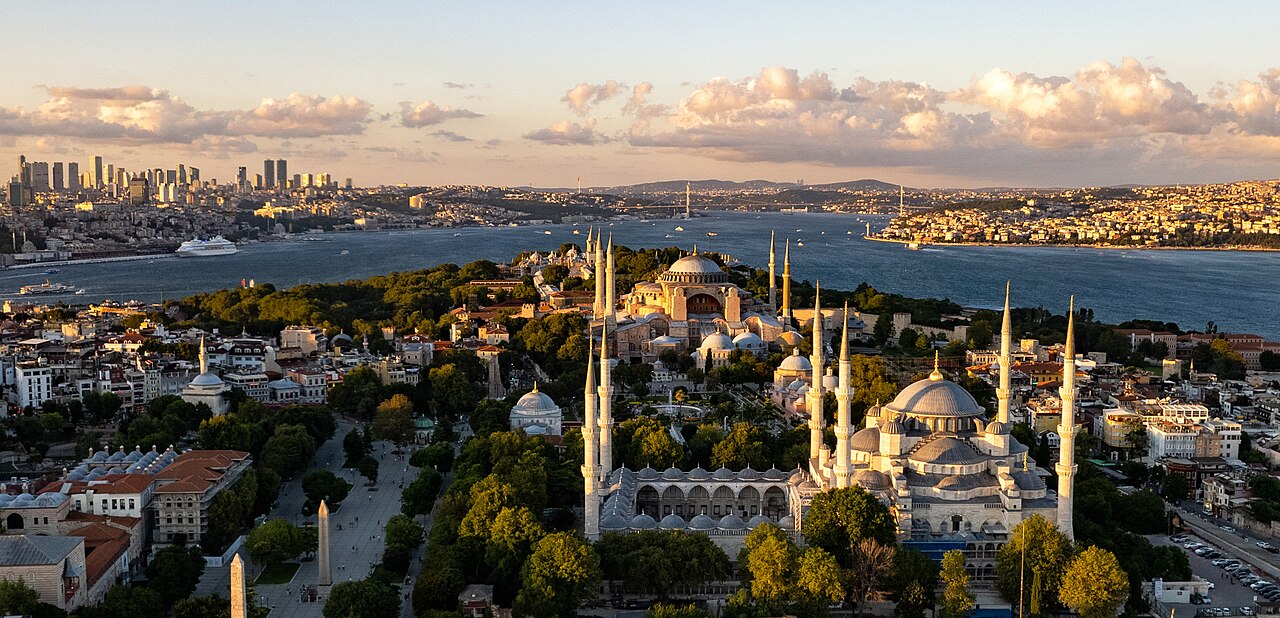
Türkiye's largest city, with about 15.8 million people, built on both banks of the Bosphorus so that it lies in Europe and in Asia. As Byzantium, then Constantinople, it was an imperial capital for some 1,600 years, until 1923. Its official name has been İstanbul since 1930.
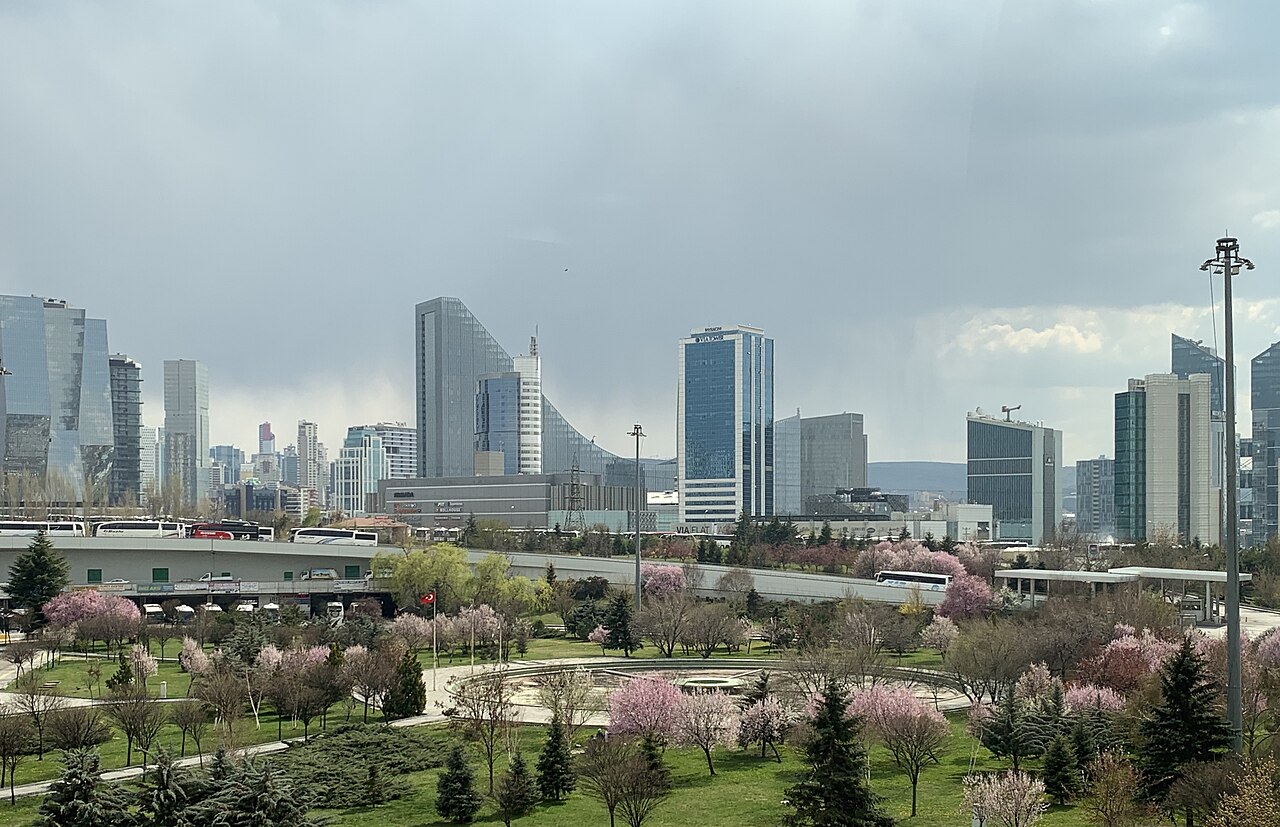
The capital since 13 October 1923, chosen by Atatürk during the War of Independence because it lay safely in the heart of Anatolia. Once a small town, it is now Türkiye's second-largest city, with about 5.9 million people, full of ministries, universities and embassies.
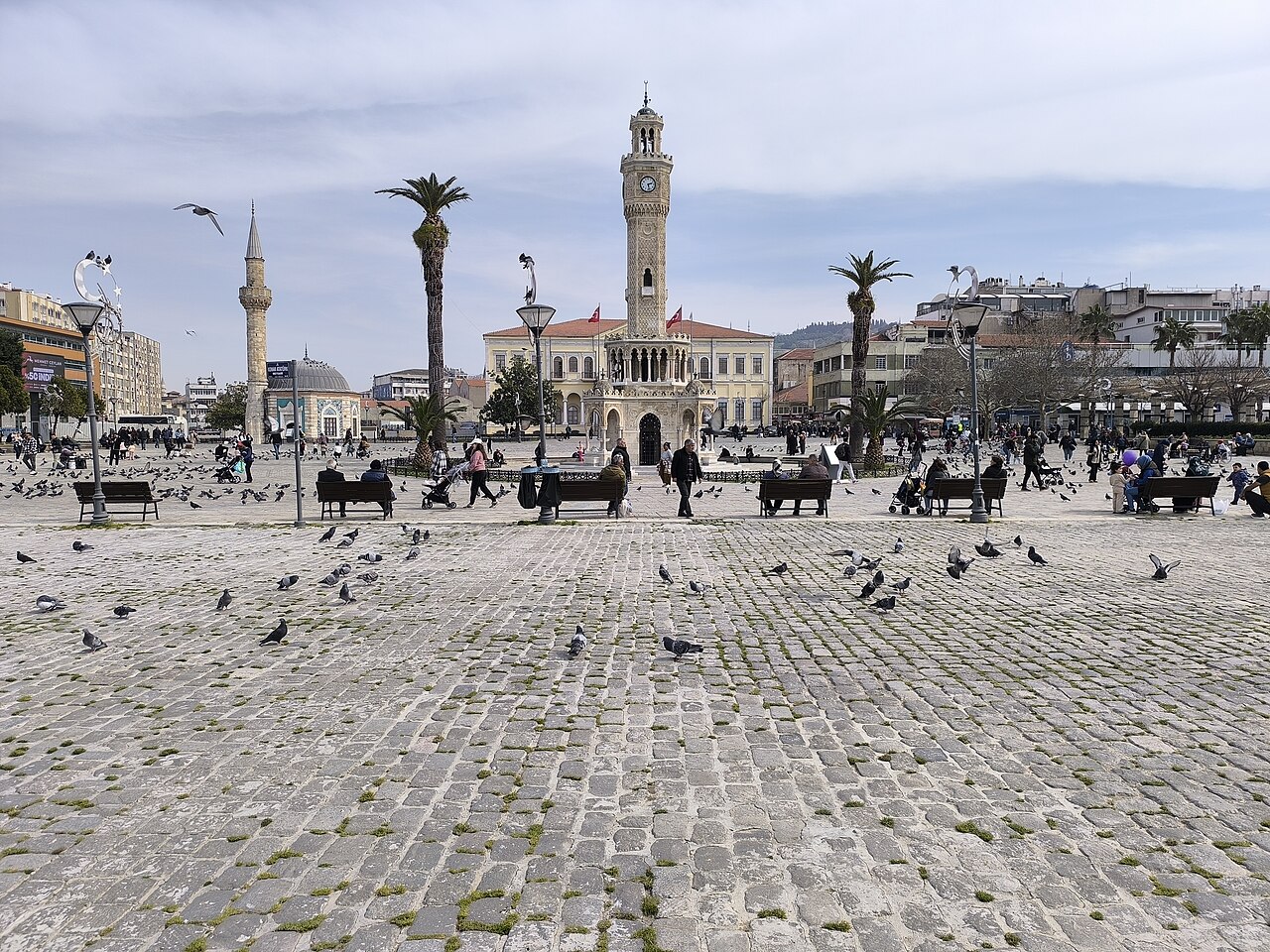
Türkiye's third-largest city and a busy port on a long bay of the Aegean, known in ancient times as Smyrna. It has a relaxed seaside feel, a long waterfront promenade, and is the gateway to Ephesus and the Aegean resorts.
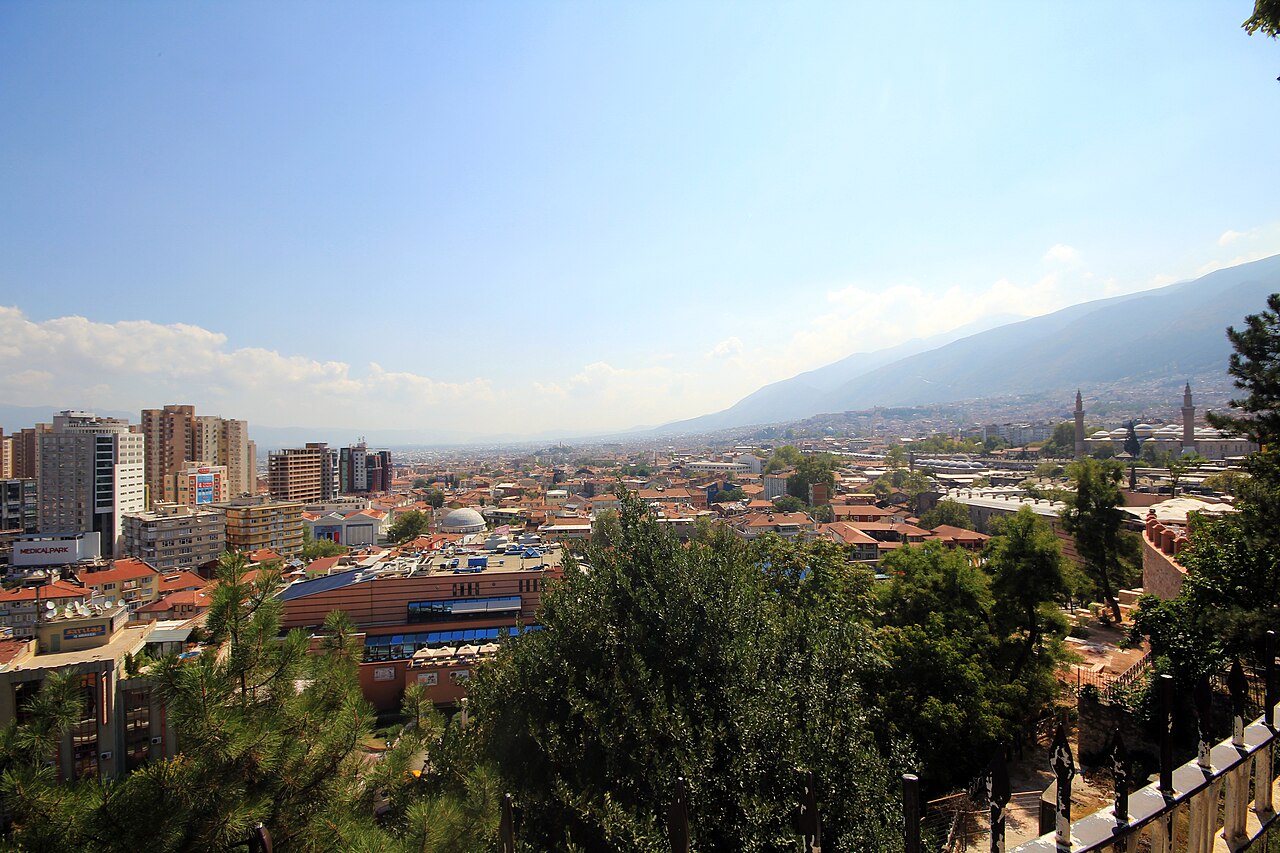
A green city of about 2 million on the slopes of Mount Uludağ, and the first great capital of the Ottomans, from 1335 until the 1360s. Once a centre of the silk trade, today it is the heart of Türkiye's car industry.
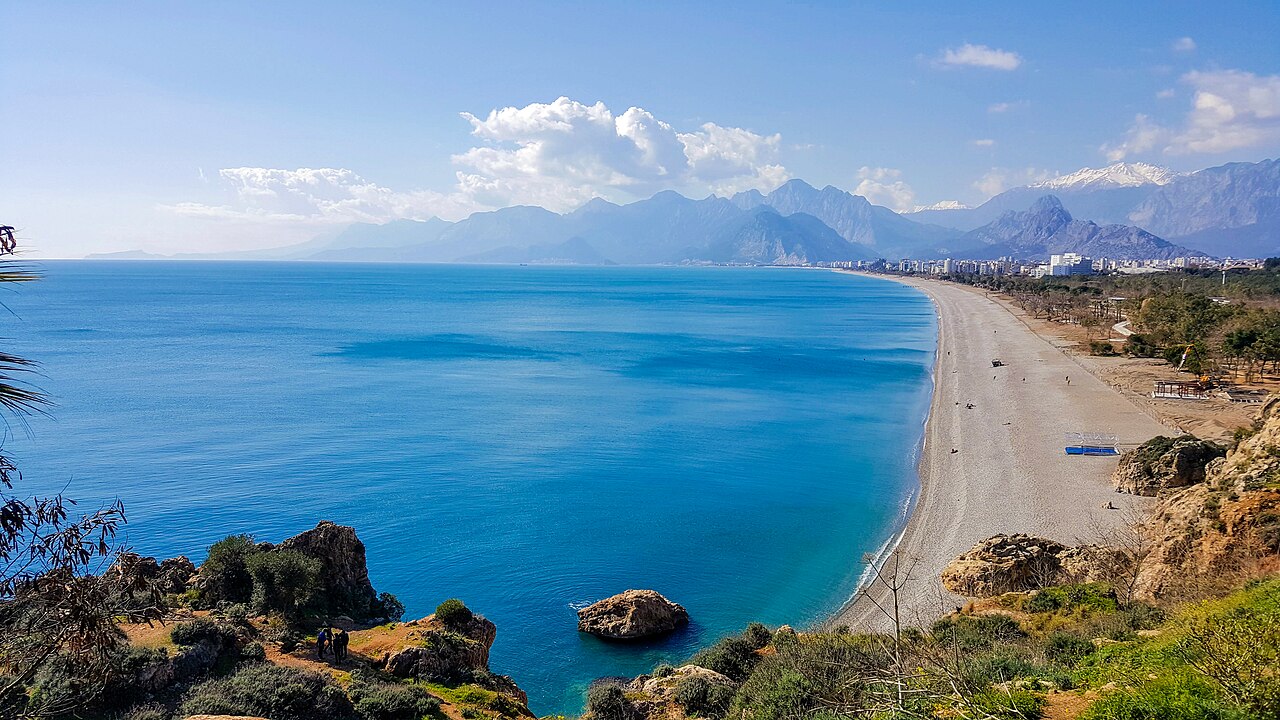
The main city of the Turkish Riviera, where the Taurus Mountains drop to a turquoise sea. Its old walled quarter, Kaleiçi, has narrow lanes and a Roman harbour, and millions of visitors arrive each year for the beaches and nearby ancient sites.
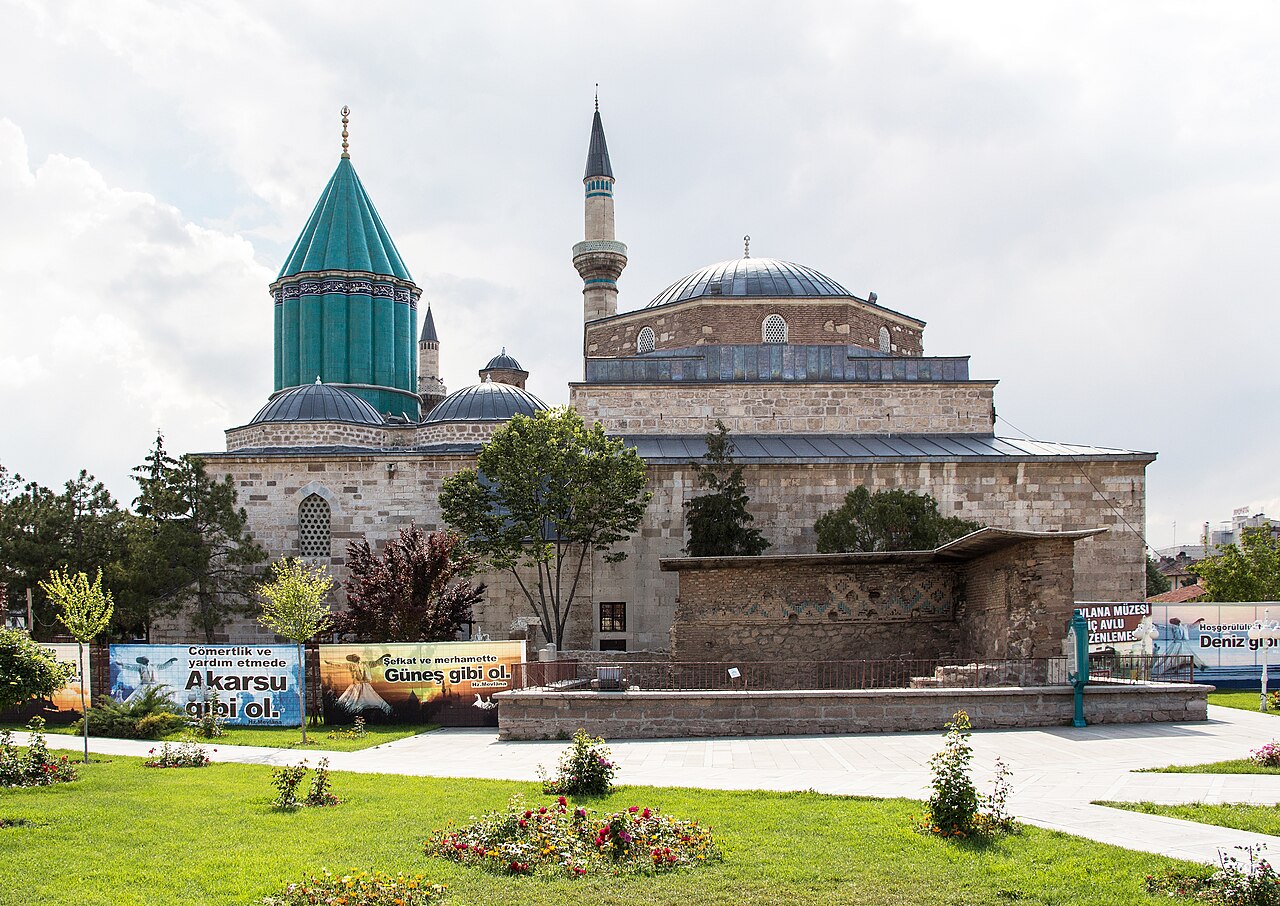
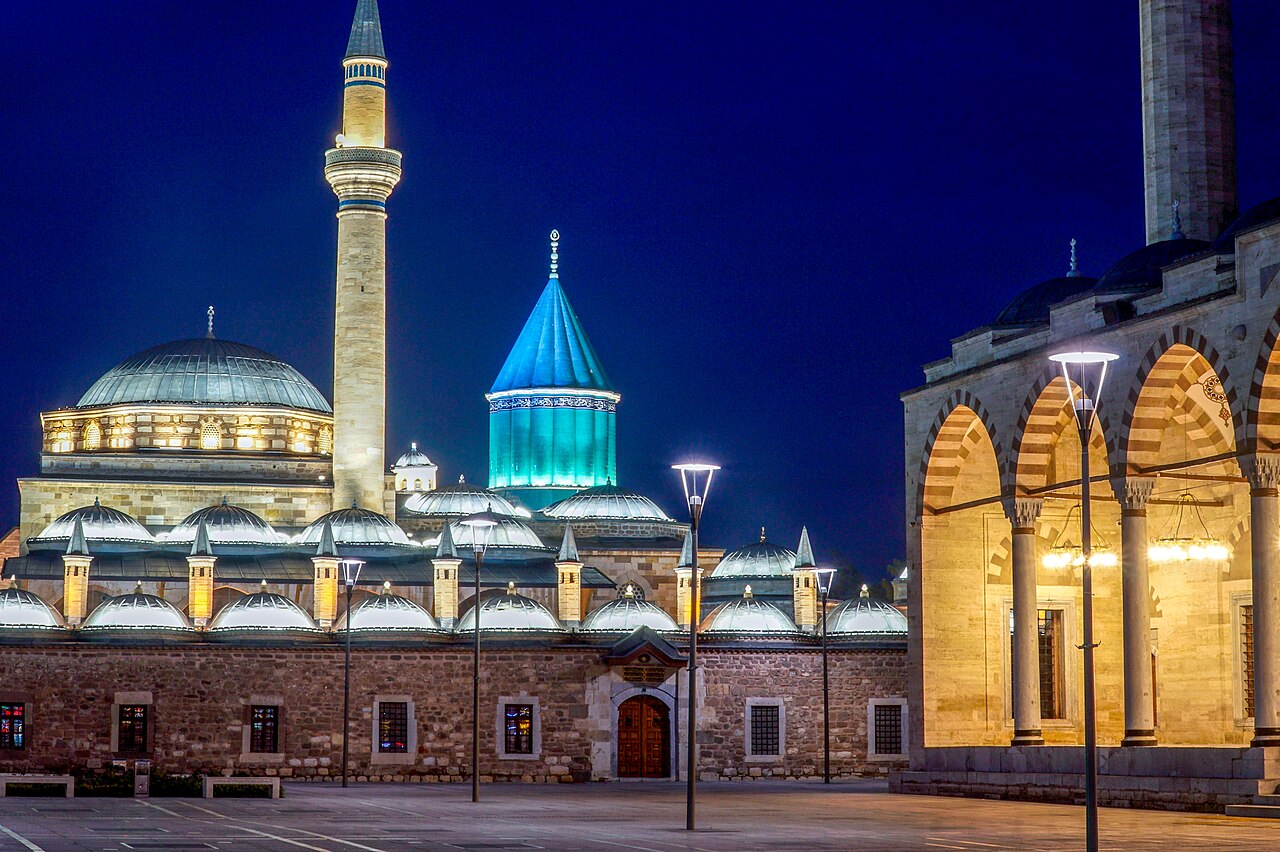
A large, traditional city on the Anatolian plateau and once the capital of the Seljuk Sultanate of Rum. The Sufi poet Rumi, called Mevlâna in Türkiye, lived and is buried here, and it is the home of the whirling dervishes.
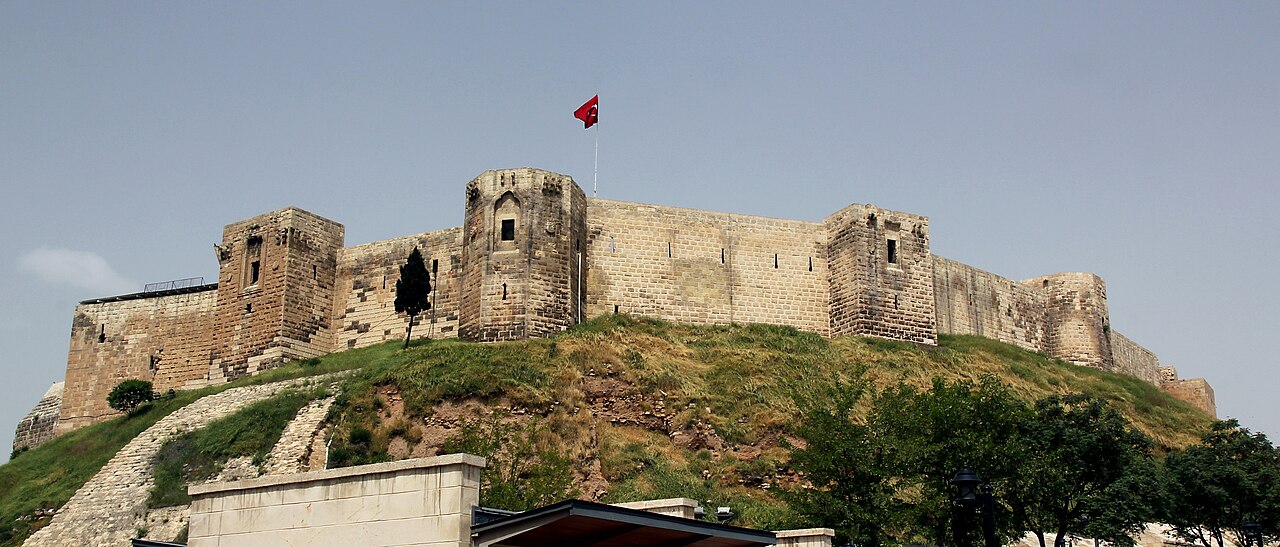
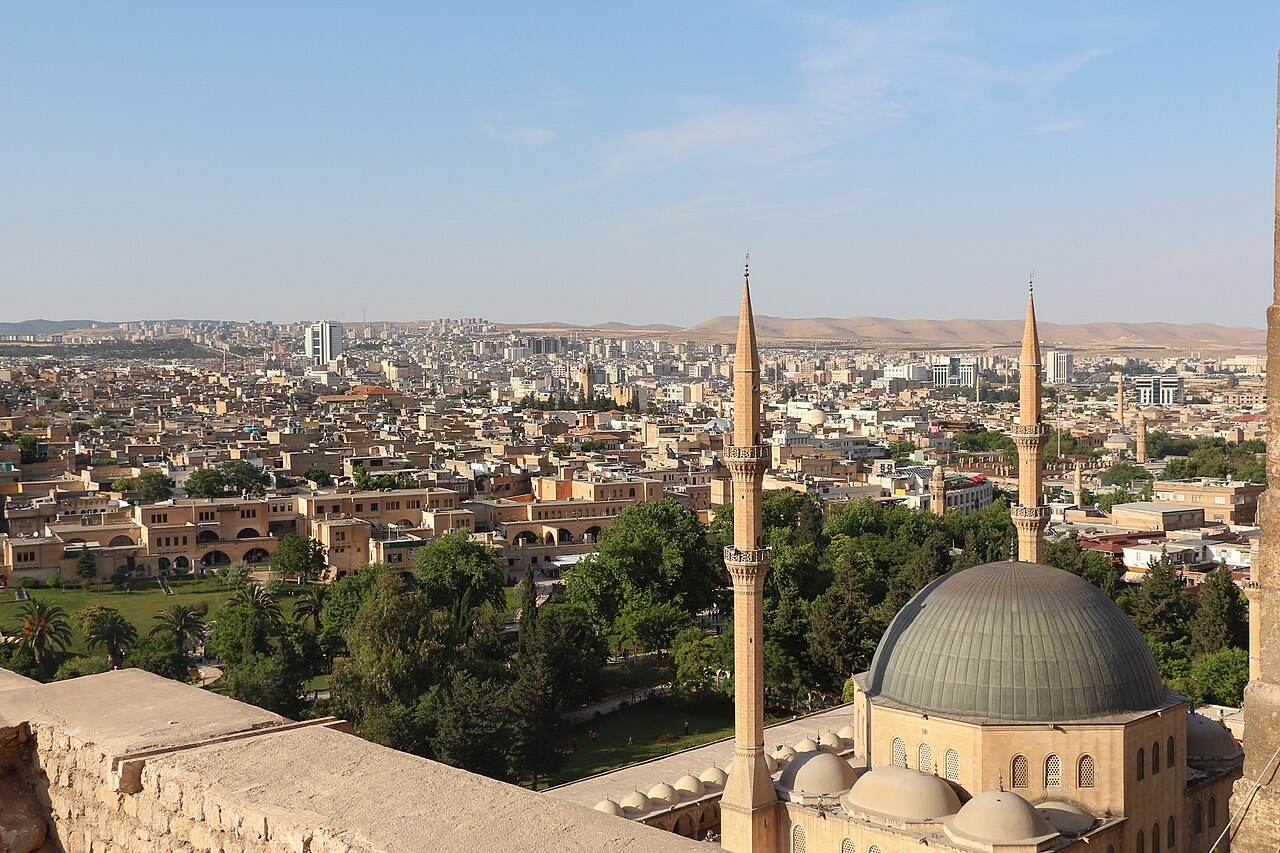
A city of about 2 million near the Syrian border, famous for its food. In 2015 it became Türkiye's first UNESCO City of Gastronomy. It is the centre of the country's pistachio trade, and its Zeugma Mosaic Museum holds Roman mosaics including the famous 'Gypsy Girl'.
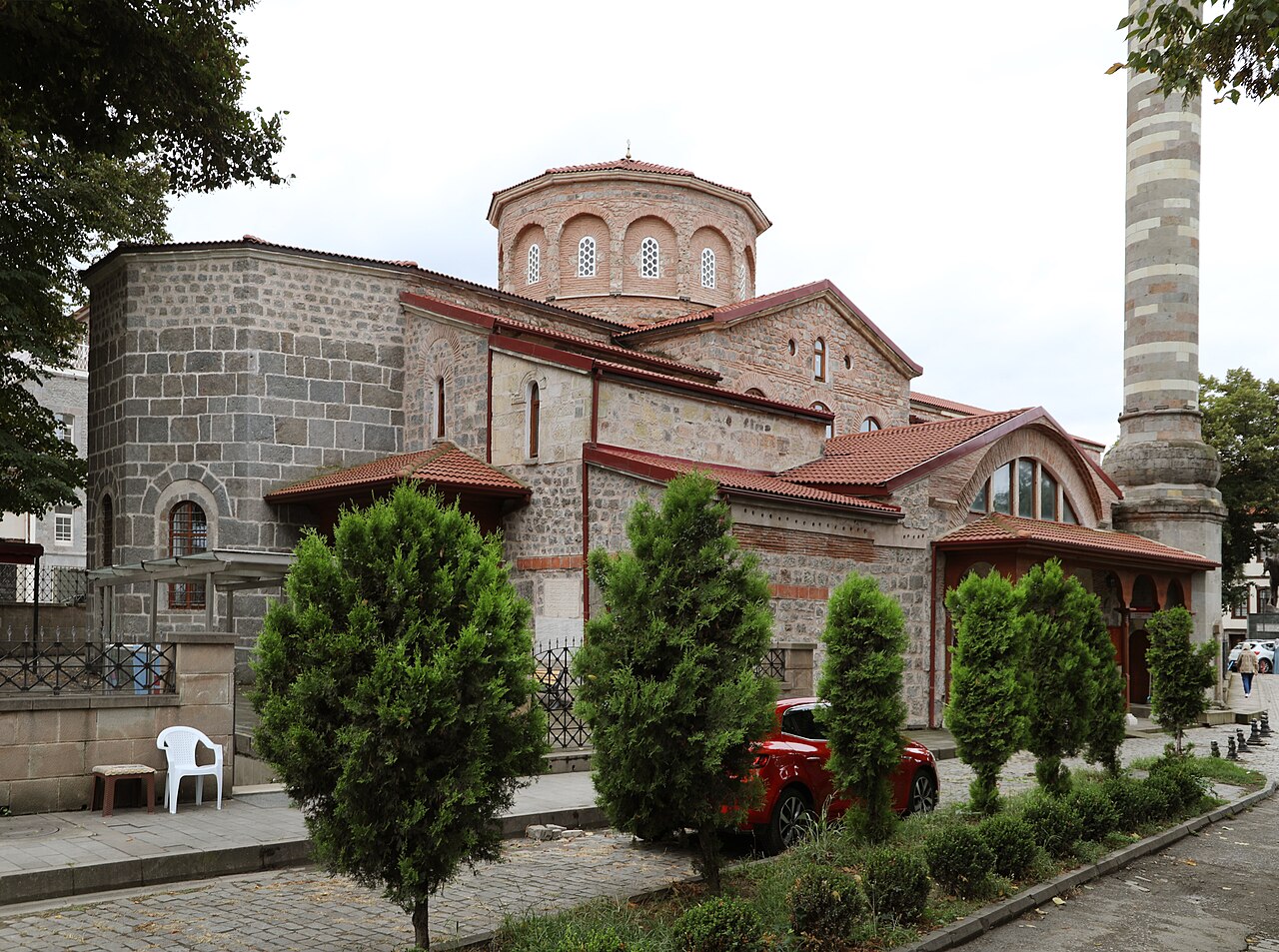
The main city of the eastern Black Sea coast, backed by steep, green, rainy mountains. As Trebizond it was the capital of a Byzantine empire until 1461. The region grows tea and hazelnuts and loves hamsi, the little anchovies of the Black Sea.
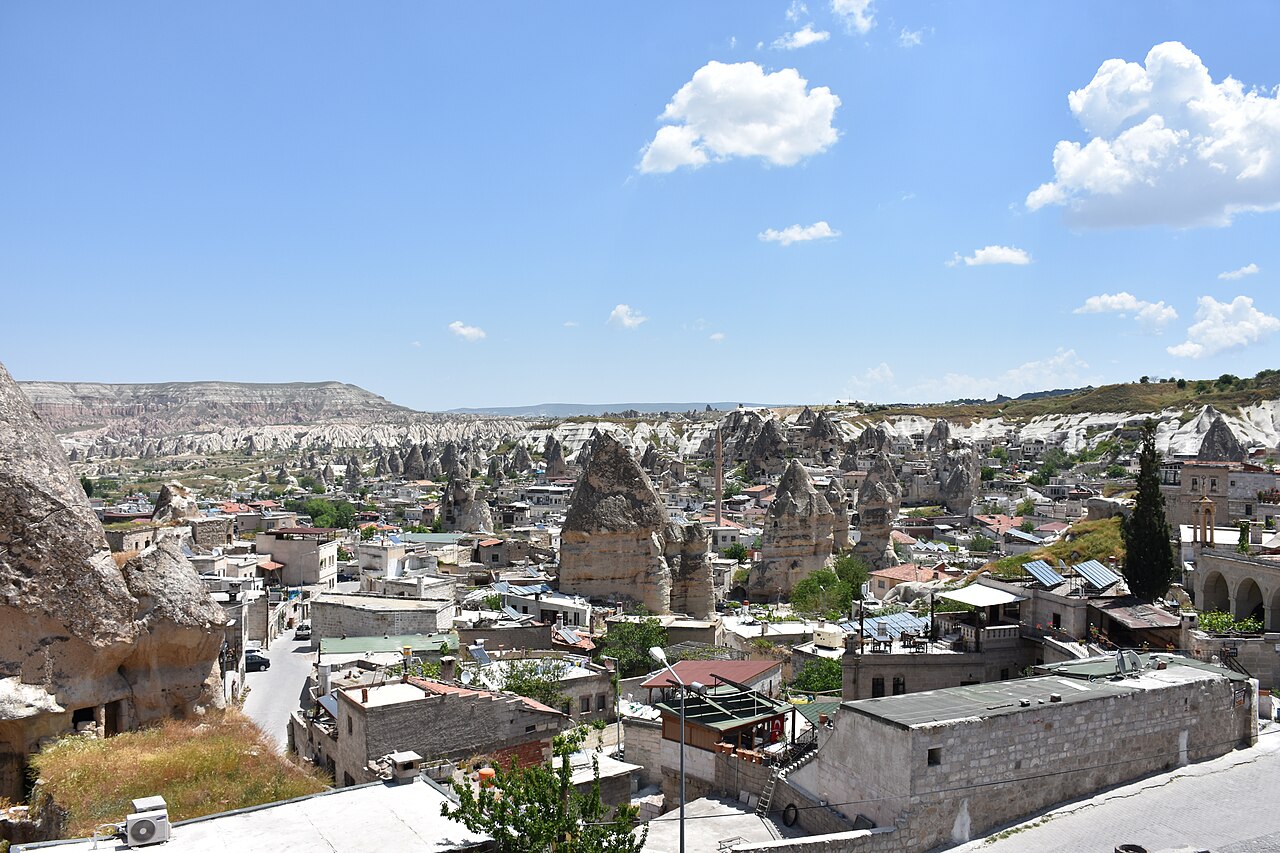
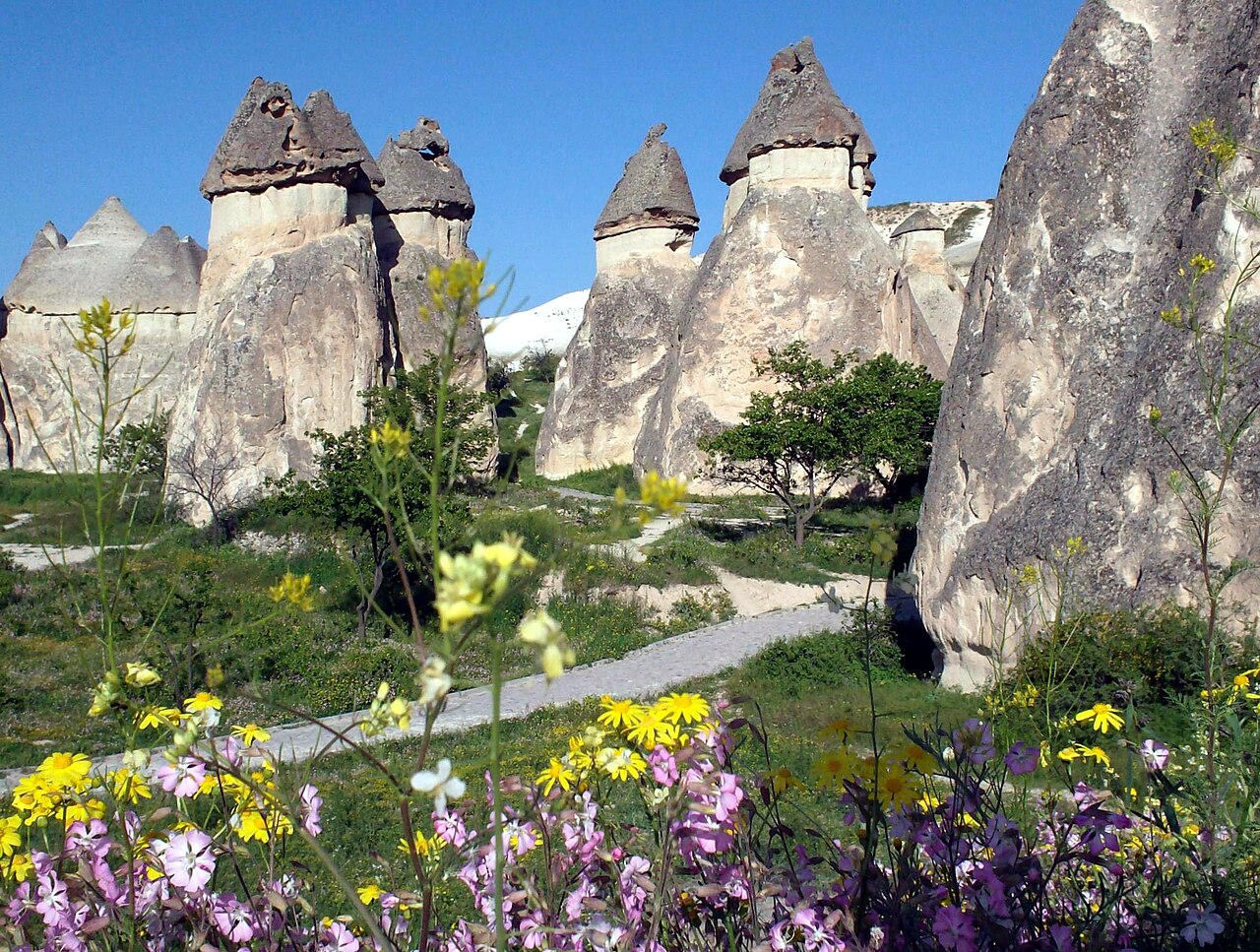
A small town in the heart of Cappadocia, surrounded by 'fairy chimneys', tall cones of soft volcanic rock into which people carved homes and churches. Many hotels are built into the rock, and at dawn the sky fills with hot-air balloons.
An ancient city, the Edessa of the Greeks and Romans, often simply called Urfa. It is known as the 'City of Prophets', because tradition links it to Abraham, and pilgrims come to feed the sacred carp in the pool of Balıklıgöl. Göbekli Tepe lies about 12 km away.
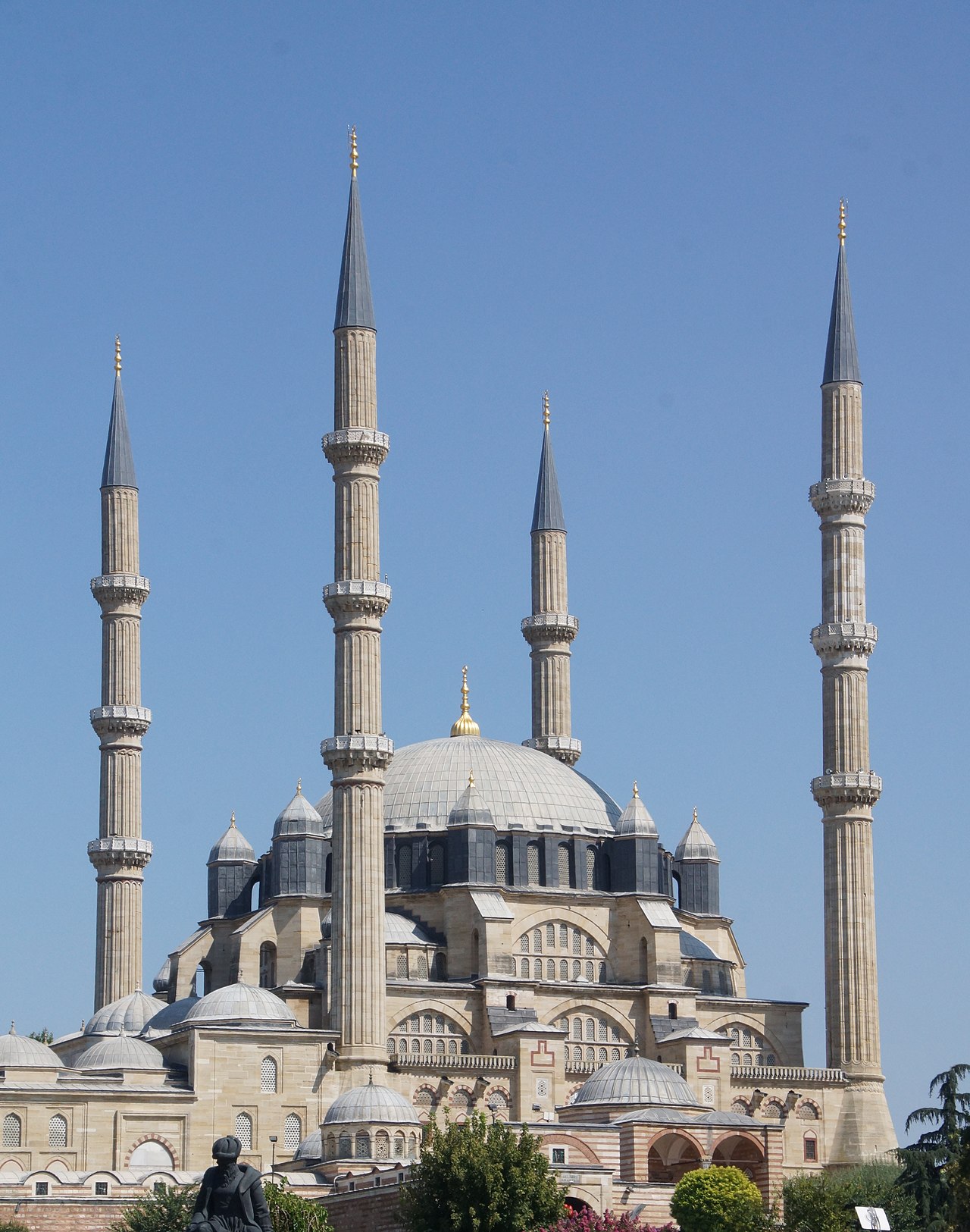
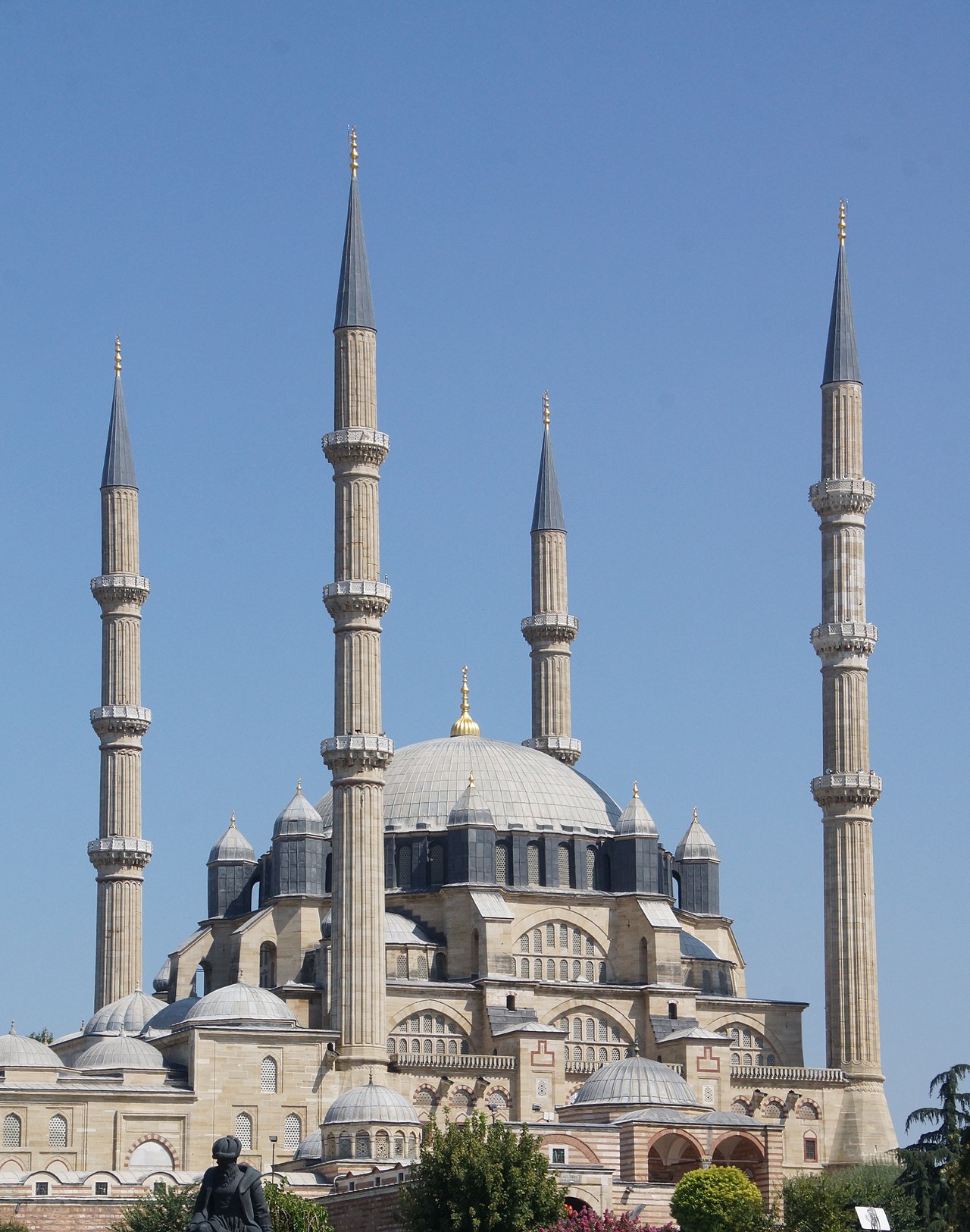
A historic city only about 7 km from the Greek border and 20 km from Bulgaria. As Adrianople it was the Ottoman capital from the 1360s until 1453, and its skyline is crowned by the Selimiye Mosque.
A small, friendly town about 2 to 3 km from the ruins of Ephesus, and the base for visiting them. Nearby are the single remaining column of the Temple of Artemis and the House of the Virgin Mary, a place of pilgrimage.
Built for Emperor Justinian and completed in 537, its vast dome covered what was then the largest interior space in the world. It was a cathedral for over 900 years, a mosque from 1453, a museum from 1935, and in 2020 it became a mosque again. Visitors are welcome outside prayer times.
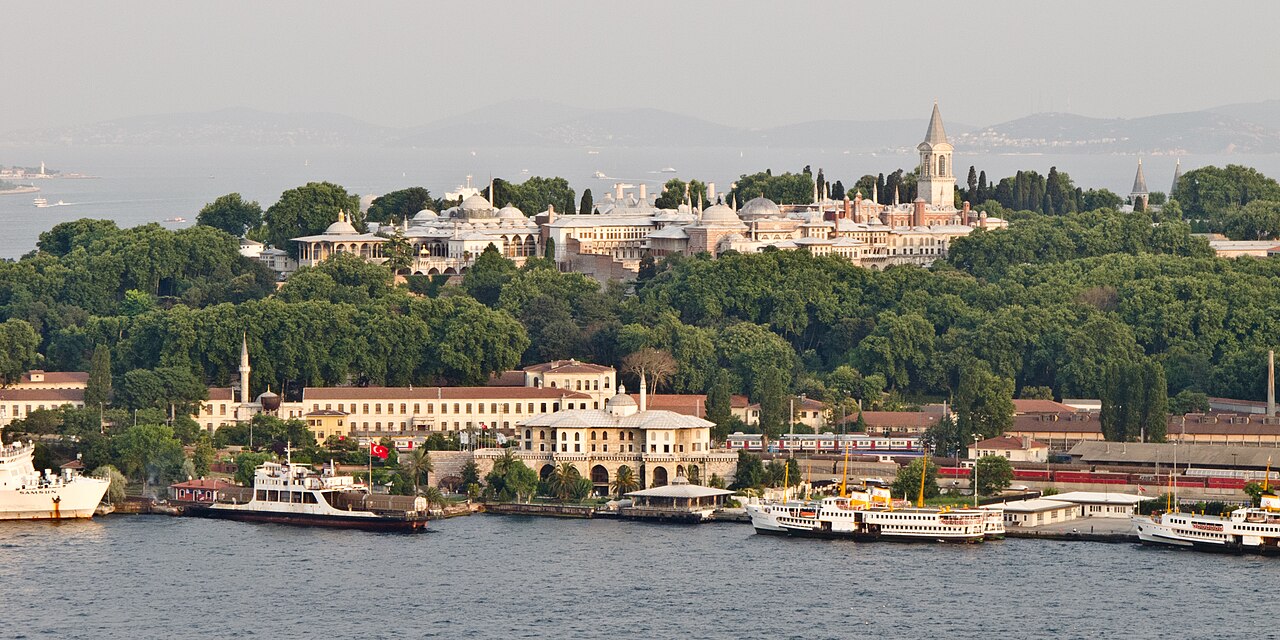
The palace of the Ottoman sultans, begun by Mehmed the Conqueror in 1459 on the point where the Bosphorus meets the Golden Horn. Sultans lived here until the 1850s, and since 1924 it has been a museum of courtyards, pavilions, the harem and a treasury holding the Spoonmaker's Diamond.
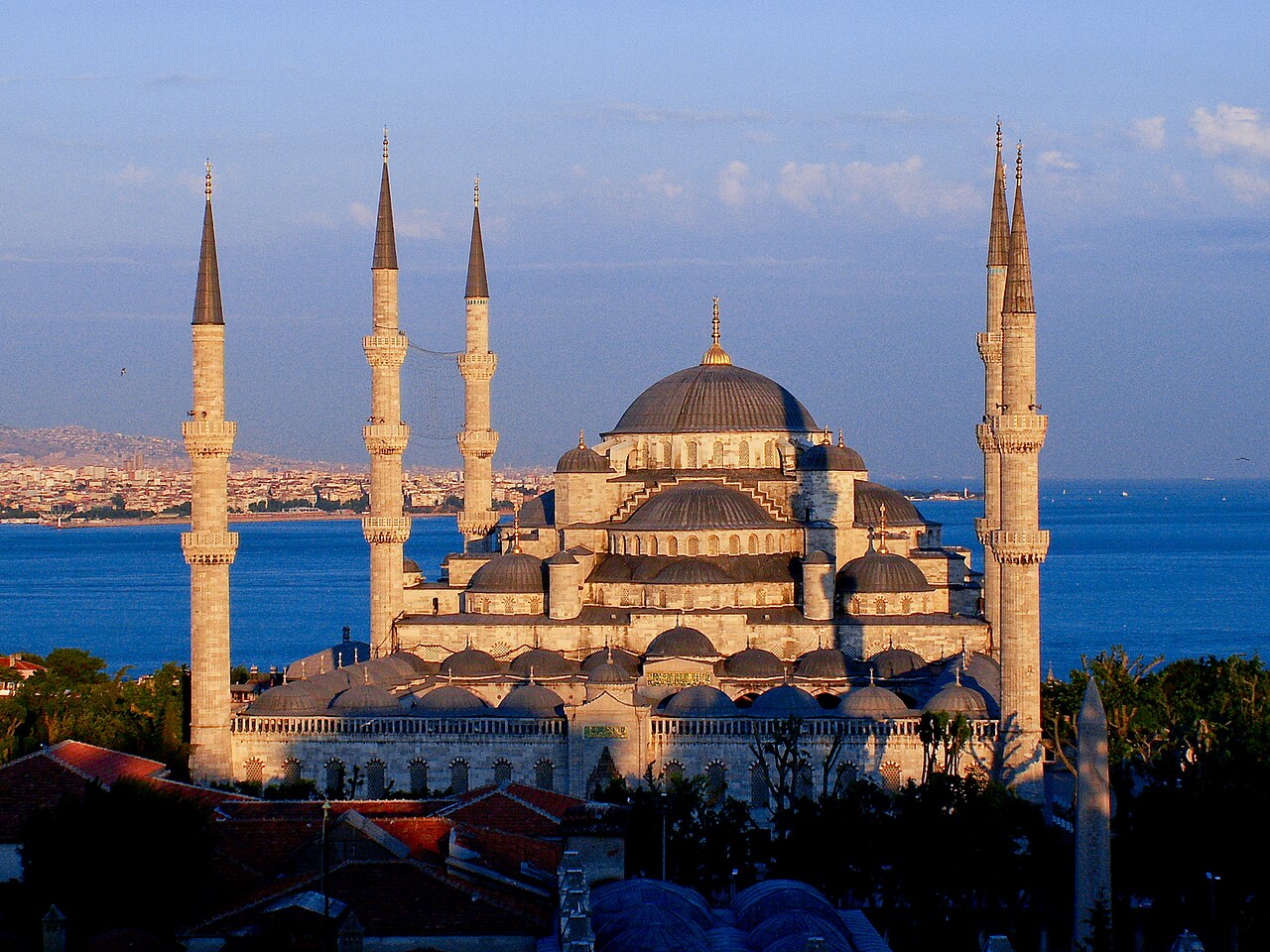
Officially the Sultan Ahmed Mosque, built from 1609 to 1617 facing Hagia Sophia. It is famous for its six minarets, its cascade of domes, and the more than 20,000 blue İznik tiles inside that give it its popular name. It is still a working mosque.
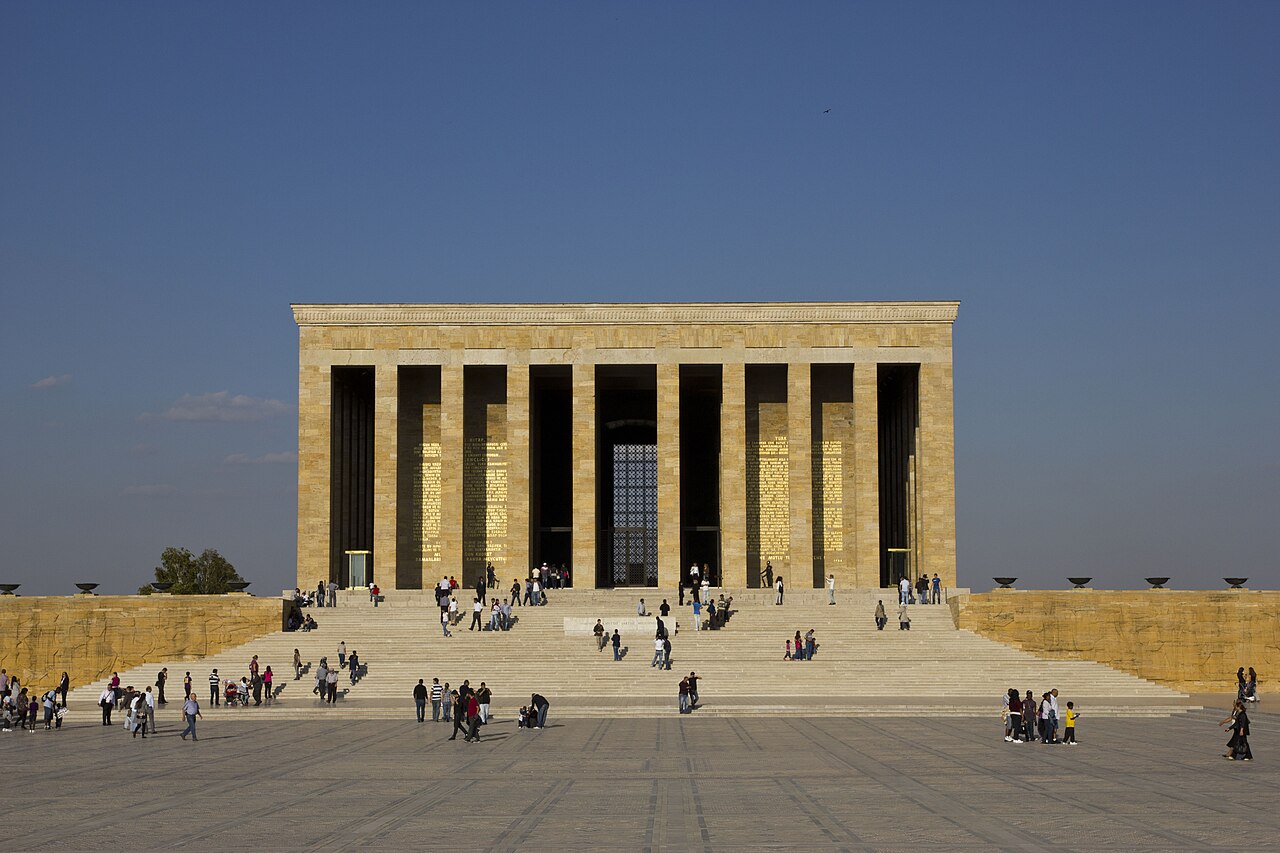
The monumental mausoleum of Mustafa Kemal Atatürk, on a hill in the middle of Ankara, built between 1944 and 1953. Every 10 November, at 9:05, the time he died in 1938, the country stops for a minute of silence.
Göreme National Park and the rock sites of Cappadocia
A landscape of valleys, cliffs and fairy chimneys carved by wind and water from soft volcanic rock. Early Christians cut churches and monasteries into the rock and painted them with frescoes, many of which can be seen at the Göreme Open-Air Museum.
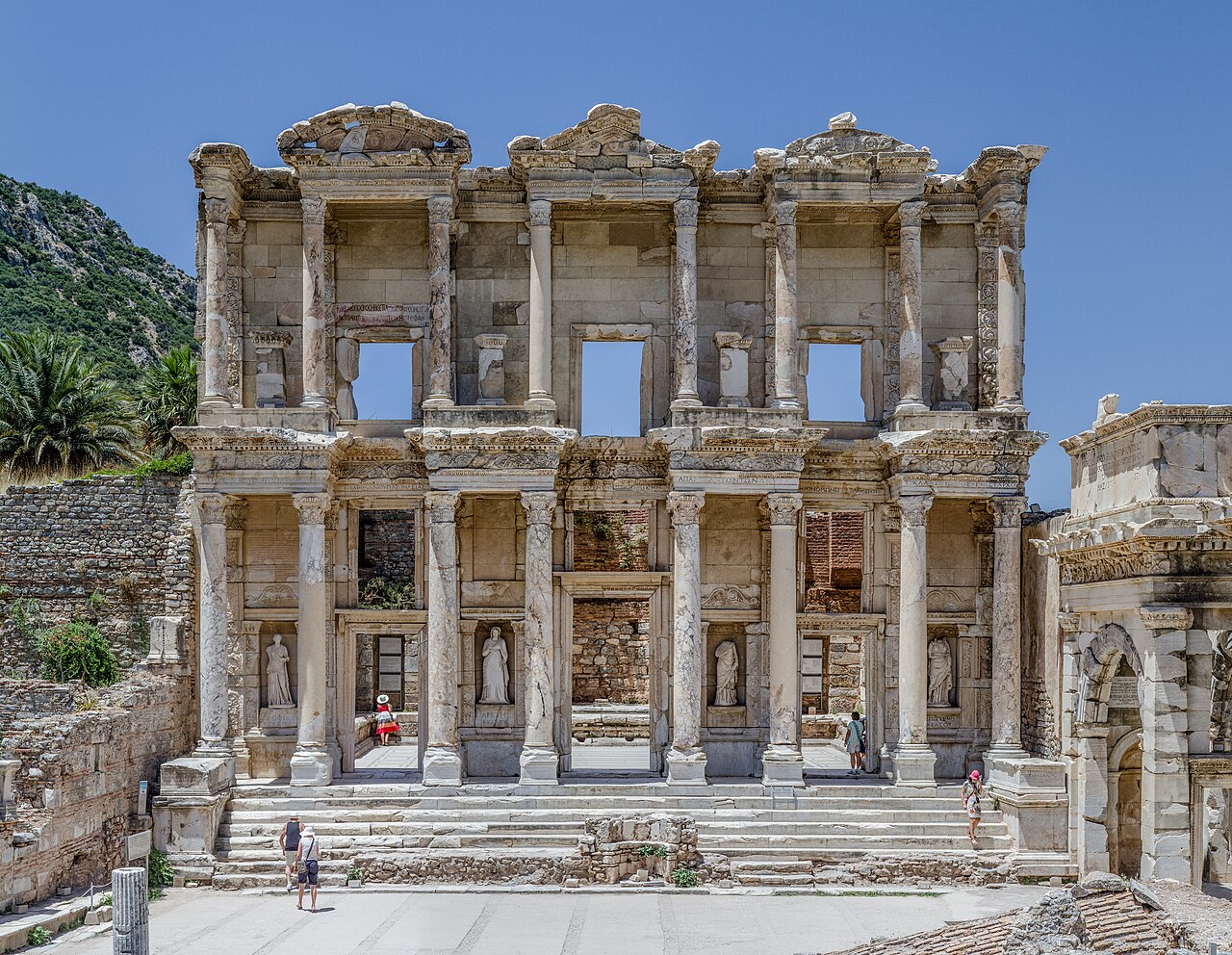
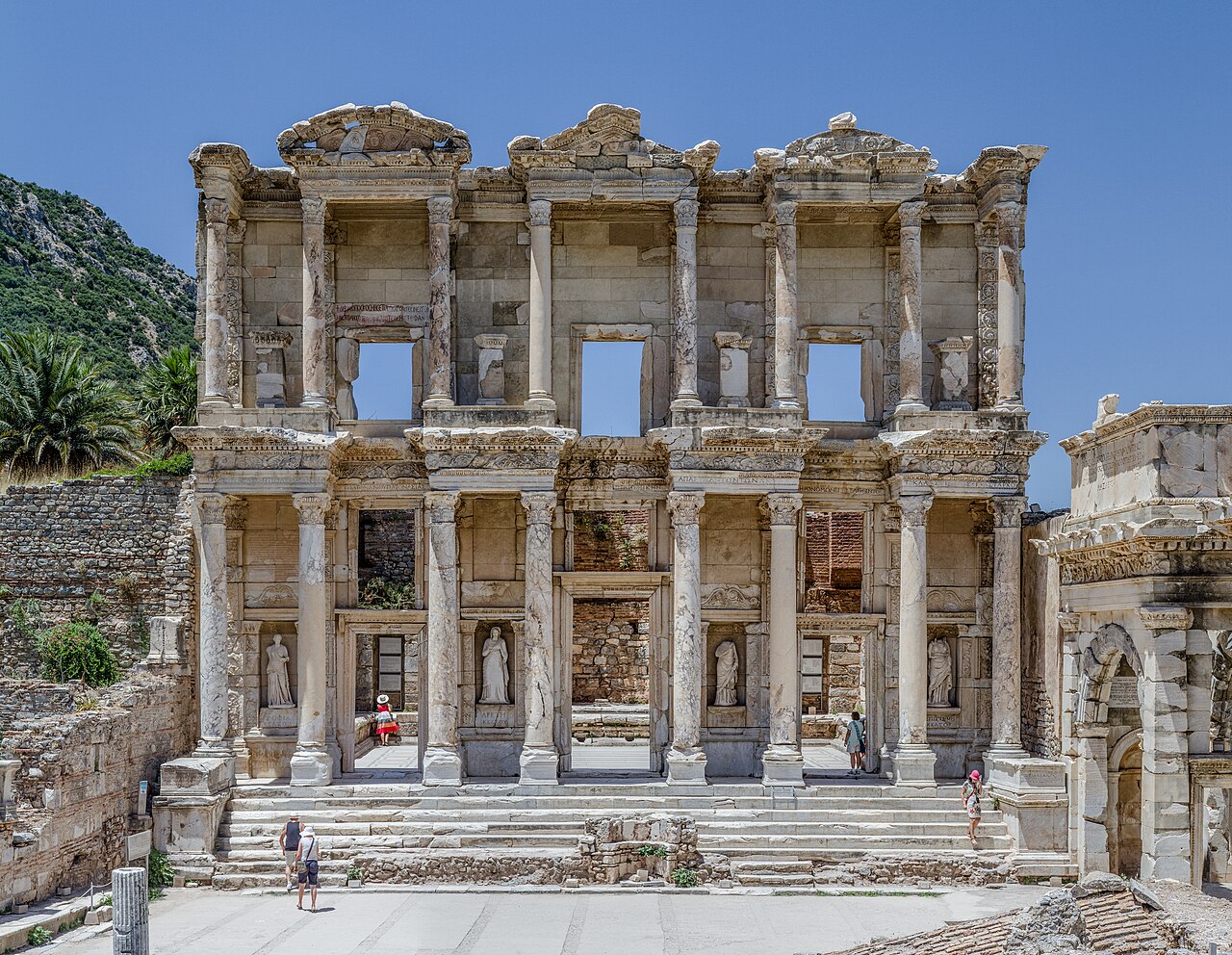
One of the great cities of the Roman world, with marble streets, a theatre for about 25,000 people and the two-storey facade of the Library of Celsus, built around AD 125. The Temple of Artemis nearby was one of the Seven Wonders of the Ancient World.
A hilltop about 12 km from Şanlıurfa where people built rings of carved T-shaped stone pillars from about 9500 BC, at the dawn of farming and long before writing. Some pillars are decorated with foxes, boars, snakes and birds. A roof now protects the main enclosures.
Built from 1568 to 1575 for Sultan Selim II by the great architect Mimar Sinan, who considered it his masterpiece. Its dome is about 31 m across, and four slender minarets about 71 m tall stand at its corners.
The tomb of the poet and mystic Rumi, who died in 1273, under a turquoise-tiled dome that has become the symbol of Konya. The former lodge of the whirling dervishes has been a museum since 1927 and draws pilgrims as well as tourists.
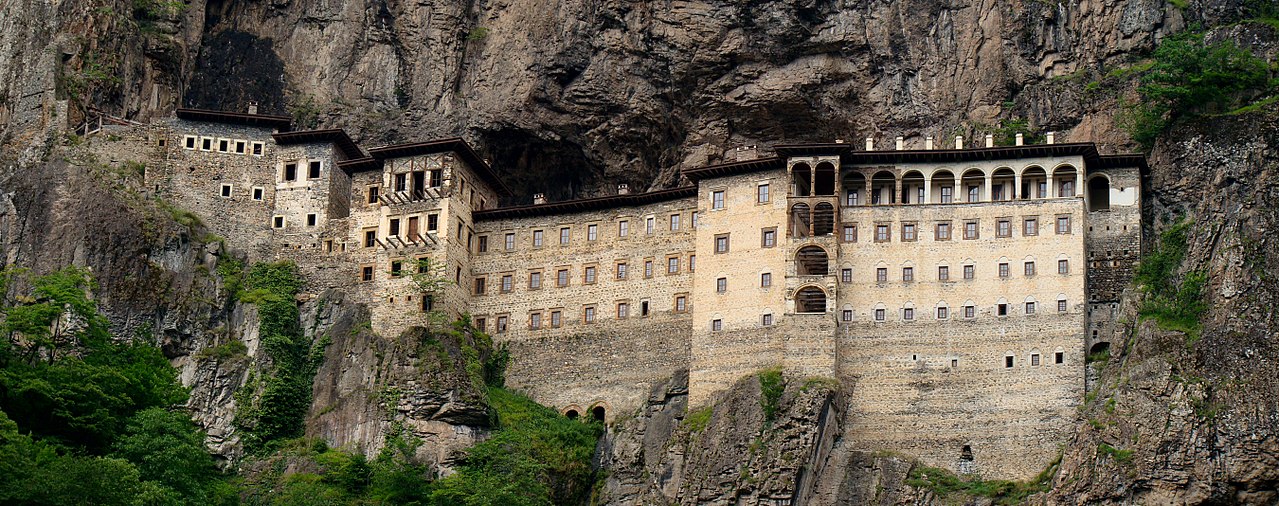
A Greek Orthodox monastery clinging to a steep cliff at about 1,200 m in the forested mountains south of Trabzon, founded according to tradition in the 4th century. It was abandoned after 1923 and is now a museum, and once a year, on 15 August, a liturgy is held there again.
Istanbul is built on two continents. Roughly two thirds of its people live on the European side of the Bosphorus and one third on the Asian side, and many cross by ferry every day.
02
Göbekli Tepe, near Şanlıurfa, was built from about 9500 BC, more than 6,000 years before Stonehenge. Its builders were mainly hunter-gatherers, living at the very dawn of farming.
03
Two of the Seven Wonders of the Ancient World stood in what is now Türkiye: the Temple of Artemis at Ephesus and the Mausoleum at Halicarnassus, today's Bodrum.
04
Saint Nicholas, whose legend of secret gift-giving grew into Santa Claus, was born in Patara and was bishop of Myra, today the town of Demre on Türkiye's Mediterranean coast.
05
Tulips were loved and bred in the Ottoman Empire long before they reached the Netherlands in the late 1500s. The English word 'tulip' is thought to come from the Turkish word for the cloth of a turban.
06
Turks drink more tea per person than any other nation, over 3 kg of tea a year each in widely quoted figures, or almost four glasses a day. Most of it is grown on the rainy Black Sea coast around Rize.
07
In 1963 a man renovating his house in Derinkuyu, Cappadocia, broke through a wall and found an underground city about 85 m deep, where up to 20,000 people with their animals could shelter.
08
Turkish women won the right to vote in national elections in 1934, ten years before women in France (1944) and eleven years before women in Italy (1945).
09
Mount Ararat, at 5,137 m the highest mountain in Türkiye, has been linked since the Middle Ages with the story of Noah's Ark. It is also a national symbol of Armenia, which it overlooks across the border.
10
Every 10 November at 9:05 in the morning, the moment Atatürk died in 1938, sirens sound and people across Türkiye stop and stand in silence for a minute. Even traffic halts.
11
Turkish coffee was added to UNESCO's list of the intangible cultural heritage of humanity in 2013. The grounds left in the cup are sometimes used to tell fortunes.
12
As of 2026, Türkiye has 22 UNESCO World Heritage Sites, from Hattusa and Troy to Göbekli Tepe, Cappadocia and Pamukkale. The newest is Sardis, the capital of ancient Lydia, added in 2025.
13
In 2005 Türkiye removed six zeros from its currency: one new lira was worth 1,000,000 old lira. The ₺ symbol followed in 2012.
Take off your shoes at the entrance and carry them in the bags provided. Cover your shoulders and knees; women should also cover their hair, and scarves are often lent at the door. Avoid prayer times, especially Friday midday, and do not walk in front of people who are praying.
Be thoughtful during Ramadan
During Ramadan many Muslims fast from dawn to sunset. Visitors are not expected to fast, and restaurants in cities and resorts stay open, but eating, drinking or smoking in public in conservative areas is best avoided in the daytime.
Carry ID and respect national symbols
By law you must carry photo ID, so keep your passport with you at all times. It is a crime to insult the Turkish nation, the flag, Atatürk or the President, so avoid jokes about them. Do not photograph military sites.
Bargain with a smile
In bazaars such as Istanbul's Grand Bazaar, prices for carpets, lamps and souvenirs are open to bargaining. Take your time, accept the tea, and walk away politely if the price is not right. In ordinary shops and supermarkets prices are fixed.
Tipping
Tipping is not obligatory, but about 10 percent is common in restaurants if you are happy with the service; it is usually left in cash, as it often cannot be added to a card payment. Taxi drivers do not expect a tip, but people often let them keep the change. In a Turkish bath (hamam), about 10 percent is customary.
Getting around Istanbul
Trams, the metro and the ferries across the Bosphorus are cheap and easy. Buy a rechargeable Istanbulkart travel card from a machine at a metro station; up to five people can travel on one card, tapping it one after another. A ferry ride is one of the best views of the city.
In an emergency
As of 2026, the single emergency number in Türkiye for police, ambulance and fire is 112. Drink bottled water rather than tap water, and remember that Türkiye lies in an earthquake zone: follow the advice of local authorities.
Check the rules before you go
Entry rules depend on your passport, and some visitors need an e-visa bought in advance. As of 2026, for example, British citizens can visit without a visa for up to 90 days in any 180. Also read your government's travel advice: the UK's, for example, advises against all travel within 10 km of the border with Syria.
 Armenia
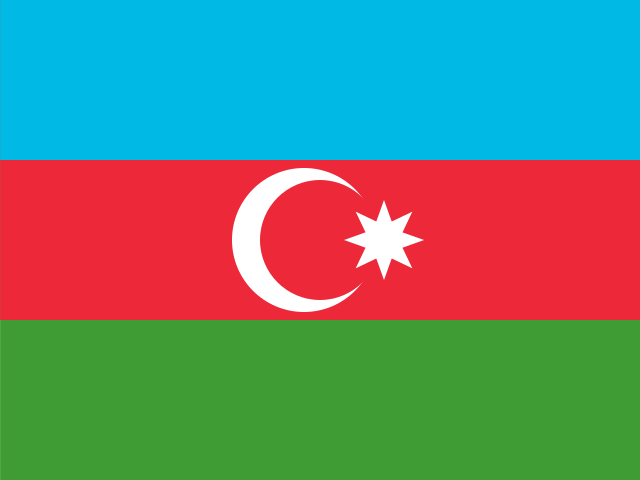 Azerbaijan
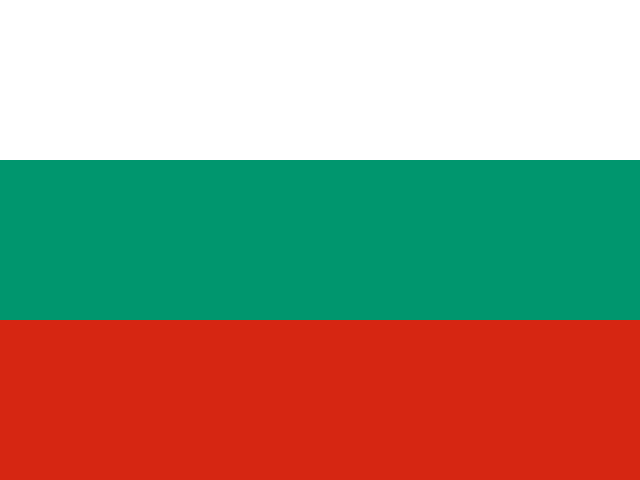 Bulgaria
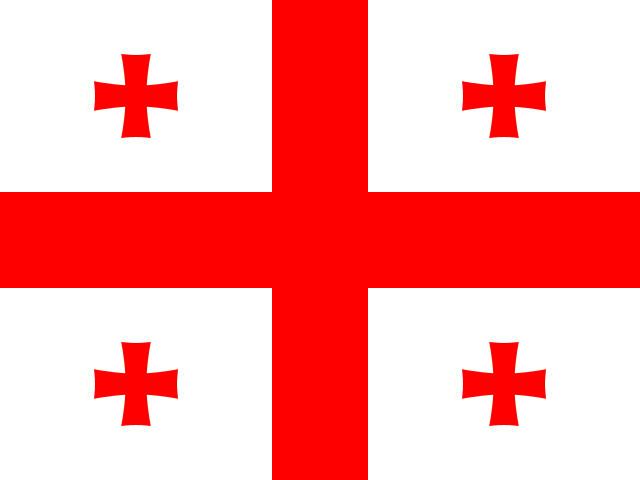 Georgia
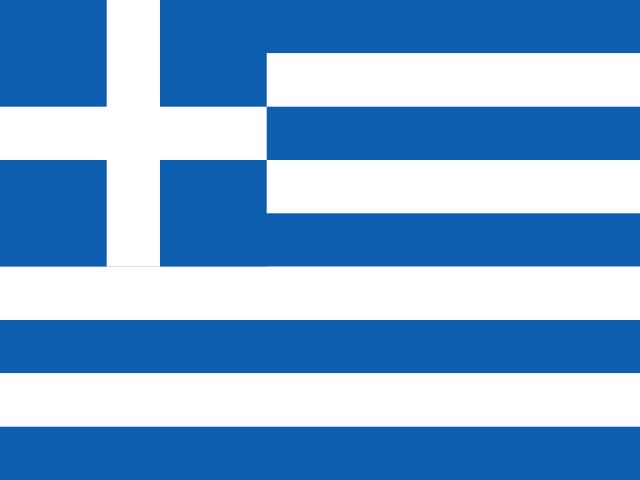 Greece
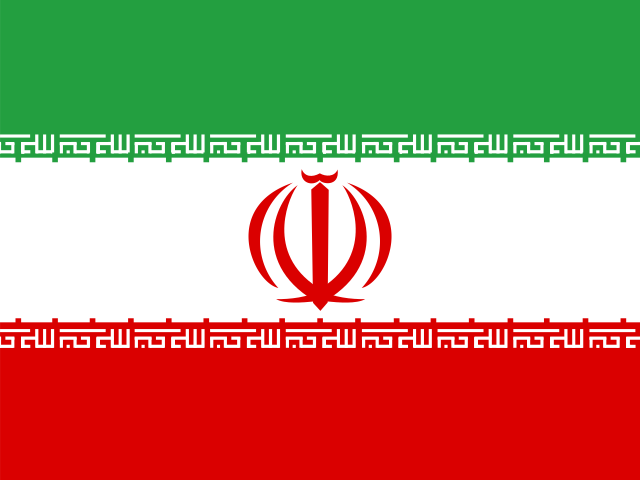 Iran
Iran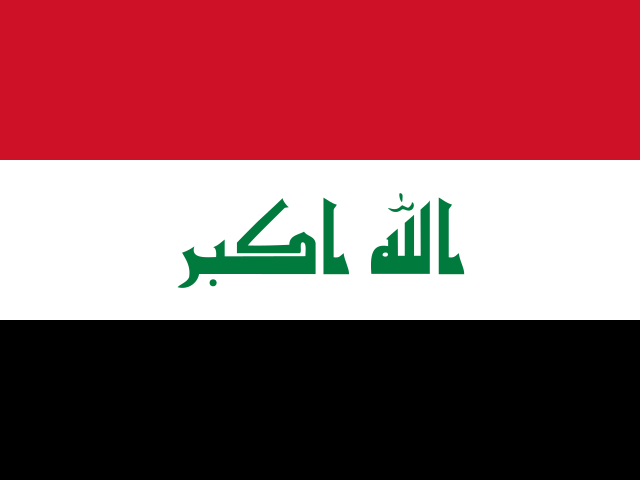 Iraq
Iraq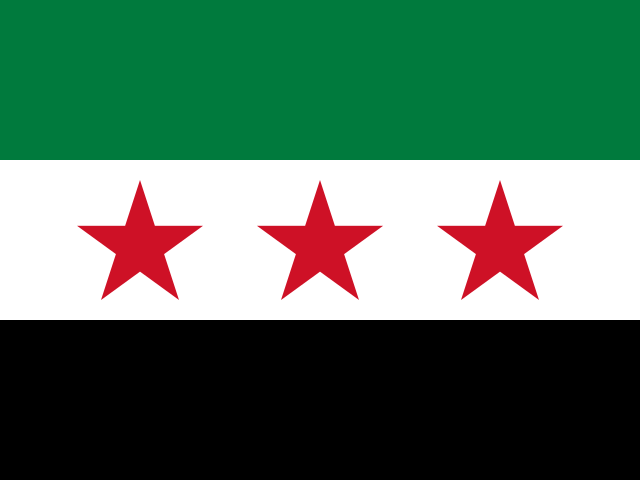 Syria
Syria