Turkish cooking brings together the grain and dairy of the Central Asian steppe, the olive oil and fish of the Aegean and the Black Sea, the spice and kebabs of the southeast, and the refined dishes of the Ottoman palace kitchens. Breakfast, kahvaltı, is a big spread of cheese, olives, tomatoes, cucumbers, eggs, honey, jam and bread, with endless glasses of tea. A dinner often starts with meze, small cold and hot dishes to share, followed by soup, a main dish of meat or vegetables with rice or bulgur, and fruit or a sweet. Bread comes with every meal, and a small cup of Turkish coffee may end it.
All of Türkiye, especially the Aegean coast and Istanbul
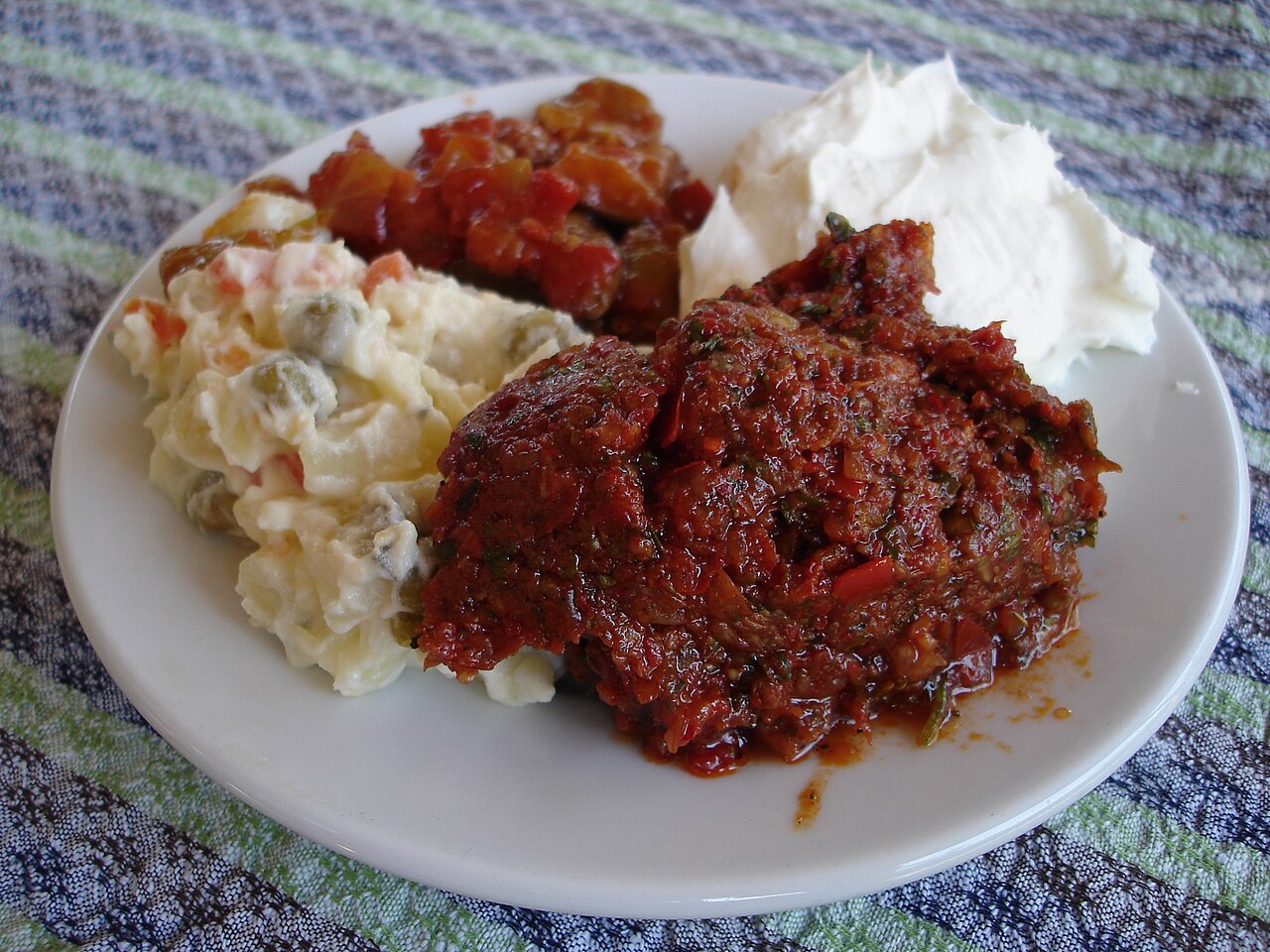
A spread of small dishes to share at the start of a meal: white cheese, melon, yoghurt with garlic and cucumber (cacık), smoky aubergine purée, stuffed vine leaves, spicy tomato dip, and vegetables cooked in olive oil. In a meyhane, a traditional tavern, meze can last all evening.
Many meze made with olive oil, called zeytinyağlı, are served cold or at room temperature, because they taste better once the oil has settled.
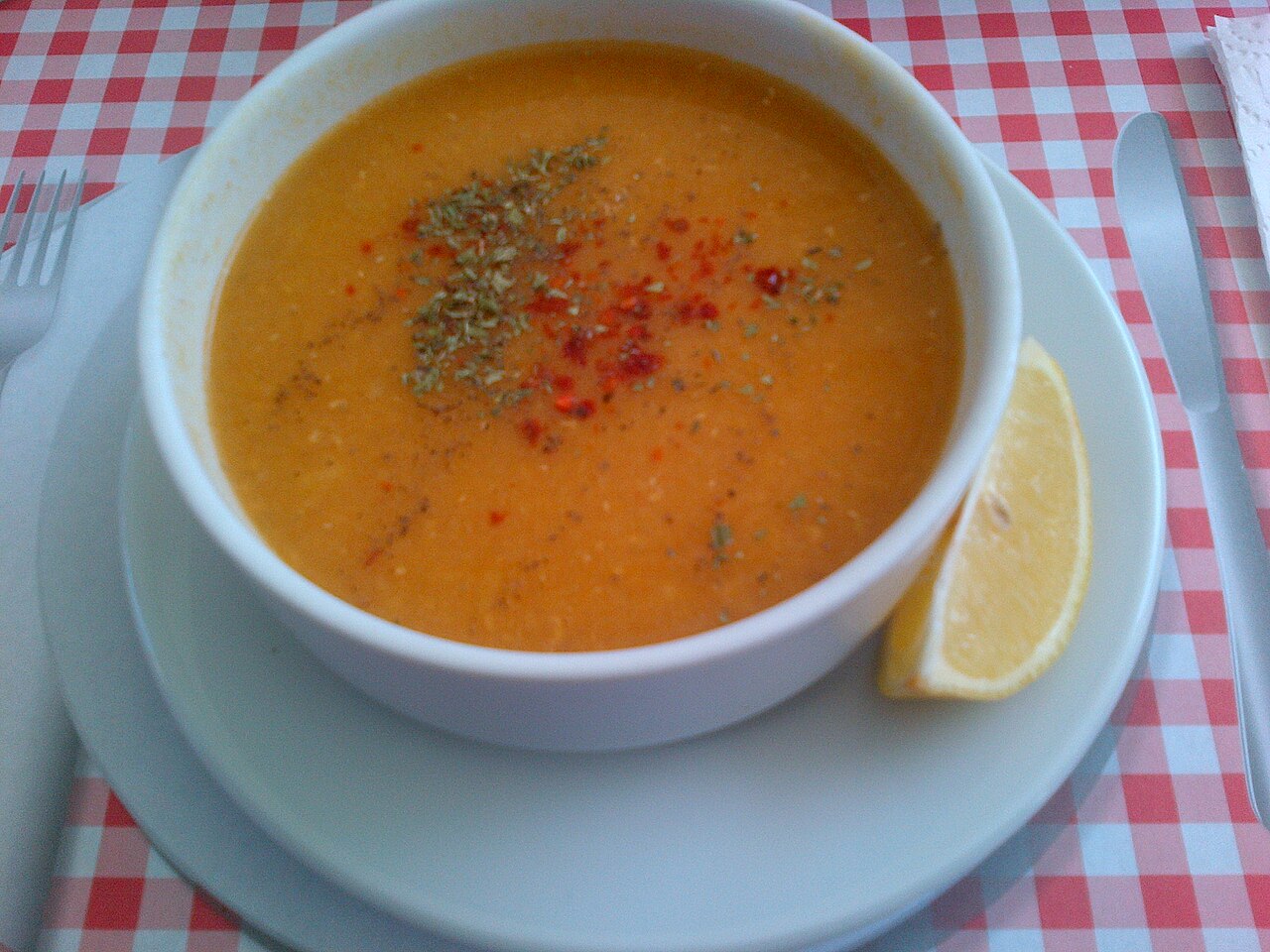
A smooth, golden soup of red lentils, onion and carrot, finished with butter and red pepper and served with a wedge of lemon. It is found in almost every Turkish home and in simple restaurants called lokanta, and some people even eat it for breakfast.
Named after the town of Menemen near İzmir, now eaten all over Türkiye
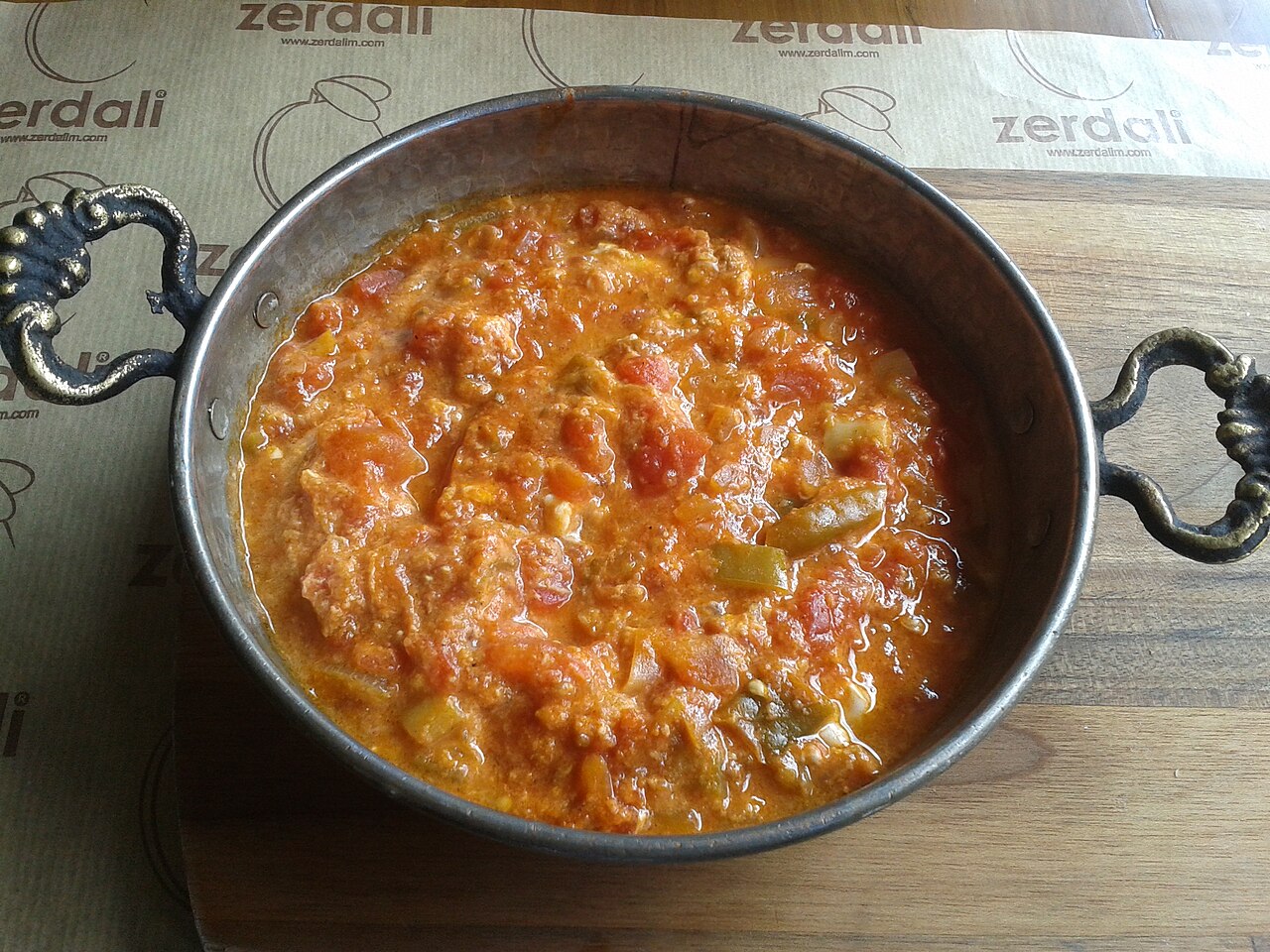
Eggs scrambled into a soft mixture of tomatoes, green peppers and olive oil, cooked and served in a small two-handled pan with plenty of bread for dipping. It is a favourite breakfast, and some cooks add sucuk, a spicy sausage, or white cheese.
Whether menemen should contain onions is a famous Turkish argument. In a 2018 online poll with more than 400,000 votes, the onion side won with just 50.6 percent.
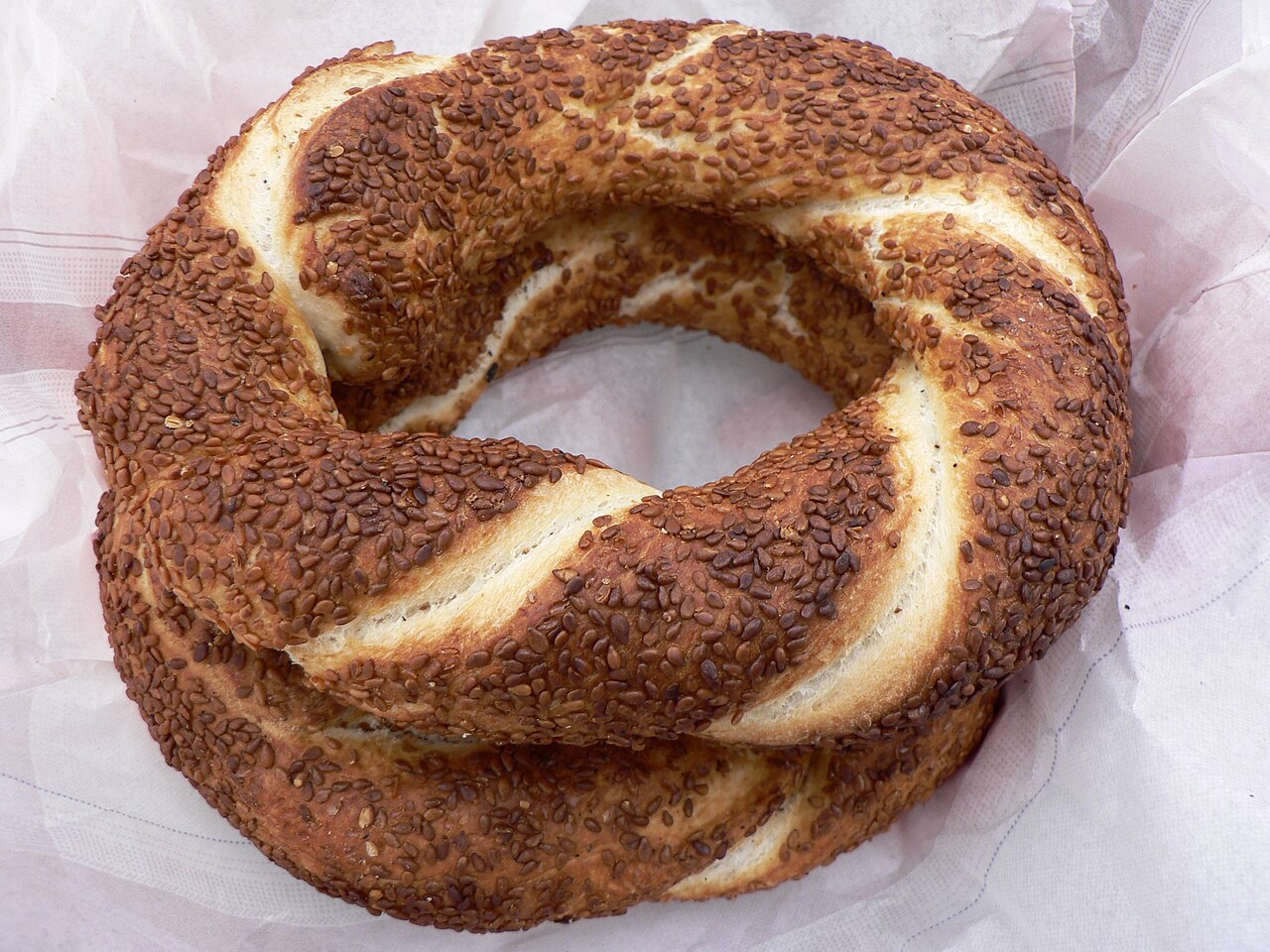
A ring of bread dipped in water and molasses and covered in sesame seeds, then baked until crisp and golden outside and soft inside. Street sellers carry piles of simit on trays on their heads or sell them from trolleys, and many people eat one with tea and white cheese for breakfast.
All of Türkiye, and especially popular on the Black Sea coast
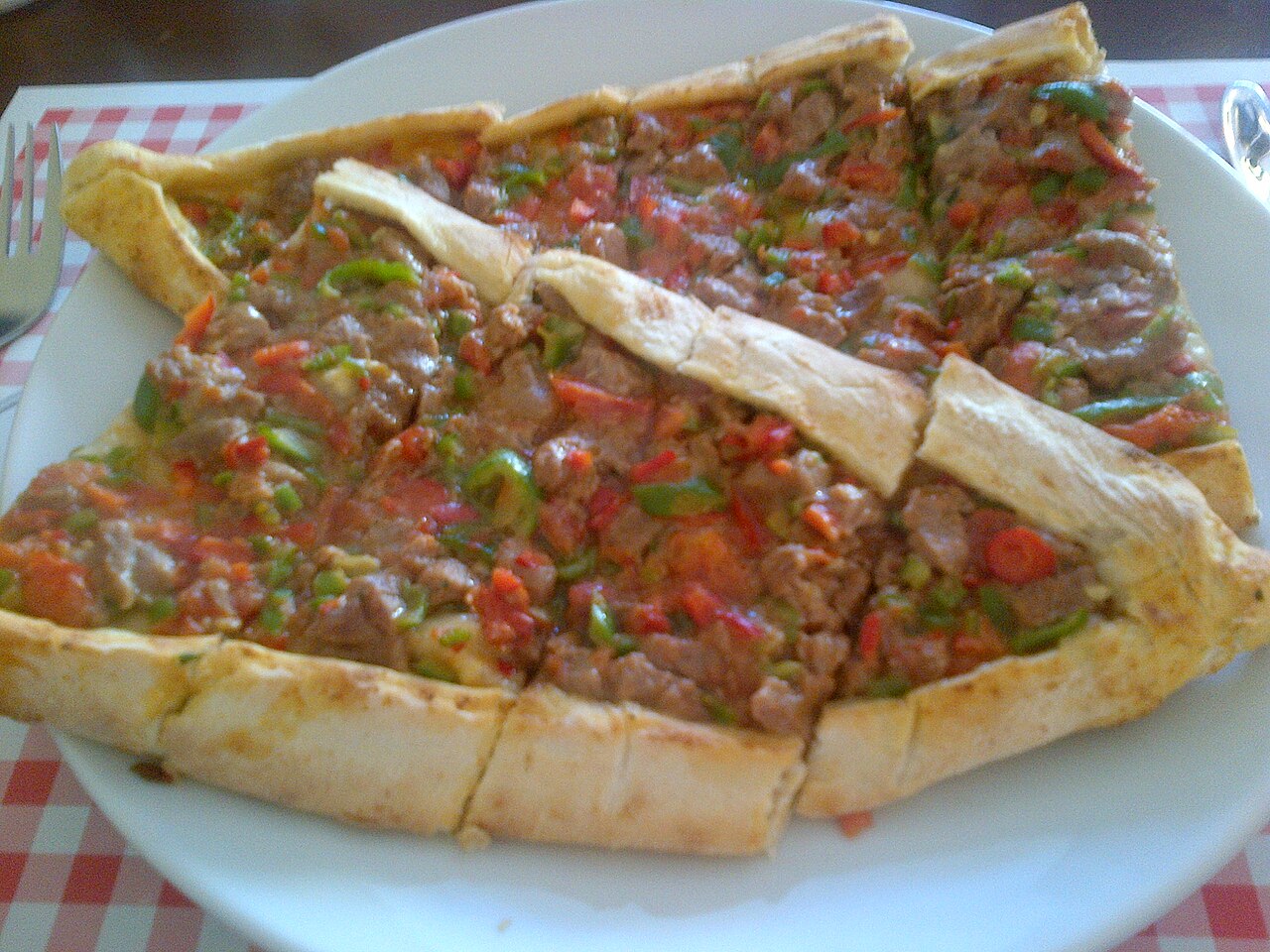
Flatbread baked at a high heat, traditionally in a wood-fired oven, usually long, with the edges folded in around a filling of minced meat, cheese, egg or sucuk sausage. The Black Sea version, Karadeniz pidesi, is famous all over the country. The person who makes it is a pideci.
Southeastern Türkiye, especially Gaziantep and Şanlıurfa; it is also loved in Syria, Lebanon and Armenia, and its roots are in the wider Levant
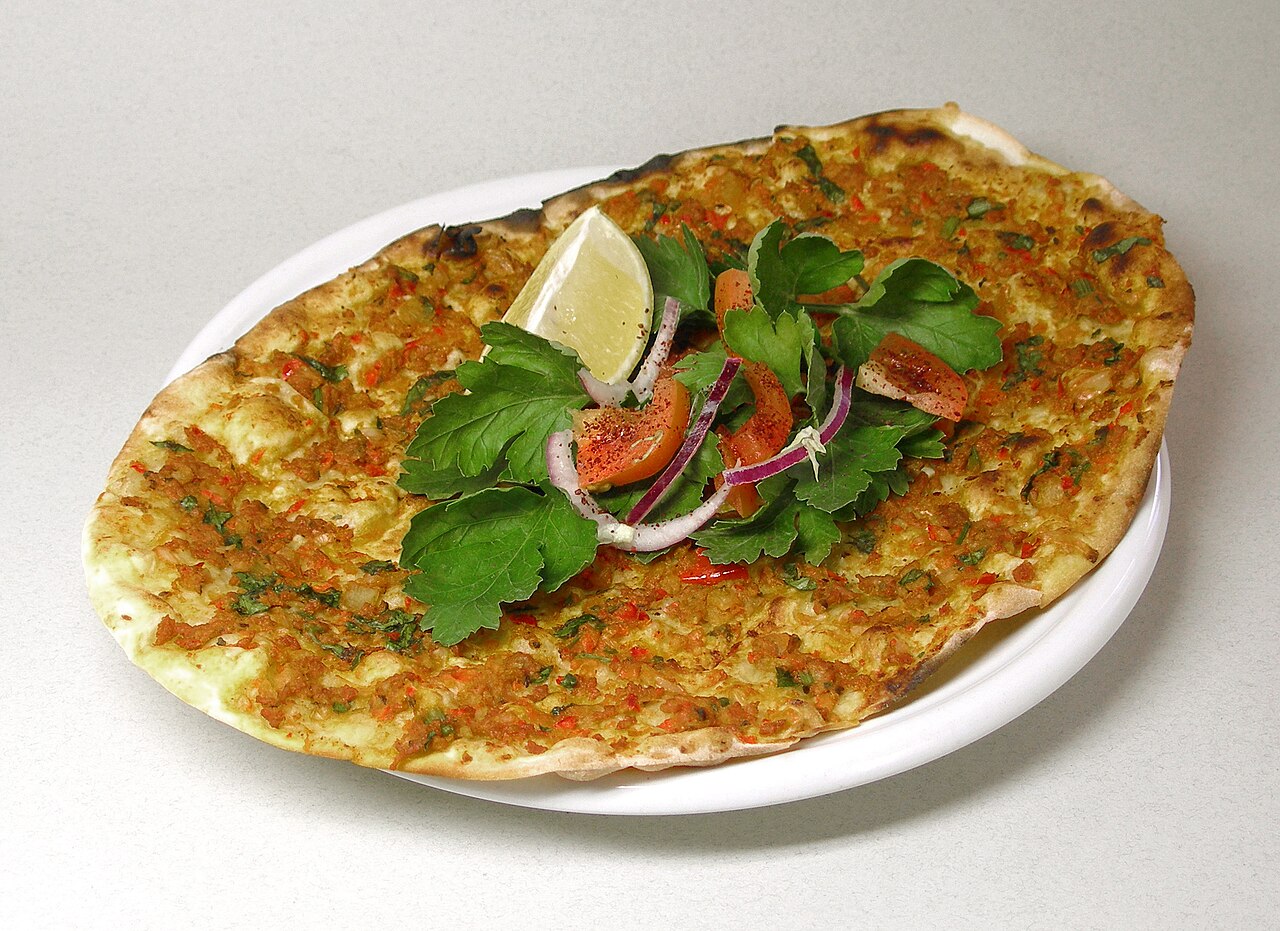
A very thin round of dough spread with minced meat, onion, tomato, pepper and herbs, baked in a very hot oven for a few minutes. It has no cheese. You squeeze lemon over it, add parsley and onion, roll it up and eat it with your hands.
Its name comes from Arabic lahm bi ajin, 'meat with dough'. In English it is sometimes called 'Turkish pizza', though it is really quite different.
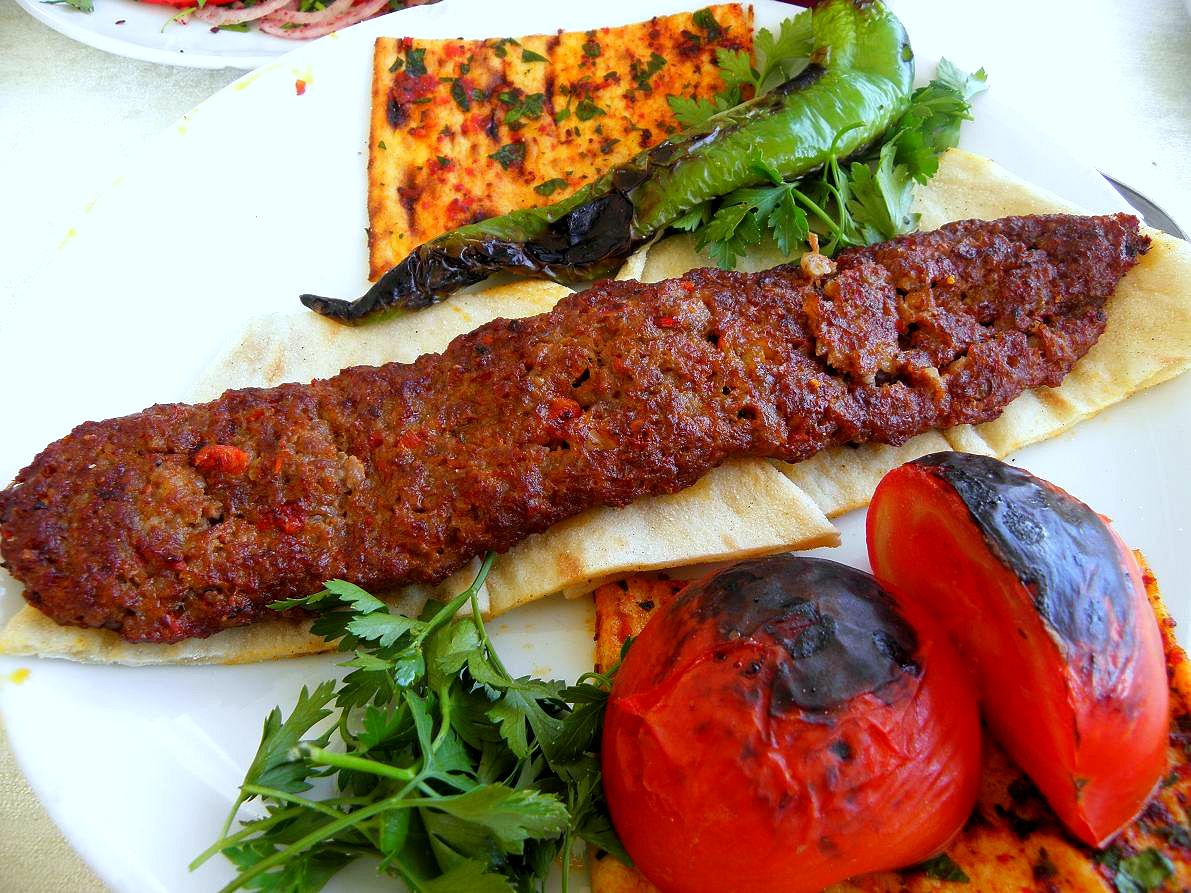
Lamb minced by hand with tail fat and red pepper, pressed onto a wide flat iron skewer and grilled over charcoal. It is served with flatbread, grilled tomatoes and peppers, and onions with sumac. Kebabs vary greatly from region to region, and many cities are proud of their own.
Since 2005 the name Adana kebabı has had protected status in Türkiye, and the traditional recipe is registered by the Adana Chamber of Commerce.
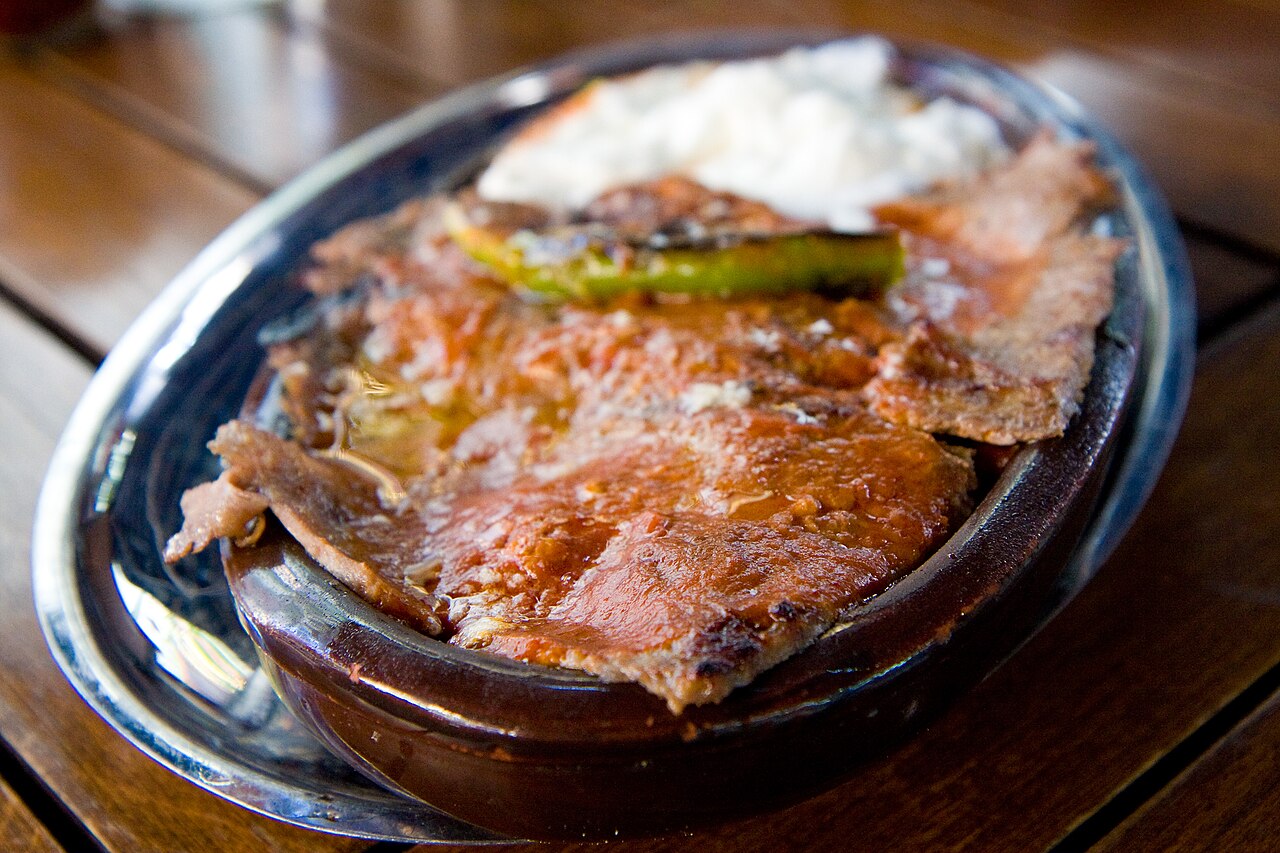
Thin slices of meat grilled on a vertical spit, laid over pieces of flatbread, covered with hot tomato sauce and sizzling melted butter, and served with thick yoghurt on the side.
It is named after İskender Efendi, who served it in Bursa in the late 19th century. His family still runs restaurants in the city.
All of Türkiye, most famously Kayseri in central Anatolia
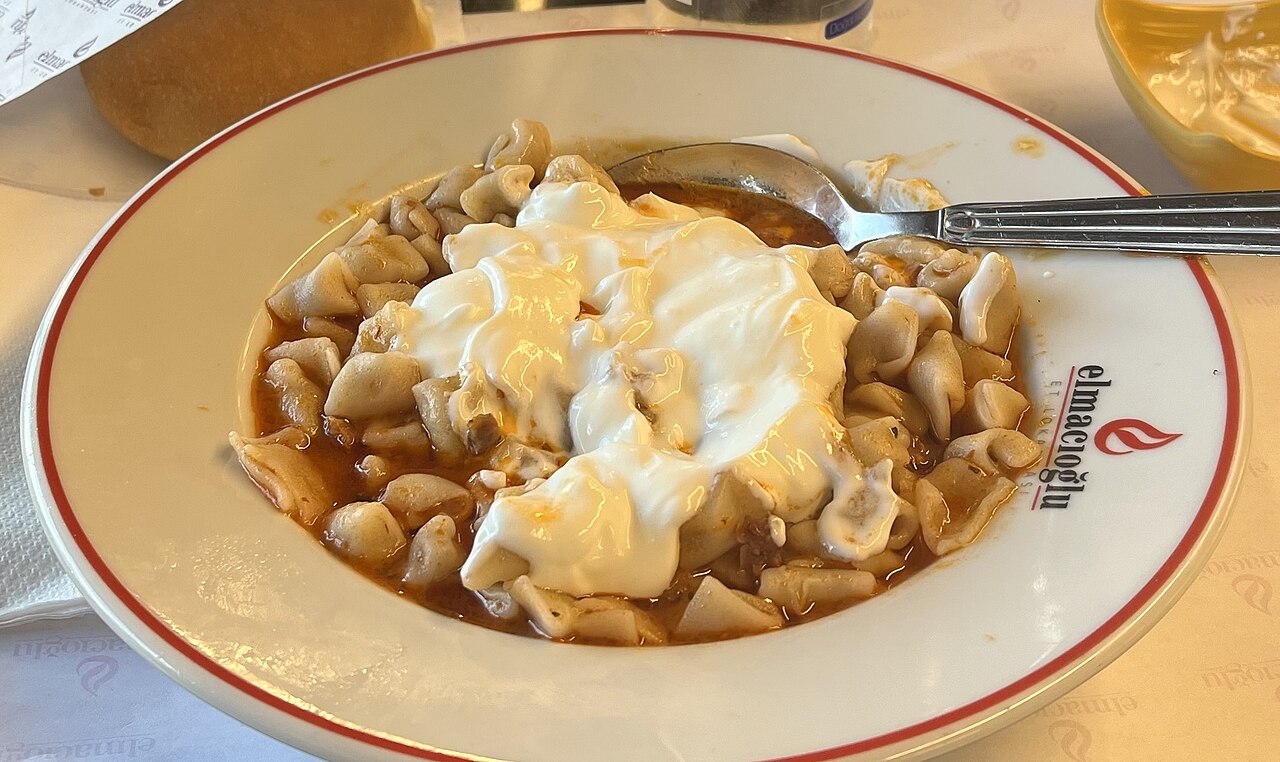
Tiny dumplings filled with spiced minced meat, boiled and served under garlic yoghurt with melted butter, red pepper flakes and dried mint. The dumplings came west with Turkic peoples along the Silk Road.
Unlike the large steamed manti of Central Asia, Turkish mantı are usually boiled or baked, and they are small, in Kayseri tiny.
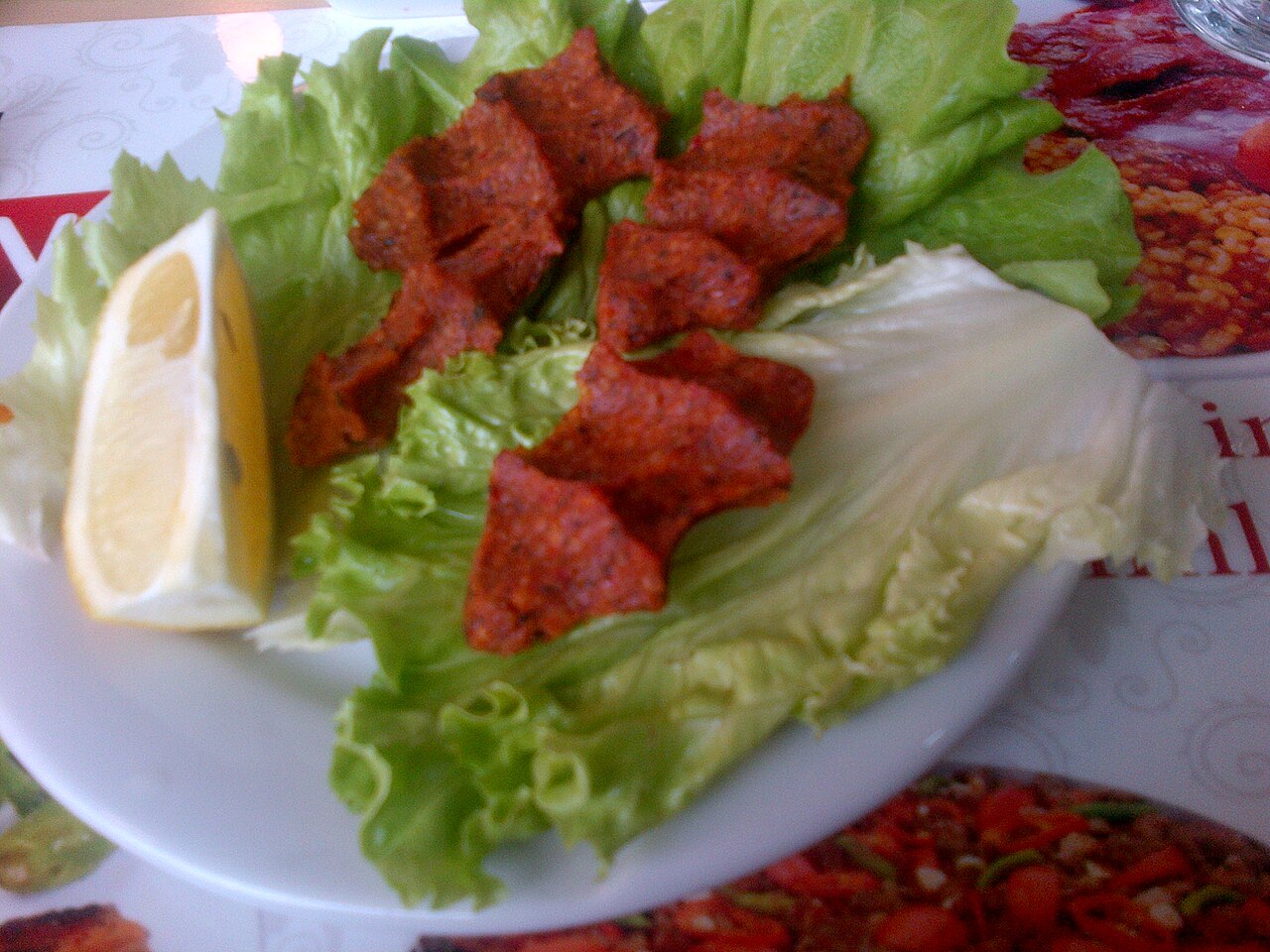
Fine bulgur kneaded for a long time by hand with onion, tomato and pepper paste and isot, the dark smoky pepper of Urfa, until it forms a soft, spicy paste. It is served in lettuce leaves with lemon. Its name means 'raw meatball', because the traditional version was made with raw minced meat. Since 2008 the raw-meat version may not be sold in Türkiye, and what you buy today is made without meat. Safety: never eat a home-made version with raw meat, which can carry parasites and bacteria.
Today çiğ köfte shops are everywhere in Turkish cities, and the meatless version is suitable for vegans.
Ottoman palace and home cooking, now all of Türkiye
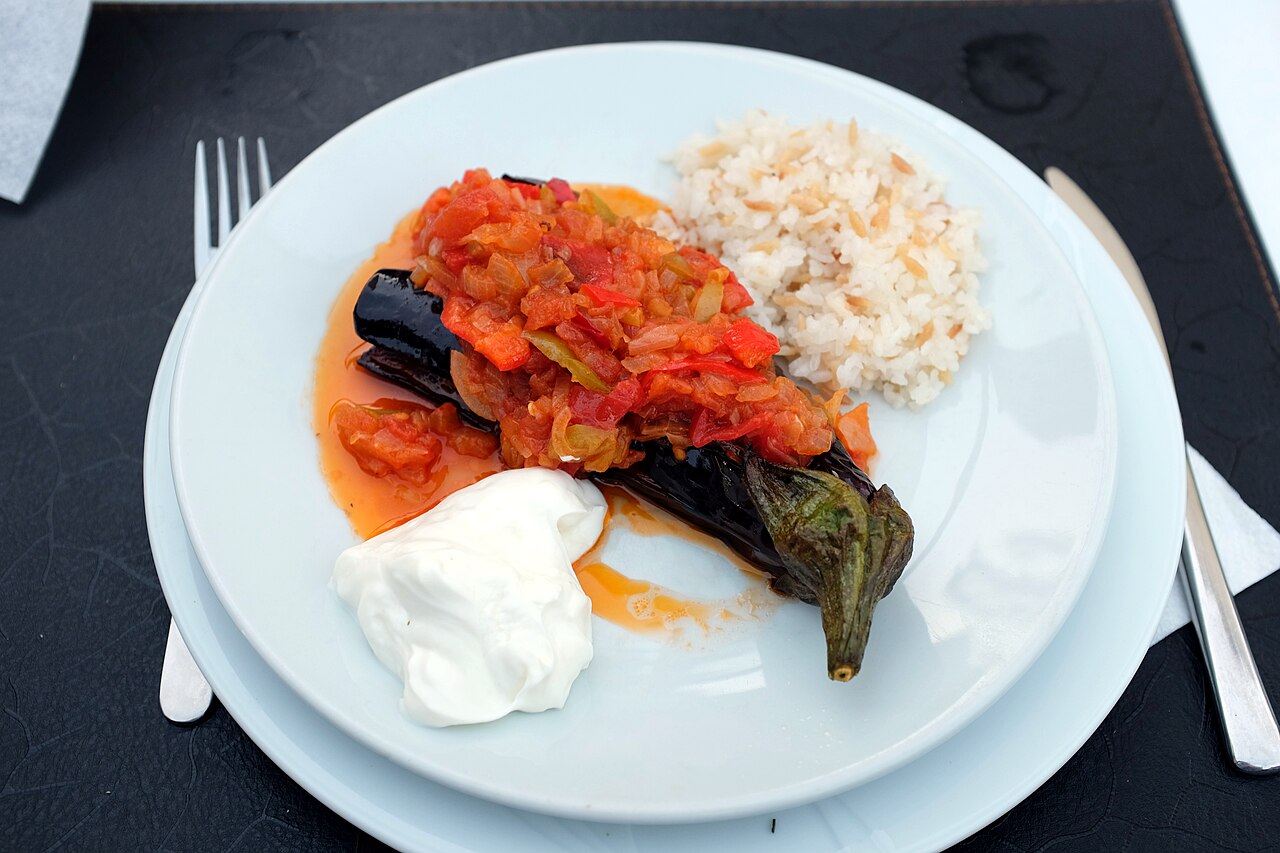
Whole aubergines, split and filled with onions, garlic and tomatoes, then cooked slowly in plenty of olive oil. It is served warm or at room temperature, often as part of a meal of vegetable dishes.
The name means 'the imam fainted'. Stories say he fainted with pleasure at the taste, or at the cost of all that olive oil.
The Ottoman kitchens of Istanbul; Gaziantep is famous for its pistachio baklava
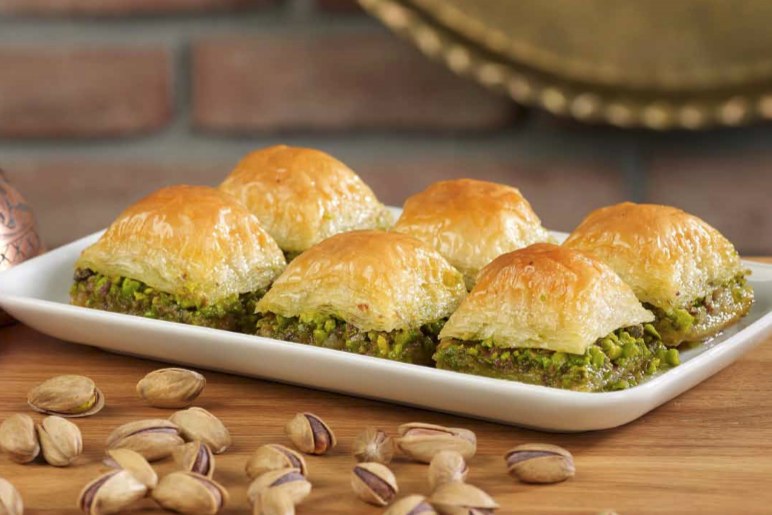
Many paper-thin layers of pastry brushed with butter, filled with chopped pistachios or walnuts, baked until crisp and soaked in syrup. Where it first came from is disputed, and Greeks, Turks and other peoples of the former Ottoman lands all have their own proud baklava traditions.
In 2013 Gaziantep baklava became the first Turkish product with a protected name in the European Union.
Hatay (Antakya) and the southeast; similar sweets are made across the Middle East
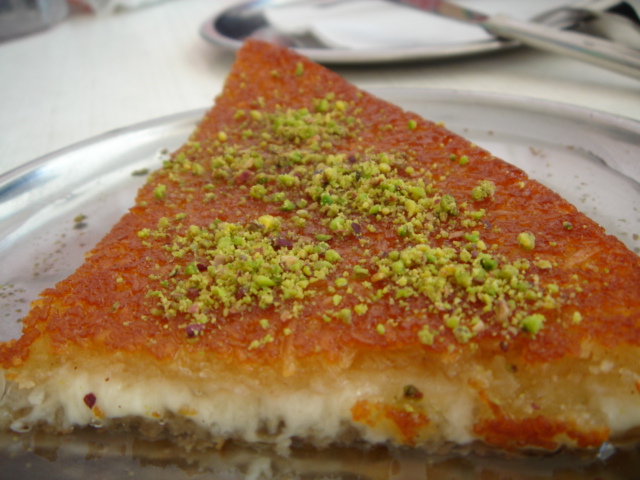
Fine strands of pastry baked in a small round pan around a layer of soft, stretchy local cheese, soaked in syrup and topped with pistachios. Since 2023 Antakya künefe has had a protected name in the EU. It is served very hot, when the cheese inside is still stretchy.
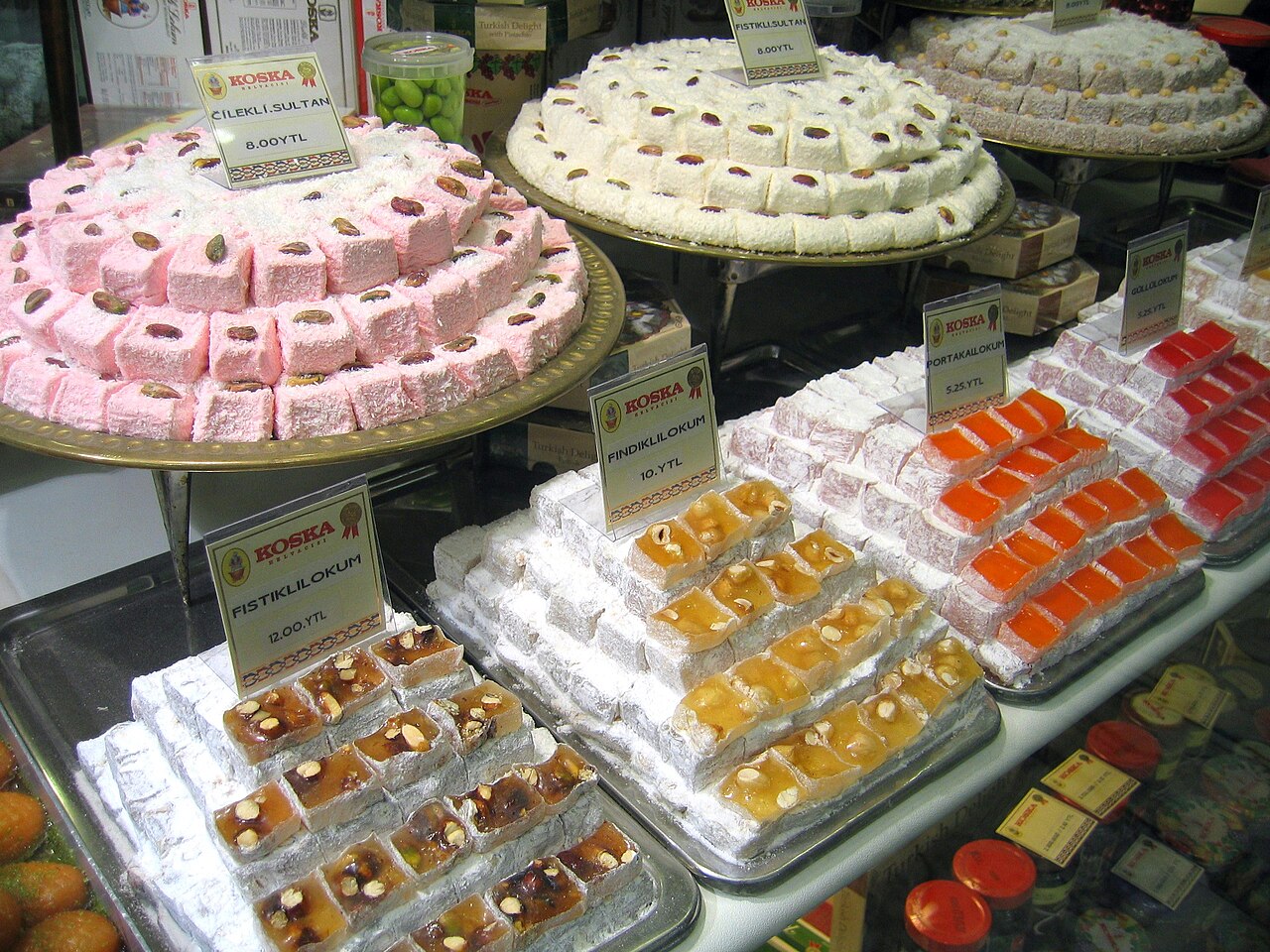
Soft, chewy cubes of starch and sugar flavoured with rosewater, lemon or mastic, often filled with pistachios or hazelnuts and dusted with icing sugar. It is offered to guests with coffee and on holidays.
The Hacı Bekir shop in Istanbul says it has made lokum since 1777, though historians say similar sweets are older.
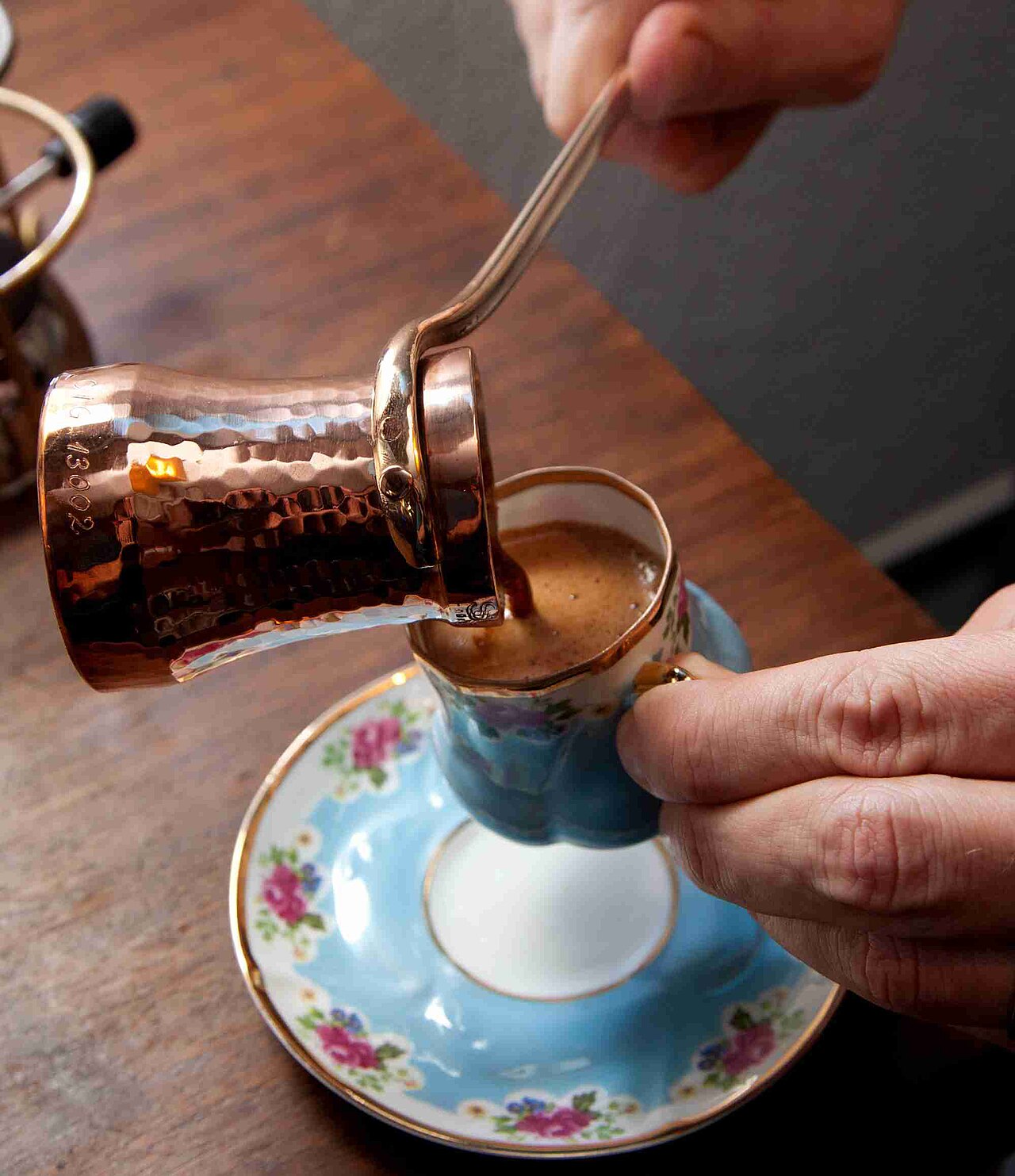
Very finely ground coffee boiled slowly with cold water, and sugar if wanted, in a small pot called a cezve until it foams. It is poured unfiltered into small cups and served with a glass of water and often a piece of lokum. Let the grounds settle and do not drink the last sip.
In 2013 UNESCO added Turkish coffee culture and tradition to its list of the intangible cultural heritage of humanity. Some people read fortunes in the grounds left in the cup.
All of Türkiye, and among Turkic peoples for about a thousand years
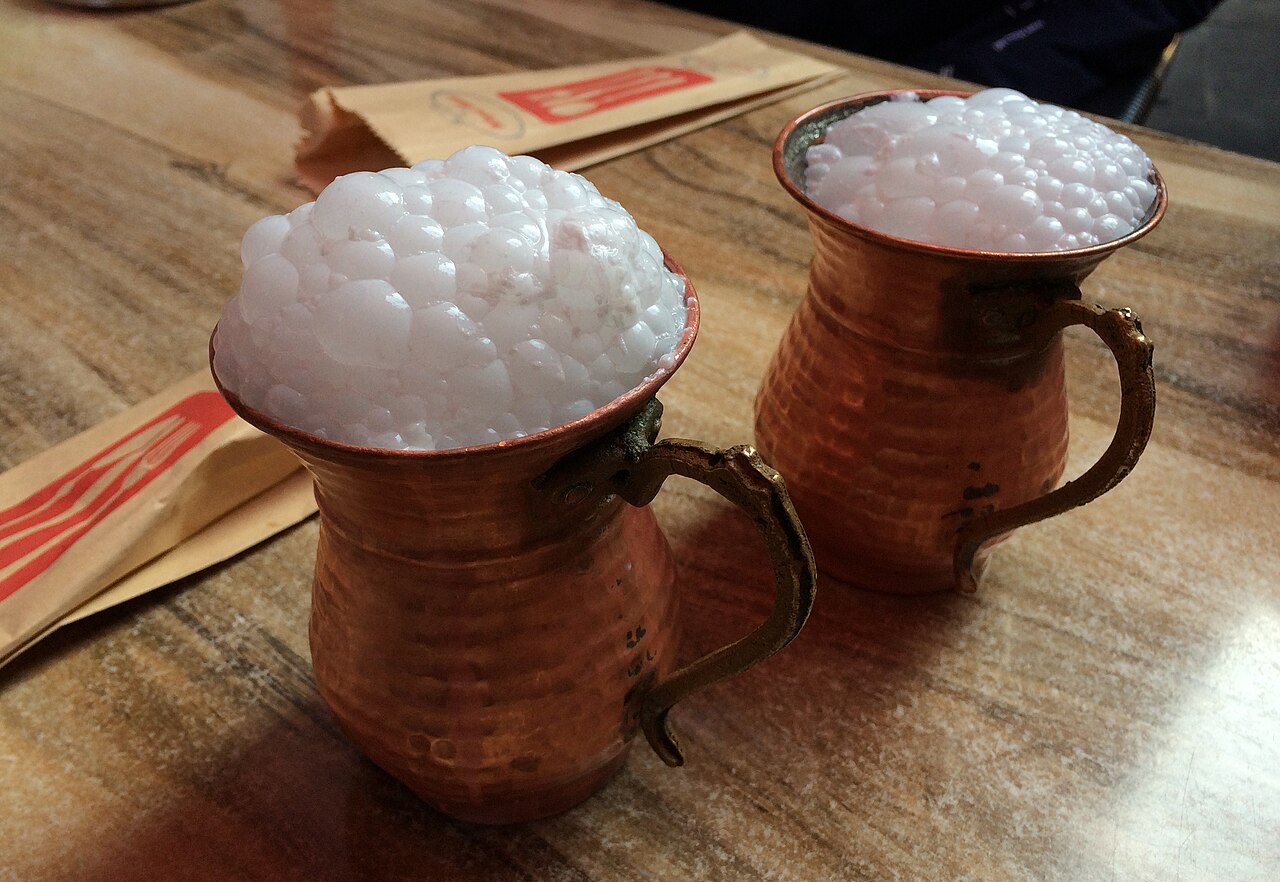
A cold, salty drink of yoghurt whisked with water, sometimes frothy on top. It goes with kebabs, lahmacun and pide, and is especially refreshing in summer.
In 2013 Prime Minister Erdoğan called ayran the national drink.
If you are invited to a Turkish home, bring a small gift such as flowers or sweets. Avoid wine unless you know your hosts drink, as many Turks do not drink alcohol.
Tea is offered everywhere: at home, in offices and even while you bargain in the bazaar. It is served in small tulip-shaped glasses, and accepting one is polite.
People say 'afiyet olsun', may it be good for you, to anyone who is eating, much like 'enjoy your meal'.
Take off your shoes just outside or inside the door when you enter a Turkish home, unless your hosts tell you to keep them on.
Blowing your nose or picking your teeth at the table is considered very rude; step away from the table instead.
Older people are served first and treated with great respect. During Ramadan, families and neighbours break the fast together at sunset with a meal called iftar.