Jordanian cooking is part of the wider Levantine kitchen, with deep Bedouin roots: lamb, yogurt, rice, bread, olive oil and plenty of herbs, garlic, onion and lemon. A meal often begins with mezze, small shared plates of dips, salads and pickles eaten with bread, followed by one big main dish in the middle of the table. Breakfast might be hummus, falafel, labneh, olive oil and za'atar, and a guest is always offered sweet tea with mint or sage, or small cups of cardamom-scented Arabic coffee.
All of Jordan; Karak and As-Salt are said to make the best
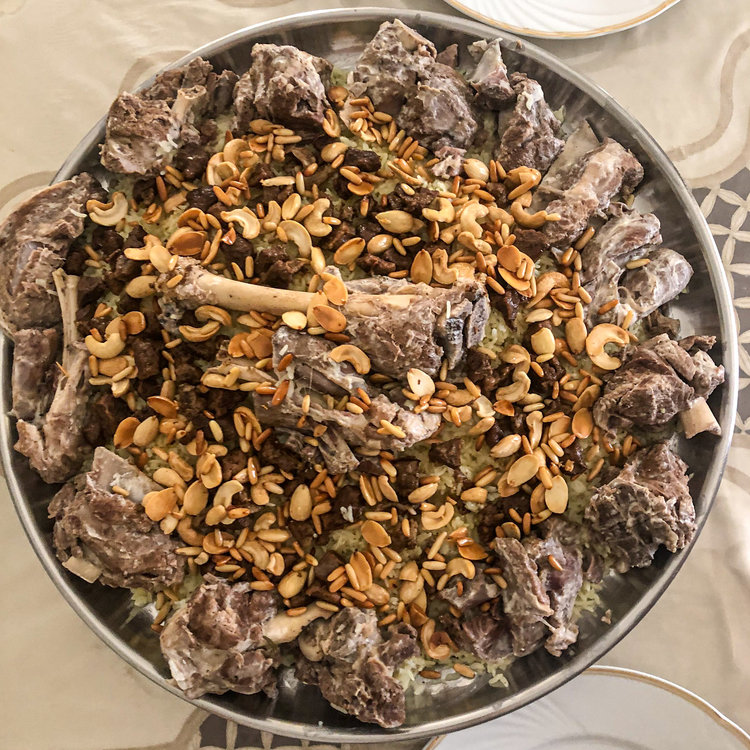
Jordan's national dish: lamb cooked slowly in a sauce of jameed, a hard dried yogurt made from sheep's or goat's milk, then served on a huge tray over thin shrak bread and rice, topped with toasted almonds and pine nuts and more hot yogurt sauce. It is made for weddings, births, Eid, Christmas and to honour a guest.
In 2022 UNESCO added the mansaf banquet and its customs to its list of the intangible cultural heritage of humanity. Traditionally it is eaten standing around the tray, with the right hand only, rolling the rice into small balls.
All of Jordan and the Levant, a favourite family lunch
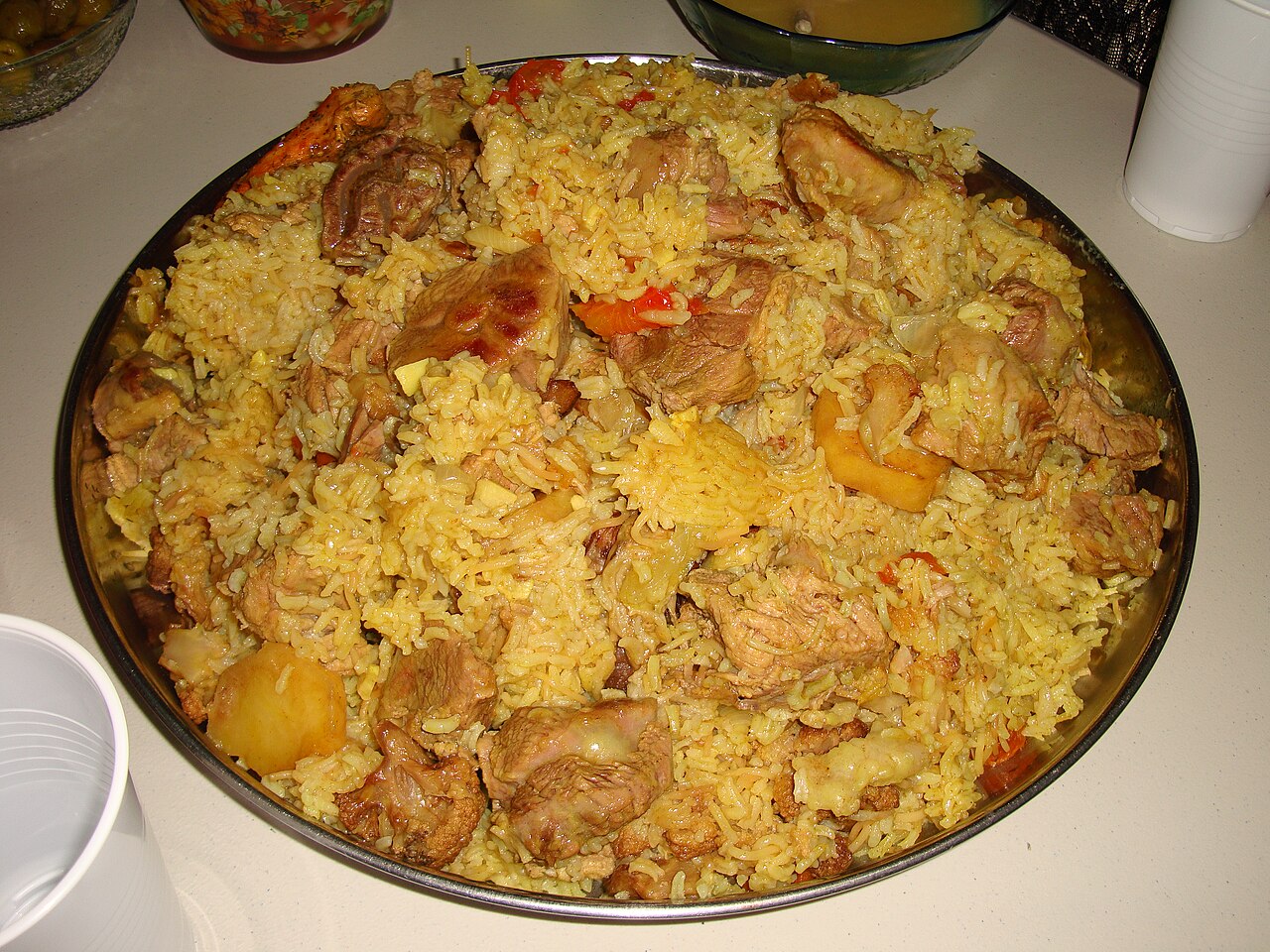
Layers of fried vegetables, usually aubergine and cauliflower, with chicken or lamb and spiced rice, cooked in one deep pot. At the table the pot is turned upside down onto a big platter and lifted away, leaving a tall, golden cake of rice.
Its name means 'upside down', because the pot is turned over onto the platter when it is served.
A Palestinian dish that is widely cooked in Jordan, especially in the olive harvest season
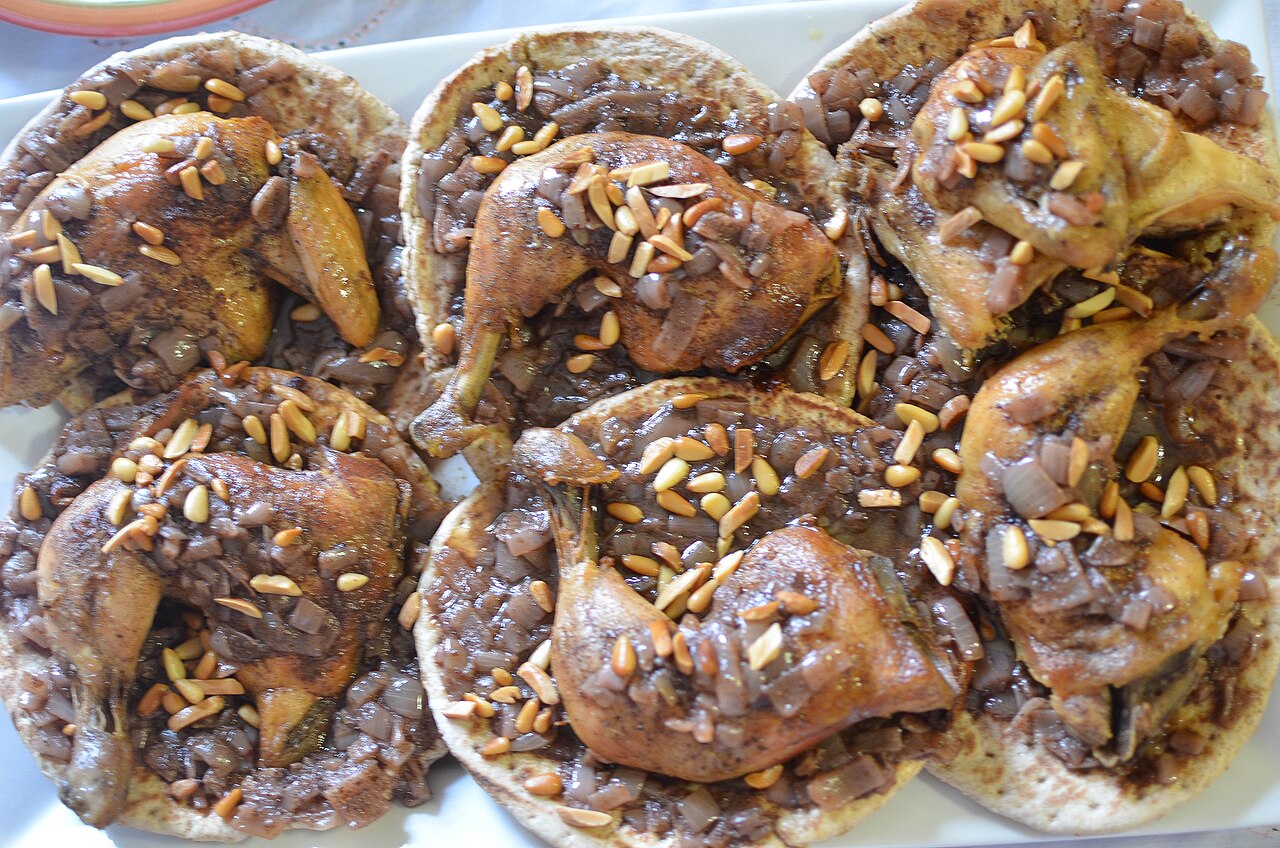
Roast chicken baked on thick taboon bread with a great deal of onion slowly cooked in olive oil and dark red sumac, then scattered with fried pine nuts. It is eaten with the hands, tearing off pieces of the soaked, tangy bread.
Its name means something like 'the reheated one', after farmers who warmed up old bread in the oven and made it tasty with oil and onions.
The Bedouin of the southern desert, around Wadi Rum and Petra
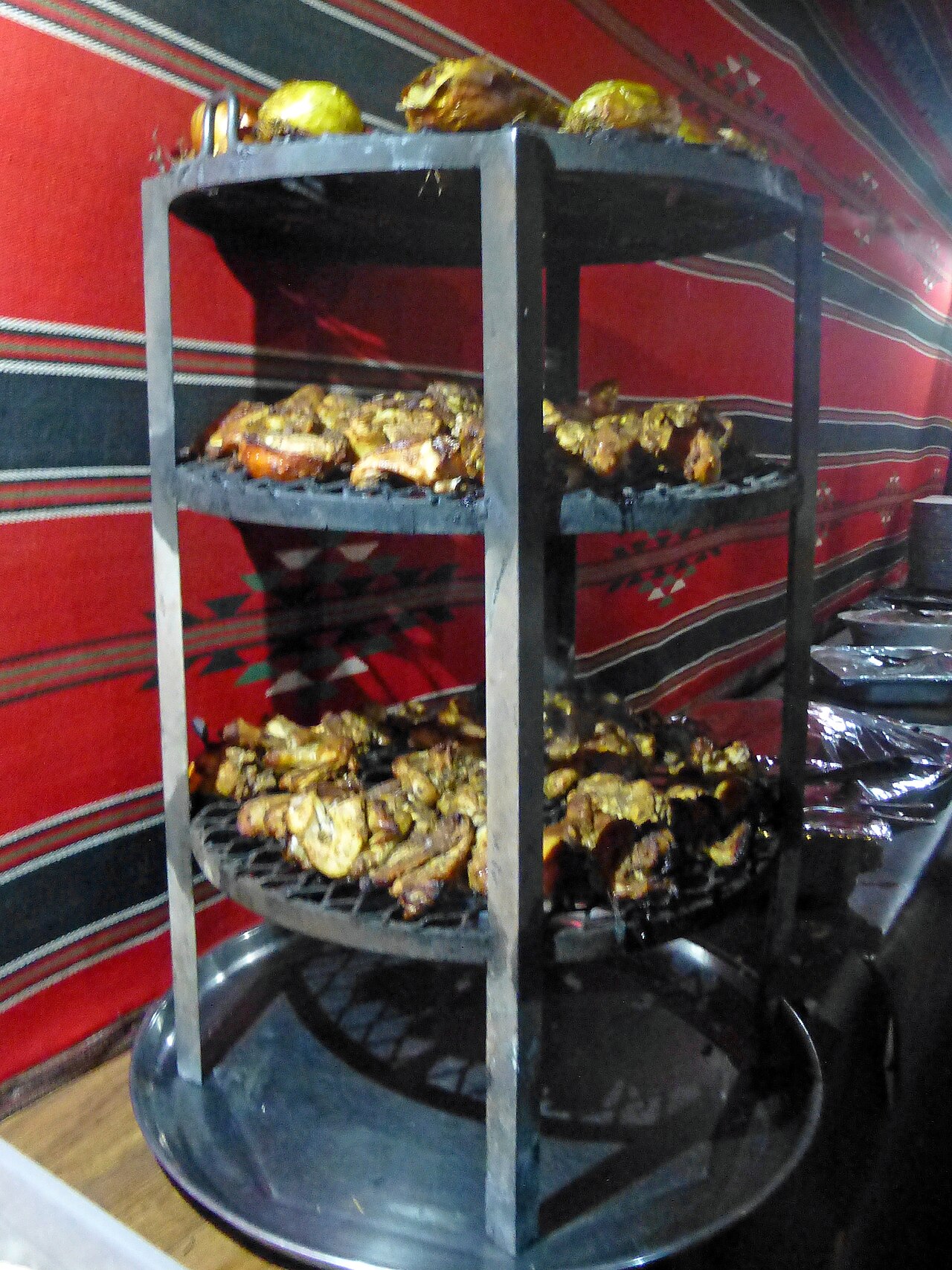
A Bedouin feast of meat, usually chicken or lamb, with vegetables, placed on metal trays and lowered into a pit oven in the sand, then covered with a lid, hot coals and sand and left to cook for a few hours. Visitors to the desert camps of Wadi Rum often watch it being dug out for dinner.
The pit oven is known in Jordan as a taboon, and zarb is considered a delicacy, often served to visitors in the Bedouin camps of Wadi Rum and Petra.
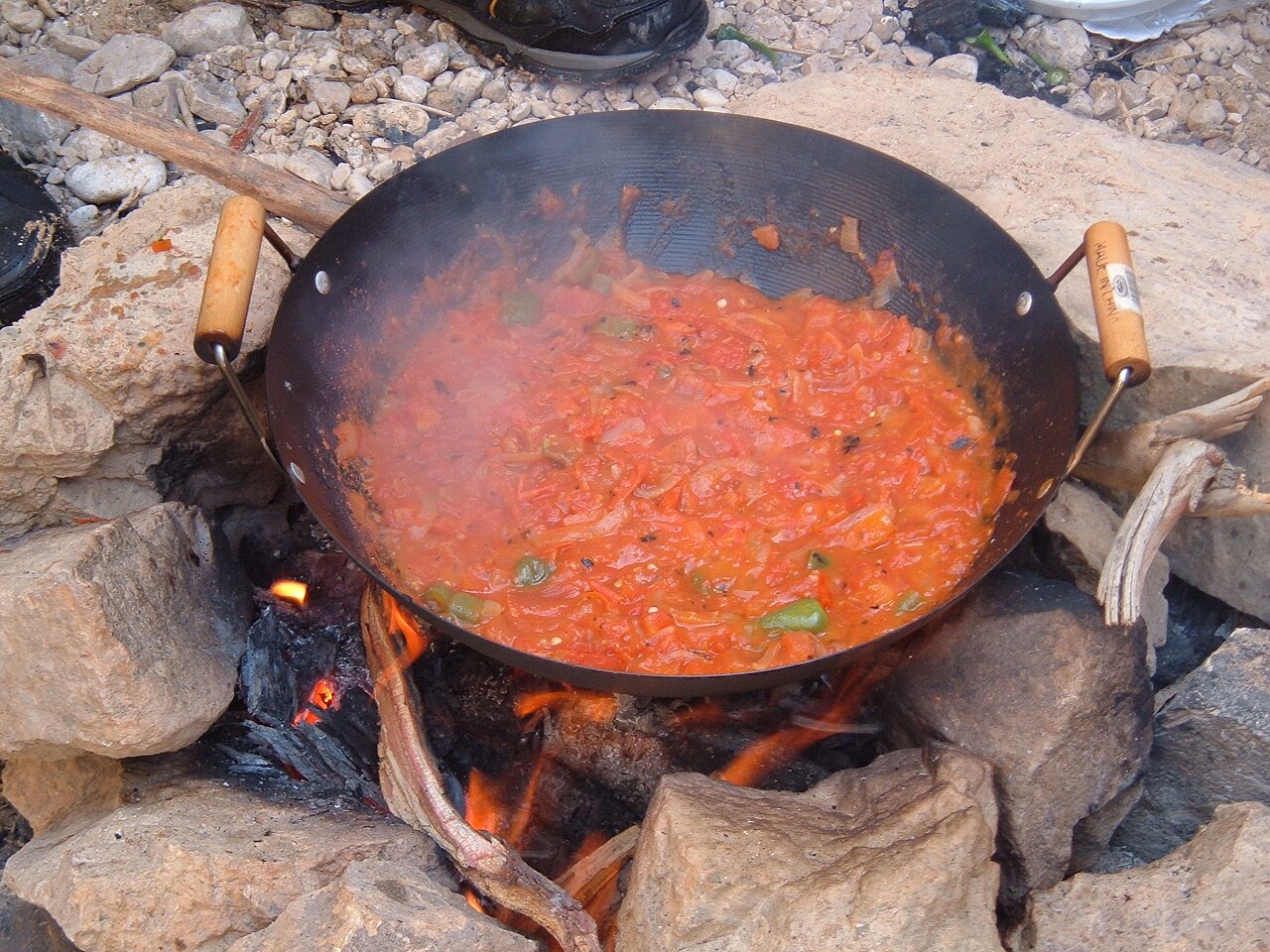
Tomatoes fried in olive oil with onion, garlic and hot green chilli until soft and jammy, eaten straight from the pan with bread. It is one of the simplest and most loved meals in Jordan, cooked at home and over campfires alike.
Its name simply means 'pan of tomatoes'. Many families top it with toasted pine nuts or crack eggs into it.
All of Jordan and the Levant, a breakfast and mezze favourite
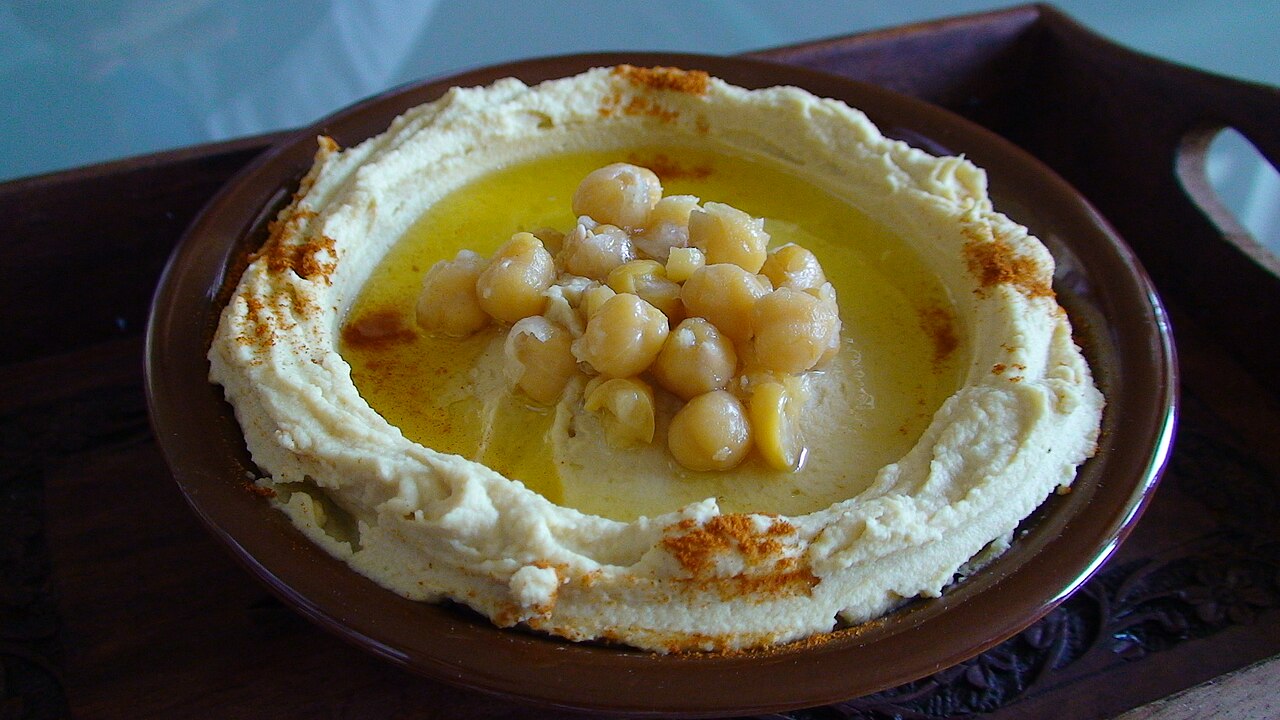
A smooth dip of chickpeas blended with tahini (sesame paste), lemon juice and garlic, spread in a shallow bowl and finished with olive oil. In Jordan it is a classic breakfast, eaten with falafel, pickles, onions and warm bread.
Hummus is simply the Arabic word for chickpea. Its full name is hummus bi tahini, 'chickpeas with tahini'.
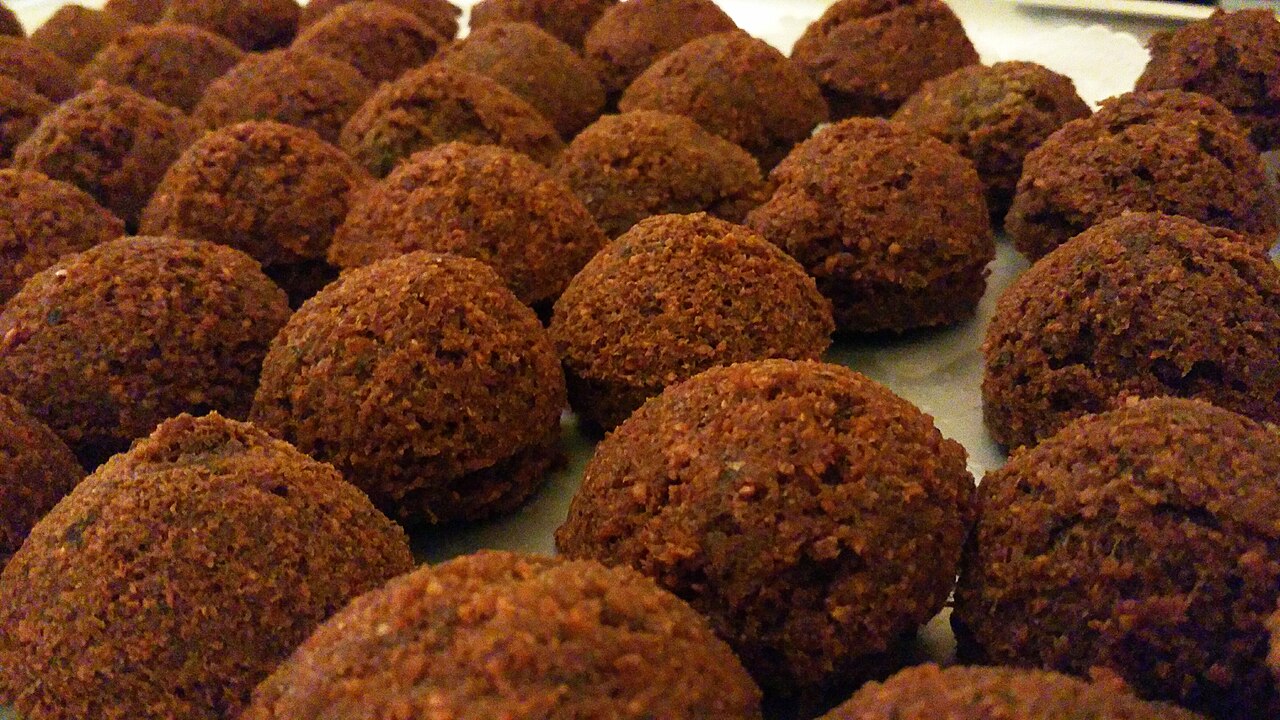
Crisp fried balls of ground chickpeas mixed with parsley, onion, garlic and spices, green and soft inside. They are eaten hot for breakfast with hummus or stuffed into bread with salad, pickles and tahini sauce.
In Jordan, falafel is usually made from chickpeas, while in Egypt the same fritter is made from fava beans.
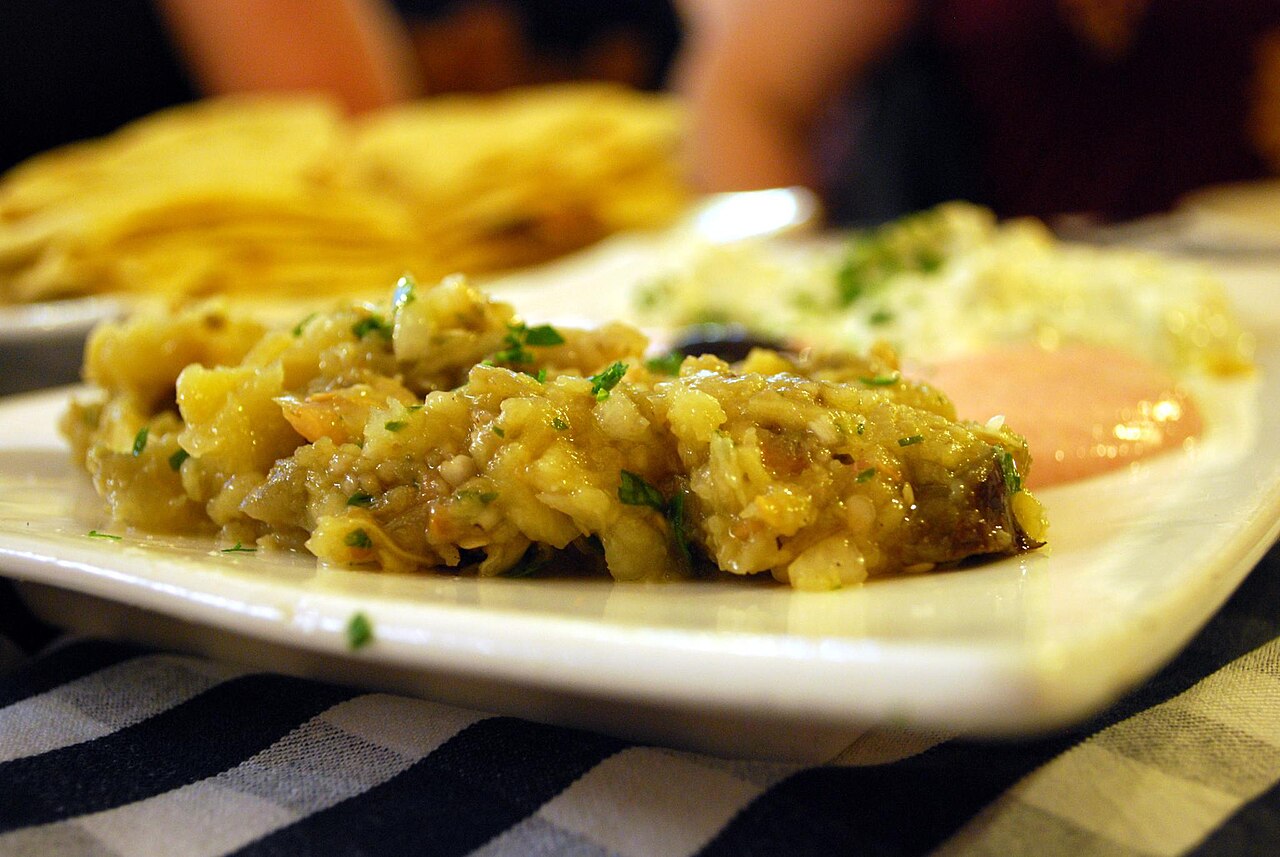
Aubergines charred over a flame until the skin is black and the flesh is soft and smoky, then mashed with tahini, lemon and garlic and served with olive oil and pomegranate seeds.
Mutabbal simply means 'spiced'. Outside the Levant a very similar dip is often sold as baba ghanoush, but in the Levant mutabbal is the version always made with tahini, while baba ghanoush does not always contain it.
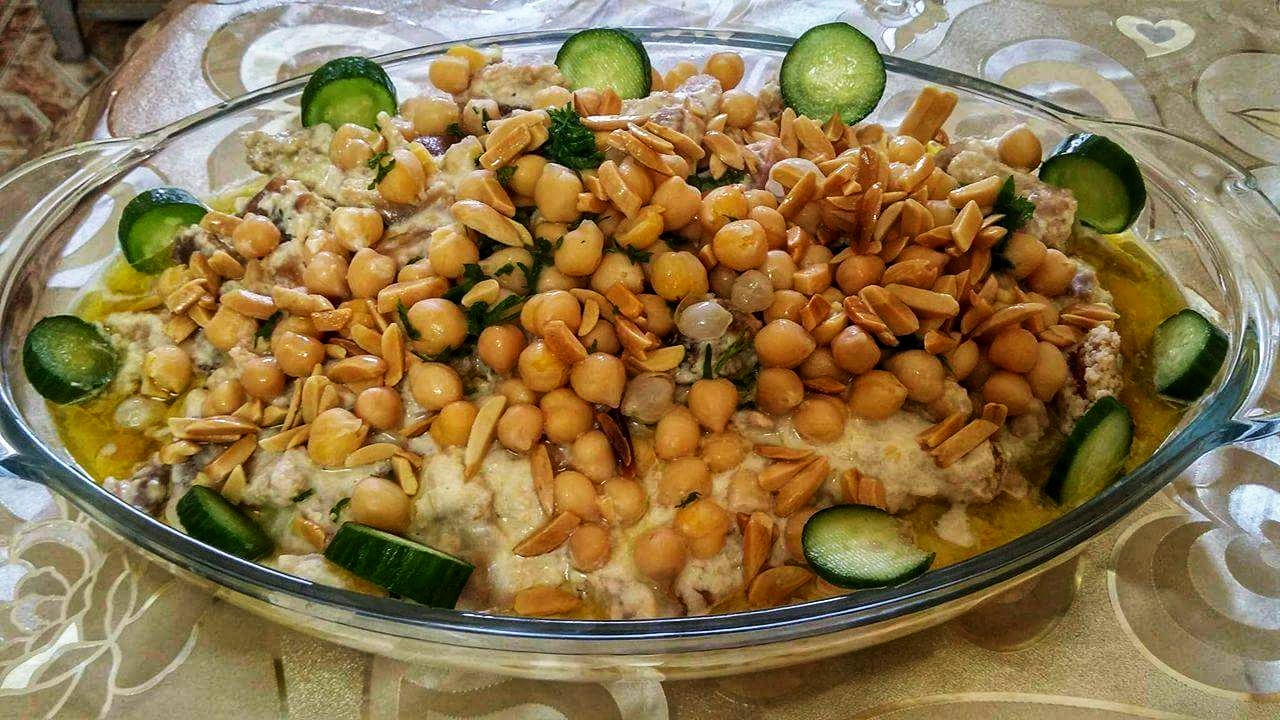
Pieces of toasted or fried bread covered with warm chickpeas, a garlicky yogurt and tahini sauce, and a spoonful of sizzling ghee or butter with pine nuts. It is rich and filling and served in deep bowls.
Fatteh comes from an Arabic word meaning to crumble or break into pieces, after the broken bread at its base.
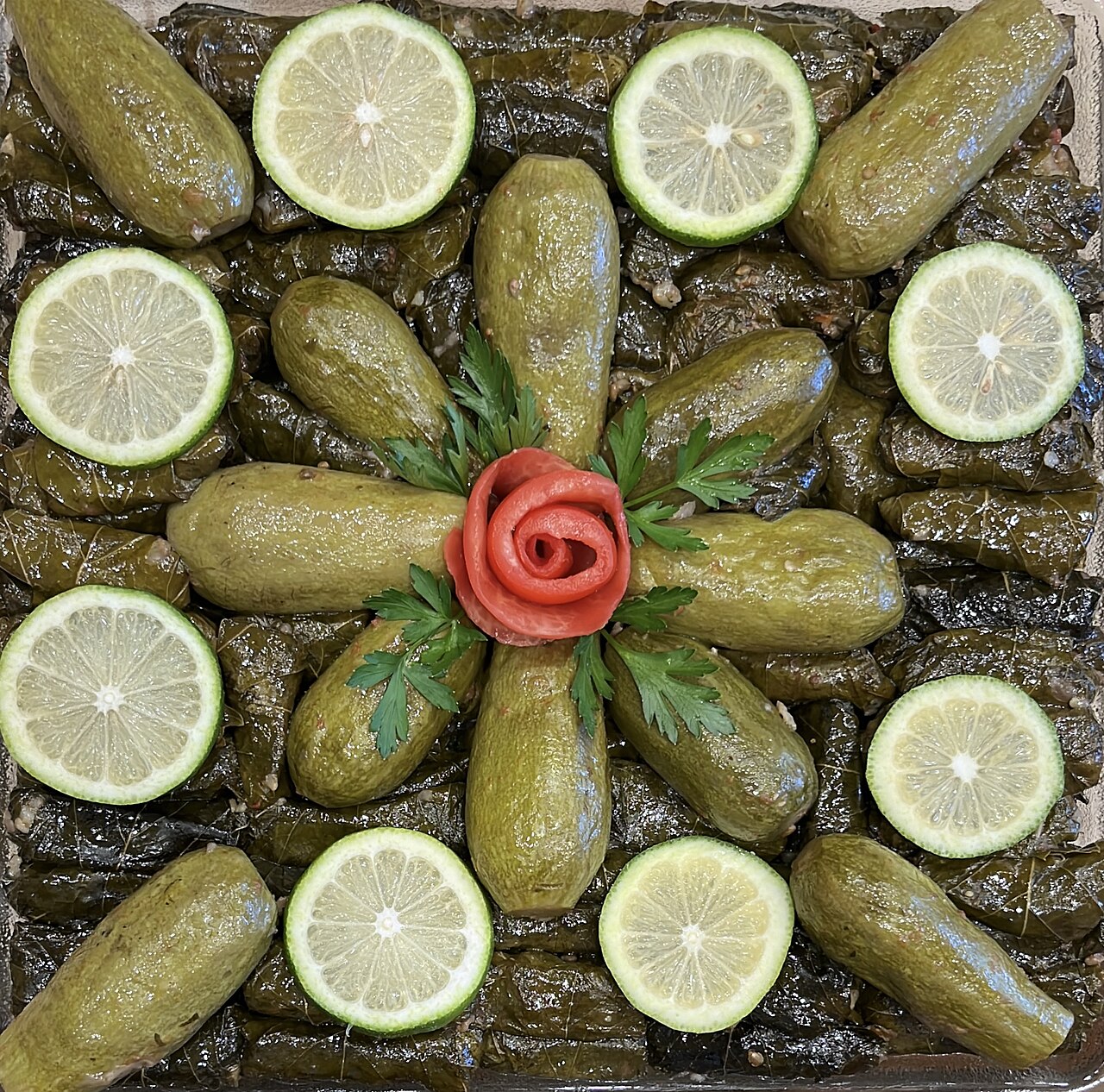
Vine leaves rolled tightly around rice, often mixed with minced meat, tomato and herbs, then packed into a pot, sometimes over lamb chops or courgettes, and simmered with lemon and garlic. Rolling them is often a job shared by the family.
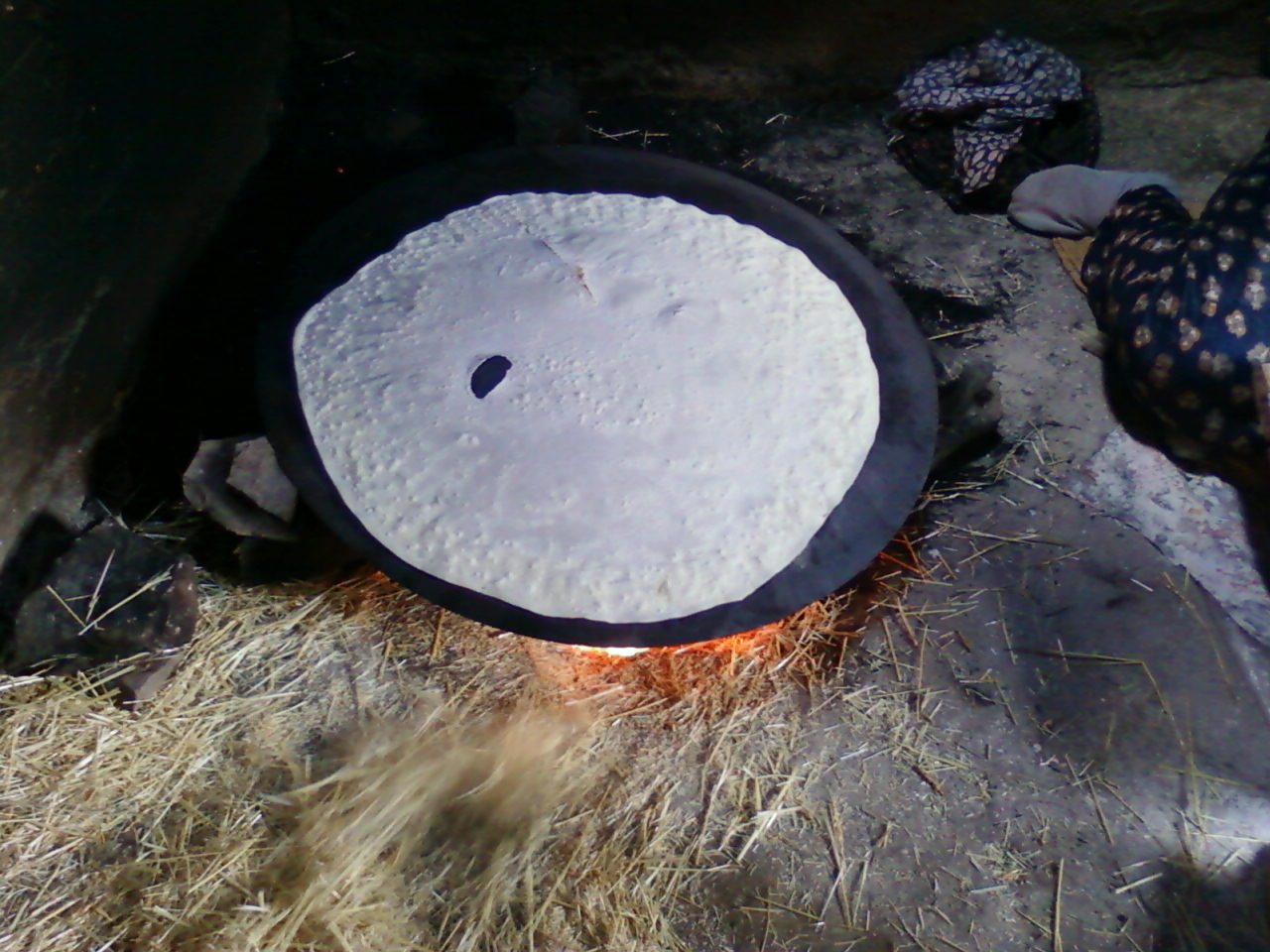
A huge, paper-thin flatbread made from just flour, water and salt, stretched over a round cushion and flipped onto a saj, a domed iron griddle heated over a fire. It is the bread laid under the rice in mansaf, and is also called markook.
Bakers toss and stretch the dough between their arms until it is almost see-through before it goes on the saj.
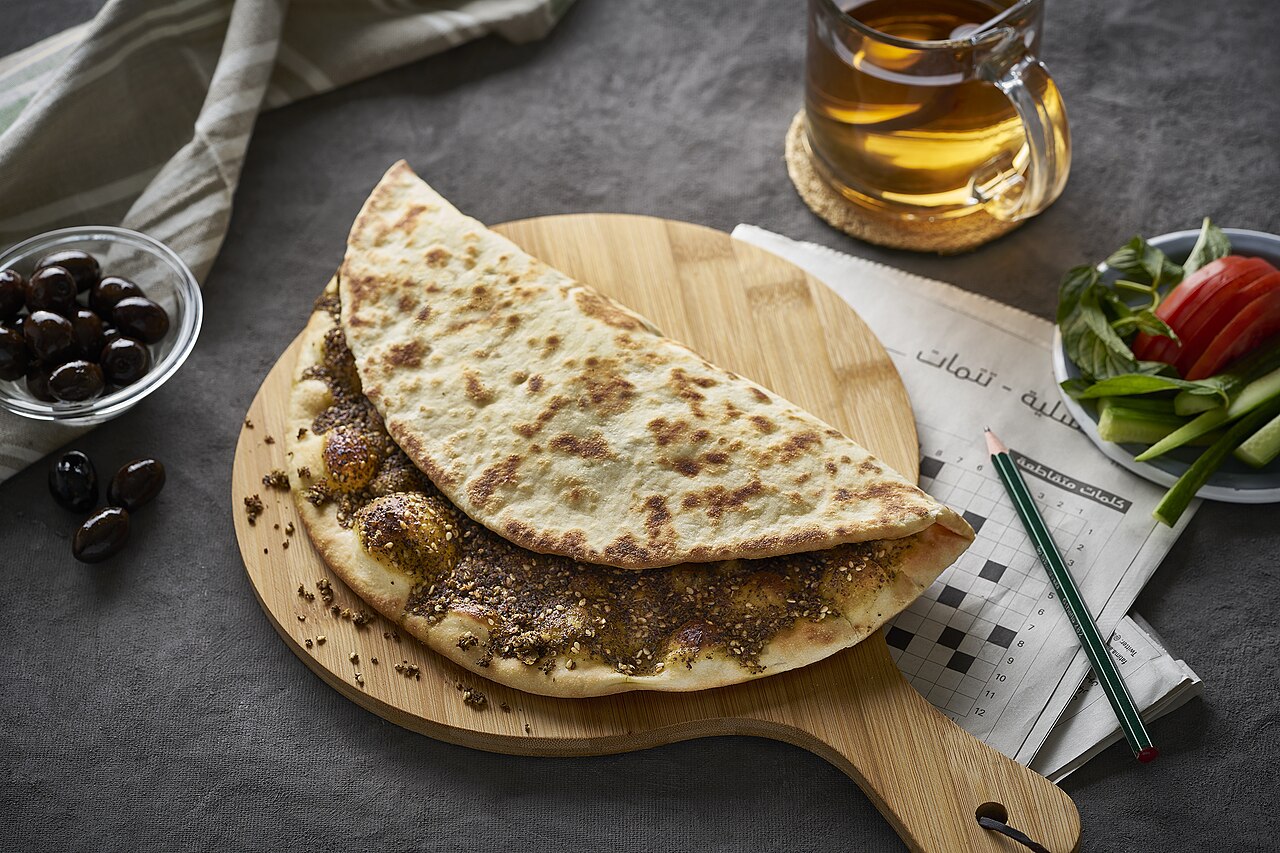
Round flatbreads spread with za'atar, a mix of wild thyme, sumac and sesame seeds, and olive oil, then baked until crisp at the edges. Neighbourhood bakeries sell them hot in the morning, sometimes topped with cheese instead.
Bread dipped first in olive oil and then in za'atar is part of the classic Jordanian breakfast, together with labneh, cheese and a glass of tea.
All of Jordan; the favourite version, knafeh nabulsieh, comes from the city of Nablus
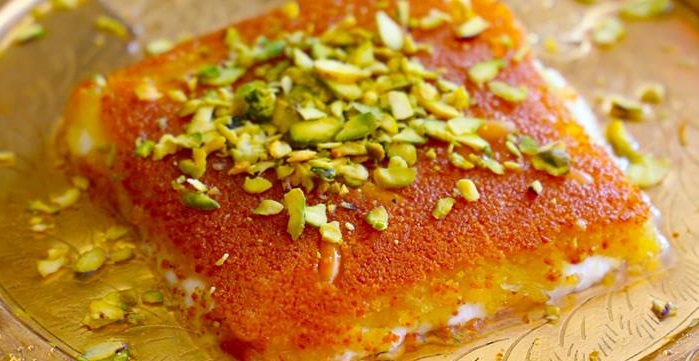
A warm dessert of soft white cheese baked under a layer of fine shredded pastry or semolina, coloured orange, soaked in sugar syrup and sprinkled with crushed pistachios. It is cut from a huge round tray and eaten hot, while the cheese is still stretchy.
The origin of the word is debated: it may come from an Arabic root meaning 'to enclose', and early mentions appear in the tales of One Thousand and One Nights.
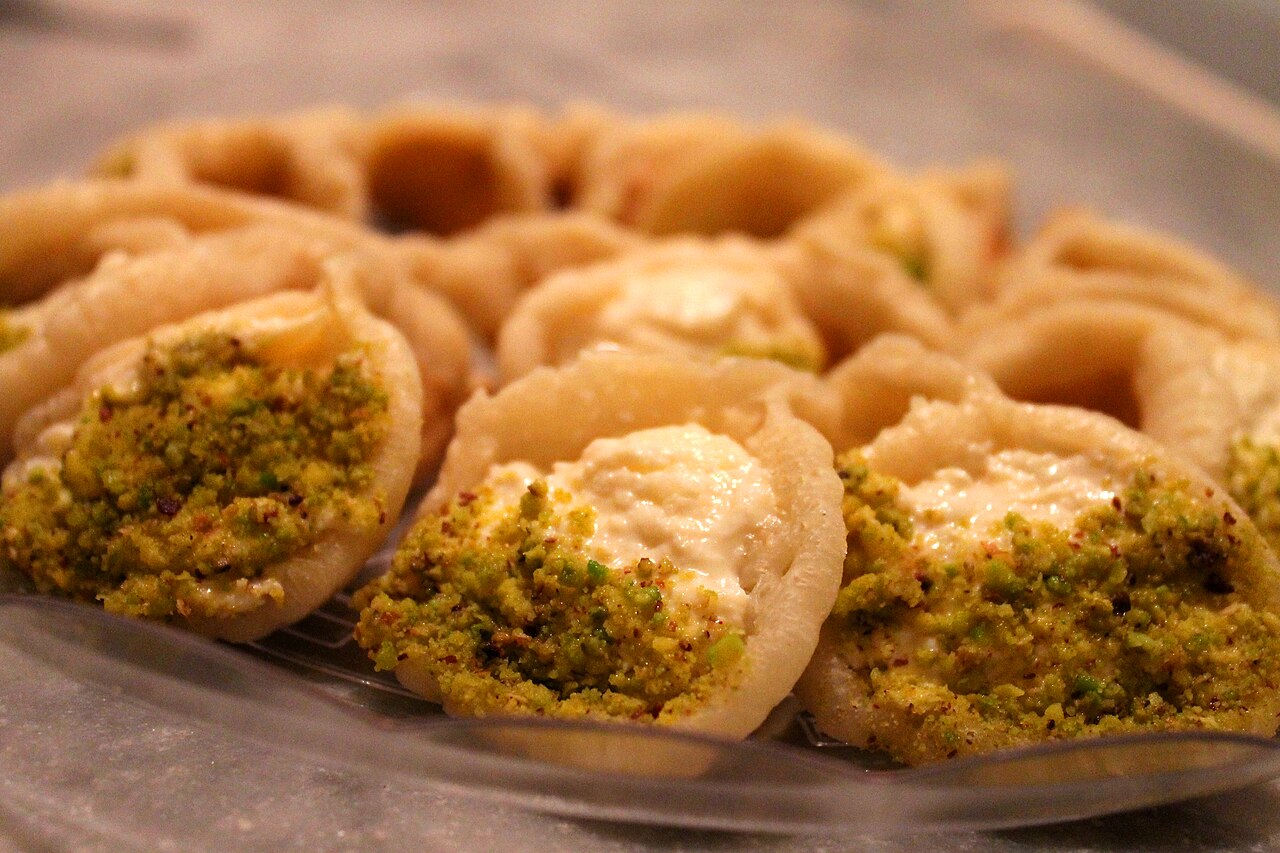
Small, spongy pancakes cooked on one side only, then folded around sweet cream or walnuts and cinnamon. They are eaten fresh, or baked or fried and dipped in syrup. They appear in bakeries mainly during the holy month of Ramadan.
Qatayef are eaten after iftar, the meal that breaks the fast at sunset, and street stalls cook them in the open during Ramadan evenings.
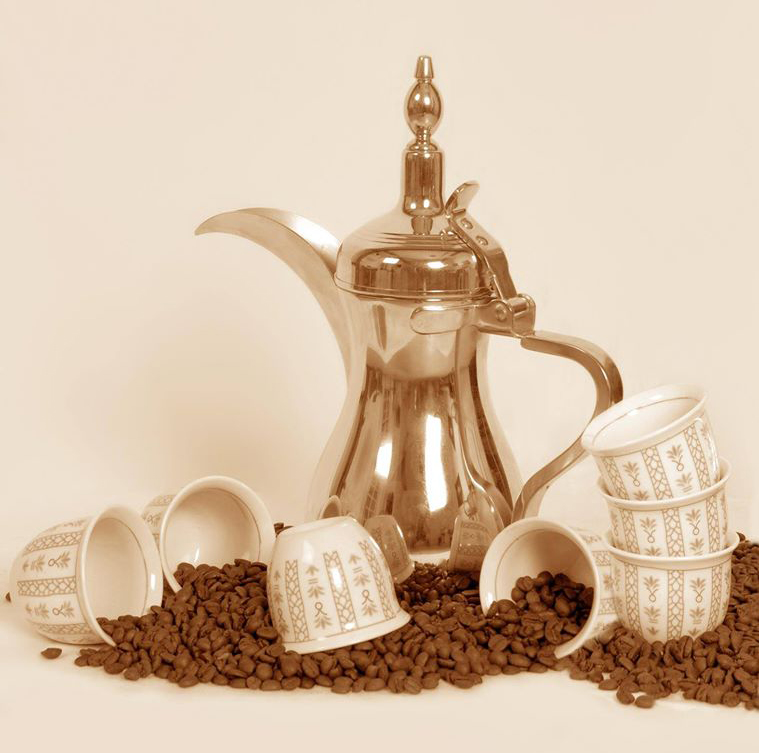
Bitter, unsweetened coffee flavoured with cardamom, poured from a long-spouted pot called a dallah into small handleless cups called finjan, only a mouthful at a time. It is the drink of hospitality, and families drink it together at weddings and at funerals.
The host keeps refilling your cup. When you have had enough, gently shake the empty cup from side to side before handing it back.
At the table in Jordan
Hospitality is a point of honour. A guest is offered coffee or tea straight away, and it is polite to accept at least one cup.
A 'Jordanian invitation' means you are expected to bring nothing and eat everything.
Mansaf is traditionally eaten standing around the shared tray, using only the right hand, with the left hand behind the back.
When drinking Arabic coffee, gently shake the small empty cup from side to side to show you do not want any more.
During Ramadan, families break the fast together at sunset, and sweets such as qatayef follow the evening meal.