A rose-red city carved into rock, a desert of red sand and granite, and a salt lake at the lowest land on Earth, in a small country famous for its welcome.
Your trip to Jordan
Ready for the trip?
10 questionsAbout 3 minutesNo timer
Explore Jordan
You have explored 0 of 9 parts. Scroll on to discover the rest.
A free large-print PDF. Choose what goes in: facts, map, history, dishes and recipes, phrases, fun facts, a quiz with or without answers. Made for clubs, care homes, libraries and family afternoons.
Jordan lies in the Middle East, east of the Jordan River, from which it takes its name. Most of the country is desert and dry plateau, but the northwest has green hills with olive groves and pine woods. In the west the land drops steeply into the Jordan Rift Valley, where the Dead Sea lies far below sea level, and in the far south the country has a short coast on the Red Sea at Aqaba.
People have lived here for hundreds of thousands of years. In ancient times the land held the kingdoms of Ammon, Moab and Edom, then the Nabataeans, who carved their capital Petra out of pink sandstone. Romans, Byzantines, the early Islamic caliphates, Crusaders and Ottomans followed. The modern state began as the Emirate of Transjordan in 1921 and became the independent Hashemite Kingdom of Jordan in 1946.
As of July 2026 about 12 million people live in Jordan, and more than a third of them in and around Amman, the capital. Most Jordanians are Sunni Muslims, and there is a long-established Arab Christian community. Jordan has taken in many refugees from neighbouring conflicts over the decades. Visitors come for Petra, Wadi Rum, the Roman city of Jerash, floating in the Dead Sea and diving in the Red Sea.
CapitalAmman
PopulationAbout 12 million (Department of Statistics estimate, July 2026)
Official languageArabic. People speak Jordanian Arabic in daily life, and English is widely used in business and universities
CurrencyJordanian dinar (JOD, often written JD), divided into 100 qirsh (piastres) or 1,000 fils
AreaAbout 89,300 km²
GovernmentConstitutional monarchy: the king is head of state and holds wide powers, and the lower house of parliament is elected
Highest mountainJabal Umm ad Dami, near Wadi Rum, about 1,854 m (some sources give 1,840 m)
Longest riverThe Jordan River, about 251 km long in all, which forms part of the western border and flows into the Dead Sea
NeighboursSyria to the north, Iraq to the northeast, Saudi Arabia to the east and south, and Israel and the West Bank (Palestine) to the west. Across the Gulf of Aqaba lies Egypt
Jordan sits on old crossroads between Arabia, Egypt, Syria and Mesopotamia, so traders, pilgrims and armies have passed through for thousands of years. Early dates are approximate. The Nabataeans grew rich from the incense trade and built Petra, Rome turned the region into a province, and later Muslim dynasties, Crusaders, Mamluks and Ottomans ruled it. The modern country took shape after the Arab Revolt of 1916 and became independent in 1946.
7200 BC
The Ain Ghazal statues are made
About 9,000 years ago, farmers at Ain Ghazal, in today's Amman, made large statues and busts of people from lime plaster over reed frames, with wide-open eyes outlined in bitumen. Found in 1983 and 1985, they are among the earliest large statues of people ever found. Even earlier, more than 14,000 years ago, hunter-gatherers in Jordan's Black Desert baked the oldest bread known as of 2026.
840 BC
The Mesha Stele is carved
Around 840 BC Mesha, king of Moab, set up a black basalt stone describing his building works and his victory over the kingdom of Israel. Found at Dhiban in 1868, it is one of the most important inscriptions from the ancient Near East and is now in the Louvre in Paris.
AD 106
Rome annexes the Nabataean kingdom
The Nabataeans, Arab traders who had grown rich on the incense routes, ruled from Petra for centuries. In 106, after the death of their last king, the Roman emperor Trajan annexed their kingdom and made it the province of Arabia Petraea.
AD 129
Emperor Hadrian visits Gerasa
The emperor Hadrian stayed in Gerasa, today's Jerash, in the winter of 129 to 130, and the city built a great triumphal arch in his honour. Gerasa was one of the Decapolis, a group of Greco-Roman cities, and its ruins are among the best preserved in the Middle East.
AD 363
An earthquake strikes Petra
In 363 a strong earthquake destroyed many buildings in Petra and damaged its clever water system. Trade had already moved to sea routes, and the city slowly declined until it was left to a few nomads.
AD 636
The Battle of the Yarmuk
In 636 Muslim Arab armies defeated the Byzantine army near the Yarmuk River, just north of today's Jordan. The region became part of the early Islamic caliphates, and the Umayyads later built desert palaces here, such as Qusayr Amra.
1142
Kerak Castle is begun
Crusader lords started building a huge castle at Karak, high above the Dead Sea, in the 1140s. It controlled the trade and pilgrim routes between Damascus, Egypt and Mecca, and Saladin besieged it in 1183 and 1184 before it fell to his forces in 1188.
1812
Burckhardt reaches Petra
In 1812 the Swiss traveller Johann Ludwig Burckhardt, dressed as a local and speaking Arabic, entered Petra and became the first European known to describe it. News of the lost 'rose-red city' soon spread across Europe.
1908
The Hejaz Railway reaches Medina
The Ottoman Empire built the Hejaz Railway from Damascus through Jordan to carry Muslim pilgrims towards Mecca. It reached Medina on 1 September 1908, and towns along the line, including Amman and Zarqa, grew around its stations.
1916
The Great Arab Revolt begins
In June 1916 Sharif Hussein of Mecca and his sons began a revolt against Ottoman rule, with British support. In July 1917 Arab forces took Aqaba, and the revolt's flag later became the model for Jordan's flag.
1921
The Emirate of Transjordan is founded
On 11 April 1921 the Emirate of Transjordan was set up with Abdullah, a son of Sharif Hussein, as emir, under a British mandate. Amman became its capital.
1946
Jordan becomes independent
A treaty with Britain in March 1946 recognised Transjordan's independence, and on 25 May 1946 it became a kingdom with Abdullah I as its first king. 25 May is Independence Day, a public holiday. The country's name in English became the Hashemite Kingdom of Jordan in 1949.
1967
The Six-Day War
In June 1967 war broke out between Israel and Egypt, Syria and Jordan. Jordan lost control of the West Bank and East Jerusalem, which it had held since 1948, and many more refugees crossed the river into Jordan. In 1988 Jordan gave up its claims to the West Bank.
1994
Peace treaty with Israel
Jordan and Israel signed a peace treaty on 26 October 1994, at a ceremony in the Arava valley on their shared border. Jordan was the second Arab country, after Egypt in 1979, to make peace with Israel.
2024
Umm el-Jimal joins the World Heritage List
In July 2024 UNESCO added Umm el-Jimal, a town of black basalt houses, churches and reservoirs in the northern desert, to the World Heritage List. In 2026 the Aqaba Marine Reserve followed, bringing Jordan's total to eight sites.
Jordanian cooking is part of the wider Levantine kitchen, with deep Bedouin roots: lamb, yogurt, rice, bread, olive oil and plenty of herbs, garlic, onion and lemon. A meal often begins with mezze, small shared plates of dips, salads and pickles eaten with bread, followed by one big main dish in the middle of the table. Breakfast might be hummus, falafel, labneh, olive oil and za'atar, and a guest is always offered sweet tea with mint or sage, or small cups of cardamom-scented Arabic coffee.
All of Jordan; Karak and As-Salt are said to make the best
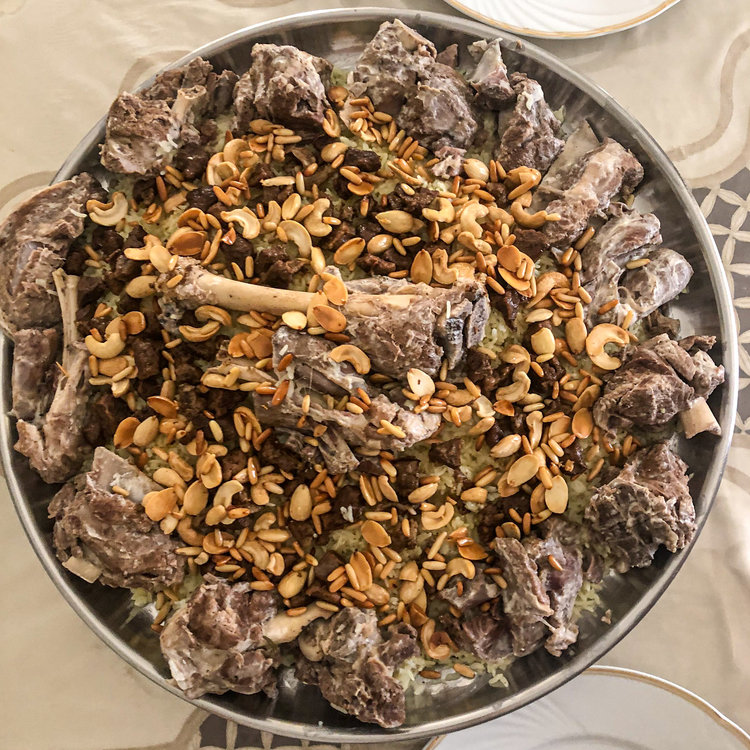
Jordan's national dish: lamb cooked slowly in a sauce of jameed, a hard dried yogurt made from sheep's or goat's milk, then served on a huge tray over thin shrak bread and rice, topped with toasted almonds and pine nuts and more hot yogurt sauce. It is made for weddings, births, Eid, Christmas and to honour a guest.
In 2022 UNESCO added the mansaf banquet and its customs to its list of the intangible cultural heritage of humanity. Traditionally it is eaten standing around the tray, with the right hand only, rolling the rice into small balls.
See the recipe
Serves 6
2 h 30 min
Ingredients
1.5 kg lamb on the bone (shoulder or leg), cut into large pieces
1 onion, halved, 2 bay leaves, 4 cardamom pods and 1 teaspoon allspice berries
For the sauce: 1 ball of jameed (about 250 g), soaked overnight and blended with water until smooth, or 1 kg thick plain yogurt mixed with 1 tablespoon cornflour and 1 teaspoon salt
500 g long-grain rice, rinsed
2 tablespoons ghee or butter, ½ teaspoon turmeric and salt
2 large sheets of shrak or other very thin flatbread
50 g blanched almonds and 30 g pine nuts, toasted in a little ghee
Chopped parsley to garnish
Method
Cover the lamb with cold water, bring to the boil and skim off the foam. Add the onion, bay leaves, cardamom and allspice, and simmer gently for about 1 hour. (Soak the jameed the night before.)
Lift out the lamb and strain the broth. In a large pot, heat the jameed or yogurt mixture over a medium heat, stirring all the time in one direction so it does not split, until it just simmers.
Add the lamb and about 500 ml of the broth to the sauce and simmer gently for another 45 minutes, until the meat is very tender. Taste for salt: jameed is already salty.
Meanwhile, fry the rice in the ghee with the turmeric for 2 minutes, add 750 ml of broth or water and a little salt, cover and cook on a low heat for 15 to 18 minutes.
Lay the bread on a large round tray and moisten it with a few ladles of sauce. Pile the rice on top, arrange the lamb over it and scatter with the almonds, pine nuts and parsley.
Serve at once, with the rest of the hot sauce in a bowl for everyone to pour over. Nut allergy: leave out the almonds and pine nuts.
All of Jordan and the Levant, a favourite family lunch
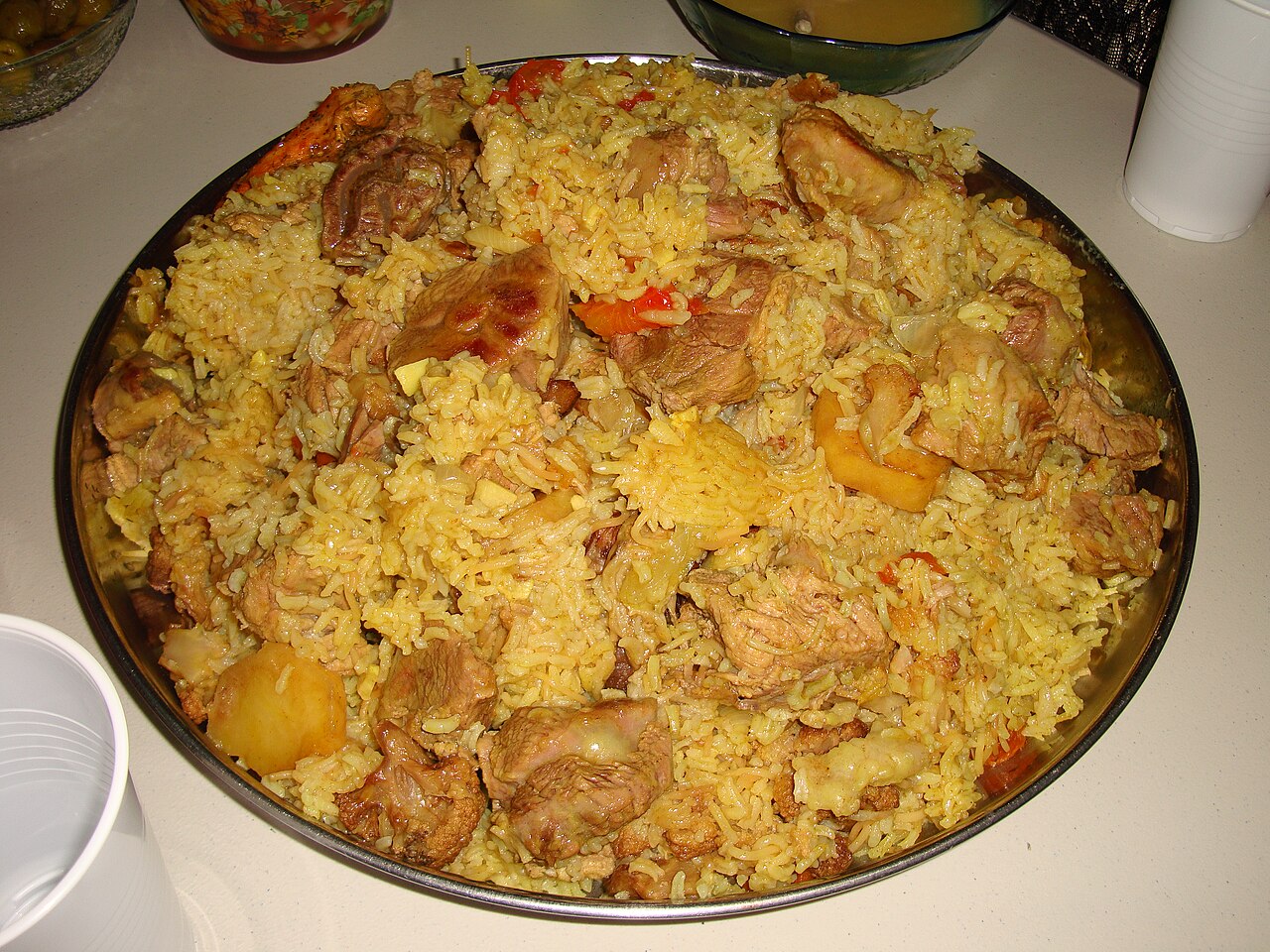
Layers of fried vegetables, usually aubergine and cauliflower, with chicken or lamb and spiced rice, cooked in one deep pot. At the table the pot is turned upside down onto a big platter and lifted away, leaving a tall, golden cake of rice.
Its name means 'upside down', because the pot is turned over onto the platter when it is served.
See the recipe
Serves 6
2 h
Ingredients
1 chicken (about 1.5 kg), cut into 8 pieces
1 onion, halved, 3 cardamom pods and 1 cinnamon stick
2 aubergines, sliced into rounds 1 cm thick
1 cauliflower, broken into florets
2 tomatoes, sliced
400 g long-grain rice, soaked in water for 30 minutes and drained
2 teaspoons baharat (Arabic seven-spice) or allspice, 1 teaspoon turmeric and salt
Vegetable oil for frying
To serve: toasted almonds or pine nuts, and plain yogurt or a chopped salad
Method
Put the chicken in a pan with the onion, cardamom, cinnamon and 1.5 litres of water. Simmer for 40 minutes, skimming off the foam, then lift out the chicken and keep the broth.
Salt the aubergine slices and leave them for 15 minutes, then pat dry. Fry the aubergine and cauliflower in batches until deep golden, and drain on kitchen paper. You can also brush them with oil and roast them in a hot oven.
Mix the drained rice with the baharat, turmeric and 1 teaspoon of salt.
In a deep, heavy pot, lay the tomato slices over the base, then the chicken, then the aubergine and cauliflower. Spread the rice evenly on top and press it down gently.
Pour in hot broth until it covers the rice by about 2 cm. Put a small plate on top to hold the layers, bring to the boil, then cover and cook on the lowest heat for 35 to 40 minutes, until the rice is tender.
Rest for 10 minutes off the heat. Place a large platter on top of the pot, turn it over in one quick movement and lift the pot away slowly. Scatter with nuts and serve with yogurt or salad. Nut allergy: leave out the nuts.
A Palestinian dish that is widely cooked in Jordan, especially in the olive harvest season
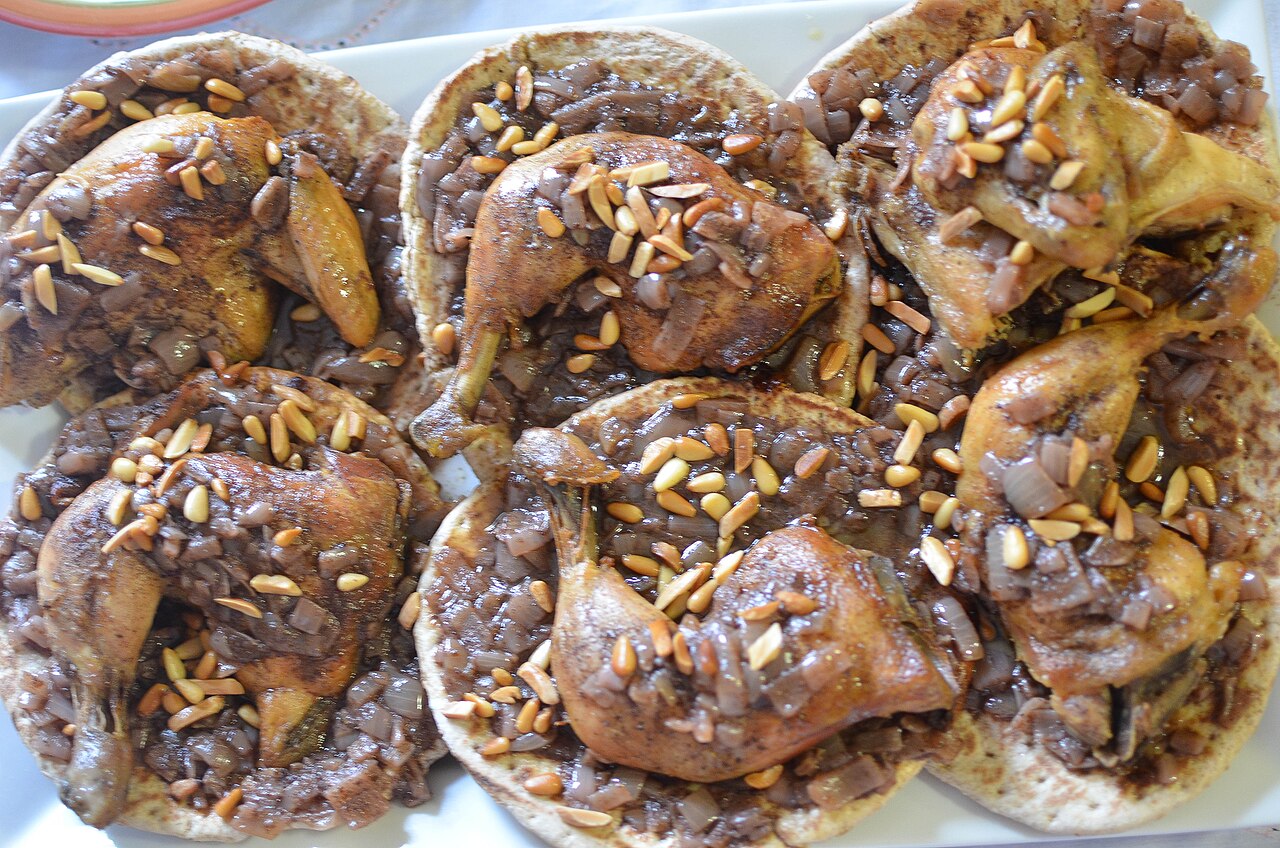
Roast chicken baked on thick taboon bread with a great deal of onion slowly cooked in olive oil and dark red sumac, then scattered with fried pine nuts. It is eaten with the hands, tearing off pieces of the soaked, tangy bread.
Its name means something like 'the reheated one', after farmers who warmed up old bread in the oven and made it tasty with oil and onions.
The Bedouin of the southern desert, around Wadi Rum and Petra
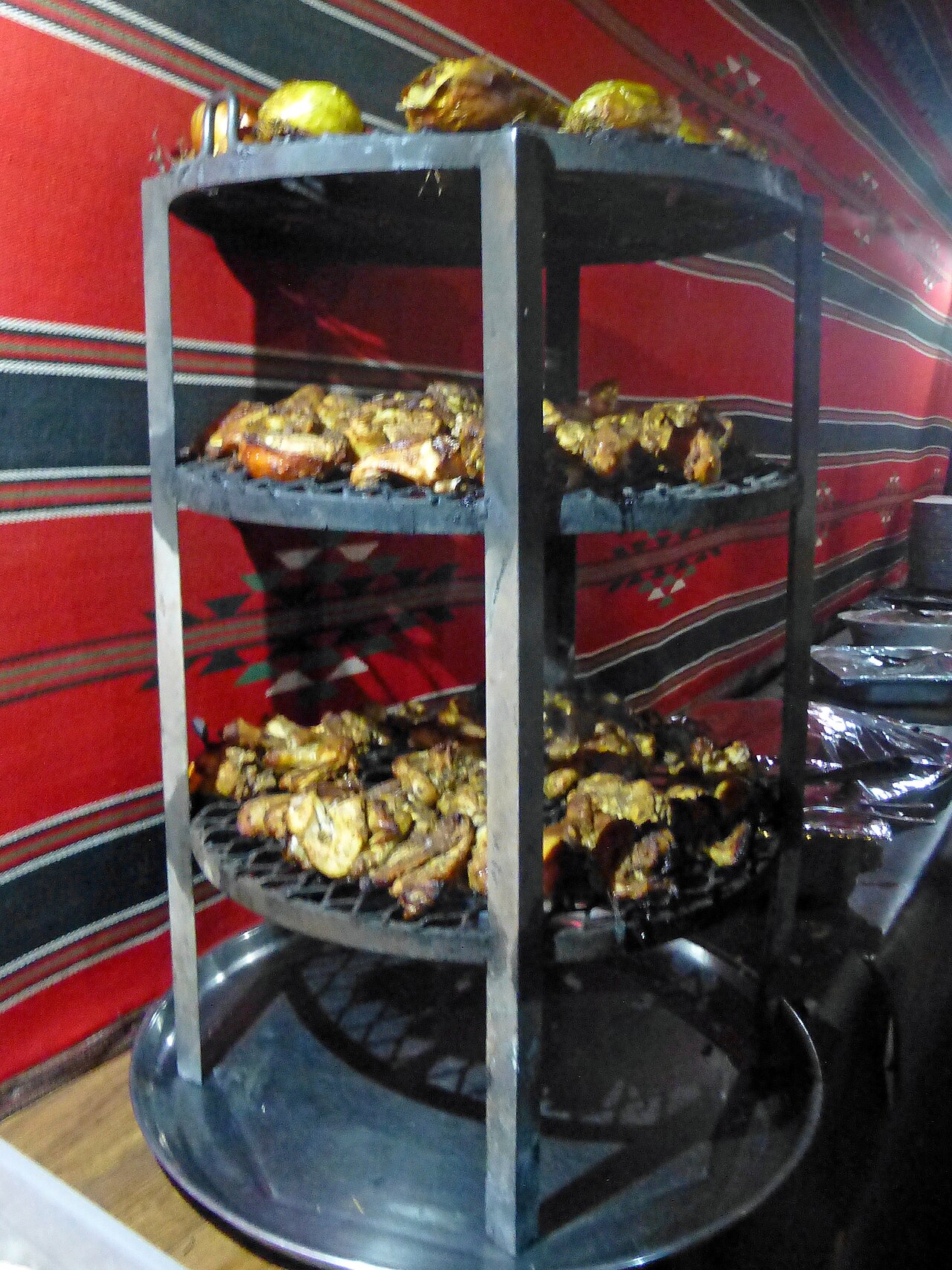
A Bedouin feast of meat, usually chicken or lamb, with vegetables, placed on metal trays and lowered into a pit oven in the sand, then covered with a lid, hot coals and sand and left to cook for a few hours. Visitors to the desert camps of Wadi Rum often watch it being dug out for dinner.
The pit oven is known in Jordan as a taboon, and zarb is considered a delicacy, often served to visitors in the Bedouin camps of Wadi Rum and Petra.
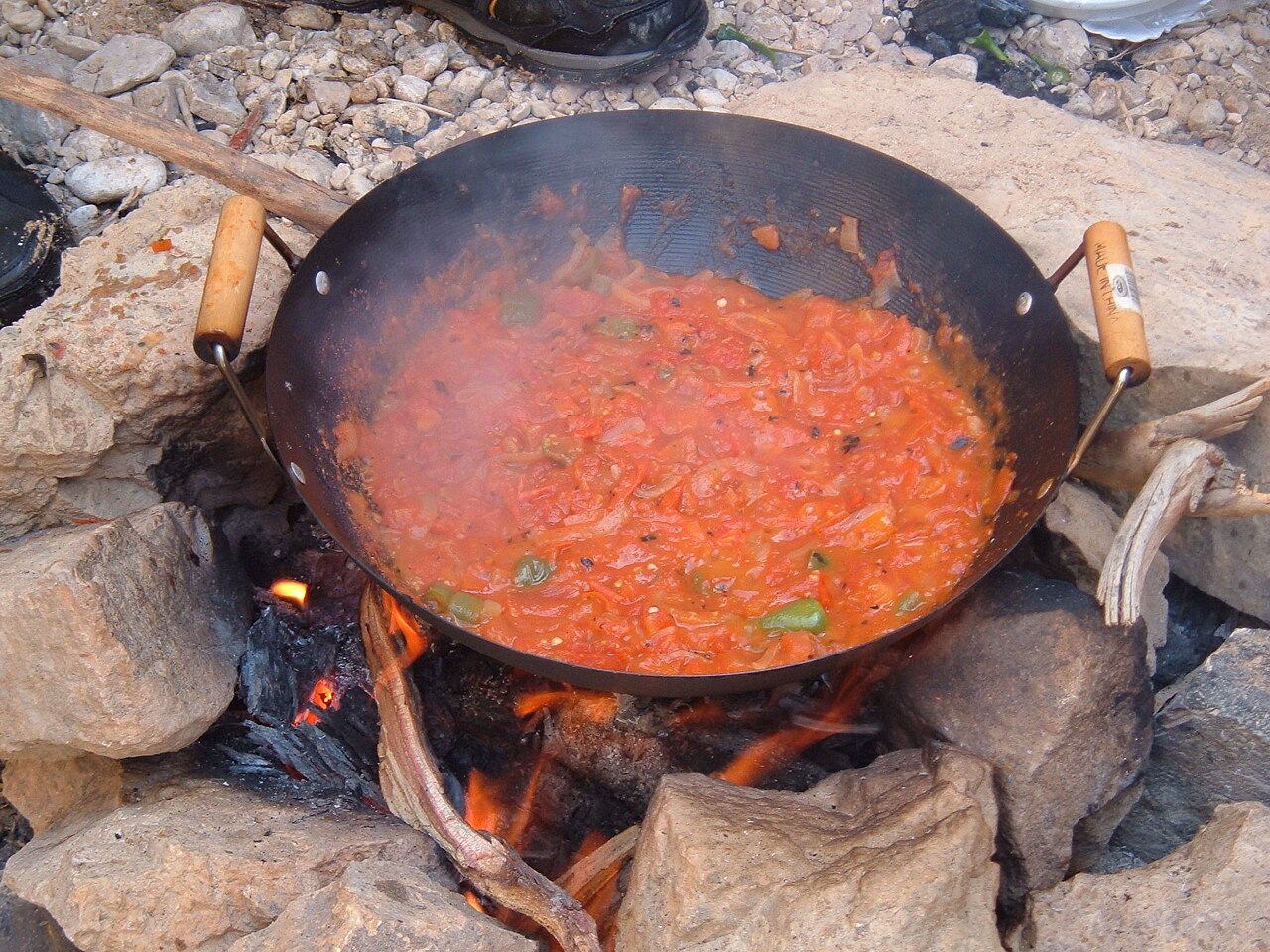
Tomatoes fried in olive oil with onion, garlic and hot green chilli until soft and jammy, eaten straight from the pan with bread. It is one of the simplest and most loved meals in Jordan, cooked at home and over campfires alike.
Its name simply means 'pan of tomatoes'. Many families top it with toasted pine nuts or crack eggs into it.
See the recipe
Serves 2
25 min
Ingredients
4 tablespoons olive oil
1 onion, finely chopped
2 cloves garlic, sliced
1 or 2 hot green chillies, sliced
5 ripe tomatoes, chopped
Salt and a pinch of black pepper
To serve: warm flatbread, and toasted pine nuts if you like
Method
Heat the olive oil in a frying pan and fry the onion over a medium heat for 5 minutes, until soft.
Add the garlic and chilli and fry for another minute.
Add the tomatoes and a good pinch of salt. Cook, stirring now and then, for 12 to 15 minutes, until the tomatoes have broken down into a thick sauce but are not dry.
Season with pepper, scatter with pine nuts if you like and serve hot in the pan, with bread to scoop it up.
All of Jordan and the Levant, a breakfast and mezze favourite
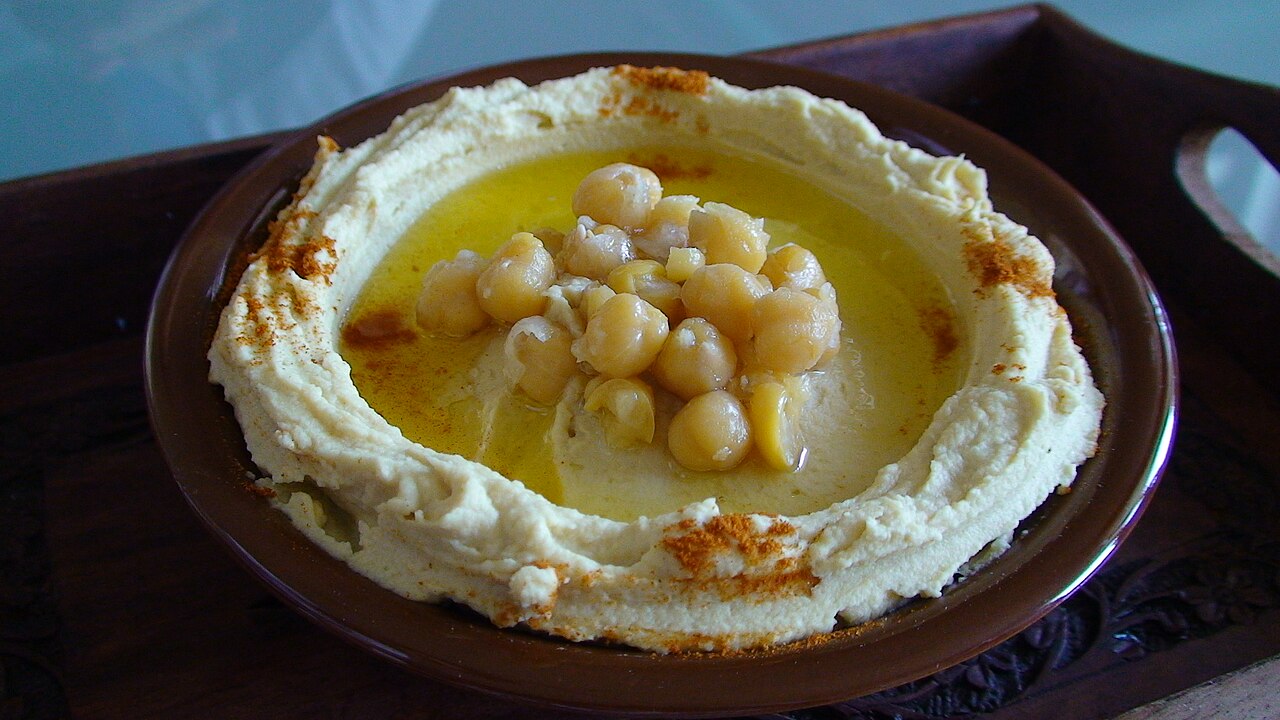
A smooth dip of chickpeas blended with tahini (sesame paste), lemon juice and garlic, spread in a shallow bowl and finished with olive oil. In Jordan it is a classic breakfast, eaten with falafel, pickles, onions and warm bread.
Hummus is simply the Arabic word for chickpea. Its full name is hummus bi tahini, 'chickpeas with tahini'.
See the recipe
Serves 4
15 min
Ingredients
1 tin (400 g) chickpeas, drained, keeping a few chickpeas and some of the liquid
4 tablespoons tahini (sesame paste)
Juice of 1 lemon
1 small clove garlic, crushed
½ teaspoon salt
2 to 4 tablespoons iced water
To serve: olive oil, a pinch of paprika or cumin, chopped parsley and warm flatbread
Method
Blend the tahini, lemon juice, garlic and salt in a food processor for about 1 minute, until thick and pale.
Add the chickpeas and blend for 2 to 3 minutes, adding iced water a spoonful at a time, until very smooth and creamy.
Taste and add more lemon or salt if needed.
Spread in a shallow bowl, make a hollow with the back of a spoon, pour in olive oil, and top with the whole chickpeas, paprika and parsley. Tahini is made from sesame, a common allergen.
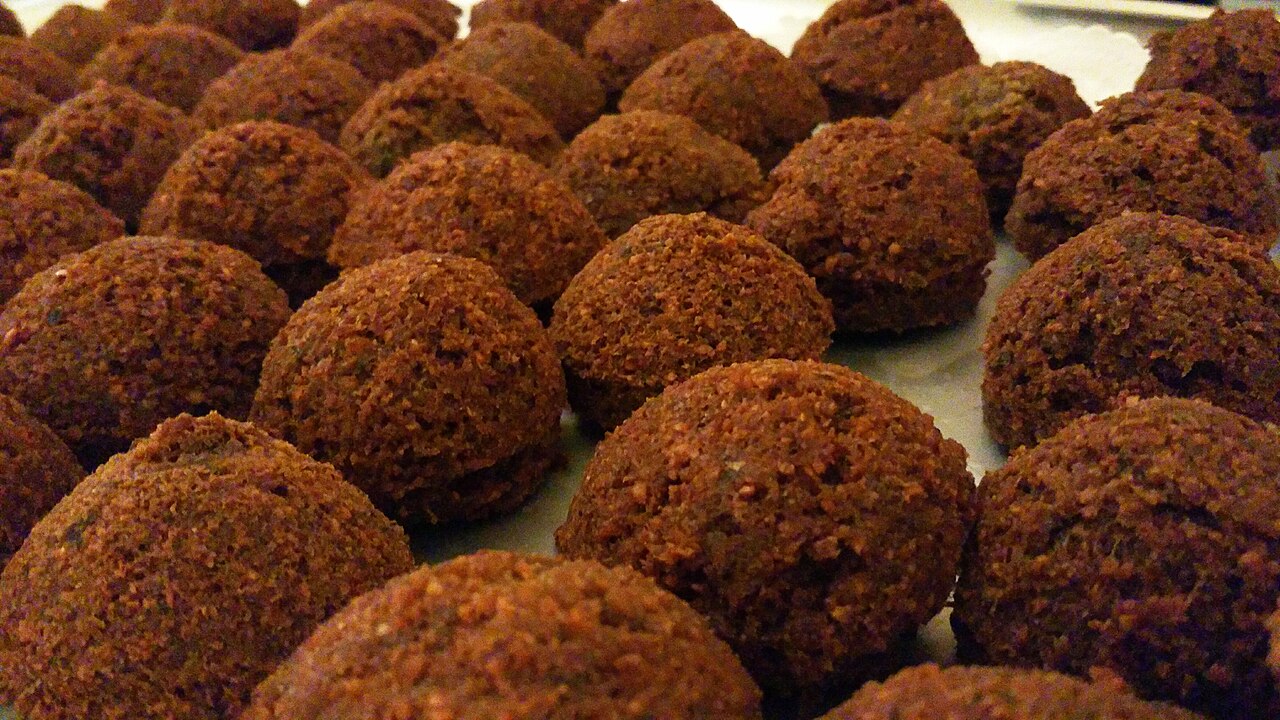
Crisp fried balls of ground chickpeas mixed with parsley, onion, garlic and spices, green and soft inside. They are eaten hot for breakfast with hummus or stuffed into bread with salad, pickles and tahini sauce.
In Jordan, falafel is usually made from chickpeas, while in Egypt the same fritter is made from fava beans.
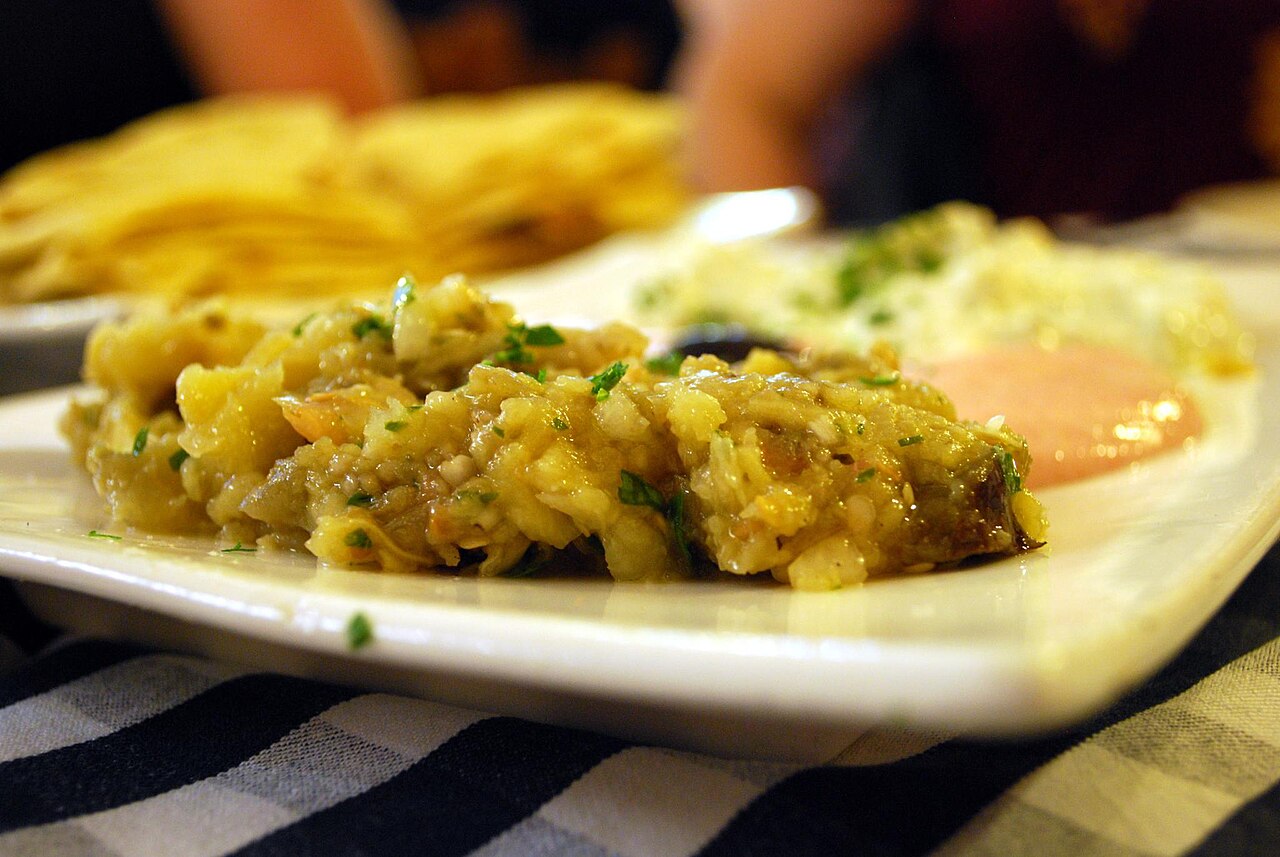
Aubergines charred over a flame until the skin is black and the flesh is soft and smoky, then mashed with tahini, lemon and garlic and served with olive oil and pomegranate seeds.
Mutabbal simply means 'spiced'. Outside the Levant a very similar dip is often sold as baba ghanoush, but in the Levant mutabbal is the version always made with tahini, while baba ghanoush does not always contain it.
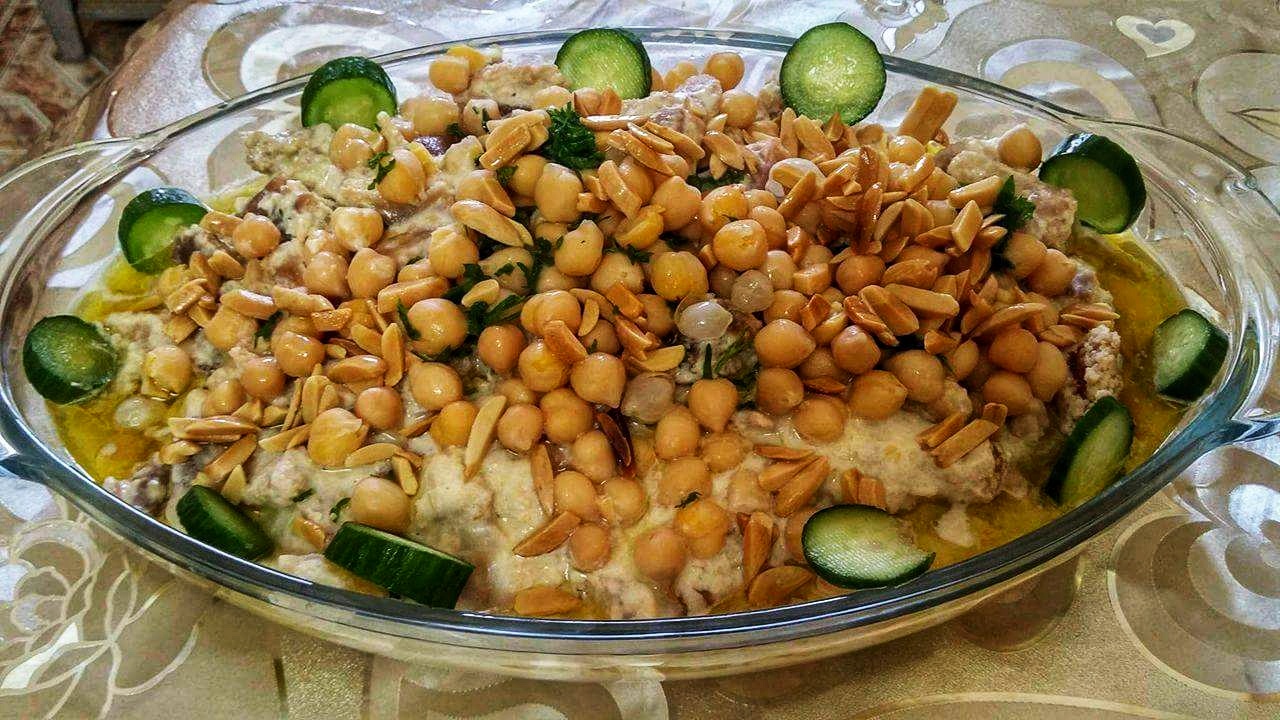
Pieces of toasted or fried bread covered with warm chickpeas, a garlicky yogurt and tahini sauce, and a spoonful of sizzling ghee or butter with pine nuts. It is rich and filling and served in deep bowls.
Fatteh comes from an Arabic word meaning to crumble or break into pieces, after the broken bread at its base.
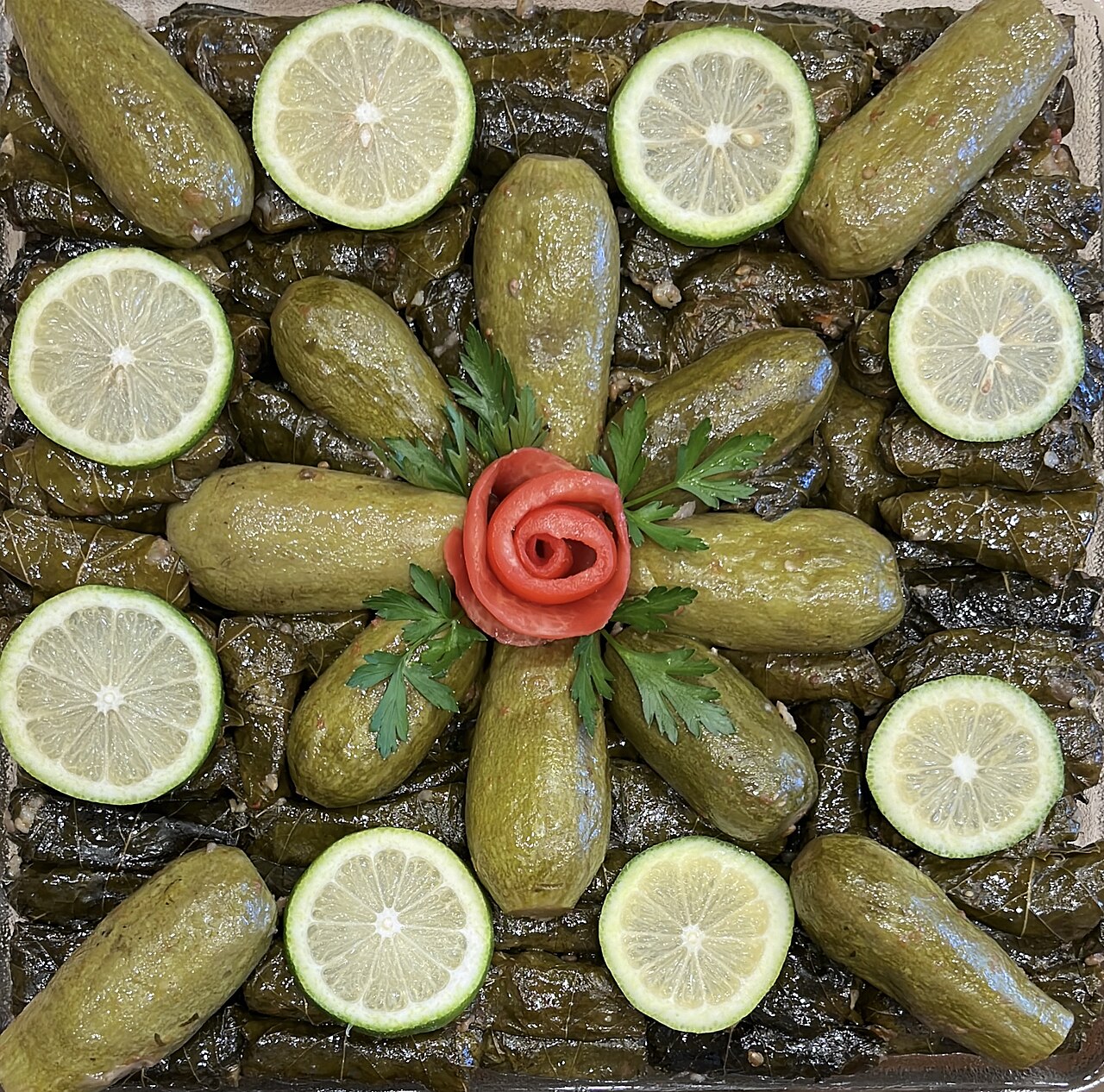
Vine leaves rolled tightly around rice, often mixed with minced meat, tomato and herbs, then packed into a pot, sometimes over lamb chops or courgettes, and simmered with lemon and garlic. Rolling them is often a job shared by the family.
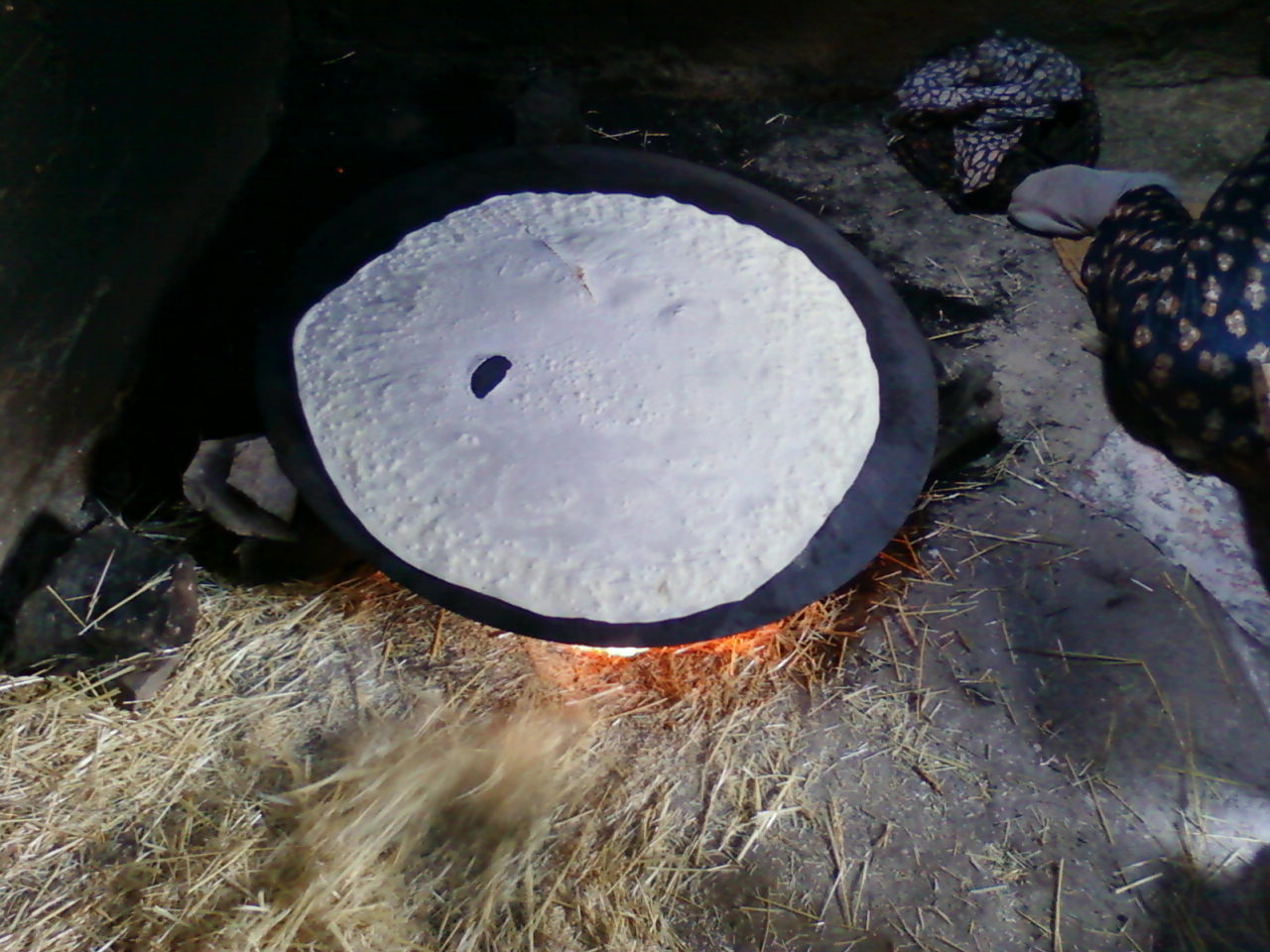
A huge, paper-thin flatbread made from just flour, water and salt, stretched over a round cushion and flipped onto a saj, a domed iron griddle heated over a fire. It is the bread laid under the rice in mansaf, and is also called markook.
Bakers toss and stretch the dough between their arms until it is almost see-through before it goes on the saj.
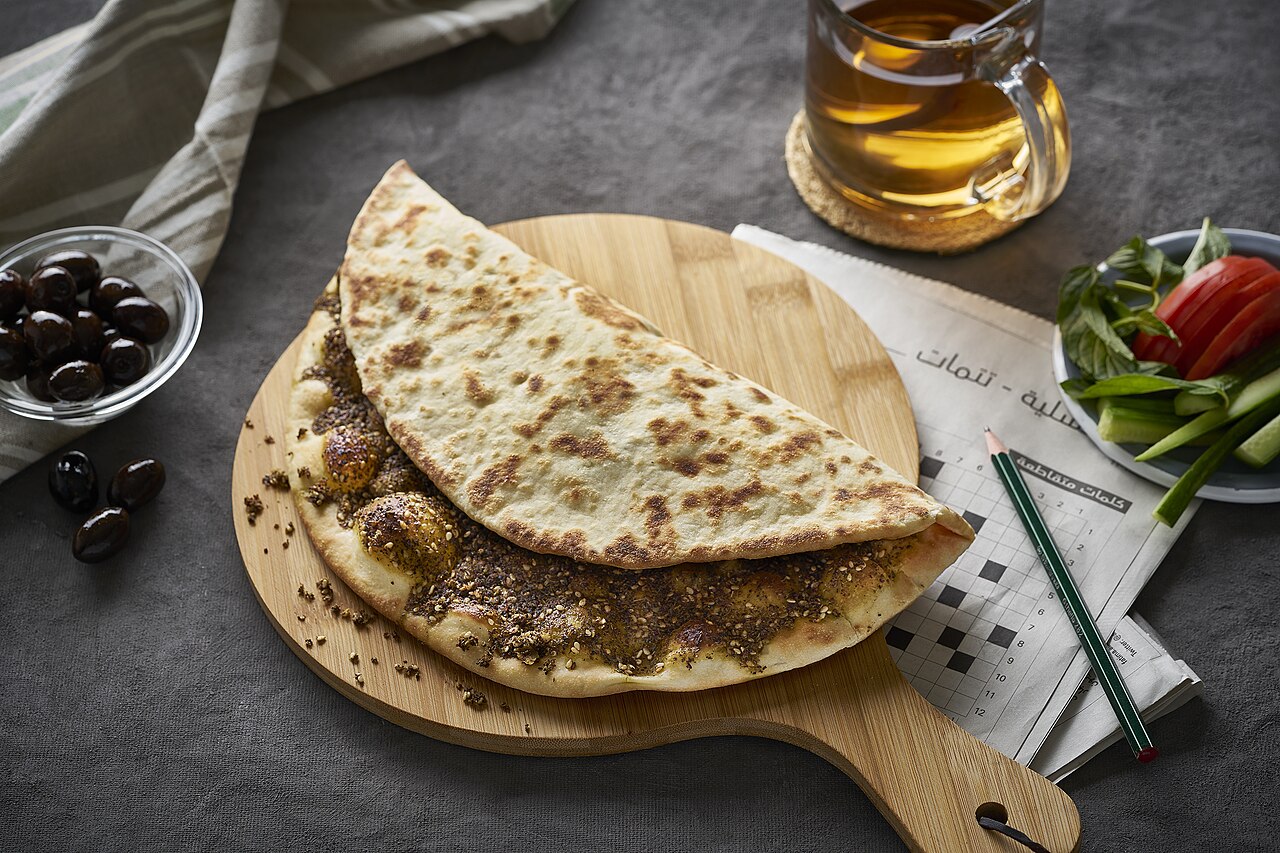
Round flatbreads spread with za'atar, a mix of wild thyme, sumac and sesame seeds, and olive oil, then baked until crisp at the edges. Neighbourhood bakeries sell them hot in the morning, sometimes topped with cheese instead.
Bread dipped first in olive oil and then in za'atar is part of the classic Jordanian breakfast, together with labneh, cheese and a glass of tea.
All of Jordan; the favourite version, knafeh nabulsieh, comes from the city of Nablus
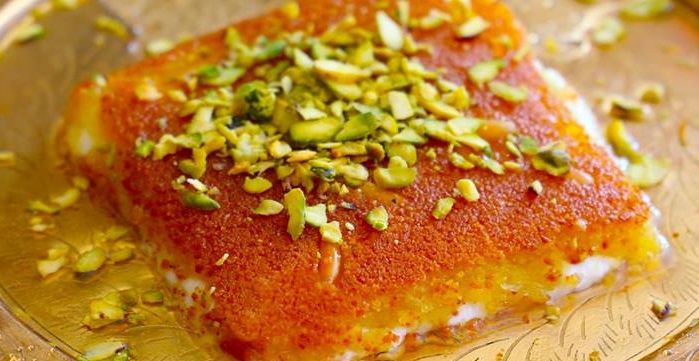
A warm dessert of soft white cheese baked under a layer of fine shredded pastry or semolina, coloured orange, soaked in sugar syrup and sprinkled with crushed pistachios. It is cut from a huge round tray and eaten hot, while the cheese is still stretchy.
The origin of the word is debated: it may come from an Arabic root meaning 'to enclose', and early mentions appear in the tales of One Thousand and One Nights.
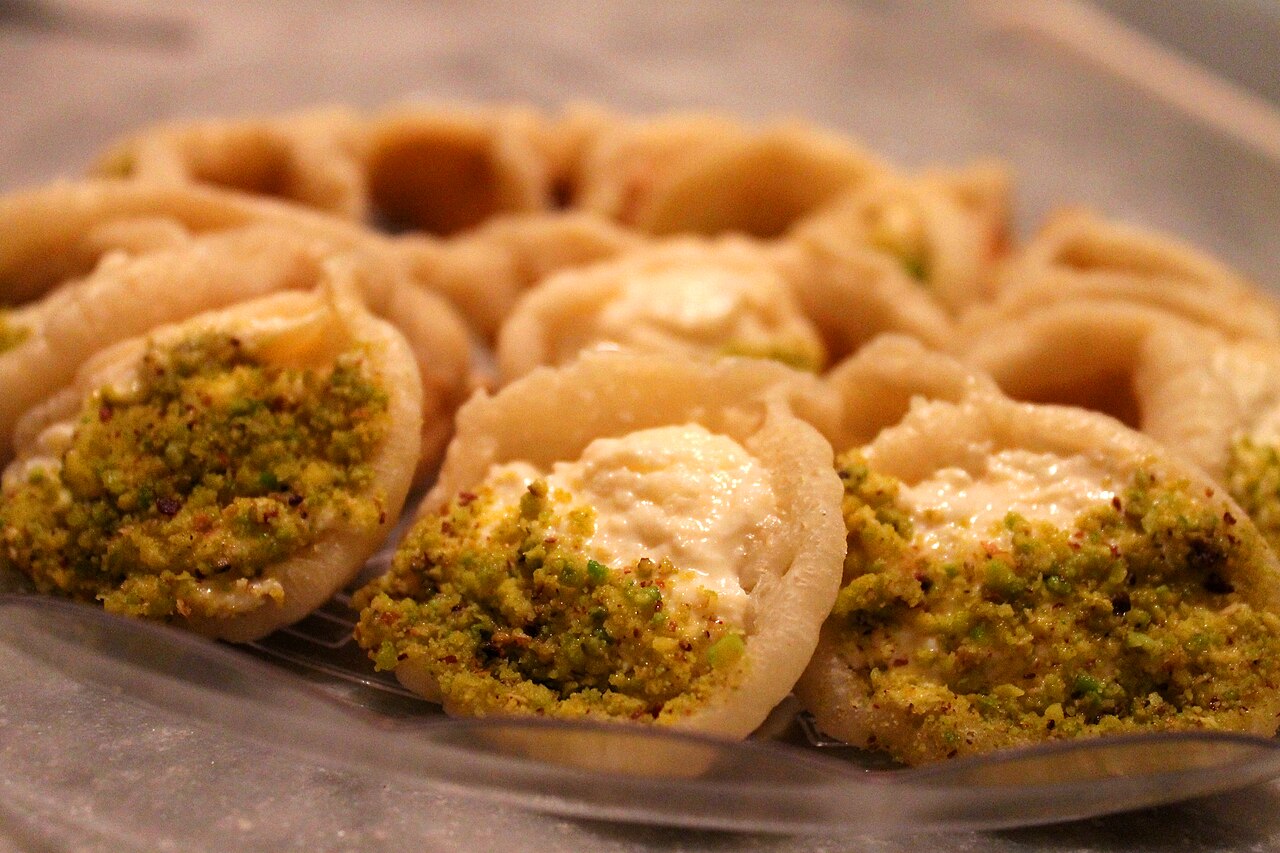
Small, spongy pancakes cooked on one side only, then folded around sweet cream or walnuts and cinnamon. They are eaten fresh, or baked or fried and dipped in syrup. They appear in bakeries mainly during the holy month of Ramadan.
Qatayef are eaten after iftar, the meal that breaks the fast at sunset, and street stalls cook them in the open during Ramadan evenings.
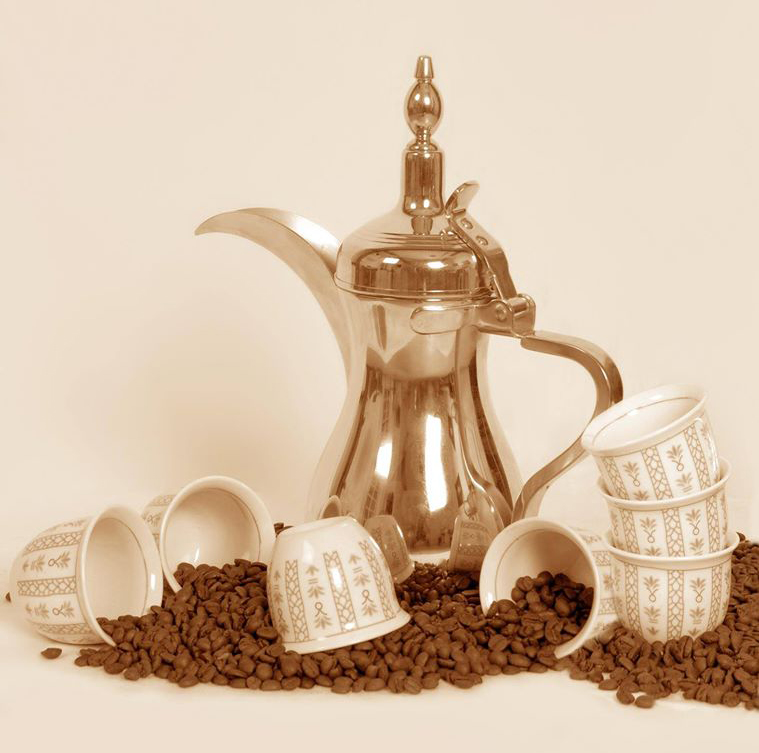
Bitter, unsweetened coffee flavoured with cardamom, poured from a long-spouted pot called a dallah into small handleless cups called finjan, only a mouthful at a time. It is the drink of hospitality, and families drink it together at weddings and at funerals.
The host keeps refilling your cup. When you have had enough, gently shake the empty cup from side to side before handing it back.
Table manners
Hospitality is a point of honour. A guest is offered coffee or tea straight away, and it is polite to accept at least one cup.
A 'Jordanian invitation' means you are expected to bring nothing and eat everything.
Mansaf is traditionally eaten standing around the shared tray, using only the right hand, with the left hand behind the back.
When drinking Arabic coffee, gently shake the small empty cup from side to side to show you do not want any more.
During Ramadan, families break the fast together at sunset, and sweets such as qatayef follow the evening meal.
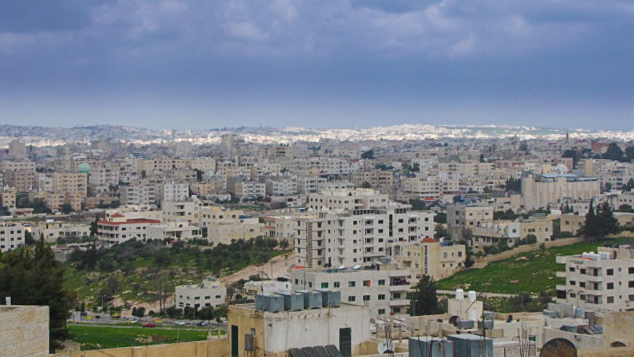
Most Jordanians live in the green northwest, in a string of cities from Irbid down to Amman, Zarqa and Madaba. Further south, Karak guards the old King's Highway, Wadi Musa is the gateway to Petra, and Aqaba is the only town on the sea.
Amman Governorate, on the hills of the central plateau
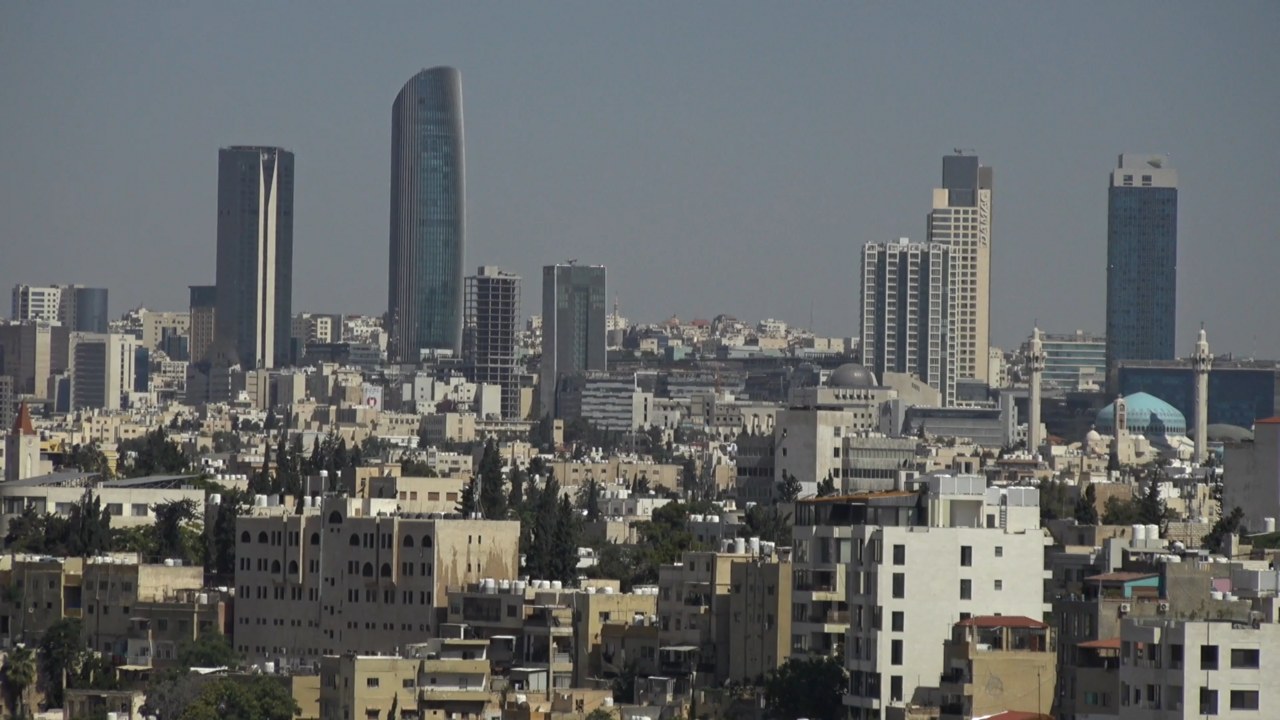
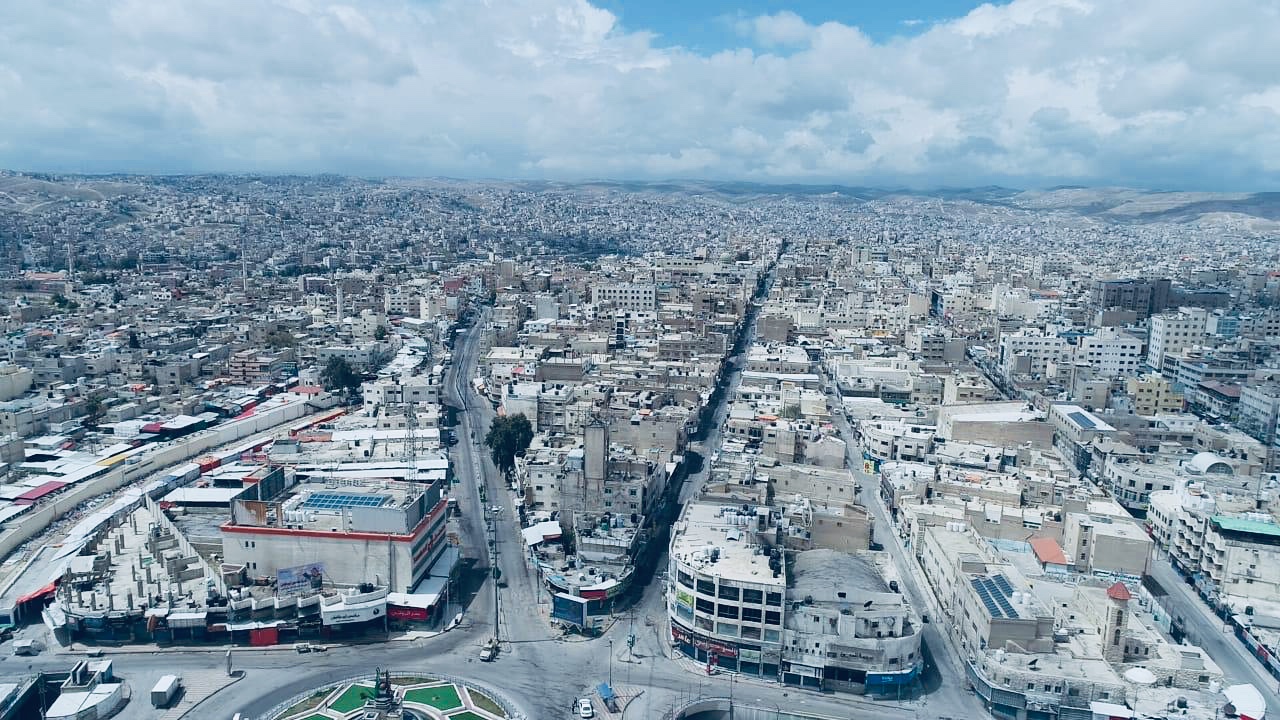
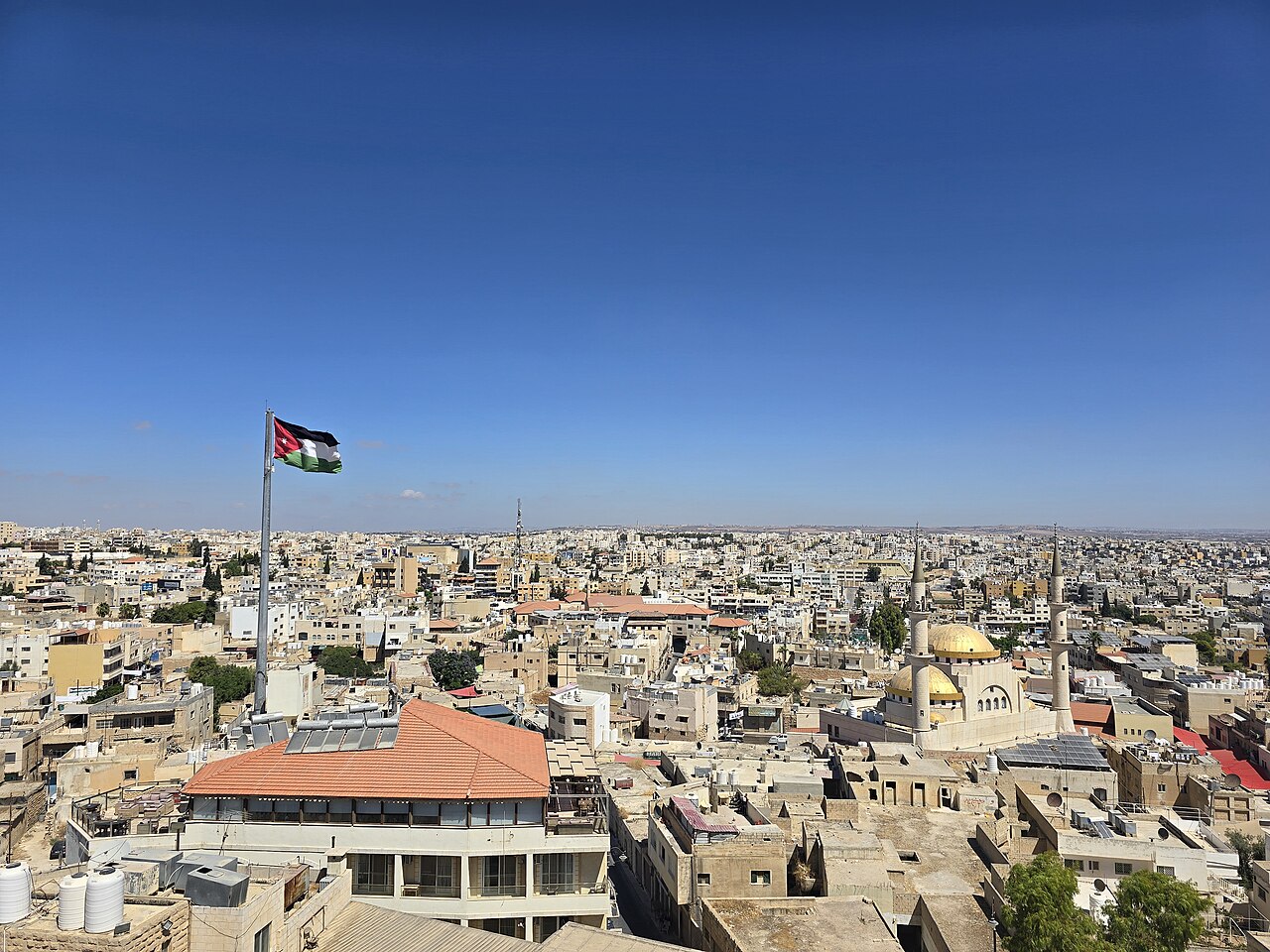
The capital and by far the largest city, with about 5 million people in the wider city (2024). It was the Ammonite capital Rabbath Ammon and the Roman city of Philadelphia, but was a small village until Circassian settlers arrived in 1878. First built on seven hills, it now spreads over many more, with white stone houses climbing the slopes.
A large industrial city just northeast of Amman, founded in 1902 by Chechen settlers beside a river and a station on the Hejaz Railway. Its name means 'the blue one'.
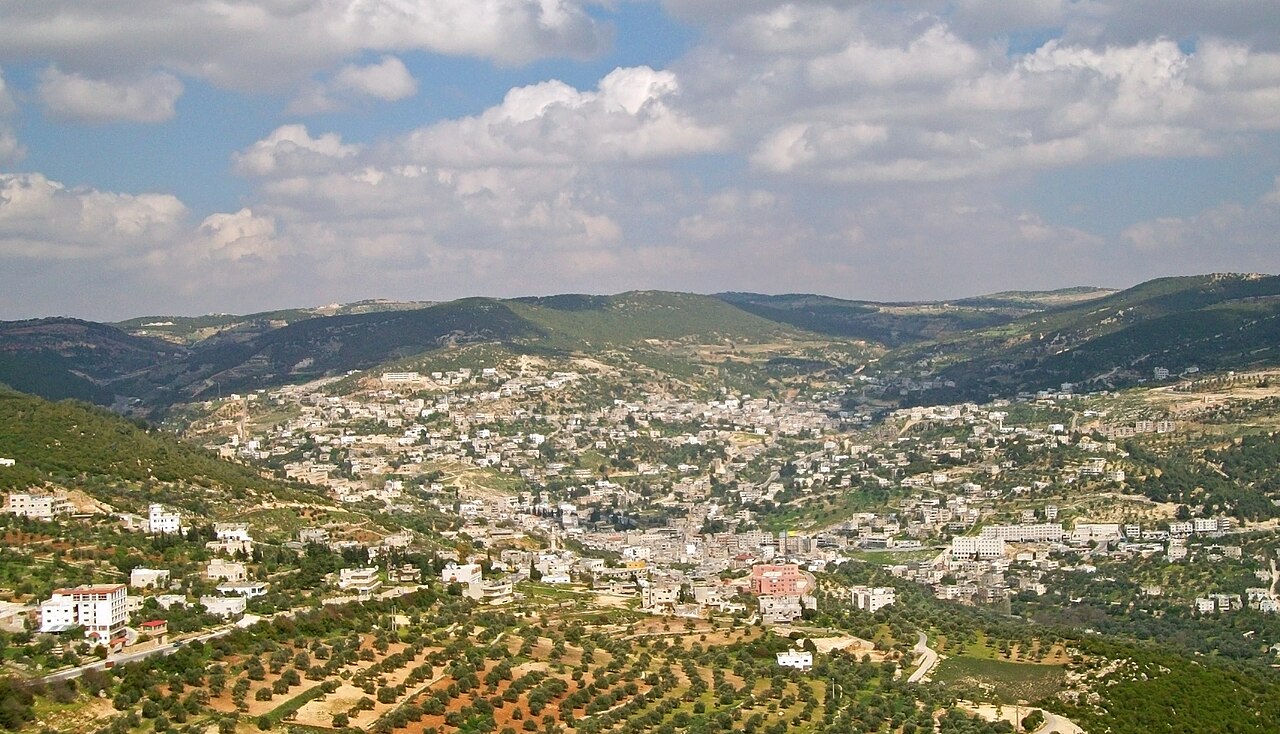
The main city of the north, about 20 km from the Syrian border, surrounded by farmland and olive groves. It has the oldest municipality in Jordan, founded in 1881, and is a big university town.
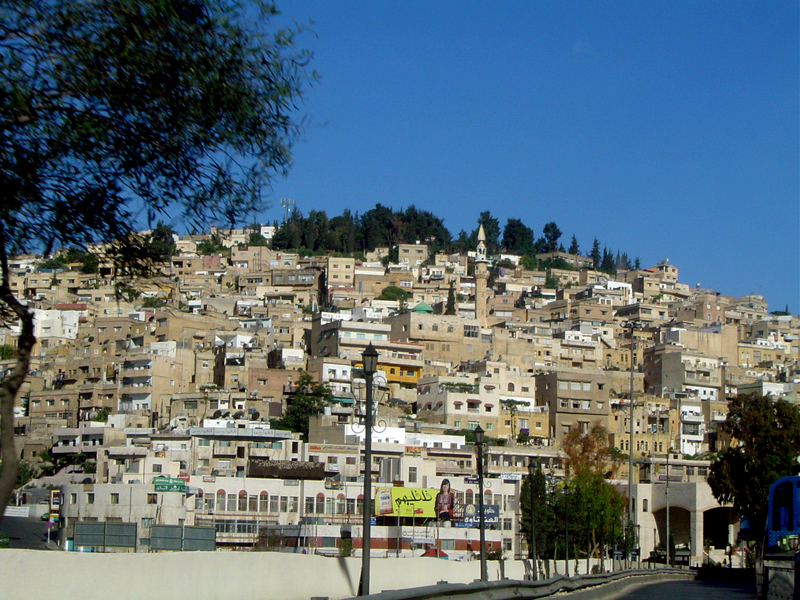
A historic trading town built across three hills near the Jordan Valley, with honey-coloured stone houses from the late Ottoman period. It was the main town east of the Jordan before Amman grew, and UNESCO listed it in 2021 as 'the place of tolerance and urban hospitality'.
A modern town beside the ruins of Gerasa, one of the best preserved Roman cities in the Middle East, about 48 km north of Amman by road. It is sometimes called the 'Pompeii of the Middle East'.
A market town about 30 km southwest of Amman, nicknamed the 'City of Mosaics' for the Byzantine and Umayyad floor mosaics found in its churches and houses. It has a large Christian community.
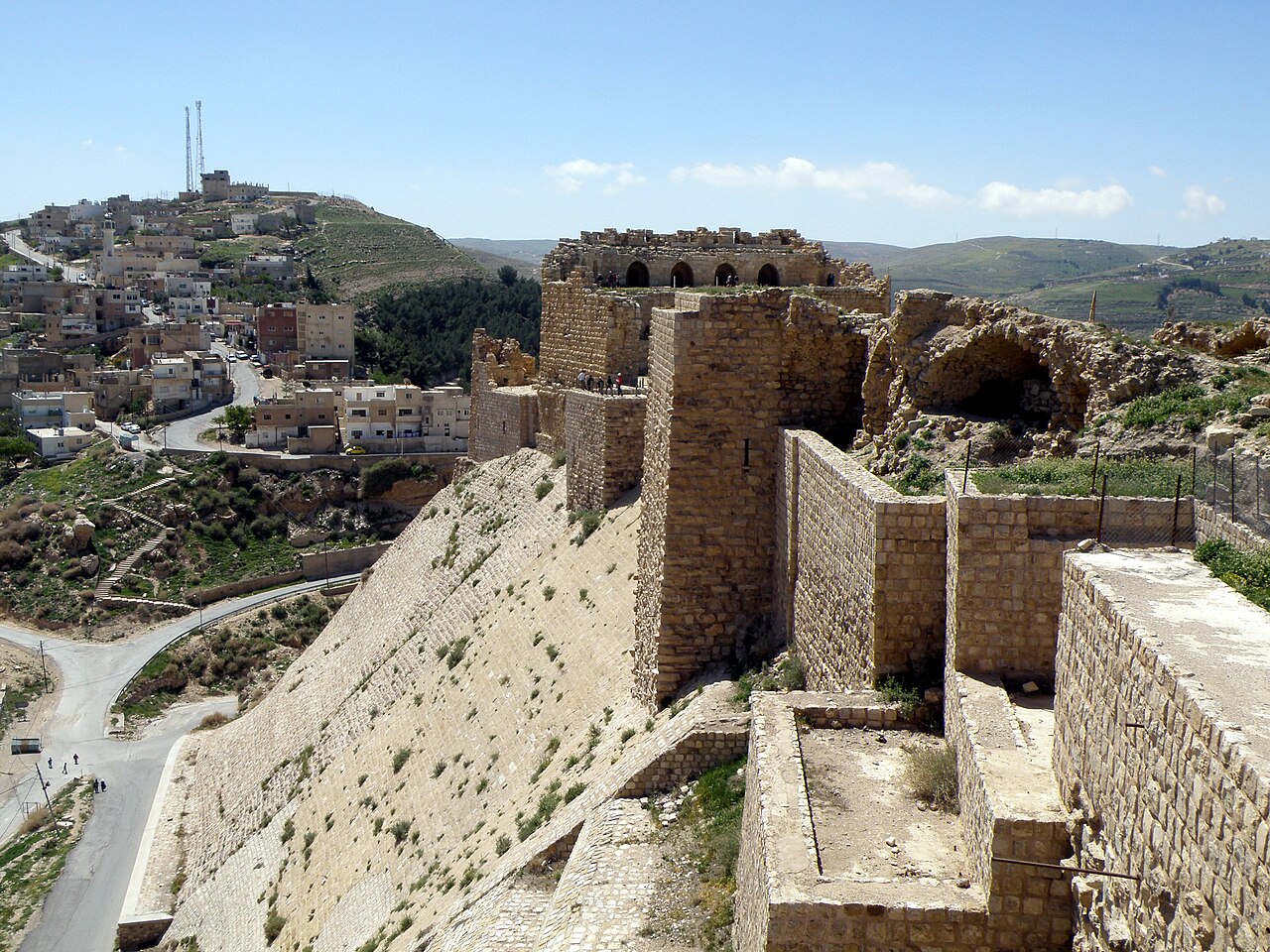
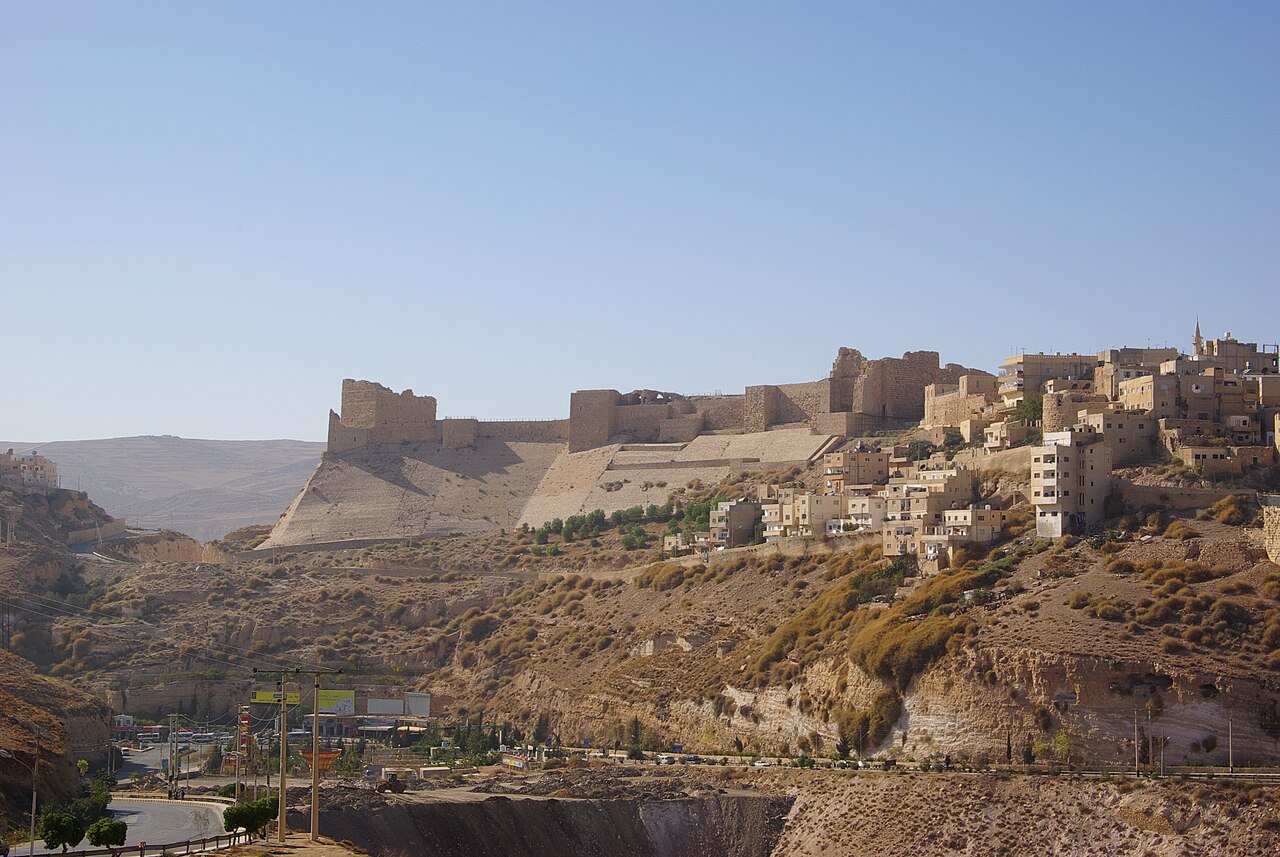
A hilltop town about 1,000 m above sea level, on the ancient King's Highway about 140 km south of Amman. It was a Moabite town in the Iron Age and is crowned by one of the largest Crusader castles in the region, with views towards the Dead Sea.
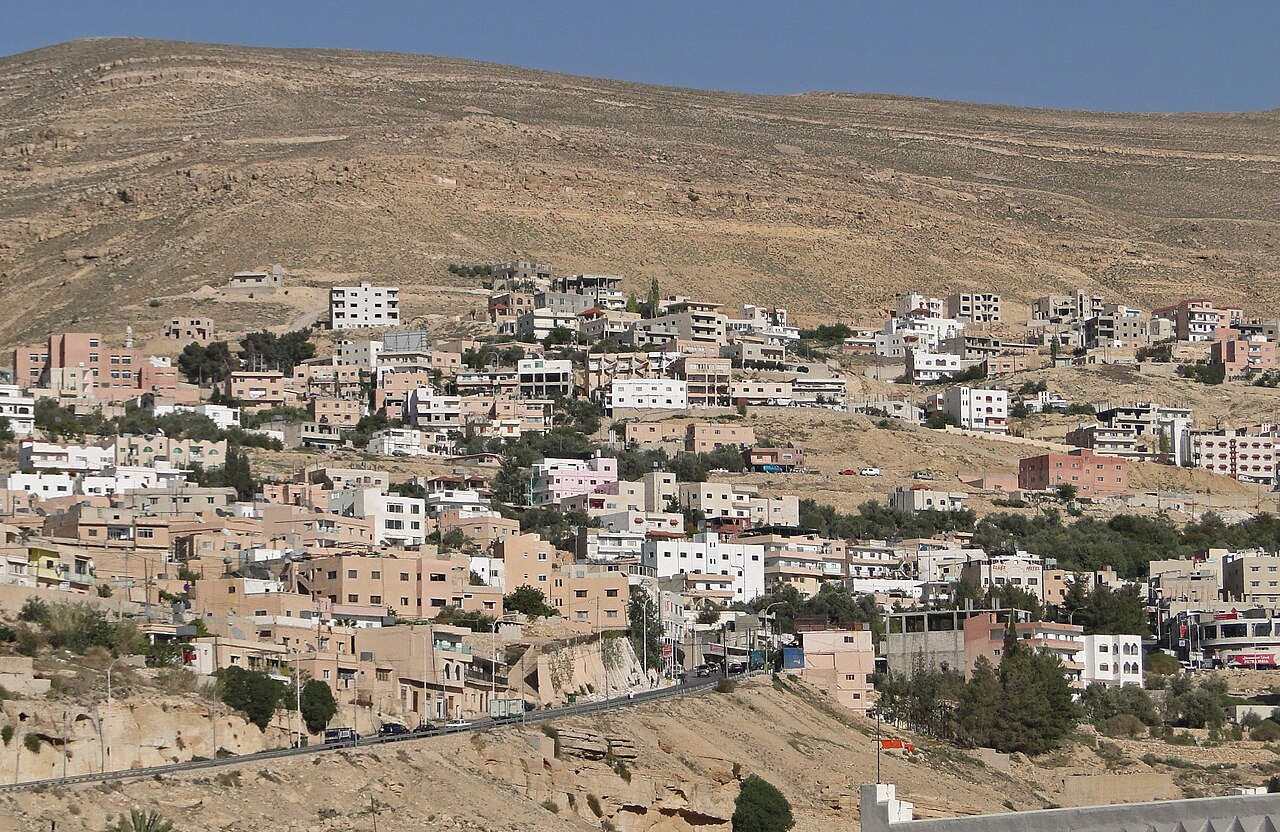
The town at the entrance to Petra, only a few kilometres from the ancient city, full of hotels and restaurants. Its name means 'Valley of Moses', from the tradition that Moses struck water from a rock at the spring of Ain Musa.
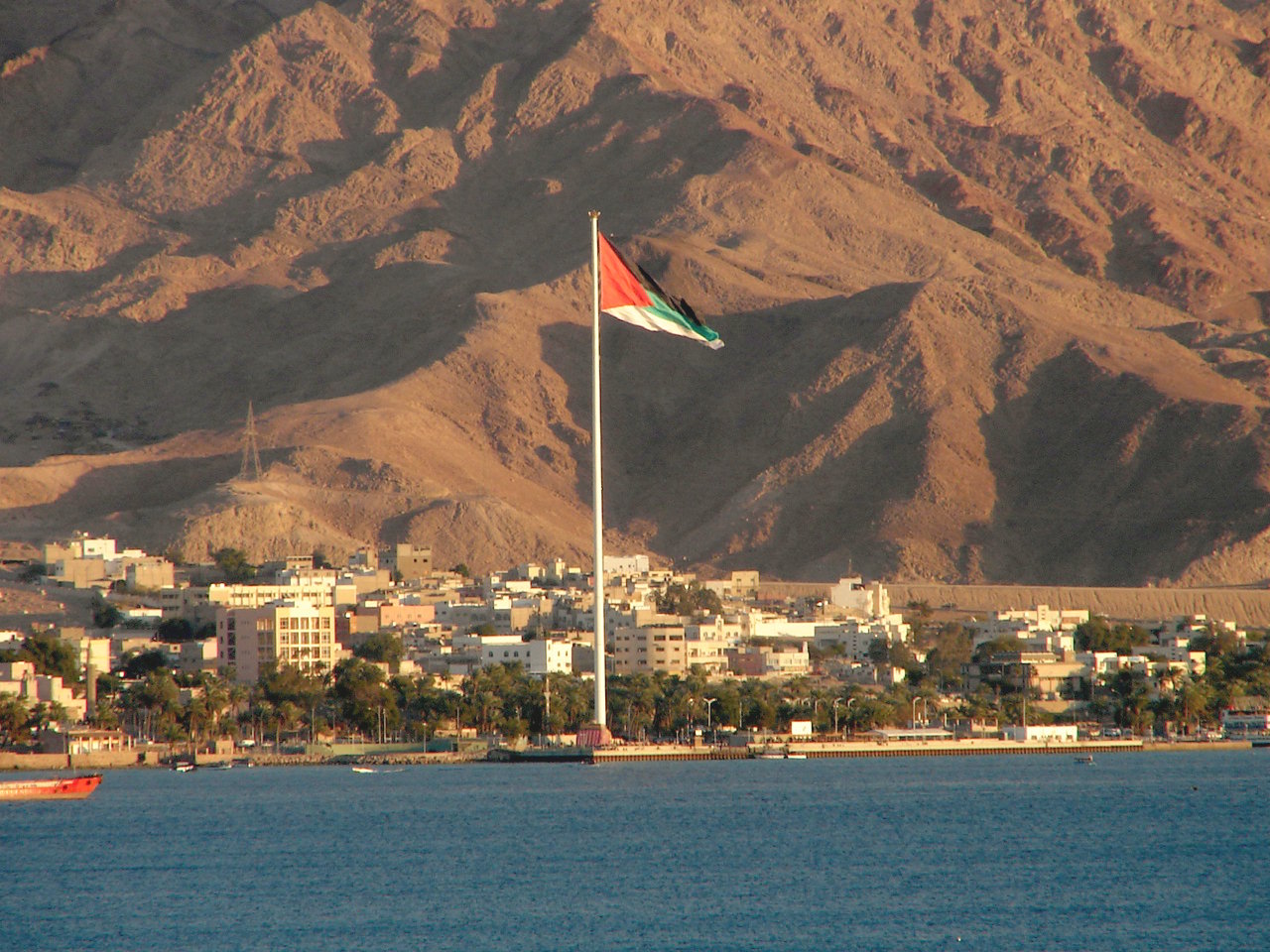
Jordan's only coastal city and seaport, at the northern tip of the Gulf of Aqaba, with about 150,000 people (2015). It is a low-tax special economic zone with beaches, coral reefs and diving, and the nearest city to Wadi Rum.
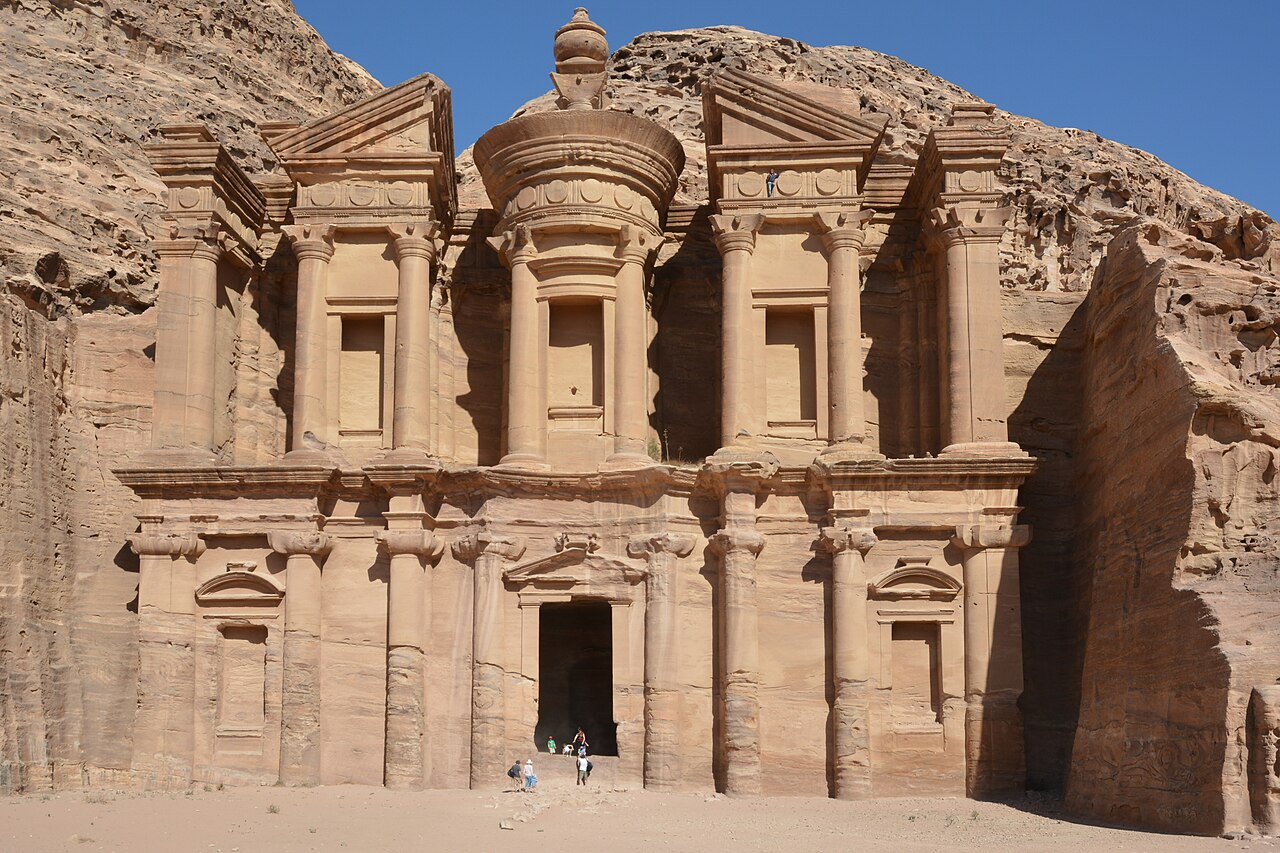
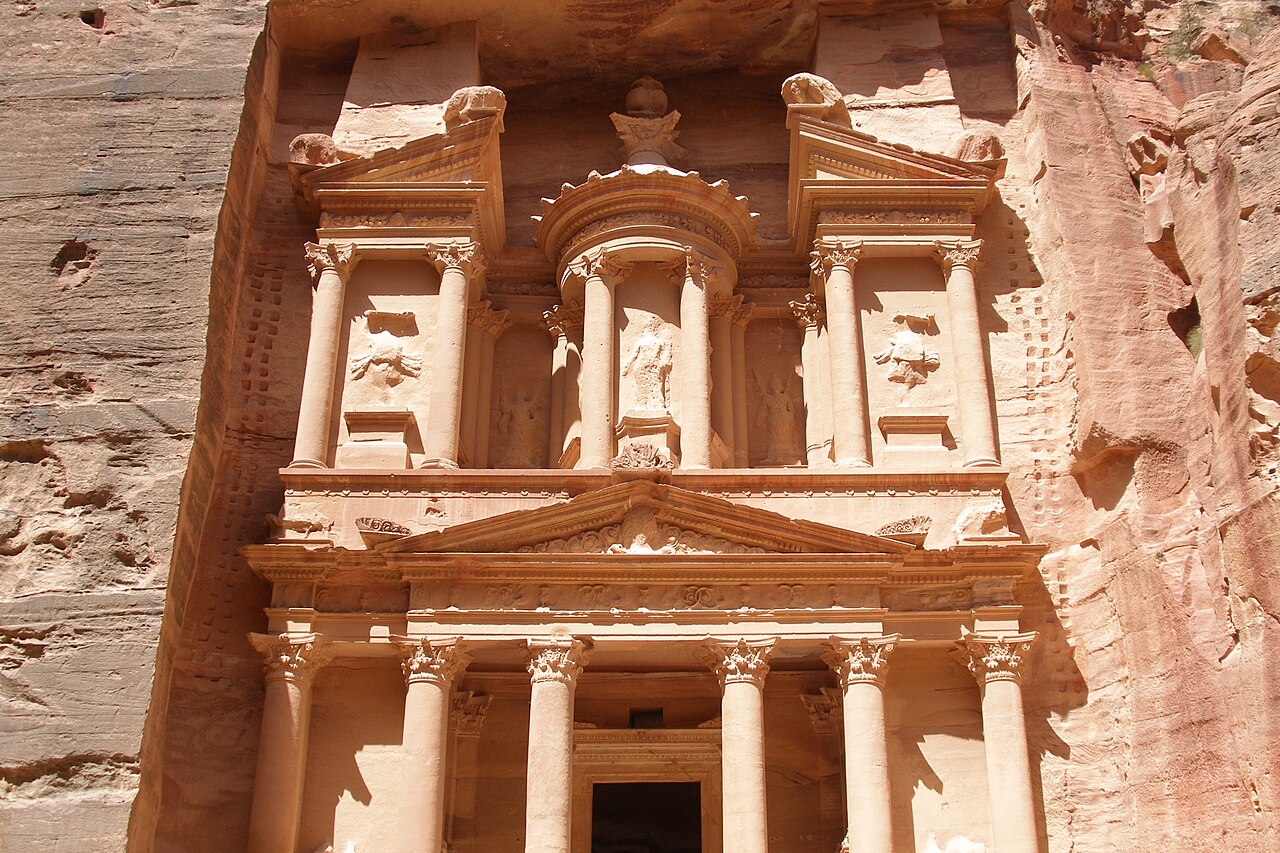
At the end of the Siq, a dark, narrow gorge only 3 to 4 m wide in places, the pink sandstone façade of the Treasury suddenly appears, carved straight into the cliff in the 1st century AD, probably as the tomb of the Nabataean king Aretas IV. Petra, once the Nabataean capital, is a UNESCO World Heritage Site and was voted one of the New 7 Wonders of the World in 2007.
One of Petra's largest carved monuments, about 47 m high and 48 m wide, reached by a path of about 800 rock-cut steps high in the hills. It was probably carved in the mid-1st century AD for religious gatherings, and the view from the top reaches across the Wadi Araba.
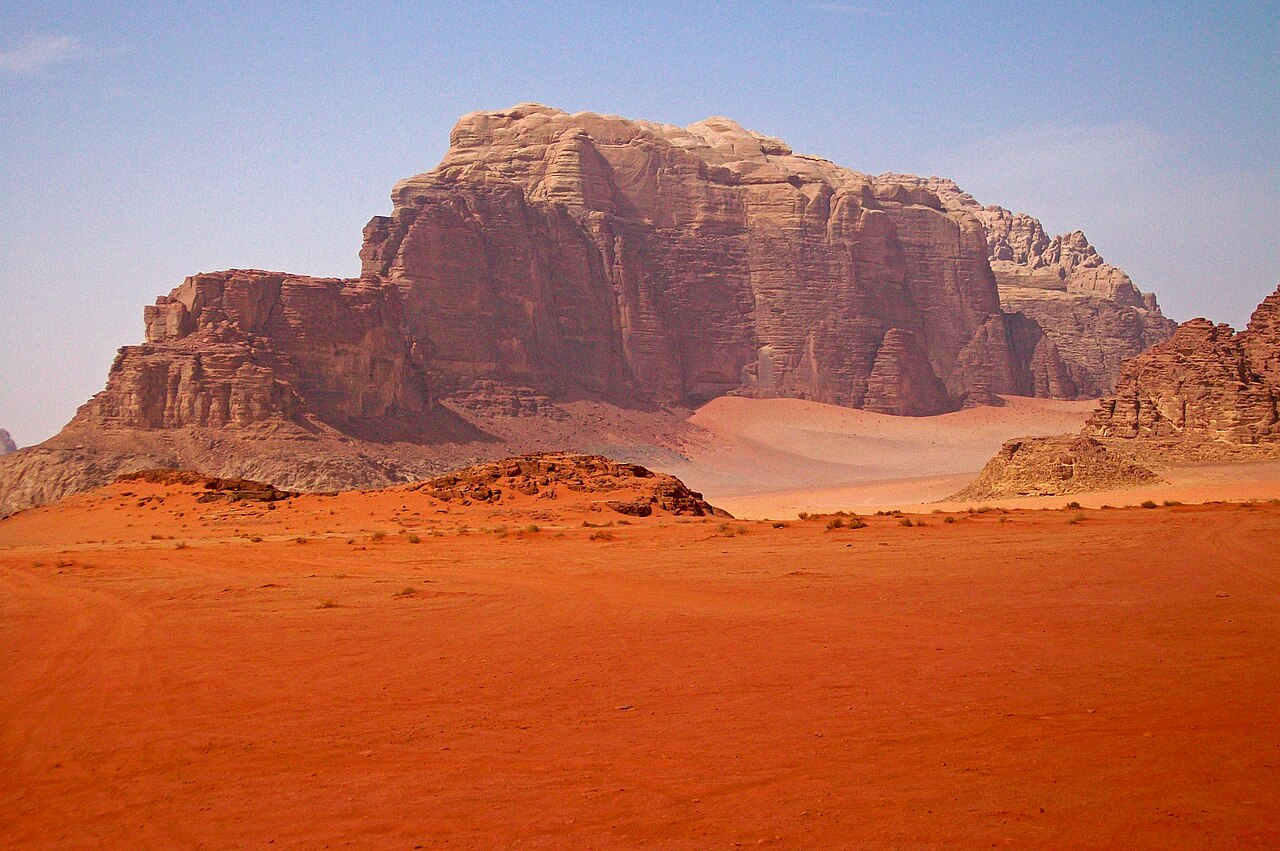
A desert valley of red sand and towering sandstone and granite mountains, about 60 km east of Aqaba, also called the Valley of the Moon. Bedouin guides lead jeep and camel trips, and ancient rock carvings cover many cliffs. It has been a mixed natural and cultural World Heritage Site since 2011.
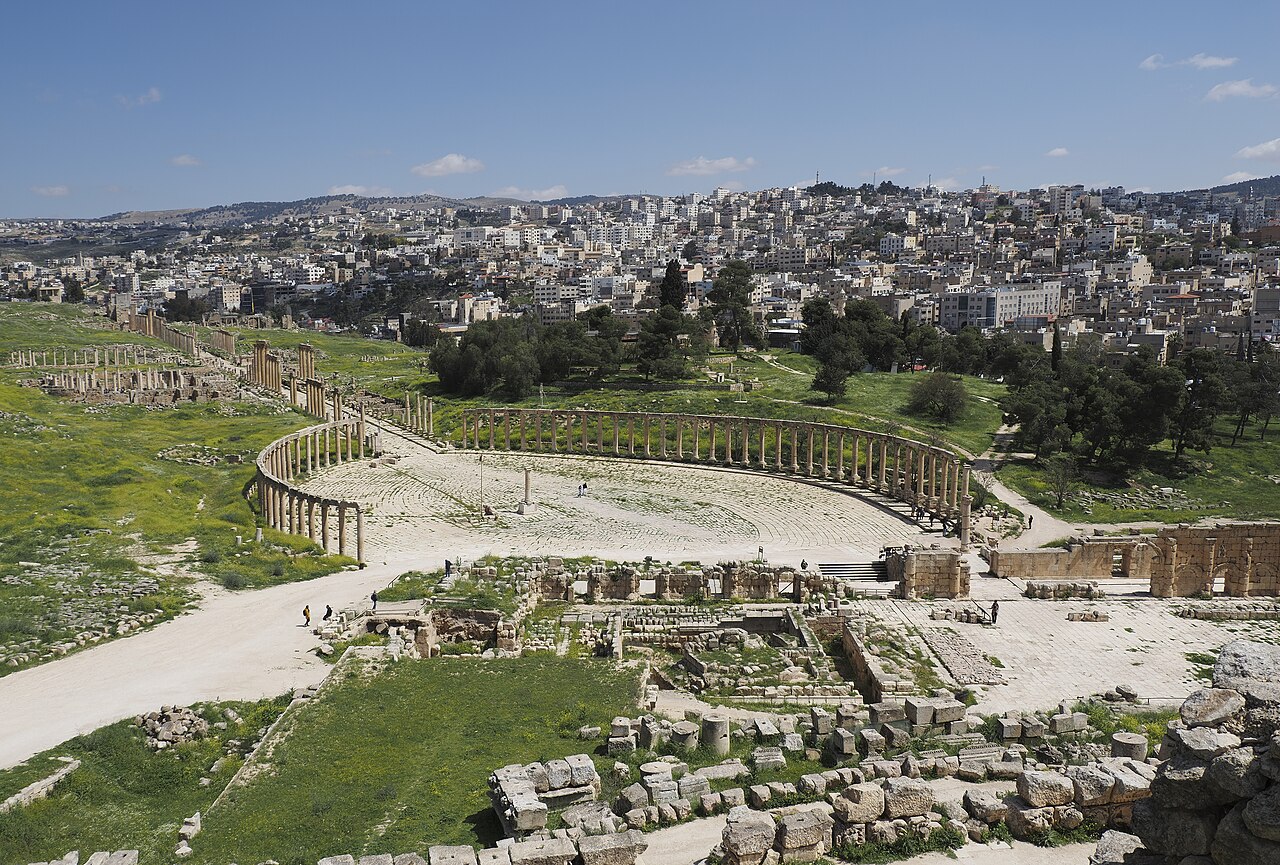
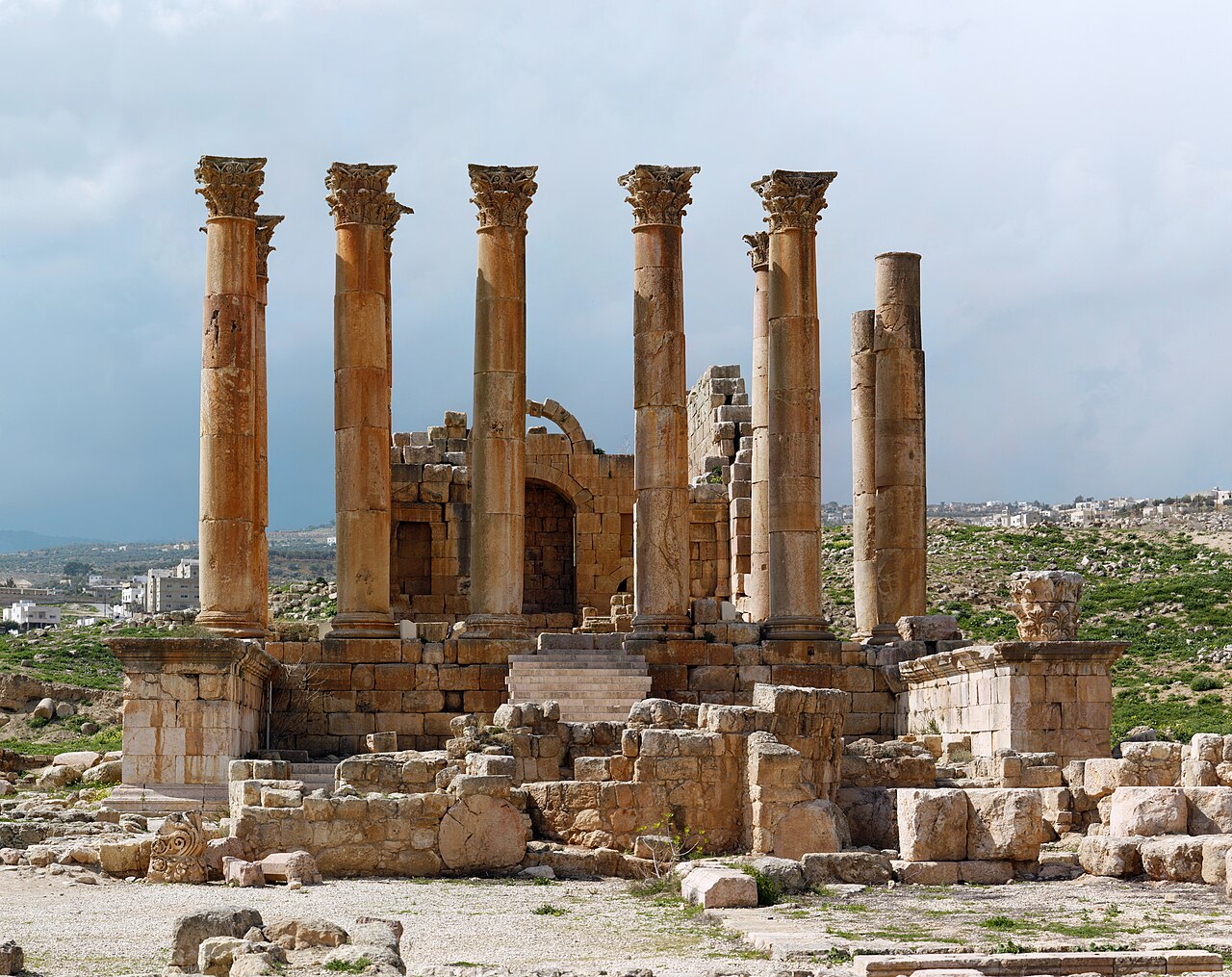
The ruins of a Roman city with a colonnaded main street, an oval forum ringed by columns, temples, theatres and a hippodrome. Hadrian's Arch was built for the emperor's visit in 129 to 130. As of 2026, Jerash is on Jordan's tentative list for World Heritage, not yet inscribed.
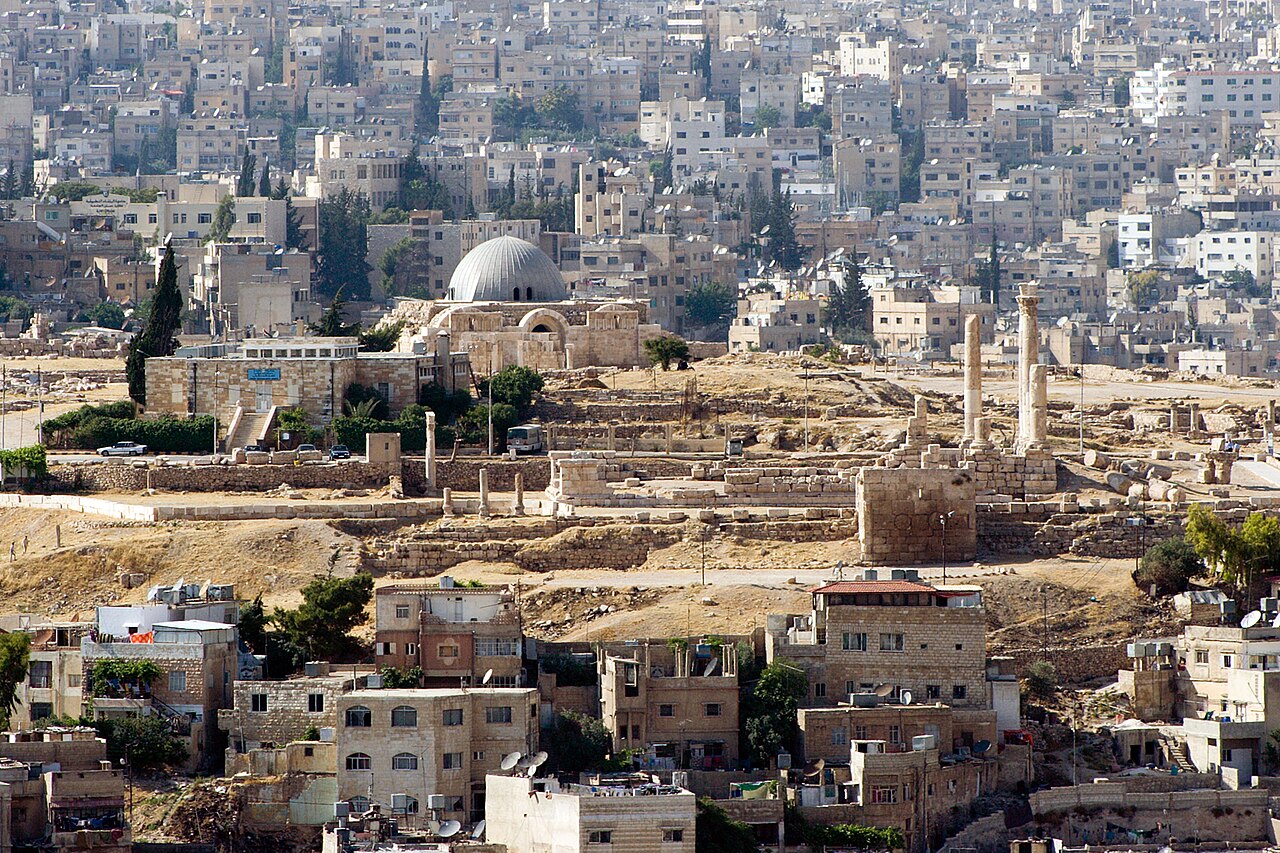
An L-shaped hill above downtown Amman, lived on for thousands of years and once the heart of the Ammonite kingdom. Its ruins include the Roman Temple of Hercules, a Byzantine church and an Umayyad palace, with wide views over the city.
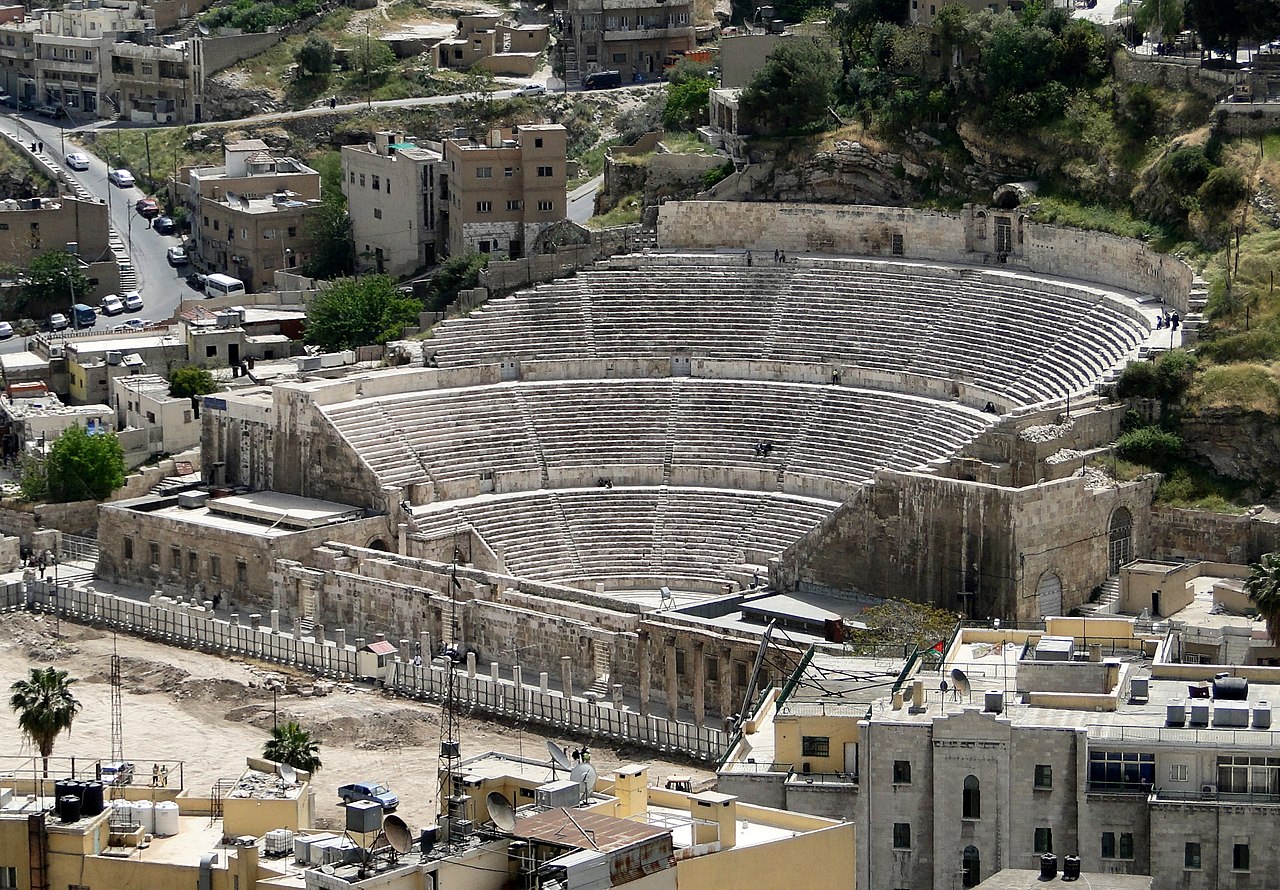
A 6,000-seat theatre cut into a hillside in the 2nd century, when Amman was the Roman city of Philadelphia. It faces north to keep the sun out of spectators' eyes and is still used for concerts and festivals.
One of the largest Crusader castles in the Levant, begun in the 1140s on a ridge above the Dead Sea valley. Visitors walk through long vaulted halls, passages and towers, later strengthened by the Mamluks.
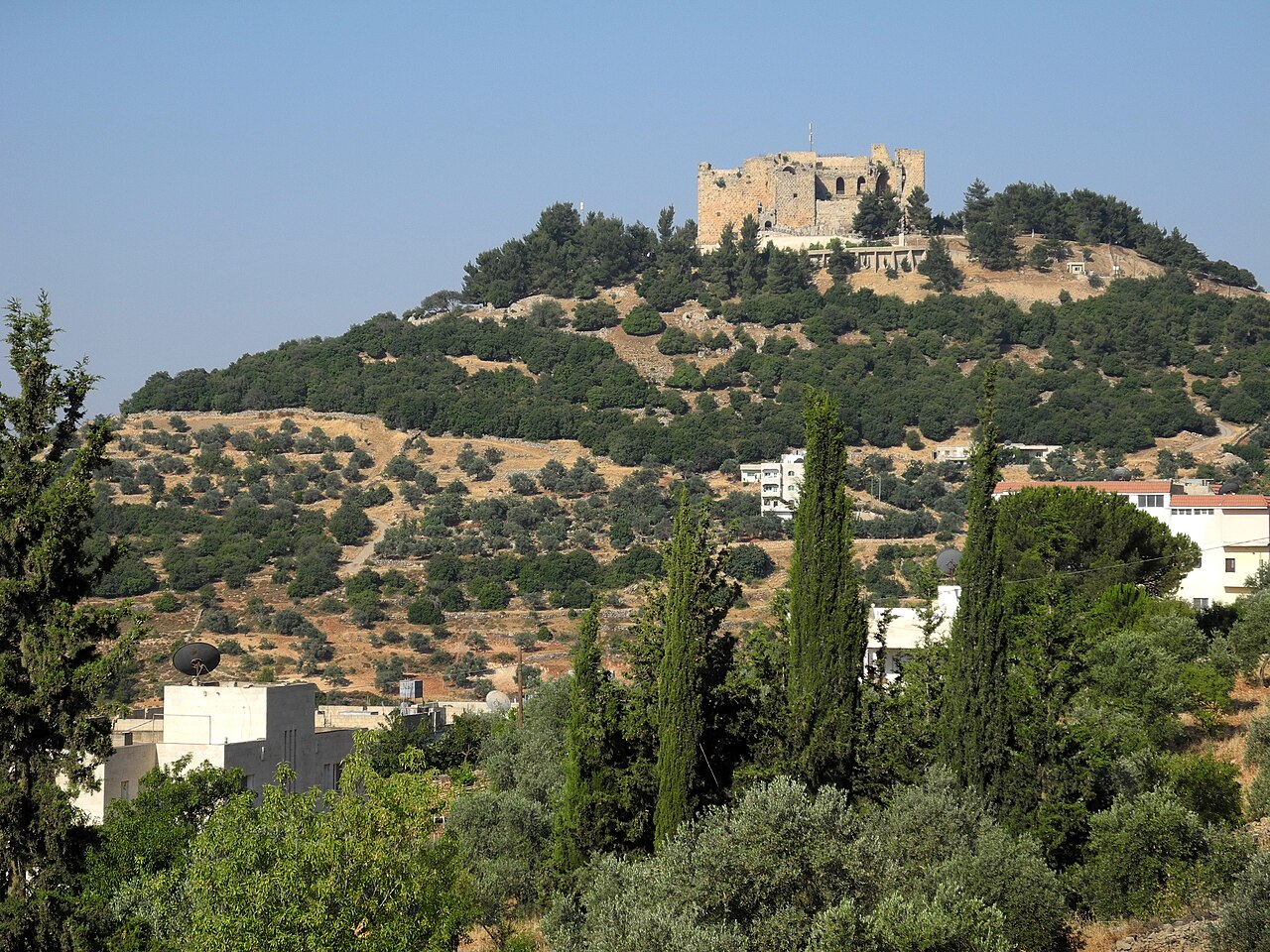
A hilltop fortress built in 1184 by a general of Saladin to guard the roads and control the north against the Crusaders, and enlarged by the Mamluks. From its towers you can see far across the Jordan Valley.
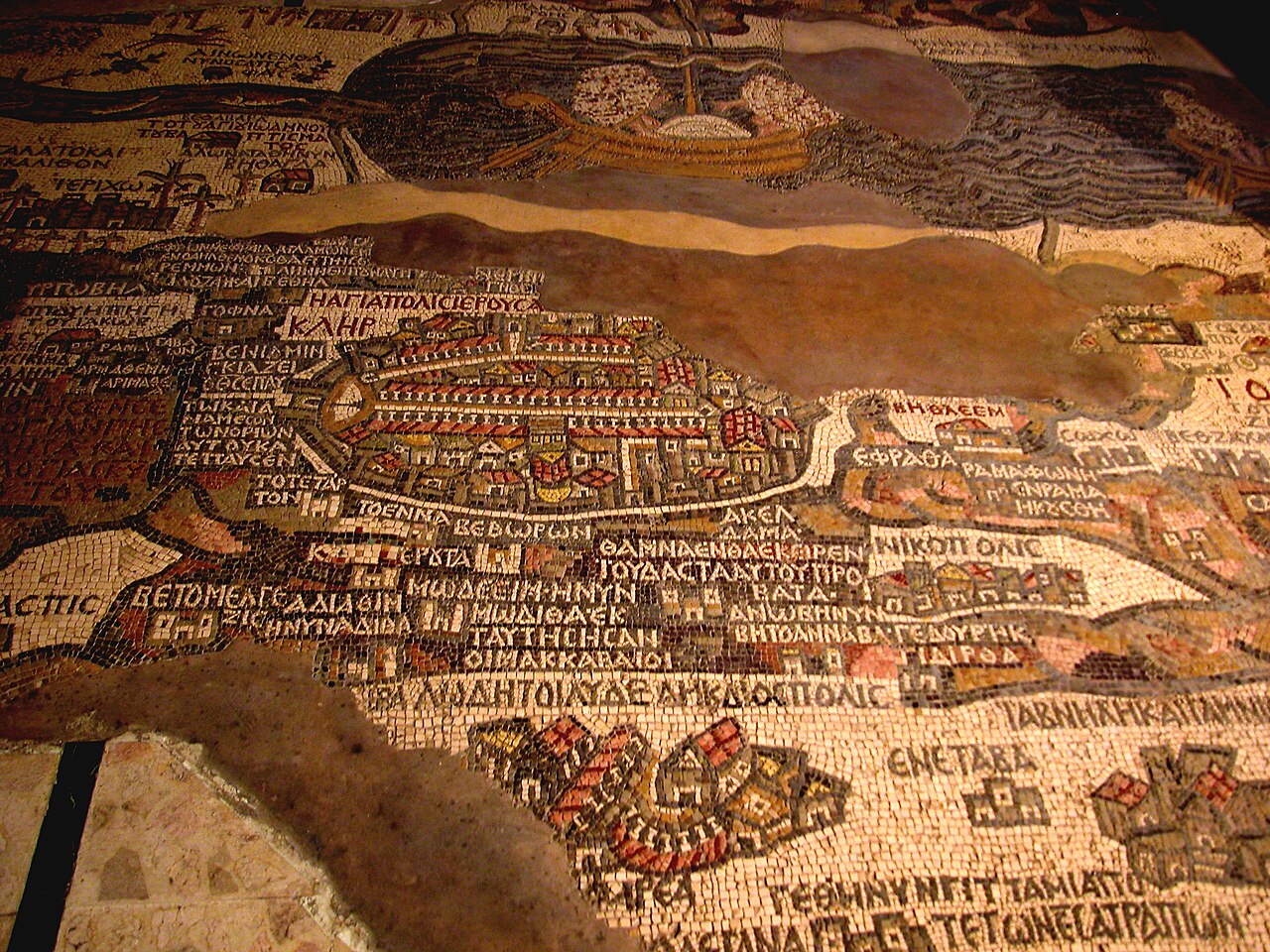
Part of a 6th-century floor mosaic in the Greek Orthodox Church of Saint George in Madaba, showing the lands from Lebanon to the Nile Delta. It includes the oldest surviving original map of Jerusalem, with its walls, gates and churches.
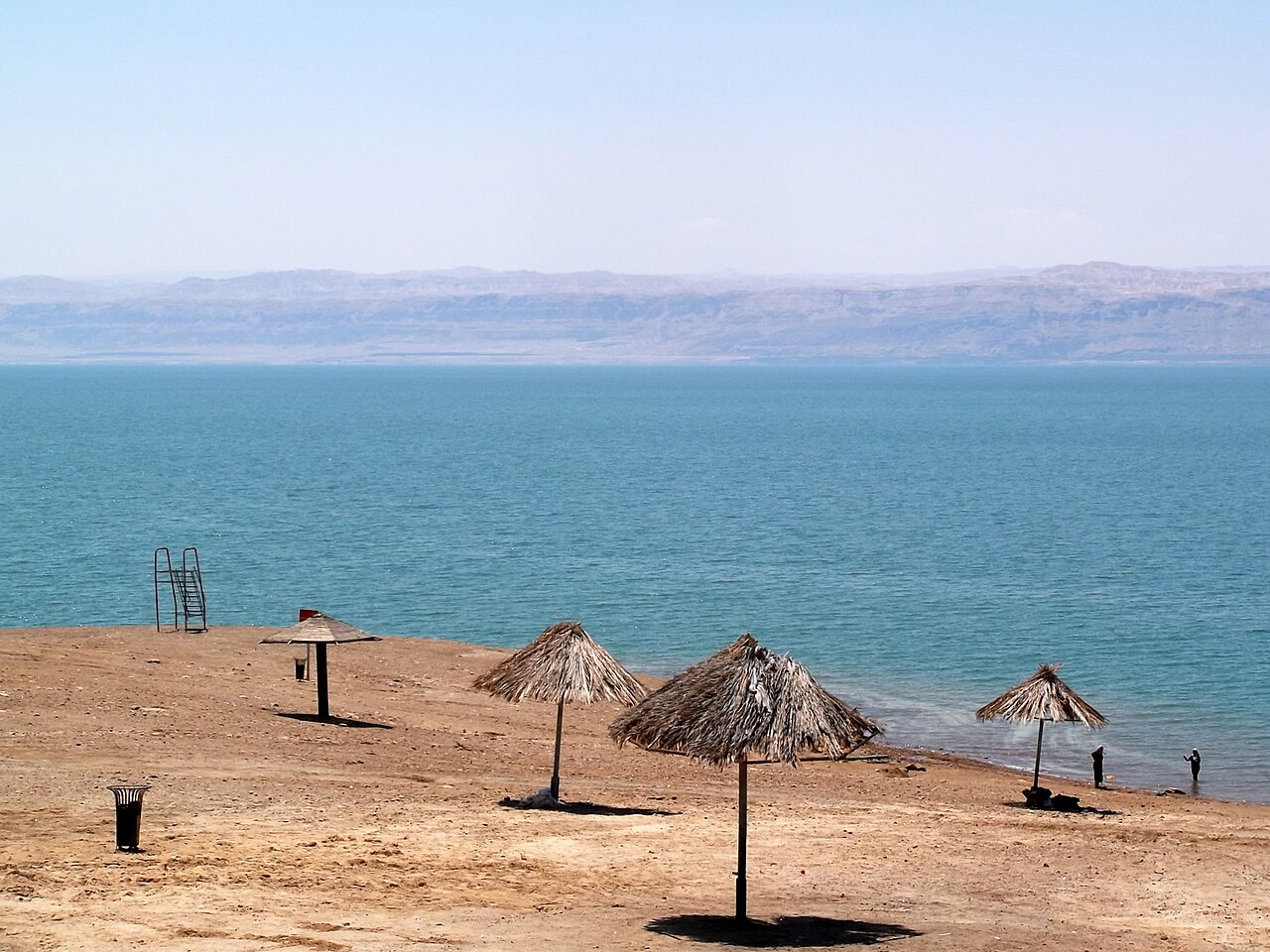
A salt lake about 9 times saltier than the ocean, so salty that you float on the surface without effort. As of 2025 its shore was about 440 m below sea level, the lowest land on Earth, and the level keeps falling by more than 1 m a year. Resorts on the Jordanian shore are about an hour's drive from Amman.
As of 2025 the shore of the Dead Sea was about 440 m below sea level, the lowest land on Earth, and the level is falling by more than 1 m every year.
02
The Dead Sea is about 9 to 10 times saltier than the ocean. Fish cannot live in it, which is how it got its name, and people float in it like corks.
03
As of 2026, the oldest known bread in the world was found in Jordan: charred crumbs of flatbread baked by hunter-gatherers more than 14,000 years ago in the Black Desert.
04
The Ain Ghazal statues from Amman, made of lime plaster about 9,000 years ago, are among the earliest large statues of people ever found. Most are in the Jordan Museum.
05
Petra was voted one of the New 7 Wonders of the World in 2007, and its Treasury appeared in the film Indiana Jones and the Last Crusade.
06
The red desert of Wadi Rum has stood in for the planet Mars in films, including The Martian (2015), and many desert scenes of Lawrence of Arabia were filmed in Jordan.
07
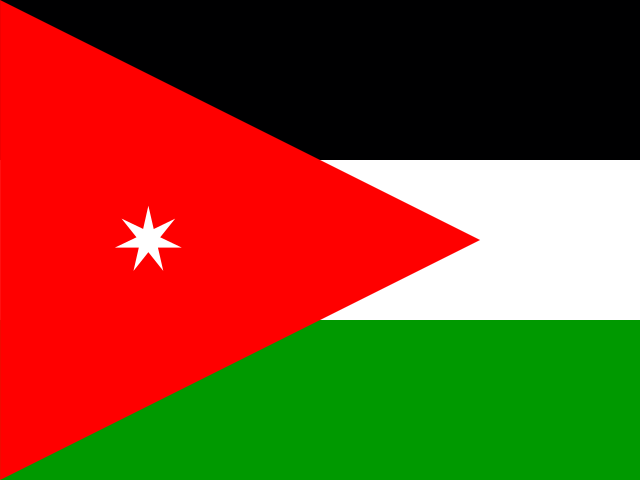
The seven-pointed white star on Jordan's flag stands for the seven verses of Al-Fatiha, the opening chapter of the Quran. The flag's colours come from the flag of the Arab Revolt of 1916.
08
Jordan is almost landlocked: its only coast is about 26 km on the Gulf of Aqaba, and Aqaba is its only seaport.
09
As of 2026 Jordan has eight UNESCO World Heritage Sites. The newest, the Aqaba Marine Reserve, was added in 2026 and is the first listed only for its nature.
10
The Jordanian dinar is divided into 1,000 fils, so prices are often written with three decimal places, such as 1.250 JD.
11
Amman was named Philadelphia, 'brotherly love', by the Greek king Ptolemy II, who named it after himself.
12
Mansaf is so important that UNESCO added the mansaf banquet to its list of the intangible cultural heritage of humanity in 2022.
13
Jordan's single emergency number for police, ambulance and fire is 911.
Arabic is written from right to left; each word is shown in Latin letters with the Arabic script in brackets. 'H' marks a breathy h from the throat, 'kh' is like the ch in Scottish 'loch', and 'gh' is a soft gargled r Pronunciation is written the way it sounds; the capital letters show where the stress goes. Audio is coming soon.
As of September 2026 the Jordan Pass costs 70 to 80 JD, depending on whether it includes one, two or three days in Petra, and gives entry to more than 40 sites. If you buy it before you arrive and stay the minimum number of nights, it also covers the usual tourist visa fee. The official site says two nights and British government advice says three, so check the rule before you book.
Check the official travel advice
Jordan is generally calm and welcoming, but it sits in a region where conflicts can flare up. Before and during your trip, check your own government's official travel advice for Jordan and its border areas.
Dress modestly
Clothes that cover the shoulders and knees are the most comfortable choice in towns, markets, religious and historical sites; Amman and the resorts are more relaxed. Women visiting a mosque should also cover their hair.
Be thoughtful during Ramadan
During the holy month of Ramadan most Muslims fast from dawn to sunset. Visitors should avoid eating, drinking or smoking in public in the daytime. Many restaurants outside tourist areas open only at sunset, and evenings are lively.
Ask before taking photos of people
Landscapes and monuments are fine, but ask before photographing people, especially women, and do not photograph police, soldiers or military sites.
Float carefully in the Dead Sea
Float on your back and keep your face out of the water: the very salty water stings badly in the eyes and must not be swallowed. Rinse off afterwards in the fresh-water showers on the beach.
Watch for flash floods
From about November to March, heavy rain can send sudden floods through dry valleys such as those around Petra and the Dead Sea. Follow local warnings and your guide's advice on hiking in canyons.
Drink bottled water and carry small notes
Most people drink bottled water rather than tap water. Carry small dinar notes and coins for taxis, snacks and tips; many small shops do not take cards. Alcohol is sold in bars, hotels and some shops, but drinking it in the street is illegal.
 Iraq
Iraq Israel
 Palestine
 Saudi Arabia
 Syria
Syria