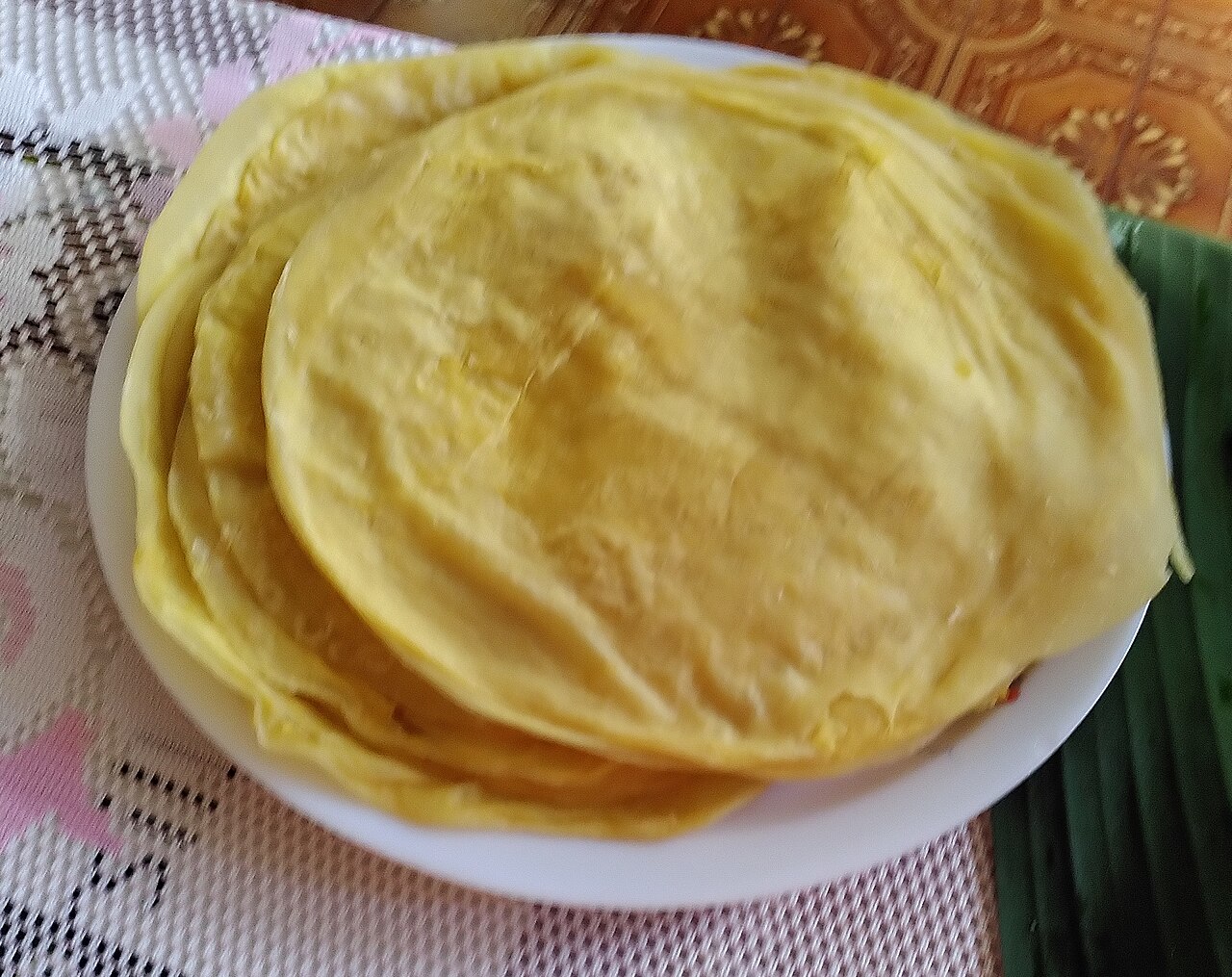
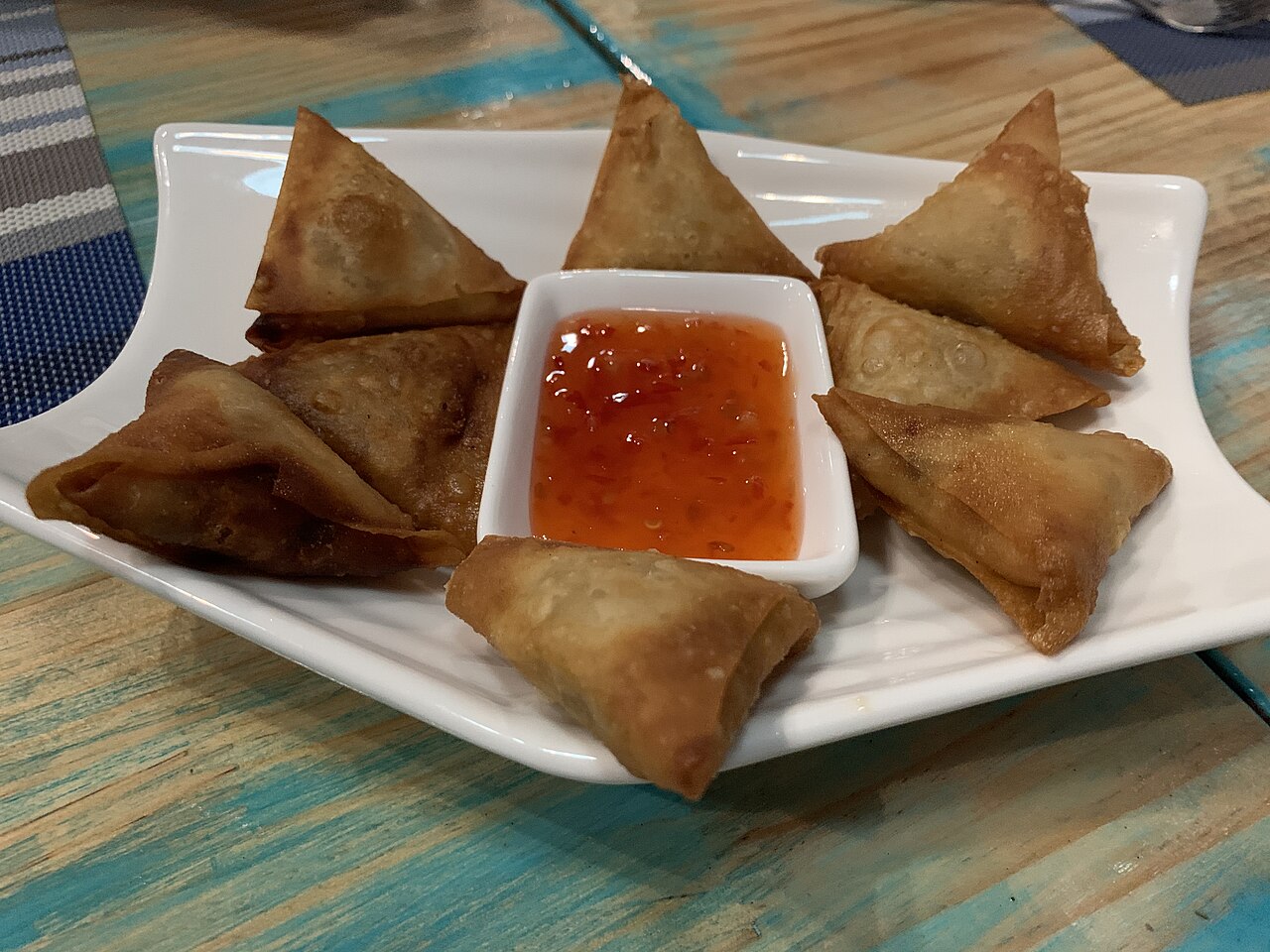
Mauritian food is a mix of Indian, Creole, French and Chinese cooking, eaten by everyone whatever their background. A home meal is usually rice or a flatbread (farata or roti) with a curry (cari), a pot of dal (lentils), a tomato rougaille and sides of pickles (achard) and fresh chutneys called satini. Curries use thyme and curry leaves as well as Indian spices, and are rarely made with coconut milk. Between meals people buy street snacks from hawkers and markets: dholl puri, gâteaux piments and samosas. Lunch in restaurants is usually from noon to 3 pm and dinner from 7 to 10 pm, and the drinks to try are local rum, Phoenix beer and vanilla tea.
The best-loved street food in Mauritius: a soft, thin flatbread filled with ground yellow split peas and cooked on a griddle (tawa). It is wrapped around a curry of large beans (gros pois), tomato sauce and pickles and eaten on the spot.
Dholl puri came with the cooking of Indian indentured labourers and is now a national favourite, eaten by Mauritians of every background.
Indo-Mauritian street snack, a cousin of the Indian vada
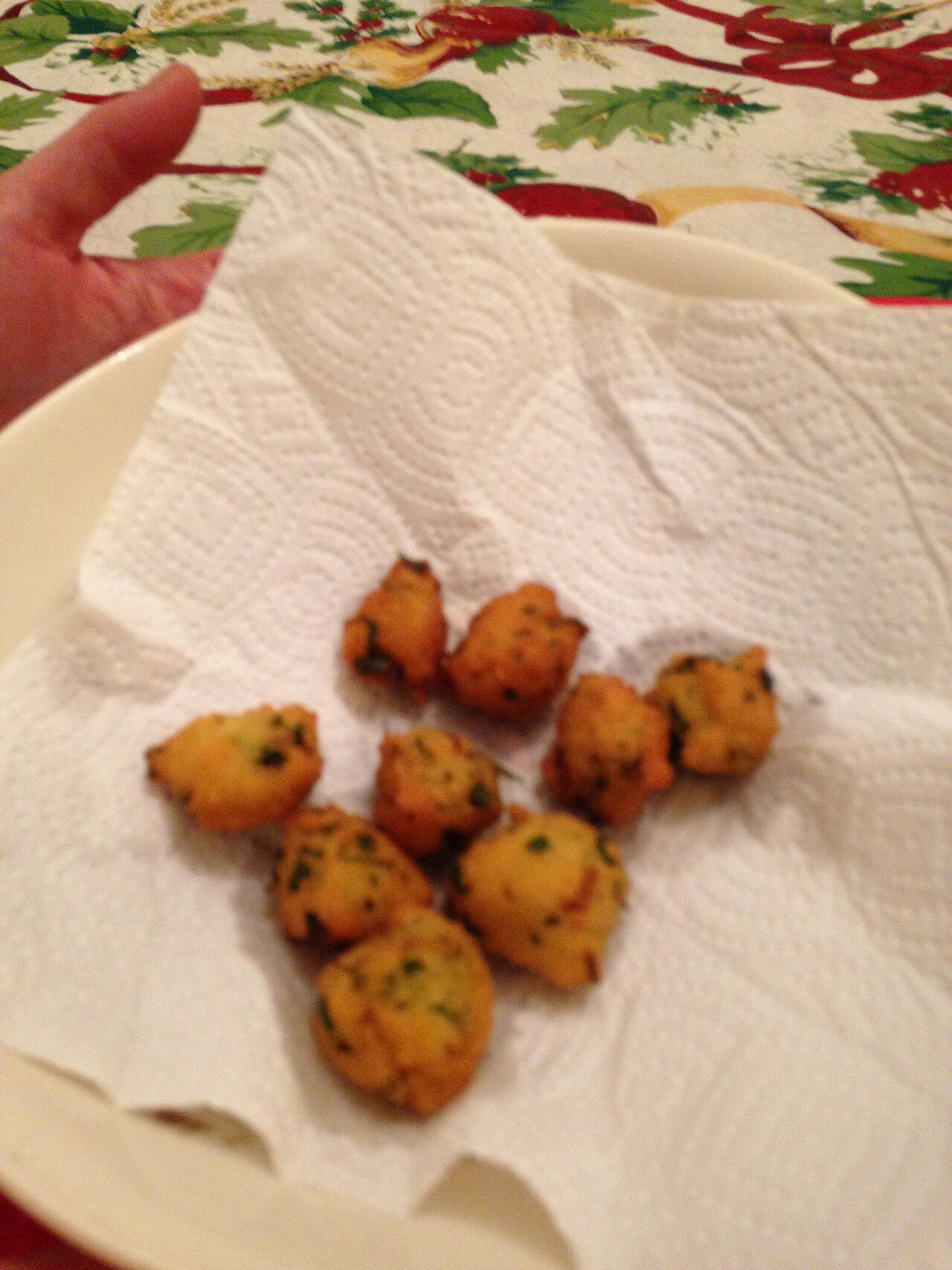
Small crisp fritters of ground yellow split peas with green chilli, spring onion and coriander, fried golden. They are sold hot by the bagful and often stuffed into a buttered baguette for a cheap lunch.
The name means 'chilli cake', but they are not sweet: in Mauritius many fried snacks are called gâteaux (gato), from taro fritters to banana fritters.
Creole cooking, shared with Réunion and the Seychelles
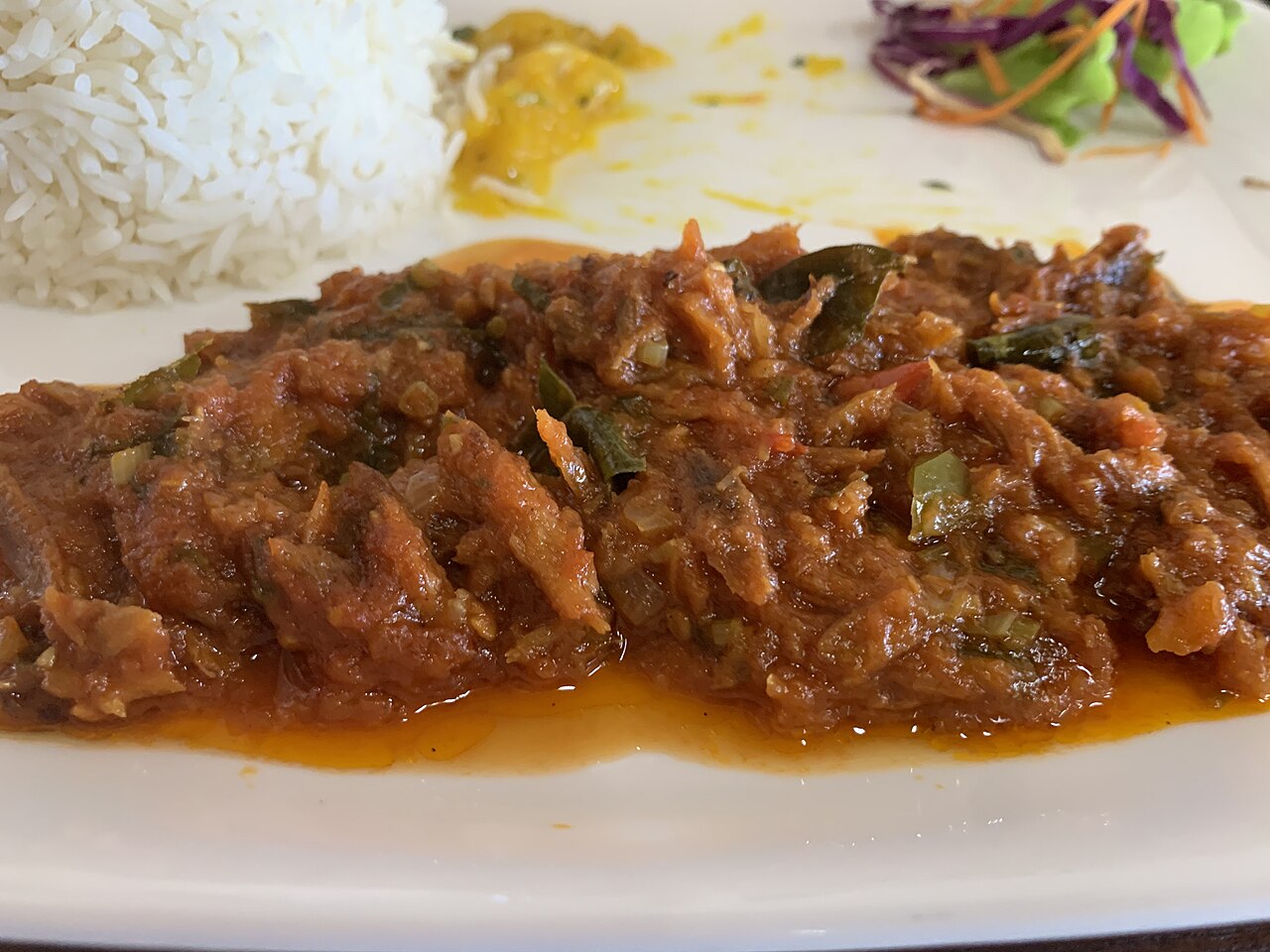
A spicy stew of tomatoes, onion, garlic, ginger, chilli and thyme, cooked with fish, sausages, salted fish, prawns or octopus and eaten with rice or bread. It is the everyday Creole dish of the island.
Octopus rougaille is also sold as street food, served with chapati or stuffed in a roll.
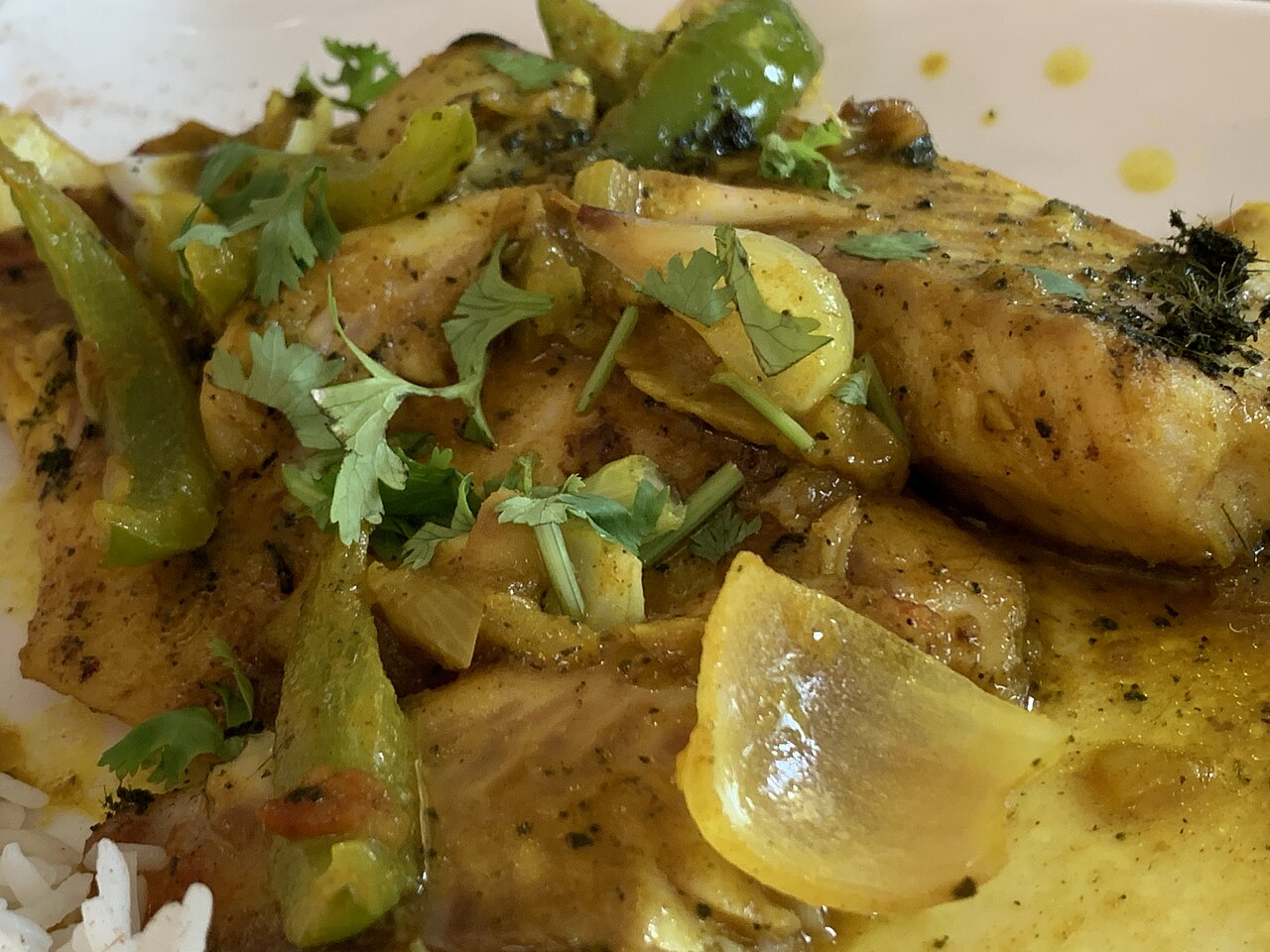
Pieces of fried fish, often tuna or swordfish, coated in a tangy yellow sauce of mustard seeds, turmeric, garlic, ginger, chilli, onion and vinegar. It is eaten hot with rice or cold in bread on picnics.
The name vindaye has the same origin as Goan vindaloo and the Portuguese vinha d'alhos.
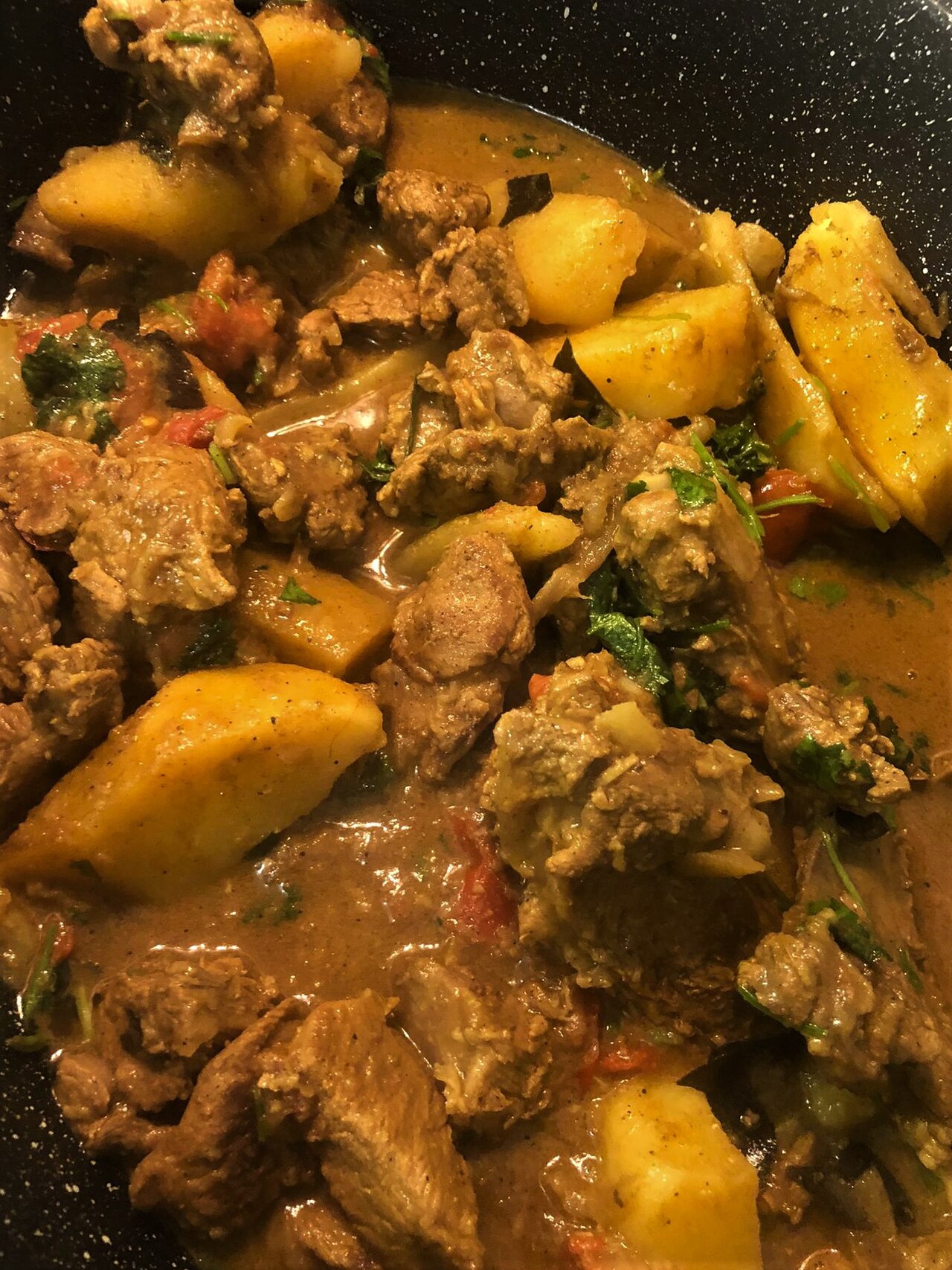
The Sunday curry of countless Mauritian homes: chicken simmered with onion, garlic, ginger, curry powder, curry leaves, thyme and tomato, often with potatoes, served with rice or farata, dal and chutneys.
At Hindu weddings the traditional meal is the sept cari, 'seven curries', a spread of seven different dishes.
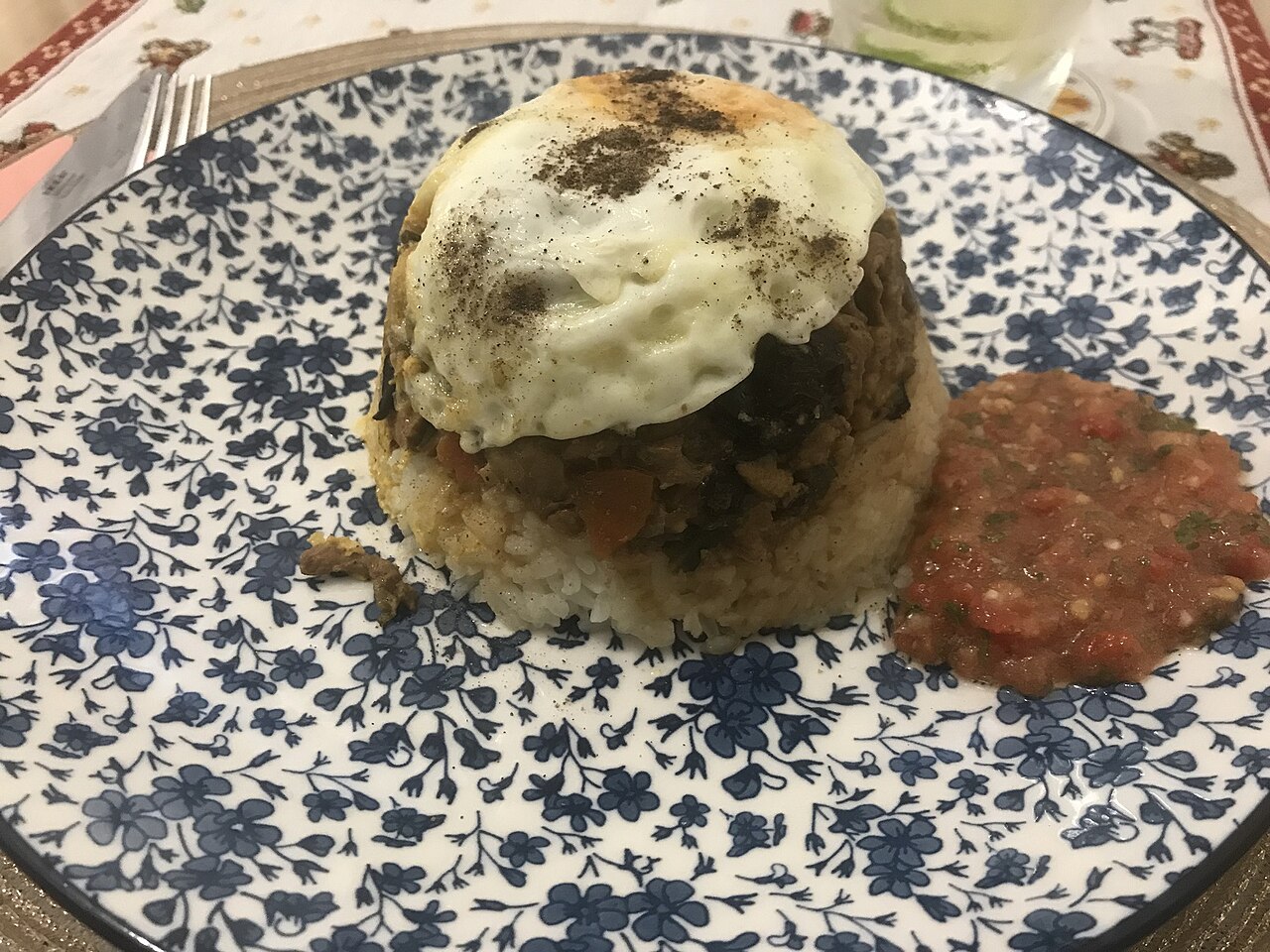
Literally 'upside-down bowl': a bowl is packed with rice, then stir-fried vegetables and chicken, beef or shrimp in a glossy sauce, then turned out onto a plate so it stands as a dome, crowned with a fried egg.
In some restaurants the bowl is turned over at the table in front of the diner.
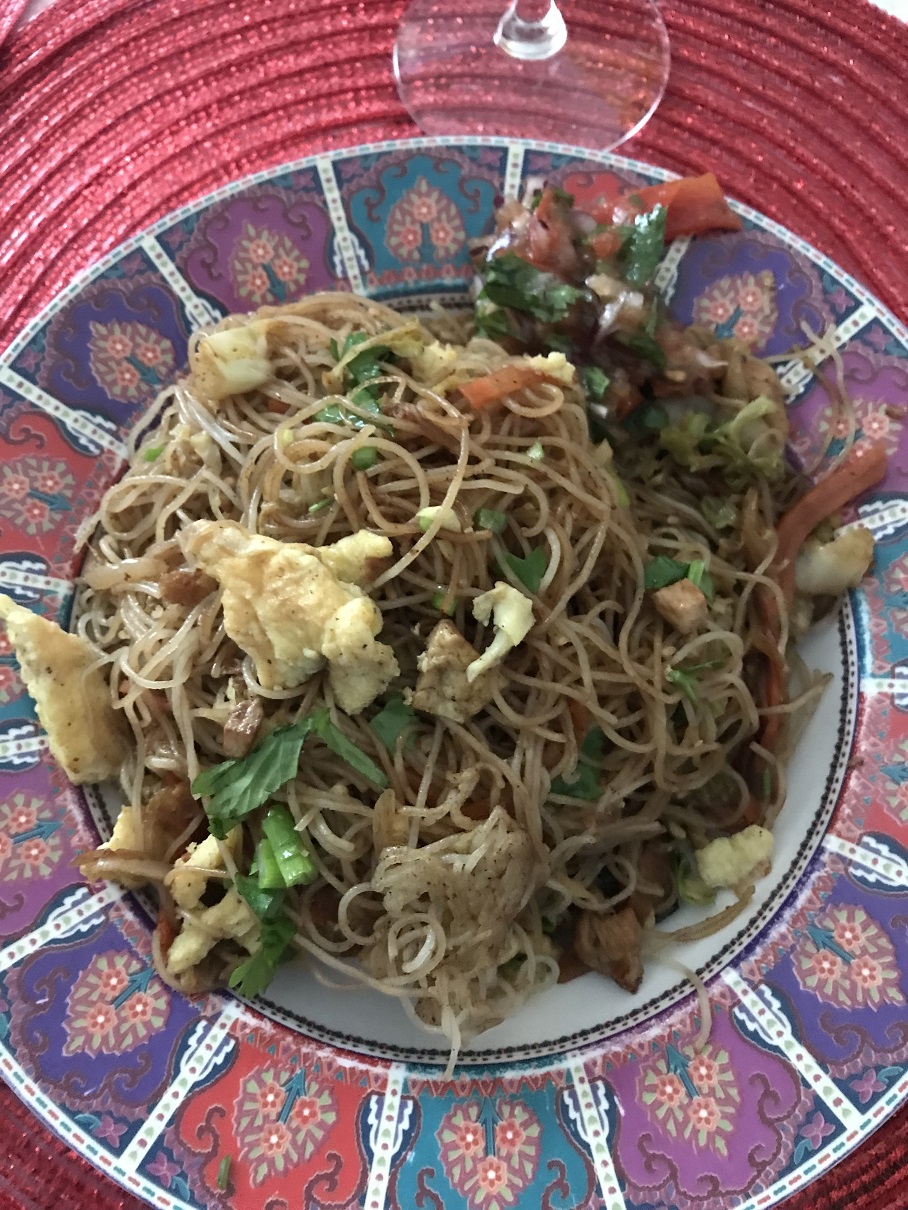
Stir-fried egg noodles with vegetables and chicken, beef or shrimp, seasoned with soy and oyster sauce. It is often the cheapest dish on a menu, and Port Louis has the most stalls selling it.
Mine comes from the Cantonese word for noodles; it is one of only two common Mauritian Creole words taken from Chinese.
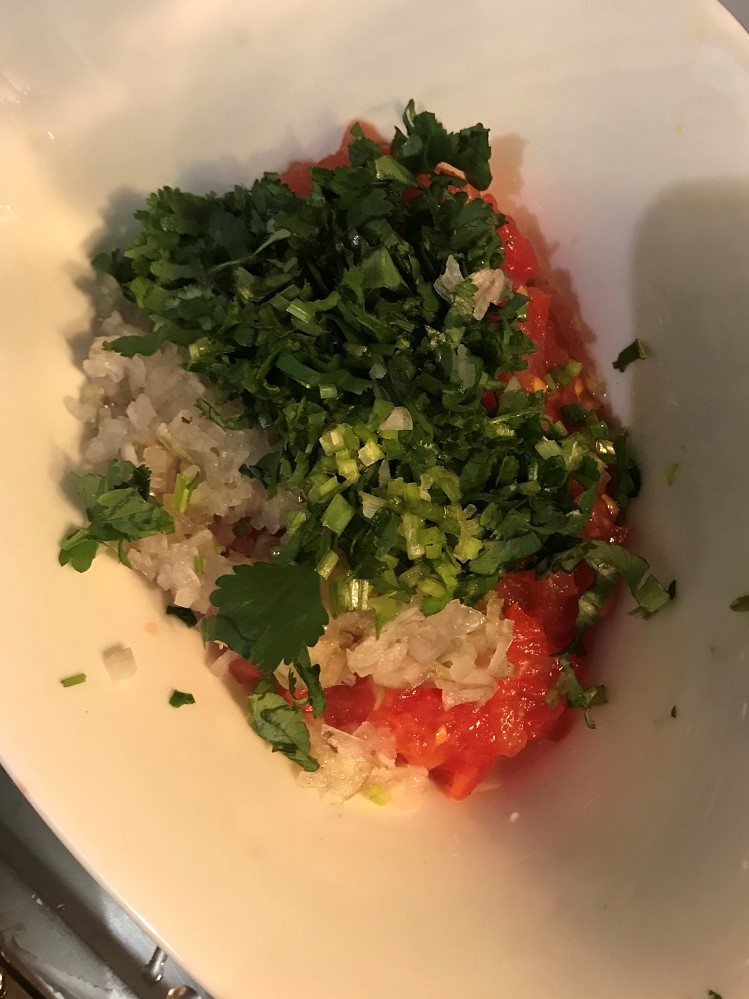
A fresh, uncooked chutney of chopped tomatoes, onion, chilli, coriander and a little oil, served with curries, fried snacks and bread. Mauritians call tomatoes pommes d'amour, 'love apples'.
Satini is the Mauritian Creole form of 'chutney'; there are also coconut and coriander satinis.
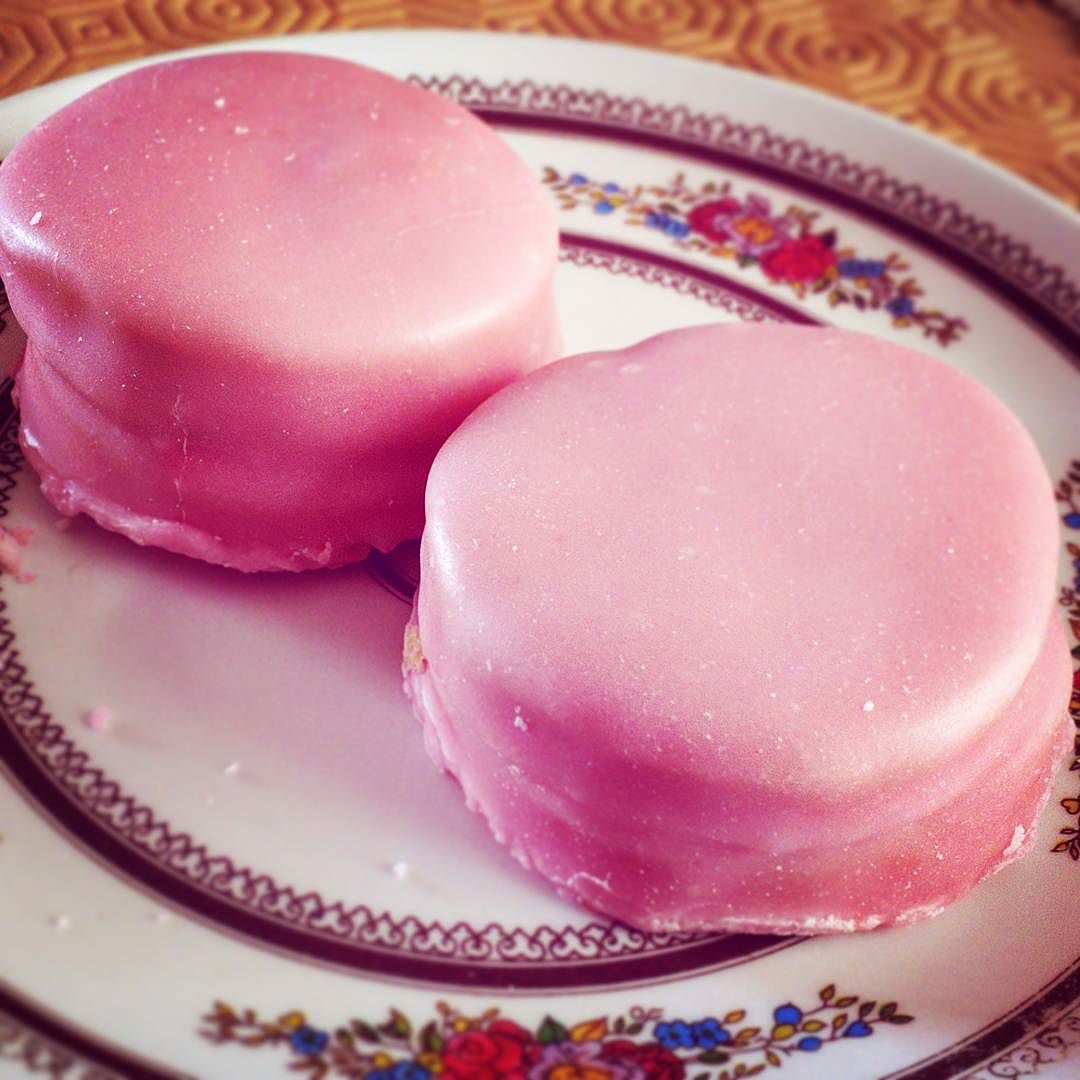
Two rounds of crumbly shortbread sandwiched with jam and covered in smooth pink icing. It is a classic Mauritian teatime treat, sold in bakeries all over the island.
The napolitaine is a Mauritian version of the French sablé biscuit.
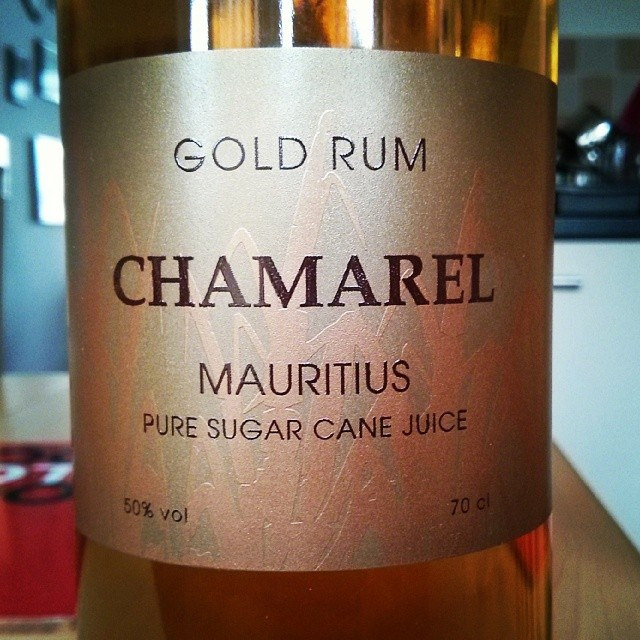
Mauritius makes a wide range of rums from its sugar cane, with distilleries such as Chamarel, St Aubin and Medine. Rhum arrangé, rum steeped with fruit, spices and sometimes chilli, is a favourite after dinner.
The Dutch already made arrack, an early cousin of rum, from Mauritian sugar cane in the 1600s.
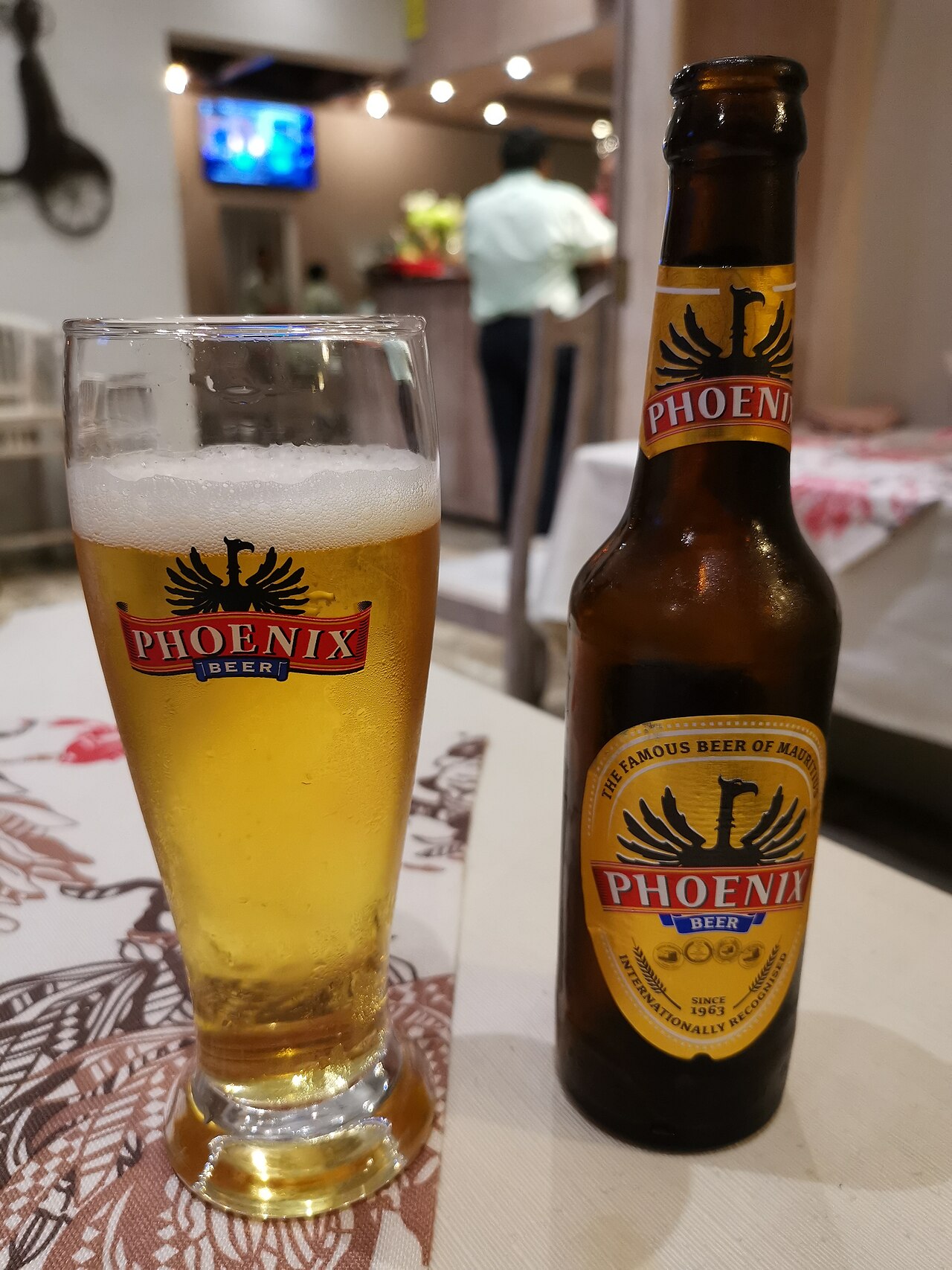
A light lager from Phoenix Beverages, the largest brewery in Mauritius, named after the town where it is made. Served very cold, it is the most popular local beer.
Phoenix beer is also exported to Réunion, Madagascar, Europe and Australia.
At the table in Mauritius
A Mauritian meal is shared: rice or farata comes with several small dishes such as curry, dal, rougaille, pickles and satini. Take a little of each rather than a lot of one.
Mauritius is a mix of Hindu, Muslim and Christian families. Many Hindus do not eat beef and Muslims do not eat pork, so ask before cooking for guests or bringing food as a gift.
Street snacks such as dholl puri and gâteaux piments are eaten on the go, straight from the paper, often standing at the stall.
Tea, grown on the island and often flavoured with vanilla, is drunk throughout the day. Accept a cup if it is offered in a home.
In markets and small shops prices are mostly fixed; do not expect long bargaining, and at markets no more than a small discount.