Sri Lankan cooking is built on rice and coconut, with plenty of fish, spices and chilli. The everyday meal is rice and curry: a mound of rice in the middle and several small dishes around it, usually a fish or meat curry, a lentil curry, one or two vegetable curries, a green mallung, a sambol and crisp papadams. Breakfast and dinner are often hoppers, string hoppers, pittu or roti with curry. Cinnamon, which is native to the island, black pepper, curry leaves, pandan, goraka and Maldives fish give the food its own taste, and Indian, Malay, Arab, Portuguese and Dutch traders all left dishes behind. Tea, usually with milk and a lot of sugar, is drunk all day.
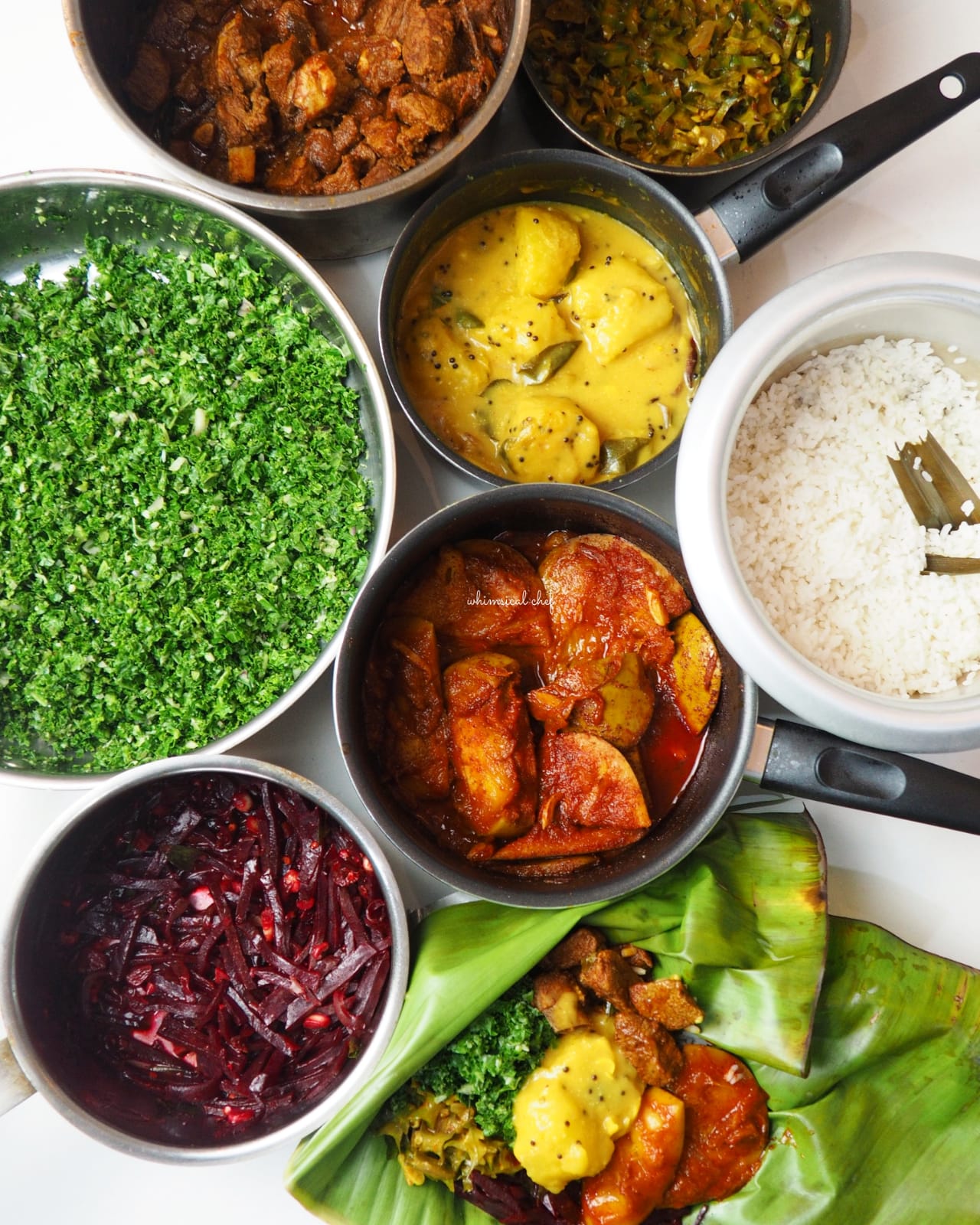
The national everyday meal, eaten at lunch in homes, offices and roadside eateries. White or red rice is served with a spread of small curries: fish, chicken or beef, lentils, jackfruit, beans, pumpkin or aubergine, plus a sambol, a pickle and papadams. Each curry has its own colour and taste, from mild and creamy with coconut milk to dark, roasted and fiery.
A cheap rice and curry packet, wrapped in paper or a banana leaf, is the lunch of millions of Sri Lankans.
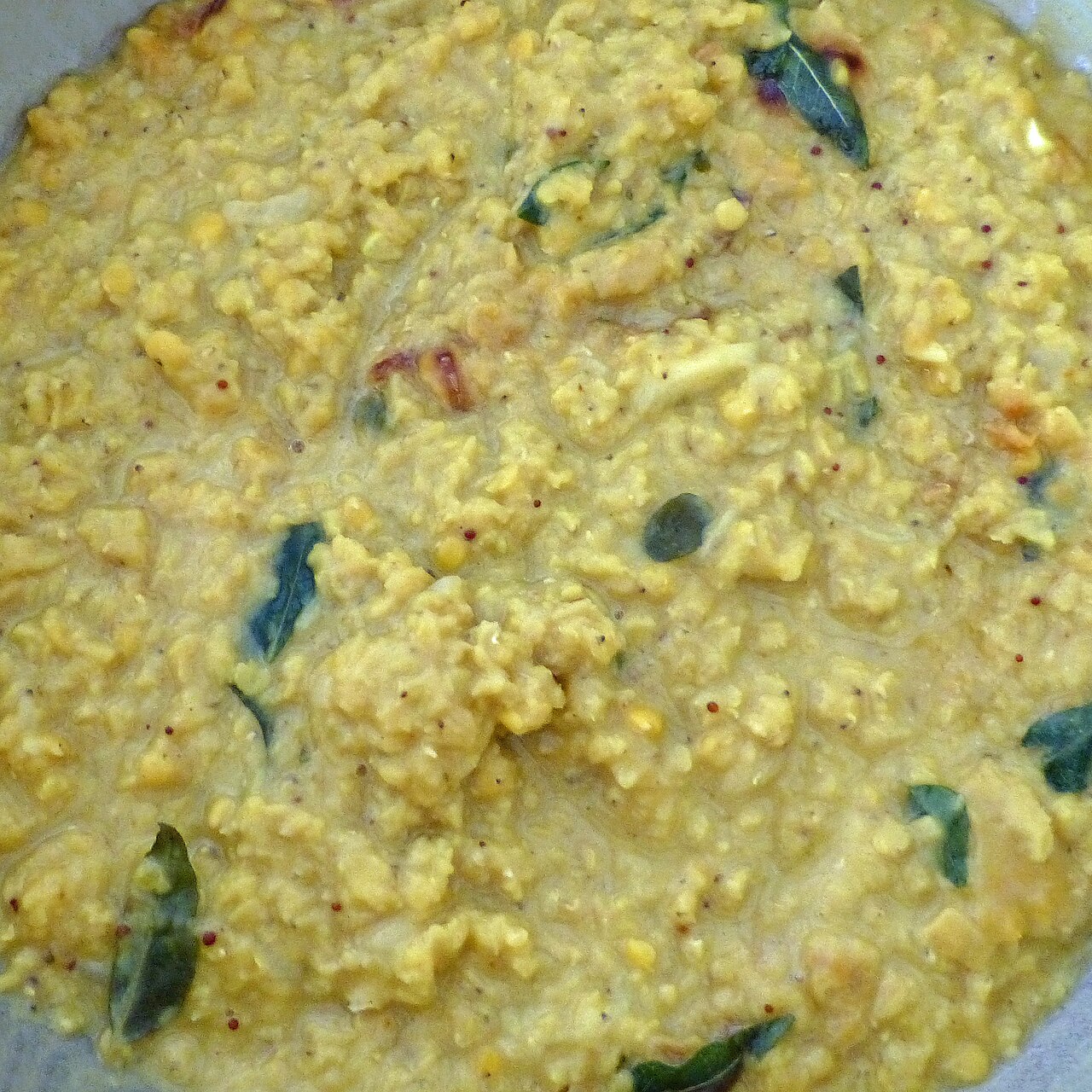
A mild, golden curry of red lentils cooked with turmeric, onion, green chilli and coconut milk, then finished with fried mustard seeds, curry leaves and onion. It is served with rice and curry, hoppers and bread, and is often the first curry children learn to love.
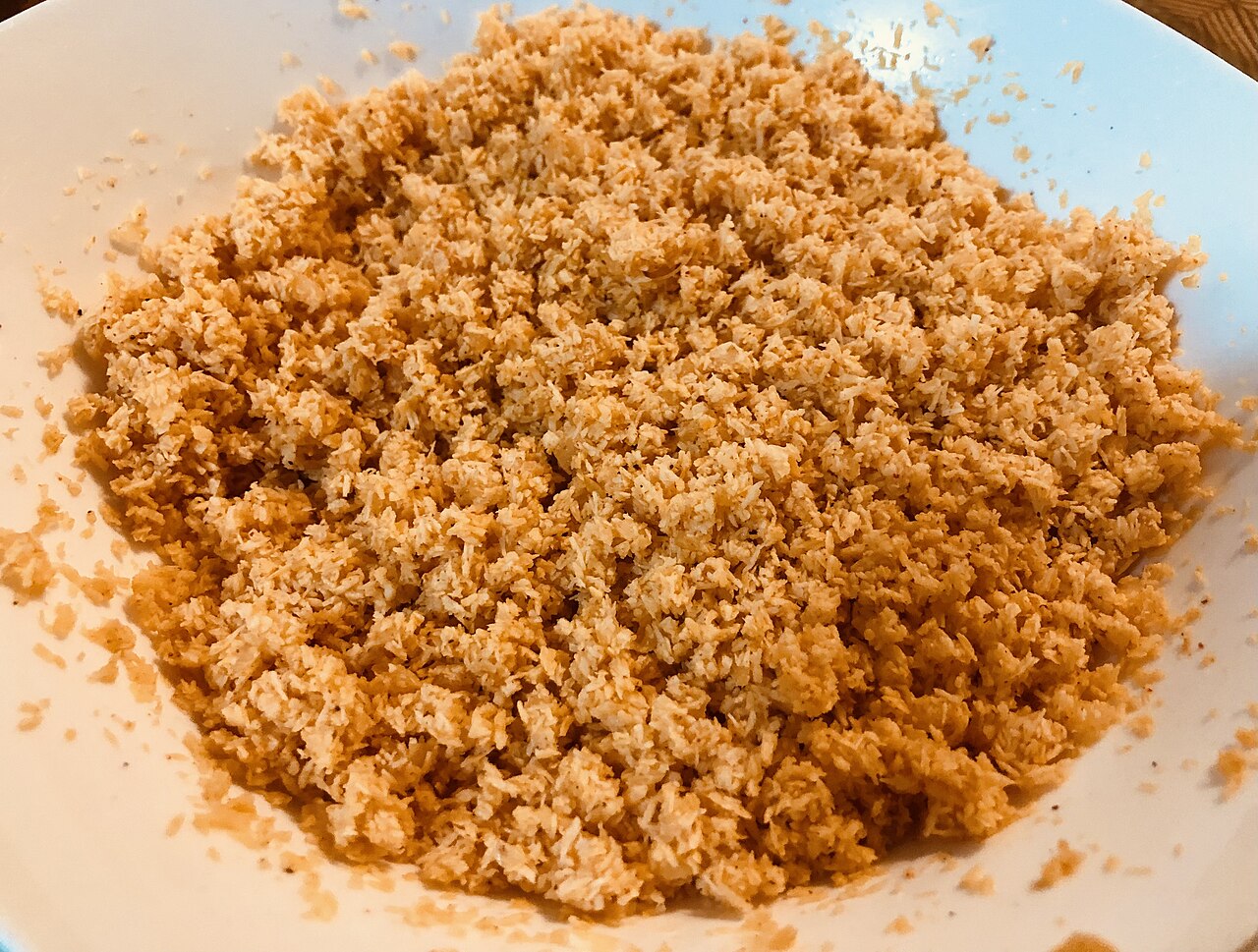
A fresh coconut relish of grated coconut, red onion, chilli, lime juice and salt, often with a pinch of Maldives fish, a smoked and dried tuna. It is bright red, spicy and sour, and appears beside rice, hoppers, string hoppers and bread at almost every meal.
Traditionally it is ground on a flat granite slab with a stone roller, called a miris gala.
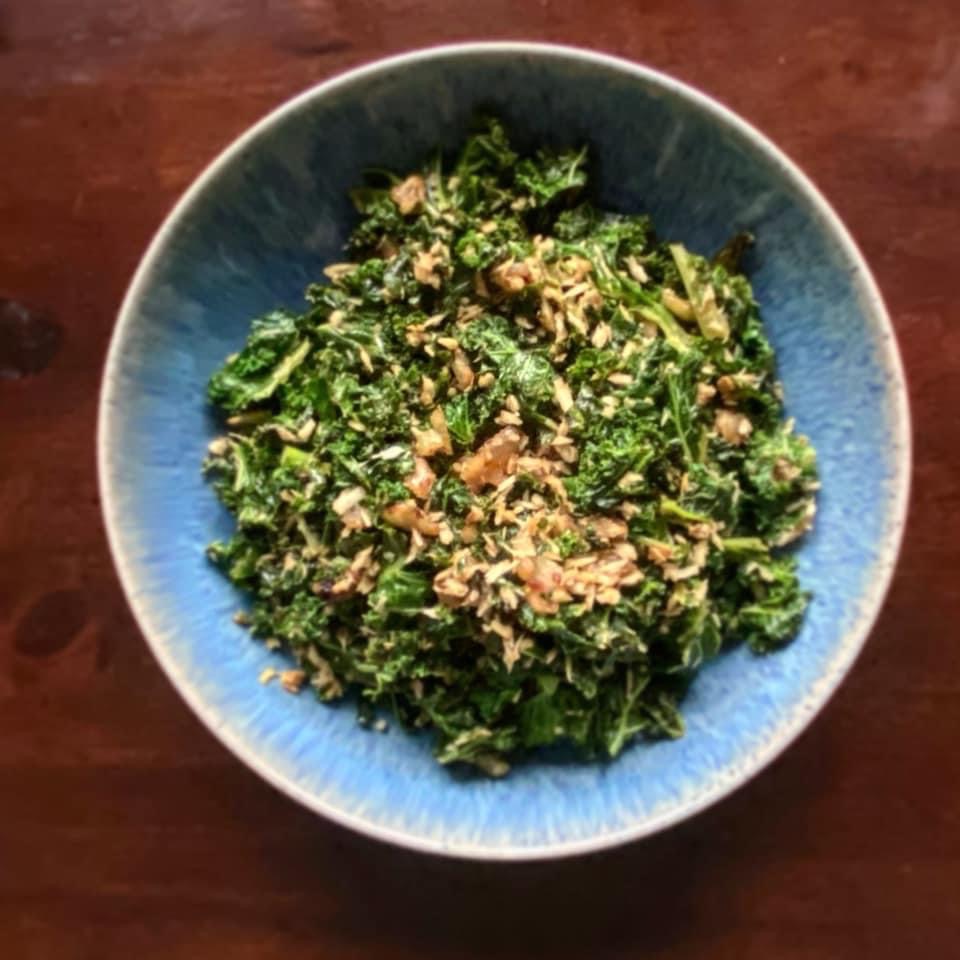
Finely shredded green leaves, such as gotu kola, cassava leaves or water spinach, tossed briefly in a hot pan with grated coconut, shallots, green chilli, turmeric and a little Maldives fish. It is eaten at almost every rice and curry meal and is how many families get their daily greens.
The word mallung simply means 'wilted', which is how lightly the leaves are cooked.
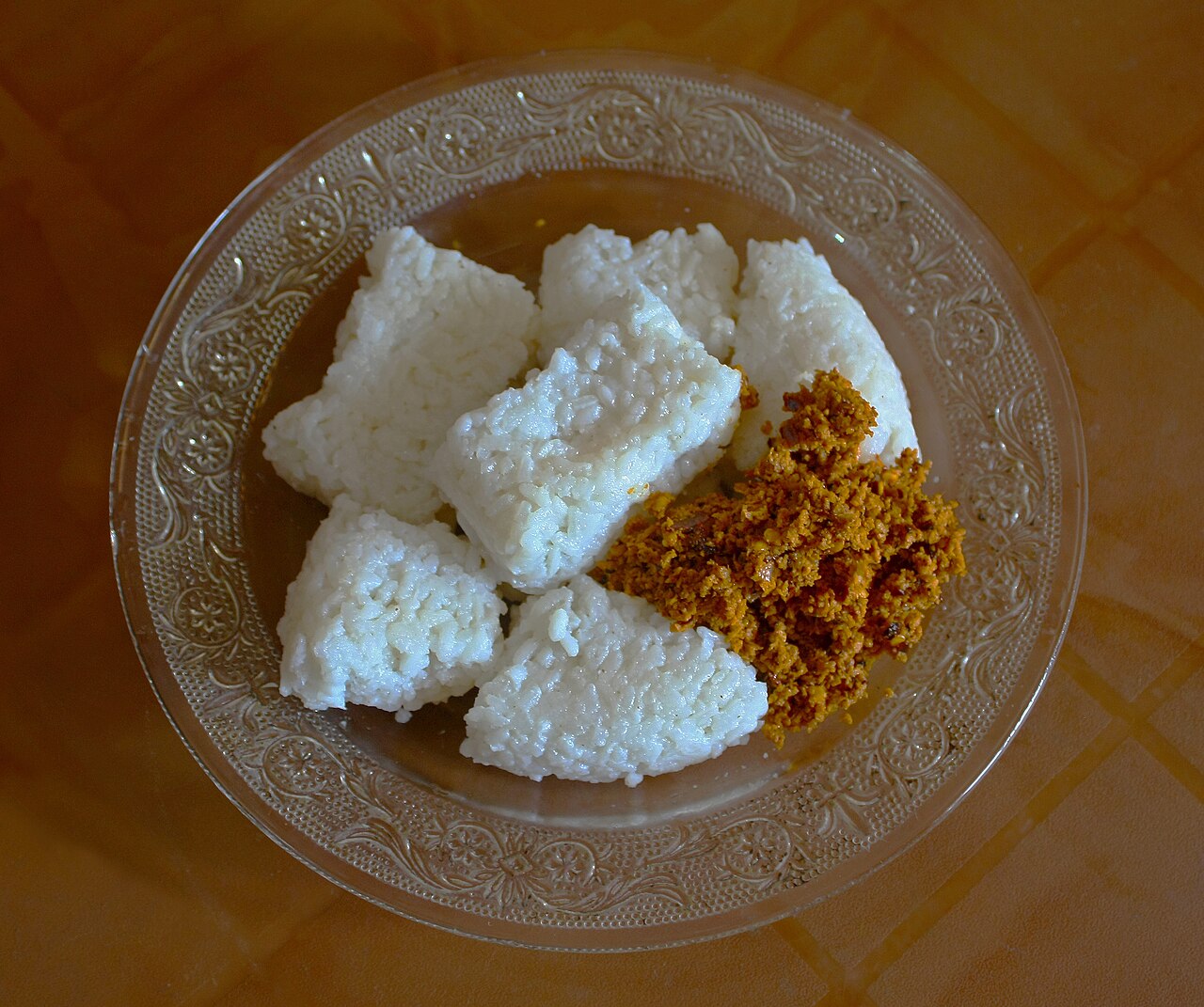
Rice cooked in coconut milk until it sets, then flattened on a plate and cut into diamond shapes. It is eaten on the first day of each month and for every happy beginning: weddings, a new job, a new house and, above all, as the first meal of the Sinhala and Tamil New Year in April. It is served with lunu miris, a fiery onion and chilli paste, or with jaggery.
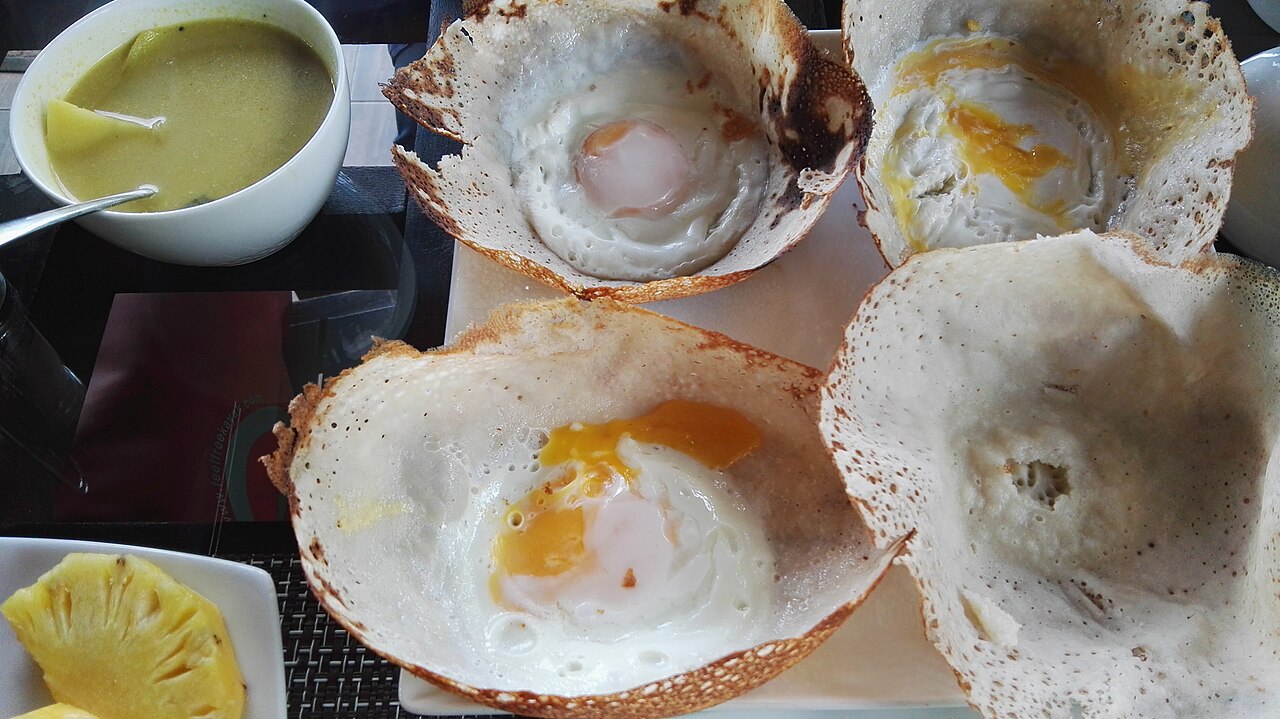
Bowl-shaped pancakes made from a fermented batter of rice flour and coconut milk, cooked in a small round pan so that the edges are thin and crisp and the centre soft. For an egg hopper, an egg is cracked into the middle and cooks in the steam. Hoppers are eaten for breakfast or dinner with pol sambol, lunu miris and curry.
The batter was traditionally leavened with palm toddy, fermented palm sap.
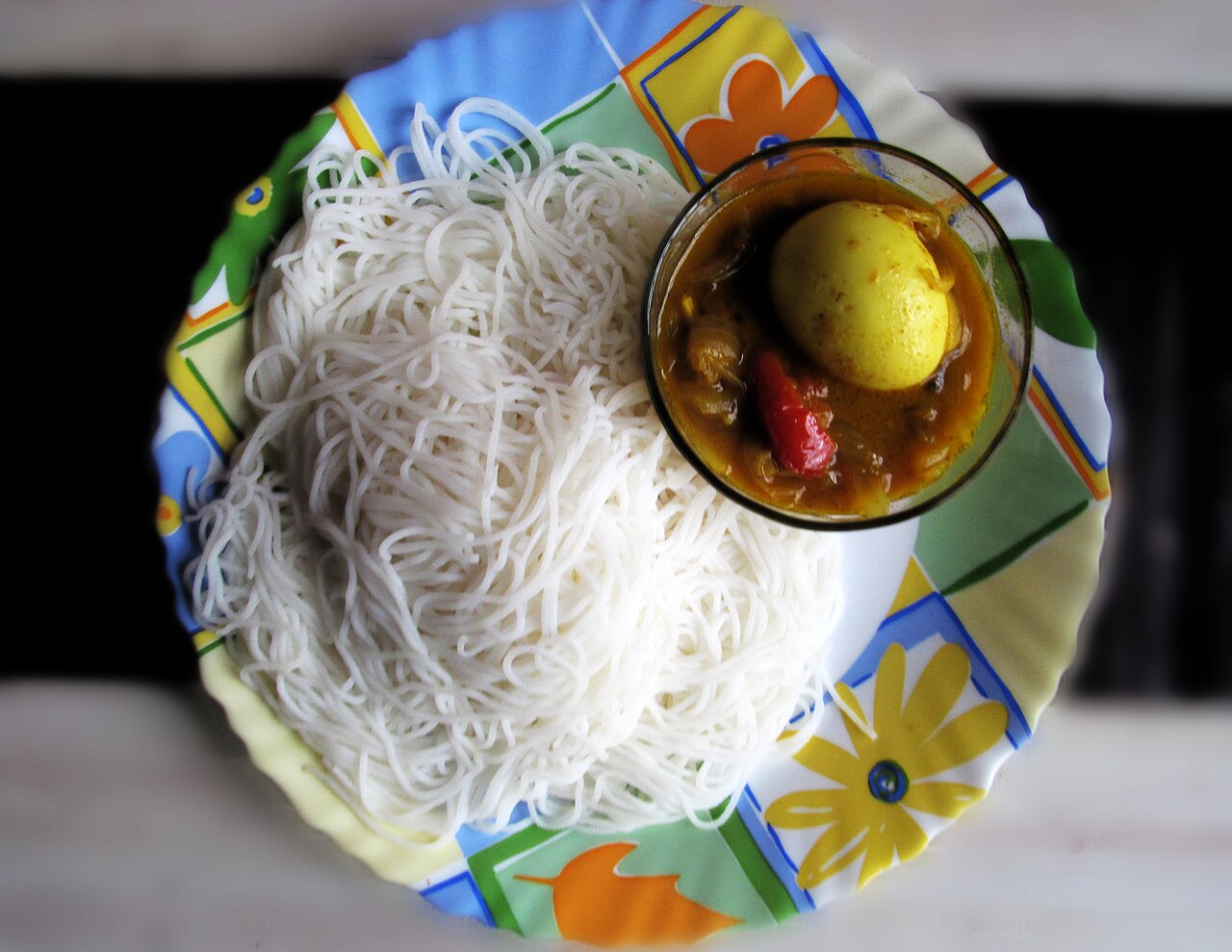
Small nests of thin rice-flour noodles, pressed through a mould onto little woven mats and steamed. They are eaten in stacks for breakfast or dinner with a thin coconut-milk curry called kiri hodi, a dhal curry and pol sambol.
Jaffna and the Tamil north and east, now the whole country
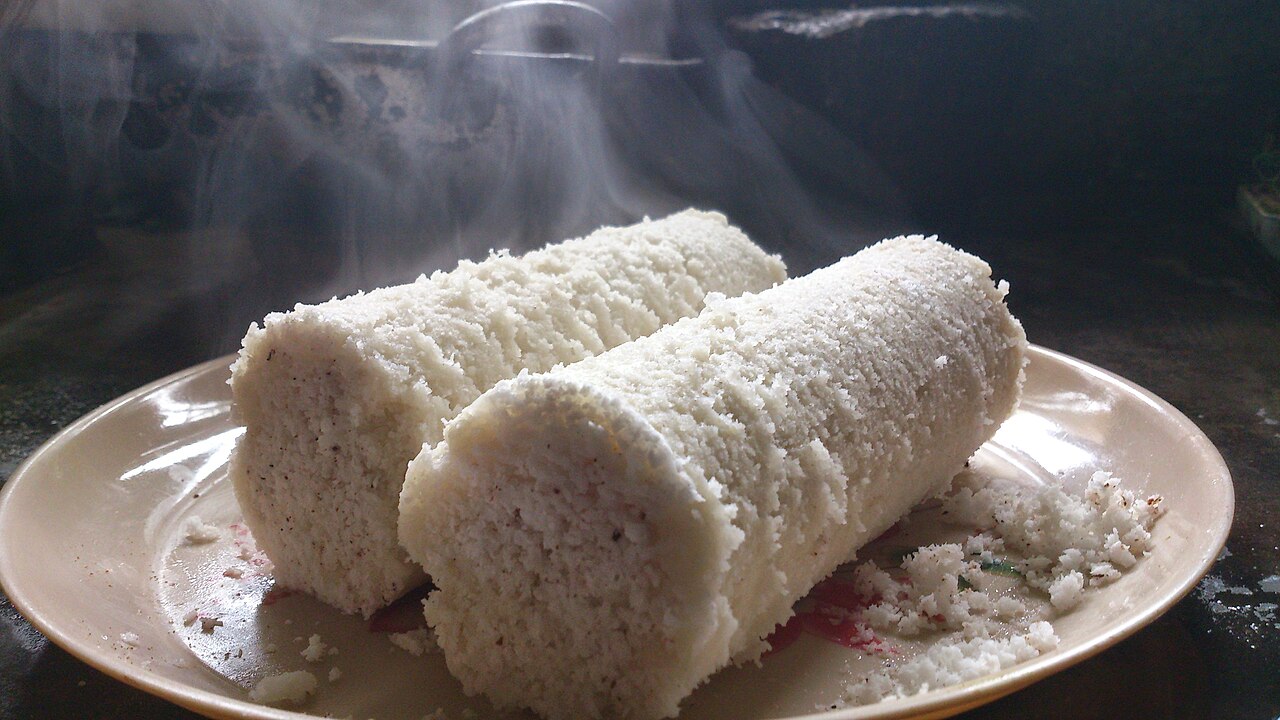
Cylinders of rice or wheat flour layered with grated coconut and steamed in a bamboo or metal tube. Pittu is a favourite breakfast of Sri Lankan Tamils and is eaten with coconut milk, sambol and a spicy fish or chicken curry, crumbled and mixed together with the fingers.
The east coast (Batticaloa and Trincomalee), now the whole country
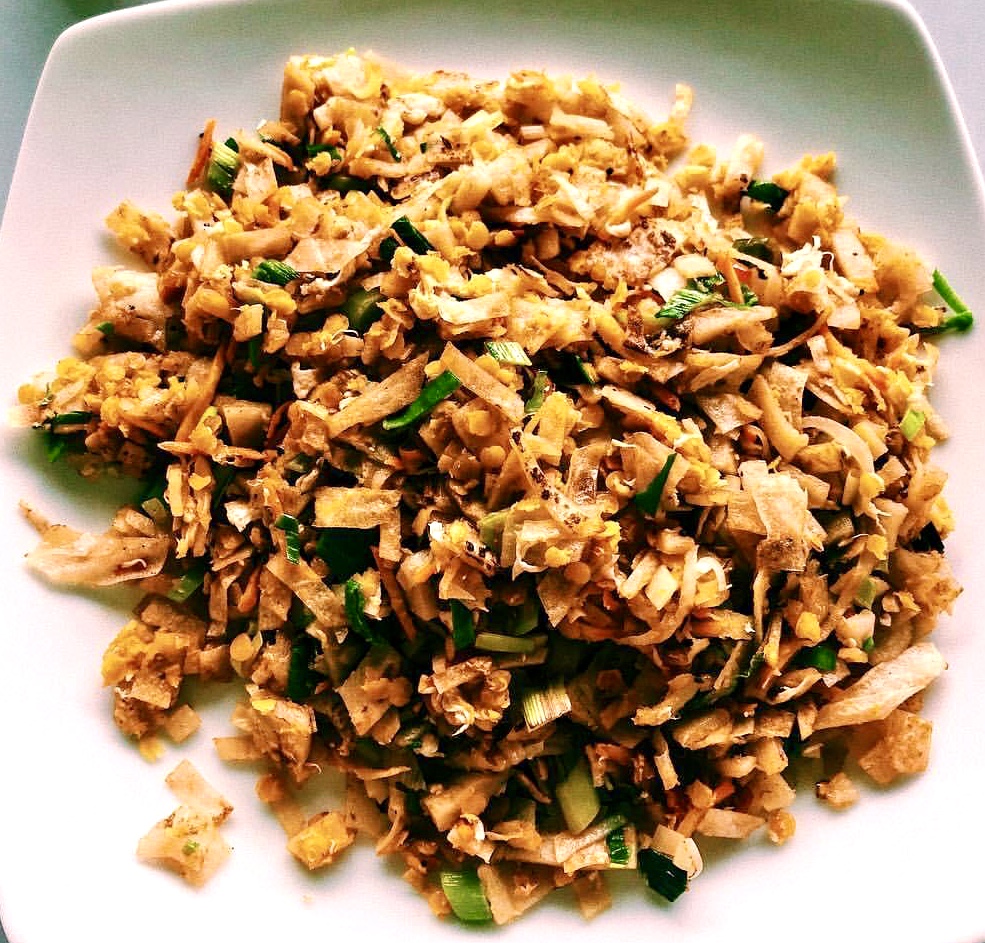
Flat godamba roti chopped into strips on a hot griddle with vegetables, egg, chilli and chicken, beef or seafood, and mixed with curry sauce. The cooks chop with two metal blades, and the rhythmic clatter tells you from far away that a kottu shop is open for the evening.
Kottu comes from the Tamil word koththu, meaning 'chopped'. It is believed to have started as cheap street food in the 1960s or 1970s.
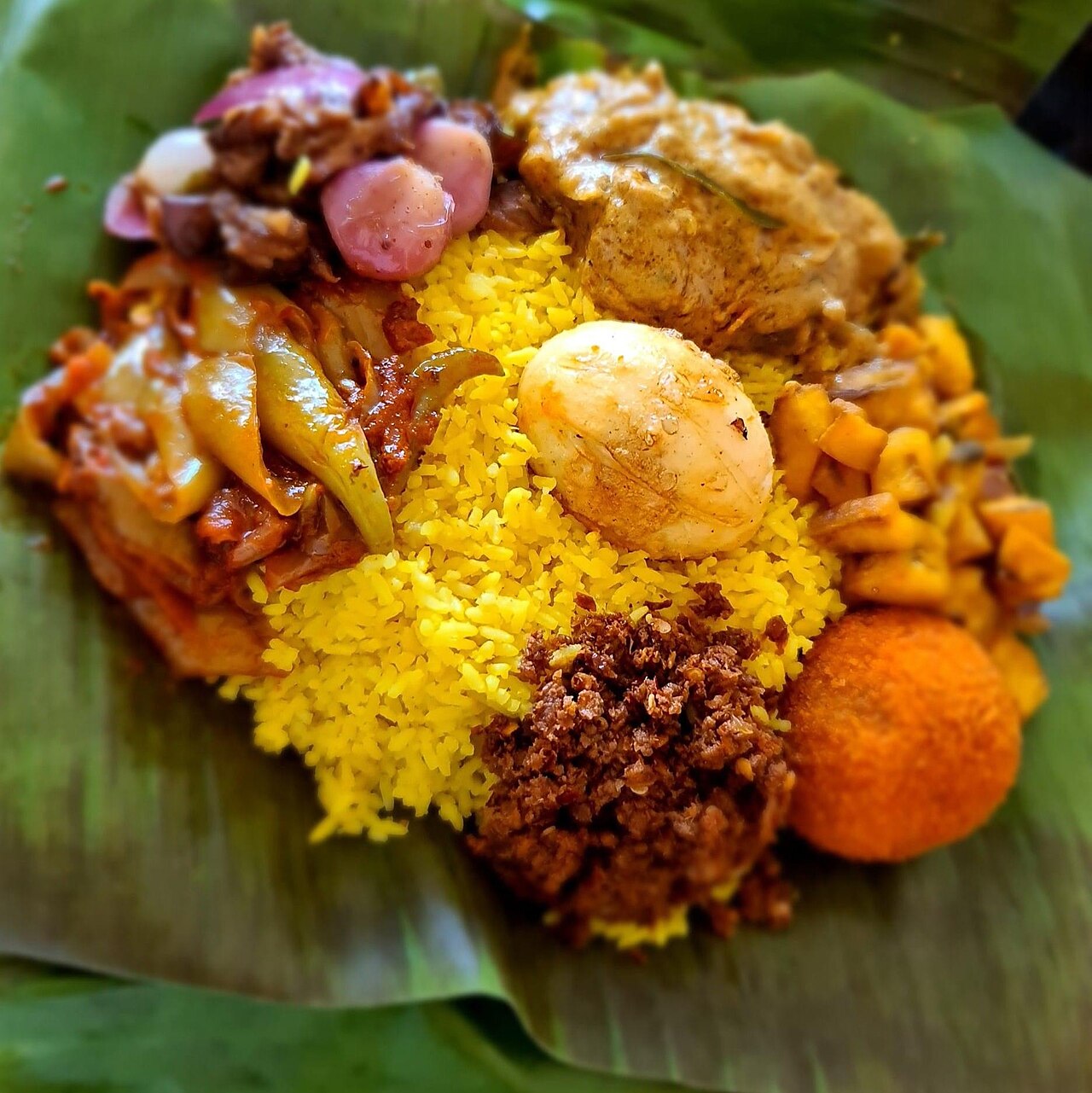
A packet of rice cooked in rich meat stock, with a curry of several meats, ash plantain and aubergine curry, seeni sambol (sweet onion relish), prawn paste and Dutch-style frikkadel meatballs, all wrapped in a banana leaf and baked. Opening the parcel releases a wonderful smell.
The name comes from the Dutch lomprijst, roughly 'a lump of rice'.
Sri Lankan Chinese restaurants, now the whole country
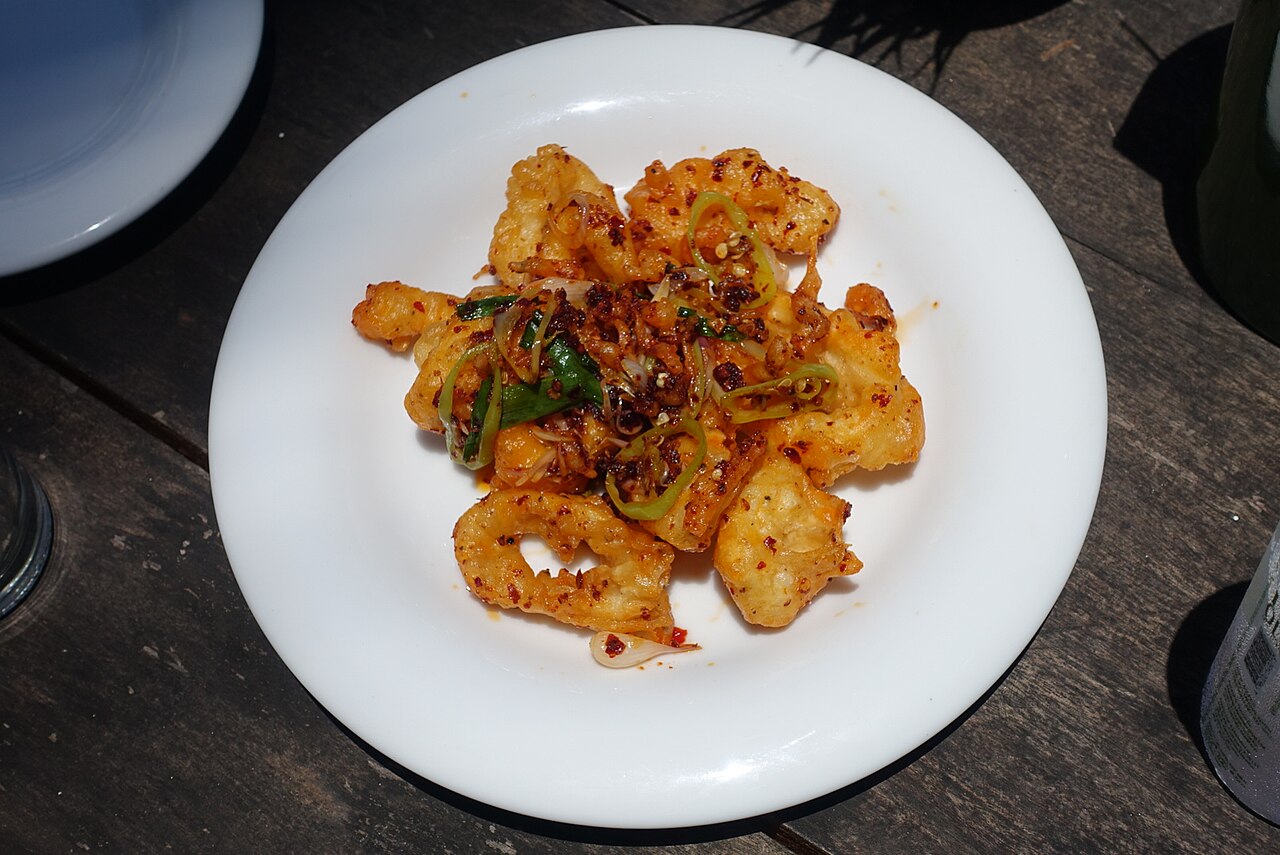
Pieces of cuttlefish scored in a criss-cross pattern, dipped in flour, deep-fried and then tossed with butter, chilli flakes, peppers and spring onions. It is served as a 'bite' with drinks or as part of a meal, especially in beach restaurants.
The Malay and Muslim communities, now the whole country
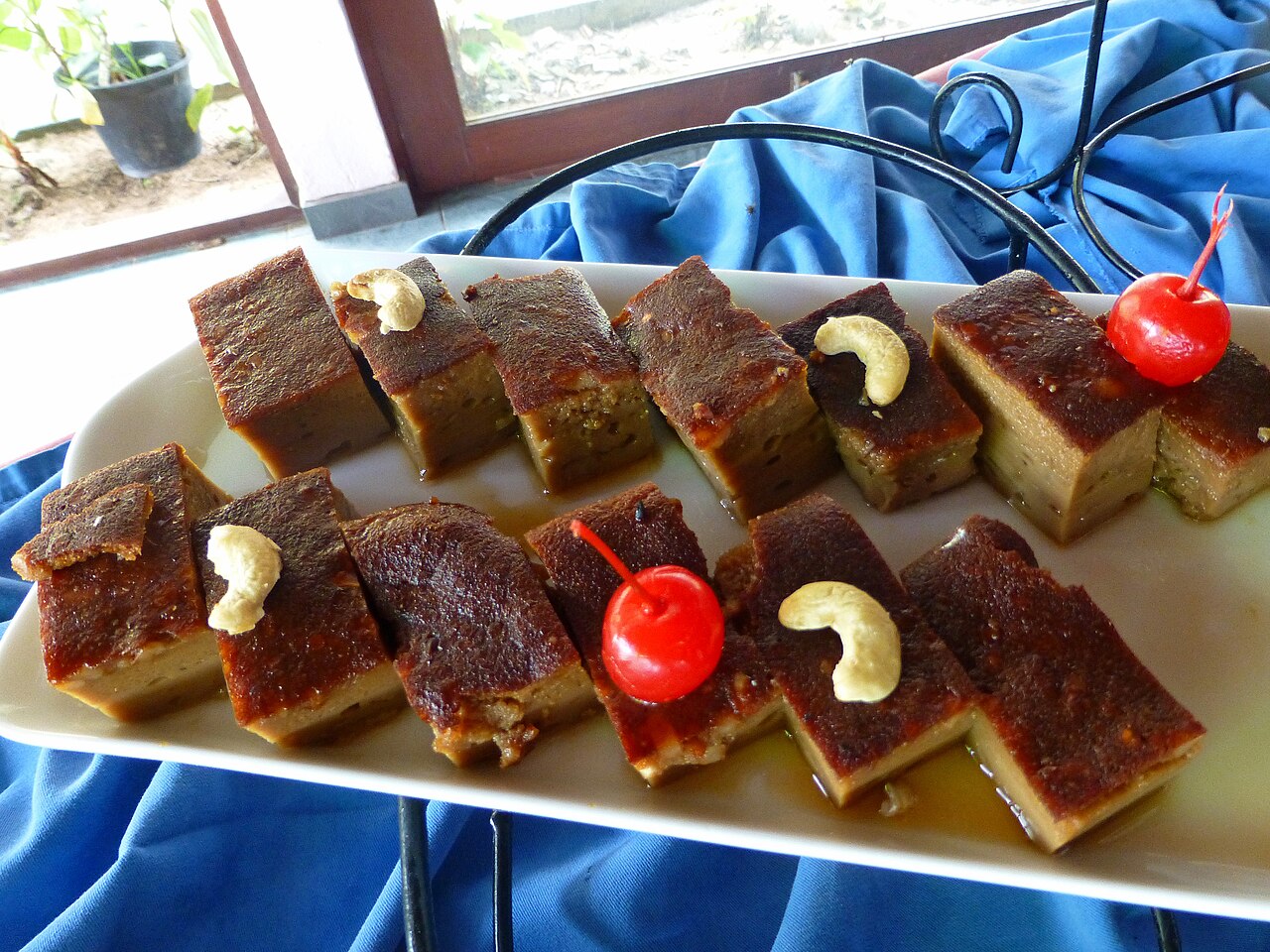
A rich, dark custard pudding of coconut milk, eggs and kithul jaggery, spiced with cardamom, cloves and nutmeg and topped with cashew nuts. It is the dessert of Eid for Sri Lankan Muslims and is served at weddings and celebrations across the island.
It is believed to have come with Malays who settled on the island during Dutch rule.
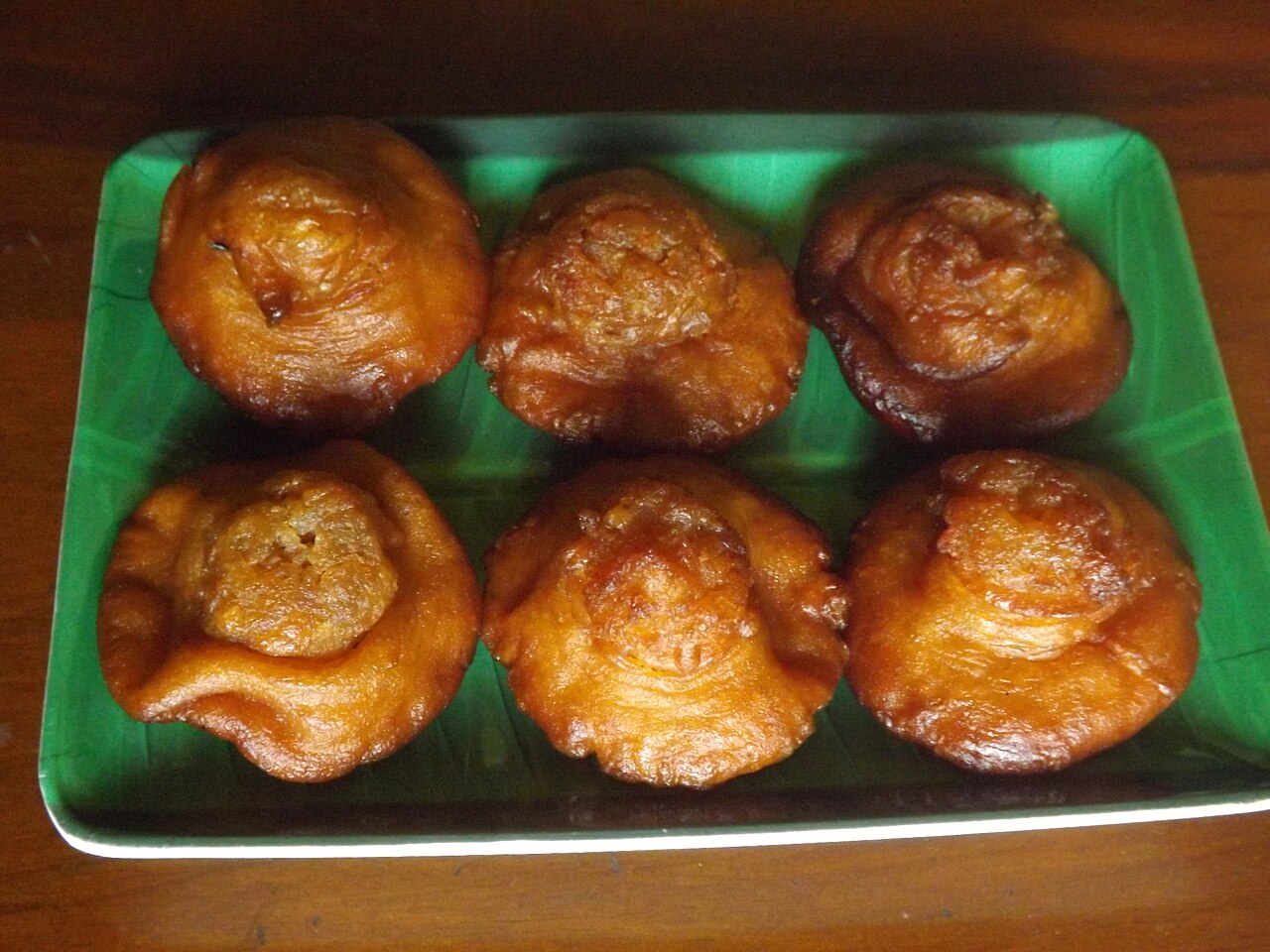
Small deep-fried oil cakes of rice flour and kithul treacle. The best-known kind, konda kavum, has a knot on top like hair tied in a bun. Kavum are made in large batches for the Sinhala and Tamil New Year in mid-April and shared with neighbours.
Konda means hair in Sinhala, after the bun-shaped top.
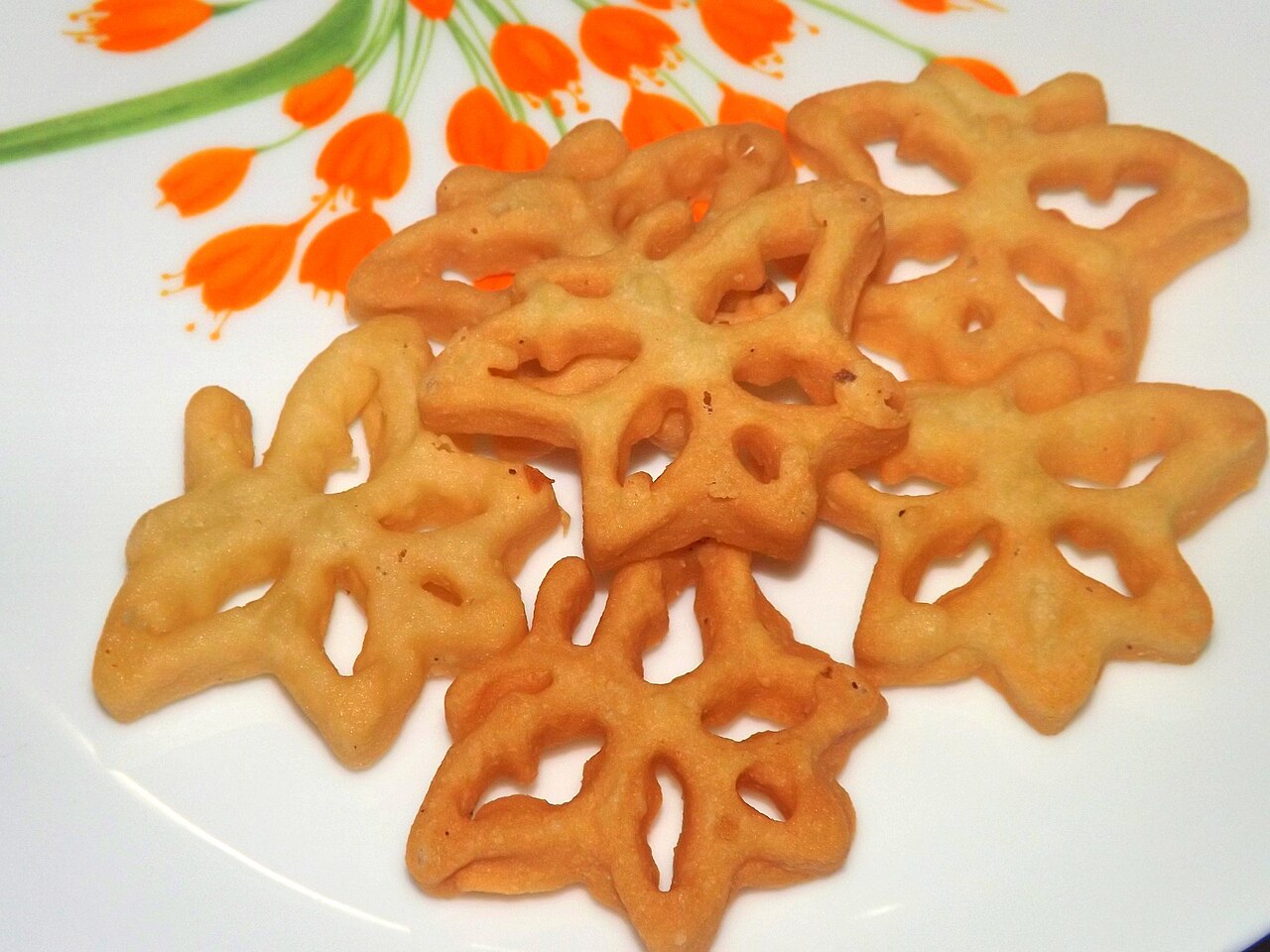
Crisp, lacy, flower-shaped fritters made by dipping a patterned iron mould into a batter of rice flour and coconut milk and then into hot oil. They are slightly salty rather than sweet and are one of the essential New Year treats.
The name may come from the Dutch koekjes, meaning biscuits.
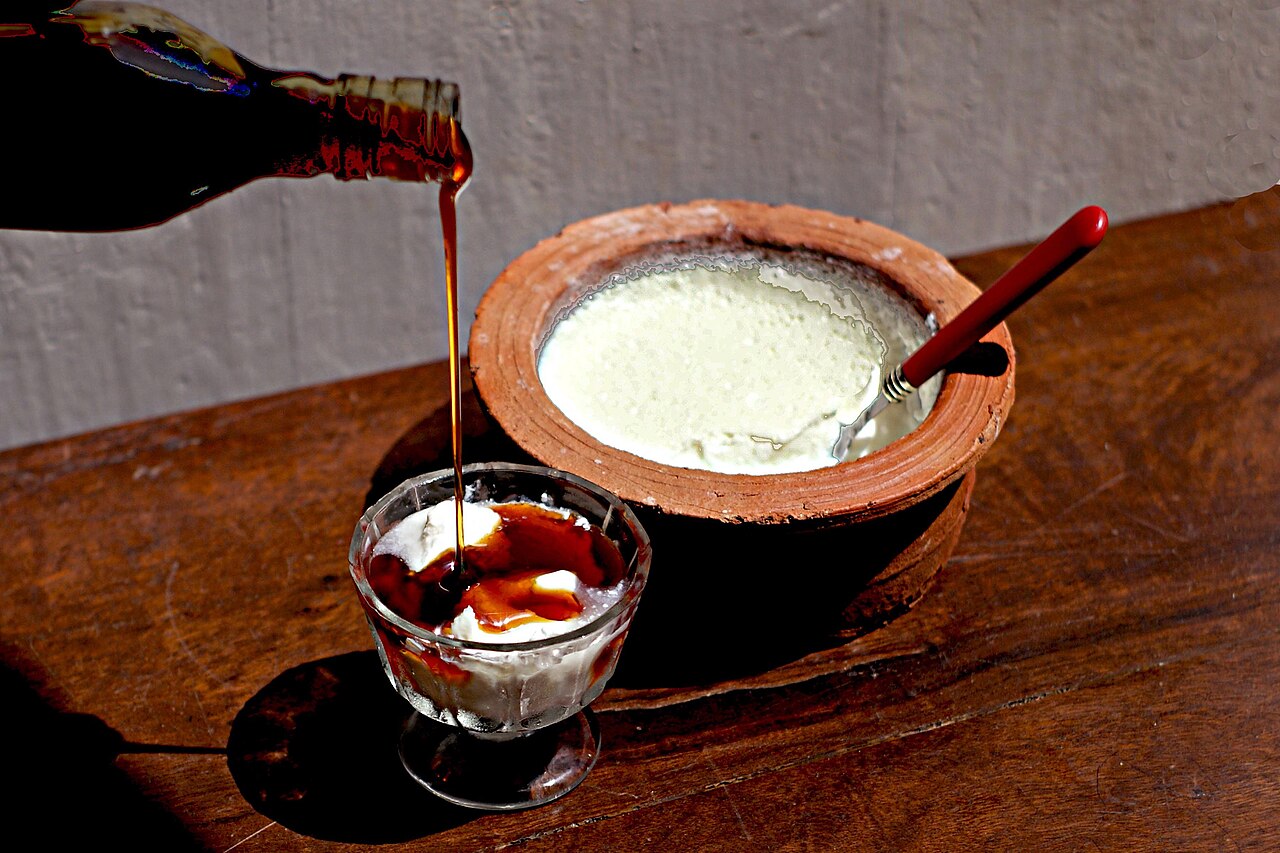
Thick, slightly sour buffalo curd, set in a clay pot, served with a generous pour of kithul treacle, a dark syrup made from the sap of the fishtail palm. It has been eaten as a dessert since ancient times and is a simple treat found all over the island.
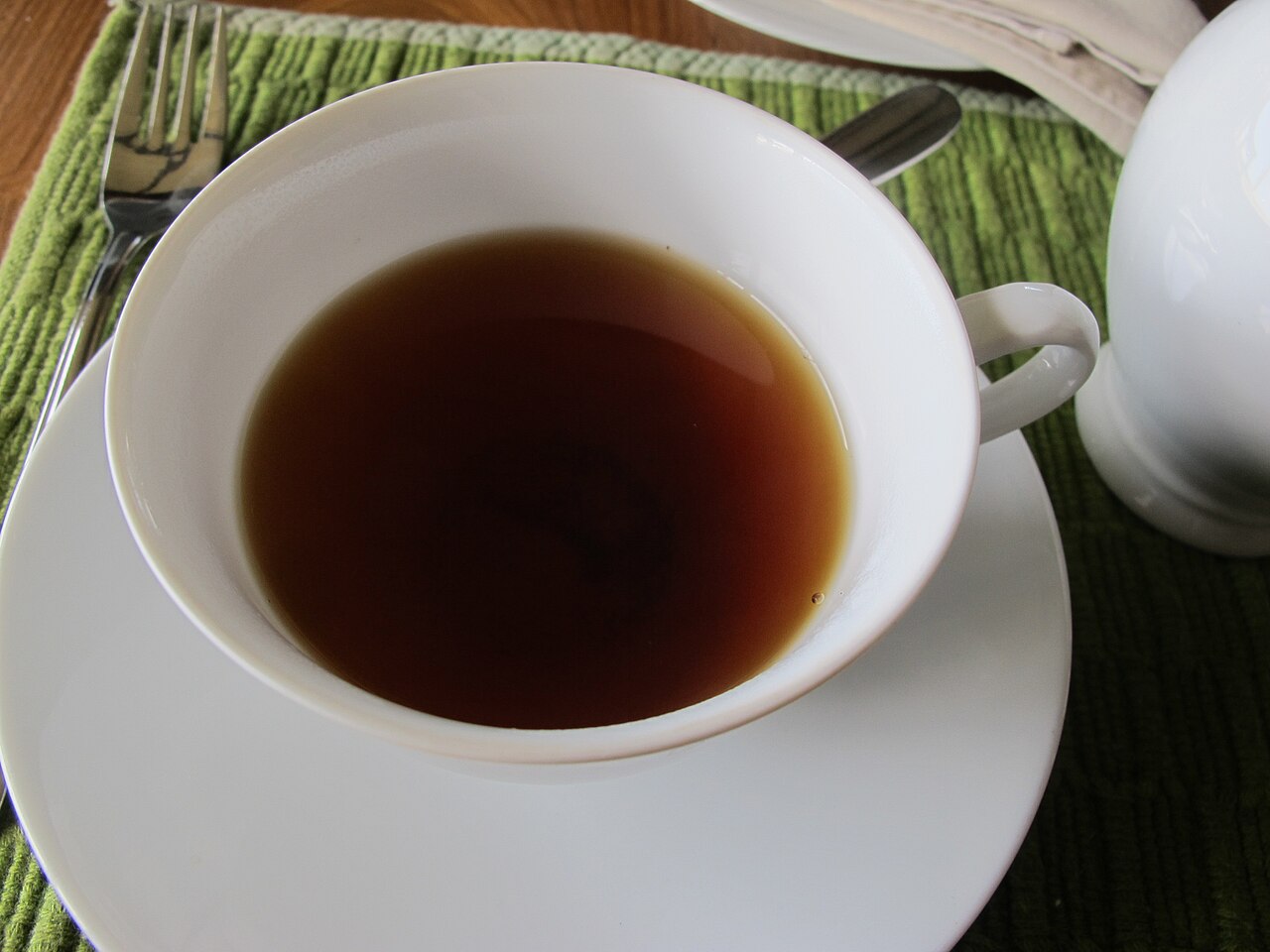
Black tea from the island's hill country, from the high estates around Nuwara Eliya to the lower gardens near Galle and Ratnapura. At home and in cafés it is usually served with milk and plenty of sugar. If you want it without milk, ask for 'plain tea'.
Only tea packed in Sri Lanka from 100 percent Sri Lankan tea may carry the official Lion Logo of Ceylon tea.
At the table in Sri Lanka
Most Sri Lankans eat rice and curry with the right hand, mixing a little rice with each curry using the fingertips. Every restaurant will bring a spoon and fork if you ask, but it is worth trying the local way.
Use your right hand to eat and to pass or receive food, money and gifts. The left hand is used for washing and is not used for eating.
Sri Lankan food can be very spicy. To ask for a milder dish, say 'særa aduwata', which means 'less strong'.
On Poya days, the full moon holiday each month, the sale of alcohol and meat is forbidden and many shops close, so plan ahead.
At the Sinhala and Tamil New Year in April, the first meal of kiribath is eaten at an auspicious time chosen by astrologers, and families visit each other with plates of kavum, kokis and other sweets.
Snack shops and bakeries sell 'short eats', such as patties, Chinese rolls and pastries, bought by the dozen for tea time, parties and journeys.