Czech cooking is hearty Central European food built on pork, beef, duck and goose, rich sauces, cabbage and, above all, dumplings. A traditional lunch, the main meal of the day, starts with a hot soup and continues with a main course of meat, sauce and a side on the same plate. Sweet pastries filled with fruit, poppy seed or curd cheese are more often eaten with afternoon coffee than as a dessert. As of September 2026, Czechs drink more beer per person than any other nation, and the golden pilsner style was born in the city of Plzeň.
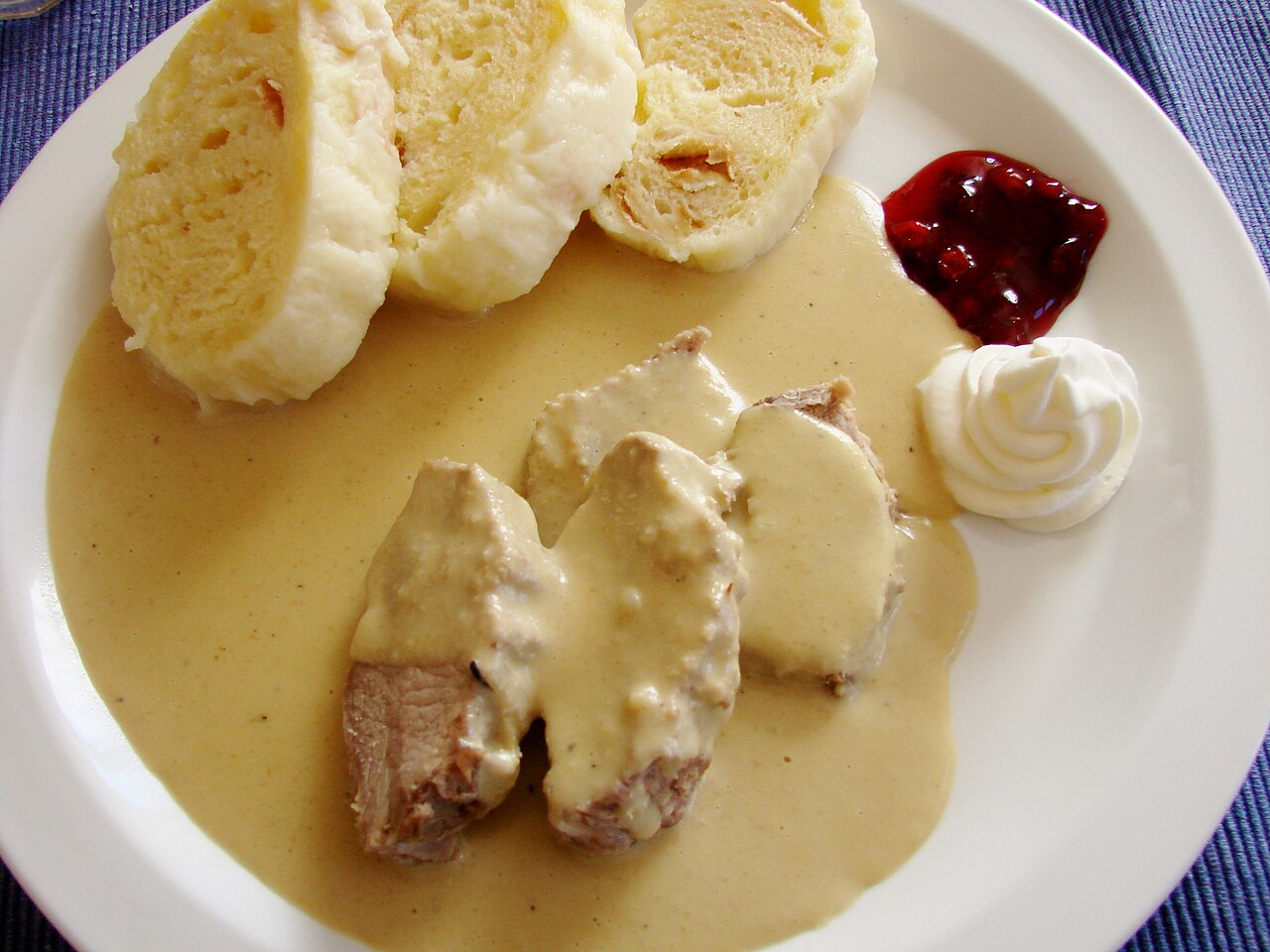
Slices of slow-cooked beef in a smooth, golden sauce made from root vegetables (carrot, parsley root, celeriac and onion) blended with cream and spices. It is served with bread dumplings, a spoon of whipped cream, cranberry sauce and a slice of lemon.
Svíčková is the Czech word for tenderloin, but the dish is usually made with cheaper beef topside. The name is sometimes wrongly translated as 'candle sauce', because svíčka means candle.
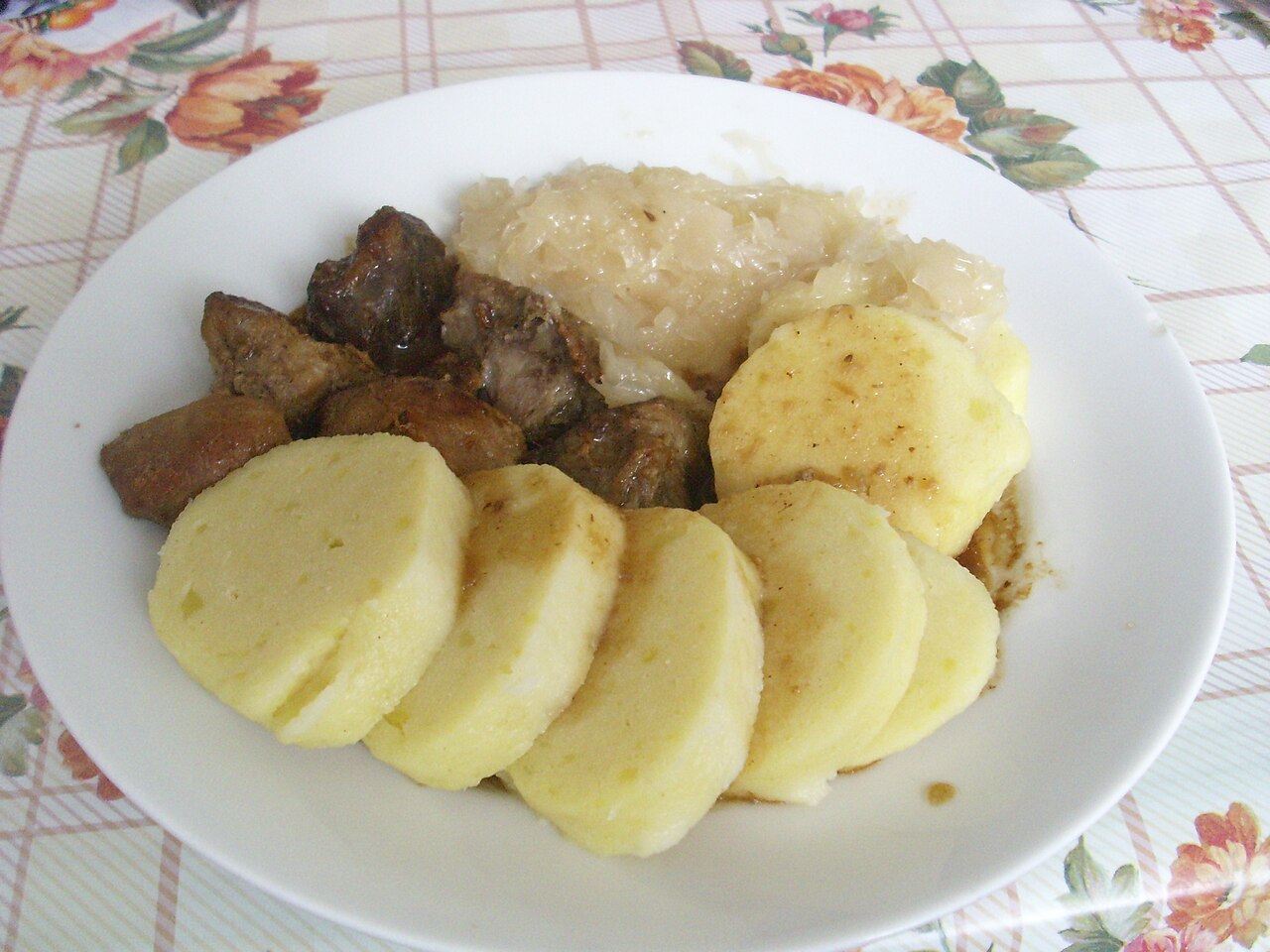
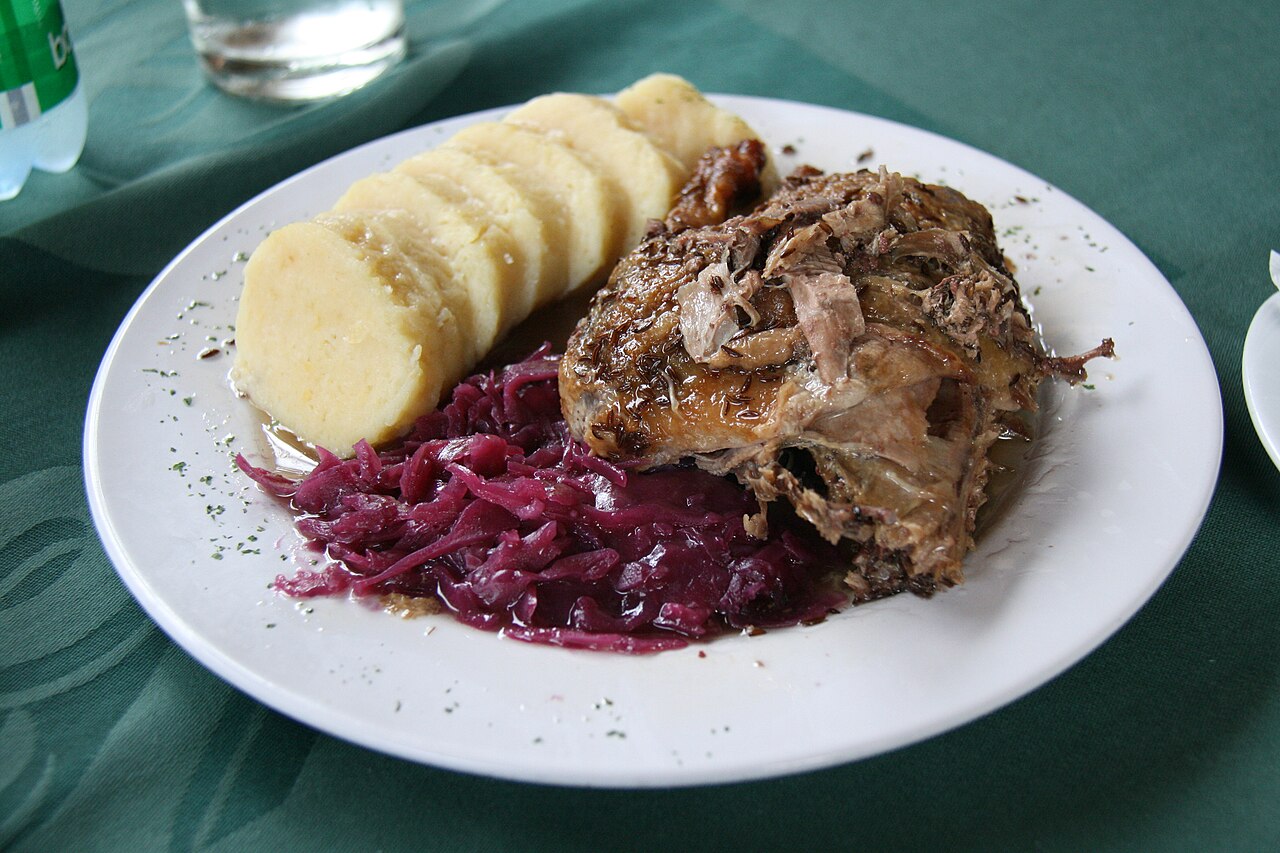
Roast pork seasoned with caraway and garlic, served with slices of dumpling and sweet-and-sour cabbage, with the meat juices poured over. It is often called the most typical Czech dish.
The nickname simply lists the three parts of the plate: pork, dumpling, cabbage.
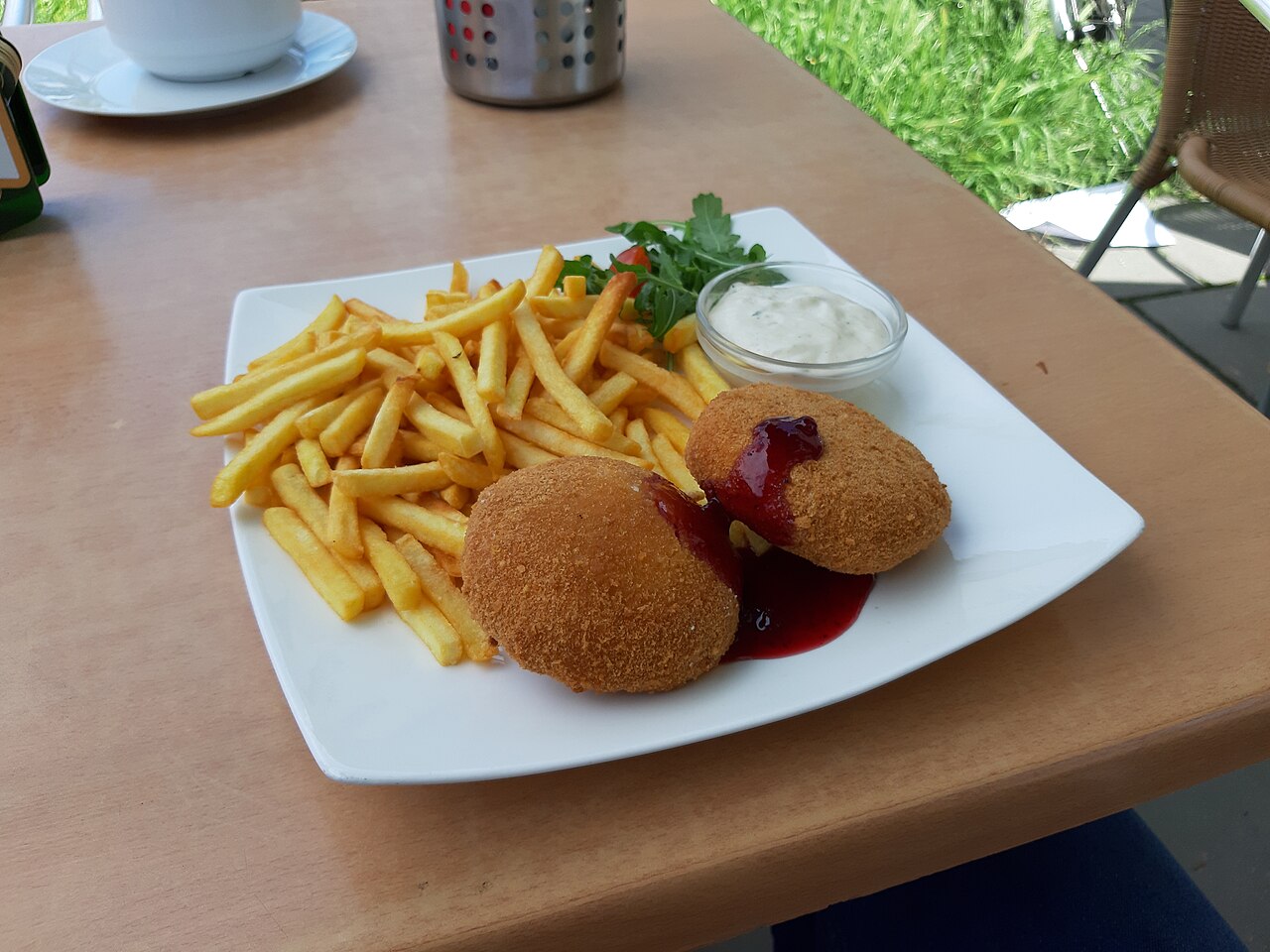
A thick slice of cheese, usually Edam, coated in flour, egg and breadcrumbs and fried until golden and melting inside. It comes with tartar sauce and potatoes or chips, and is a favourite street food and canteen lunch.
Made with Hermelín, a soft cheese like Camembert, the dish changes its name to smažený hermelín.
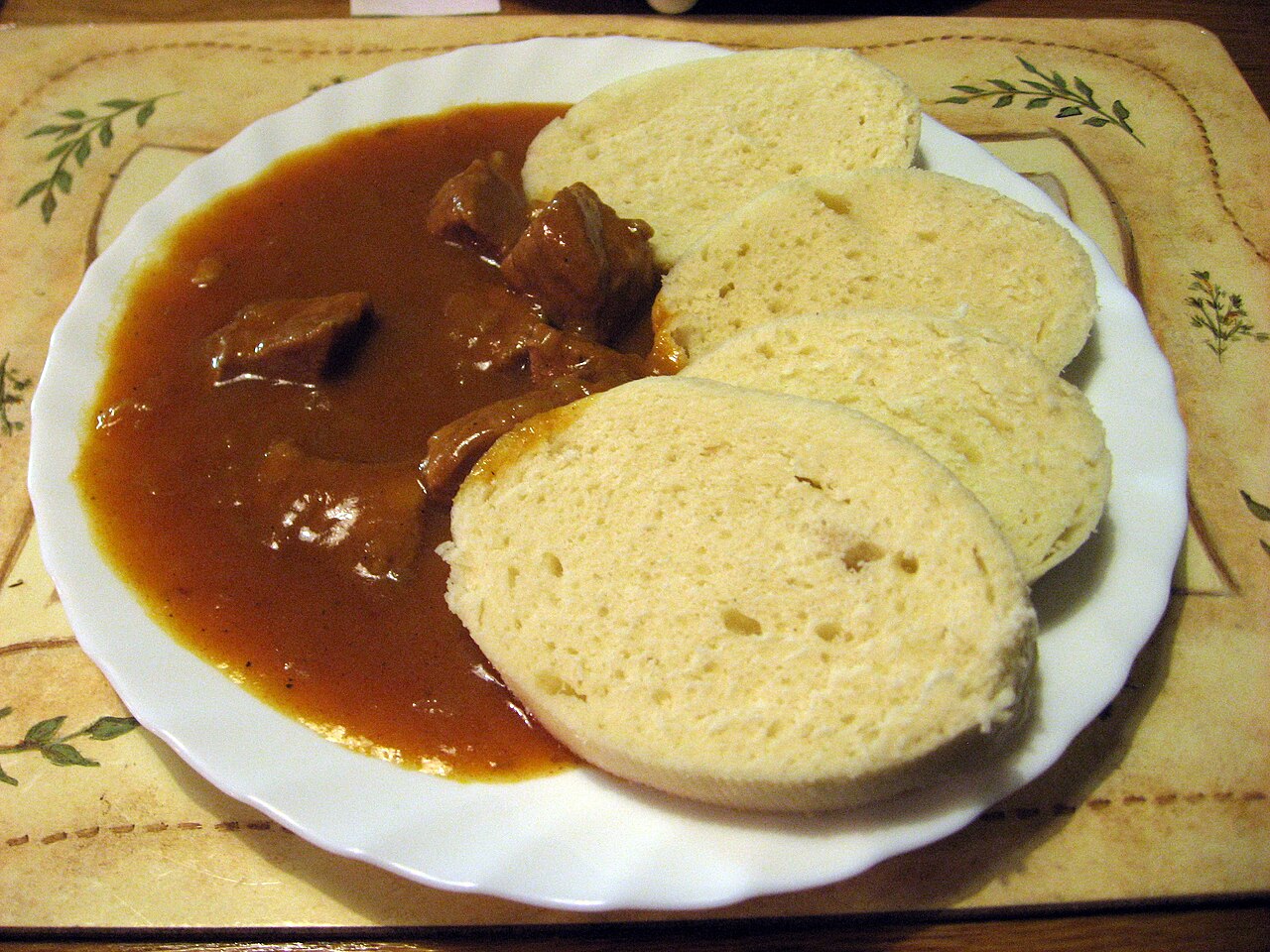
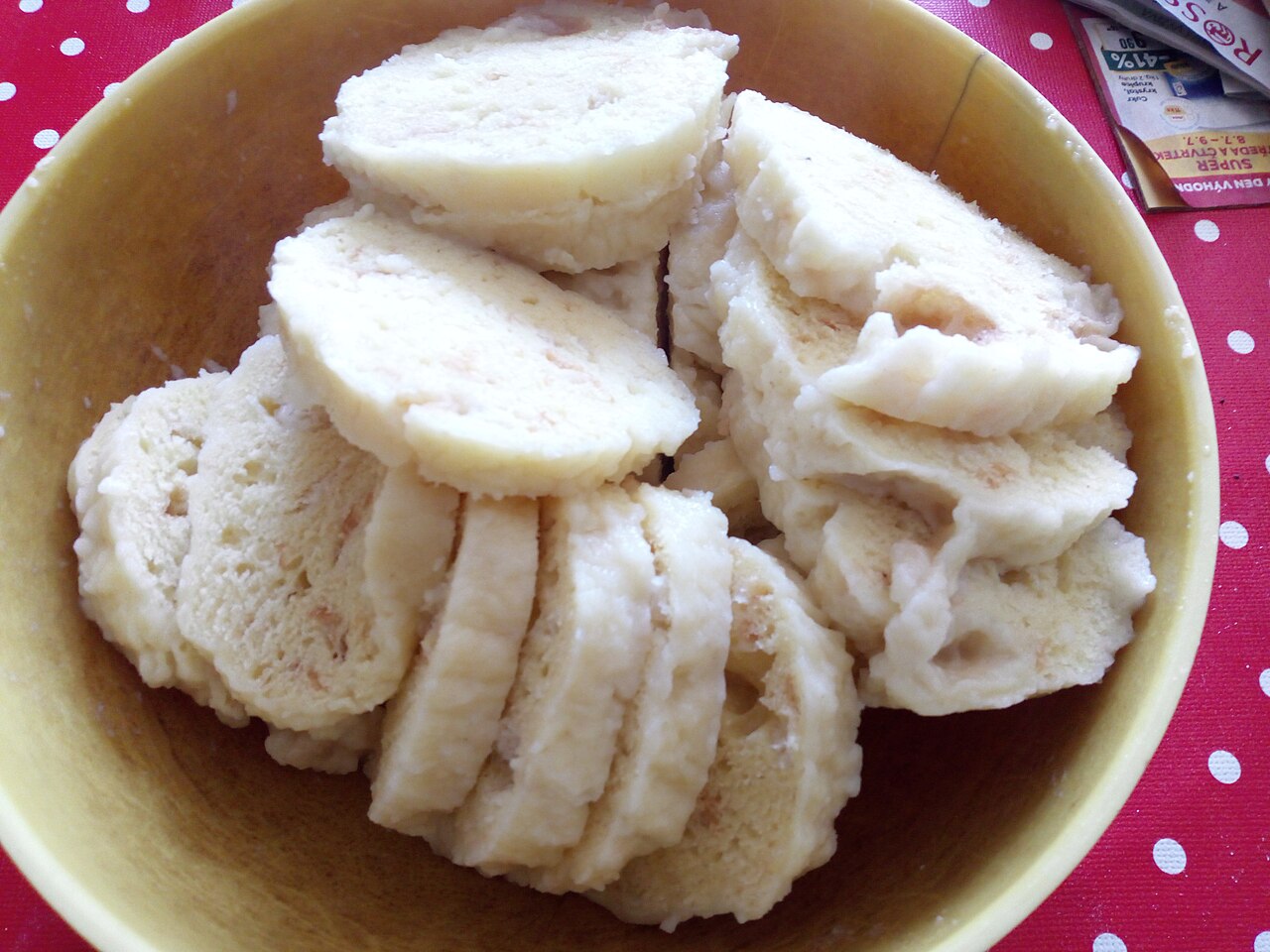
Large dumplings of wheat flour, often mixed with cubes of stale bread rolls, steamed and then cut into slices like bread. They soak up the sauce of svíčková, goulash and roast pork.
Leftover dumpling slices are often fried the next day with eggs.
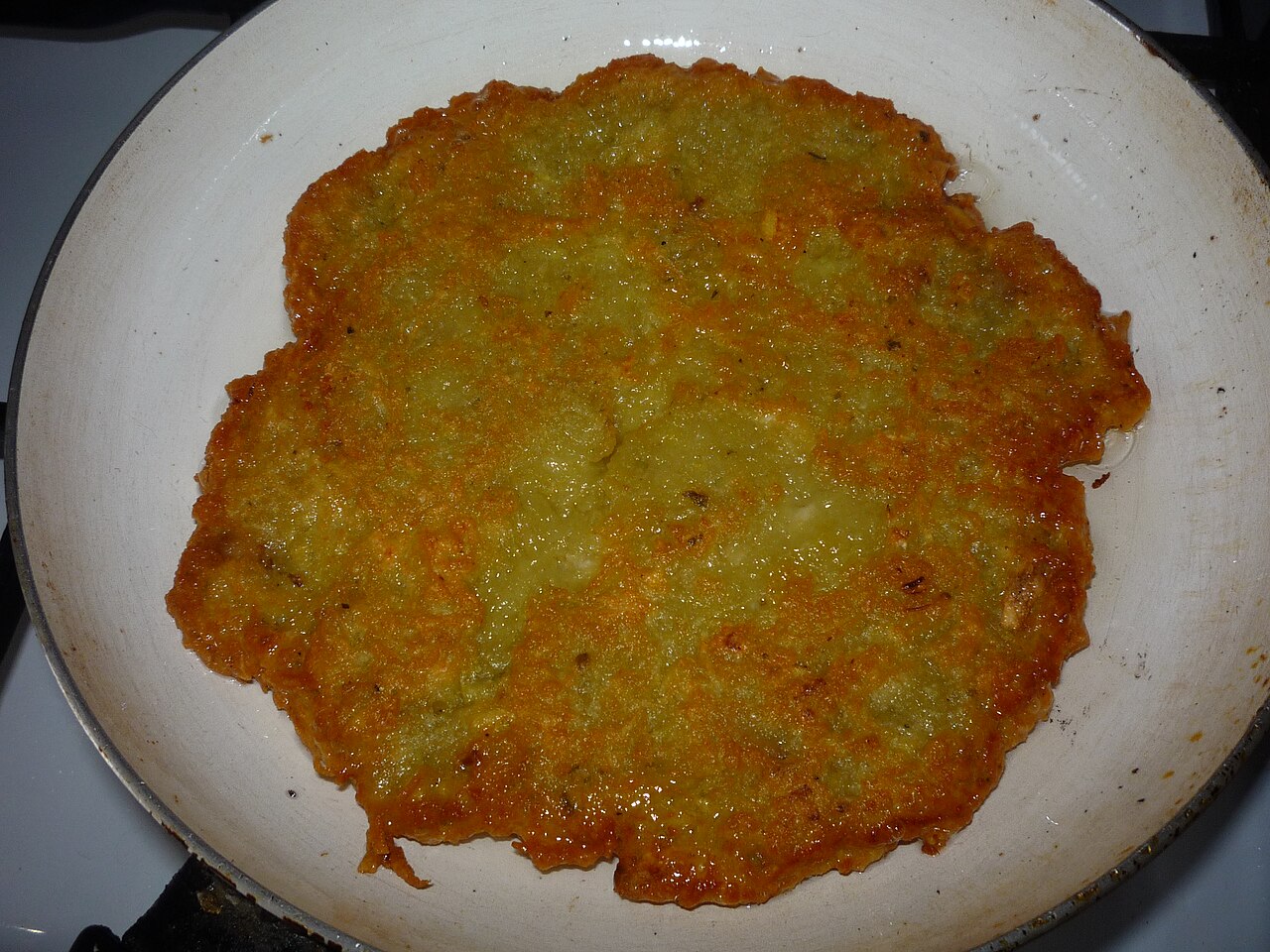
Crisp pancakes of grated raw potato, flour and egg, flavoured with garlic and marjoram and fried in fat. They are eaten on their own or as a side dish.
In the Plzeň area they are called vošouch, in South Bohemia cmunda, and in Těšín Silesia stryk.
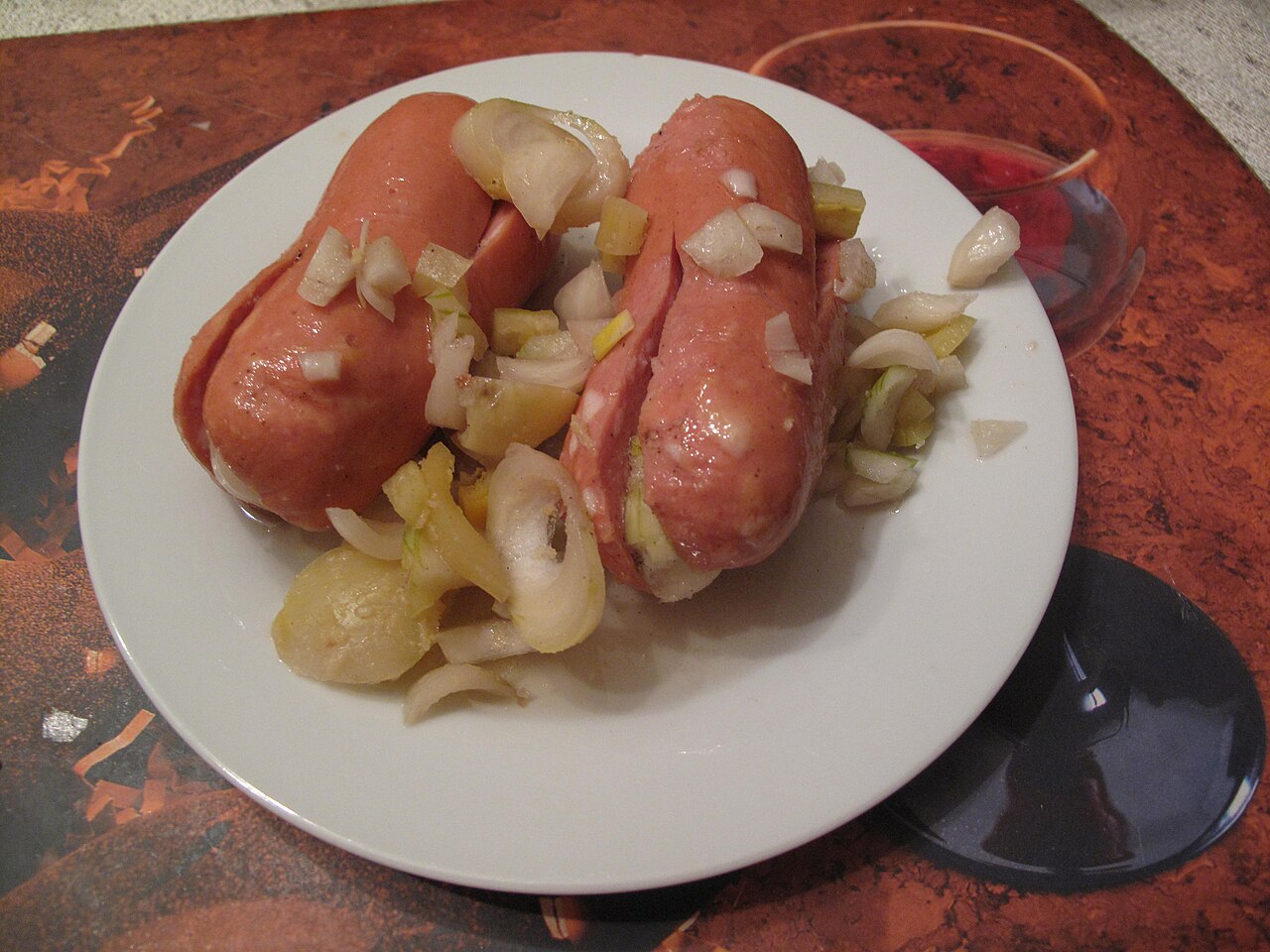
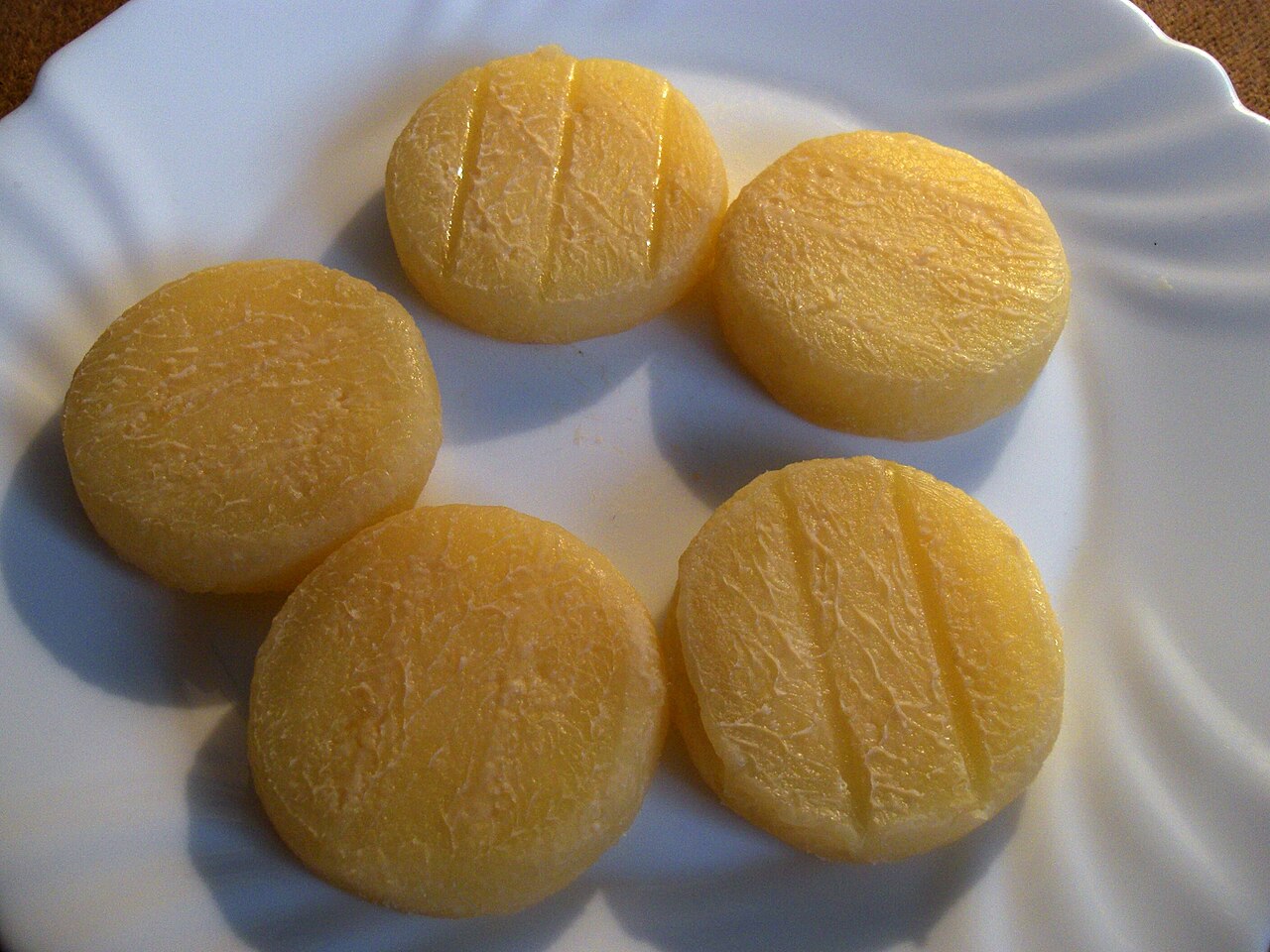
Small, ripened cheeses made from low-fat curd cheese, with a yellowish skin, a very strong smell and a sharp taste. They are a classic snack with beer and can also be fried or marinated.
The cheese is first mentioned in writing in 1452, and it has only about 0.5% fat.
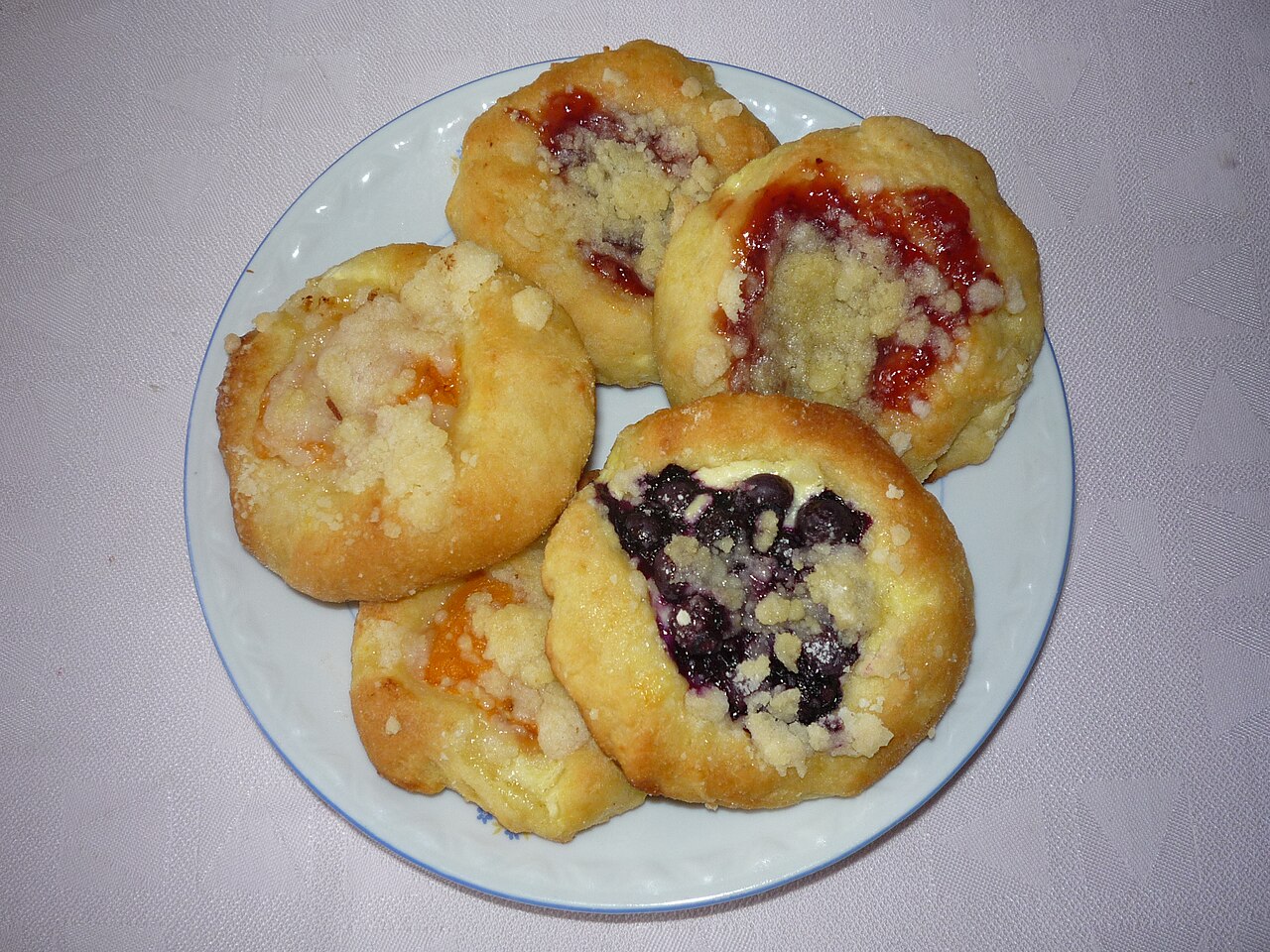
Soft yeast pastries with a filling of poppy seed, curd cheese, plum jam or apricot showing in the middle. They take work to make and are baked for special occasions.
In some regions koláče are handed out to friends and family instead of wedding invitations. Czech immigrants took the tradition to Texas and the American Midwest.
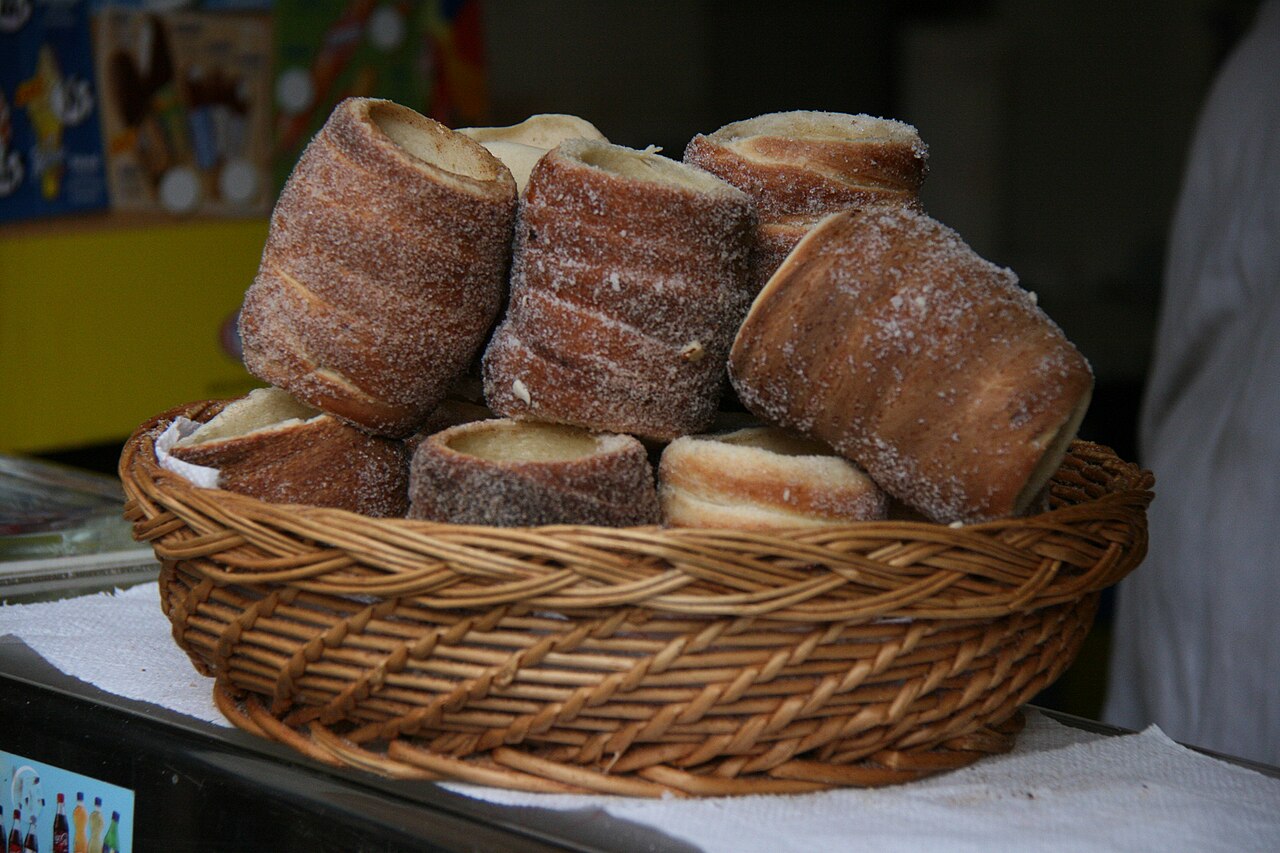
A spiral of sweet dough wrapped around a stick, baked over heat and rolled in sugar and chopped walnuts. In Prague it is sold on every tourist street, often filled with ice cream.
Although it is often sold as an 'old Bohemian' treat, trdelník spread in Prague only from the early 2000s. Its traditional home is the Slovak town of Skalica, near the Moravian border.
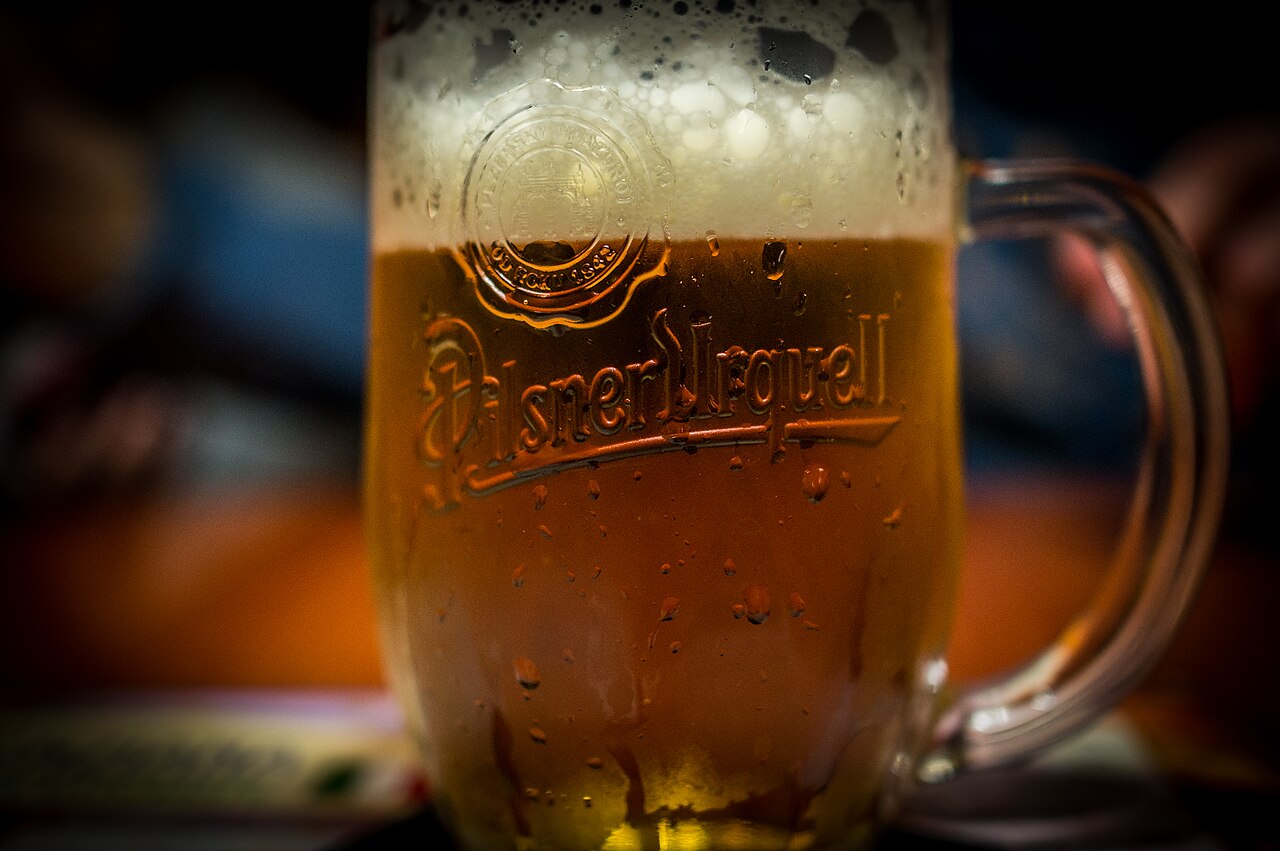
A clear, golden, bottom-fermented beer with a thick foam and the bitter aroma of Saaz hops. The original, Pilsner Urquell, is still brewed in Plzeň.
The first pale lager was brewed in Plzeň by the Bavarian brewer Josef Groll and first served on 11 November 1842. Most of the beer drunk in the world today is a pale lager descended from it.
At the table in Czechia
Before eating, people wish each other 'Dobrou chuť' (enjoy your meal).
When glasses are raised, people say 'Na zdraví' (to your health).
A traditional lunch begins with a hot soup. Many local restaurants offer a cheap 'daily menu' (denní menu) of two or three courses at lunchtime only, usually until about 13:00 or 14:00.
When you visit a Czech home, take off your shoes at the door. Your hosts will often offer you slippers.
On Christmas Eve the traditional dinner is fried carp with potato salad.