Fijian food brings together the Pacific and India. In villages, a meal is built around a boiled root crop such as cassava or taro, with fish or meat, green leaves and plenty of coconut milk (lolo), and tea sweetened with cane sugar. Indo-Fijian families eat rice or roti with dhal and a meat or vegetable curry, followed by masala tea, and today these dishes are loved by everyone. Dinner is often the biggest meal. For weddings, church days and other big occasions there is the lovo, a feast cooked for hours in an earth oven. Chinese cooks added soy and oyster sauce, and the markets overflow with seafood, ferns, root crops and tropical fruit.
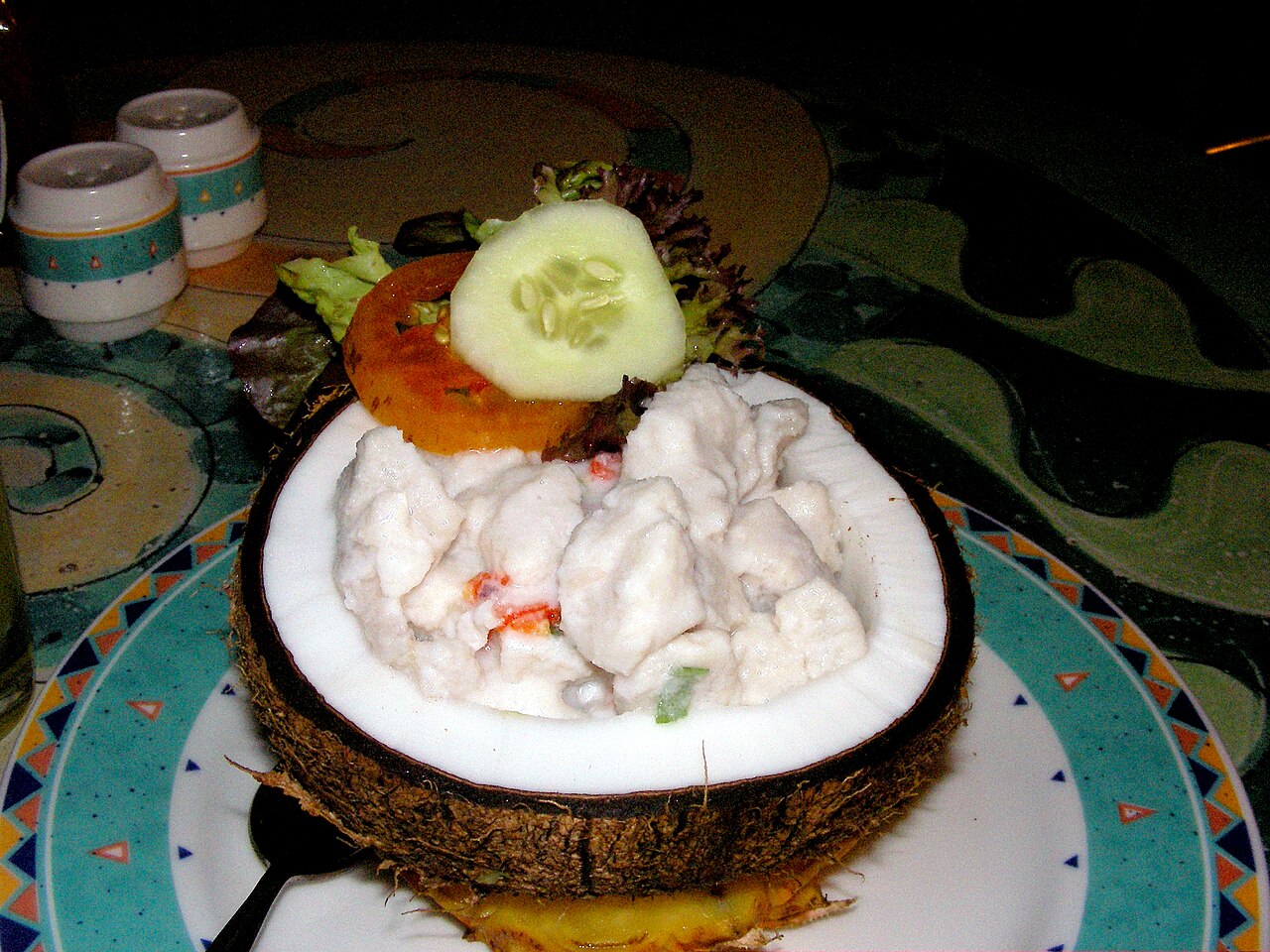
Fiji's best-known dish: pieces of fresh raw fish soaked in lime or lemon juice until they turn white, then mixed with coconut milk, diced tomato, onion and chilli. It is served cold, often in a coconut shell or a clam shell. Similar raw fish salads are made across Polynesia.
The citrus juice makes the fish firm and white, so it looks cooked, but it does not heat it. That is why very fresh fish matters.
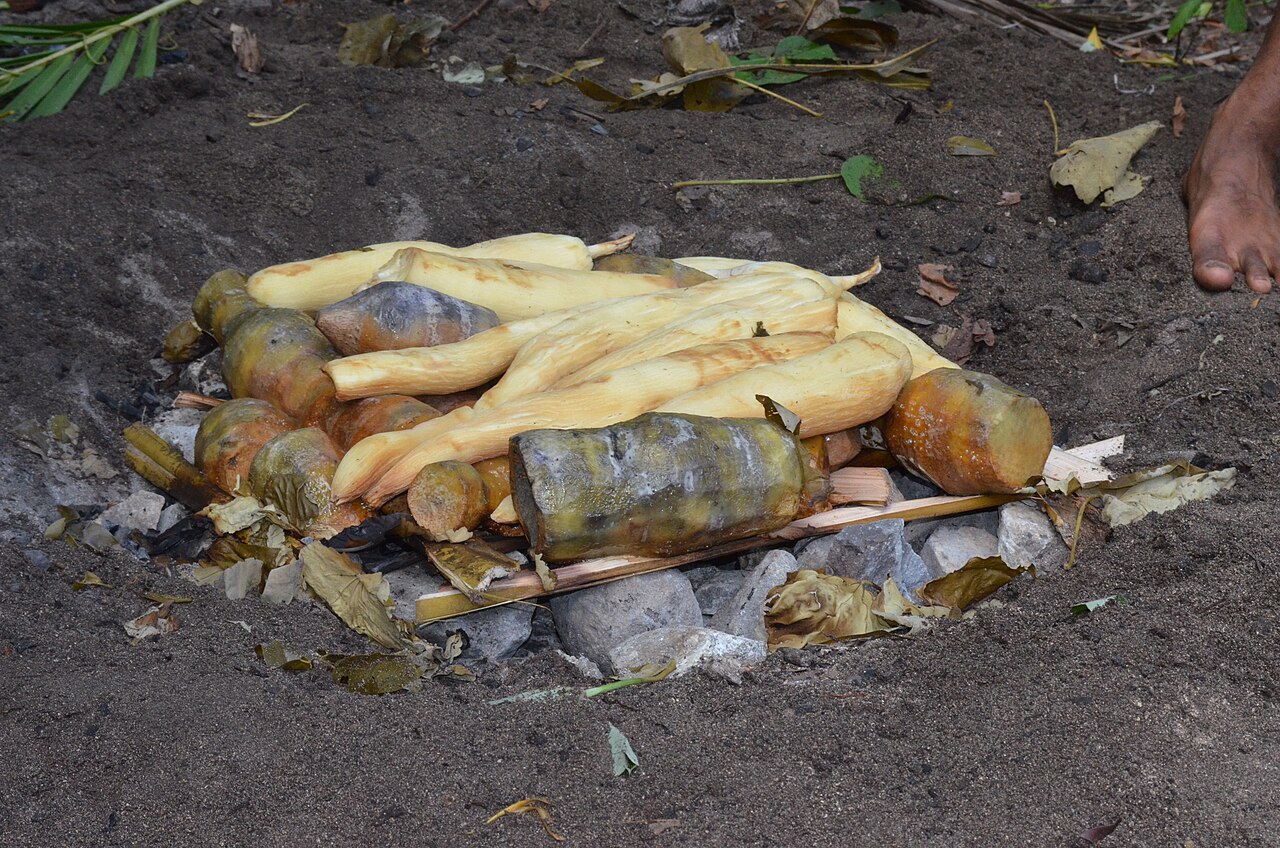
A feast cooked in an earth oven. Stones are heated in a pit, then parcels of pork, chicken, fish and root crops wrapped in banana leaves are laid on top, covered with leaves, earth and sacks, and left to cook for several hours. Meat is often flavoured with soy sauce, garlic, chilli and ginger, and palusami (taro leaves filled with coconut cream) is a favourite lovo parcel.
A lovo takes many hands to prepare, which is part of why it belongs to weddings, church celebrations and family gatherings.
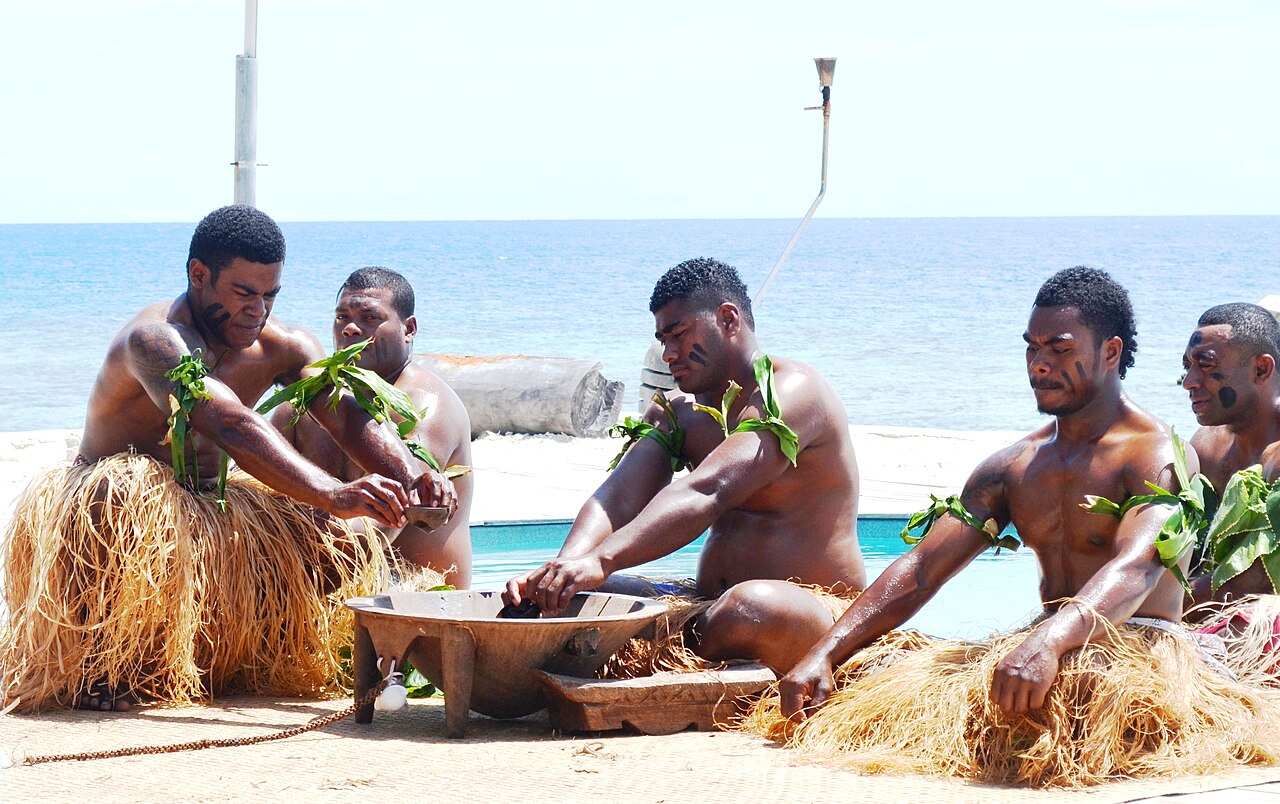
Fiji's national drink, made from the dried and powdered root of the kava plant, a relative of pepper. The powder is kneaded in water inside a cloth in a large wooden bowl called a tanoa, then served in half coconut shells. It looks muddy, tastes earthy and peppery, and makes the lips and tongue tingle and go numb for a few minutes. It is drunk at ceremonies and, more and more, simply with friends in the evening.
Kava roots are the classic gift, called sevusevu, that a guest presents when arriving in a Fijian village.
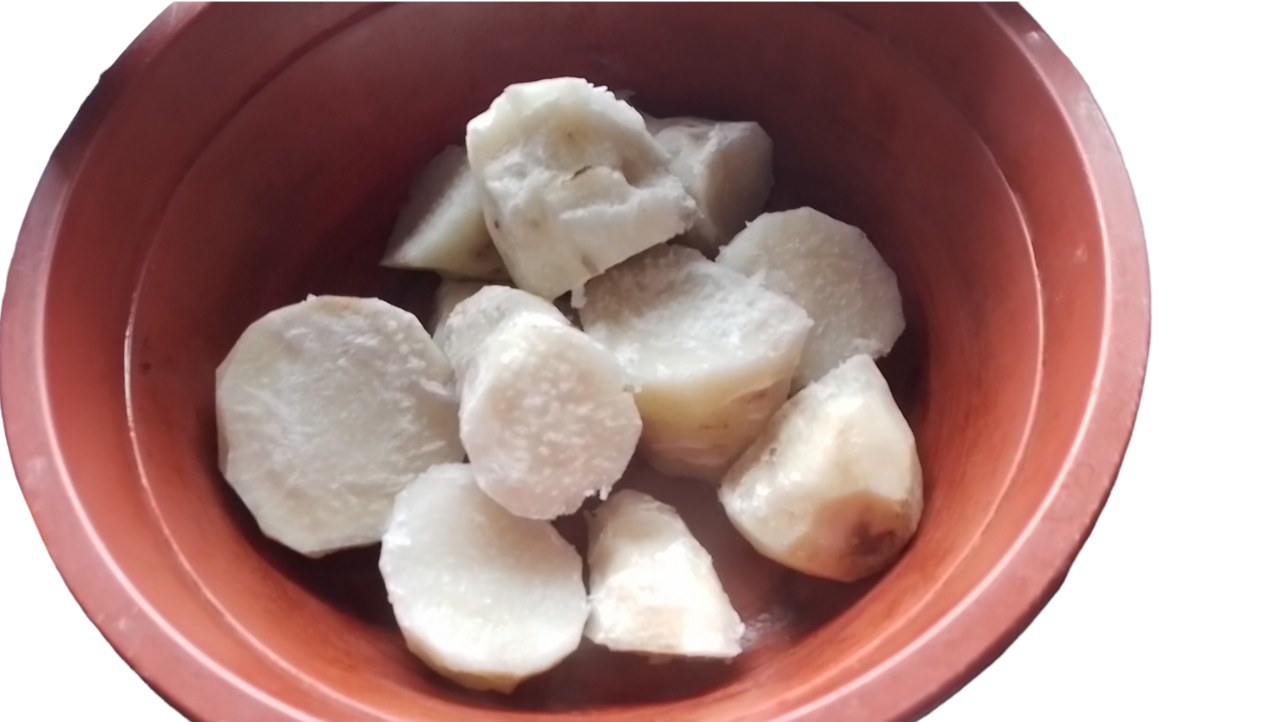
The starchy root of the taro plant, peeled and boiled or baked in the lovo, and served in chunks beside fish, meat and coconut dishes. It is the most important staple for special occasions. The young taro leaves, called rourou, are cooked in coconut milk as a green vegetable.
Fiji grows about 70 varieties of taro. Some turn pink or yellow when cooked, others stay white.
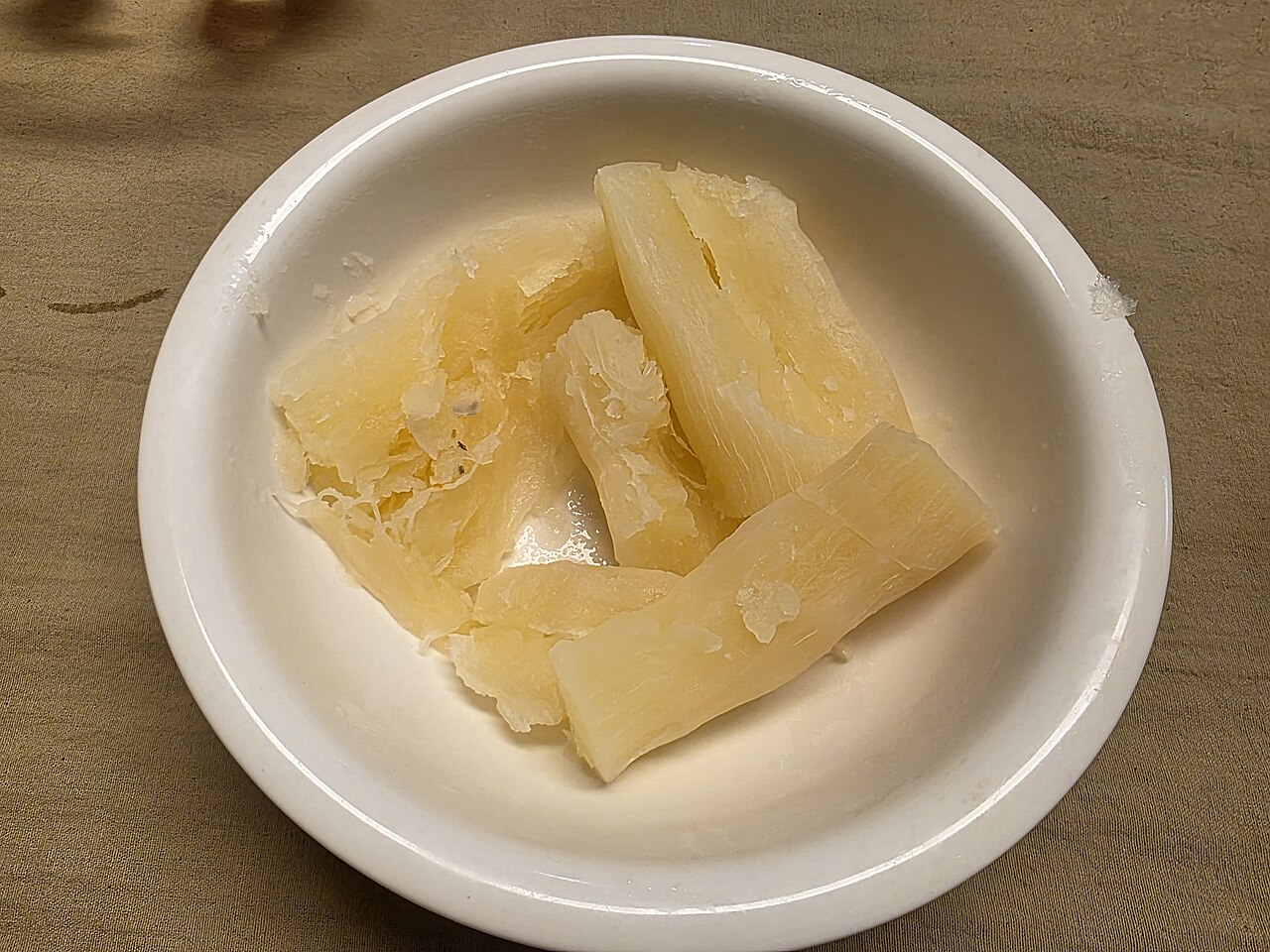
Cassava root, boiled in salted water until soft and eaten with stews and curries. It has taken the place of yams and is now the most widely grown and eaten staple in Fiji. Grated cassava is also sweetened and steamed in banana leaves to make desserts such as vakalolo.
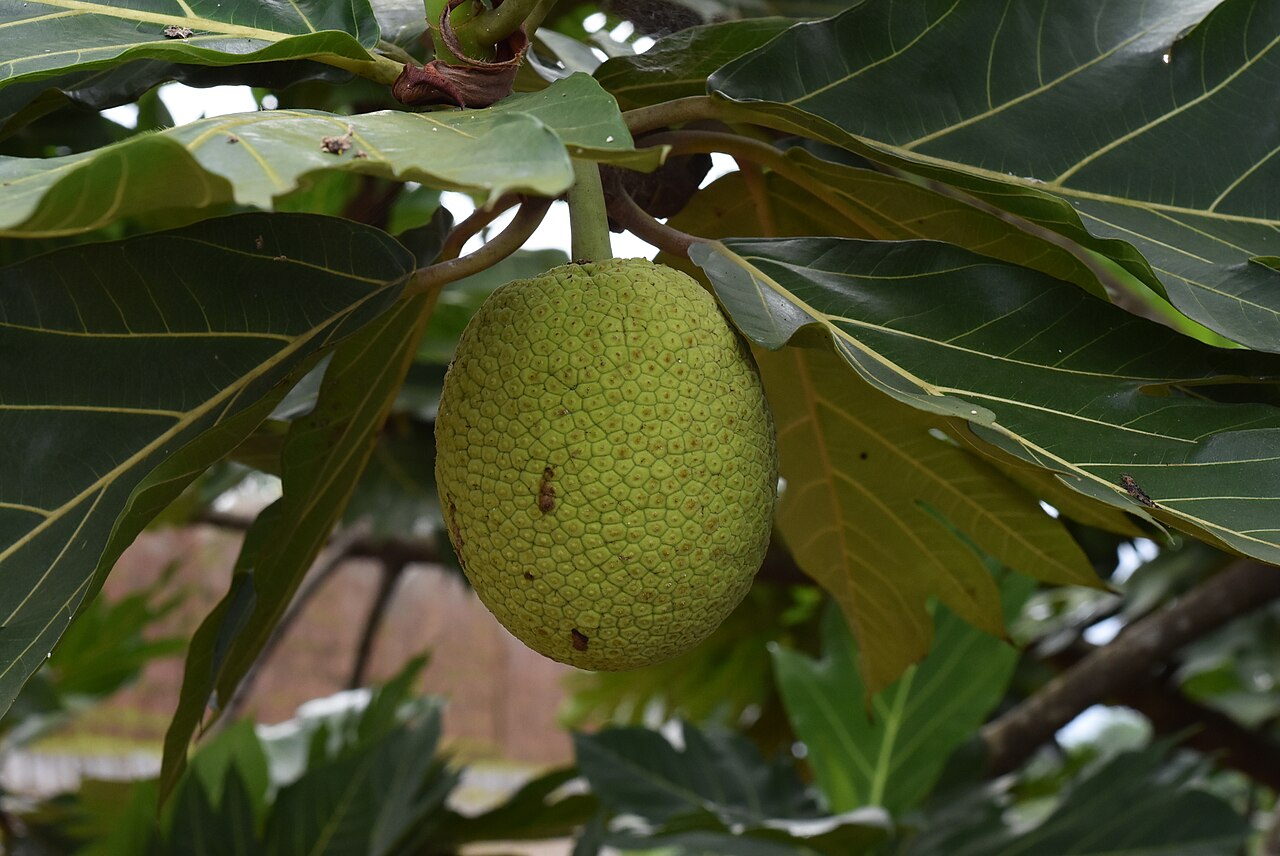
The large round fruit of the breadfruit tree, which grows beside most village houses. When the fruit is in season it is boiled or roasted whole over a fire, and its soft, starchy flesh is eaten like bread or potato with fish and coconut dishes.
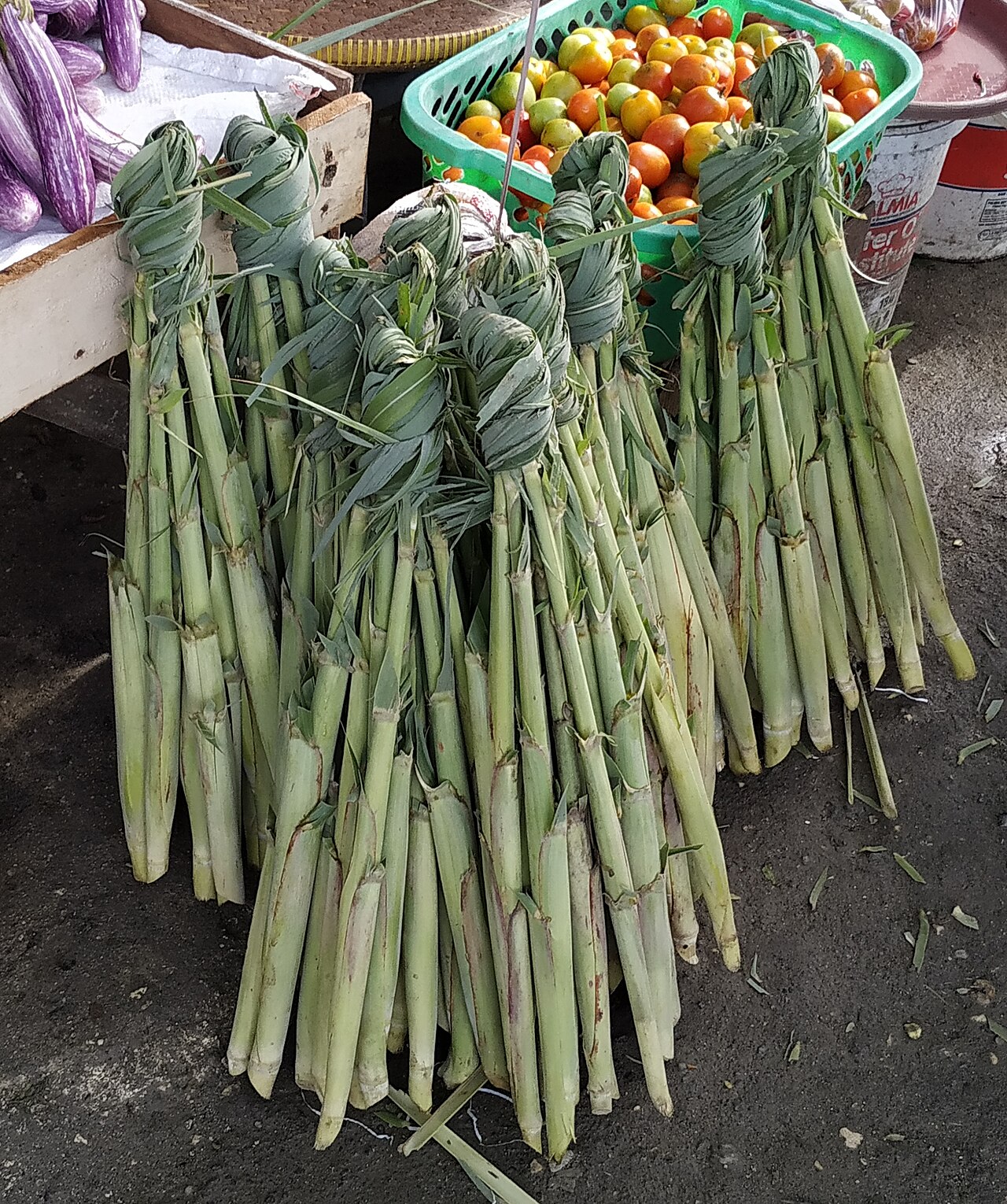
The unopened flower head of a close relative of sugarcane, sometimes called Fijian asparagus. It is sold in bundles at local markets in season and eaten raw or cooked as a vegetable. Some varieties grow wild along riverbanks.
Children love to gather and roast the red duruka that comes early in the season, before the white varieties ripen.
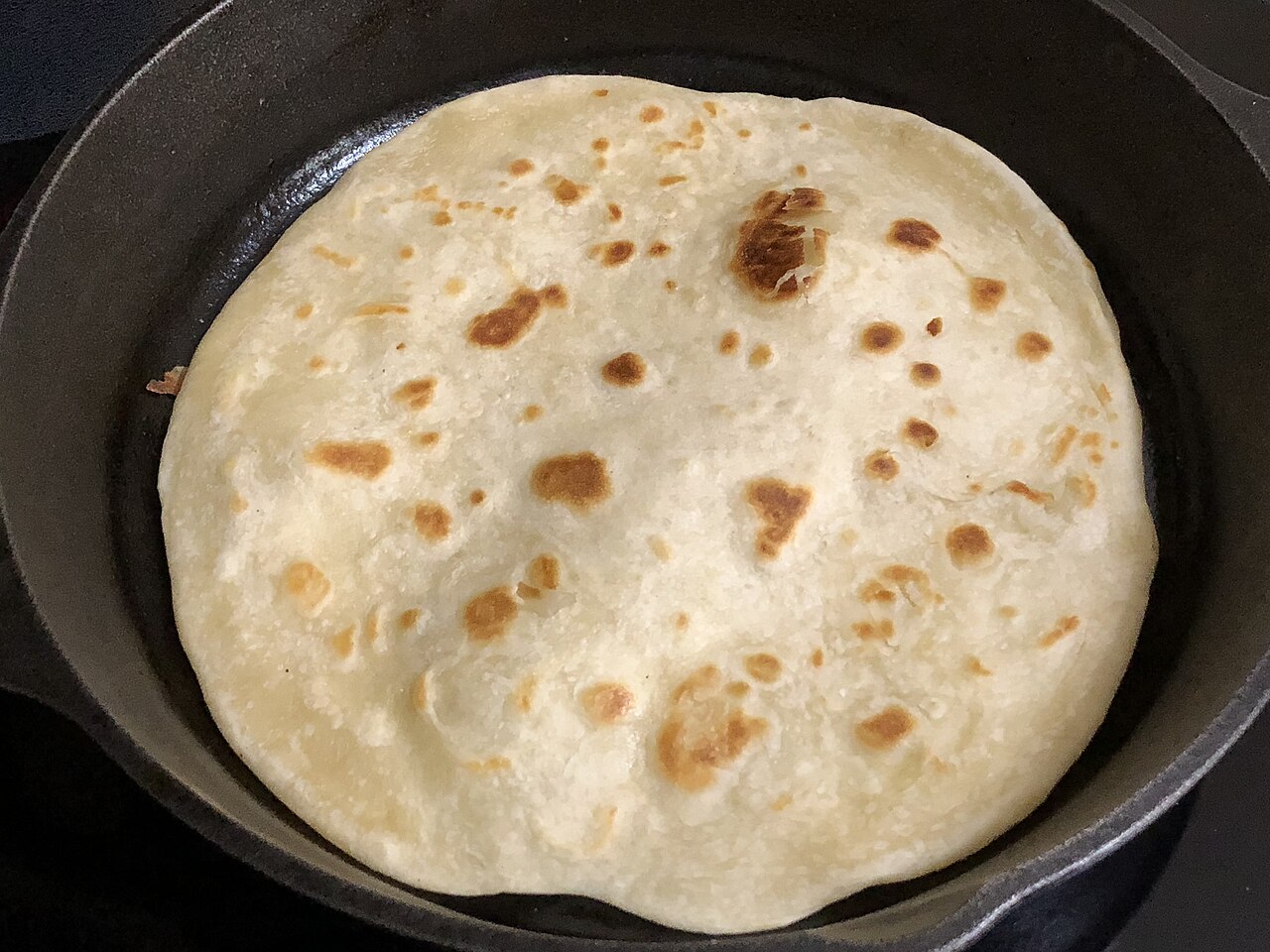
A thin, soft, round flatbread cooked on a hot iron plate, the everyday bread of Indo-Fijian homes. It is torn by hand and used to scoop up curry and dhal, and many Fijian families of every background eat roti and curry for breakfast or lunch.
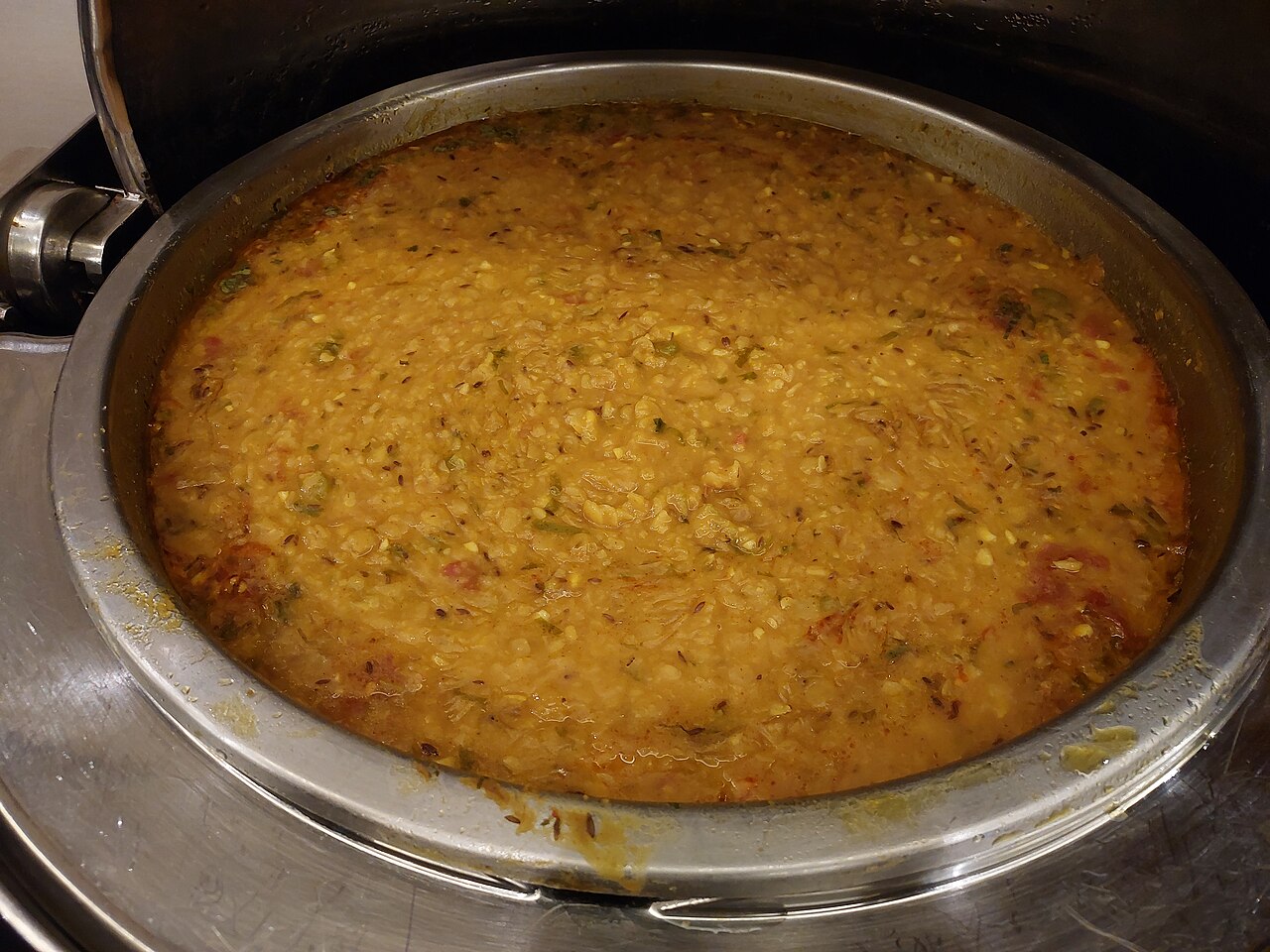
A thin, golden soup of split peas or lentils, cooked with turmeric and finished with spices fried in hot oil or ghee. In Indo-Fijian homes it is served almost every day with rice, roti and a curry.
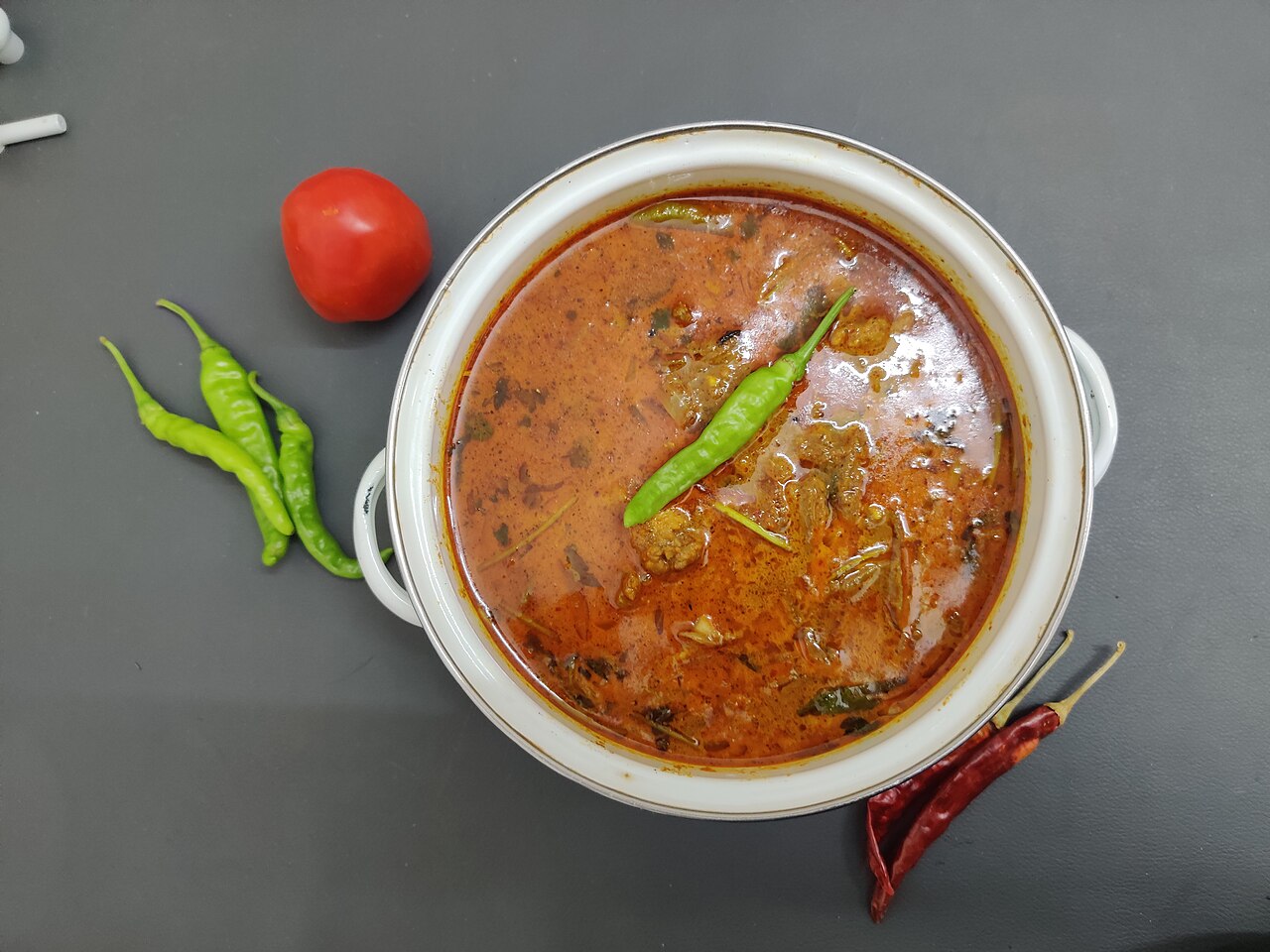
Curry came to Fiji with the Indian workers of the 1800s and is now eaten all over the islands, with chicken, goat, lamb, fish or vegetables. A typical home curry is cooked slowly with onion, garlic, ginger, curry powder and potatoes, and served with rice, roti, dhal and a spoon of chutney.
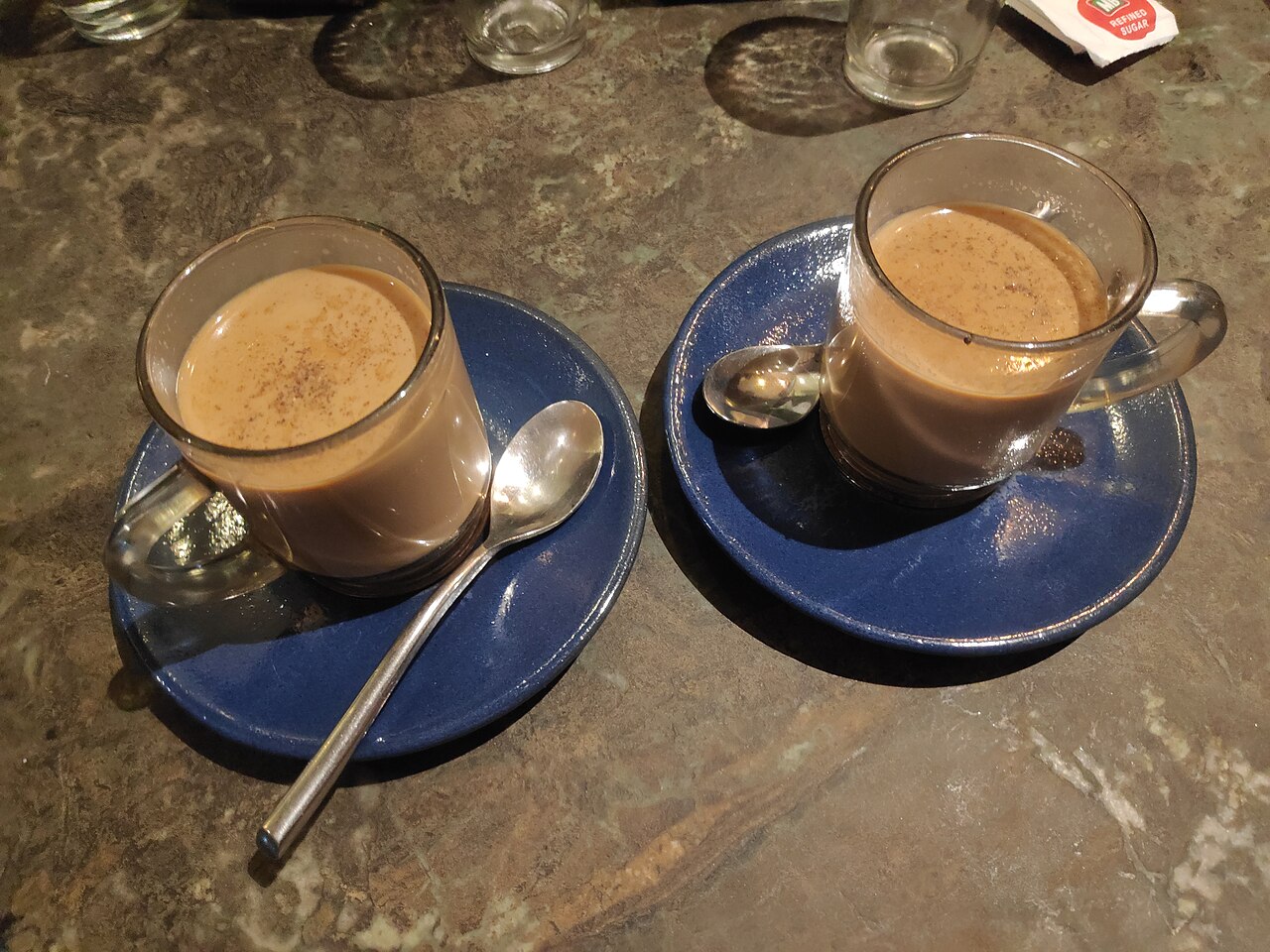
Black tea boiled with milk, sugar and spices such as cardamom, ginger and cloves. It is the main drink in many Indo-Fijian households, served morning and afternoon, often with a snack. Tea of every kind is a daily habit across Fiji.
At the table in Fiji
When you are offered yaqona (kava), clap once, take the coconut cup, drink it all in one go and hand the cup back.
If you are invited to a village or a Fijian home, bring a bundle of kava roots as your sevusevu, the gift offered on arrival. Your host will present it to the chief or head of the family.
In villages, cover your shoulders and knees, also at meals. A sulu, a wrap-around cloth worn by men and women, is always acceptable.
Kava should not be mixed with alcohol. After an evening of kava, do not drive, and avoid taking a taxi with a driver who has been drinking it.
Sharks are linked to the sea god Dakuwaqa and are taboo in many communities, so never bring shark meat as a gift.
Tipping is not expected in restaurants, taxis or hotels. Some resorts keep a staff 'Christmas box' for those who want to give something.