Swedish recipe
How to make Gravlax, cured salmon
Gravad lax
All of Sweden, from an old Nordic way of keeping fish
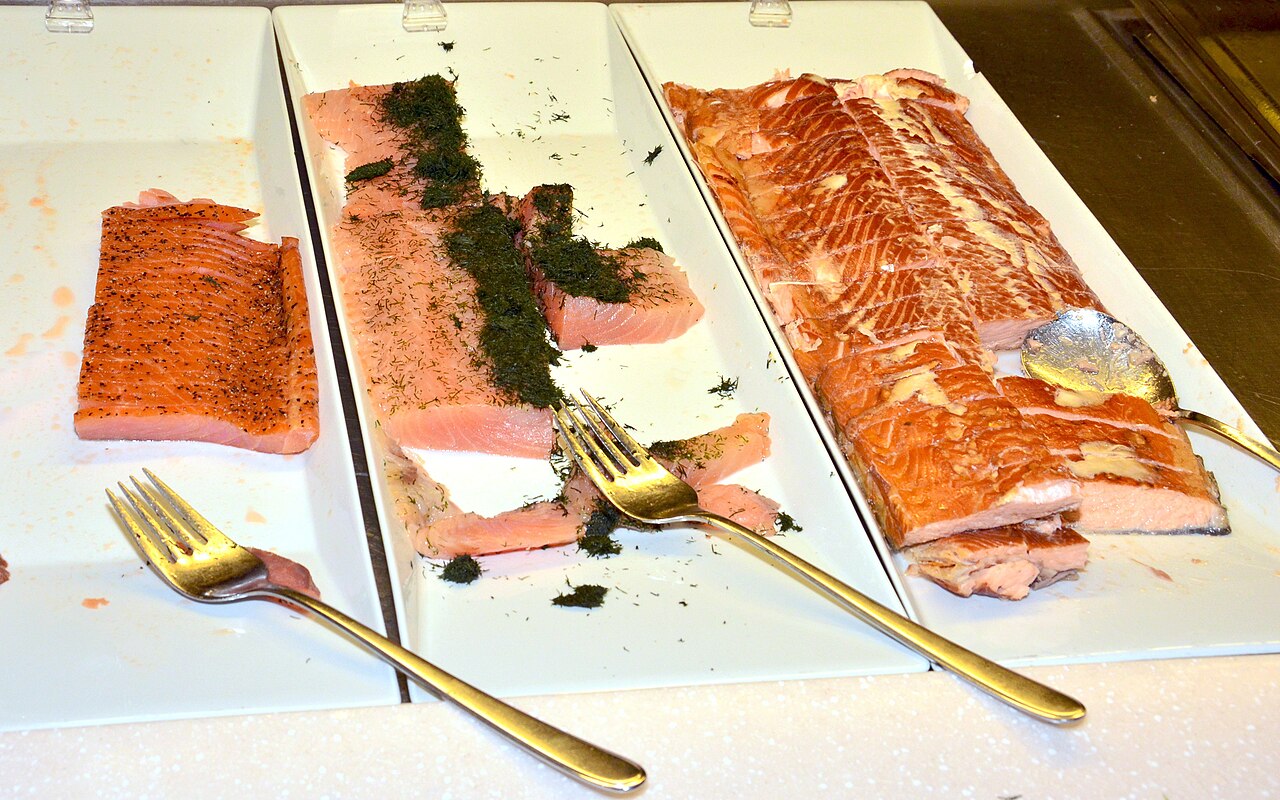
Raw salmon cured for a few days under salt, sugar and plenty of dill, then sliced thinly. It is eaten with a sweet mustard and dill sauce, on bread or with boiled potatoes. The fish is cured, not cooked, so it is still raw.
Ingredients
- 1 kg very fresh salmon fillet with skin, pin bones removed. Use fish sold as frozen for raw use, or freeze it at home for at least 4 days first (see the note in the steps)
- 3 tablespoons coarse sea salt
- 3 tablespoons sugar
- 1 teaspoon crushed white peppercorns
- A large bunch of fresh dill, chopped with the stalks
- For the sauce: 3 tablespoons Swedish or sweet mustard, 1 tablespoon sugar, 1 tablespoon vinegar, 100 ml oil, 3 tablespoons chopped dill
Method
- Safety first: the salmon is eaten raw. Parasites in raw fish are killed by freezing, so buy fish that has been frozen for raw use, or freeze it yourself in a home freezer at minus 18 °C or colder for at least 4 days, then thaw it in the fridge. Pregnant women, older people, young children and anyone with a weak immune system should not eat raw cured fish.
- Cut the fillet in two pieces across. Mix the salt, sugar and pepper.
- Lay one piece skin side down in a dish, cover with the salt mixture and most of the dill, and lay the other piece on top, skin side up, like a sandwich.
- Cover with cling film, put a small weight on top and keep it in the fridge for 2 to 3 days, turning the parcel every 12 hours and spooning the juices over.
- Whisk the mustard, sugar and vinegar, then slowly whisk in the oil and stir in the dill.
- Scrape off the dill and spices, slice the salmon very thinly at an angle away from the skin and serve with the sauce. Keep it in the fridge and eat it within a few days.
Made it at home? Tick it off and it goes into your kitchen passport.
The name means 'buried salmon': in the Middle Ages fishermen salted the fish and buried it in the sand above the high-tide line to cure it.
 Take the trip to Sweden