British food is hearty, homely and full of regional pride. A traditional day might begin with a cooked breakfast, especially at weekends. Lunch is often light, and the main meal comes in the evening, called 'dinner' by some and 'tea' by others, especially in the north. Sunday is for a roast with all the trimmings, and in the afternoon there is always time for a cup of tea, perhaps with a scone or a slice of cake. Each of the four nations has its own favourites.
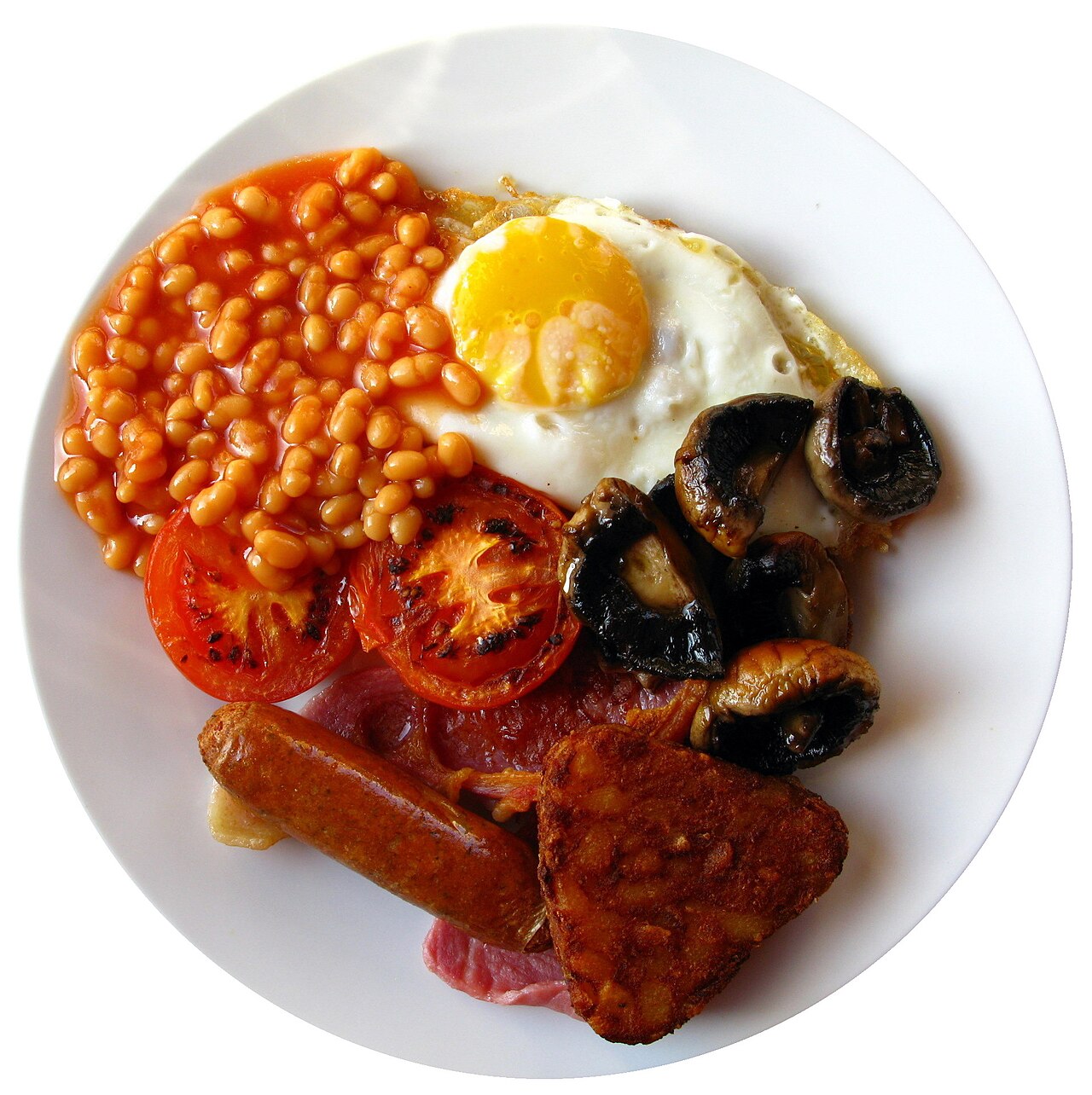
A big cooked breakfast of bacon, sausages, eggs, grilled tomatoes, mushrooms, baked beans and toast or fried bread, often with black pudding. Scotland, Wales and Northern Ireland each have their own version.
The Ulster fry of Northern Ireland adds soda farls and potato bread, the Scottish breakfast may bring tattie scones and Lorne sausage, and a Welsh breakfast can include cockles and laverbread, a purée of seaweed.
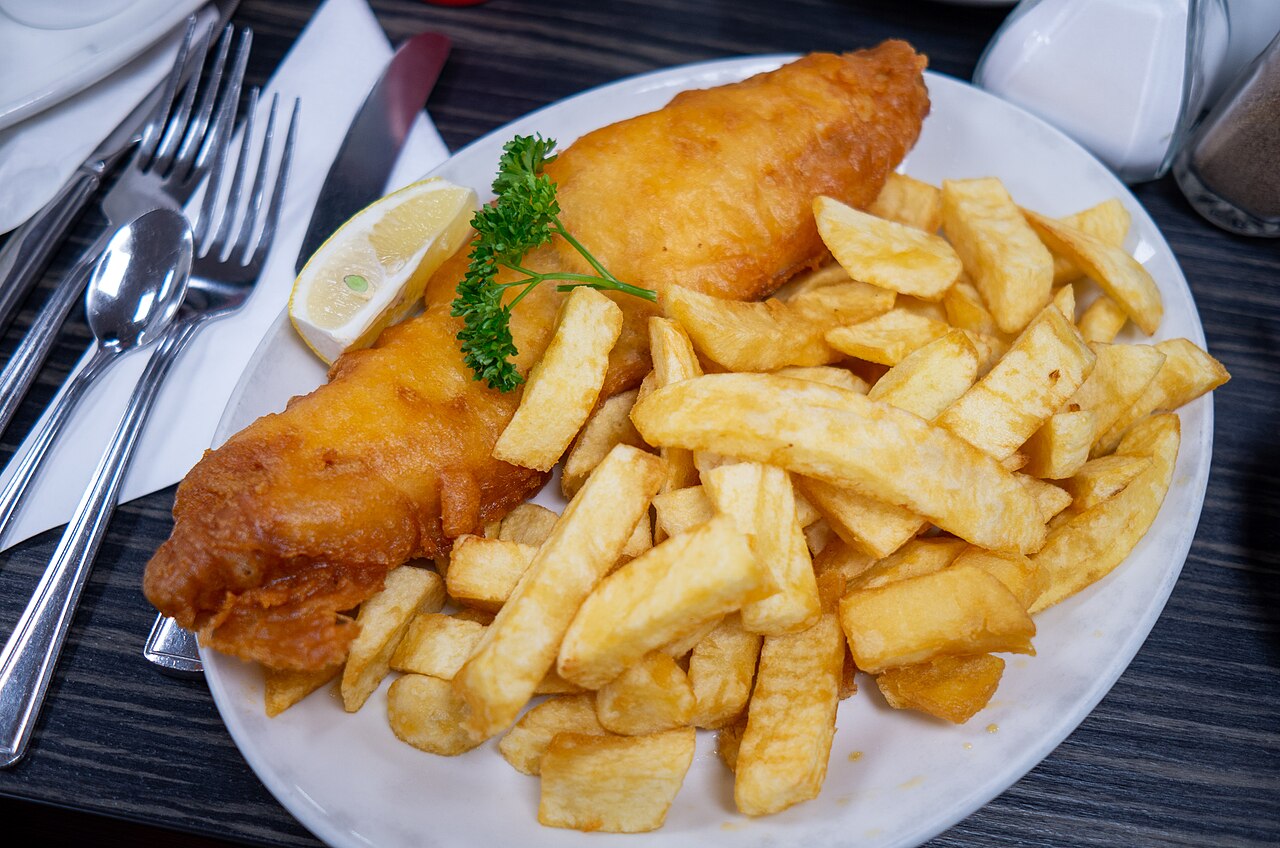
White fish, usually cod or haddock, fried in crisp batter and served with thick-cut chips, salt and malt vinegar. Mushy peas and tartare sauce are popular sides, and seaside towns are famous for it.
The first fish and chip shops opened in the 1860s, in London and in Lancashire, and which came first is still argued. During the Second World War, fish and chips was one of the few foods never rationed.
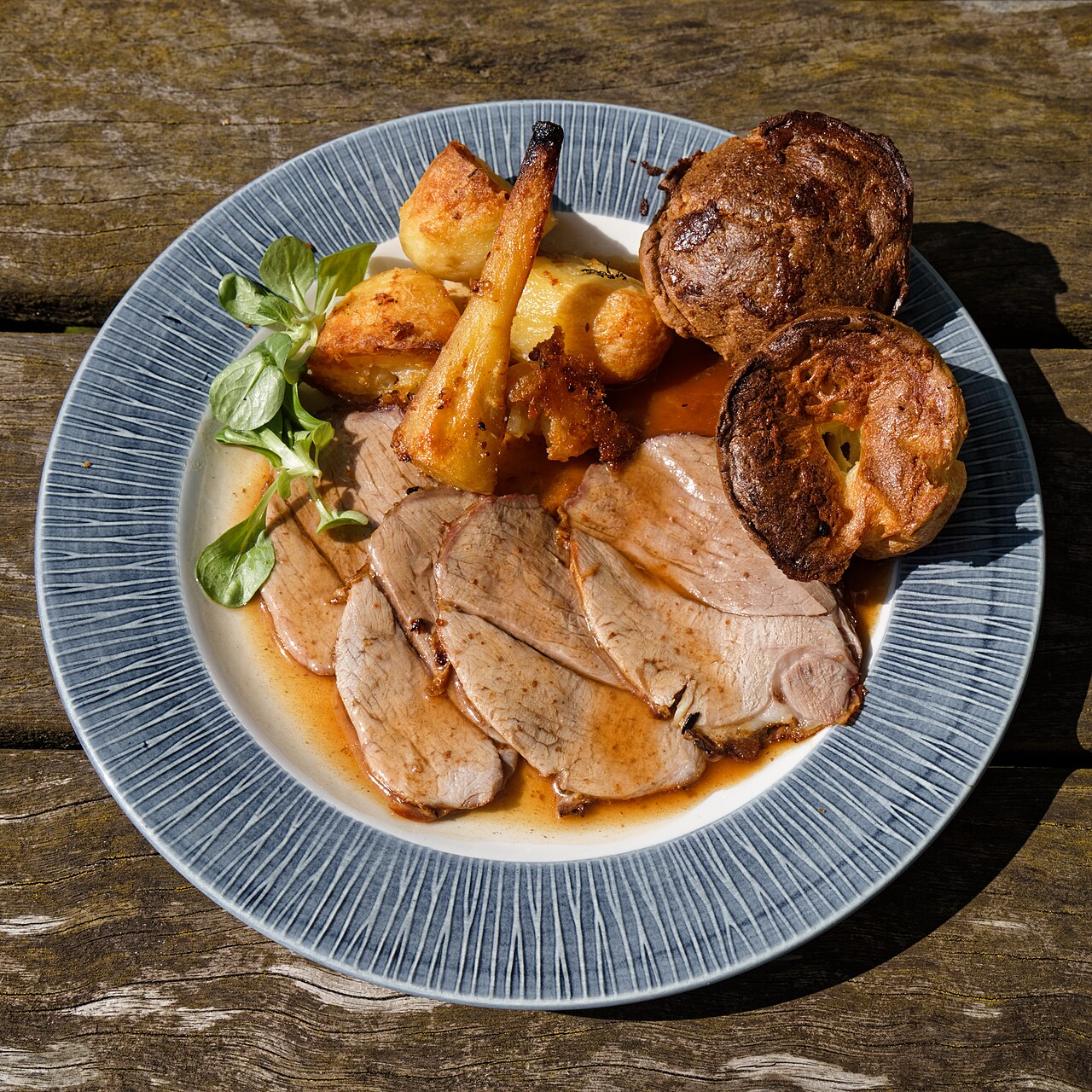
Roast beef, lamb, pork or chicken with roast potatoes, vegetables and gravy, traditionally eaten at Sunday lunchtime. Each meat has its partner: Yorkshire pudding and horseradish with beef, mint sauce with lamb, apple sauce with pork.
One story says the custom grew up because families put the meat in the oven before going to church and ate it when they came home.
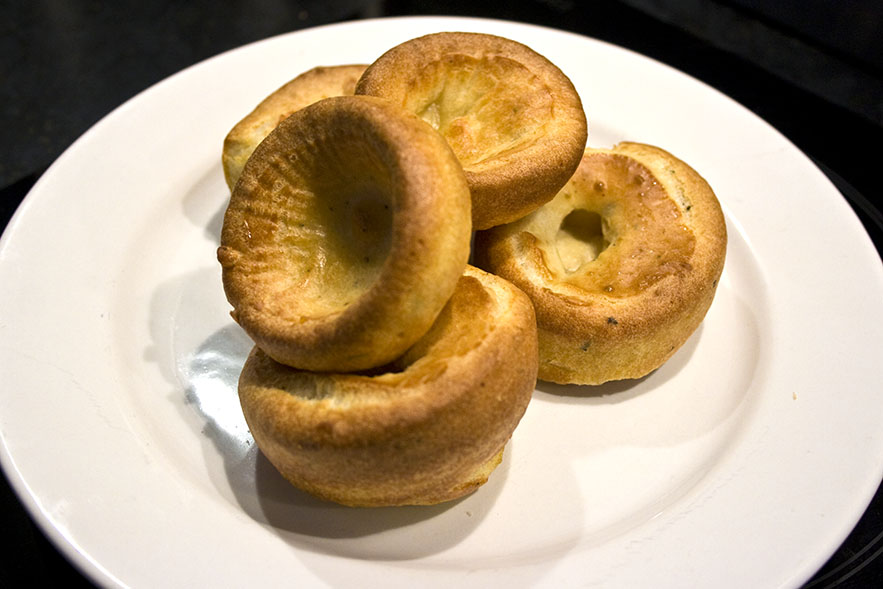
A simple batter of eggs, flour and milk poured into smoking hot fat, which puffs up into a golden, crisp cup. It is served with roast beef and gravy.
In 2008 the Royal Society of Chemistry declared that a proper Yorkshire pudding should be at least 4 inches (10 cm) tall. Long ago it was served first, with gravy, so that people would eat less of the expensive meat.
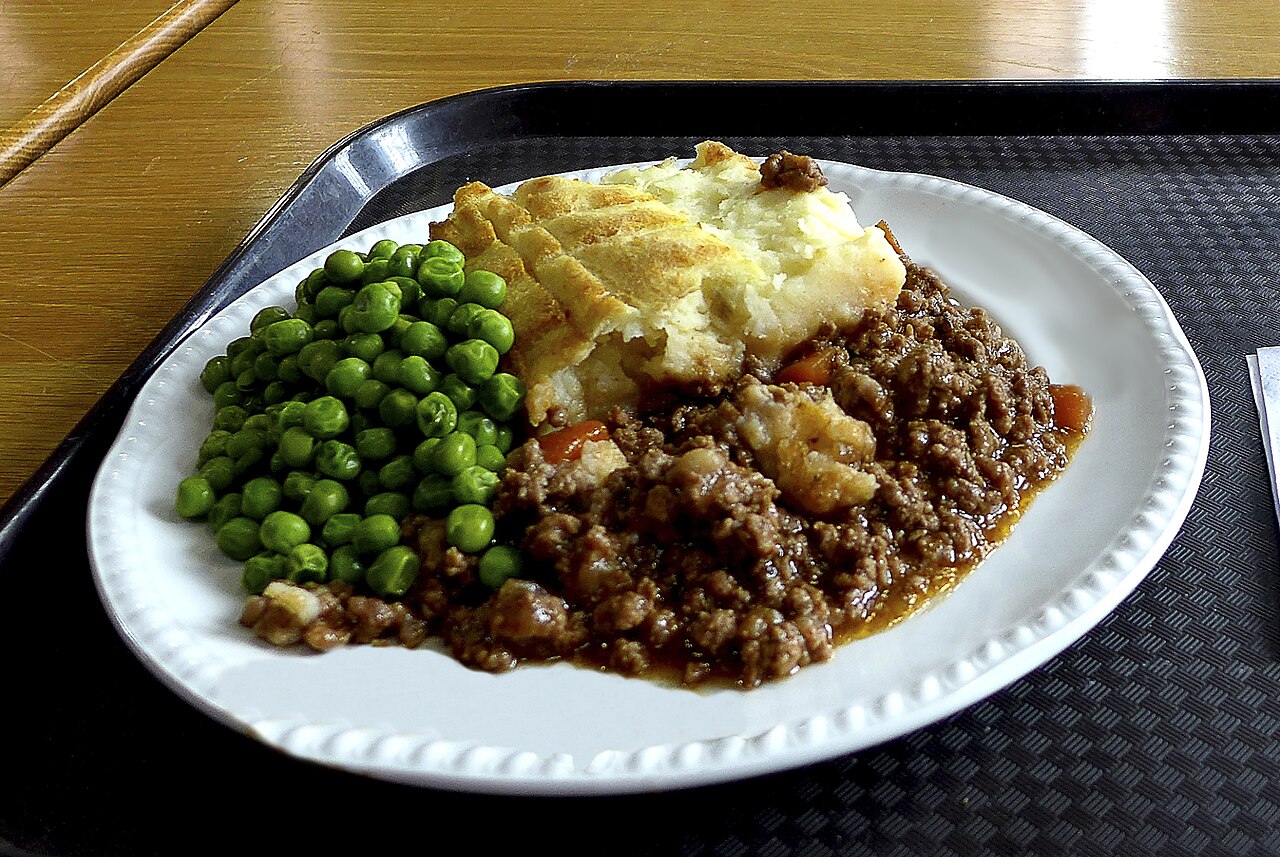
Minced lamb cooked with onions, carrots and gravy, topped with mashed potato and baked until golden. Made with beef, it is usually called cottage pie.
Cottage pie is the older name, first recorded in 1791. Shepherd's pie appears in the 1800s, and it was a thrifty way to use up the leftover meat from a Sunday roast.
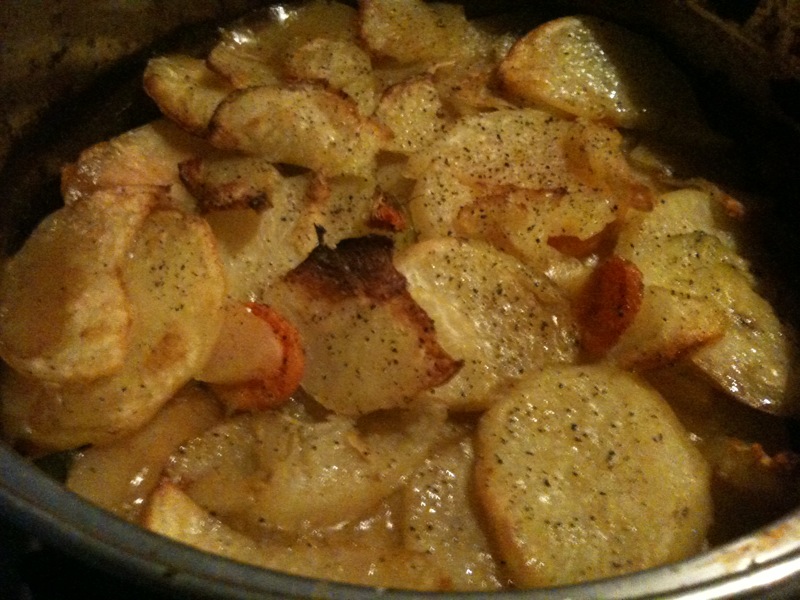
Lamb or mutton and onions, covered with overlapping slices of potato and cooked slowly in a lidded pot until the top is crisp and brown. It is traditionally served with pickled red cabbage.
In her novel North and South (1854), Elizabeth Gaskell showed hotpot as the most prized dish of cotton workers in a northern town. It was popular because it could be left to cook slowly while the family was at work.
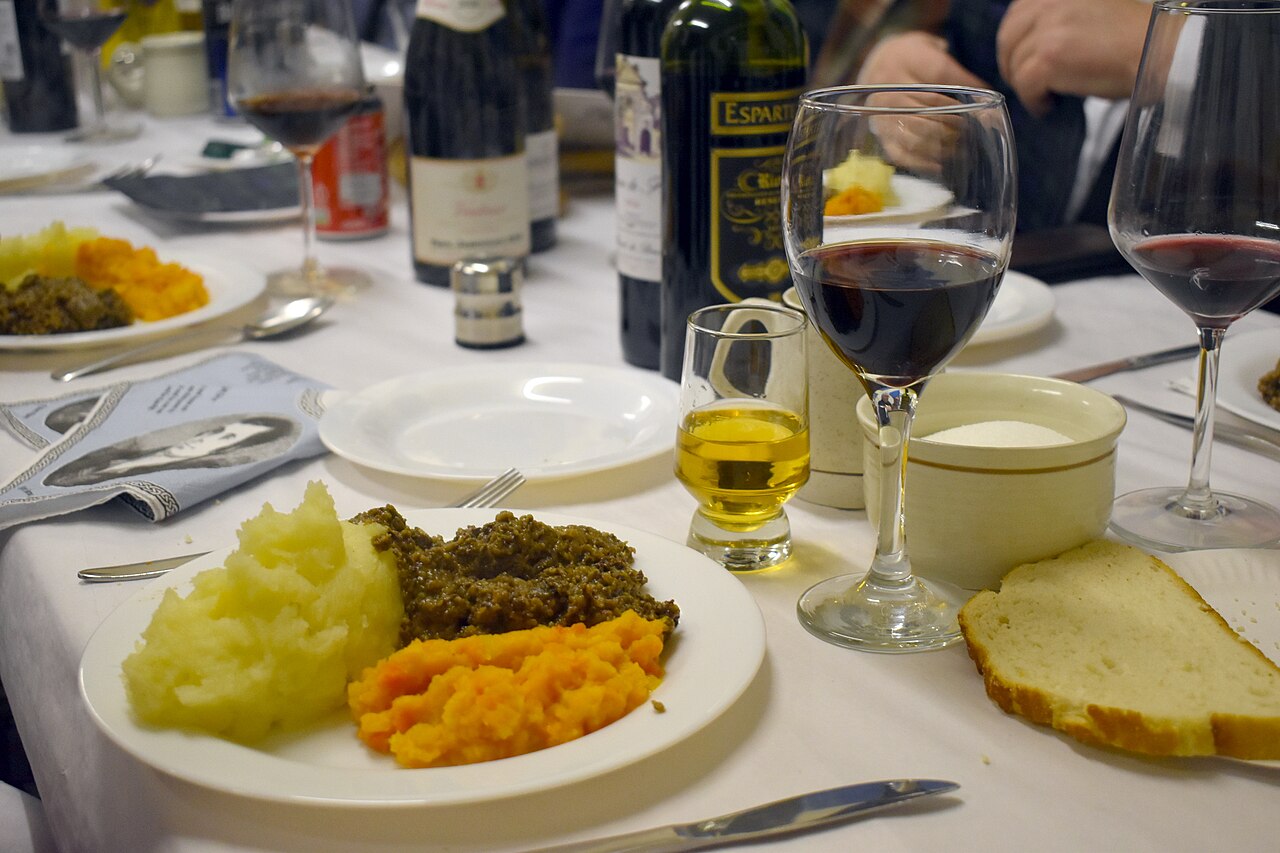
Scotland's national dish: sheep's heart, liver and lungs minced with onion, oatmeal, suet and spices, traditionally cooked in a sheep's stomach. It is served with 'neeps and tatties', mashed swede and potatoes.
On Burns Night, 25 January, Scots celebrate the poet Robert Burns by reciting his 'Address to a Haggis' before the haggis is cut open. Traditional haggis cannot be imported into the United States, because a 1971 ban covers food containing sheep's lung.
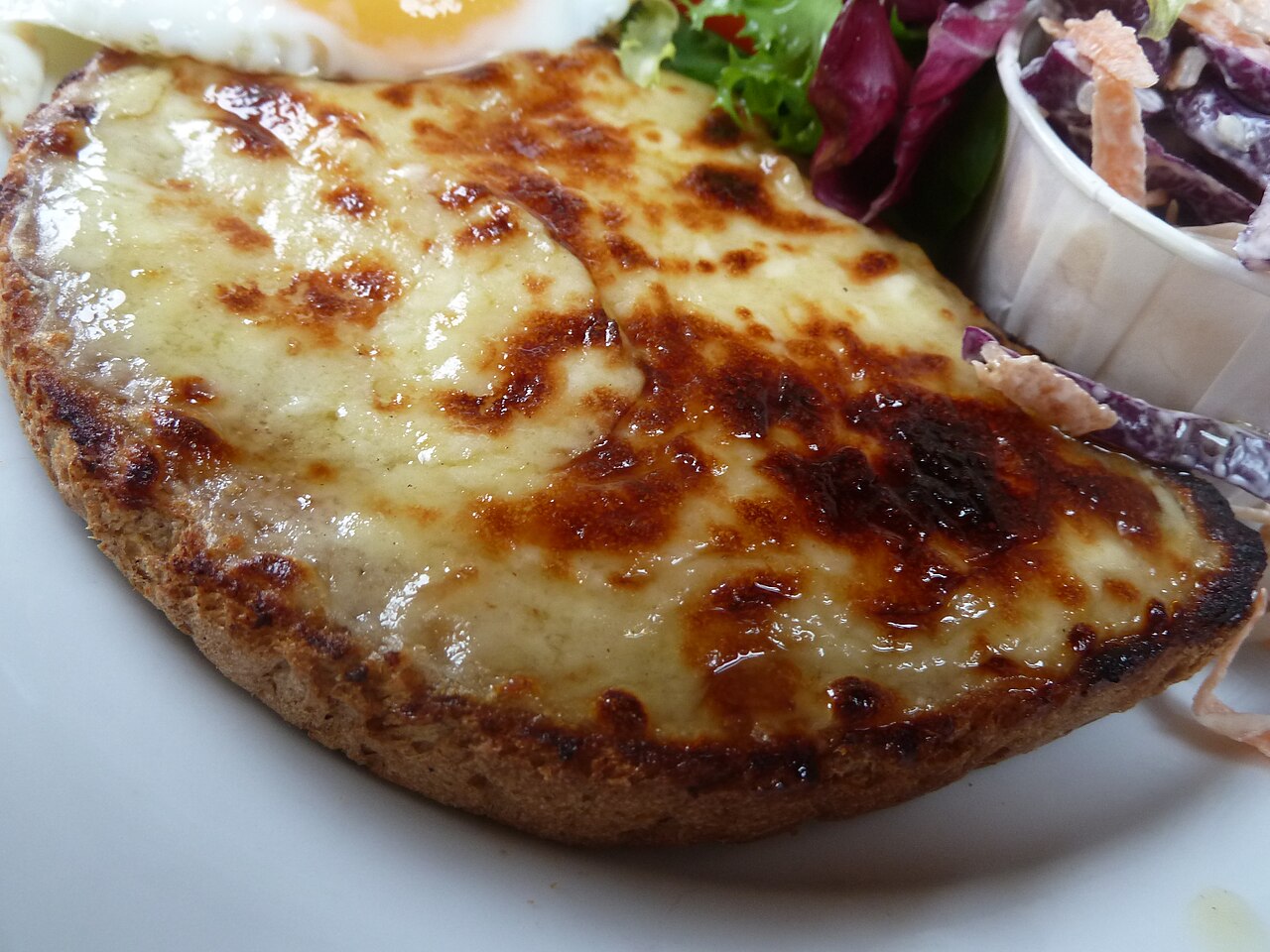
Toast topped with a rich sauce of melted cheese, often with ale, mustard and Worcestershire sauce, then grilled until bubbling. There is no rabbit in it at all.
It was first recorded in 1725 as 'Welsh rabbit', probably as a joke. The spelling 'rarebit' came later. With a fried egg on top it becomes a 'buck rarebit'.
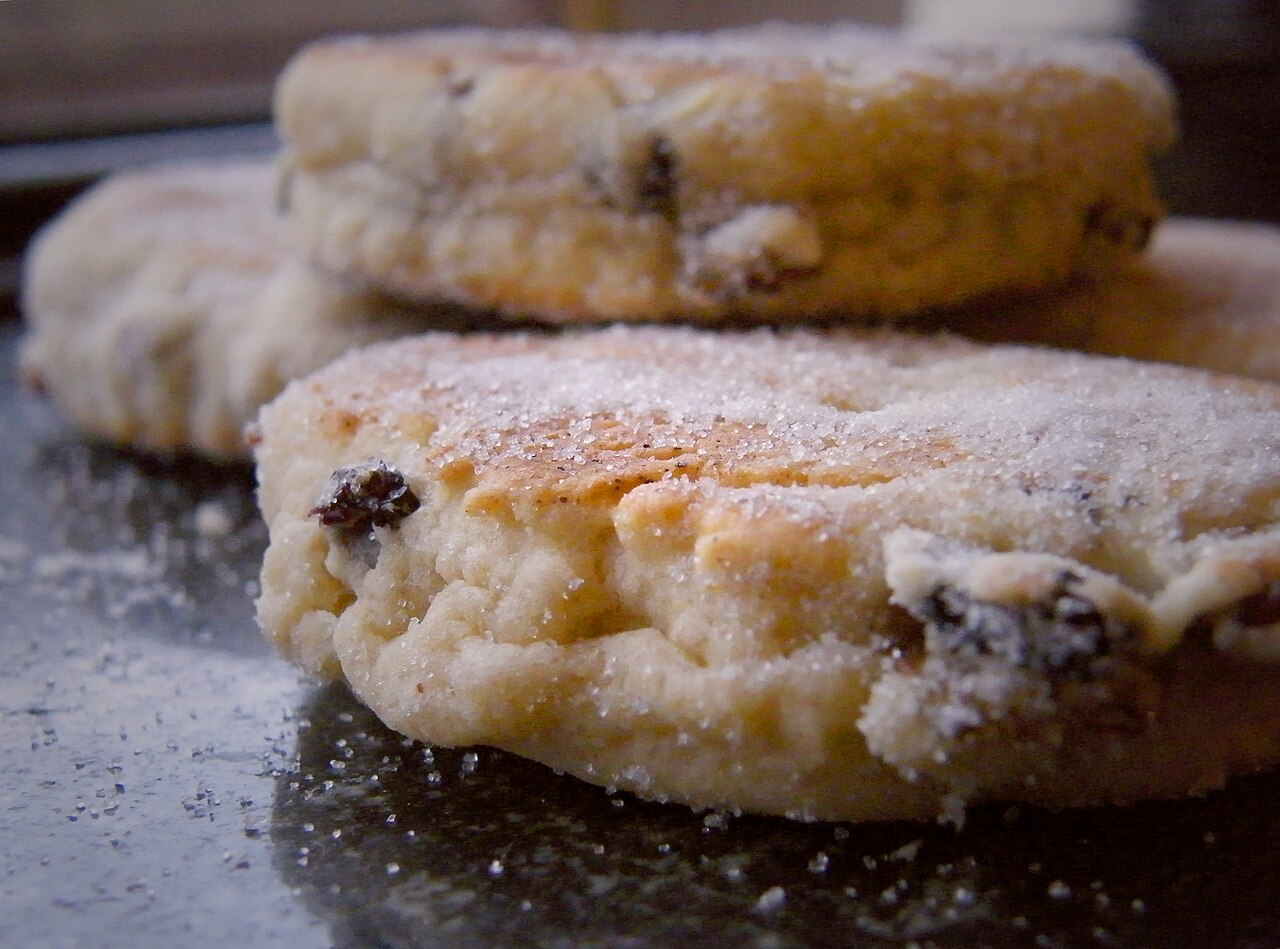
Small, round, lightly spiced cakes with currants, cooked on a flat griddle or 'bakestone' rather than in the oven. They taste like something between a scone, a biscuit and a pancake.
Coal miners carried them underground as a handy snack, and they are baked for Saint David's Day, the Welsh national day, on 1 March.
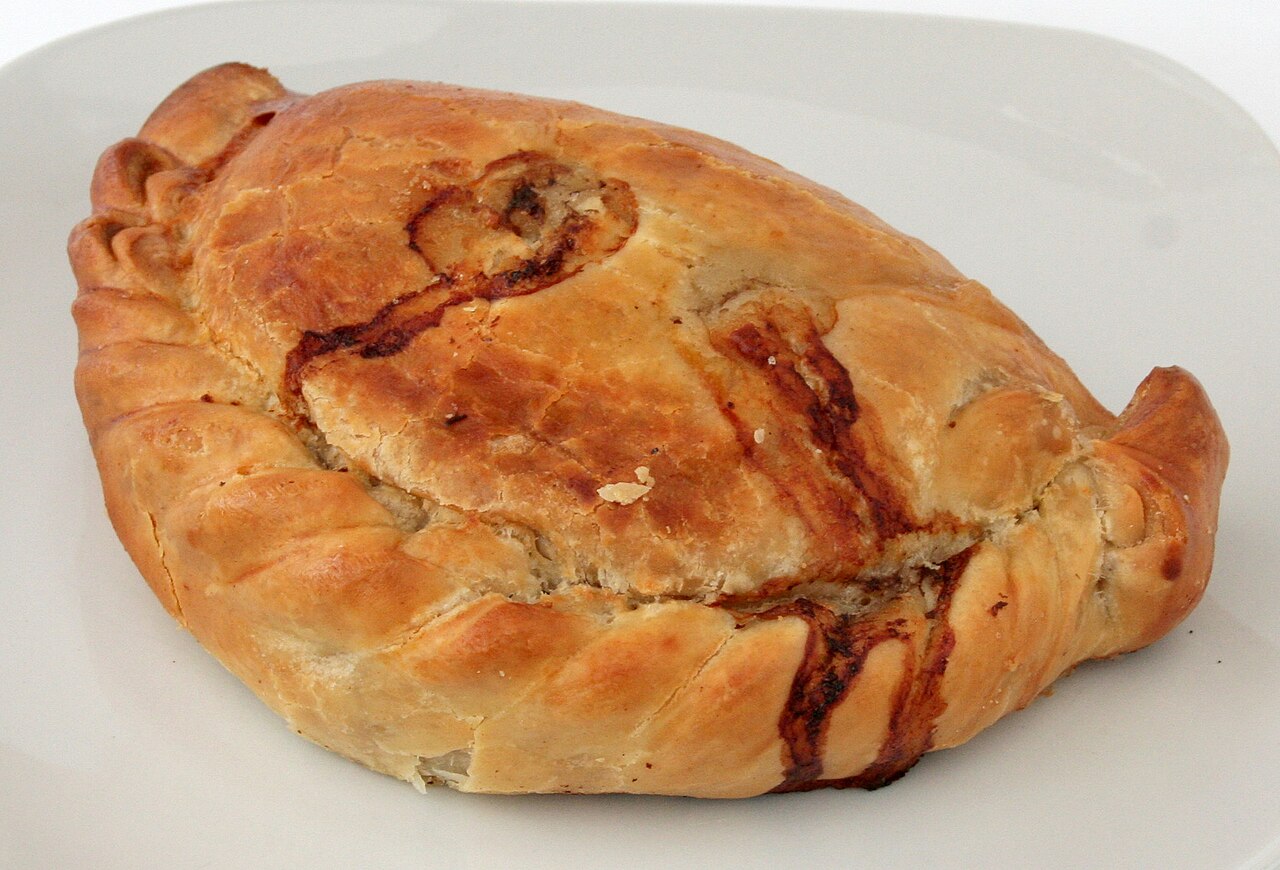
A D-shaped pastry filled with beef, potato, swede and onion, seasoned with salt and pepper and crimped along one side. It is a complete meal you can hold in your hand.
Since 2011 the Cornish pasty has had Protected Geographical Indication (PGI) status, so only pasties prepared in Cornwall to the traditional recipe may use the name. Tin miners took pasties underground, where they stayed warm for hours.
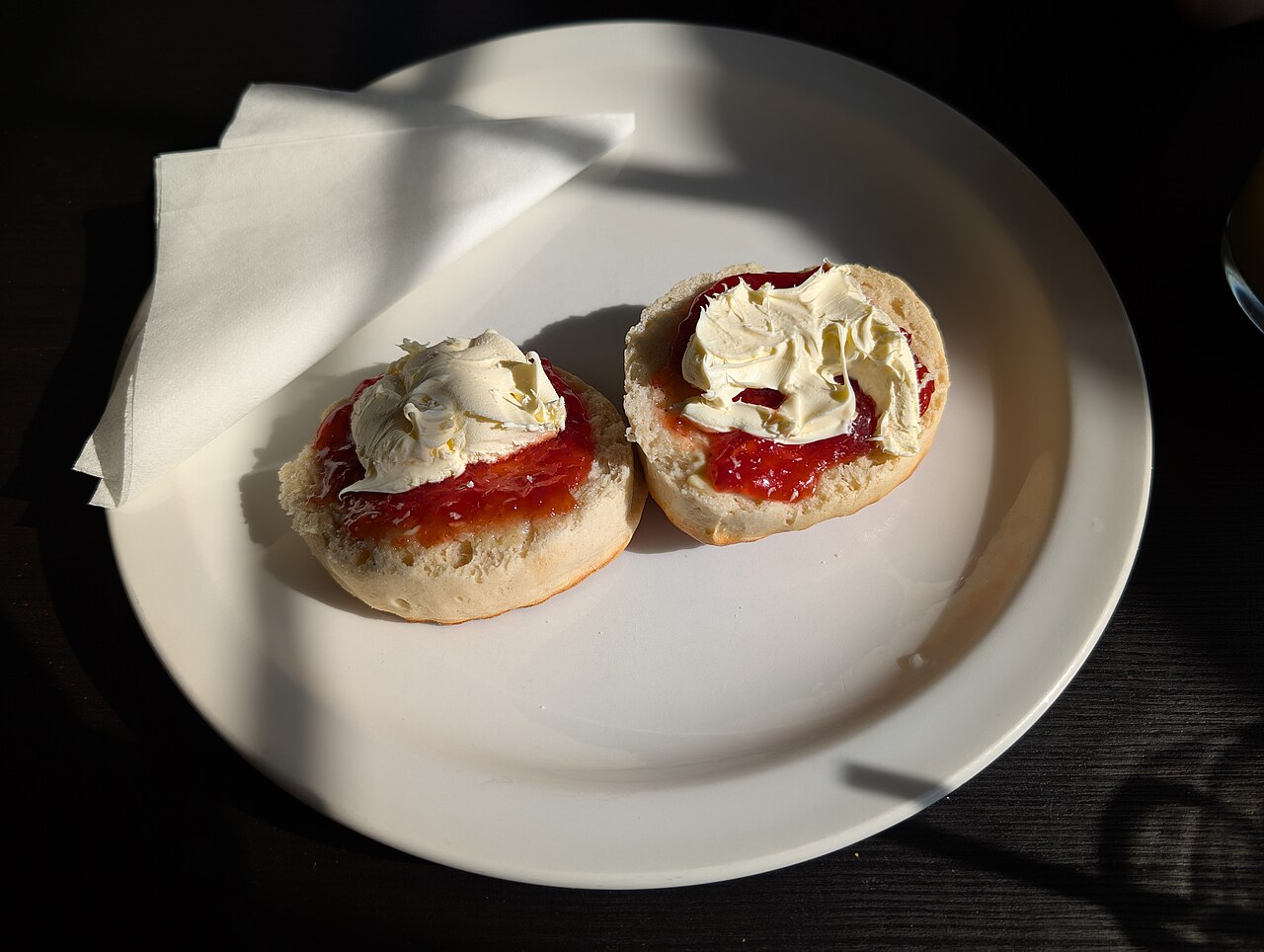
Light, crumbly little breads served warm with strawberry jam and thick clotted cream. With a pot of tea, this is a 'cream tea', a favourite in Devon and Cornwall.
Devon and Cornwall disagree on the order: in Devon the cream goes on first and the jam on top, and in Cornwall it is jam first, then cream. How to pronounce 'scone' is another friendly argument.
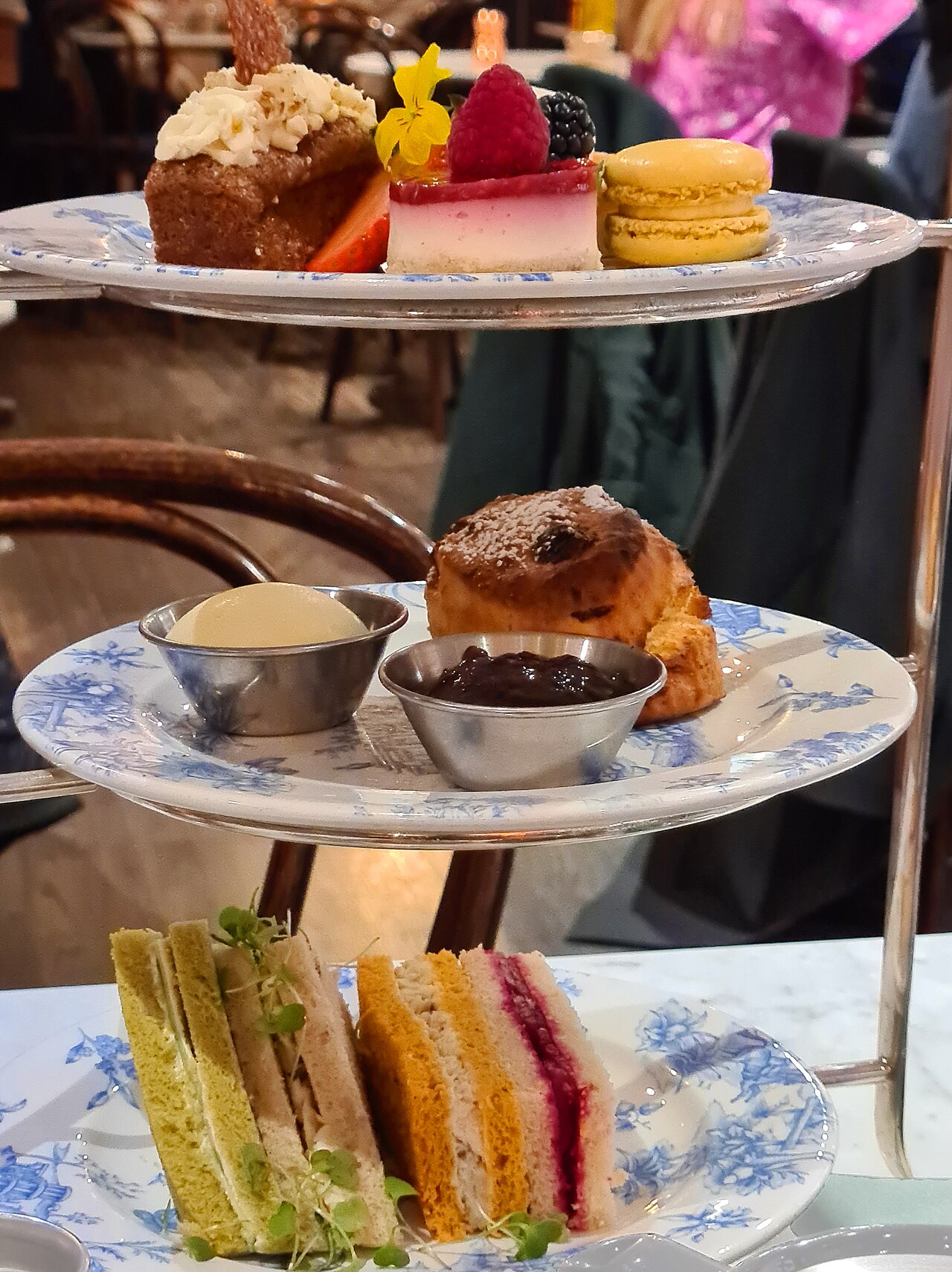
A pot of tea, usually drunk with milk, served with small sandwiches (cucumber is a classic), scones and cakes, often on a tiered stand. It is a treat for a special occasion in a hotel or tea room.
Anna, Duchess of Bedford, is often said to have started the fashion in the 1830s or 1840s by asking for tea and snacks to bridge the long gap between lunch and a late dinner, although some historians think the habit is older.
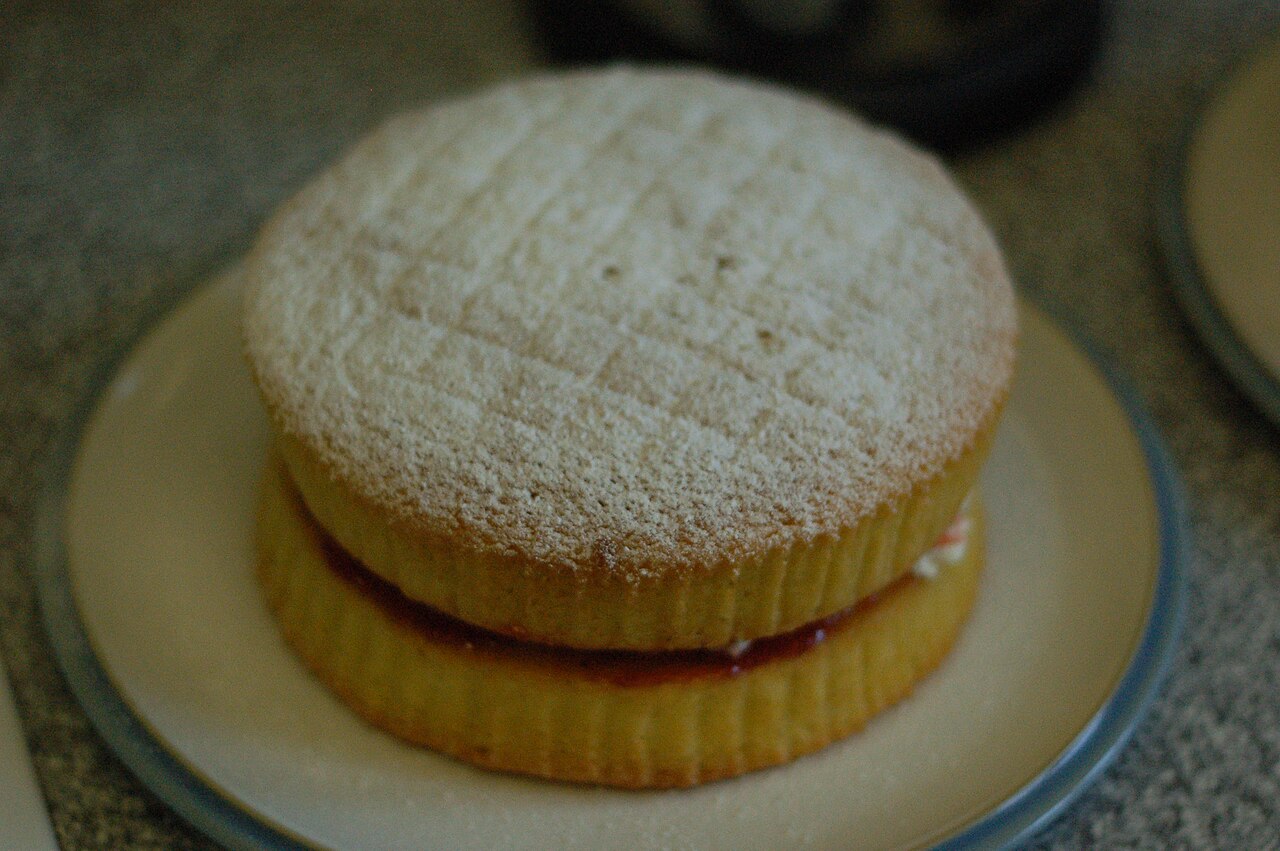
Two light butter sponge cakes sandwiched together with raspberry or strawberry jam, and often cream, with a dusting of sugar on top. It is a village fête and tea-time classic.
It is named after Queen Victoria, who is said to have enjoyed a slice with her afternoon tea. It became possible after Alfred Bird invented baking powder in 1843.
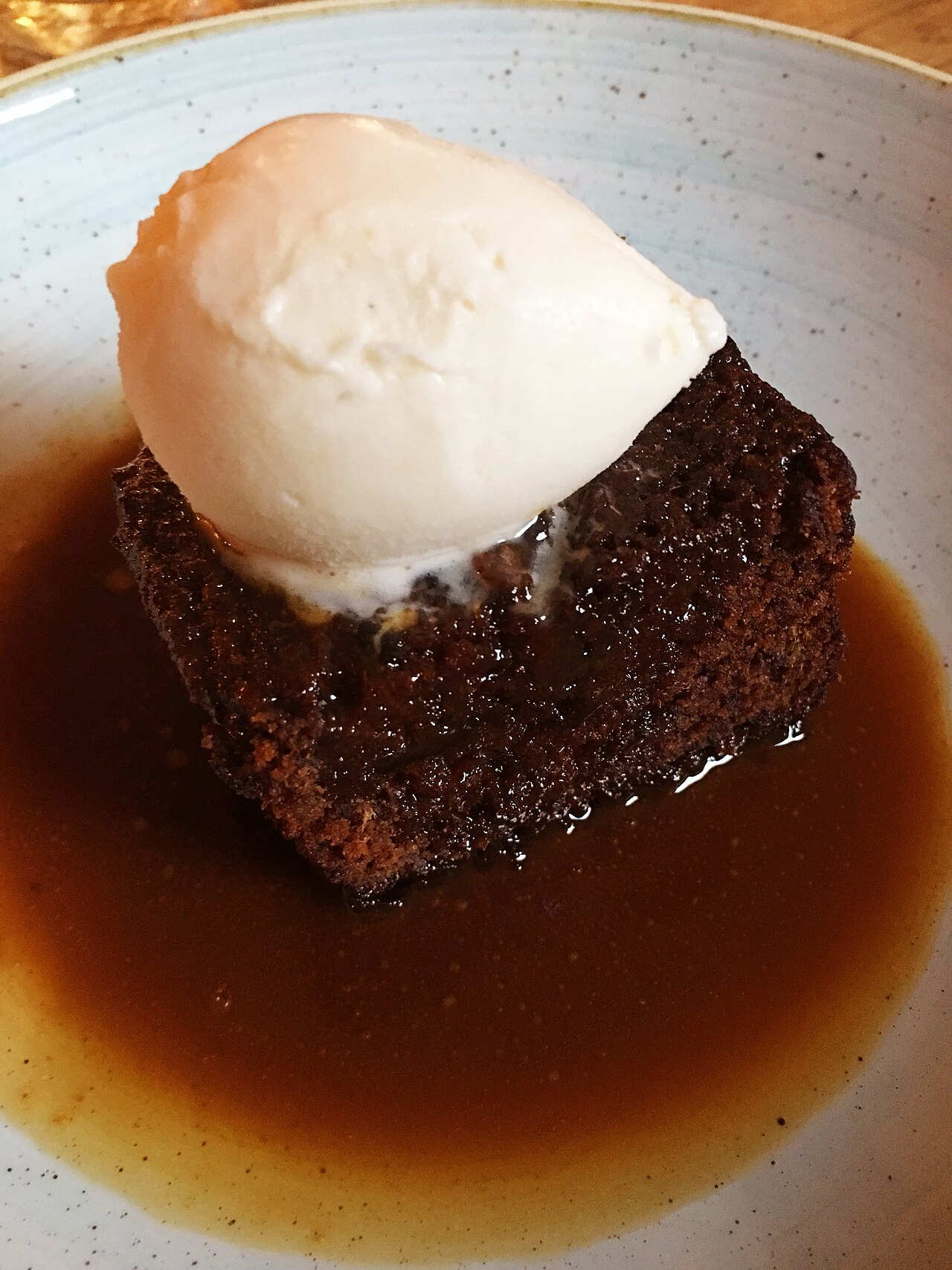
A moist sponge made with chopped dates, soaked in a warm toffee sauce of butter, cream and dark sugar, served with custard, cream or vanilla ice cream.
It was made famous in the 1970s at the Sharrow Bay hotel on Ullswater in the Lake District, although several other places claim to have served it first.
At the table in the United Kingdom
Hold the fork in your left hand and the knife in your right, and keep them there while you eat, rather than swapping hands.
In most pubs you order and pay at the bar. Friends often take turns to buy a 'round' of drinks for the whole group, and if someone buys you one, it is polite to buy the next.
Check the restaurant bill before tipping: many restaurants add a service charge of about 10 to 12.5 percent. If there is none, 10 to 15 percent is usual for good service. You do not need to tip for drinks at the bar.
Tea is usually drunk with milk. If you visit someone at home, you will almost certainly be asked if you would like a cup, and it is friendly to say yes.
When raising a glass, say 'Cheers'. In Wales you may hear 'Iechyd da' (YEH-chid DAH), which means 'good health'.