Uzbek cooking is hearty and generous, built on bread, rice, noodles, mutton and the fruit and vegetables of the irrigated oases. A meal with guests usually begins with round bread, green or black tea, fruit, nuts and sweets already on the table. Then comes a soup such as mastava or shurpa, and then the main dish: often palov, the national dish, served on a big shared platter with a fresh tomato and onion salad. Tea is drunk all through the meal.
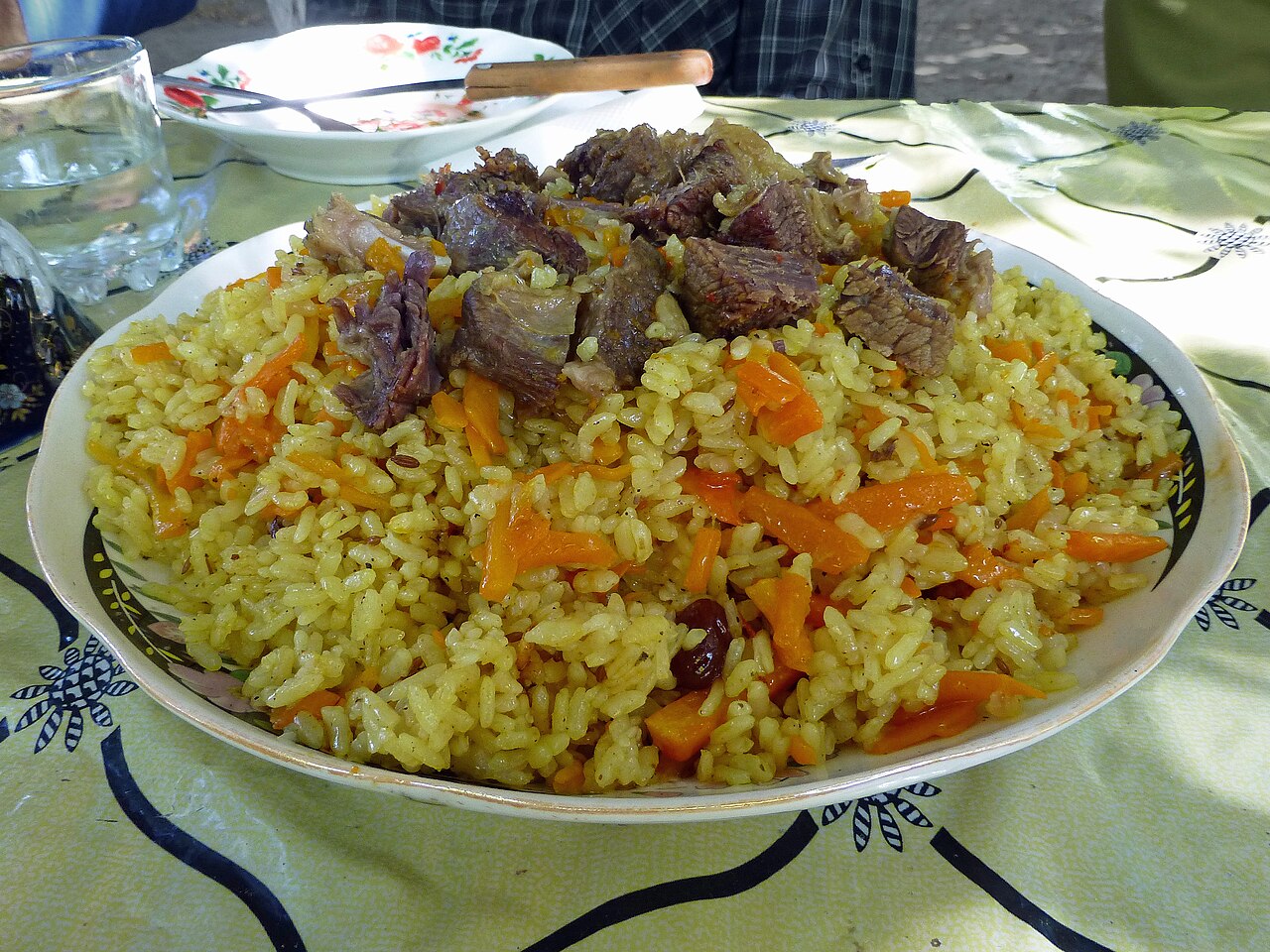
Uzbekistan's national dish: rice cooked in a large cauldron (qozon) on top of a rich base of mutton or beef, onions and thick strips of yellow and orange carrots, seasoned with cumin. Chickpeas, raisins, barberries or quince are added in some regions. It is served on a large platter for everyone to share.
In 2016 UNESCO added the palov culture and tradition of Uzbekistan to its list of intangible cultural heritage. For a big wedding, a master cook called an oshpaz can make palov for up to 1,000 people from a single cauldron.
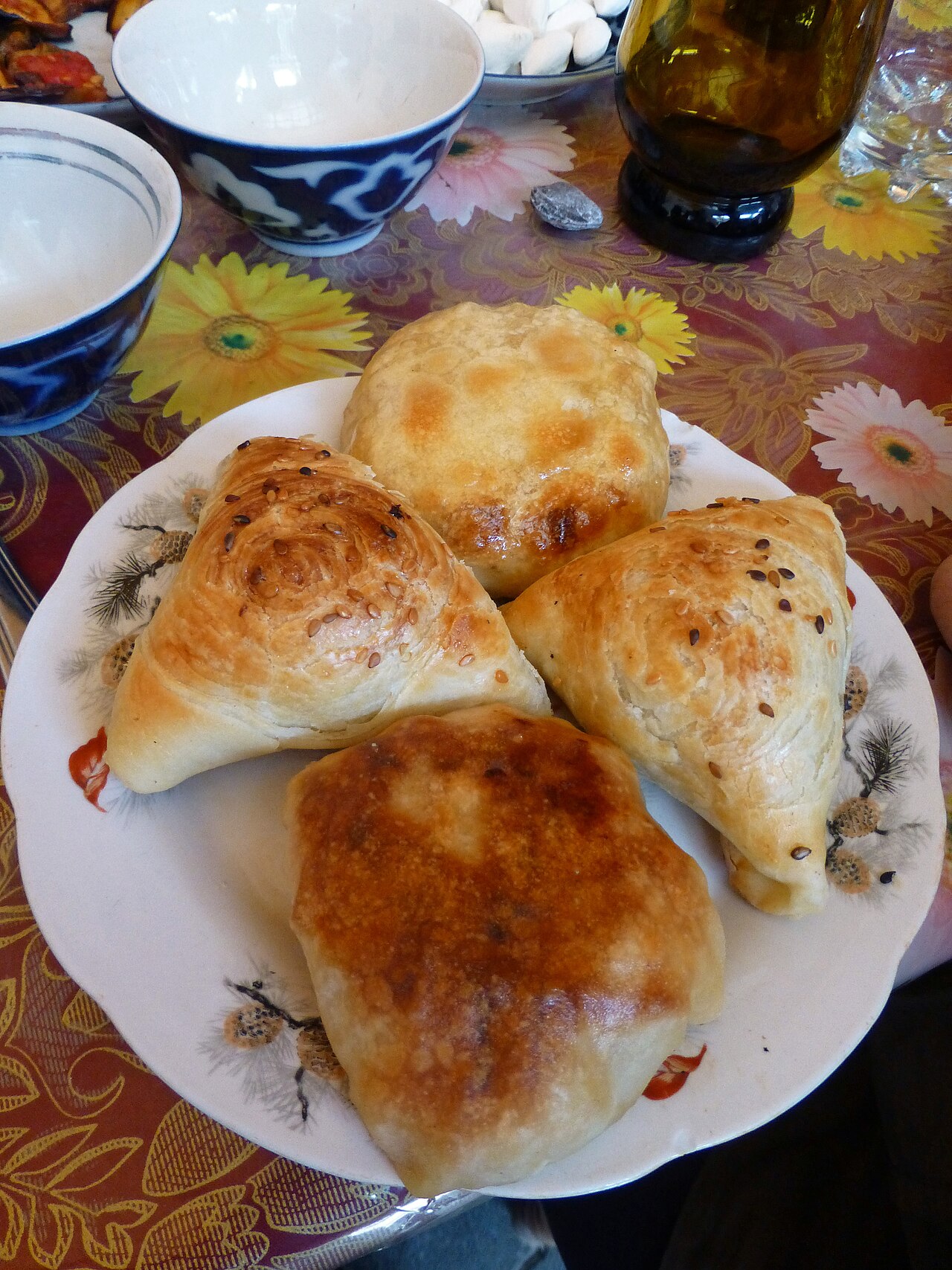
A savoury pastry, usually triangular or round, filled with minced or chopped lamb and plenty of onion, and baked on the hot inner wall of a clay tandir oven. There are versions with beef, chicken, potato or pumpkin, and bakers sell them hot from street stalls all day.
In season, bakers also fill somsa with pumpkin or potato.
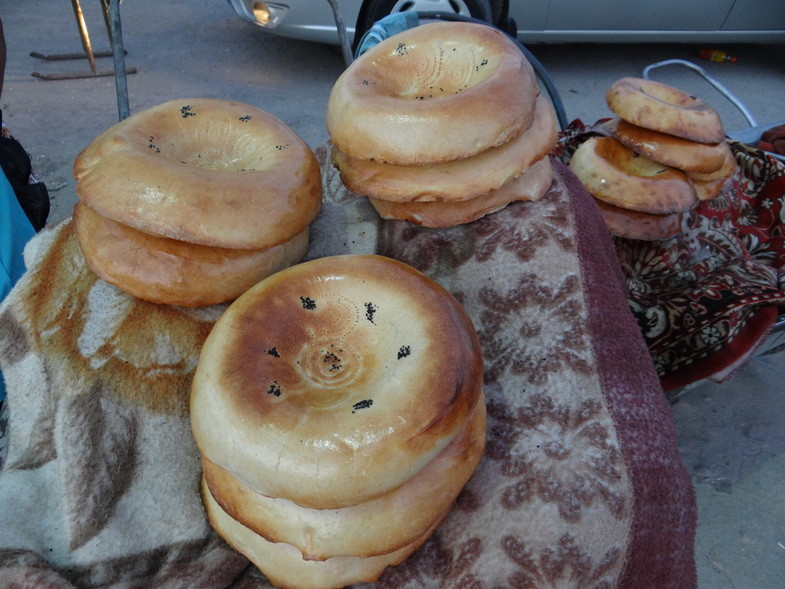
Round flatbread with a thick rim and a thin, patterned centre stamped with a special tool, baked on the walls of a clay tandir oven. It is served with every meal and treated with great respect. Every region has its own style of bread.
Samarkand is especially famous for its bread, traditionally baked in clay ovens.
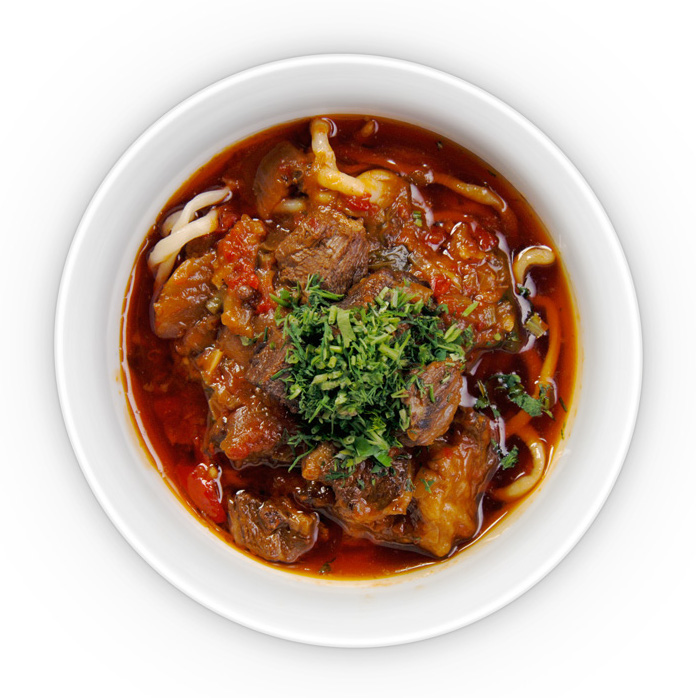
Long hand-pulled noodles with a sauce of lamb or beef, peppers, onions, tomatoes and other vegetables. It can be served as a thick soup or as a drier noodle dish with the sauce on top.
The dish came to Central Asia from the Uyghur people, and its name is probably related to the Chinese word lamian, meaning pulled noodles.
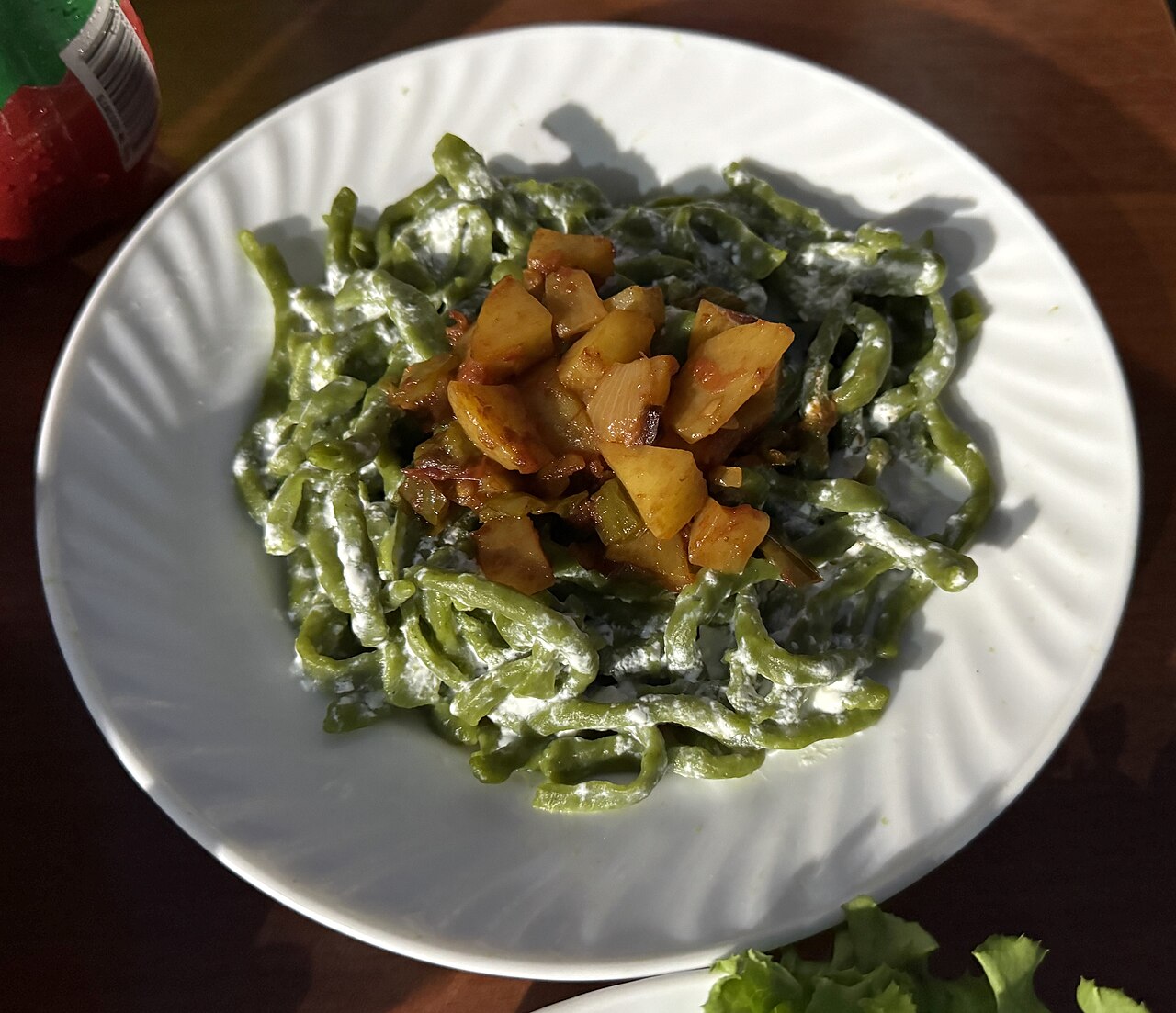
The green noodles of Khorezm: dill is worked into the dough, which turns the noodles a pale green. They are served with a stew of meat and vegetables and a spoonful of suzma, a thick strained yoghurt.
Shivit is the Uzbek word for dill, so the name simply means 'dill dish'. In Khorezm it is a favourite on hot summer days.
Tashkent and the whole country; Kazakhs and Kyrgyz make it too
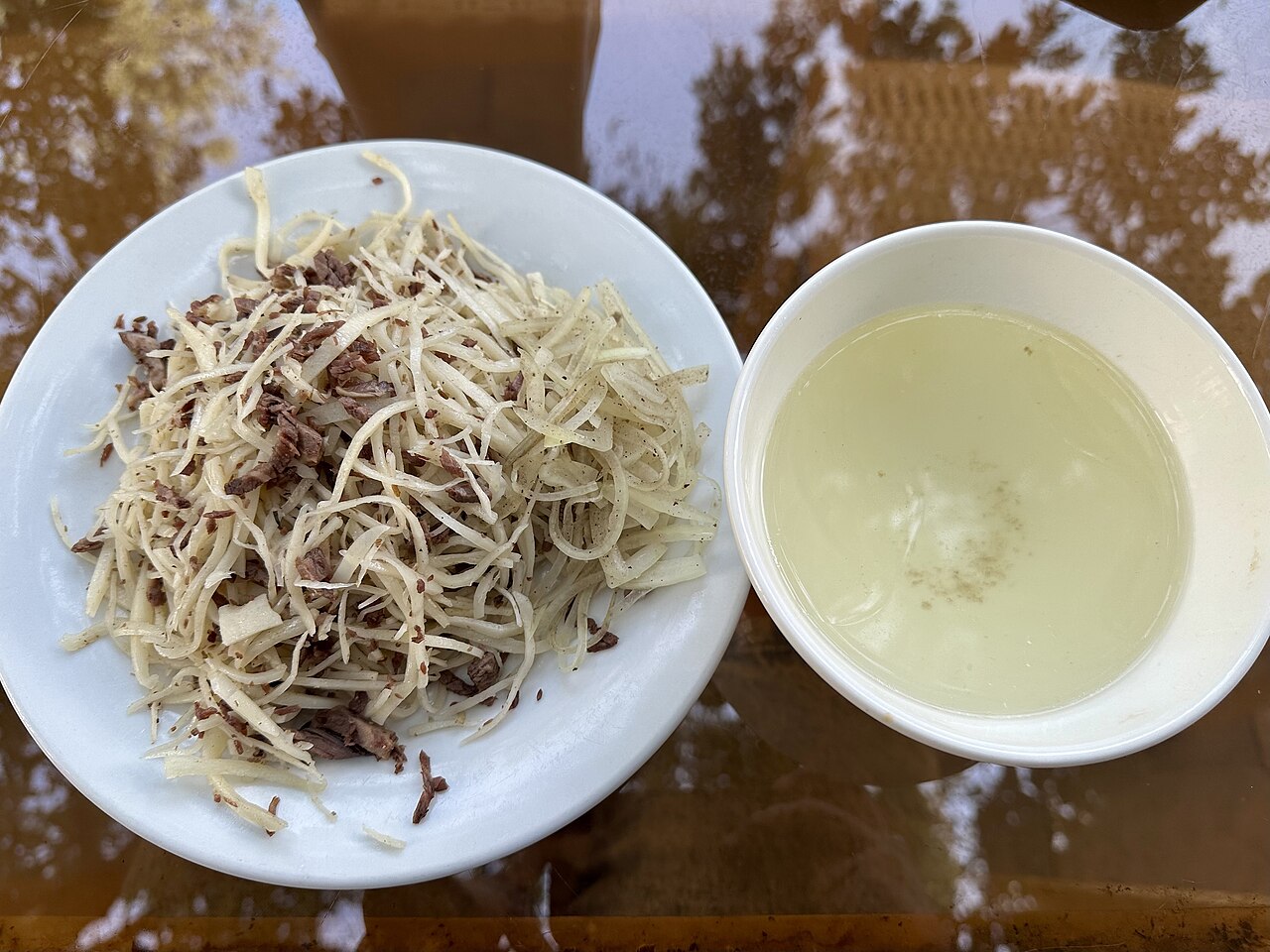
Thin sheets of boiled noodle dough and boiled meat, often horse meat or the horse-meat sausage called qazi, are chopped very finely by hand and mixed together. The dry version is served cold, and there is also a version with meat broth and onion.
The cold, dry version is called quruq norin, 'dry norin', and the one with broth is called xoʻl norin, 'wet norin'.
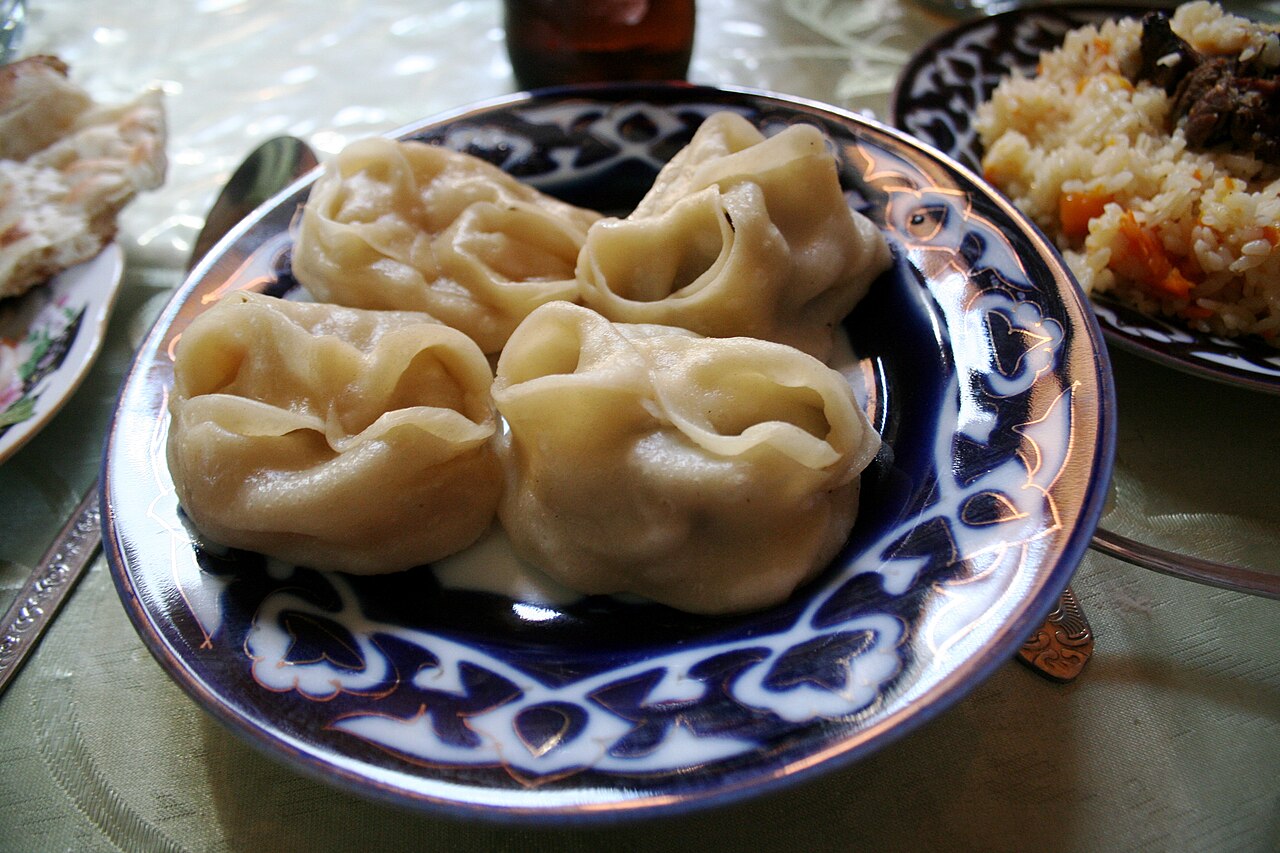
Large steamed dumplings filled with chopped lamb and onions, or with pumpkin. They are cooked in a tall steamer with several layers and served with yoghurt or sour cream and a sprinkle of pepper.
The name is related to the Chinese word mantou, a steamed bun, and to the Korean mandu, a dumpling.
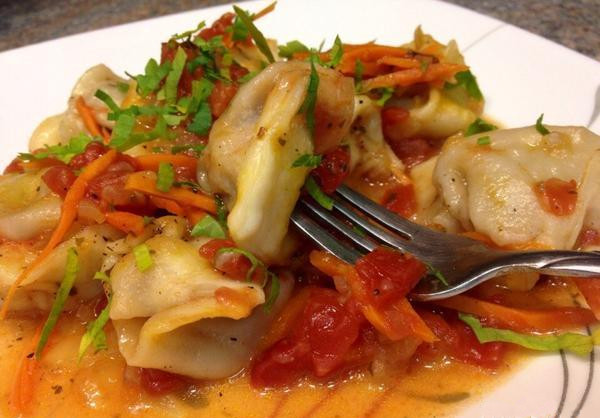
Small dumplings, a bit like tortellini, filled with minced meat and onion. They are boiled and served in a clear broth, or drained and topped with yoghurt.
Similar dumplings are made from the Caucasus to China: in Azerbaijan they are called dushbara and in Kazakhstan tushpara.
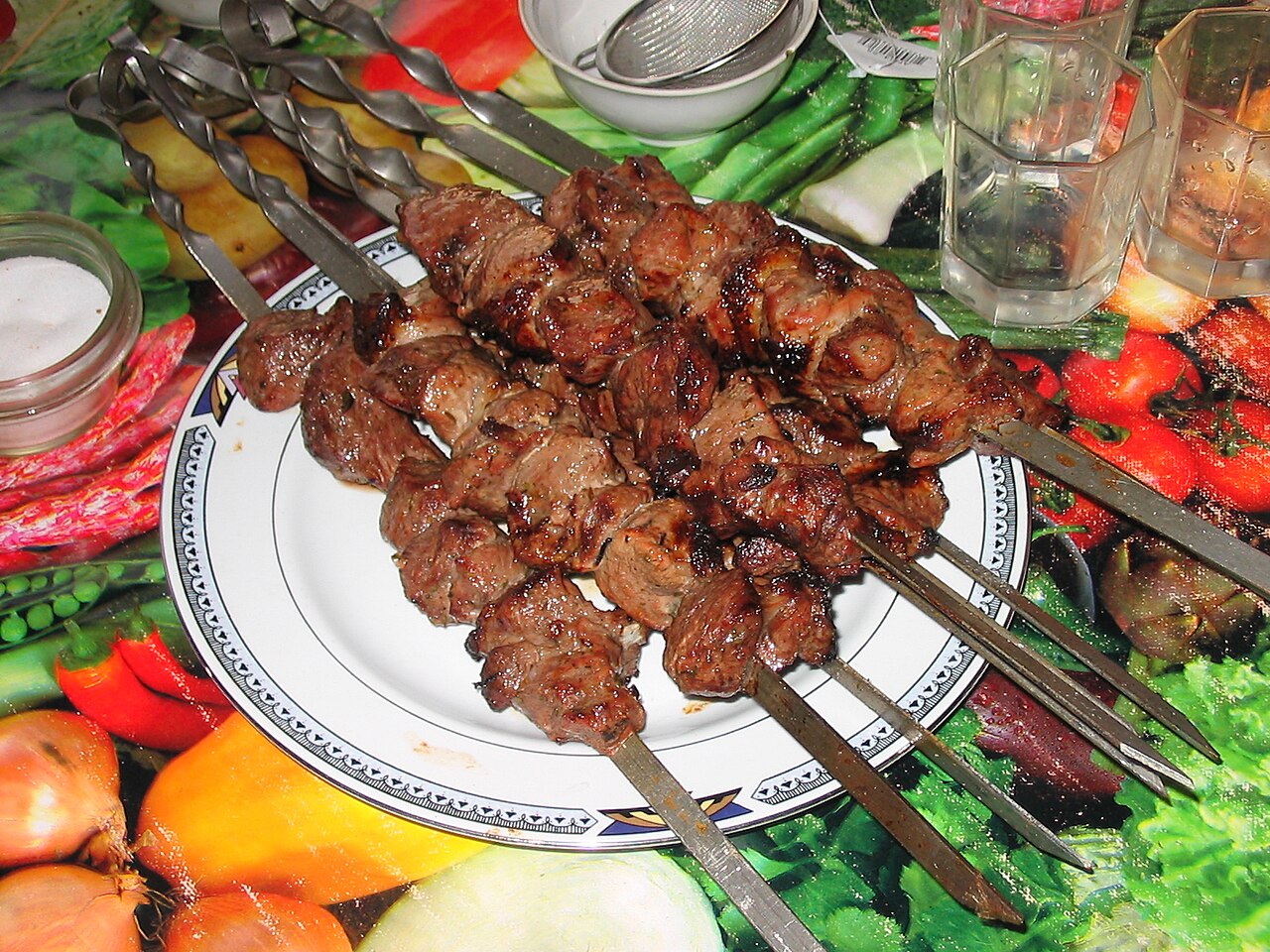
Skewers of marinated lamb, beef, liver or minced meat grilled over charcoal on a long, narrow grill. The meat is often marinated with vinegar, salt and pepper, and the skewers are served with raw sliced onion and fresh bread.
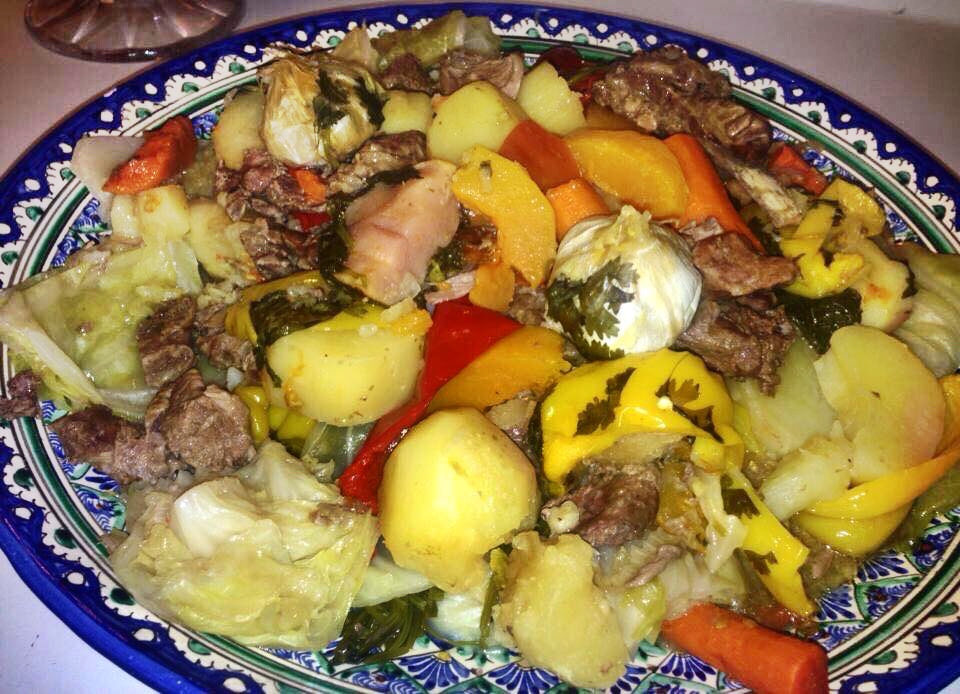
A slow stew of meat and vegetables layered in a tightly closed pot and cooked in their own juices, with no water added. Potatoes, carrots, onions, cabbage, peppers, aubergines and tomatoes are all common. It is made most often in spring and summer, when vegetables are plentiful.
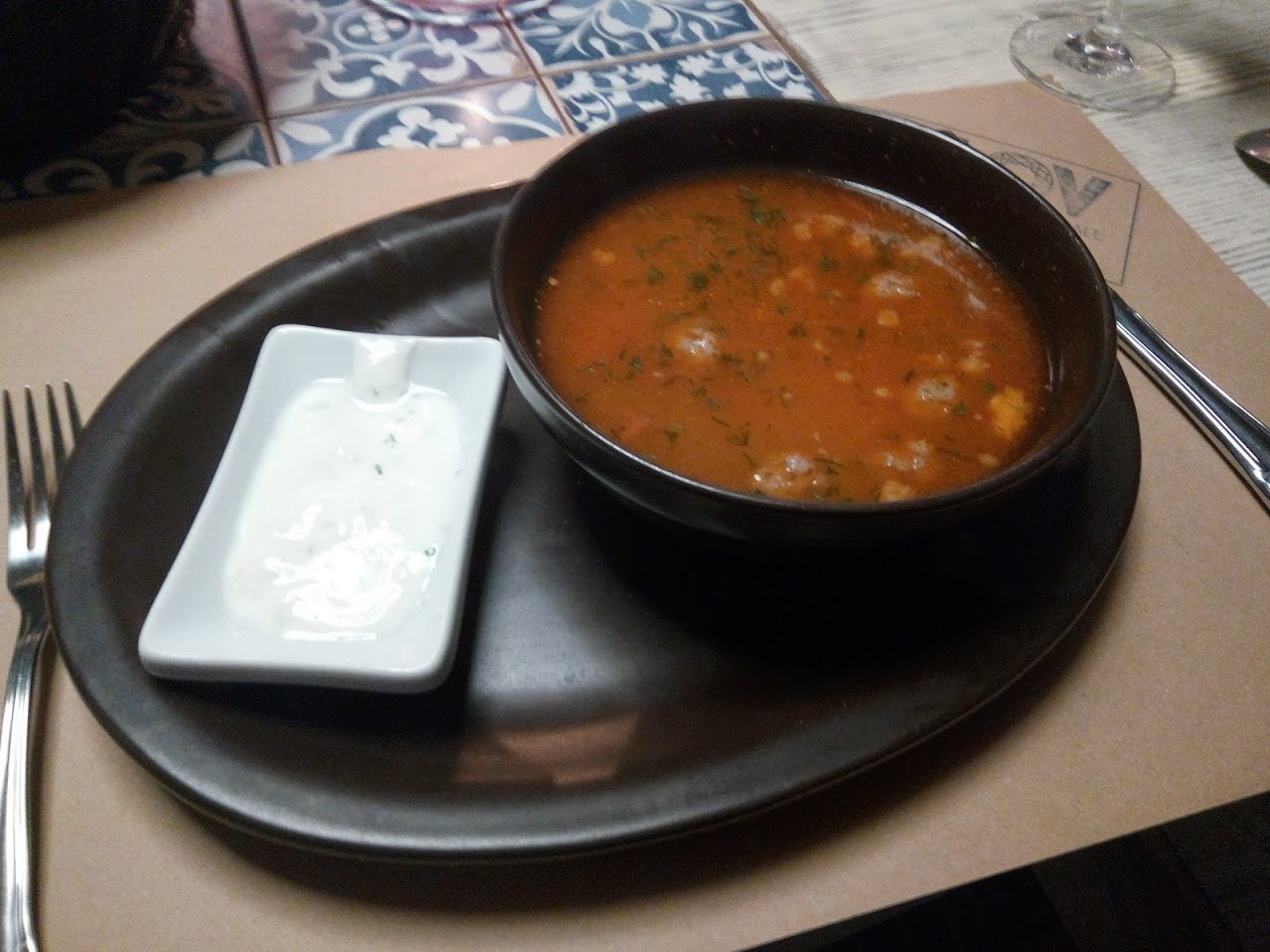
A thick soup of rice, meat, carrots, onions, tomatoes and potatoes, sometimes called 'liquid palov' because it begins the same way, by frying meat and vegetables in a cauldron. It is served with a spoonful of yoghurt and fresh herbs.
The name comes from Tajik words for yoghurt and water or broth.
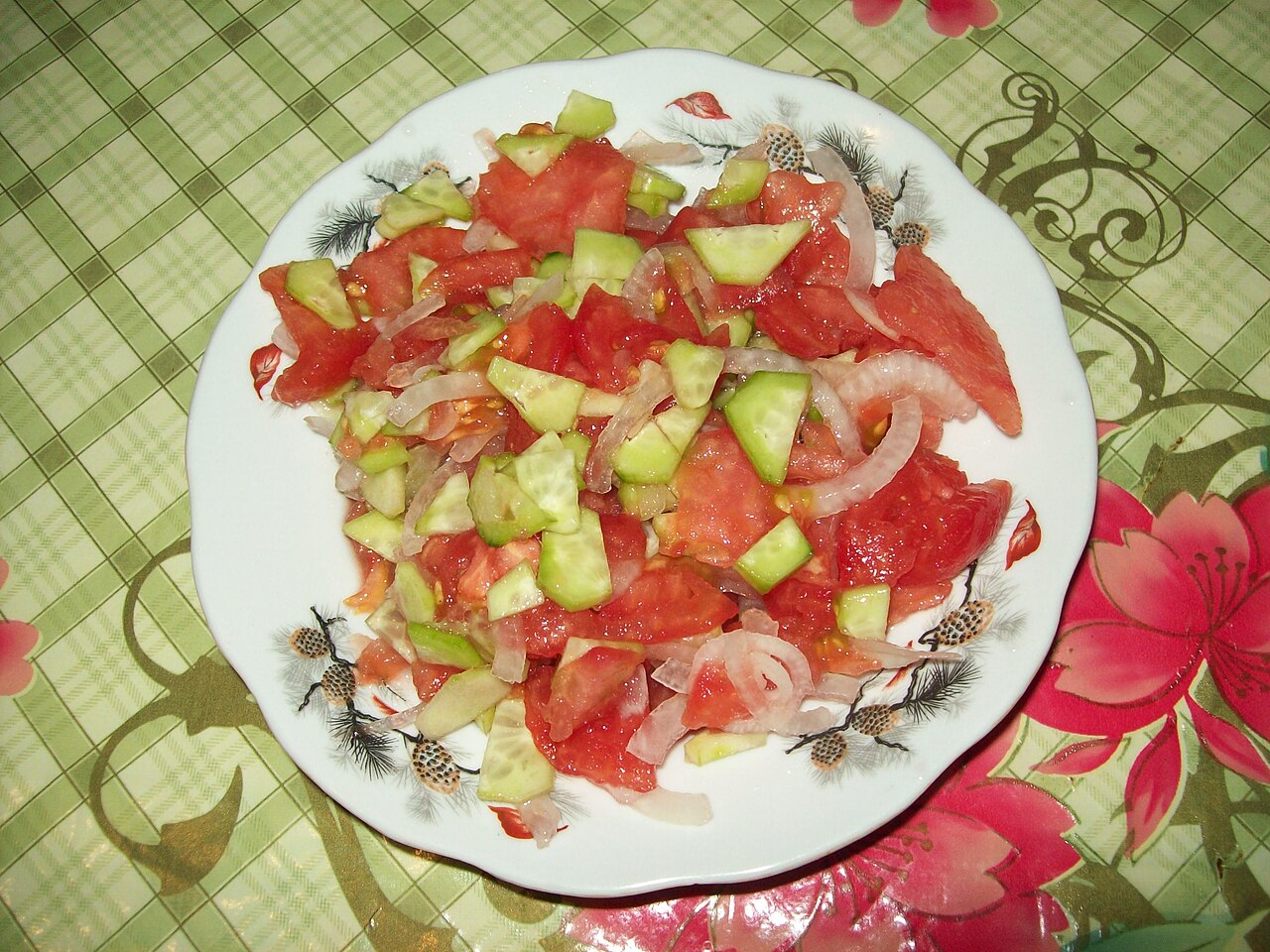
A simple summer salad of thinly sliced ripe tomatoes and onions, with a little hot green pepper and salt. It is the classic side dish for palov and shashlik, because its fresh, sharp taste cuts through the rich, fatty meat.
The name joins the Uzbek words achchiq, 'bitter' or 'hot', and chuchuk, 'sweet'. In the Fergana Valley people often add thin slices of cucumber.
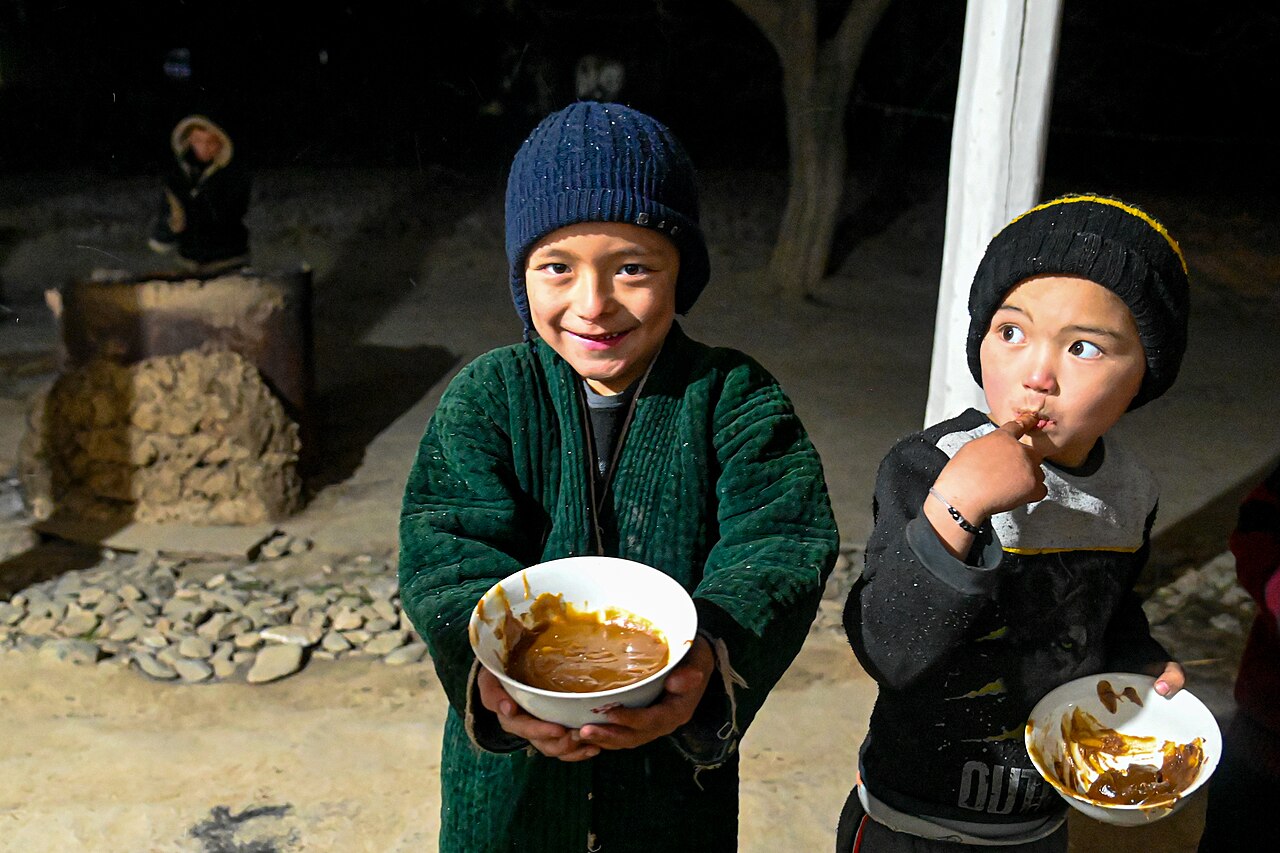
A thick, brown, sweet paste made from sprouted wheat, water and flour, cooked in a huge cauldron and stirred all night long. It gets its sweetness from the sprouted grain, not from sugar. It is made once a year for Navruz, the spring new year in March.
Neighbours and relatives take turns stirring the cauldron through the night, singing and making wishes. Near the end, whole walnuts are dropped into the pot while making a wish.
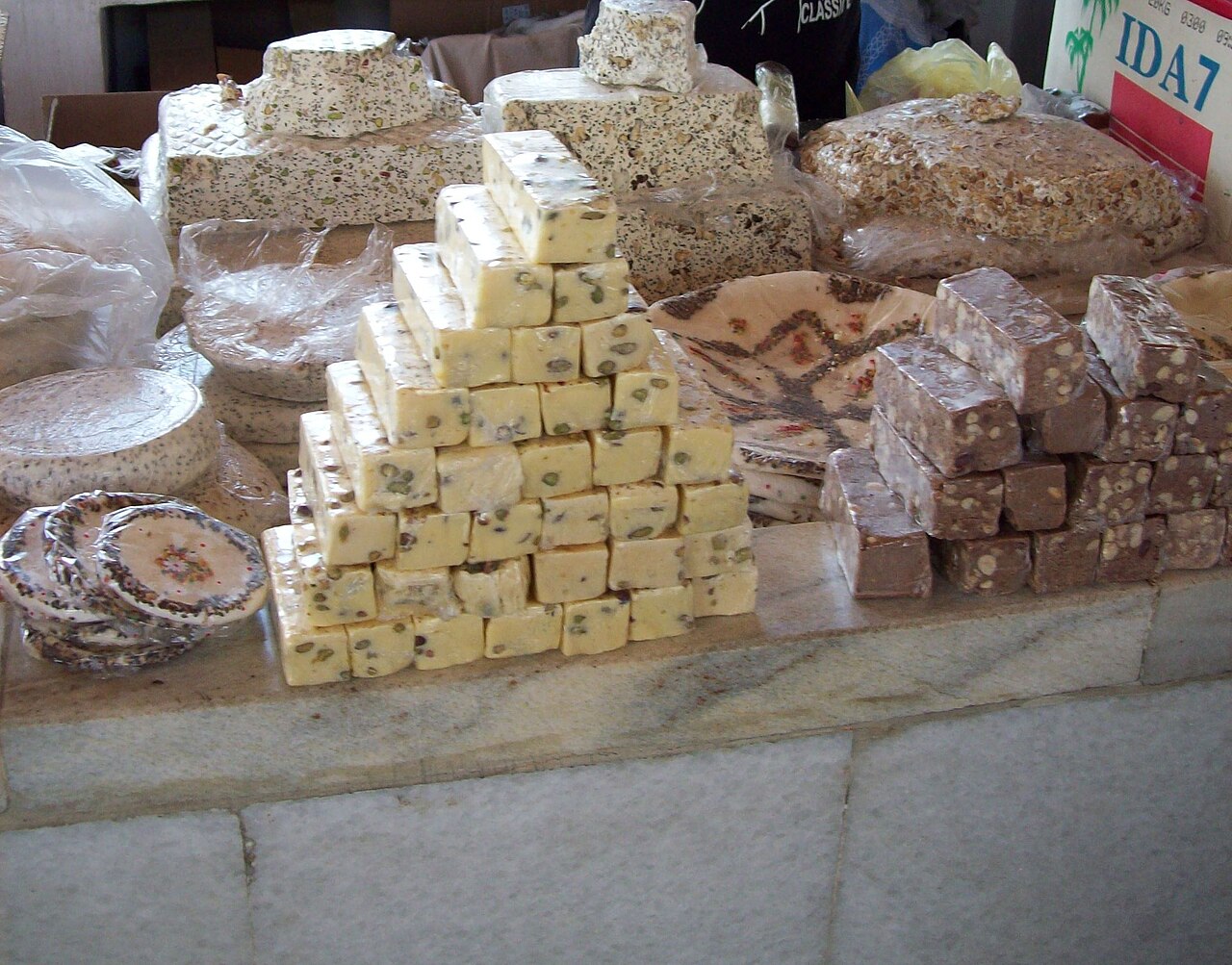
Sweets of many kinds sold in big blocks and slabs at every bazaar: some are made from sugar, flour and oil, others with sesame, nuts or dried fruit. It is eaten with tea, at any time of day and at the end of a festive meal.
A festive Uzbek meal often ends with fruit, nuts and halva, served with green tea.
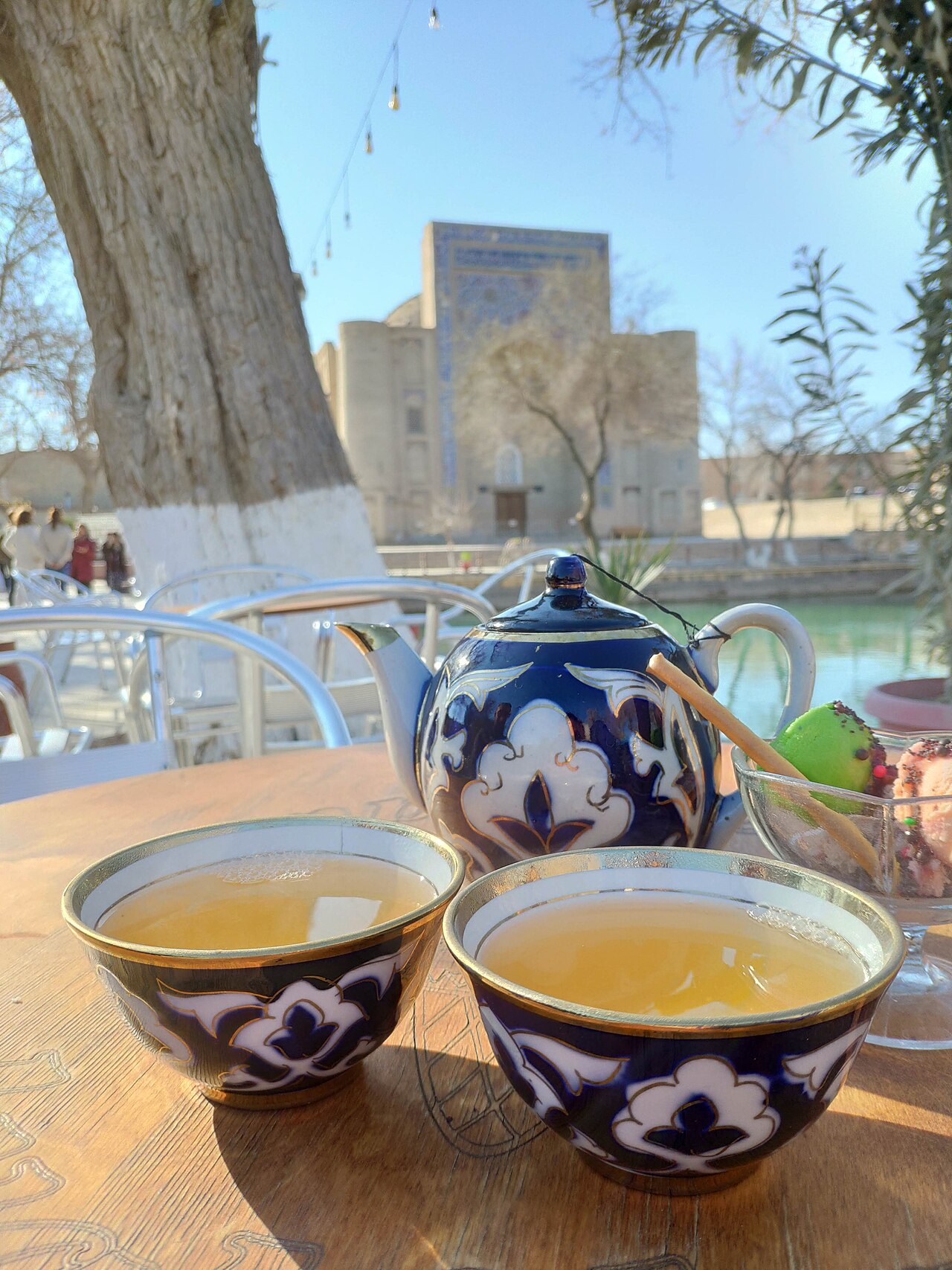
Tea is offered to every guest, green or black, without milk or sugar, poured from a teapot into small bowls called piyola. It is drunk all through the day, at home, at work and in teahouses called choyxona. Let it cool a little before drinking: very hot drinks are bad for the throat.
Before serving, the host often pours a bowl of tea and returns it to the pot three times, a custom said to help the tea brew. The host then keeps your bowl only partly full, so that it can be refilled often and the tea stays hot.
At the table in Uzbekistan
Bread is treated with great respect. Do not waste it, and never throw it away where people can see.
Take your shoes off when you enter a home. Guests are often seated on cushions around a low table or on a raised platform called a sori or tapchan.
Tea is served in small bowls. The host fills yours only partly so it can be topped up often; a completely full bowl can be a hint that it is time to leave.
Pass and accept dishes, bread and tea with your right hand: the left hand is considered unclean.
Palov is usually served on one large platter placed in the middle of the table for everyone to share.
Older people are shown great respect: let them sit first, serve them first and greet them first.