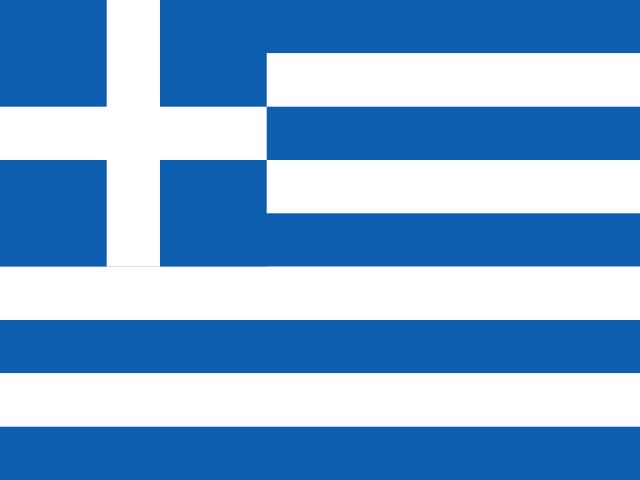
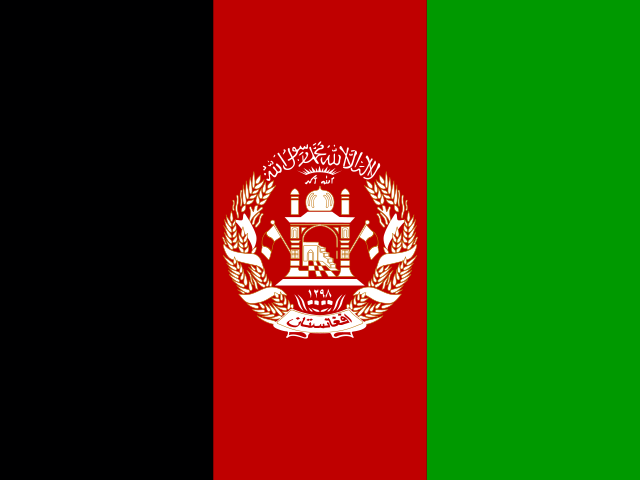
 Afghanistan
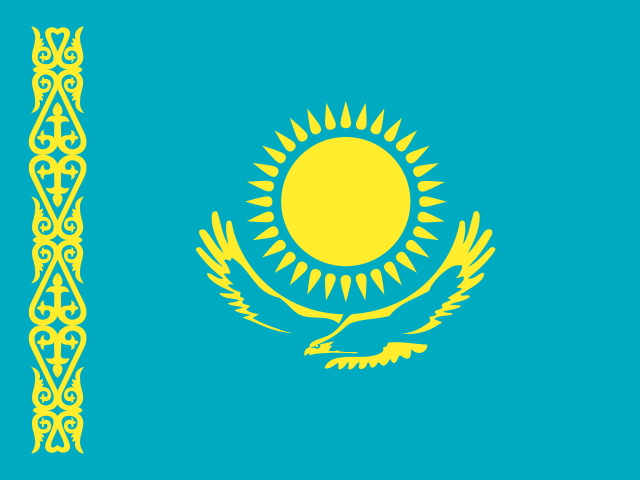 Kazakhstan
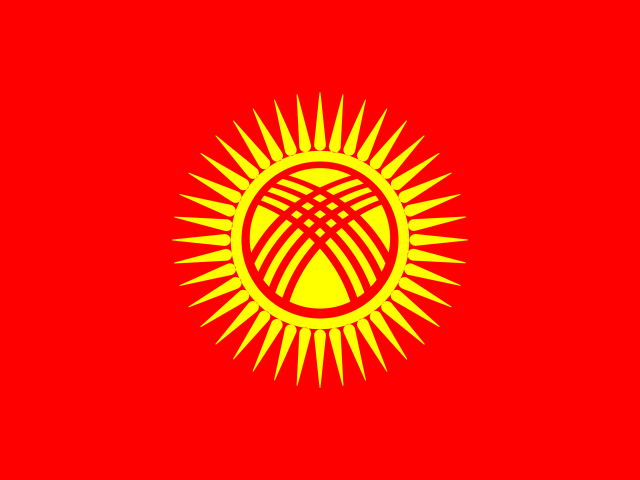 Kyrgyzstan
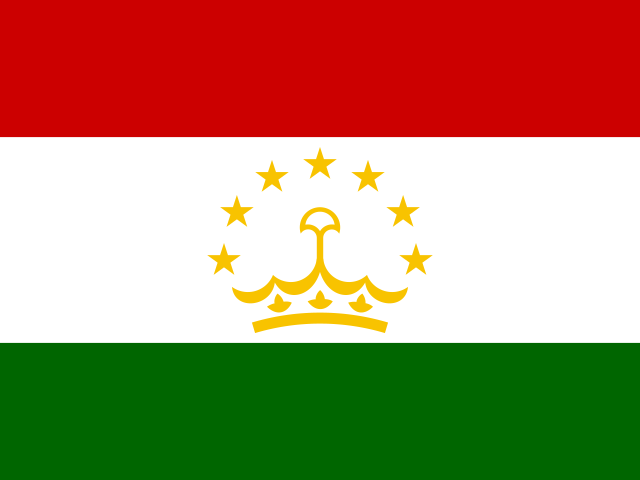 Tajikistan
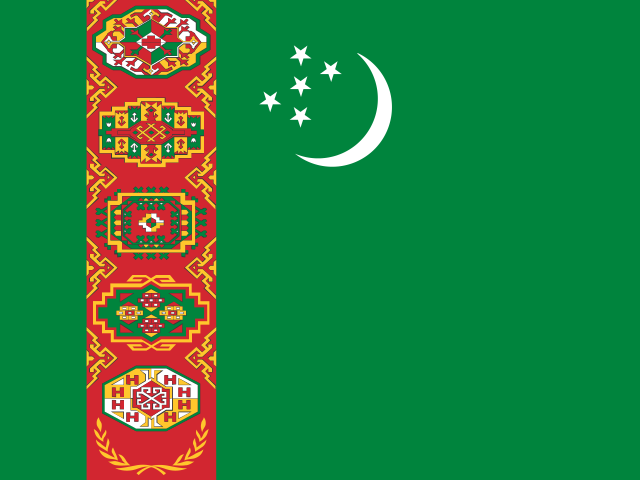 Turkmenistan
Alexander the Great takes Samarkand
In 329 BC Alexander the Great conquered Sogdiana, the land around Samarkand, which the Greeks called Marakanda. The local people resisted fiercely, and his army was held up in the region for a long time.
A free large-print PDF. Choose what goes in: facts, map, history, dishes and recipes, phrases, fun facts, a quiz with or without answers. Made for clubs, care homes, libraries and family afternoons.
Uzbekistan lies in the heart of Central Asia, between two great rivers, the Amu Darya and the Syr Darya. Much of the west is the Kyzylkum Desert and the dry bed of the old Aral Sea, while the east rises into the foothills of the Tian Shan and Pamir-Alay mountains. The richest farmland lies in the green Fergana Valley in the east. Uzbekistan is doubly landlocked: it is surrounded only by countries that are themselves landlocked, so reaching an ocean means crossing at least two borders.
For more than two thousand years caravans on the Silk Road passed through the oasis cities of Samarkand, Bukhara and Khiva. Alexander the Great, the Arab caliphs, Genghis Khan and Timur all left their mark here, and great scholars such as Ibn Sina (Avicenna) and the astronomer Ulugh Beg lived and worked in these cities. In the 1800s the region fell under Russian rule, and from 1924 it was a Soviet republic. Uzbekistan became independent in 1991.
As of January 2026 about 38 million people live in Uzbekistan, the most of any Central Asian country. Most are Uzbeks, and there are sizeable Tajik, Karakalpak, Kazakh and Russian communities. Visitors come for the tiled mosques, madrasas and mausoleums of Samarkand, Bukhara and Khiva, for the busy bazaars, and for a warm culture of hospitality built around bread, tea and palov.
The land that is now Uzbekistan has been a crossroads for thousands of years. Persian, Greek, Arab, Turkic and Mongol rulers came and went, and the Silk Road made its oasis cities rich and famous for learning. Under Timur and his descendants, Samarkand became one of the great cities of the world. Russia conquered the region in the 1800s, the Soviet Union created the Uzbek republic in 1924, and Uzbekistan became independent in 1991.
In 329 BC Alexander the Great conquered Sogdiana, the land around Samarkand, which the Greeks called Marakanda. The local people resisted fiercely, and his army was held up in the region for a long time.
Around 980 the scholar Ibn Sina, known in Europe as Avicenna, was born in the village of Afshana near Bukhara. His Canon of Medicine became a standard textbook in European universities for centuries. At that time Bukhara was the capital of the Samanid state and a great centre of learning.
In 1220 the Mongol armies of Genghis Khan captured Bukhara and then Samarkand, destroying much of both cities and killing many of their people. It was part of the Mongol conquest of the Khwarazmian Empire, which ruled the region at the time.
Timur, known in English as Tamerlane, was born near Shahrisabz and became ruler of the region by 1370. He made Samarkand the capital of an empire stretching from Anatolia to India, and brought craftsmen and scholars from the lands he conquered to build its mosques, palaces and gardens. His campaigns were also known for their great brutality.
Timur died in February 1405 while leading an army toward China. The mountain passes to his home town of Shahrisabz were blocked by snow, so he was buried in the Gur-e-Amir mausoleum in Samarkand, which later became the family tomb of his dynasty.
Timur's grandson Ulugh Beg, ruler of Samarkand and a gifted astronomer, completed a great madrasa (college) on the Registan square in 1420. He taught there himself, and later built an observatory in Samarkand whose star tables were among the most accurate of their time.
Babur, a descendant of Timur, was born in Andijan in the Fergana Valley on 14 February 1483. After losing Samarkand several times to the Uzbek Shaybanid rulers, he turned south, conquered Kabul and then northern India, where in 1526 he founded the Mughal Empire.
In 1865 Russian forces under General Mikhail Chernyayev captured Tashkent from the Khanate of Kokand. The city became the capital of Russian Turkestan. Samarkand followed in 1868, and the Emirate of Bukhara became a Russian protectorate.
In 1873 a Russian army took Khiva, and the khan signed a treaty that made his khanate a protectorate of the Russian Empire. The khan kept his throne, but Russia controlled his foreign affairs.
On 27 October 1924 the Soviet authorities redrew the borders of Central Asia along national lines and created the Uzbek Soviet Socialist Republic. It remained part of the Soviet Union for the next 67 years.
Samarkand served as the first capital of the Uzbek Soviet republic from 1925. In 1930 the capital moved to Tashkent, which has been the country's capital ever since.
Early on 26 April 1966 a shallow earthquake struck right under the centre of Tashkent. Most buildings were damaged or destroyed and hundreds of thousands of people lost their homes. The city was rebuilt in a modern Soviet style with wide avenues and large public buildings.
On 6 November 1977 the first line of the Tashkent Metro opened with nine stations. It was the first underground railway in Central Asia, and its stations are decorated with marble, ceramics and chandeliers.
On 31 August 1991, as the Soviet Union was breaking up, Uzbekistan declared independence. Independence Day is celebrated on 1 September. The country joined the United Nations in March 1992.
In 1993 Uzbekistan adopted a new Latin-based alphabet for Uzbek, replacing the Cyrillic script used since 1940. The alphabet was revised in 1995 and is used in schools and official documents, although Cyrillic is still widely seen, especially among older people.
In June 2025 a goalless draw away against the United Arab Emirates sent Uzbekistan's football team, the White Wolves, to the FIFA World Cup for the first time. They became the first Central Asian country ever to qualify, and played at the 2026 tournament in North America.
Uzbek cooking is hearty and generous, built on bread, rice, noodles, mutton and the fruit and vegetables of the irrigated oases. A meal with guests usually begins with round bread, green or black tea, fruit, nuts and sweets already on the table. Then comes a soup such as mastava or shurpa, and then the main dish: often palov, the national dish, served on a big shared platter with a fresh tomato and onion salad. Tea is drunk all through the meal.
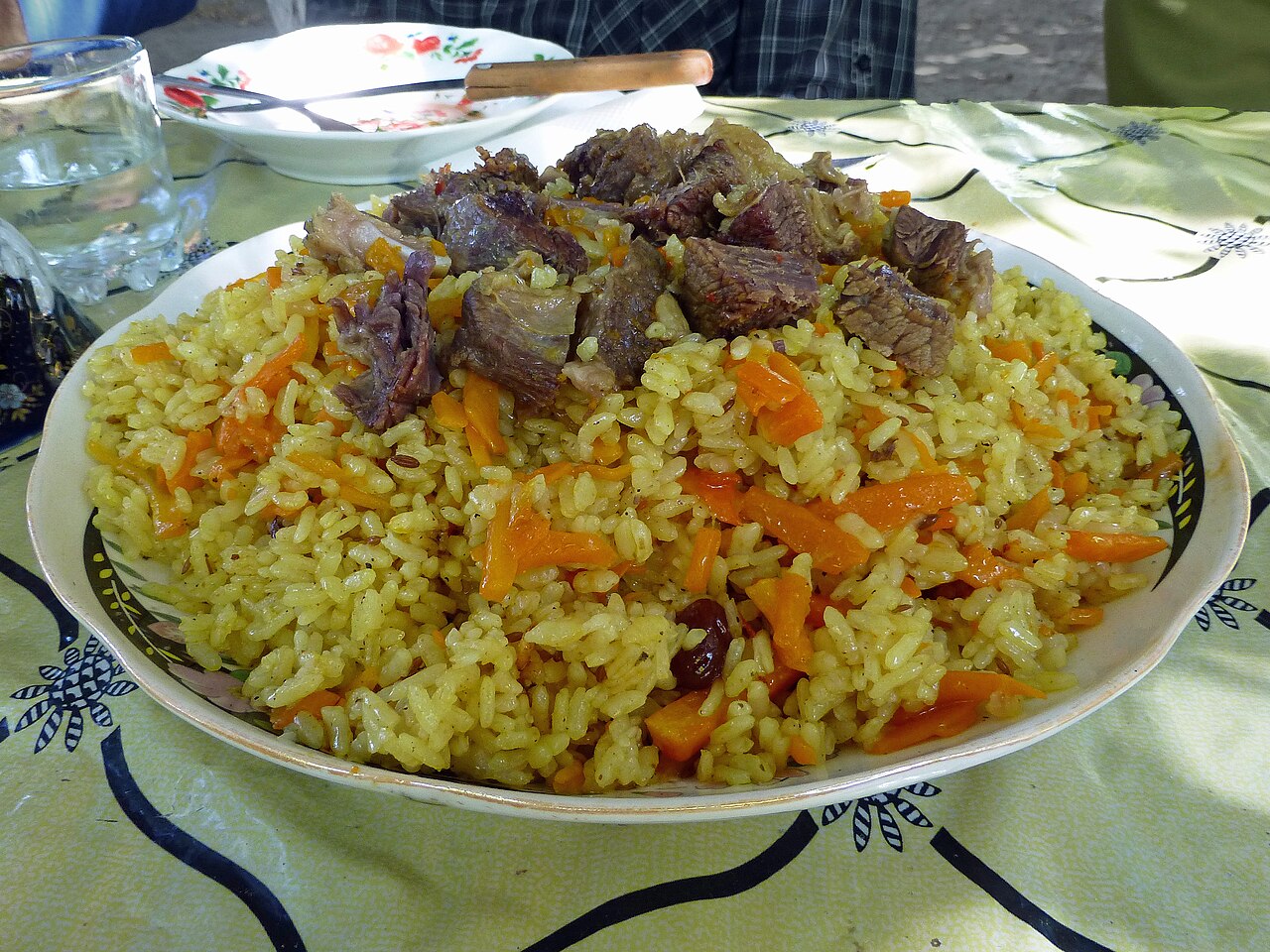
Uzbekistan's national dish: rice cooked in a large cauldron (qozon) on top of a rich base of mutton or beef, onions and thick strips of yellow and orange carrots, seasoned with cumin. Chickpeas, raisins, barberries or quince are added in some regions. It is served on a large platter for everyone to share.
In 2016 UNESCO added the palov culture and tradition of Uzbekistan to its list of intangible cultural heritage. For a big wedding, a master cook called an oshpaz can make palov for up to 1,000 people from a single cauldron.
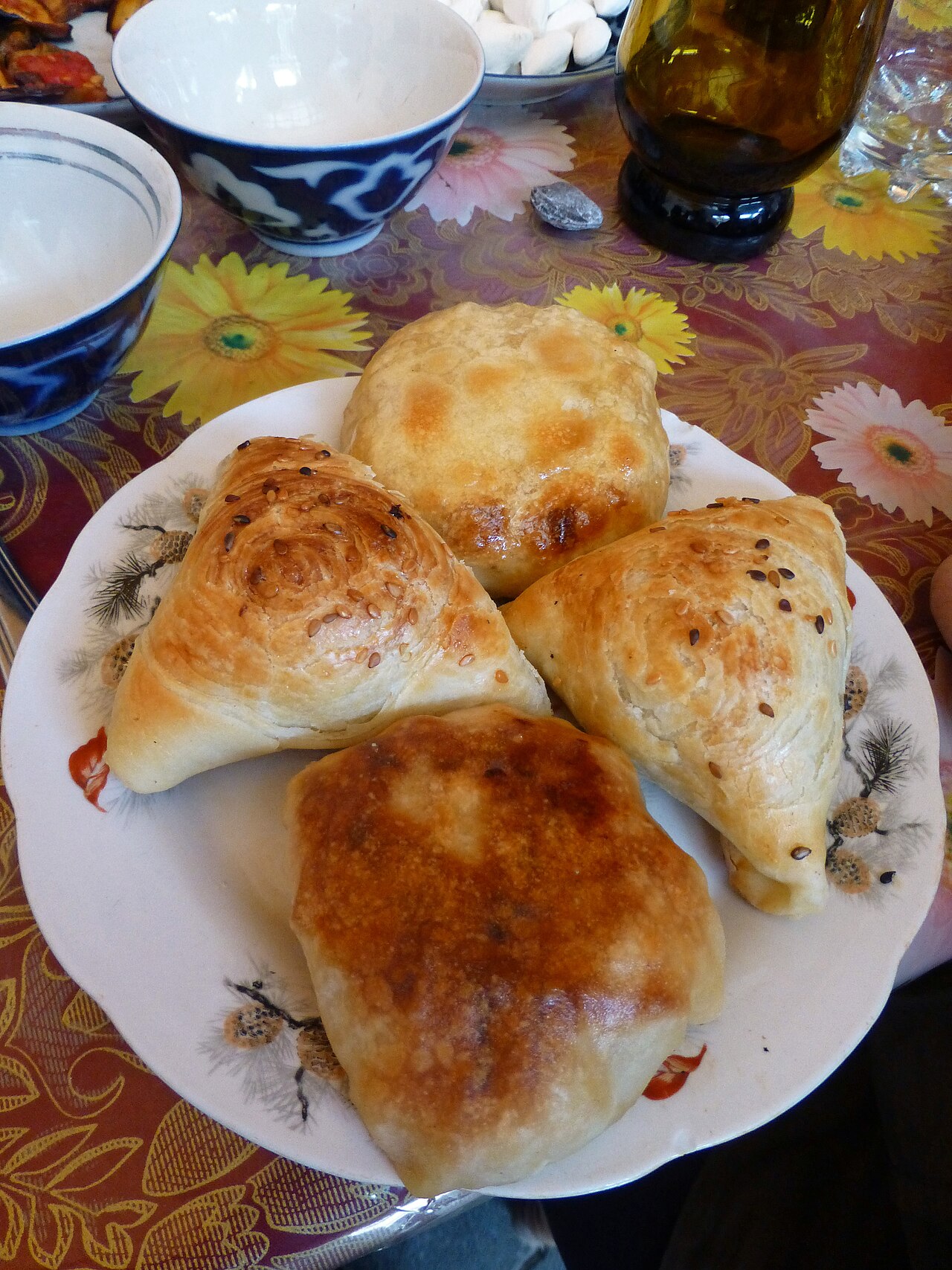
A savoury pastry, usually triangular or round, filled with minced or chopped lamb and plenty of onion, and baked on the hot inner wall of a clay tandir oven. There are versions with beef, chicken, potato or pumpkin, and bakers sell them hot from street stalls all day.
In season, bakers also fill somsa with pumpkin or potato.
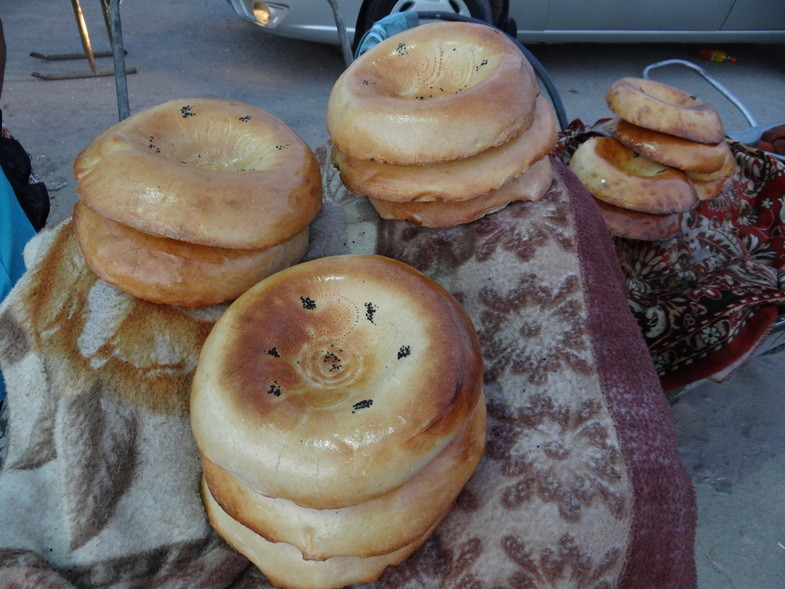
Round flatbread with a thick rim and a thin, patterned centre stamped with a special tool, baked on the walls of a clay tandir oven. It is served with every meal and treated with great respect. Every region has its own style of bread.
Samarkand is especially famous for its bread, traditionally baked in clay ovens.
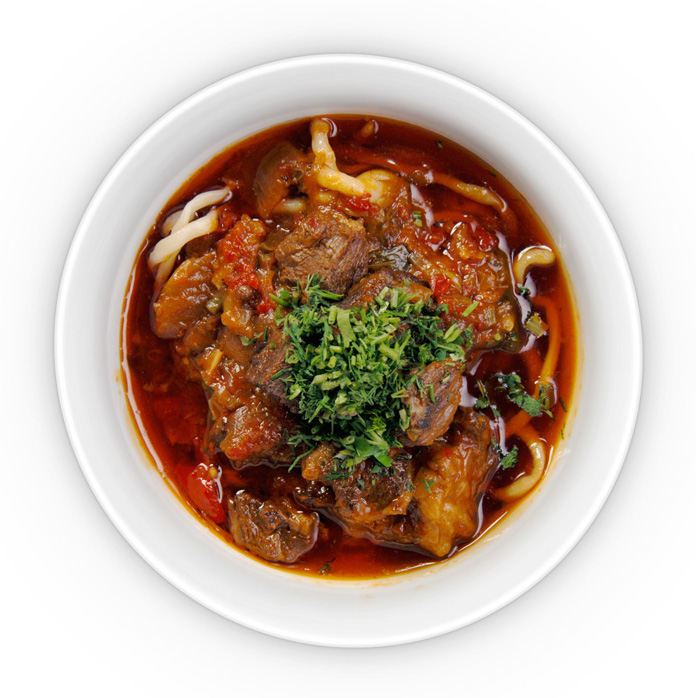
Long hand-pulled noodles with a sauce of lamb or beef, peppers, onions, tomatoes and other vegetables. It can be served as a thick soup or as a drier noodle dish with the sauce on top.
The dish came to Central Asia from the Uyghur people, and its name is probably related to the Chinese word lamian, meaning pulled noodles.
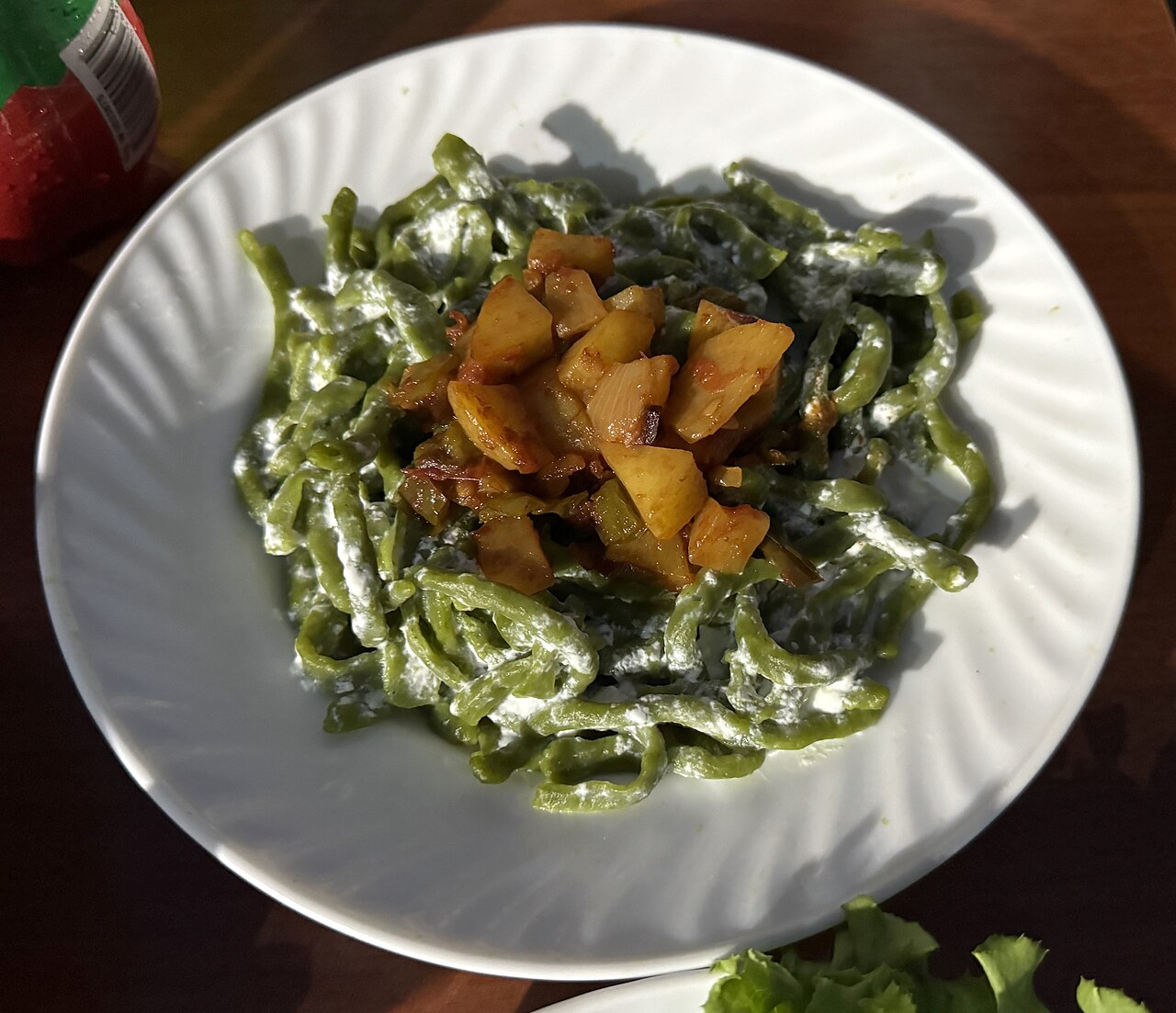
The green noodles of Khorezm: dill is worked into the dough, which turns the noodles a pale green. They are served with a stew of meat and vegetables and a spoonful of suzma, a thick strained yoghurt.
Shivit is the Uzbek word for dill, so the name simply means 'dill dish'. In Khorezm it is a favourite on hot summer days.
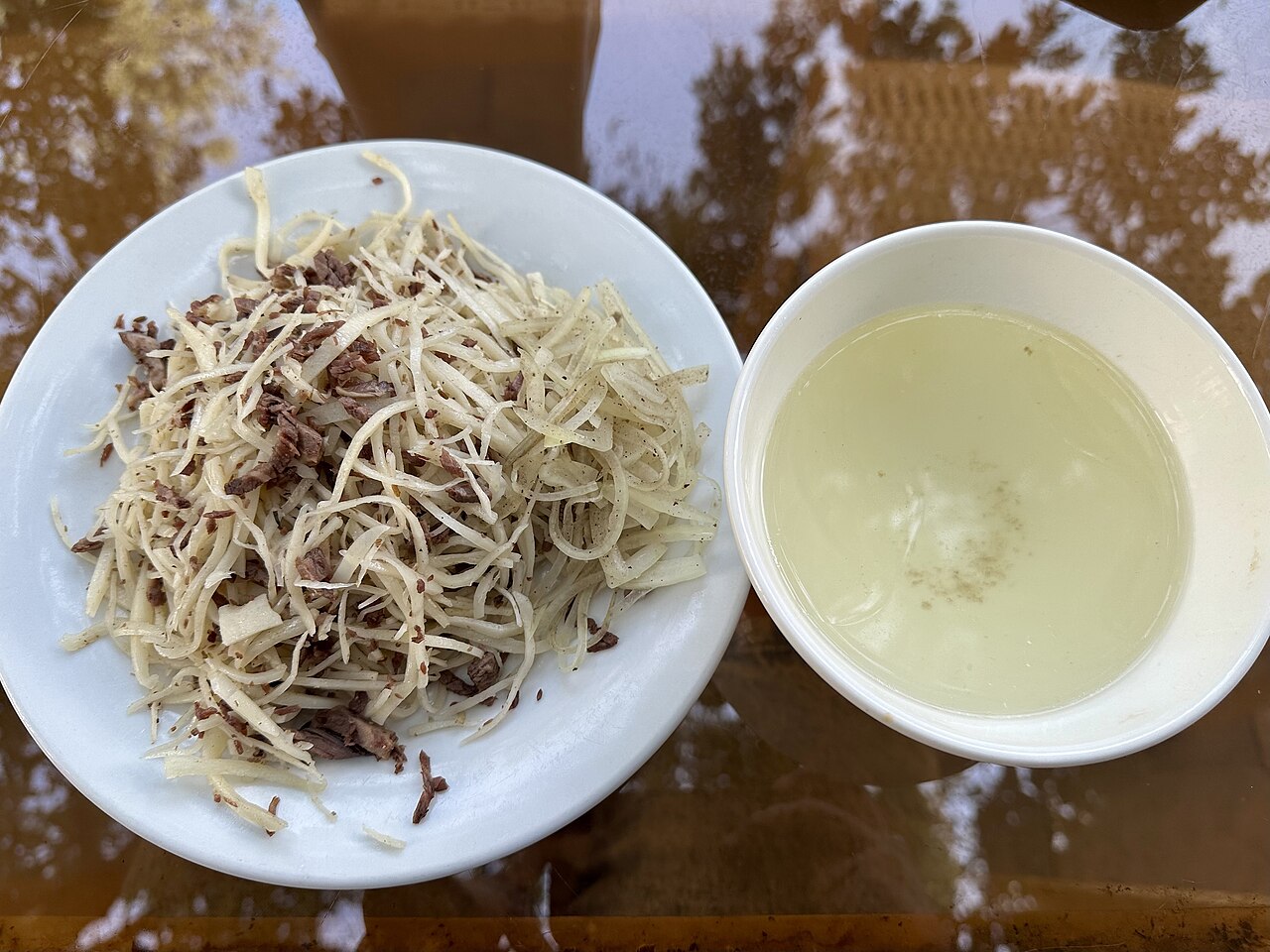
Thin sheets of boiled noodle dough and boiled meat, often horse meat or the horse-meat sausage called qazi, are chopped very finely by hand and mixed together. The dry version is served cold, and there is also a version with meat broth and onion.
The cold, dry version is called quruq norin, 'dry norin', and the one with broth is called xoʻl norin, 'wet norin'.
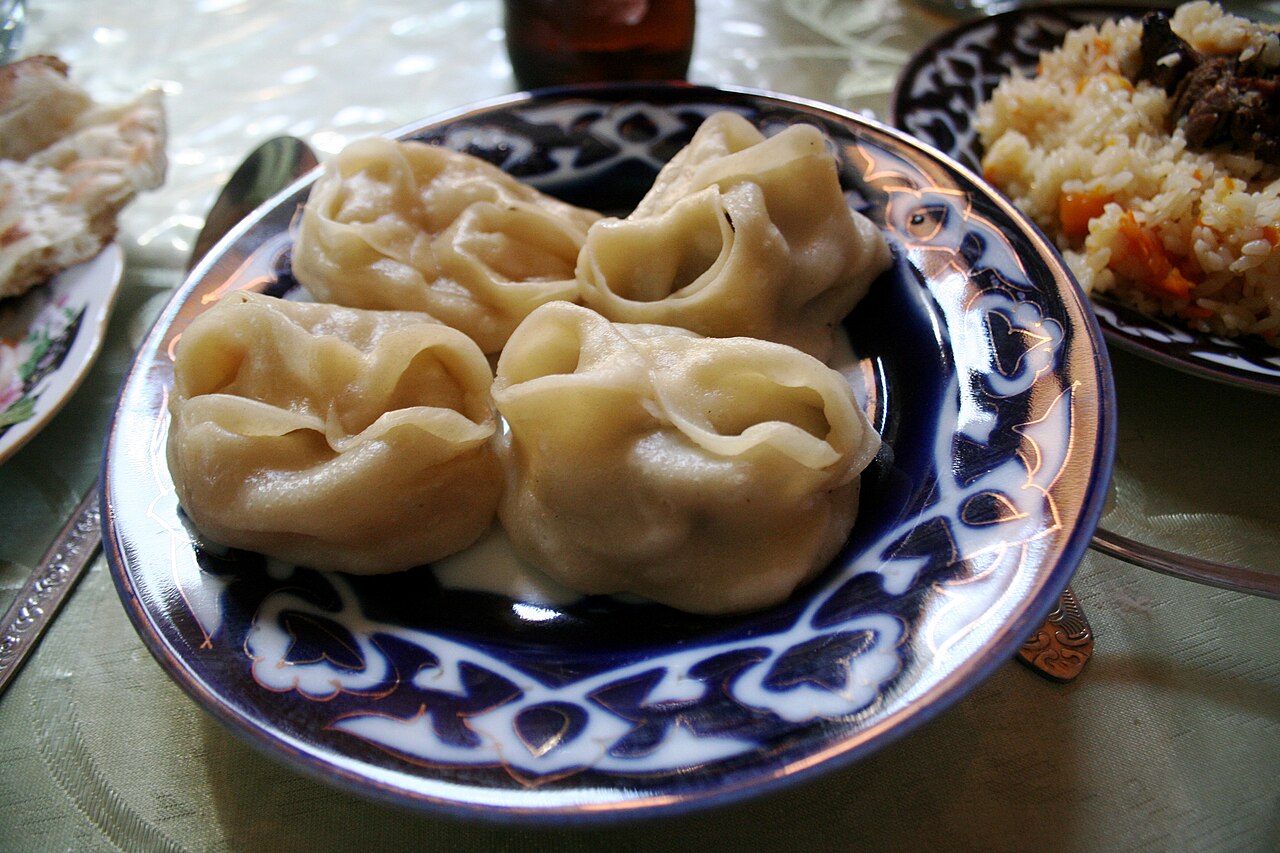
Large steamed dumplings filled with chopped lamb and onions, or with pumpkin. They are cooked in a tall steamer with several layers and served with yoghurt or sour cream and a sprinkle of pepper.
The name is related to the Chinese word mantou, a steamed bun, and to the Korean mandu, a dumpling.
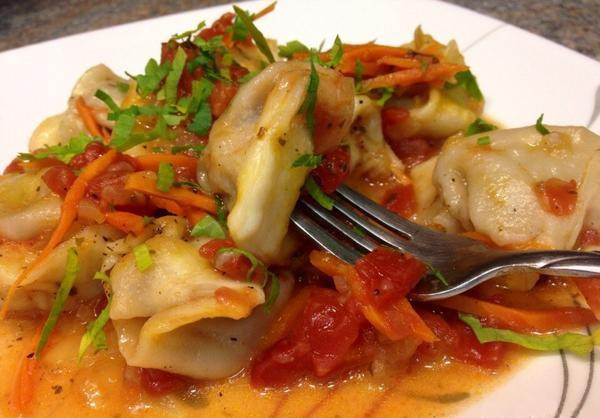
Small dumplings, a bit like tortellini, filled with minced meat and onion. They are boiled and served in a clear broth, or drained and topped with yoghurt.
Similar dumplings are made from the Caucasus to China: in Azerbaijan they are called dushbara and in Kazakhstan tushpara.
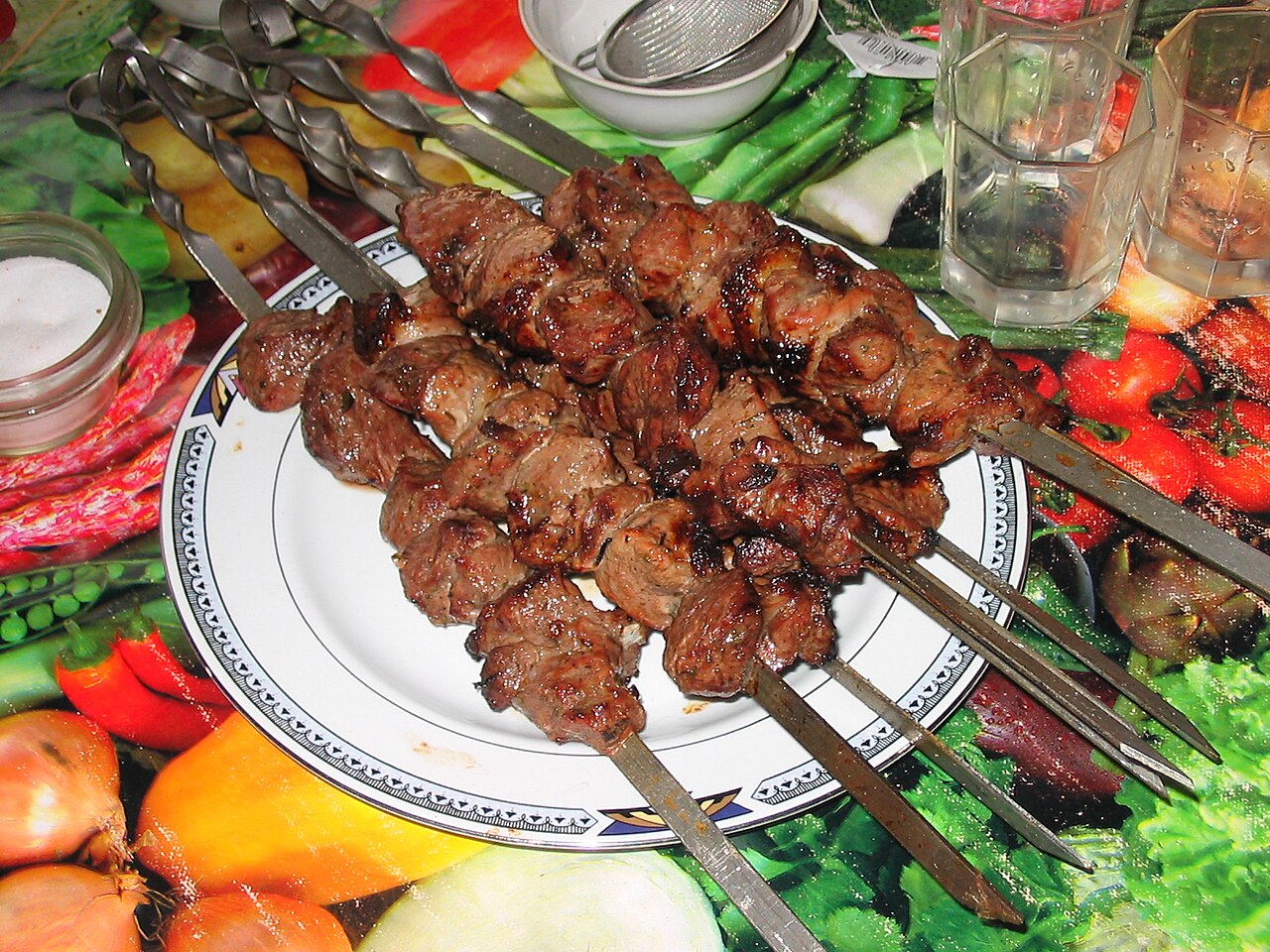
Skewers of marinated lamb, beef, liver or minced meat grilled over charcoal on a long, narrow grill. The meat is often marinated with vinegar, salt and pepper, and the skewers are served with raw sliced onion and fresh bread.
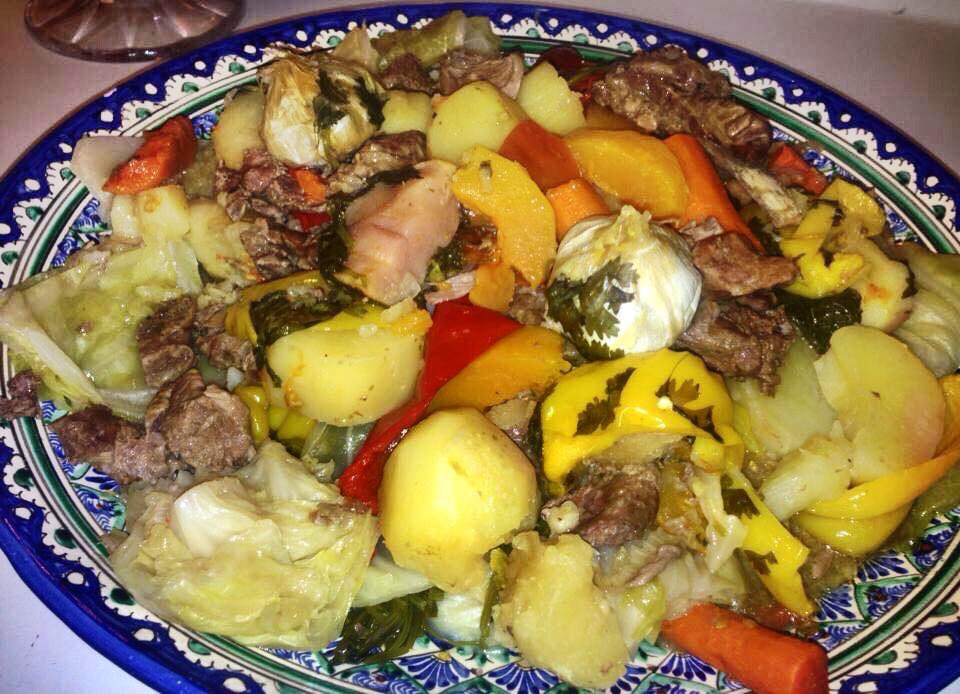
A slow stew of meat and vegetables layered in a tightly closed pot and cooked in their own juices, with no water added. Potatoes, carrots, onions, cabbage, peppers, aubergines and tomatoes are all common. It is made most often in spring and summer, when vegetables are plentiful.
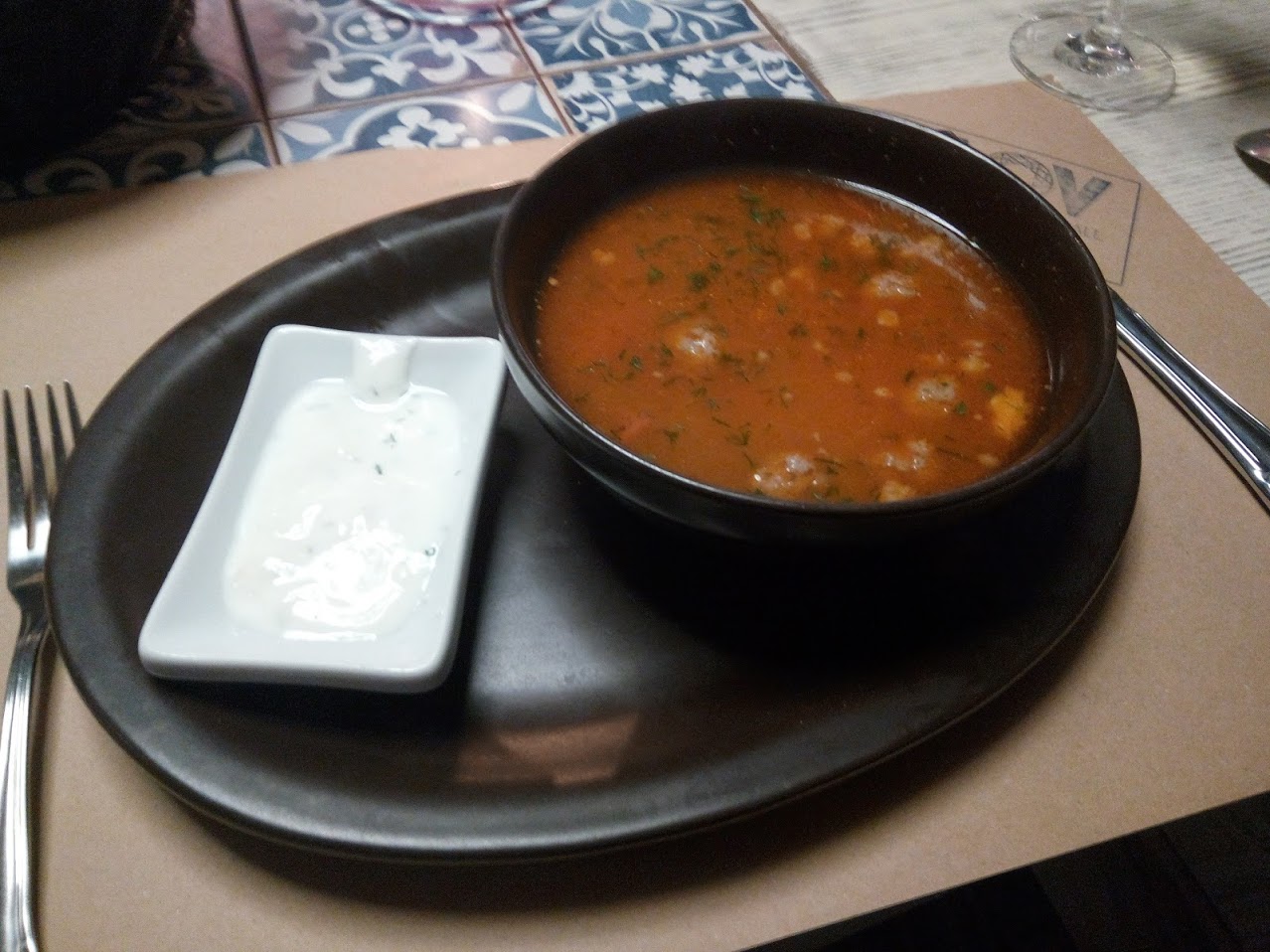
A thick soup of rice, meat, carrots, onions, tomatoes and potatoes, sometimes called 'liquid palov' because it begins the same way, by frying meat and vegetables in a cauldron. It is served with a spoonful of yoghurt and fresh herbs.
The name comes from Tajik words for yoghurt and water or broth.
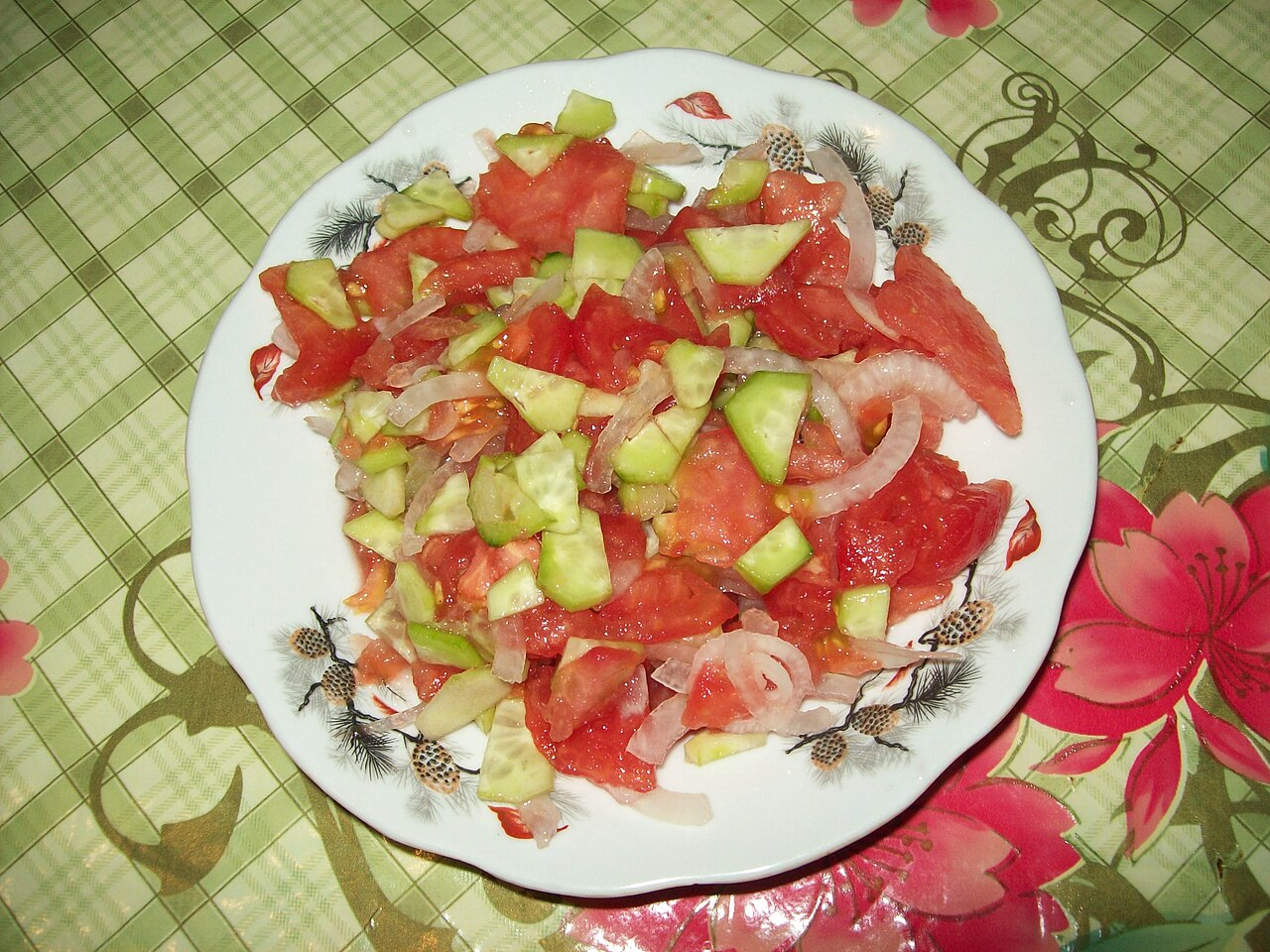
A simple summer salad of thinly sliced ripe tomatoes and onions, with a little hot green pepper and salt. It is the classic side dish for palov and shashlik, because its fresh, sharp taste cuts through the rich, fatty meat.
The name joins the Uzbek words achchiq, 'bitter' or 'hot', and chuchuk, 'sweet'. In the Fergana Valley people often add thin slices of cucumber.
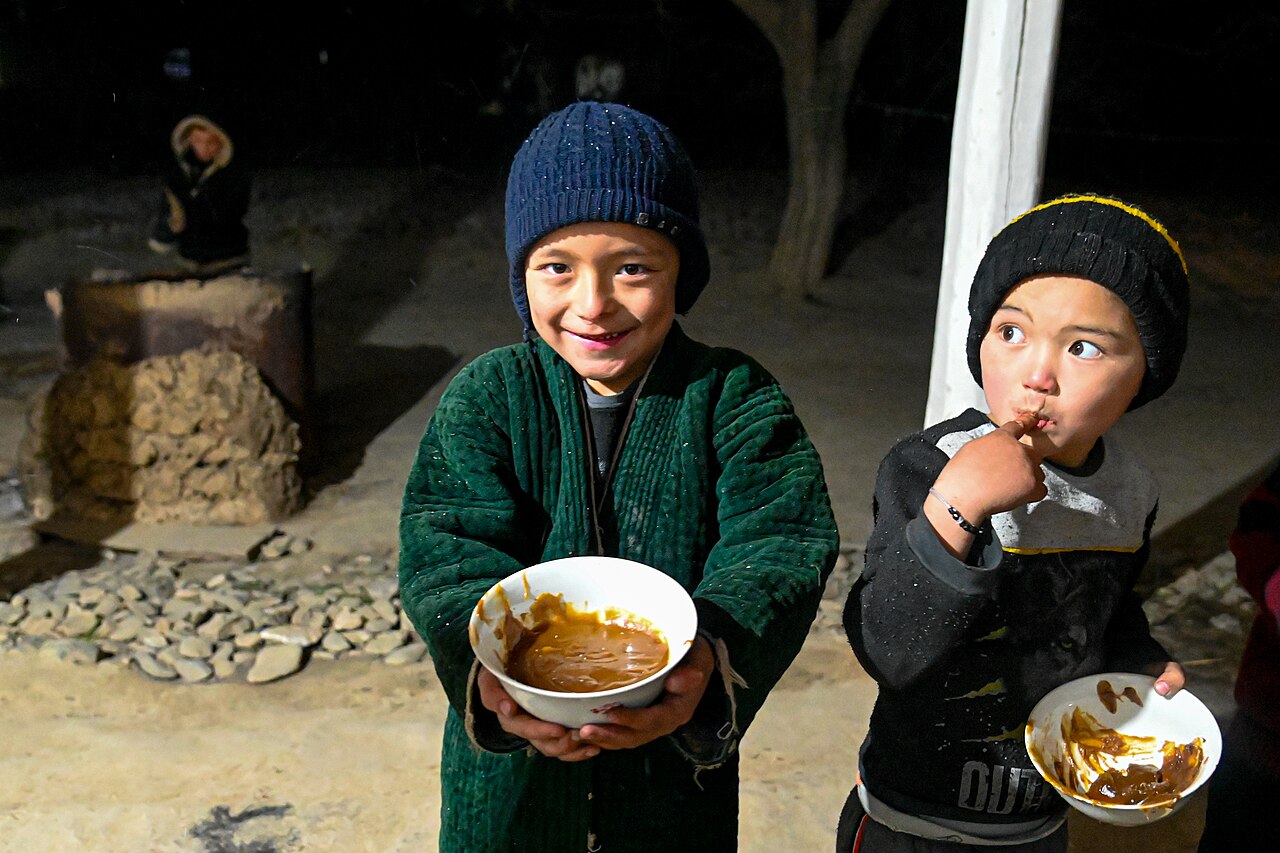
A thick, brown, sweet paste made from sprouted wheat, water and flour, cooked in a huge cauldron and stirred all night long. It gets its sweetness from the sprouted grain, not from sugar. It is made once a year for Navruz, the spring new year in March.
Neighbours and relatives take turns stirring the cauldron through the night, singing and making wishes. Near the end, whole walnuts are dropped into the pot while making a wish.
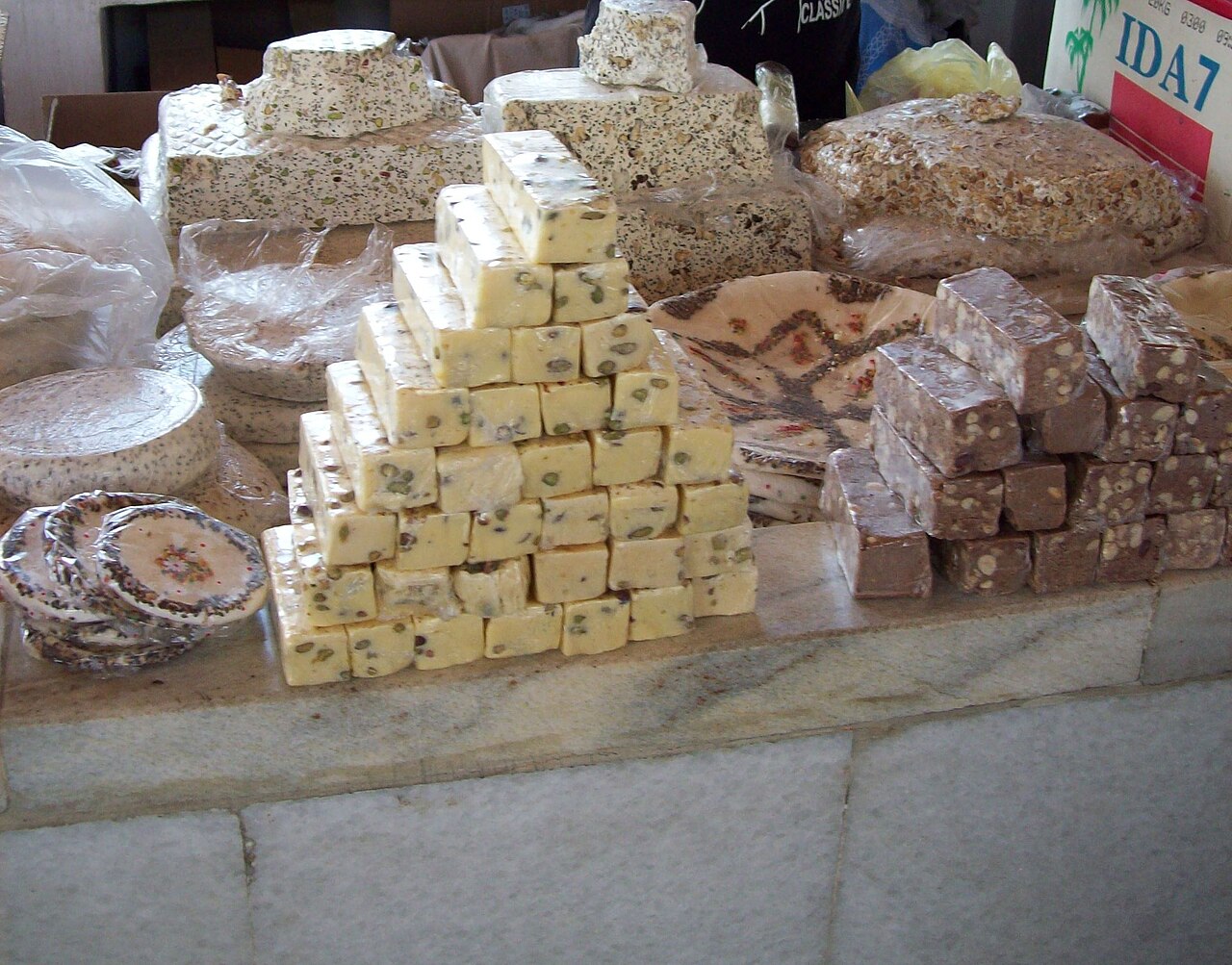
Sweets of many kinds sold in big blocks and slabs at every bazaar: some are made from sugar, flour and oil, others with sesame, nuts or dried fruit. It is eaten with tea, at any time of day and at the end of a festive meal.
A festive Uzbek meal often ends with fruit, nuts and halva, served with green tea.
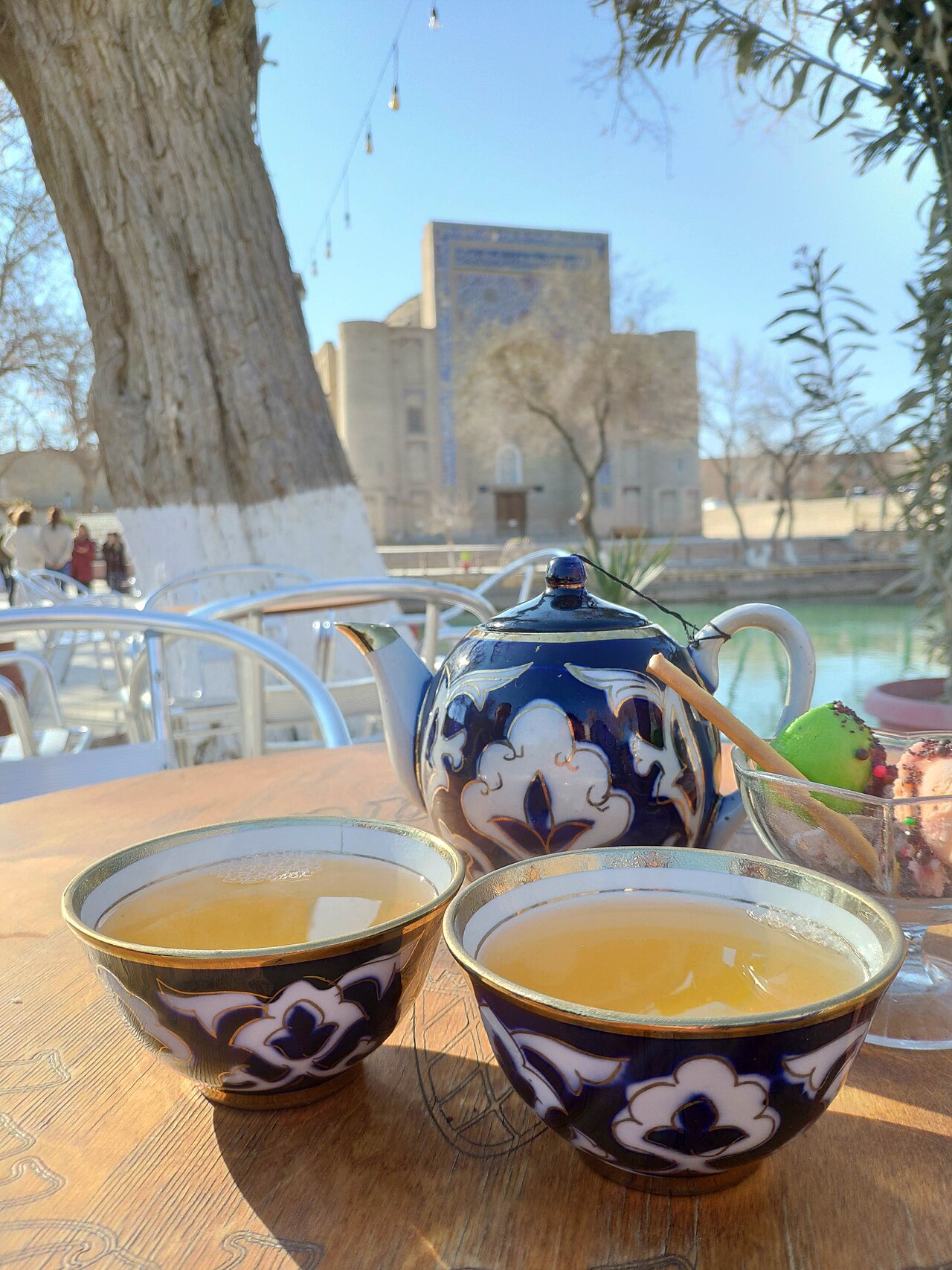
Tea is offered to every guest, green or black, without milk or sugar, poured from a teapot into small bowls called piyola. It is drunk all through the day, at home, at work and in teahouses called choyxona. Let it cool a little before drinking: very hot drinks are bad for the throat.
Before serving, the host often pours a bowl of tea and returns it to the pot three times, a custom said to help the tea brew. The host then keeps your bowl only partly full, so that it can be refilled often and the tea stays hot.
Most Uzbeks live in the fertile east: in and around Tashkent and in the densely populated Fergana Valley, with its cities of Fergana, Margilan, Kokand and Andijan. The famous Silk Road cities of Samarkand and Bukhara lie in the valley of the Zarafshan River in the centre, and Khiva stands in the Khorezm oasis near the Amu Darya. The far west is the desert land of Karakalpakstan, with its capital Nukus and the old Aral Sea port of Moynaq.
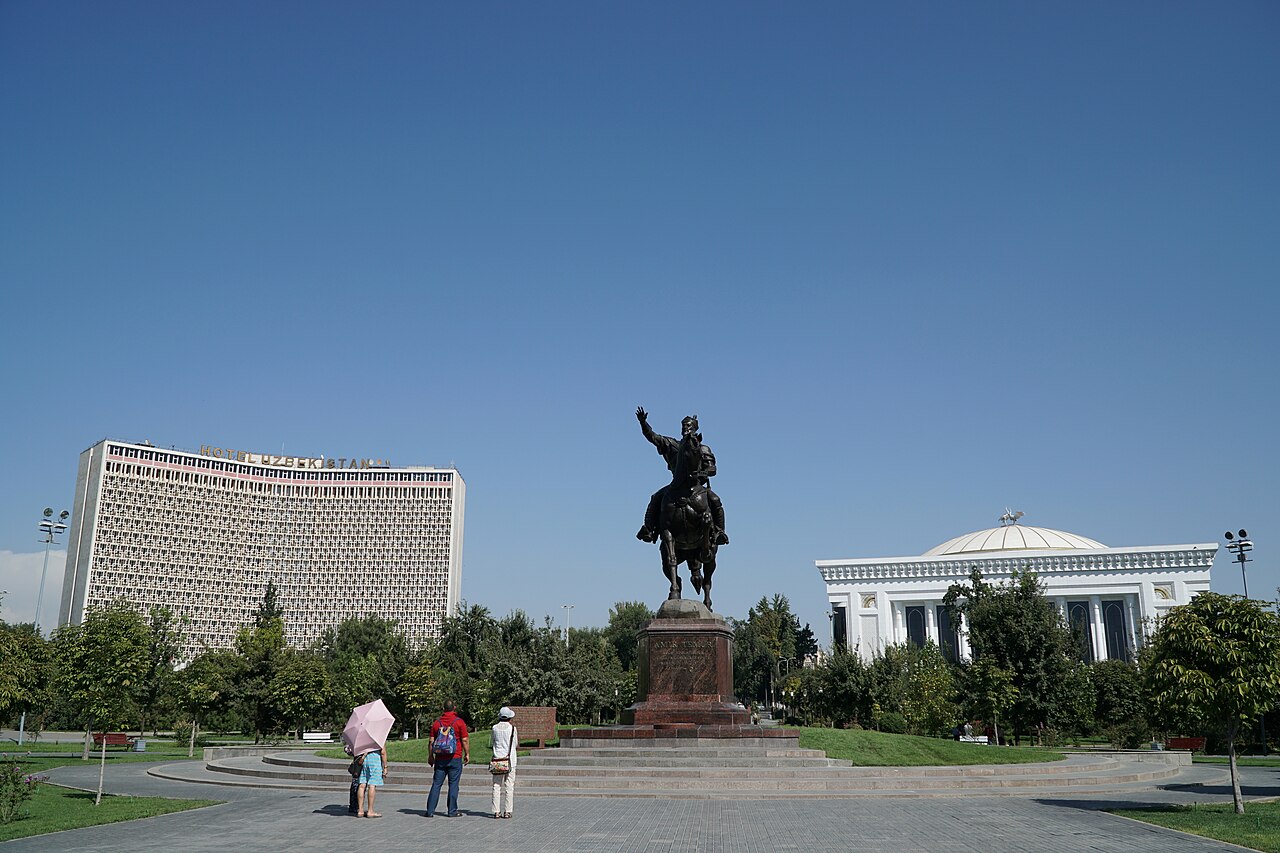
The capital and by far the largest city, with more than 3.1 million people (2025), the most populous city in Central Asia. Its name is usually explained as 'stone city'. After the 1966 earthquake it was rebuilt as a modern city of wide avenues, parks and fountains, and in July 2026 ten modernist buildings in and around the city became a UNESCO World Heritage Site.
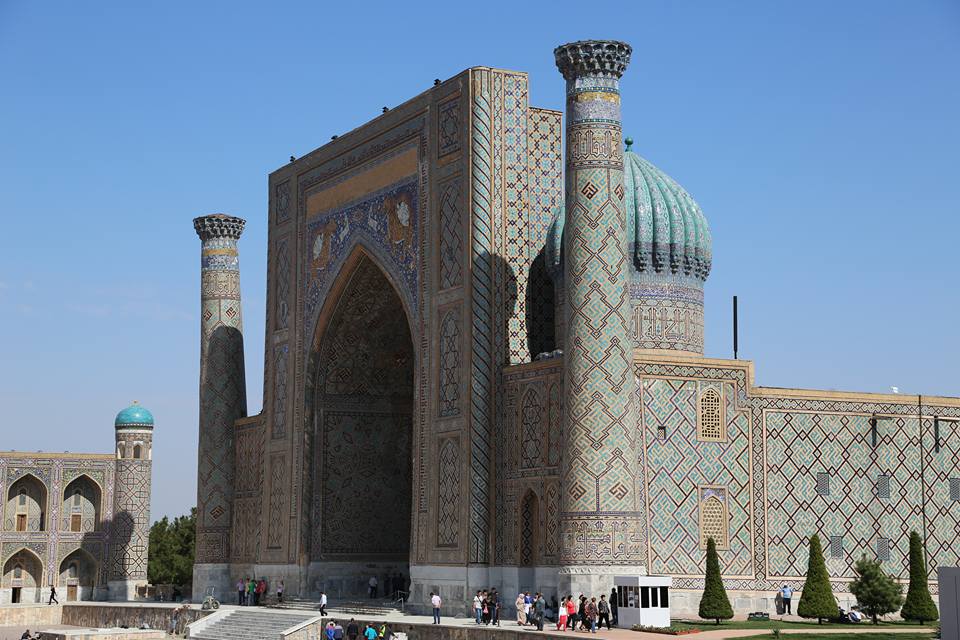
One of the oldest cities in Central Asia and Uzbekistan's second-largest city. It was the capital of Timur's empire, and its turquoise domes and tiled madrasas made it a legend of the Silk Road. Its historic centre is a UNESCO World Heritage Site.
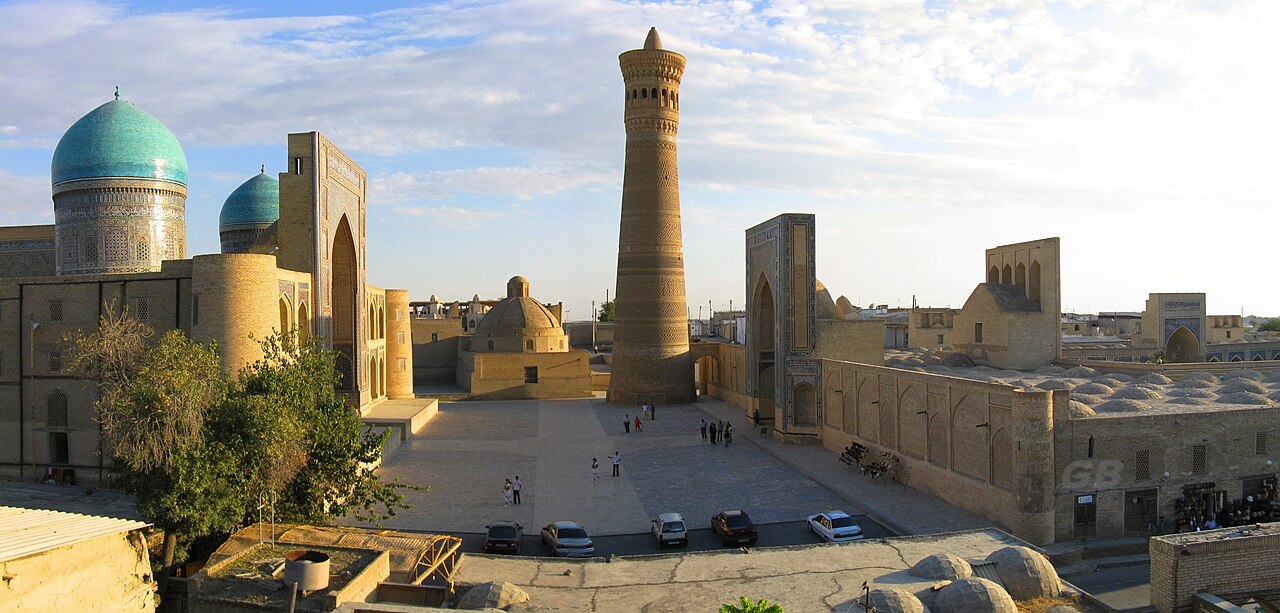
A holy and scholarly city of the Silk Road, with about 140 historic monuments. It was a capital of the Samanid state and later of the Khanate and Emirate of Bukhara. Its historic centre has been a UNESCO World Heritage Site since 1993.
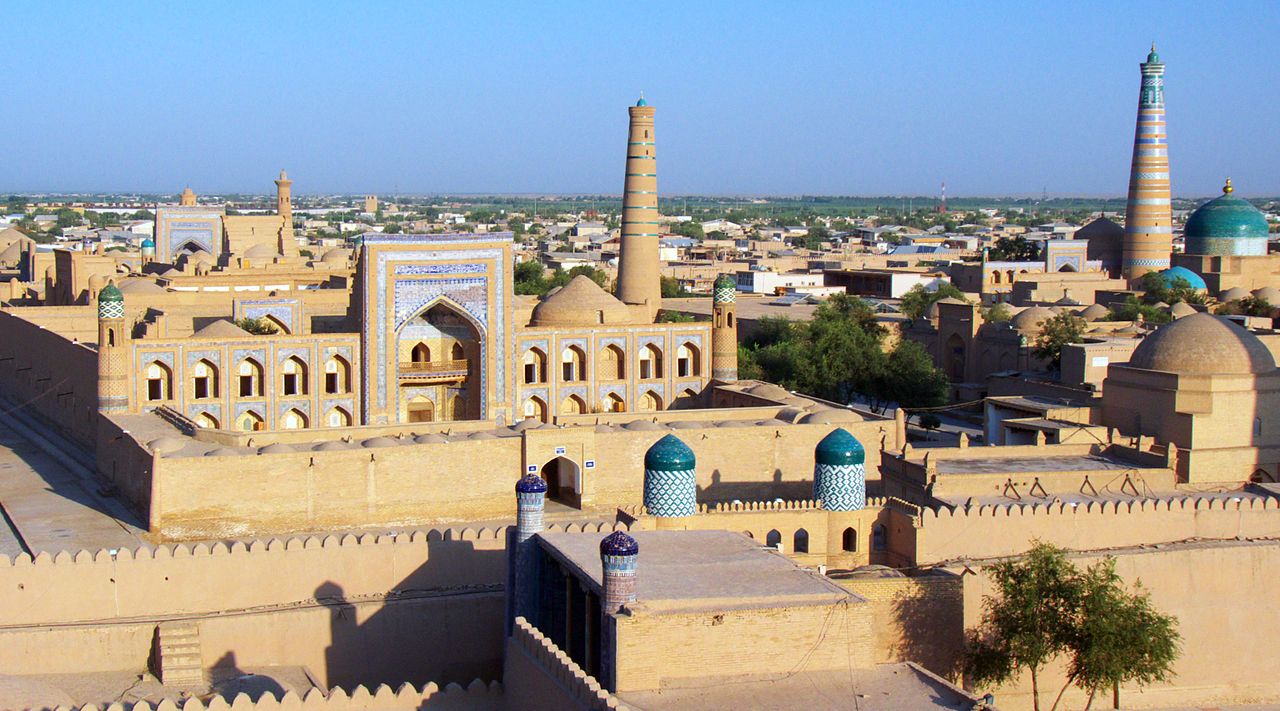
A small oasis city near the Amu Darya that was the capital of the Khanate of Khiva. Its walled inner town, Itchan Kala, is so well preserved that it feels like an open-air museum.
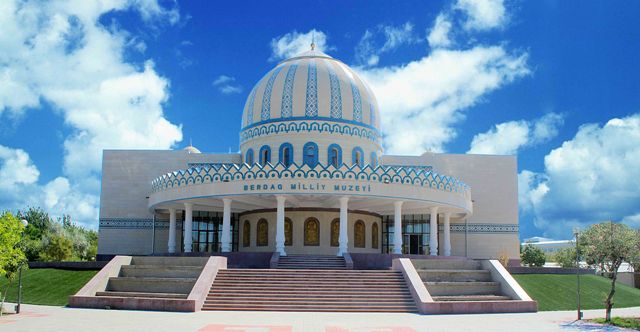
The capital of the autonomous Republic of Karakalpakstan, near the Amu Darya in the far west. It grew from a small settlement in the 1930s into a planned Soviet city. It is the usual starting point for trips to the Aral Sea.
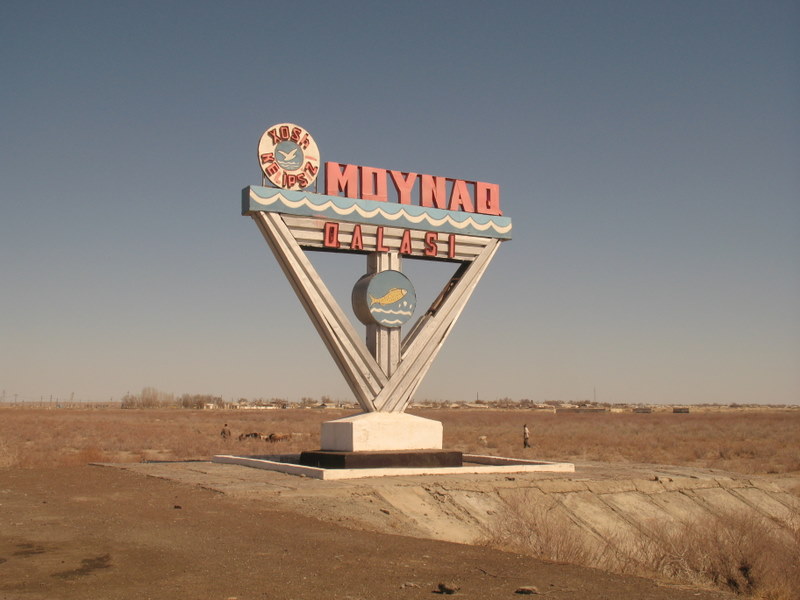
Once a busy fishing port and canning town on the shore of the Aral Sea. As the sea shrank from the 1960s, the water retreated far away, and as of 2026 it lies well over 100 km from the town. Moynaq is now visited as a reminder of the Aral Sea disaster.
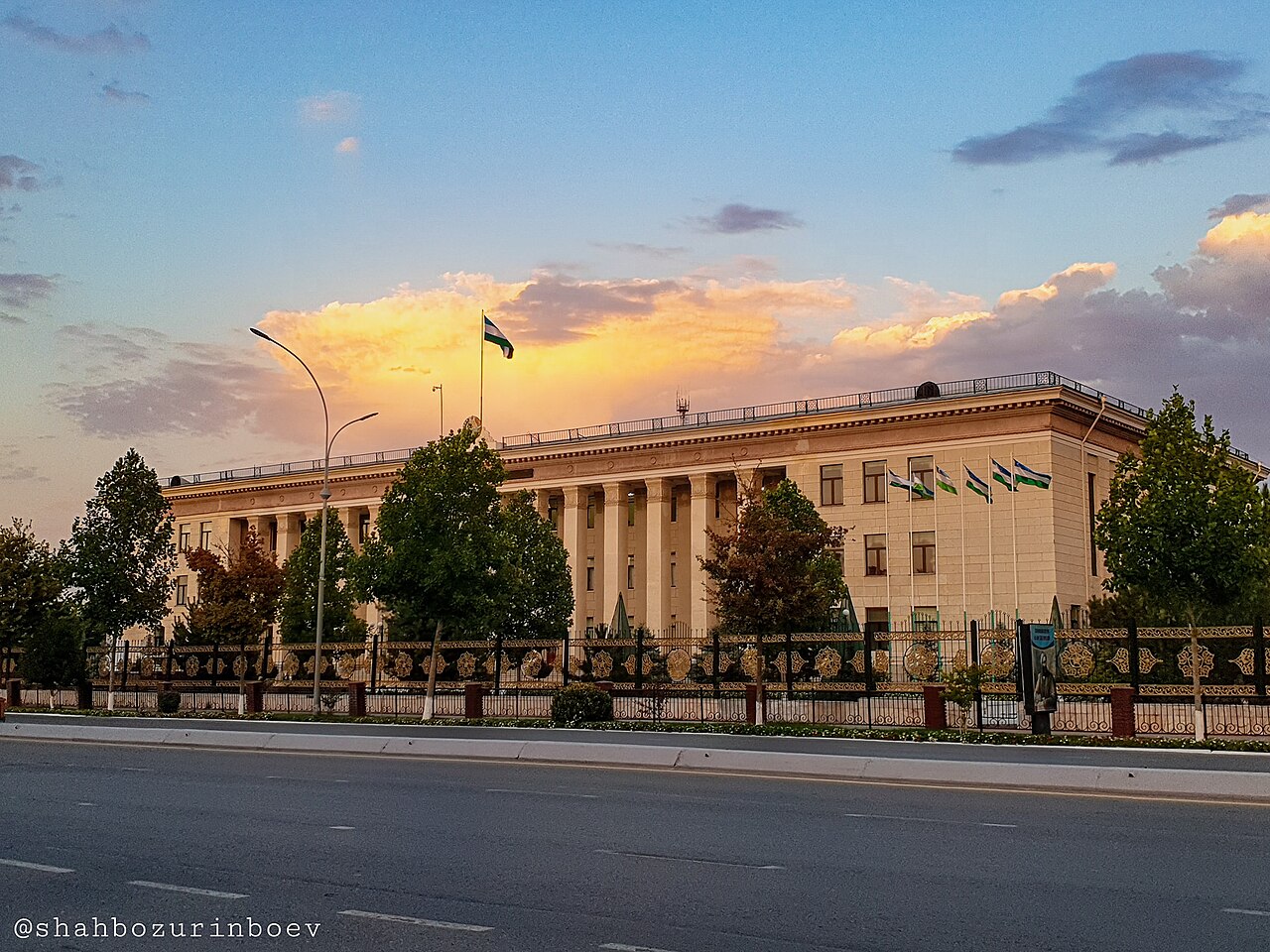
A green city with broad, tree-lined streets in the Fergana Valley, founded by the Russians in 1876 as a garrison town next to Margilan. It is the capital of Fergana Region and a good base for the valley's craft towns.
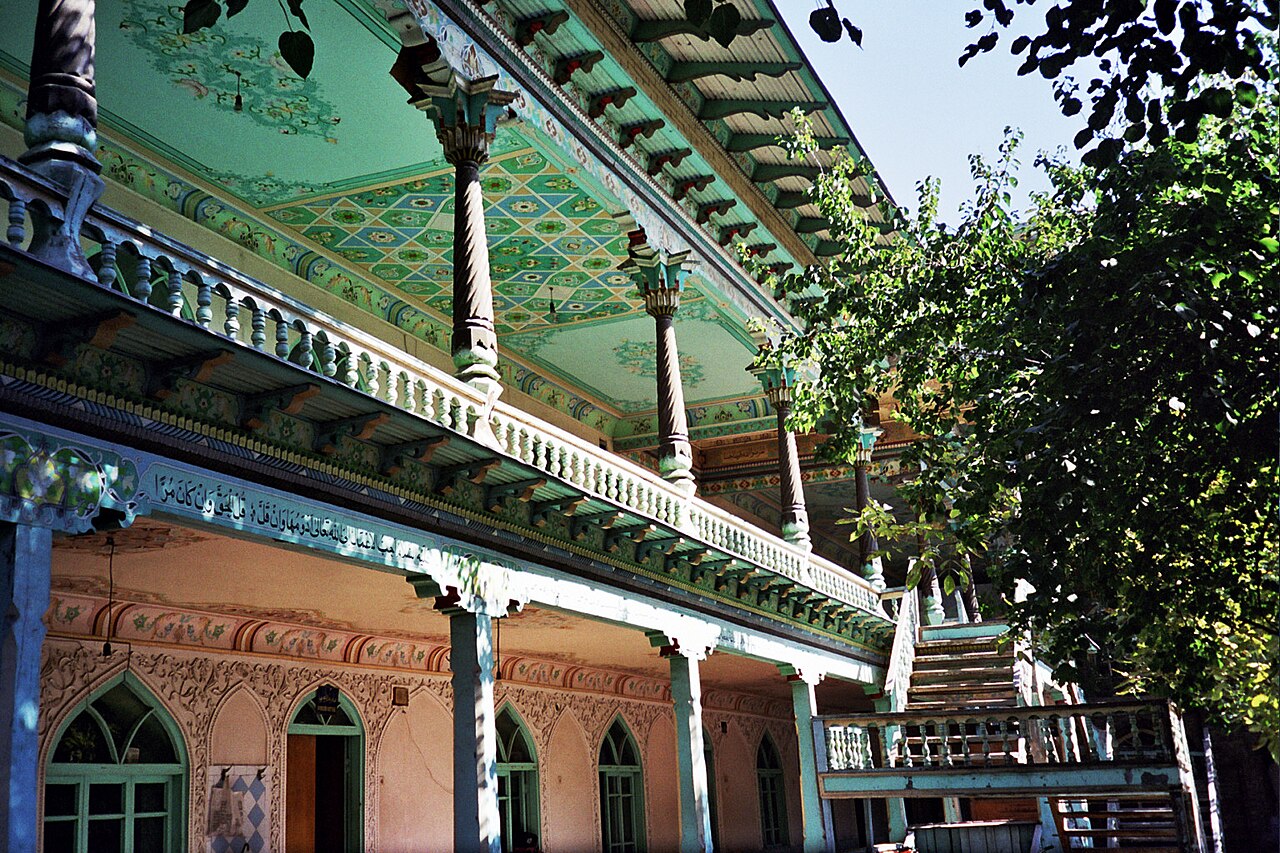
An old Silk Road town in the Fergana Valley that has been famous for silk for more than a thousand years. Local legend says its name comes from the chicken (murgh) and bread (non) served to Alexander the Great.
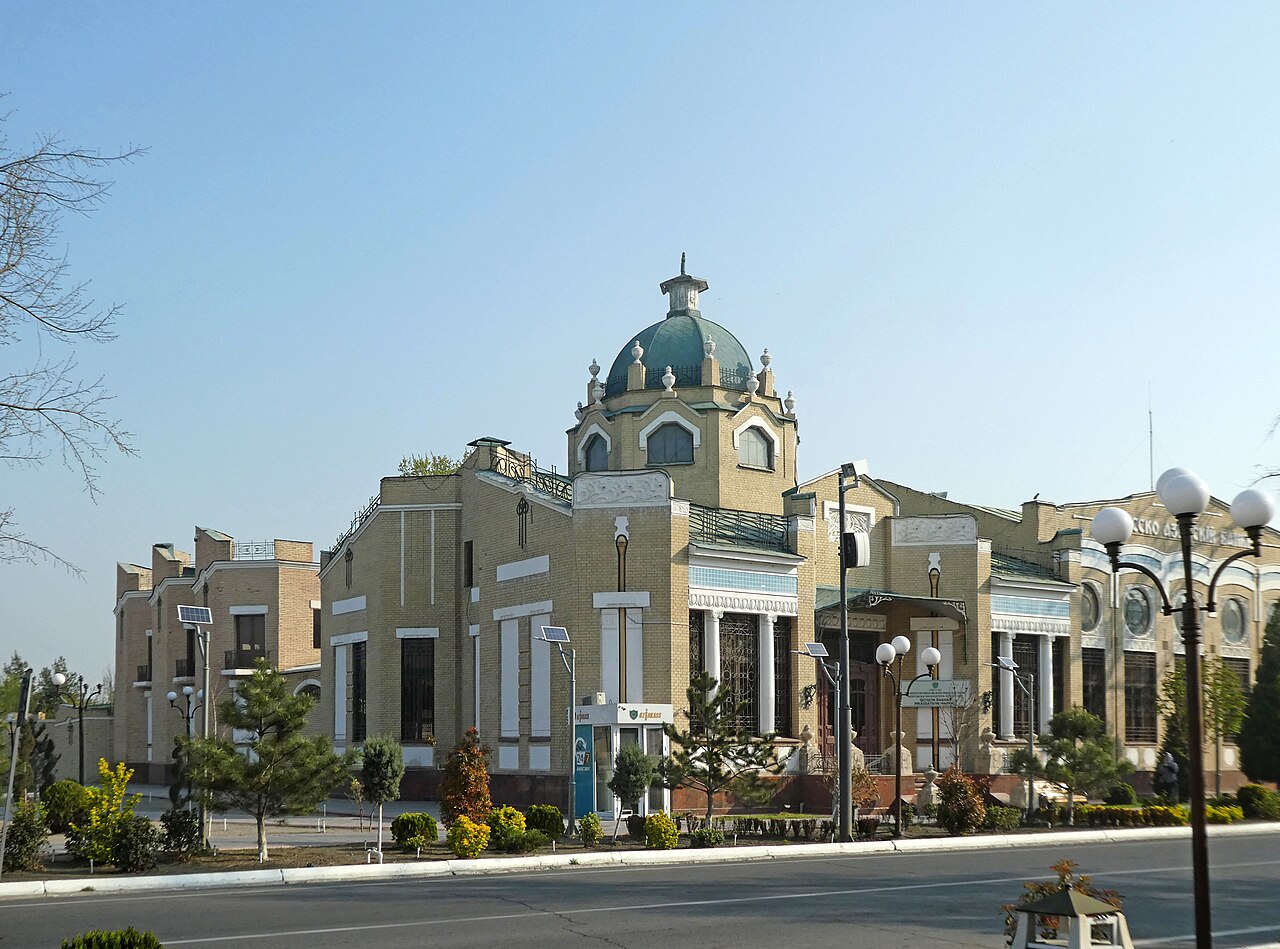
The capital of the Khanate of Kokand until the Russian conquest, at the western entrance to the Fergana Valley. It is nicknamed the 'City of Winds' and is the main transport hub of the valley.
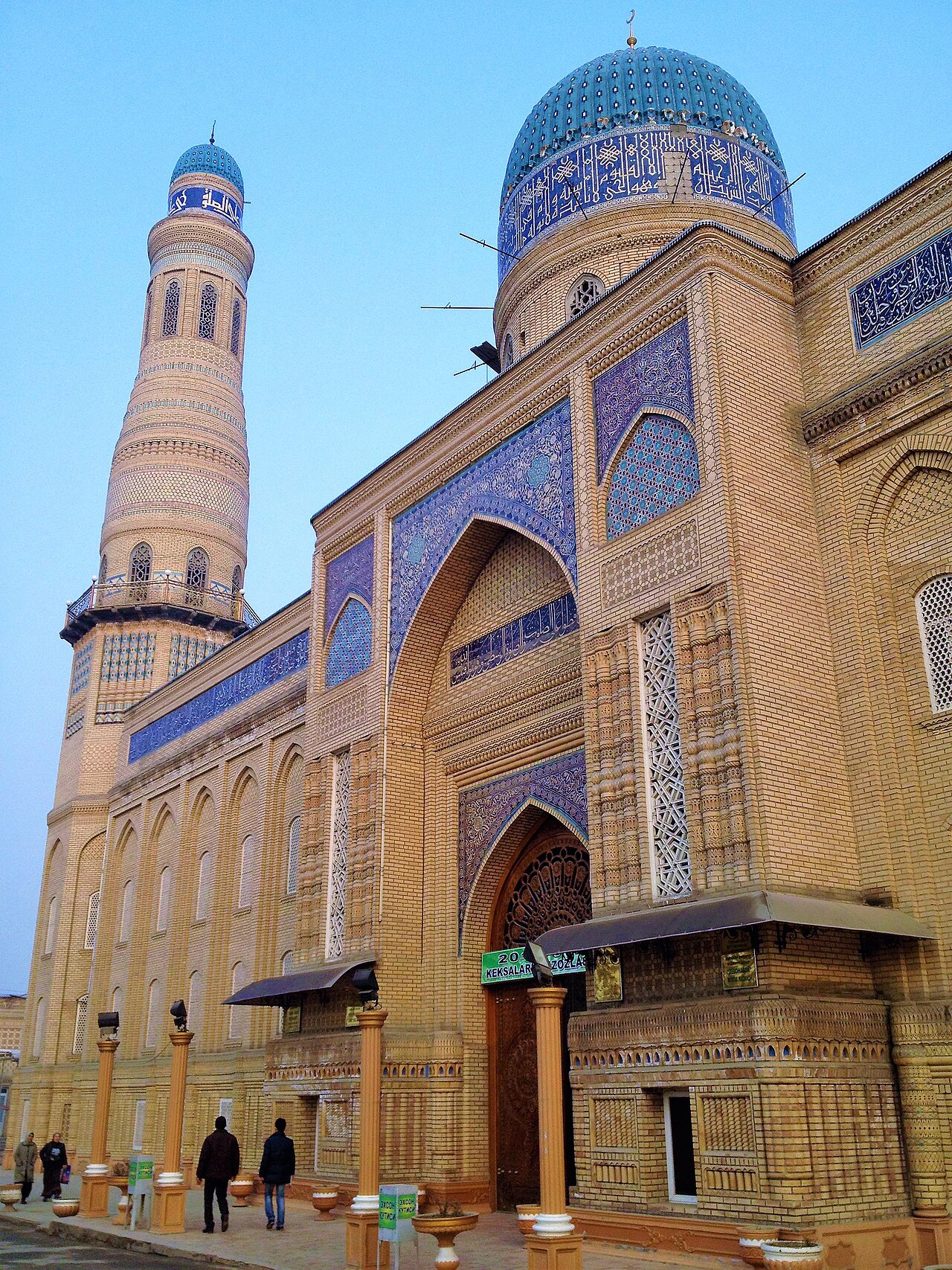
A large city at the eastern end of the Fergana Valley, near the border with Kyrgyzstan, and an old stop on the Silk Road. It is best known as the birthplace of Babur, the founder of the Mughal Empire in India.
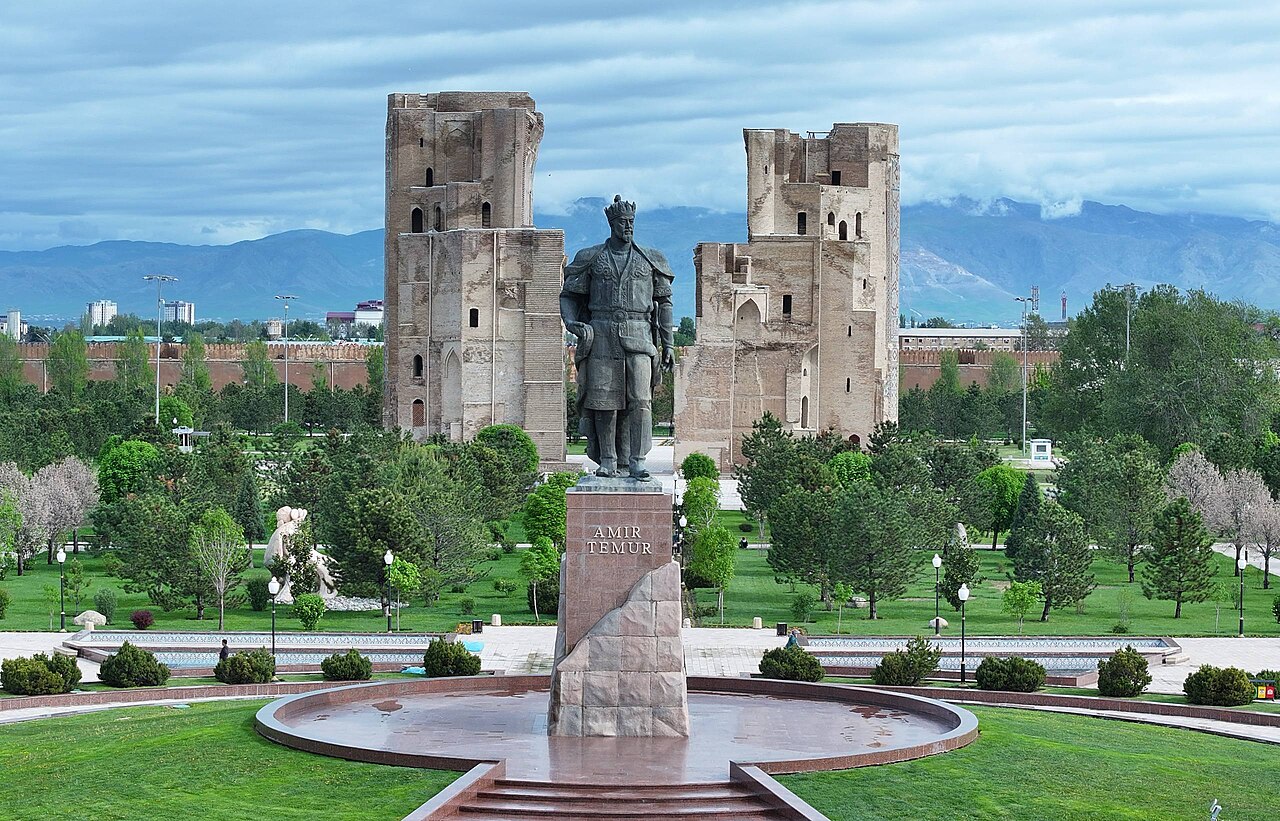
A green town about 80 km south of Samarkand, across the mountains. Timur was born nearby, and he built his vast White Palace here. Its historic centre is a UNESCO World Heritage Site.
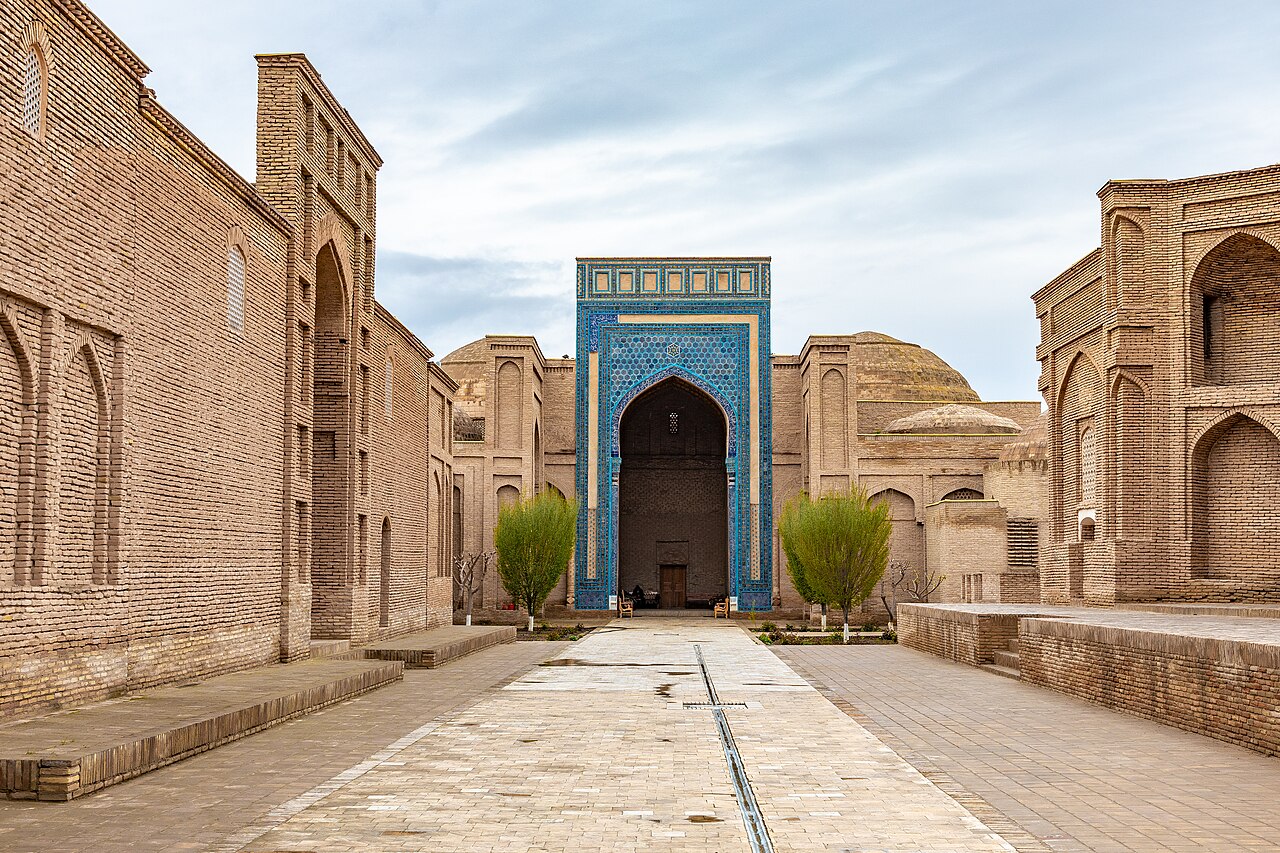
The southernmost city of Uzbekistan, on the Amu Darya across from Afghanistan. It is one of the oldest towns in Central Asia and was once a major centre of Buddhism, before becoming a place of Muslim pilgrimage.
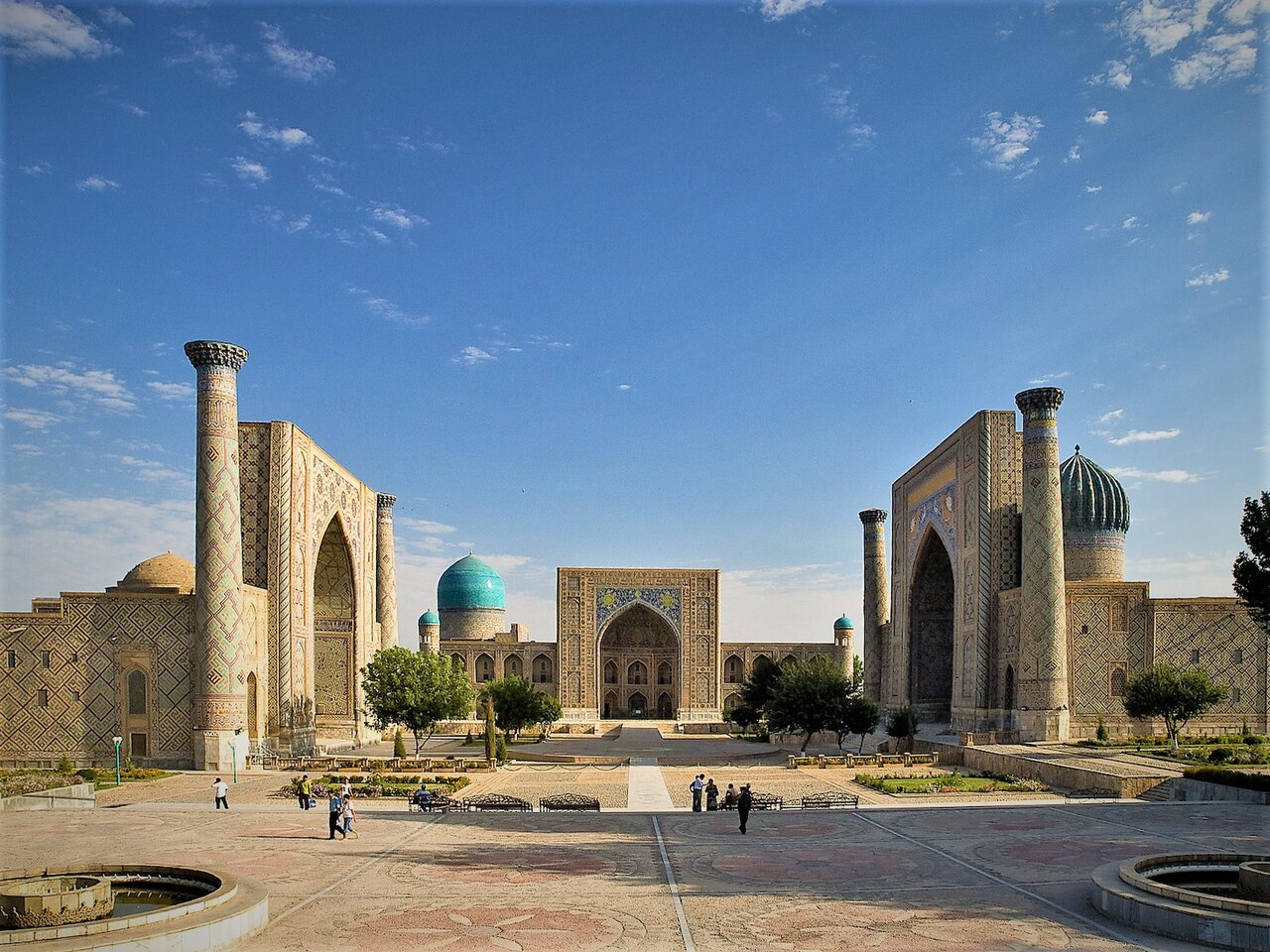
The grand central square of old Samarkand, framed on three sides by madrasas covered in blue, turquoise and gold tiles: the Ulugh Beg Madrasa (1417 to 1420), the Sher-Dor Madrasa (1619 to 1636), with its famous tigers chasing deer, and the Tilya-Kori Madrasa (1646 to 1660), whose mosque is richly gilded inside. It is part of the UNESCO World Heritage Site 'Samarkand, Crossroad of Cultures'.
UNESCO World Heritage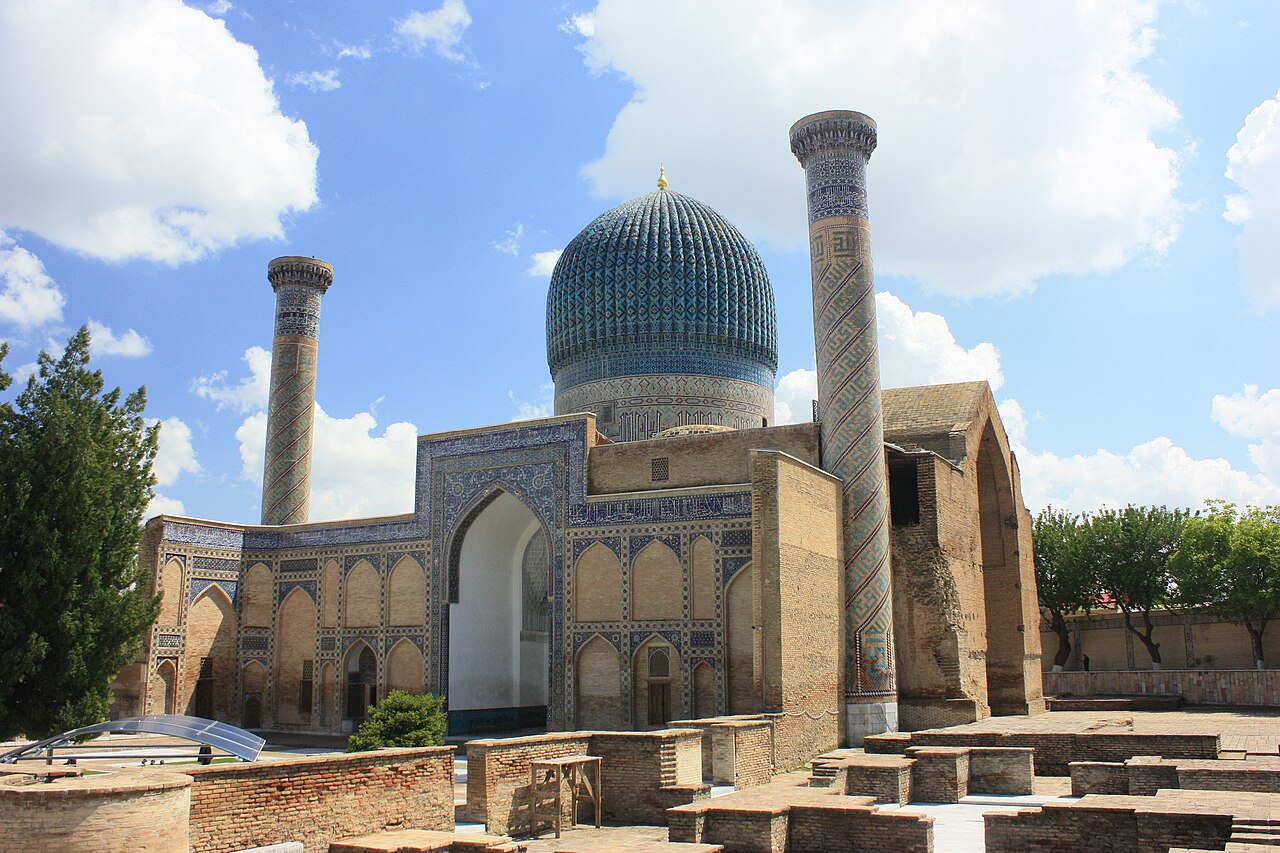
The mausoleum of Timur, crowned by a ribbed turquoise dome. Construction began in 1403 for his favourite grandson, and Timur himself was buried here in 1405, together with his sons and his grandson Ulugh Beg. Its design influenced the later tombs of the Mughal emperors in India, including the Taj Mahal.
UNESCO World Heritage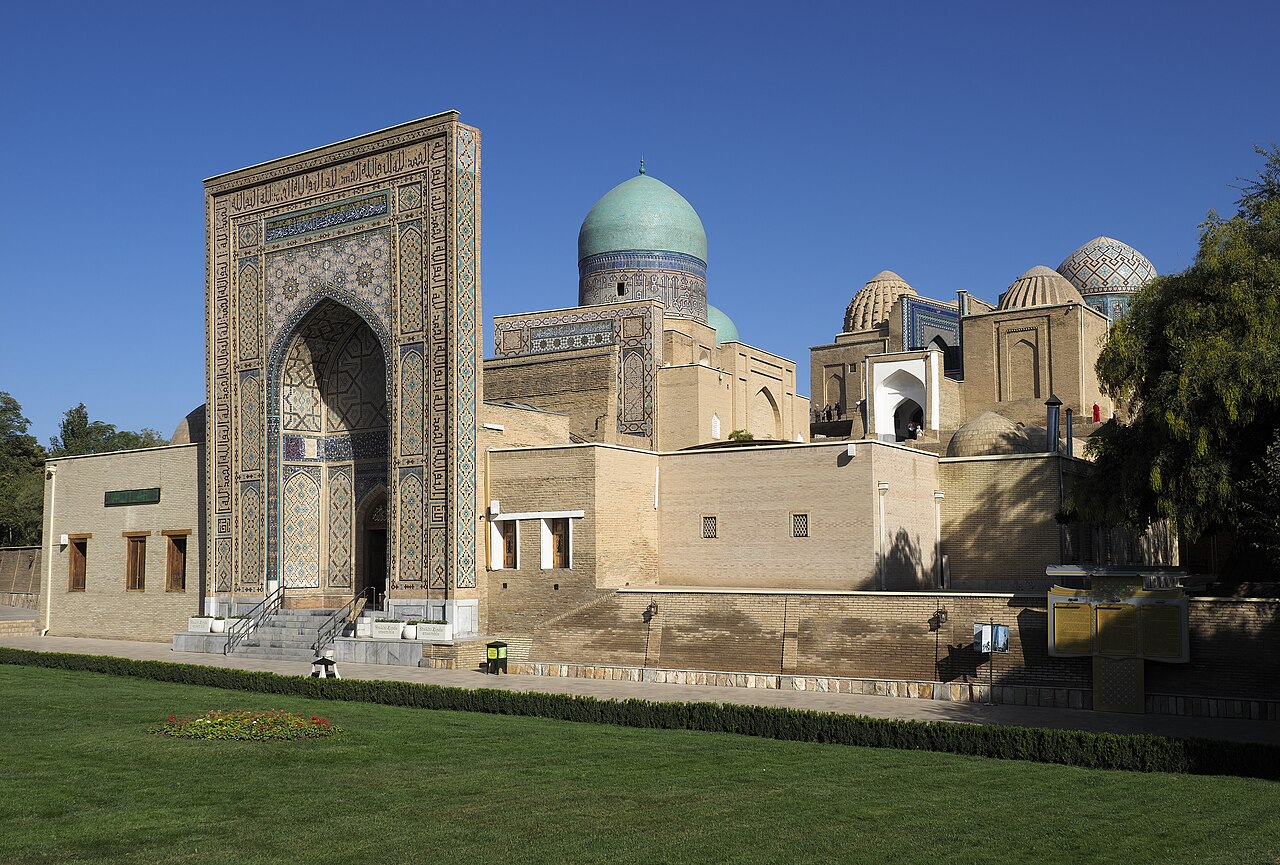
A narrow street of more than twenty mausoleums climbing a hillside, built mostly in the 14th and 15th centuries for Timur's relatives and nobles. The name means 'the Living King', from a legend about Qutham ibn Abbas, a cousin of the Prophet Muhammad, who is said to be buried here. Its glazed tilework is among the finest in Central Asia.
UNESCO World Heritage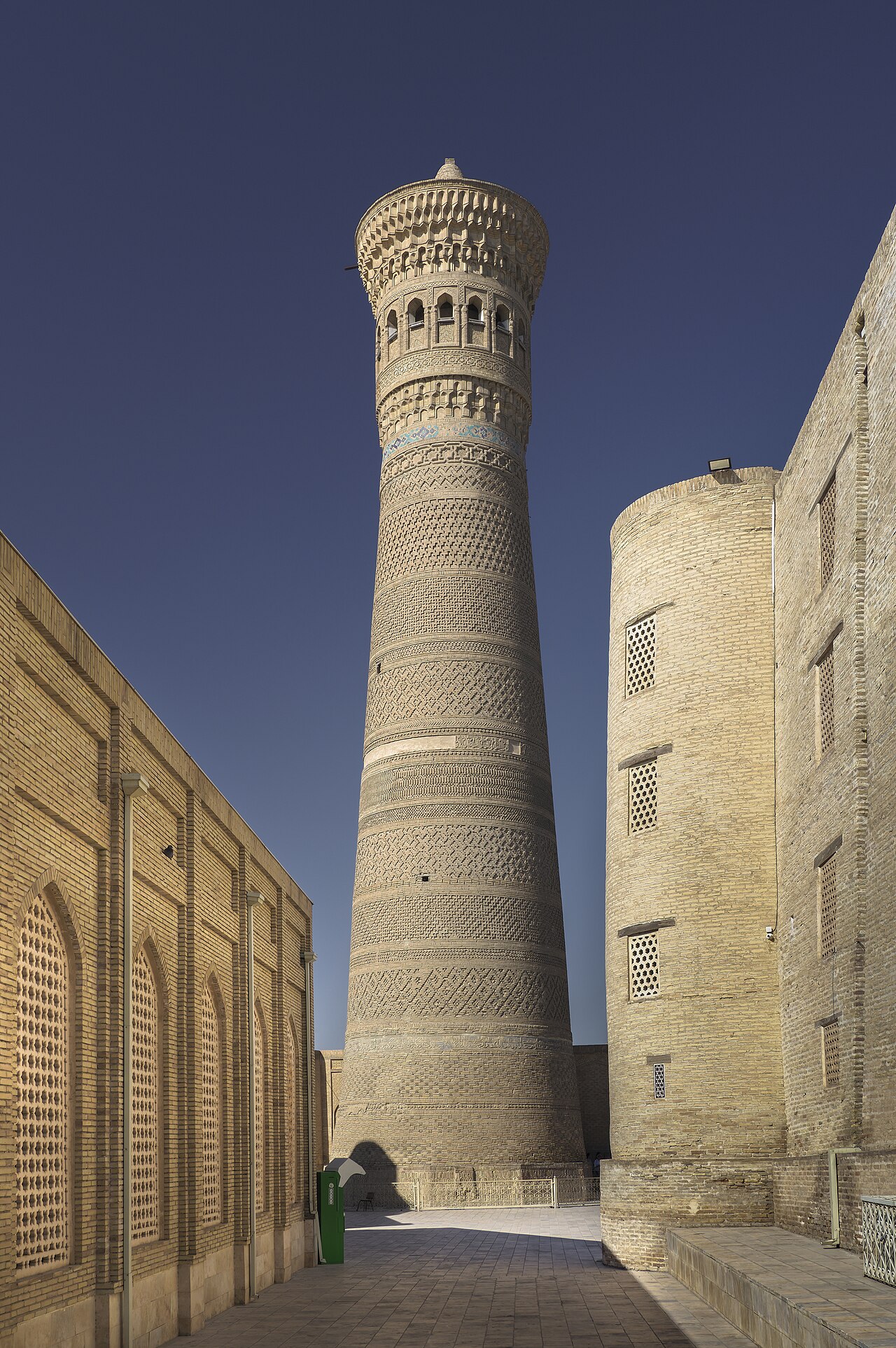
A tapering brick tower about 46 m high, built in 1127 to call the faithful to prayer and decorated with bands of patterned brick. It stands in the Po-i-Kalyan complex between a great mosque and a working madrasa. Legend says it so impressed Genghis Khan in 1220 that he ordered it to be spared.
UNESCO World Heritage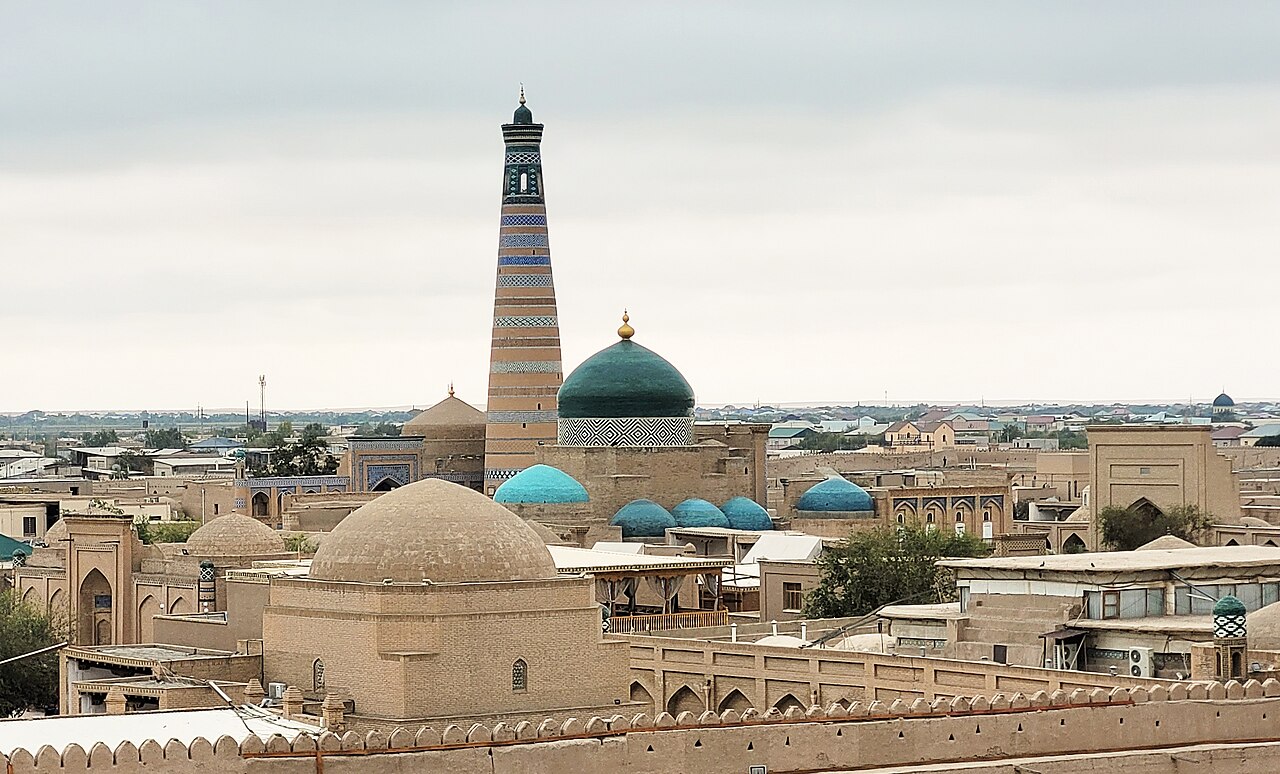
The walled inner town of Khiva, surrounded by mud-brick walls 8 to 10 m high. Inside are more than 50 historic monuments and about 250 old houses, mostly from the 18th and 19th centuries, including the Juma Mosque with its forest of carved wooden columns. In 1990 it became the first UNESCO World Heritage Site in Uzbekistan.
UNESCO World Heritage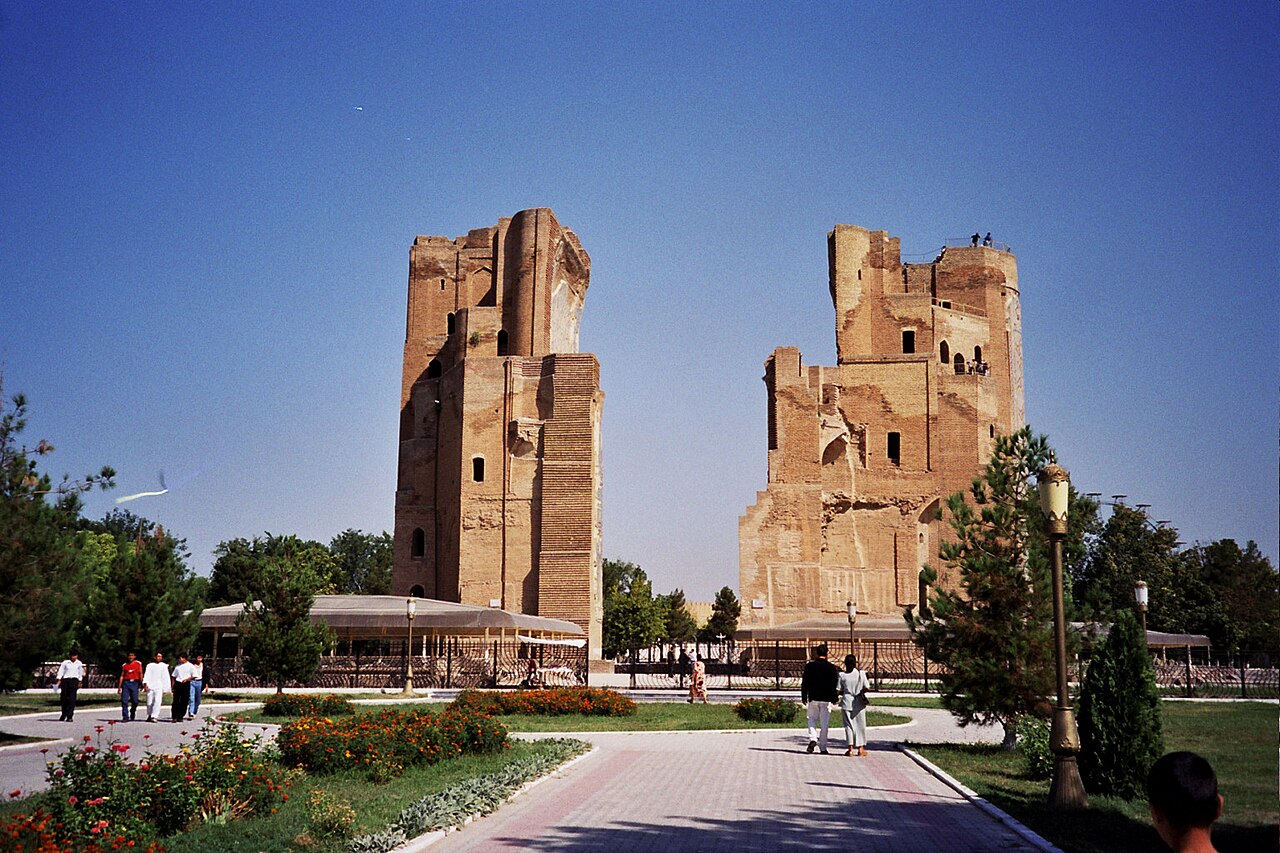
The ruins of Timur's 'White Palace', built between 1380 and 1404 in his home town. Only the two huge pillars of its gateway still stand, about 38 m high and decorated with glazed bricks in dark blue, light blue and ochre. A large statue of Timur stands in the park in front of it.
UNESCO World Heritage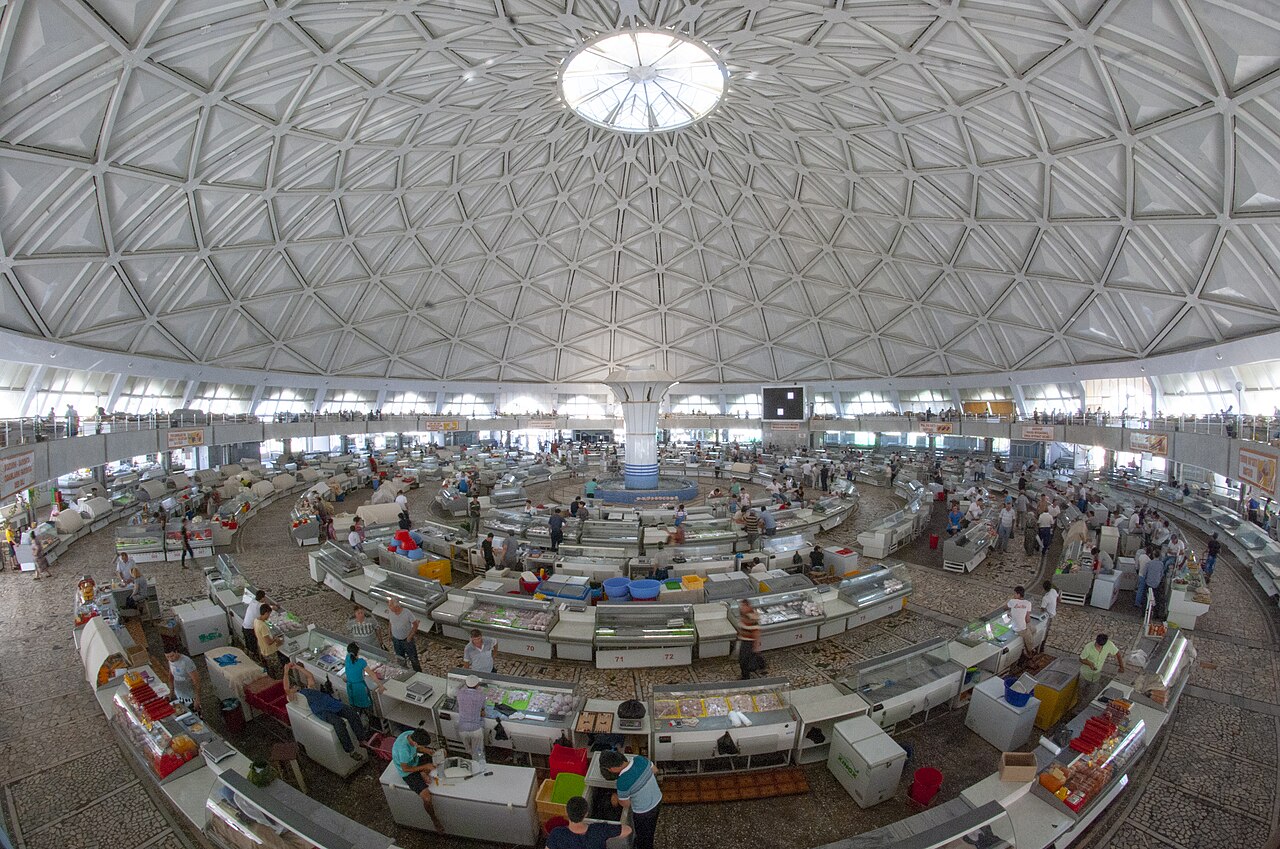
Tashkent's great market, in the old town next to the Kukeldash Madrasa. Its huge blue dome was built between 1983 and 1990, and underneath it traders sell spices, dried fruit, nuts, bread and meat. In July 2026 it became part of the UNESCO World Heritage Site of Tashkent Modernist Architecture.
UNESCO World Heritage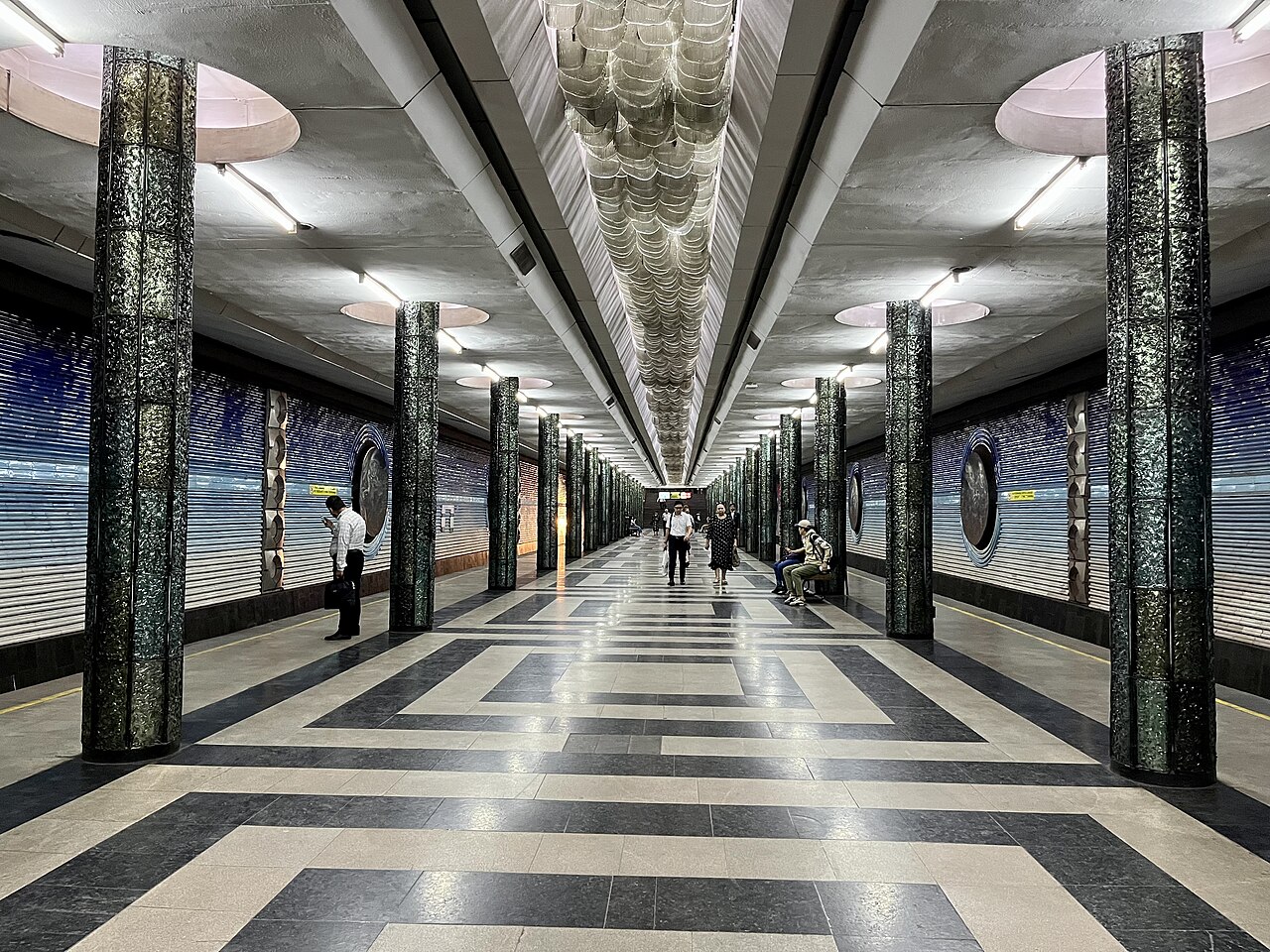
A Tashkent Metro station opened in 1984 and dedicated to space travel, with deep blue walls, glowing columns and round portraits of Yuri Gagarin, Valentina Tereshkova and the Samarkand astronomer Ulugh Beg. Until 2018 it was illegal to take photographs in the metro. In July 2026 the station became part of the UNESCO World Heritage Site of Tashkent Modernist Architecture.
UNESCO World Heritage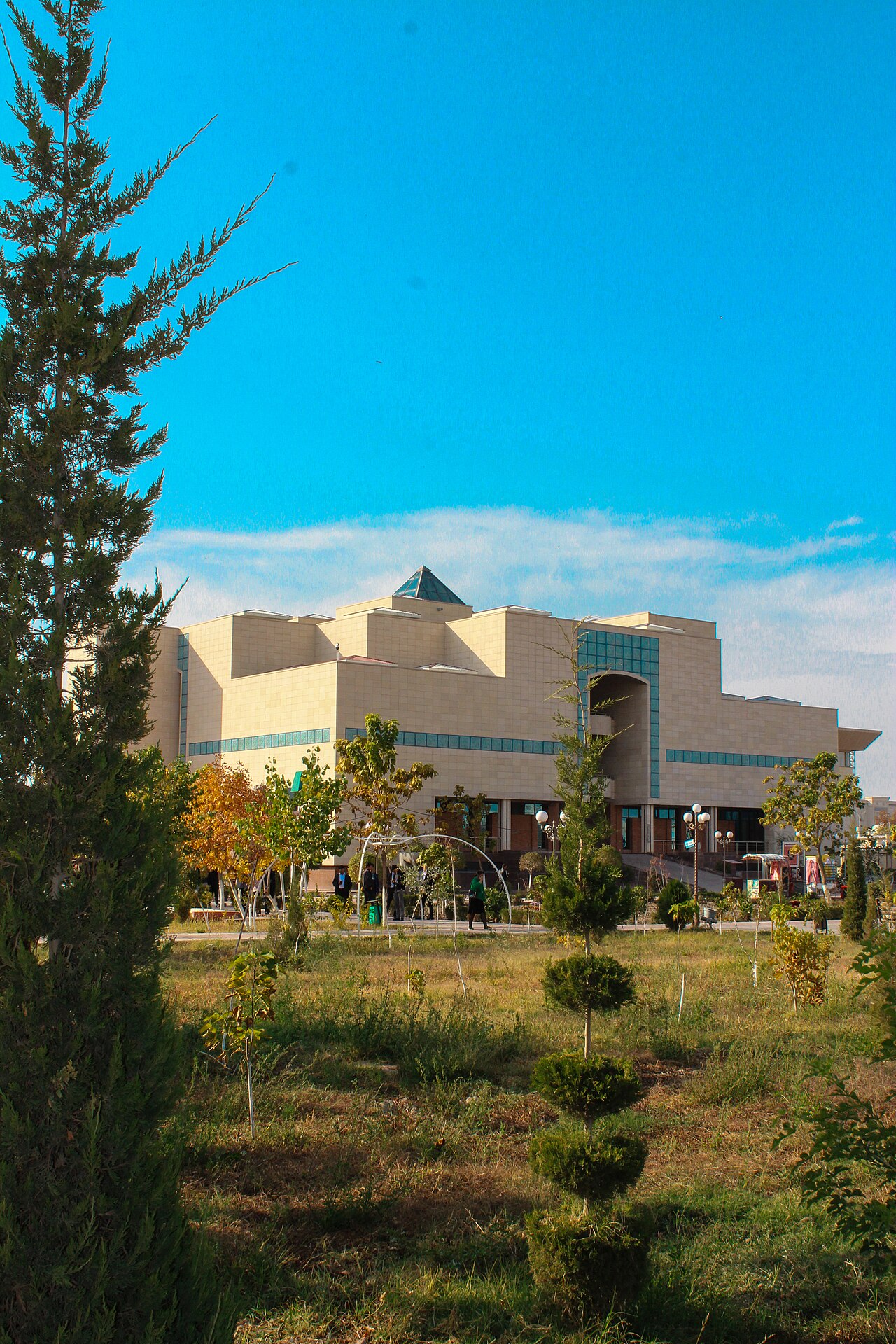
The State Museum of Arts of Karakalpakstan, founded in 1966 by the artist and collector Igor Savitsky. Far from Moscow, he gathered paintings by Russian avant-garde artists that were banned under Stalin, and today the museum holds more than 82,000 items, including the second-largest collection of Russian avant-garde art in the world.
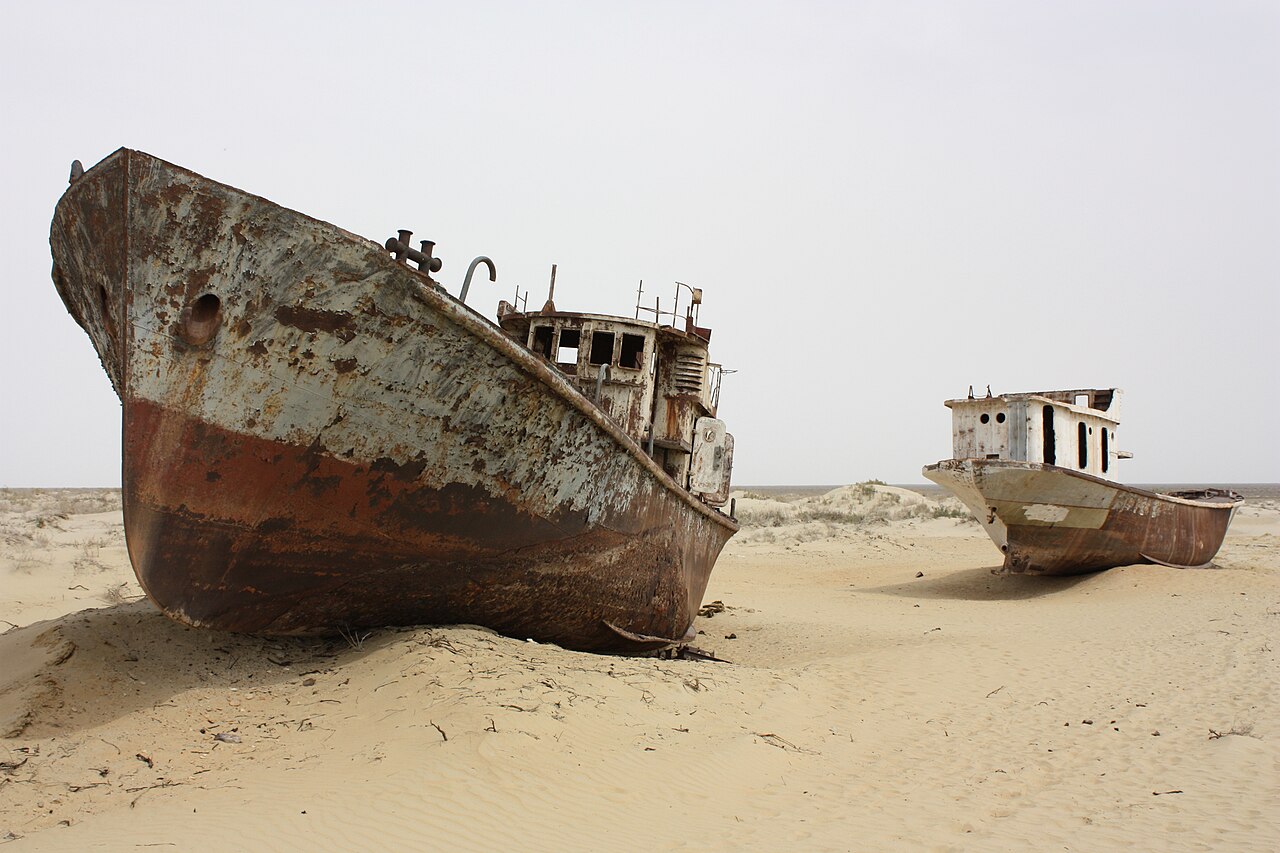
A row of rusting fishing boats lying on the sand where the Aral Sea shore used to be, below a memorial on the edge of Moynaq. The boats were left behind when the sea retreated, and they have become a quiet memorial to one of the world's worst environmental disasters.
Uzbekistan is doubly landlocked: every one of its neighbours is also landlocked. As of 2026 only two countries in the world are doubly landlocked, Uzbekistan and Liechtenstein.
Uzbekistan is the only Central Asian country that borders all four of the others: Kazakhstan, Kyrgyzstan, Tajikistan and Turkmenistan.
The Aral Sea was once among the four largest lakes on Earth. Since the 1960s the rivers that fed it have been used to water cotton fields, and as of 2026 only a small part of it is left, much of it in Kazakhstan. Its dry bed in Uzbekistan is now a desert, the Aralkum.
The English word 'algorithm' comes from the name of the 9th-century mathematician al-Khwarizmi, which means 'from Khwarazm', the region of the lower Amu Darya around today's Khiva. The word 'algebra' comes from the title of his book, Al-Jabr.
The Tashkent Metro, opened in 1977, was the first metro in Central Asia. Because its stations were also designed as shelters, taking photographs in them was forbidden until 2018.
In 2016 UNESCO added Uzbekistan's palov culture and tradition to its list of the intangible cultural heritage of humanity.
Timur's tomb in Samarkand, the Gur-e-Amir, influenced the great tombs built in India by his descendants, the Mughal emperors, including the Taj Mahal.
As of September 2026 Uzbekistan has eight UNESCO World Heritage Sites. The newest, added in July 2026, is a group of ten modernist buildings in and around Tashkent, including Chorsu Bazaar and a metro station.
Uzbekistan won the gold medal at the 44th Chess Olympiad in Chennai, India, in 2022, with a young team of grandmasters.
In 2026 Uzbekistan played at the FIFA World Cup for the first time, as the first Central Asian country ever to qualify. The team is nicknamed the White Wolves.
The Savitsky Museum in remote Nukus holds the second-largest collection of Russian avant-garde art in the world, much of it rescued when such art was banned in the Soviet Union.
Uzbek is written in the Latin alphabet, with letters such as oʻ and gʻ. On 10 September 2026 parliament gave final approval to a reform that replaces oʻ, gʻ, sh and ch with the single letters ö, ğ, ş and ç. As of late September 2026 it was awaiting the president's signature and is to be introduced gradually.
Shashmaqom, the classical music of Bukhara, is performed in six modes, or maqoms, which is what its name means. UNESCO recognised it as intangible cultural heritage of Uzbekistan and Tajikistan.
Pronunciation is written the way it sounds; the capital letters show where the stress goes. Audio is coming soon.
As of September 2026 British visitors can stay up to 30 days without a visa; check the rules for your own nationality before you travel. Every visitor must be registered with the authorities within three days of arrival. Hotels do this for you, so ask for the registration slips and keep them, as border officers may ask to see them when you leave.
By law you must carry your passport, and police do check. Cash machines that take foreign cards are mostly found in the big cities, so take out soʻm there before heading to smaller towns. Change money only at banks and official exchange offices: changing it on the street is illegal.
The Afrosiyob high-speed train links Tashkent with Samarkand in about two and a half hours and continues to Bukhara. Trains fill up quickly, so book ahead; tickets can be bought online up to 45 days in advance, and you need your passport.
Uzbekistan is a secular country, but most people are Muslim. At mosques, mausoleums and shrines, cover your shoulders and knees, women should carry a scarf for their hair, and take your shoes off where others do. During Ramadan, be discreet about eating and drinking in public near mosques.
Ask before photographing people, especially women and older people. Do not photograph police, soldiers, border posts, airports, bridges or government buildings. Taking pictures in the Tashkent Metro has been allowed since 2018, but staff may still ask you to stop.
Some medicines that are common at home, such as those containing codeine, are controlled in Uzbekistan. Declare them on the customs form when you arrive, carry your prescriptions or a doctor's letter, keep medicines in their original packaging, and bring enough for the whole trip.
Summers are very hot and dry, often around 40°C, and winters can be cold. April to early June and September to October are the most pleasant months for sightseeing. Drink bottled water, and outside Tashkent do not drink from the tap.
Prices in bazaars and souvenir shops are usually open to friendly bargaining, while prices in supermarkets and department stores are fixed. Carpets, art and some hotel rates are often quoted in US dollars, but you can pay in soʻm at the day's rate.