A young island of fire and ice in the North Atlantic, with glaciers, waterfalls, hot springs and one of the oldest parliaments in the world.
Your trip to Iceland
Ready for the trip?
10 questionsAbout 3 minutesNo timer
Explore Iceland
You have explored 0 of 9 parts. Scroll on to discover the rest.
Print the Iceland pack
A free large-print PDF. Choose what goes in: facts, map, history, dishes and recipes, phrases, fun facts, a quiz with or without answers. Made for clubs, care homes, libraries and family afternoons.
Iceland is an island country in the North Atlantic, just south of the Arctic Circle. It sits on the Mid-Atlantic Ridge, where the North American and Eurasian plates are slowly pulling apart, so it has volcanoes, geysers and hot springs, as well as great glaciers. It is the most thinly populated country in Europe: about 395,000 people live there, and around two thirds of them live in and around the capital, Reykjavík.
Norse settlers, many with Irish and Scottish slaves and wives, arrived from about 874. In 930 they founded the Althing, an open-air assembly at Þingvellir, and Iceland became Christian in the year 1000. From 1262 the island was ruled by Norway and later by Denmark. It became a sovereign kingdom under the Danish king in 1918 and a fully independent republic on 17 June 1944.
For centuries Icelanders lived by farming and fishing, and they still write and read their own language, very close to the Old Norse of the medieval sagas. Today Iceland is a wealthy Nordic country. It is a member of NATO but has no army, and it is not in the European Union, although it belongs to the European Economic Area. Hydropower and geothermal heat give it almost all of its electricity.
CapitalReykjavík
PopulationAbout 395,000 (Statistics Iceland, end of March 2026: 395,050)
Official languageIcelandic, the national and official language by a law of 2011
CurrencyIcelandic króna (ISK)
AreaAbout 103,000 km², the main island and about 30 small islands
GovernmentParliamentary republic since 1944. The President is head of state and the Prime Minister leads the government. The parliament is the Althing
Highest mountainHvannadalshnúkur, about 2,110 m, on the rim of the Öræfajökull volcano in Vatnajökull National Park
Longest riverÞjórsá (Thjorsa), about 230 km, in the south
NeighboursNo land borders. Across the sea, the nearest land is Greenland (part of the Kingdom of Denmark) to the west, then the Faroe Islands (about 420 km) and Norway's island of Jan Mayen (about 570 km), and further away Scotland in the United Kingdom and mainland Norway
Iceland was one of the last large places on Earth to be settled. Its people kept careful records of their own story, from the first Norse farmers and the sagas to independence, fishing wars and life beside active volcanoes.
AD 874
Ingólfur settles in Reykjavík
According to the medieval Book of Settlement, the Norwegian chieftain Ingólfur Arnarson built his farm in 874 at a bay he named Reykjavík, 'smoky bay', after the steam from hot springs. He is remembered as the first permanent settler, and others soon followed from Norway and the British Isles.
AD 930
The Althing is founded
By 930 most good land had been claimed, and the chieftains founded the Althing, an open-air assembly that met every summer at Þingvellir to make laws and settle disputes. The Althing still exists today as the parliament of Iceland, one of the oldest parliaments in the world.
1000
Iceland adopts Christianity
Pagans and Christians were close to civil war, so the question was put to the Althing. The lawspeaker Þorgeir, himself a pagan, decided that all Icelanders should be baptised and follow 'one law and one religion', while some pagan customs were allowed in private for a time.
1262
The Old Covenant with Norway
After decades of violent feuds between powerful families, Icelandic chieftains accepted the King of Norway as their king in the Old Covenant of 1262, and by 1264 all had sworn loyalty. It ended the independent Commonwealth. Later, Iceland passed with Norway to the Danish crown.
1550
The Reformation
The Danish king imposed the Lutheran faith on his lands. In 1550 Jón Arason, the last Catholic bishop in Iceland, was beheaded with two of his sons, and Iceland became Lutheran, as it has remained.
1783
The Laki eruption
In June 1783 a 25 km fissure opened at Laki and poured out lava and poisonous gases for eight months. More than half of the livestock died, and the famine that followed killed at least a fifth of the people. The haze even brought cold weather and crop failures to Europe.
1845
The Althing meets again in Reykjavík
The old Althing had stopped meeting around 1800. As national feeling grew, the Danish king restored it by royal decree, and the new Althing first met in Reykjavík in 1845, at first only as an advisory assembly. The independence leader Jón Sigurðsson argued that meeting in Reykjavík would help make the town truly Icelandic.
1918
Iceland becomes a sovereign kingdom
The Danish-Icelandic Act of Union, which came into force on 1 December 1918, recognised Iceland as a fully sovereign state, the Kingdom of Iceland. It shared the Danish king, and Denmark handled some foreign affairs for it, but Iceland ran its own country.
1940
British troops arrive
After Germany occupied Denmark, British forces landed in Reykjavík on 10 May 1940 and occupied neutral Iceland without a fight, to keep the island out of German hands. American troops later took over, and the war years brought jobs, roads and airfields.
1944
Iceland becomes a republic
In a referendum in May 1944, more than 97 percent of voters chose to end the union with Denmark. The Republic of Iceland was declared at Þingvellir on 17 June 1944, which is now the national day, with Sveinn Björnsson as the first president.
1973
The Eldfell eruption on Heimaey
On 23 January 1973 a fissure opened without warning on Heimaey, the main island of the Westman Islands, and the whole town was evacuated to the mainland. Around 400 homes were destroyed, but the harbour was saved by pumping cold sea water onto the advancing lava.
1976
The last Cod War ends
Between 1958 and 1976 Iceland had three 'Cod Wars' with the United Kingdom over fishing limits, with coast guard ships cutting the nets of British trawlers. In 1976 a NATO-brokered agreement accepted Iceland's 200-nautical-mile fishing zone.
1980
Vigdís Finnbogadóttir is elected president
In 1980 Vigdís Finnbogadóttir, a theatre director, was elected President of Iceland, the first woman in the world to be democratically elected president of a country. She served for 16 years, until 1996.
2008
The banks collapse
In October 2008 all three of Iceland's big banks failed. Compared with the size of its economy, it was the largest banking collapse of any country in history. The króna fell sharply, and a deep recession and large protests followed.
2010
Eyjafjallajökull erupts
In April 2010 an eruption under the Eyjafjallajökull glacier sent a cloud of ash over Europe. About 20 countries closed their airspace, and around 10 million travellers were affected. The eruption was declared over in October 2010.
2023
Eruptions begin near Grindavík
In November 2023 strong earthquakes cracked the fishing town of Grindavík, on the Reykjanes Peninsula, and it was evacuated. From 18 December 2023 to August 2025 there were nine eruptions along the nearby Sundhnúkur crater row. As of September 2026, the last one began in July 2025, and scientists say magma is again building up underneath.
Icelandic cooking grew out of a harsh climate: lamb, fish and dairy, with little grain or fruit. For centuries food was preserved for the long winter by drying, smoking and pickling in sour whey. Today a typical dinner is fresh fish or lamb with potatoes and vegetables, and coffee with pastries such as kleinur is part of everyday life. In the dark midwinter, many Icelanders gather for Þorrablót feasts of old-style preserved foods.
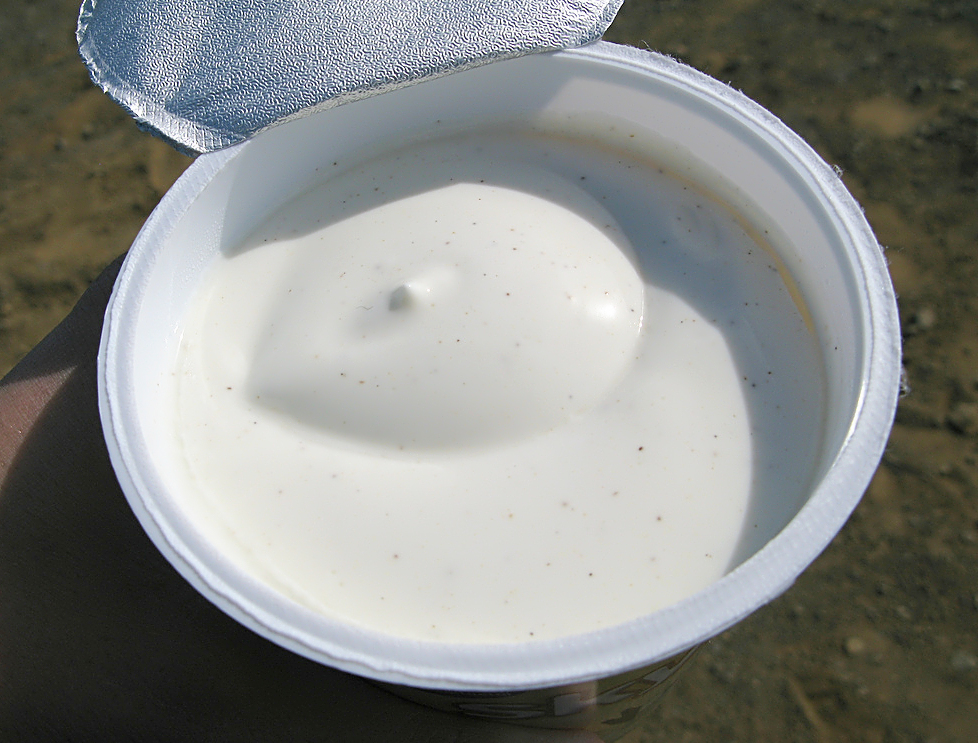
A thick, mild, high-protein dairy food made from skimmed milk. It looks and is eaten like a strained yoghurt, but it is really a soft fresh cheese. It is served cold, often with berries and a little cream, or in flavoured pots.
Skyr is mentioned in the medieval sagas, such as Egil's saga, and has been part of Icelandic food for centuries.
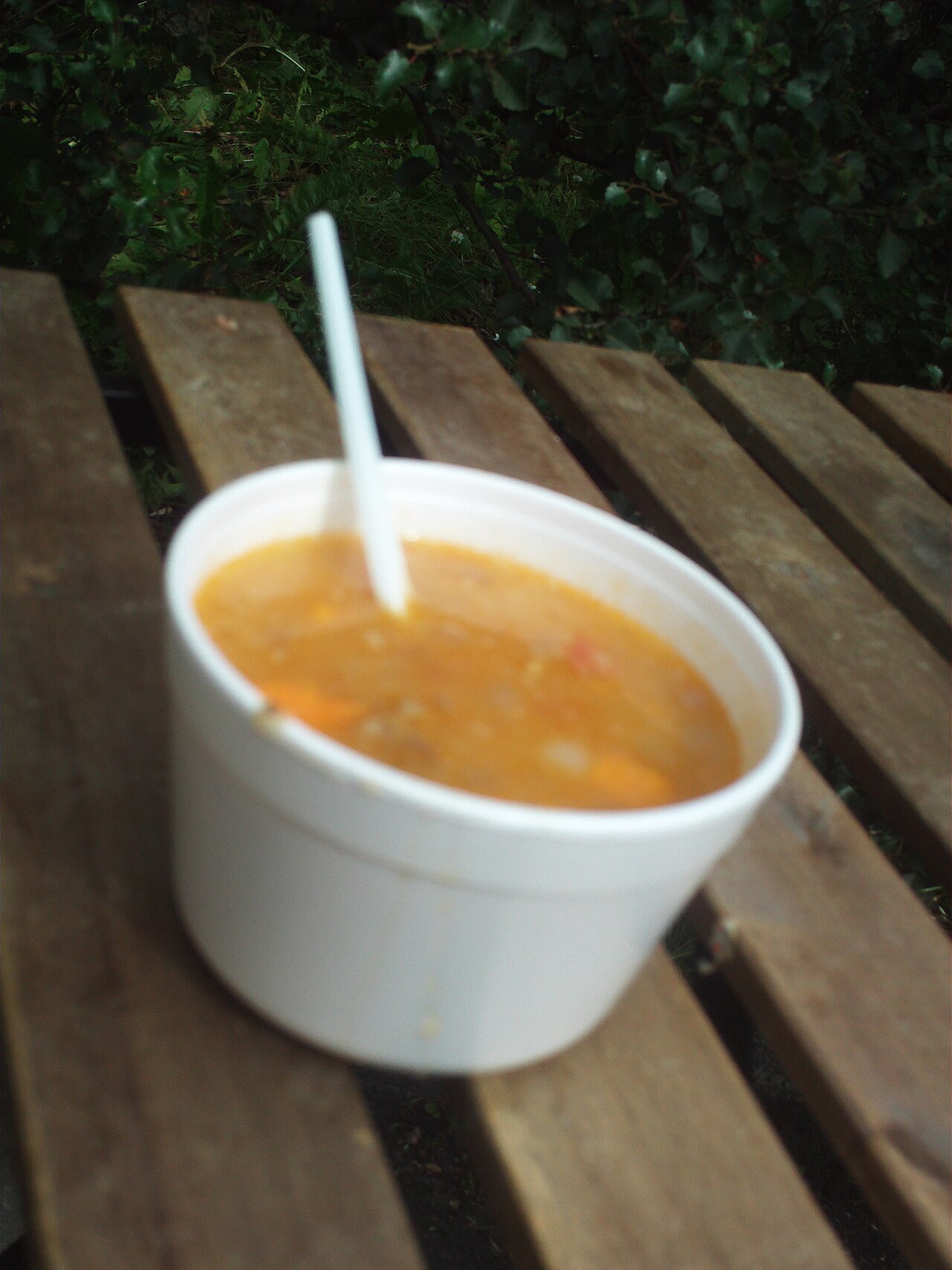
A hearty soup of lamb on the bone, simmered with rutabaga (swede), carrots, potatoes and cabbage, often thickened with a little rice or oats and seasoned with dried soup herbs. It is the dish Icelanders abroad often cook to show foreigners what Icelandic food is like.
See the recipe
Serves 6
2 h
Ingredients
1 kg lamb on the bone, such as shoulder or neck, cut into large pieces
2 litres cold water
1 onion, chopped
2 tablespoons rice or rolled oats
2 tablespoons dried soup herbs (a mix of parsley, celery, leek and carrot)
400 g rutabaga (swede), peeled and cut into chunks
300 g carrots, cut into chunks
500 g potatoes, peeled and cut into chunks
A quarter of a small white cabbage, cut into pieces
Salt and black pepper
Method
Put the lamb in a large pot with the cold water and 2 teaspoons of salt. Bring it slowly to the boil and skim off the foam.
Add the onion, rice or oats and dried herbs, cover and simmer gently for about 45 minutes.
Add the rutabaga, carrots and potatoes and simmer for 20 minutes more.
Add the cabbage and cook for another 10 to 15 minutes, until the meat and vegetables are tender.
Season with salt and pepper. Serve the soup in deep bowls with the meat, or put the meat on a separate plate, as many families do.
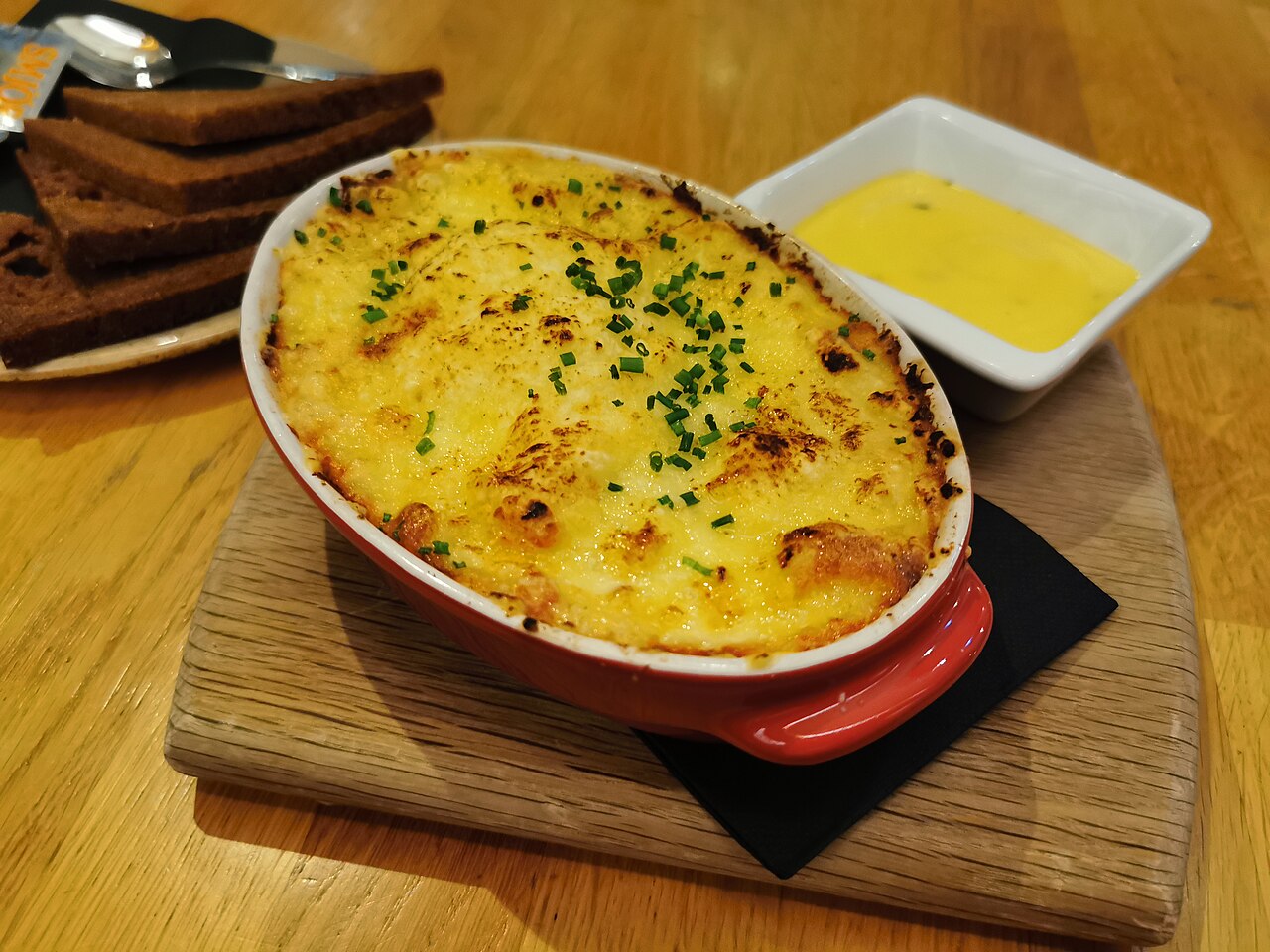
Cooked white fish, such as cod or haddock, broken into flakes and mixed with boiled potatoes and onion in a creamy white sauce. It began as a way to use up leftover fish and is served with dark rye bread and butter.
See the recipe
Serves 4
45 min
Ingredients
600 g skinless cod or haddock fillets
500 g potatoes, peeled
1 onion, finely chopped
50 g butter
3 tablespoons plain flour
About 400 ml milk
Salt and white or black pepper
Chopped chives, and rye bread and butter to serve
Method
Boil the potatoes in salted water until tender, drain them and cut them into small pieces.
Put the fish in a pan, cover it with lightly salted water, bring it just to a simmer and poach for about 5 minutes until it flakes. Drain it and break it into large flakes, removing any bones.
Melt the butter in a large pan and cook the onion gently until soft but not brown.
Stir in the flour, then add the milk little by little, stirring all the time, until you have a thick, smooth sauce.
Fold in the fish and potatoes, heat through gently, and season well with salt and pepper.
Sprinkle with chives and serve hot with rye bread and butter.
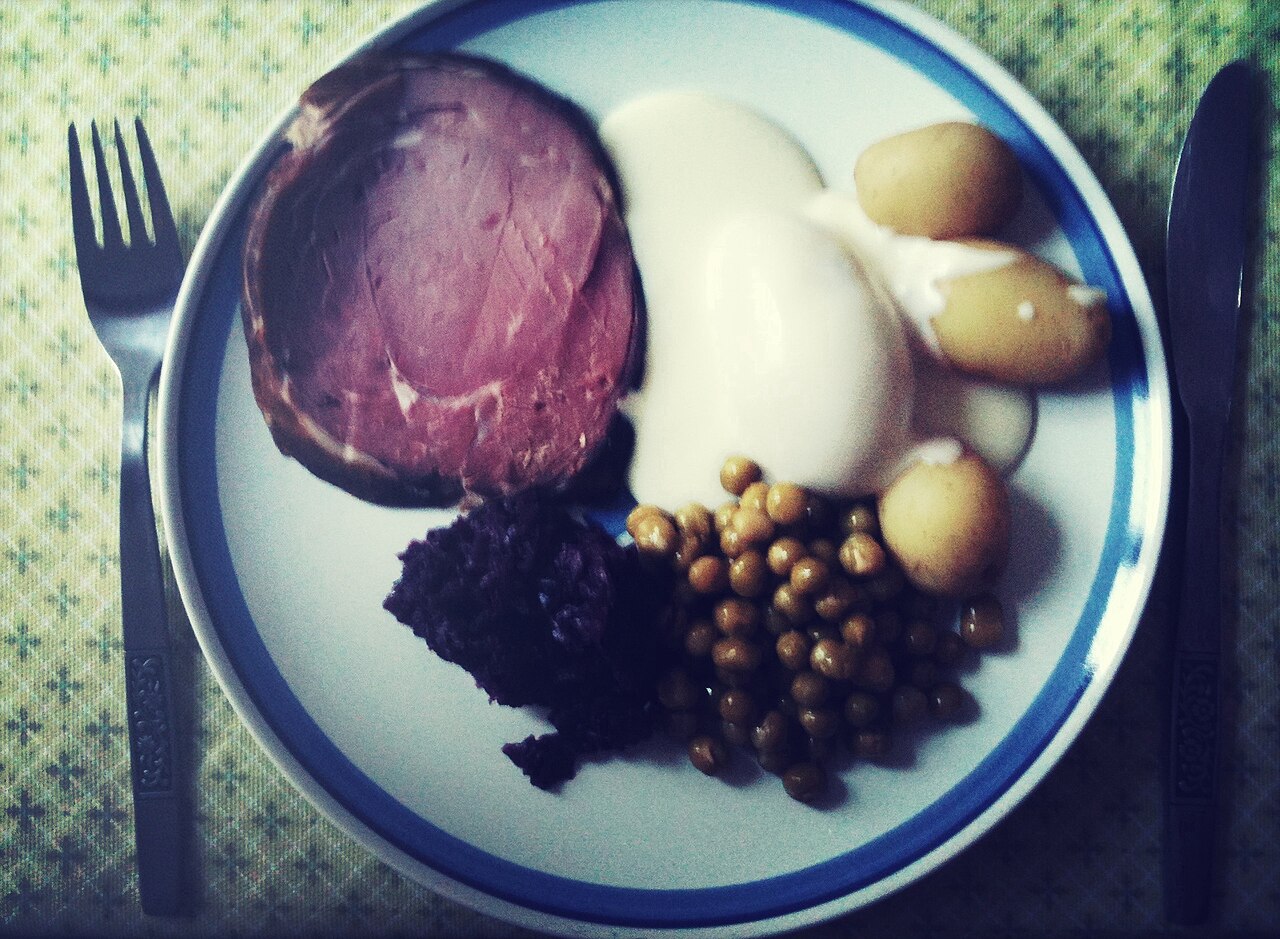
Lamb or mutton smoked, traditionally over birch or dried sheep dung, then boiled and served hot or cold in slices. At Christmas it comes with potatoes in white sauce and green peas, and it is also eaten in thin slices on flatbread.
The name means 'hung meat', from the old custom of hanging it to smoke in the rafters. In one survey about 90 percent of Icelanders said they eat it over the Christmas holidays.
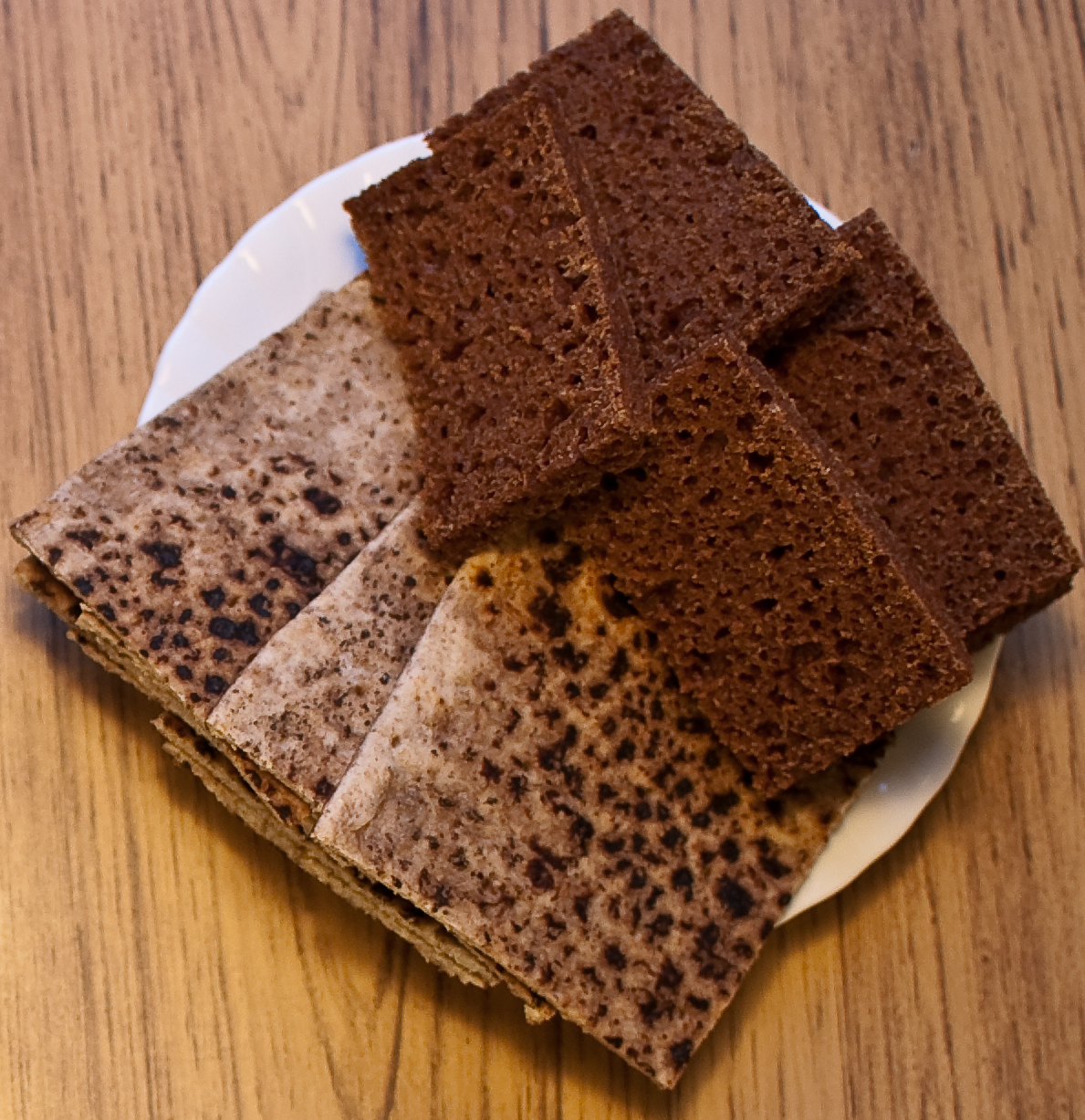
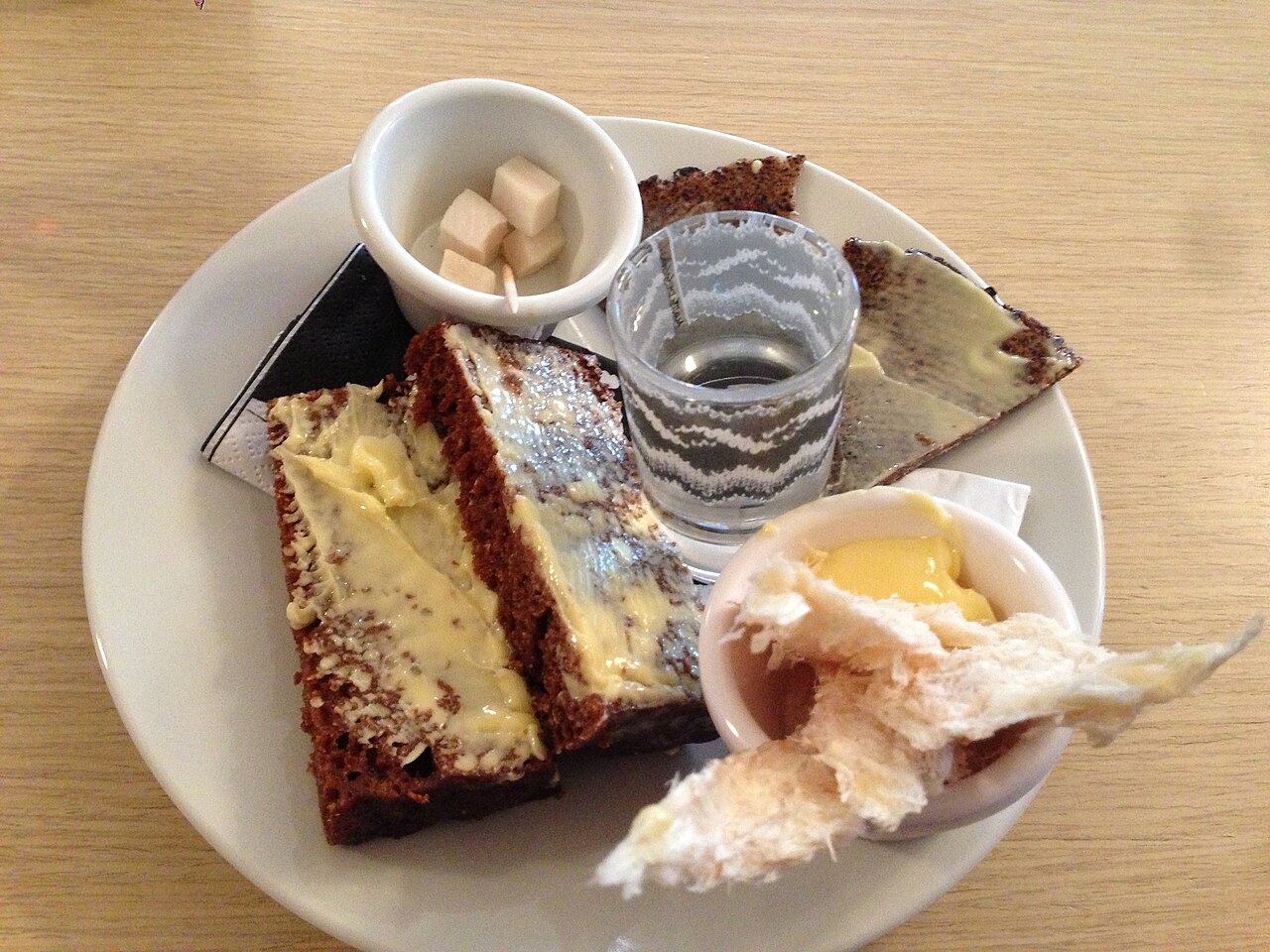
A dark, dense, slightly sweet rye bread with no crust, served with butter, smoked lamb, pickled herring or fish stew. The traditional way was to bake it slowly in a pot.
In geothermal areas the dough can be put in a closed pot and buried in the hot ground near a hot spring, then dug up the next day. This is called hverabrauð, 'hot spring bread'.
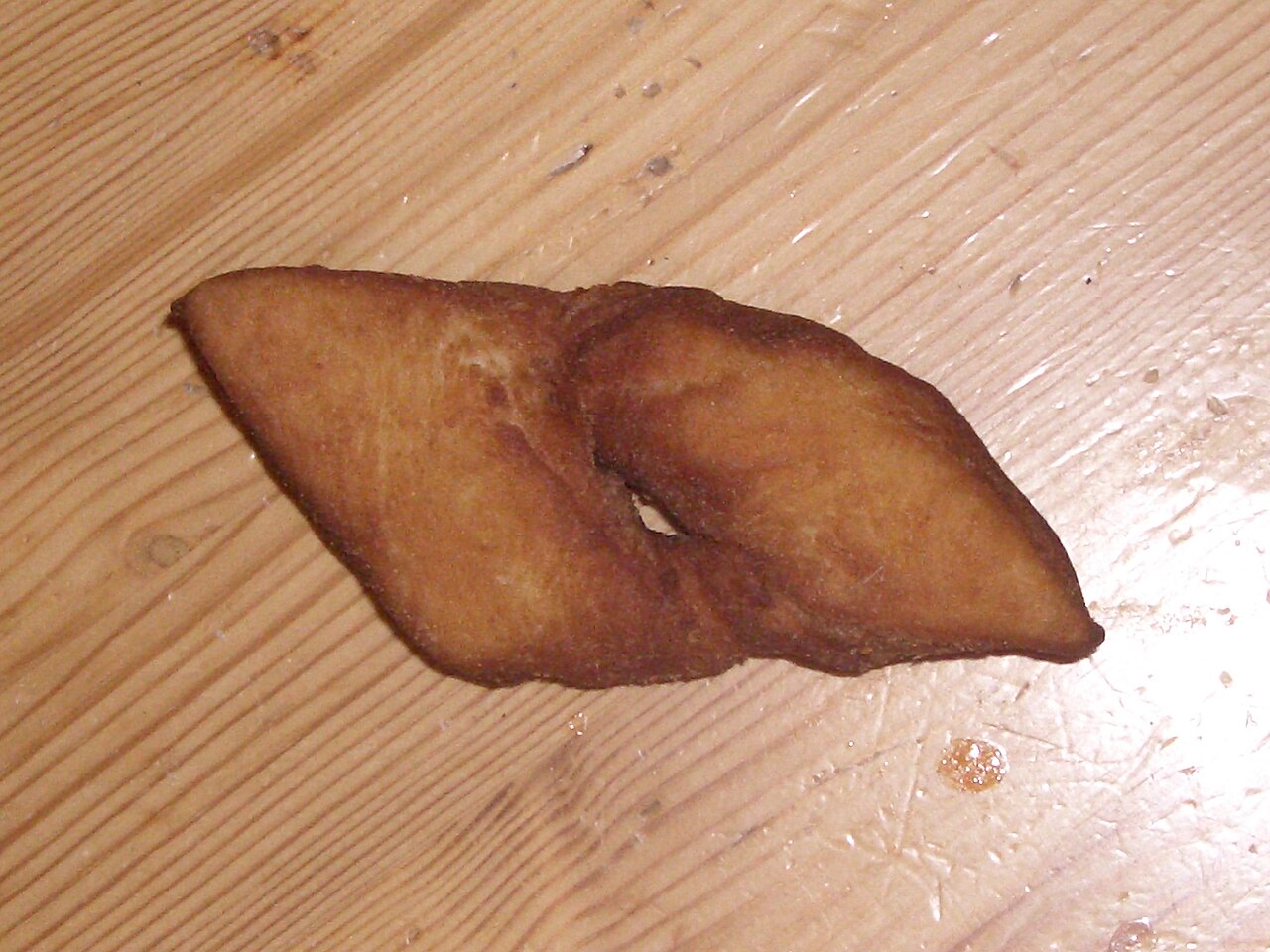
Small fried pastries cut into slanted shapes (trapezoids), with one end pulled through a slit to make a twist. They are sold in bakeries and shops all over the country and eaten plain with coffee.
See the recipe
Serves 10
1 h
Ingredients
500 g plain flour
150 g sugar
2 teaspoons baking powder
Half a teaspoon baking soda
1 teaspoon ground cardamom
50 g soft butter
1 egg
About 250 ml buttermilk
Vegetable oil for deep frying
Method
Mix the flour, sugar, baking powder, baking soda and cardamom in a bowl. Rub in the butter with your fingertips.
Add the egg and enough buttermilk to make a soft dough that does not stick. Knead it briefly.
Roll the dough out on a floured table to about 4 mm thick and cut it into slanted shapes (trapezoids) about 8 cm long.
Cut a short slit in the middle of each piece and pull one end through the slit to make a twist.
Heat the oil in a deep, heavy pot to about 180 °C. Fry a few at a time for about 1 minute on each side, until golden brown. Hot oil is dangerous: never leave the pot, and keep children away.
Lift them out onto kitchen paper and leave to cool. They keep for a few days in a tin, or can be frozen.
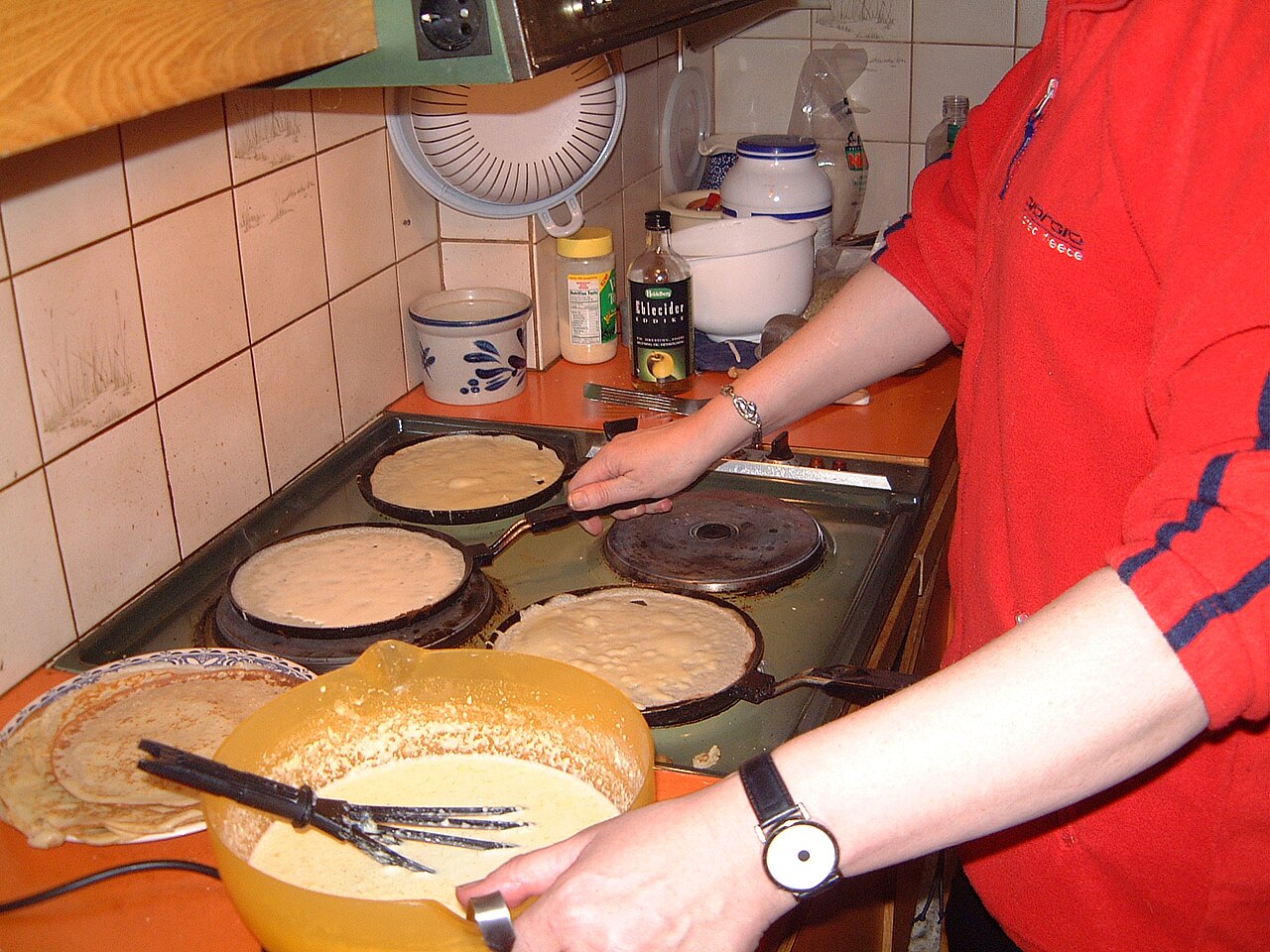
Very thin pancakes, smaller than French crêpes, served either rolled up with sugar or folded into triangles with jam and whipped cream. They are a favourite at family coffee parties and on special days such as the First Day of Summer and the national day.
See the recipe
Serves 4
40 min
Ingredients
250 g plain flour
2 tablespoons sugar
Half a teaspoon baking soda
A pinch of salt
2 eggs
About 500 ml milk
1 teaspoon vanilla extract
50 g butter, melted, plus a little for the pan
Sugar, or jam and whipped cream, to serve
Method
Mix the flour, sugar, baking soda and salt in a bowl.
Beat in the eggs and half the milk to make a smooth batter, then stir in the rest of the milk, the vanilla and the melted butter. The batter should be thin, like single cream.
Heat a frying pan over medium heat and wipe it with a little butter.
Pour in a small ladle of batter and tilt the pan so that it spreads very thinly. Cook for about 30 seconds until the edges lift, then turn and cook the other side briefly.
Stack the pancakes on a plate as you go.
Serve them sprinkled with sugar and rolled up, or folded into triangles with jam and whipped cream.
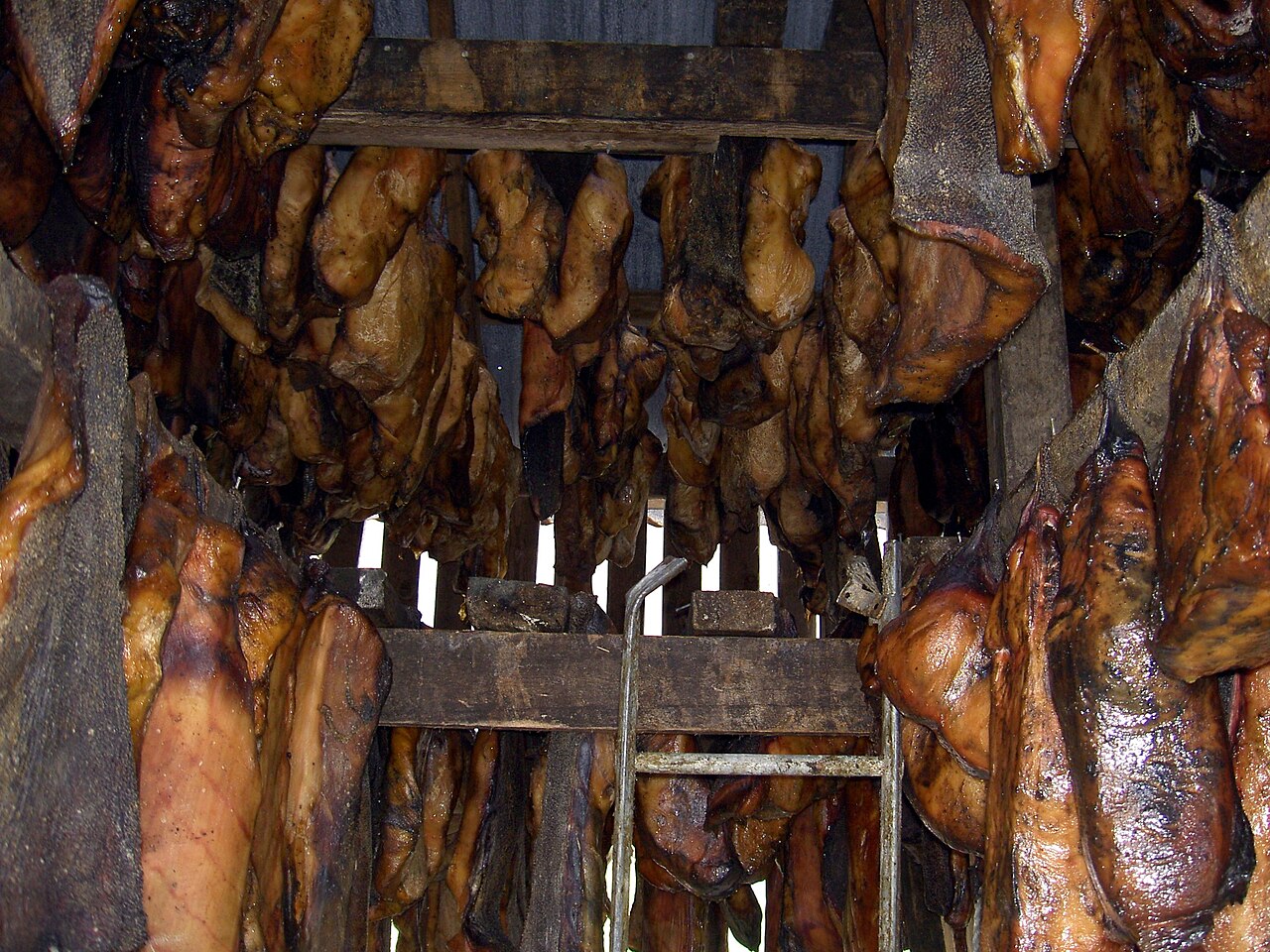
Greenland shark meat, which is poisonous when fresh, cured for weeks under gravel and then hung to dry for four to five months. It has a strong smell of ammonia and is served in small cubes on toothpicks, often with a shot of brennivín.
Most Icelanders eat it only at the midwinter Þorrablót feasts, and visitors often try one cube as a dare. Greenland sharks grow very slowly and can live for centuries, which has raised questions about eating them.
Iceland's signature spirit, a clear schnapps (akvavit) distilled from grain and flavoured only with caraway, at 37.5 percent alcohol. It is drunk ice cold as a small shot, especially at Þorrablót feasts. It is a strong alcoholic drink, best in small amounts or skipped.
The name means 'burnt wine', an old Nordic word for distilled liquor.
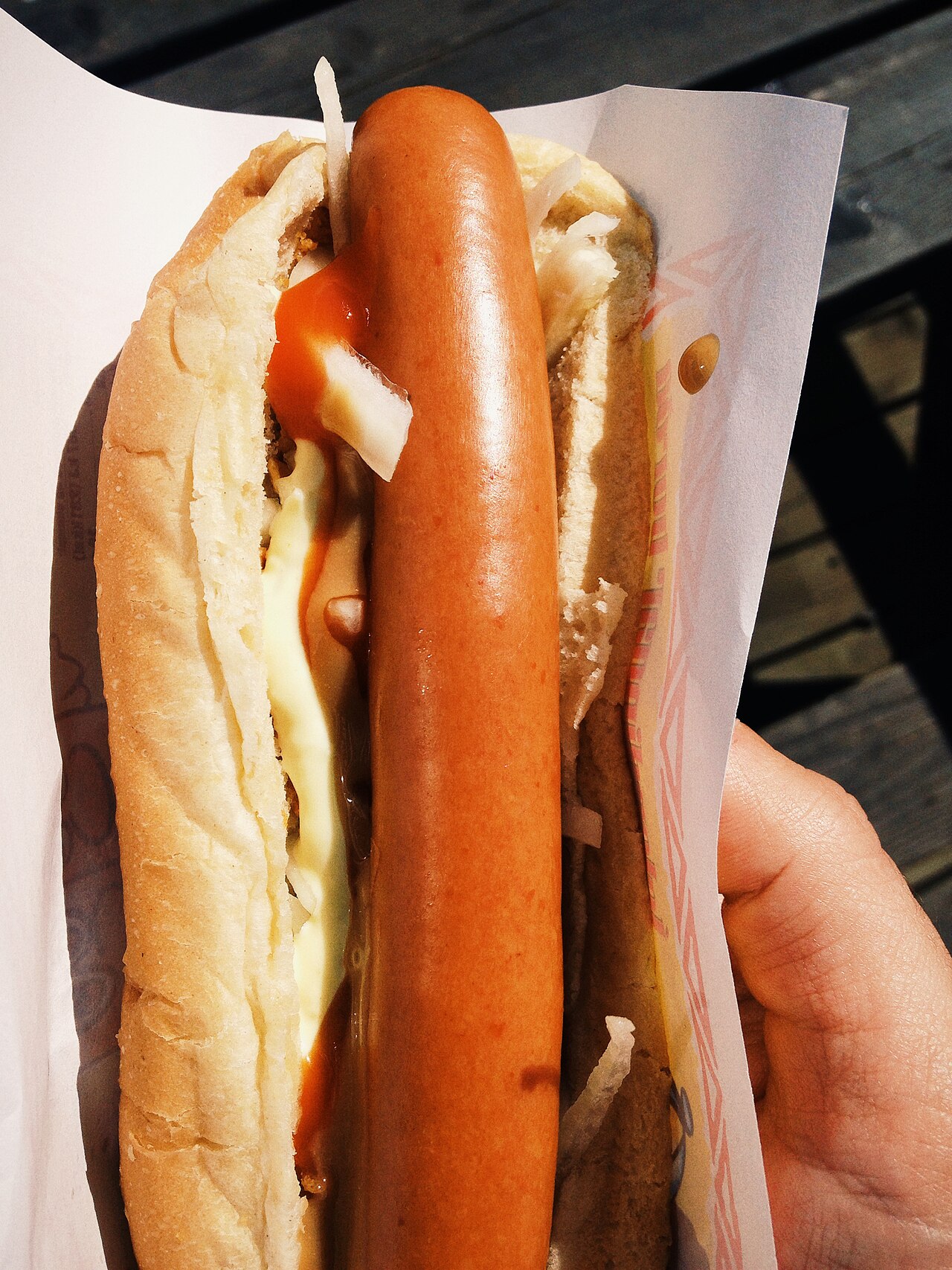
A hot dog made mostly from lamb, with pork and beef, served in a soft bun with raw onion, crispy fried onion, ketchup, sweet mustard and remoulade. Ask for 'eina með öllu', 'one with everything'.
The stand Bæjarins Beztu Pylsur, 'the town's best hot dogs', has sold hot dogs in central Reykjavík since 1937. Bill Clinton ate one there in 2004.
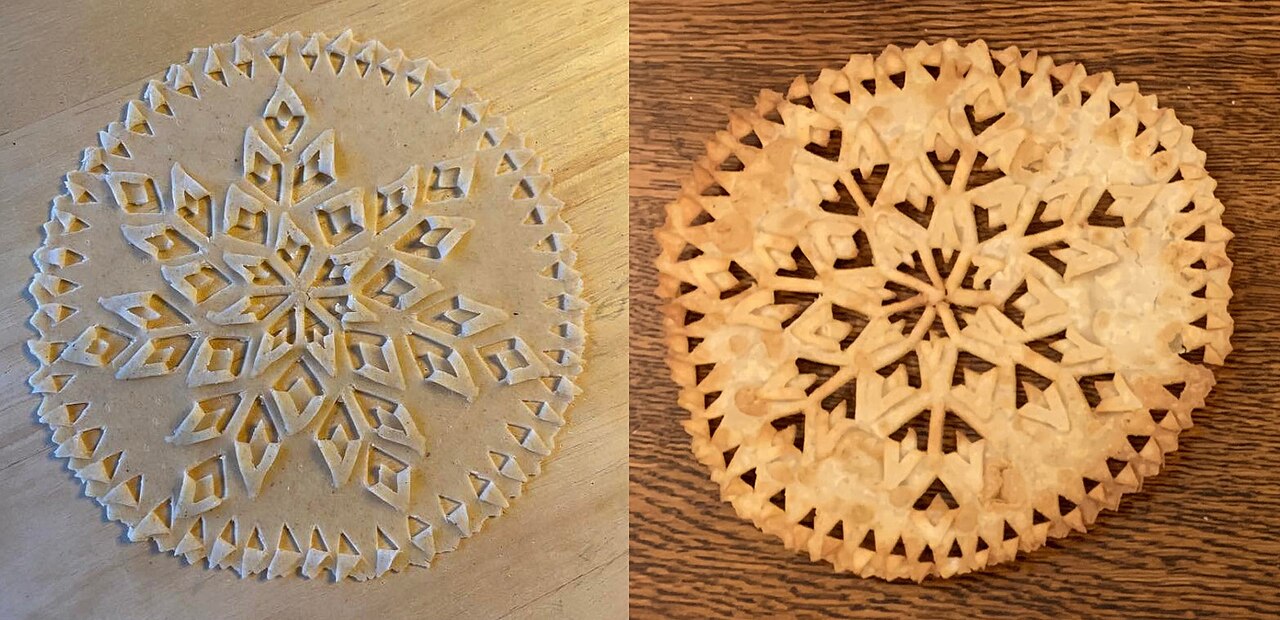
Very thin round wafers with lacy patterns cut into them by hand, fried crisp in fat. Families gather in the weeks before Christmas to cut and fry them, and they are eaten with smoked lamb at Christmas.
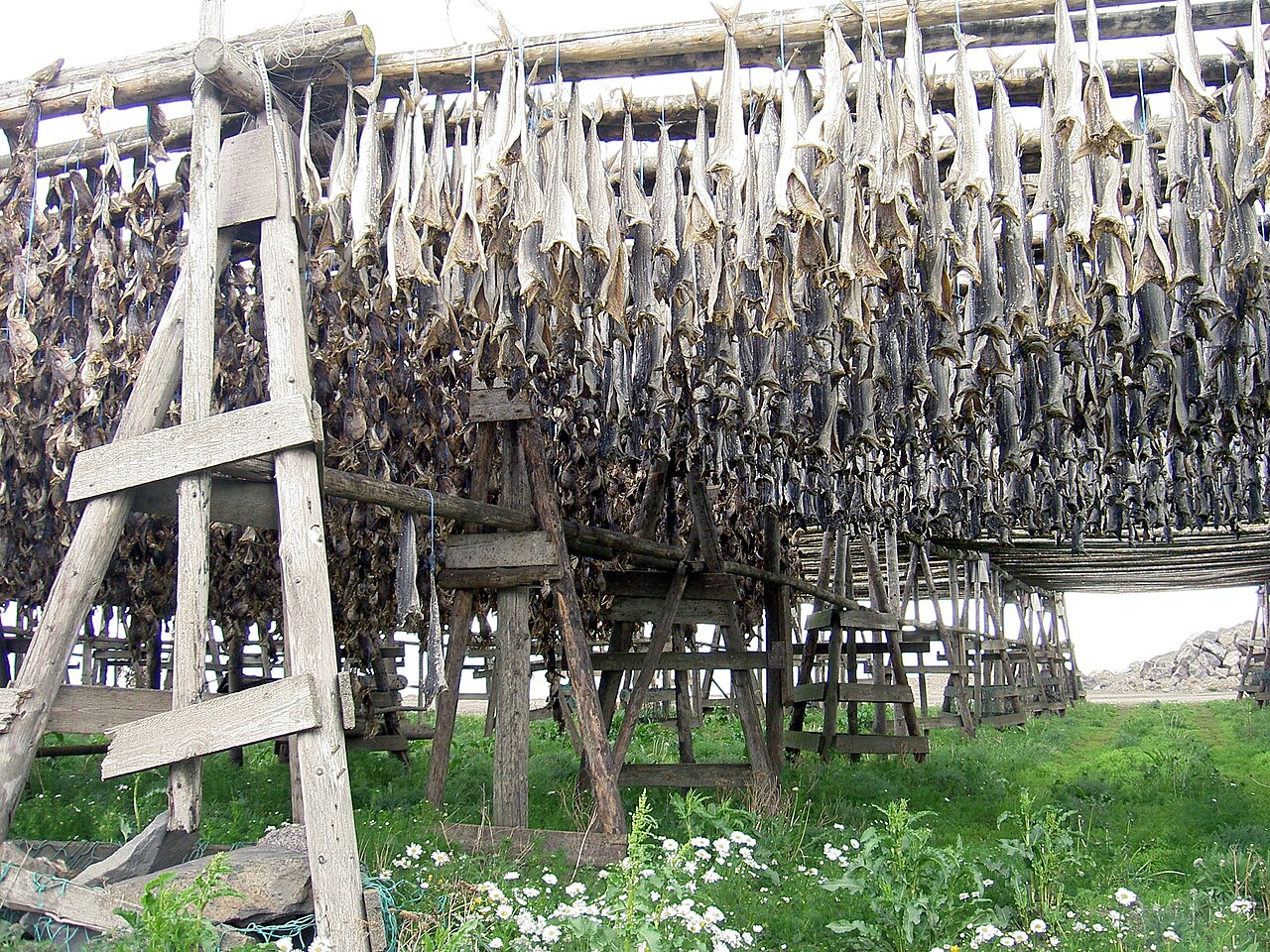
Wind-dried cod or other white fish, torn into strips and eaten as a snack with butter. For centuries dried fish was eaten with every meal, taking the place that bread had elsewhere in Europe.
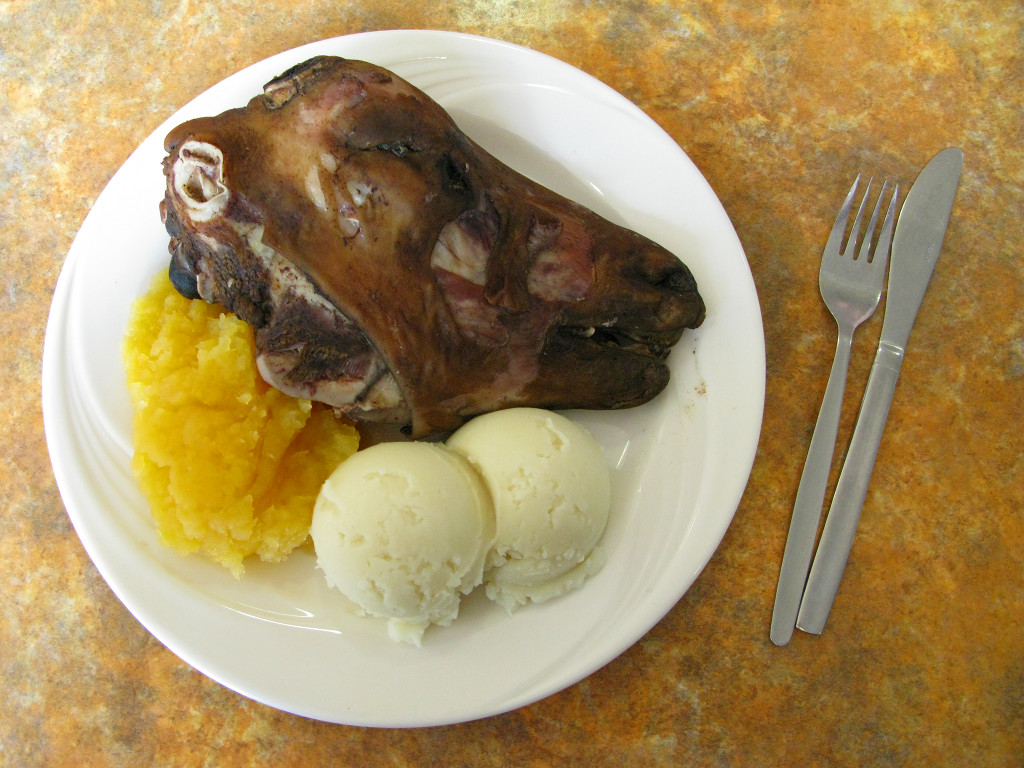
Half a sheep's head, singed to remove the wool and then boiled, and served hot or cold. It dates from a time when no part of an animal could be wasted, and it is also a Þorrablót food.
The cheek is the meatiest part, and some Icelanders say the eye is the best.
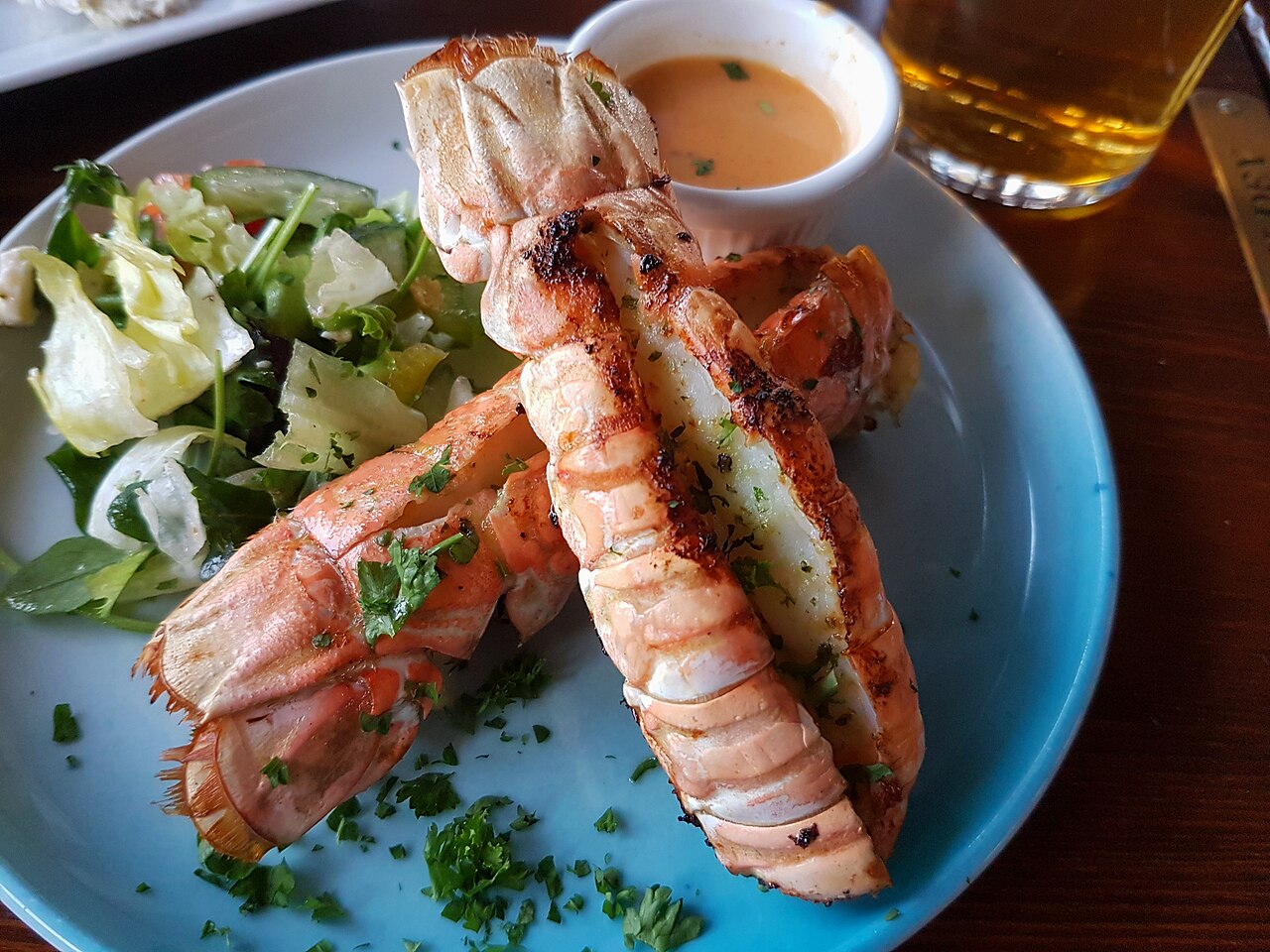
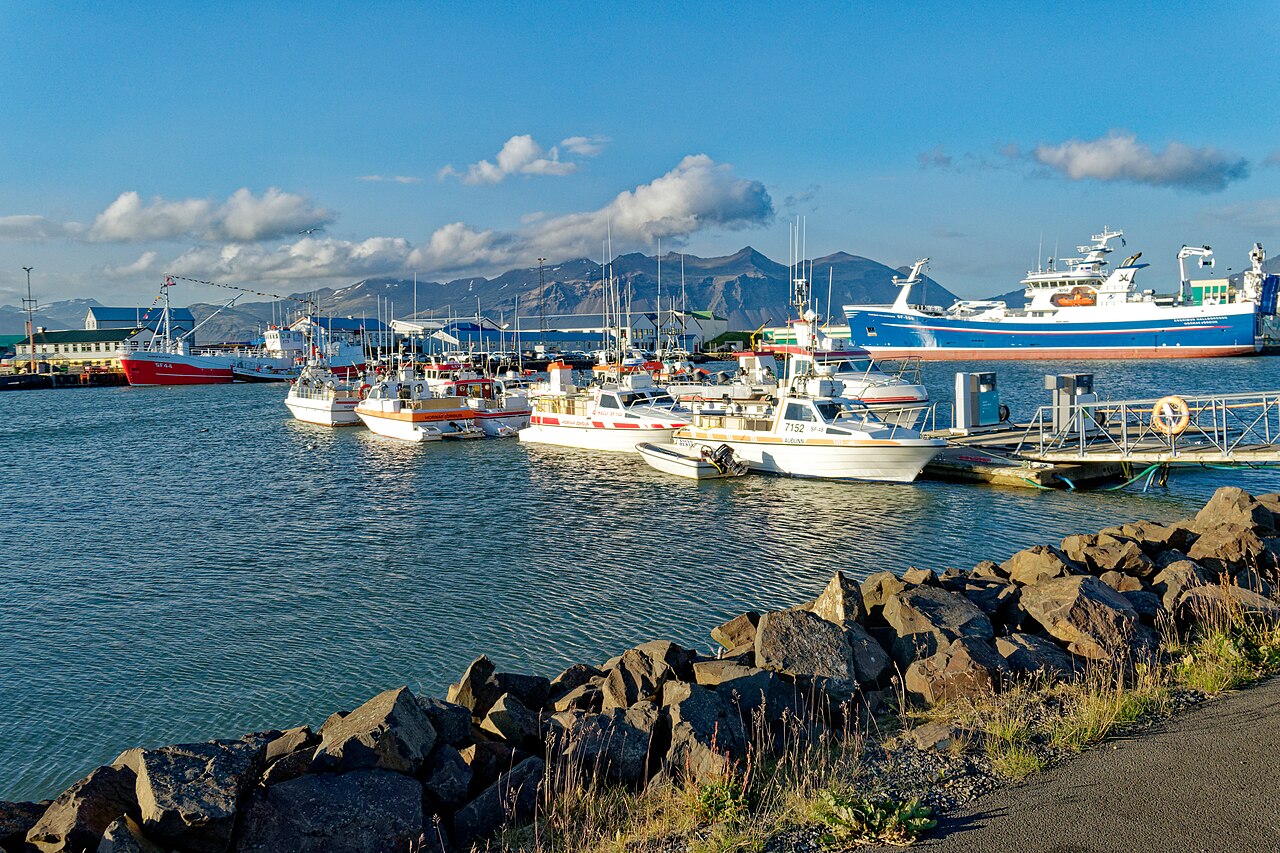
Small, sweet lobsters, also called Norway lobster or langoustine. For decades they were caught off the southeast coast and landed at the fishing town of Höfn, which still celebrates them with a lobster festival, Humarhátíð, in early July. To protect the stock, fishing for them has been stopped since 2022.
Table manners
Tap water in Iceland is clean and safe to drink, so there is no need to buy bottled water.
Coffee is part of daily life, and pastries such as kleinur and pancakes are served with it at home and at family gatherings.
Take off your shoes when you enter an Icelandic home, unless your hosts tell you not to.
A host may say 'Verði þér að góðu', which is used like 'enjoy your meal'. 'Takk' or 'takk fyrir' means thank you.
Tipping is not expected: service is included in the price.
Iceland has only one real city. Reykjavík and its neighbouring towns hold about two thirds of the people, and everywhere else the towns are small fishing ports and service centres, most of them along the coast and the Ring Road, Route 1, which runs about 1,300 km around the island.
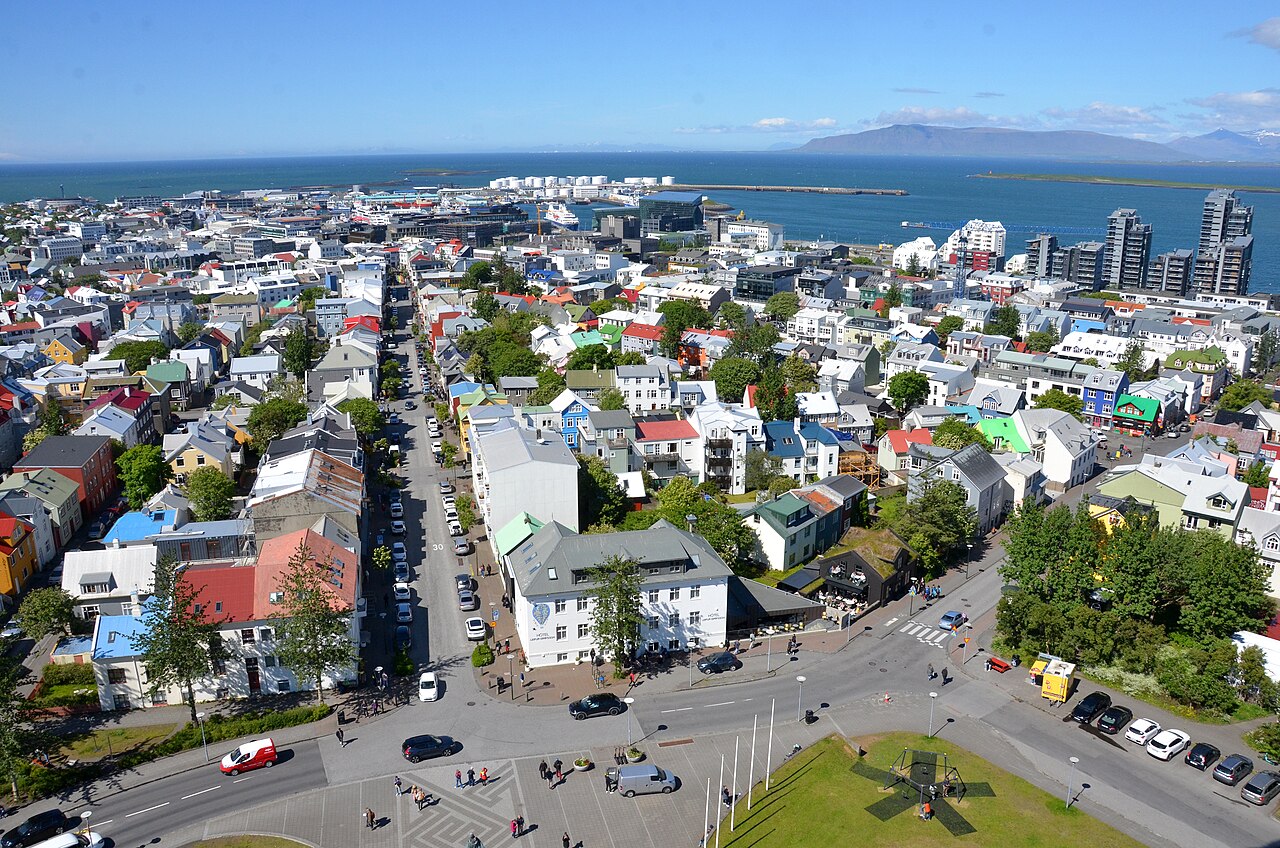
The capital, on Faxaflói bay in the southwest, and the world's northernmost capital of a sovereign state. It is a small, colourful, walkable city of about 140,000 people, with a lively harbour, museums, concerts and geothermal swimming pools.
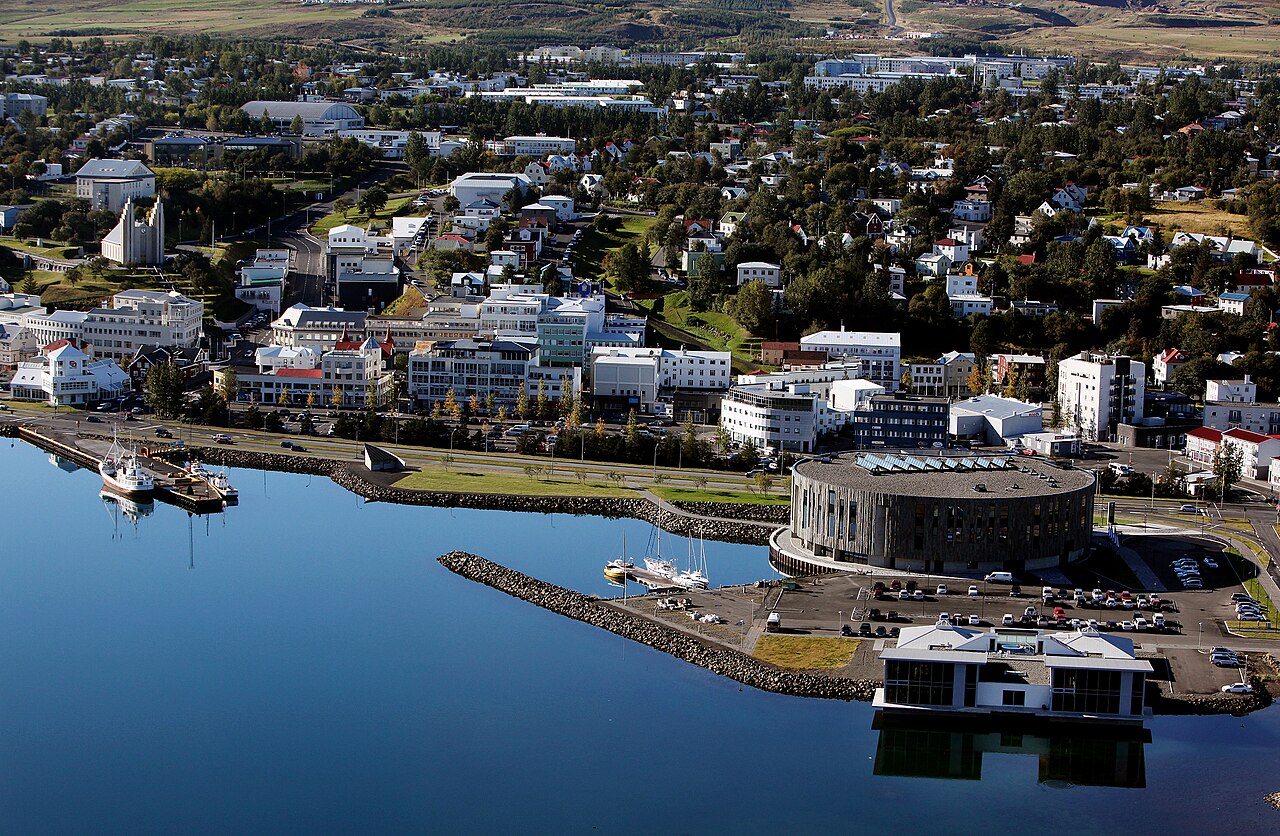
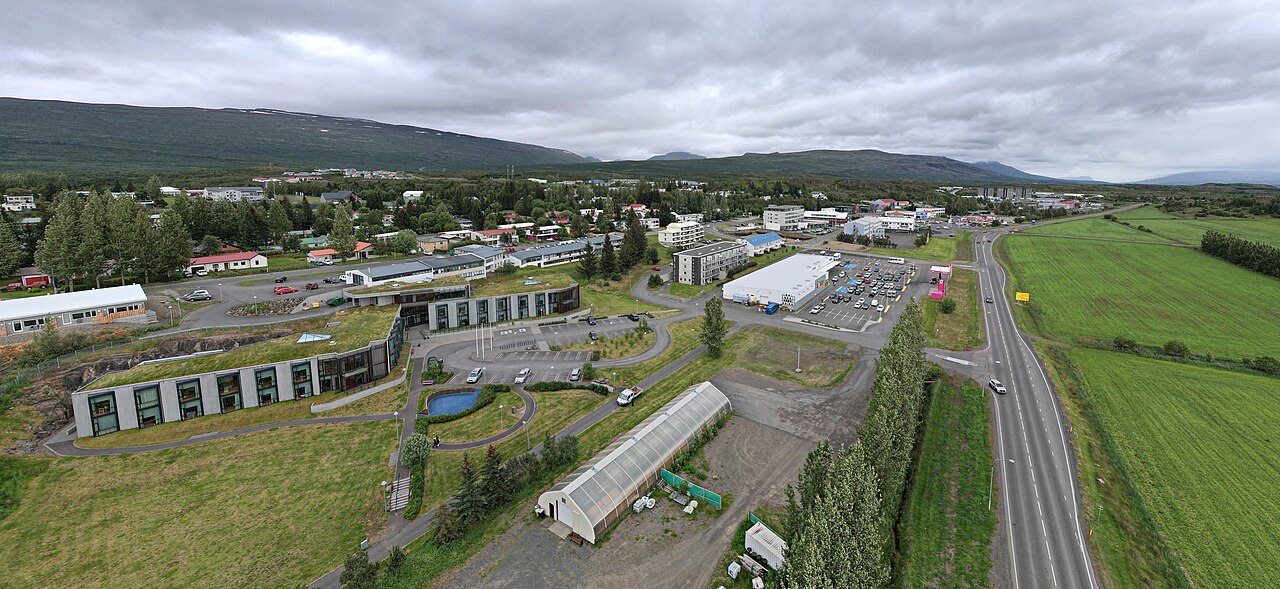
The largest town in North Iceland, nicknamed the 'Capital of North Iceland'. It lies at the head of Eyjafjörður, a long fjord, and has a mild climate for its latitude and an ice-free harbour.
The Akureyri Botanical Garden
The long fjord Eyjafjörður
The island of Grímsey on the Arctic Circle, part of the municipality
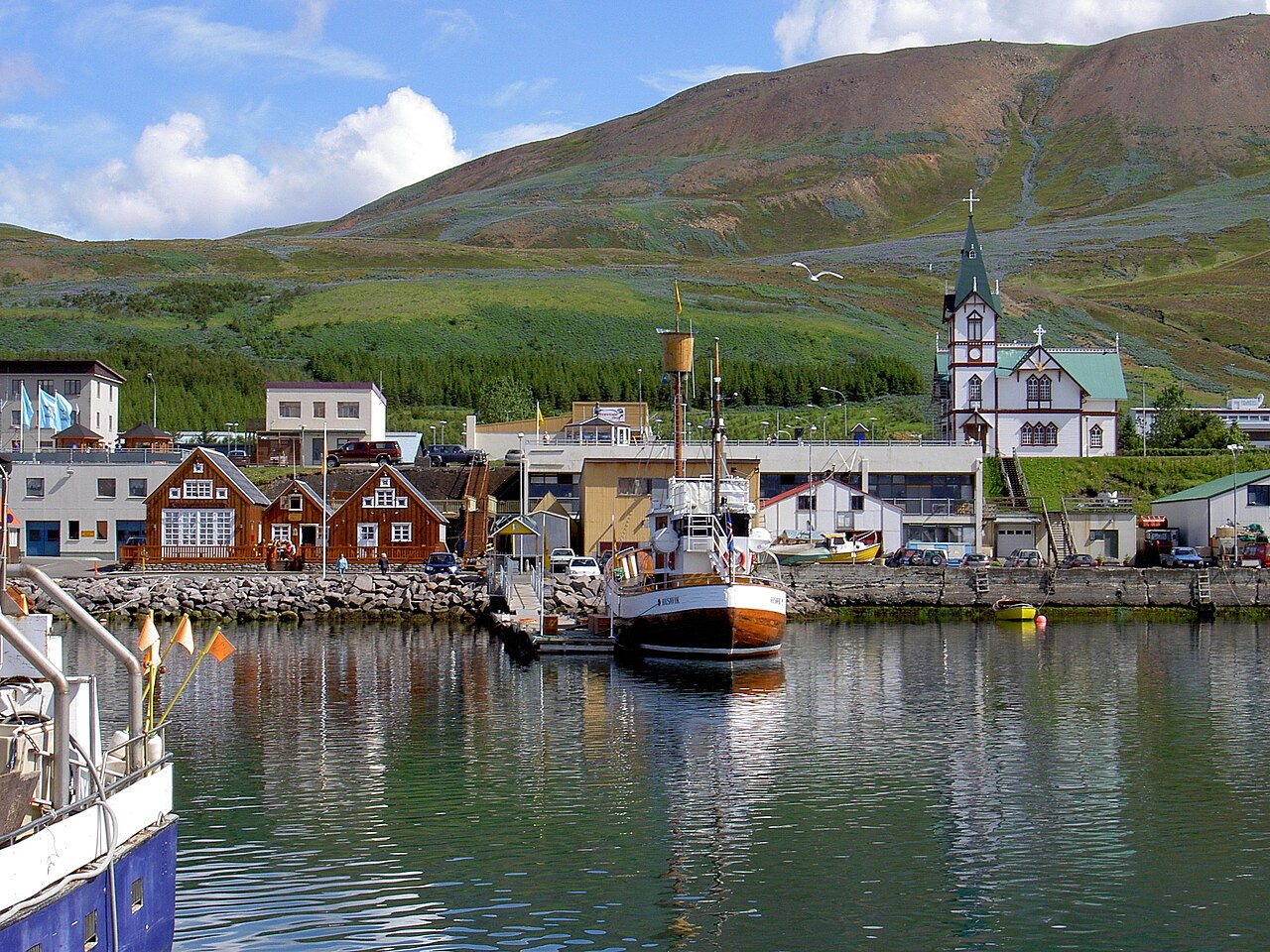
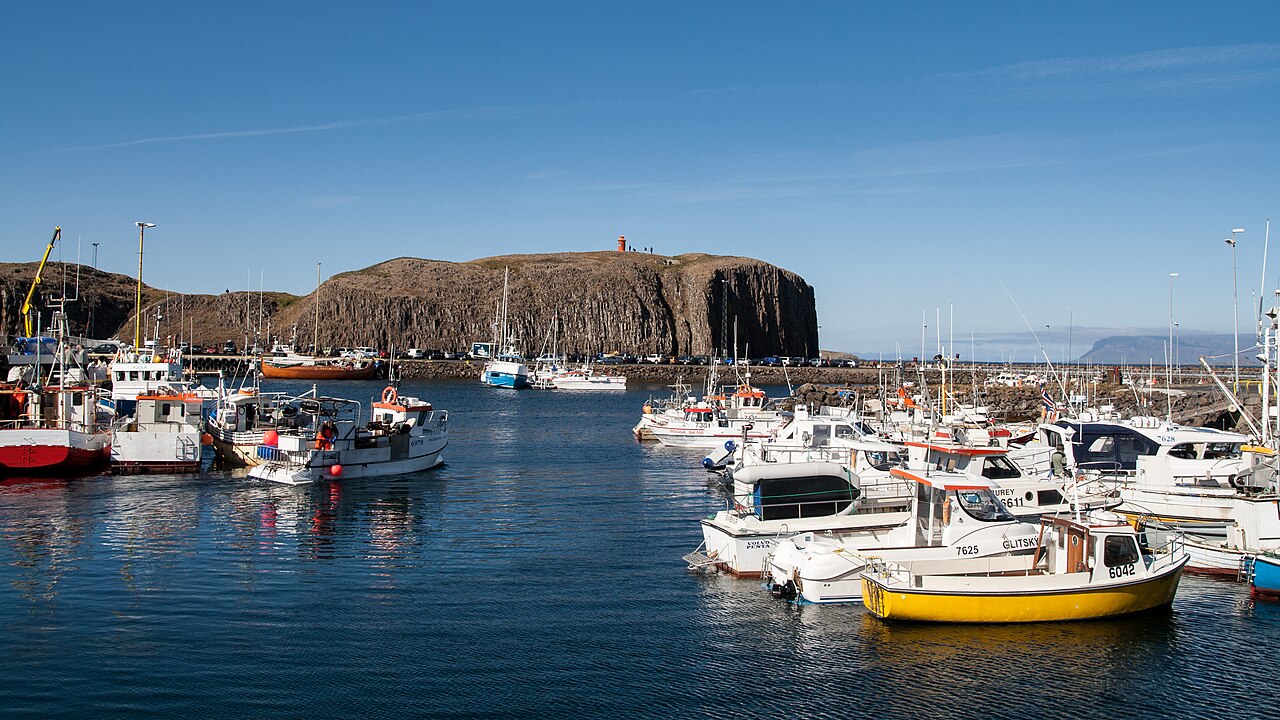
A small fishing town on Skjálfandi bay in the north, and one of the best places in Iceland for whale watching. The Viking Garðar Svavarsson is said to have spent a winter here around 870.
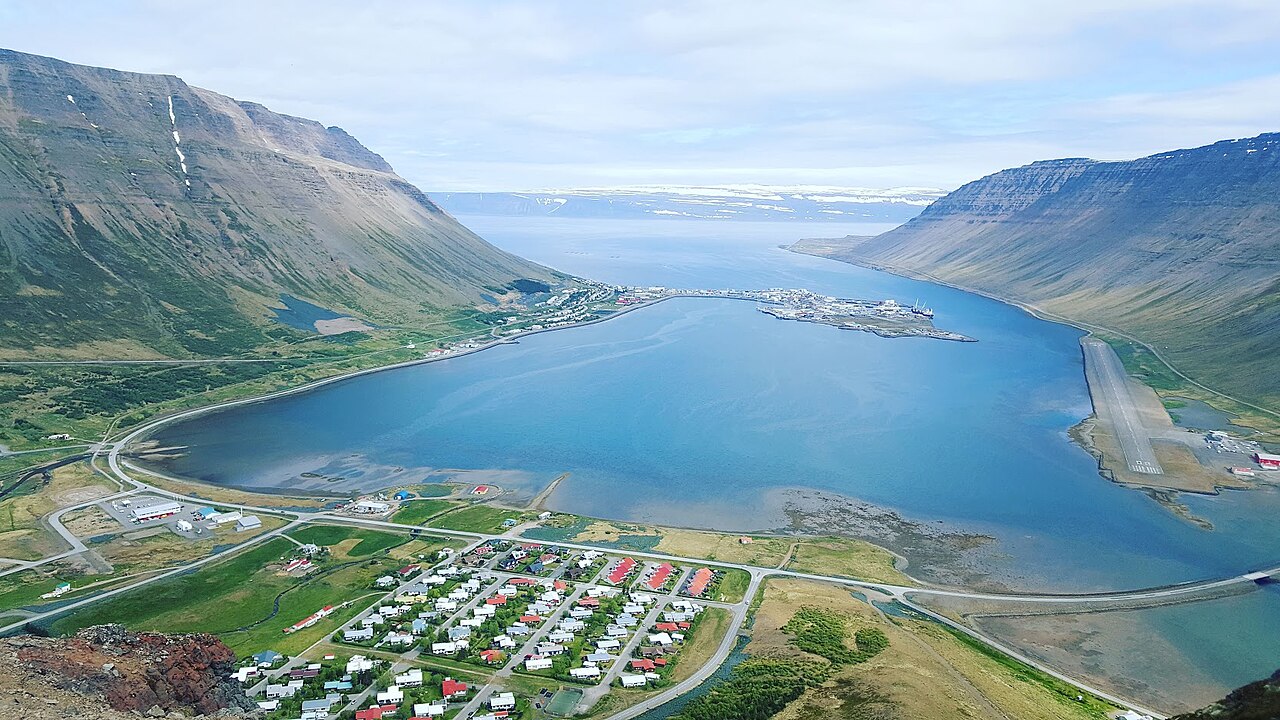
The largest town in the Westfjords, built on a sand spit in a deep fjord ringed by steep mountains. Its old Danish trading post, Neðstikaupstaður, has some of the oldest timber houses in Iceland, built between 1757 and 1784.
A pretty harbour town on the Snæfellsnes peninsula in the west, with old wooden houses. A ferry crosses Breiðafjörður bay from here to the Westfjords, stopping at the island of Flatey.
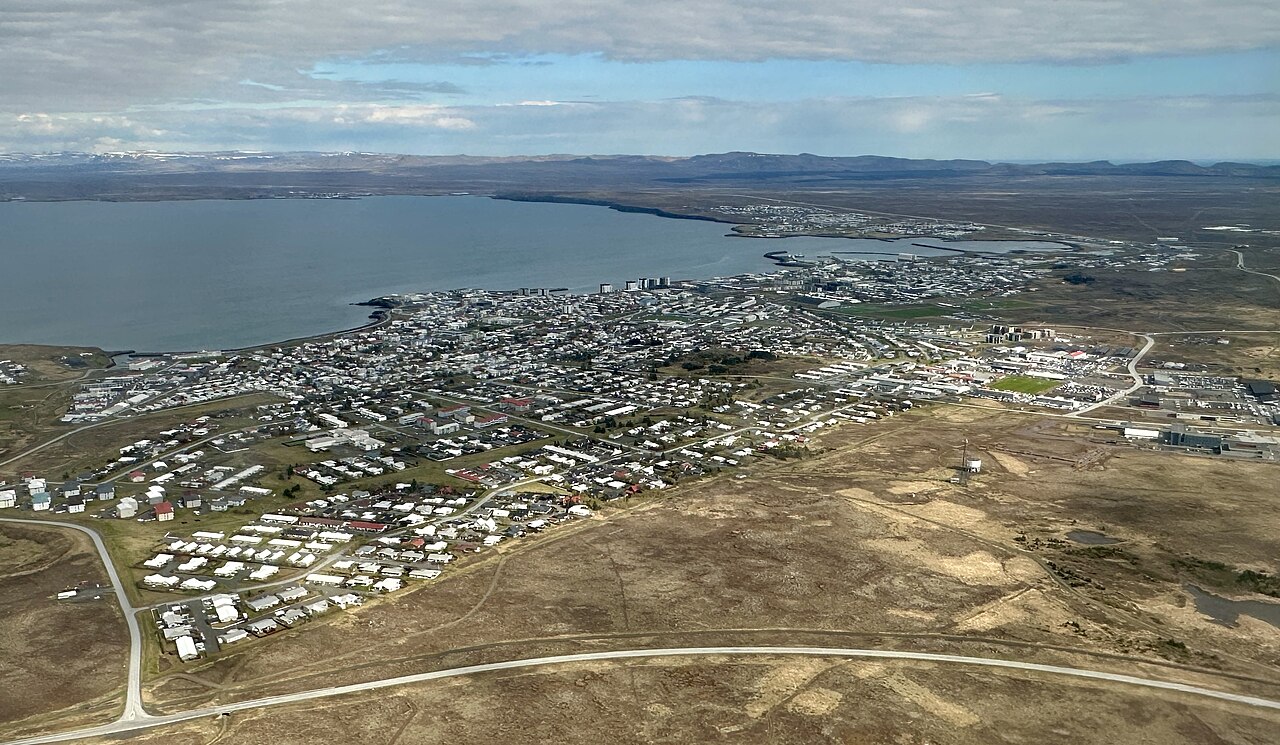
The largest part of the town of Reykjanesbær, on the Reykjanes Peninsula. Iceland's main international airport is next to it, so for most visitors this is where the trip begins.
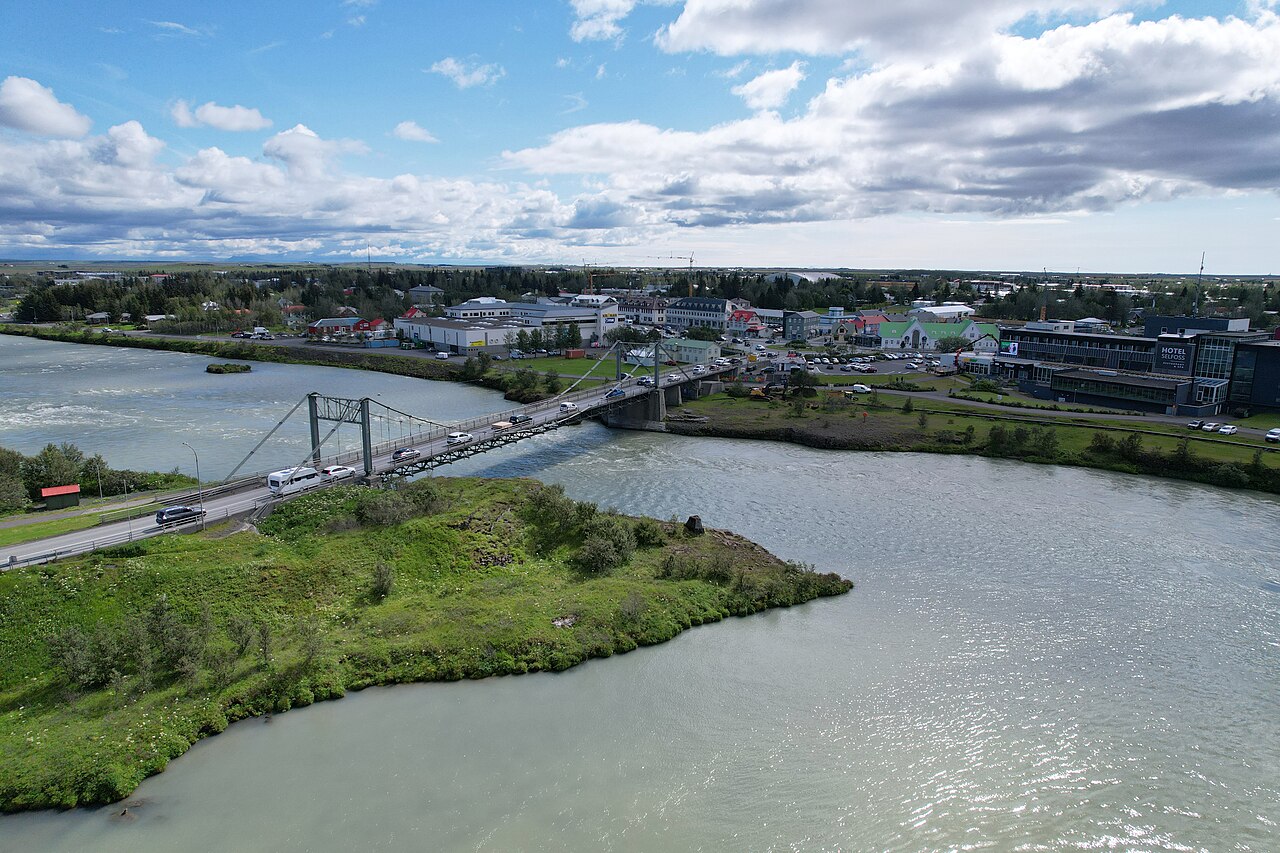
The largest town in South Iceland, on the Ölfusá river about 50 km southeast of Reykjavík. It grew up around a bridge built in 1891 and is a busy stop on the Ring Road.
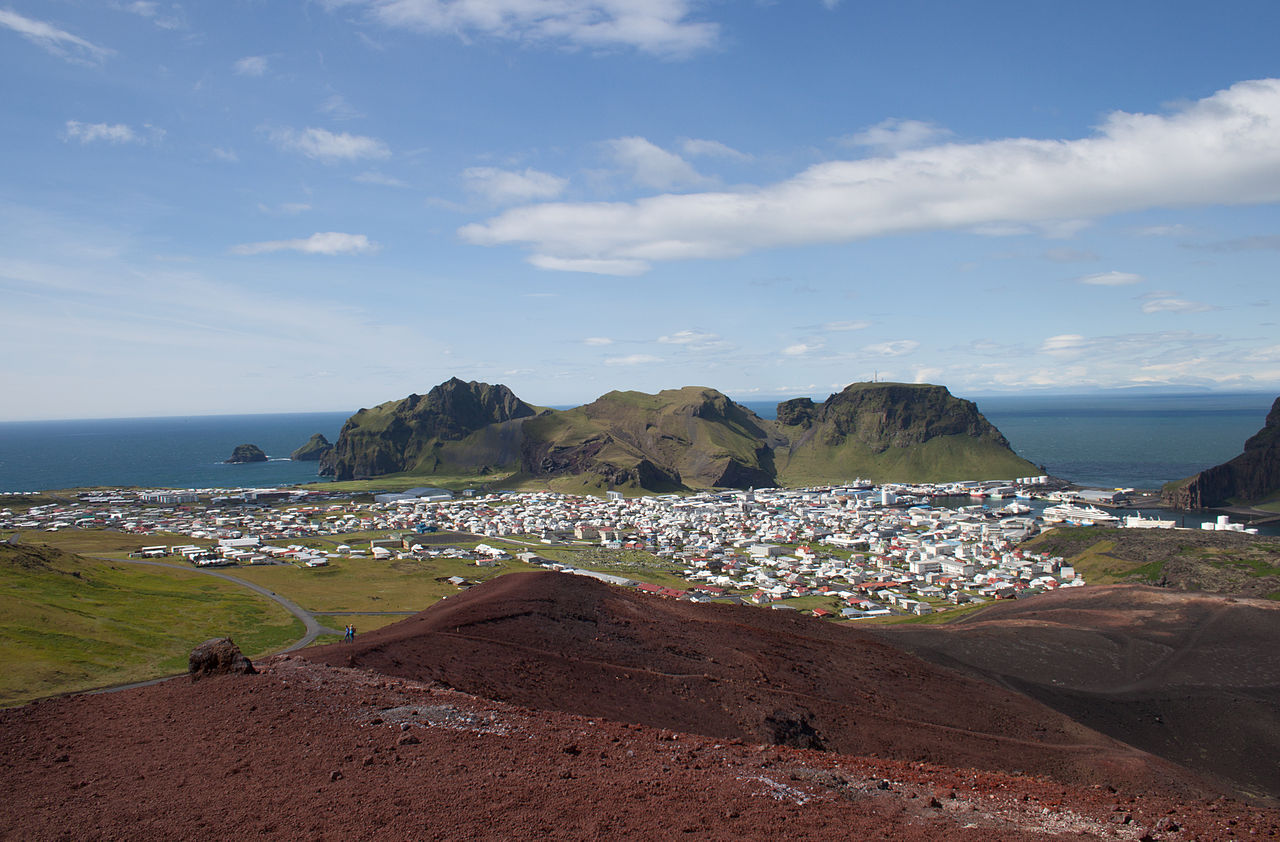
The only inhabited island of the Westman Islands (Vestmannaeyjar), off the south coast, reached by ferry. In 1973 a volcano, Eldfell, erupted at the edge of its town, and for years afterwards the heat of the new lava warmed the islanders' homes.
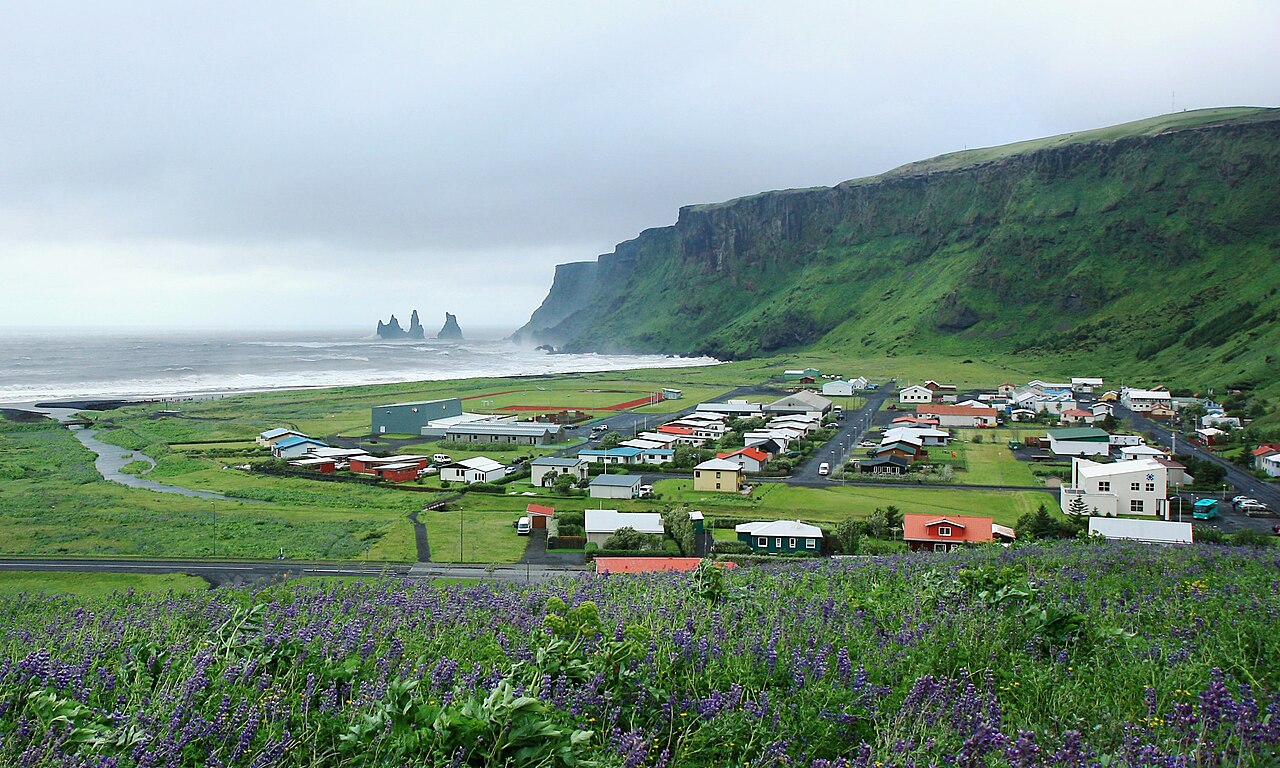
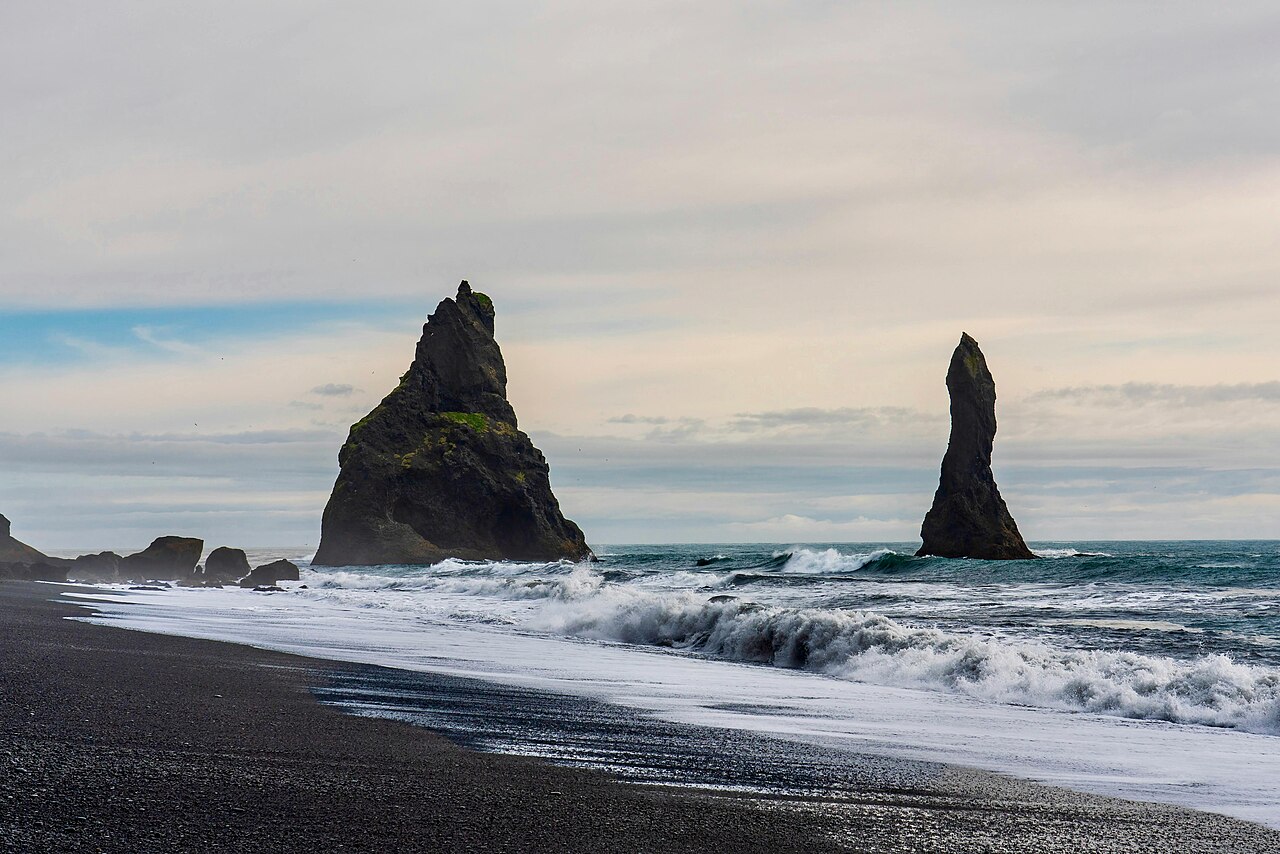
Vík í Mýrdal is the southernmost village on the Icelandic mainland, a small place of a few hundred people under green cliffs, beside a long black sand beach and the sea stacks of Reynisdrangar.
Black sand beaches
The Reynisdrangar sea stacks
Puffins on the cliffs
The Katla volcano under the nearby Mýrdalsjökull glacier
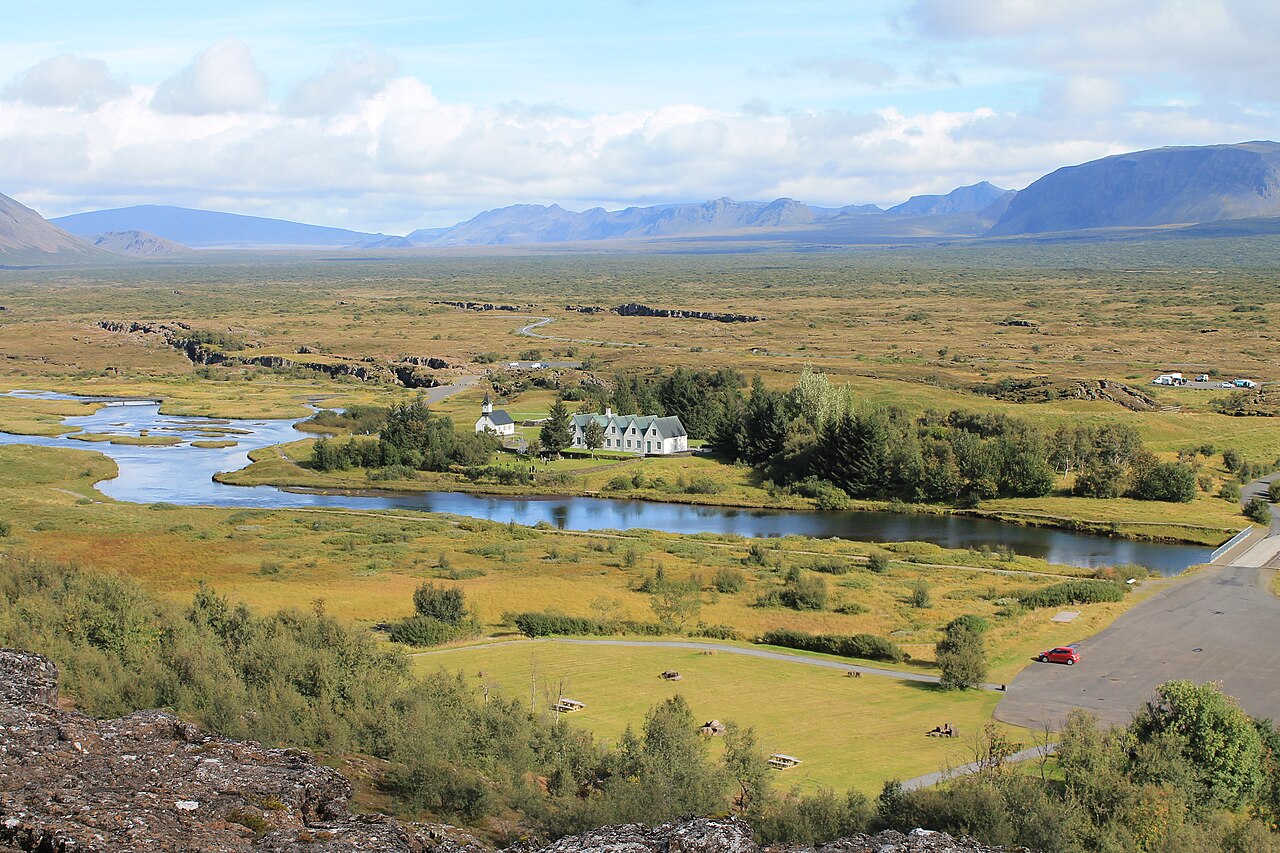
The place where the Althing met in the open air from 930, about 40 km northeast of Reykjavík. It lies in a rift valley between the North American and Eurasian plates, and in the Silfra fissure divers swim in clear glacier water between the two. It became a national park in 1930 and a World Heritage Site in 2004.
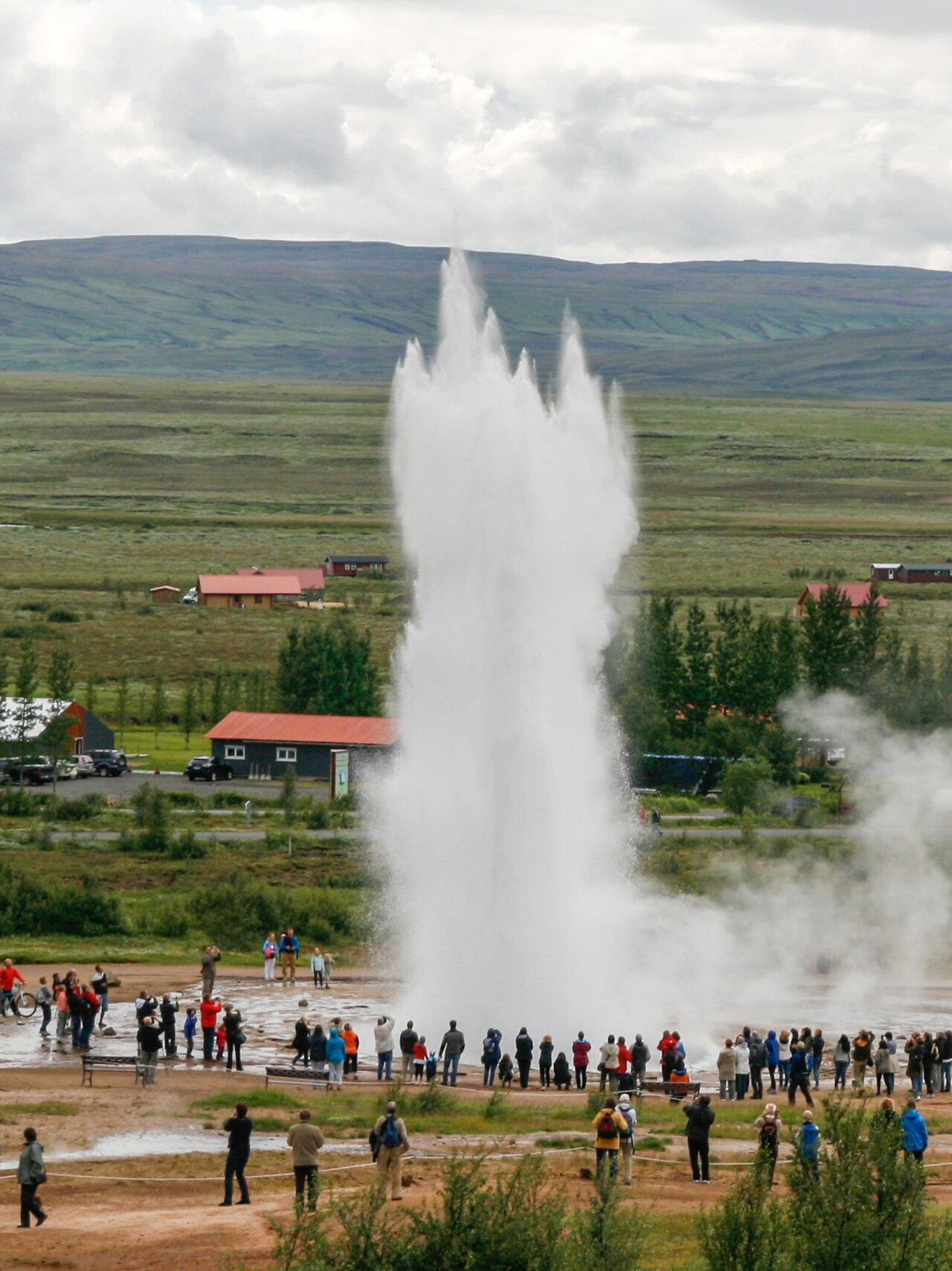
A hot spring area in the Haukadalur valley. The Great Geysir, which gave its name to all geysers, rarely erupts today, but its neighbour Strokkur shoots boiling water up to about 35 m into the air every few minutes.
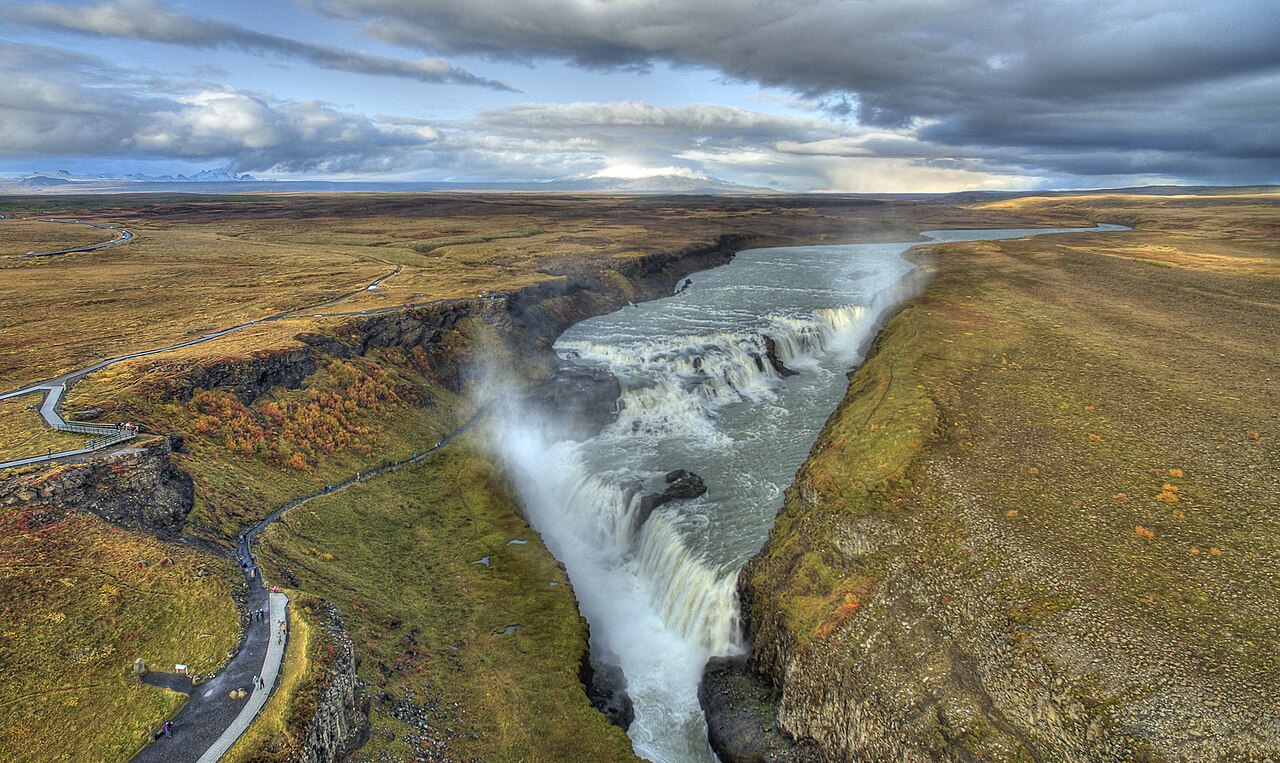
The 'Golden Falls' on the Hvítá river, where the water drops in two stages, about 11 m and 21 m, into a deep, narrow canyon. With Þingvellir and Geysir it makes up the popular Golden Circle route.
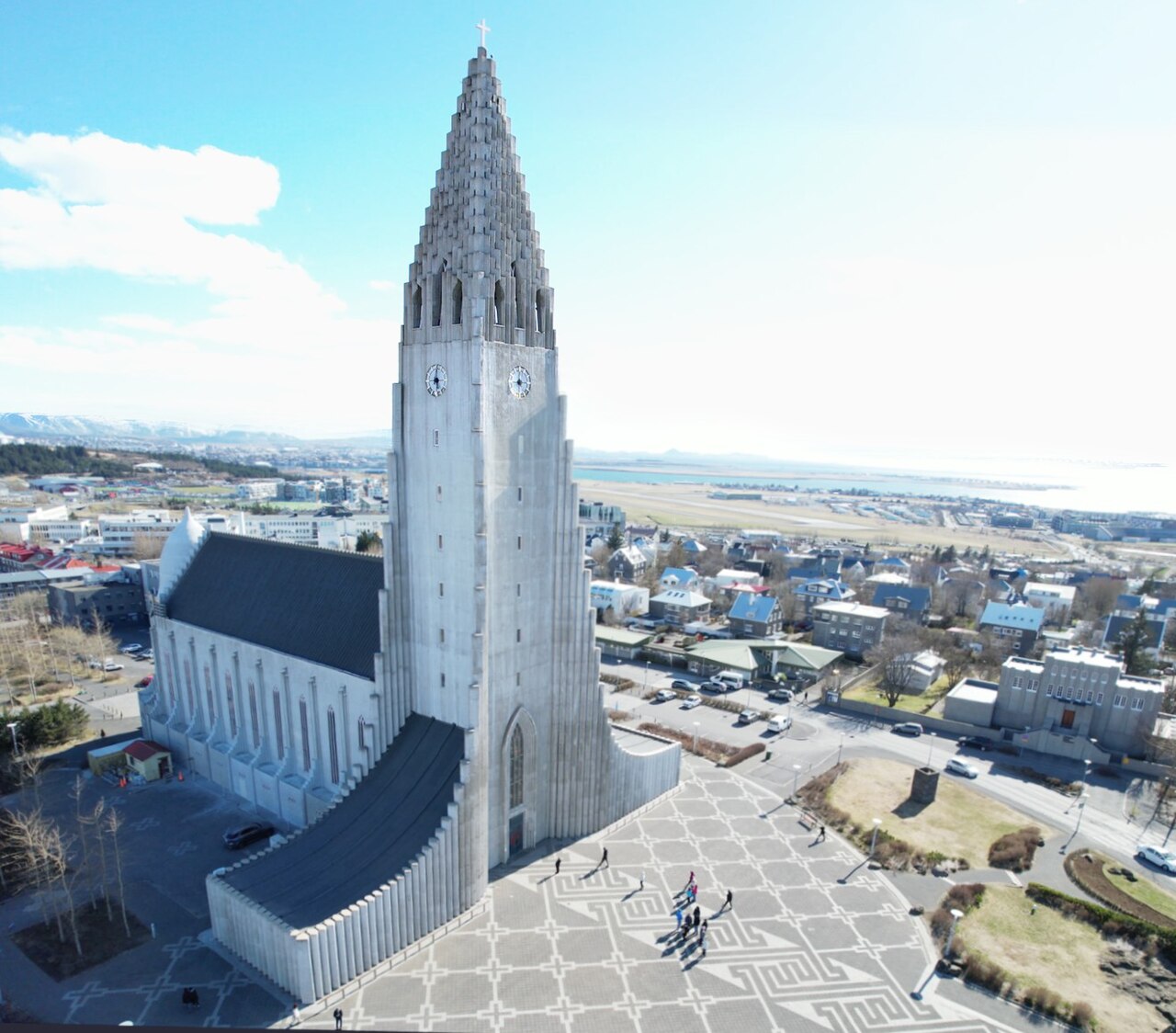
Reykjavík's great white Lutheran church, 74.5 m tall, finished in 1986 and named after the 17th-century poet Hallgrímur Pétursson. Its shape recalls basalt columns, and a lift goes up the tower for views over the city.
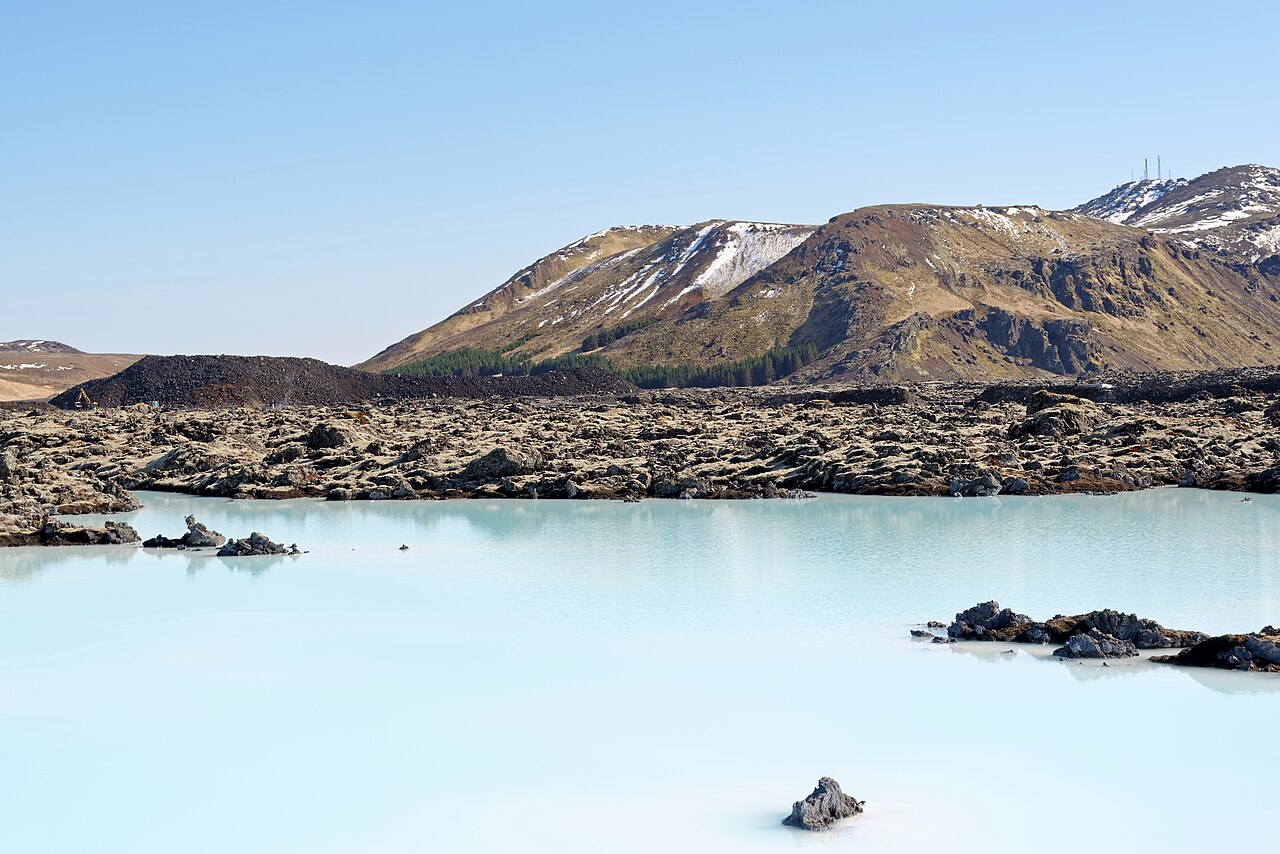
A geothermal spa in a black lava field on the Reykjanes Peninsula, about 20 km from Keflavík airport. Its milky blue, mineral-rich water comes from the nearby Svartsengi power station. Recent eruptions nearby have sometimes closed it for safety.
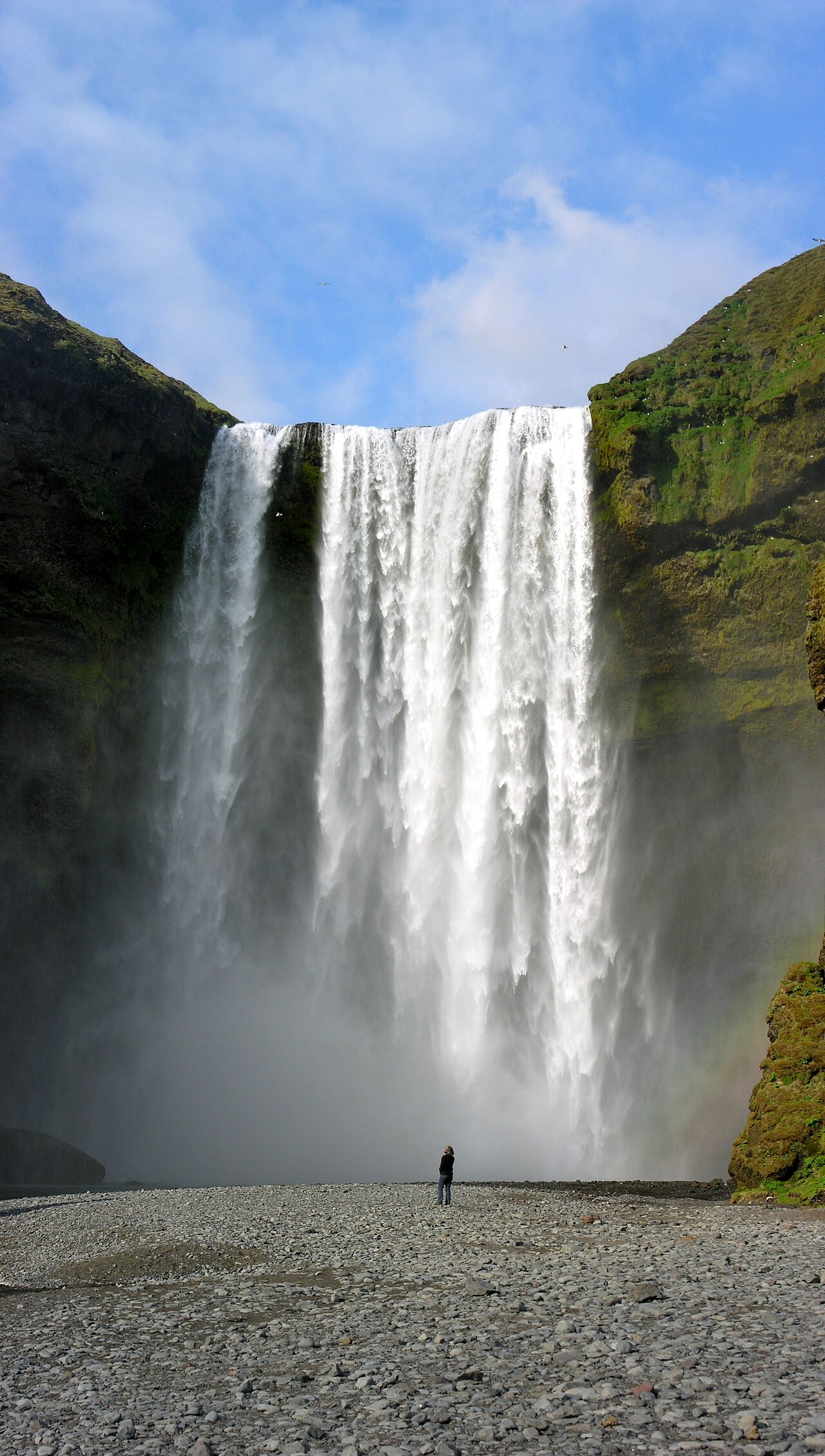
A broad waterfall on the south coast, about 25 m wide and 60 m high, where the Skógá river falls over old sea cliffs. On sunny days its spray makes rainbows, and legend says a settler hid a chest of gold behind it.
A beach of black volcanic sand just west of Vík, with basalt columns, a sea cave and the Reynisdrangar sea stacks offshore. It is beautiful but dangerous: sudden 'sneaker waves' rush far up the beach, and people have been swept away, so stay well back from the water.
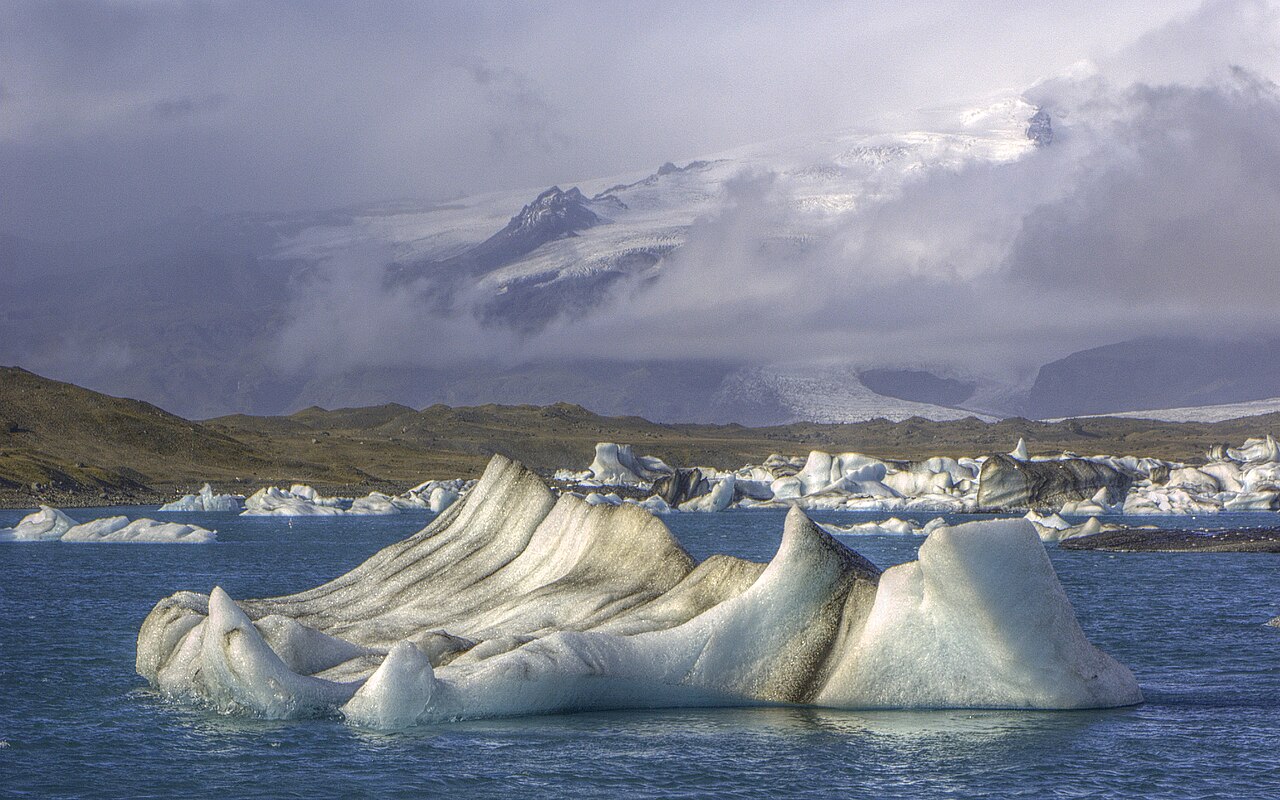
A lagoon at the foot of the Breiðamerkurjökull glacier, full of floating blue and white icebergs, beside the Ring Road between Höfn and Skaftafell. It began forming in the 1930s as the glacier retreated, and in 2009 it was reported to be the deepest lake in Iceland. It lies in Vatnajökull National Park, a World Heritage Site since 2019.
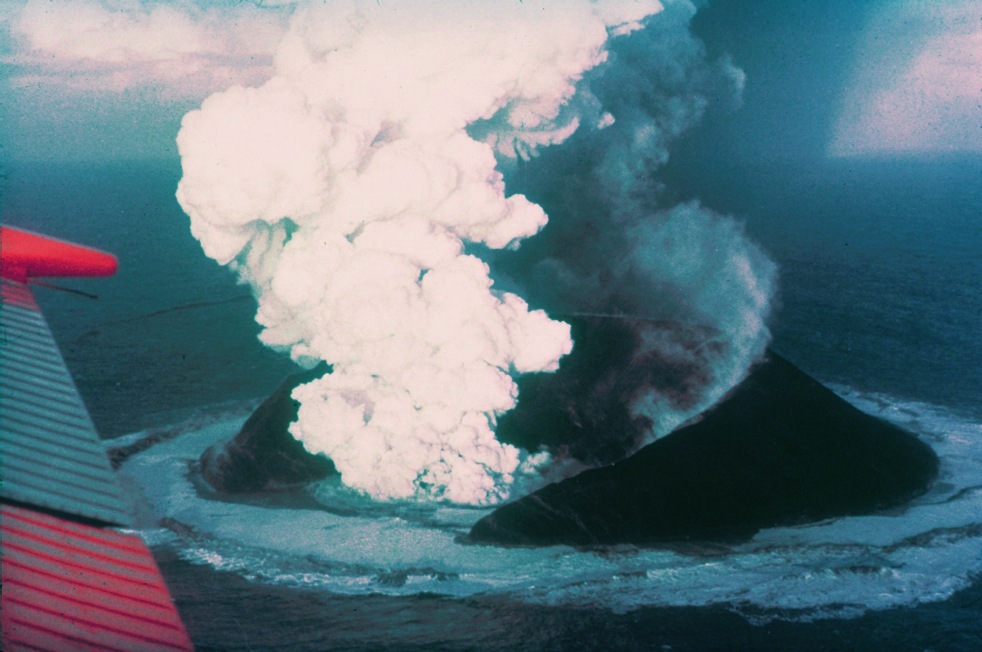
A new island that rose from the sea in an eruption that began in November 1963 and lasted until 1967, southwest of Heimaey. Scientists study how plants and animals arrive on bare land, so only a few researchers may land there. The pin marks Heimaey, the nearest town.
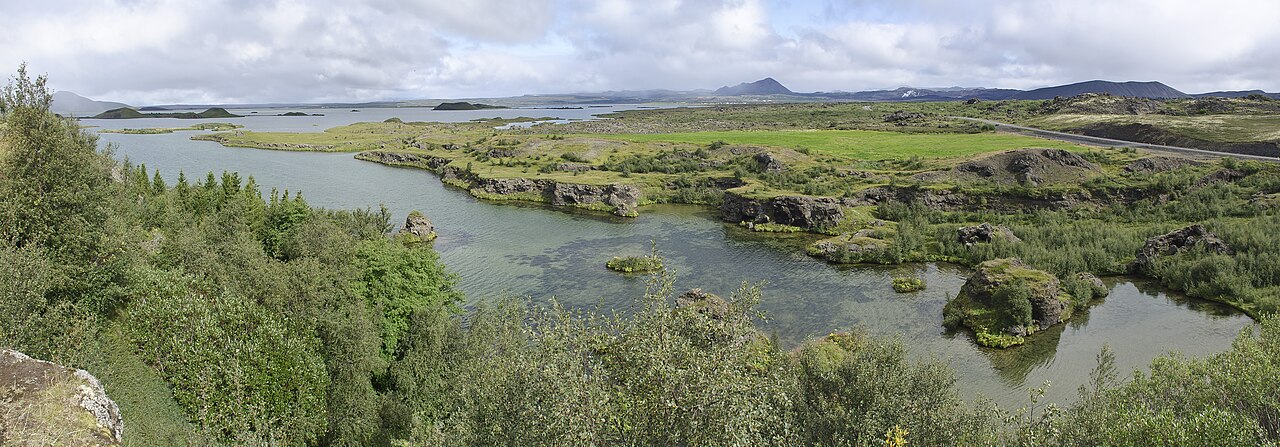
A shallow lake in the volcanic north, formed by a lava eruption about 2,300 years ago, surrounded by lava pillars, craters and steaming ground. Its name means 'midge lake', and it is famous for its many ducks and other water birds.
Most Icelanders have no family name. A last name tells you the father's (or sometimes the mother's) first name: Jón's son Ólafur is Ólafur Jónsson, and his daughter Anna is Anna Jónsdóttir. That is why the telephone directory is sorted by first name.
02
Strong beer was banned in Iceland until 1 March 1989, although wine and spirits had been legal for decades. Icelanders now celebrate 1 March as 'Beer Day'.
03
No horses have been allowed into Iceland since a law of the Althing in 982, and an Icelandic horse that leaves the country can never return. The breed has a special smooth gait called the tölt.
04
Icelandic children do not have one Father Christmas but 13 Yule Lads, sons of the troll Grýla, who come one by one on the 13 nights before Christmas and leave small gifts in shoes on the windowsill.
05
Books are the favourite Christmas present. The autumn rush of new books before Christmas is called the Jólabókaflóð, the 'Christmas book flood', and a free catalogue of new books goes to every home.
06
Around 60 percent of the world's Atlantic puffins are thought to breed in Iceland, and the Westman Islands have the largest colonies.
07
Vigdís Finnbogadóttir, President of Iceland from 1980 to 1996, was the first woman in the world to be democratically elected president of a country.
08
Iceland drove on the left until 26 May 1968, when all traffic switched to the right at 6 in the morning. Icelanders call it 'H-dagurinn', H-Day.
09
Reykjavík is the northernmost capital city of a sovereign country in the world.
10
As of 2026, Iceland has the smallest population of any NATO member and is the only member with no standing army. Its defence rests on a lightly armed coast guard and its allies.
11
The English word 'geyser' comes from Geysir, a hot spring in south Iceland. Its name comes from the Icelandic verb 'geysa', 'to rush forward'.
12
Almost all of Iceland's electricity comes from hydropower and geothermal energy, and the government says about 85 percent of houses are heated with geothermal hot water.
13
Icelandic has changed so little that Icelanders today can read the sagas written about 800 years ago.
14
As of 2026, Iceland has not yet won the Eurovision Song Contest. Its best result is second place, in 1999 and in 2009.
Stress is always on the first syllable. The letter þ sounds like 'th' in 'thin', ð like 'th' in 'this', and 'hv' at the start of a word sounds like 'kv'. These are simple guides. Pronunciation is written the way it sounds; the capital letters show where the stress goes. Audio is coming soon.
Iceland drives on the right. Headlights must be on day and night, and everyone must wear a seat belt. The usual speed limit is 90 km/h on paved country roads, lower on gravel, and 50 km/h in towns. Watch for sheep on the road and for single-lane bridges, signed 'Einbreið brú'.
Never drive off the road
Driving off marked roads is against the law and fined heavily, because moss and soil take decades to recover. (There are a few narrow exceptions, for example for some work vehicles and for driving on glaciers or firm, frozen snow.) Mountain roads (F-roads) in the highlands open only in summer and need a four-wheel-drive car.
Check the weather and the roads every day
Weather changes fast, and storms can close roads, even in summer. Check road conditions at umferdin.is and safety warnings at safetravel.is before you set off, and dress in warm, waterproof layers.
Respect the waves and the ice
On south coast beaches such as Reynisfjara, sudden large waves can reach far up the sand, so keep well back from the water. Do not walk onto glaciers or climb on icebergs without a guide.
Cards everywhere, no tipping
The currency is the Icelandic króna, but almost every shop, taxi and petrol station takes cards, so you need little cash. Tipping is not expected, as service is included in prices.
Shower before you swim
Swimming pools and hot tubs are a big part of Icelandic life. The water has very few chemicals in it, so everyone must shower thoroughly, without a swimsuit, in the changing room before going in. Swimsuits and towels can be hired.
Light and dark
In June it barely gets dark at night, so pack an eye mask. From about September to April the long, dark nights bring a good chance of seeing the northern lights away from town lights.
Emergencies
The emergency number in Iceland is 112, for police, ambulance, fire and rescue. There is also a 112 web chat, and warnings about eruptions and storms can be sent by text message to phones in the area.