 Belarus
 Hungary
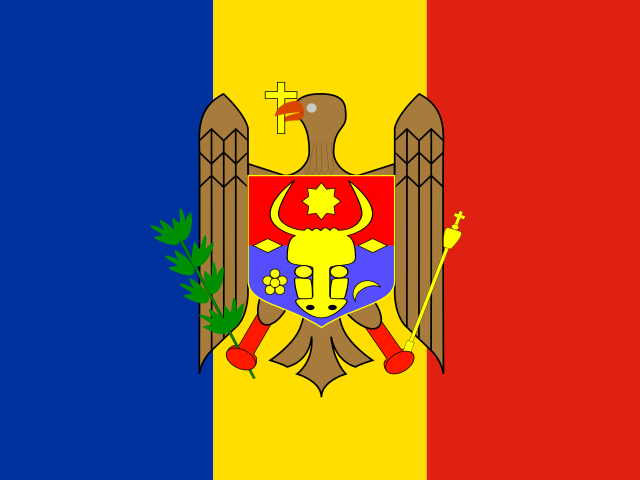 Moldova
 Poland
 Romania
 Russia
 Slovakia
Trypillia farmers
Around 4000 BC, farmers of the Trypillia culture were living between the Carpathians and the Dnipro. Some of their villages held thousands of houses and were among the largest settlements in Europe at the time.
A free large-print PDF. Choose what goes in: facts, map, history, dishes and recipes, phrases, fun facts, a quiz with or without answers. Made for clubs, care homes, libraries and family afternoons.
Ukraine is the second-largest country in Europe after Russia, and the largest that lies entirely within Europe. Most of it is a vast plain of steppe and farmland on rich black soil, crossed by rivers such as the Dnipro, the Dniester and the Southern Bug, which flow south to the Black Sea. In the south-east, smaller rivers flow into the Sea of Azov. Its only mountains are the Carpathians in the west and the Crimean Mountains in the far south.
Kyiv was the capital of Kyivan Rus', a great medieval state, and its oldest churches date back a thousand years. Over the following centuries the land was divided among Lithuania, Poland, the Ottoman Empire, the Russian Empire and the Habsburgs, and in the 17th century Cossacks built their own state here. In the 20th century Ukraine was part of the Soviet Union, and it became independent in 1991.
Ukraine is famous for its grain and is often called the breadbasket of Europe. As of September 2026, the war that began with Russia's full-scale invasion on 24 February 2022 is still going on. Russian troops occupy roughly a fifth of Ukraine's internationally recognised territory, millions of people have had to leave their homes, and Ukraine has been a candidate to join the European Union since June 2022.
Ukraine's story runs from some of Europe's largest prehistoric villages, through the golden age of Kyiv and the Cossack state, to the hard years of the 20th century, independence in 1991 and a war that is still going on.
Around 4000 BC, farmers of the Trypillia culture were living between the Carpathians and the Dnipro. Some of their villages held thousands of houses and were among the largest settlements in Europe at the time.
According to the medieval Primary Chronicle, Prince Oleg took Kyiv in 882 and made it his capital. Kyiv became the centre of Kyivan Rus', a large state of East Slavs that grew rich from the river trade between Scandinavia and Constantinople.
Prince Volodymyr the Great was baptised, and by tradition the people of Kyiv were baptised in the river in 988, although historians debate the exact year. Christianity from Byzantium shaped the art, churches and writing of Rus'.
In December 1240, after a siege, a Mongol army under Batu Khan captured and destroyed much of Kyiv. The city lost its leading role for centuries.
The Cossack leader Bohdan Khmelnytsky led a great uprising against the Polish-Lithuanian Commonwealth. Out of it grew the Cossack Hetmanate, a Cossack state in central Ukraine.
Hetman Pylyp Orlyk and the Cossack elders agreed a constitution in the town of Bender, in Moldavia. It divided power between legislative, executive and judicial branches, and is sometimes called the first constitution of Ukraine.
Taras Shevchenko, a poet and painter born into a family of serfs, published his book of poems Kobzar, 'The Bard'. Shevchenko himself became known as the Kobzar, and the book became a symbol of the Ukrainian national and literary revival.
On 22 January 1918, after the Russian Revolution, the Ukrainian People's Republic declared its independence, with Kyiv as its capital. It was defeated in the wars that followed, and most of Ukraine became a Soviet republic.
In 1932 and 1933 a man-made famine in Soviet Ukraine, during Stalin's forced collectivisation of farming, killed around 3.5 to 5 million people. Ukraine and more than 30 other countries recognise the Holodomor as a genocide.
Germany invaded the Soviet Union in 1941 and occupied Ukraine. Great battles and atrocities followed, and millions of civilians in Ukraine were killed, including most of Ukraine's Jews. At Babyn Yar in Kyiv, tens of thousands of Jews were murdered in September 1941.
On 26 April 1986 a reactor at the Chernobyl nuclear power plant, north of Kyiv, exploded. It is the most destructive nuclear accident in history, and the area around the plant became the Chernobyl Exclusion Zone.
On 24 August 1991 the Ukrainian parliament declared independence as the Soviet Union fell apart. On 1 December 1991 more than 92% of voters approved it in a referendum.
On 28 June 1996 parliament adopted the constitution of independent Ukraine. In September of the same year the hryvnia, named after an old measure of weight from Kyivan Rus', became the national currency.
After a disputed presidential election, huge peaceful protests filled Kyiv, with orange as their colour. The Supreme Court ordered the vote to be repeated, and the opposition candidate Viktor Yushchenko won.
Months of protests on Kyiv's Independence Square, called the Maidan, ended in February 2014 with the fall of President Viktor Yanukovych. Russia then occupied and annexed Crimea, and fighting began in the Donbas region in the east.
On 24 February 2022 Russia launched a full-scale invasion of Ukraine. Kyiv was not taken, and Ukraine won back large areas later that year. As of September 2026 the war continues, and Ukraine is a candidate for membership of the European Union.
Ukrainian cooking grew out of village cooking based on grain, especially wheat and rye, with beetroot, cabbage, potatoes, onions, mushrooms, pork and plenty of sour cream. Many dishes are first fried or boiled and then stewed or baked. Soup, above all borscht, is an everyday favourite and is served with bread or garlic buns, while varenyky and cabbage rolls are national favourites for the main course. The most important meal of the year is the Christmas Eve supper of twelve meatless dishes, which begins with kutia.
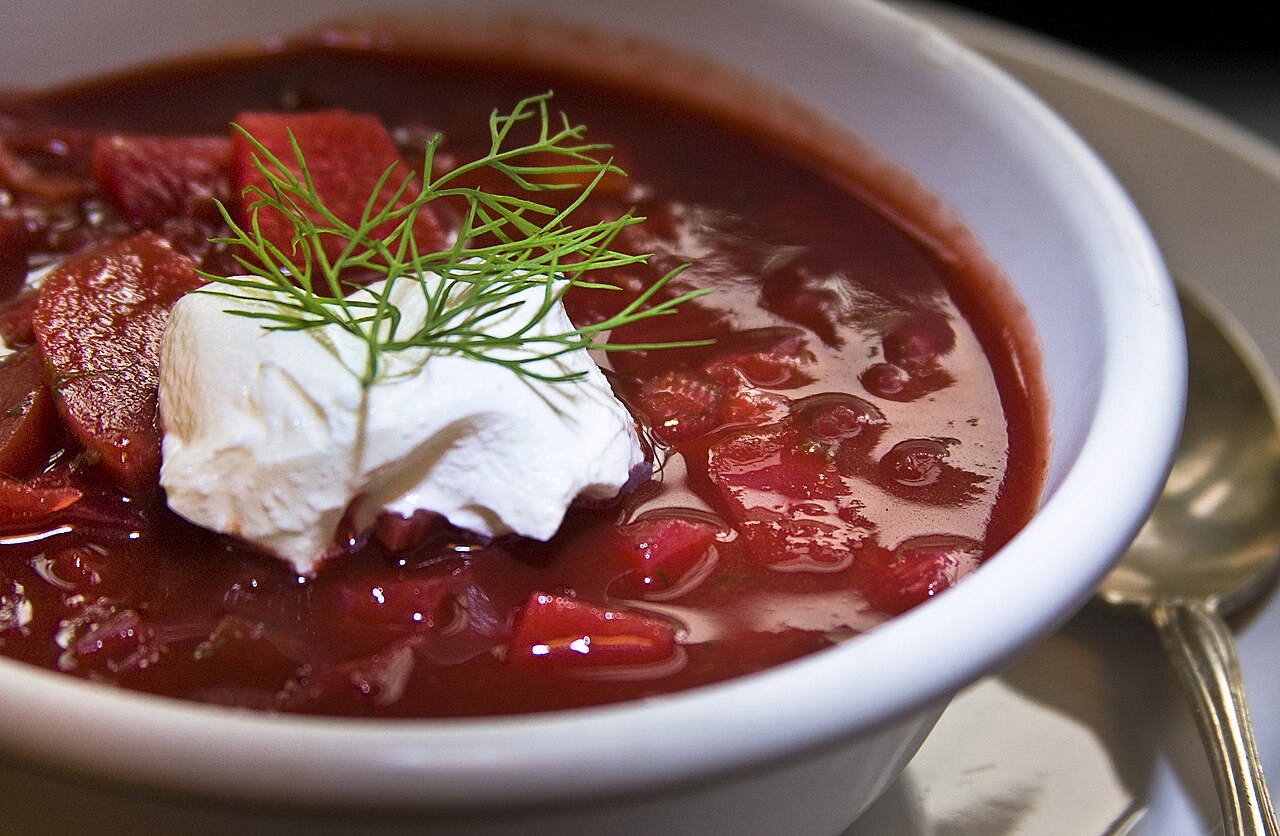
A sour soup of meat or bone stock with beetroot, which gives it its deep red colour, and cabbage, carrots, onions, potatoes and tomatoes. It is served hot with a spoonful of sour cream and bread or garlic buns.
In 2022 UNESCO added the culture of Ukrainian borscht cooking to its list of intangible heritage in need of urgent safeguarding.
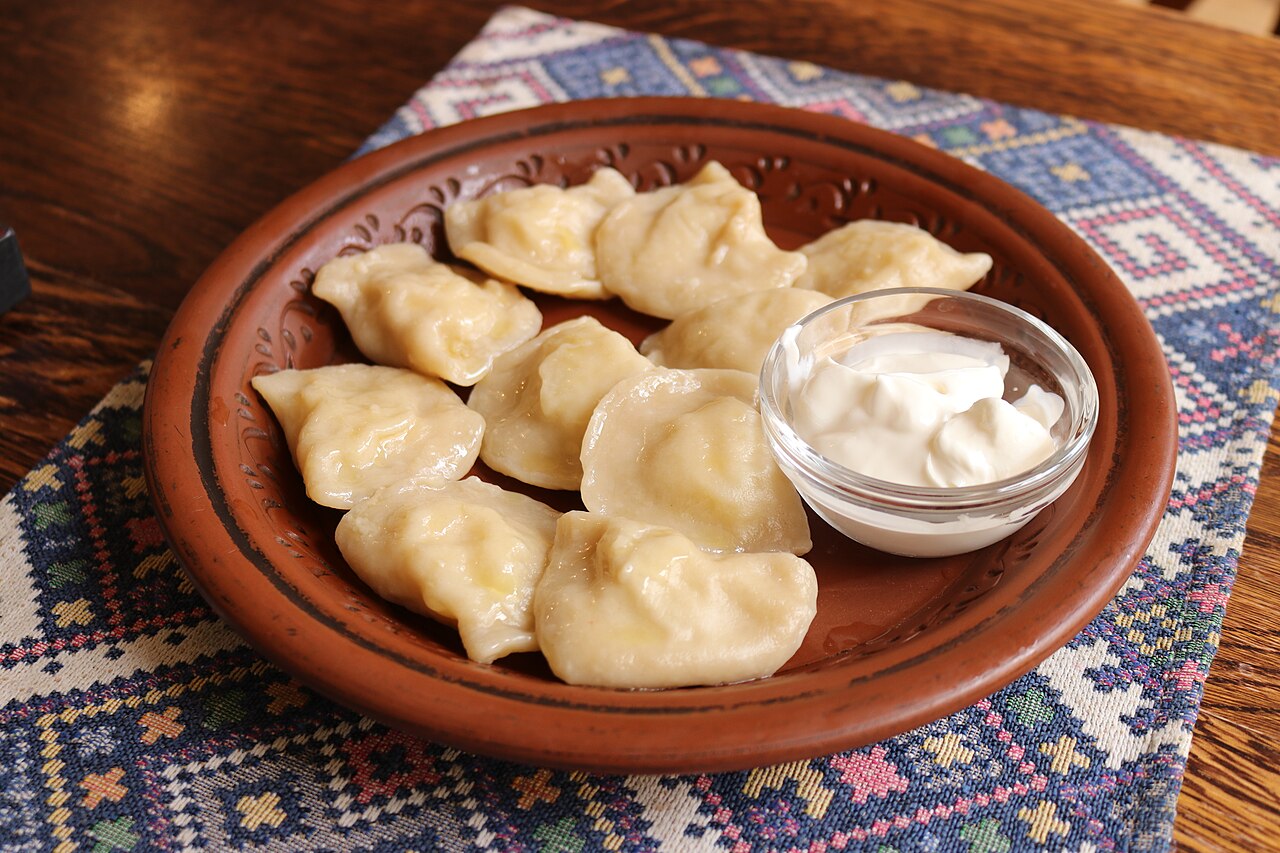
Half-moon dumplings of thin, soft dough filled with mashed potato, cabbage, curd cheese, meat or, in summer, sour cherries. They are boiled and served with fried onions and sour cream, or with sugar and sour cream when the filling is fruit.
The name comes from the Ukrainian verb 'varyty', to boil. Varenyky filled with poppy seeds are one of the dishes of the Christmas Eve supper.
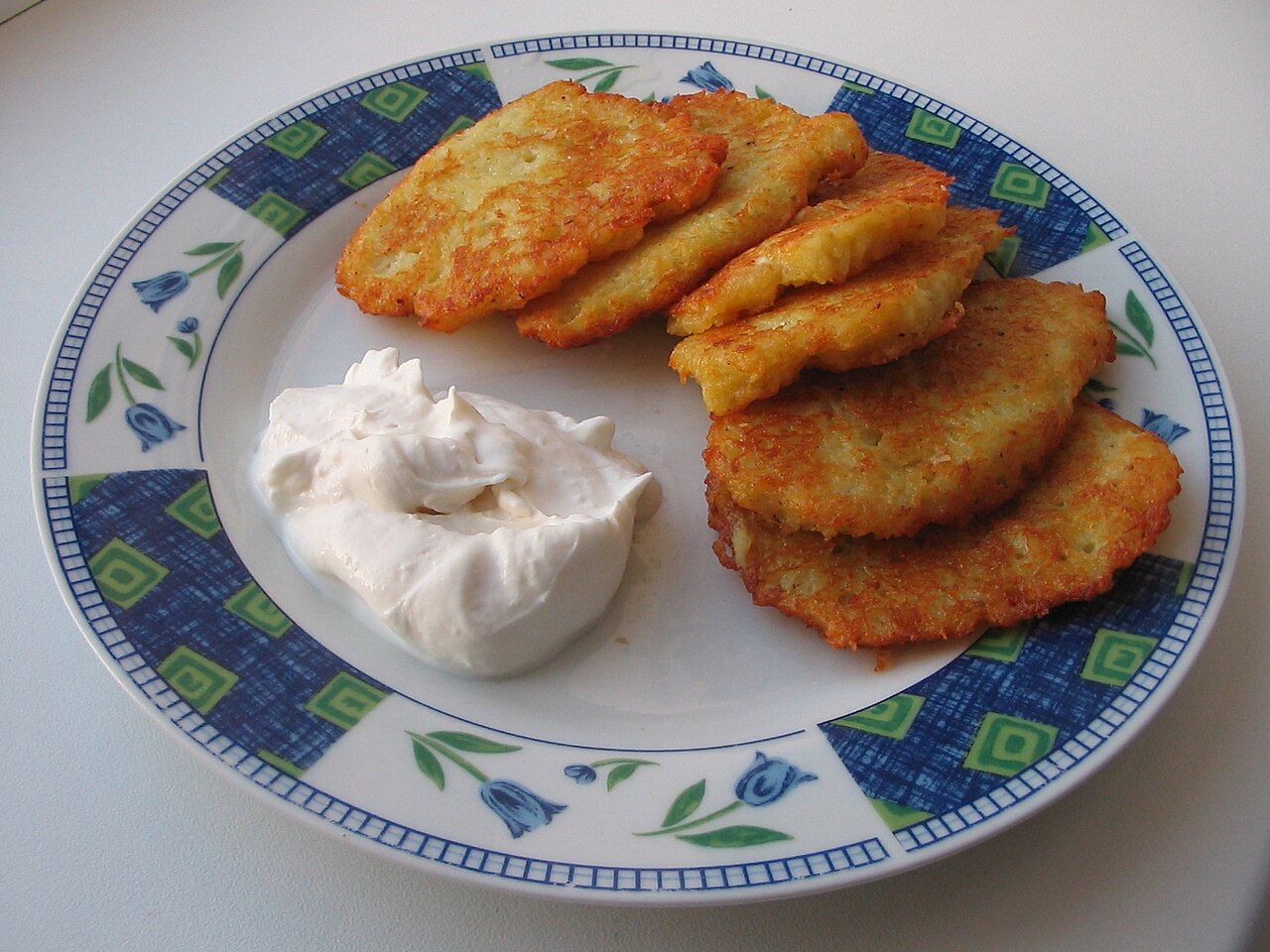
Crisp pancakes of grated raw potato and onion, fried in oil and served hot with sour cream.
The name comes from the verb 'derty', to grate. Similar potato pancakes are made from Ireland to Belarus.
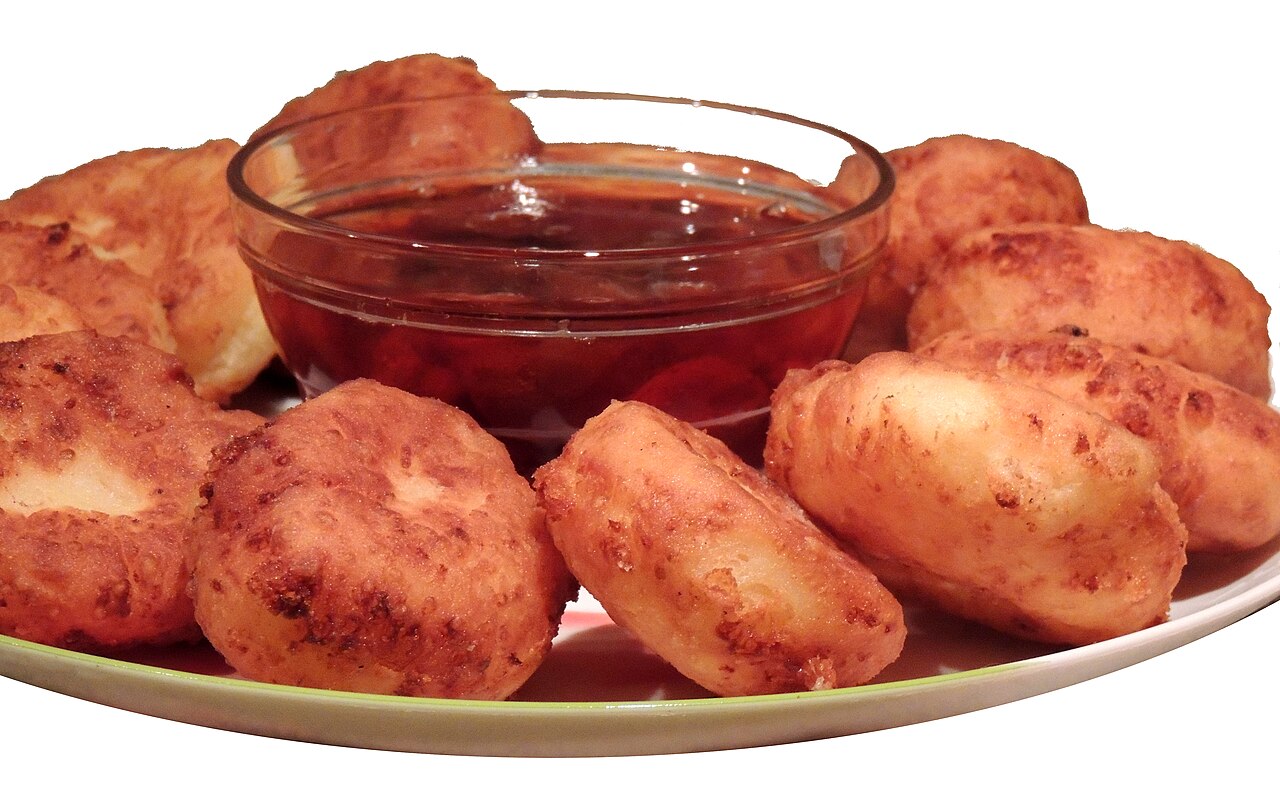
Small, thick pancakes of soft curd cheese mixed with egg, a little flour and sugar, fried golden in butter or oil. They are eaten for breakfast or dessert with sour cream, jam or honey.
The name comes from 'syr', which in Ukrainian means soft curd cheese.
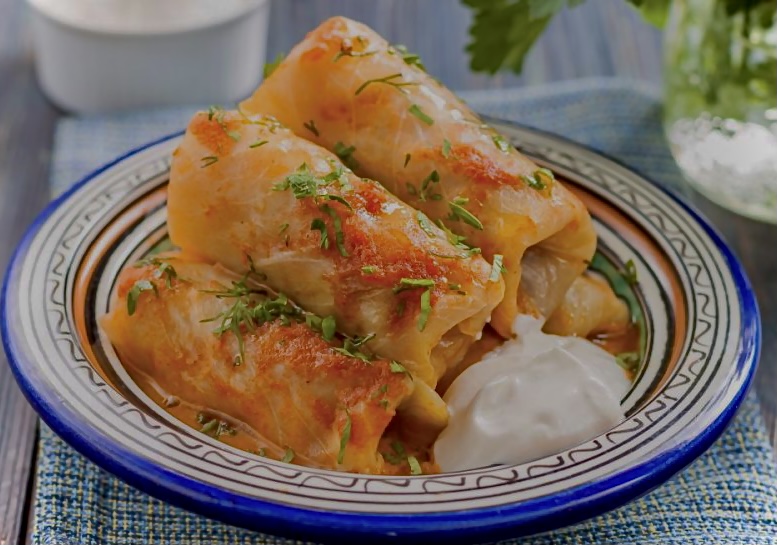
Cabbage leaves rolled around a filling of rice or millet, often mixed with minced meat, then baked or stewed with onions, tomato and sour cream.
Very similar cabbage rolls are made from Central Europe to Western Asia.
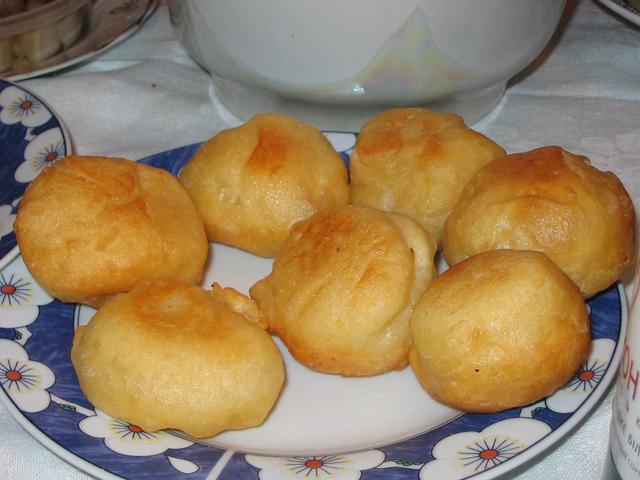
Small, soft yeast buns. Savoury pampushky are seasoned with a garlic sauce and served with red borscht. Sweet ones are filled with fruit, jam or poppy seeds.
The word comes, through Polish, from the German 'Pfannkuchen', pancake.
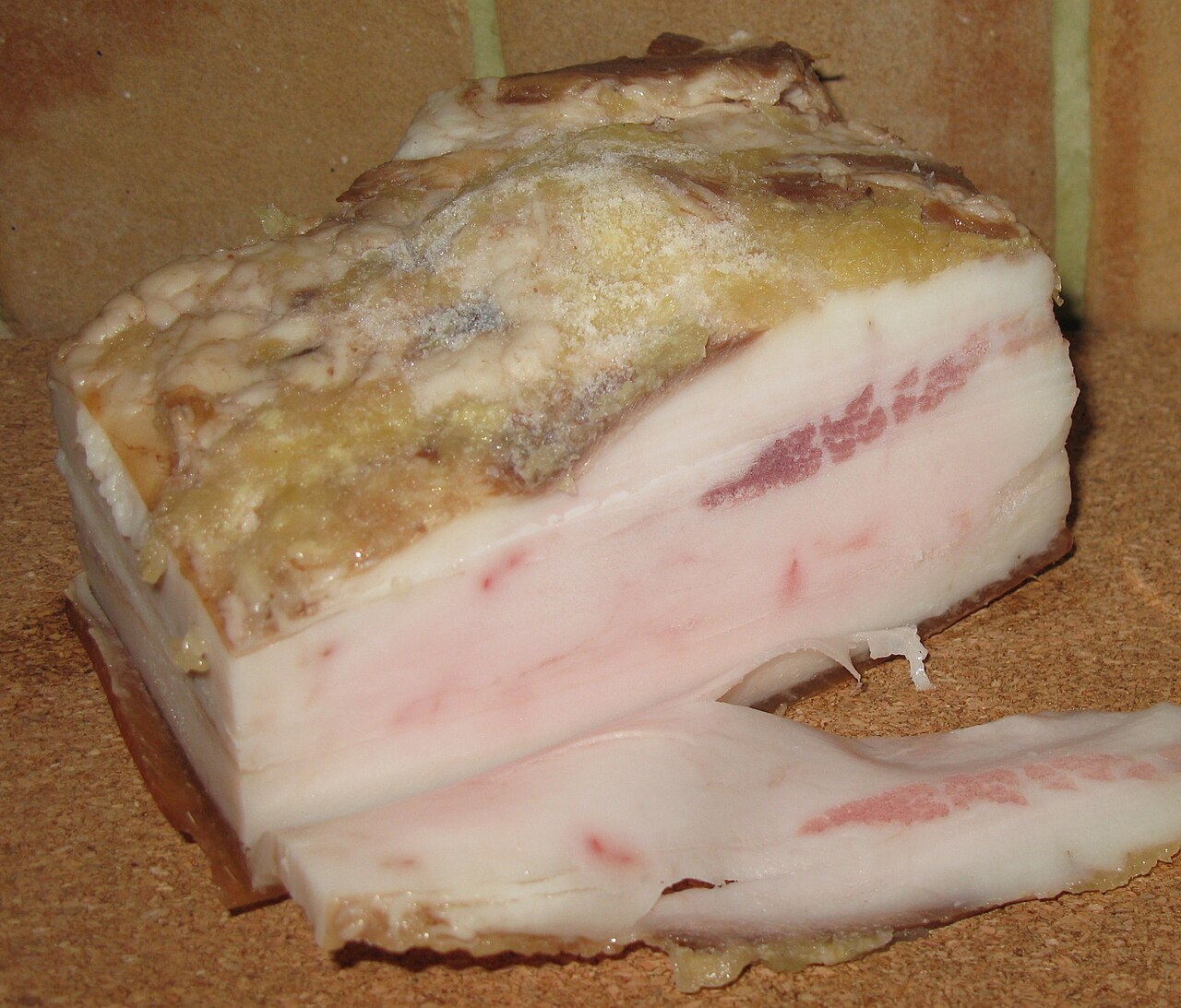
Salt-cured pork fat, sometimes with a thin layer of meat and flavoured with garlic or paprika. It is cut in thin slices and eaten on dark bread with onion, garlic or mustard.
Unlike bacon, salo has more fat than lean meat, and unlike lard, it is not melted down.
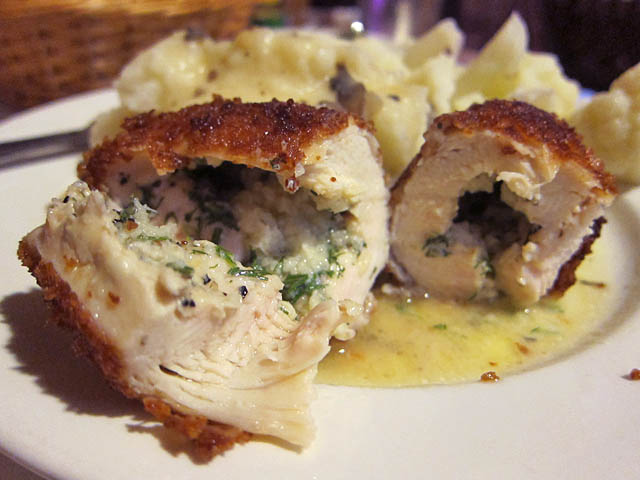
A chicken breast pounded thin, rolled around cold butter and herbs, coated in egg and breadcrumbs and fried or baked. When it is cut, the melted butter runs out.
It is also popular in the English-speaking world, where it is often spelt chicken Kiev.
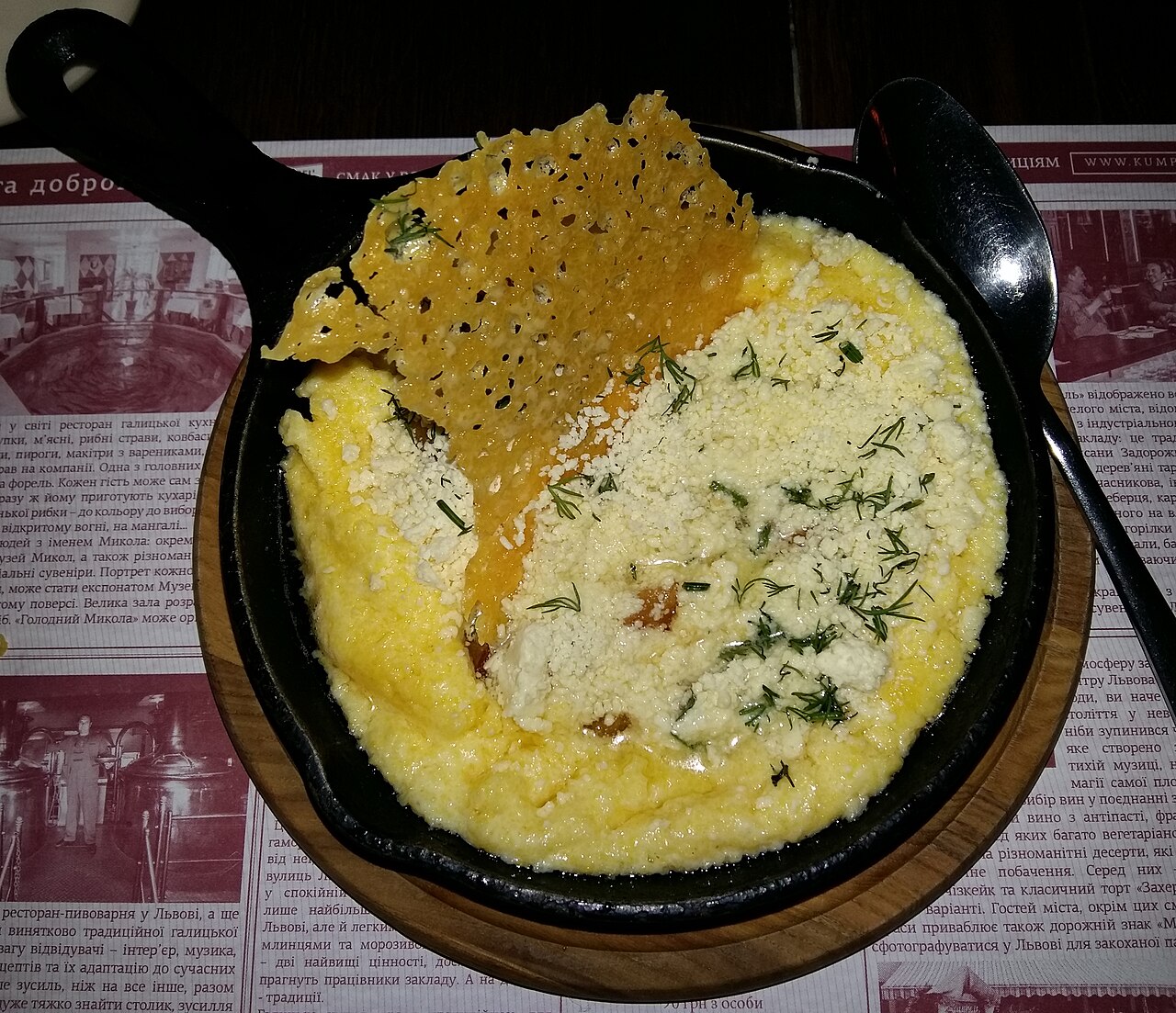
A thick cornmeal porridge cooked with sour cream, topped with pork rind, mushrooms and salty sheep's cheese called bryndza.
A similar cornmeal dish is made across the border in Romania.
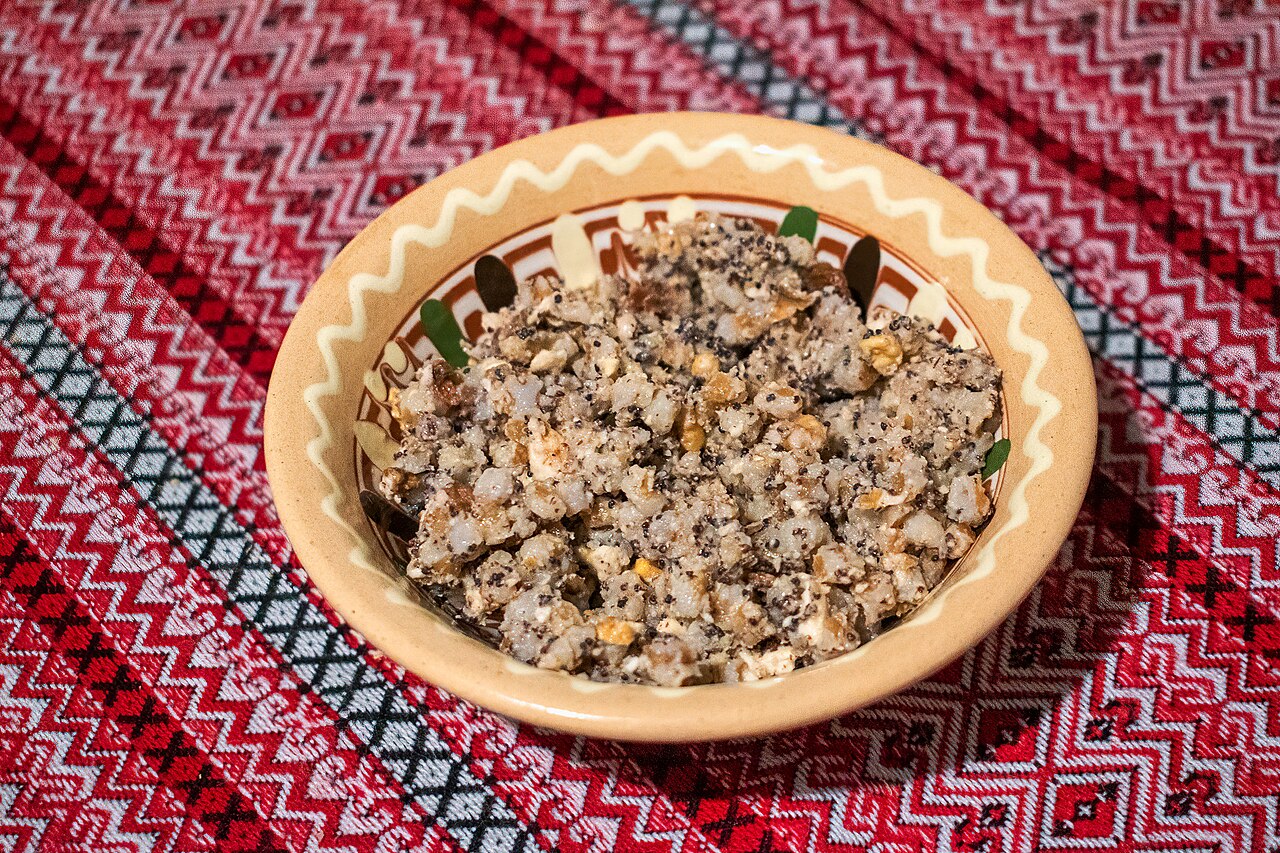
Boiled wheat berries mixed with ground poppy seeds, honey, nuts and sometimes raisins. Together with uzvar, it is one of the two essential ritual dishes of the Christmas Eve supper.
Kutia is the first of the twelve dishes to be tasted at the Christmas Eve supper, called Sviata Vecheria.
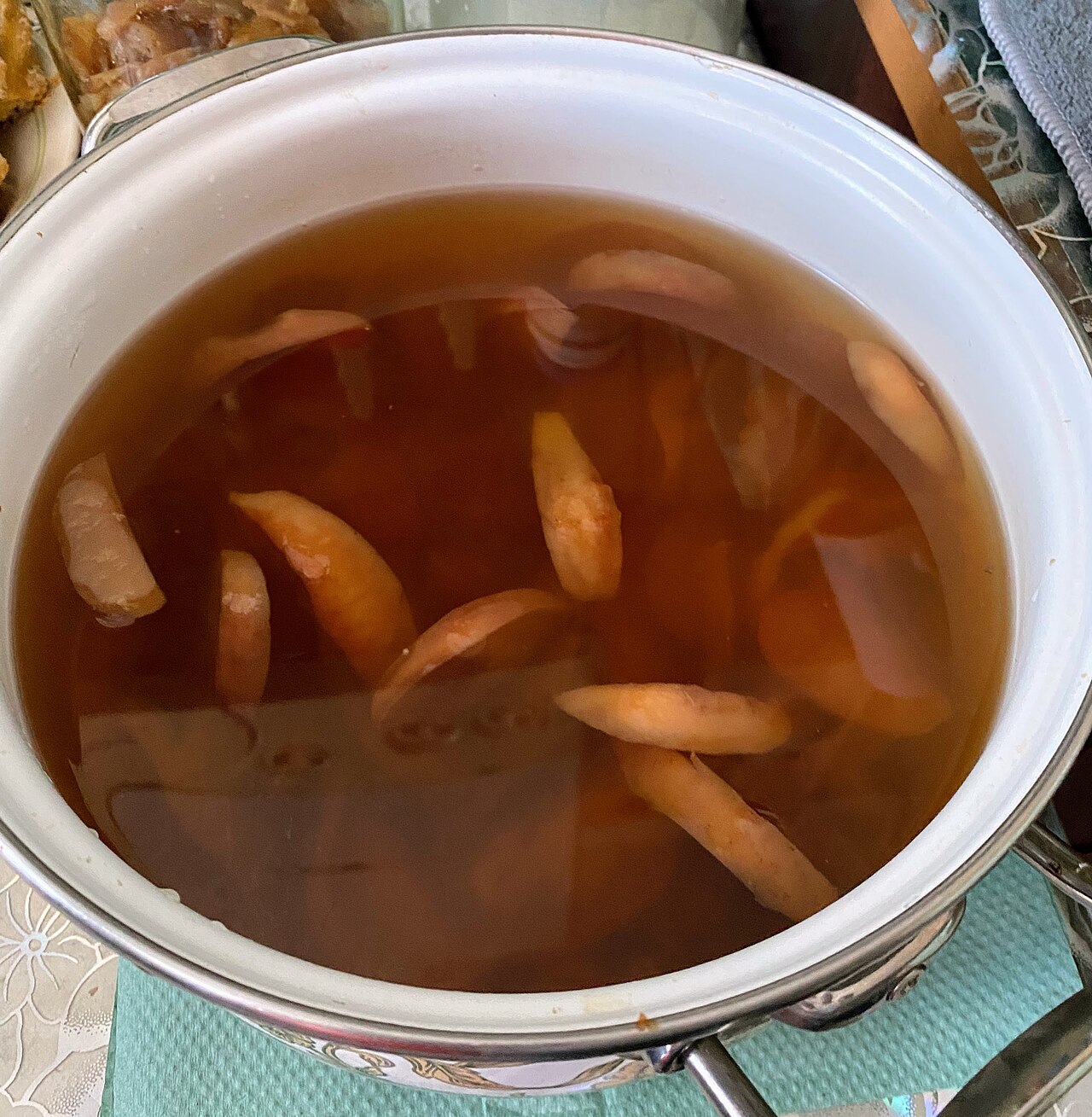
A sweet drink made by simmering dried fruit, usually apples, pears and prunes, in water. It is traditionally served at Christmas.
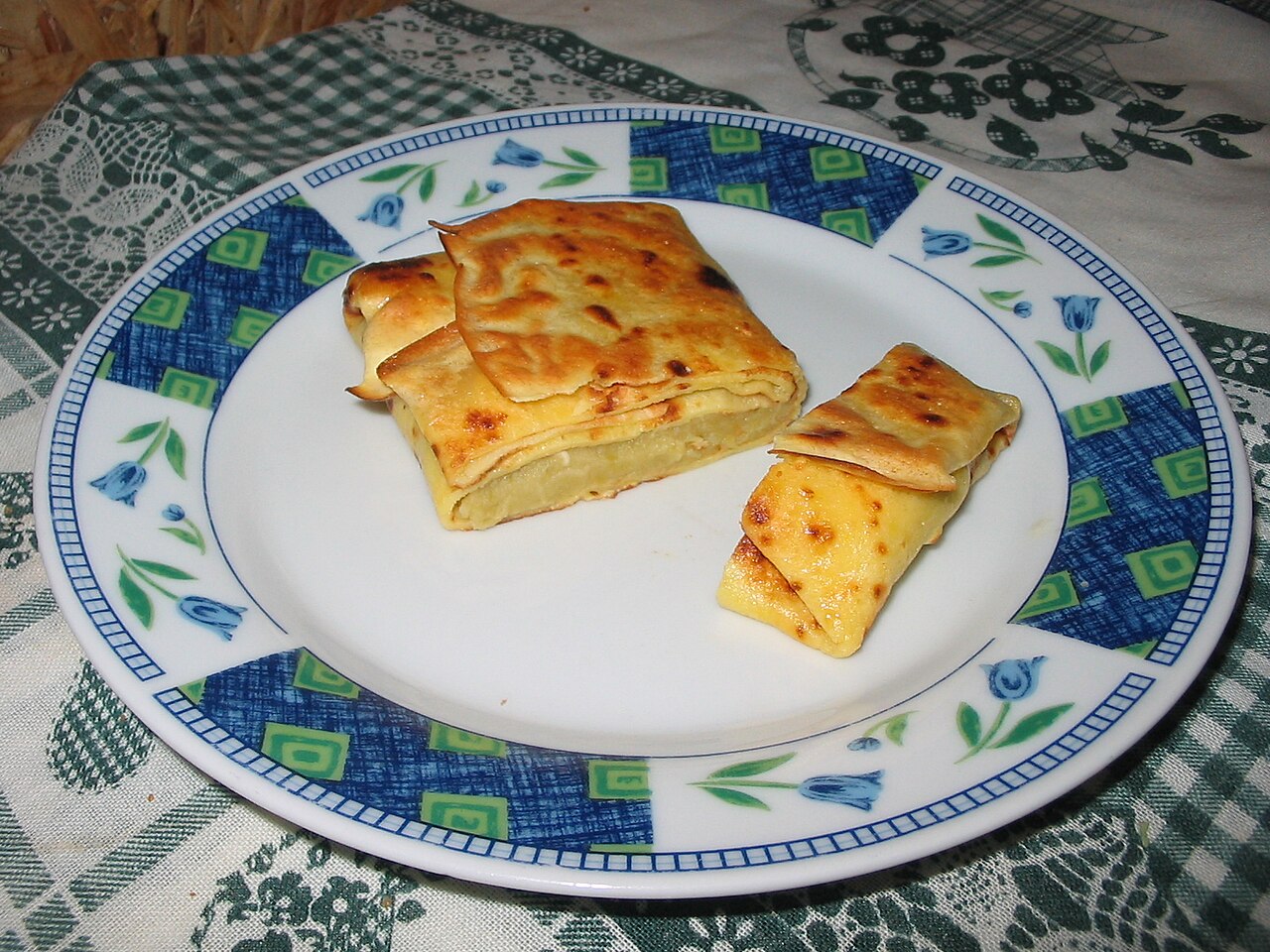
Thin pancakes, called mlyntsi, rolled around a sweet or savoury filling such as curd cheese, meat, cabbage or fruit, and served with sour cream.
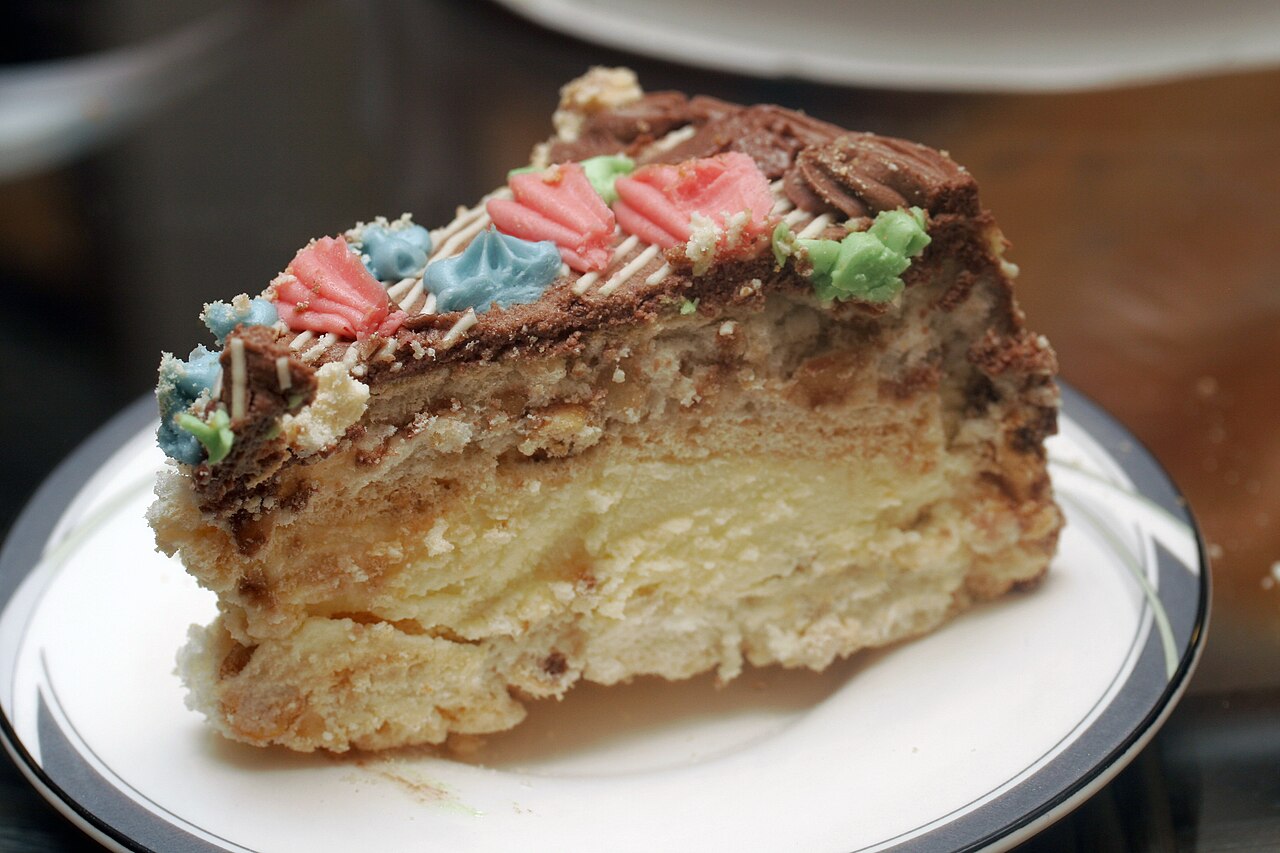
Two layers of crisp meringue with hazelnuts, filled with a buttercream-like cream and covered in chocolate glaze. Its box shows a horse chestnut leaf.
It has been made by a confectionery factory in Kyiv since 6 December 1956, and it has become a symbol of the city.
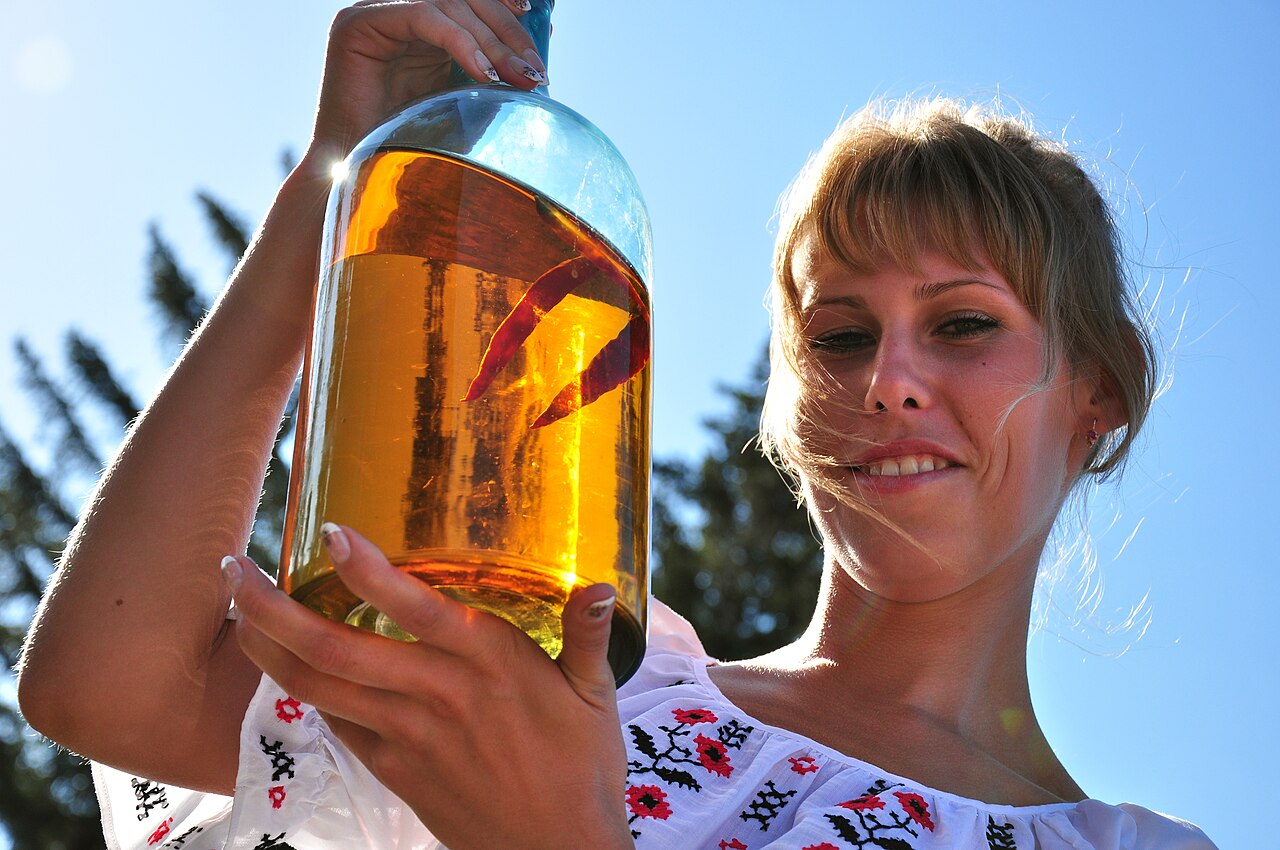
A strong spirit, usually distilled from wheat or rye and around 40% alcohol. A popular version, pertsivka, is flavoured with chilli peppers. Home-distilled horilka is called samohon.
The word is linked to the Ukrainian verb for 'to burn'.
Ukraine's cities range from ancient Kyiv on the Dnipro and the old churches of Chernihiv, through the Habsburg-era streets of Lviv and Chernivtsi in the west, to the Black Sea port of Odesa and the big industrial cities of the east. Population figures are from before or early in the full-scale war, and many have changed since.
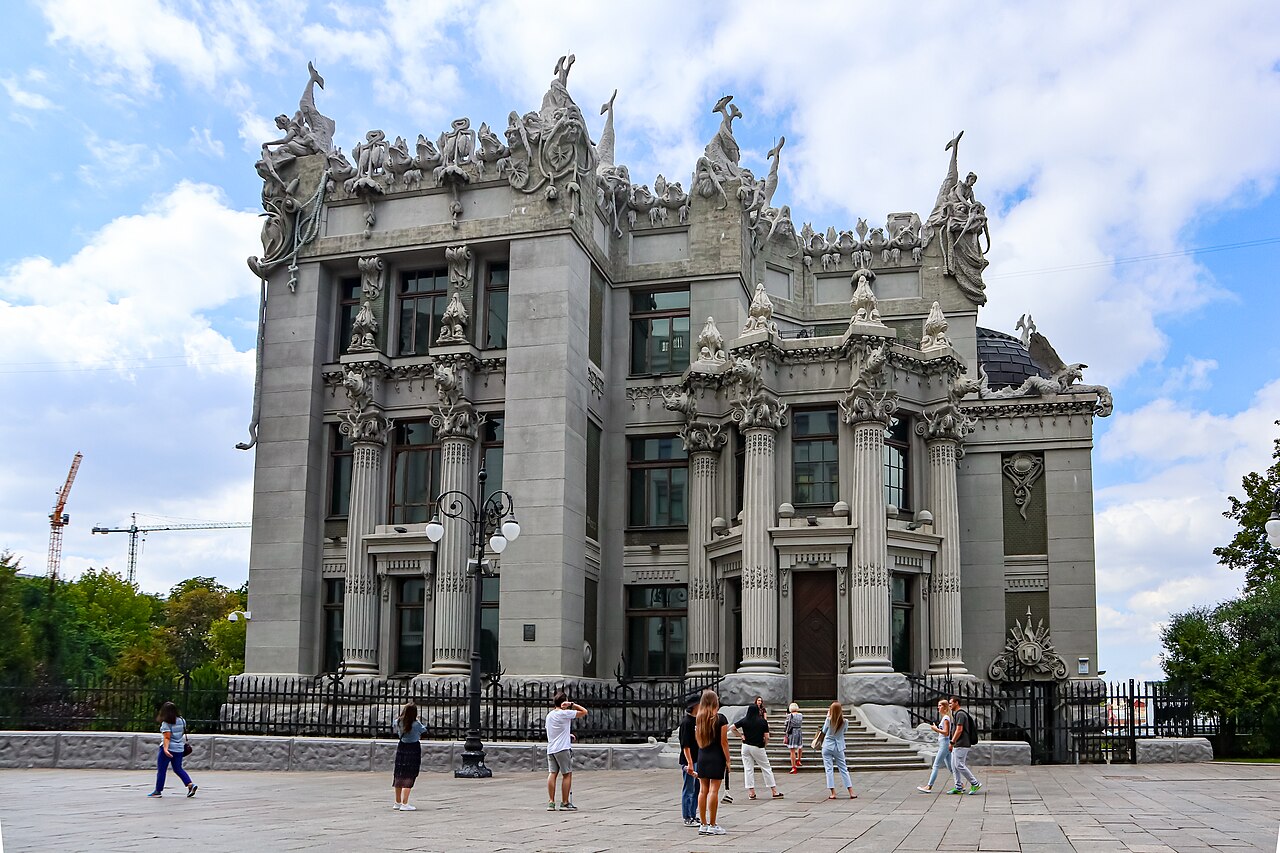
The capital and largest city, home to about 2.95 million people before the full-scale invasion. It stands on both banks of the Dnipro and is one of the oldest cities in Eastern Europe. It was the capital of Kyivan Rus' a thousand years ago.
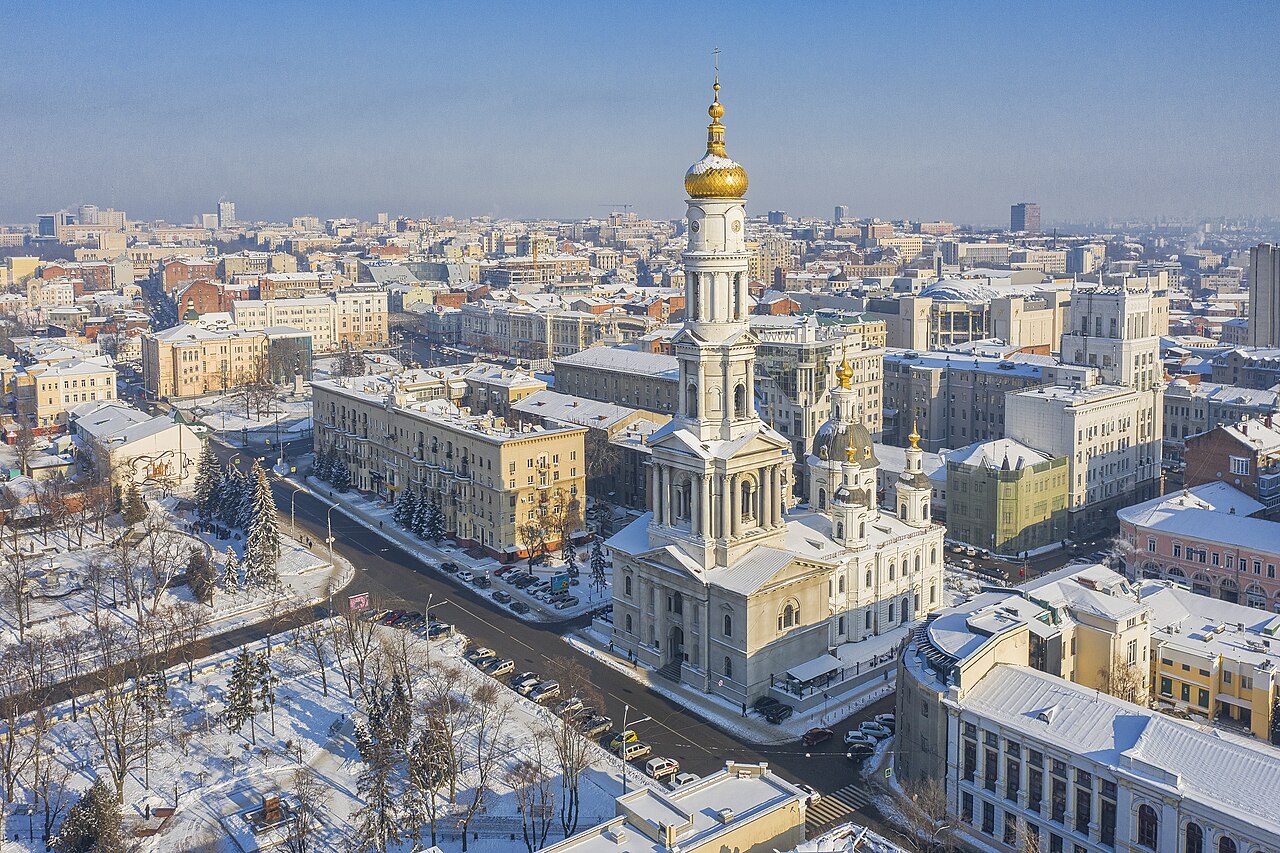
The second-largest city, with about 1.4 million people before 2022. It was founded in 1654 as a Cossack fortress and was the capital of Soviet Ukraine from 1919 to 1934. It is a big centre of universities, science and industry.
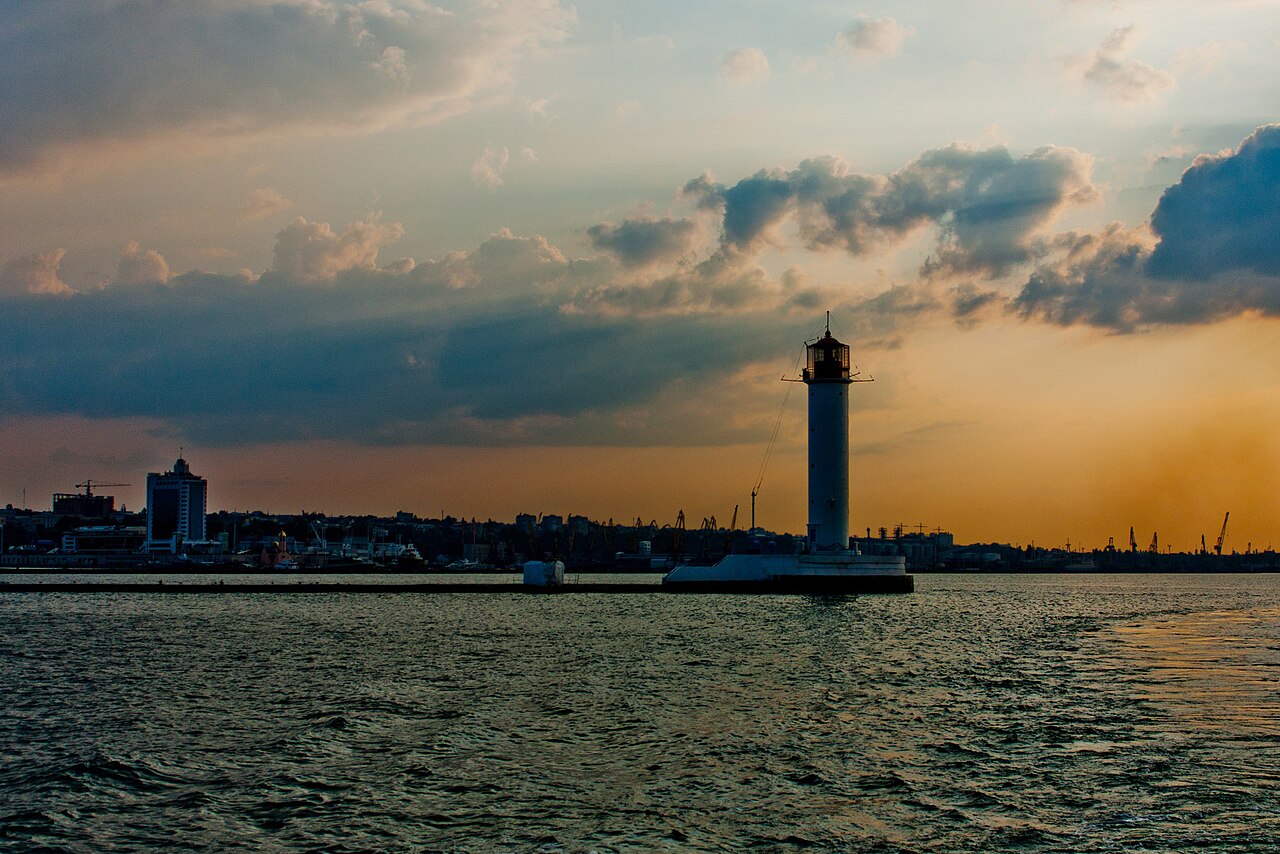
The third-largest city and Ukraine's main seaport on the Black Sea. It grew in the 19th century as a busy, many-cultured trading city, and its historic centre became a World Heritage Site in 2023.
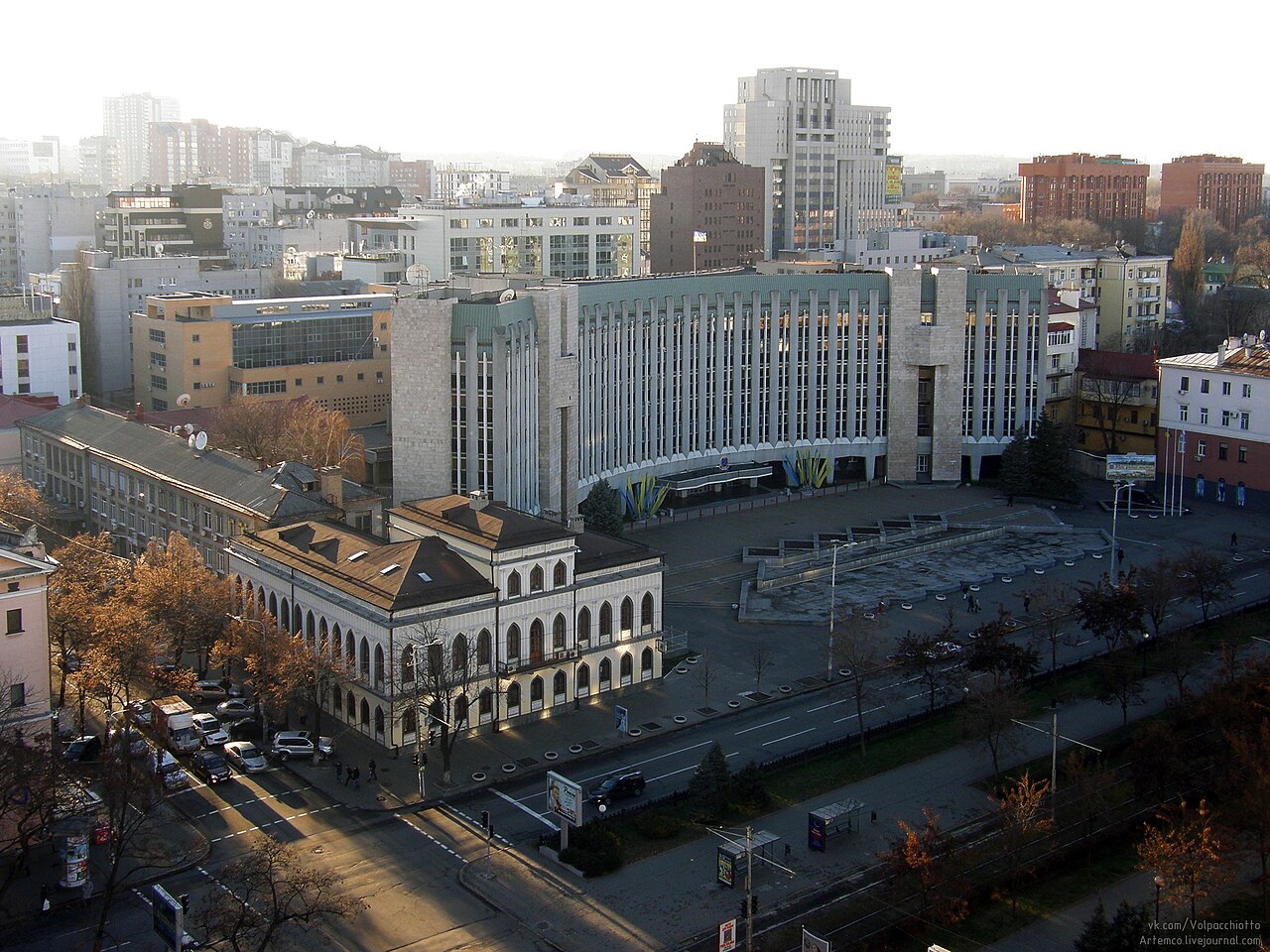
A big city on the Dnipro river. Cossack settlements stood here long before Russia's Catherine the Great established the city of Yekaterinoslav in 1787, and since 2026 the city officially dates its founding to 1526. In Soviet times, as Dnipropetrovsk, it was a closed city of heavy industry, arms and space technology. It was renamed Dnipro in 2016.
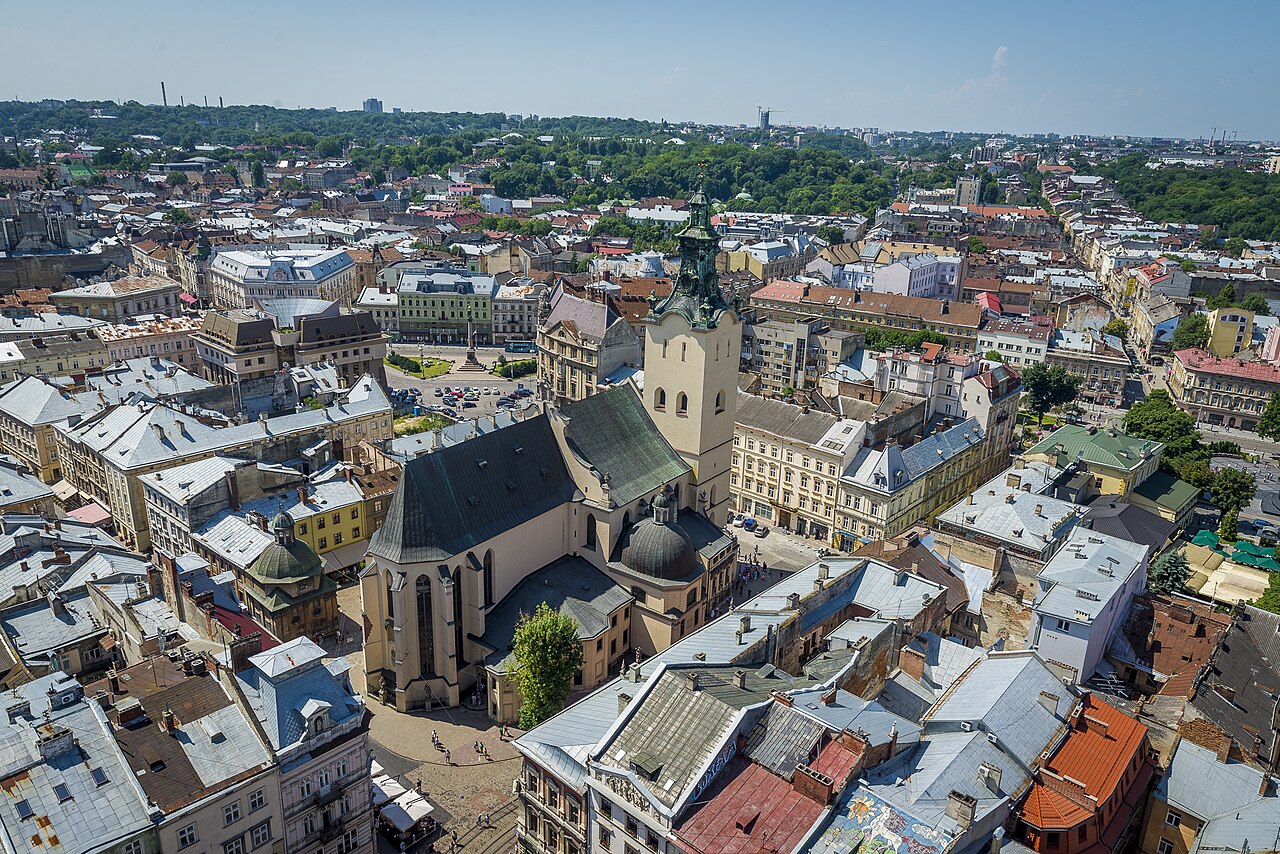
The largest city of western Ukraine and one of its main cultural centres, with about 720,000 people. It was named after Lev, the son of King Danylo, and its old town of churches and merchants' houses is a World Heritage Site.
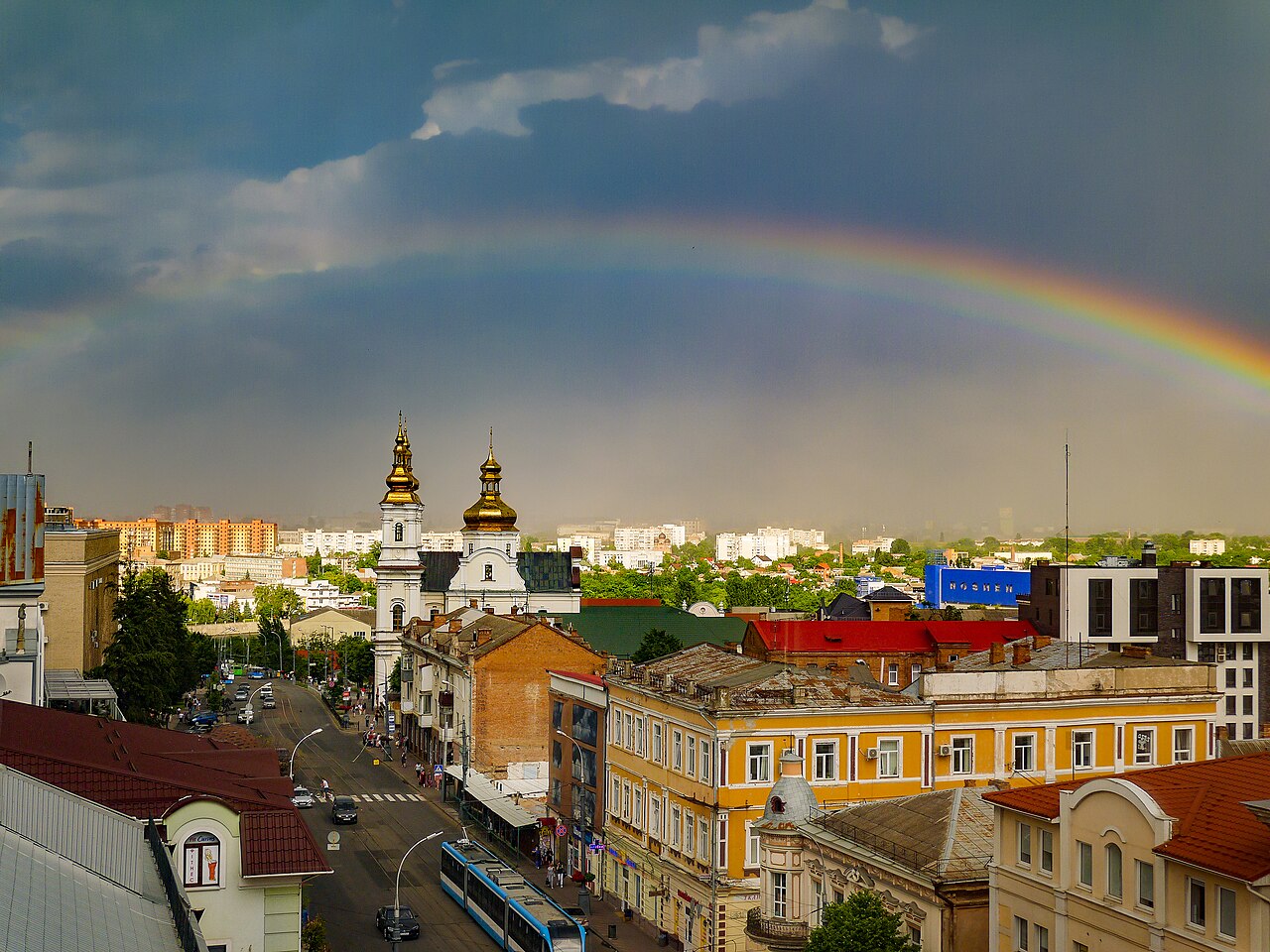
A city on the Southern Bug river in west-central Ukraine, and the largest city of the historic region of Podillia. Its name first appears in 1363.
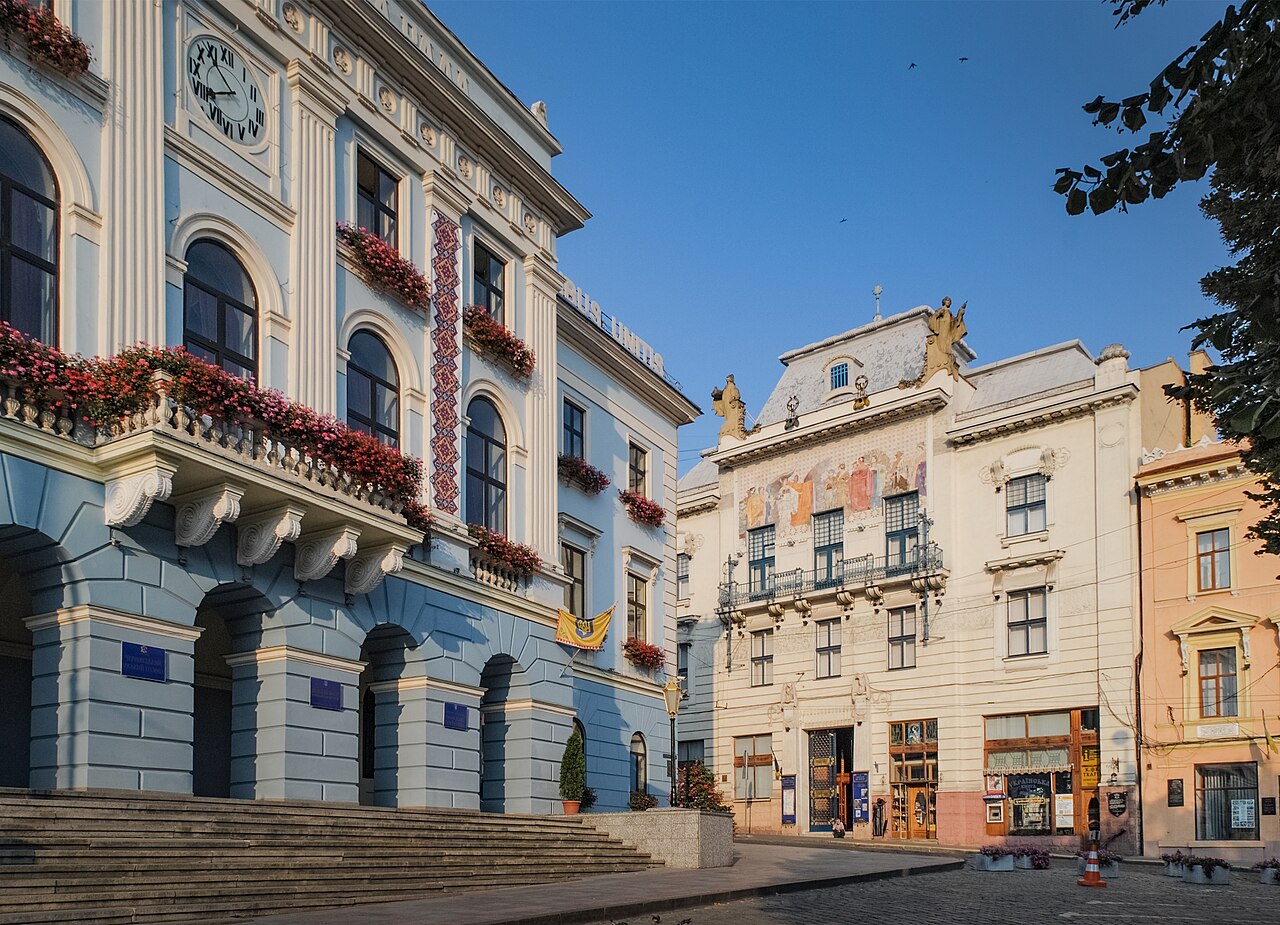
A city on the Prut river in the south-west, once the capital of the region of Bukovina under the Habsburgs. It is known for its Austrian-era architecture and its university.
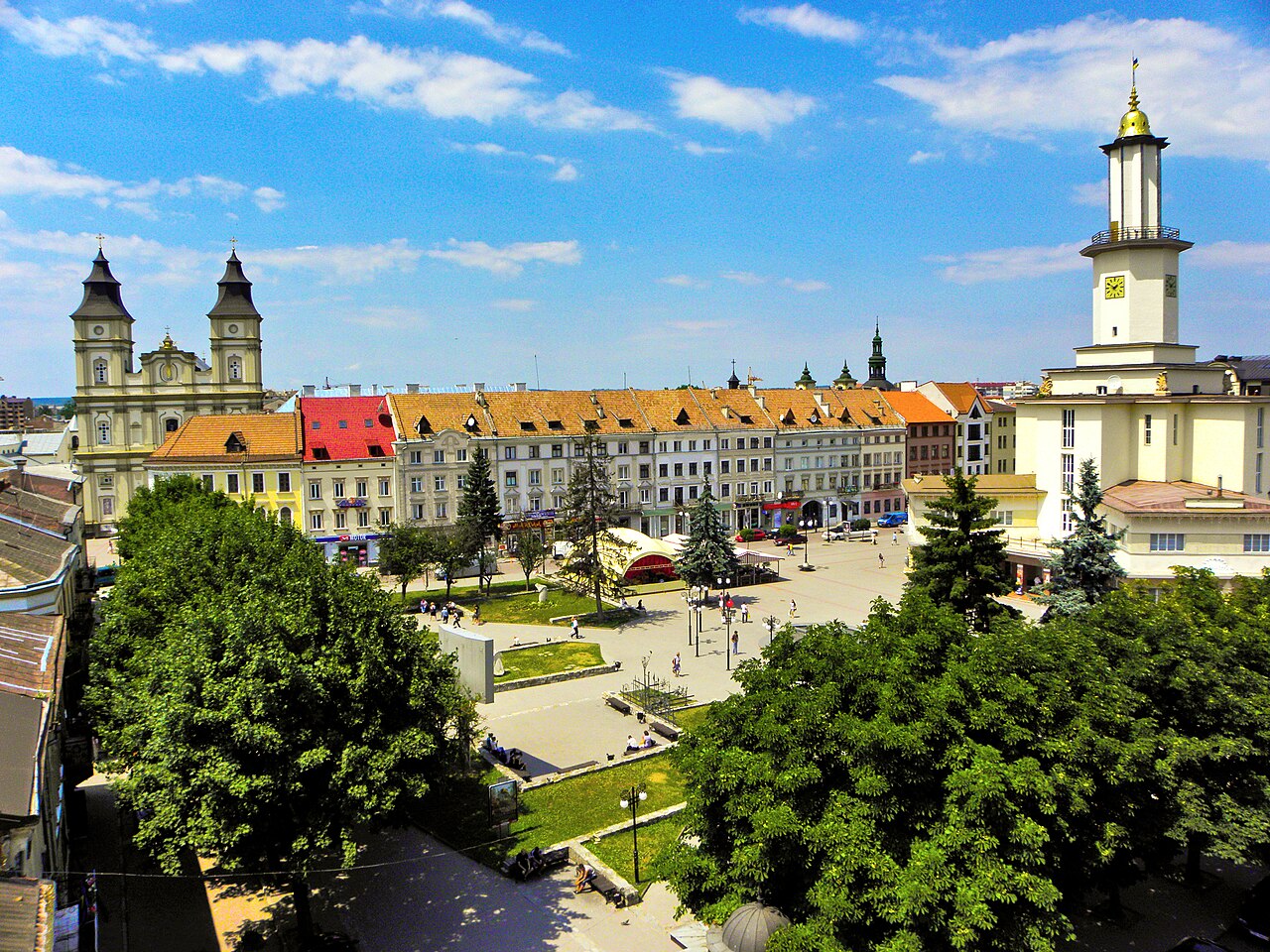
A city in the foothills of the Carpathians, built in the mid-17th century as a fortress of the Polish Potocki family and called Stanisławów. It was renamed in 1962 after the writer Ivan Franko.
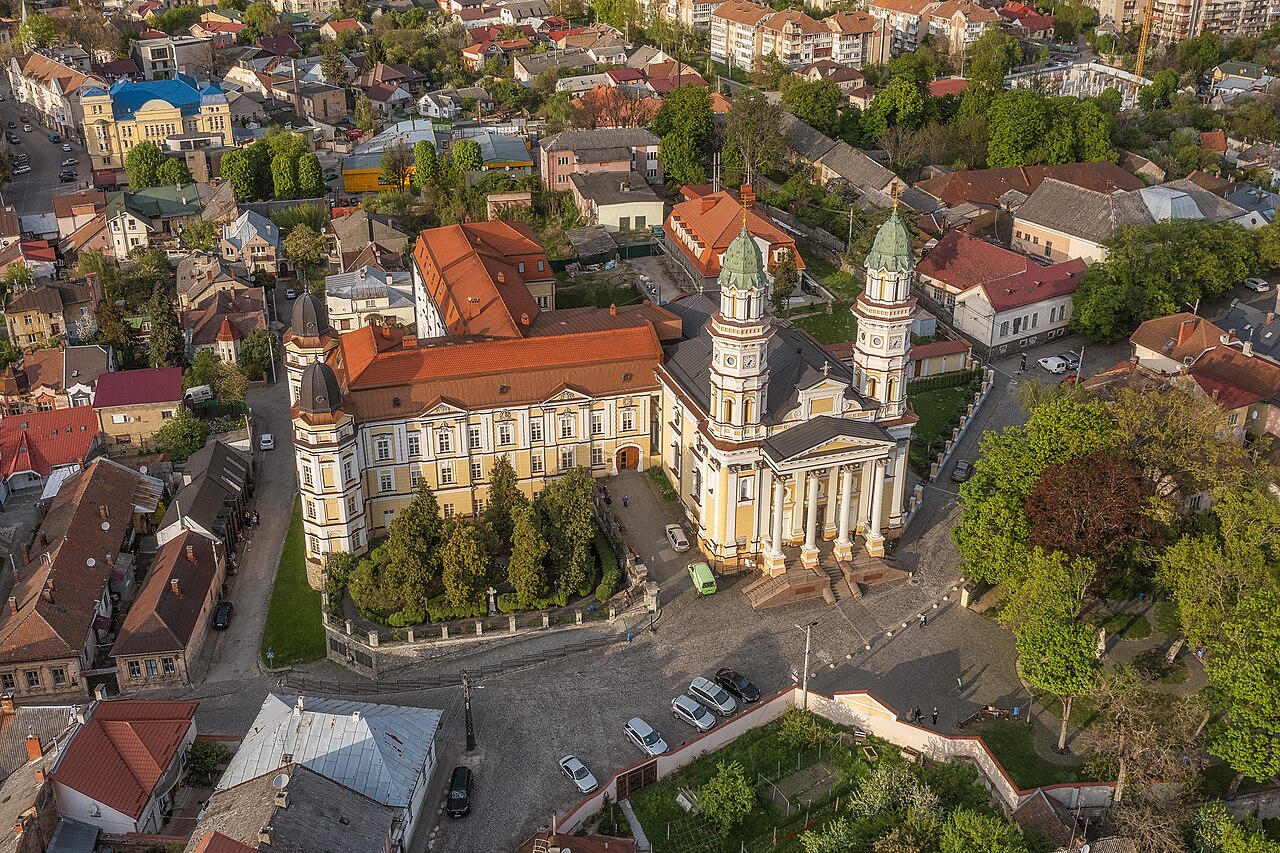
A small city on the Uzh river in the far west, on the border with Slovakia and near Hungary. It is the centre of the Zakarpattia region beyond the Carpathians.
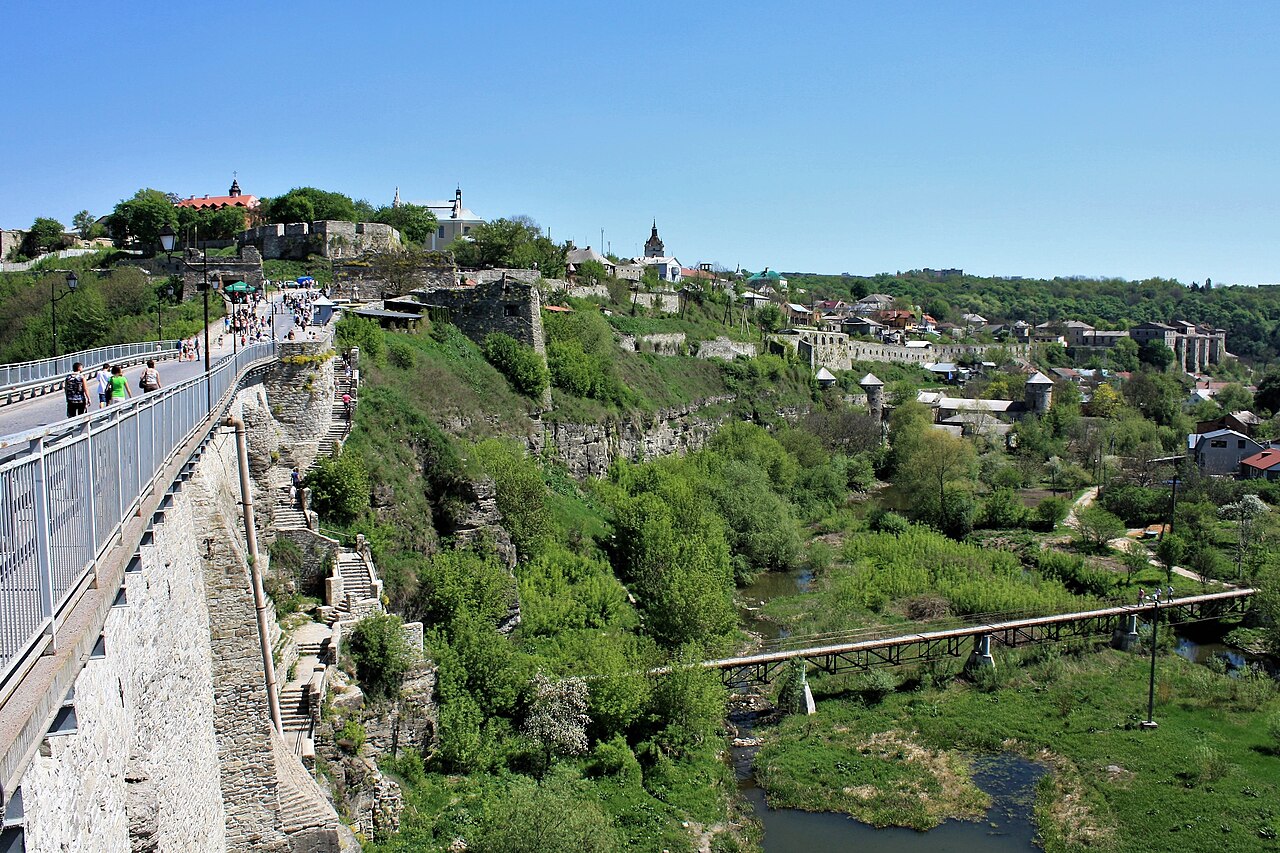
A historic town on the Smotrych river, whose old town stands inside a loop of the river's deep canyon. Its name means 'the stone of Podillia', and it was first mentioned in 1062.
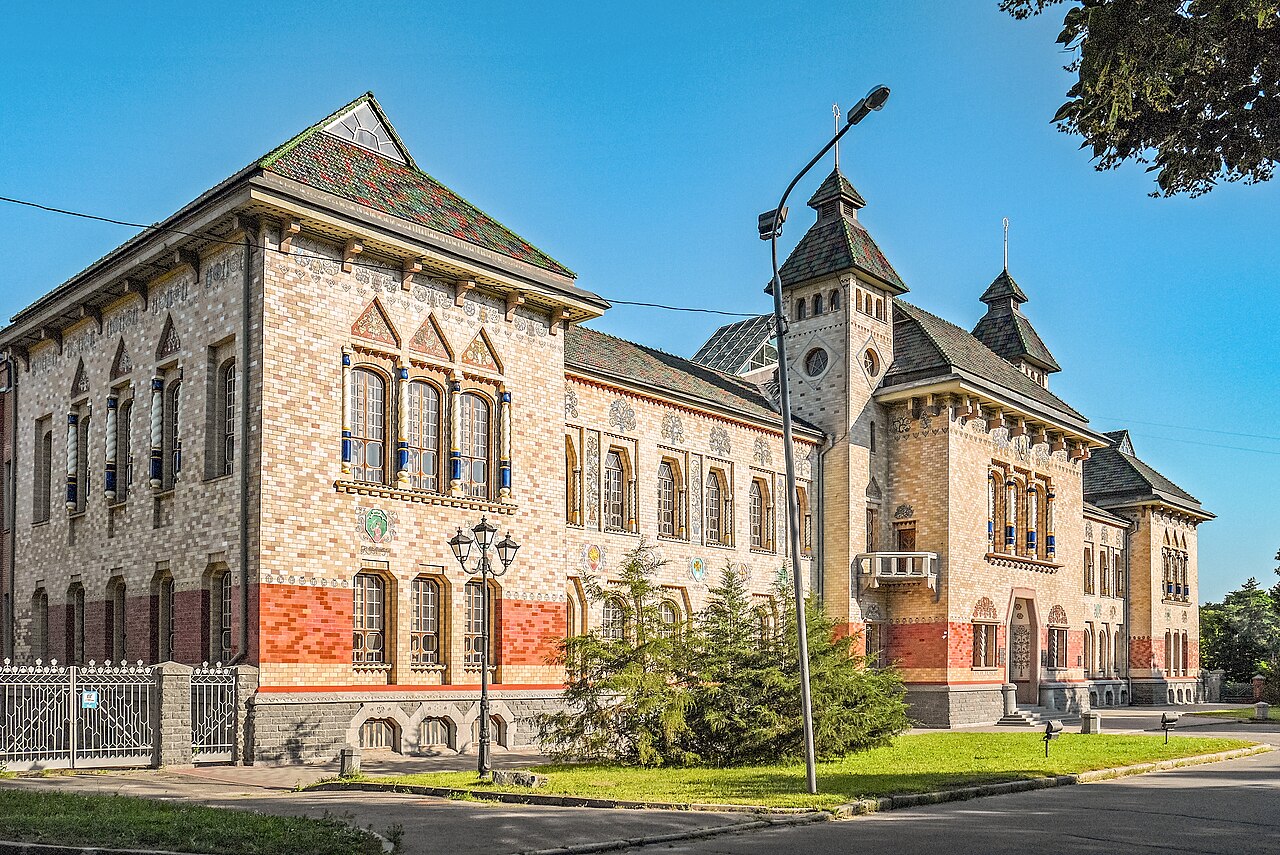
A green city on the Vorskla river in central Ukraine. In 1709 the Battle of Poltava was fought nearby, and later the city became a centre of the Ukrainian national revival.
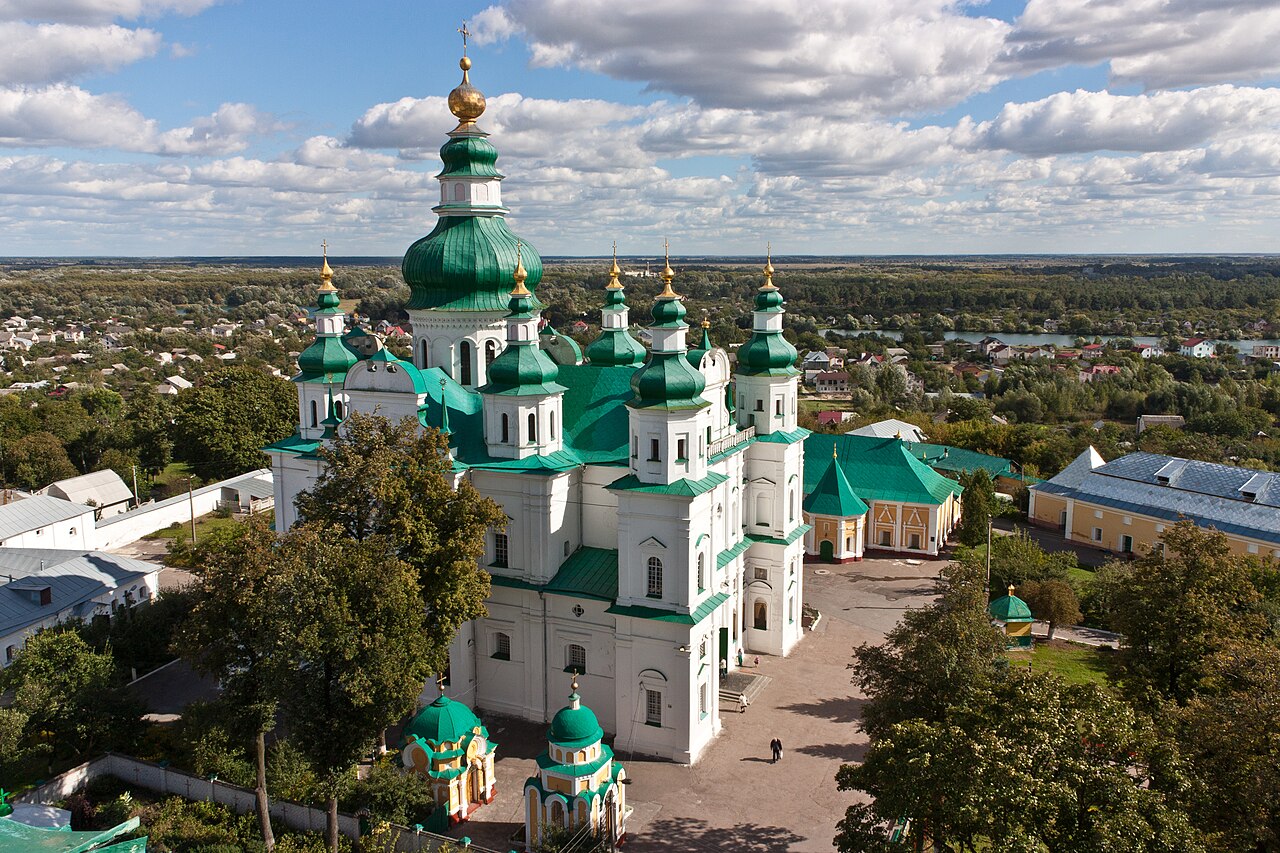
One of the oldest cities in Ukraine, in the north. In the time of Rus' it was the second most important city after Kyiv, and it still has churches from that era.
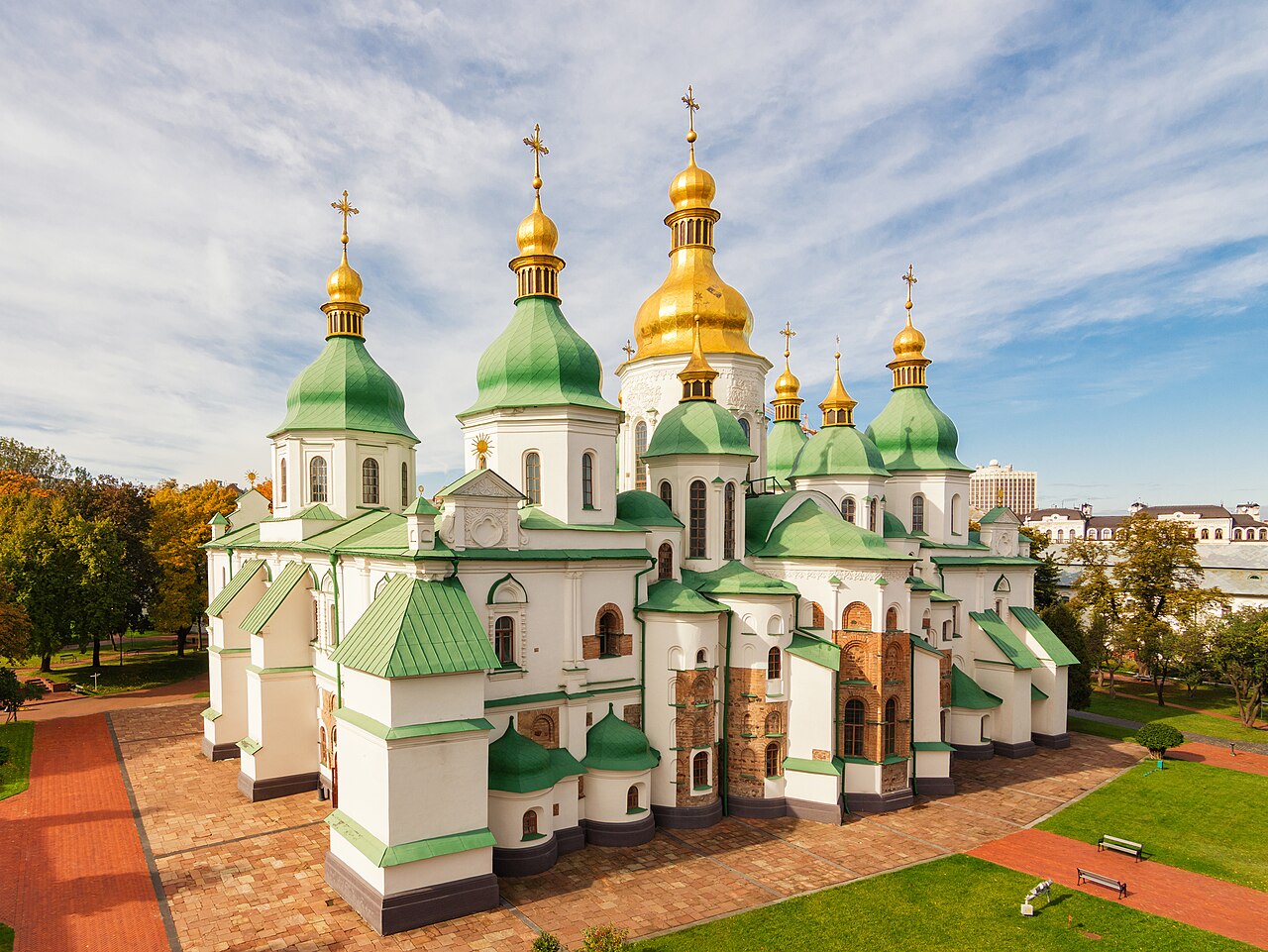
A cathedral of Kyivan Rus' from the early 11th century. By tradition it was built under Yaroslav the Wise, but its founding date is disputed, and UNESCO and Ukraine use 1011, in the reign of his father Volodymyr. Inside are mosaics and frescoes about a thousand years old. It was Ukraine's first World Heritage Site, listed in 1990 together with the Pechersk Lavra.
UNESCO World Heritage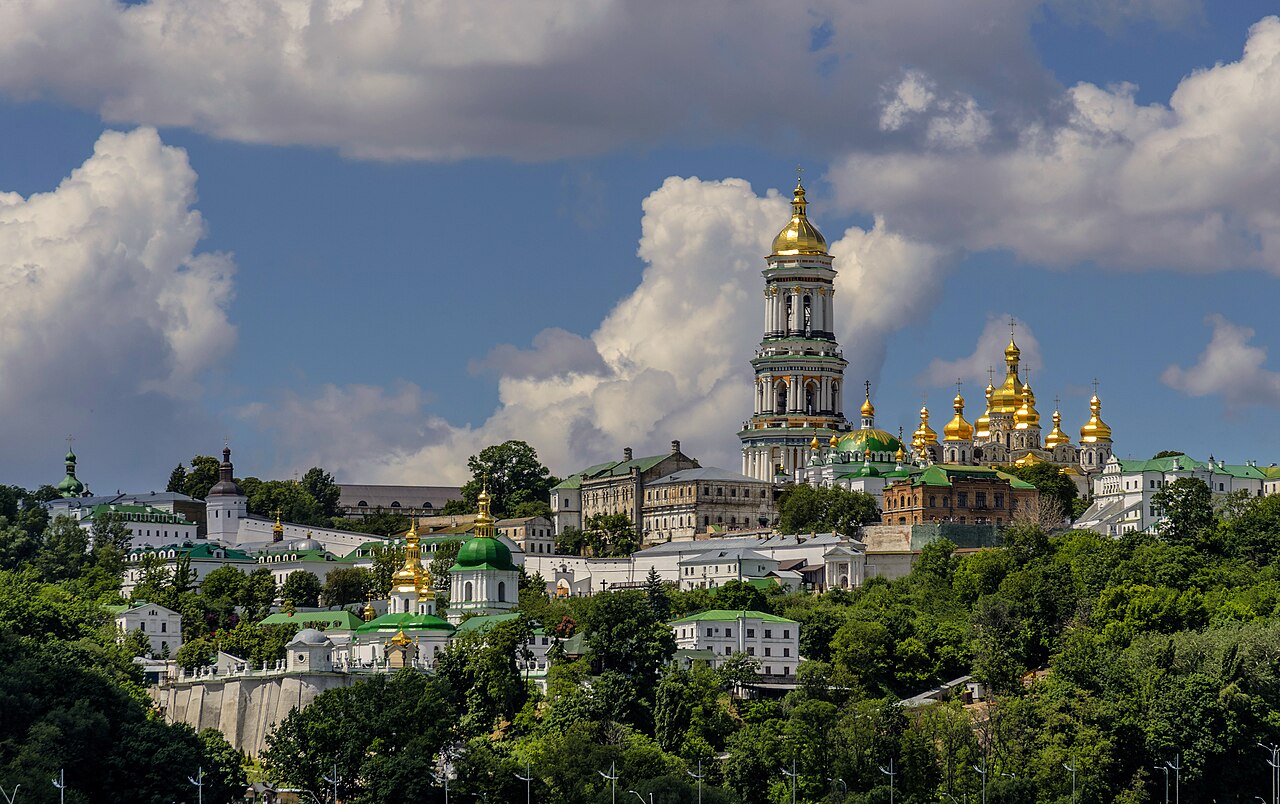
A great monastery founded as a cave monastery in the 11th century. Its name means 'monastery of the caves', and it includes caves where saints were buried. Its printing house helped bring printing to Ukraine.
UNESCO World Heritage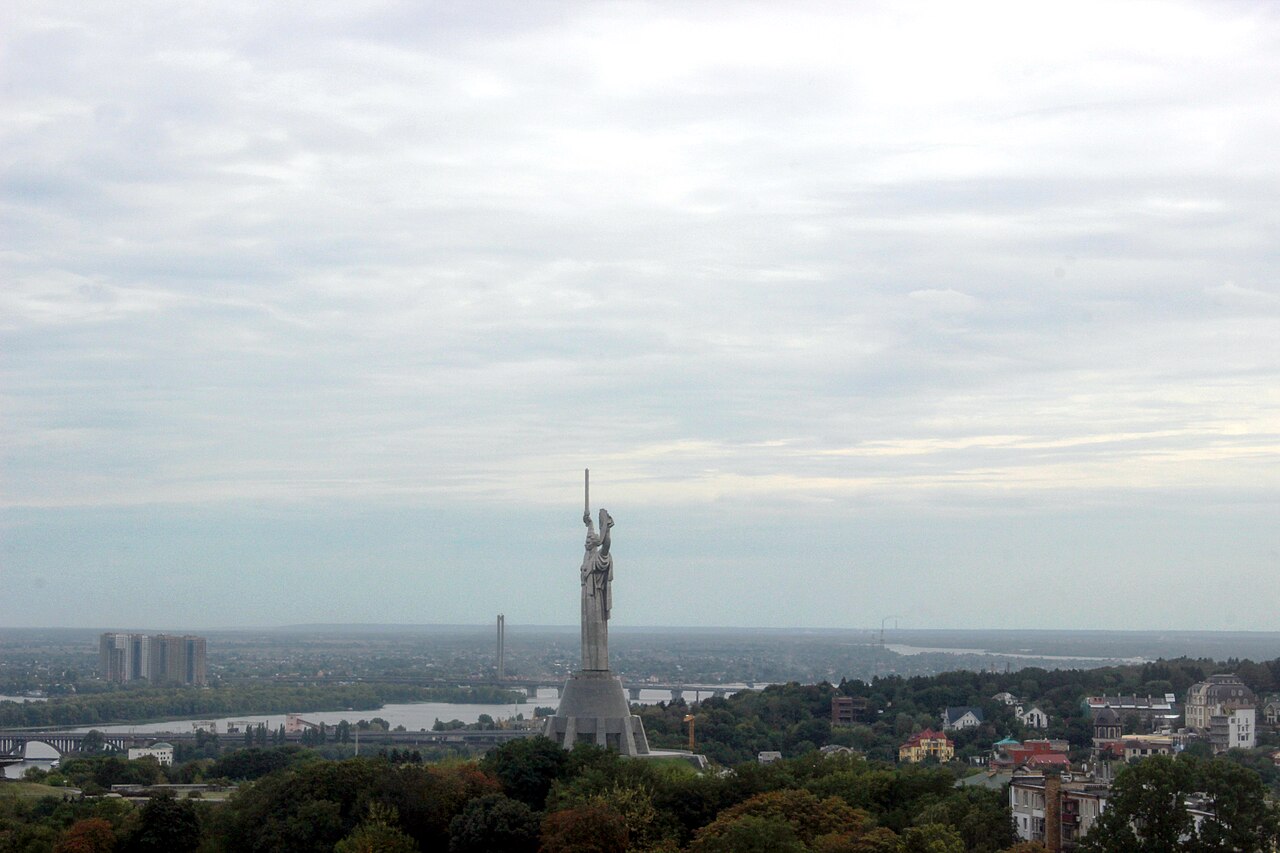
A stainless steel statue of a woman with a sword and shield, opened in 1981. The figure is 62 metres tall and the whole monument 102 metres, with a museum of the Second World War in its base. In 2023 the Soviet emblem on the shield was replaced with Ukraine's trident.
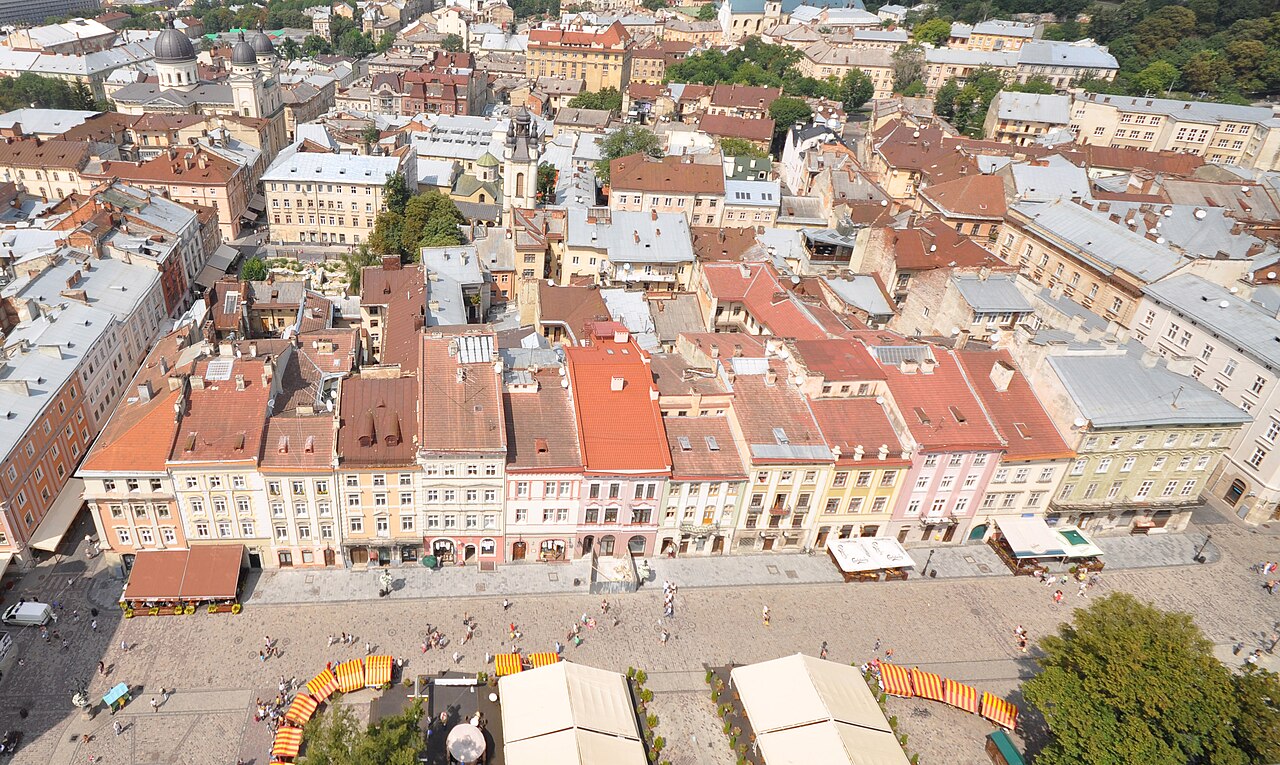
The heart of Lviv, a medieval street plan full of churches, merchants' houses and the town hall around Market Square. It has been a World Heritage Site since 1998.
UNESCO World Heritage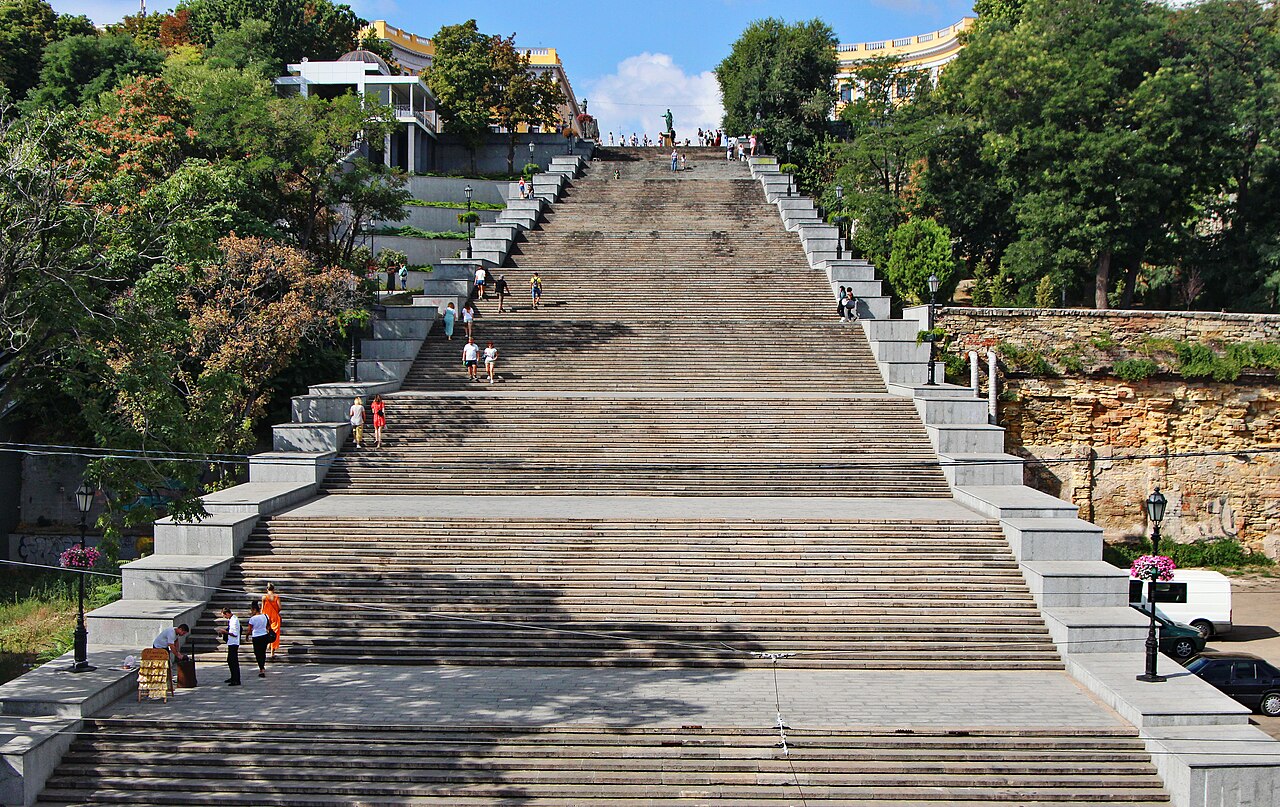
A giant stairway built between 1837 and 1841, leading from the city down towards the harbour. It is 142 metres long and wider at the bottom than at the top, which makes it look even longer from below. It is part of the Historic Centre of Odesa World Heritage Site.
UNESCO World Heritage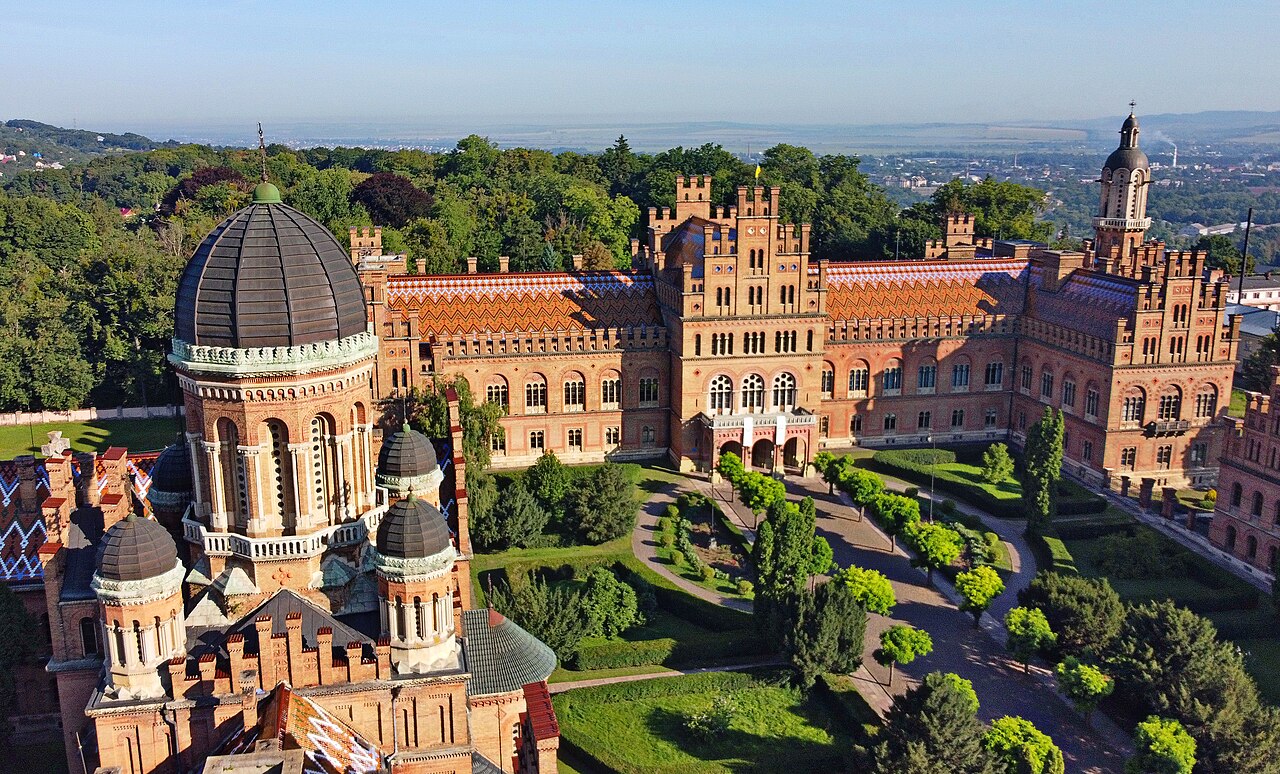
A grand complex built between 1864 and 1882 for the Orthodox metropolitan bishop, designed by the Czech architect Josef Hlávka. Today it is part of Chernivtsi University, and it became a World Heritage Site in 2011.
UNESCO World Heritage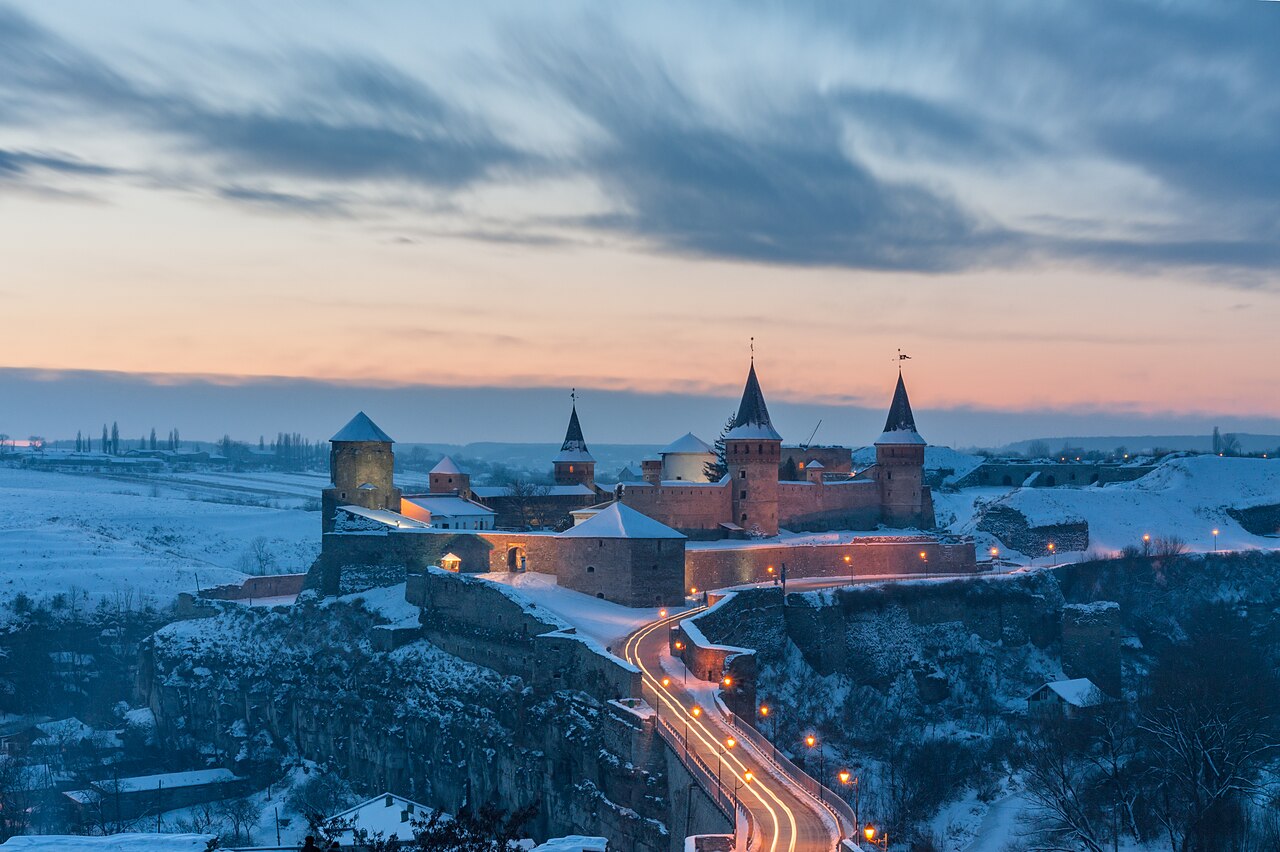
A castle on a rocky peninsula carved out by the winding Smotrych river. It guarded the bridge to the old town and was rebuilt many times by different rulers from the 14th century on.
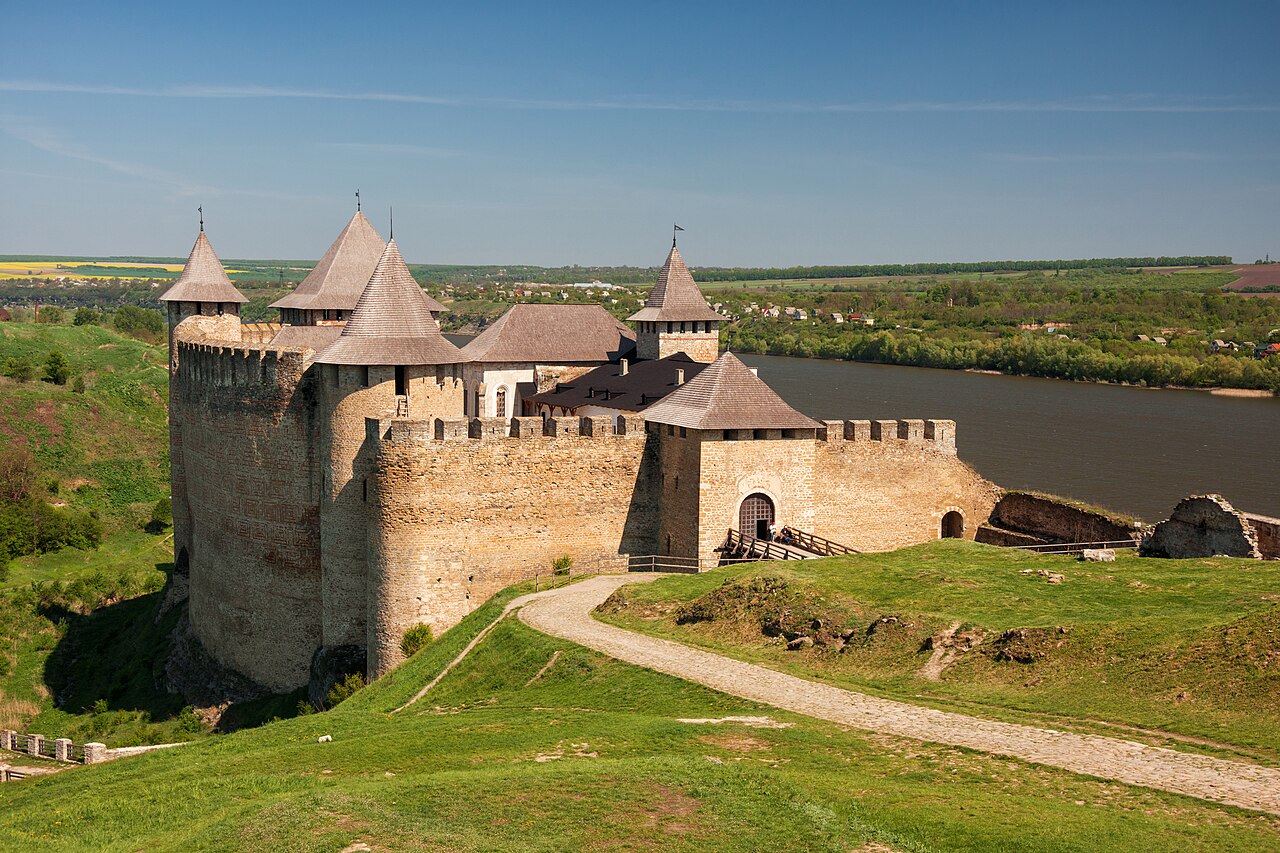
A stone fortress on the right bank of the Dniester river. A fort stood here in the time of Kyivan Rus', and the stone fortress was built and strengthened by Moldavian princes from the late 14th century.
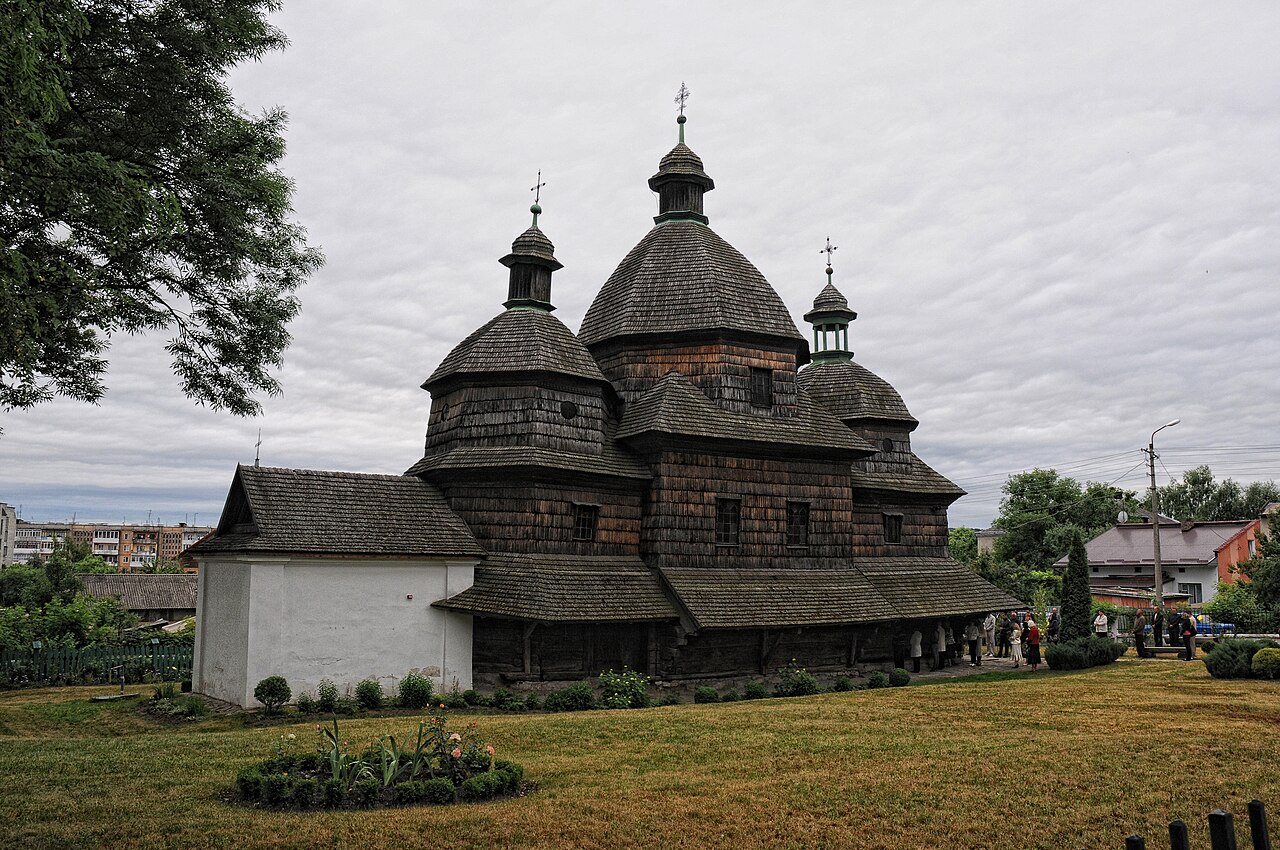
A church built of wooden logs in the small town of Zhovkva, north of Lviv. It is one of 16 wooden churches in Poland and Ukraine, eight in each country, that became a joint World Heritage Site in 2013.
UNESCO World Heritage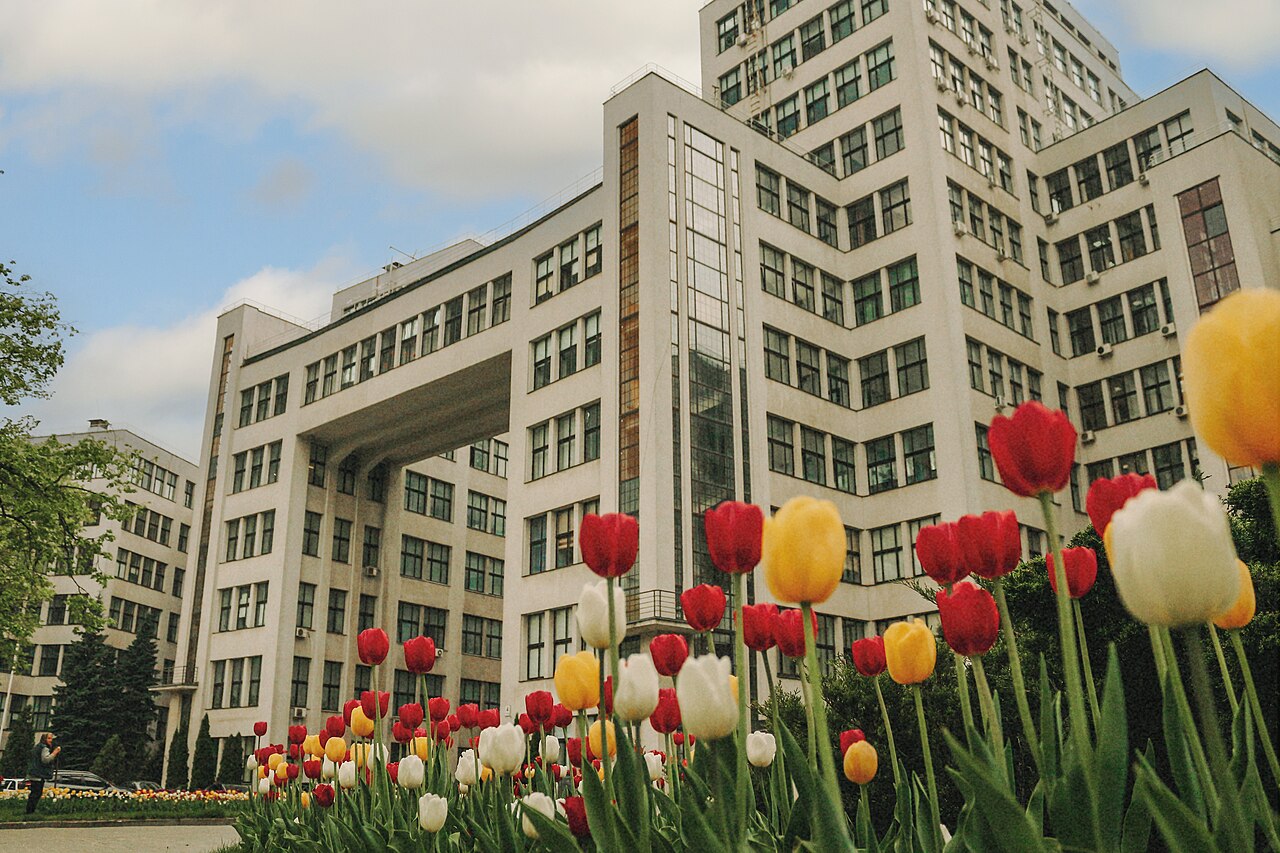
A huge Constructivist office building on Freedom Square, opened in 1928 as the first modern skyscraper of the Soviet Union, when Kharkiv was the capital of Soviet Ukraine. It was seriously damaged by a Russian strike in October 2024.
The Christmas song 'Carol of the Bells' is based on 'Shchedryk', a Ukrainian New Year folk song arranged by the composer Mykola Leontovych. Ukraine's national chorus sang it at Carnegie Hall in New York on 5 October 1922.
As of 2026, Arsenalna station on the Kyiv Metro, 105.5 metres below ground, is the second-deepest metro station in the world. It lost first place to Hongyancun station in Chongqing, China, which opened in 2022.
Igor Sikorsky, the helicopter pioneer, was born in Kyiv in 1889. In 1939, in the United States, he designed and flew the VS-300, the first viable American helicopter.
The Ukrainian Antonov An-225 Mriya was the heaviest aircraft ever built. Only one was ever completed, and it was destroyed at Antonov Airport near Kyiv in February 2022.
Ukrainian decorated Easter eggs, called pysanky, were added to UNESCO's list of intangible cultural heritage in 2024.
Petrykivka painting, a traditional decorative folk painting style from the village of Petrykivka in the Dnipropetrovsk region, has been on UNESCO's intangible heritage list since 2013.
The Ukrainian alphabet is written in Cyrillic and has 33 letters. It includes letters such as ї, є, і and ґ that the Russian alphabet does not have.
The spelling 'Kyiv' comes from the Ukrainian name Київ, while the older English spelling 'Kiev' comes from Russian. An online campaign, KyivNotKiev, has persuaded many English-language media and organisations to use 'Kyiv'.
Vyshyvanka Day, when people wear the embroidered Ukrainian shirt, is held on the third Thursday of May. It was started in 2006 by a student at Chernivtsi University.
The bandura, a Ukrainian plucked-string folk instrument, had 5 to 12 strings around 1700. Modern concert banduras have 56 to 68 strings.
Ukraine's national anthem, known by its first words 'Ukraine's glory has not yet perished', has words written by Pavlo Chubynskyi in 1862 and music by Mykhailo Verbytskyi from 1863.
Three Ukrainian World Heritage Sites, in Kyiv, Lviv and Odesa, were placed on UNESCO's List of World Heritage in Danger in 2023 because of the war.
Ukraine is one of the world's biggest grain exporters. In the 2020/21 season it supplied about 9% of all the wheat traded in the world, which is why it is often called the breadbasket of Europe.
Pronunciation is written the way it sounds; the capital letters show where the stress goes. Audio is coming soon.
As of September 2026, the UK Foreign Office advises against all travel to most of Ukraine, and against all but essential travel to the western regions of Lviv, Zakarpattia, Ivano-Frankivsk, Ternopil and Chernivtsi and parts of Volyn, Rivne and Zhytomyr. Travelling against this advice can make travel insurance invalid, so read your own government's latest advice before any trip.
Martial law is in force throughout Ukraine, and missile and drone attacks can happen anywhere, including in the west. Find your nearest shelter in advance, take shelter as soon as an air alert sounds, and follow local officials. Apps such as 'Air Alert' send warnings to your phone.
As of September 2026, Ukraine's airspace is closed to passenger flights. Trains still run into Ukraine from Poland, Hungary, Slovakia, Moldova and Austria, and there can be long queues at road border crossings.
Keep your passport with you at all times, as the police may ask to see it. You also need it to change large sums of money.
The currency is the hryvnia. Cards are widely used in cities, but ATMs may run out of cash and card machines may not work during power cuts, so carry some cash. Change money only at official exchange booths and keep the receipt.
In Ukraine, call 101 for the fire service, 102 for the police and 103 for an ambulance. If you see an unexploded weapon, do not touch it or go near it, and report it on 101.
Do not take photographs near government or military buildings. Rules and curfews can change at short notice, so follow the instructions of the Ukrainian authorities.
Tipping in restaurants is becoming more common. About 6 to 10% is normal, and simply rounding up the bill is fine too.