 Austria
 Czechia
 Hungary
 Poland
 Ukraine
The Romans at Trenčín
During the Marcomannic Wars, Roman soldiers of the Second Legion carved an inscription on the rock below today's Trenčín Castle, naming the place Laugaricio. It is still there.
A free large-print PDF. Choose what goes in: facts, map, history, dishes and recipes, phrases, fun facts, a quiz with or without answers. Made for clubs, care homes, libraries and family afternoons.
Slovakia is a landlocked country in Central Europe, bordered by Poland to the north, Ukraine to the east, Hungary to the south, Austria to the west and the Czech Republic to the north-west. The Carpathian Mountains fill most of its northern half, rising to the High Tatras, while the warm, flat Danubian Lowland in the south-west is farming and wine country. Forests cover more than 40% of the land.
Slavs settled here in the 5th and 6th centuries, and in the 9th century the land was part of Great Moravia, where the missionaries Cyril and Methodius taught in a Slavic language. For about nine centuries after that it belonged to the Kingdom of Hungary, and Bratislava, then called Pressburg, was the coronation city of Hungarian kings. In 1918 Slovaks and Czechs formed Czechoslovakia, which split peacefully into two countries on 1 January 1993.
Today Slovakia is a parliamentary republic of about 5.4 million people. It joined NATO and the European Union in 2004, the Schengen area in 2007 and the euro in 2009. As of 2023, it made more cars per person than any other country in the world.
Slovakia is a young state with a long past. Romans, Slavs, Great Moravia, the Kingdom of Hungary, the Habsburgs and Czechoslovakia all shaped the land before it became independent in 1993.
During the Marcomannic Wars, Roman soldiers of the Second Legion carved an inscription on the rock below today's Trenčín Castle, naming the place Laugaricio. It is still there.
According to the chronicler Fredegar, a Frankish merchant named Samo led the Slavs in a revolt against the Avars around 623 and became their king. His realm is often called the first Slavic state.
Prince Pribina of Nitra had a church built and consecrated around 828. It is the first Christian church known from written sources in present-day Slovakia.
At the request of Prince Rastislav of Great Moravia, the Byzantine brothers Cyril and Methodius came to teach in a Slavic language. They created the Glagolitic alphabet, the first used for Slavonic writing.
Hungarian armies defeated the Bavarians near today's Bratislava. Great Moravia broke up, and over the next two centuries the land was gradually absorbed into the Kingdom of Hungary, where it stayed until 1918.
With the Ottomans advancing, Pressburg (Bratislava) was made the capital of the Kingdom of Hungary. It stayed the capital until 1783, and most Hungarian parliaments from the 17th century to the 1840s met there.
Maximilian II was crowned King of Hungary in St Martin's Cathedral. Coronations were held there until 1830, including that of Maria Theresa.
Ľudovít Štúr and his friends agreed on a standard written Slovak based on the central Slovak dialects. With small changes, it is the Slovak written today.
As Austria-Hungary collapsed after the First World War, Czechs and Slovaks formed a common state, Czechoslovakia.
Under pressure from Nazi Germany, Slovakia broke away from Czecho-Slovakia and became a one-party state allied with Hitler, led by Jozef Tiso. In 1942 the regime itself deported about 57,000 Jews to Nazi camps in occupied Poland, and in all most of Slovakia's Jews were murdered.
On 29 August 1944, parts of the Slovak army and partisans rose against the German occupation and the Tiso regime, with Banská Bystrica as their centre. After 60 days of fighting the uprising was crushed, but resistance went on in the mountains.
The Slovak Alexander Dubček led Czechoslovakia's communist party and promised 'socialism with a human face'. In August, Warsaw Pact armies invaded and ended the reforms.
Peaceful mass protests brought an end to communist rule in Czechoslovakia.
On 1 January 1993, Czechoslovakia split peacefully into the Czech Republic and Slovakia, a separation often called the Velvet Divorce.
Slovakia joined NATO on 29 March 2004 and the European Union on 1 May 2004.
On 1 January 2009 Slovakia replaced the koruna with the euro, becoming the 16th member of the eurozone.
Slovak food grew out of village life in the mountains: potatoes, flour, cabbage, pork and above all sheep's milk cheese. The south adds Hungarian touches such as paprika and goulash, and the lowlands grow wine. Lunch is traditionally the main meal of the day and usually means a soup followed by a main course.
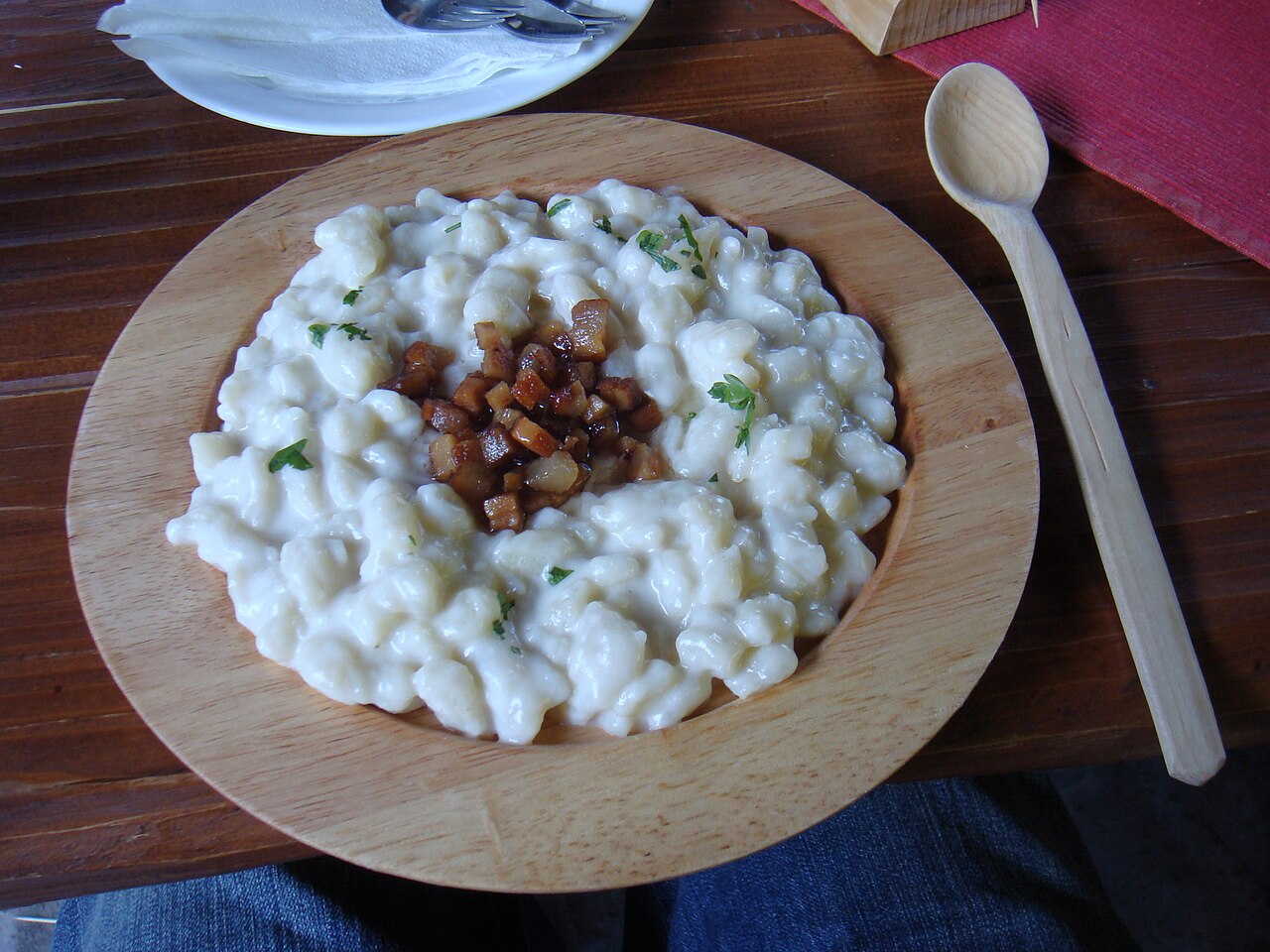
Small, soft boiled lumps of potato dough, tossed with bryndza, a soft and tangy sheep's cheese, and topped with crisp fried bacon. It is considered the national dish.
Slovak bryndza has been protected by the European Union as a geographical indication since 2008, and the village of Turecká holds a yearly halušky festival with an eating contest.
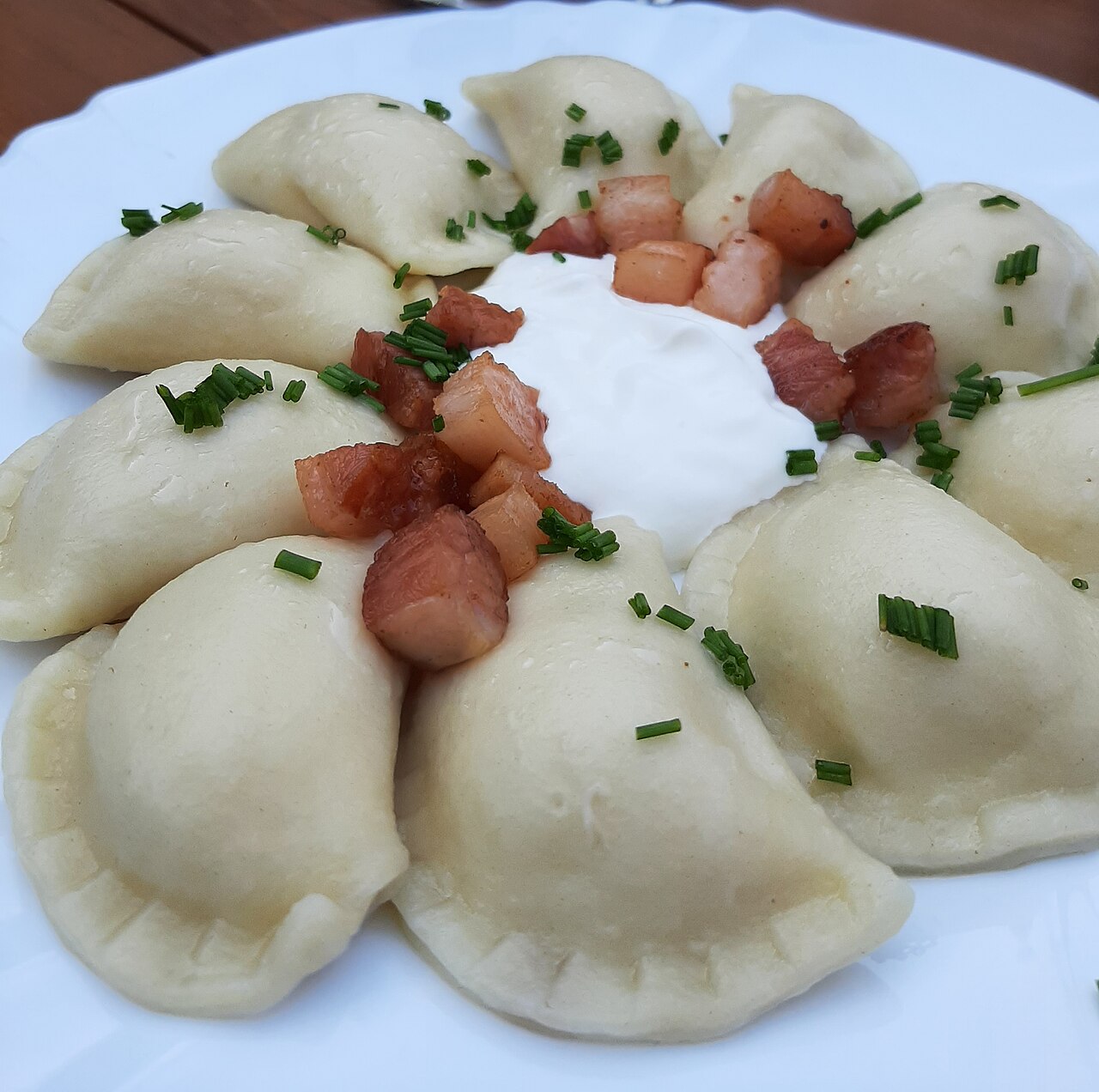
Half-moon dumplings filled with bryndza cheese mixed with mashed potato, served with more bryndza thinned with milk or sour cream, and topped with bacon or fried onion.
Together with bryndzové halušky, pirohy are counted among Slovakia's national dishes.
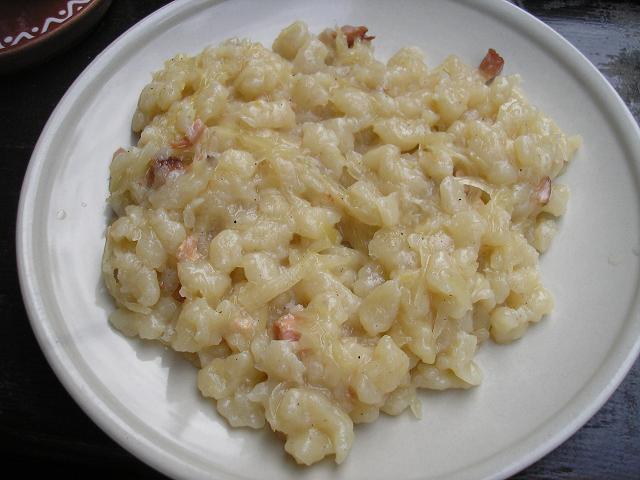
The same potato dumplings as halušky, but mixed with stewed sauerkraut instead of bryndza cheese.
In Hungary the same word, sztrapacska, is used for dumplings with sheep's cheese, so the names can confuse travellers.
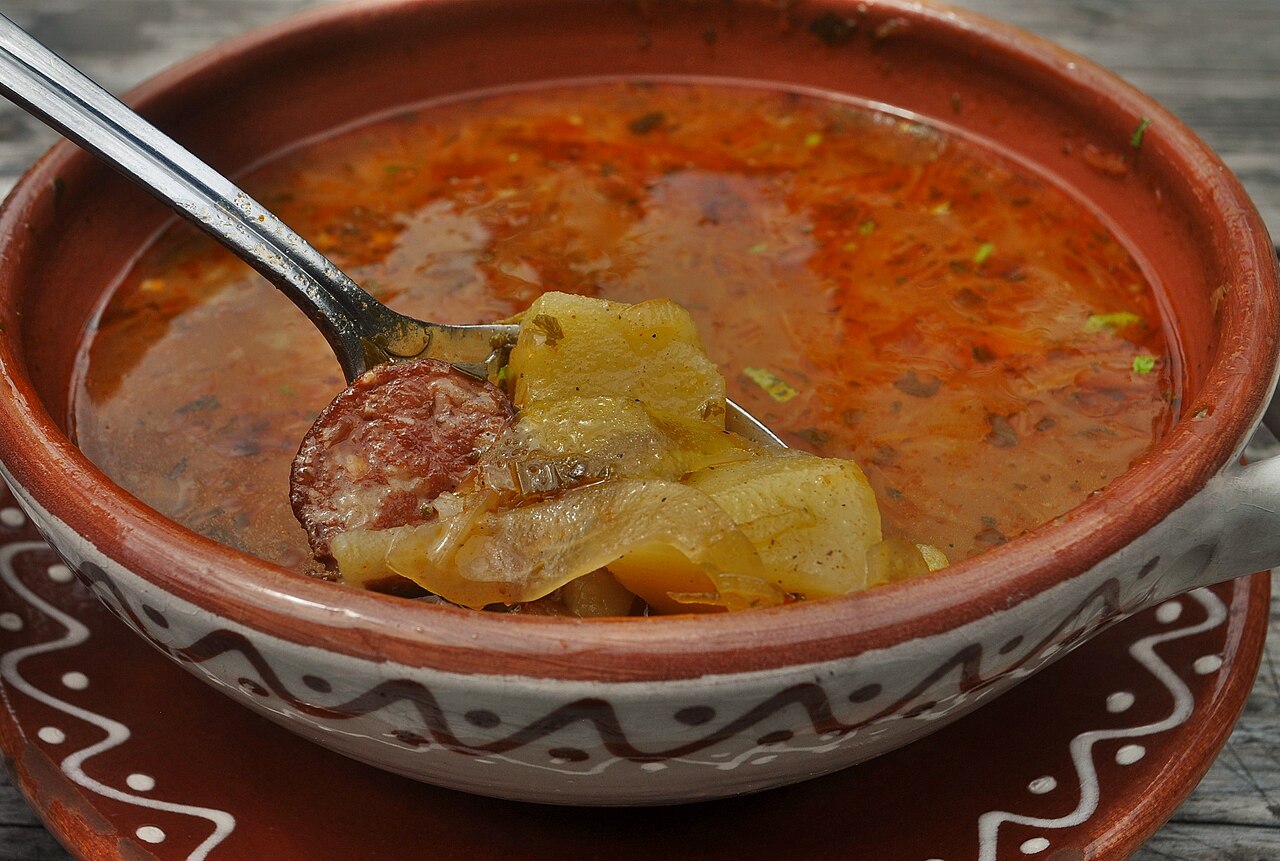
A thick, sour soup of fermented cabbage, usually with smoked meat, sausage and dried mushrooms. Every region, valley and village cooks it a little differently.
Catholic families traditionally make a meatless version for Christmas Eve, while the festive version is rich with smoked meat and sausage.
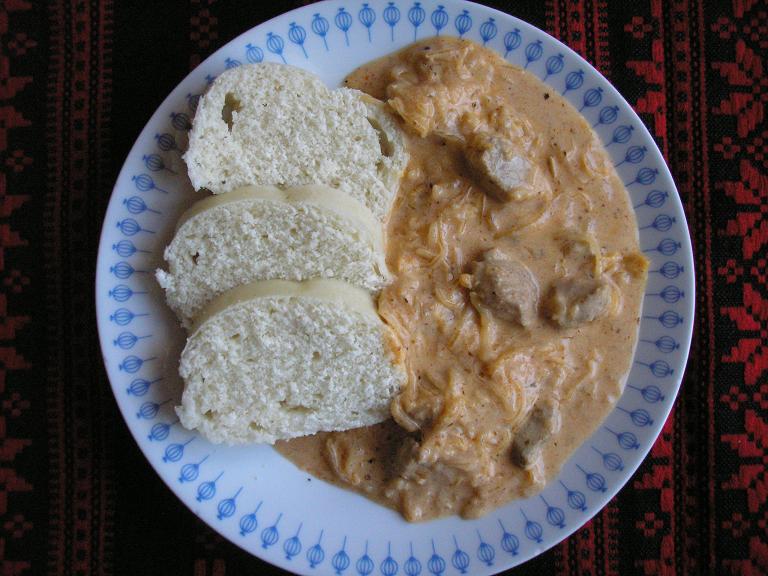
A stew of pork and sauerkraut finished with cream or sour cream, usually served with slices of steamed bread dumpling (knedľa).
Despite the name, it has nothing to do with the city of Szeged. It is also known as Székely goulash, which legend links to a 19th-century archivist named József Székely.
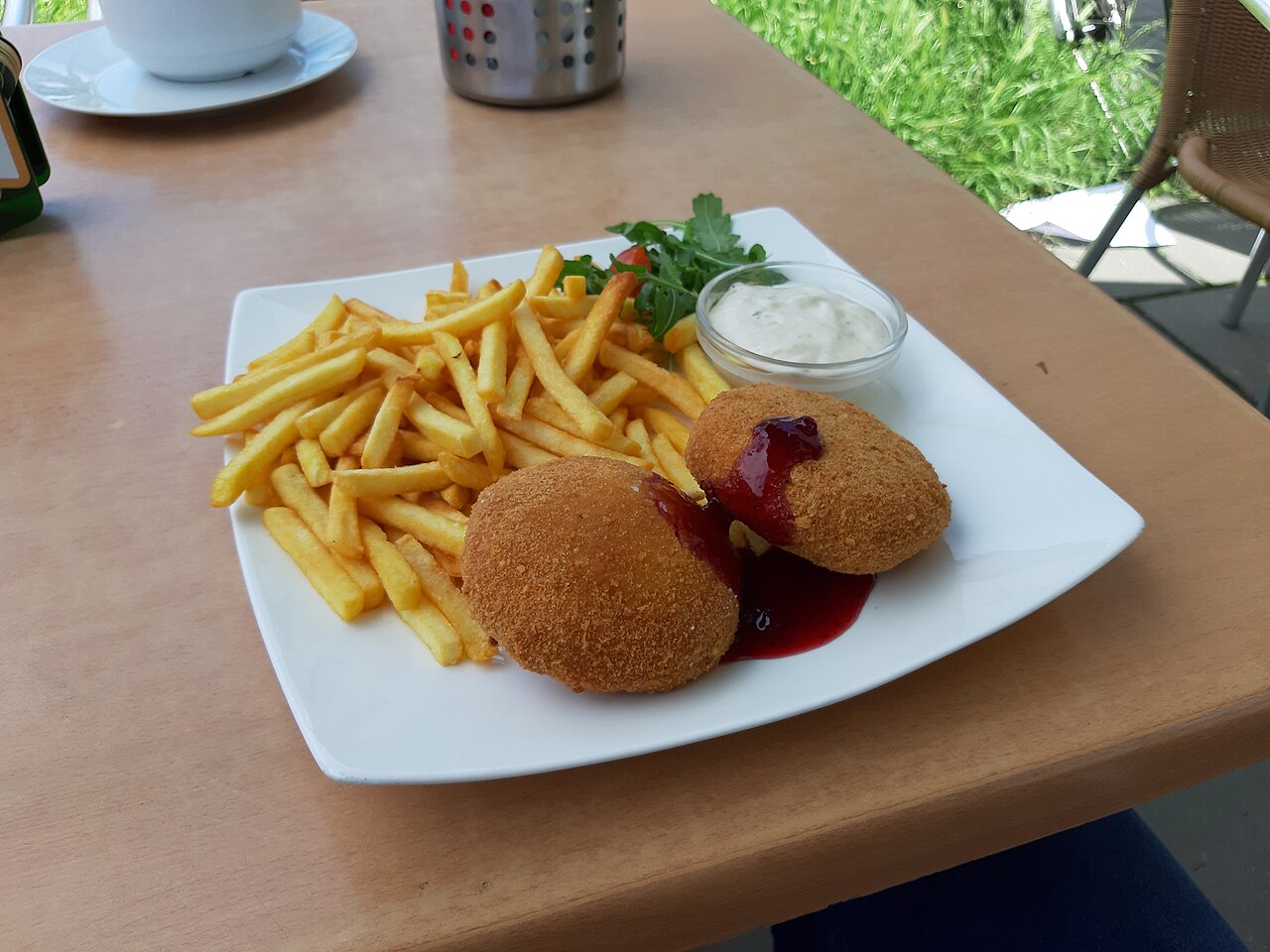
A thick slice of cheese dredged in flour, dipped in egg, coated in breadcrumbs and deep-fried until golden, with a soft, melting inside.
It is a common street food in both Slovakia and the Czech Republic.
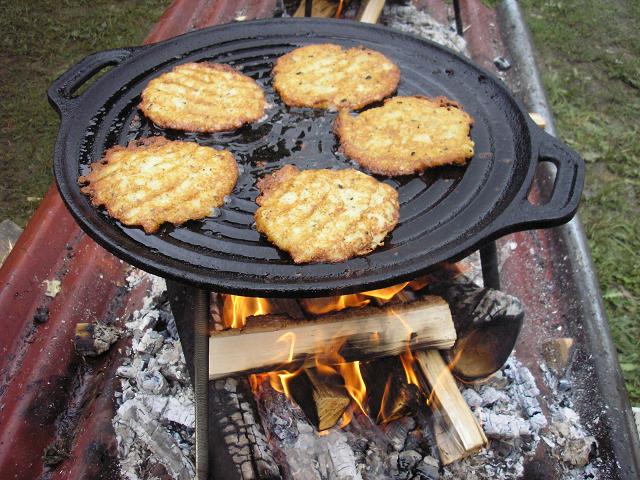
Pancakes of grated potato fried in oil until crisp and golden, eaten hot on their own or as a side dish.
In some regions they have their own names: haruľa in Horehronie and Kysuce, and baba or babka in Orava.
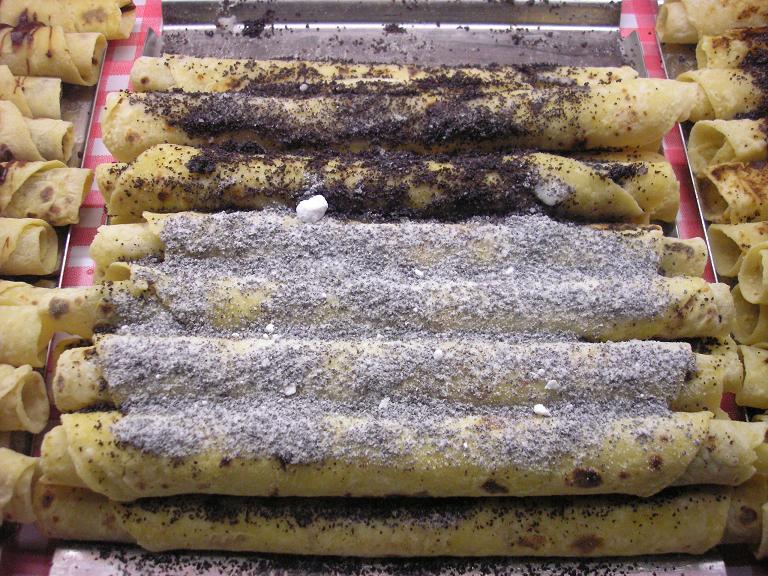
Thin flatbreads of cooked potato and flour baked dry on a hot plate. They are spread with goose fat, filled with sauerkraut or goose liver, or served with a goose feast.
The village of Slovenský Grob near Bratislava is famous for its goose feasts, served with lokše, stewed red cabbage and strudel.
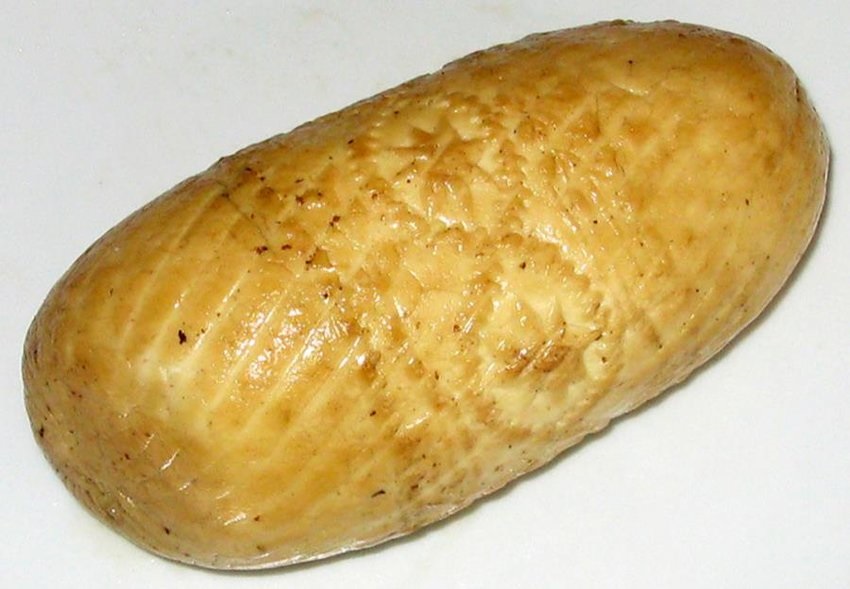
A traditional smoked cheese from Slovakia, firm and salty, with a golden smoked rind. It was first made from sheep's milk, and today cow's milk is often added.
Slovenský oštiepok is protected by the European Union. The Gorals of southern Poland make a similar cheese called oscypek.
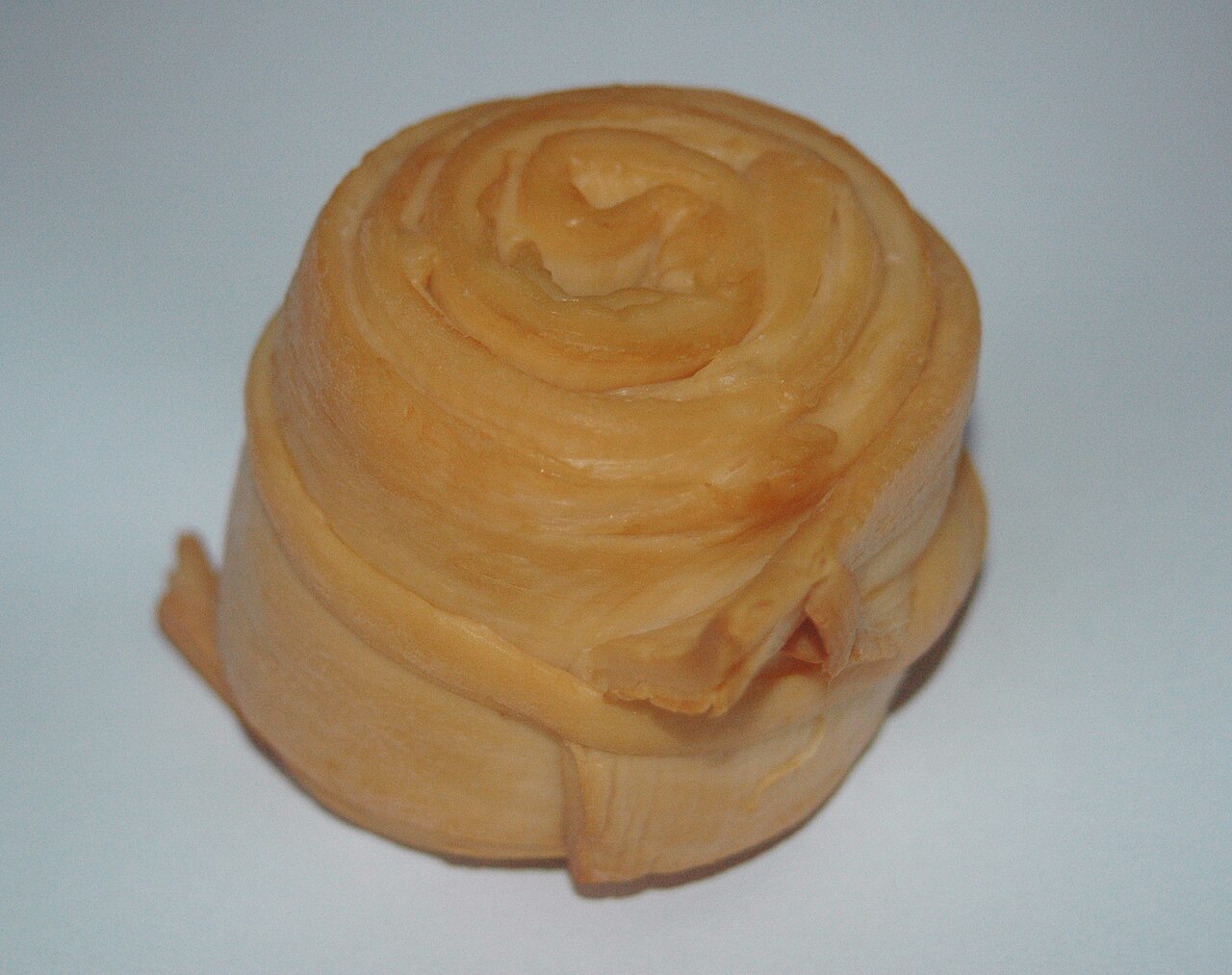
A mild, steamed cheese made in long strips and rolled into a snail-shaped spiral, usually lightly smoked. A typical roll weighs about 100 g.
Its name comes from the Slovak word for steaming. In the 1800s it was made from raw sheep's milk; today cow's milk is also used.
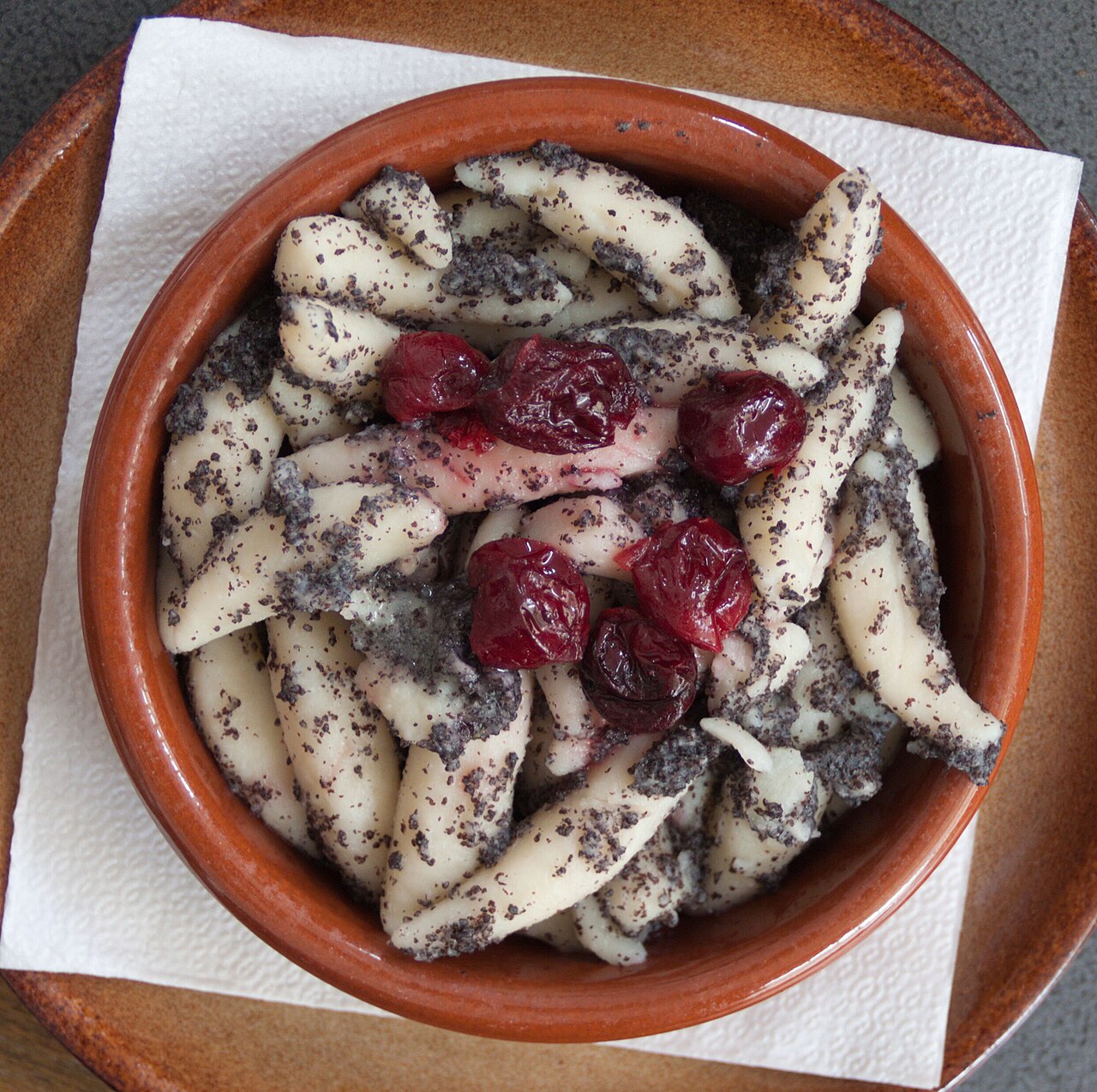
Little finger-shaped potato dumplings rolled by hand, boiled, then served with sugar or with ground poppy seeds.
The name comes from the Slovak verb šúľať, 'to roll', and Piešťany even held a šúľance-rolling competition in 2018.
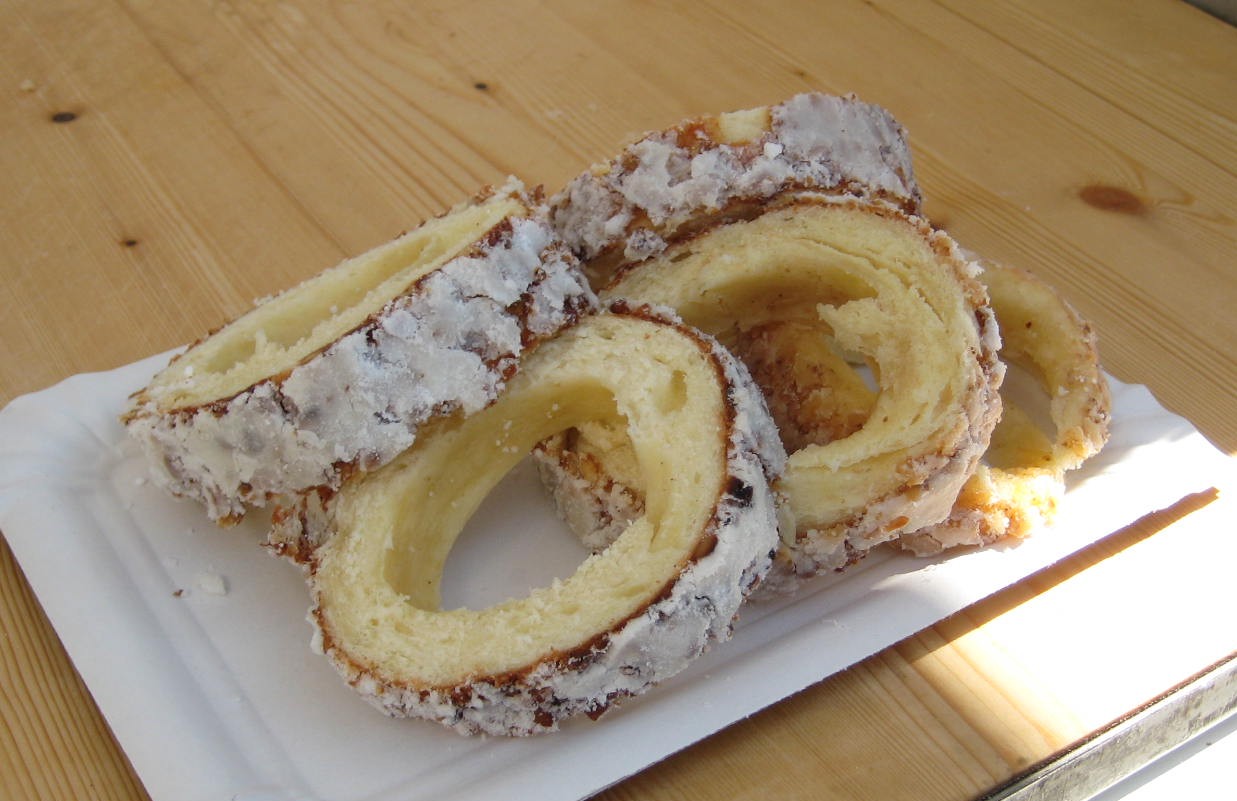
A hollow, tube-shaped cake of dough wrapped around a wooden roller, baked on a turning spit over an open fire and topped with sugar and walnuts.
Skalica's trdelník was registered as a protected geographical indication by the European Commission in December 2007. Local tradition says a retired general and poet, József Gvadányi, brought the recipe to the town in the late 18th century.
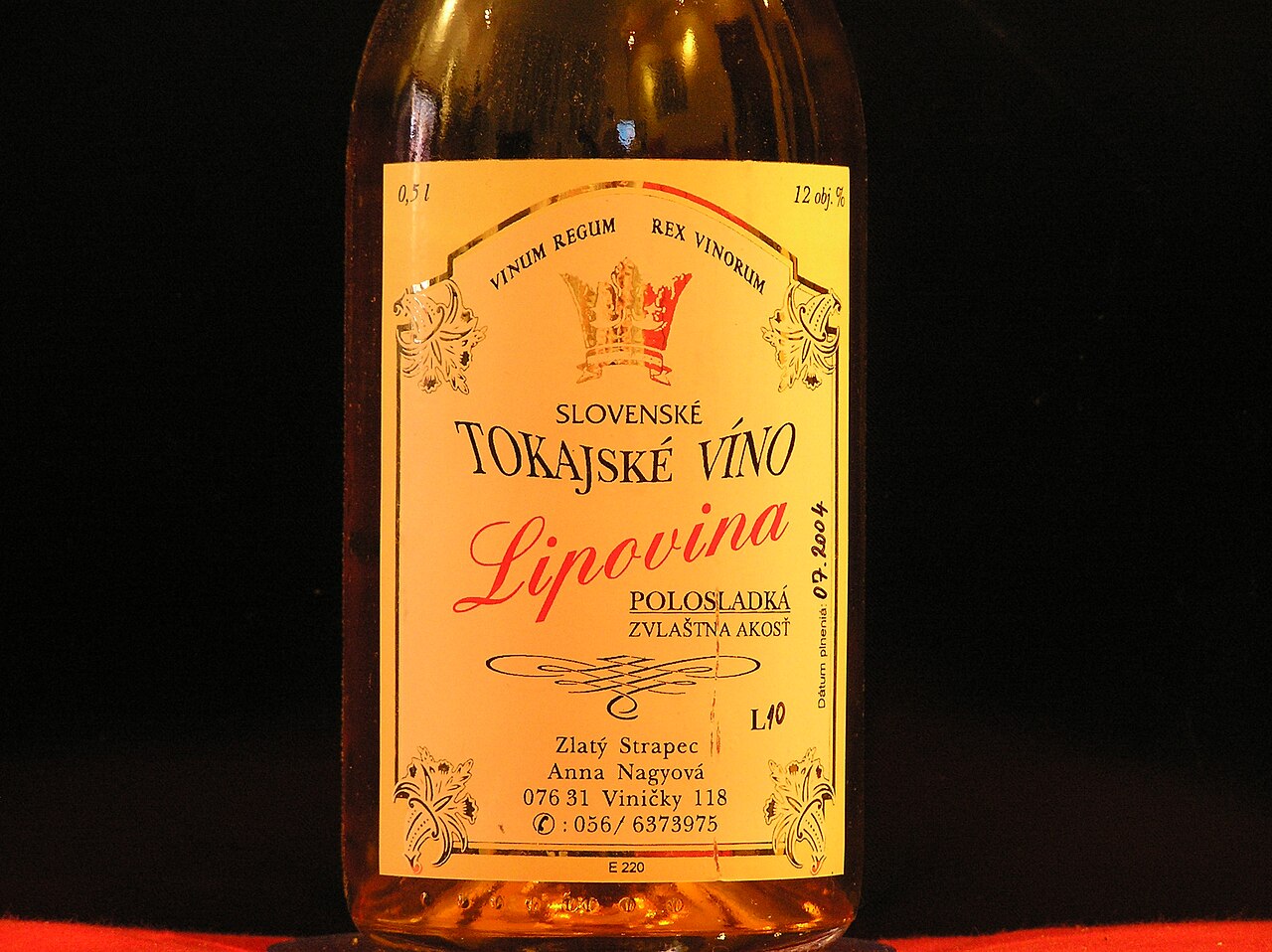
White wines, many of them naturally sweet, made from Furmint, Lipovina and Yellow Muscat grapes. The small Slovak part of the historic Tokaj region has about 908 hectares of vineyards.
Most of the Tokaj region lies in Hungary. After the borders changed in 1920 a smaller part ended up in Czechoslovakia, and under EU rules winemakers on both sides may use the Tokaj name.
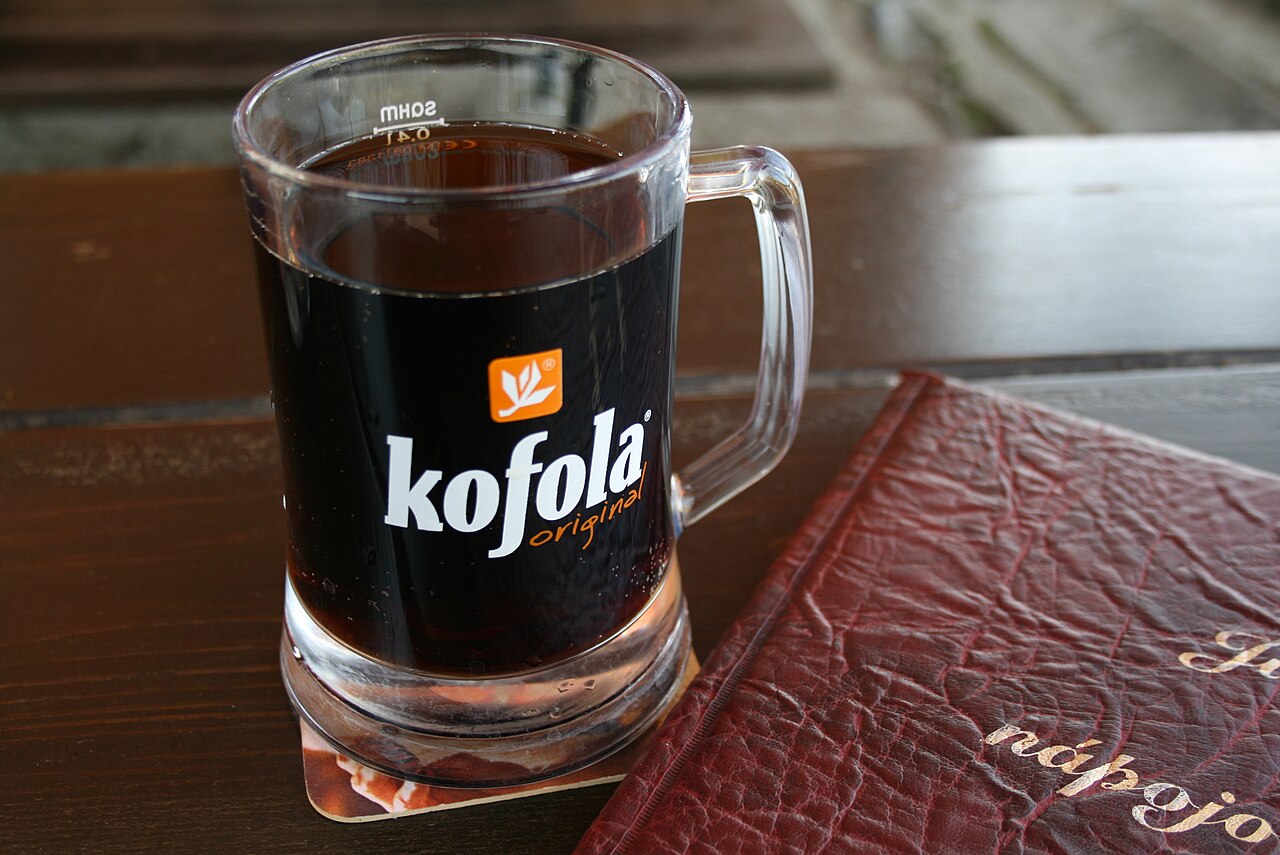
A dark, herbal cola made from a syrup of 14 herbal and fruit ingredients. It is often poured on draught in Slovak restaurants.
It was invented at a Czechoslovak research institute to use up surplus caffeine from coffee roasting, and it is still a major rival to Coca-Cola and Pepsi in Slovakia and the Czech Republic.
Slovakia's towns are small and full of history: Bratislava on the Danube in the far west, Košice in the east, old mining towns in the central mountains, and walled medieval towns in the north-east near the Polish border.
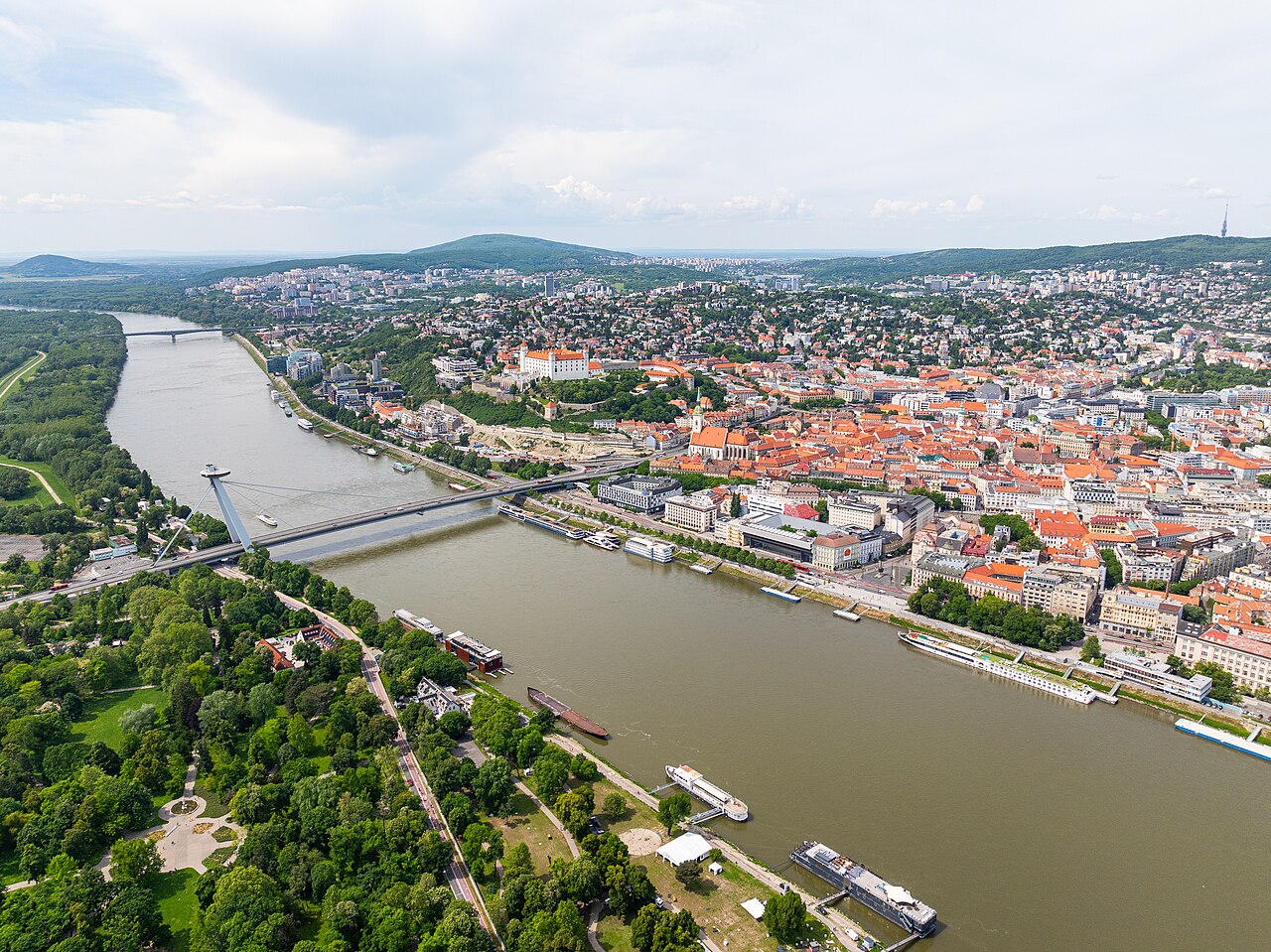
The capital and largest city, with about 479,000 people, on both banks of the Danube at the foot of the Little Carpathians. It lies on the borders with Austria and Hungary, and Vienna is only about 55 km away.
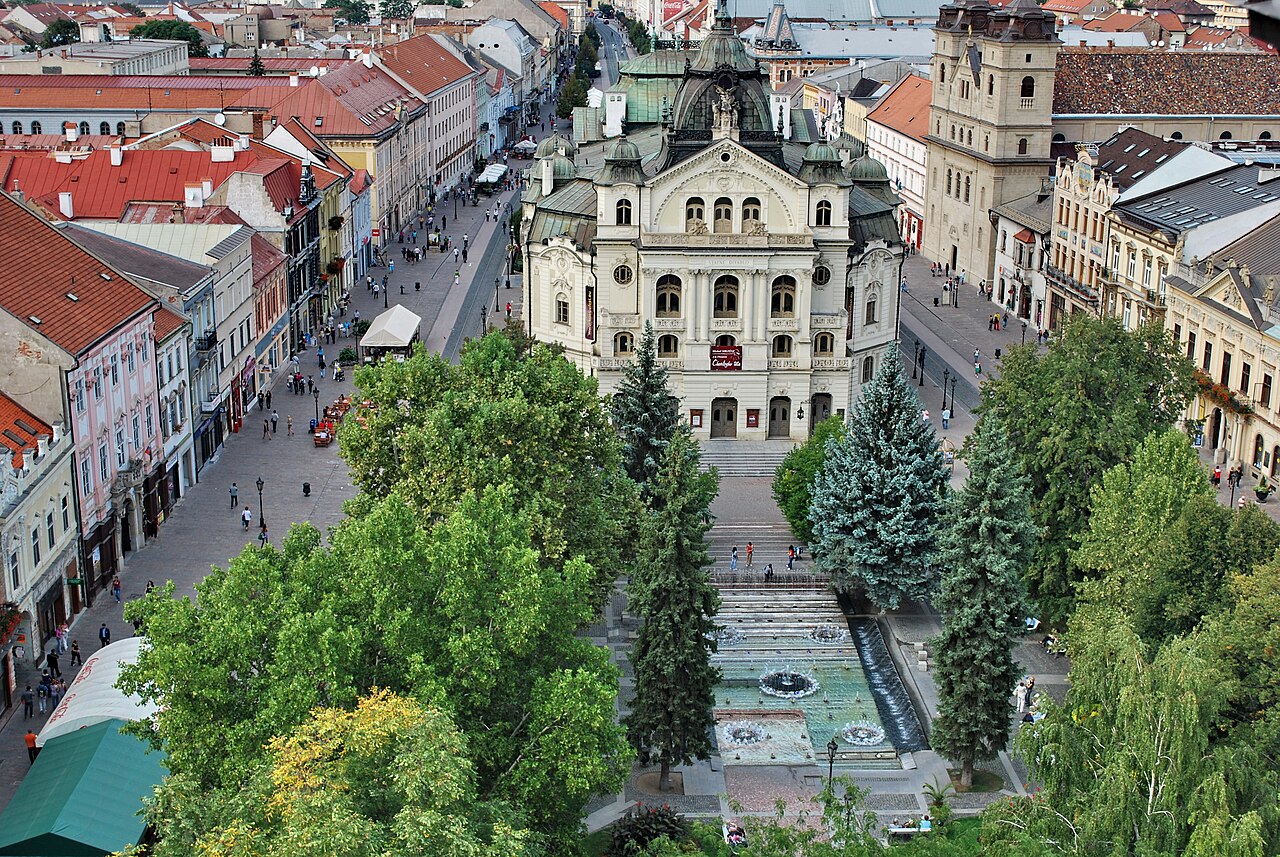
The second-largest city, with about 230,000 people, and the centre of eastern Slovakia. Its historic centre is the largest in the country, and in 2013 it was a European Capital of Culture.
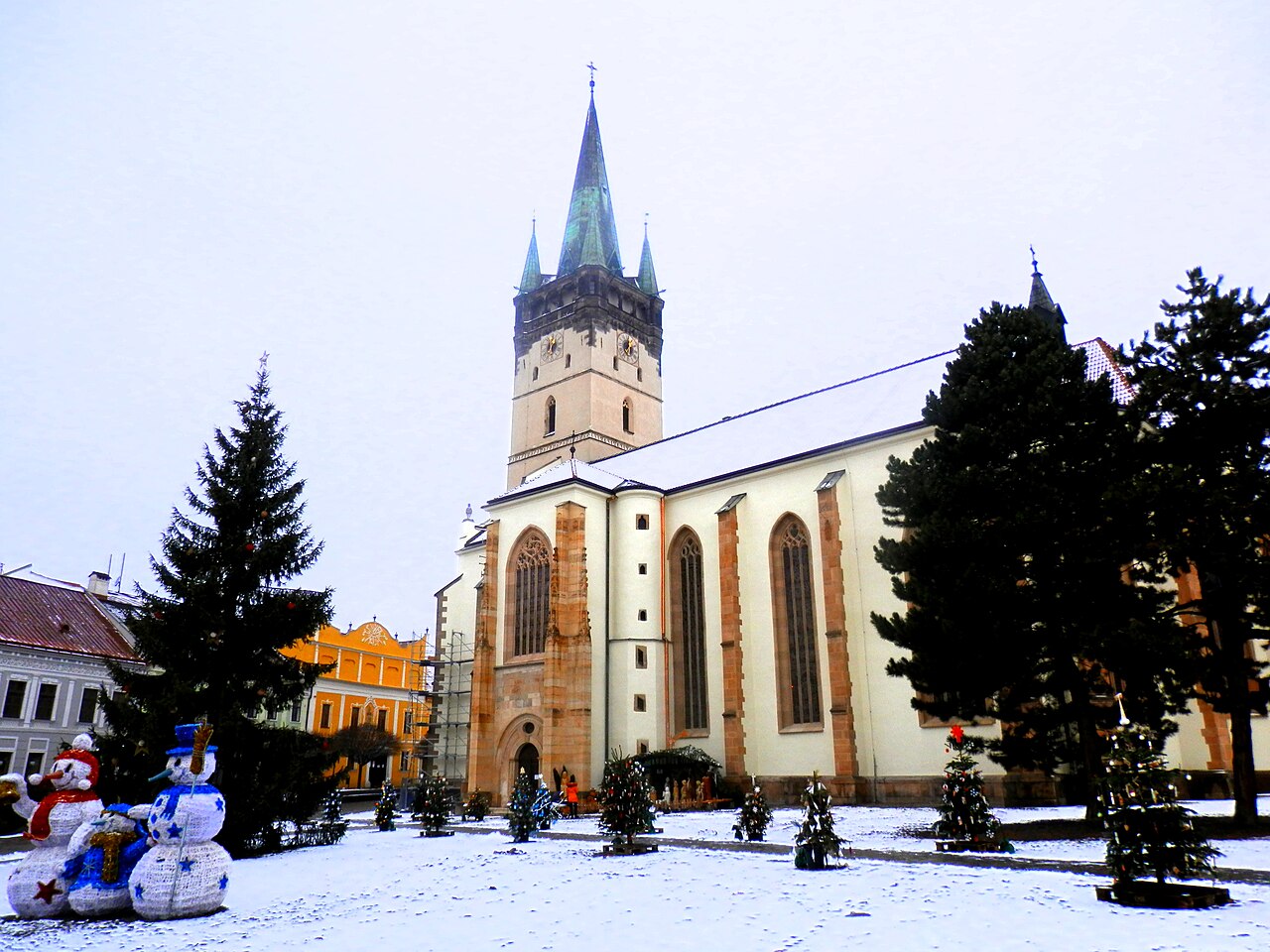
The third-largest city, with about 85,000 people, just north of Košice. Its old town is a showcase of Gothic, Baroque and Rococo buildings.
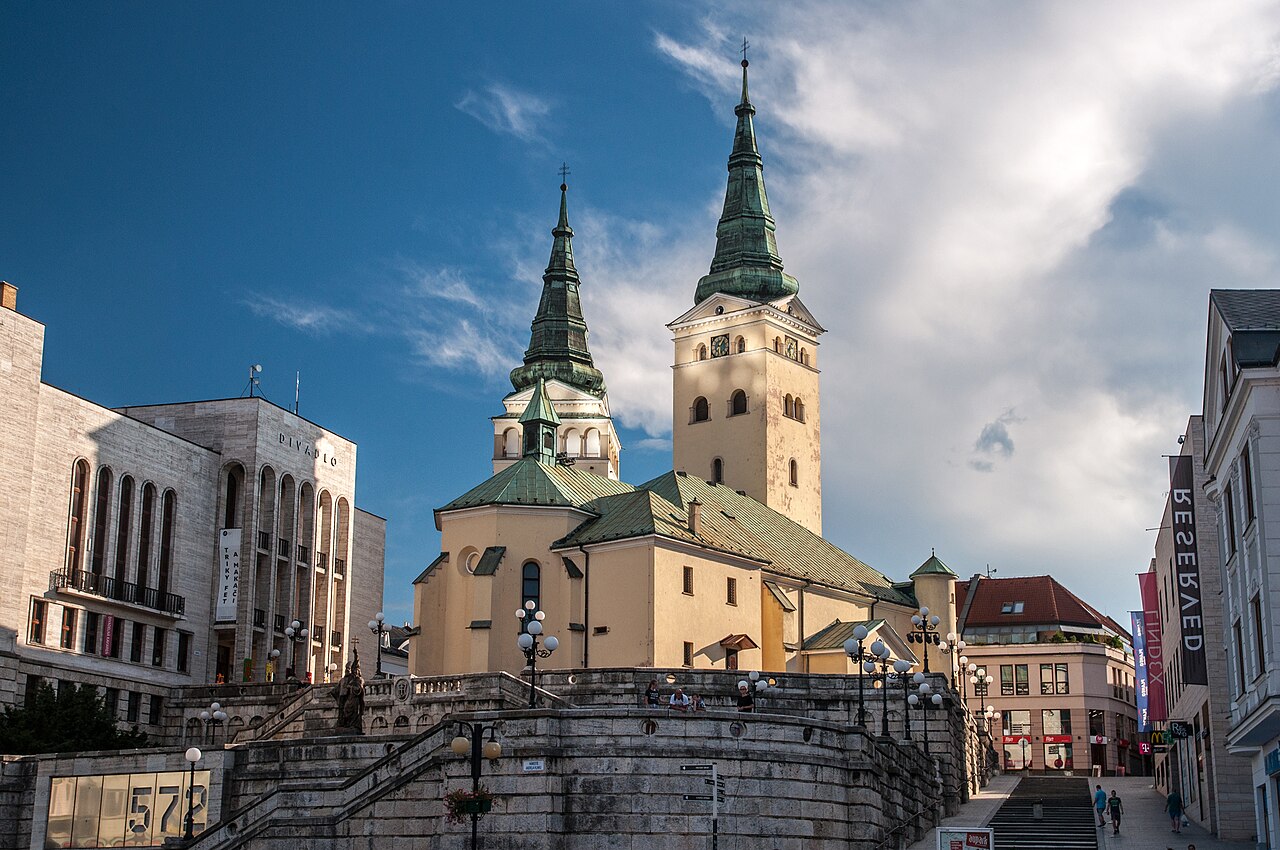
The fourth-largest city and the largest on the Váh river, in the north-west close to the Czech and Polish borders. It is a busy industrial town and a gateway to the Malá Fatra mountains.
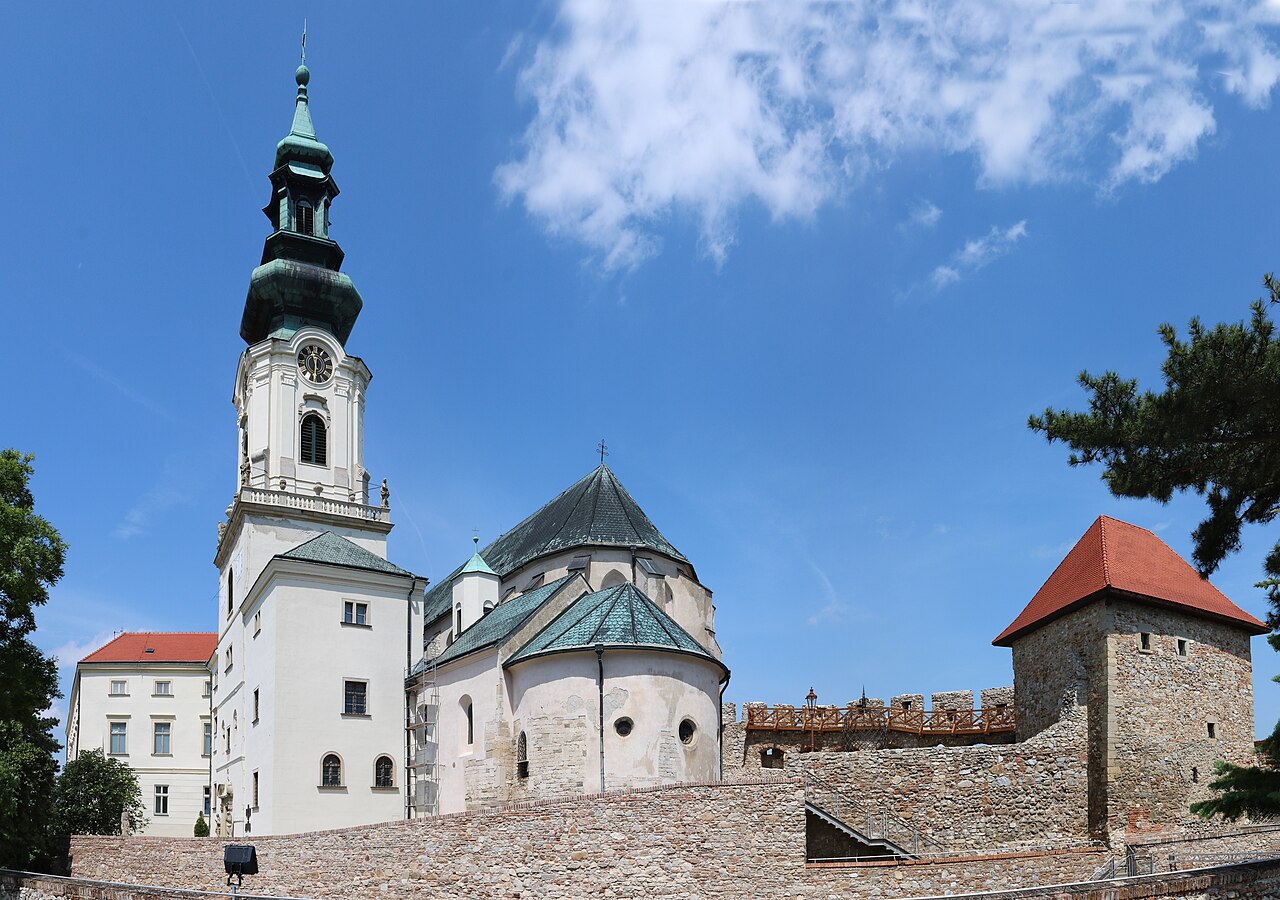
One of the oldest towns in Slovakia, below Zobor hill about 90 km north-east of Bratislava. In the 9th century it was the seat of the Principality of Nitra, and today it is the centre of Slovak farming.
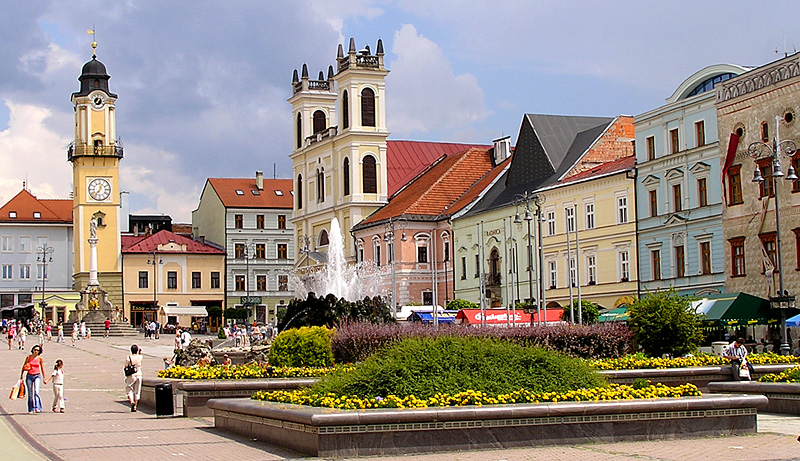
A handsome old copper-mining town on the Hron river, ringed by the Low Tatras, Veľká Fatra and Kremnica mountains. It was the centre of the Slovak National Uprising in 1944.
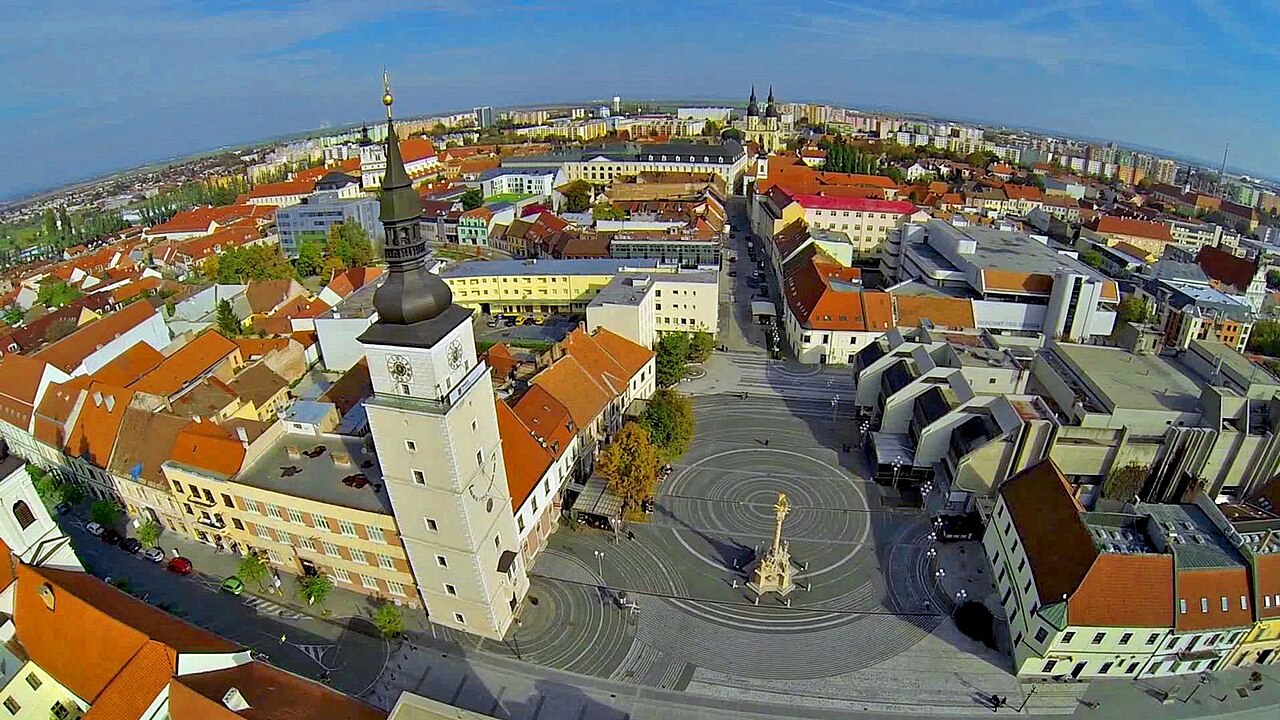
An old market and university town 47 km north-east of Bratislava. It has so many churches inside its walls that it is called 'Little Rome'.
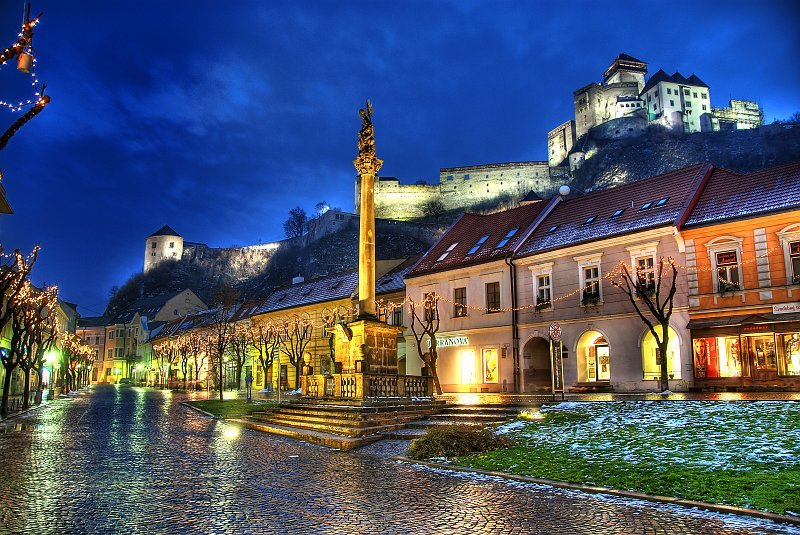
A town on the Váh near the Czech border, watched over by a great castle on a rock. It is a European Capital of Culture in 2026, together with Oulu in Finland.
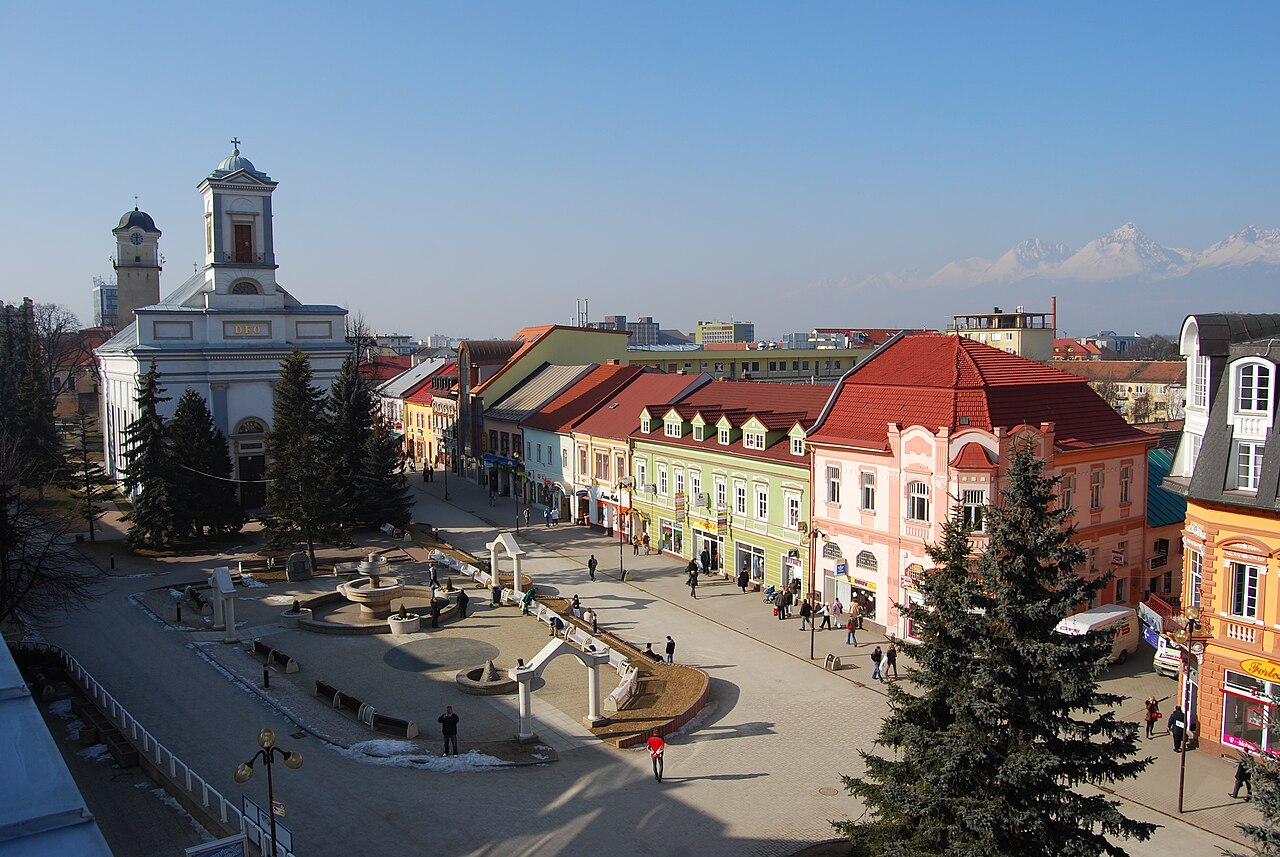
The largest town at the foot of the High Tatras and the main base for visiting them. It has its own airport and is the starting point of the Tatra Electric Railway.
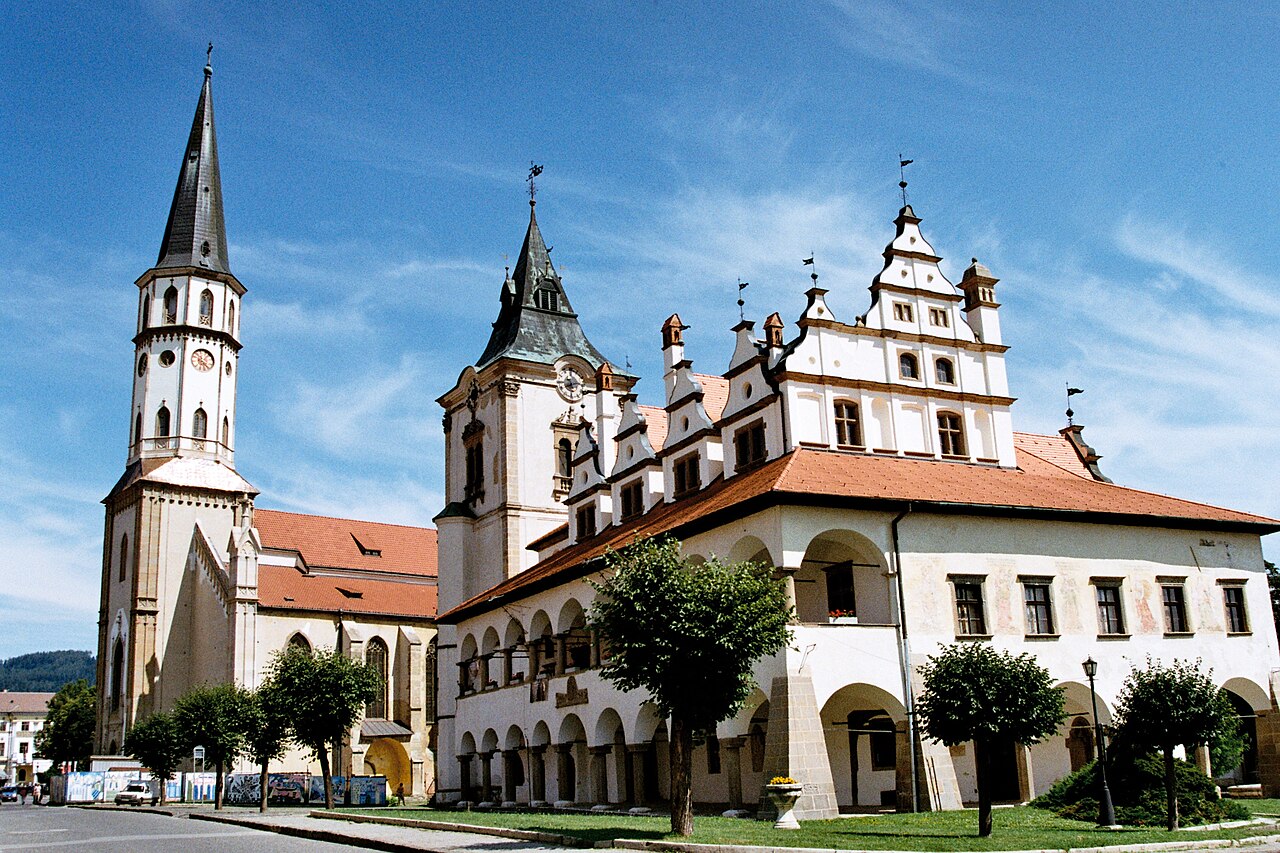
A small walled town of about 14,000 people in the Spiš region, with a large square of Renaissance houses and a Gothic church. It is part of a UNESCO World Heritage Site.
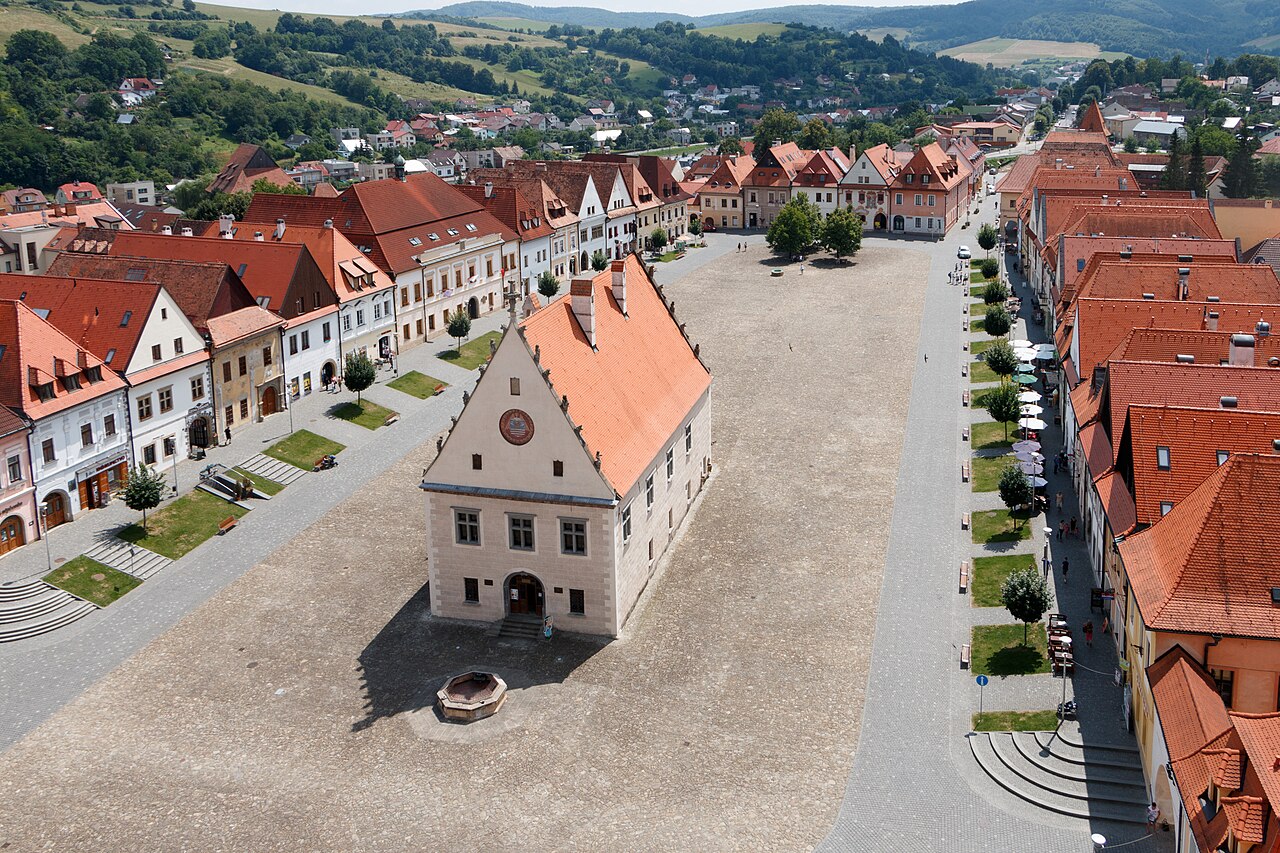
A town of about 32,000 people in the north-east, near the Polish border, with a completely intact medieval centre. It was a trading town with Poland and is a UNESCO World Heritage Site.
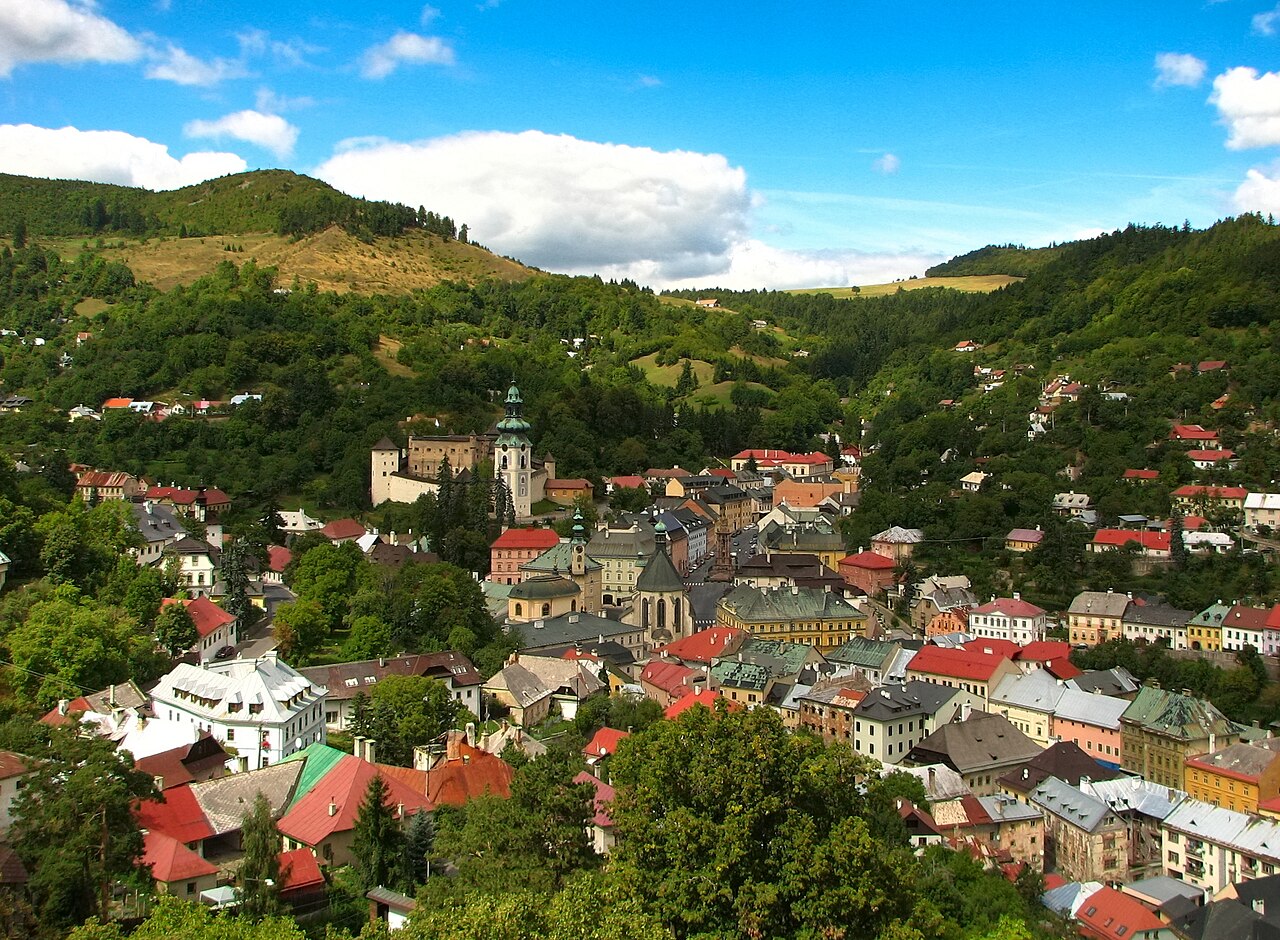
A small town built inside the crater of an ancient volcano. In the Middle Ages it was the main producer of silver and gold in the Kingdom of Hungary, and its mining school, founded in 1735, later became the famous Mining Academy.
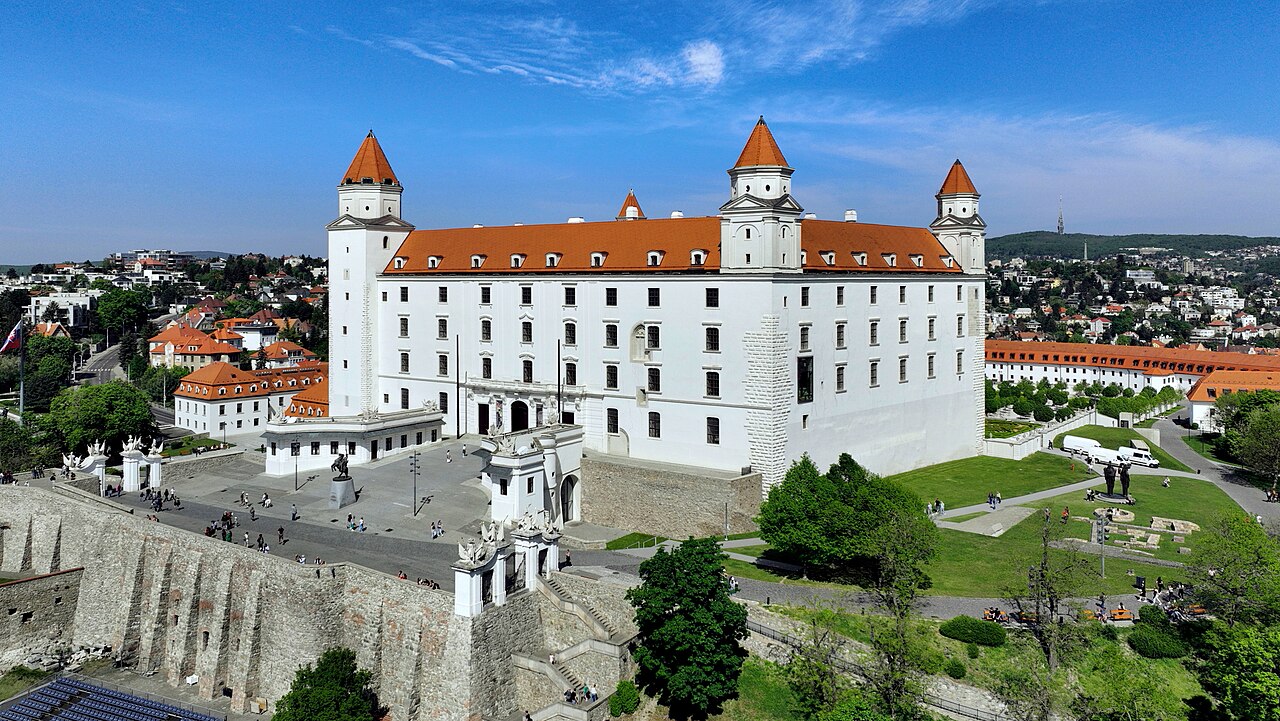
A massive rectangular castle with a tower on each corner, standing on a rocky hill above the Danube. For about 200 years from the mid-1500s its Crown Tower kept the Hungarian crown jewels. Today it houses exhibitions of the Slovak National Museum.
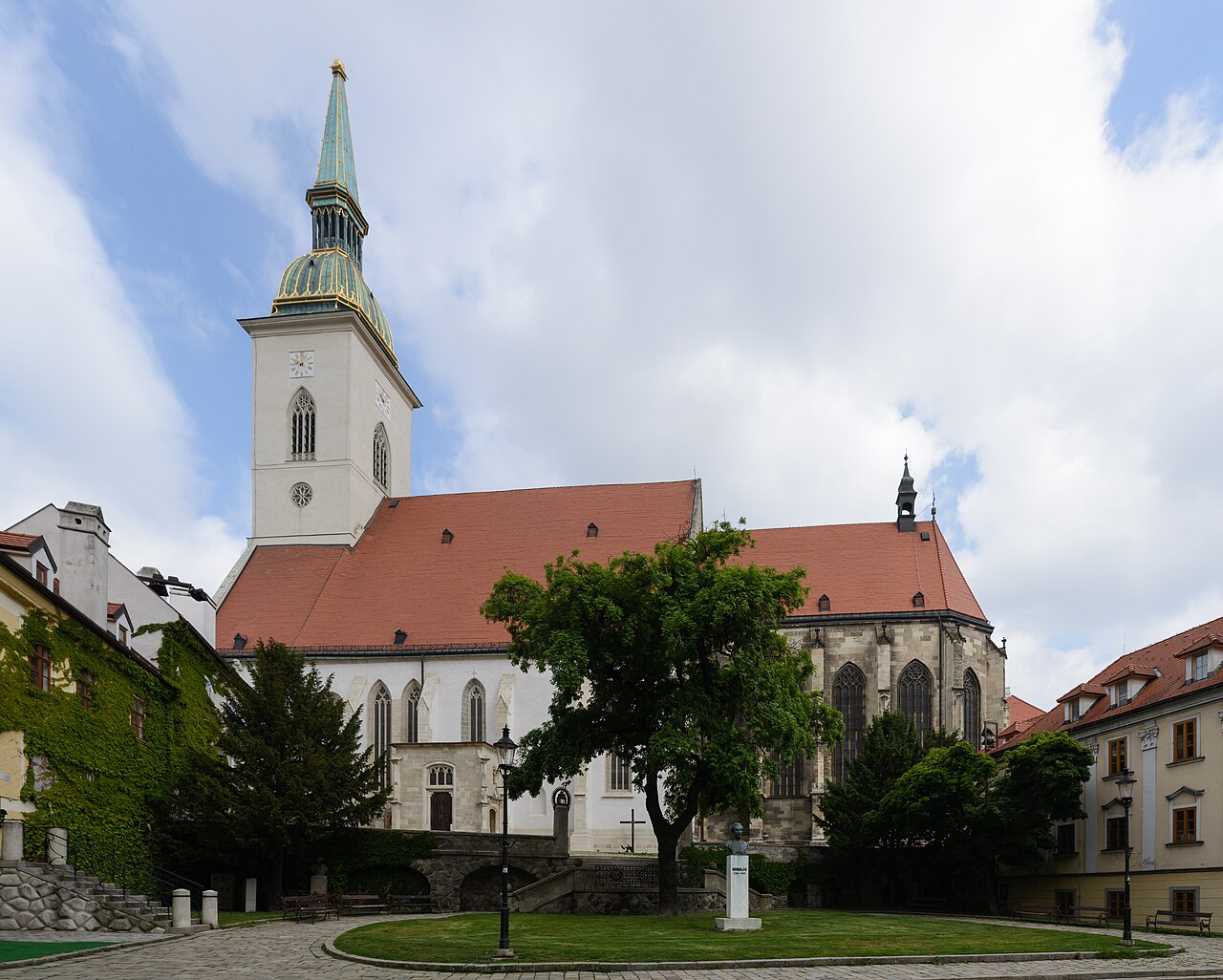
A Gothic cathedral below the castle whose 85-metre tower was once part of the town walls. Between 1563 and 1830 it was the coronation church of the Kingdom of Hungary, and a gilded replica of the Hungarian crown sits on top of its spire.
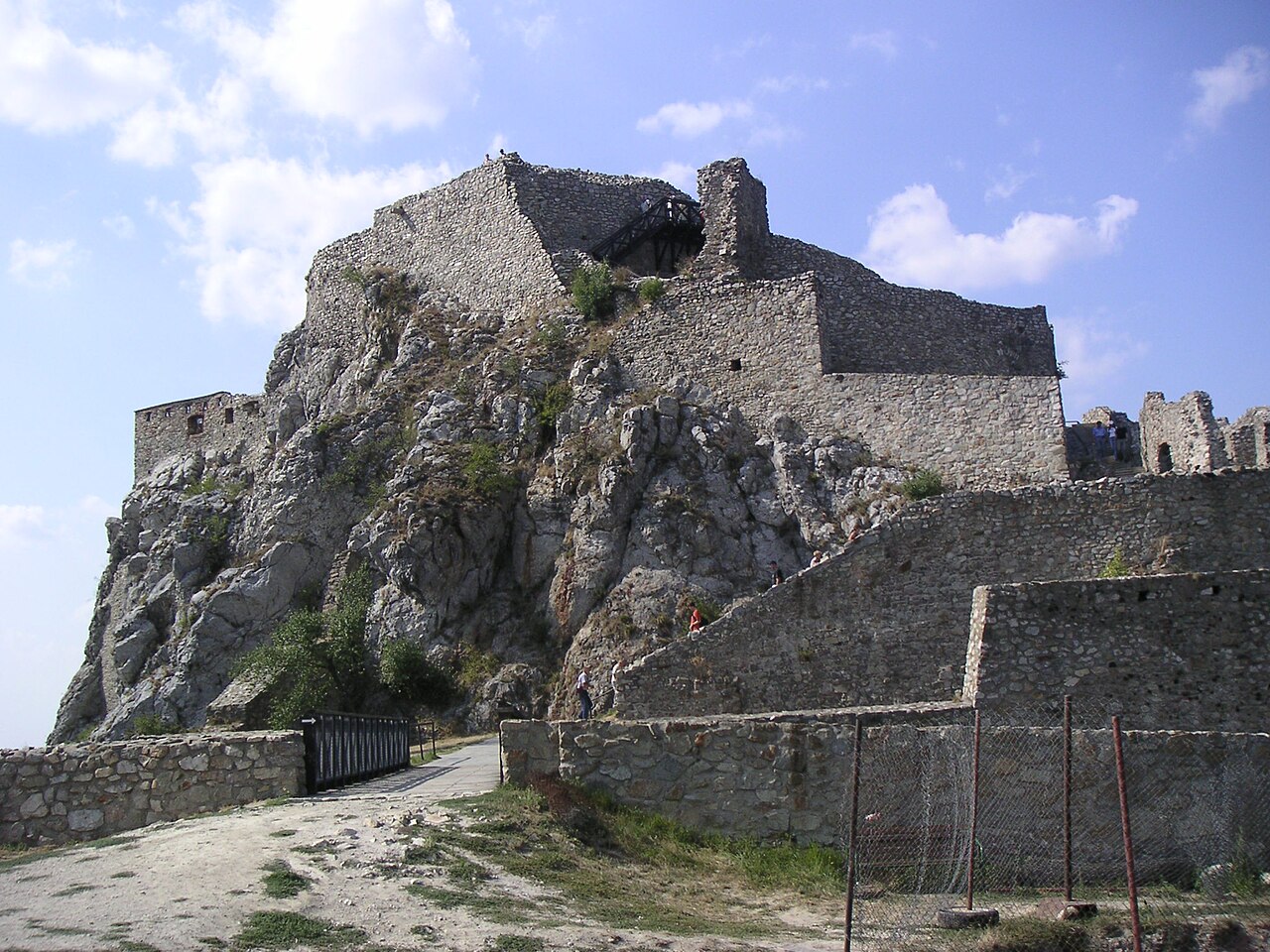
Romantic ruins on a cliff where the Morava river flows into the Danube, in a western district of Bratislava on the Austrian border. The tiny Maiden Tower balances on a lone rock. Until 1989 the Iron Curtain ran right below it.
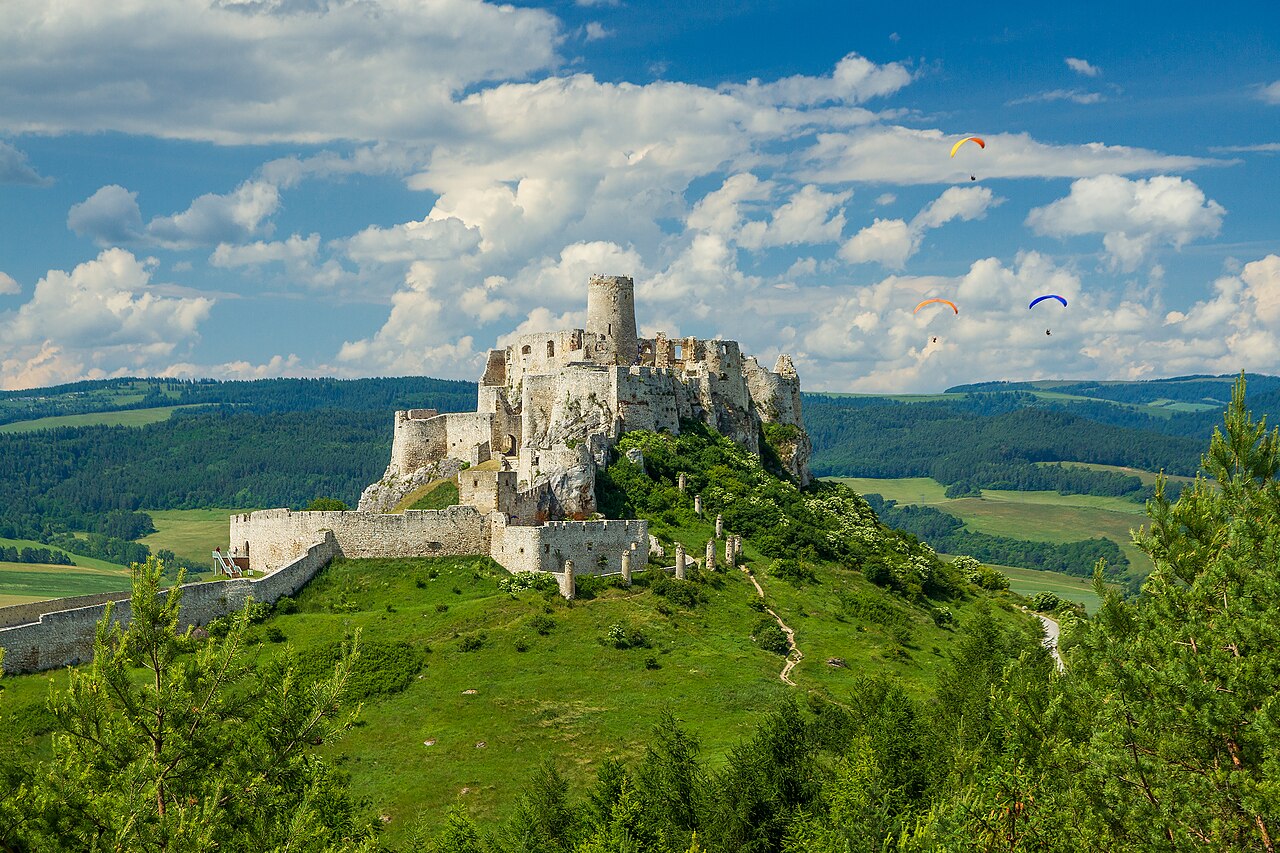
One of the largest castle sites in Slovakia, covering almost 4 hectares on a limestone hill above Spišské Podhradie, east of Levoča. First mentioned in 1120, it burned down in 1780 and has been a ruin ever since.
UNESCO World Heritage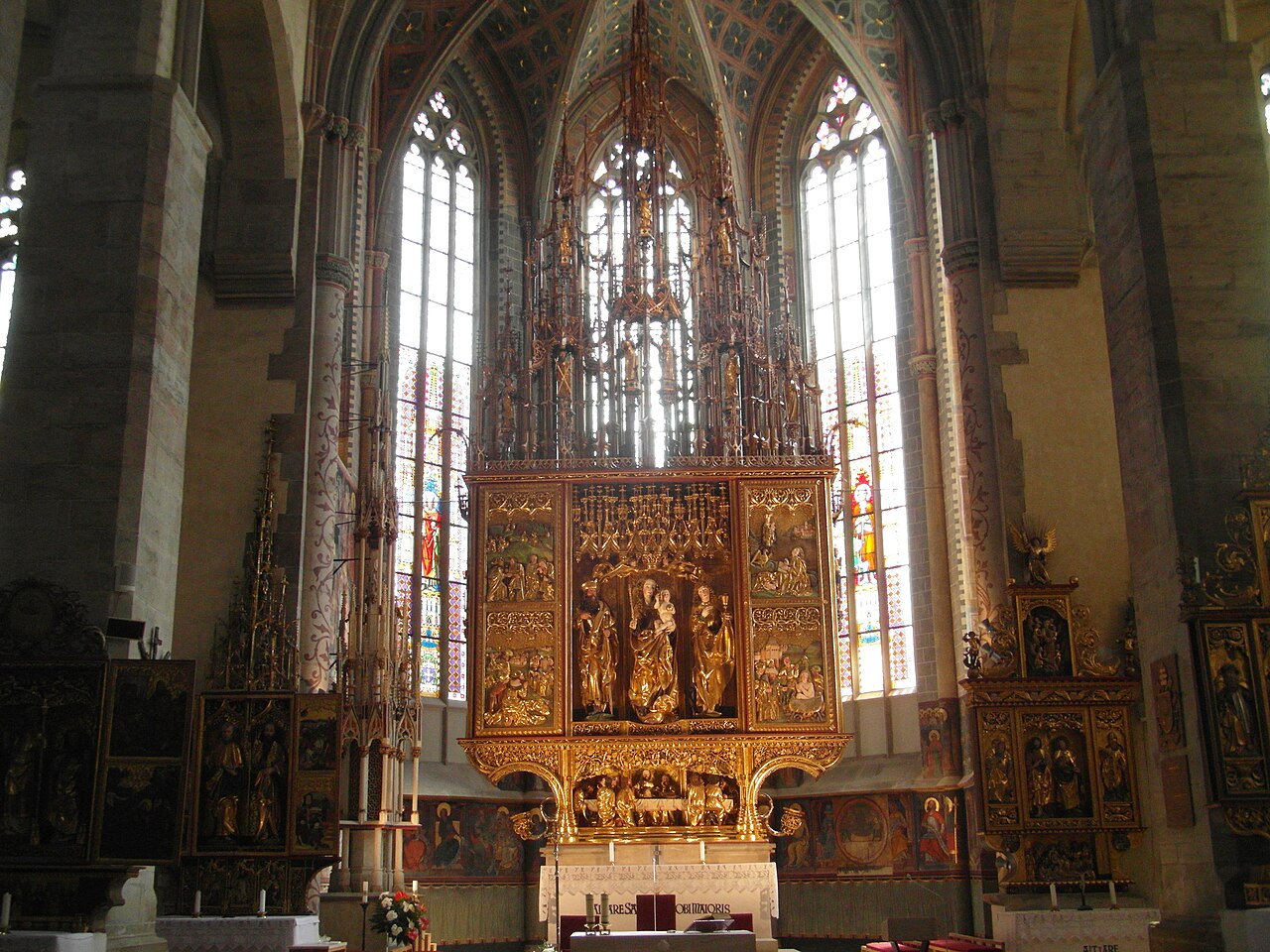
A Gothic church on Levoča's main square. Its carved wooden main altar by the workshop of Master Paul of Levoča, completed in 1517, is 18.62 metres high and often described as the tallest wooden altar in the world.
UNESCO World Heritage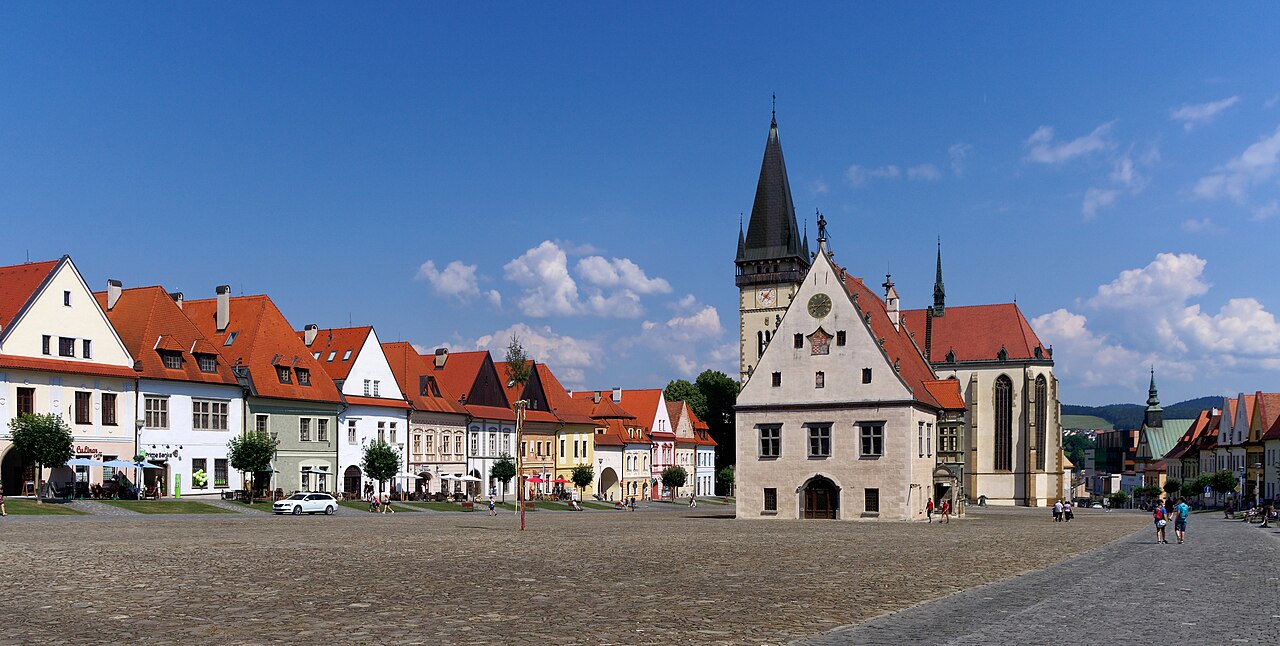
The old market square of Bardejov, lined with Gothic and Renaissance merchants' houses and dominated by the Basilica of St. Giles. In the middle stands the town hall of 1505, Gothic below and Renaissance above.
UNESCO World Heritage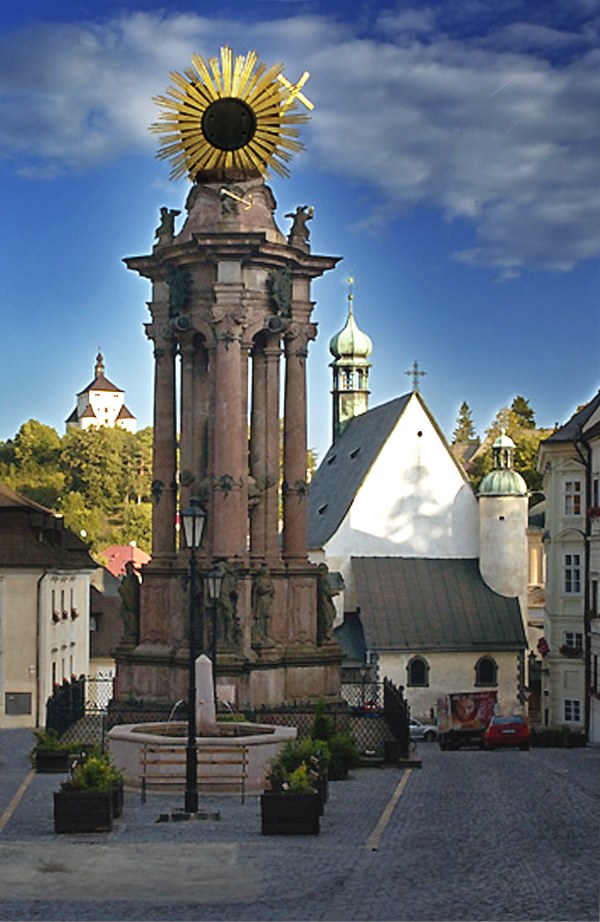
A hillside mining town of churches, burghers' houses and two castles built against the Ottomans. Together with the old mining works around it, the town has been a UNESCO World Heritage Site since 1993.
UNESCO World Heritage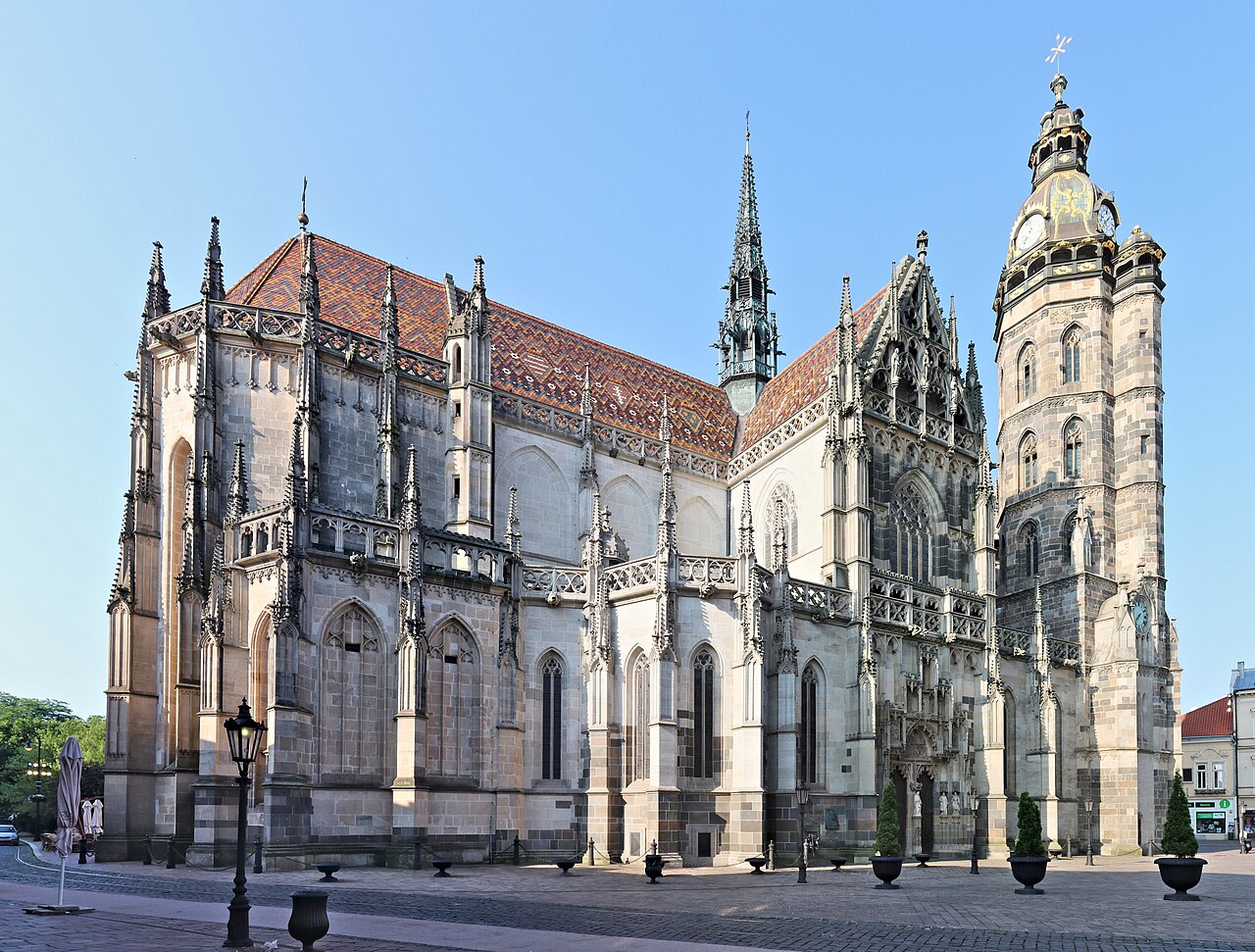
The largest church in Slovakia and one of the easternmost Gothic cathedrals in Europe, holding more than 5,000 people. It stands in the middle of Košice's long main street.
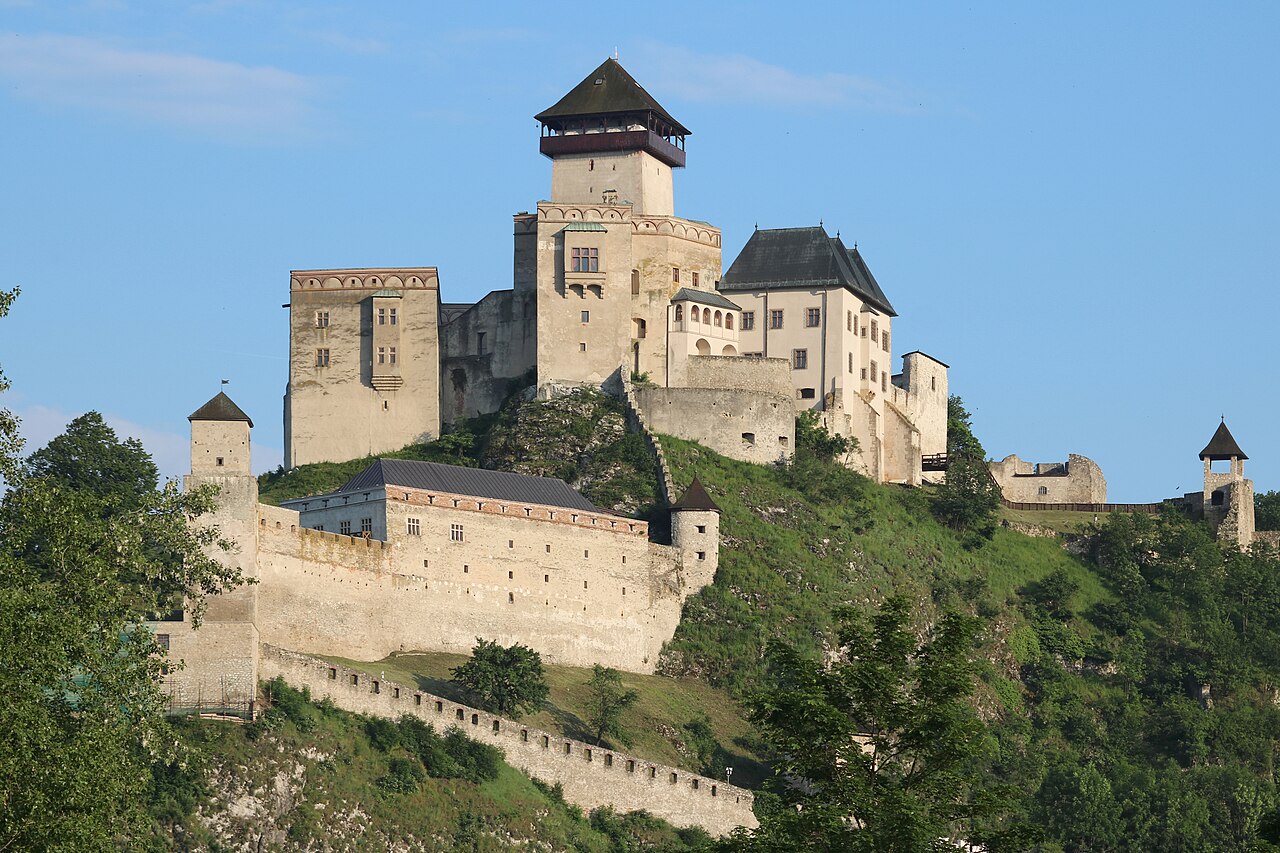
A medieval castle high on a rock above Trenčín, with the tall Matthew Tower. On the rock below it is a Roman inscription from 179 AD, and inside is a well about 80 metres deep dug in the 16th century.
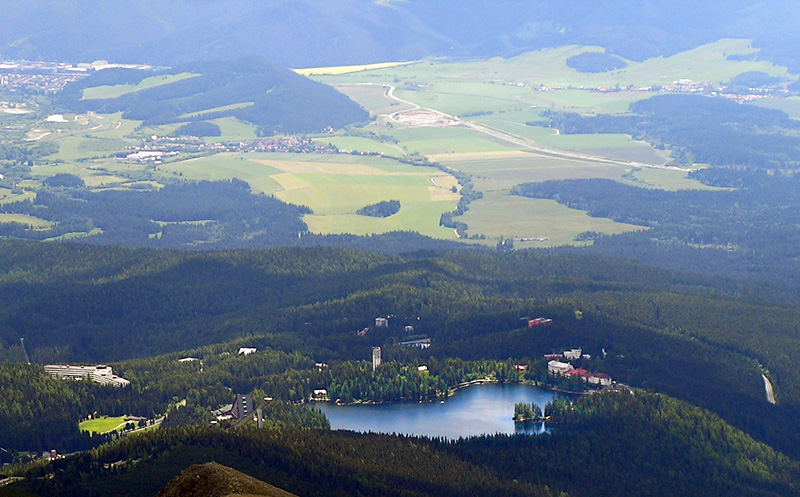
A glacial lake and mountain resort in the High Tatras, west of Poprad, reached by the Tatra Electric Railway and a rack railway. It is the starting point for hikes towards Kriváň and Rysy.
As of 2023, Slovakia made more cars per person than any other country in the world: about 1.08 million cars in that year, from a country of about 5.4 million people.
Bratislava is the only national capital that borders two other countries, Austria and Hungary. Vienna is only about 55 km away, so apart from Rome and Vatican City, they are the closest pair of capitals in Europe.
Eleven Hungarian rulers, including Maria Theresa, and eight of their consorts were crowned in St Martin's Cathedral in Bratislava between 1563 and 1830. A replica of the Hungarian crown still sits on top of its spire.
Jozef Murgaš, a Slovak priest and painter who emigrated to Pennsylvania, received his first US patents for wireless telegraphy in 1904. President Theodore Roosevelt visited his laboratory in 1905.
Štefan Banič, a Slovak coal miner in the United States, was granted a US patent for an early parachute design on 25 August 1914.
Andy Warhol's parents came from the village of Miková in north-eastern Slovakia. A museum of his work opened in nearby Medzilaborce in 1991.
The fujara is a shepherd's flute from central Slovakia that is 160 to 200 cm long and has only three finger holes. UNESCO added it to its list of intangible heritage in 2005.
The Kremnica Mint, founded in 1328, is one of the oldest mints in the world. It still makes Slovakia's euro coins.
Juraj Jánošík (1688 to 1713) was a real highwayman who became a legendary Slovak 'Robin Hood'. A 7.5-metre statue of him stands above the Vrátna valley near his home village of Terchová.
The white double cross on Slovakia's coat of arms stands on three blue hills. They represent three mountain ranges: the Tatra, the Fatra and the Matra, which lies in Hungary.
The national anthem, 'Nad Tatrou sa blýska' (Lightning over the Tatras), was written in 1844 by the student Janko Matúška to the tune of a folk song.
Name days (meniny) are widely celebrated in Slovakia, at work often more than birthdays. Most calendars show whose name day it is, and flowers can sell out for popular names.
The log houses of the village of Čičmany are painted with white geometric patterns. After a great fire in 1921 the village was rebuilt as it had been.
Dobšiná Ice Cave holds ice up to 26.5 metres thick all year round, and it was lit by electricity as early as 1887.
Pronunciation is written the way it sounds; the capital letters show where the stress goes. Audio is coming soon.
Slovakia has used the euro since 1 January 2009. In restaurants and bars people usually round up the bill or leave around 5 to 10%, but tipping is not compulsory.
Motorways and some expressways can only be used with a prepaid electronic vignette, registered to your vehicle's number plate. Buy it online at the official site eznamka.sk or at a point of sale before you join the motorway, or risk a heavy fine.
Slovakia has a zero limit for drivers. Any alcohol in your blood can bring a fine of up to 1,300 euros and the loss of your licence. Dipped headlights must also be on at all times, day and night.
If the Mountain Rescue Service (HZS) has to help you, you may have to pay costs of up to 1,000 euros, so make sure your travel insurance covers mountain rescue. Brown bears live in many mountain and forest areas.
The high-mountain trails of Tatra National Park close for months over winter and spring: in 2026 they reopened on 1 June, after about seven months. Check the park's website before planning a high walk, and stay on marked trails.
112 is the official emergency number for police, ambulance and fire, free from any phone, as everywhere in the European Union. You can also call 155 for an ambulance, 158 for the police and 150 for the fire service.
Lunch, usually eaten between about 11:30 and 13:30, is traditionally the main meal of the day, and it usually means a soup followed by a main course. Plan your big meal of the day around it.