A free large-print PDF. Choose what goes in: facts, map, history, dishes and recipes, phrases, fun facts, a quiz with or without answers. Made for clubs, care homes, libraries and family afternoons.
Austria is a landlocked country in Central Europe with eight neighbours and about 9.2 million people. The Alps cover roughly six tenths of the land, rising to the Grossglockner, 3,798 m, while the Danube flows across the north past Linz and Vienna. It is a federal republic of nine states, each with its own capital, dialect and dishes.
For more than six hundred years Austria was the heart of the Habsburg lands, a great multinational empire ruled from Vienna. The empire broke apart at the end of the First World War, and in November 1918 Austria became a small republic. It was annexed by Nazi Germany in 1938, and after the Second World War it was occupied by the four Allied powers for ten years.
In 1955 the Austrian State Treaty restored full independence, and Austria declared itself permanently neutral. It joined the European Union in 1995. Today visitors come for ski slopes and mountain lakes, for Vienna's palaces, opera and coffee houses, and for Salzburg, the city where Mozart was born.
CapitalVienna
PopulationAbout 9.2 million (1 January 2026)
Official languageGerman, in its Austrian form. Burgenland Croatian, Slovene and Hungarian are also official in some areas
CurrencyEuro (€), since 1999 (notes and coins since 2002); before that, the Austrian schilling
AreaAbout 83,900 km²
GovernmentFederal republic of nine states. The directly elected Federal President is head of state and the Federal Chancellor leads the government
Highest mountainGrossglockner, 3,798 m, in the Hohe Tauern range
Longest riverThe Danube, about 2,850 km long in total, which crosses northern Austria on its way from Germany to the Black Sea
NeighboursEight: Germany, the Czech Republic, Slovakia, Hungary, Slovenia, Italy, Switzerland and Liechtenstein. Austria has no coastline
From Iron Age salt miners to a great empire, two world wars, occupation and a new start as a neutral republic, Austria's story is the story of Central Europe.
800 BC
The Hallstatt culture
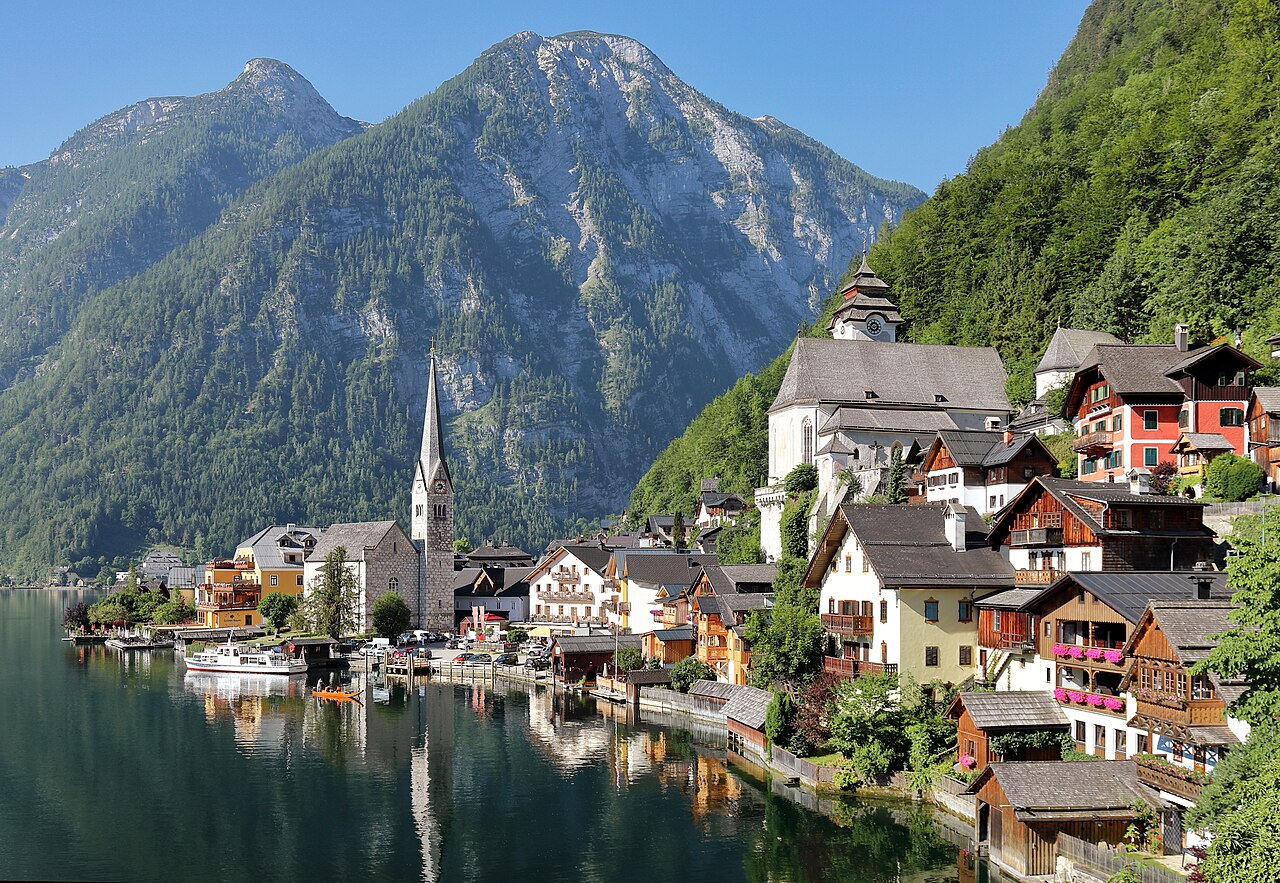
Salt had been mined in the mountains above Hallstatt since the Bronze Age. From about 800 BC, the Early Iron Age culture found there spread across much of Central Europe. Archaeologists named the whole culture after Hallstatt, where a great prehistoric cemetery was discovered in 1846.
AD 996
Ostarrîchi is first mentioned
On 1 November 996, Emperor Otto III signed a deed giving land to the Bishop of Freising 'in the region commonly called Ostarrîchi', meaning 'eastern realm'. It is the oldest known written form of the name that became Österreich, Austria.
1156
Austria becomes a duchy
On 17 September 1156, Emperor Frederick Barbarossa raised the March of Austria to a duchy with a document known as the Privilegium Minus. Austria was given as a hereditary fief to the Babenberg family, its rulers at the time.
1278
The Battle on the Marchfeld
On 26 August 1278, Rudolf of Habsburg defeated King Ottokar II of Bohemia on the Marchfeld plain north-east of Vienna. In 1282 Rudolf made his sons dukes of Austria, and their descendants, the Habsburgs, ruled Austria until 1918.
1683
The Battle of Vienna
An Ottoman army besieged Vienna from July 1683, as it had already done once in 1529. On 12 September 1683 a relief army led by King Jan III Sobieski of Poland defeated the besiegers. The victory ended the Ottoman advance into Central Europe.
1740
Maria Theresa begins her reign
Maria Theresa, the only woman to rule the Habsburg lands in her own right, came to power in 1740 and reigned for 40 years. She fought long wars to keep her inheritance, reformed the state and, in 1774, introduced compulsory schooling. She had 16 children, including Marie Antoinette.
1804
The Austrian Empire is proclaimed
On 11 August 1804, in answer to Napoleon making himself Emperor of the French, Francis II proclaimed the Austrian Empire and became its first emperor as Francis I. Two years later he gave up the old crown of the Holy Roman Empire.
1815
The Congress of Vienna
After Napoleon's defeat, the great powers of Europe met in Vienna from 1814 to redraw the map of the continent, chaired by the Austrian statesman Klemens von Metternich. The Final Act was signed on 9 June 1815.
1867
Austria-Hungary is created
After defeat by Prussia in 1866, the empire was reorganised by the Compromise of 1867 into a 'dual monarchy', Austria-Hungary. Emperor Franz Joseph was crowned King of Hungary on 8 June 1867, and each half had its own parliament and government.
1914
The assassination in Sarajevo
On 28 June 1914, Archduke Franz Ferdinand, heir to the throne, and his wife Sophie were shot dead in Sarajevo by Gavrilo Princip, a Bosnian Serb student. One month later Austria-Hungary declared war on Serbia, and the First World War began.
1918
The republic is proclaimed
As the war ended, the empire broke apart. Emperor Karl I gave up his part in government on 11 November 1918, and the next day a republic was proclaimed in Vienna. In the elections of February 1919, women in Austria voted for the first time.
1920
The Federal Constitution
On 1 October 1920, parliament adopted the Federal Constitutional Law, drafted mainly by the legal scholar Hans Kelsen. It was set aside under the authoritarian regime of 1934, restored in 1945, and is still the basis of Austria's constitution today.
1938
The Anschluss
On 12 March 1938 German troops entered Austria, and the next day it was annexed to Nazi Germany. Persecution of Jews and political opponents began at once. More than 65,000 Austrian Jews were murdered in the Holocaust, and about 125,000 were forced to flee. Many Austrians supported the Nazi regime, and in 1991 Chancellor Franz Vranitzky formally acknowledged Austria's share of responsibility.
1945
The Second Republic begins
In April 1945 Soviet troops took Vienna, and on 27 April a provisional government under Karl Renner declared Austria independent again. The country and its capital were divided into four zones of occupation, run by the Soviet Union, the United States, Britain and France.
1955
The Austrian State Treaty
On 15 May 1955, the four powers and Austria signed the State Treaty at the Belvedere Palace in Vienna, restoring Austria as a sovereign state. The last occupation troops left in October, and on 26 October 1955 parliament declared Austria's permanent neutrality. That day is now the National Day.
1995
Austria joins the European Union
After a referendum in June 1994, in which about two thirds voted yes, Austria joined the European Union on 1 January 1995, together with Finland and Sweden. It adopted the euro in 1999.
Austrian food mixes Alpine farm cooking with the kitchens of the old empire, from Hungary, Bohemia and northern Italy. The day starts with bread rolls, butter, jam, cheese and coffee. The midday meal was traditionally the main one, often a clear soup followed by meat and dumplings, and a mid-morning or afternoon snack is called a 'Jause'. Austria is famous above all for its cakes and pastries, best enjoyed slowly in a coffee house.
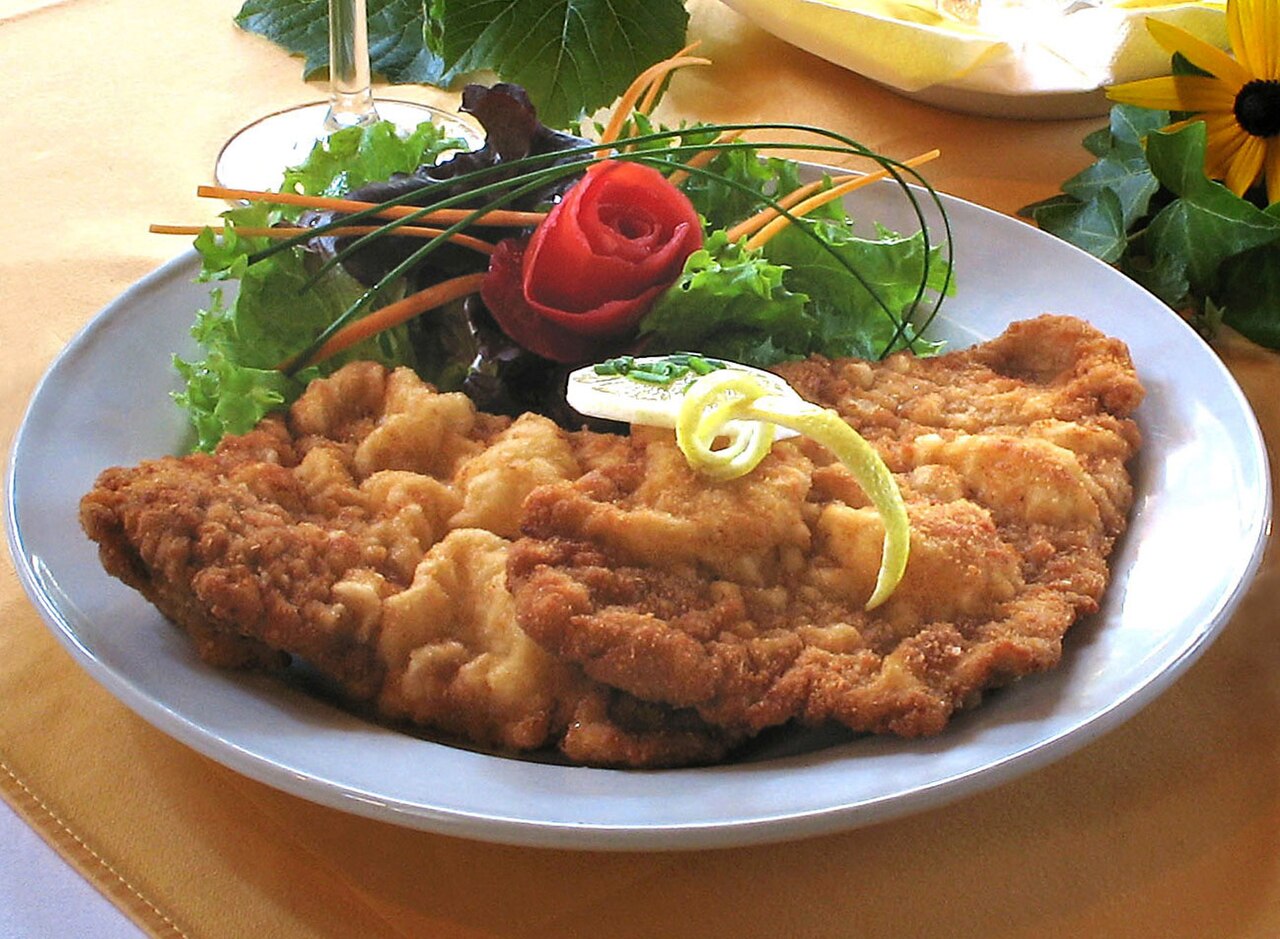
A thin escalope of veal, coated in flour, egg and breadcrumbs and fried in lard or clarified butter until the coating puffs up golden. It is served with a wedge of lemon and potato salad, parsley potatoes or a green salad.
By Austrian rules, a 'Wiener Schnitzel' must be made from veal. A pork version has to be called 'Wiener Schnitzel vom Schwein' or 'Schnitzel Wiener Art'.
See the recipe
Serves 4
40 min
Ingredients
4 veal escalopes, about 150 g each
Salt
80 g plain flour
2 eggs
150 g fine dry breadcrumbs
About 250 g clarified butter or lard, for frying
1 lemon, cut into wedges
Parsley, to serve
Method
Put each escalope between two sheets of cling film and pound it evenly to about 4 mm thick. Season both sides with salt.
Put the flour, the beaten eggs and the breadcrumbs in three shallow dishes.
Coat each escalope first in flour, then in egg, then in breadcrumbs. Do not press the crumbs on, so the coating can puff up.
Heat the fat in a large frying pan until it is about 1 to 2 cm deep and hot (160 to 170°C).
Fry the schnitzels one or two at a time for 2 to 3 minutes on each side, gently shaking the pan so the fat washes over the top, until golden and the meat is cooked through.
Drain on kitchen paper and serve at once with lemon wedges, parsley and potato salad.
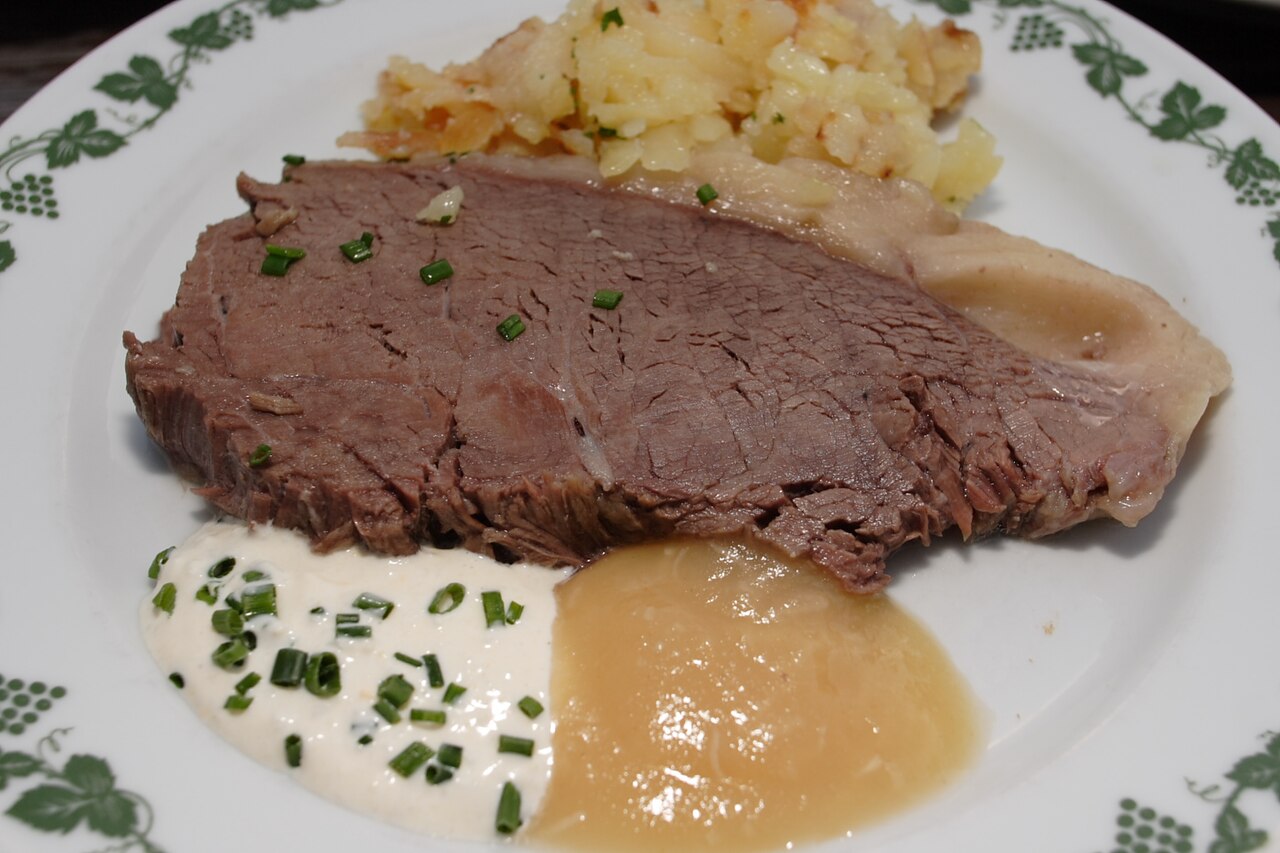
Beef simmered slowly with root vegetables and spices. The broth is often served first as a soup, then the sliced meat with roast potatoes, apple and horseradish sauce (Apfelkren) and a sour cream and chive sauce.
Emperor Franz Joseph is said to have eaten boiled beef at his private table very often, and Tafelspitz became a symbol of Viennese cooking.
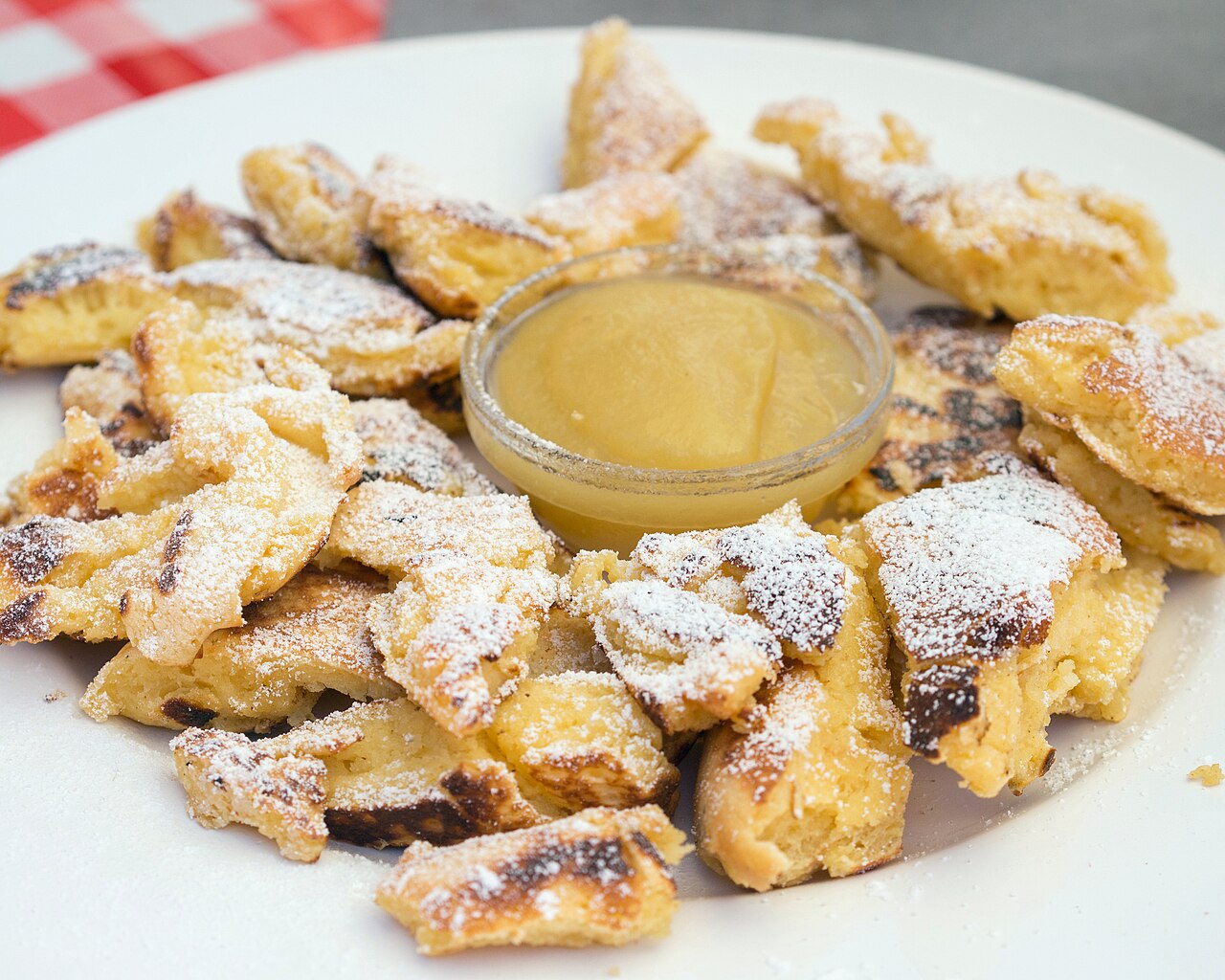
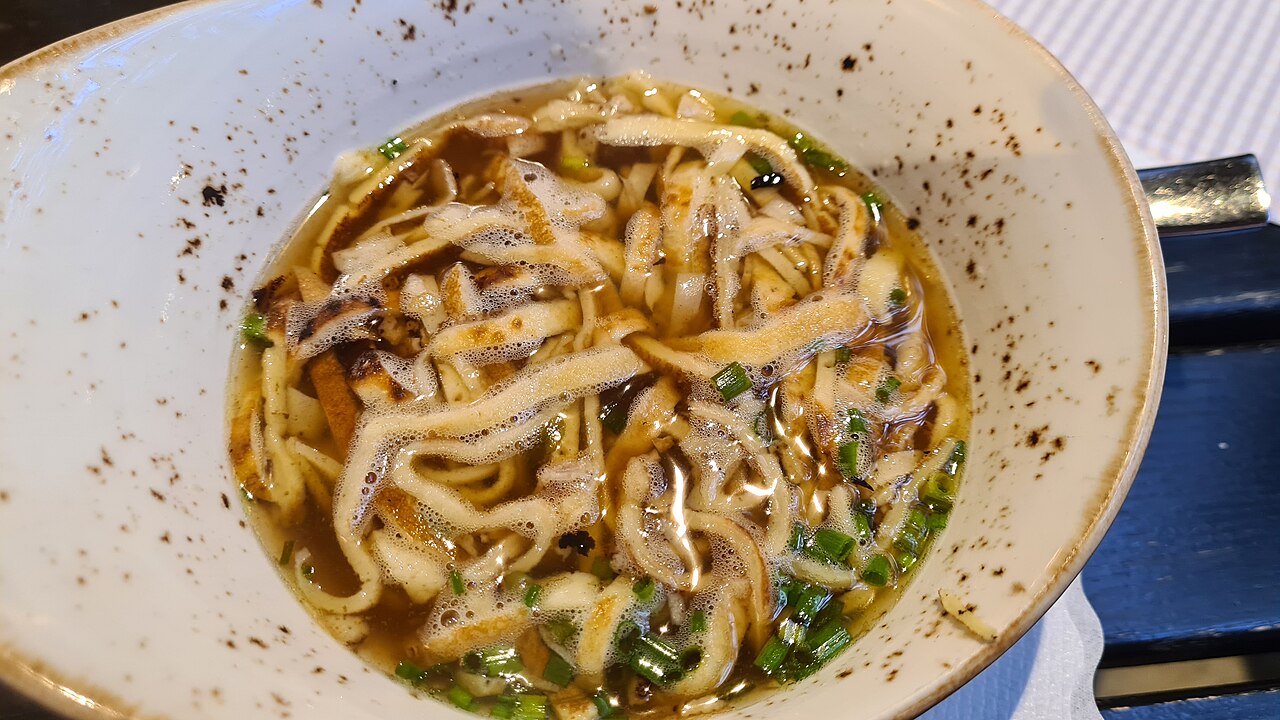
A thick, fluffy pancake made with whipped egg whites, torn into pieces in the pan, lightly caramelised and dusted with icing sugar. It is served with plum compote or apple sauce, as a dessert or a hearty lunch in mountain huts.
The name means 'the emperor's mess'. Legends link it to Emperor Franz Joseph, who is said to have happily eaten a dish his wife had refused.
See the recipe
Serves 3
30 min
Ingredients
4 eggs, separated
250 ml milk
125 g plain flour
2 tablespoons sugar
A pinch of salt
2 tablespoons raisins (optional)
30 g butter
Icing sugar, to dust
Plum compote or apple sauce, to serve
Method
Whisk the egg yolks, milk, flour, 1 tablespoon of sugar and the salt into a smooth batter.
In a clean bowl, beat the egg whites with the rest of the sugar until stiff, then gently fold them into the batter.
Melt most of the butter in a large frying pan over medium heat, pour in the batter and scatter over the raisins. Cook for 4 to 5 minutes until the underside is golden.
Cut the pancake into quarters, turn each piece over and cook for another 3 to 4 minutes.
Tear the pancake into bite-sized pieces with two forks, add the last of the butter and a little sugar, and toss for 2 to 3 minutes until lightly caramelised and no wet batter is left.
Dust with icing sugar and serve warm with plum compote or apple sauce.
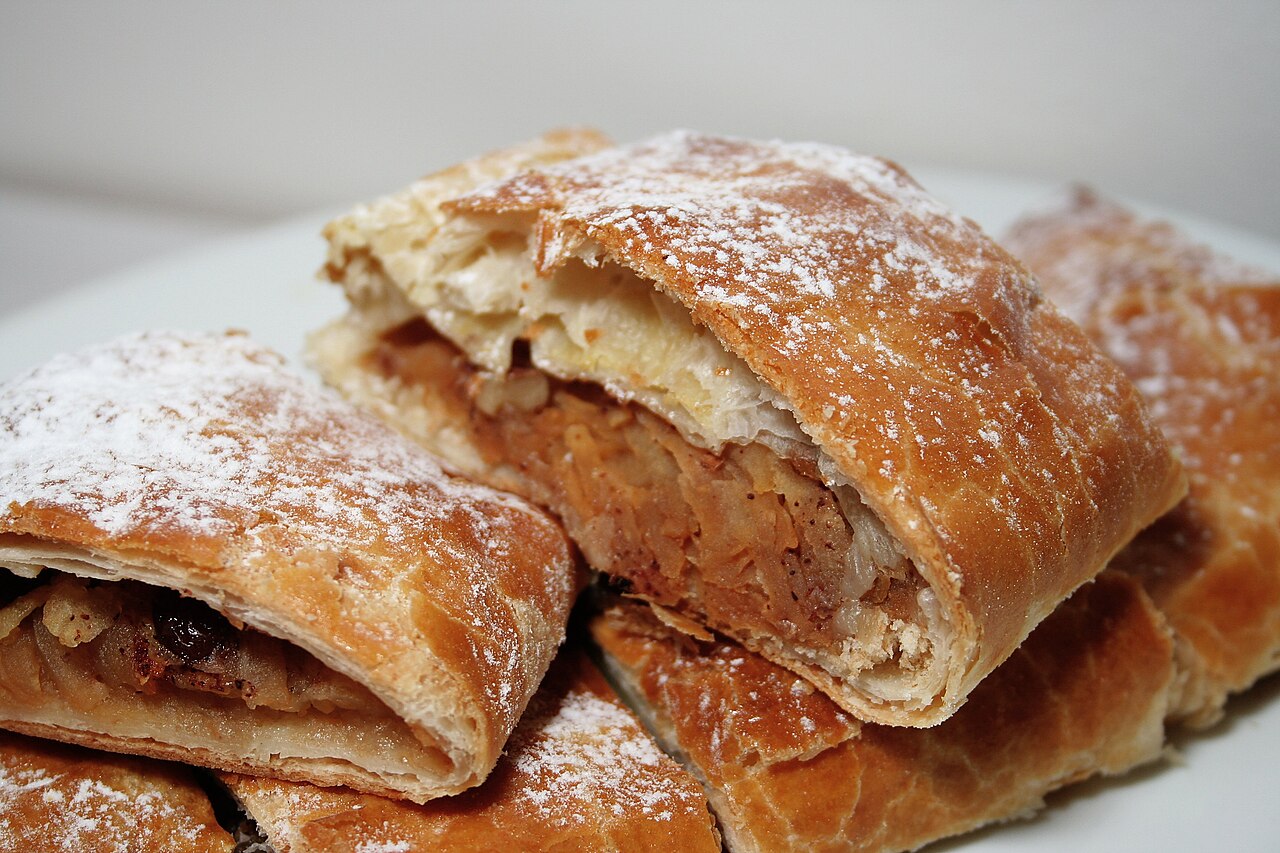
Thin layers of pastry rolled around sliced apples, sugar, cinnamon, raisins and buttered breadcrumbs, baked and served in slices dusted with icing sugar, often with whipped cream or vanilla sauce.
The oldest known strudel recipes, handwritten in the 1690s, are kept in the Vienna City Library. Bakers say the dough should be stretched so thin that you could read a newspaper through it.
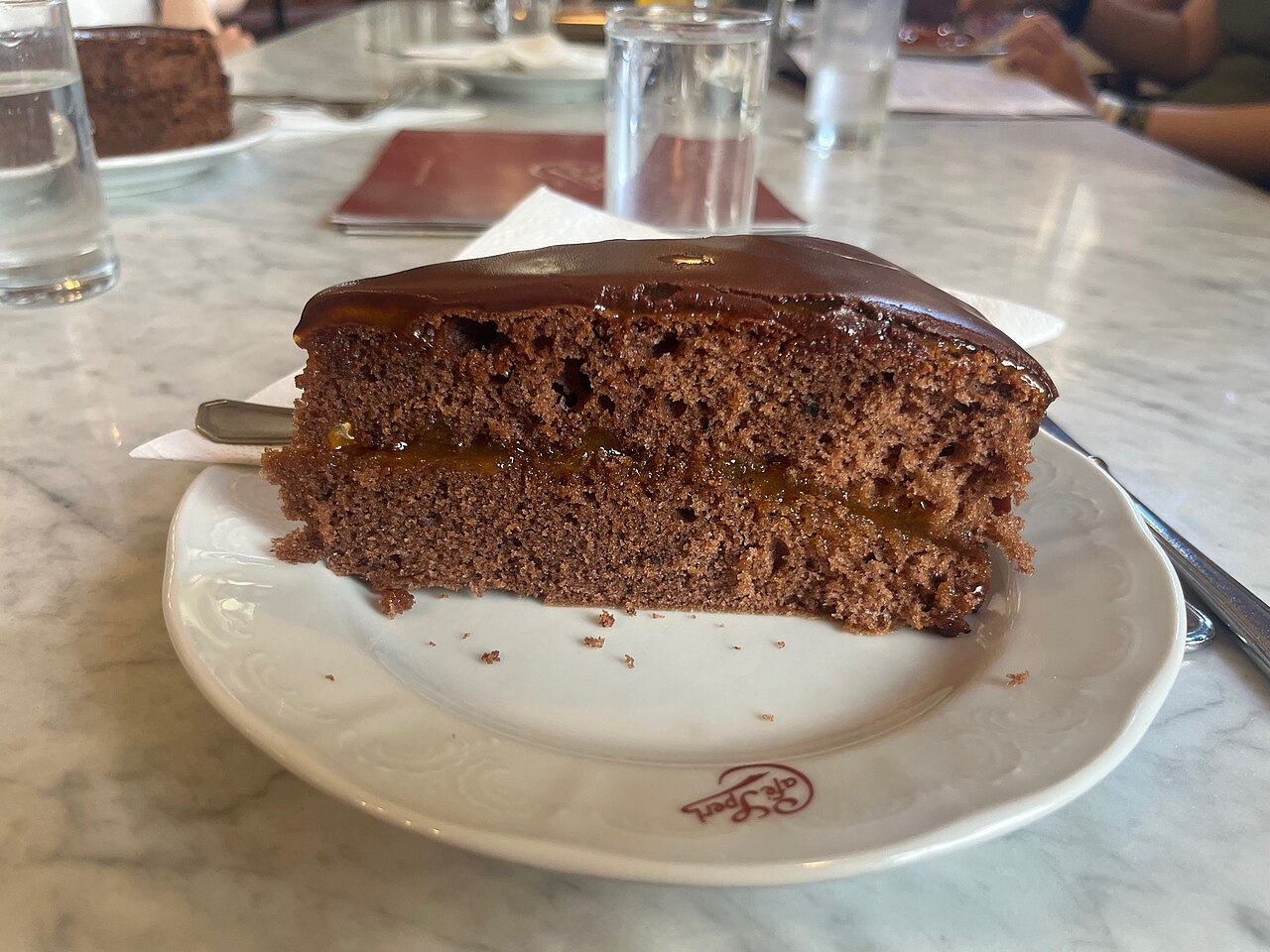
A dense chocolate sponge cake with a layer of apricot jam under a firm, shiny chocolate glaze. In Austria it is served with a spoonful of unsweetened whipped cream.
It is credited to Franz Sacher, who by the best-known story created it as a teenage apprentice in 1832 for Prince Metternich. The Hotel Sacher and the Demel patisserie argued in court for years over who could sell the 'original'. Since the case ended in 1963, the hotel has sold the 'Original Sacher-Torte' and Demel 'Demel's Sacher-Torte'.
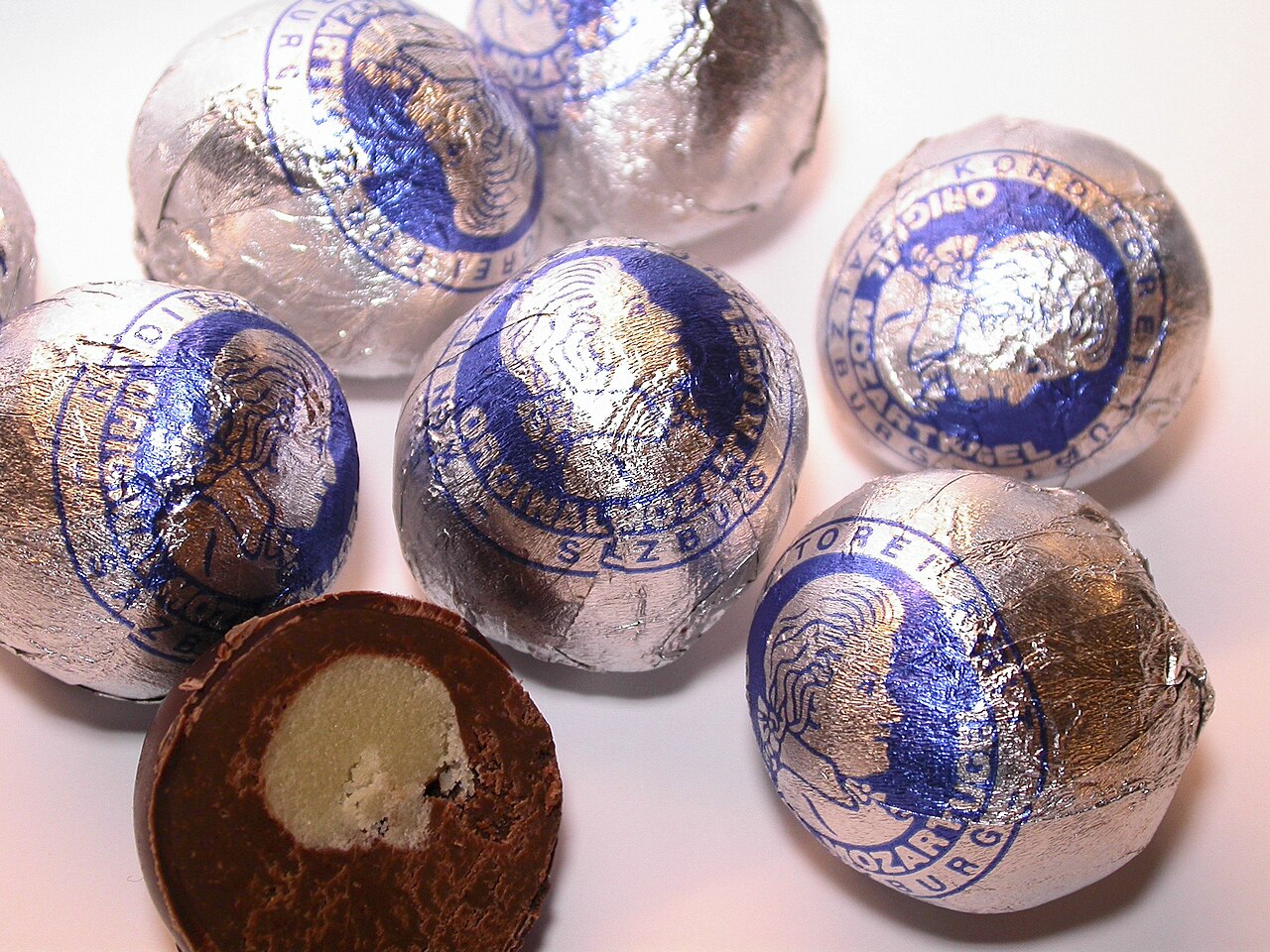
A round chocolate sweet with a centre of pistachio marzipan, wrapped in nougat and coated in dark chocolate, named after Mozart.
The Salzburg confectioner Paul Fürst created it in 1890. After a court ruling in 1996, only his family firm's hand-made sweets may be called 'Original Salzburger Mozartkugeln'.
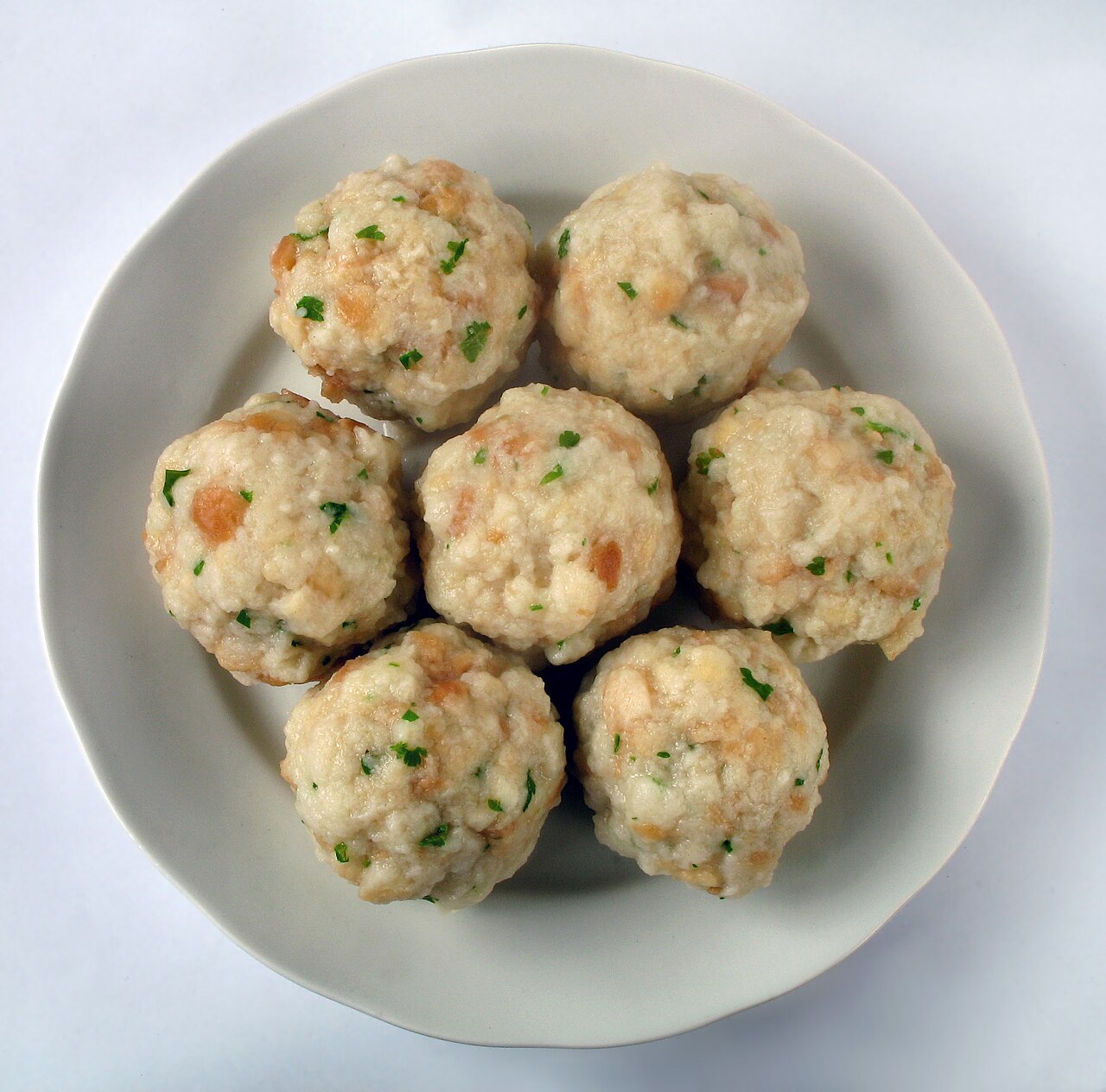
Round dumplings made from cubes of stale bread rolls soaked in milk, mixed with egg, onion and parsley and simmered in water. They soak up the gravy of goulash, roast pork or a creamy mushroom sauce.
See the recipe
Serves 4
1 h
Ingredients
250 g stale white bread rolls, cut into small cubes
250 ml milk
1 small onion, finely chopped
20 g butter
2 eggs
2 tablespoons chopped parsley
Salt and a pinch of nutmeg
1 to 2 tablespoons flour, if needed
Method
Warm the milk, pour it over the bread cubes and leave to soak for 15 minutes.
Soften the onion in the butter over low heat for 5 minutes.
Add the onion, eggs, parsley, salt and nutmeg to the bread and mix well with your hands. If the mixture is too wet to hold its shape, add a little flour. Leave to rest for 10 minutes.
With wet hands, shape 8 round dumplings.
Lower them into a large pan of salted water at a gentle simmer (not a rolling boil) and cook for 15 to 20 minutes, until firm and cooked right through.
Lift out with a slotted spoon and serve with goulash, roast pork or mushroom sauce.
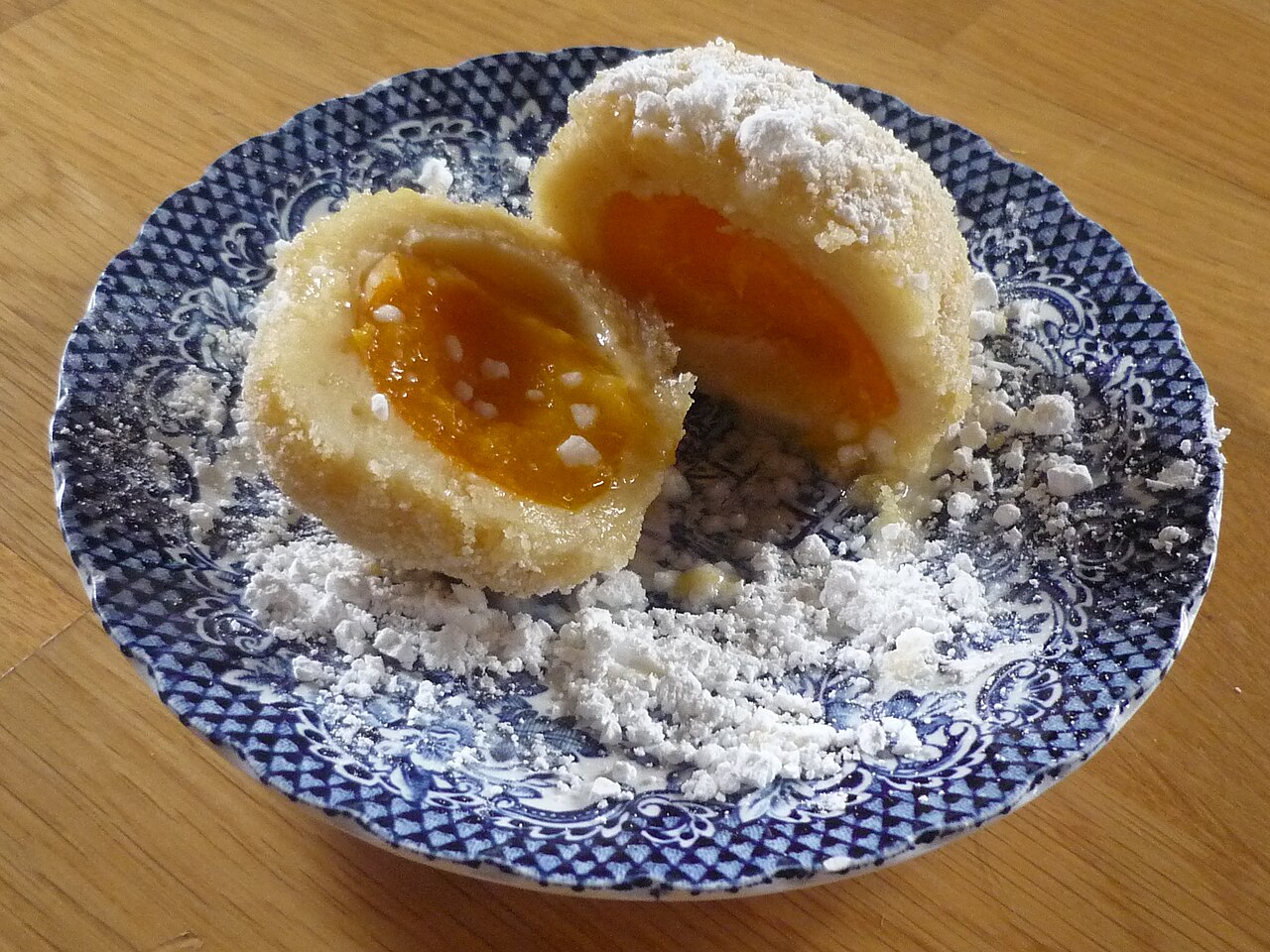
Sweet dumplings of potato or curd cheese (Topfen) dough, each with a whole apricot inside, simmered and then rolled in breadcrumbs toasted in butter and dusted with sugar.
'Marille' is the Austrian word for apricot. The Wachau valley on the Danube is famous for its apricots.
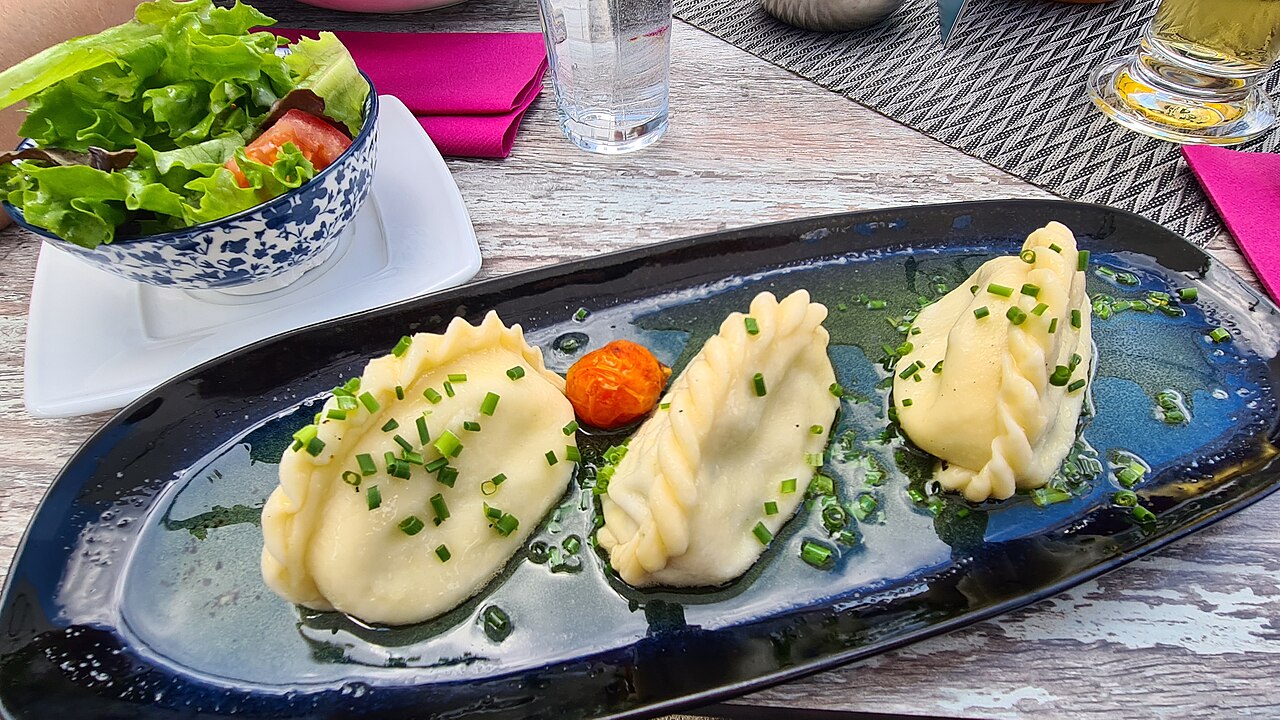
Large half-moon pasta pockets from Carinthia, filled with curd cheese (Topfen), potato and mint, sealed with a crimped edge and served with melted butter.
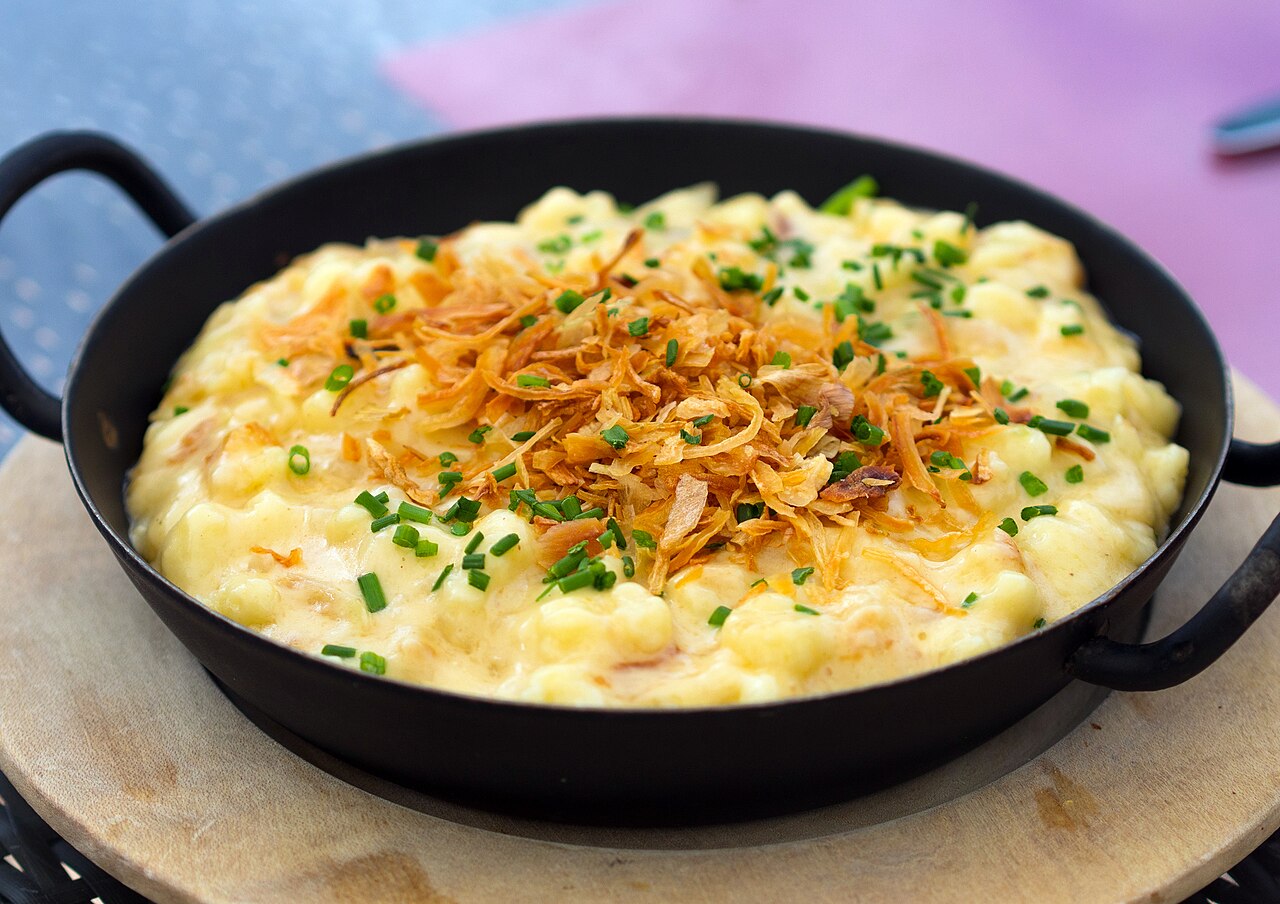
Small soft egg noodles layered with strong mountain cheese, such as Bergkäse, and topped with crispy fried onions. In parts of Vorarlberg it is eaten with apple sauce.
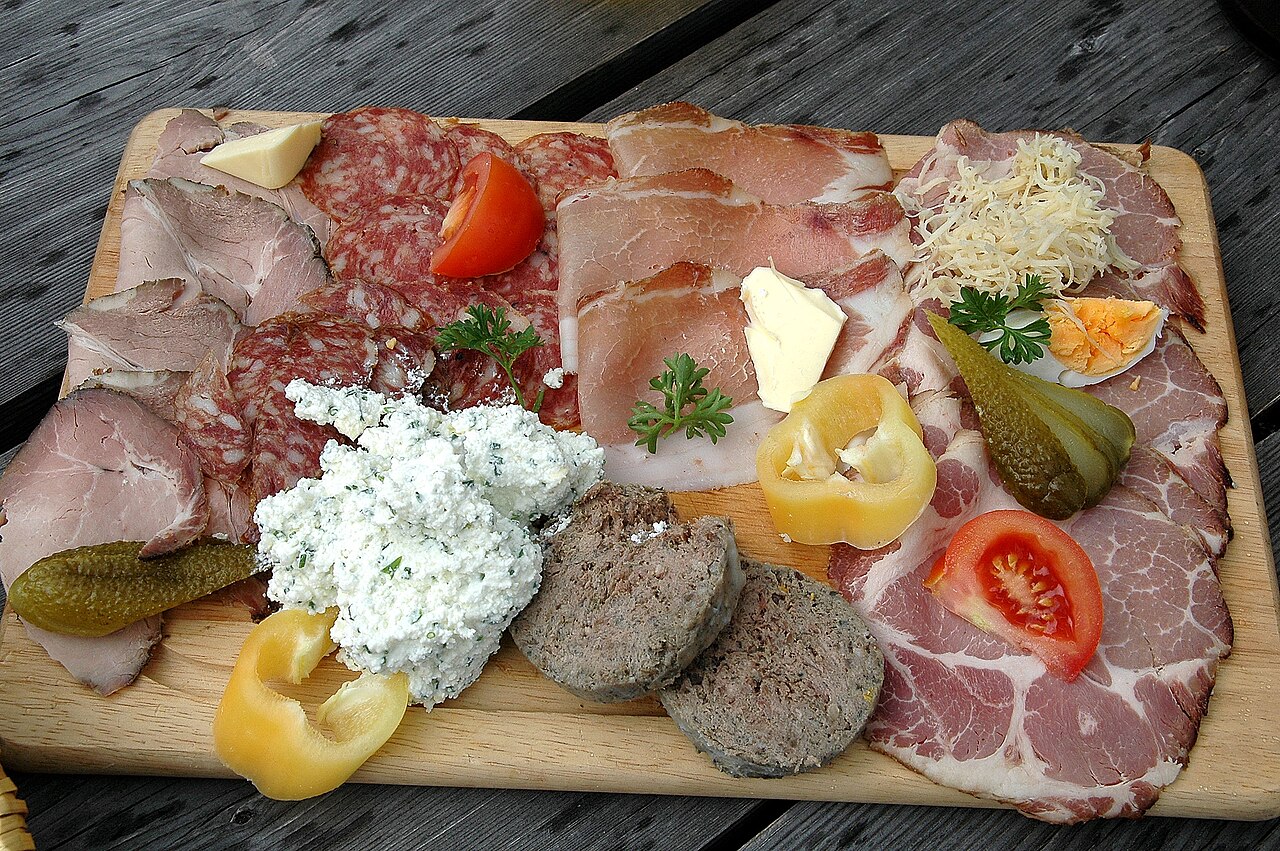
A cold platter served on a wooden board, called a 'Brettl': cured and smoked meats, bacon, cheese, spreads, horseradish, pickles and dark bread. In Styria it often comes with a salad dressed with dark green pumpkin seed oil.
Styrian pumpkin seed oil looks green in a thin layer and deep red in a thick one. It is used cold, on salads and even on vanilla ice cream.
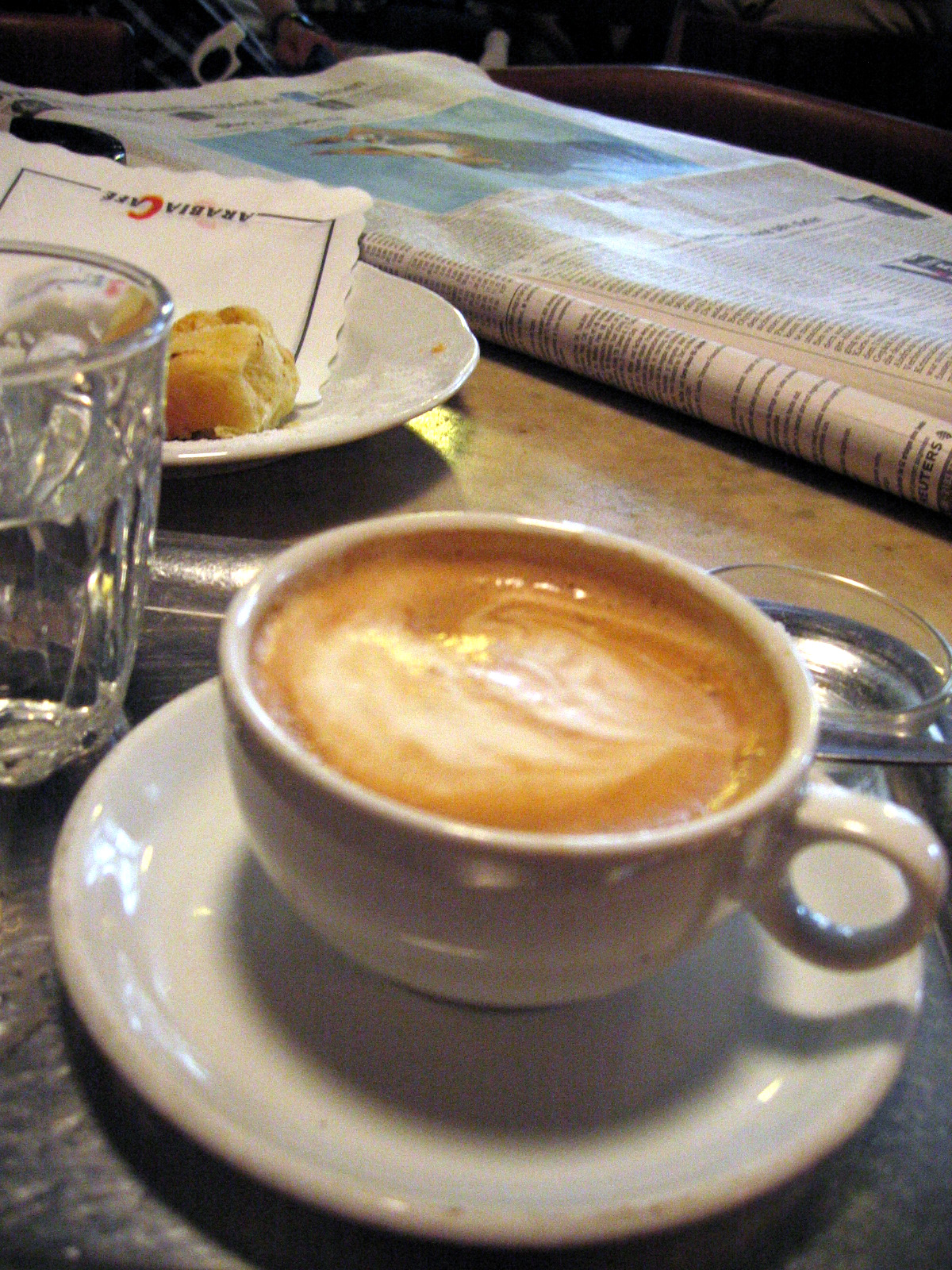
The classic coffee of the Viennese coffee house, similar to a cappuccino but milder: coffee with steamed milk and a cap of milk foam. Like every coffee in a traditional coffee house, it comes with a glass of water.
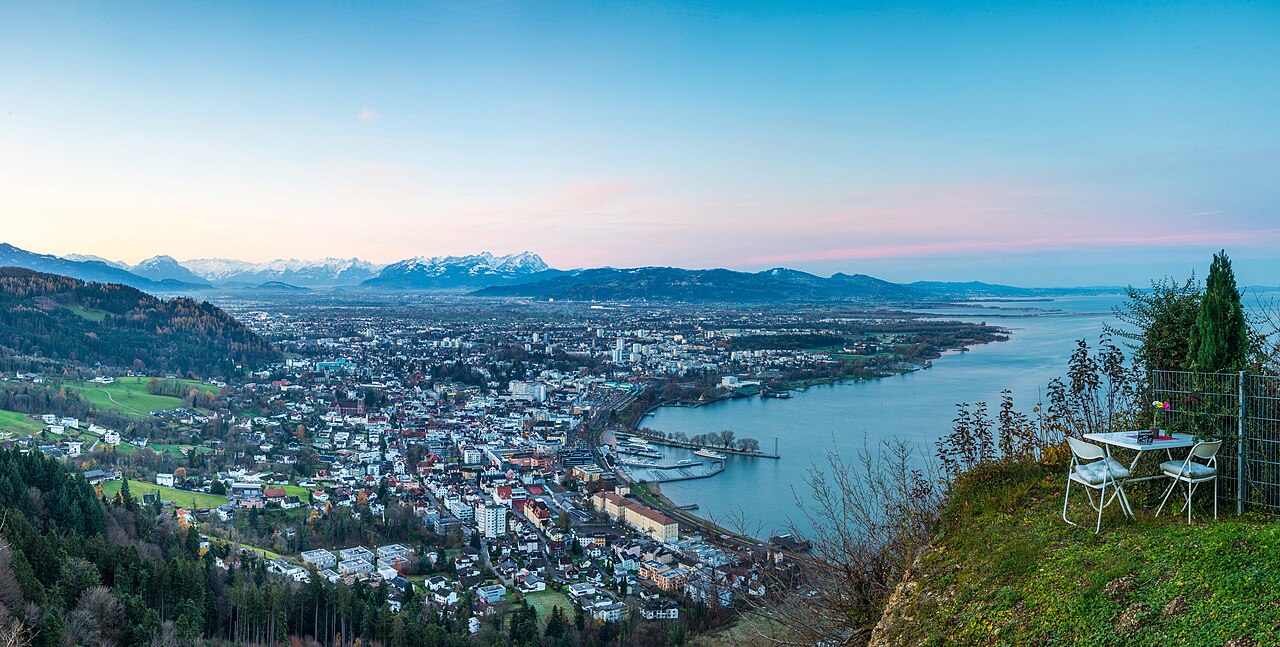
Each of Austria's nine states has its own capital. Vienna is by far the largest city, but Graz, Linz, Salzburg and Innsbruck each have their own character, and some of the best-loved places are tiny towns on a lake or on the Danube.
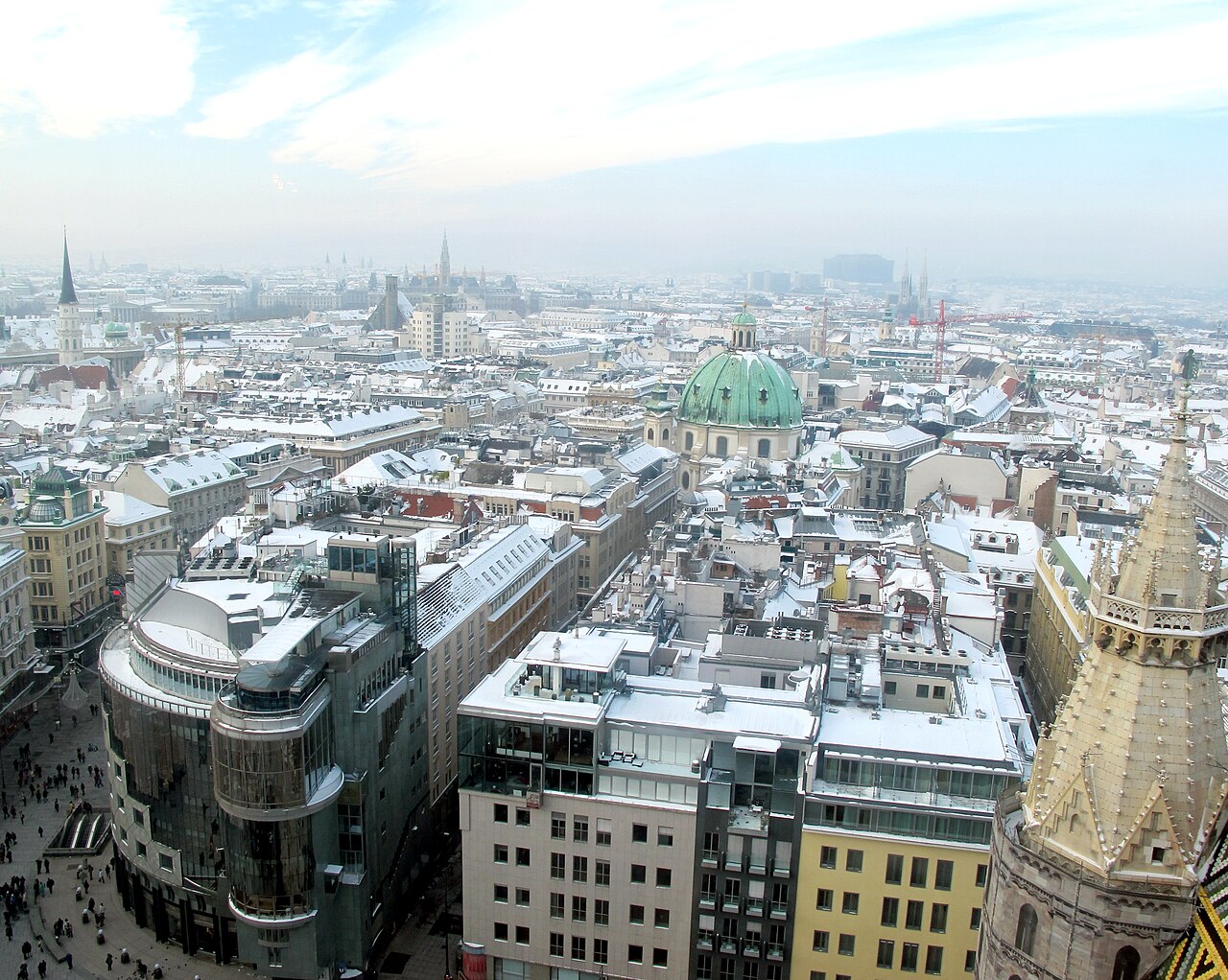
The capital and largest city, with about 2 million people, more than one in five of all Austrians. For centuries it was the seat of the Habsburg emperors, and it is still a great city of music, palaces and coffee houses on the Danube.
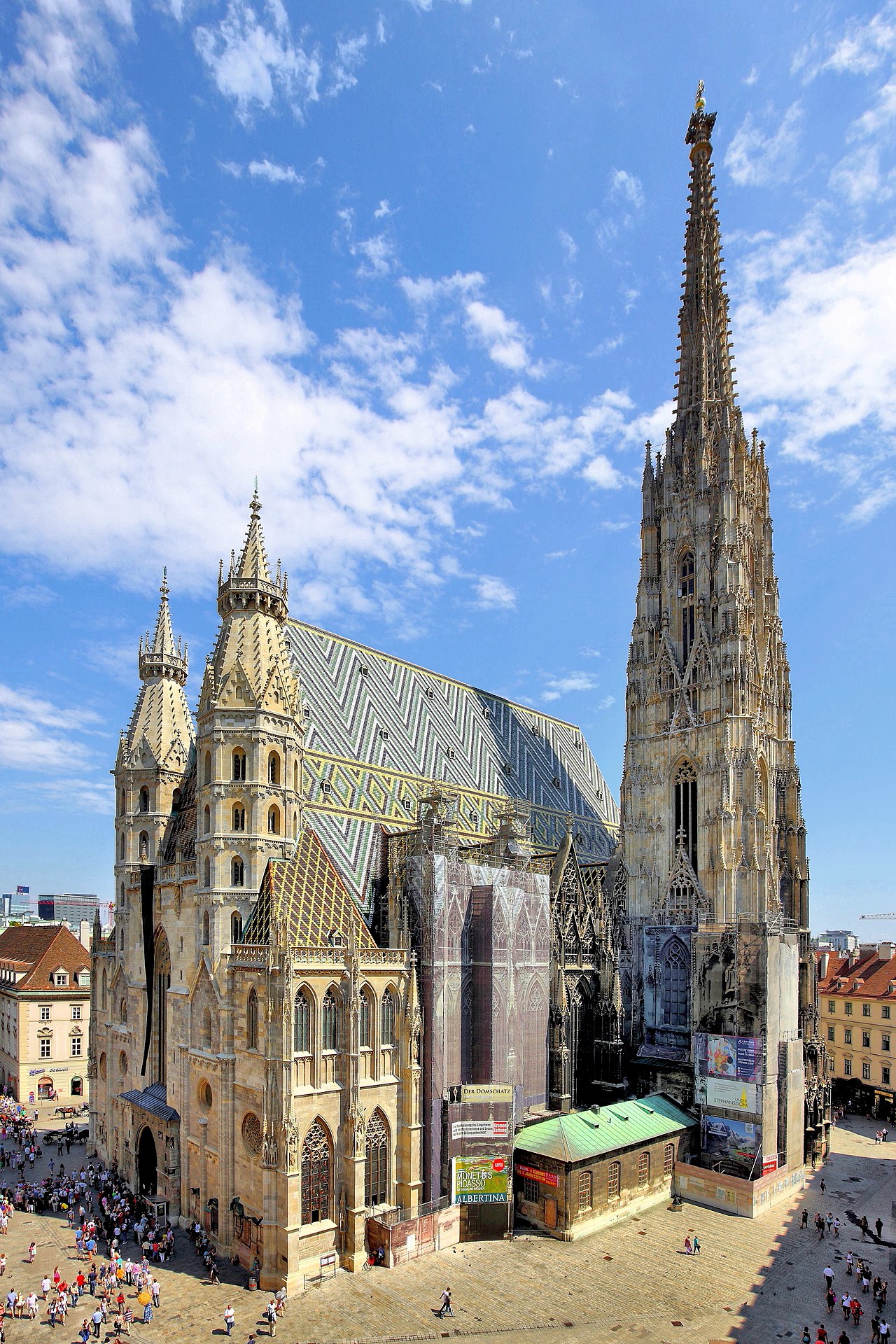
St. Stephen's Cathedral
The Vienna State Opera and the Ringstrasse
Traditional coffee houses
United Nations offices and many international organisations
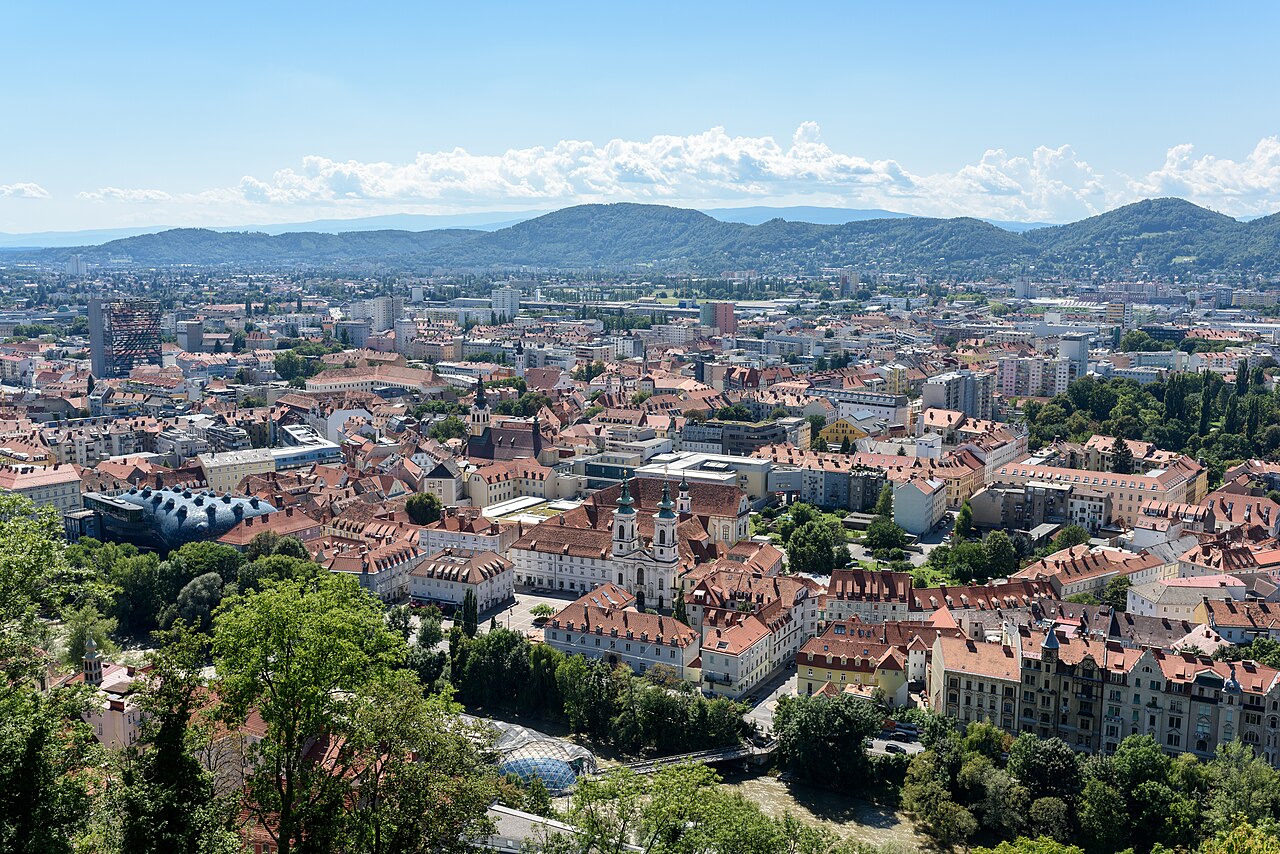
Austria's second-largest city, with about 308,000 people, and the capital of Styria, on the River Mur. Its old town is one of the best preserved in Central Europe, and with four universities it is a lively student city.
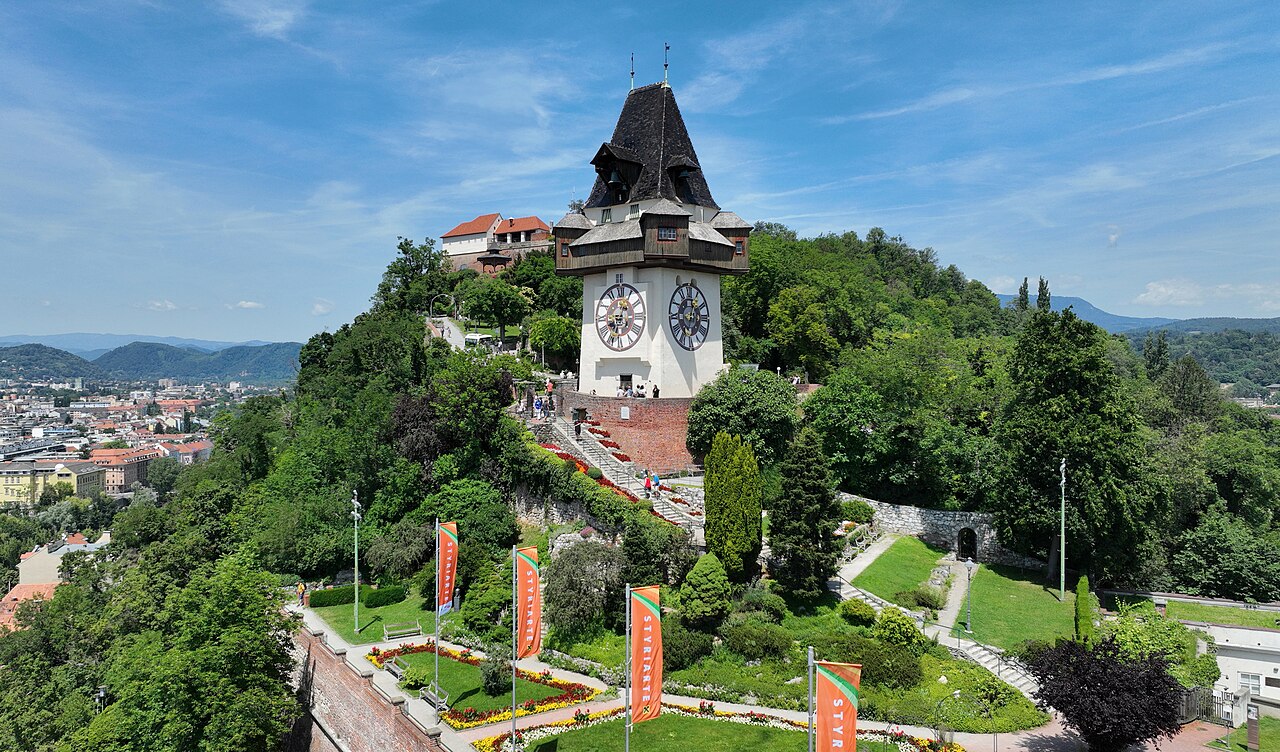
The Clock Tower on the Schlossberg
A UNESCO World Heritage old town and Schloss Eggenberg
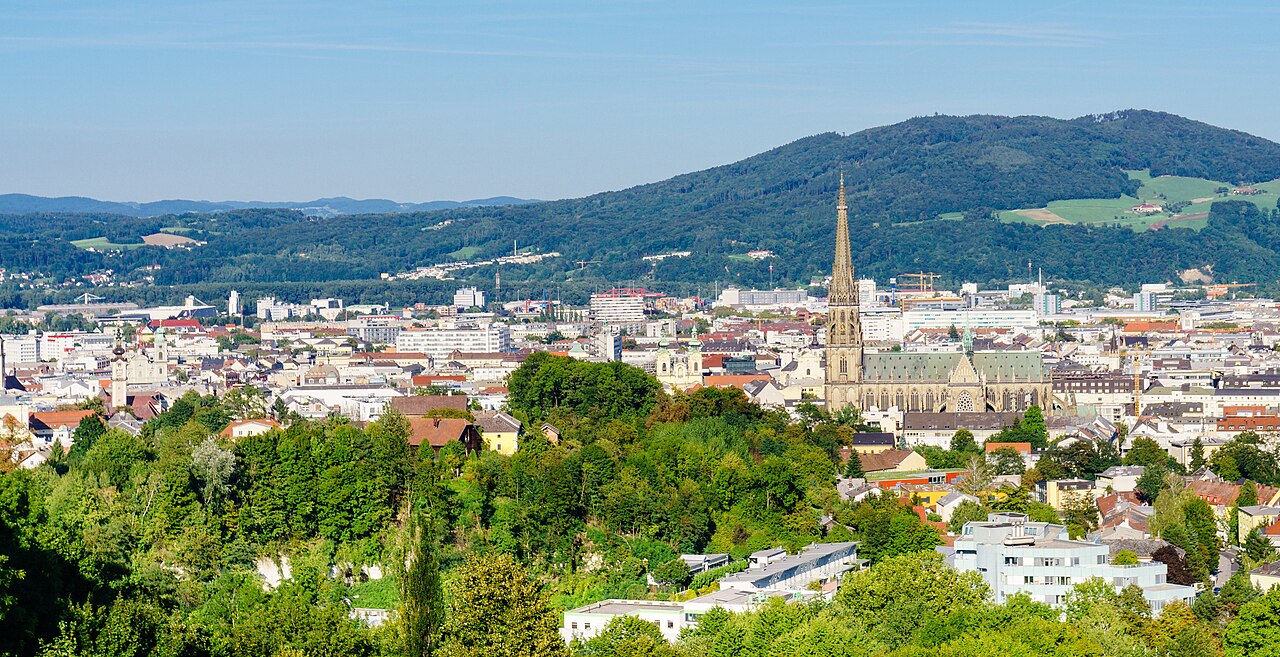
The third-largest city, with about 214,000 people, and the capital of Upper Austria, on the Danube. Once a Roman settlement called Lentia, it is today an industrial centre with a strong interest in new media and art. The astronomer Johannes Kepler taught here.
Ars Electronica, a centre and festival for digital art
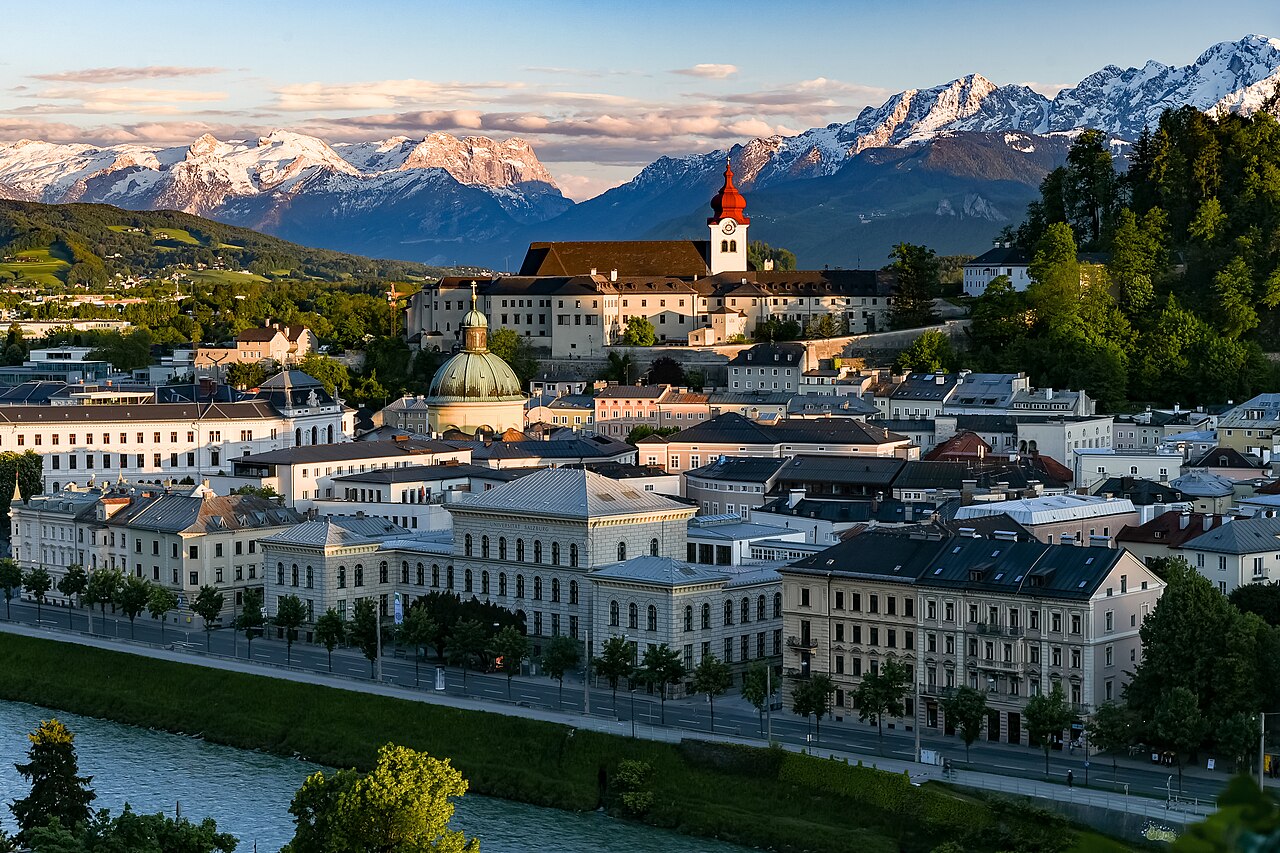
The fourth-largest city, with about 158,000 people, on the River Salzach near the German border. For centuries it was ruled by prince-archbishops, who grew rich on salt and built a baroque city under a hilltop fortress. Mozart was born here in 1756.
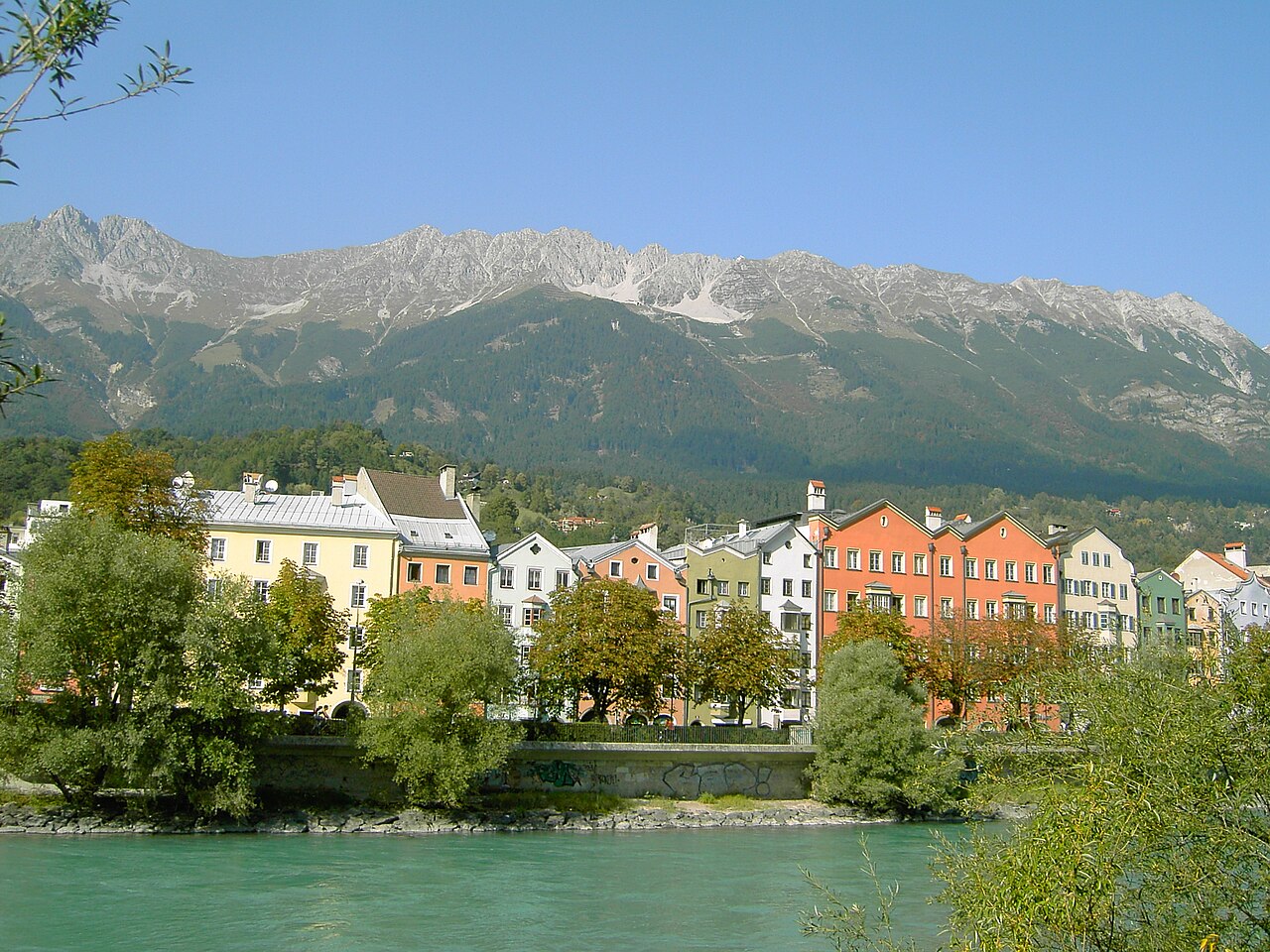
The capital of Tyrol, with about 132,000 people, on the River Inn. Its name means 'bridge over the Inn'. High mountains rise right behind the old town, and Emperor Maximilian I made it one of his favourite residences around 1500.
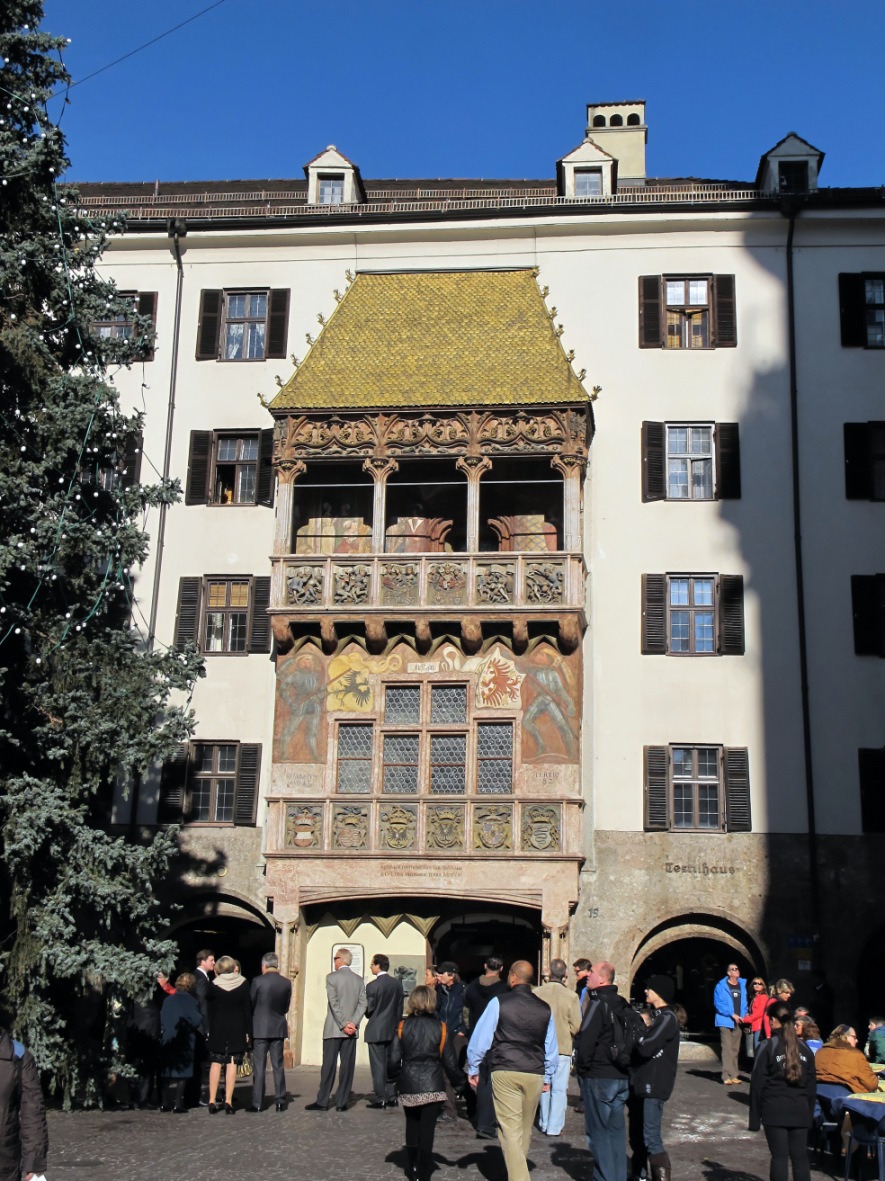
The Golden Roof
Winter Olympic Games in 1964 and 1976
The Nordkette mountains, reached by cable car from the city
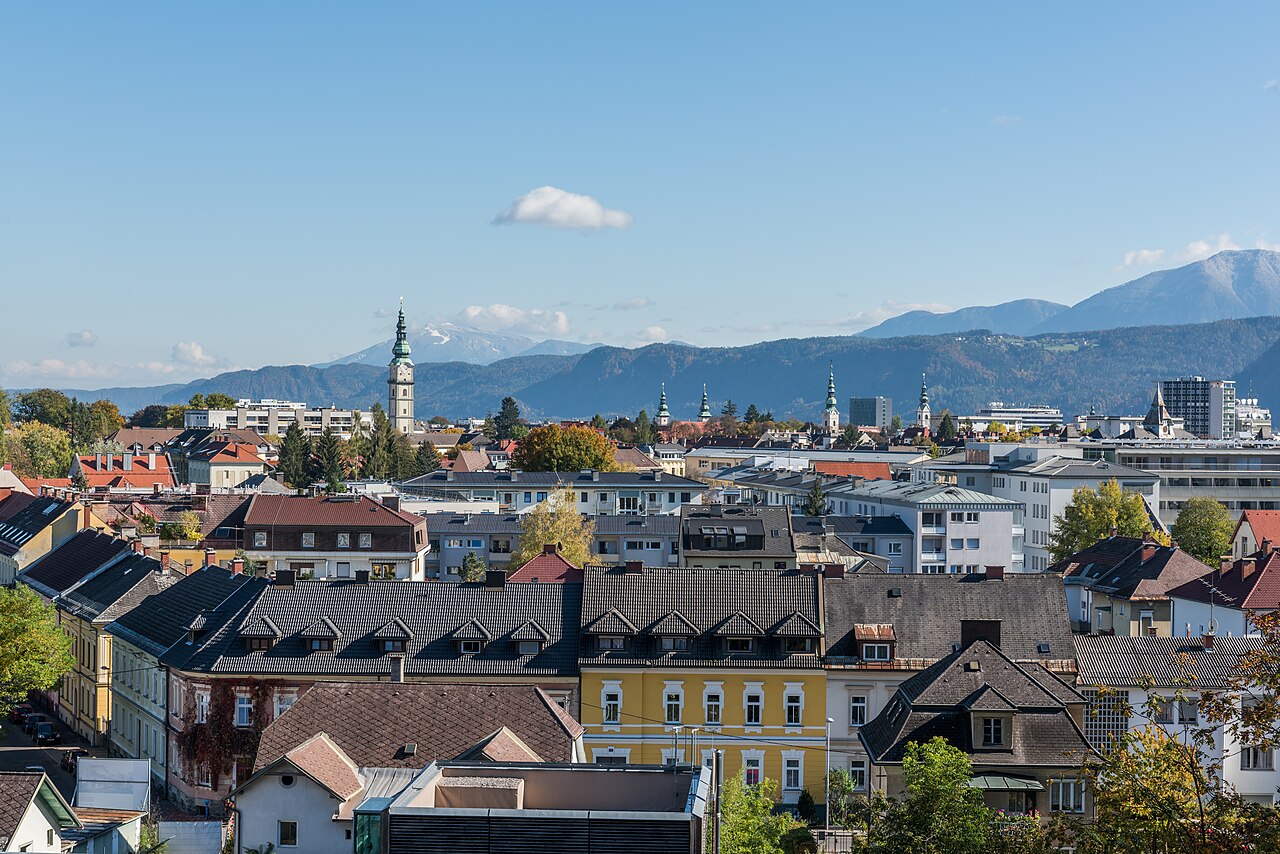
The capital of Carinthia, with about 106,000 people, near the Slovenian border at the eastern end of the Wörthersee, a warm Alpine lake popular for swimming. It is also the cultural centre of the Carinthian Slovenes.
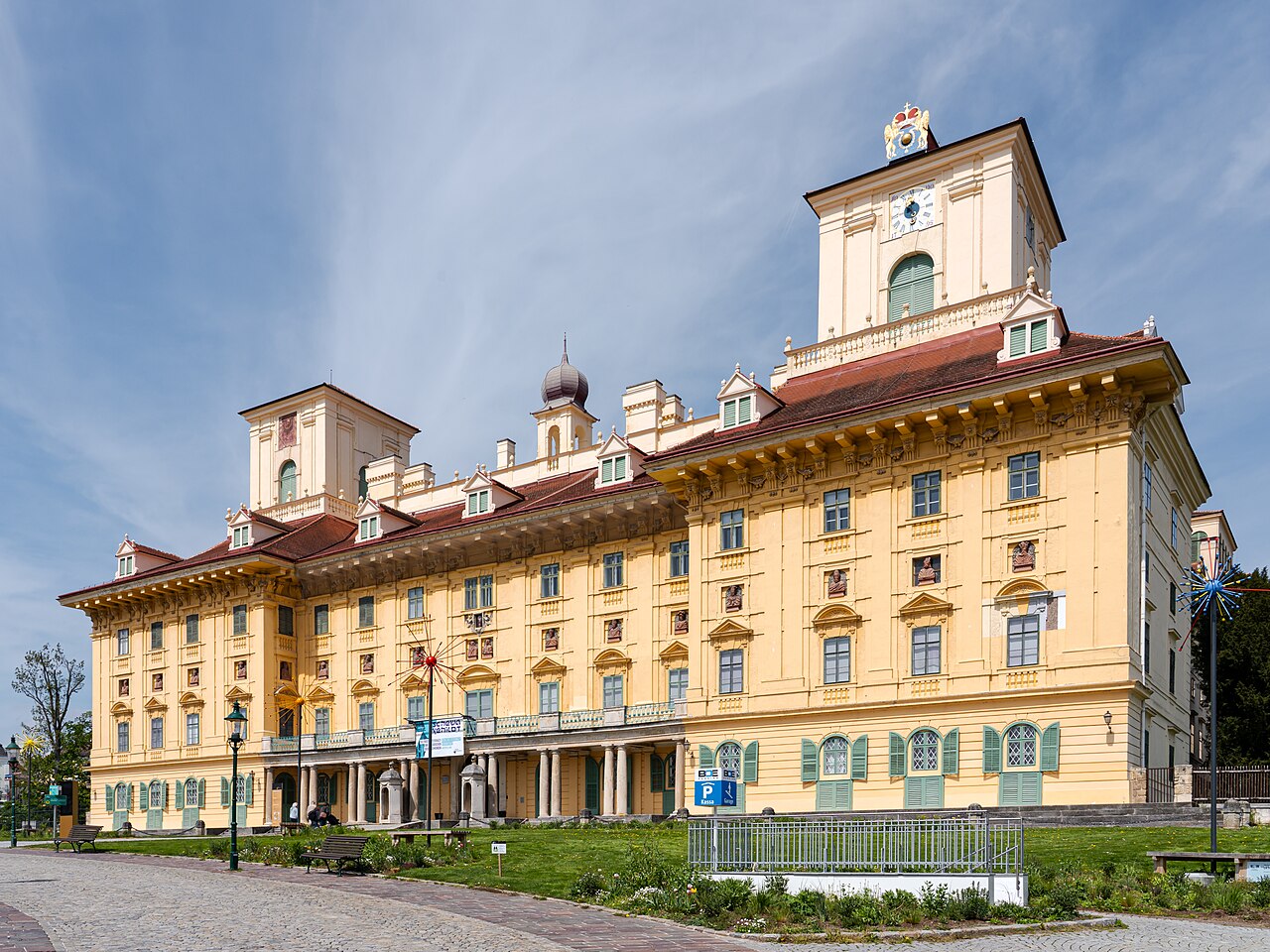
The capital of Burgenland since 1925 and the smallest of Austria's state capitals, with about 16,000 people. The composer Joseph Haydn worked here for the Esterházy princes and is buried in the town's Bergkirche.
A tiny village of fewer than 800 people between the Hallstätter See and the Dachstein mountains. Salt has been mined here since prehistoric times, and the village gave its name to the Hallstatt culture. Today it receives many thousands of visitors a day, so a quiet, respectful visit is appreciated.
The salt mine
Part of the Hallstatt-Dachstein Salzkammergut World Heritage Site
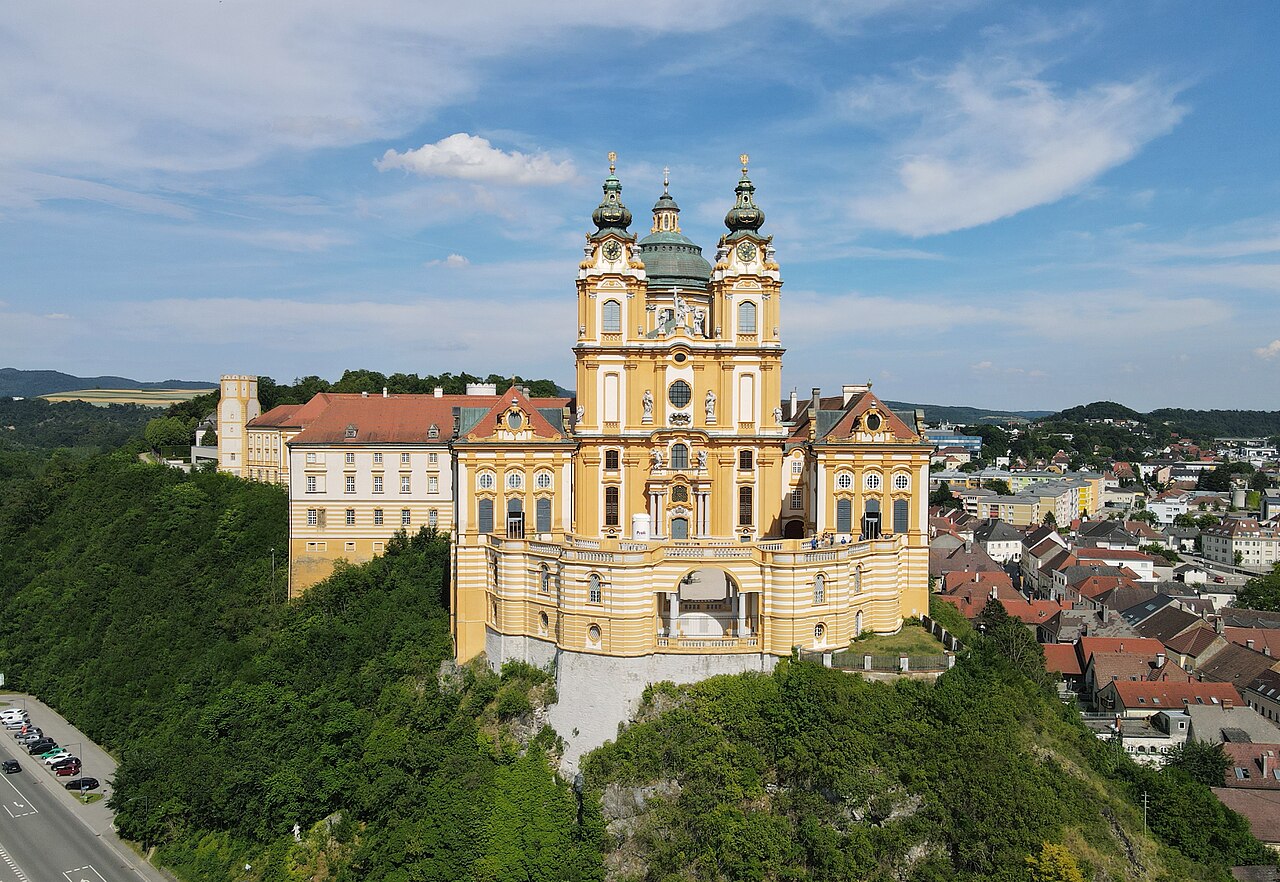
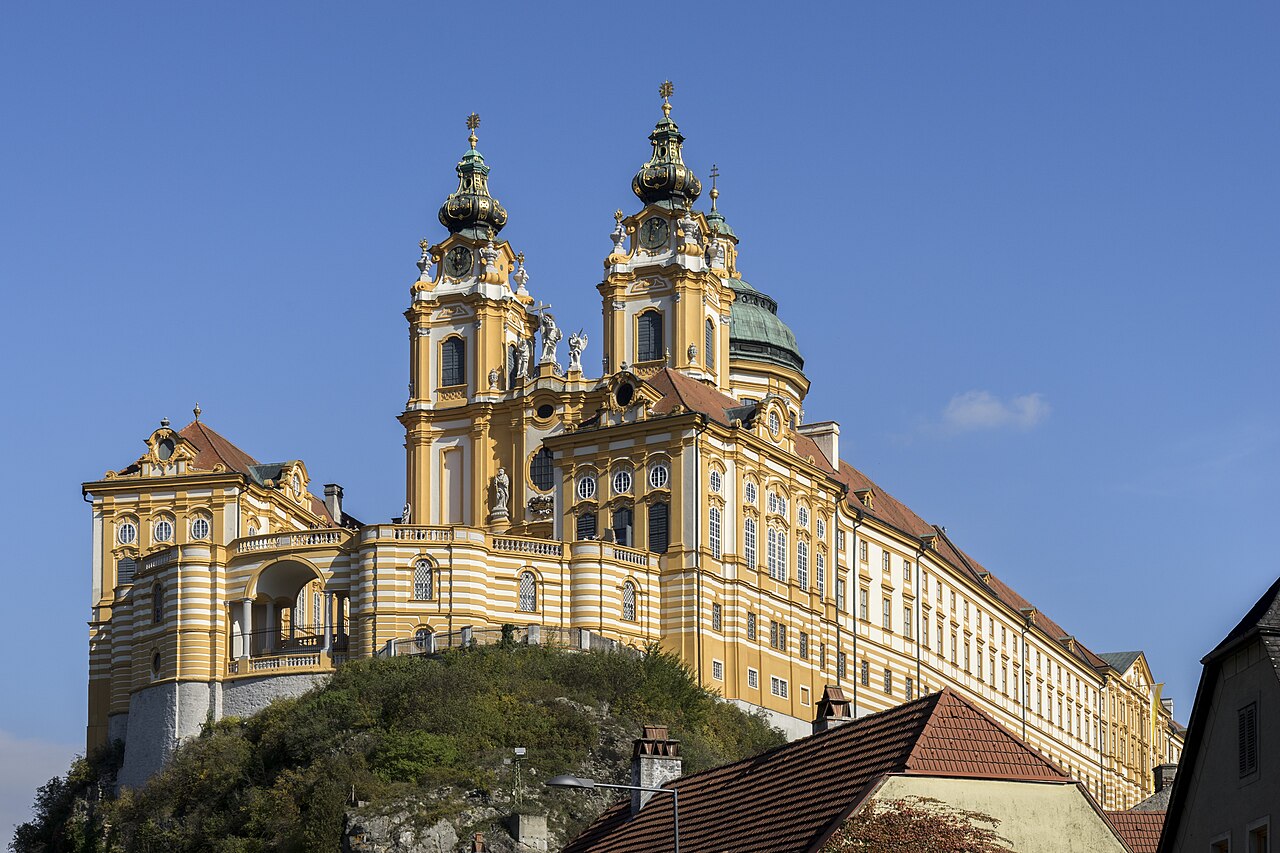
A small town on the Danube at the western end of the Wachau valley, a 36 km stretch of vineyards, apricot orchards, monasteries and castles between Melk and Krems. Above the town rises the golden-yellow Melk Abbey.
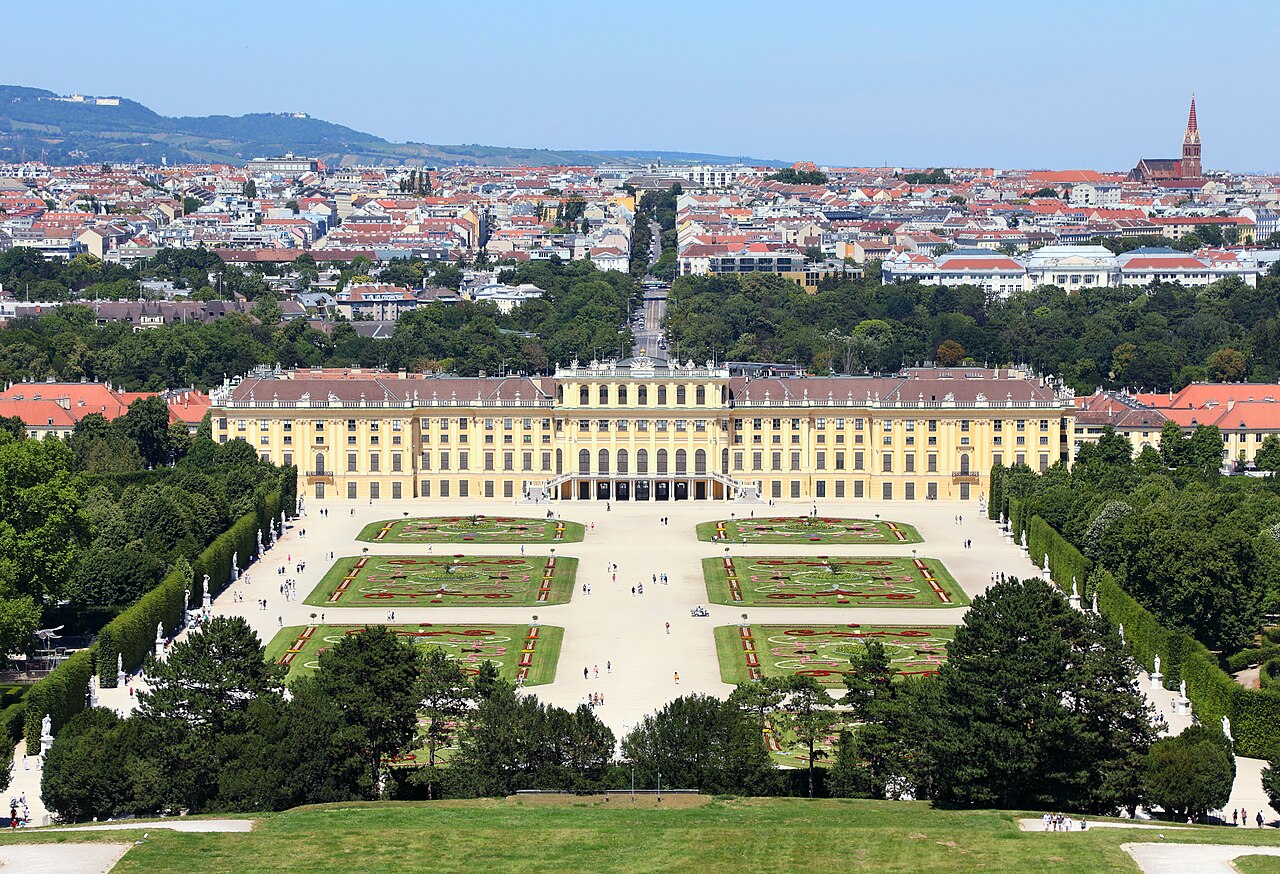
The summer residence of the Habsburgs, a baroque palace with 1,441 rooms and huge gardens crowned by the Gloriette. Emperor Franz Joseph was born here in 1830 and died here in 1916. It is one of Austria's most visited sights and has been a World Heritage Site since 1996.
Vienna's great cathedral in the heart of the old town, begun in 1137. Its south tower, 136 m high and known as the 'Steffl', took 65 years to build, and its roof is covered in about 230,000 glazed tiles. The Pummerin, cast in 1951, is the largest bell in Austria.
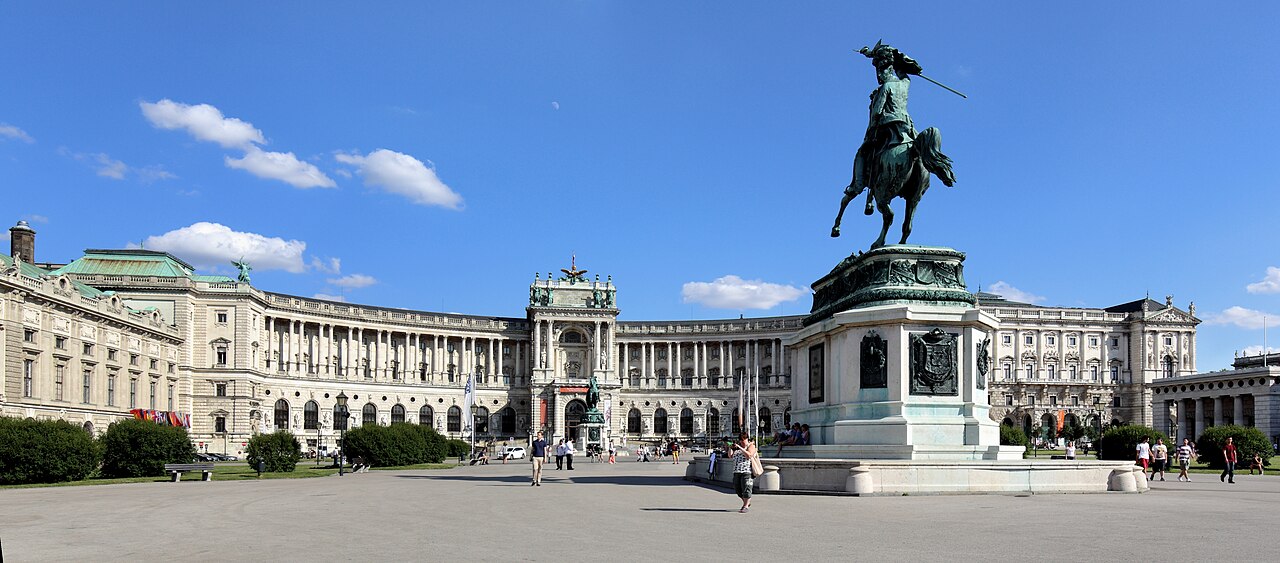
The vast imperial palace in central Vienna, the Habsburgs' winter residence for centuries. Today it is the official residence of the Federal President and houses the imperial treasury, the Austrian National Library and the Spanish Riding School.
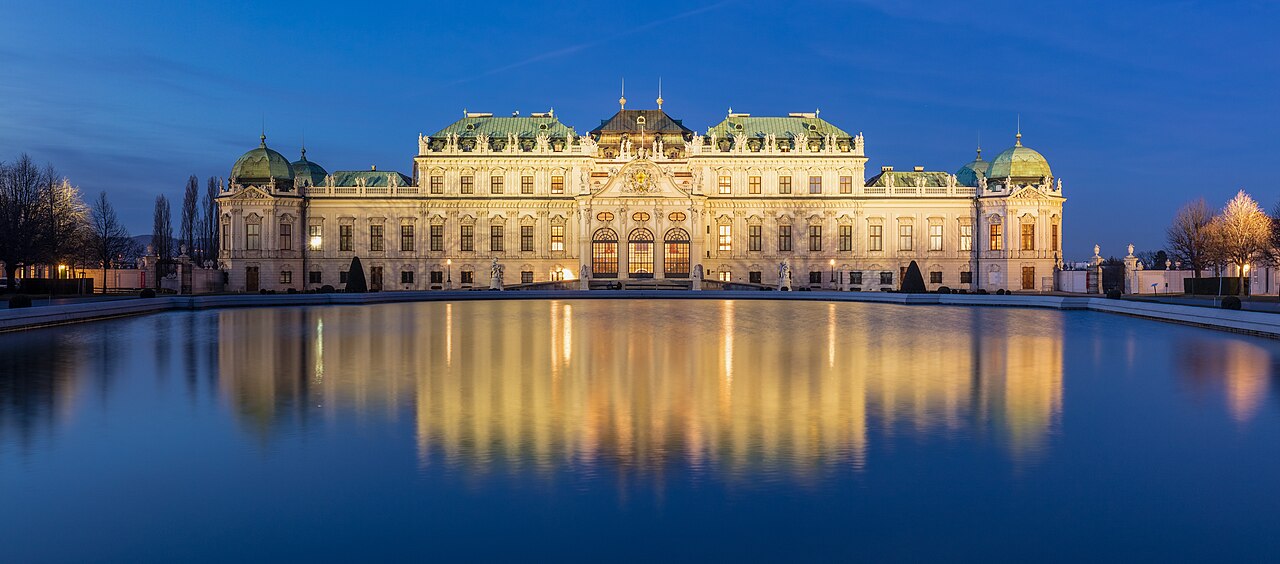
Two baroque palaces, the Upper and Lower Belvedere, built for Prince Eugene of Savoy and completed in 1723, with a formal garden between them. The Austrian State Treaty was signed here in 1955. Today it is an art museum whose collection includes Gustav Klimt's 'The Kiss'.
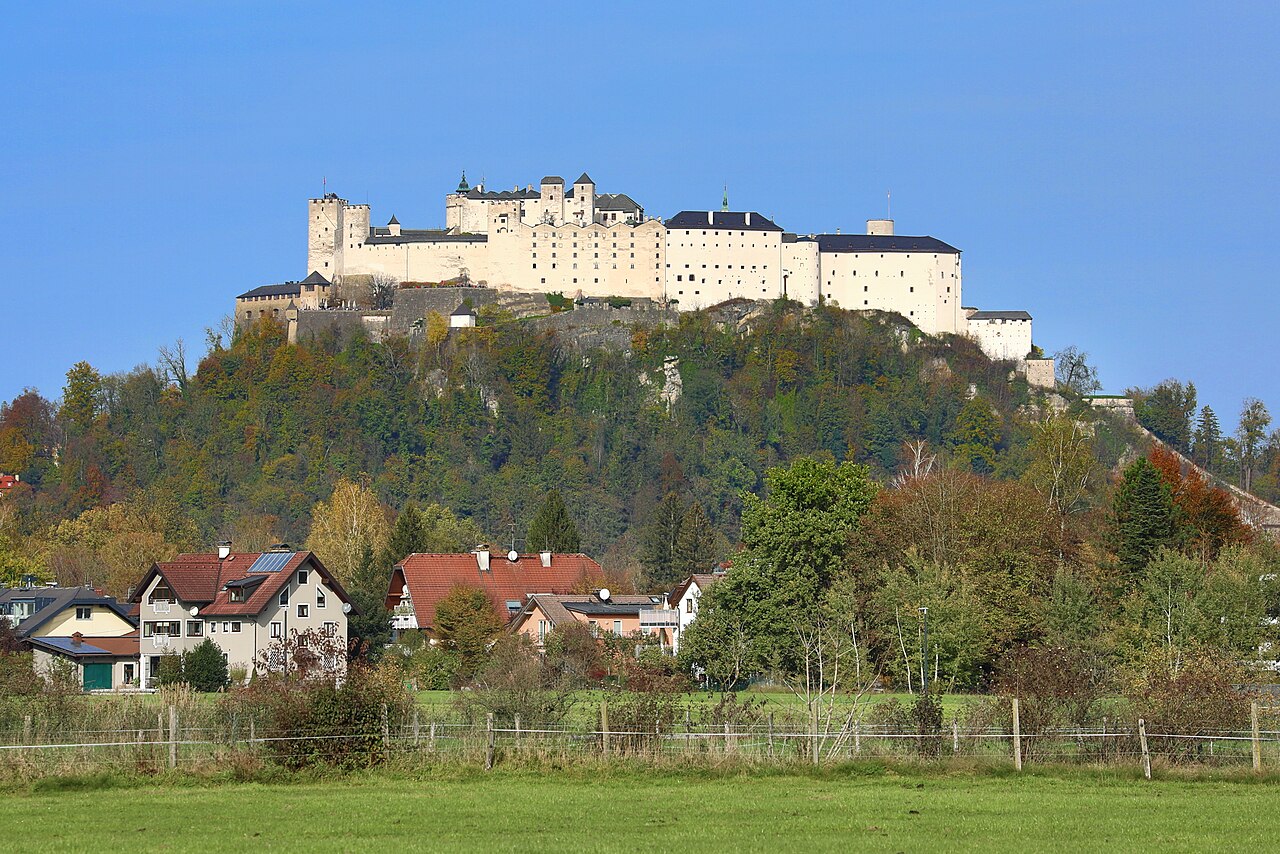
Begun in 1077 under Archbishop Gebhard, this fortress on the Festungsberg is one of the largest medieval castles in Europe, 250 m long. A funicular railway has carried visitors up from the old town since 1892.
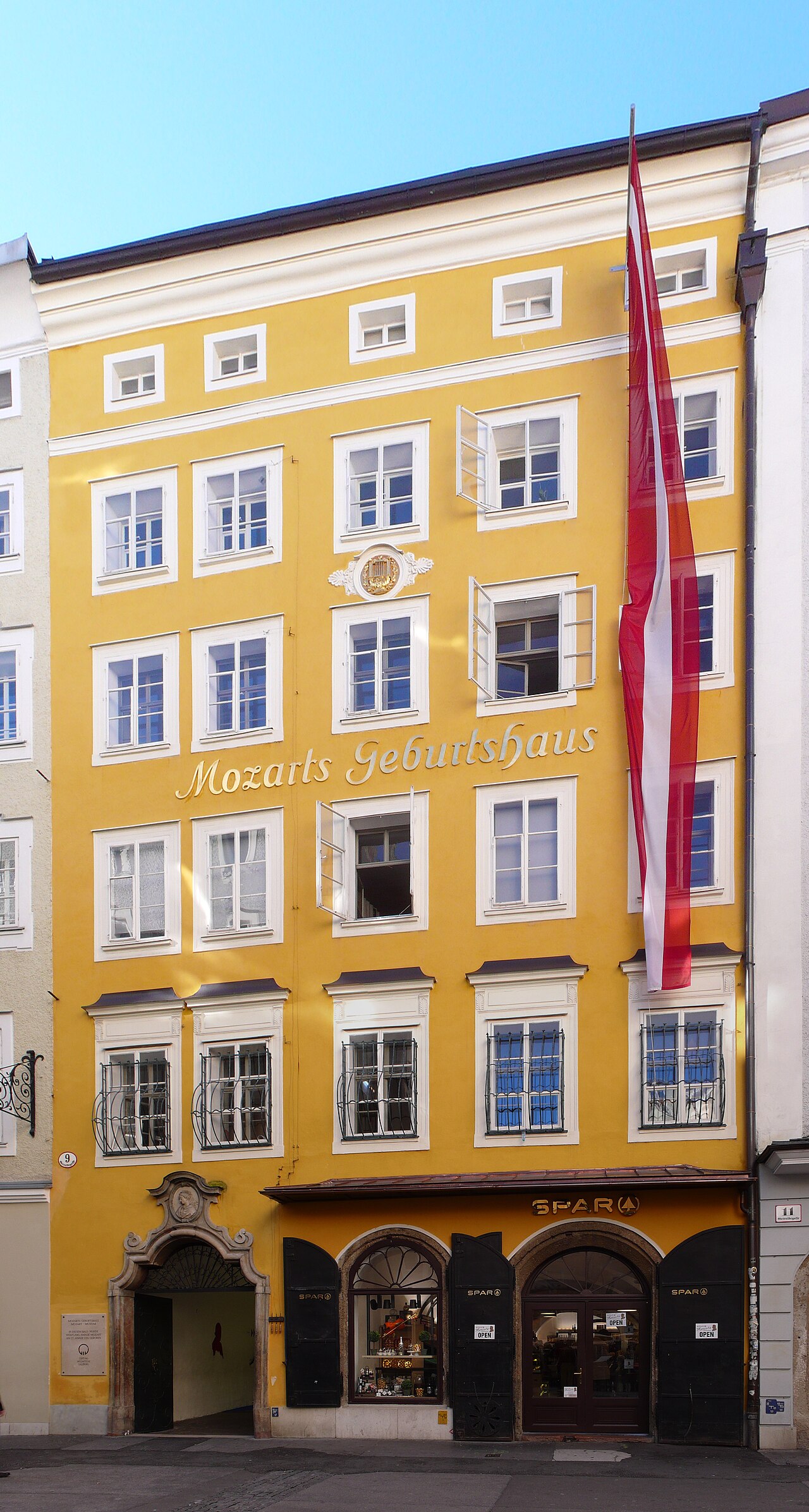
The house at Getreidegasse 9 where Wolfgang Amadeus Mozart was born on 27 January 1756, in the family's third-floor flat. It has been a museum since 1880 and shows his childhood violin and family portraits.
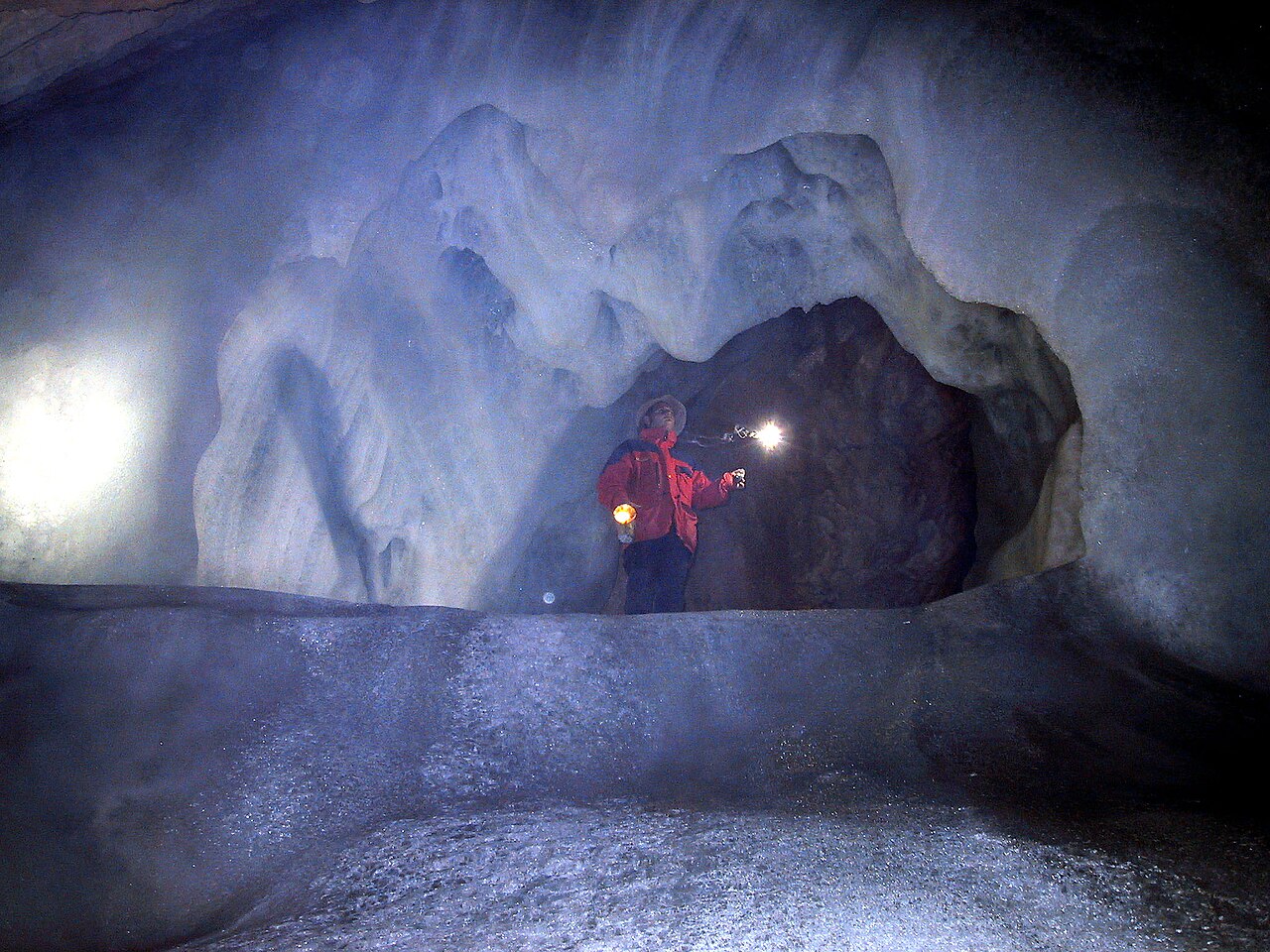
A huge limestone cave high above Werfen, about 40 km south of Salzburg. The cave system is more than 42 km long, and in its first kilometre, the part open to visitors, the rock is covered in ice. It is open from May to October, and warm clothes are needed inside.
A Benedictine monastery on a rock above the Danube, founded in 1089 and rebuilt in grand baroque style between 1702 and 1736 by Jakob Prandtauer. Its library and church are famous, and monks still live and teach here. It is part of the Wachau World Heritage Site.
The symbol of Graz, standing on the castle hill above the old town. When Napoleon's troops pulled down the fortress in 1809, the people of Graz paid to save the Clock Tower. On its clock the larger hand shows the hours and the smaller hand the minutes, the opposite of most clocks.
A balcony in Innsbruck's old town, finished in 1500 for Maximilian I, covered with 2,657 fire-gilded copper tiles. From here the ruler and his court watched festivals and tournaments in the square below.
The carol 'Silent Night' was first sung on Christmas Eve 1818 in the church of St Nicholas in Oberndorf, near Salzburg. The priest Joseph Mohr had written the words in 1816, and the teacher Franz Xaver Gruber wrote the melody for that evening. It has been translated into about 300 languages.
02
The zoo at Schönbrunn Palace in Vienna was founded in 1752 and is described as the oldest zoo in the world that is still open.
03
The Vienna Boys' Choir goes back to 1498, when Emperor Maximilian I ordered six boys to sing at his court. Today about 100 boys aged 9 to 14 sing in four touring choirs named after Bruckner, Haydn, Mozart and Schubert.
04
The red-white-red flag is one of the oldest national symbols still in use; the earliest evidence is a seal from 1230. Legend says Duke Leopold V's white tunic was soaked in blood at the siege of Acre, except under his belt.
05
The German name of Austria, Österreich, comes from 'Ostarrîchi', 'eastern realm', first written in a deed of 996.
06
Viennese coffee house culture was added to Austria's national list of intangible cultural heritage in 2011. The listing describes coffee houses as places 'where time and space are consumed, but only the coffee is found on the bill'.
07
The Spanish Riding School in Vienna was first named in 1565. Its Lipizzaner horses are born dark and slowly turn white as they grow up. Its classical horsemanship has been on UNESCO's list of the intangible heritage of humanity since 2015.
08
Johann Strauss II's waltz 'The Blue Danube' was first performed in Vienna in 1867. The first performance was only a mild success, but today many Austrians treat it as an unofficial anthem.
09
Since 1 January 2012, Austria's national anthem has spoken of a 'home of great daughters and sons'; before, it mentioned only sons. Its melody was long credited to Mozart, but scholars now think it was written by someone else.
10
The song 'Edelweiss' is not an Austrian folk song or anthem. Richard Rodgers and Oscar Hammerstein II wrote it in 1959 for the Broadway musical The Sound of Music.
11
The film The Sound of Music (1965) was shot partly in and around Salzburg. The real von Trapp family left Austria in 1938 by train, not by walking over the mountains as in the film.
12
The Economist Intelligence Unit ranked Vienna the world's most liveable city in 2018, 2019, 2022, 2023 and 2024. As of 2026, it ranks second, behind Copenhagen.
13
When Austria joined the European Union in 1995, 23 Austrian food words, such as 'Marille' for apricot and 'Topfen' for curd cheese, were written into the accession treaty with the same legal status as the words used in Germany.
14
As of 2026, Austria has 12 UNESCO World Heritage Sites, from the historic centres of Vienna, Salzburg and Graz to the Semmering mountain railway and the Wachau valley.
Many everyday words, especially for food, are different from the words used in Germany. In German every noun starts with a capital letter. The pronunciation guides are simple approximations for English speakers. Pronunciation is written the way it sounds; the capital letters show where the stress goes. Audio is coming soon.
Greetings
Grüß GottGRUESS GOT (the 'ü' is said with rounded lips)hello (polite, used all day)
ServusSAIR-vooshi, and also bye (friendly)
Bababah-BAHbye (informal, especially in eastern Austria)
In German (Deutsch), as spoken in Austria. Austrians switch easily to standard German with visitors, and many people speak English, but a greeting in German is always welcome.
Grüß Gott
GRUESS GOT (the 'ü' is said with rounded lips)
Hello (literally 'God greet you')
The polite greeting when you enter a shop, a restaurant or an office
Guten Morgen
GOO-ten MOR-gen
Good morning
Greeting someone in the morning
Guten Abend
GOO-ten AH-bent
Good evening
Greeting someone in the evening
Auf Wiedersehen
owf VEE-der-zay-en
Goodbye
Leaving a shop or saying goodbye politely
Wie geht es Ihnen?
vee GAYT es EE-nen
How are you? (polite)
Asking after someone's health politely
Danke schön
DAHN-keh SHERN
Thank you very much
Thanking someone warmly
Bitte schön
BIT-teh SHERN
You're welcome, or here you are
Answering a thank you, or handing something over
Entschuldigung
ent-SHOOL-dee-goong
Excuse me, sorry
Getting someone's attention or saying sorry
Sprechen Sie Englisch?
SHPREKH-en zee ENG-lish
Do you speak English?
Before asking for help
Ich verstehe nicht
ikh fer-SHTAY-eh nikht
I don't understand
When someone speaks too fast
Die Speisekarte, bitte
dee SHPY-zeh-kar-teh, BIT-teh
The menu, please
In a restaurant
Eine Melange, bitte
EYE-neh meh-LAHNZH, BIT-teh
A Melange (milky coffee), please
Ordering the classic coffee in a coffee house
Ein Glas Wasser, bitte
ine glahs VAHS-ser, BIT-teh
A glass of water, please
Asking for water; tap water in Austria is excellent
Zahlen, bitte
TSAH-len, BIT-teh
The bill, please (literally 'to pay, please')
Asking for the bill in a restaurant or café
Prost!
PROHST
Cheers!
Raising a glass, while looking the others in the eye
Cars need a vignette (toll sticker or digital vignette) to use Austria's motorways and expressways, with options from 1 day to a year. As of 2026 the sticker is sold for the last time, and from 2027 there will only be the digital vignette. A 2-month or annual digital vignette bought online by a private buyer is valid only from the 18th day after purchase, so buy early, or choose a 1-day or 10-day one.
Shops close on Sundays
Most shops, including supermarkets, are closed on Sundays. Some shops at larger railway stations, at airports and at petrol stations stay open, and so do restaurants and cafés, so do your shopping on Saturday.
Say hello when you walk in
When you enter a small shop or a restaurant, say 'Grüß Gott' and 'Auf Wiedersehen' when you leave. It is noticed and appreciated.
Tipping
Tipping is usual but modest: round up, or add about 5 to 10 percent for a meal. Tell the server the total you want to pay when you hand over the money, rather than leaving coins on the table.
Carry some cash
Cards are accepted more and more, but Austria is still quite a cash-loving country, and some small shops, huts and taverns take cash only.
Plugs and water
Austria uses round two-pin plugs (type F, 'Schuko') and 230 volts, so visitors from Britain, Ireland and North America need an adapter. Tap water is of excellent quality and safe to drink.
Emergencies
The European number 112 works everywhere. Austria also has its own numbers: 144 for an ambulance, 122 for the fire brigade, 133 for the police and 140 for mountain rescue.
 Czechia
 Germany
 Hungary
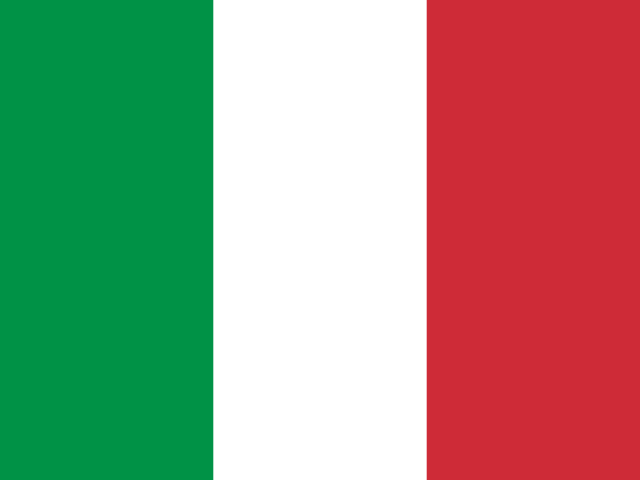 Italy
Italy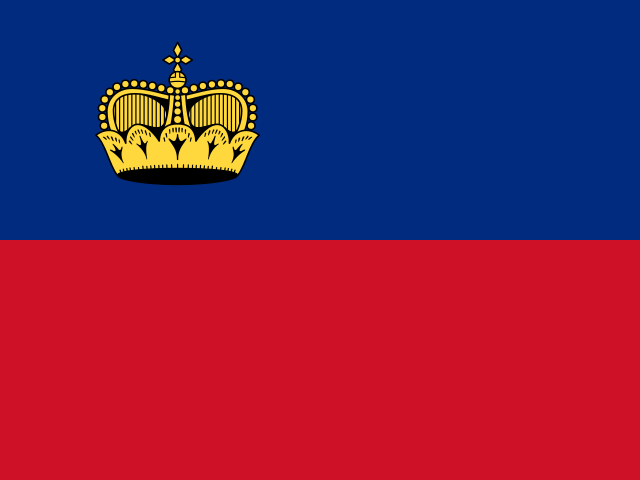 Liechtenstein
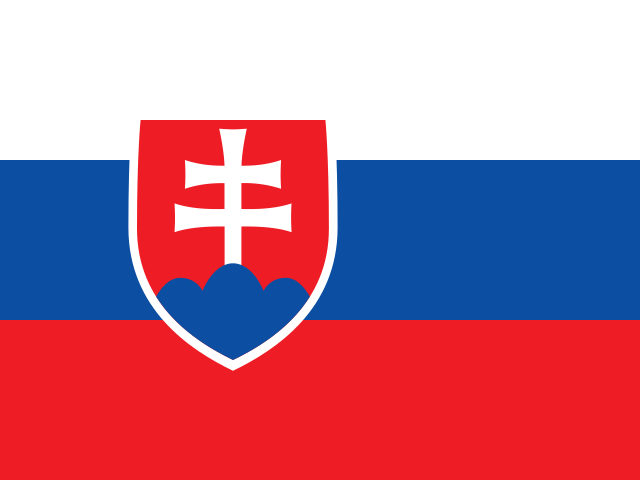 Slovakia
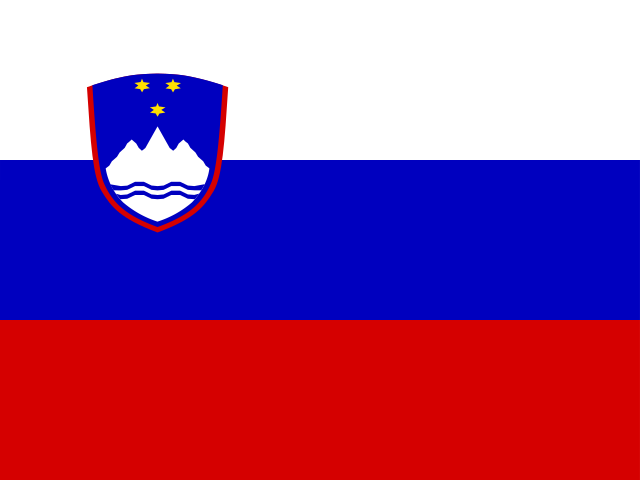 Slovenia
 Switzerland