 Austria
 Croatia
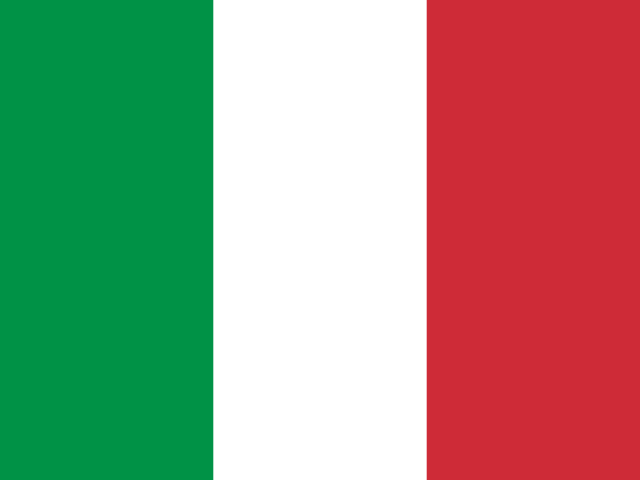 Italy
Italy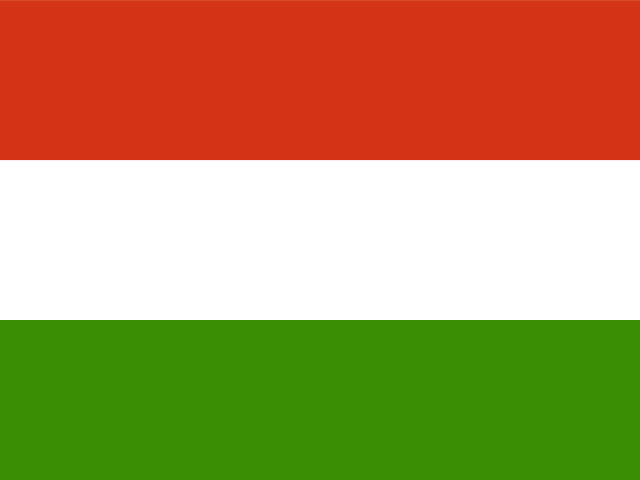 Hungary
The oldest known wooden wheel
People living in pile dwellings in the Ljubljana Marsh made a wooden wheel that was found in 2002. Radiocarbon dating shows it is roughly 5,100 to 5,350 years old, the oldest wooden wheel yet discovered.
A free large-print PDF. Choose what goes in: facts, map, history, dishes and recipes, phrases, fun facts, a quiz with or without answers. Made for clubs, care homes, libraries and family afternoons.
Slovenia is one of Europe's smaller countries, but it packs a great deal into about 20,000 square kilometres. Four major landscapes meet here: the Alps in the north, the Dinaric mountains and the limestone Karst in the south-west, the flat Pannonian plain in the east, and a short strip of Adriatic coast, only about 47 km long, on the Gulf of Trieste. About 60% of the land is forest, and the white peak of Triglav appears on the national flag.
The land has been home to many peoples and states: Roman towns such as Emona, the Slavic principality of Carantania, centuries under the Habsburgs, and in the 20th century the kingdom and then the socialist federation of Yugoslavia. Slovenes kept their own language through it all, and the first books in Slovene were printed in 1550.
Slovenia declared independence on 25 June 1991, and a short war of ten days followed. Today it is a parliamentary republic of about 2.1 million people. It joined the European Union and NATO in 2004 and adopted the euro on 1 January 2007.
Slovenia's story runs from prehistoric pile dwellings and a Roman town, through the Slavic principality of Carantania and more than five centuries of Habsburg rule, to Yugoslavia and independence in 1991.
People living in pile dwellings in the Ljubljana Marsh made a wooden wheel that was found in 2002. Radiocarbon dating shows it is roughly 5,100 to 5,350 years old, the oldest wooden wheel yet discovered.
Around AD 14 to 15, under the emperors Augustus and Tiberius, the Romans built the walled town of Emona where Ljubljana stands today. It had about 5,000 to 6,000 people, mostly merchants and craftsmen.
After the death of the Slavic king Samo in 658, the Slavic principality of Carantania emerged in the eastern Alps. Its dukes were installed in a ritual held in Slovene at the Prince's Stone, a custom last performed in 1414.
Three church texts in an early form of Slovene were written down between 972 and 1039, most likely before the year 1000. They are the oldest document in Slovene and the first continuous text in a Slavic language written in the Latin alphabet.
When Henry of Gorizia died without a male heir, Carinthia and Carniola passed to Duke Albert II of Austria. Most of today's Slovenia became a hereditary land of the Habsburgs, who ruled it until 1918.
The Counts of Celje, a powerful local family who had become princes in 1436 and rivalled the Habsburgs, died out in 1456. Their three golden stars now appear on Slovenia's coat of arms.
The Protestant preacher Primož Trubar wrote the first two books in Slovene, Catechismus and Abecedarium, printed in 1550 in Germany. He is seen as a founder of the Slovene written language.
Napoleon took the region from Austria and made it part of the Illyrian Provinces, with Ljubljana as the capital. French rule lasted only until 1813 to 1814, when Austria took the area back.
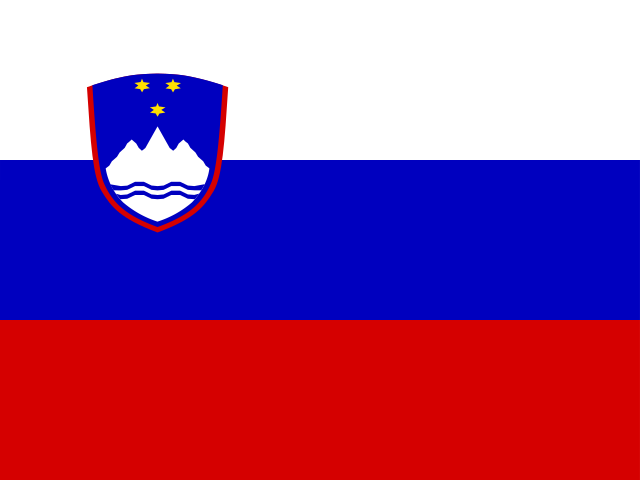
During the revolutions of 1848, the white, blue and red Slovene tricolour was raised for the first time in Ljubljana on 7 April. The same year the idea of a United Slovenia was first put forward.
From June 1915 to November 1917, Italy and Austria-Hungary fought twelve battles along the Soča river, mostly on land that is now in Slovenia. More than 30,000 Slovene soldiers died in the First World War.
On 29 October 1918 a national gathering in Ljubljana declared the new State of Slovenes, Croats and Serbs. On 1 December it merged with Serbia into a kingdom that was renamed Yugoslavia in 1929.
After the Second World War, when Slovenia had been divided mainly between Germany, Italy and Hungary, Slovenia became one of the six republics of socialist Yugoslavia led by Josip Broz Tito.
On 23 December 1990, 88.5% of all registered voters, or about 95% of those who voted, chose a sovereign and independent Slovenia.
Slovenia declared independence on 25 June 1991. Two days later the Yugoslav army moved in, and a short war followed until the Brioni Agreement was signed on 7 July.
Slovenia joined NATO in 2004 and became a member of the European Union on 1 May 2004.
On 1 January 2007 Slovenia became the first of the countries that joined the EU in 2004 to adopt the euro, replacing the tolar, which had been its currency since 1991.
Slovenian food mixes the hearty cooking of the Alps, Austria and Hungary with the olive oil, ham and wine of the Mediterranean coast, and experts count more than 20 food regions in this small country. A typical meal starts with a soup, often a clear beef broth with noodles, then meat with potatoes and a sharp green salad, with fresh bread on the side. Buckwheat, cottage cheese, walnuts, honey and pumpkin seed oil turn up again and again.
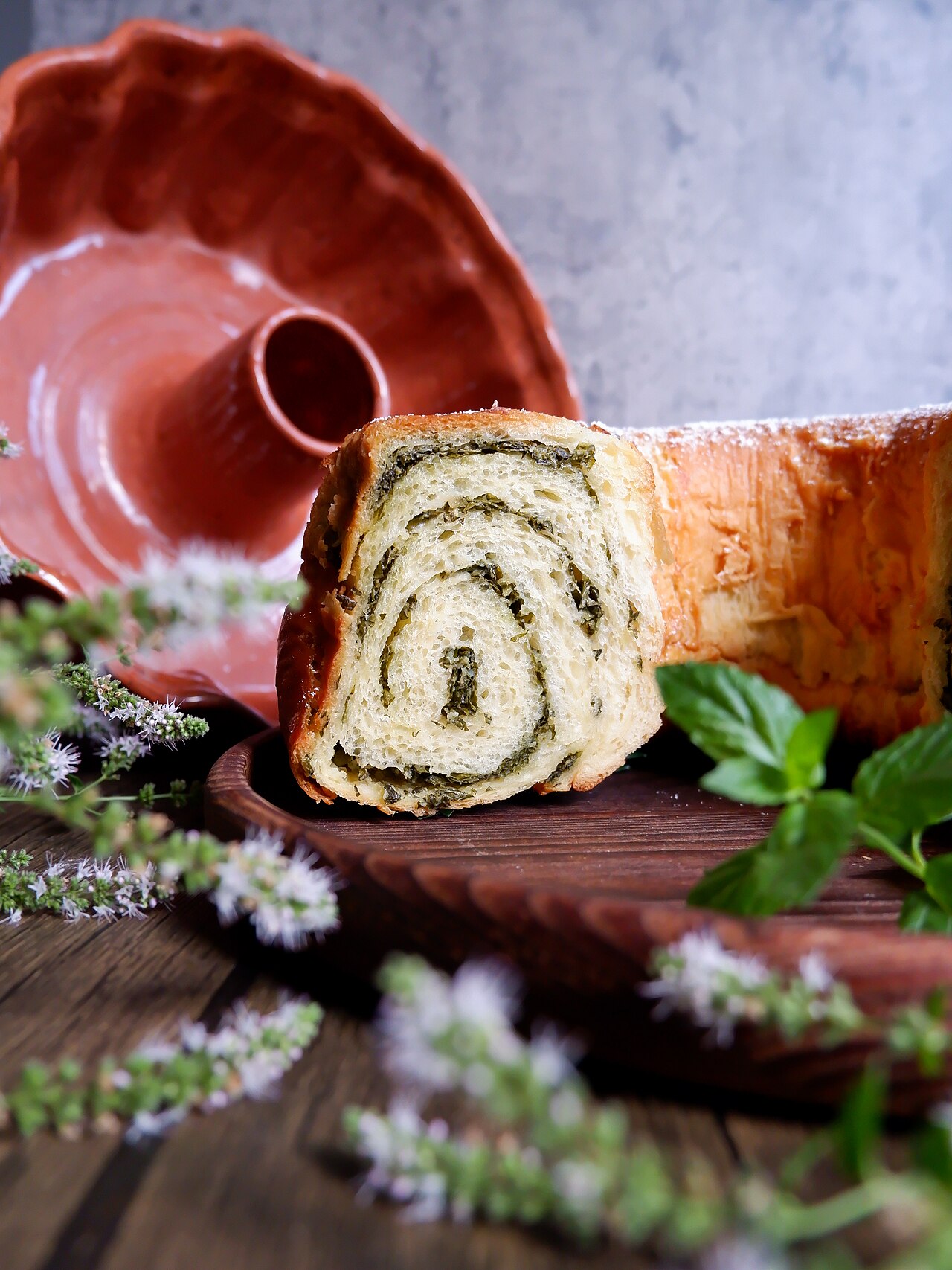
A festive rolled cake made from thin, yeasted dough spread with a filling, rolled up and baked in a round mould with a hole in the middle. The best-known filling is ground walnut, but tarragon, poppy seed, raisins and cottage cheese are also popular.
Primož Trubar mentioned it in writings from 1575 and 1577, and in 2021 making potica was added to Slovenia's national register of intangible cultural heritage.
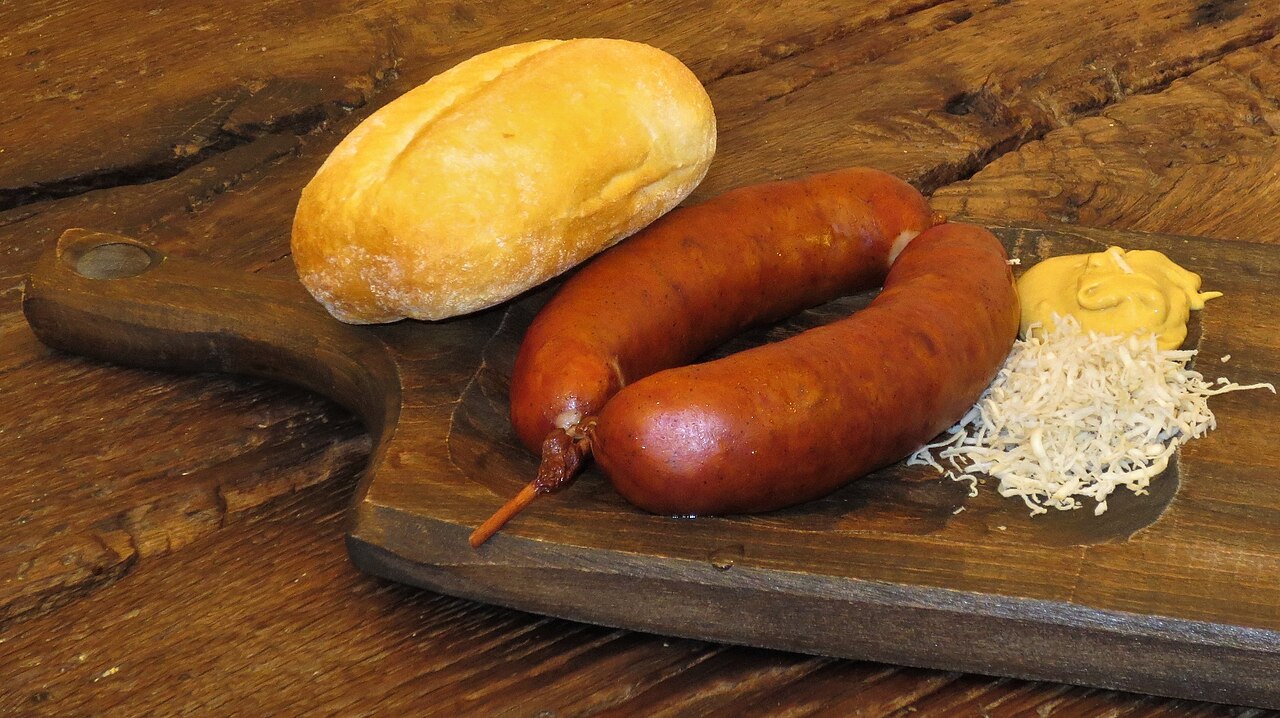
A lightly smoked sausage of pork with a little bacon, seasoned only with garlic, black pepper and sea salt, and made in pairs joined by a wooden skewer. It is usually served hot with mustard and a piece of bread.
Its recipe is protected in the European Union. The rules even say the salt should come from the Sečovlje saltworks on the Slovenian coast.
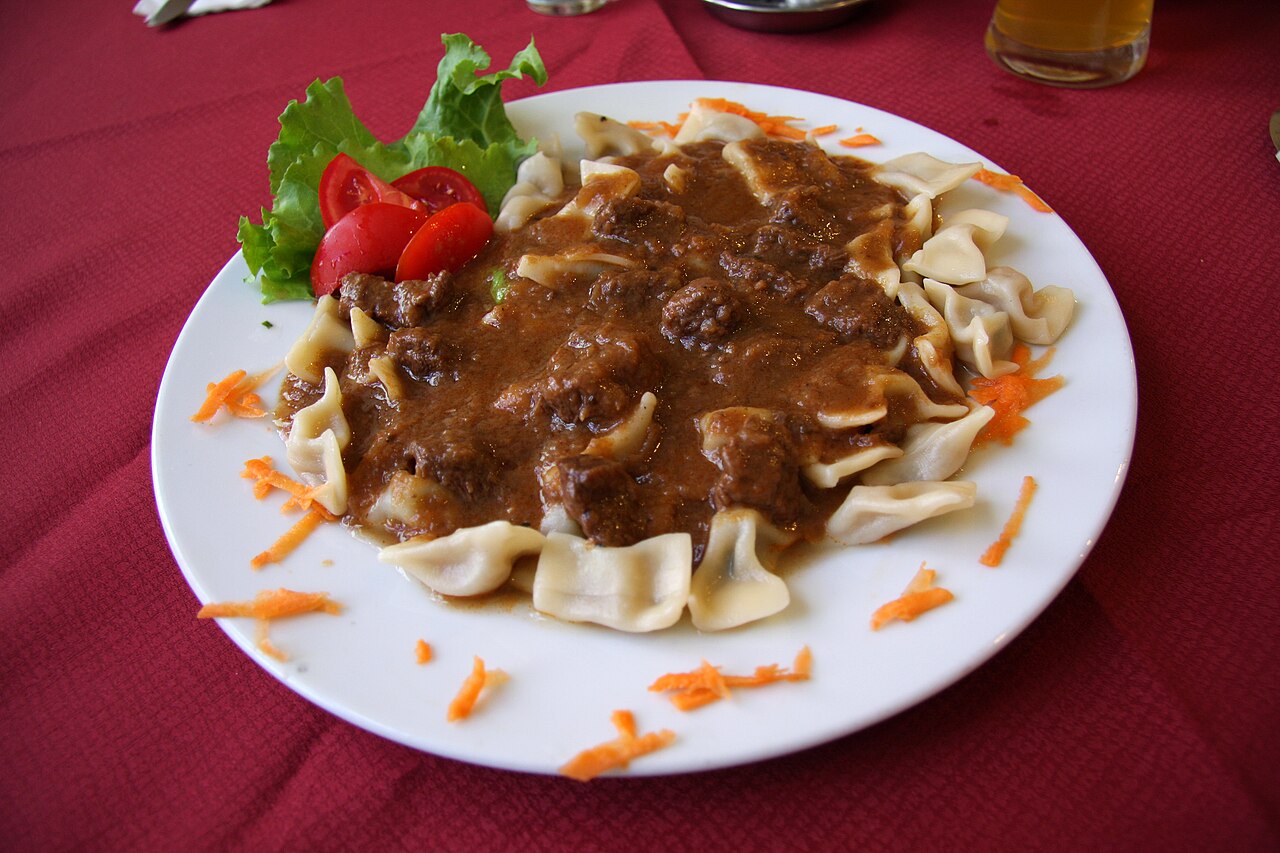
Small dumplings of thin dough with a potato filling, made to a recipe from the mid-19th century. They are served as a side dish to meat, or on their own topped with breadcrumbs.
In 2010 žlikrofi became the first Slovenian dish to be protected in the EU as a Traditional Speciality Guaranteed.
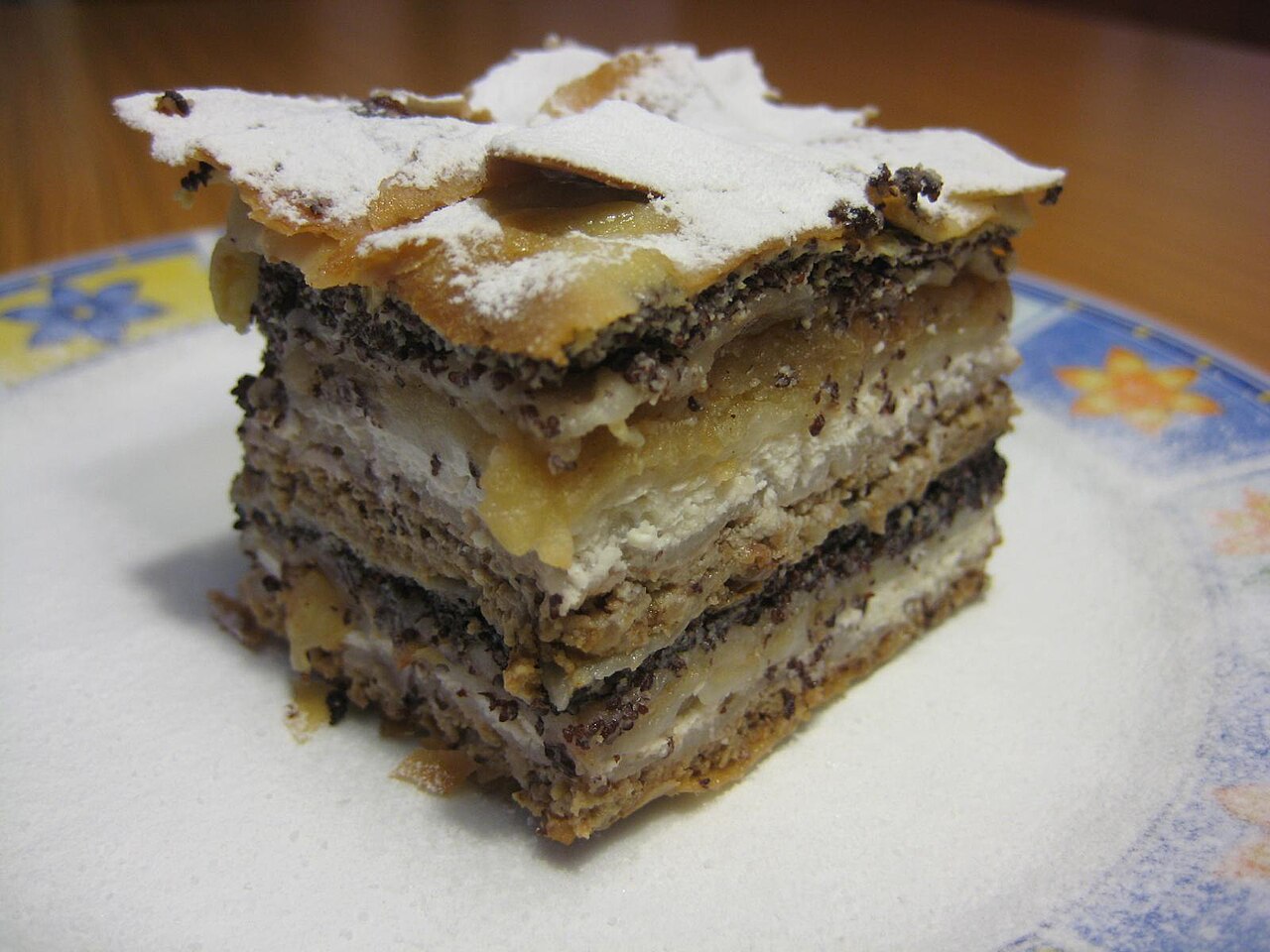
A tall, rich layered pastry from the north-east, with fillings of poppy seeds, cottage cheese, walnuts, and apples with raisins, one layer above another.
A description from 1828 says no Prekmurje wedding was held without gibanica. In 2006 it represented Slovenia on Europe Day, and since 2010 it has been protected in the EU.
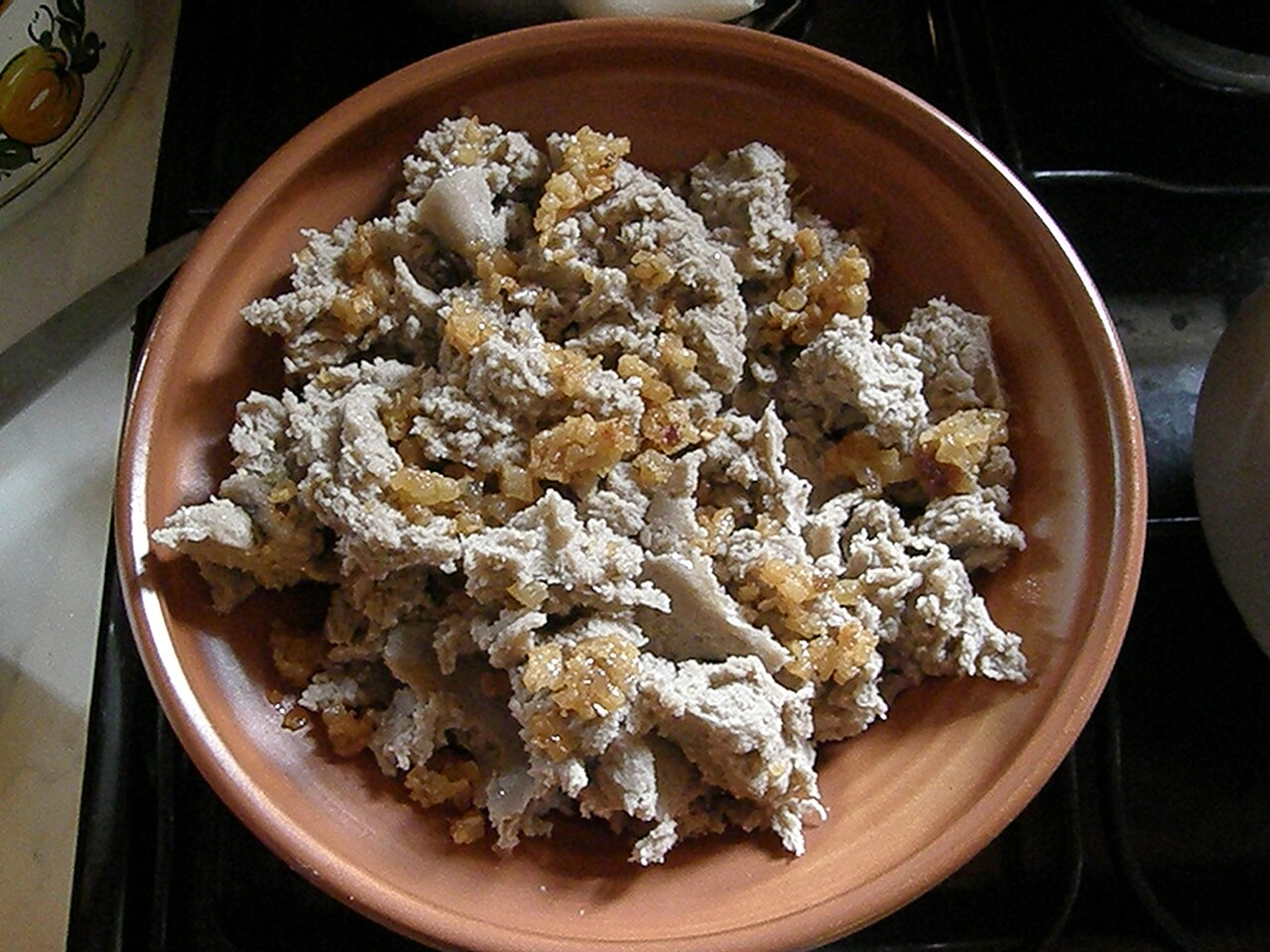
Buckwheat flour cooked in salted water and broken up with a fork into small, crumbly lumps. It was once an everyday farmhouse meal, eaten with milk for breakfast, or with lard and crispy pork cracklings, or beside sauerkraut and meat.
A 19th-century saying called žganci 'the pedestal of Carniola', because so many people lived on it.
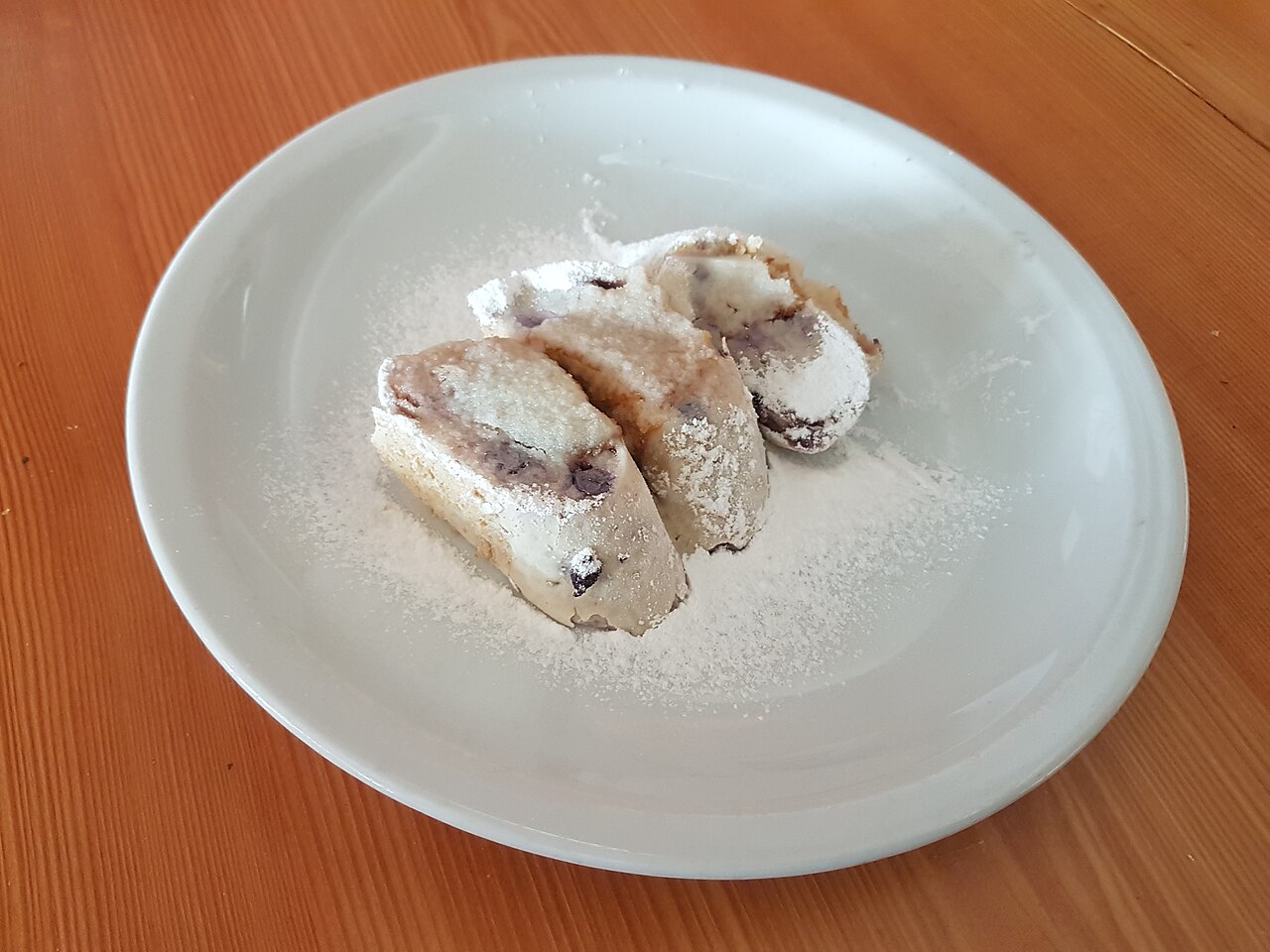
Rolled dumplings of thin dough with a sweet or savoury filling, then boiled, steamed or baked. Cottage cheese, tarragon, walnut, apple and poppy seed are favourite fillings, and they are eaten as a main dish, a side dish or a dessert.
The first known recipe, with a tarragon filling, was written down in 1589 by a manor cook in Graz.
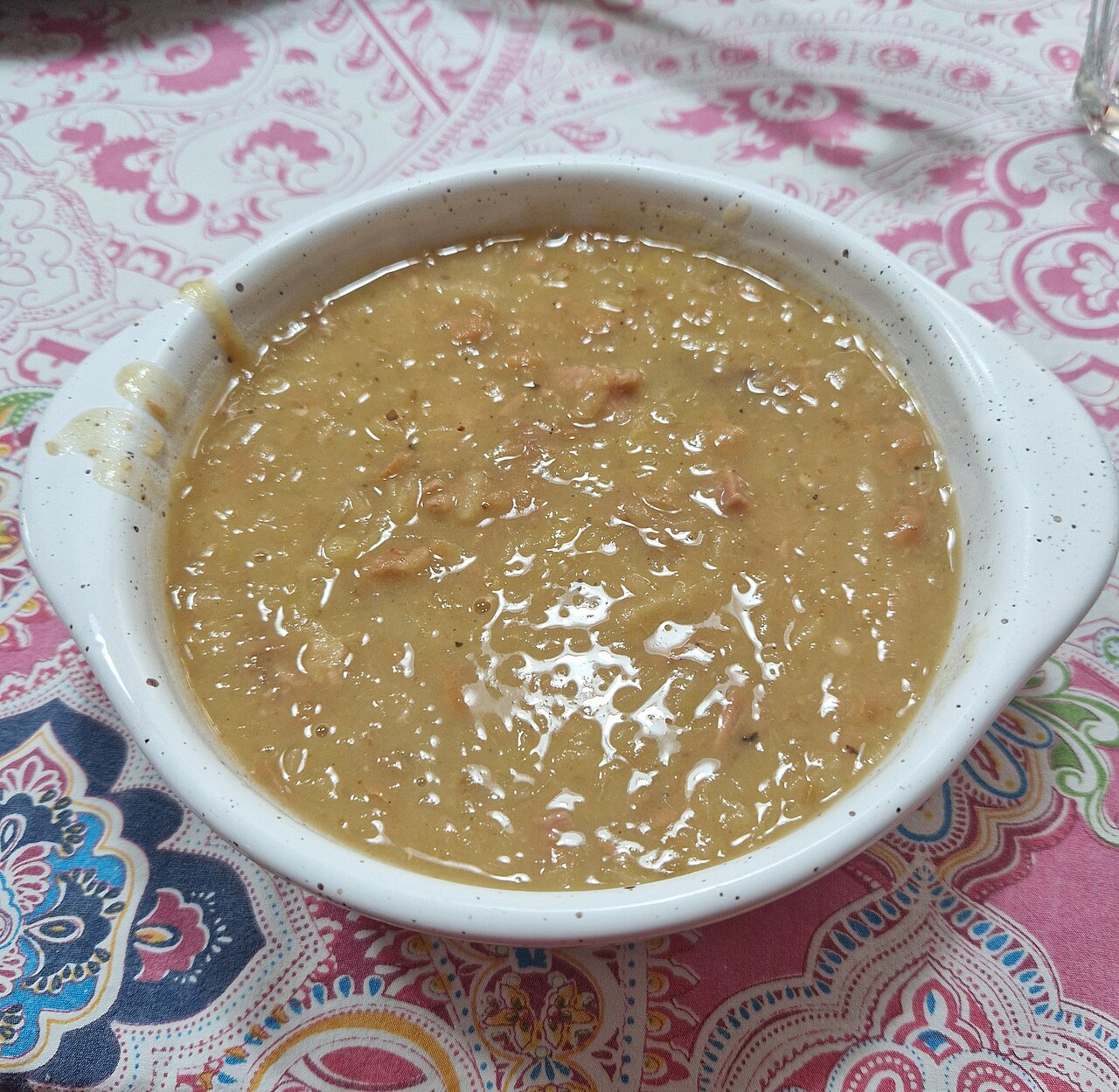
A thick, warming soup of beans and sauerkraut or sour turnip, with potatoes, garlic and smoked pork or spare ribs. It is especially popular along the border with Italy, around Trieste and Gorizia.
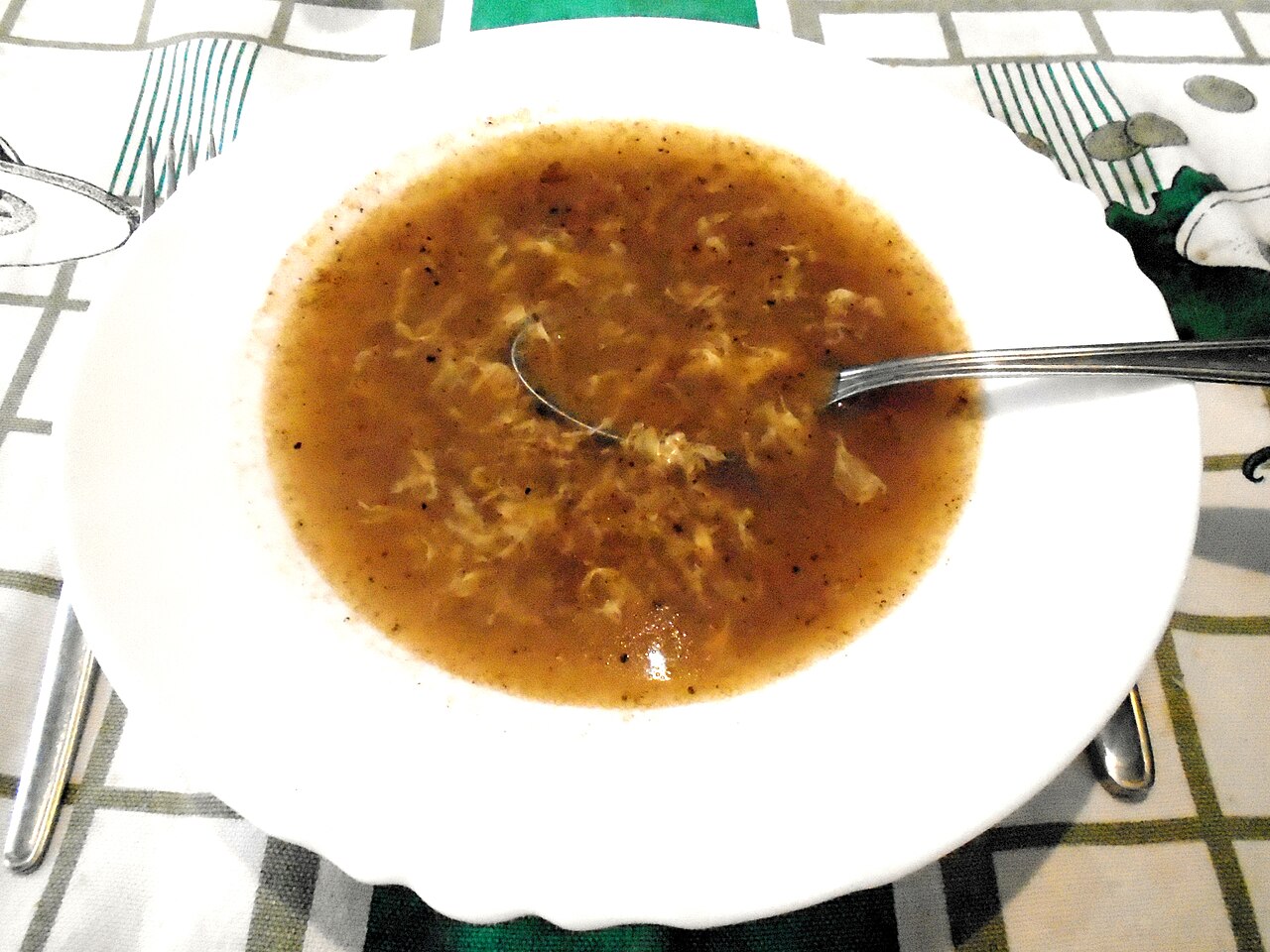
A simple, old-fashioned soup made by browning flour in butter or oil, then adding water, caraway seeds and beaten eggs. It is often called Slovenia's national soup.
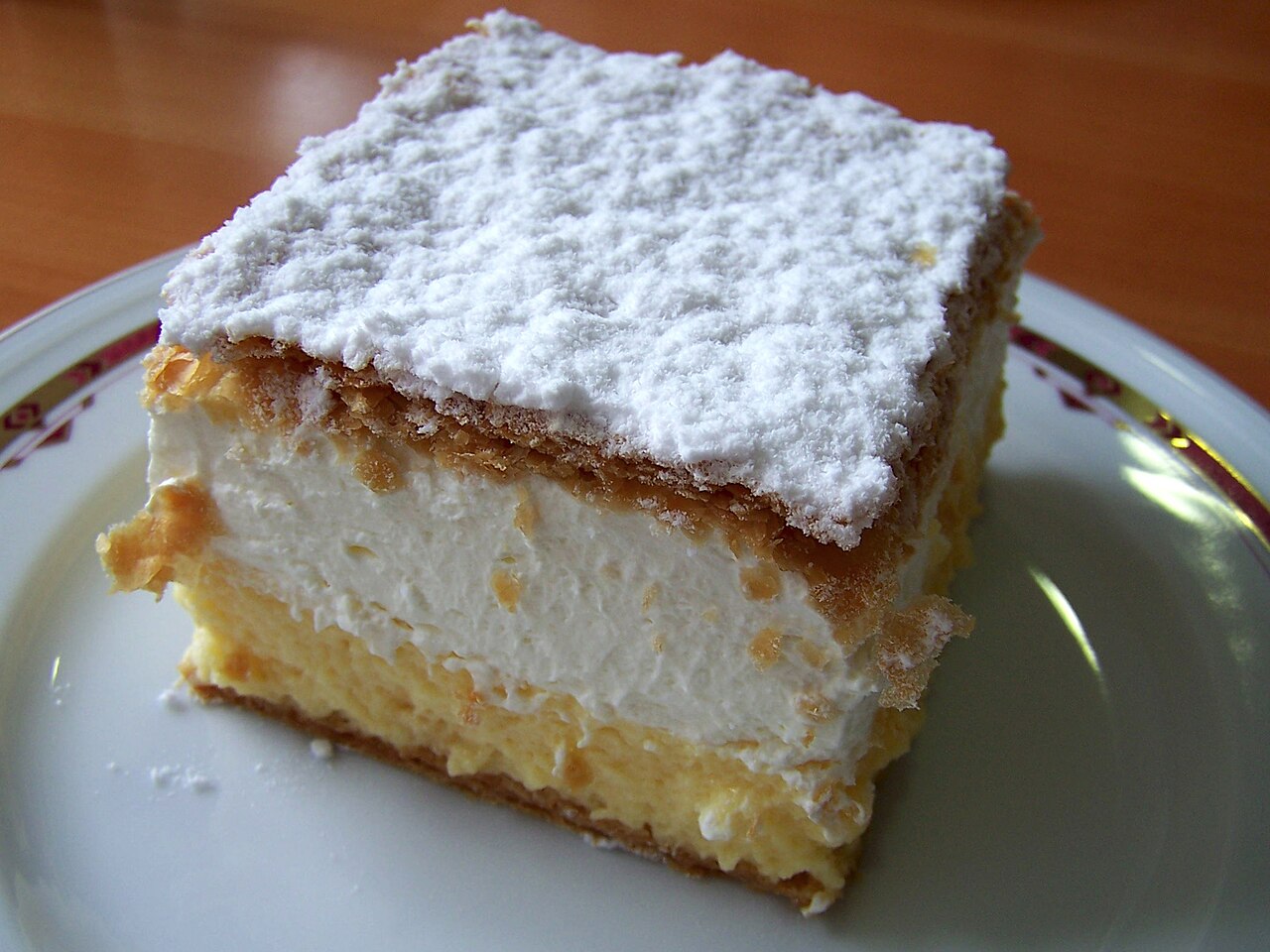
A square slice of vanilla custard topped with whipped cream between thin layers of crisp puff pastry, dusted with icing sugar. It is the classic treat to eat with a view of Lake Bled.
The Bled version was brought to the Hotel Park in 1953 by its pastry chef, Ištvan Lukačević. By October 2009 the hotel had baked 10 million slices.
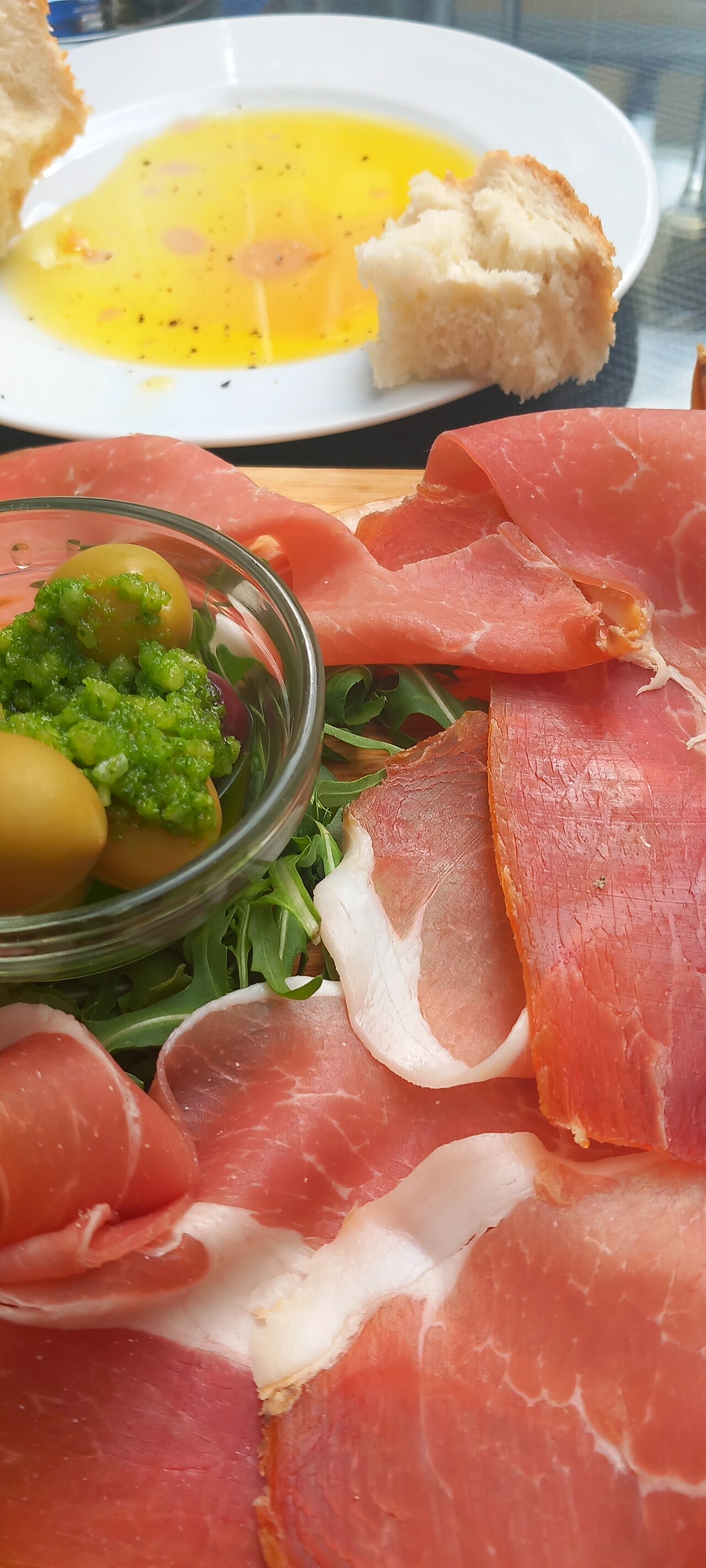
Air-dried ham from the Karst, similar to but not the same as Italian prosciutto. Slovenian pršut is not smoked, and it is sliced very thin.
Karst ham is traditionally paired with teran, the dark red wine of the same region.
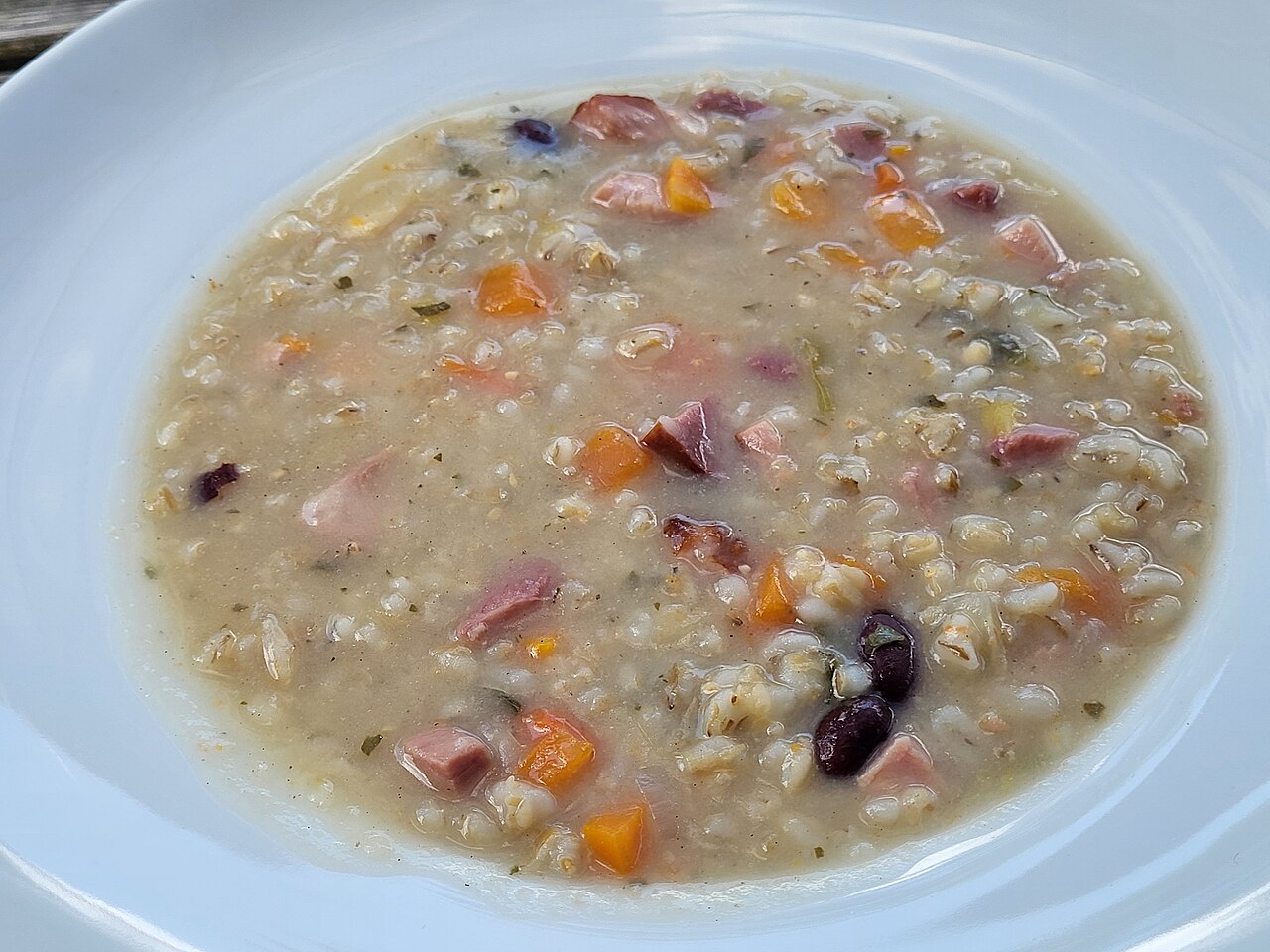
A thick, filling stew of pot barley and beans with potatoes, carrots, celery, leeks and usually cured or smoked pork. With more water it is a soup, with less it is almost like a risotto.
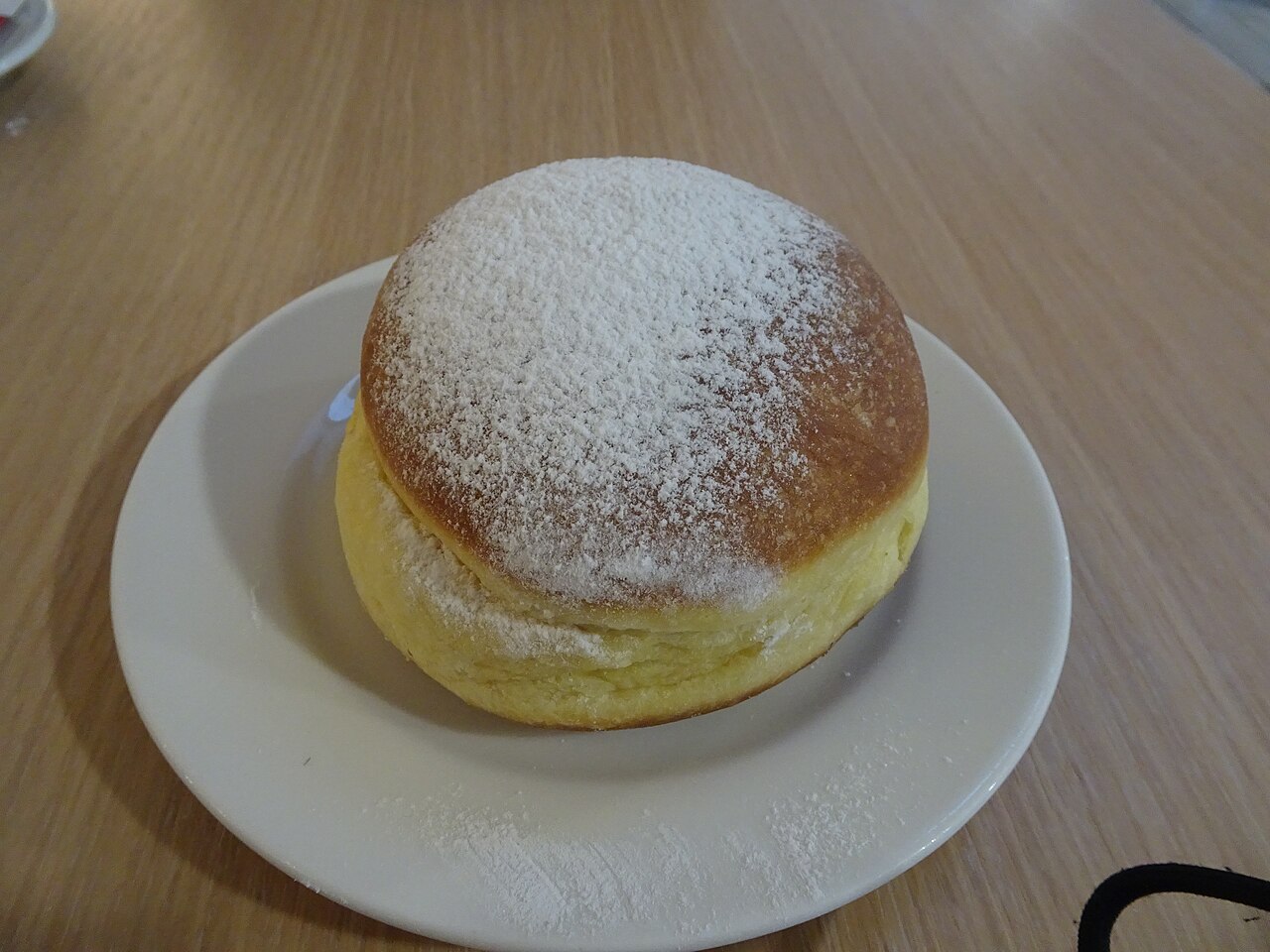
Light, round yeast doughnuts filled with jam, marmalade or custard and dusted with icing sugar. Slovenians eat many more of them during Carnival, before Lent.
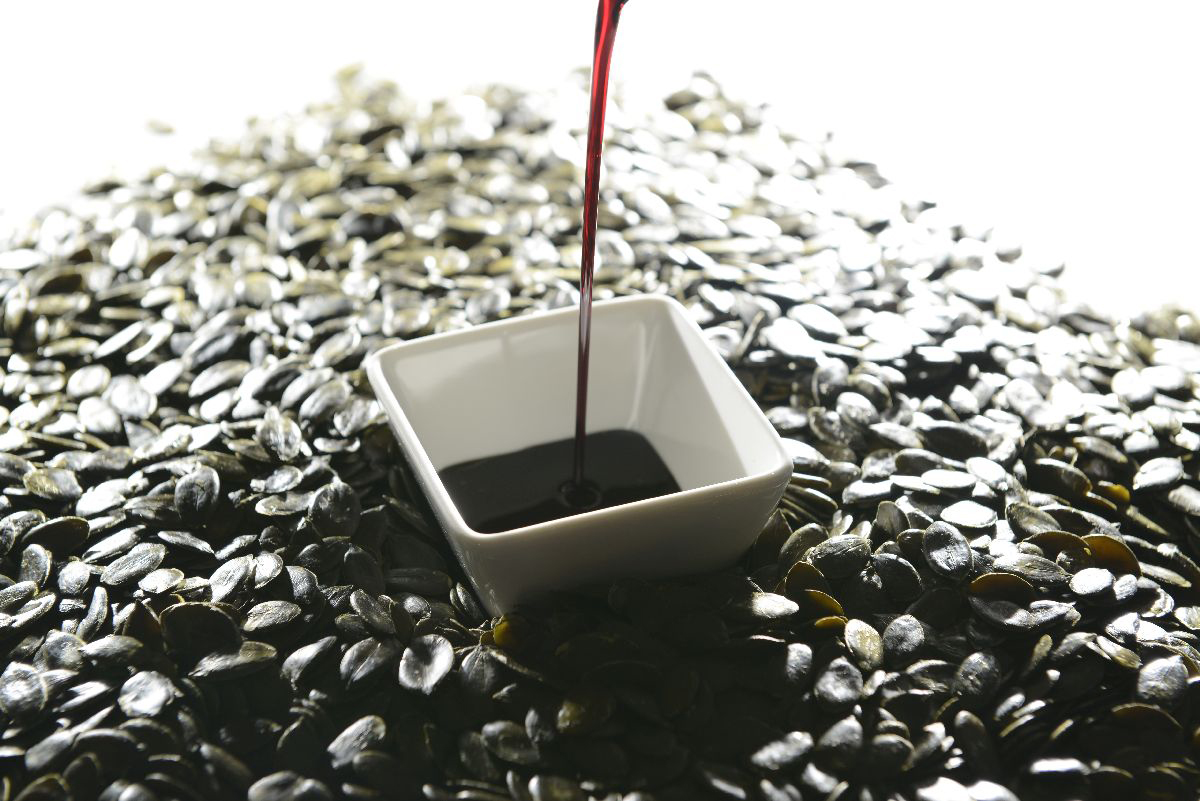
A thick, dark green oil pressed from roasted pumpkin seeds, with a nutty taste. A few drops are added to salads with cider vinegar, to pumpkin soup and even to vanilla ice cream.
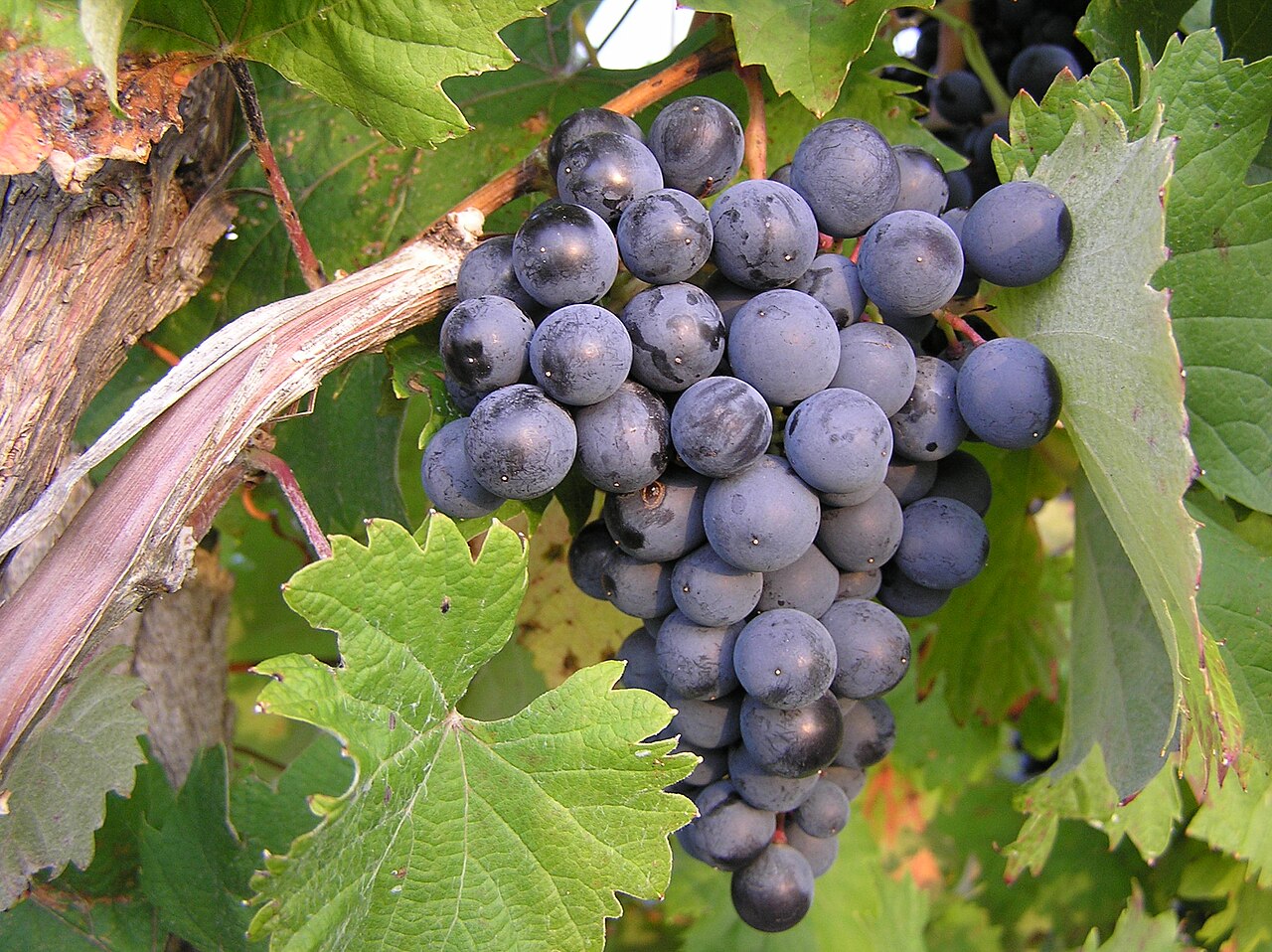
A deep red, fresh and rather dry wine grown on the red soil of the Karst. It is best drunk young, within its first year, and goes well with Karst ham.
Since 2006 the name Teran has been protected in the European Union.
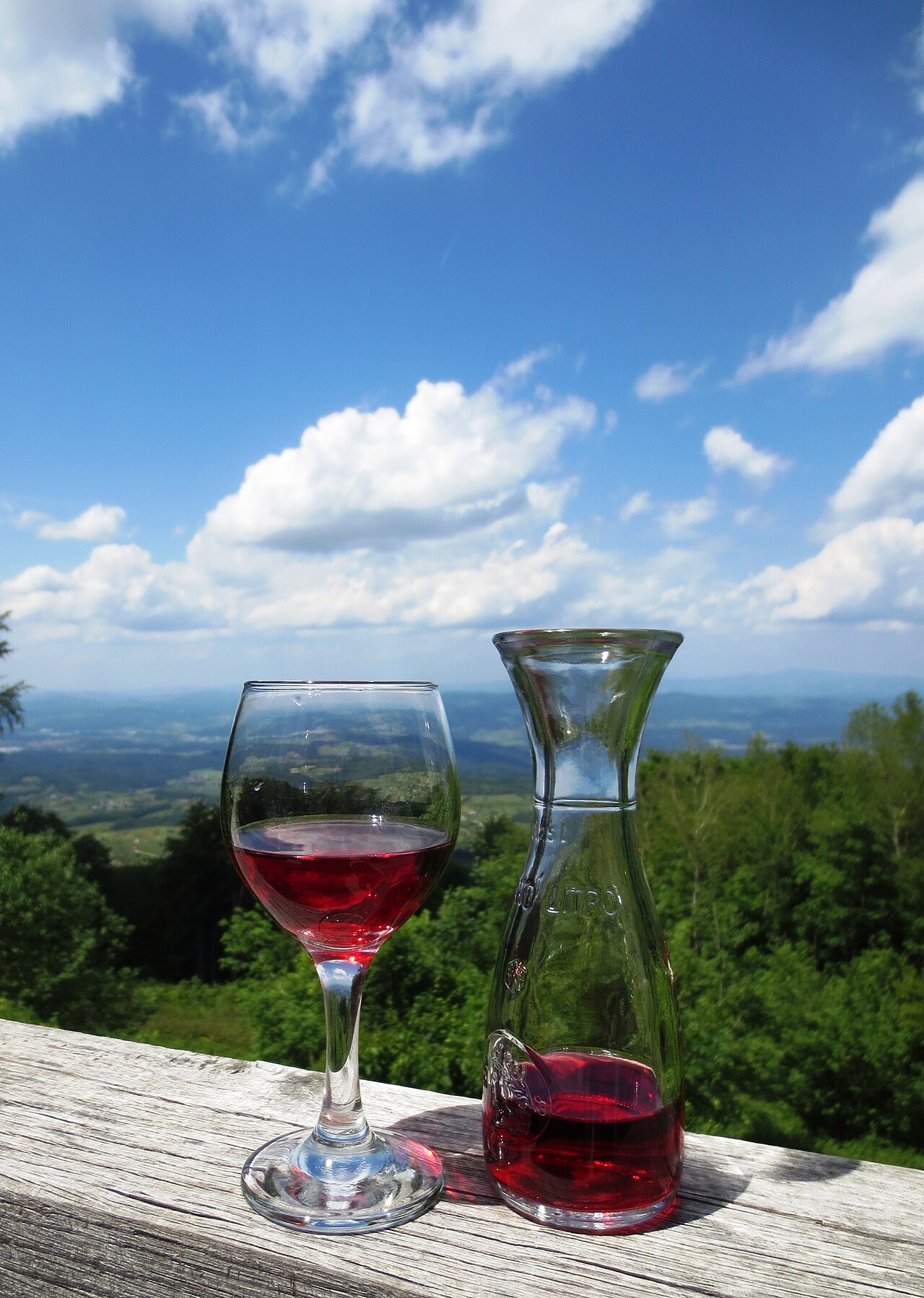
A light, pale red wine made from a blend of red and white grapes, with only about 8.5 to 10% alcohol. Its name comes from an old Slovene word for a very sour wine, but today it is much loved in its region.
Slovenia's towns are small and close together: green Ljubljana in the middle, Maribor among the vineyards of the north-east, Roman Ptuj and Celje, Venetian-style ports on the coast, and Alpine and Karst towns in the west.
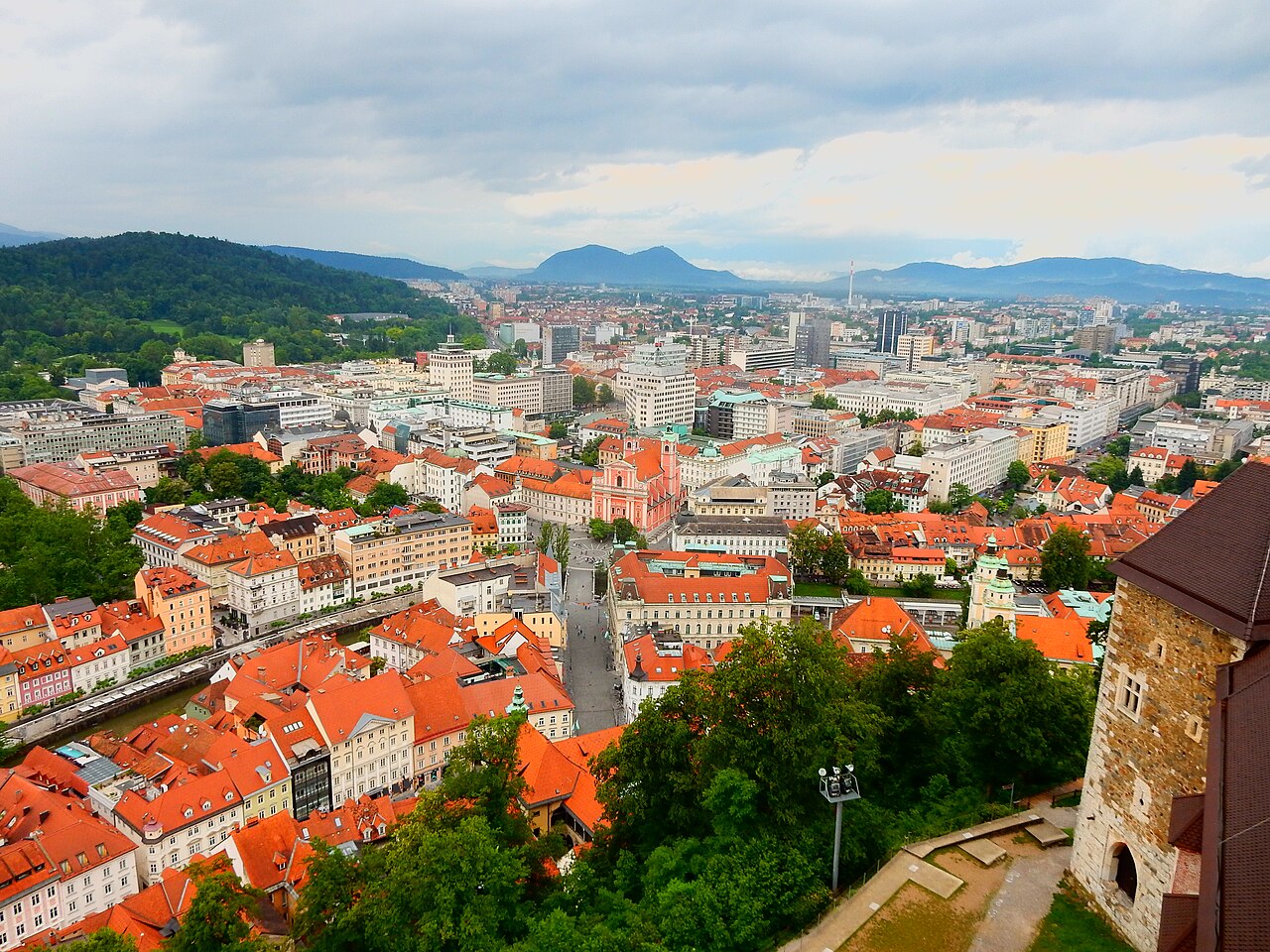
The capital and by far the largest city, with about 300,000 people. It lies on the Ljubljanica river below a castle hill, where the Roman town of Emona once stood, and much of its look was shaped by the architect Jože Plečnik.
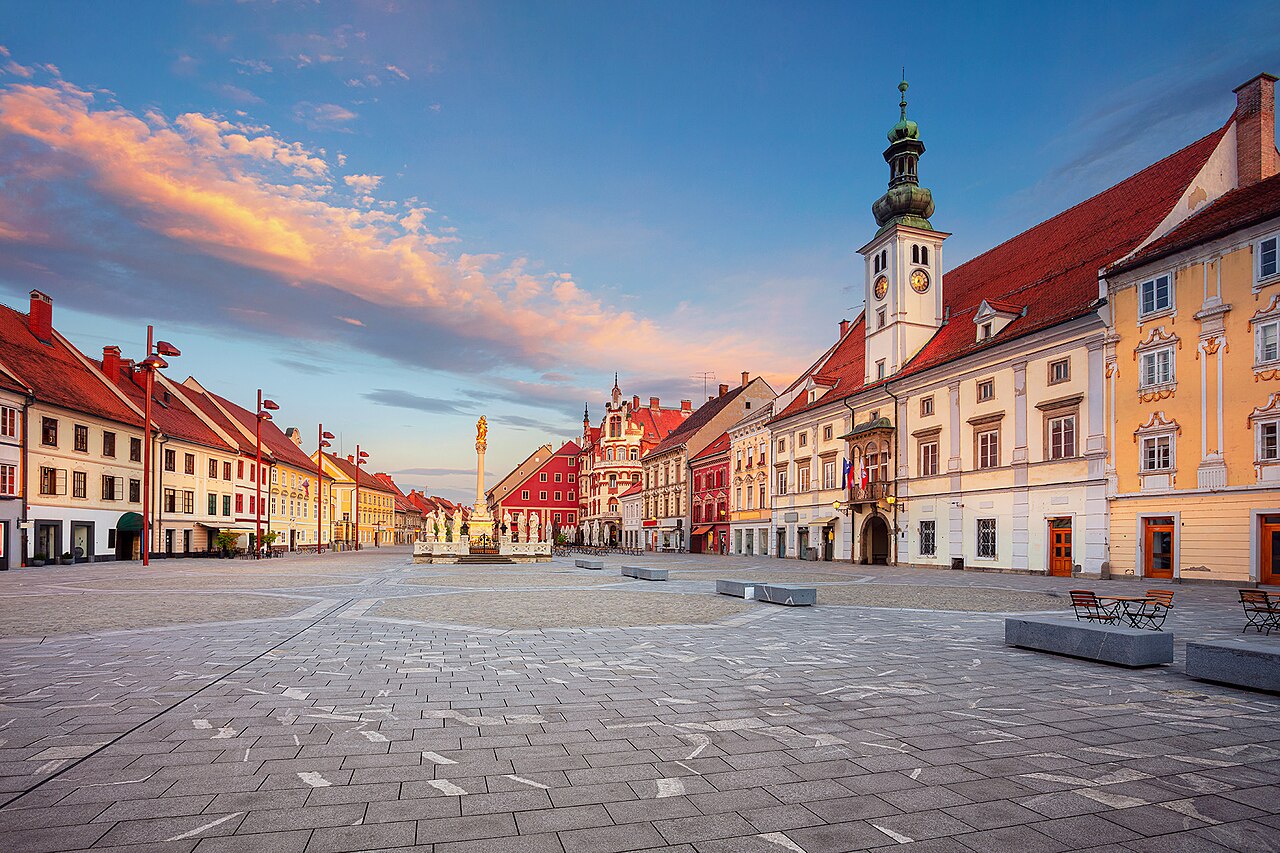
The second-largest city and the centre of eastern Slovenia, on the Drava river below the Pohorje hills. Its waterfront district, Lent, is surrounded by wine country.
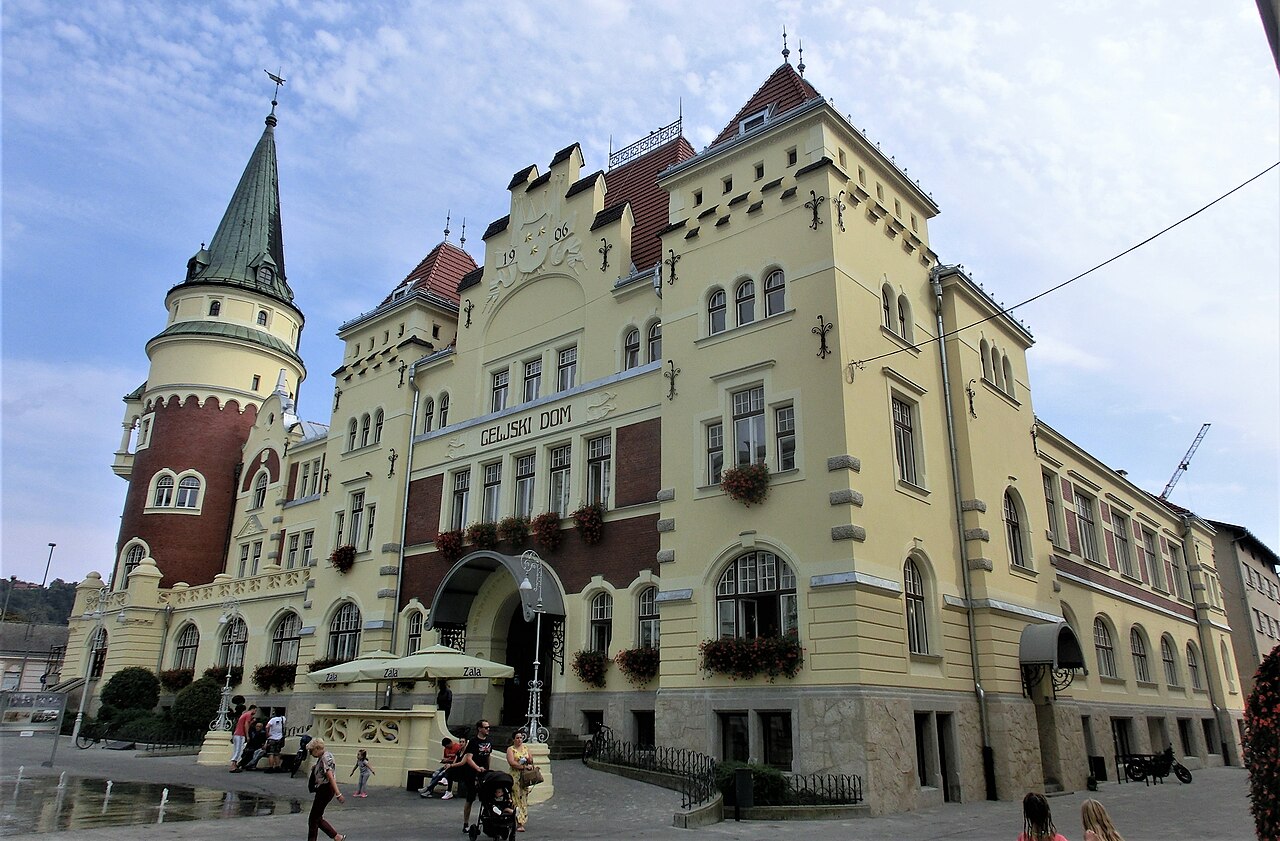
A historic town on the Savinja river, called Celeia in Roman times. From 1341 to 1456 it was the seat of the powerful Counts of Celje, whose castle still stands on the hill above.
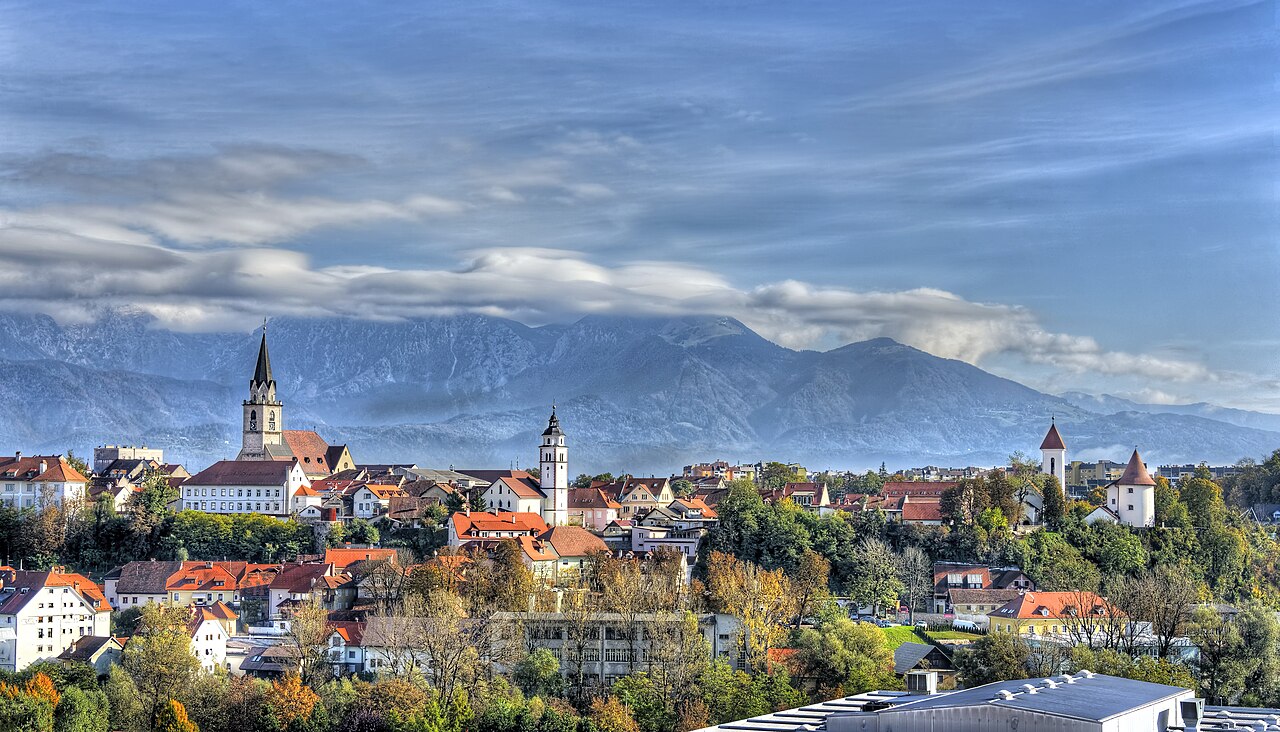
The largest town of Upper Carniola, about 20 km north-west of Ljubljana, with a well-preserved medieval old town where the Kokra river meets the Sava. The national poet France Prešeren spent his last years and died here.
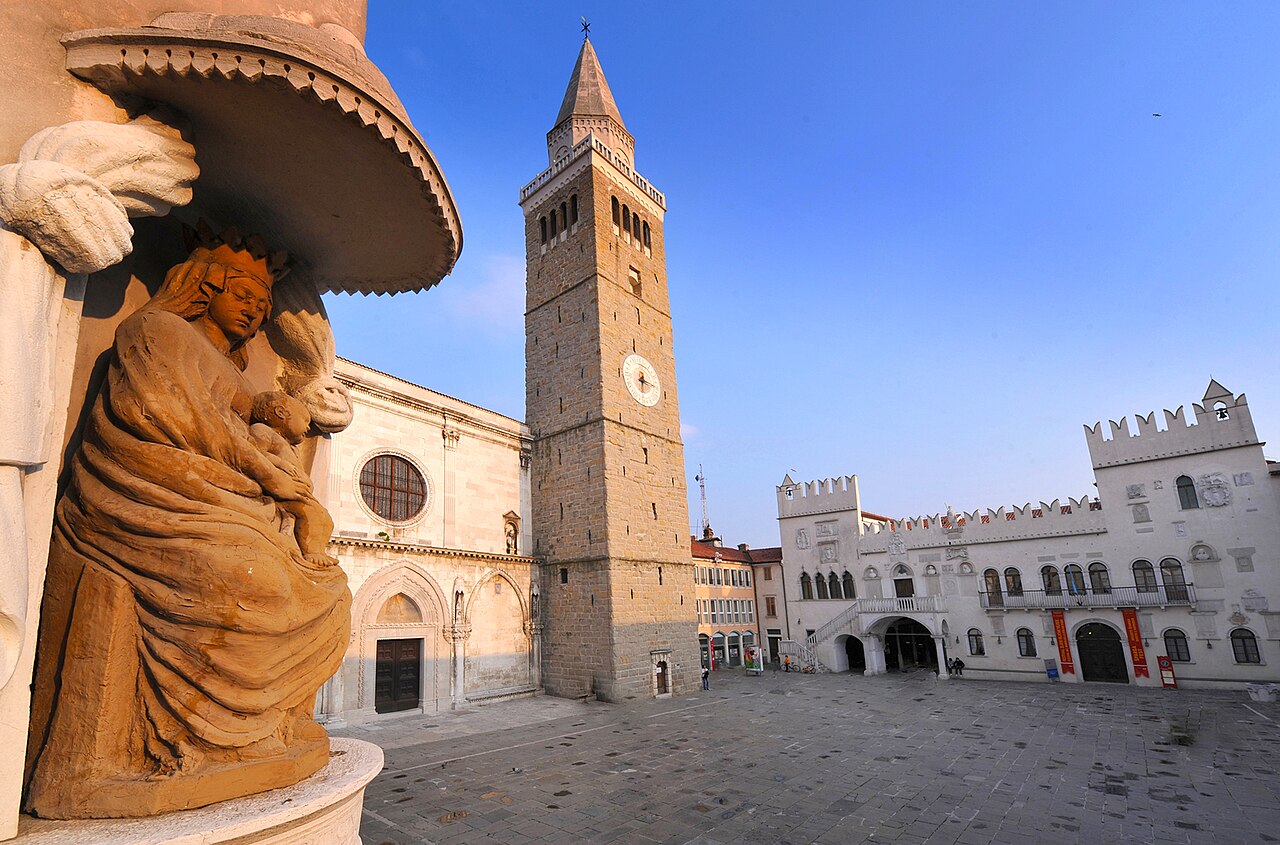
The main town of the Slovenian coast and home of the country's only container port. The town is officially bilingual, in Slovene and Italian, and its old centre has Venetian Gothic palaces.
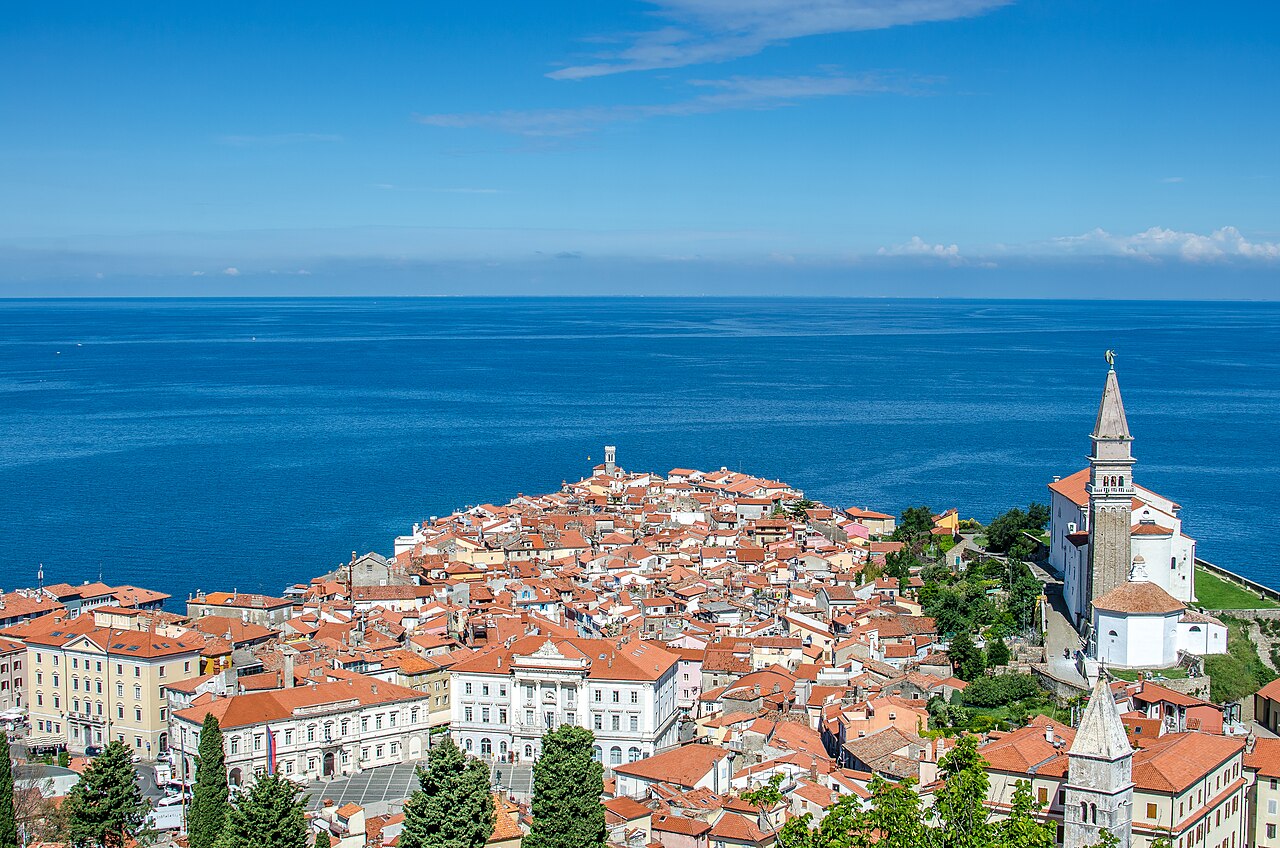
A small bilingual resort town on a narrow point of land in the Adriatic, part of the Republic of Venice from 1283 to 1797. Its narrow lanes lead to an oval square named after the violinist Giuseppe Tartini, who was born here.
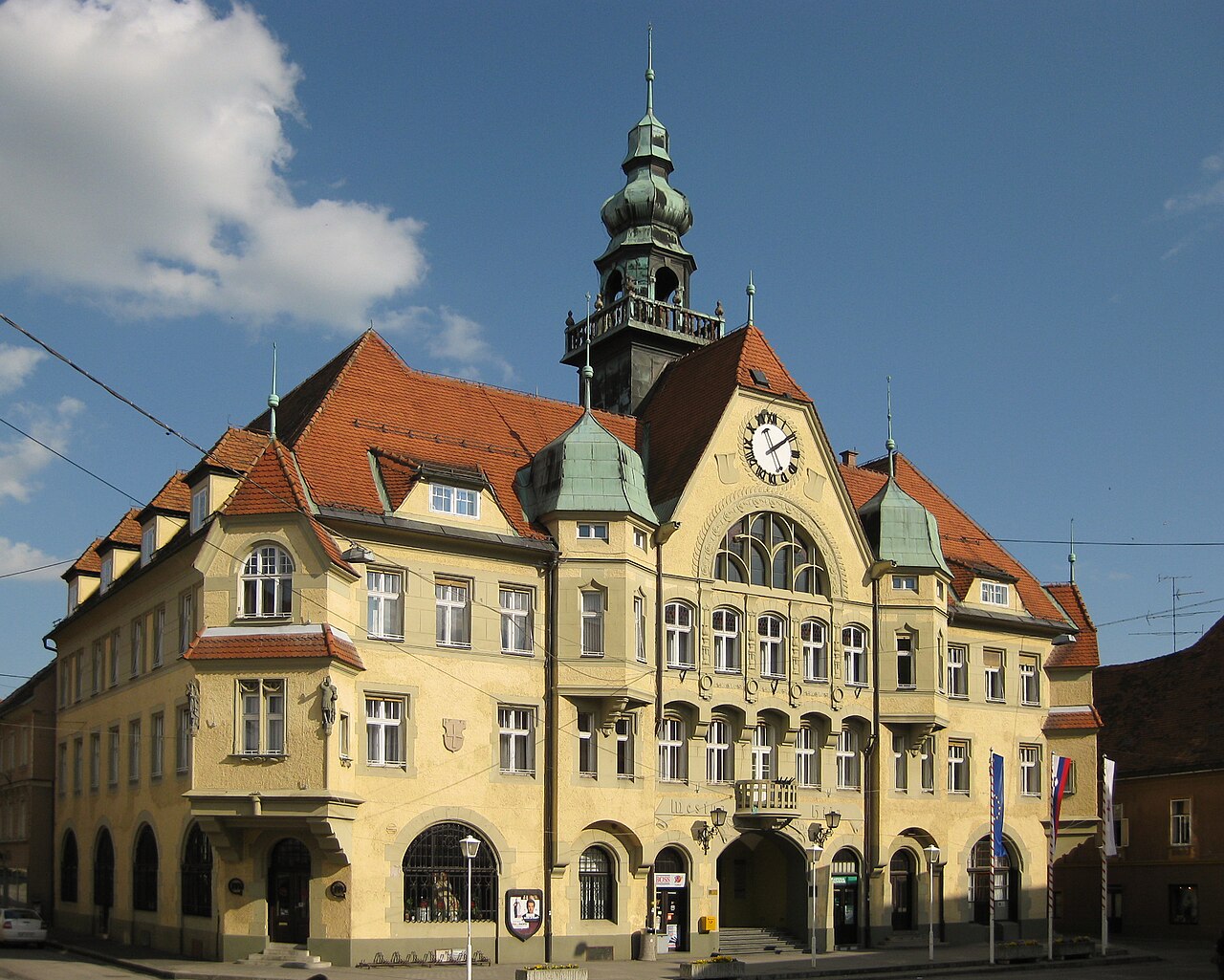
Often called the oldest recorded town in Slovenia, Ptuj grew from a Roman fort called Poetovio on the Drava river. In AD 69 the Danube legions chose Vespasian as Roman emperor here.
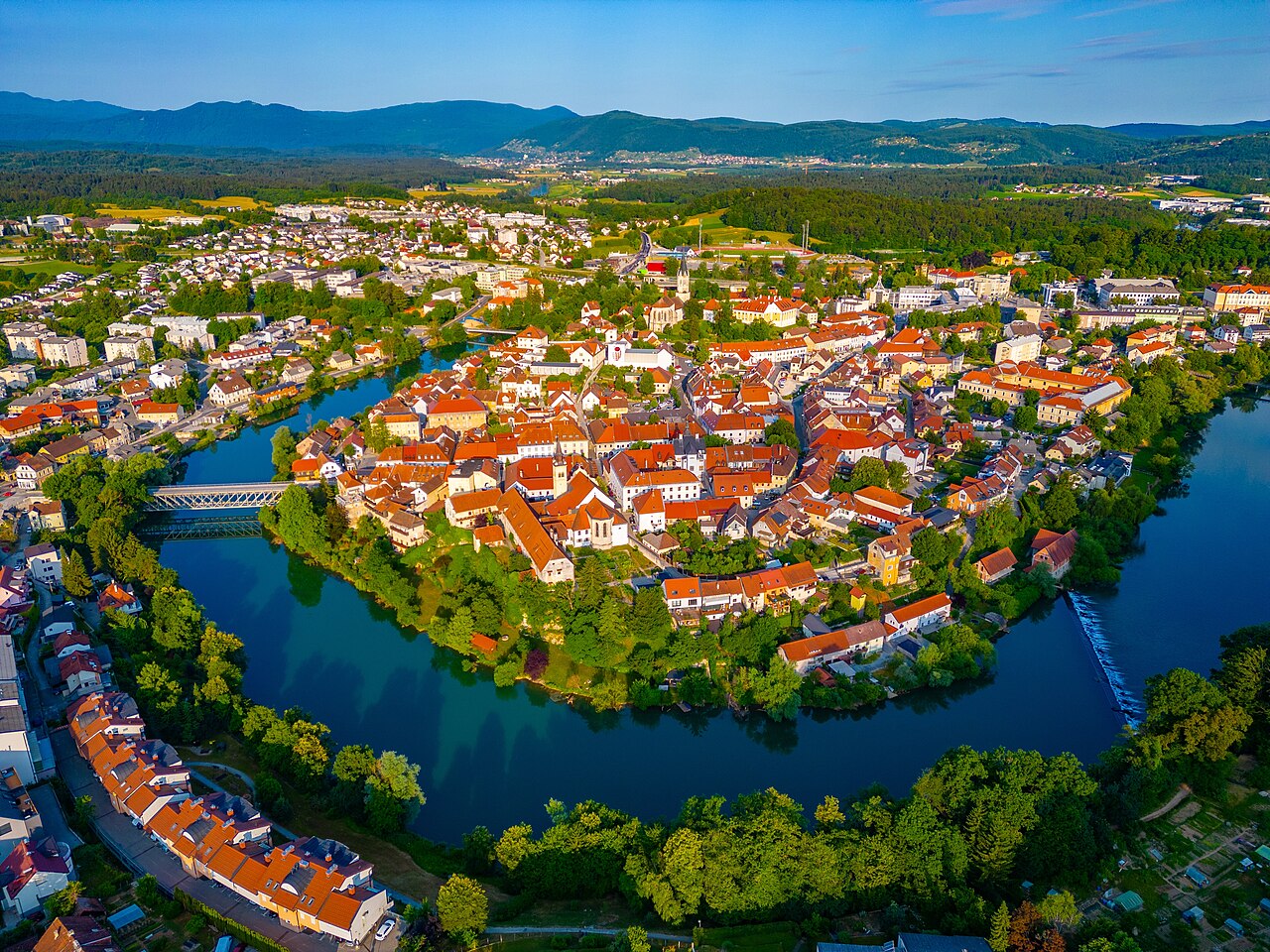
The main town of Lower Carniola, on a bend of the Krka river near the Croatian border. So many decorated Iron Age bronze buckets, called situlas, were found here that it is nicknamed the City of Situlas.
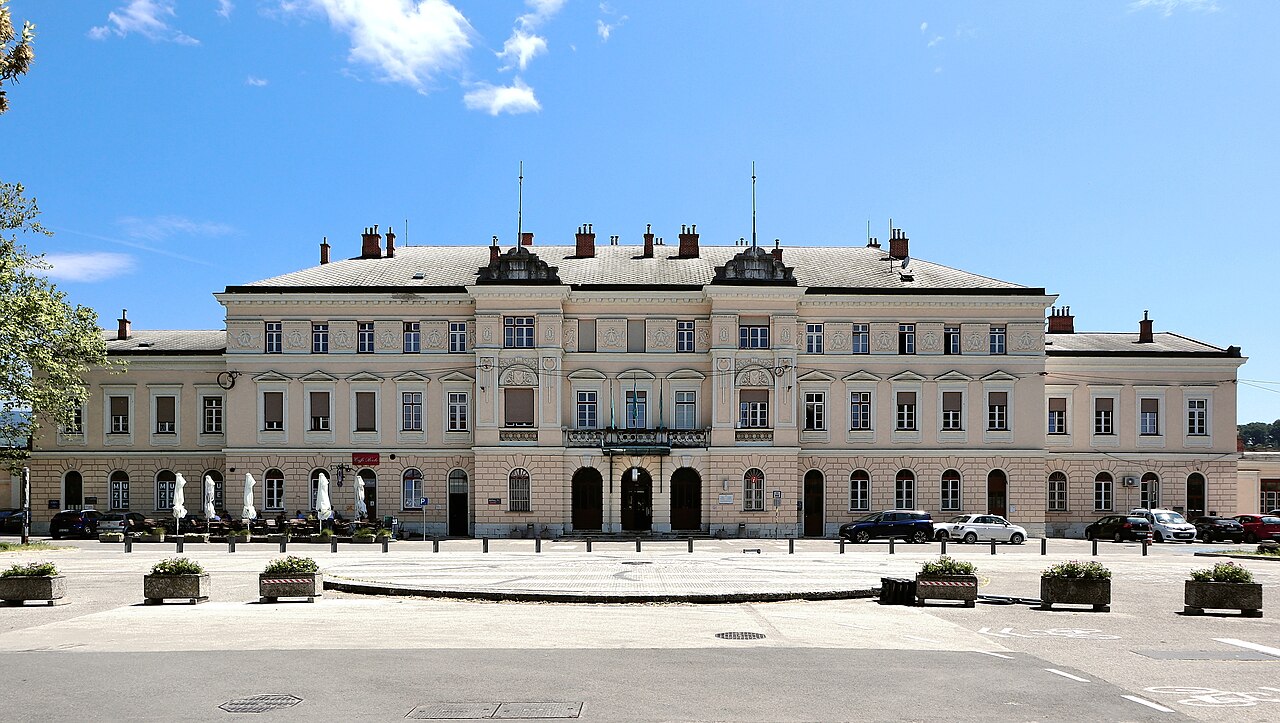
A modern planned town built after 1947, when the new border left old Gorizia in Italy. In 2025 it shared the title of European Capital of Culture with Gorizia across the border.
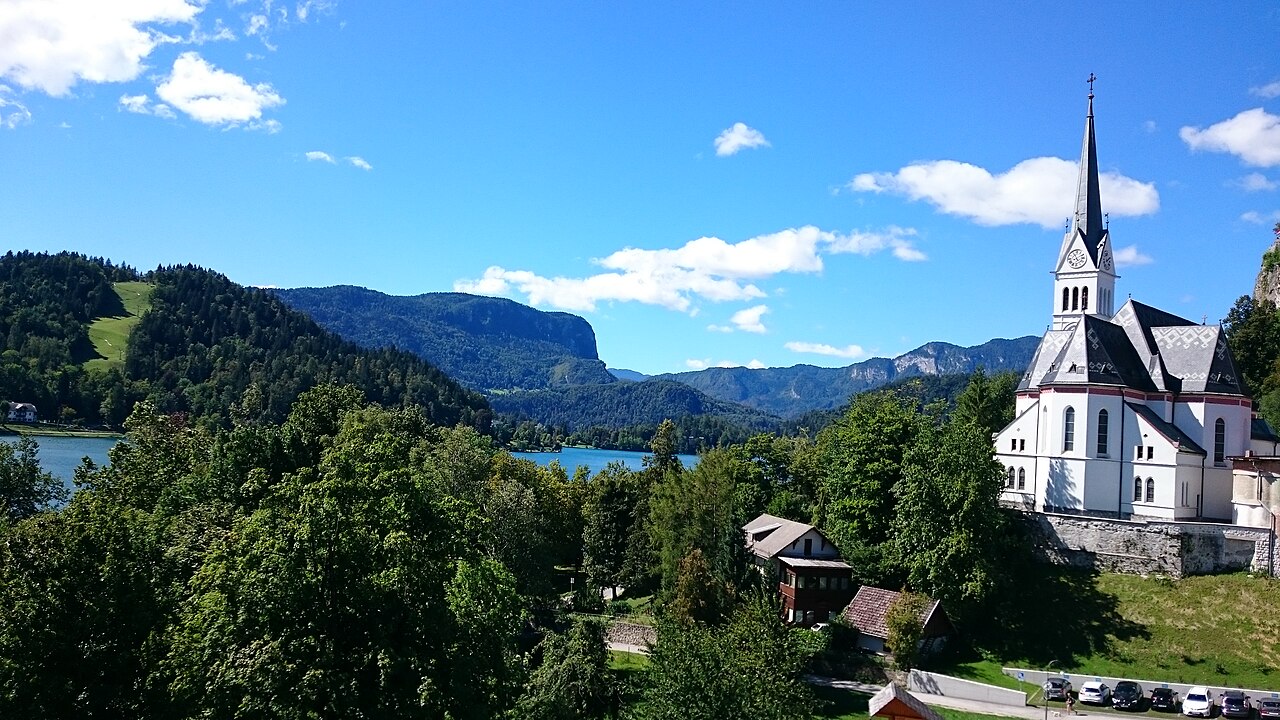
A small Alpine town on the shore of Lake Bled, one of the most visited places in Slovenia. It was first written about in 1004.
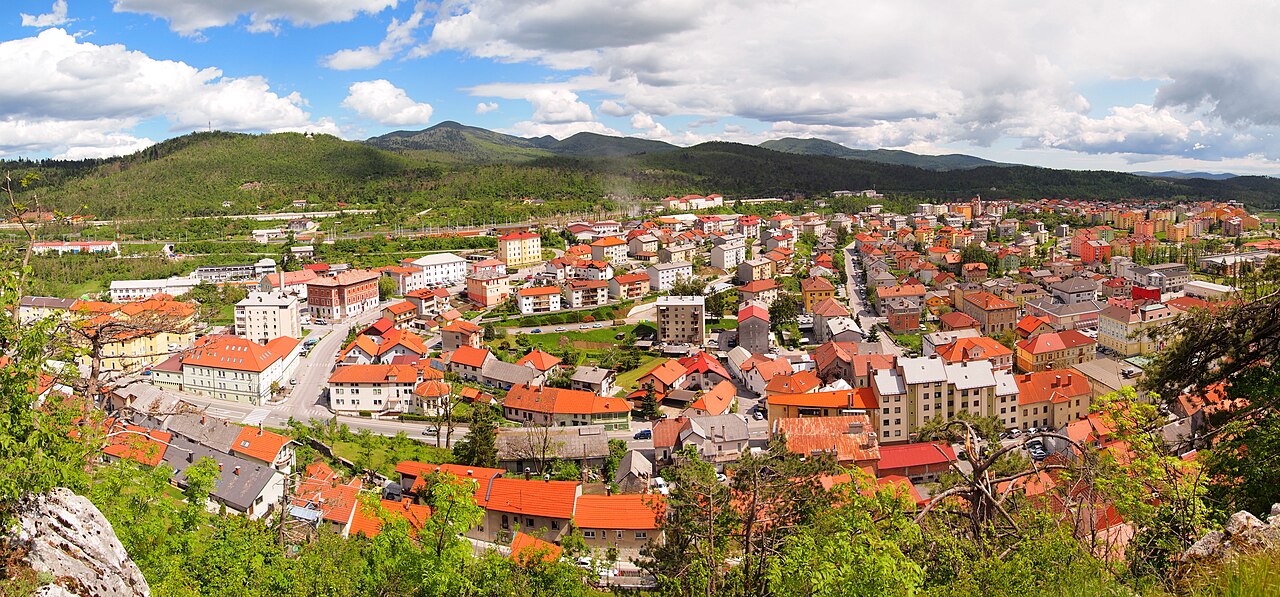
A town on the Pivka river in the Karst, about 35 km from Trieste, best known for the huge cave system at its edge.
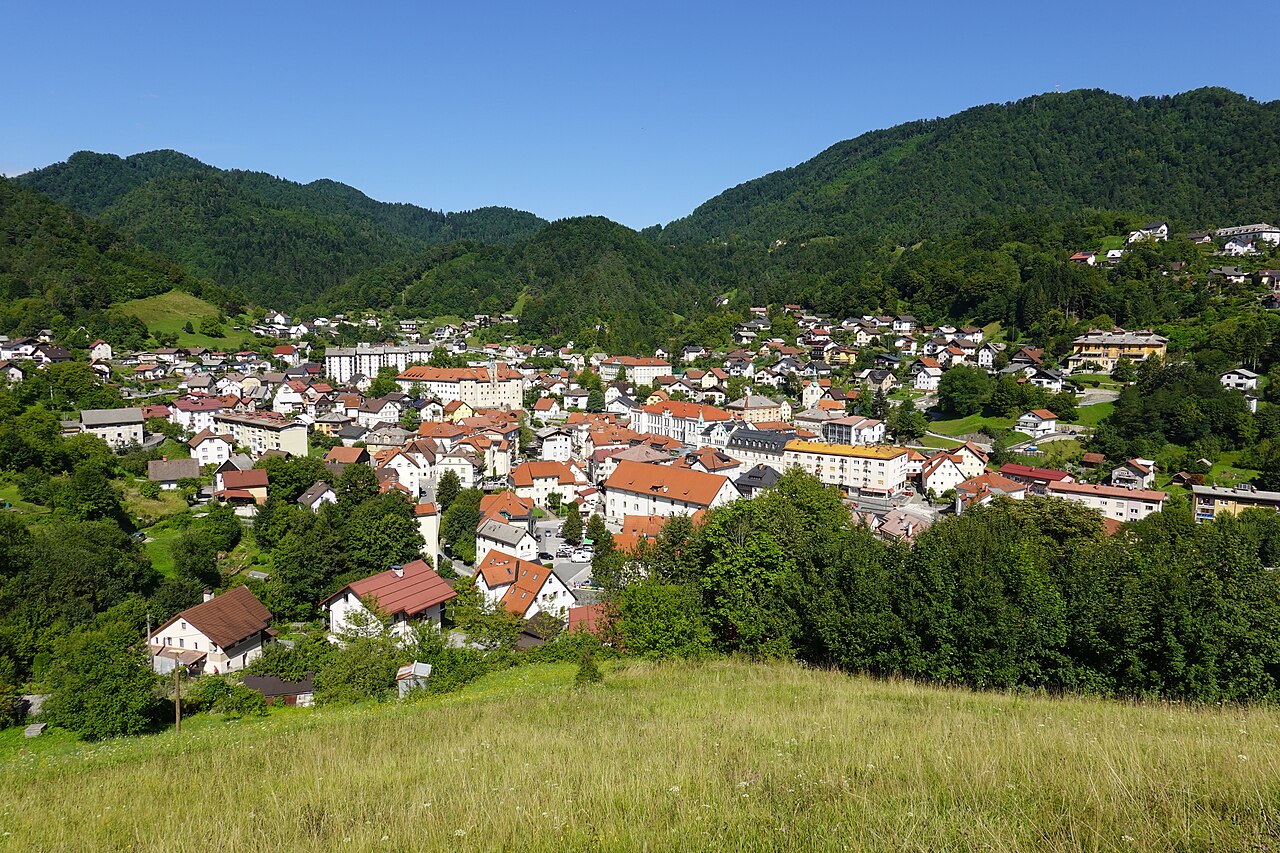
A mining town in a green valley in western Slovenia. According to legend, a bucket maker found liquid mercury here in 1490, and Idrija and Almadén in Spain became the two largest mercury mines in the world.
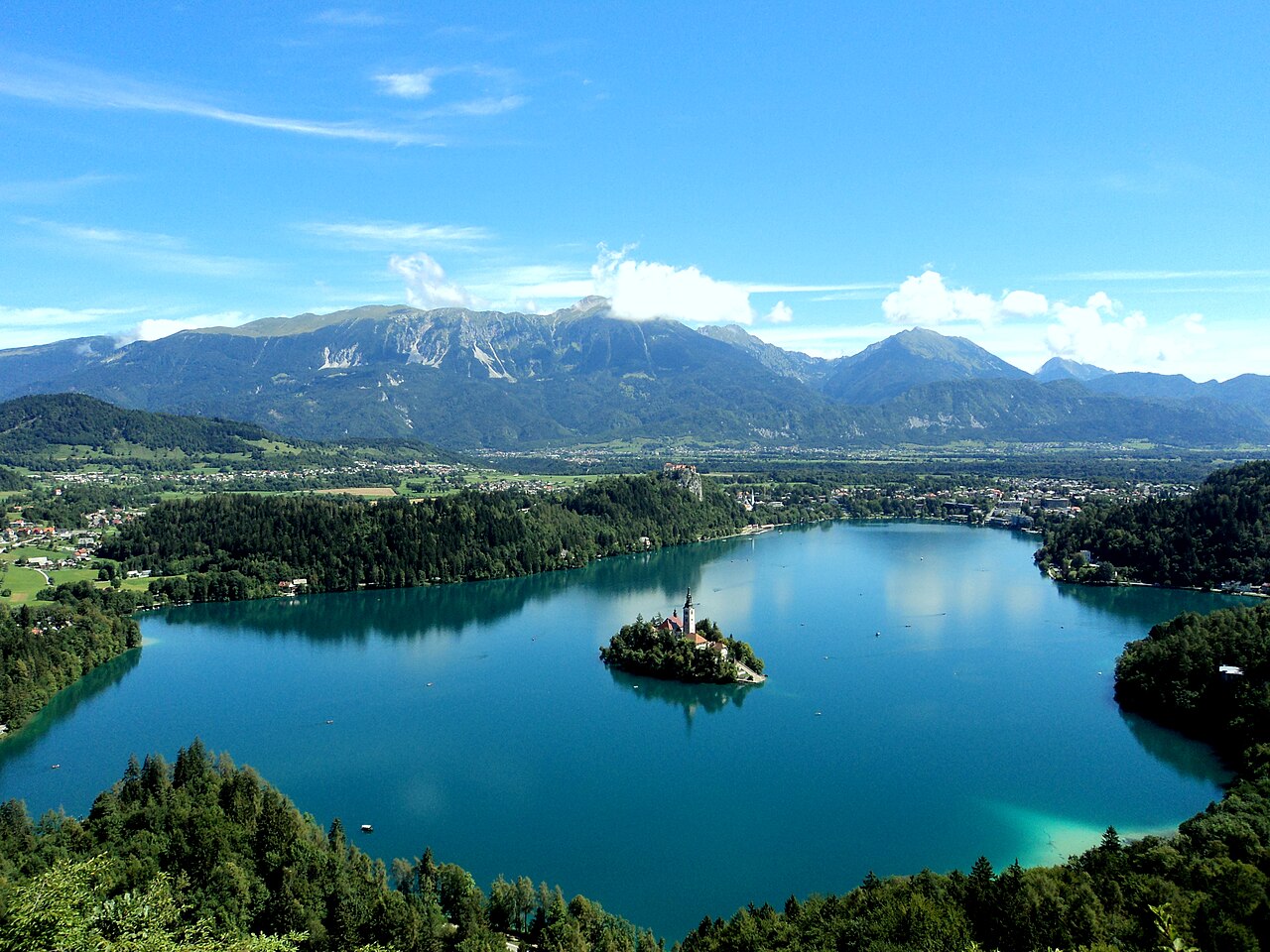
A green Alpine lake about 2 km long with a small island. Visitors ride a traditional wooden pletna boat to the island and climb 99 stone steps to the pilgrimage Church of the Assumption, where they ring the bell and make a wish.
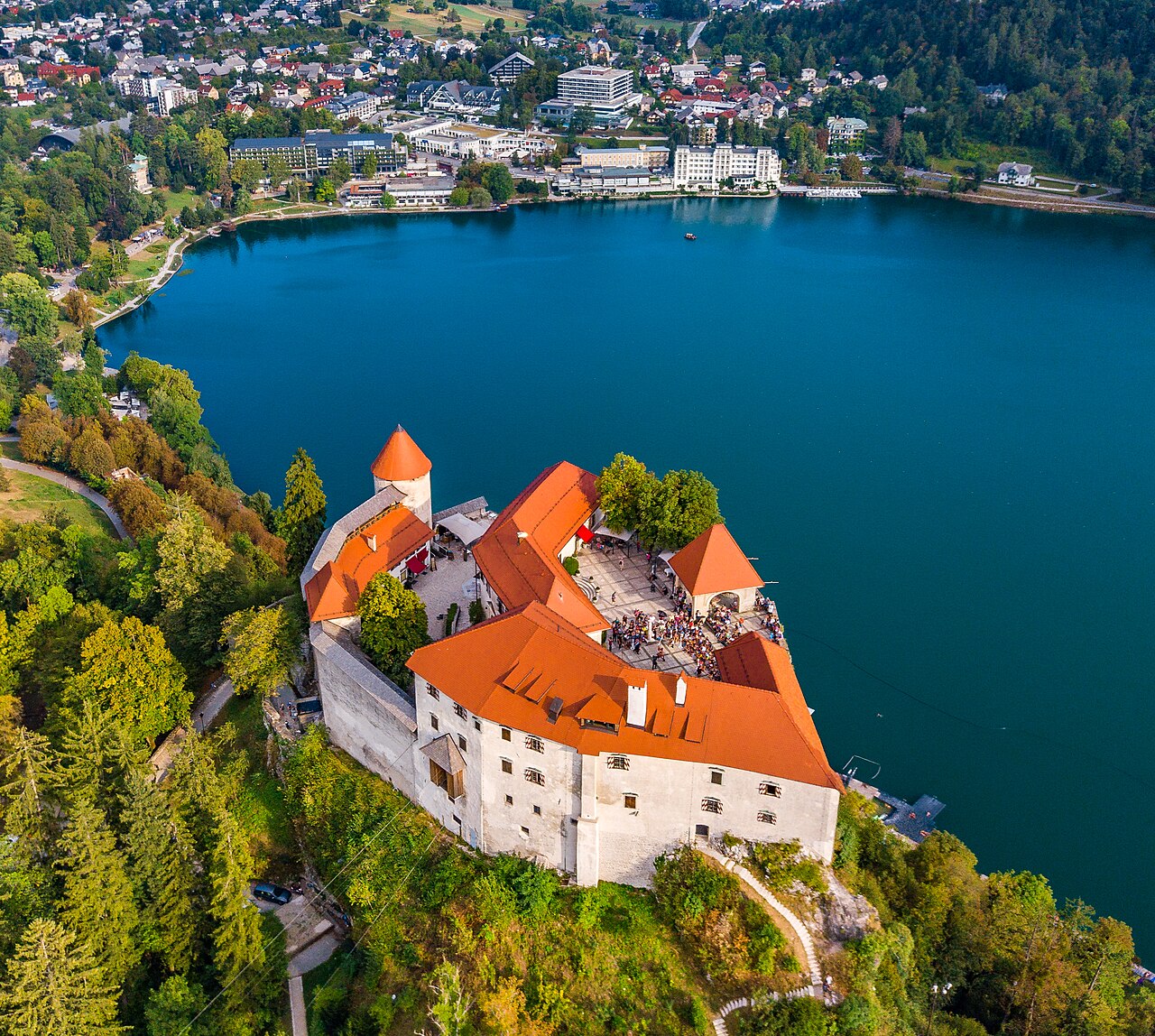
A castle on a cliff high above Lake Bled, first mentioned in 1011, when Emperor Henry II gave it to the bishops of Brixen. Written sources make it the oldest Slovenian castle, and today it houses a museum of the lake's history.
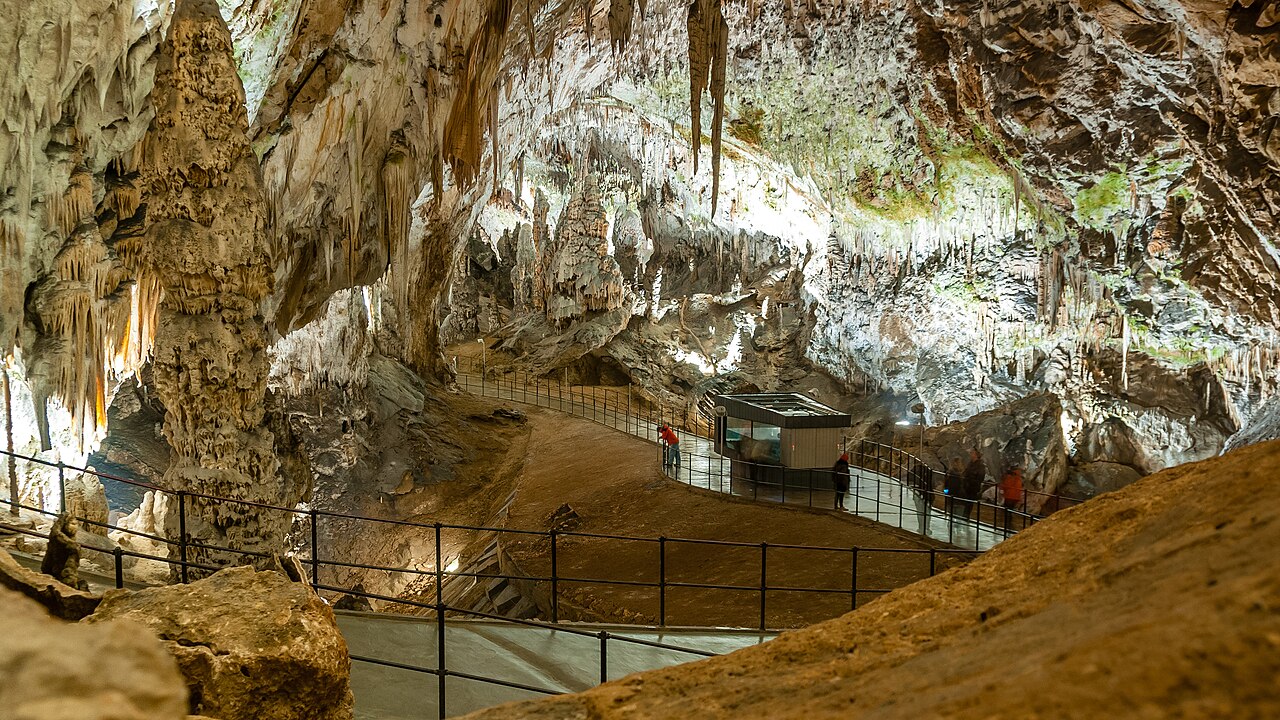
A karst cave system about 24 km long, carved by the Pivka river. Visitors have come since 1819, a cave railway has run since 1872, and electric light arrived in 1884. An aquarium in the cave shows the blind olm.
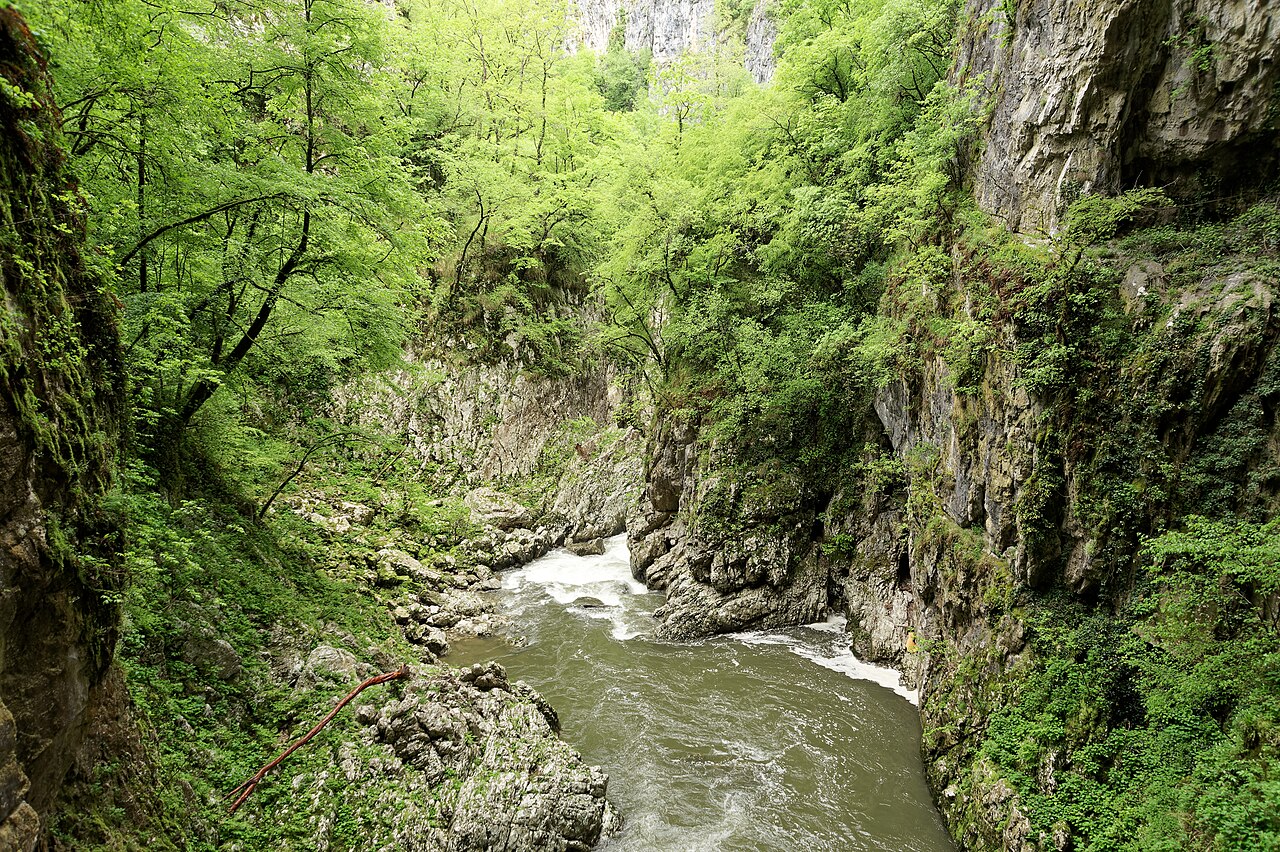
Here the Reka river disappears underground and flows through a canyon more than 140 metres high. Martel's Chamber, with a volume of about 2.2 million cubic metres, is considered the largest underground chamber found in Europe. The caves lie on the Karst Plateau, south-west of Postojna.
UNESCO World Heritage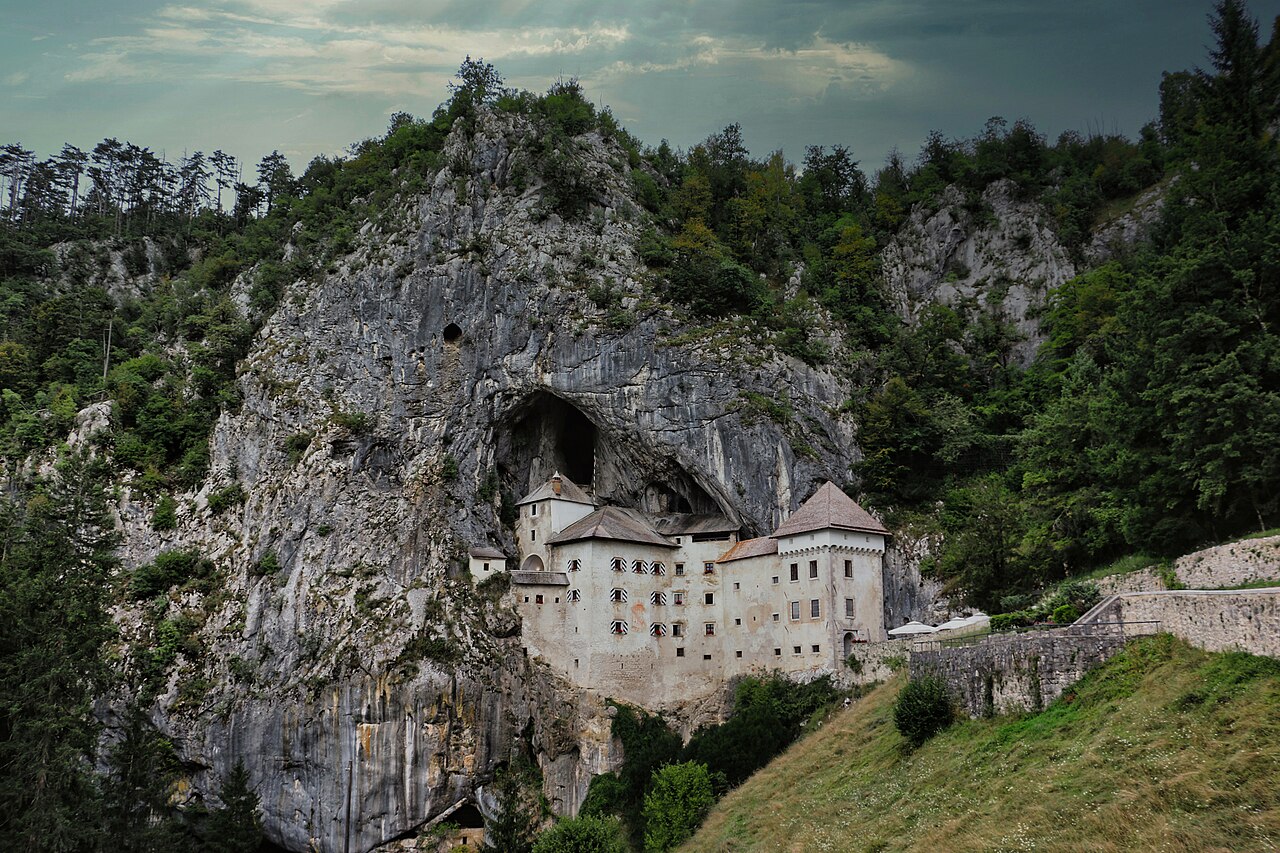
A castle built into the mouth of a cave high in a rock wall, about 11 km from Postojna. It was first mentioned in 1274 and is famous for the 15th-century robber baron Erasmus of Lueg who, according to legend, held out here against the emperor's troops.
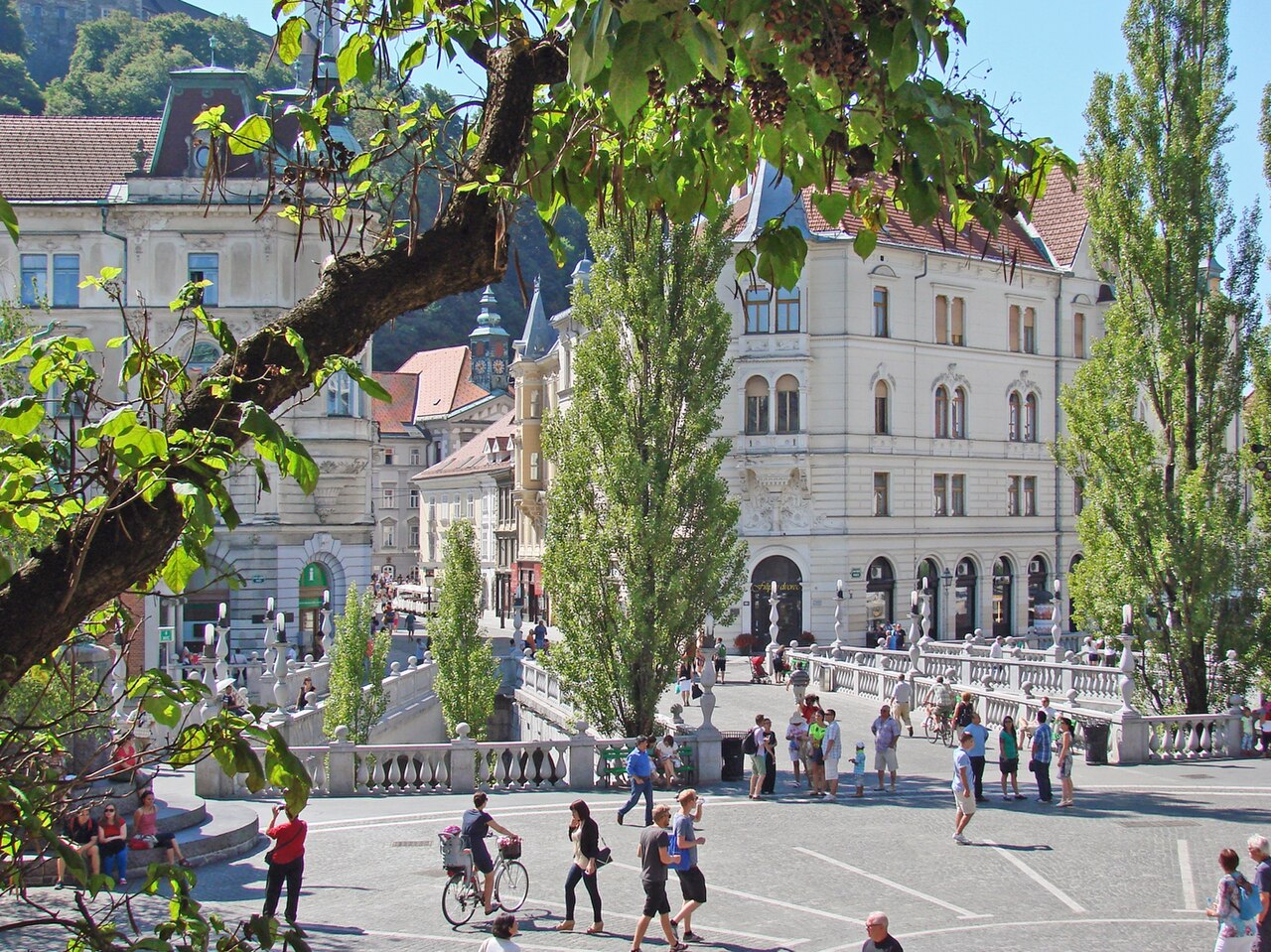
Three bridges side by side over the Ljubljanica, joining Prešeren Square with the old town. The architect Jože Plečnik added the two side bridges in the early 1930s. In 2021 his works in Ljubljana, including this bridge, were added to the UNESCO World Heritage List.
UNESCO World Heritage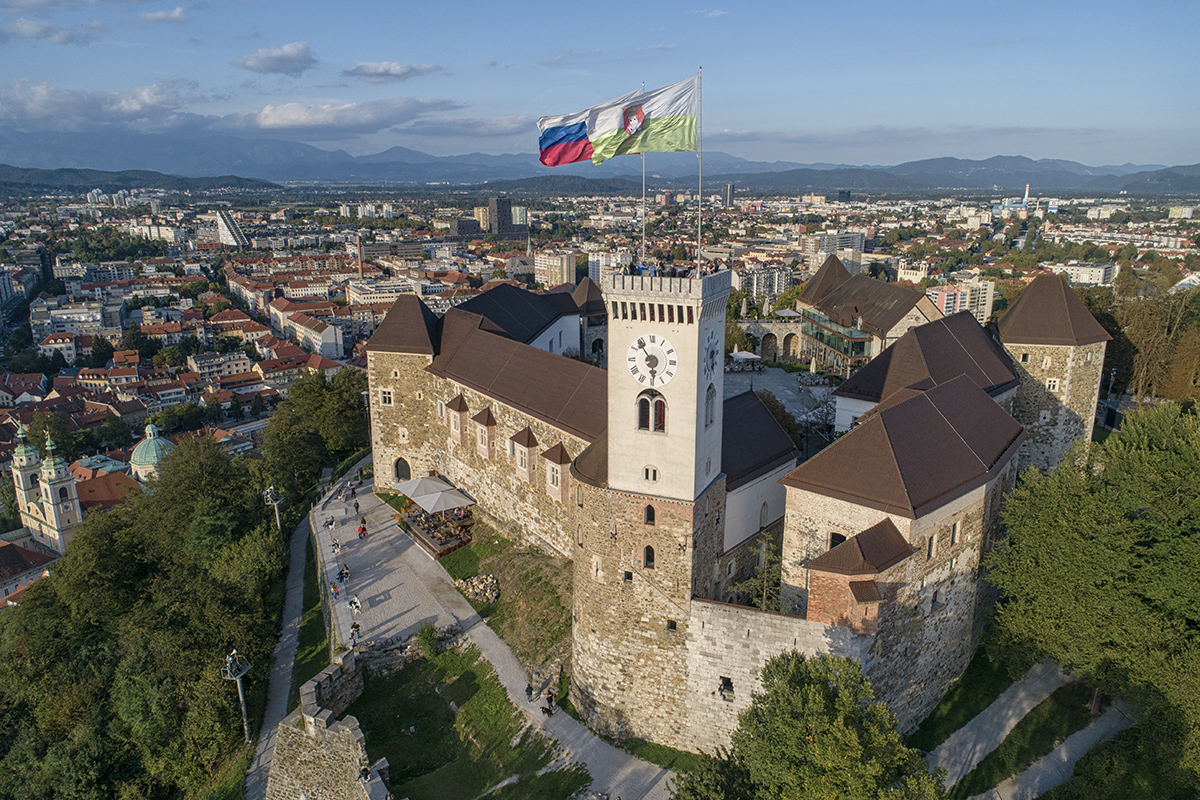
A castle on the hill above the old town, reached on foot or by a funicular railway opened in 2006. From its viewing tower, built in 1848, a guard once fired cannons to warn the city of fires. Today it hosts exhibitions, concerts and weddings.
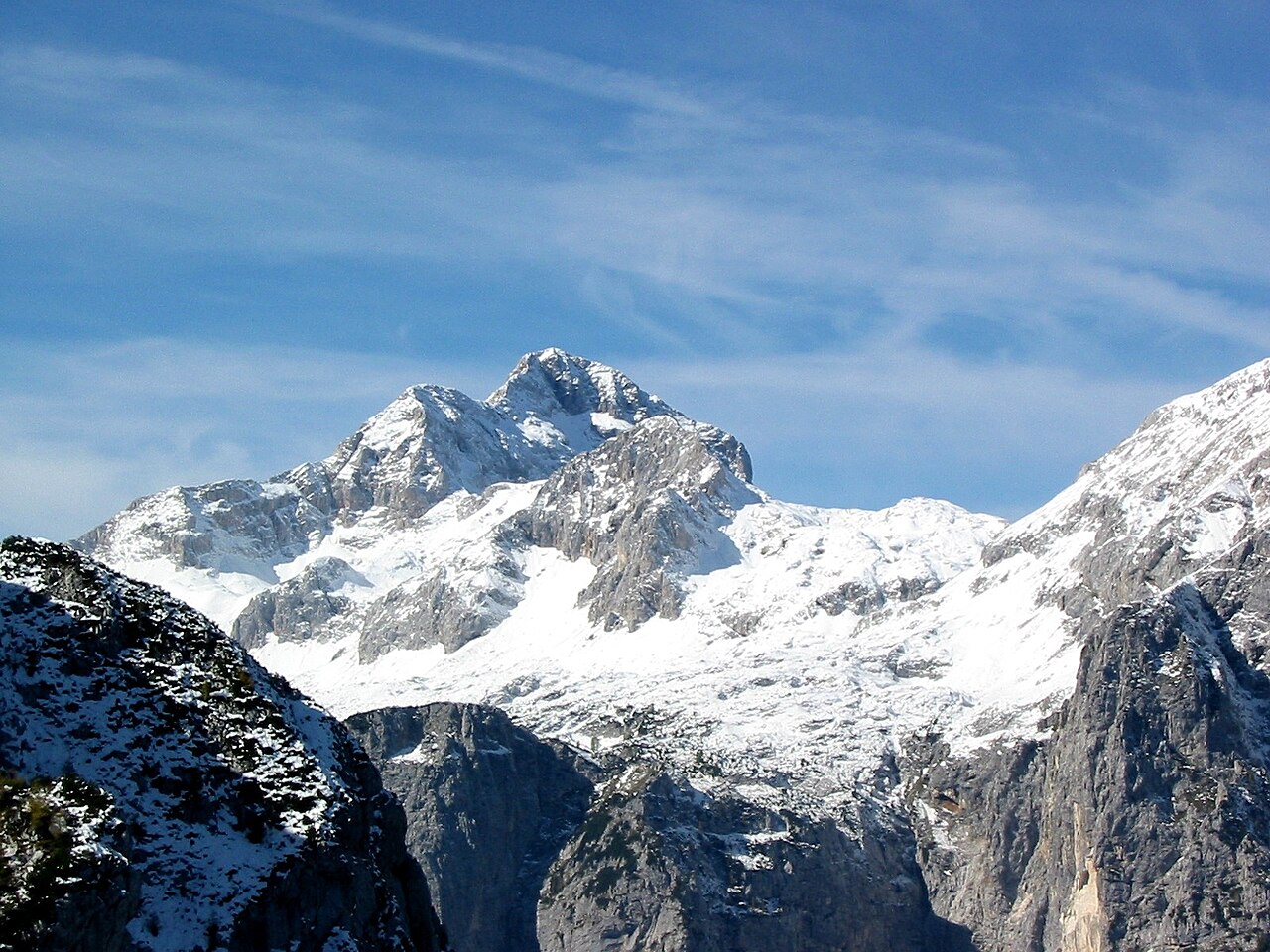
Slovenia's highest mountain, 2,864 m, stands in the middle of the country's only national park in the Julian Alps. A small metal shelter, the Aljaž Tower, stands on the summit, and many Slovenians believe everyone should climb Triglav at least once. The pin marks the summit, west of Bled.
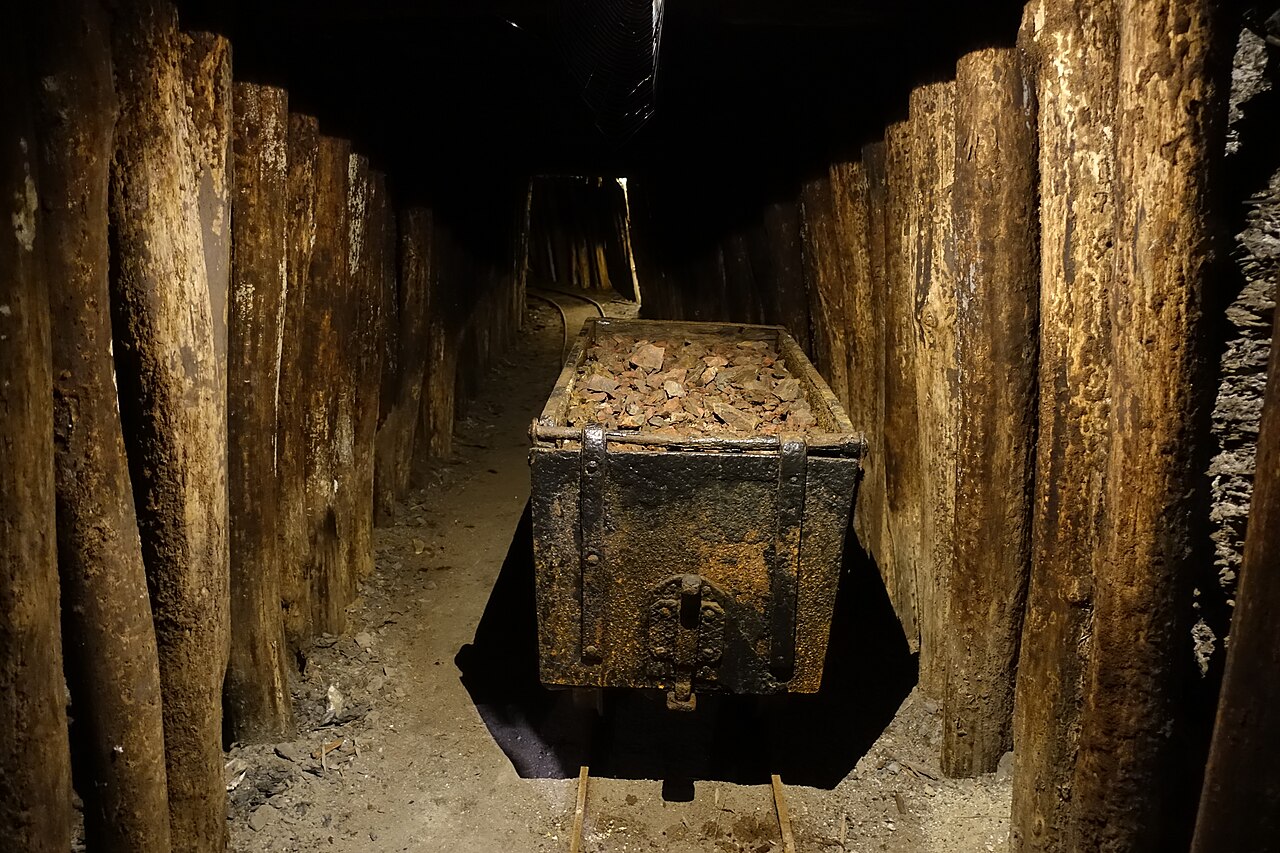
Mercury was found in Idrija in the late 15th century, and the mine worked for centuries. Together with Almadén in Spain it forms the UNESCO site Heritage of Mercury, listed in 2012. Visitors can walk into Anthony's Shaft, an old mine entrance.
UNESCO World Heritage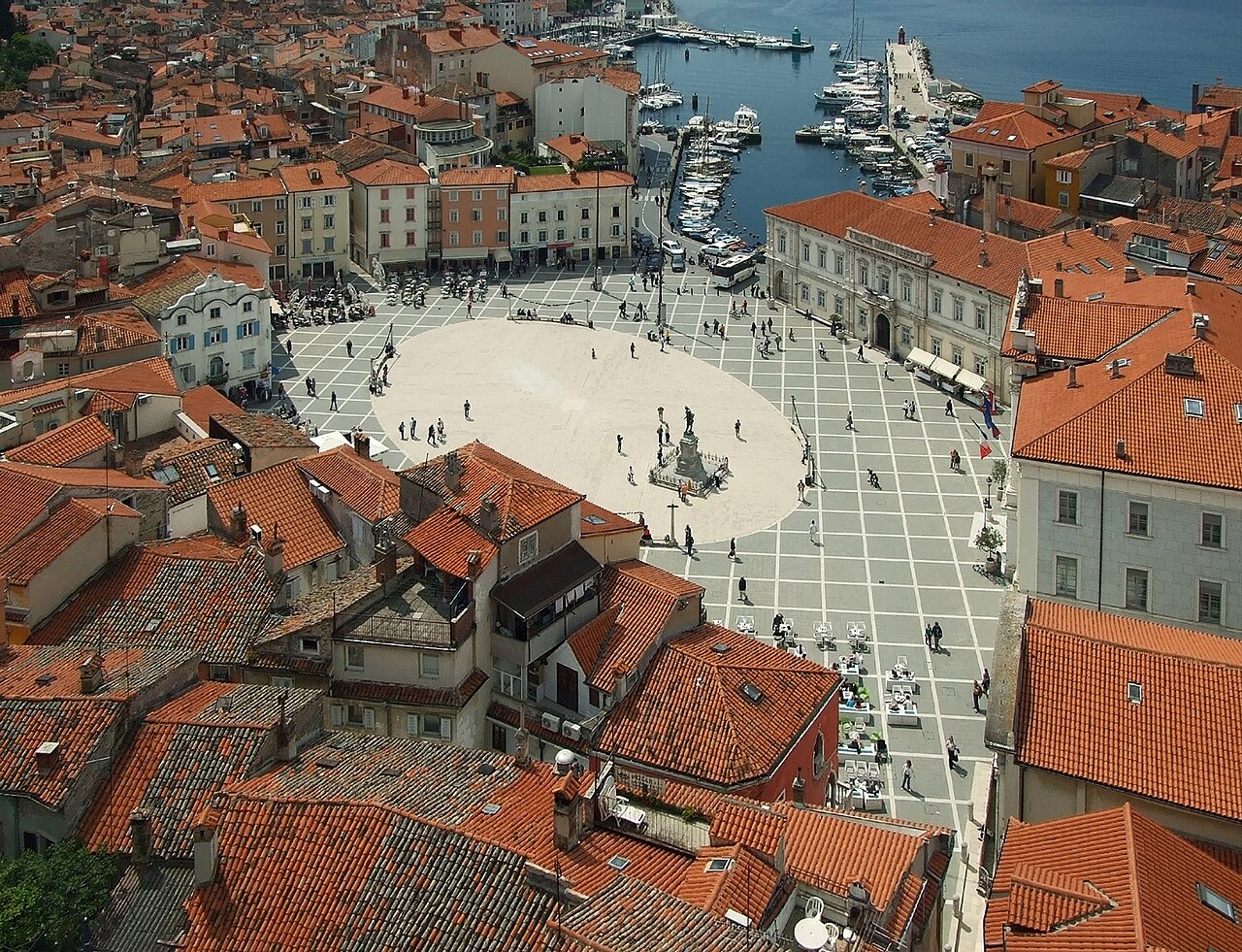
Piran's main square was once an inner harbour for fishing boats, filled in and turned into a square in 1894. It is named after the Baroque violinist Giuseppe Tartini, born in Piran in 1692, whose statue stands in the middle.
A wooden wheel found in 2002 in the Ljubljana Marsh, about 20 km south of Ljubljana, is about 5,100 to 5,350 years old. It is the oldest wooden wheel yet discovered.
A vine growing on the front of the Old Vine House in Maribor is more than 400 years old. In 2004 Guinness World Records listed it as the oldest grapevine in the world that still bears grapes.
World Bee Day, 20 May, was proclaimed by the United Nations in December 2017 on Slovenia's proposal. The date is the birthday of Anton Janša, a Slovenian pioneer of modern beekeeping, who was baptised on 20 May 1734.
The Carniolan honey bee, native to Slovenia, is popular with beekeepers around the world because it is very gentle and copes well with cold weather.
The blind, pale olm lives only in underground waters. Locals call it the 'human fish' because of its skin colour, and in 1689 Valvasor reported that people thought olms washed out of caves were baby dragons. Scientists estimate that olms can live for more than 100 years.
The famous white Lipizzan horses take their name from Lipica, a village in the Slovenian Karst, where the stud farm was founded in 1580. The staff plant a new linden tree for every foal born there.
As of 2020, about 60% of Slovenia was covered in forest, which made it the second most forested country in Europe after Finland.
In 1895 the priest Jakob Aljaž bought the summit of Triglav for one florin, then built a small metal tower on top. The Aljaž Tower is still there and is a symbol of Slovenia.
Slovenia's national anthem is set to 'Zdravljica' (A Toast), a poem France Prešeren wrote in 1844. It was chosen as the anthem in 1989 and became the anthem of independent Slovenia in 1991.
Slovene has a grammatical 'dual'. Besides singular and plural, it has a special form for exactly two of something, a very old feature that few languages still keep.
The first ski jump longer than 100 metres was made in 1936 at Planica in the Julian Alps, which became the home of ski flying.
As of September 2026, the Slovenian cyclist Tadej Pogačar has won the Tour de France five times: in 2020, 2021, 2024, 2025 and 2026.
In 2017 Slovenia's men's basketball team became European champions, winning all nine of their games at EuroBasket 2017.
In 2021 the Slovenian climber Janja Garnbret became the first woman to win an Olympic gold medal in sport climbing, and she won again in 2024.
Pronunciation is written the way it sounds; the capital letters show where the stress goes. Audio is coming soon.
Call 112 for an ambulance, the fire service or mountain rescue. The police have their own number, 113.
To drive on Slovenian motorways and expressways you need an electronic vignette, registered to your number plate. Buy it for a week, a month or a year, and only from the official DARS website or sales points.
Drivers must keep their headlights on at all times. From 15 November to 15 March, and whenever there is snow or ice, cars must have winter tyres, or summer tyres with snow chains in the boot.
Most Slovenians do not see tipping as obligatory. People often round the bill up to the next euro, and leave more only for really good service.
In the mountains and in small villages it is polite to greet people you pass with 'Dober dan'. Mountain paths can be steep, and some have via ferrata sections with steel cables, so check the route and weather first.
Brown bears live in wooded areas across Slovenia, even near towns, and hikers occasionally meet bears and wolves in the mountains. Take particular care where bears have been sighted, stay on marked paths and call 112 for mountain rescue.
Bus and train services are sparse on Saturdays and very limited on Sundays, so plan day trips ahead.
Slovenia is in the Schengen area. Visitors who do not need a visa can usually stay up to 90 days in any 180-day period across all Schengen countries together.