World Stroll
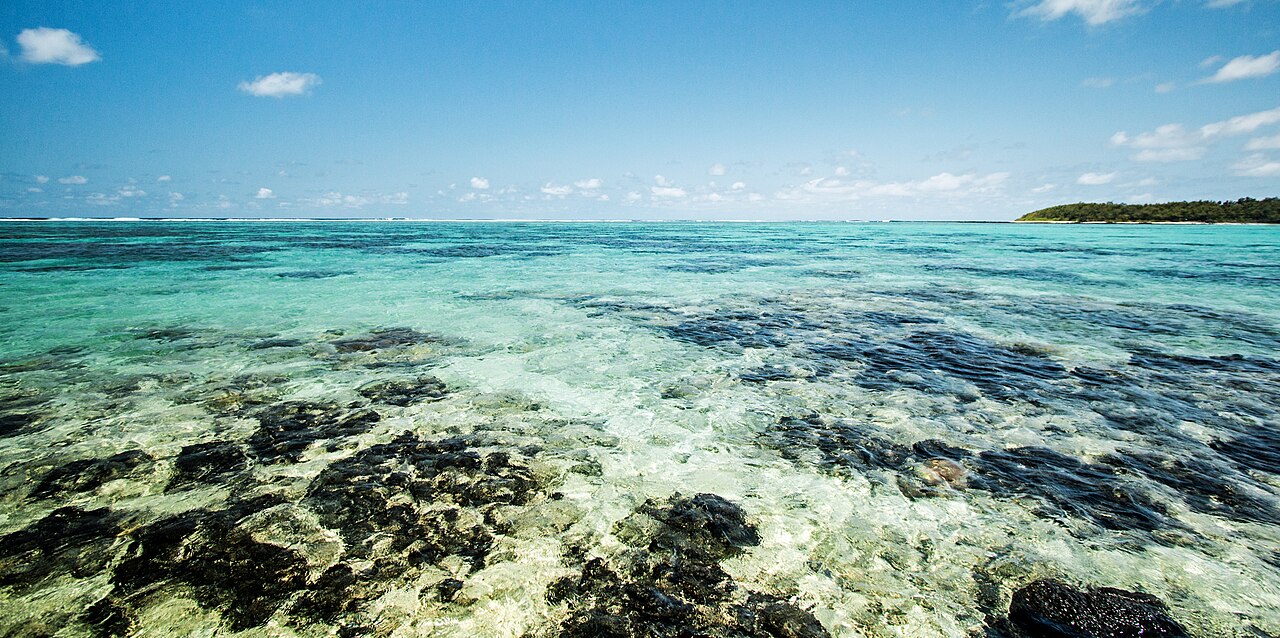
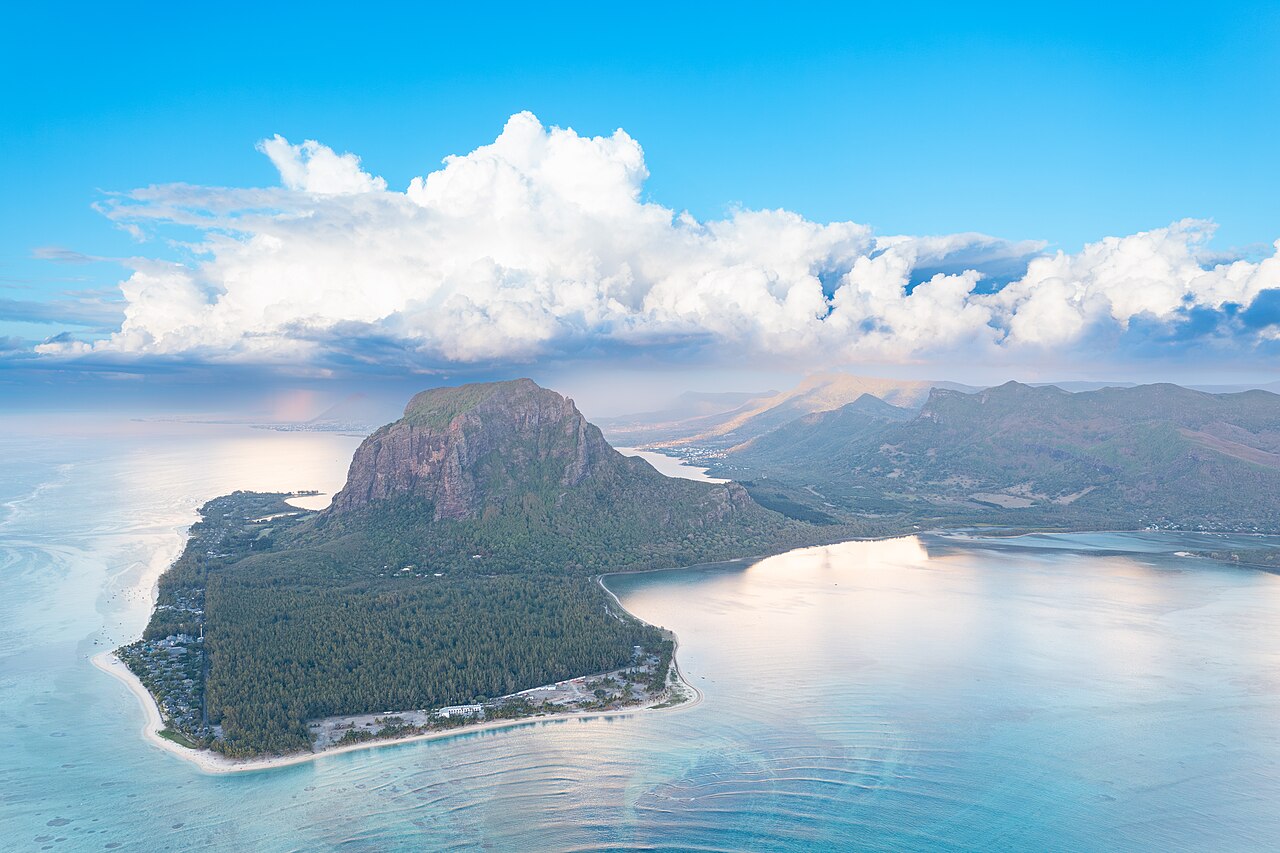
Le Morne Brabant
Photo: "dronepicr", CC BY 2.0
Flag of Mauritius
Eastern Africa

Mauritius

A volcanic island ringed by coral reef, where Indian, African, French and Chinese roots meet over dholl puri and sega music, and the only home the dodo ever had.

Start the trip Skip to the quiz About five relaxed minutes.

Your trip to Mauritius

  1. Stroll through nine short parts: the story, the food, the cities and a few words. One at a time, with "Next".
  2. Take the quiz as the last step: 10 friendly questions, no timer.
  3. Get your stamp in your passport.
Explore Mauritius
You have explored 0 of 9 parts. Scroll on to discover the rest.
ComorosDR CongoEswatiniMadagascarMalawiMauritiusMozambiqueSouth AfricaTanzaniaZambiaZimbabwe
Going to Mauritius?Phrases, table manners and local tips on one printable page.Send a postcard from MauritiusA free digital postcard for family and friends.
Overview

Mauritius at a glance

Mauritius is an island country in the Indian Ocean, about 2,000 km off the southeastern coast of Africa and east of Madagascar. Besides the main island, which is about 65 km long and 45 km wide, it includes Rodrigues, about 560 km to the east, and the small outer islands of Agaléga and St. Brandon. The main island was made by volcanoes about 8 million years ago: a ring of jagged mountains surrounds a cool central plateau, and a coral reef encloses calm turquoise lagoons and long white beaches.

Nobody lived here until Europeans arrived. The Dutch named the island after Prince Maurice of Nassau in 1598, the French turned it into a sugar colony worked by enslaved Africans and Malagasy, and under British rule about half a million indentured labourers came from India. Today most Mauritians have Indian roots, alongside Creoles of African and Malagasy descent and smaller Chinese and Franco-Mauritian communities. Most people speak Mauritian Creole at home, while English and French are used in government, business and the media.

Since independence in 1968 Mauritius has grown from a sugar island into one of the most prosperous countries in Africa, living from tourism, textiles, sugar and financial services, with free education and health care. It also claims the Chagos Archipelago, which the United Kingdom has run as the British Indian Ocean Territory since 1965. The two countries signed a treaty in May 2025 under which Mauritius would be sovereign over the islands and the UK would keep the military base on Diego Garcia for at least 99 years. As of November 2026 the treaty has been signed but has not entered into force: the UK paused its ratification in 2026.

CapitalPort Louis
PopulationAbout 1.24 million (1,235,260 at the 2022 census), almost all on the main island
Official languageNone is named for the whole country. The constitution makes English the language of the National Assembly, where French may also be used; English and French are the languages of government, and Mauritian Creole is the mother tongue of most people
CurrencyMauritian rupee (MUR)
AreaAbout 2,040 km², of which the main island is about 1,865 km²
GovernmentParliamentary republic since 1992: the President is head of state and the Prime Minister leads the government
Highest mountainPiton de la Petite Rivière Noire, 828 m, in the southwest of the main island
Longest riverThe Grand River South East (Grande Rivière Sud-Est), about 34 km
NeighboursNo land borders. The nearest neighbour is the French island of Réunion to the west-southwest; Madagascar lies farther west and the Seychelles far to the north
Drives on theLeft
Calling code+230
The story

A short history of Mauritius

Mauritius had no people at all until the age of sail. Arab sailors may have known it by the 10th century and the Portuguese visited in the early 1500s, but the Dutch were the first to settle. The French built a sugar colony on the labour of enslaved Africans and Malagasy, the British took the island in 1810, and after slavery ended they brought in hundreds of thousands of indentured workers from India. Mauritius became independent in 1968 and a republic in 1992.

  1. 1507

    Portuguese sailors visit

    Portuguese sailors, blown off their usual route to India, landed on the uninhabited island. Early Portuguese maps called it Cirne or Cerne, probably after a ship named Cisne ('swan'). The Portuguese did not settle, and the Mascarene Islands were later named after the Portuguese viceroy Pedro Mascarenhas.

  2. 1598

    The Dutch name the island Mauritius

    A Dutch squadron under Admiral Wybrand van Warwyck landed at Grand Port in the southeast and named the island after Prince Maurice of Nassau, stadtholder of the Dutch Republic. His sailors also wrote the first known description of the dodo.

  3. 1638

    First Dutch settlement

    The Dutch East India Company settled the island to cut its valuable ebony trees. The Dutch brought sugar cane, domestic animals and deer, and from 1639 enslaved Malagasy to do the work.

  4. 1662

    Last widely accepted dodo sighting

    The dodo, a large flightless bird found only on Mauritius, was hunted by sailors and lost its eggs and habitat to animals brought by ships. The last widely accepted sighting dates from 1662, less than a century after the bird was first described.

  5. 1710
    The Dutch leave

    After several attempts at a lasting colony that never paid its way, the Dutch abandoned Mauritius in 1710. The macaque monkeys brought earlier by the Portuguese and the deer the Dutch had brought from Java stayed behind.

  6. 1715

    France takes the island

    France, which already held neighbouring Île Bourbon (now Réunion), took possession of Mauritius and renamed it Isle de France. The French East India Company ran it until 1767.

  7. 1735

    La Bourdonnais becomes governor

    Governor Bertrand-François Mahé de La Bourdonnais made Port Louis a naval base and shipbuilding centre and built a sugar economy worked by enslaved people from Africa and Madagascar. By the late 1700s enslaved Africans made up about 80 percent of the island's people.

  8. 1810

    The British capture the island

    French privateers based on the island raided British ships. In August 1810 the French navy beat a British squadron at the Battle of Grand Port, but at the end of November a large British force landed at Cap Malheureux in the north, and the French surrendered on 3 December. Settlers kept their land, their language and French law, and the island became Mauritius again.

  9. 1834

    Indentured labour begins

    The British chose Mauritius for what they called the 'great experiment': using contract workers from India instead of enslaved people on the sugar estates. Between 1834 and 1921 about half a million indentured labourers came, most of them landing at the immigration depot in Port Louis now called Aapravasi Ghat.

  10. 1835

    Slavery is abolished

    Slavery formally ended in Mauritius on 1 February 1835. The slave owners, not the enslaved, were paid compensation of about two million pounds. Since 1987, 1 February has been marked as the commemoration of the abolition of slavery.

  11. 1847

    The 'Post Office' stamps are issued

    Mauritius issued its first stamps in September 1847, a red one penny and a blue two pence engraved locally, with the words 'Post Office'. Only 500 of each were printed, and they are now among the rarest stamps in the world.

  12. 1968

    Independence

    Mauritius became independent from Britain on 12 March 1968, with the British monarch remaining head of state. The flag was raised at the Champ de Mars racecourse in Port Louis. Three years earlier Britain had separated the Chagos Archipelago from the colony, which Mauritius still disputes.

  13. 1992

    Mauritius becomes a republic

    On 12 March 1992, exactly 24 years after independence, Mauritius became a republic within the Commonwealth, with a president as head of state instead of the British monarch.

  14. 2002

    Rodrigues gains autonomy

    The island of Rodrigues, about 560 km east of the main island, became an autonomous part of the republic with its own elected Regional Assembly.

  15. 2020

    The Wakashio oil spill

    On 25 July 2020 the bulk carrier MV Wakashio ran aground on a coral reef off the southeast coast and leaked up to 1,000 tonnes of heavy oil into the lagoon near Mahébourg, one of the worst environmental disasters in the western Indian Ocean.

At the table

What to eat in Mauritius

Mauritian food is a mix of Indian, Creole, French and Chinese cooking, eaten by everyone whatever their background. A home meal is usually rice or a flatbread (farata or roti) with a curry (cari), a pot of dal (lentils), a tomato rougaille and sides of pickles (achard) and fresh chutneys called satini. Curries use thyme and curry leaves as well as Indian spices, and are rarely made with coconut milk. Between meals people buy street snacks from hawkers and markets: dholl puri, gâteaux piments and samosas. Lunch in restaurants is usually from noon to 3 pm and dinner from 7 to 10 pm, and the drinks to try are local rum, Phoenix beer and vanilla tea.

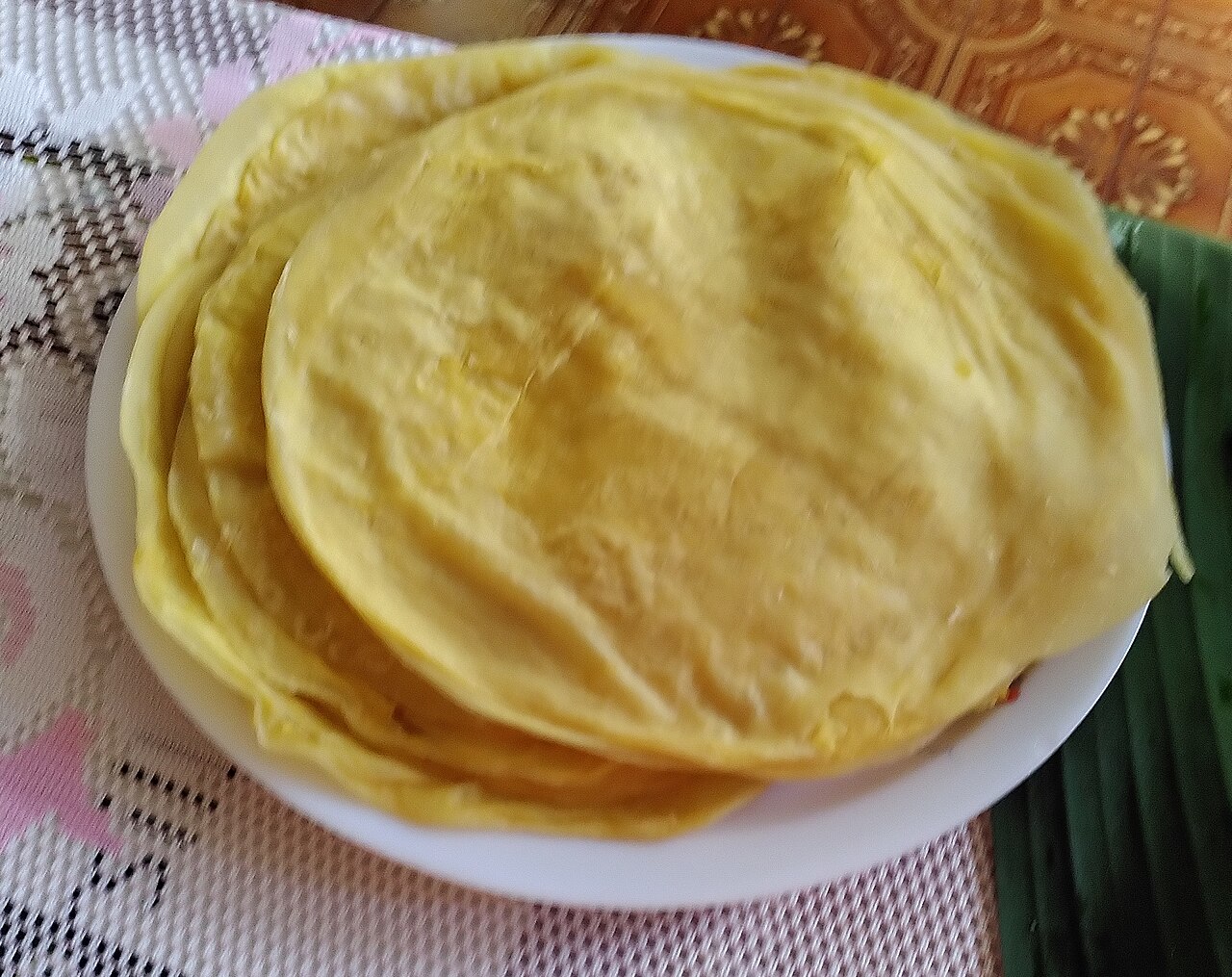
Dholl puri
Photo: Yoann74, CC BY-SA 4.0
Bread

Dholl puri

dalpuri
Indo-Mauritian, sold all over the island
Read moreShow less

The best-loved street food in Mauritius: a soft, thin flatbread filled with ground yellow split peas and cooked on a griddle (tawa). It is wrapped around a curry of large beans (gros pois), tomato sauce and pickles and eaten on the spot.

Dholl puri came with the cooking of Indian indentured labourers and is now a national favourite, eaten by Mauritians of every background.

Gâteau piment
Photo: Alan Myers, CC BY 2.0
SnackRecipe

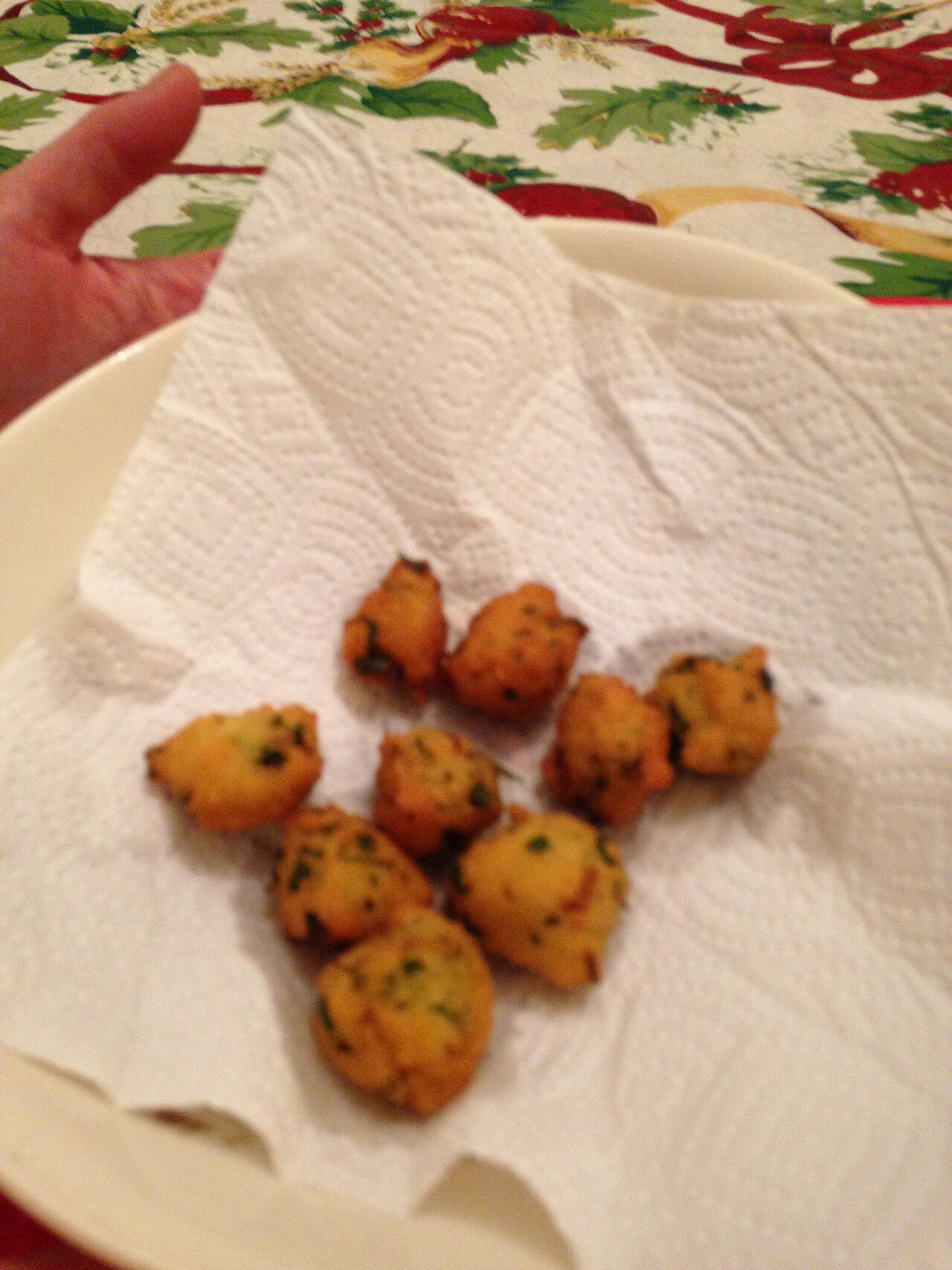
Gâteau piment

gato pima
Indo-Mauritian street snack, a cousin of the Indian vada
Read moreShow less

Small crisp fritters of ground yellow split peas with green chilli, spring onion and coriander, fried golden. They are sold hot by the bagful and often stuffed into a buttered baguette for a cheap lunch.

The name means 'chilli cake', but they are not sweet: in Mauritius many fried snacks are called gâteaux (gato), from taro fritters to banana fritters.

See the recipe
Serves 645 min

Ingredients

  • 250 g yellow split peas, soaked in cold water overnight
  • 1 small onion or 3 spring onions, finely chopped
  • 2 to 3 green chillies, finely chopped
  • A small bunch of coriander, chopped
  • 1 teaspoon cumin seeds
  • 1 teaspoon salt
  • Vegetable oil for deep frying

Method

  1. Drain the soaked split peas well and grind them in a food processor to a coarse paste, adding only a spoonful of water if needed. A little texture is good.
  2. Mix in the onion, chillies, coriander, cumin and salt.
  3. Heat the oil in a deep pan to about 175 °C. With wet hands, roll walnut-sized balls of the mixture and flatten them slightly.
  4. Fry a few at a time for 4 to 5 minutes, turning, until deep golden and crisp. Drain on kitchen paper.
  5. Serve hot on their own, with tomato satini, or inside a buttered baguette.
Samosa
Photo: Benoît Prieur, CC0
Snack

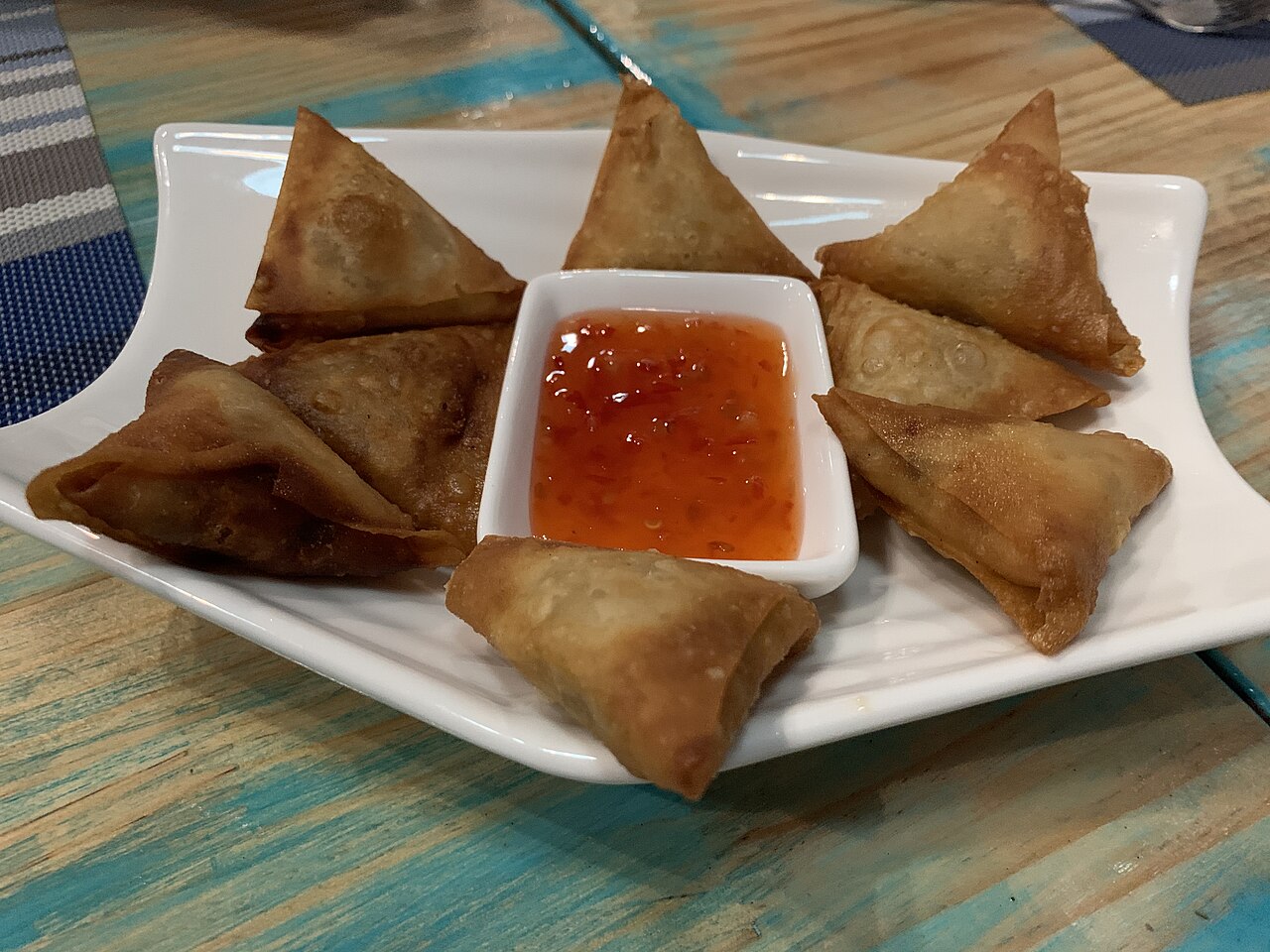
Samosa

samoussa
Indo-Mauritian street snack
Read moreShow less

Crisp triangular pastries filled with spiced vegetables, potato or meat, sold at every street stall and market alongside gâteaux piments.

Together with gâteaux piments and bhajias, samosas belong to the small snacks Mauritians call gadjaks.

Rougaille
Photo: Benoît Prieur, CC0
Main courseRecipe

Rougaille

rougail
Creole cooking, shared with Réunion and the Seychelles
Read moreShow less

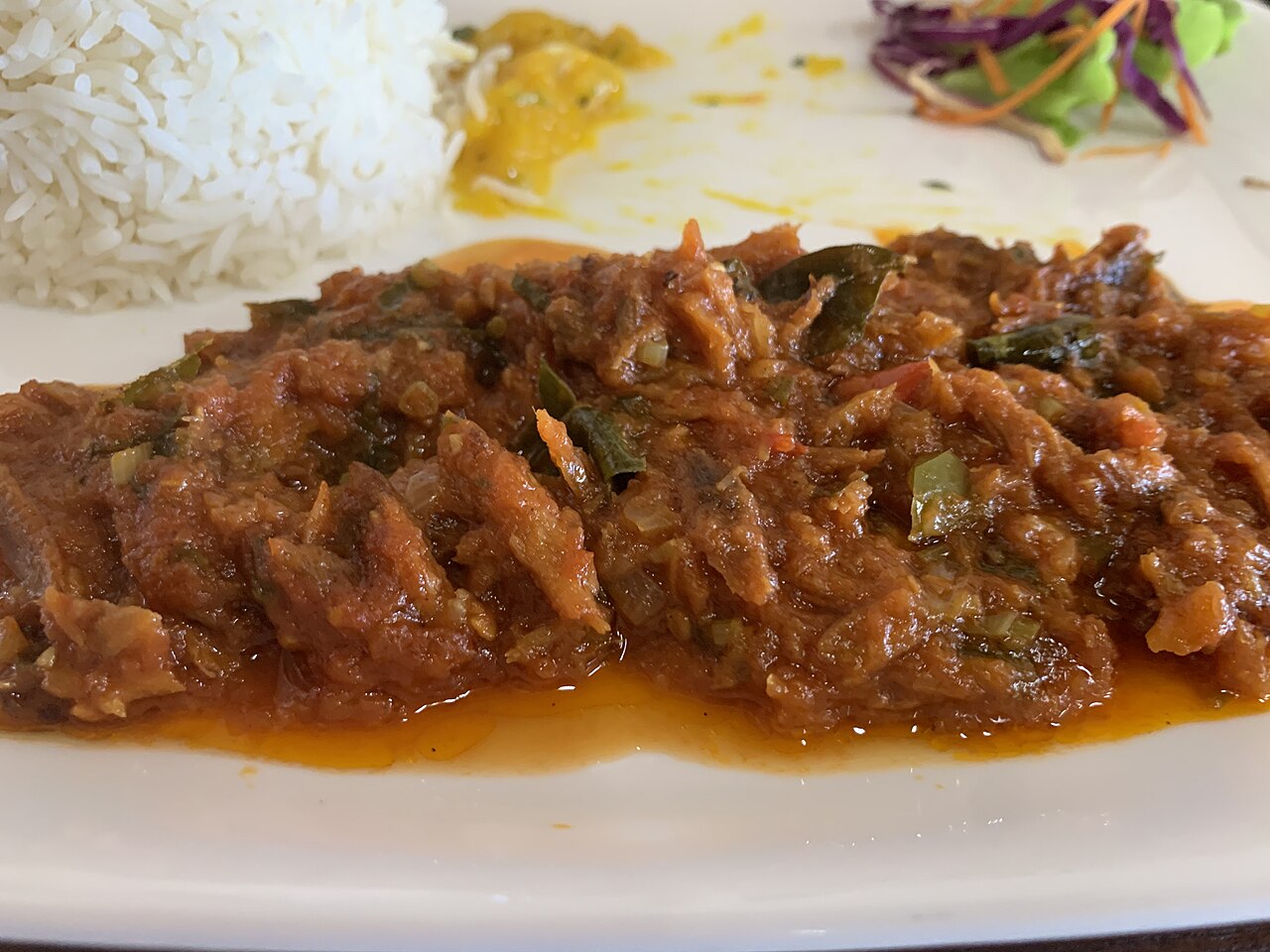
A spicy stew of tomatoes, onion, garlic, ginger, chilli and thyme, cooked with fish, sausages, salted fish, prawns or octopus and eaten with rice or bread. It is the everyday Creole dish of the island.

Octopus rougaille is also sold as street food, served with chapati or stuffed in a roll.

See the recipe
Serves 440 min

Ingredients

  • 500 g firm white fish fillets or 8 sausages, cut into pieces
  • 3 tablespoons vegetable oil
  • 2 onions, sliced
  • 4 cloves garlic, crushed
  • A thumb of fresh ginger, grated
  • 1 or 2 green chillies, chopped
  • 4 ripe tomatoes, chopped, and 1 tablespoon tomato paste
  • A few sprigs of fresh thyme
  • Chopped coriander and spring onion, salt, and rice to serve

Method

  1. Brown the fish or sausages in half the oil, then lift them out.
  2. Add the rest of the oil and fry the onions until soft and golden. Add the garlic, ginger, chilli and thyme and cook for a minute.
  3. Add the tomatoes and tomato paste with a pinch of salt and simmer for about 15 minutes, until thick and saucy.
  4. Return the fish or sausages and simmer gently for 5 to 10 minutes, until cooked through.
  5. Scatter with coriander and spring onion and serve with rice.
Fish vindaye
Photo: Benoît Prieur, CC0
Main courseRecipe

Fish vindaye

vindaye poisson
Mauritian, related to the vindaloo of Goa
Read moreShow less

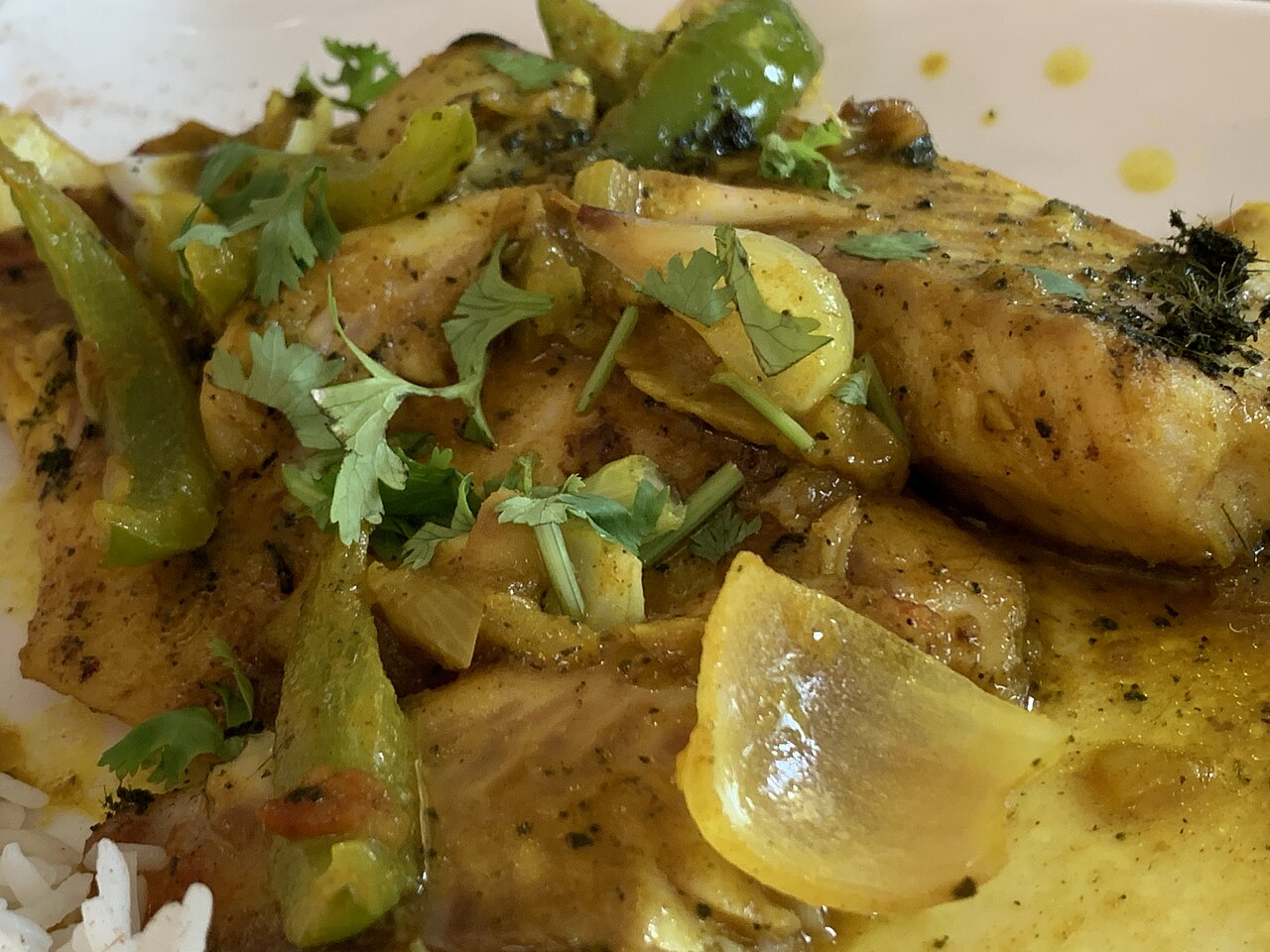
Pieces of fried fish, often tuna or swordfish, coated in a tangy yellow sauce of mustard seeds, turmeric, garlic, ginger, chilli, onion and vinegar. It is eaten hot with rice or cold in bread on picnics.

The name vindaye has the same origin as Goan vindaloo and the Portuguese vinha d'alhos.

See the recipe
Serves 445 min

Ingredients

  • 600 g firm fish such as tuna, swordfish or kingfish, in chunks
  • 1 teaspoon turmeric, salt, and oil for frying
  • 1 tablespoon mustard seeds, lightly crushed
  • 4 cloves garlic and a thumb of ginger, crushed together
  • 2 onions, cut into thick slices
  • 2 green chillies, slit
  • 4 tablespoons white vinegar

Method

  1. Rub the fish with half the turmeric and some salt, then shallow-fry until golden and cooked through. Set aside.
  2. In a clean pan heat 3 tablespoons of oil and fry the mustard seeds, garlic and ginger for a minute without burning.
  3. Add the rest of the turmeric, the onions and chillies and stir for 2 minutes; the onions should stay a little crunchy.
  4. Add the vinegar and a pinch of salt, then fold in the fried fish and stir gently until coated.
  5. Serve warm with rice, or leave to cool and eat in bread the next day.
Chicken curry
Photo: PiotrPiotrPl, CC BY-SA 4.0
Main courseRecipe

Chicken curry

cari poulet
Indo-Mauritian home cooking
Read moreShow less

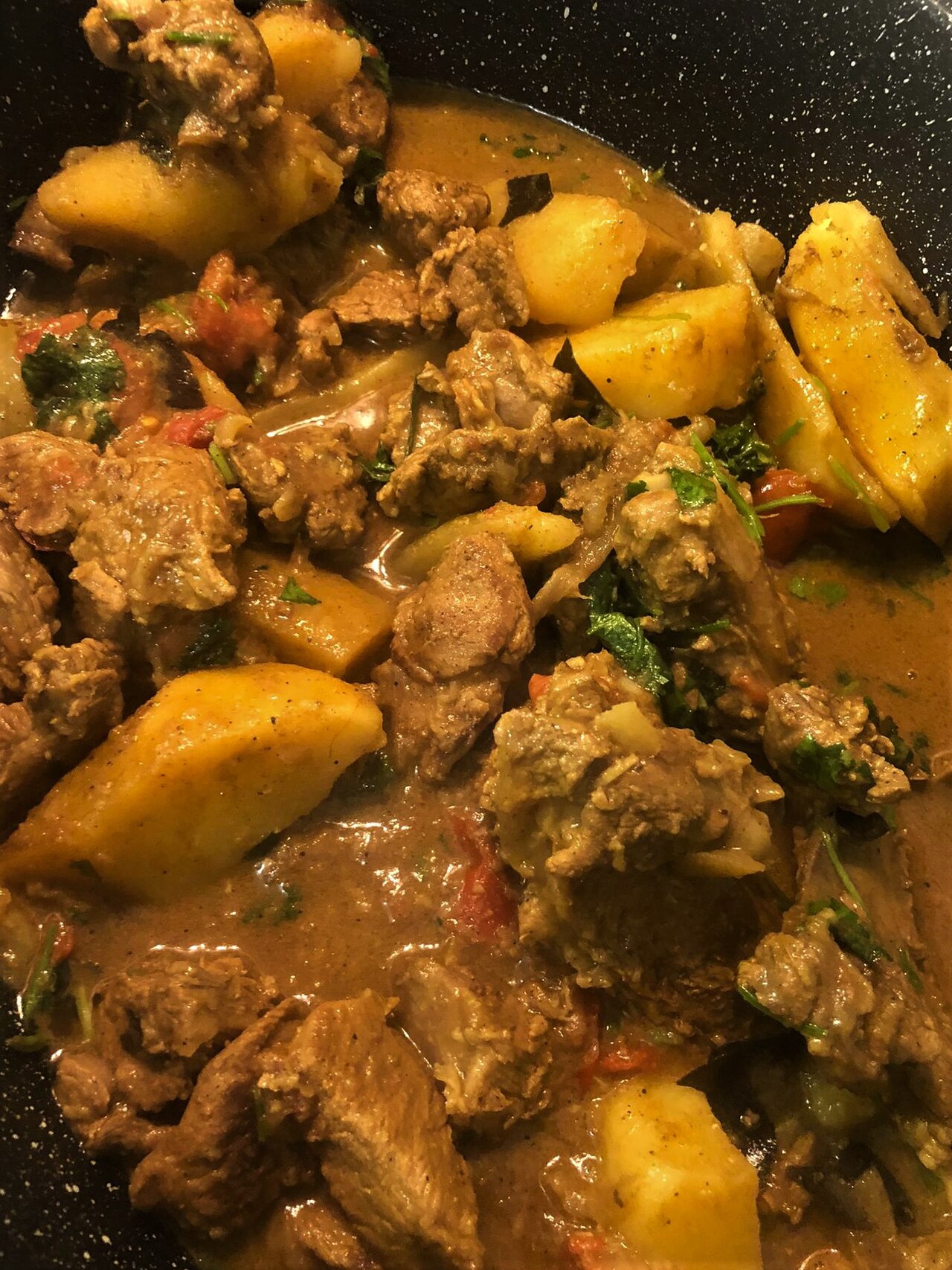
The Sunday curry of countless Mauritian homes: chicken simmered with onion, garlic, ginger, curry powder, curry leaves, thyme and tomato, often with potatoes, served with rice or farata, dal and chutneys.

At Hindu weddings the traditional meal is the sept cari, 'seven curries', a spread of seven different dishes.

See the recipe
Serves 41 h

Ingredients

  • 1 kg chicken pieces on the bone
  • 3 tablespoons vegetable oil
  • 2 onions, chopped
  • 4 cloves garlic and a thumb of ginger, crushed together
  • 3 tablespoons Mauritian or mild Madras curry powder, mixed with a little water to a paste
  • A sprig of curry leaves and a few sprigs of thyme
  • 2 tomatoes, chopped
  • 2 potatoes, peeled and quartered
  • About 300 ml water, salt, and chopped coriander

Method

  1. Heat the oil and fry the onions until golden. Add the garlic and ginger, then the curry paste, and fry for 2 to 3 minutes, stirring, until fragrant.
  2. Add the chicken, curry leaves and thyme and turn to coat. Cook for 5 minutes.
  3. Add the tomatoes, potatoes, water and salt. Cover and simmer for about 35 minutes, until the chicken and potatoes are tender.
  4. Uncover and let the sauce thicken a little. Finish with coriander and serve with rice or farata.
Bol renversé
Photo: Blackberrijack, CC0
Rice

Bol renversé

Sino-Mauritian
Read moreShow less

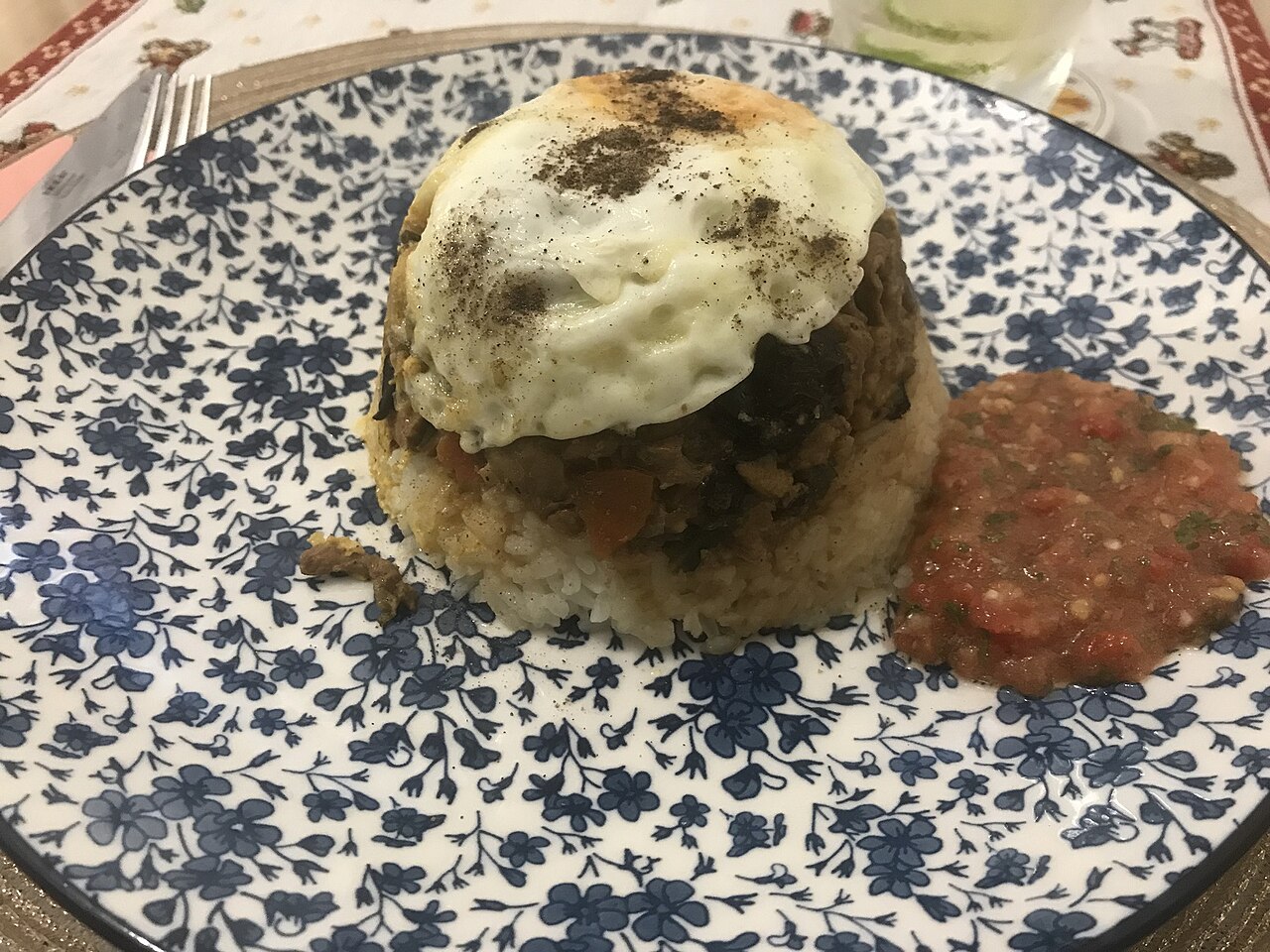
Literally 'upside-down bowl': a bowl is packed with rice, then stir-fried vegetables and chicken, beef or shrimp in a glossy sauce, then turned out onto a plate so it stands as a dome, crowned with a fried egg.

In some restaurants the bowl is turned over at the table in front of the diner.

Mine frite
Photo: Blackberrijack, CC BY-SA 4.0
Main course

Mine frite

mine frit
Sino-Mauritian, brought by Chinese settlers
Read moreShow less

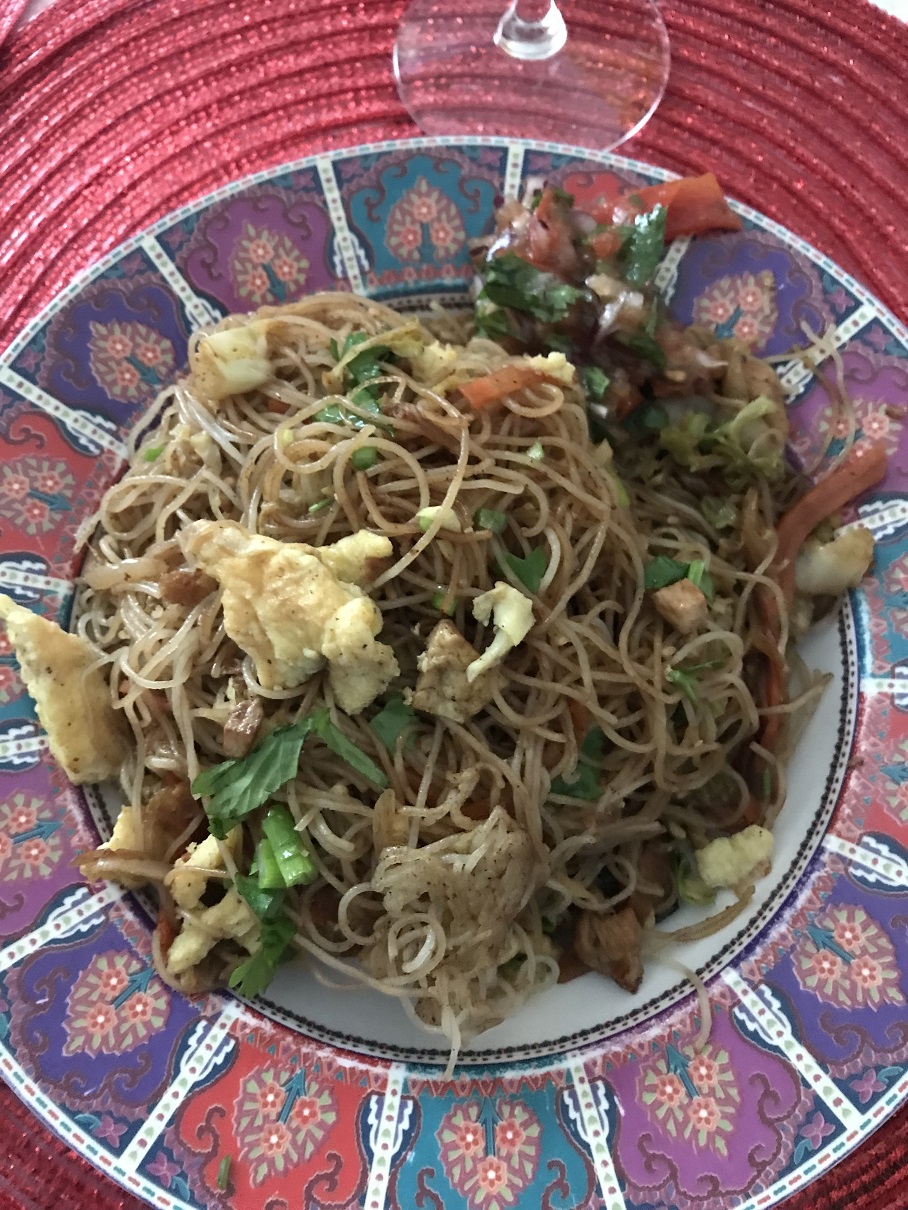
Stir-fried egg noodles with vegetables and chicken, beef or shrimp, seasoned with soy and oyster sauce. It is often the cheapest dish on a menu, and Port Louis has the most stalls selling it.

Mine comes from the Cantonese word for noodles; it is one of only two common Mauritian Creole words taken from Chinese.

Tomato satini
Photo: GinoOnassis, CC BY-SA 4.0
Side dishRecipe

Tomato satini

satini pomme d'amour
Mauritian, all communities
Read moreShow less

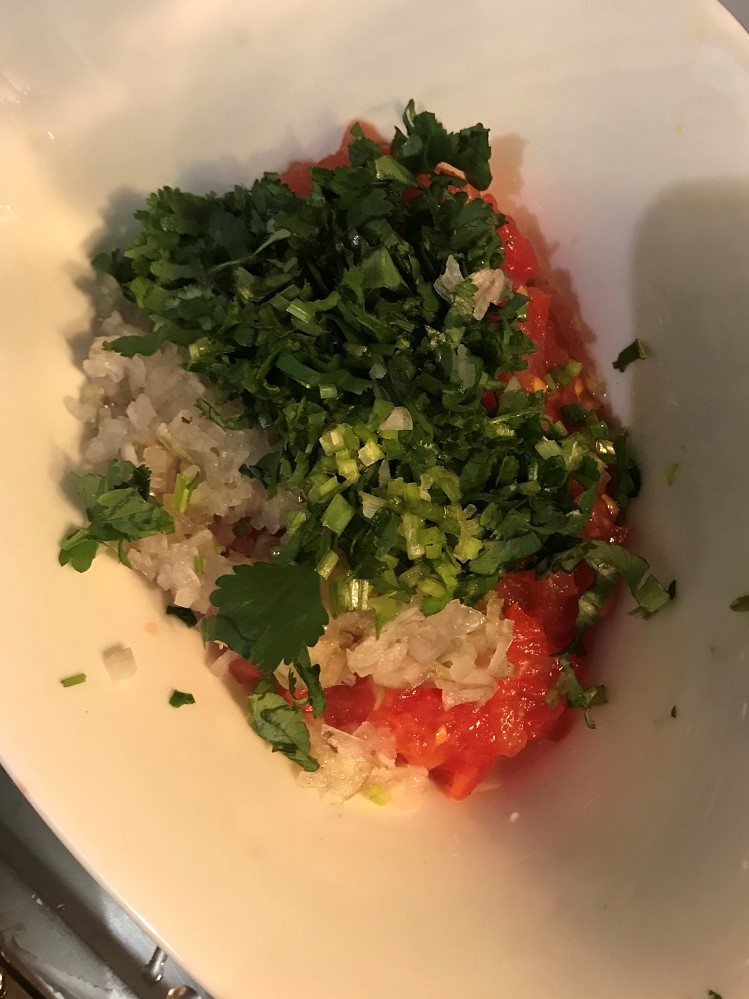
A fresh, uncooked chutney of chopped tomatoes, onion, chilli, coriander and a little oil, served with curries, fried snacks and bread. Mauritians call tomatoes pommes d'amour, 'love apples'.

Satini is the Mauritian Creole form of 'chutney'; there are also coconut and coriander satinis.

See the recipe
Serves 410 min

Ingredients

  • 3 ripe tomatoes, finely chopped
  • 1 small onion, finely chopped
  • 1 green chilli, finely chopped
  • A small handful of coriander, chopped
  • 1 tablespoon vegetable oil
  • Juice of half a lime, and salt

Method

  1. Put the tomatoes, onion, chilli and coriander in a bowl.
  2. Add the oil, lime juice and a good pinch of salt and mix gently.
  3. Leave for 10 minutes for the flavours to mingle, then serve with curry, rice or gâteaux piments.
Napolitaine
Photo: Rishi Luchun, CC BY 2.0
Dessert

Napolitaine

Mauritian bakeries and tea rooms
Read moreShow less

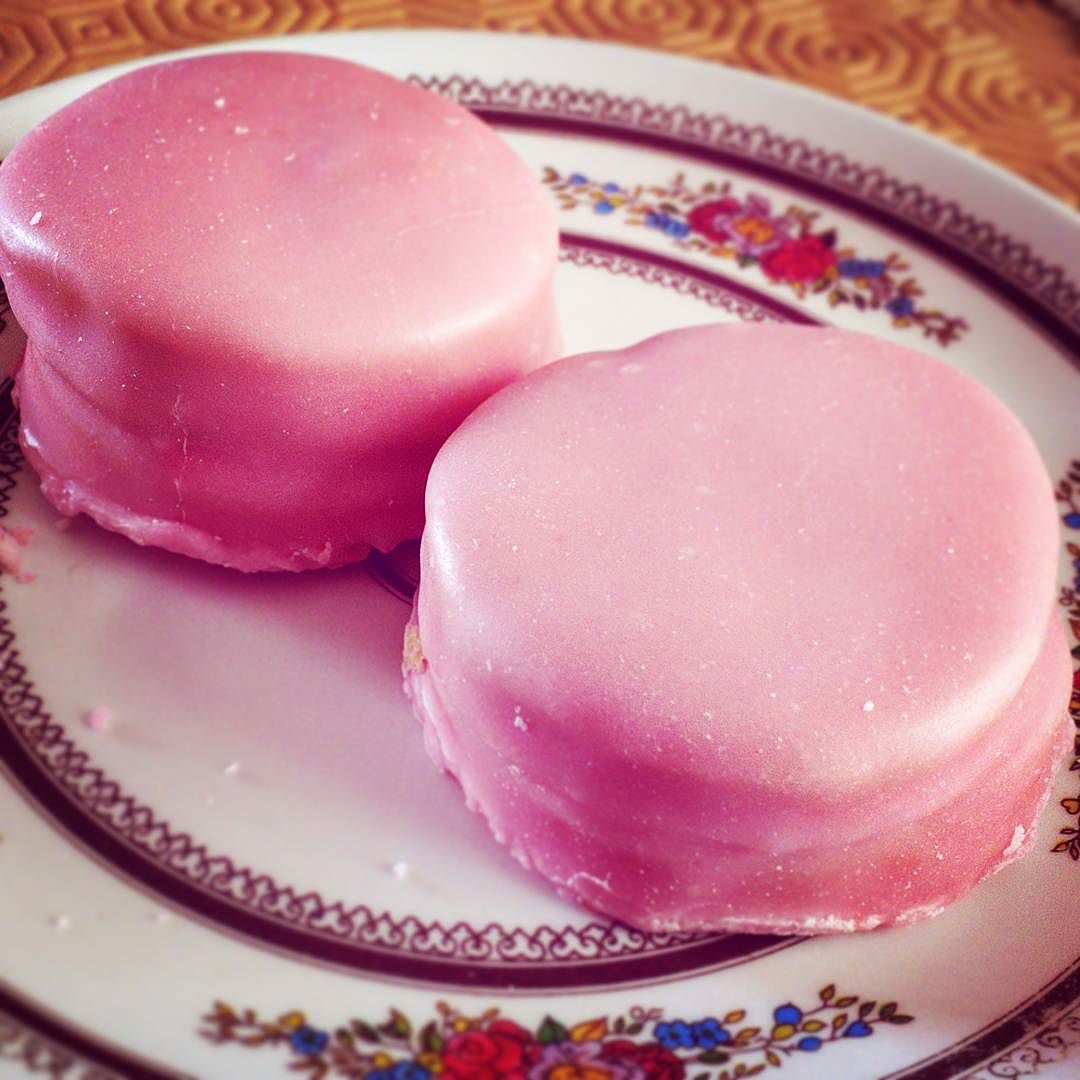
Two rounds of crumbly shortbread sandwiched with jam and covered in smooth pink icing. It is a classic Mauritian teatime treat, sold in bakeries all over the island.

The napolitaine is a Mauritian version of the French sablé biscuit.

Mauritian rum
Photo: Rishi Luchun, CC BY 2.0
Drink

Mauritian rum

rhum
Distilled from local sugar cane
Read moreShow less

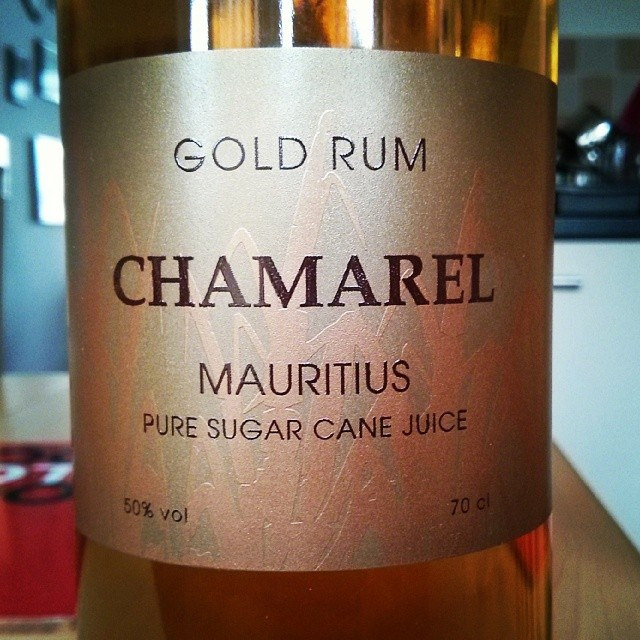
Mauritius makes a wide range of rums from its sugar cane, with distilleries such as Chamarel, St Aubin and Medine. Rhum arrangé, rum steeped with fruit, spices and sometimes chilli, is a favourite after dinner.

The Dutch already made arrack, an early cousin of rum, from Mauritian sugar cane in the 1600s.

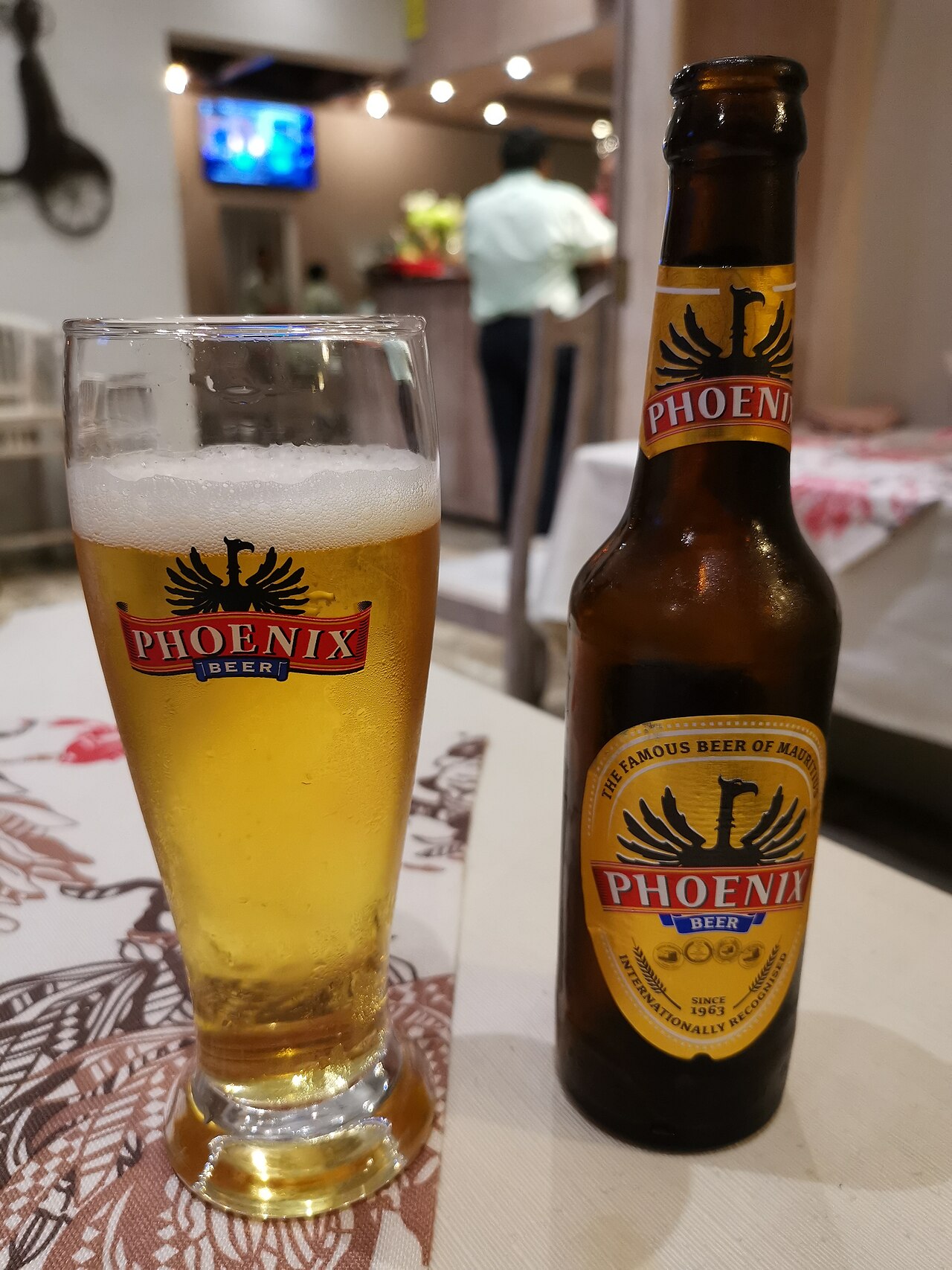
Phoenix beer
Photo: Z thomas, CC BY-SA 4.0
Drink

Phoenix beer

Brewed in Vacoas-Phoenix, on the central plateau
Read moreShow less

A light lager from Phoenix Beverages, the largest brewery in Mauritius, named after the town where it is made. Served very cold, it is the most popular local beer.

Phoenix beer is also exported to Réunion, Madagascar, Europe and Australia.

Table manners

  • A Mauritian meal is shared: rice or farata comes with several small dishes such as curry, dal, rougaille, pickles and satini. Take a little of each rather than a lot of one.
  • Mauritius is a mix of Hindu, Muslim and Christian families. Many Hindus do not eat beef and Muslims do not eat pork, so ask before cooking for guests or bringing food as a gift.
  • Street snacks such as dholl puri and gâteaux piments are eaten on the go, straight from the paper, often standing at the stall.
  • Tea, grown on the island and often flavoured with vanilla, is drunk throughout the day. Accept a cup if it is offered in a home.
  • In markets and small shops prices are mostly fixed; do not expect long bargaining, and at markets no more than a small discount.
Cities

12 cities to know

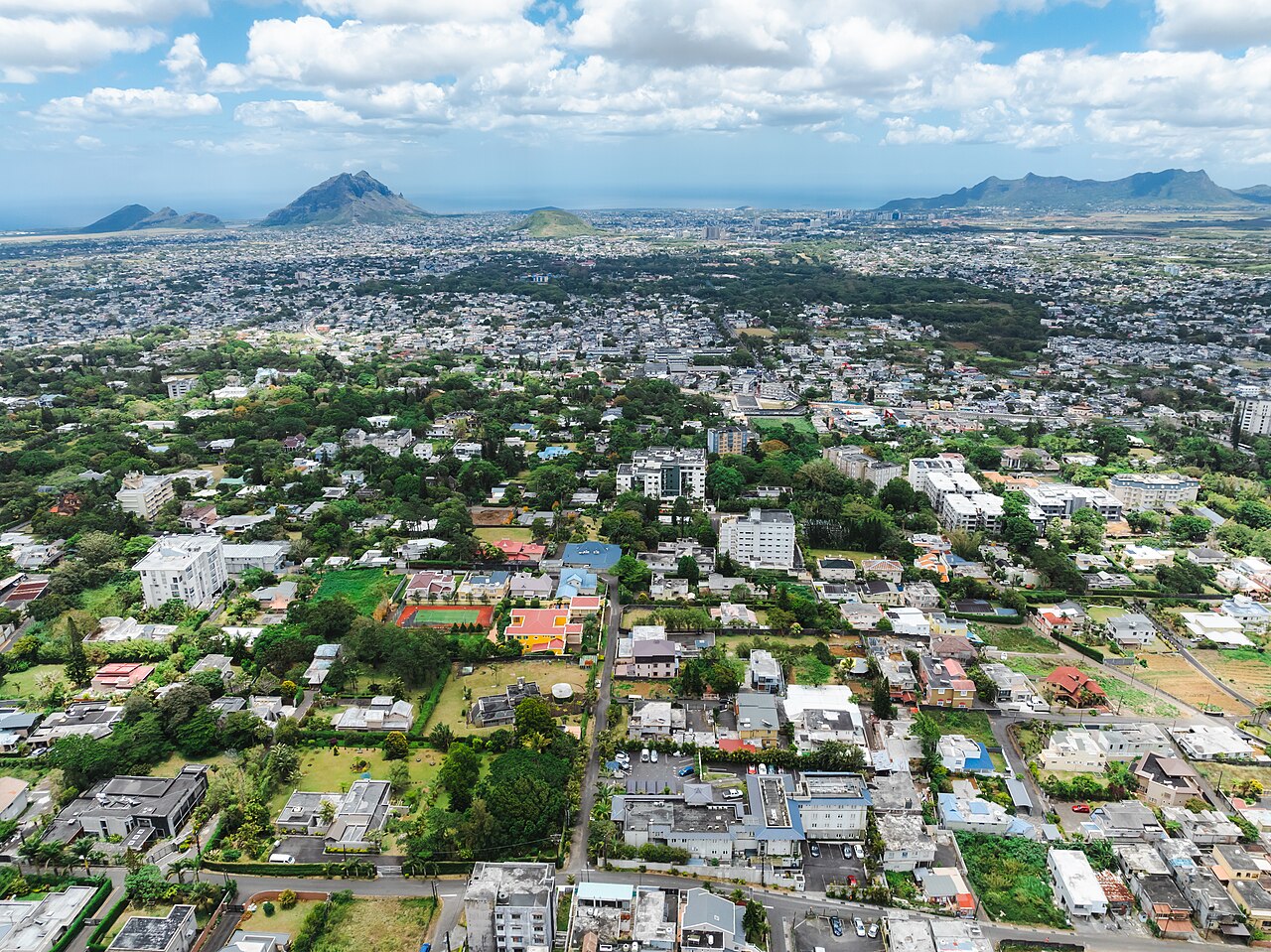
Almost all Mauritians live on the main island. Port Louis, the capital and port, sits on the northwest coast in a bowl of mountains. A chain of towns runs from there up onto the cooler central plateau: Beau Bassin-Rose Hill, Quatre Bornes, Vacoas-Phoenix and Curepipe, linked by the Metro Express light railway. The coasts are lined with fishing villages and beach resorts, from Grand Baie in the north to Flic-en-Flac in the west and Mahébourg in the southeast. Distances are short: the main island is only about 65 km long, but traffic around Port Louis is heavy.

Port LouisRose HillQuatre BornesVacoas-PhoenixCurepipeMahébourgGrand BaieFlic-en-FlacPamplemoussesCentre de FlacqChamarelSouillac
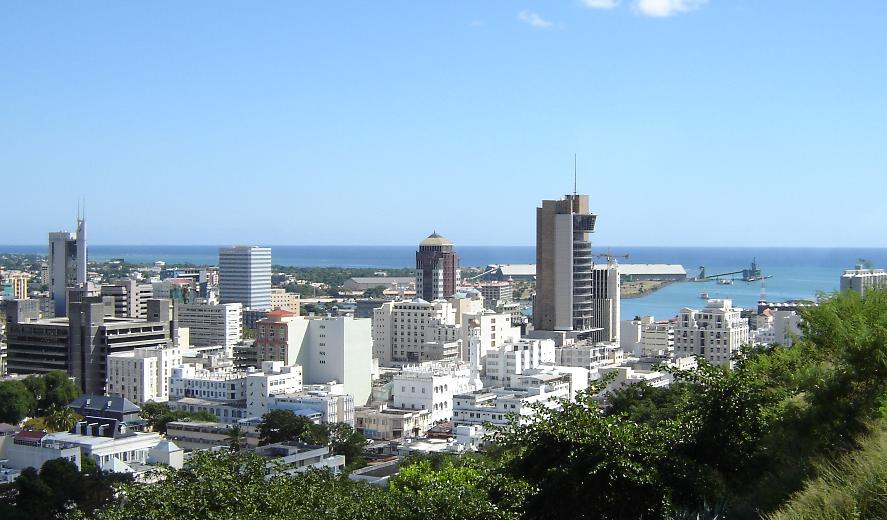
Port Louis
Photo: Thierry, CC BY-SA 3.0

Port LouisCapital

Port Louis District, on the northwest coast
Read moreShow less

The capital, largest city and main port, built around a sheltered harbour that the Moka mountains protect from cyclone winds. The French made it the capital in the 1730s and named it after King Louis XV. Today glass towers stand beside colonial buildings, mosques, temples and a busy Chinatown.

  • The Central Market and its street food
  • Aapravasi Ghat, a UNESCO World Heritage Site
  • The Caudan Waterfront
  • The Champ de Mars racecourse
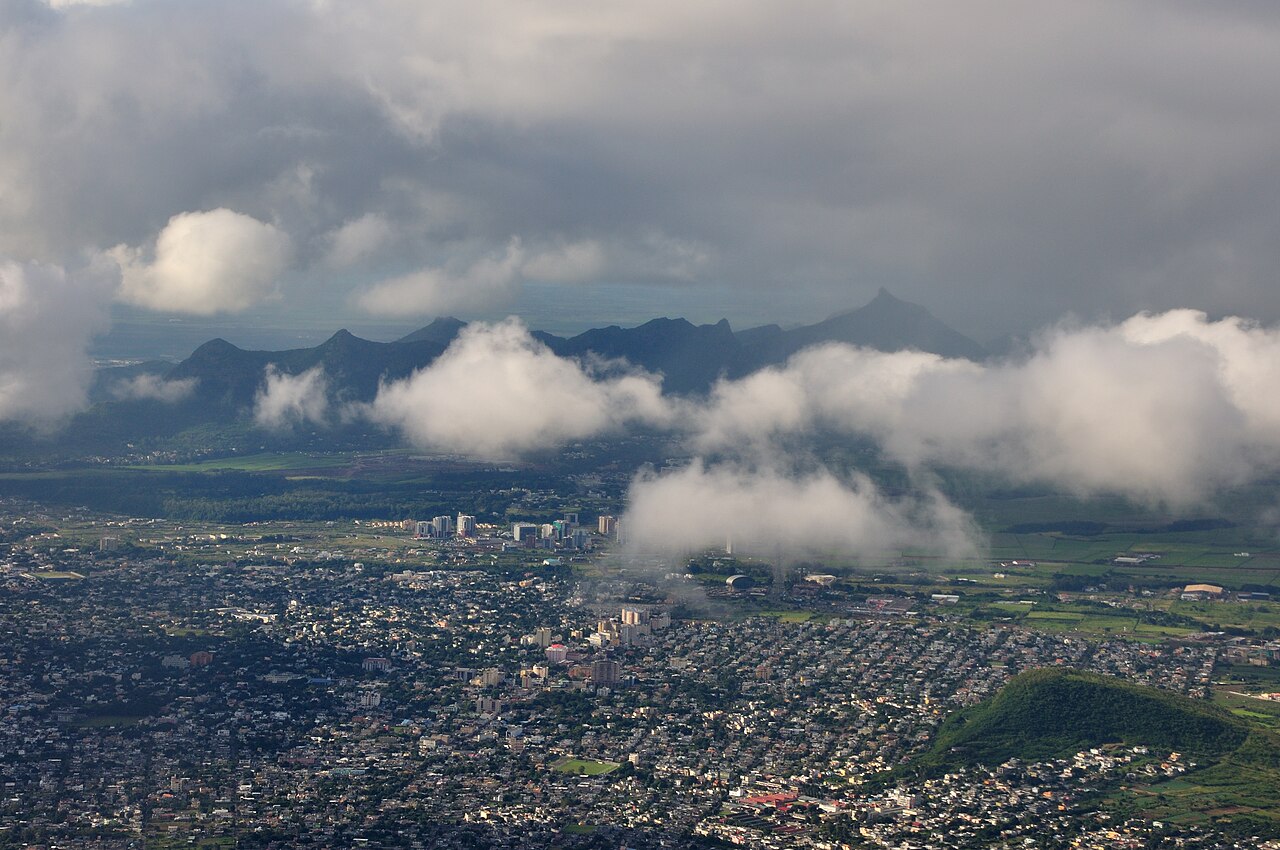
Beau Bassin-Rose Hill
Photo: Mauritian1, CC BY-SA 3.0

Beau Bassin-Rose Hill

Plaines Wilhems, on the edge of the central plateau
Read moreShow less

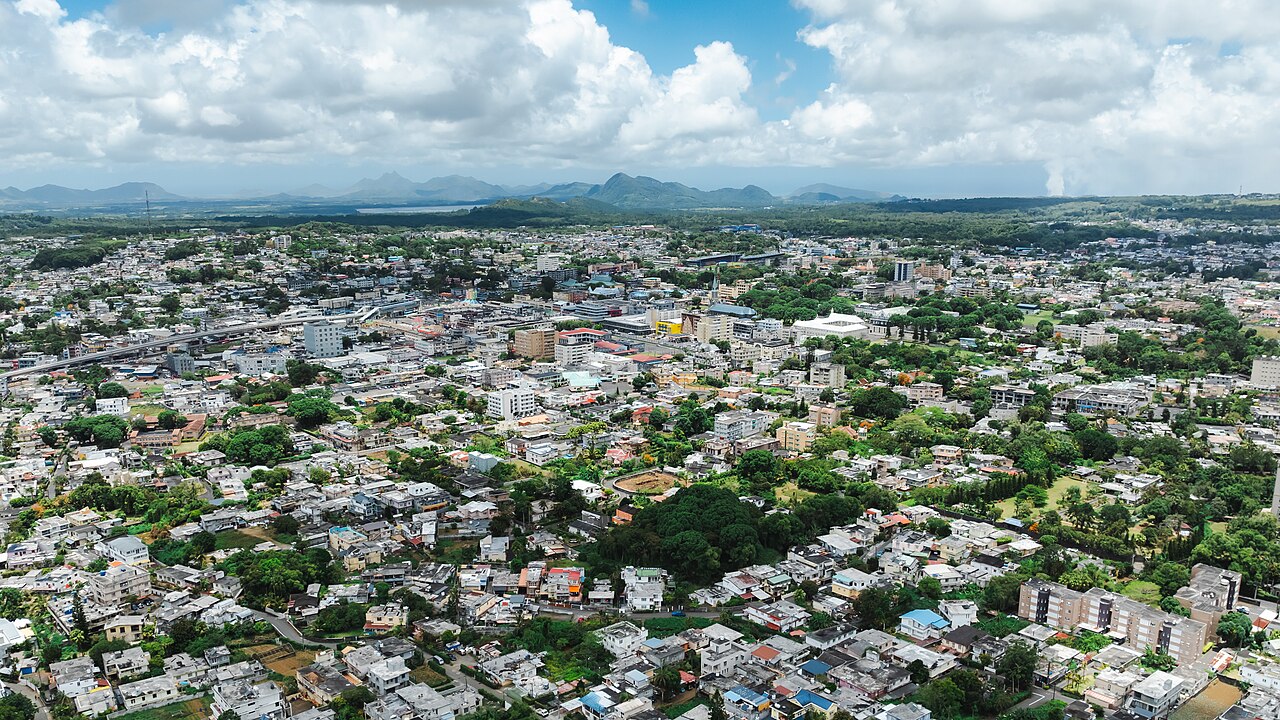
A pair of 'sister towns' that grew together on the road from Port Louis up to the plateau, and one of the largest urban areas on the island. Rose Hill is a busy shopping and transport hub, with a stop on the Metro Express.

  • Shopping and the Rose Hill bus terminal
  • Metro Express stations
  • Balfour Garden in Beau Bassin
  • Well-known schools such as Queen Elizabeth College
Quatre Bornes
Photo: Hansueli Krapf, CC BY-SA 3.0

Quatre Bornes

Plaines Wilhems, central plateau
Read moreShow less

A busy town between Rose Hill and Vacoas, nicknamed La Ville des Fleurs, the 'City of Flowers'. It grew quickly after the railway arrived in 1864, became a town in 1896 and is now a busy shopping centre.

  • Its nickname, the City of Flowers
  • Shops and a busy commercial centre
  • Corps de Garde mountain nearby
  • A stop on the Metro Express
Vacoas-Phoenix
Photo: Arne Müseler, CC BY-SA 3.0 de

Vacoas-Phoenix

Plaines Wilhems, central plateau
Read moreShow less

The 'twin cities' of Vacoas and Phoenix joined in 1963 to form one town between Quatre Bornes and Curepipe. Phoenix is home to the island's largest brewery.

  • Phoenix beer
  • The cool, green plateau
  • Its football club, AS de Vacoas-Phoenix
  • Twinned with Antsirabe in Madagascar
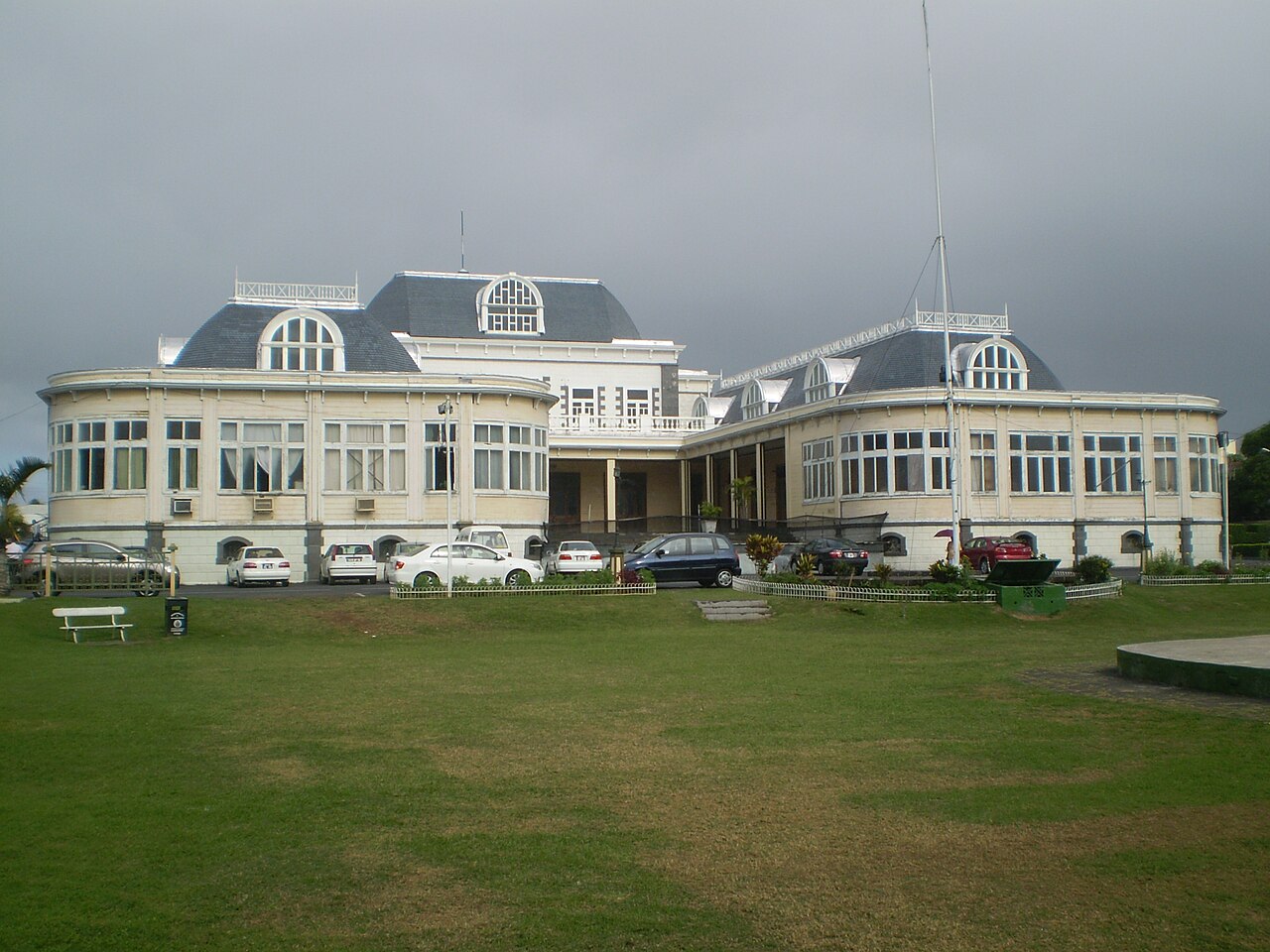
Curepipe
Photo: Arne Müseler, CC BY-SA 3.0 de

Curepipe

Plaines Wilhems, highest town on the central plateau
Read moreShow less

At about 560 m, Curepipe is the highest of the plateau towns and known for its cool, rainy climate. Its name is often explained as travellers stopping to 'clean their pipes' here. The town hall was moved here piece by piece from Moka in 1903.

  • Trou aux Cerfs, a dormant volcanic crater
  • The colonial town hall
  • Royal College Curepipe
  • Its small botanical garden
Mahébourg
Photo: Shoestring at wts wikivoyage, CC BY-SA 4.0

Mahébourg

Grand Port District, on the southeast coast
Read moreShow less

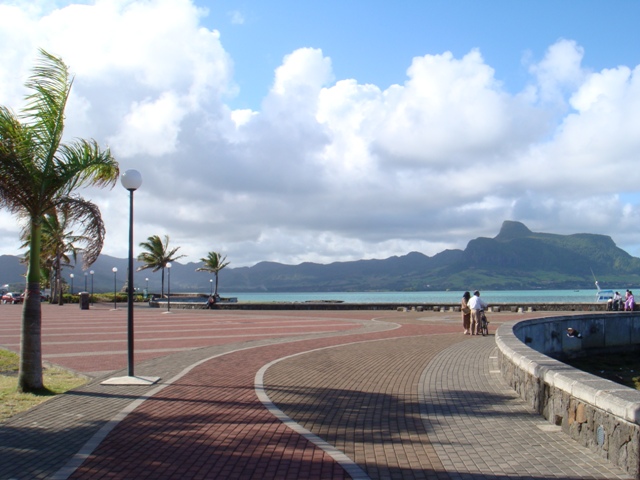
A historic fishing town on the biggest lagoon in Mauritius, named after Governor Mahé de La Bourdonnais. Its wide old streets were laid out in the French period, and the bay saw the Battle of Grand Port in 1810.

  • The Historical Naval Museum
  • The waterfront promenade
  • Fishing boats on the lagoon
  • Blue Bay beach and marine park nearby
Grand Baie
Photo: mwanasimba, CC BY-SA 2.0

Grand Baie

Rivière du Rempart District, in the far north
Read moreShow less

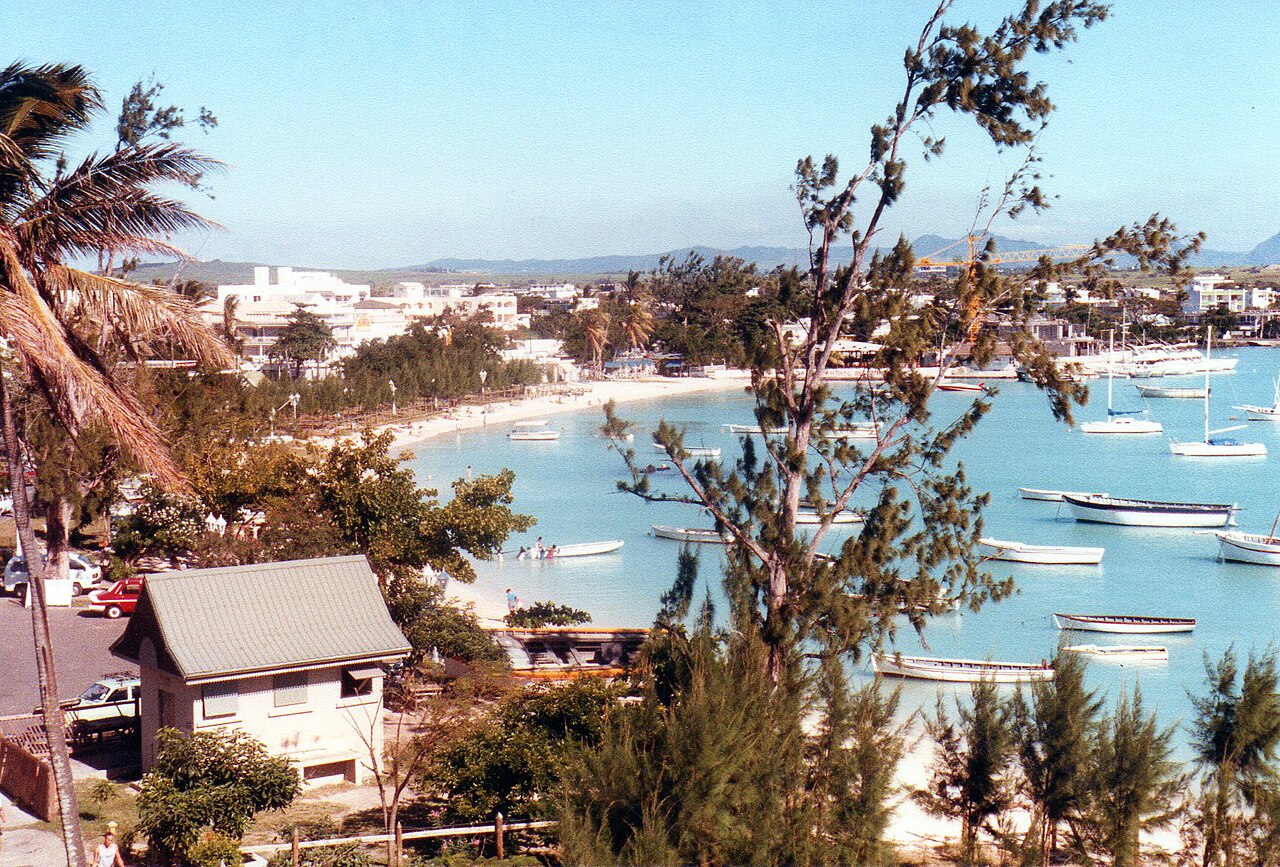
A wide sheltered bay in the north that was the first part of the island to boom with tourism. It is where Mauritians go for a night out, and where boats leave for the small northern islands.

  • Restaurants, bars and shopping
  • Water sports in the bay
  • La Cuvette and Pereybère beaches
  • Catamaran trips to the northern islets
Flic-en-Flac
Photo: Arne Müseler, CC BY-SA 3.0 de

Flic-en-Flac

Black River District, on the west coast
Read moreShow less

A seaside village with one of the longest public beaches on the island, protected by a coral reef. Its name probably comes from an old Dutch phrase meaning 'free, flat land'. Families come at weekends to picnic, sing and dance sega on the sand.

  • Its long white public beach
  • Sunsets over the Indian Ocean
  • Snorkelling and diving on the reef
  • Beach food stalls
Pamplemousses
Photo: Benoît Prieur, CC0

Pamplemousses

Pamplemousses District, in the north
Read moreShow less

A village about 11 km northeast of Port Louis, named after the pomelo trees (pamplemousses) that grow here. It is famous for its botanical garden, the oldest in the Southern Hemisphere.

  • The Sir Seewoosagur Ramgoolam Botanical Garden
  • Giant water lilies
  • Château de Mon Plaisir in the garden
  • Pomelo trees that gave it its name
Centre de Flacq
Photo: Discott, CC BY-SA 4.0

Centre de Flacq

Flacq District, in the east
Read moreShow less

The main town of the east, with a big market, shops and government offices serving the villages of Flacq District. It is a short drive from the beaches of the east coast and the boats to Île aux Cerfs.

  • Shops and public offices of the east
  • Gateway to the east coast beaches
  • Buses to the whole Flacq District
  • Local football club Faucon Flacq
Chamarel
Photo: Hansueli Krapf, CC BY-SA 3.0

Chamarel

Black River and Savanne districts, in the southwest hills
Read moreShow less

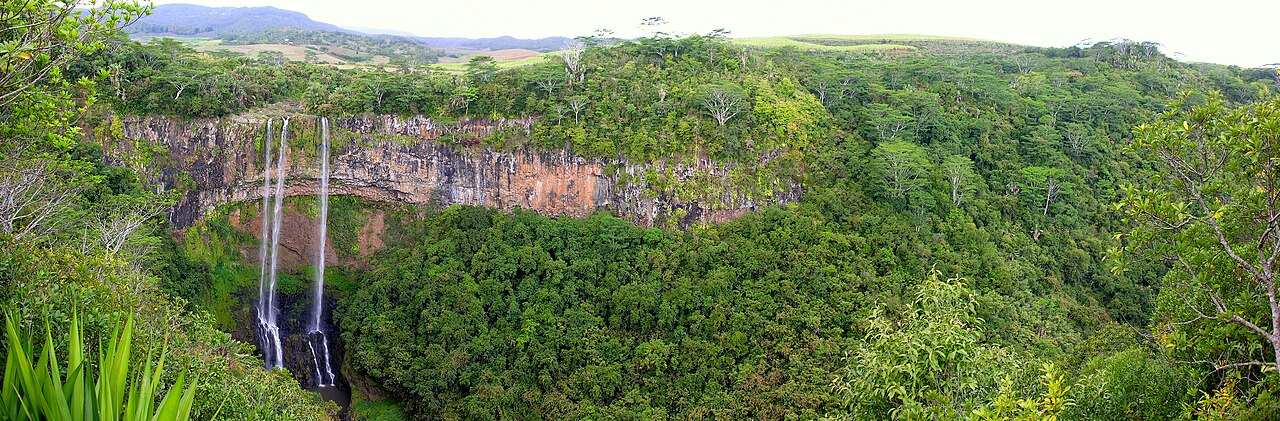
A small village on a wooded plateau about 6 km inland from the west coast, named after Charles Antoine de Chazal de Chamarel, who owned the land around 1800. It is the base for visiting the Seven Coloured Earths, the Chamarel Falls and the Black River Gorges.

  • The Seven Coloured Earths
  • Chamarel Falls
  • Rum distillery and locally grown coffee
  • Creole cooking
Souillac
Photo: Public domainPublic domainfalsefalse This work has been released into the, Public domain

Souillac

Savanne District, on the south coast
Read moreShow less

A village close to the southernmost point of the main island, named after the Vicomte de Souillac, governor from 1779 to 1787, who founded a port here. Its deep river mouth has no coral reef in front of it, which is why the French chose it for a harbour.

  • Its old port, named Port Souillac in 1787
  • Shipping sugar to Port Louis before the railway
  • Seat of the Savanne District council
  • Fishing families and sugar cane fields
Landmarks

Places everyone should see once

Aapravasi Ghat
Photo: Suyash Dwivedi, CC BY-SA 4.0
Port Louis

Aapravasi Ghat

UNESCO World Heritage
Read moreShow less

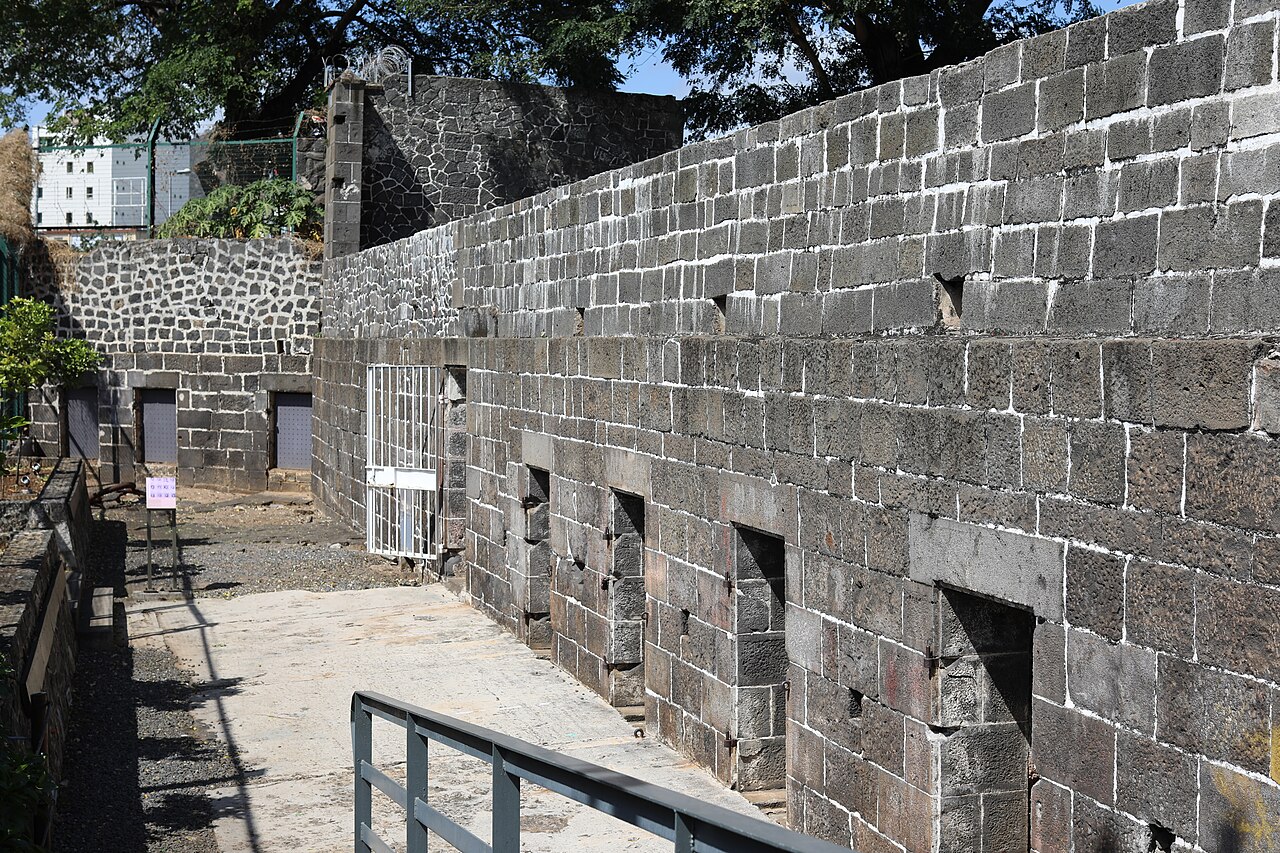
The remains of the Immigration Depot in Port Louis harbour, where most of the roughly half a million indentured labourers from India landed between 1849 and 1923 to work on the sugar estates. Only parts of three stone buildings survive. Its name, used since 1987, is Hindi for 'immigration depot'. It has been a UNESCO World Heritage Site since 2006.

Le Morne Brabant
Photo: "dronepicr", CC BY 2.0
Near Chamarel

Le Morne Brabant

UNESCO World Heritage
Read moreShow less

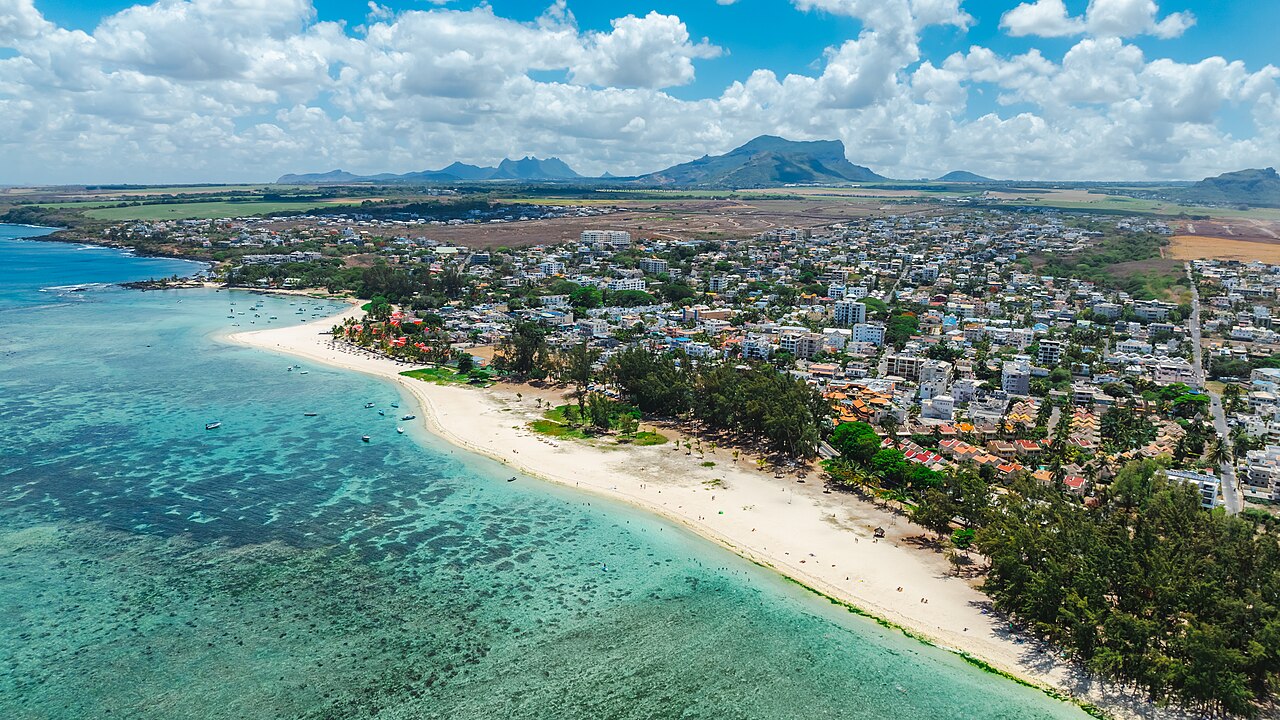
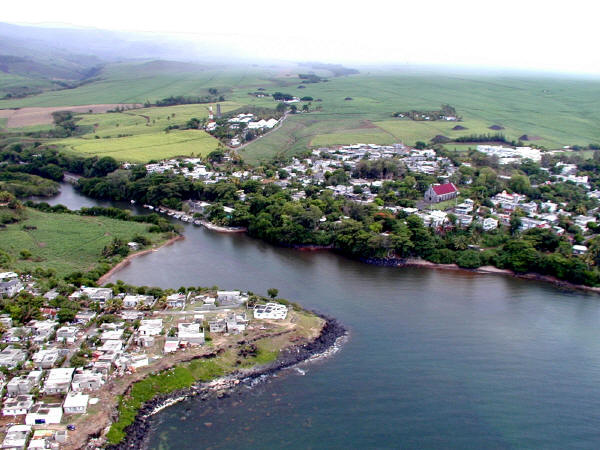
A 556 m basalt mountain on a peninsula at the southwestern tip of the island, surrounded by lagoon. In the 1700s and early 1800s runaway slaves, the maroons, hid in its caves and on its summit. A legend says that when police came to tell them slavery had ended, they thought they were to be recaptured and leapt from the cliffs. The Le Morne Cultural Landscape has been a UNESCO World Heritage Site since 2008.

Sir Seewoosagur Ramgoolam Botanical Garden
Photo: Condem at English Wikipedia, Public domain
Pamplemousses

Pamplemousses Botanical Garden

Read moreShow less

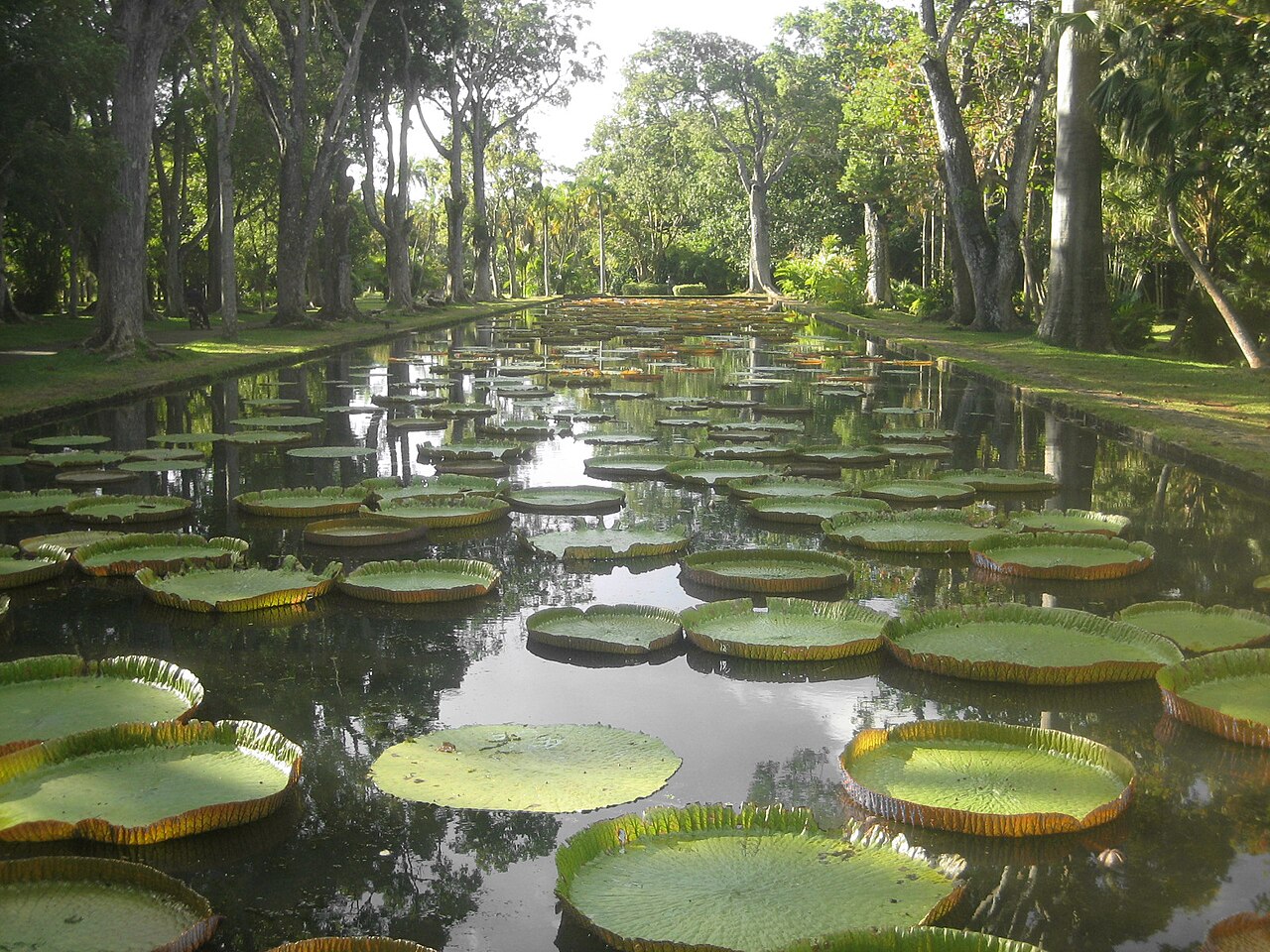
The Sir Seewoosagur Ramgoolam Botanic Garden, laid out by the French botanist Pierre Poivre from 1770, is the oldest botanical garden in the Southern Hemisphere. Its 37 hectares hold spice trees, ebonies, around 85 kinds of palm and a long pond of giant Amazon water lilies.

Seven Coloured Earths
Photo: "dronepicr", CC BY 2.0
Near Chamarel

Seven Coloured Earths

Read moreShow less

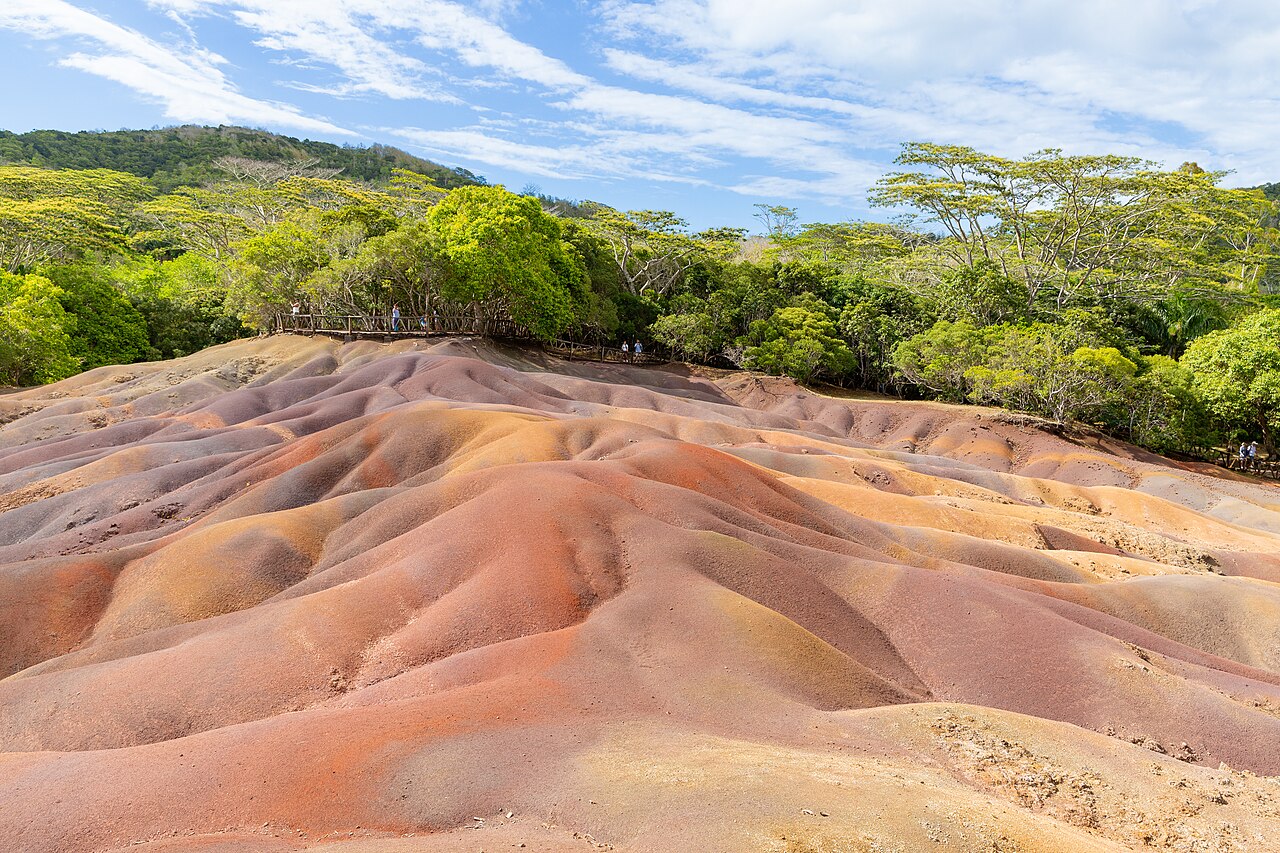
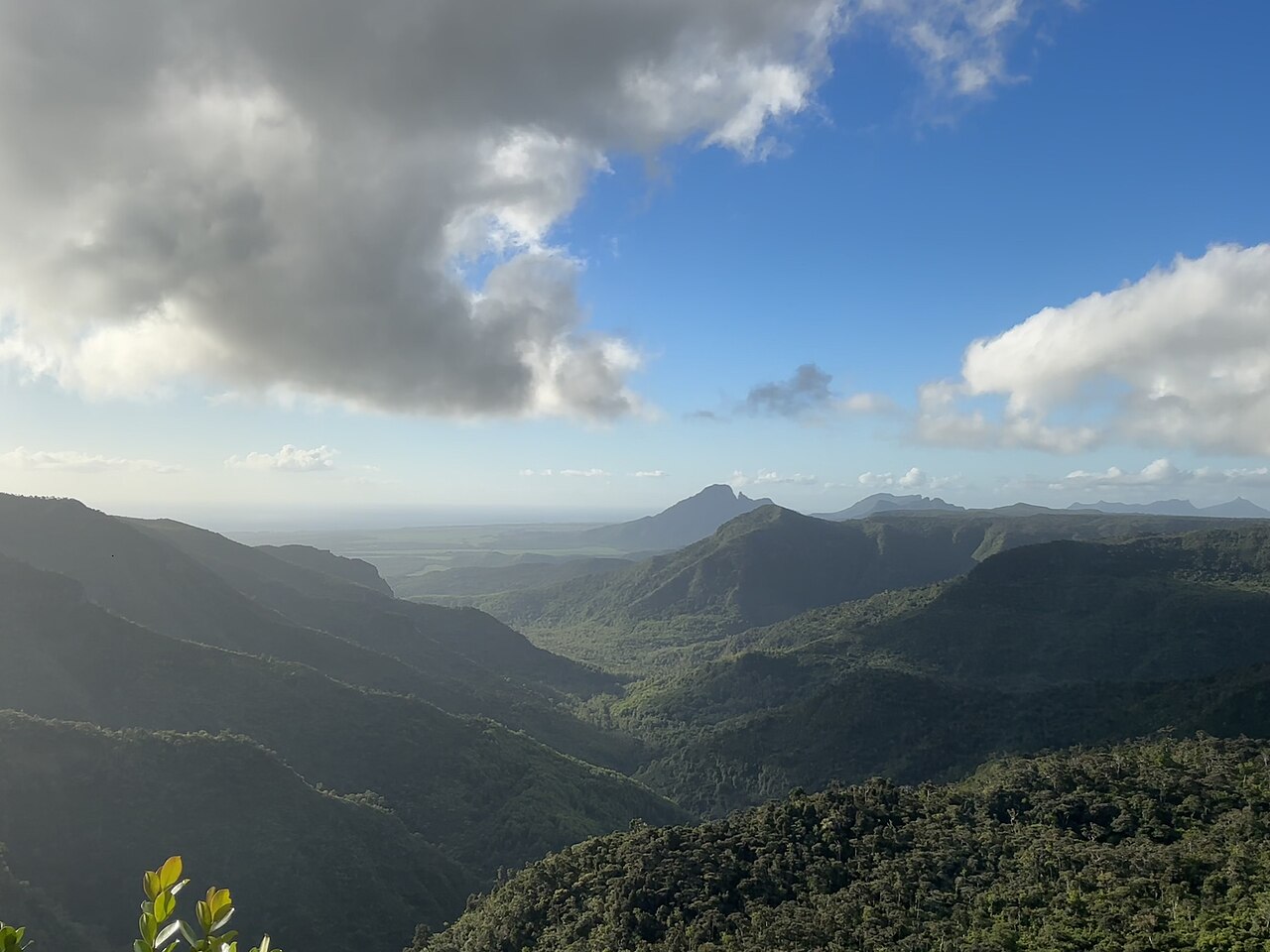
A small area of bare dunes near Chamarel whose sand forms stripes of red, brown, violet, green, blue, purple and yellow. The colours come from weathered volcanic rock rich in iron and aluminium. The dunes are fenced off and visitors watch from viewing points.

Black River Gorges National Park
Photo: 72622, CC0
Near Chamarel

Black River Gorges National Park

Read moreShow less

The largest national park in Mauritius, about 67.5 km² of forested gorges and upland heath in the southwest, with about 60 km of trails. It protects most of the island's remaining native rainforest and every one of its surviving endemic birds, including the pink pigeon and the Mauritius kestrel. As of November 2026 it is on UNESCO's tentative list, not the World Heritage List.

Ganga Talao
Photo: Starts, CC BY-SA 4.0
Near Souillac

Ganga Talao (Grand Bassin)

Read moreShow less

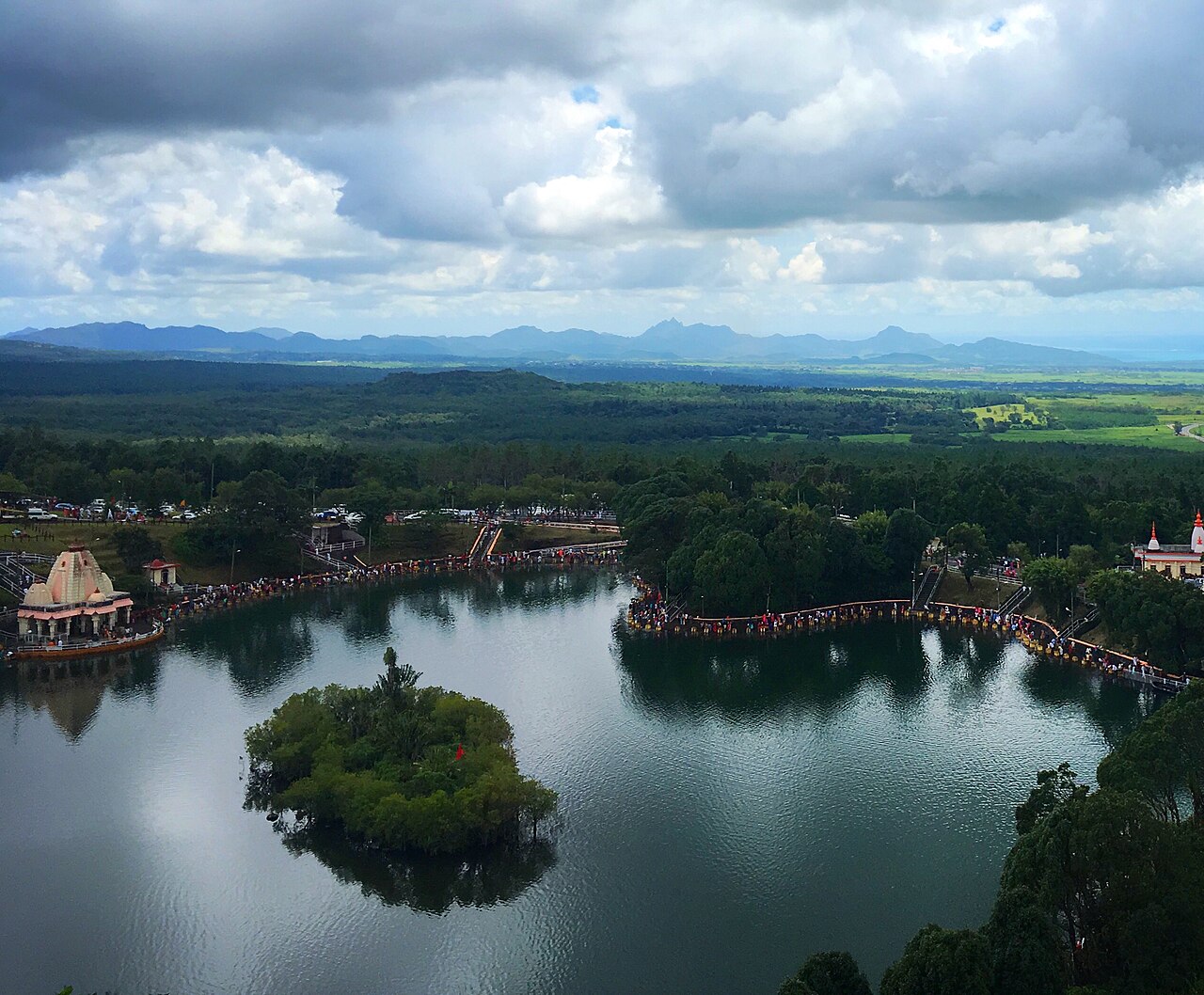
A sacred lake in a volcanic crater in the hills of Savanne District, about 11 km north of Souillac in a straight line. Water from the Ganges was poured into it in 1972, and during the festival of Maha Shivaratri hundreds of thousands of Hindus walk here carrying decorated shrines called kanwars. Mangal Mahadev, a 33 m statue of Shiva inaugurated in 2007, stands at the entrance.

Trou aux Cerfs
Photo: Arne Müseler, CC BY-SA 3.0 de
Curepipe

Trou aux Cerfs

Read moreShow less

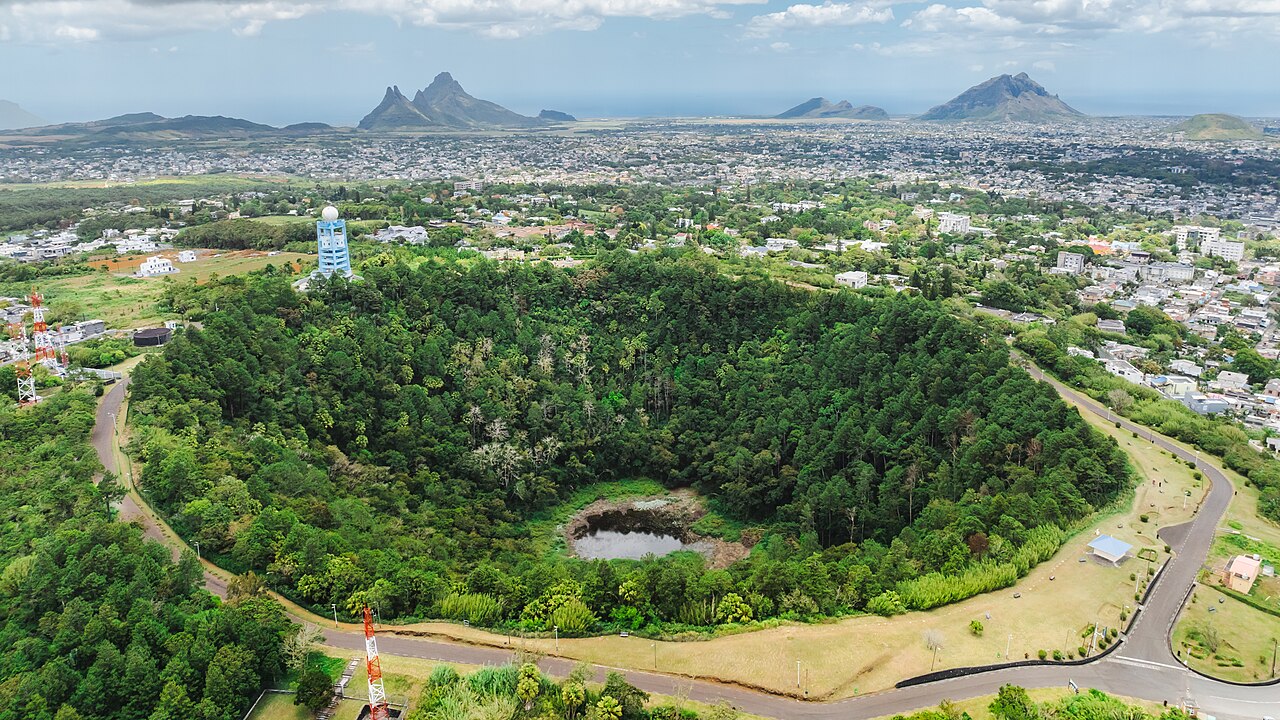
A dormant volcanic crater in the middle of Curepipe, about 605 m high, with a crater 300 to 350 m wide and 80 m deep, with a small lake at the bottom. It last erupted about 700,000 years ago, and native plants and birds such as the Mascarene swiftlet live on its slopes.

Île aux Cerfs
Photo: Arne Müseler, CC BY-SA 3.0 de
Near Centre de Flacq

Île aux Cerfs

Read moreShow less

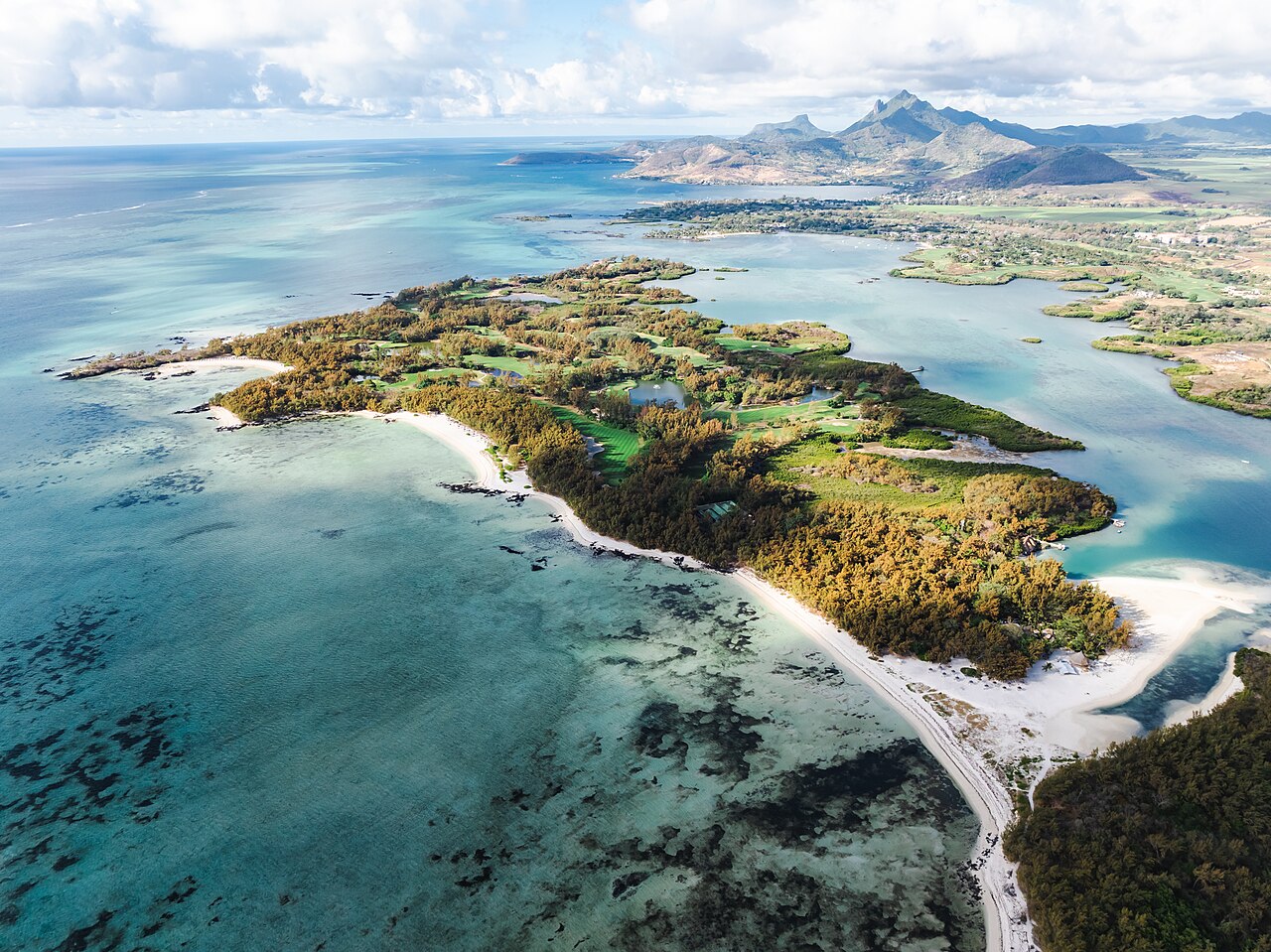
A privately owned island of about 87 hectares in the lagoon off the east coast, ringed by white sand and clear water. It is named after the deer (cerfs) that once lived here. Boats cross from Trou d'Eau Douce, and the island has beaches, water sports and a golf course.

Blue Bay Marine Park
Photo: Lukas von Daeniken, CC BY-SA 2.0
Near Mahébourg

Blue Bay Marine Park

Read moreShow less

A 353 hectare protected lagoon just south of Mahébourg, with coral and reef fish close to a white sand beach. It became a national park in 1997, a marine park in 2000 and a Ramsar wetland of international importance in 2008.

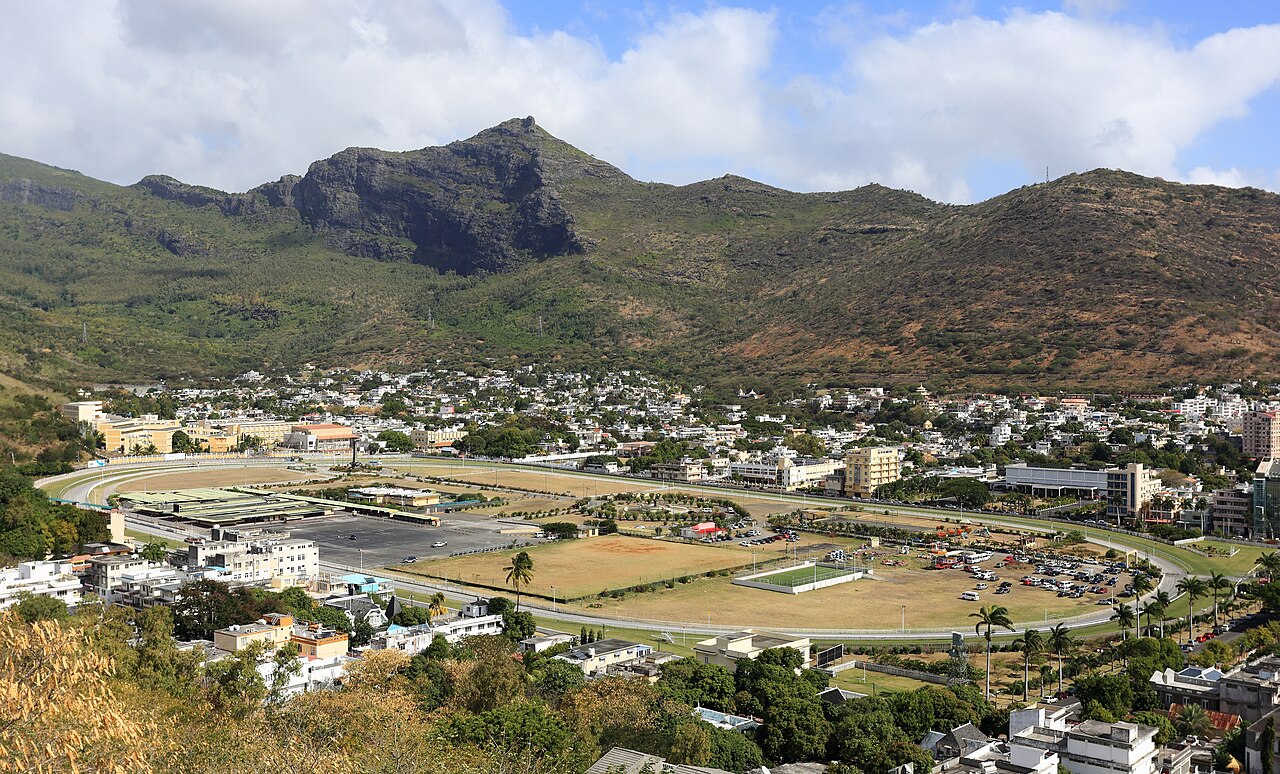
Champ de Mars Racecourse
Photo: Martin Falbisoner, CC BY-SA 4.0
Port Louis

Champ de Mars Racecourse

Read moreShow less

A horse-racing track in Port Louis, opened on 25 June 1812 by the Mauritius Turf Club, which calls itself the oldest racing club in the Southern Hemisphere. The flag of independent Mauritius was first raised here on 12 March 1968, and tens of thousands of people come on race days from March to December.

Fun facts

Things you might not know

  1. 01

    The dodo lived only on Mauritius. Dutch sailors first described it in 1598, and the last widely accepted sighting was in 1662. Today it stands on the national coat of arms.

  2. 02

    The Mauritius 'Post Office' stamps of 1847 are often called the first stamps produced outside Great Britain in the British Empire. Only 500 of each value were printed, and they are among the rarest stamps in the world.

  3. 03

    Before the Portuguese arrived in 1507 there were no land-dwelling mammals on Mauritius, which allowed flightless birds like the dodo and large reptiles to evolve.

  4. 04

    The Mauritius kestrel was down to only five or six known birds in 1974. Careful conservation raised the number to about 400 by 2019, and in March 2022 it was named the national bird.

  5. 05

    Only about 10 pink pigeons were left in 1991. Thanks to breeding and release programmes the species was moved from Critically Endangered to Vulnerable on the IUCN Red List by 2018.

  6. 06

    As of the 2022 census, about 48 percent of Mauritians are Hindu, making Mauritius the only country in Africa where Hinduism is the most practised religion.

  7. 07

    Mauritian rupee banknotes are printed in three scripts: Latin, Tamil and Devanagari.

  8. 08

    The Mauritius Turf Club, founded in 1812, is the oldest horse-racing club in the Southern Hemisphere, and horse racing is one of the most popular sports on the island.

  9. 09

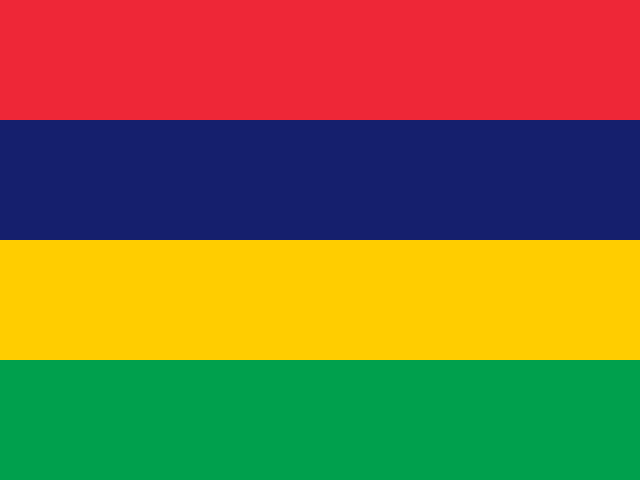
    The flag of Mauritius, adopted at independence in 1968, has four horizontal bands of red, blue, yellow and green. It was designed by a schoolteacher, Gurudutt Moher.

  10. 10

    Paul et Virginie, a French love story published in 1788 and read all over Europe, is set on Mauritius in the days when it was called Isle de France.

  11. 11

    In 1973 Mauritius became the first country in Africa to be declared free of malaria, which had once driven many people from the coast up to the cooler central plateau. It came back for a few years after cyclones in 1975, and has been gone again since the late 1990s.

  12. 12

    Traditional Mauritian sega, a dance and music born among enslaved people and played on the ravanne goatskin drum, is on UNESCO's list of Intangible Cultural Heritage.

  13. 13

    Passenger trains stopped running in Mauritius in 1956, and freight trains in 1964. Rail travel came back in December 2019, when the Metro Express light railway began carrying passengers between Port Louis and Rose Hill. It reached Curepipe in 2022.

  14. 14

    Mauritius claims the Chagos Archipelago, run by the United Kingdom as the British Indian Ocean Territory. A treaty recognising Mauritian sovereignty was signed in May 2025; as of November 2026 it has not entered into force.

Mauritian Creole (kreol morisien) words

20 words to start with

It is French-based and spelled the way it sounds: r is a soft French r, and 'an', 'en', 'in' and 'on' are nasal vowels as in French, with the n itself silent unless it is doubled, as in 'enn'. Pronunciation is written the way it sounds; the capital letters show where the stress goes.

Greetings

  • bonzourbon-ZOORhello, good morning
  • bonswarbon-SWARgood evening
  • orevwaror-ev-WARgoodbye

Courtesy

  • mersimair-SEEthank you
  • silvoupleseel-voo-PLAYplease
  • wiWEEyes
  • nonNON (nasal)no

Food

  • diridee-REErice
  • dipindee-PAN (nasal)bread
  • minnMEENnoodles
  • ziromonzee-roh-MONpumpkin
  • manzemahn-ZAYto eat; food

Places

  • lakazla-KAZhouse, home
  • lopitalloh-pee-TALhospital
  • lotelloh-TELhotel

Time

  • zordizor-DEEtoday
  • deminduh-MAN (nasal)tomorrow

Numbers

  • ennENone
  • deDAYtwo
  • trwaTRWAHthree
Say it like a local

Useful phrases

Everyone also understands French, and most people speak English, but a word of Creole always brings a smile.

Bonzour!
bon-ZOOR
Hello! Good morning!
Greeting anyone during the day
Bonswar!
bon-SWAR
Good evening!
Greeting someone in the evening
Ki manier?
kee man-YAY
How are you?
The everyday friendly greeting
Mo bien, mersi.
moh BYAN, mair-SEE
I'm fine, thank you.
Answering 'Ki manier?'
Mo apel Anna.
moh ah-PEL AH-na
My name is Anna.
Introducing yourself (use your own name)
Enn plezir fer ou konesans.
en pleh-ZEER fair oo koh-neh-SAHN
Nice to meet you.
Meeting someone for the first time
Mersi boukou!
mair-SEE boo-KOO
Thank you very much!
Thanking someone warmly
Exkiz mwa.
ex-KEEZ mwah
Excuse me.
Getting someone's attention or squeezing past
Sori.
SOH-ree
I'm sorry.
Apologising
Pa grav.
pah GRAHV
It doesn't matter.
Telling someone not to worry
Pena problem.
peh-NAH proh-BLEM
No problem.
Replying to thanks or an apology
Kot twalet?
kot twah-LET
Where is the toilet?
Asking the way to the toilet
Sa bis-la kot ale?
sah BEES-lah kot ah-LAY
Where does this bus go?
Checking a bus with the conductor
Mo anvi desann isi.
moh ahn-VEE deh-SAHN ee-SEE
I want to get off here.
Asking a bus or taxi to stop
Ou kapav donn mwa meni, silvouple?
oo kah-PAHV don mwah meh-NEE, seel-voo-PLAY
Could you show me the menu, please?
In a restaurant
Eski ou aksepte kart kredi?
ES-kee oo ak-sep-TAY kart kreh-DEE
Do you accept credit cards?
Before paying in a shop or restaurant
Chinn-chinn!
cheen-CHEEN
Cheers!
Raising a glass
Orevwar!
or-ev-WAR
Goodbye!
Leaving
Local tips

Before you go

Drive on the left

Traffic drives on the left. One main motorway runs from north to south past Port Louis, but other roads can be narrow and winding, and traffic around the capital is heavy at rush hour.

Agree the taxi fare first

Taxis rarely use meters, so agree the price before you get in. A taxi hired for a day is a good way to see the southwest: Chamarel, the Seven Coloured Earths, Grand Bassin and Le Morne.

Try the buses

Buses are the cheapest way to get around and reach most villages. A conductor walks through the bus selling tickets after you board and is usually happy to tell you where to get off. The Metro Express light railway links Port Louis with the plateau towns.

Watch the cyclone season

Summer (November to April) is hot and humid, and tropical cyclones are most likely from late December to March. Winter (roughly May to October) is drier and cooler, especially on the central plateau, which gets much more rain than the coast.

Protect yourself from mosquitoes

Mauritius has no malaria today, but dengue fever and chikungunya are spread by mosquitoes, some of which bite in the daytime. Use repellent and cover up.

Wear water shoes

Many beaches have sea urchins at some times of year, and the odd piece of broken glass. Plastic or rubber water shoes are a good idea outside the cleaned swimming areas of big hotels.

Water and food safety

Tap water is generally considered safe and most Mauritians drink it, but bottled water is recommended for visitors who are not used to it. Some reef fish can carry a natural toxin, so never eat their innards.

Emergency numbers

Police: 999 or 112. Ambulance (SAMU): 114. Fire service: 115. There is also a tourism police service that patrols the main tourist areas.

Sources (55)
Last step of the trip

Take the quiz, get your Mauritius stamp

10 friendly questions about what you just read. No timer, and the ones you miss come back later for review.

Your trip to Mauritius

Ready for the quiz?

10 questionsAbout 3 minutesNo timer

My notes on Mauritius

Memories, a dish to cook, a place you want to see. Only you can see this. It saves by itself.

Your notes are kept in My collection.

More about Mauritius