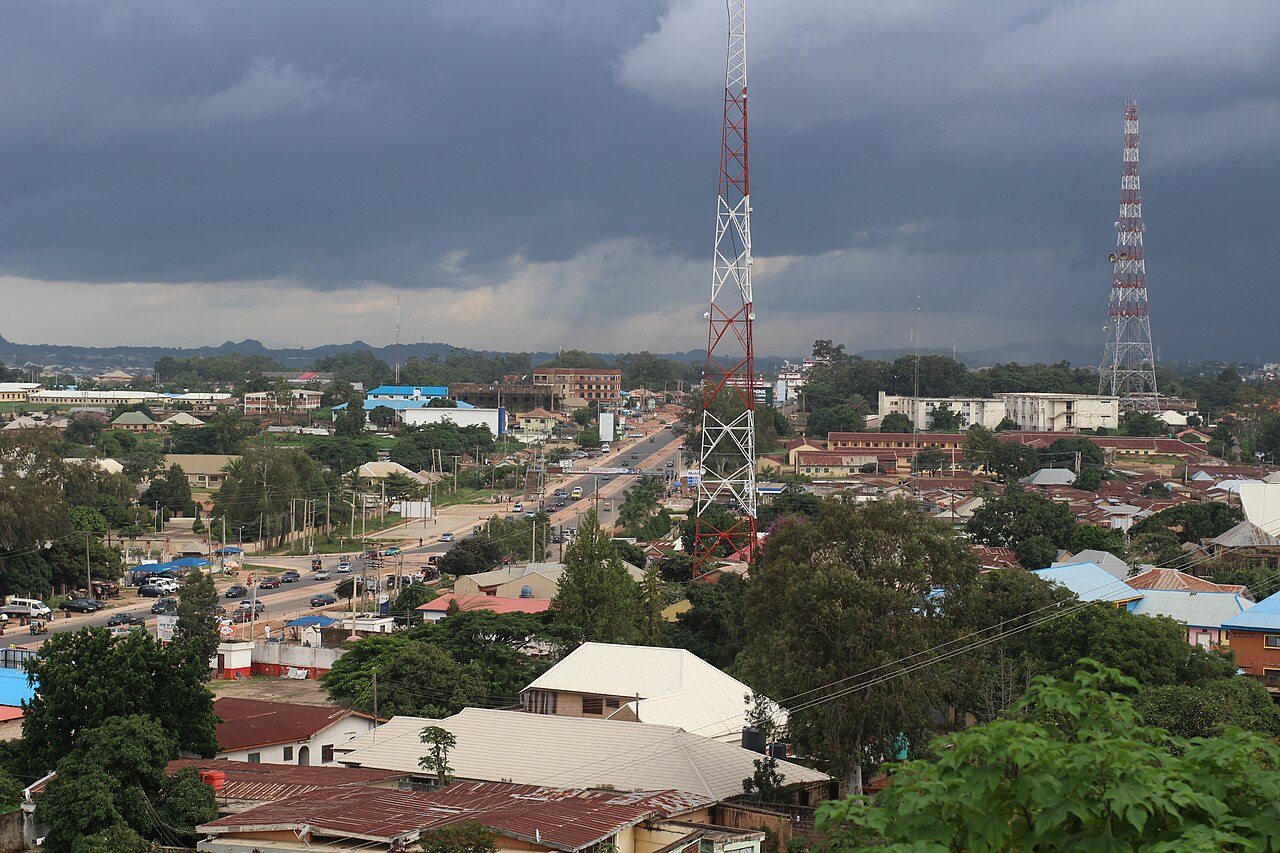
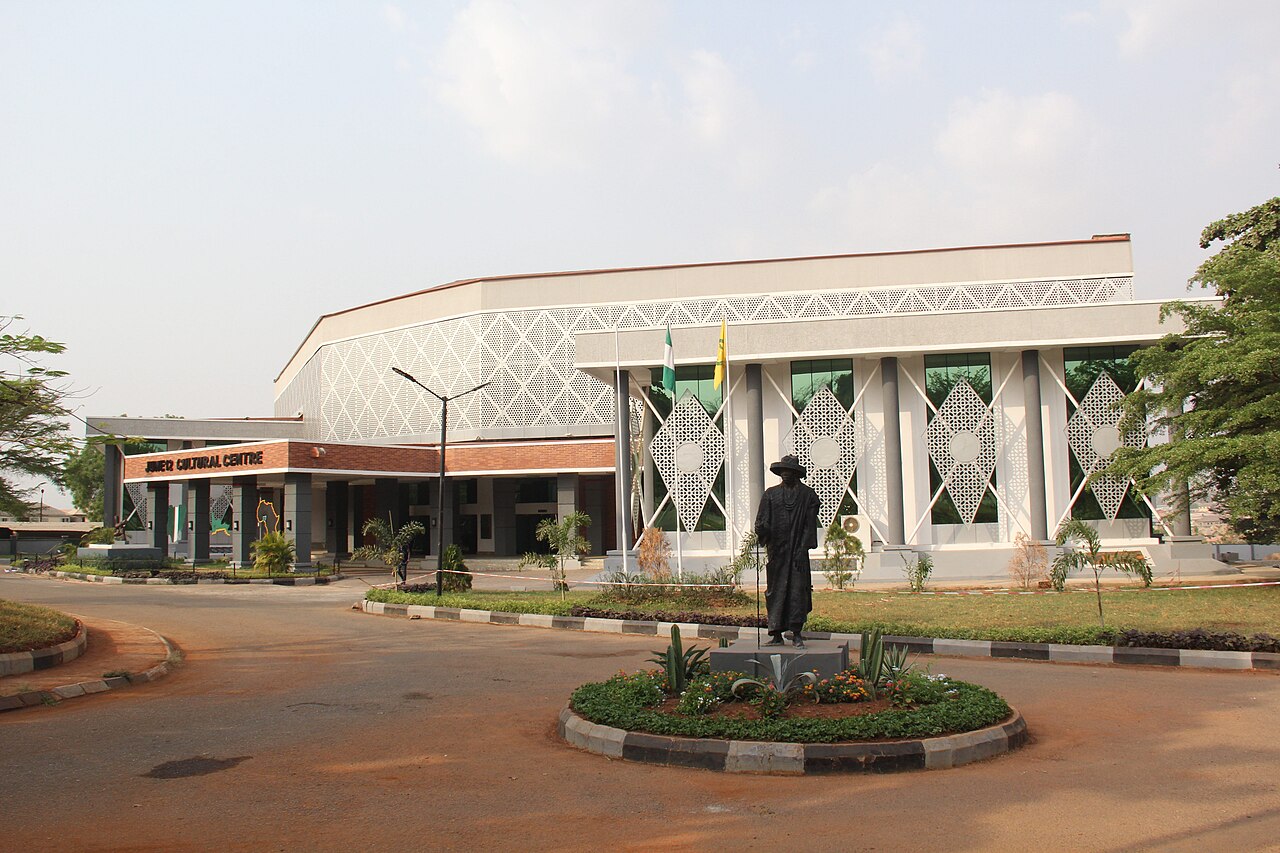
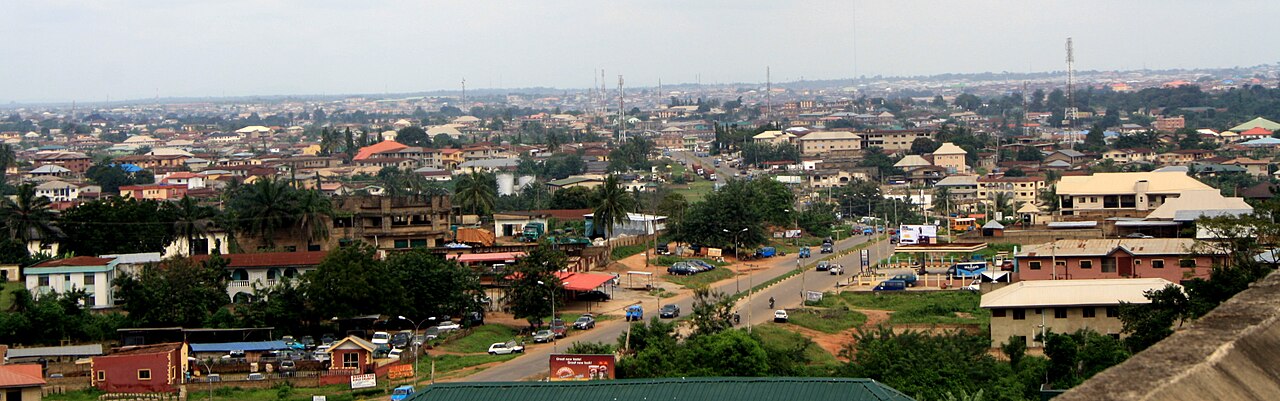
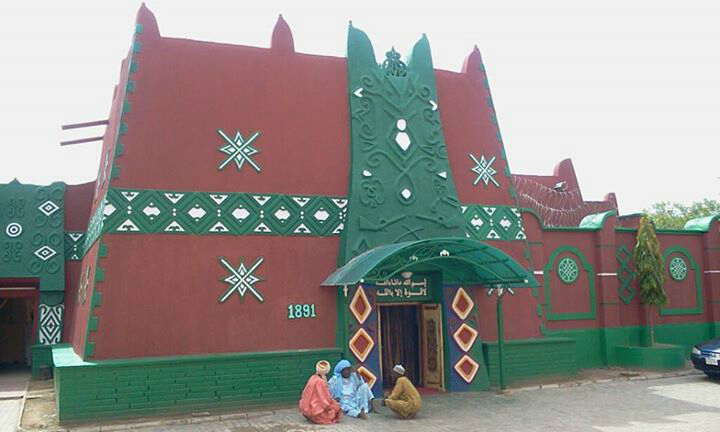
Africa's most populous country: busy Lagos by the ocean, the old walled city of Kano in the north, a pot of jollof rice on every party table and one of the busiest film industries in the world.
Your trip to Nigeria
Ready for the trip?
10 questionsAbout 3 minutesNo timer
Explore Nigeria
You have explored 0 of 9 parts. Scroll on to discover the rest.
A free large-print PDF. Choose what goes in: facts, map, history, dishes and recipes, phrases, fun facts, a quiz with or without answers. Made for clubs, care homes, libraries and family afternoons.
Nigeria lies in West Africa, on the Gulf of Guinea. The south is warm and green, with rainforest, mangrove swamps and the huge delta of the Niger River, while the north is open savanna that grows drier towards the Sahara. The Niger and its largest tributary, the Benue, meet in the middle of the country and form a great Y on the map. The country takes its name from the Niger.
People have lived and made art here for thousands of years: the clay heads of the Nok culture are among the oldest sculptures in Africa south of the Sahara, and the kingdoms of Benin, Oyo, Kano and many more grew rich on trade. Britain took control step by step in the 1800s and joined the north and the south into one colony in 1914. Nigeria became independent on 1 October 1960.
As of 2026 Nigeria has more than 240 million people, more than any other country in Africa. They belong to more than 250 ethnic groups; the largest are the Hausa and Fulani in the north, the Yoruba in the southwest and the Igbo in the southeast. English is the official language and brings them together, alongside Nigerian Pidgin. Nigeria is known around the world for its writers, its music and its films, and for Lagos, one of the largest cities in Africa.
CapitalAbuja
PopulationMore than 240 million (estimate, as of 2026), the most of any country in Africa. The last census was held in 2006
Official languageEnglish. More than 500 languages are spoken; the largest are Hausa, Yoruba and Igbo, and Nigerian Pidgin is used all over the country
CurrencyNigerian naira (NGN), divided into 100 kobo
AreaAbout 924,000 km²
GovernmentFederal presidential republic of 36 states and the Federal Capital Territory
Highest mountainChappal Waddi, 2,419 m, on the Mambilla Plateau near the border with Cameroon
Longest riverThe Niger, about 4,180 km long in total; it crosses Nigeria and ends in the Niger Delta
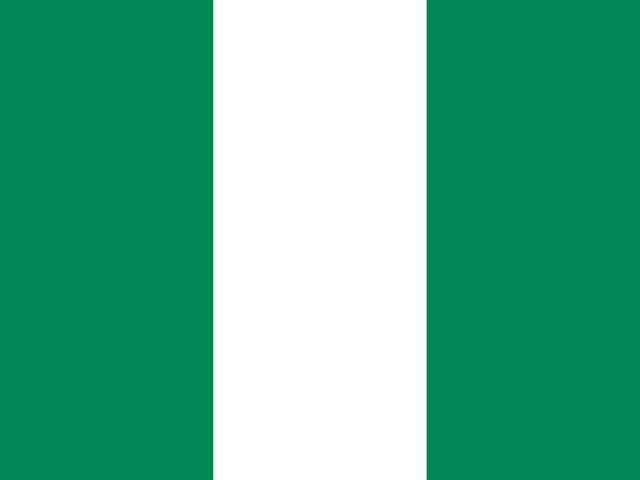
NeighboursBenin, Niger, Chad and Cameroon. Nigeria also shares Lake Chad with Niger, Chad and Cameroon, and faces the Gulf of Guinea of the Atlantic Ocean to the south
The land that is now Nigeria was home to many peoples and states long before it had one name. Nok artists made clay sculptures more than 2,000 years ago, the Kingdom of Benin traded with Portugal from the 1480s, and in the north the Hausa city-states and later the Sokoto Caliphate ruled the savanna. Britain took Lagos in 1861 and the rest over the following decades, joining north and south in 1914. After independence in 1960 came a painful civil war and long years of military rule, and civilian government returned in 1999.
500 BC
The Nok culture flourishes
By around 500 BC the Nok people of central Nigeria were smelting iron and making striking terracotta figures with large eyes and carefully shaped hair. The culture is named after the village of Nok, where tin miners found clay figures in 1928 and again in 1943, and its sculptures are among the earliest known in Africa south of the Sahara.
1485
Portuguese sailors reach Benin
In about 1485 Portuguese explorers led by João Afonso de Aveiro reached Benin City, capital of the powerful Kingdom of Benin. The Oba, the king, traded pepper and ivory with them and sent an ambassador to Lisbon. The name Benin comes from the Portuguese form of a local name for the kingdom.
1804
The Sokoto Caliphate is founded
In 1804 the Fulani scholar Usman dan Fodio led a religious war against the Hausa kings of the north and founded the Sokoto Caliphate. By the 1830s it was the most populous state in West Africa, ruled from the city of Sokoto, which his son founded in 1809. Britain took it over in 1903, but the Sultan of Sokoto is still an important Muslim leader today.
1861
Britain annexes Lagos
In August 1861, under the threat of force, a British naval force made Lagos a British colony. The island had been a major centre of the Atlantic slave trade, which Britain had abolished. From this small port, British rule spread slowly inland over the next fifty years.
1897
British troops take Benin City
In February 1897 a British military expedition captured Benin City, burned much of it, including the royal palace, and sent the Oba into exile. Thousands of bronze and ivory works of art, now known as the Benin Bronzes, were taken to Britain. Since the 2020s some museums abroad have begun to return pieces to Nigeria.
1914
North and south are joined
On 1 January 1914 the British joined the Northern and Southern Nigeria Protectorates into a single Colony and Protectorate of Nigeria, under Frederick Lugard. The name Nigeria had been suggested in 1897 by the journalist Flora Shaw, who later married Lugard.
1960
Nigeria becomes independent
On 1 October 1960 Nigeria became independent from Britain as a federation of three regions, with Abubakar Tafawa Balewa as prime minister. The day is celebrated every year as Independence Day.
1963
Nigeria becomes a republic
In 1963 a new constitution made Nigeria a republic within the Commonwealth, and Nnamdi Azikiwe, who had been governor-general, became its first president.
1967
The civil war begins
After two military coups and violence against Igbo people in the north in 1966, the Eastern Region declared itself the independent Republic of Biafra in May 1967, and fighting began in July. A blockade of the east caused a terrible famine, and pictures of starving children shocked the world. Estimates of the number of people who died vary widely.
1970
The civil war ends
Biafra surrendered in January 1970, after 30 months of war, and the east became part of Nigeria again. The government spoke of reconciliation, but the memory of the war is still painful for many families.
1976
Abuja is chosen as the new capital
In 1976 the military government decided to move the capital from crowded Lagos to a new city in the centre of the country, in a place seen as neutral between the country's main ethnic and religious groups. Abuja was planned from scratch and built mainly in the 1980s.
1986
Wole Soyinka wins the Nobel Prize
The playwright and poet Wole Soyinka, born in Abeokuta, won the Nobel Prize in Literature in 1986, the first Black African to receive it.
1991
Abuja becomes the capital
On 12 December 1991 Abuja officially replaced Lagos as the capital of Nigeria. Lagos remains the country's largest city and its business centre.
1996
Olympic football gold in Atlanta
At the 1996 Olympic Games in Atlanta, Nigeria's young football team beat Argentina 3 to 2 in the final, becoming the first African country to win Olympic gold in football.
1999
Civilian rule returns
After most of the years since 1966 under military governments, Nigeria adopted a new constitution and held elections in 1999. On 29 May 1999 power was handed to an elected civilian president.
Nigerian cooking is hearty, colourful and often spicy, built on yams, cassava, rice, beans, peppers and red palm oil. The classic meal is a 'swallow', a soft, stretchy dough such as pounded yam, eba or amala, served with a rich soup of greens, ground melon seeds or okra, with meat or fish. A piece of swallow is pinched off with the right hand, dipped in the soup and eaten. Rice dishes such as jollof are the stars of parties, street food such as suya and puff-puff fills the evenings, and each region has its own favourites: soups of the Efik and Ibibio in the southeast, Yoruba stews in the southwest and grilled and dried meats in the Hausa north.
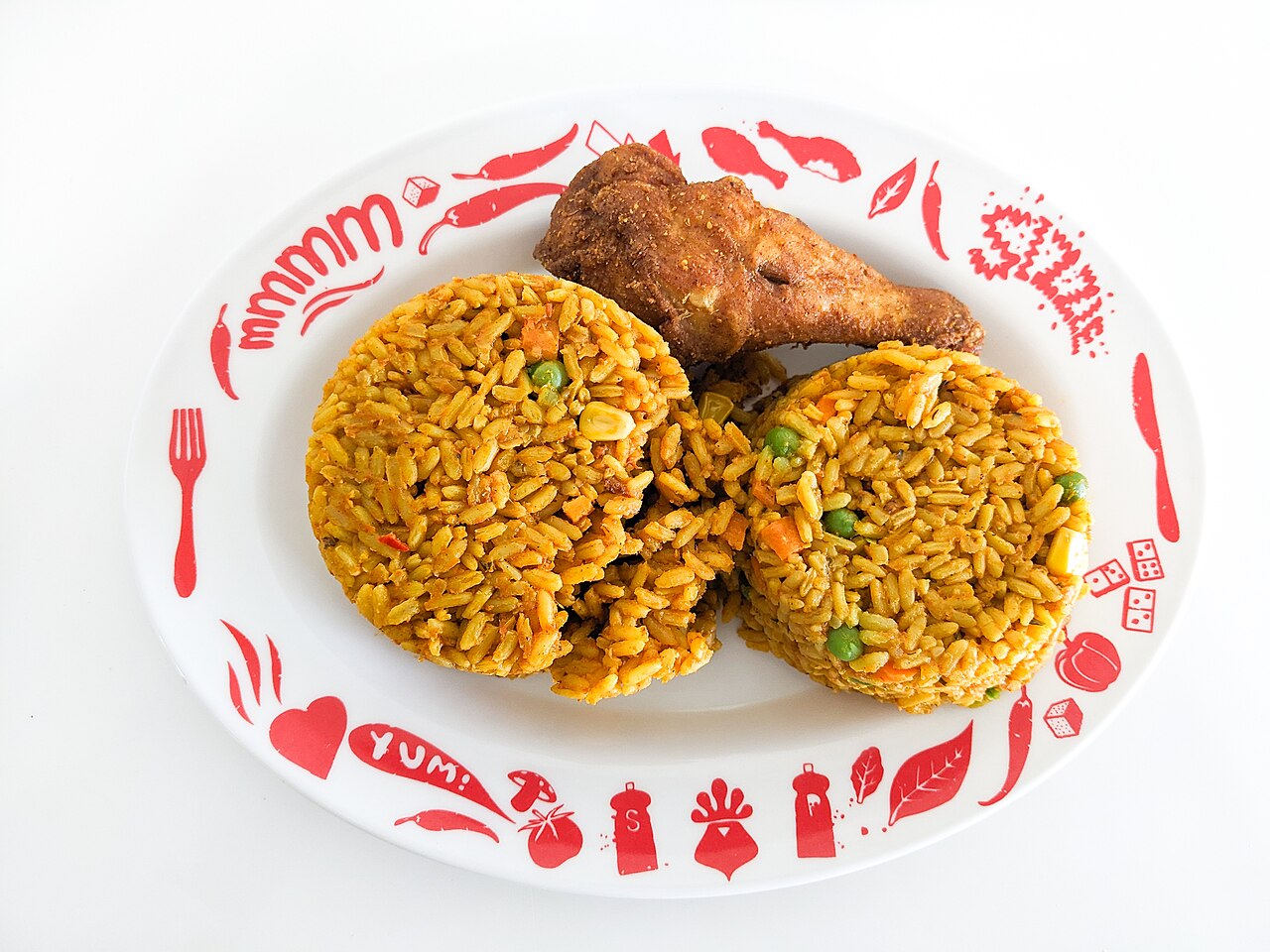
Rice cooked in one pot in a rich sauce of tomatoes, red peppers, onions and spices, often with thyme, curry powder and bay leaves, until every grain is orange-red. It is served at every party with fried chicken or beef, fried plantain and a little salad.
Nigerians and Ghanaians have a friendly 'Jollof war' about whose version is best. The name jollof comes from the old Wolof state of Jolof, in the region of today's Senegal.
See the recipe
Serves 6
1 h 15 min
Ingredients
500 g long-grain parboiled rice, rinsed
1 tin (400 g) chopped tomatoes, 2 red peppers and 1 onion, blended smooth
1 whole Scotch bonnet chilli, left uncut (optional, for gentle heat)
4 tablespoons vegetable oil
1 more onion, sliced
2 tablespoons tomato paste
1 teaspoon dried thyme, 1 teaspoon curry powder and 2 bay leaves
About 600 ml chicken or vegetable stock, and salt
Method
Heat the oil in a heavy pot and fry the sliced onion for 5 minutes, then add the tomato paste and fry for 3 minutes, stirring.
Pour in the blended tomato and pepper mixture, add the chilli, thyme, curry powder and bay leaves, and simmer for about 20 minutes, stirring now and then, until thick and the oil rises to the top.
Add the stock and salt, bring to the boil, then stir in the rice. The liquid should just cover the rice.
Cover tightly with foil and a lid and cook on the lowest heat for 25 to 30 minutes, without stirring, until the rice is tender. Add a splash of water if it dries out too soon.
Remove the bay leaves and chilli, stir gently and serve with fried plantain and chicken. A little browned rice at the bottom is prized as the 'party' taste.
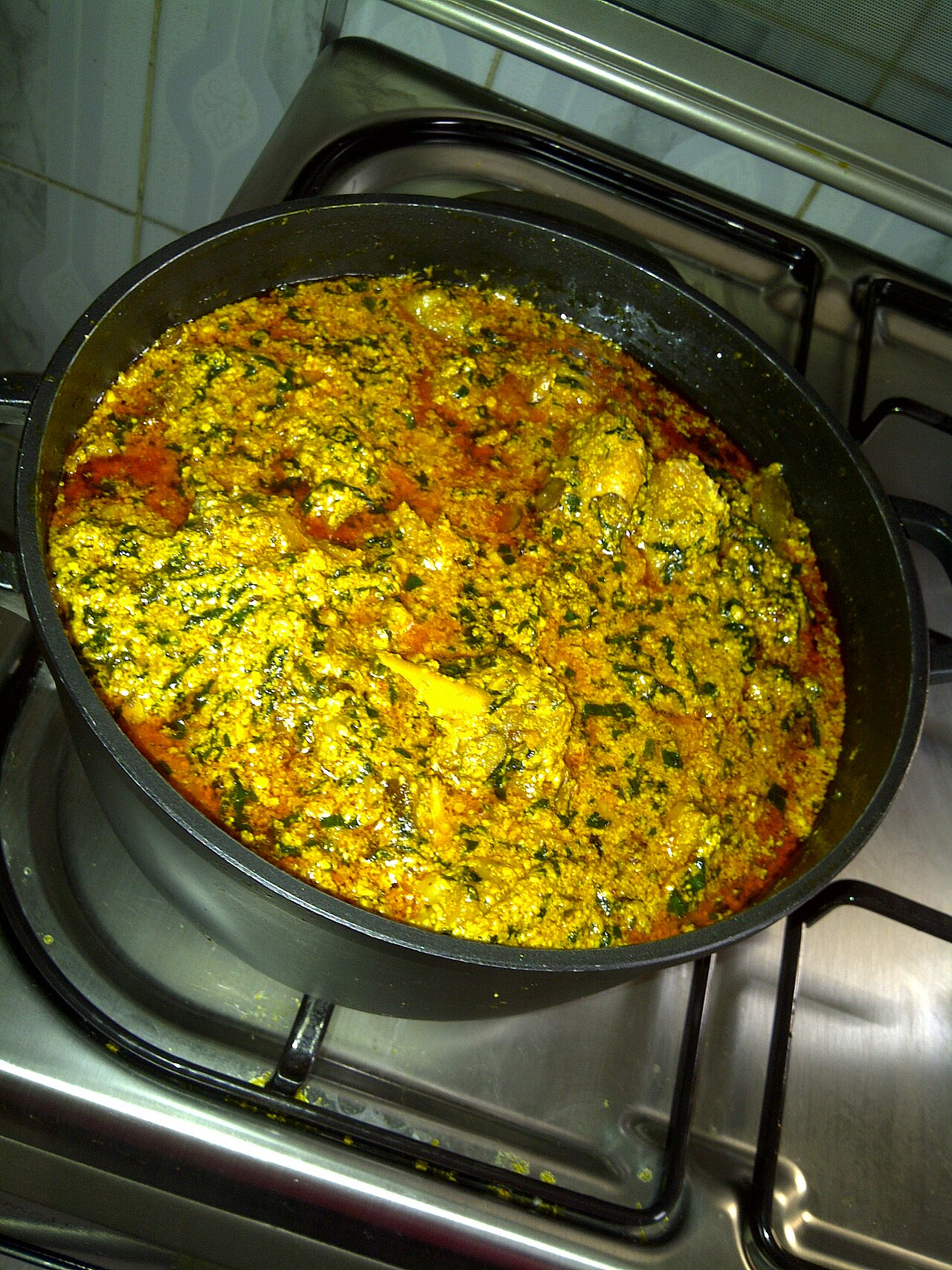
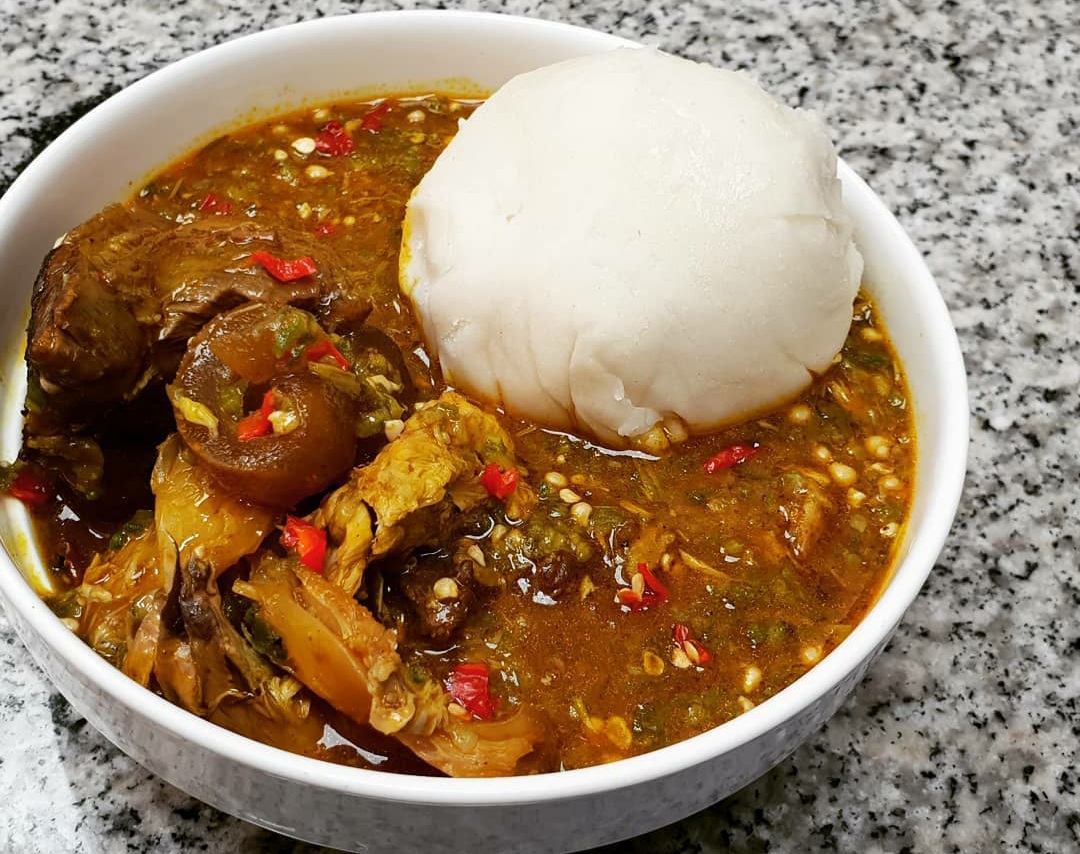
A thick, golden soup made with ground melon seeds, which cook into soft little curds, together with palm oil, peppers, leafy greens and meat or dried fish. It is one of the most popular soups in the country and is eaten with pounded yam or eba.
White yam boiled and then pounded in a large wooden mortar until it becomes a smooth, soft, stretchy dough. It is shaped into a ball and served with egusi, efo riro or okra soup.
As of 2020, Nigeria grew about two thirds of all the yams in the world.
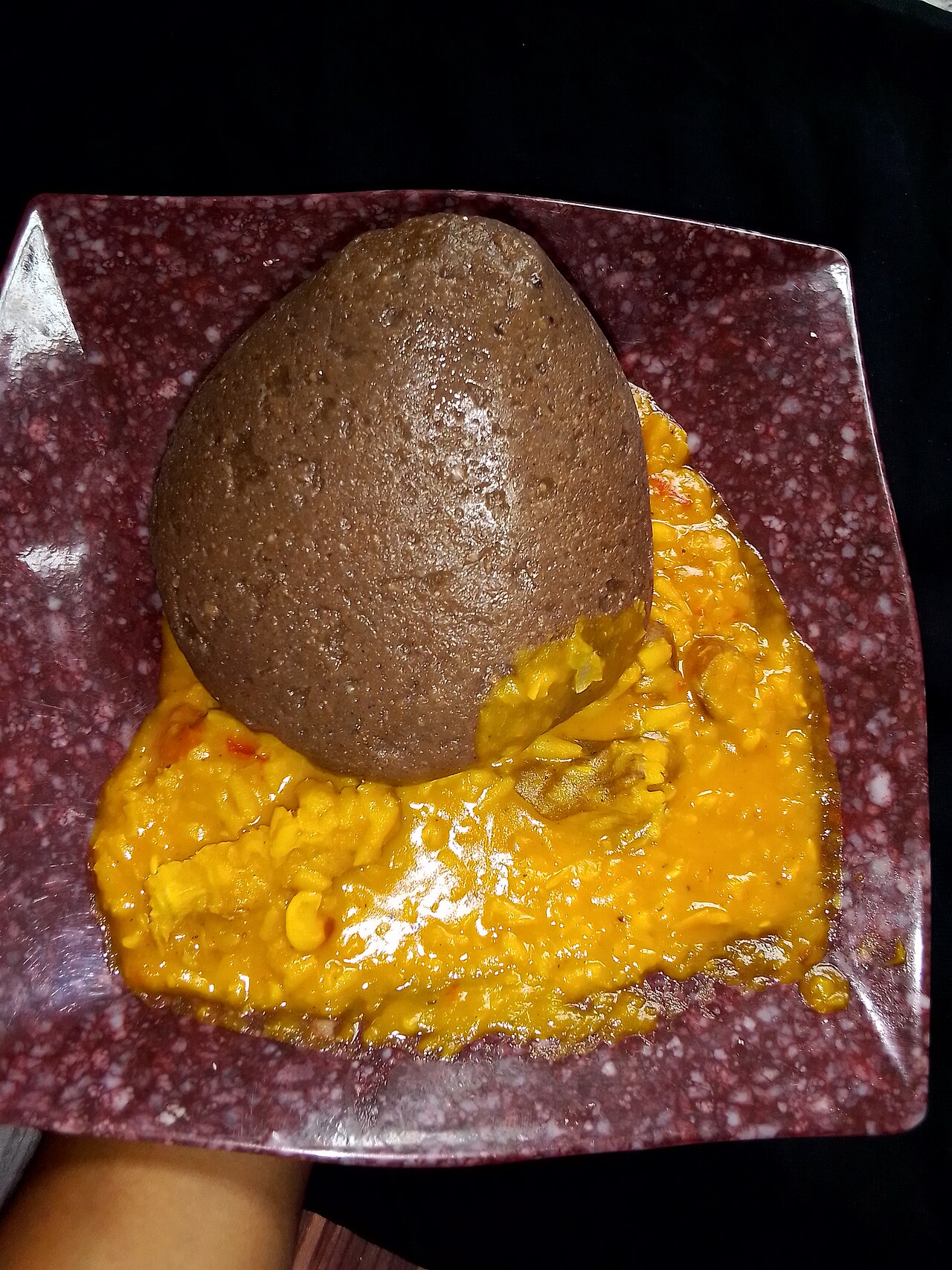
Amala is a smooth brown swallow made from dried yam flour. It is traditionally served with two soups side by side: green ewedu, made from jute leaves, and orange gbegiri, made from beans, often with a spicy stew and meat on top.
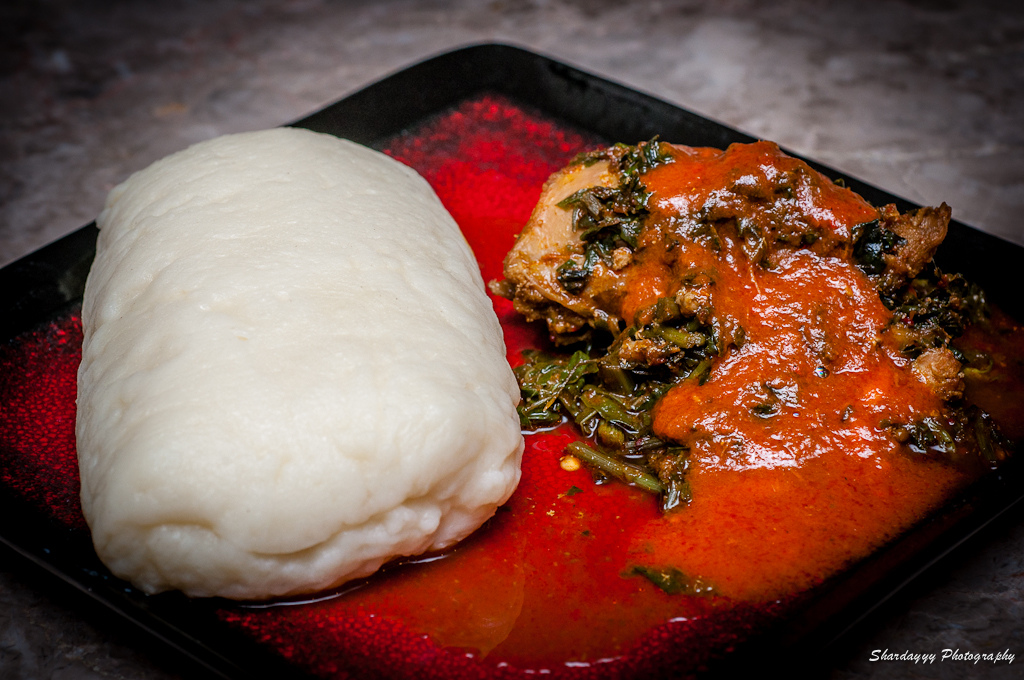
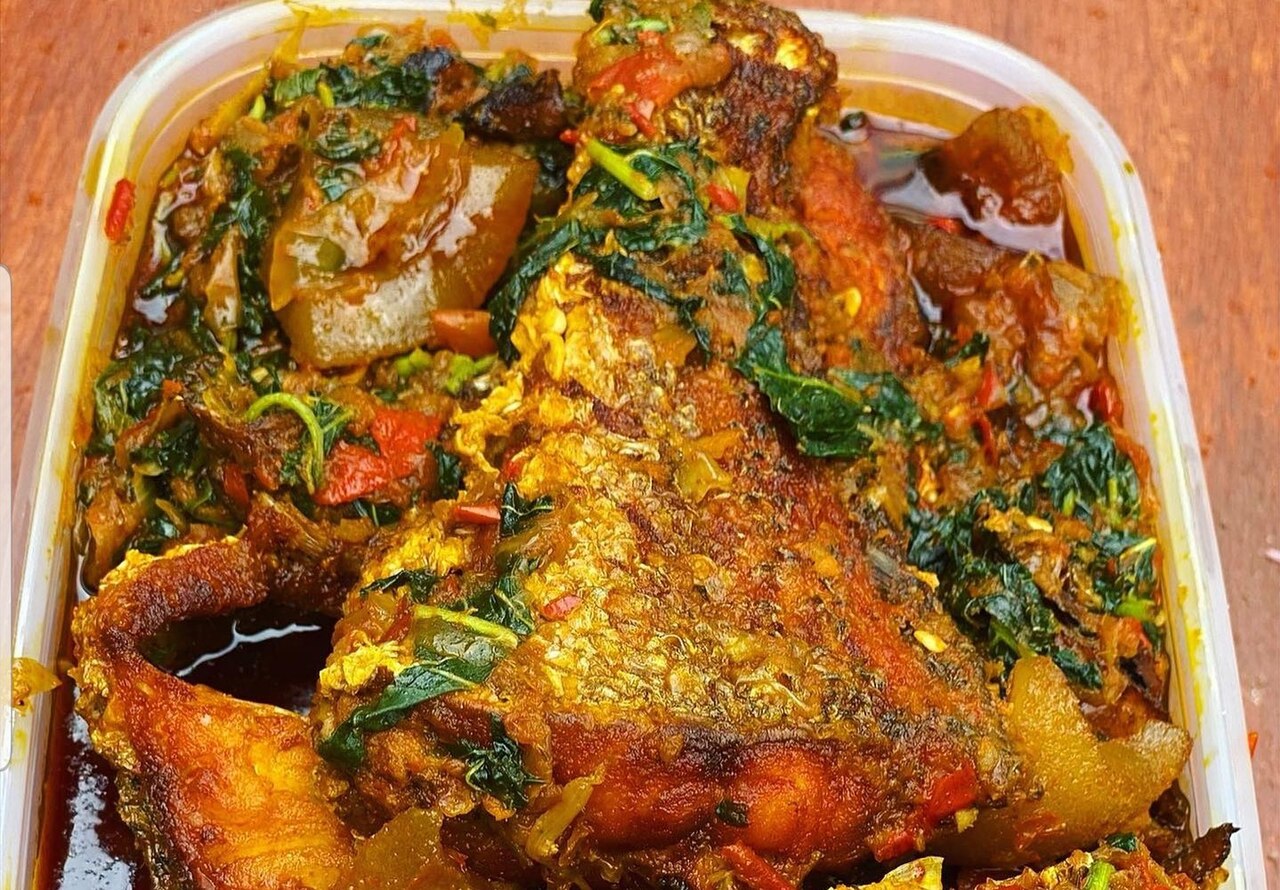
A rich stew of leafy greens such as spinach or amaranth, cooked in palm oil with blended red peppers, onions, locust beans and often several kinds of meat and fish. It is eaten with pounded yam, amala or rice.
The Efik and Ibibio peoples of Cross River and Akwa Ibom states, around Calabar
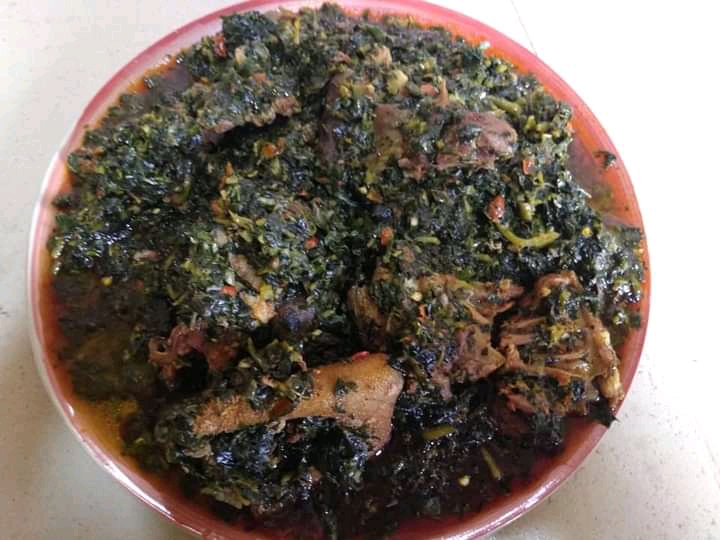
A thick soup of fluted pumpkin leaves and waterleaf, cooked with palm oil, meat, dried fish and periwinkles. It takes a lot of greens and meat, so it is seen as a special-occasion dish for guests and celebrations.
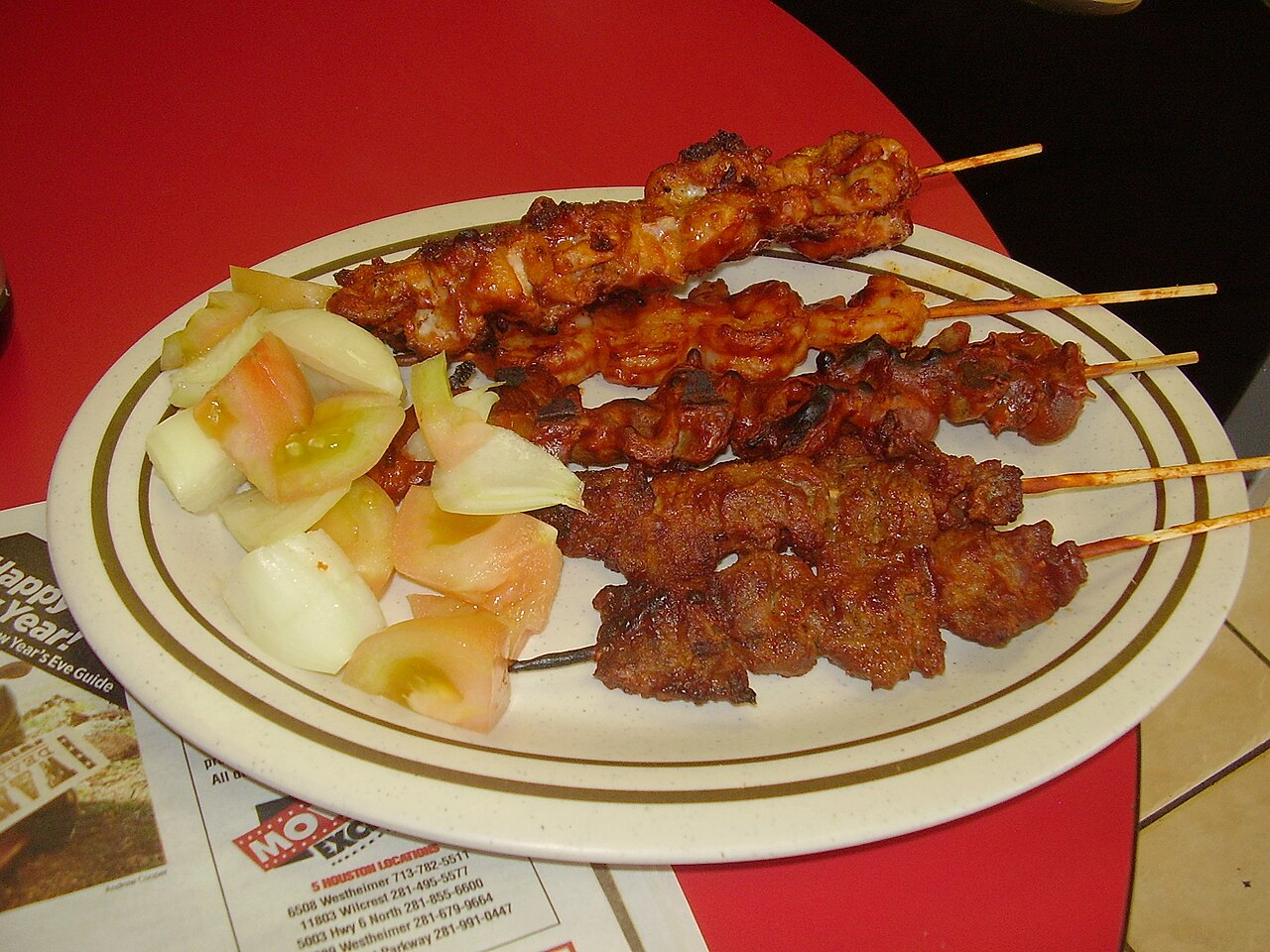
Thin slices of beef, chicken or ram on skewers, rubbed with yaji, a hot spice mix made with ground peanuts, chilli and ginger, and grilled over an open fire. Street sellers serve it in the evening with sliced onions, tomatoes and extra spice.
See the recipe
Serves 4
45 min
Ingredients
600 g beef sirloin or chicken thighs, sliced very thinly
Mix the ground peanuts, spices, stock cube and salt. Keep 2 tablespoons of this spice mix to one side for serving.
Thread the meat onto the skewers, brush with oil and press the spice mix all over it. Leave for 20 minutes.
Grill on a hot barbecue or under a hot grill for about 4 to 6 minutes on each side, until cooked through and slightly charred. Chicken must be fully cooked, with no pink inside.
Sprinkle with the rest of the spice mix and serve with raw onion and tomato. Leave out the peanuts if anyone has a nut allergy.
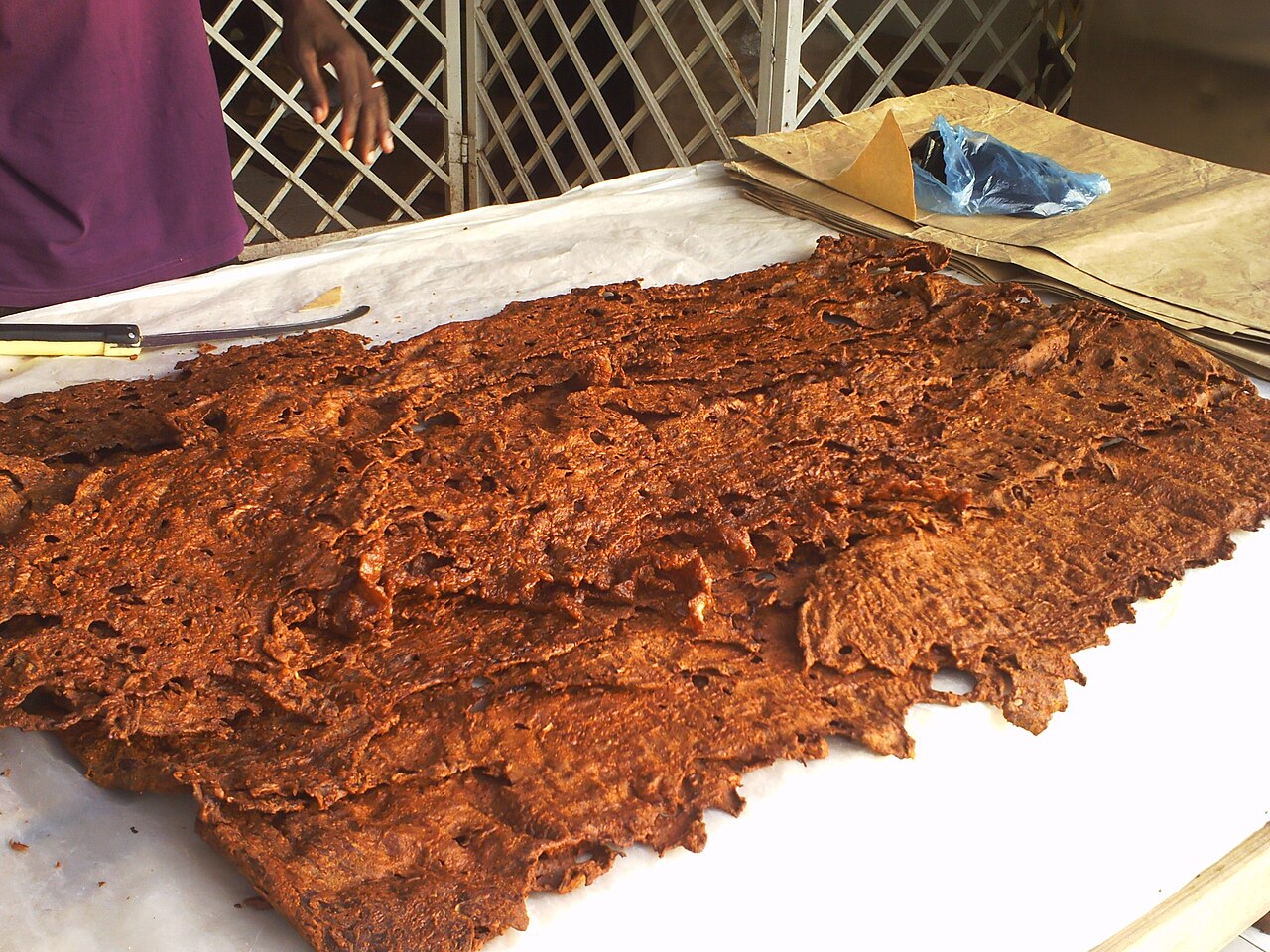
Very thin sheets of beef dried in the sun, coated with a paste of peanuts, onion and spices, dried again and quickly roasted over high heat. It is a kind of spicy jerky that keeps for months without spoiling.
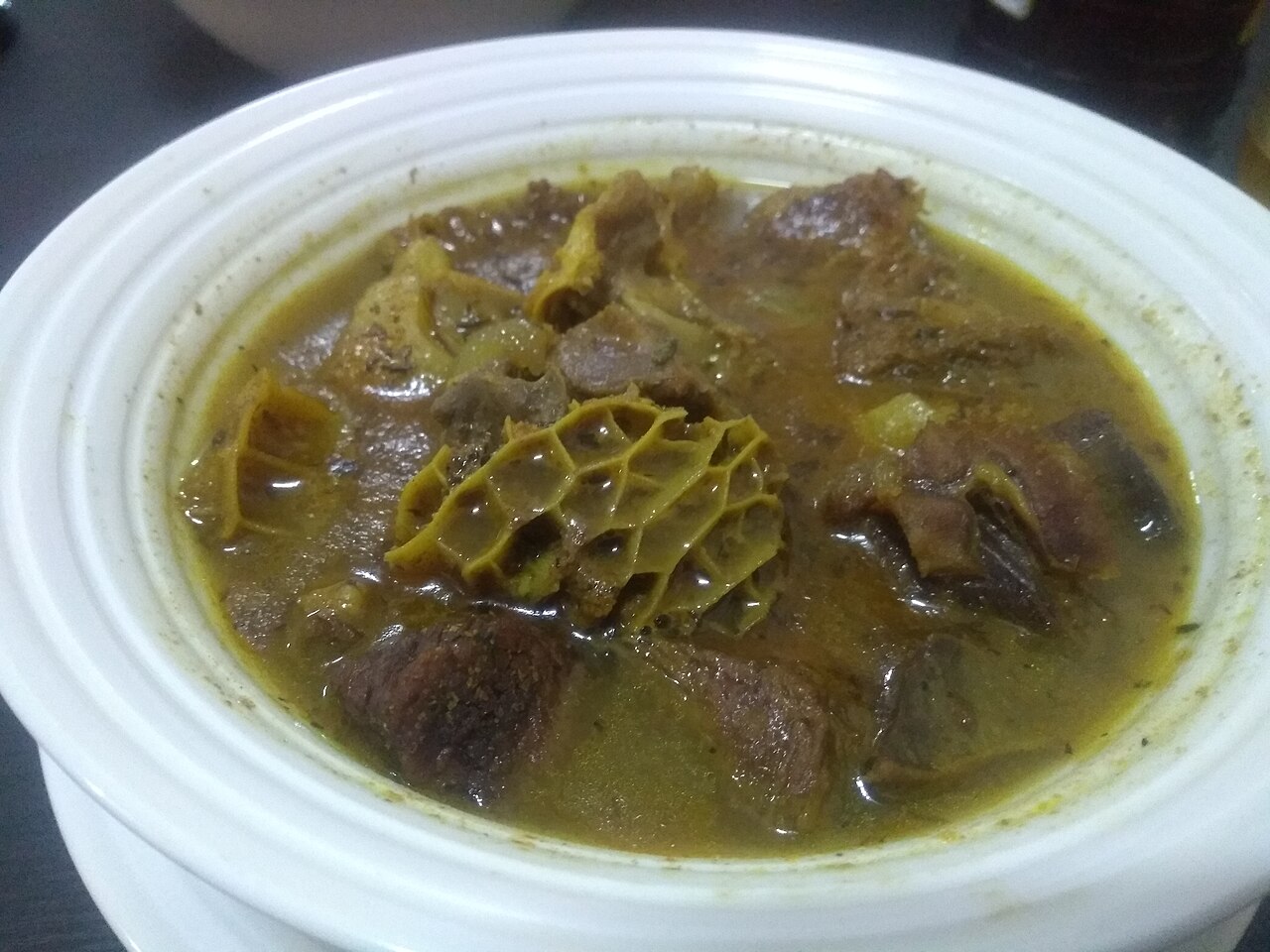
A light, very spicy broth made with goat meat, chicken or catfish, chilli and fragrant local spices such as calabash nutmeg and scent leaves. It is served as a starter, in bars with a cold drink, and as a warming dish for people who feel unwell.
See the recipe
Serves 4
1 h 30 min
Ingredients
800 g goat meat or bone-in chicken pieces
1 onion, chopped
2 tablespoons ready-made pepper soup spice mix (from African shops), or 1 teaspoon each of ground ginger, ground coriander and ground nutmeg
1 or 2 fresh chillies, chopped, to taste
1 stock cube and salt
About 1.5 litres water
A handful of fresh basil or mint leaves (instead of scent leaves)
Method
Put the meat, onion, stock cube and a little salt in a pot, cover and let it steam in its own juices for 10 minutes on a low heat.
Add the water, the spice mix and the chillies, bring to the boil and simmer until the meat is tender: about 60 minutes for goat, 30 for chicken.
Taste and add salt or more spice if needed.
Stir in the torn basil or mint just before serving, and serve hot in bowls.
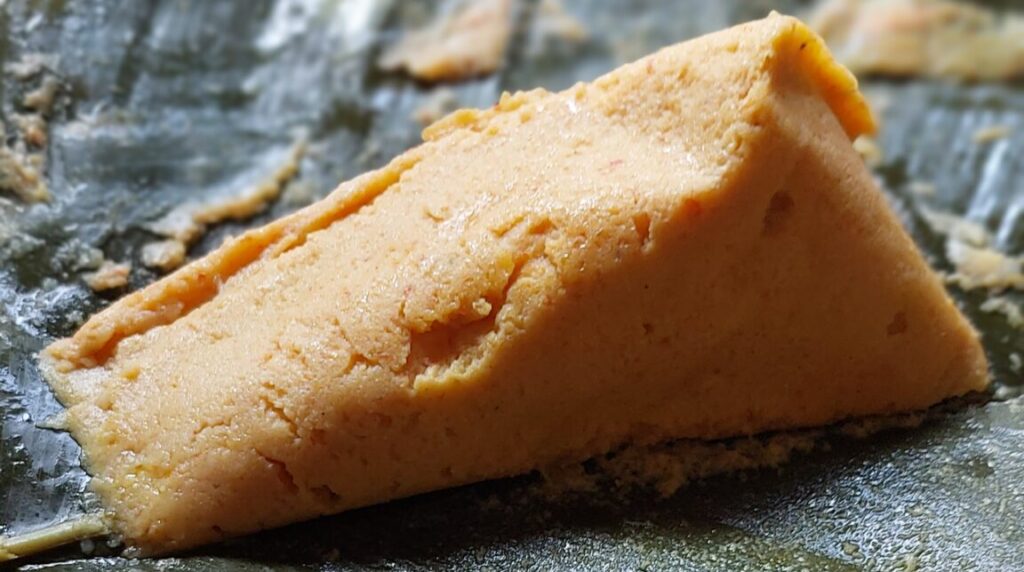
A steamed pudding of peeled black-eyed beans blended with red peppers, onions and oil, often with boiled egg or fish inside. It is traditionally steamed in folded leaves and eaten with rice, pap or garri.
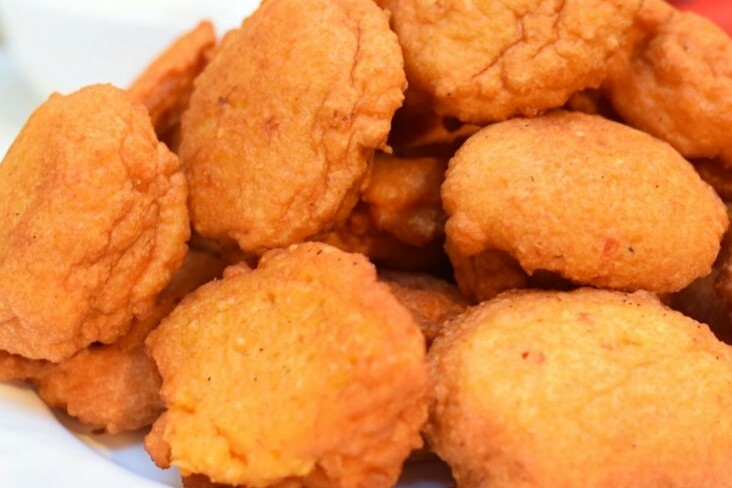
Crisp, fluffy fritters made from peeled black-eyed beans ground with onion and pepper, then fried in small spoonfuls. They are a favourite breakfast with pap, a smooth maize porridge, or with bread.
Enslaved Yoruba people brought akara to Brazil, where it became acarajé, a famous street food of Salvador da Bahia.
See the recipe
Serves 4
45 min
Ingredients
250 g dried black-eyed beans
1 small onion, chopped
1/2 red pepper, or a little fresh chilli to taste
1/2 teaspoon salt
Vegetable oil for deep frying
Method
Soak the beans in water for 20 minutes, then rub them between your hands to loosen the skins. Pour off the skins that float up and repeat until most beans are skinned. Soak for 1 to 2 hours more.
Blend the beans with the onion, pepper and just a few spoonfuls of water to a thick, smooth paste.
Beat the paste hard with a wooden spoon for 3 to 5 minutes until light and fluffy, then stir in the salt.
Heat 5 cm of oil in a deep pan to about 175 °C. Carefully drop in tablespoons of the paste and fry for 3 to 4 minutes, turning, until golden brown. Take great care with hot oil and never leave the pan.
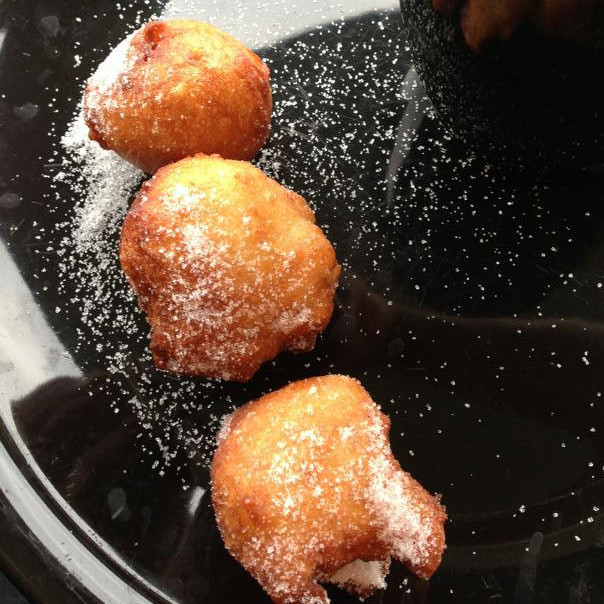
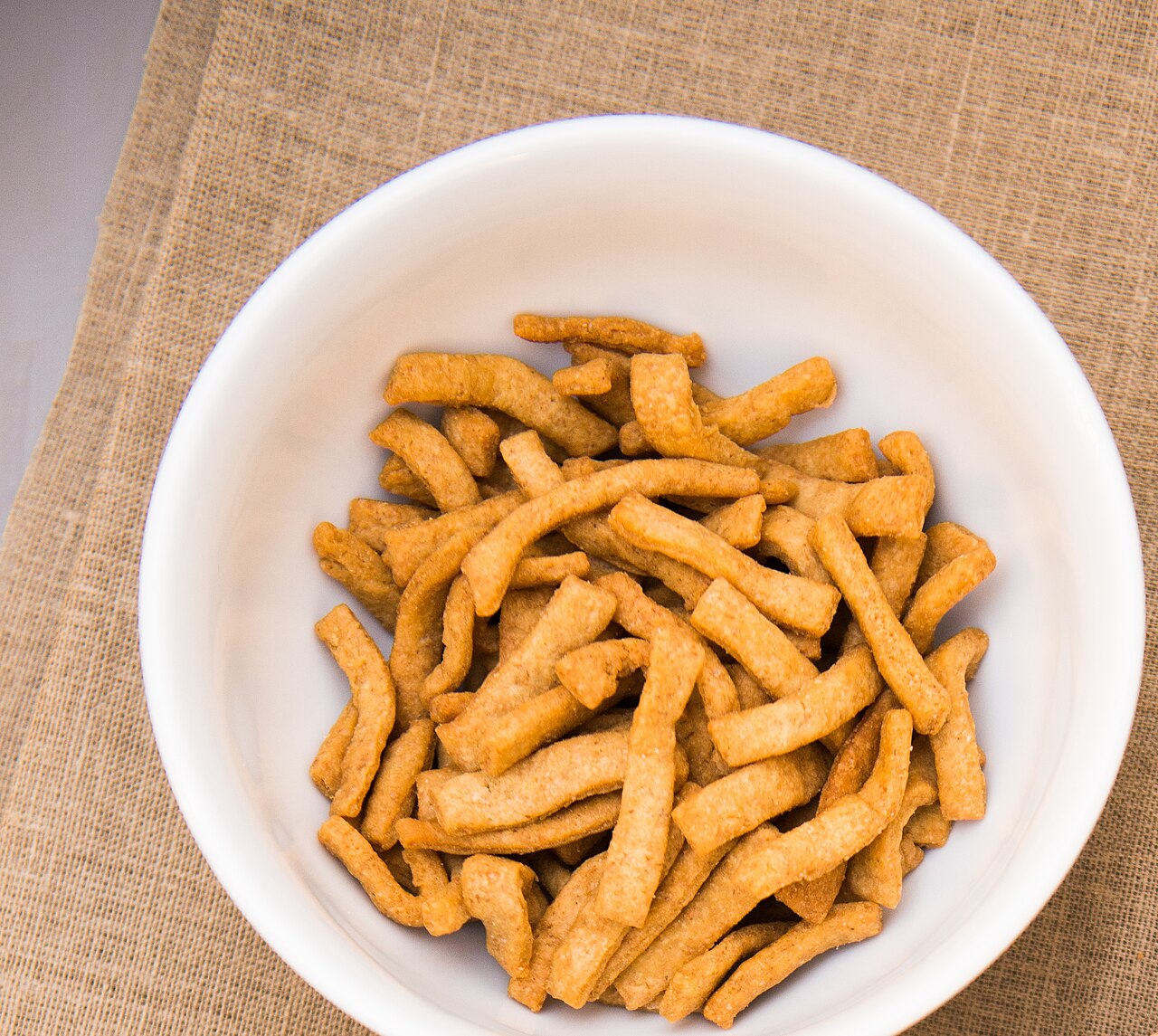
Small crunchy cubes of sweet dough made with flour, sugar, butter and milk, often flavoured with nutmeg, and deep-fried. They are a favourite snack all over Nigeria.
Soft, sticky rice cooked and mashed into a smooth dough, then shaped into balls. It is the northern swallow, served with soups such as miyan kuka, made from baobab leaves.
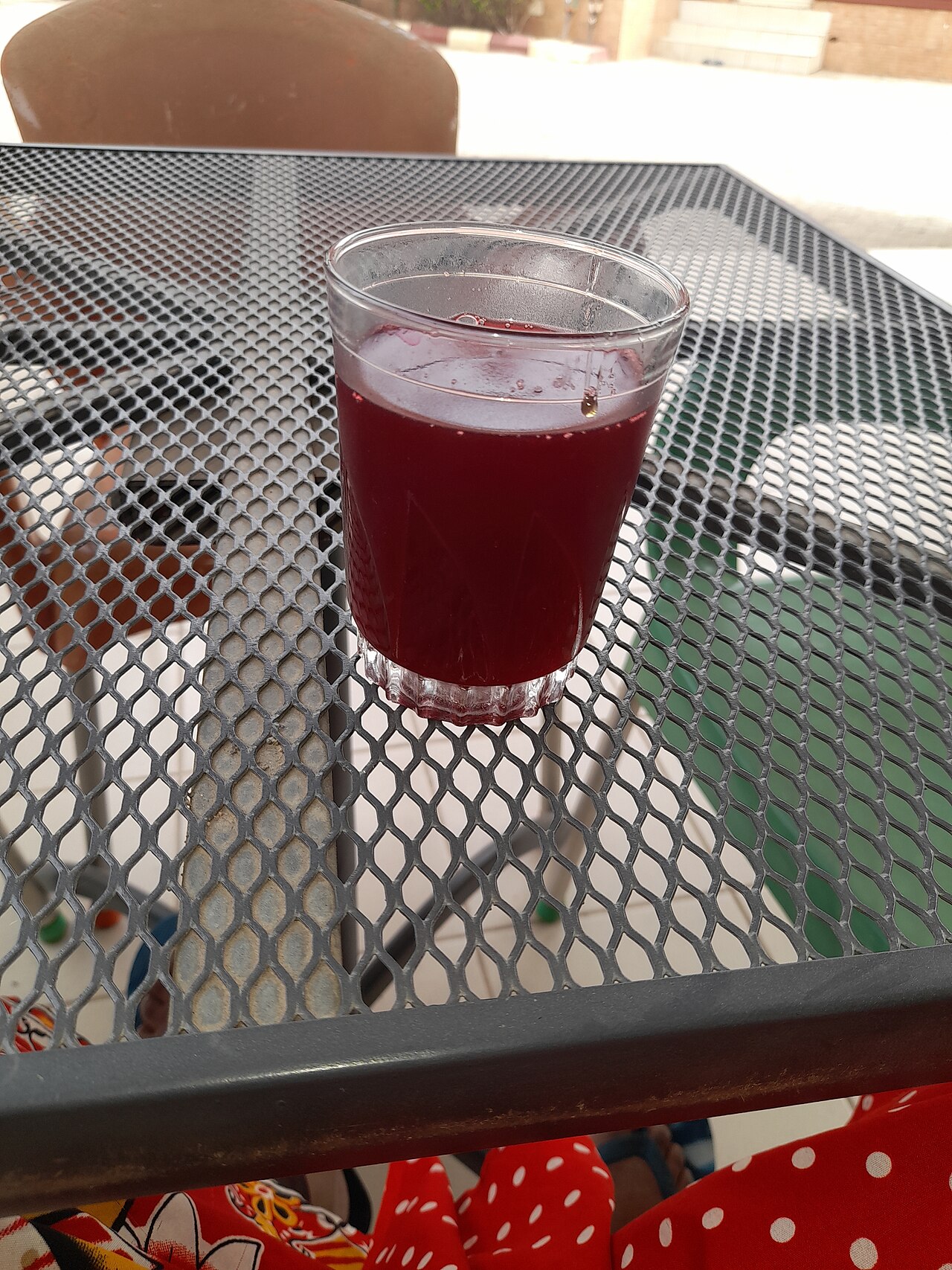
A deep red drink made from dried hibiscus flowers boiled with ginger and sometimes pineapple peel or cloves, then sweetened and served cold. It is sold in bottles and bags on the street and at parties.
See the recipe
Serves 6
40 min
Ingredients
50 g dried hibiscus flowers (sold as zobo, sorrel or flor de Jamaica)
2 litres water
A thumb of fresh ginger, sliced
The peel of 1 pineapple, washed, or 4 cloves (optional)
Sugar or honey to taste
Method
Rinse the dried flowers in cold water.
Put them in a pot with the water, ginger and pineapple peel or cloves, bring to the boil and simmer for 15 to 20 minutes.
Leave to cool, then pour through a fine sieve and press the flowers to get all the juice out.
Sweeten to taste and chill well. Serve cold over ice.
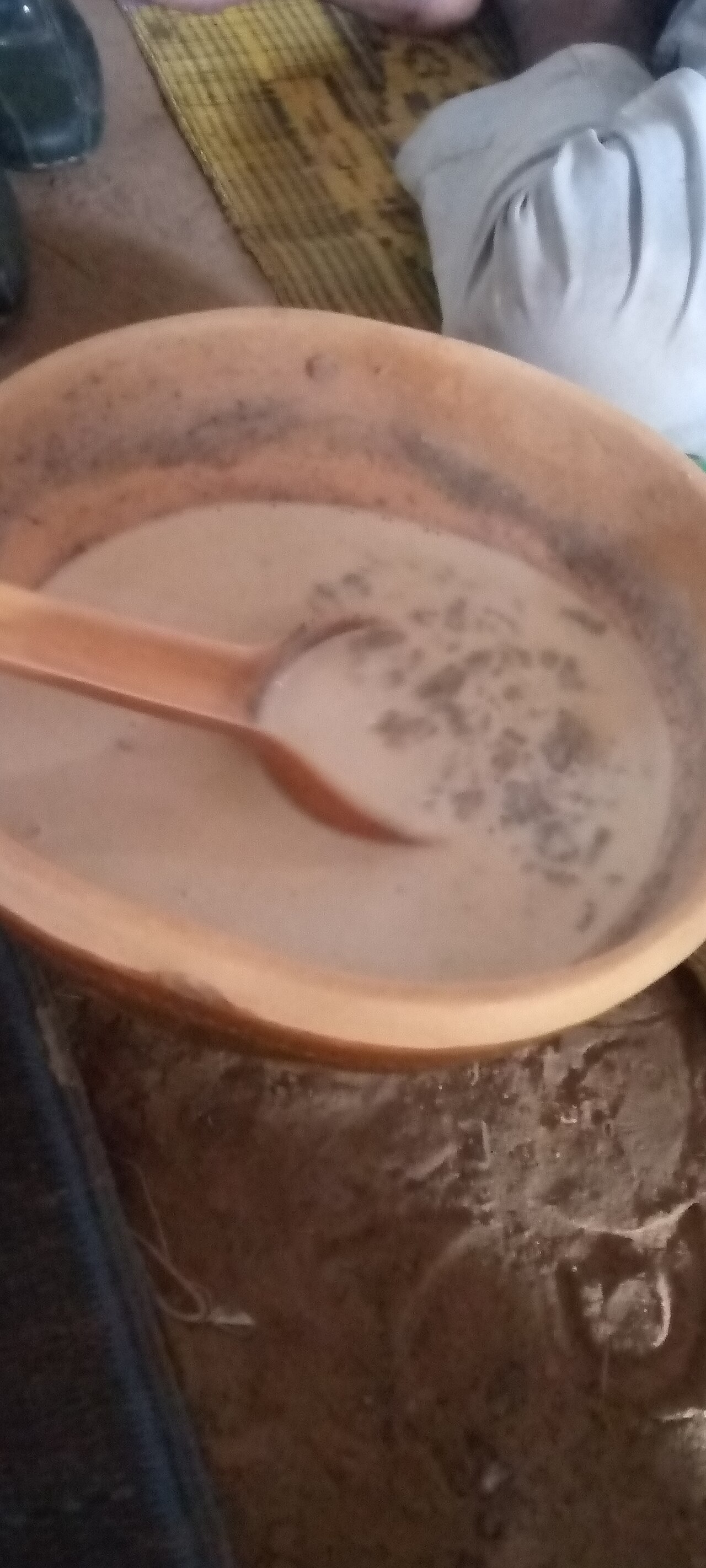
Balls of spiced millet dough, called fura, crumbled into nono, a fermented cow's milk, to make a thick, sour and filling drink, popular in the afternoon and on special occasions.
Table manners
Wash your hands before eating. A bowl of water is often brought to the table, because many dishes are eaten by hand.
Eat, and pass or take anything, with your right hand. Using the left hand is seen as rude.
To eat a swallow such as pounded yam, pinch off a small piece with your right hand, roll it into a ball, make a dent with your thumb and scoop up some soup.
Greet the elders first. In traditional homes older people are served first and start eating before the rest.
In Igbo homes a guest may be welcomed with kola nuts, offered as a sign of goodwill. Accept a piece with thanks.
Many people in the north are Muslim and may not serve alcohol or pork. During Ramadan, do not eat, drink or smoke in public in the daytime in mainly Muslim areas.
Nigeria has many big cities. Lagos, on the coast in the southwest, is the largest and the centre of business, while Abuja, in the middle of the country, is the planned capital. The ancient trading city of Kano leads the north, Ibadan and Abeokuta are old Yoruba cities, Enugu is the heart of the Igbo southeast, and Port Harcourt and Calabar lie near the coast in the south.
Federal Capital Territory, in the centre of the country
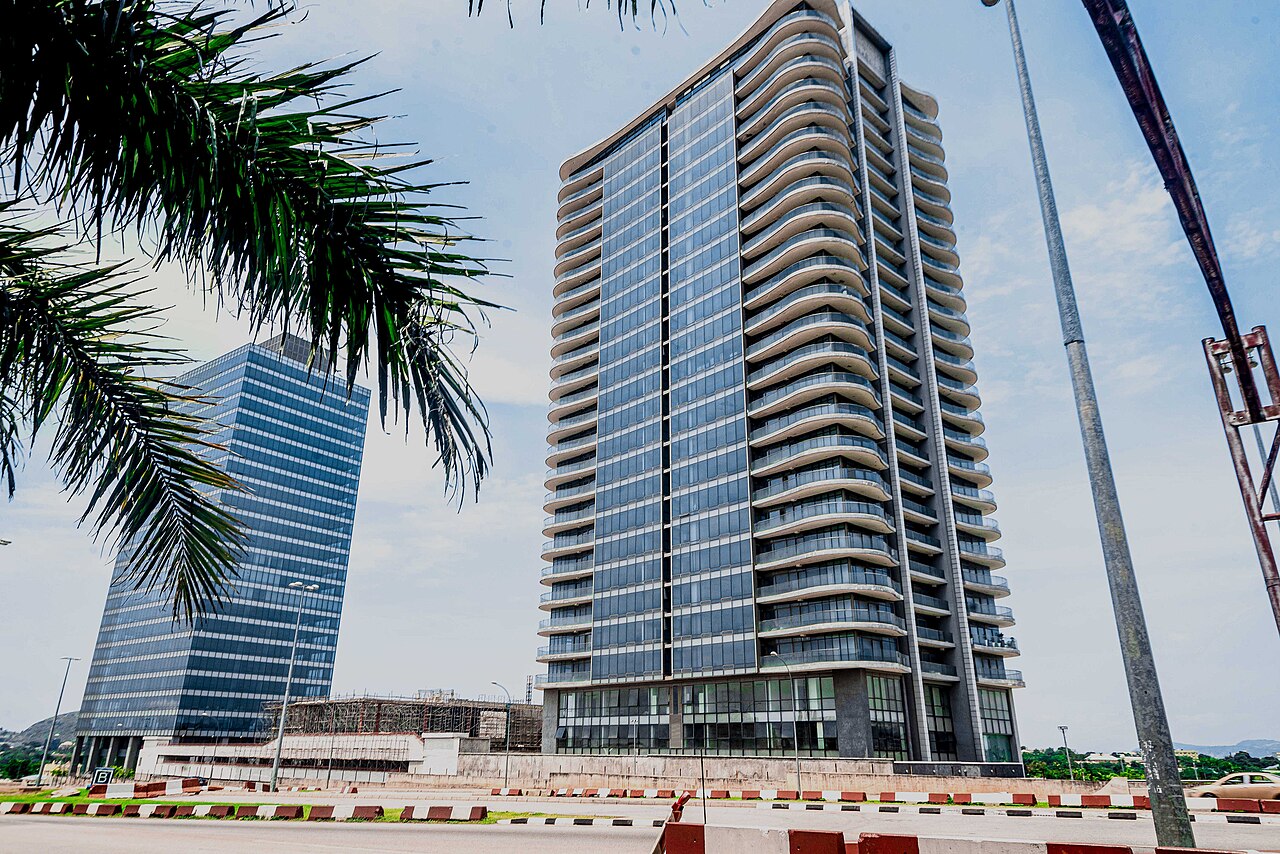
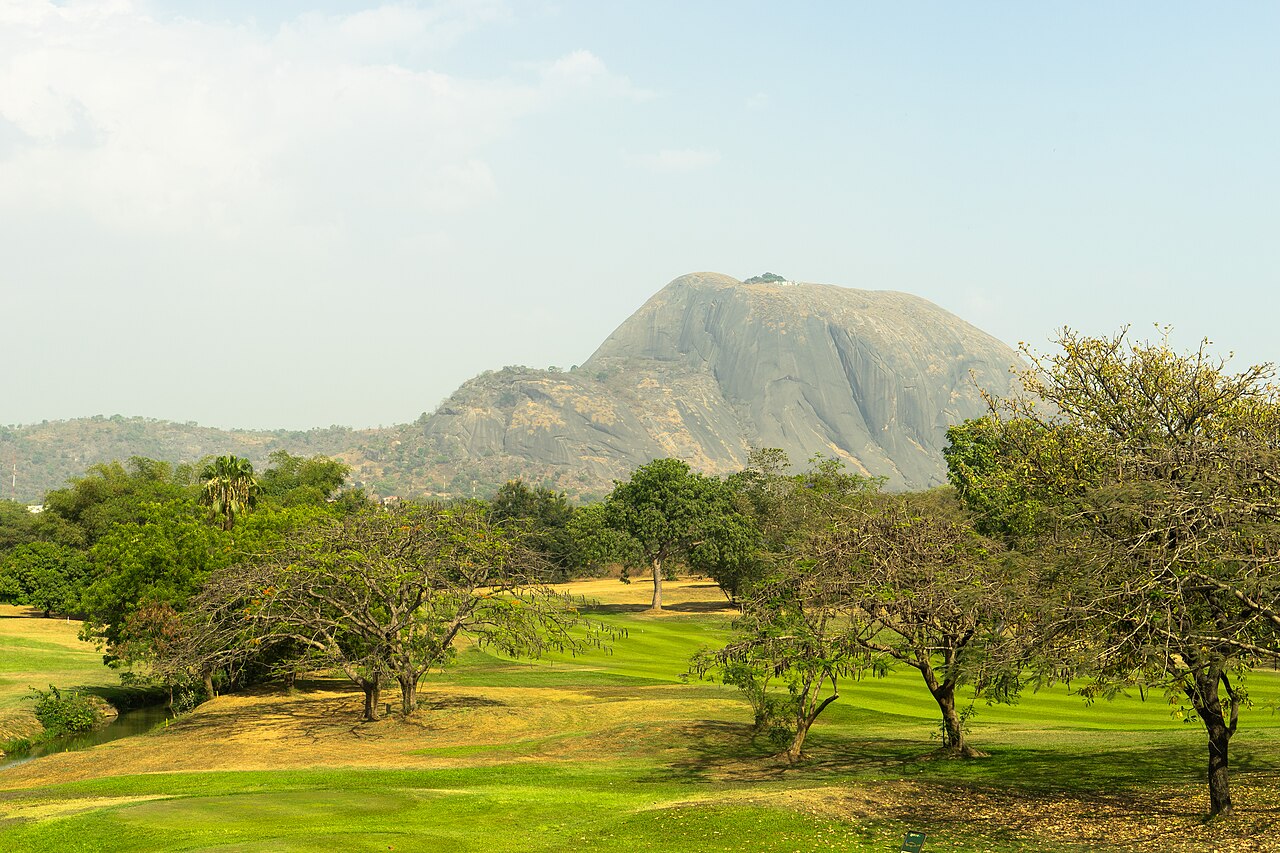
A planned capital built mainly in the 1980s at the foot of Aso Rock, a huge granite outcrop. It replaced Lagos as the capital on 12 December 1991, and its wide avenues are lined with government buildings, the National Mosque and the National Christian Centre.
Lagos State, on the Atlantic coast in the southwest
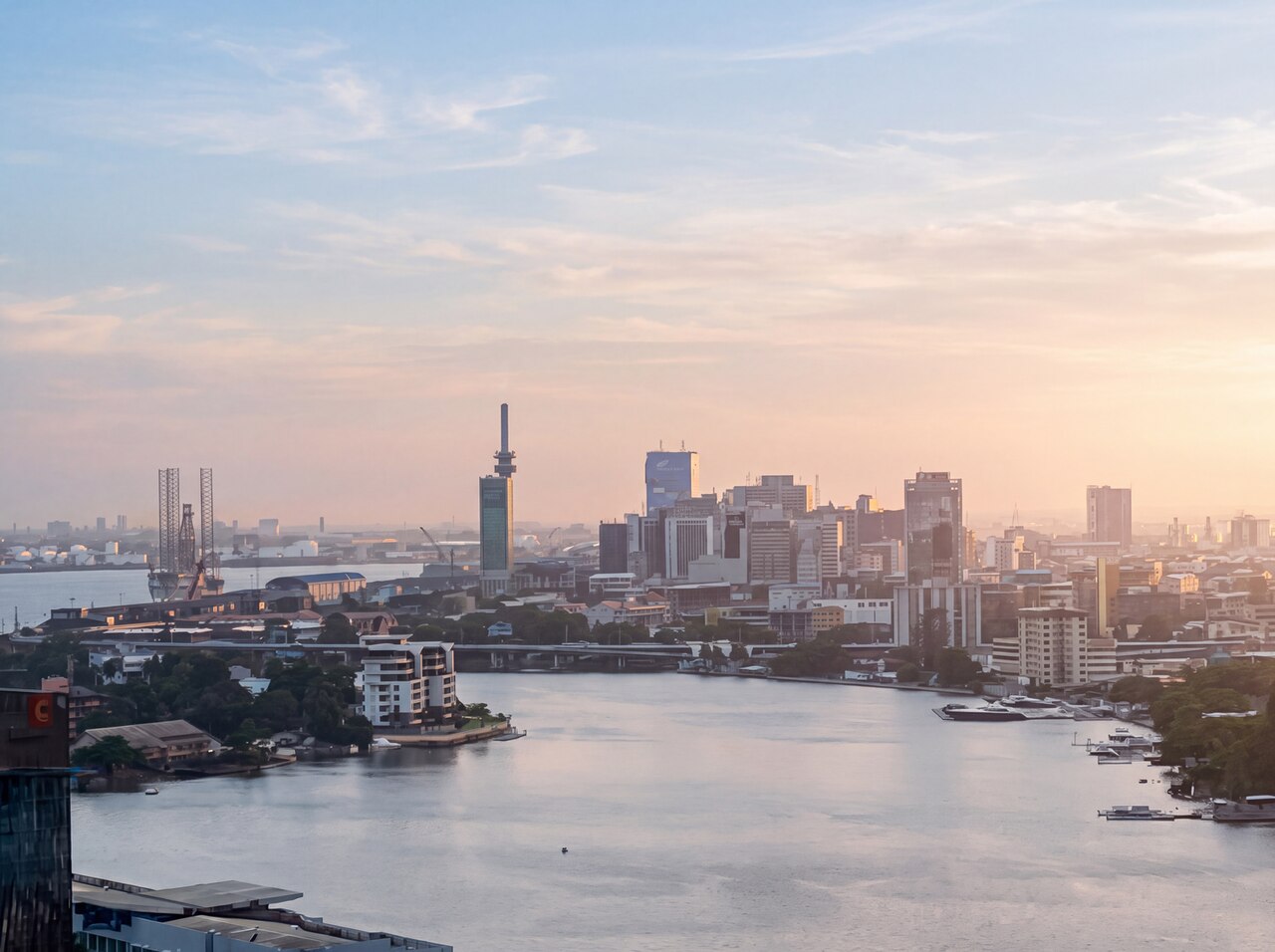
Nigeria's largest city and one of the largest in Africa, spread over islands and mainland around the Lagos Lagoon. It was the capital until 1991 and is still the country's business, music and film centre. In Yoruba it is called Èkó.
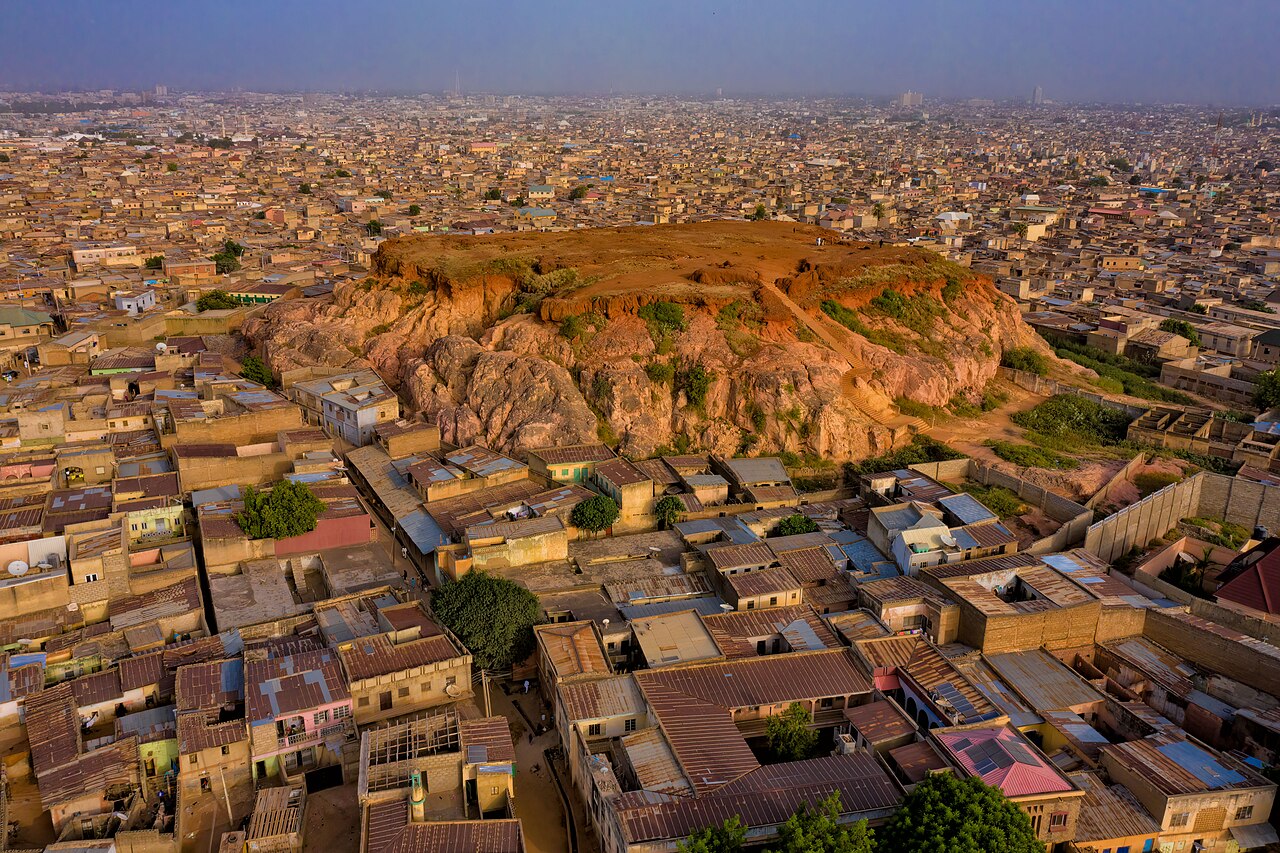
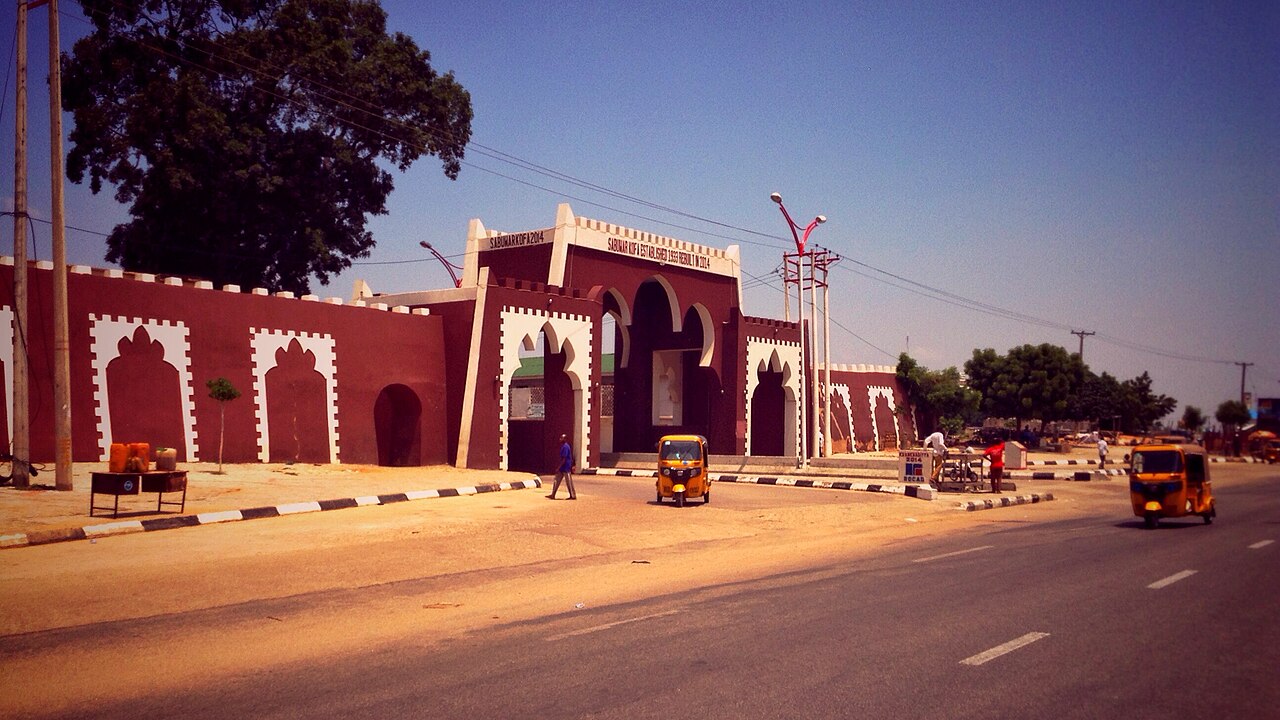
One of the oldest cities in West Africa and a centre of trade across the Sahara for centuries. It was one of the Hausa city-states, and its old city still has parts of its ancient mud walls, the huge Kurmi Market and dye pits that are still in use.
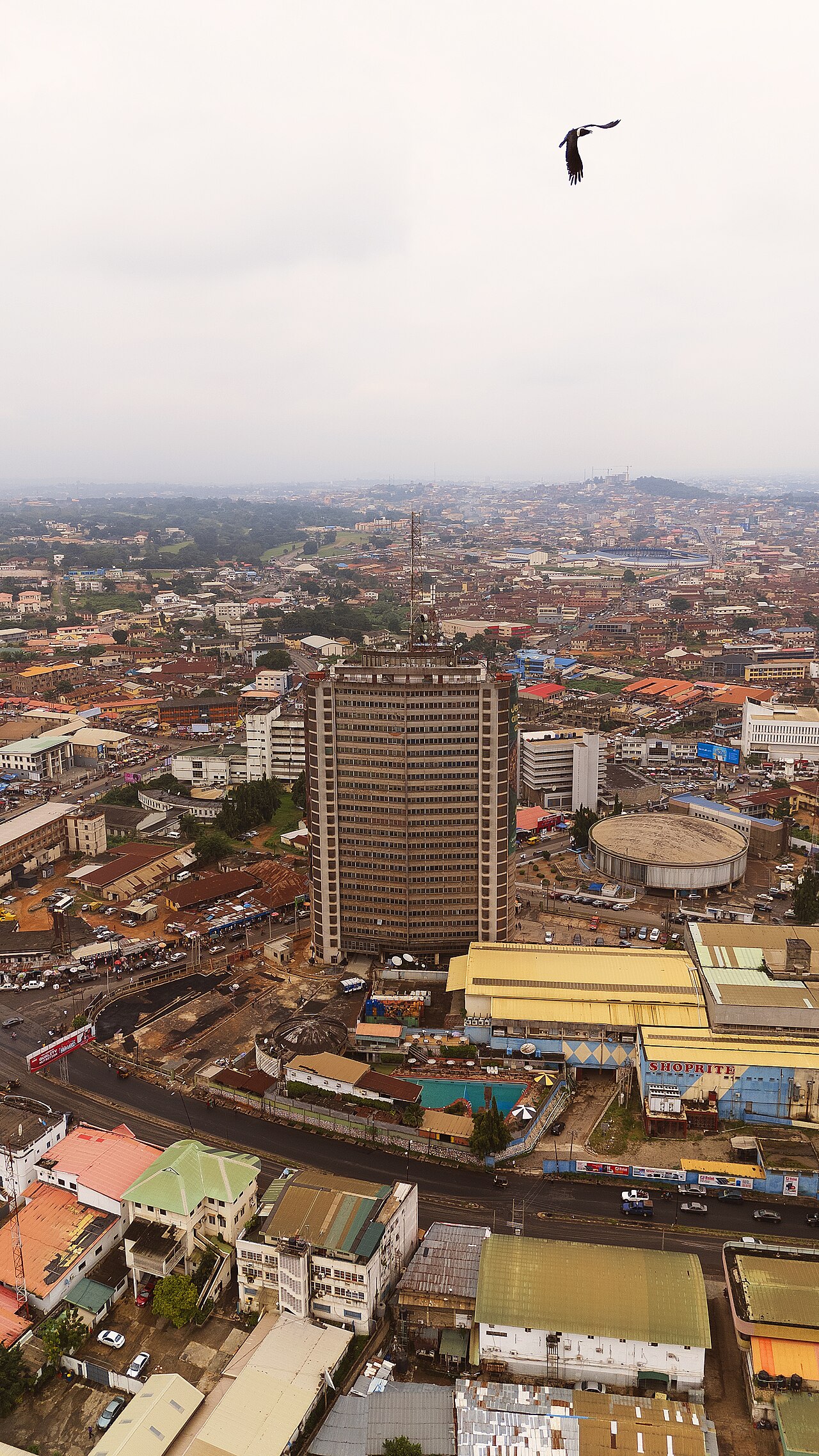
A great Yoruba city about 120 km northeast of Lagos, the largest city in Nigeria by area. At independence in 1960 it was the country's most populous city, and it is home to the University of Ibadan, founded in 1948 as Nigeria's first university college.
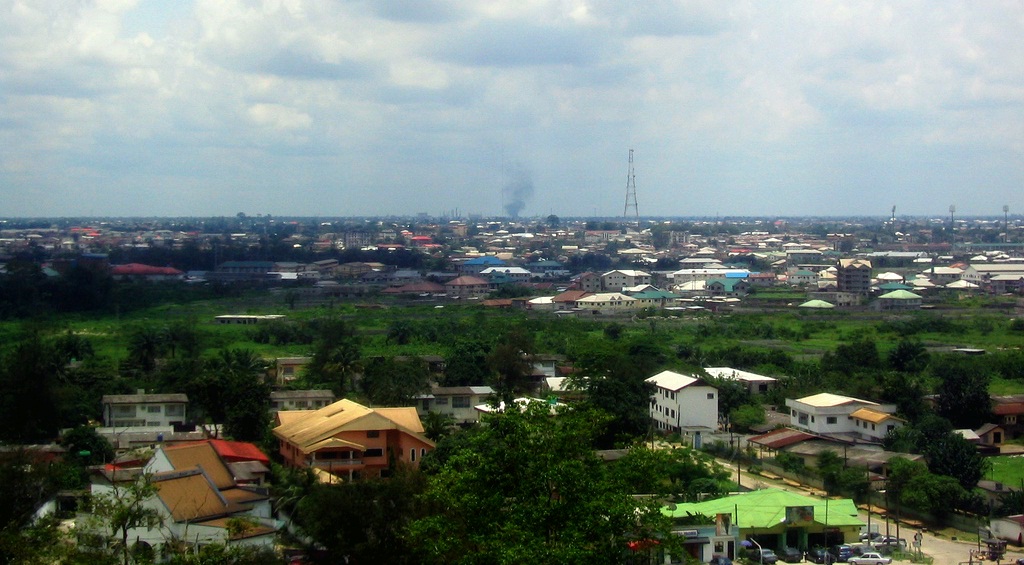
A port city on the Bonny River, founded by the British in 1912 to ship coal from Enugu. Since Nigeria's first crude oil was exported from here in 1958, it has been the centre of the oil industry.
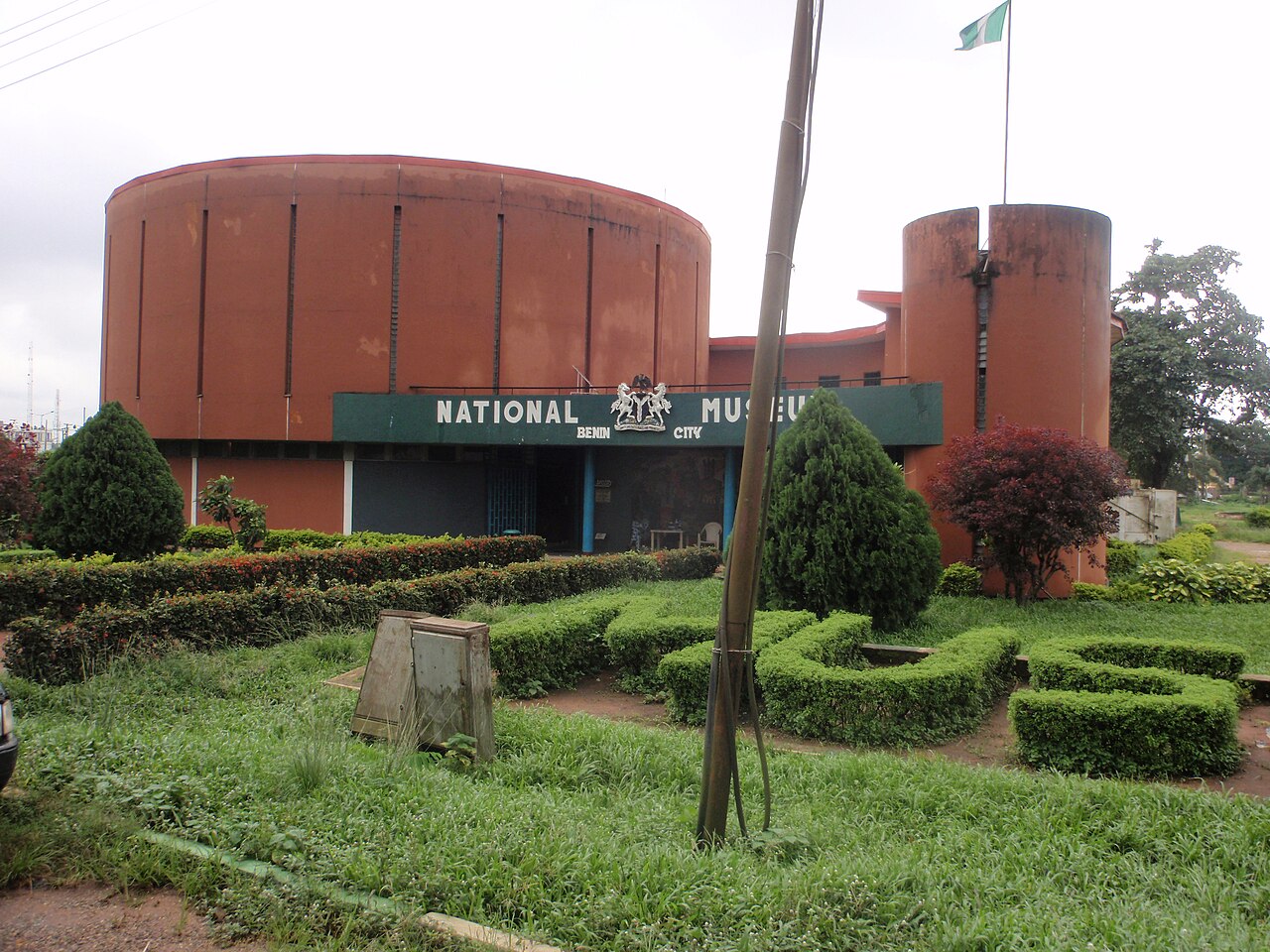
The ancient capital of the Kingdom of Benin, once surrounded by huge earthen walls and moats. It is still the seat of the Oba of Benin, one of the oldest continuing monarchies in the world, and Igun Street is famous for its bronze casters.
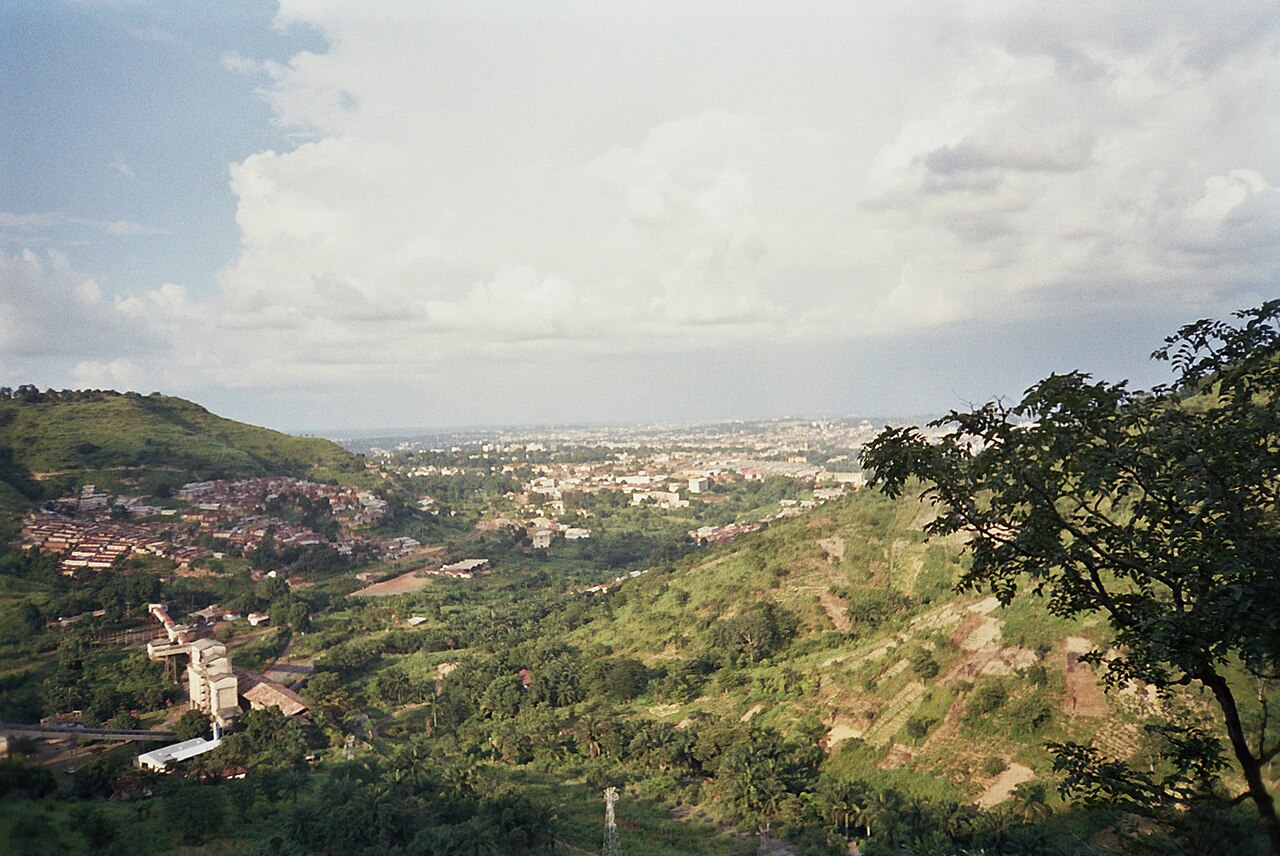
A city at the foot of the Udi escarpment in the Igbo southeast, whose name means 'hill top'. It grew up after coal was found here in 1909, which gave it the nickname Coal City.
An old port near the Cross River, home of the Efik people, known as one of Nigeria's cleanest and greenest cities. Its carnival, an old tradition given new life in 2004, fills the streets with costumed dancers every December.
A city on the high Jos Plateau, about 1,200 m above sea level, with a cooler climate than most of Nigeria. It grew in colonial times as a centre of tin mining, and the famous Nok terracottas were first found in this region.
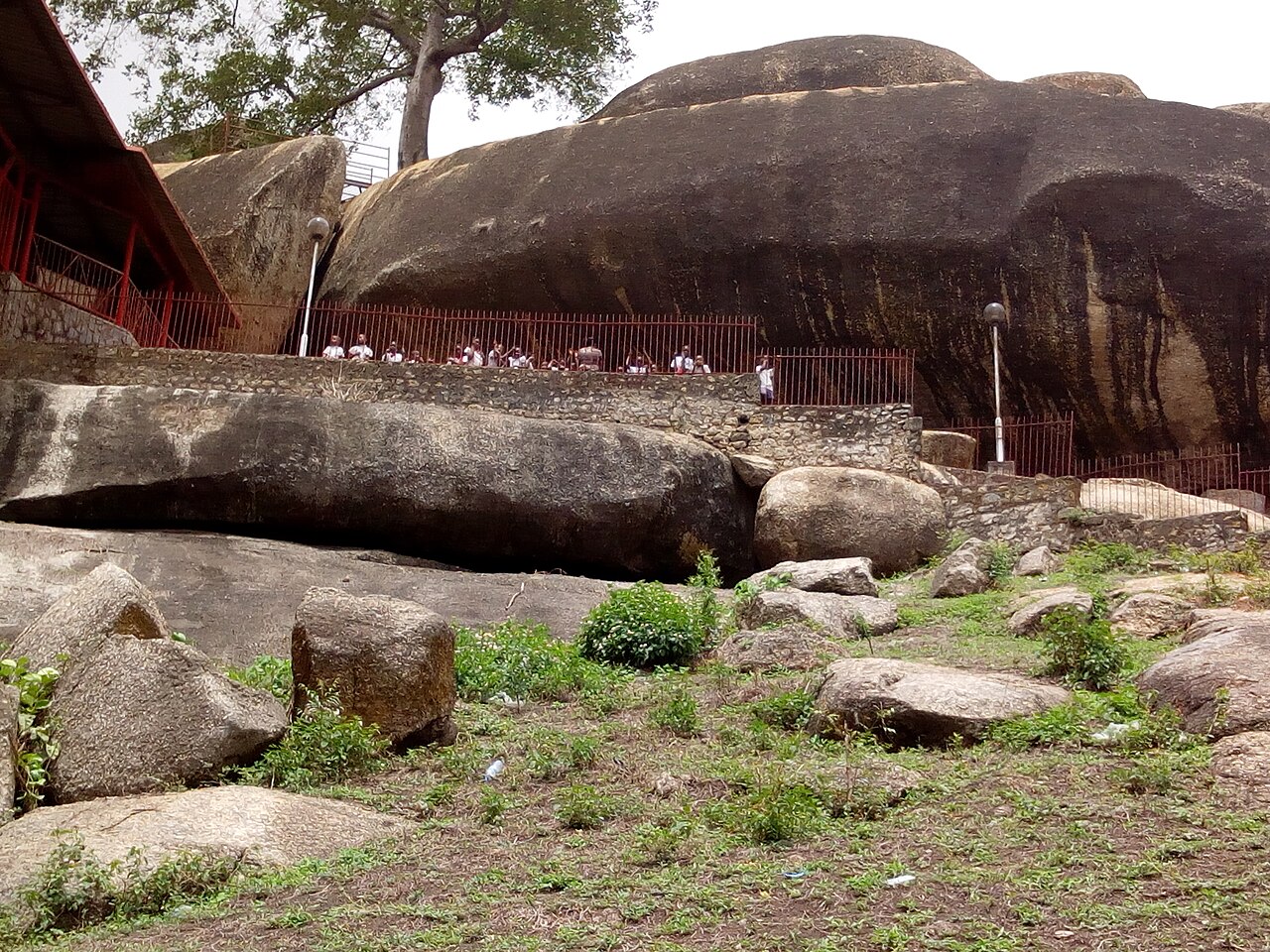
A Yoruba city on the Ogun River whose name means 'under the rock'. It grew around Olumo Rock, where the Egba people found shelter in the wars of the 1800s. Cotton, rice and indigo dye have long been important to its trade.
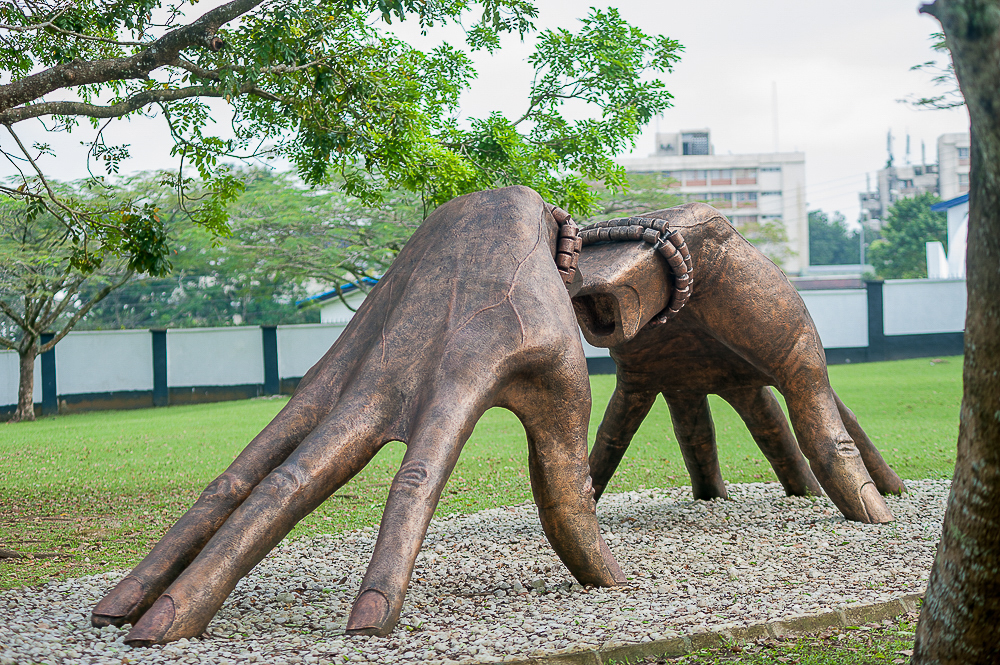
A Yoruba city on the Osun River, the capital of Osun State since 1991. It is known for its sacred grove, a UNESCO World Heritage Site, and as the home of the Mbari Mbayo Club of writers, artists and musicians.
A city on the northern edge of the Jos Plateau, founded in 1809 by Yakubu, one of the commanders of Usman dan Fodio. It is the nearest large city to Yankari Game Reserve, about 110 km away by road.
A huge granite outcrop that rises about 400 m above the surrounding land at the edge of Abuja. The Presidential Complex, the National Assembly and the Supreme Court stand at its foot, so 'Aso Rock' is also used as a name for the seat of government.
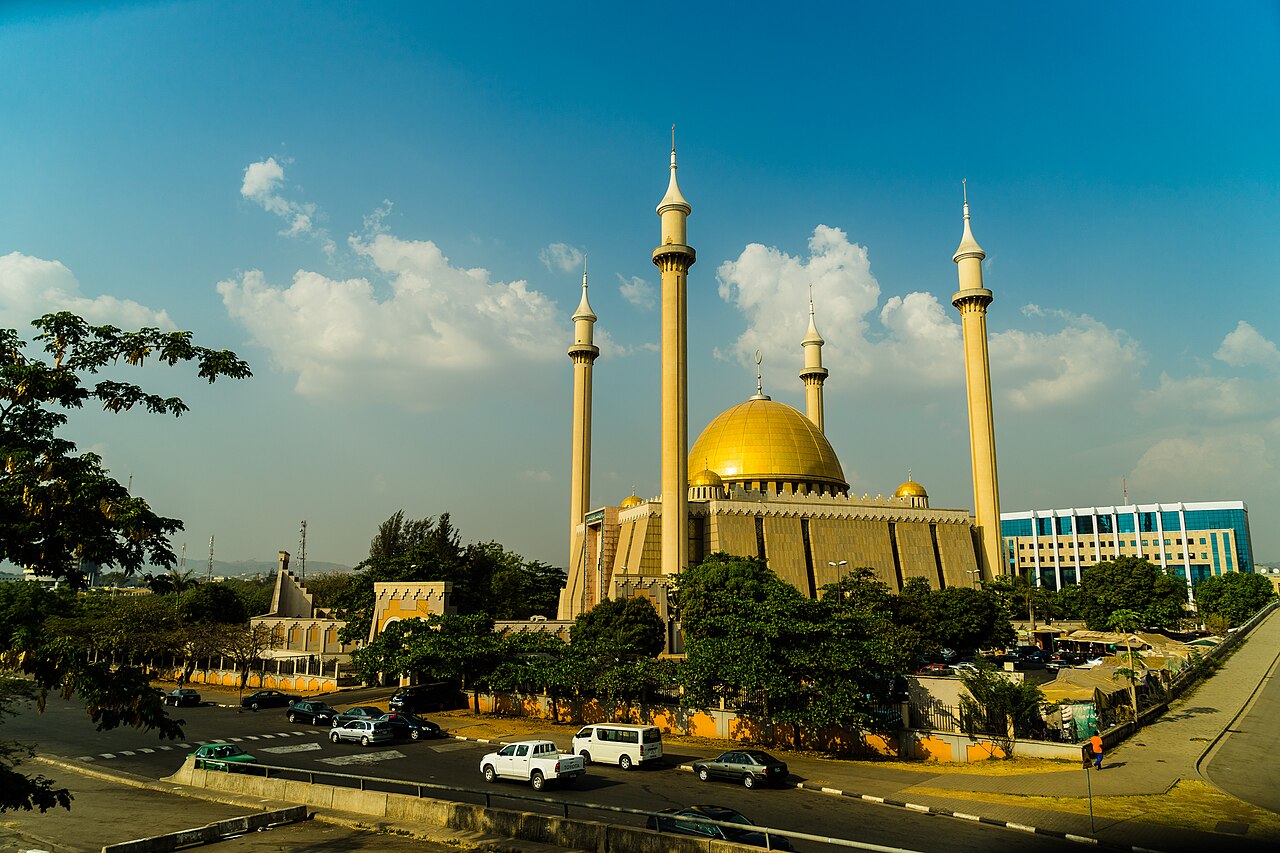
Nigeria's national mosque, with a golden dome and tall minarets, built in 1984 on Independence Avenue, across from the National Christian Centre. Visitors who are not Muslim may enter outside the times of congregational prayer.
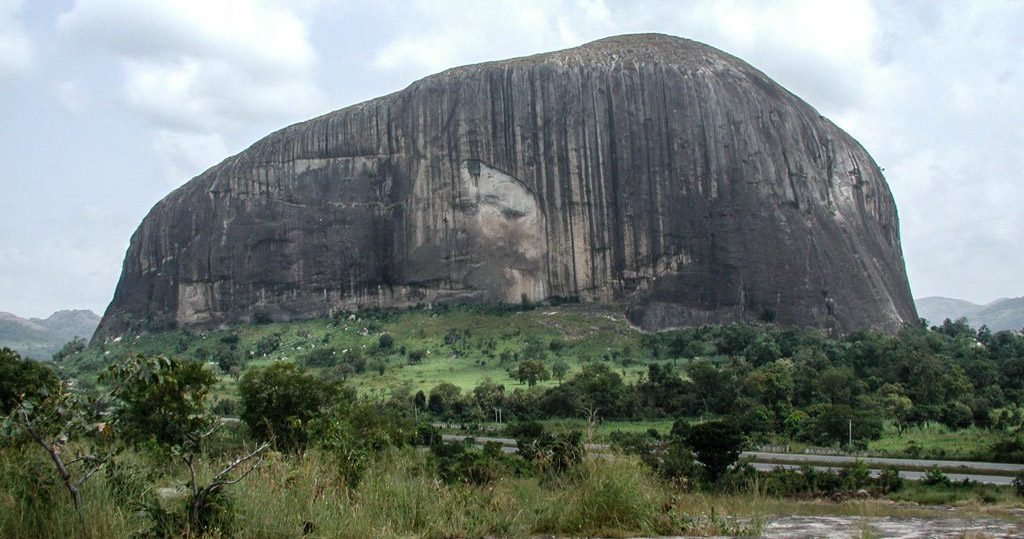
A giant dome of rock that rises to about 725 m above sea level beside the road from Abuja to Kaduna, at Madalla in Niger State, northwest of Abuja. It appears on the 100 naira note.
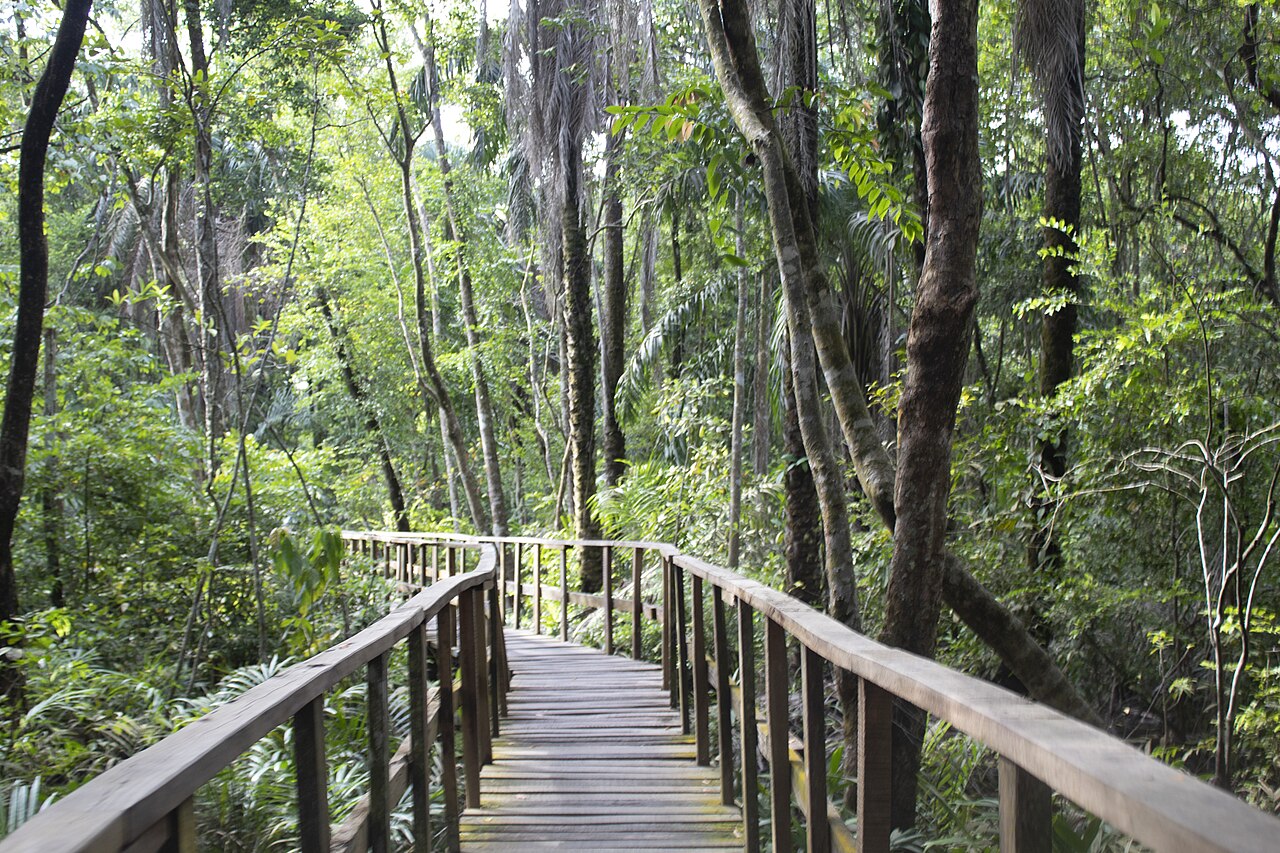
A 78-hectare nature reserve on the Lekki Peninsula in Lagos, opened in 1990 to protect a piece of the coastal wetland and forest. Raised wooden walkways lead through swamp and savanna where monkeys, monitor lizards and many birds live, and one of the longest canopy walkways in Africa runs through the treetops.
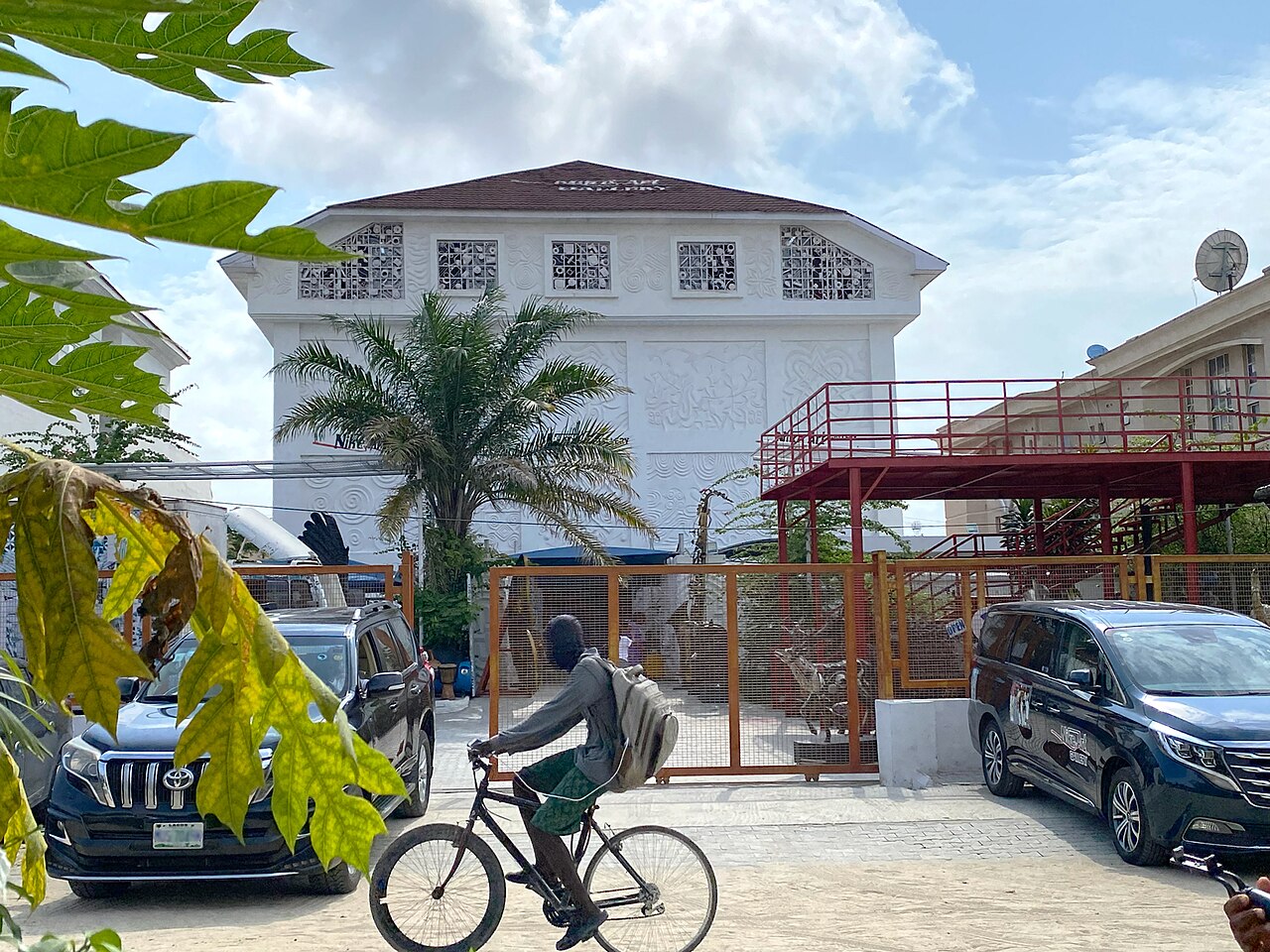
A large gallery in Lekki, Lagos, owned by the artist Nike Davies-Okundaye, with a collection of about 25,000 works of Nigerian and African art. Visitors can see paintings, sculptures, beadwork and textiles on four floors, and meet artists at work.
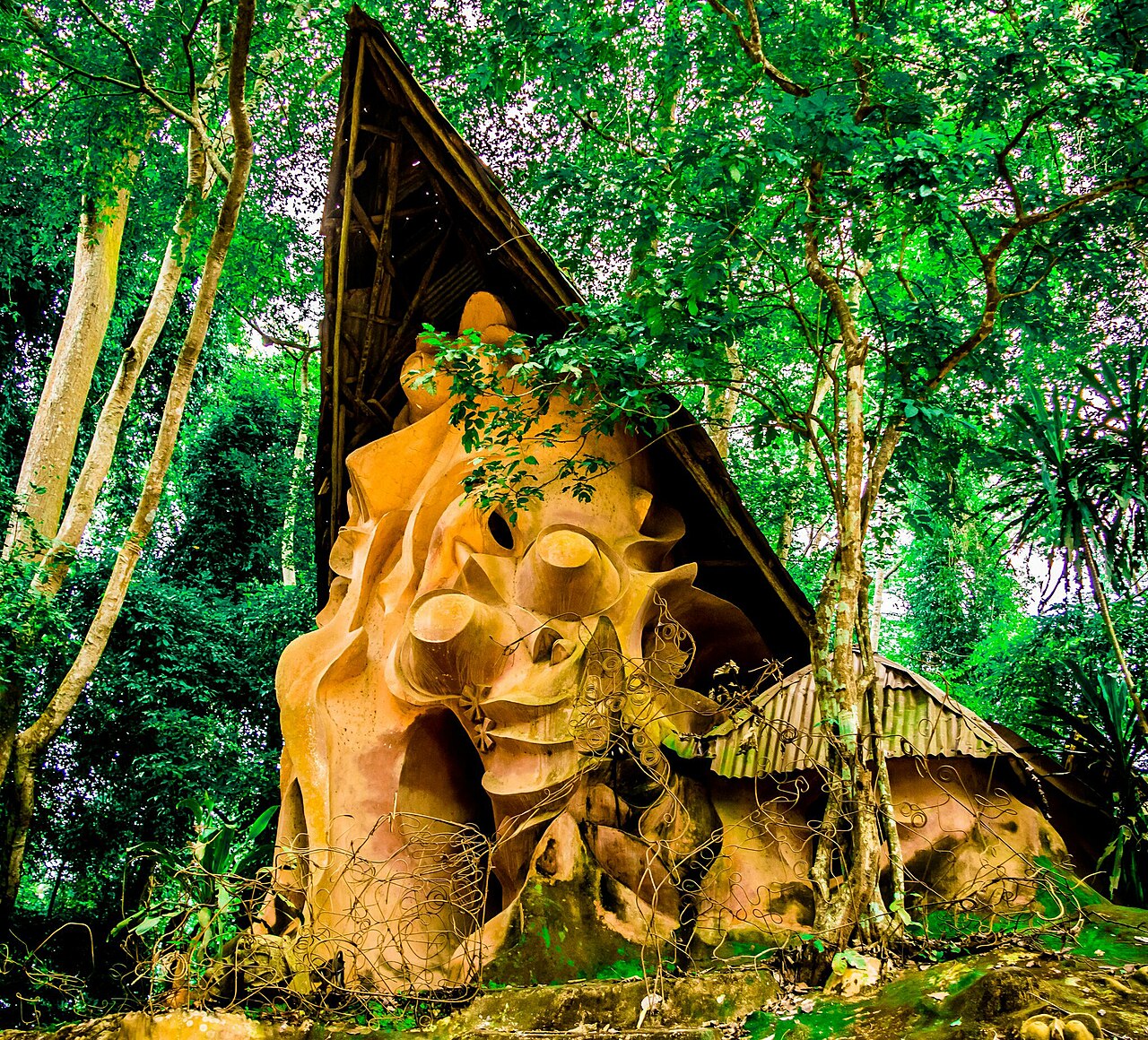
A dense forest along the Osun River just outside Osogbo, sacred to Osun, the Yoruba goddess of the river. Shrines and large sculptures stand among the trees, many made with the Austrian-born artist Susanne Wenger, who helped protect the grove. It became a UNESCO World Heritage Site in 2005, and every August it hosts the Osun-Osogbo Festival.
A granite outcrop in the middle of Abeokuta that gave shelter to the Egba people during the wars of the 1800s. Visitors climb steps or ride a lift past caves and shrines to the top, which gives a wide view over the city's rooftops.
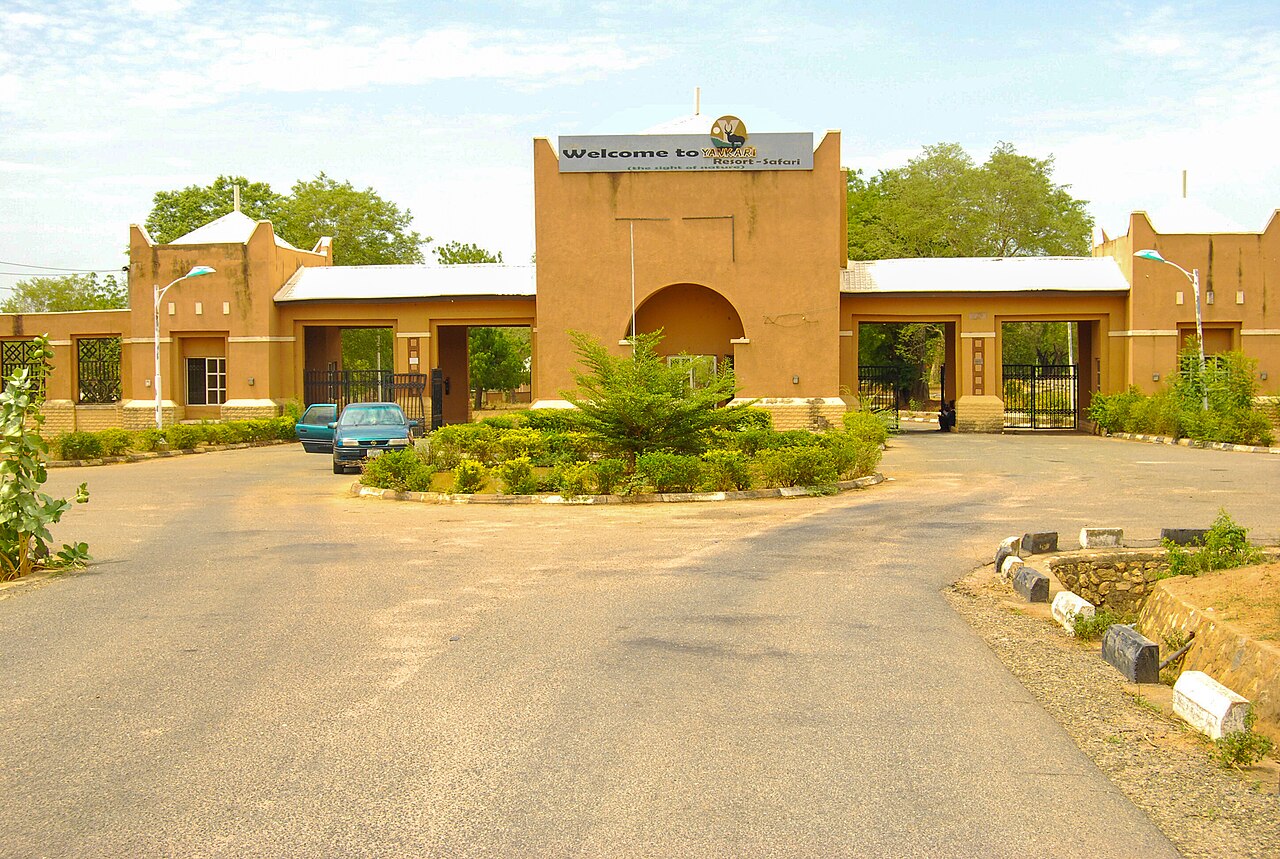
A large savanna reserve of about 2,244 km² in Bauchi State, about 110 km by road from the city of Bauchi, home to elephants, baboons, hippos and antelopes. Its best-known sight is the Wikki Warm Spring, a clear pool of warm water where visitors can swim.
Thick walls of earth that once ran around the old city of Kano, begun in the 1000s and finished in the 1300s, with gates that led to the trade routes. Parts of the walls and several gates still stand. They are on UNESCO's tentative list, but not on the World Heritage List.
The home of the Oba of Benin, in the centre of Benin City. The old palace was destroyed in the British attack of 1897, when the Benin Bronzes were taken from it, and the present palace was built after 1914. It remains the home of the Oba and the heart of Benin's royal traditions.
As of 2026 Nigeria has more people than any other country in Africa, more than 240 million, and it is one of the ten most populous countries in the world.
02
The name Nigeria comes from the Niger River. It was suggested in 1897 by the British journalist Flora Shaw, and the neighbouring country of Niger is named after the same river.
03
More than 500 languages are spoken in Nigeria, which makes it one of the most language-rich countries on Earth.
04
By the number of films made each year, Nollywood, the Nigerian film industry, is often ranked the second largest in the world: only India's film industry makes more, and Hollywood makes fewer.
05
Things Fall Apart, the 1958 novel by Chinua Achebe, has been translated into more than 50 languages and is one of the most widely read African novels.
06
In 1986 Wole Soyinka became the first Black African to win the Nobel Prize in Literature.
07
Afrobeat, a mix of West African music with jazz, funk and soul, was created in Nigeria in the late 1960s by the bandleader Fela Kuti.
08
In 1996 Nigeria became the first African country to win Olympic gold in football, beating Argentina 3 to 2 in the final in Atlanta.
09
Nigeria grows more yams than any other country, about two thirds of the world's harvest in 2020. The Igbo celebrate the first yams of the season with the New Yam Festival in August.
10
The terracotta heads of the Nok culture, made more than 2,000 years ago, are among the earliest known sculptures in Africa south of the Sahara.
11
Zuma Rock, a giant dome of rock near Abuja, appears on the 100 naira note.
12
Chappal Waddi, at 2,419 m, is the highest point in Nigeria and in all of West Africa.
13
In the Durbar festivals of the northern emirates, hundreds of horsemen in bright robes ride in a parade and charge at full speed towards the emir, then stop and salute him.
14
As of 2026 Nigeria has two UNESCO World Heritage Sites: the Sukur Cultural Landscape, added in 1999, and the Osun-Osogbo Sacred Grove, added in 2005.
Yoruba is a tonal language: the accents show high and low tones, and a dot under a letter changes its sound (ẹ as in 'bed', ọ as in 'hot', ṣ as 'sh'). Pronunciation is written the way it sounds; the capital letters show where the stress goes. Audio is coming soon.
Basics
ẹ ṣéeh SHEHthank you (polite form, to elders or several people)
bẹ́ẹ̀ niBEH-eh-neeyes
Numbers
ọ̀kanAW-kahnone
méjìMAY-jeetwo
mẹ́taMEH-tahthree
Food and drink
omiOH-meewater
ẹjaEH-jahfish
ataAH-tahpepper, chilli
iṣuEE-shooyam
iyánee-YAHNpounded yam
ẹ̀fọ́EH-fawleafy vegetables, greens
Family
bàbáBAH-bahfather
ìyáee-YAHmother
ọmọAW-mawchild
People
ọbaAW-bahking, monarch (English uses it too: the Oba of Benin)
In Hausa (Harshen Hausa). The most widely spoken language of northern Nigeria and a common language of trade across much of West Africa. Hausa has tones and long and short vowels; the spelling is a good guide.
Sannu!
SAN-noo
Hello!
A simple greeting at any time of day
Ina kwana?
ee-NAH KWAH-nah
Good morning (literally 'How did you sleep?')
Greeting someone in the morning
Lafiya lau.
lah-FEE-yah LOW
Fine, in good health.
Answering almost any greeting
Barka da yamma.
BAR-kah dah YAHM-mah
Good evening.
Greeting someone in the afternoon or evening
Sannu da zuwa.
SAN-noo dah ZOO-wah
Welcome (literally 'greetings on your arrival').
Welcoming a guest
Sannu da aiki.
SAN-noo dah EYE-kee
Well done on your work.
Greeting someone who is working
Na gode.
nah GOH-deh
Thank you.
Thanking someone
Don Allah.
don AHL-lah
Please (literally 'for God's sake').
Asking for something politely
Ba kome.
bah KOH-meh
It's nothing, you're welcome.
Answering 'thank you'
Suna na ...
SOO-nah nah
My name is ...
Introducing yourself
Ban gane ba.
ban GAH-neh bah
I don't understand.
When you have not understood
Ba na jin Hausa.
bah nah JEEN HOW-sah
I don't speak Hausa (literally 'I don't hear Hausa').
Explaining that you do not speak the language
Nawa ne?
NAH-wah neh
How much is it?
Shopping at a market
Ina makewayi yake?
ee-NAH mah-keh-WAH-yee YAH-keh
Where is the toilet?
Looking for the toilet
Na koshi.
nah KOH-shee
I'm full.
When your host offers you more food
Madalla!
mah-DAHL-lah
Excellent! Wonderful!
Showing you are pleased, often at the end of greetings
Safety differs a great deal from region to region. As of September 2026 the UK government advises against all travel to several northern and northeastern states and against all but essential travel to many others, including Kano, Bauchi and Plateau states. Read your own government's latest travel advice before planning any trip, and check again before you go.
Get your visa and yellow fever certificate before you fly
As of 2026 most visitors from Europe and North America need a visa, applied for online before travel; visas on arrival are no longer given. You must also show a certificate of yellow fever vaccination, and take advice on malaria tablets several weeks before you go.
Travel by day with a trusted driver
Roads can be poor and busy, and travelling after dark outside city centres is not advised. Most visitors hire a car with a driver through their hotel or hosts rather than using street taxis or long-distance buses.
Greet people properly, especially elders
Nigerians value greetings and respect for age. Say good morning and ask how someone is before any request. Traditionally Yoruba women kneel slightly and men bow or prostrate to greet elders; visitors are not expected to do this, but a small bow and a warm greeting are appreciated.
Use your right hand and dress modestly
Give, take and eat with your right hand. In the mainly Muslim north, and when visiting mosques, churches and shrines, cover your shoulders and knees, and during Ramadan do not eat or drink in public in the daytime.
Ask before taking photos
Ask people before you photograph them. Taking pictures of government or military buildings and airports can lead to arrest.
Carry cash in naira, carefully
Cards work in big hotels and many city shops, but markets and small places want naira in cash. Take out money in daylight at ATMs inside banks or hotels, keep valuables out of sight and never buy unlicensed local gin, which can contain dangerous methanol.
Emergencies
The emergency number in Nigeria is 112, for police, fire and ambulance. There is no national ambulance service, so good travel insurance that covers medical evacuation is important.
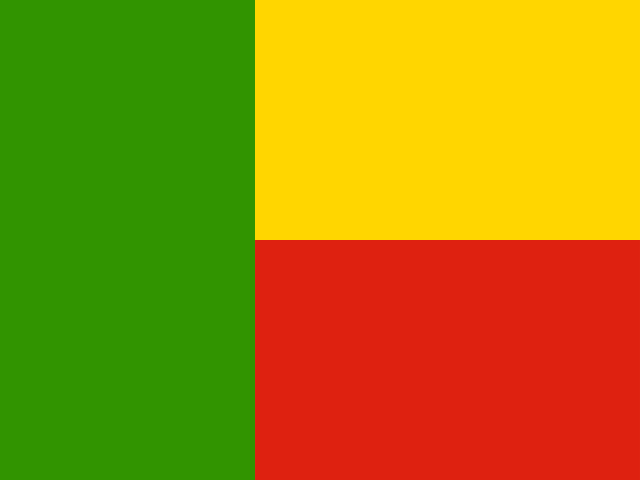 Benin
Benin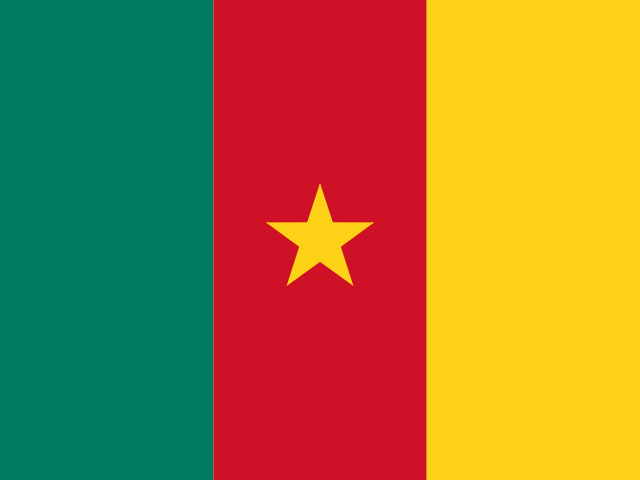 Cameroon
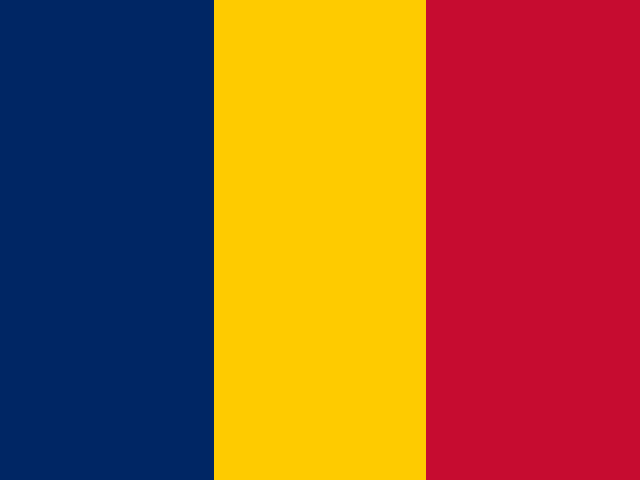 Chad
Chad Niger
Niger