More than seven thousand tropical islands, rice terraces carved into mountains, Spanish-era churches, warm hospitality and a respectful 'po' at the end of every polite sentence.
Your trip to Philippines
Ready for the trip?
10 questionsAbout 3 minutesNo timer
Explore Philippines
You have explored 0 of 9 parts. Scroll on to discover the rest.
Print the Philippines pack
A free large-print PDF. Choose what goes in: facts, map, history, dishes and recipes, phrases, fun facts, a quiz with or without answers. Made for clubs, care homes, libraries and family afternoons.
The Philippines is an island country in Southeast Asia, in the western Pacific Ocean. It is made up of about 7,641 islands, grouped into three main parts: Luzon in the north, the Visayas in the middle and Mindanao in the south. The South China Sea lies to the west, the Philippine Sea to the east and the Celebes Sea to the south. The country sits on the Pacific Ring of Fire, so it has many volcanoes and earthquakes, and typhoons cross it every year.
Austronesian seafarers settled the islands thousands of years ago, and trading towns grew up along the coasts, dealing with China, Borneo and the rest of Southeast Asia. Islam reached the southern islands in the 1300s and 1400s. Spain ruled most of the islands from 1565 until 1898 and named them after King Philip II; that is why most Filipinos are Catholic and why so many words, names and dishes sound Spanish. The United States governed the country from 1898, and the Philippines became fully independent on 4 July 1946.
According to the 2024 census, about 113 million people live in the Philippines. Manila is the capital, but its neighbour Quezon City, in the same Metro Manila area, has more people. Filipino, based on Tagalog, and English are the official languages, and well over a hundred other languages are spoken across the islands, among them Cebuano, Ilocano and Hiligaynon. About four in five Filipinos are Roman Catholic, and Muslims, most of whom live in Mindanao and nearby islands, are the largest religious minority.
CapitalManila
Largest cityQuezon City, in Metro Manila
PopulationAbout 113 million (2024 census)
Official languagesFilipino and English
CurrencyPhilippine peso (₱)
AreaAbout 300,000 km²
IslandsAbout 7,641
GovernmentPresidential republic; the president is elected for a single six-year term
Highest mountainMount Apo, 2,954 m, on Mindanao
Longest riverThe Cagayan River, about 505 km, on Luzon
NeighboursNo land borders. Across the sea: Taiwan, Japan, Palau, Indonesia, Malaysia, Vietnam and China
People have lived on these islands for tens of thousands of years; the oldest modern human remains were found in the Tabon Caves on Palawan. Austronesian settlers arrived from the north by about 2200 BC, and coastal chiefdoms traded with China and the kingdoms of Southeast Asia. Spain arrived in the 1500s and stayed more than three centuries, the United States followed, and the 20th century brought war, independence, dictatorship and a peaceful revolution that the world watched on television.
AD 900
The Laguna Copperplate is inscribed
A thin copper plate dated to the year 900 records that a man's debt was forgiven. Written in Old Malay in the Kawi script, it is the oldest known dated document found in the Philippines. It was discovered by a labourer near a river in Laguna province in 1987.
1521
The Battle of Mactan
Ferdinand Magellan, a Portuguese captain sailing for Spain, reached the islands in March 1521 and planted a cross in Cebu. On 27 April he attacked the island of Mactan and was killed by the forces of the local chief Lapulapu, who is remembered today as a national hero. Magellan's surviving crew went on to complete the first voyage around the world.
1565
Legazpi lands in Cebu
The Spanish commander Miguel López de Legazpi crossed the Pacific from Mexico and founded the first Spanish settlement in the islands, in Cebu. The same year a ship found the way back across the Pacific, opening the Manila galleon route to Acapulco that ran until 1815.
1571
Manila becomes the Spanish capital
After defeating Rajah Sulayman, the ruler of the trading town of Maynila, Legazpi made Manila the capital of the Spanish East Indies on 24 June 1571. The walled city of Intramuros grew up on the site, and silver from Mexico was traded there for Chinese silk and porcelain.
1872
Three priests are executed
The Filipino priests Mariano Gómez, José Burgos and Jacinto Zamora, remembered together as Gomburza, were executed by the Spanish authorities after a mutiny at Cavite. They had campaigned for equal rights for Filipino priests, and their deaths stirred a new national feeling.
1892
The Katipunan is founded
Andrés Bonifacio and other nationalists founded the Katipunan, a secret society that aimed to win independence from Spain by armed revolution. When the Spanish discovered it in August 1896, the Philippine Revolution began.
1896
José Rizal is executed
José Rizal, an eye doctor and writer whose novels Noli Me Tángere and El Filibusterismo exposed the abuses of colonial rule, was shot by a Spanish firing squad in Manila on 30 December 1896. He is honoured as the national hero, and 30 December is Rizal Day.
1898
Independence is declared at Kawit
On 12 June 1898 the revolutionary leader Emilio Aguinaldo proclaimed independence from Spain at his house in Kawit, Cavite. At the end of the same year, after the Spanish-American War, Spain handed the islands to the United States in the Treaty of Paris.
1899
The war with the United States begins
Fighting broke out between the Philippine revolutionary army and American troops in February 1899. The United States declared the war over in 1902, though resistance went on in some areas for years, and the islands became an American colony.
1935
The Commonwealth is established
The Commonwealth of the Philippines was set up as a self-governing stage on the way to full independence, with its own president and constitution. In 1937 its government chose Tagalog as the basis of a national language.
1942
The Bataan Death March
Japan invaded the Philippines in December 1941. After the fall of Bataan in April 1942, about 66,000 Filipino and 12,000 American prisoners were forced to march north to prison camps, and thousands died on the way. The Japanese occupation lasted until 1945, and an estimated one million Filipinos died in the war.
1946
Full independence from the United States
On 4 July 1946 the United States recognised the independence of the Republic of the Philippines in the Treaty of Manila. Since 1962 the country has celebrated Independence Day on 12 June instead, the date of the 1898 declaration, and a law of 1964 made the change official.
1972
Martial law is declared
In September 1972 President Ferdinand Marcos placed the whole country under martial law, near the end of his last term allowed by the constitution. Congress was closed and thousands of opponents were arrested. Martial law was formally lifted in 1981, but Marcos kept almost all of his powers until 1986.
1986
The People Power Revolution
After the murder of opposition senator Benigno Aquino Jr. in 1983 and a disputed election, huge crowds gathered peacefully on EDSA, a main avenue in Metro Manila, from 22 to 25 February 1986. Marcos left the country, and Corazon Aquino became president. A new constitution followed in 1987.
1991
Mount Pinatubo erupts
On 15 June 1991 Mount Pinatubo, on Luzon, produced the second-largest volcanic eruption of the 20th century. The ash cloud rose about 40 km high, and thanks to scientists' warnings some 60,000 people had left the area around the volcano before the main blast, which saved thousands of lives.
2013
Typhoon Haiyan strikes
In November 2013 Typhoon Haiyan, called Yolanda in the Philippines, one of the most powerful storms ever recorded, hit the Visayas. At least 6,300 people died in the Philippines, most of them in Eastern Visayas, the city of Tacloban on Leyte was among the worst hit, and help came from around the world.
A Filipino meal is built around steamed rice. With it come one or more ulam, the dishes eaten with rice: a stew, grilled fish, a sour soup or stir-fried vegetables, all set on the table at once and shared. The usual tools are a spoon in the right hand and a fork in the left, with the side of the spoon used for cutting, and on festive occasions food may be laid out on banana leaves and eaten by hand, a style called kamayan. Filipinos love sour, salty and sweet flavours together, with vinegar, calamansi (a small local lime), fish sauce and shrimp paste on hand for seasoning at the table. The cooking shows its history: Malay roots, Chinese noodles and spring rolls, Spanish stews and custards, and American snacks. Between meals comes merienda, an afternoon snack of rice cakes, noodles or sweets.
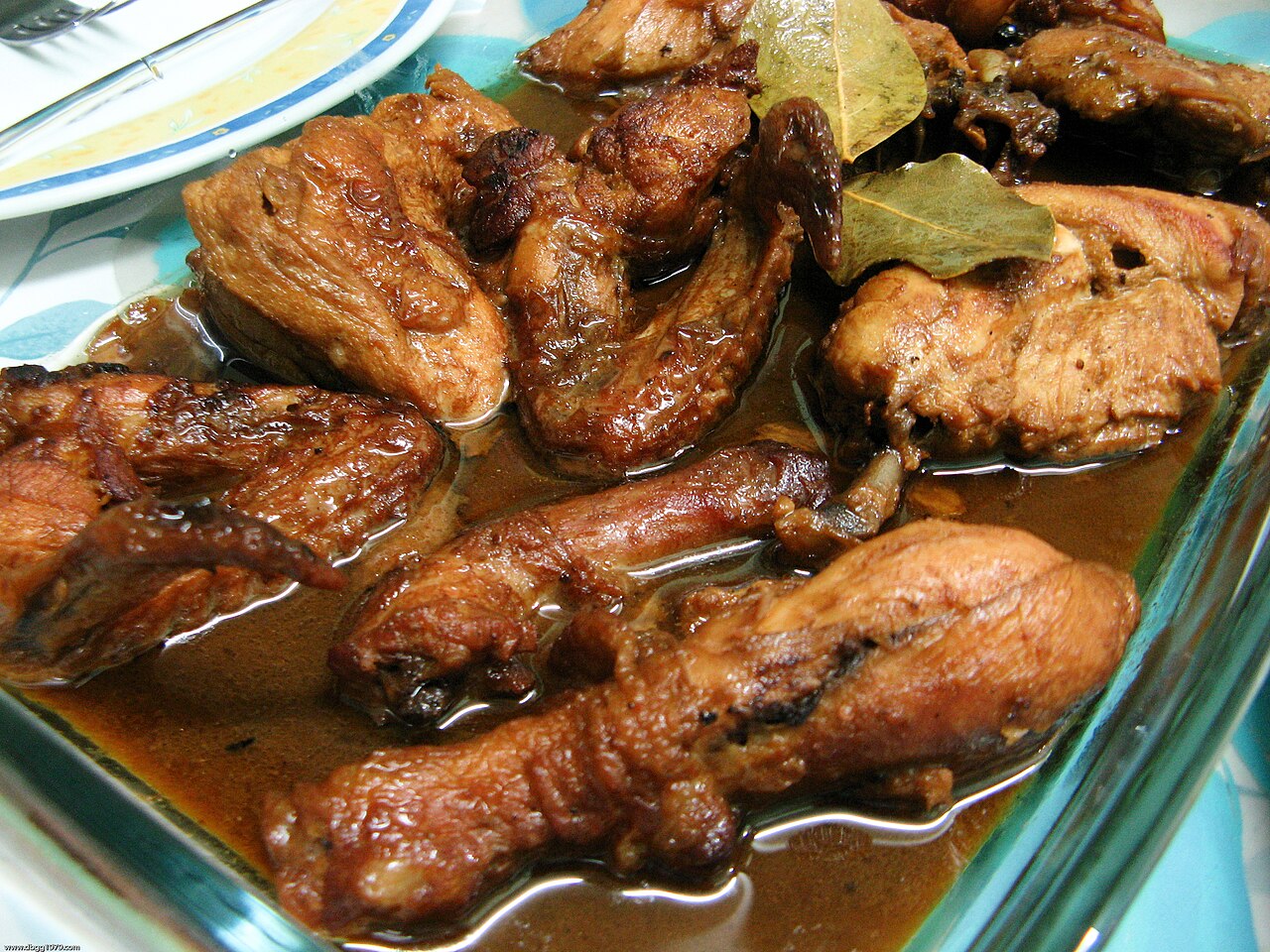
Often called the unofficial national dish. Chicken or pork is simmered in vinegar, soy sauce, lots of garlic, bay leaves and black peppercorns until tender, then sometimes browned in the pan. The vinegar helped the dish keep well in the tropical heat, and it tastes even better the next day.
The name comes from the Spanish word adobar, 'to marinate', but the Filipino way of cooking meat in vinegar is older than Spanish rule.
See the recipe
Serves 4
1 h
Ingredients
1 kg chicken thighs and drumsticks, or pork belly cut into 4 cm pieces
120 ml cane or white vinegar
80 ml soy sauce
1 whole head of garlic, cloves peeled and crushed
3 bay leaves
1 teaspoon whole black peppercorns
250 ml water
1 tablespoon oil
1 teaspoon brown sugar (optional)
Method
Put the meat, soy sauce, half the garlic, bay leaves and peppercorns in a pot and leave for 30 minutes if you have time.
Add the water and vinegar. Bring to the boil without stirring for the first few minutes, so the sharp smell of the vinegar cooks off.
Cover and simmer over low heat for 30 to 40 minutes, until the meat is tender and cooked through.
Lift out the meat. Heat the oil in a frying pan, fry the rest of the garlic until golden, then brown the meat on all sides.
Return the meat to the pot, add the sugar if you like, and boil the sauce for a few minutes until it thickens a little. Serve with plenty of steamed rice.
All over the Philippines, especially the Tagalog region
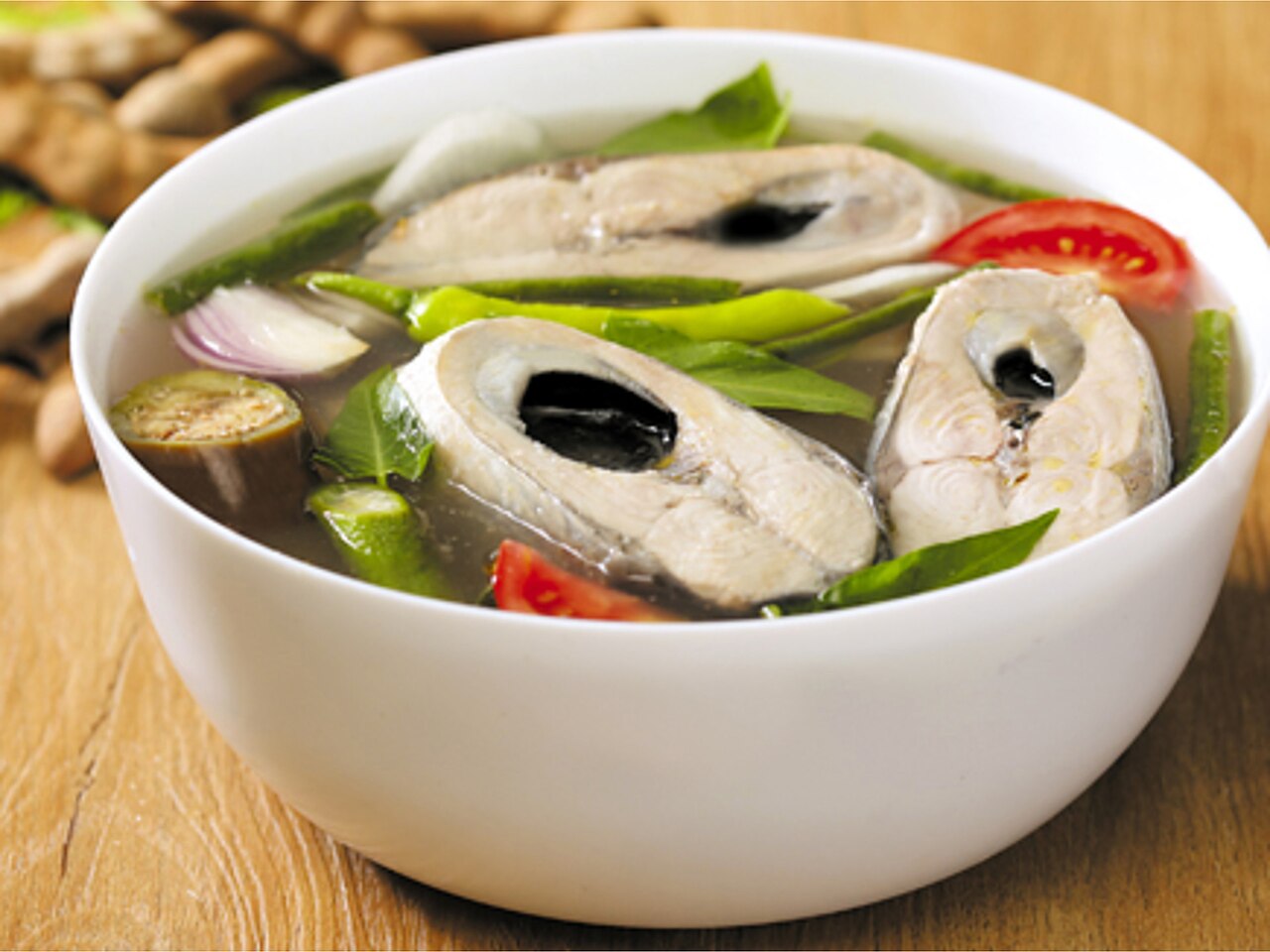
A sour soup, most often made with tamarind, with pork, prawns or fish and vegetables such as water spinach, radish, long beans, okra and tomato. The sourness is refreshing in the heat, and it is eaten with rice, often with a little fish sauce on the side.
Tamarind is the classic souring agent, but cooks also use unripe mango, guava or the small bilimbi fruit instead.
See the recipe
Serves 4
1 h 30 min
Ingredients
600 g pork ribs or pork belly, cut into pieces
1.5 litres water
1 onion, quartered, and 2 tomatoes, quartered
About 200 g fresh tamarind pods, or 2 tablespoons tamarind paste, or a sachet of sinigang soup mix
1 small white radish (daikon), sliced
A handful of long beans or green beans, cut into 5 cm pieces
4 okra and 1 aubergine, sliced
A large handful of water spinach (kangkong) or spinach
2 green chillies (optional) and fish sauce to taste
Method
Put the pork, water, onion and tomatoes in a large pot, bring to the boil and skim off the foam. Simmer for about 1 hour, until the pork is tender.
If using fresh tamarind, boil the pods in a little water for 10 minutes, mash them, and push the pulp through a sieve into the soup. Otherwise stir in the paste or soup mix.
Add the radish and simmer for 5 minutes, then add the beans, okra, aubergine and chillies and cook for 5 minutes more.
Season with fish sauce until the soup is pleasantly sour and salty.
Turn off the heat, add the water spinach and let it wilt for a minute. Serve hot with steamed rice.
All over the Philippines; Cebu is especially famous for it
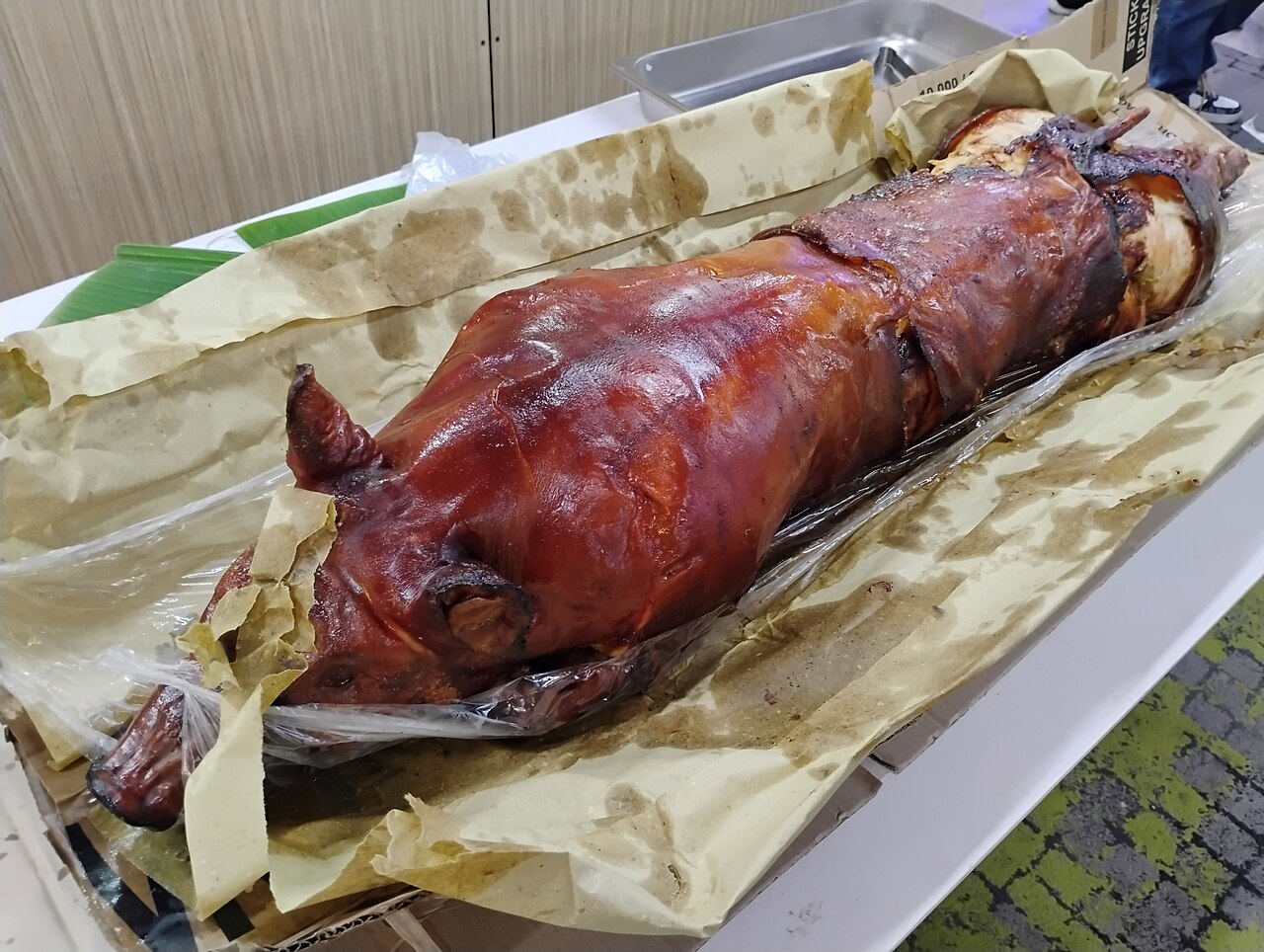
A whole pig roasted slowly over charcoal, turned by hand for hours until the skin is glassy and crisp. Lechon is the centrepiece of fiestas, weddings and Christmas. It is often served with lechon sauce, traditionally made from the roasted pig's liver, and many cooks stuff the pig with lemongrass, tamarind leaves and other herbs.
The American chef Anthony Bourdain declared that Cebu has the best roast pig.
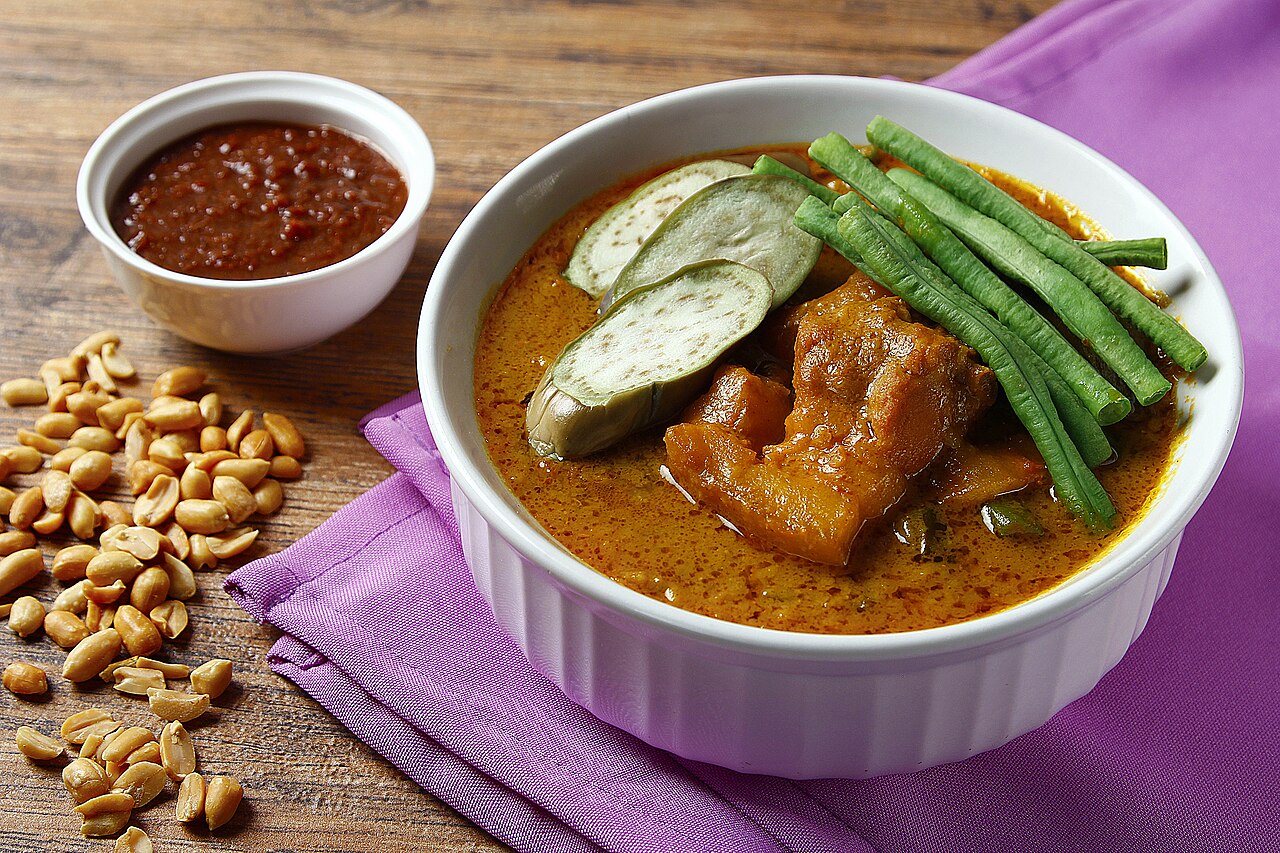
Oxtail and beef stewed until soft in a thick, golden sauce of ground roasted peanuts and toasted rice, coloured with annatto seeds, with aubergine, long beans and pak choi. The sauce is mild, so it is always served with bagoong, a salty shrimp paste, on the side.
Kare-kare is a classic of town fiestas and family celebrations.
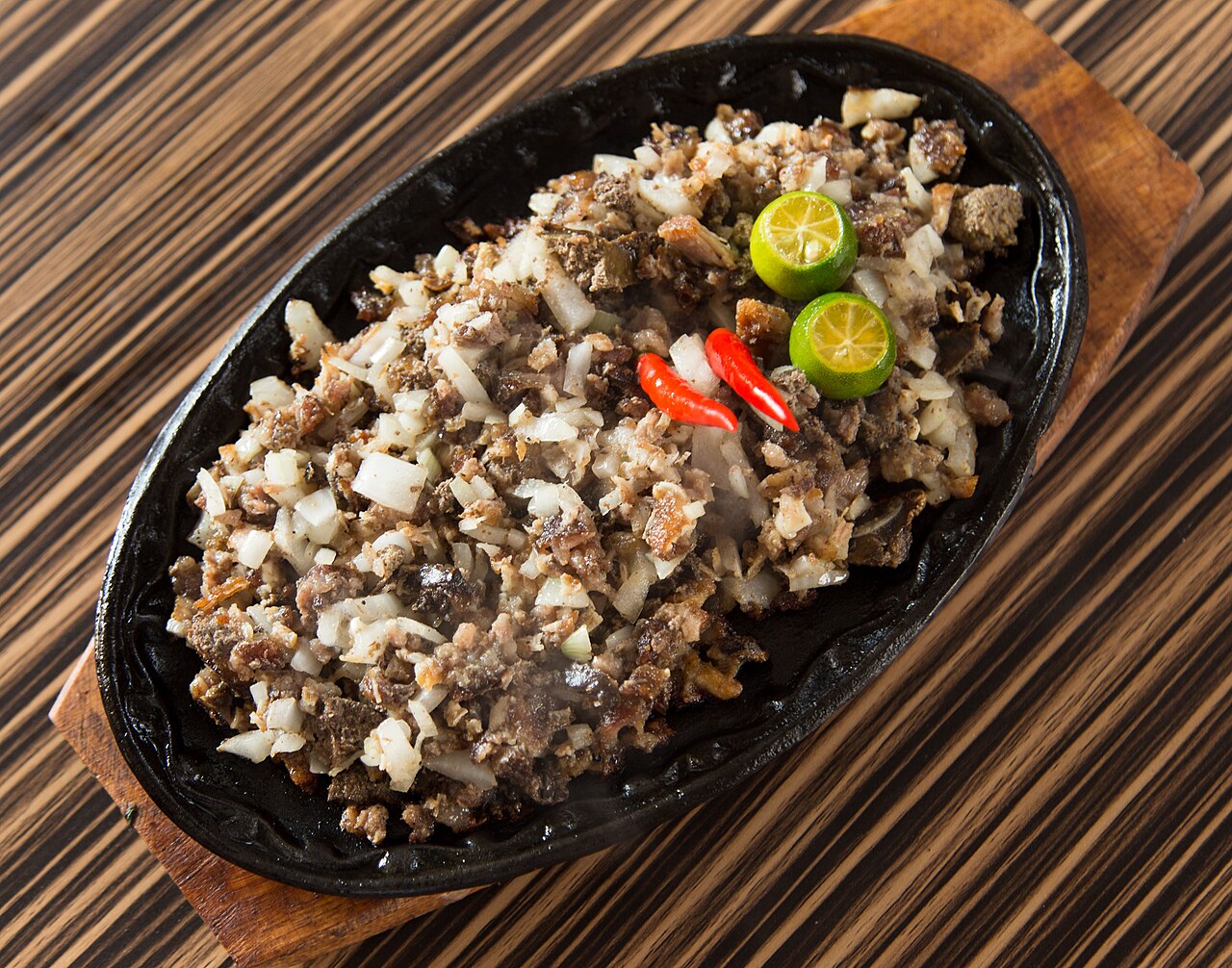
Chopped pork from the pig's head and ears, boiled, grilled and then fried with onions, chilli and calamansi, served sizzling on a hot iron plate, often with an egg cracked on top. It is loved as a dish with rice or as a snack with a cold drink.
The modern sizzling version was created in 1974 by Lucia Cunanan, known as Aling Lucing, at her restaurant in Angeles City.
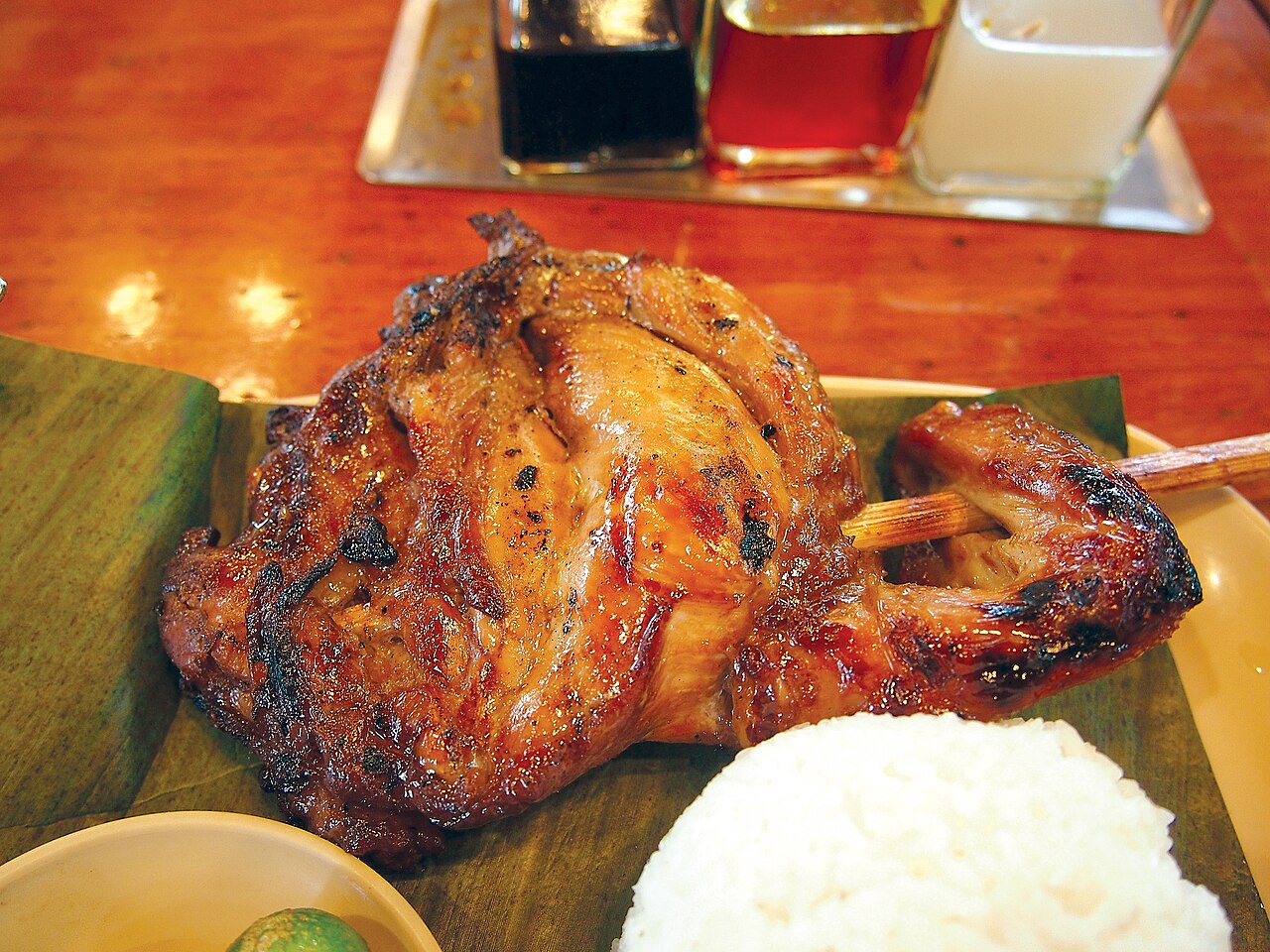
Chicken marinated in calamansi, coconut vinegar, black pepper and annatto, then grilled over hot coals and basted with the marinade, which gives it a golden orange colour. It is eaten with rice, a spoonful of chicken oil and a dip of soy sauce, calamansi and chilli vinegar.
Bacolod's version is a little sour, while Iloilo's is a little sweeter.
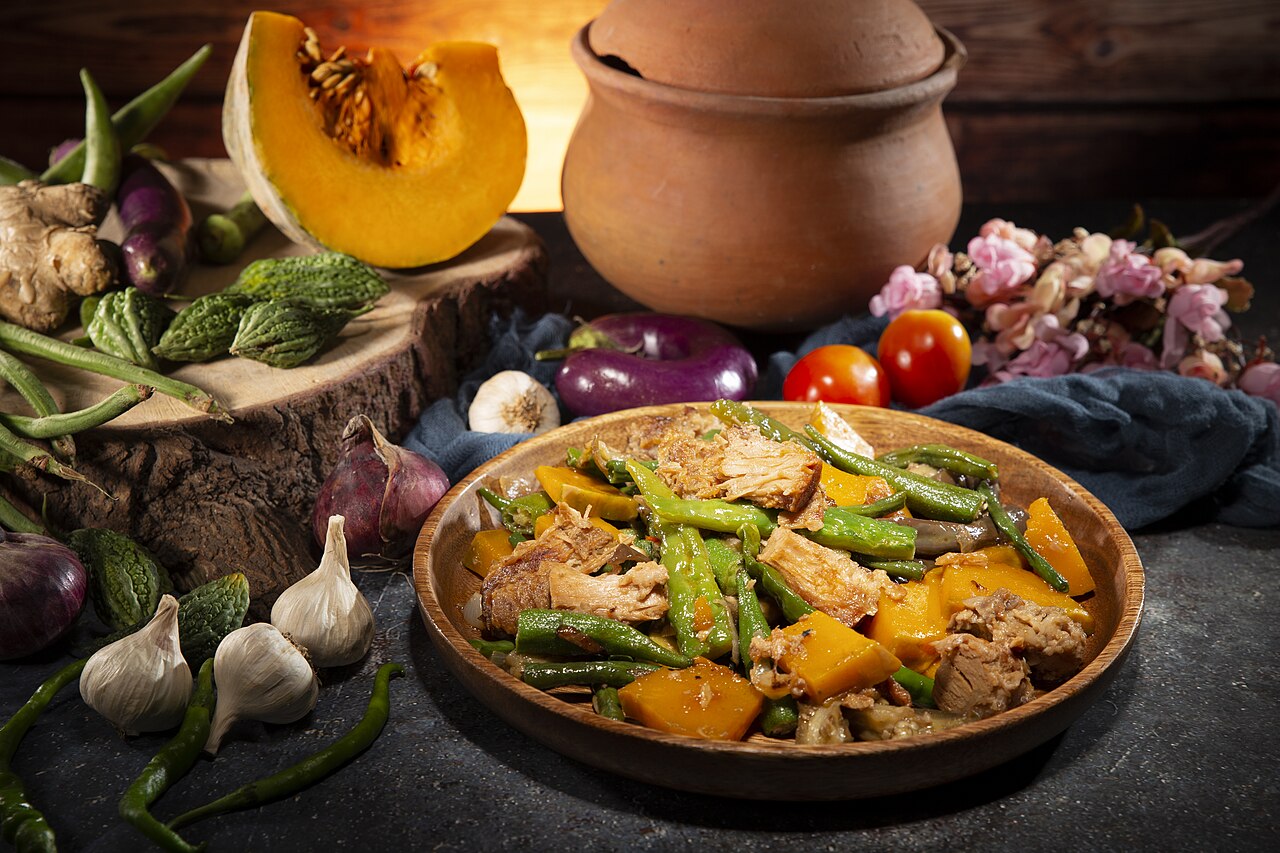
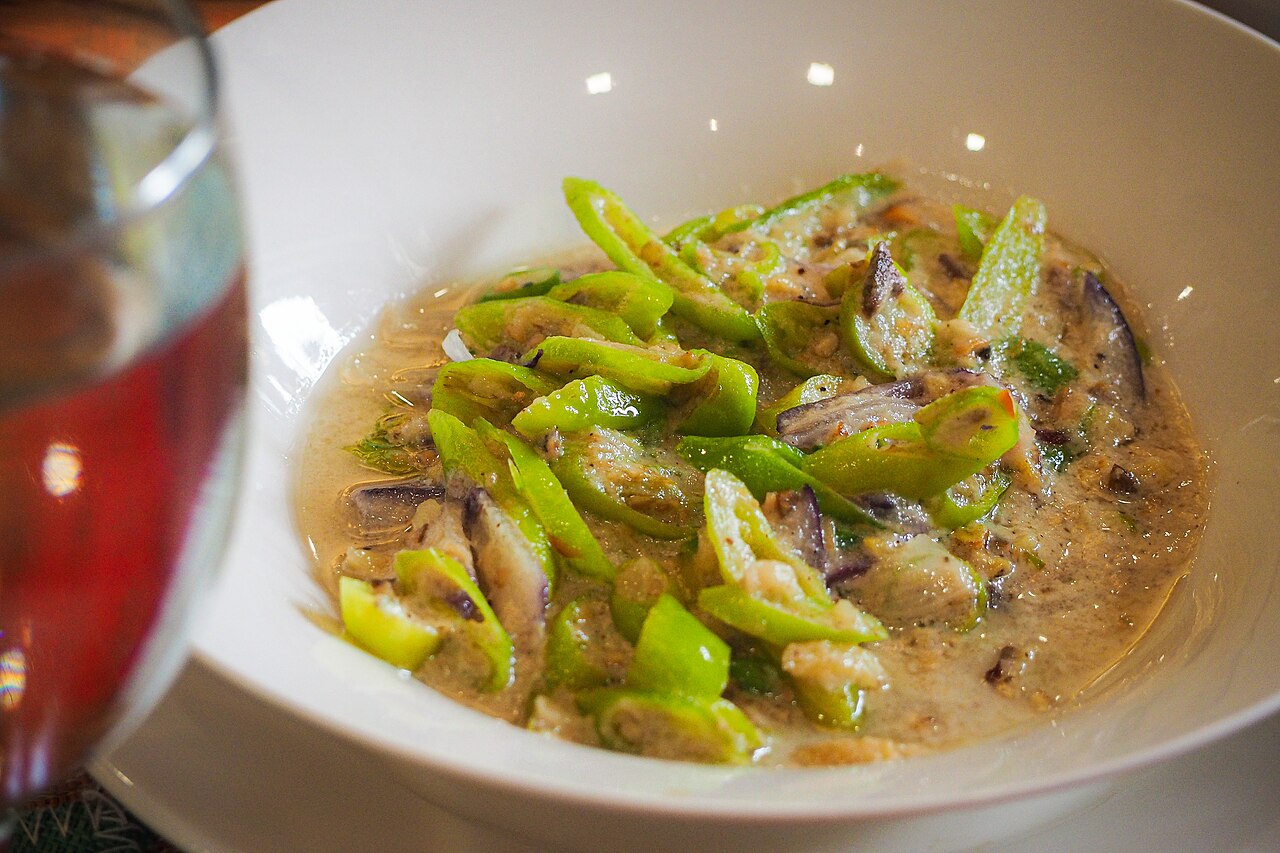
A vegetable stew of the Ilocano people: bitter melon, aubergine, okra, long beans and tomato, cooked gently with fermented fish sauce, sometimes with a little pork. The vegetables steam in their own juices and keep their shape.
The name comes from an Ilocano word meaning shrunk or shrivelled, because the vegetables are cooked until almost dry.
Cooked in Bicolano style; named in Manila in the 1970s
Pork stewed in coconut milk with shrimp paste, garlic, ginger and plenty of chillies, until the sauce is thick and creamy. Bicol, the region of Mayon Volcano, is famous for cooking with coconut milk and chilli.
It was named after the Bicol Express, a railway train that ran from Manila to Legazpi.
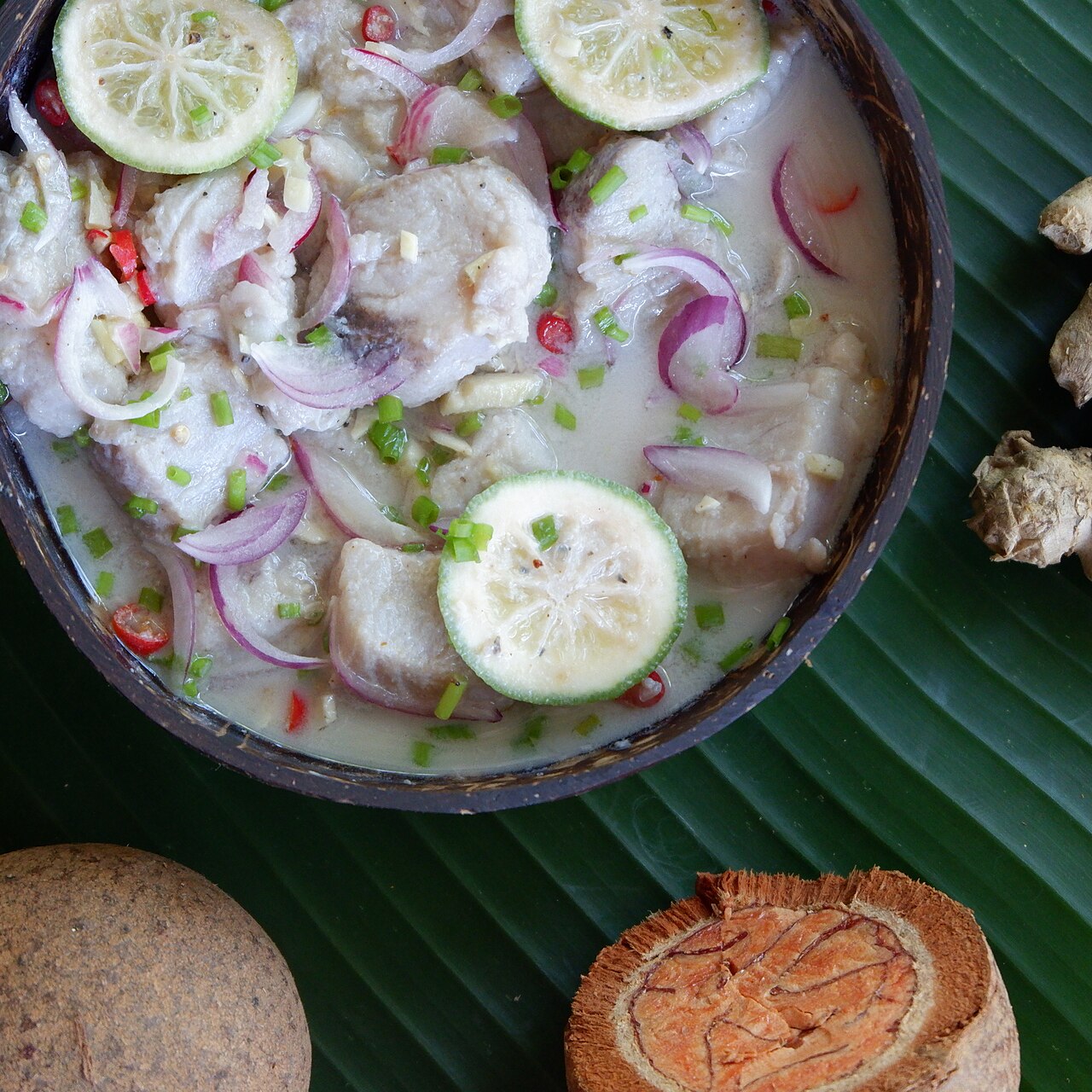
Fresh raw fish, such as tuna or mackerel, cut into cubes and 'cooked' in vinegar or calamansi juice with ginger, onion and chilli, sometimes with a little coconut milk. The acid firms and whitens the fish. Because the fish is not heated, pregnant women, young children, older people and anyone with a weak immune system are advised to avoid raw fish dishes.
The word kinilaw comes from a Visayan term meaning 'to eat raw', and the dish is served both as a starter and as a snack with drinks.
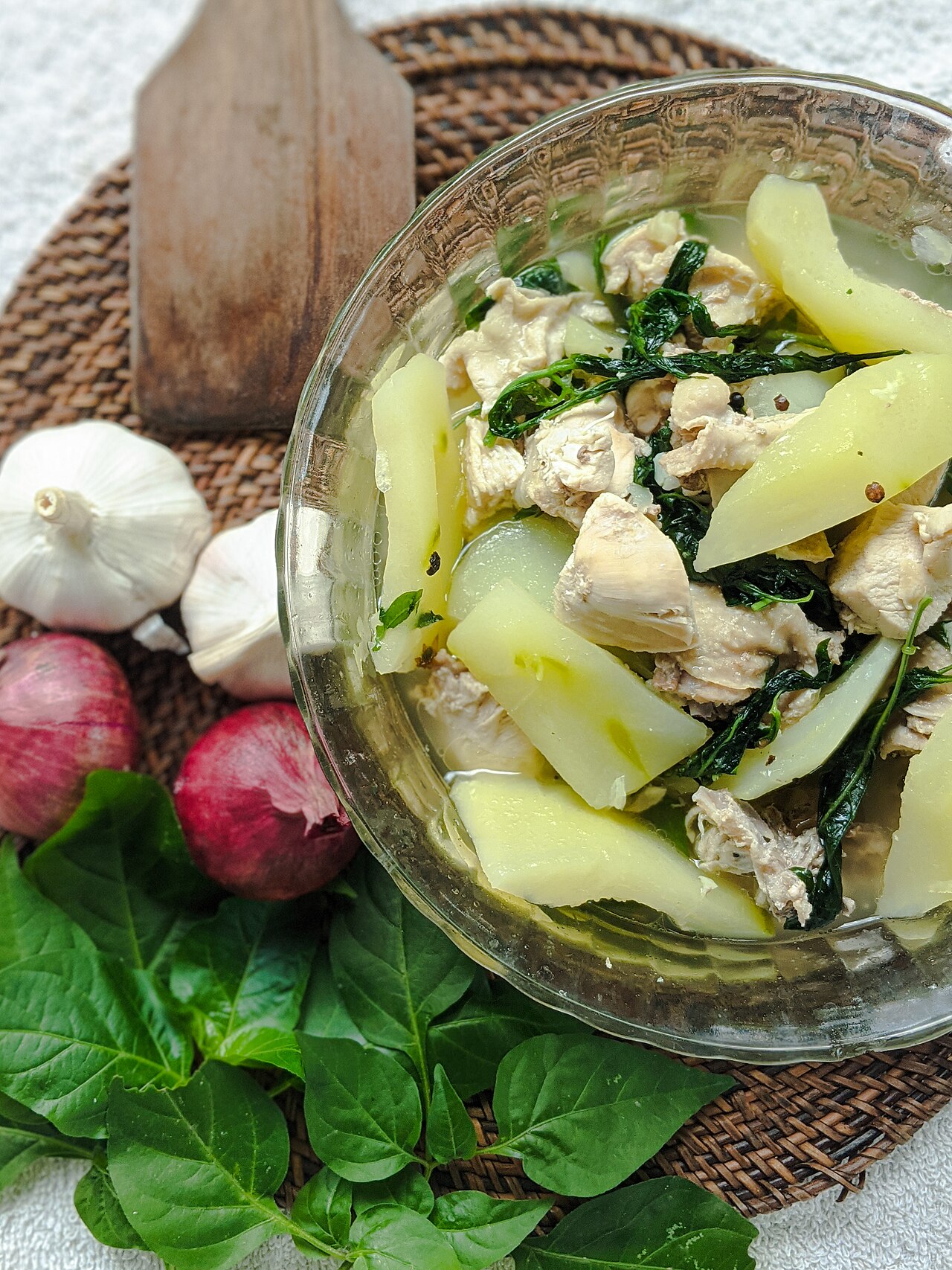
A light, soothing chicken soup with plenty of ginger, green papaya or chayote, and leaves of chilli or moringa. It is home cooking, often made for someone who feels unwell or on a rainy day.
One of the earliest written mentions of tinola is in José Rizal's novel Noli Me Tángere, where it is served to the hero on his return from Europe.
All over the Philippines, brought by Chinese settlers
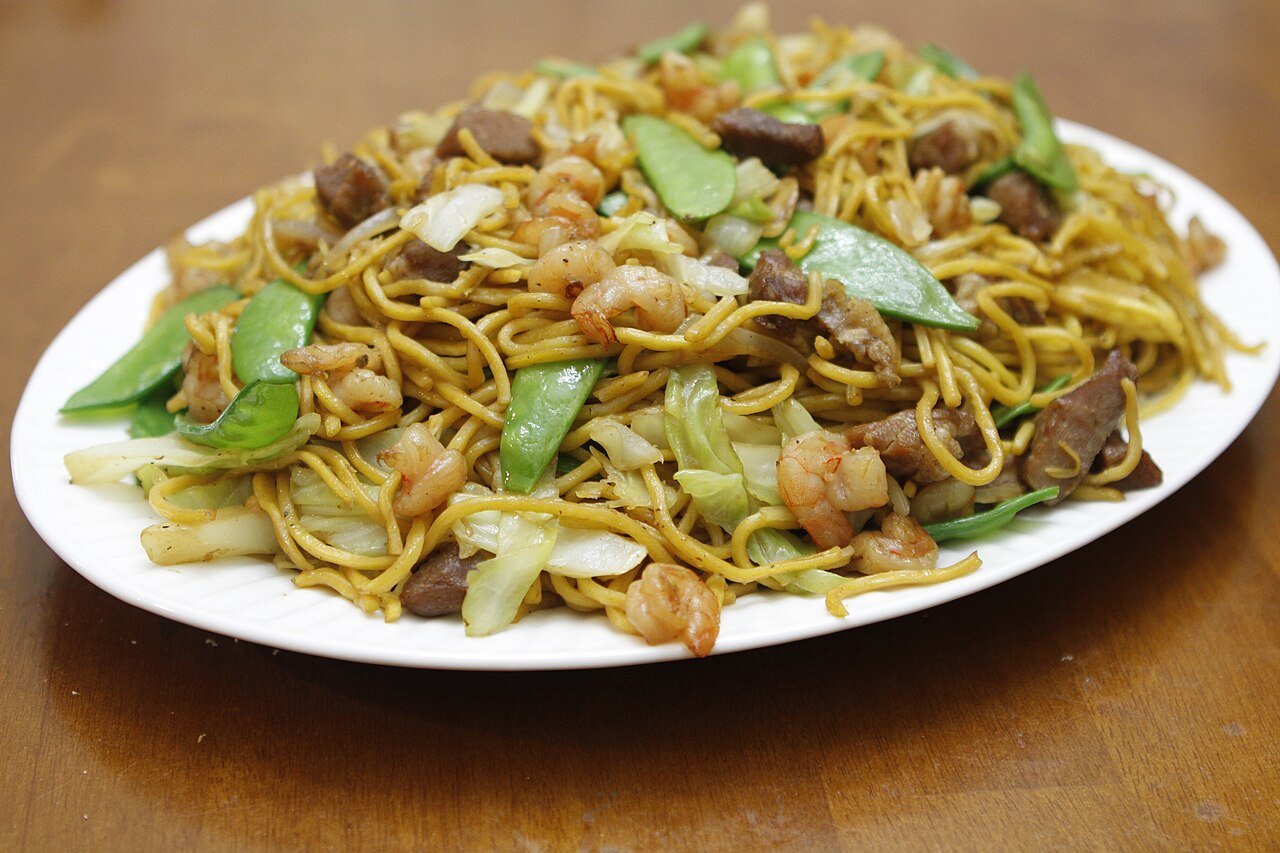
The Filipino word for noodle dishes. Pancit canton uses thick egg noodles and pancit bihon thin rice noodles, stir-fried with chicken or pork, prawns, cabbage and carrots, and served with calamansi to squeeze over. Every region has its own version.
Pancit is served at birthdays because the long noodles stand for a long life.
All over the Philippines, from Chinese spring rolls
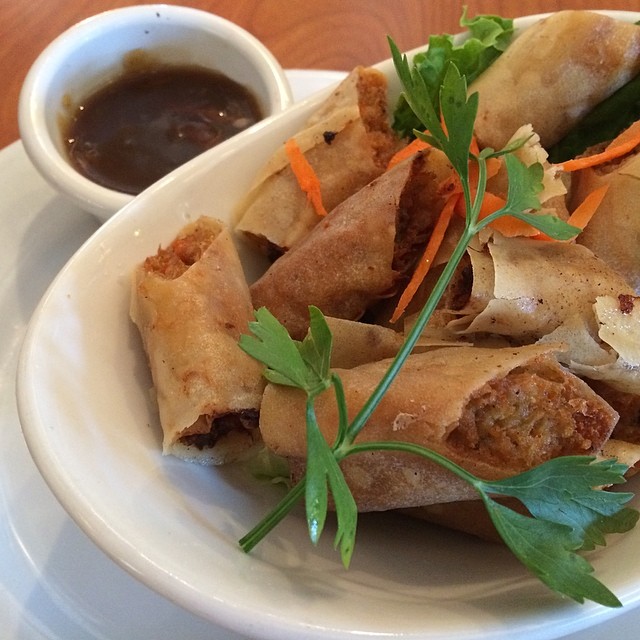
Thin, crisp fried spring rolls filled with seasoned minced pork, carrot and onion, served with a sweet chilli sauce. They are made by the dozen for parties and family gatherings.
Lumpia is the Filipino and Indonesian word for spring rolls, and it comes from the Hokkien Chinese word lunpia.
See the recipe
Serves 6
1 h
Ingredients
500 g minced pork
1 carrot and 1 small onion, very finely chopped
3 cloves garlic, finely chopped
2 spring onions, finely chopped
1 egg
1 tablespoon soy sauce, 1 teaspoon salt and half a teaspoon ground black pepper
About 25 spring roll wrappers
Oil for deep frying
Sweet chilli sauce, to serve
Method
Mix the pork, carrot, onion, garlic, spring onions, egg, soy sauce, salt and pepper in a bowl.
Lay a wrapper flat, put a thin line of filling (about 1 tablespoon) along the edge nearest you, and roll it up tightly, folding in the sides. Seal the end with a dab of water.
Cut long rolls in half if you like. Keep the finished rolls under a clean damp cloth.
Heat the oil to about 170 °C and fry the rolls in batches for 5 to 6 minutes, turning, until deep golden and the pork inside is fully cooked.
Drain on kitchen paper and serve hot with sweet chilli sauce.
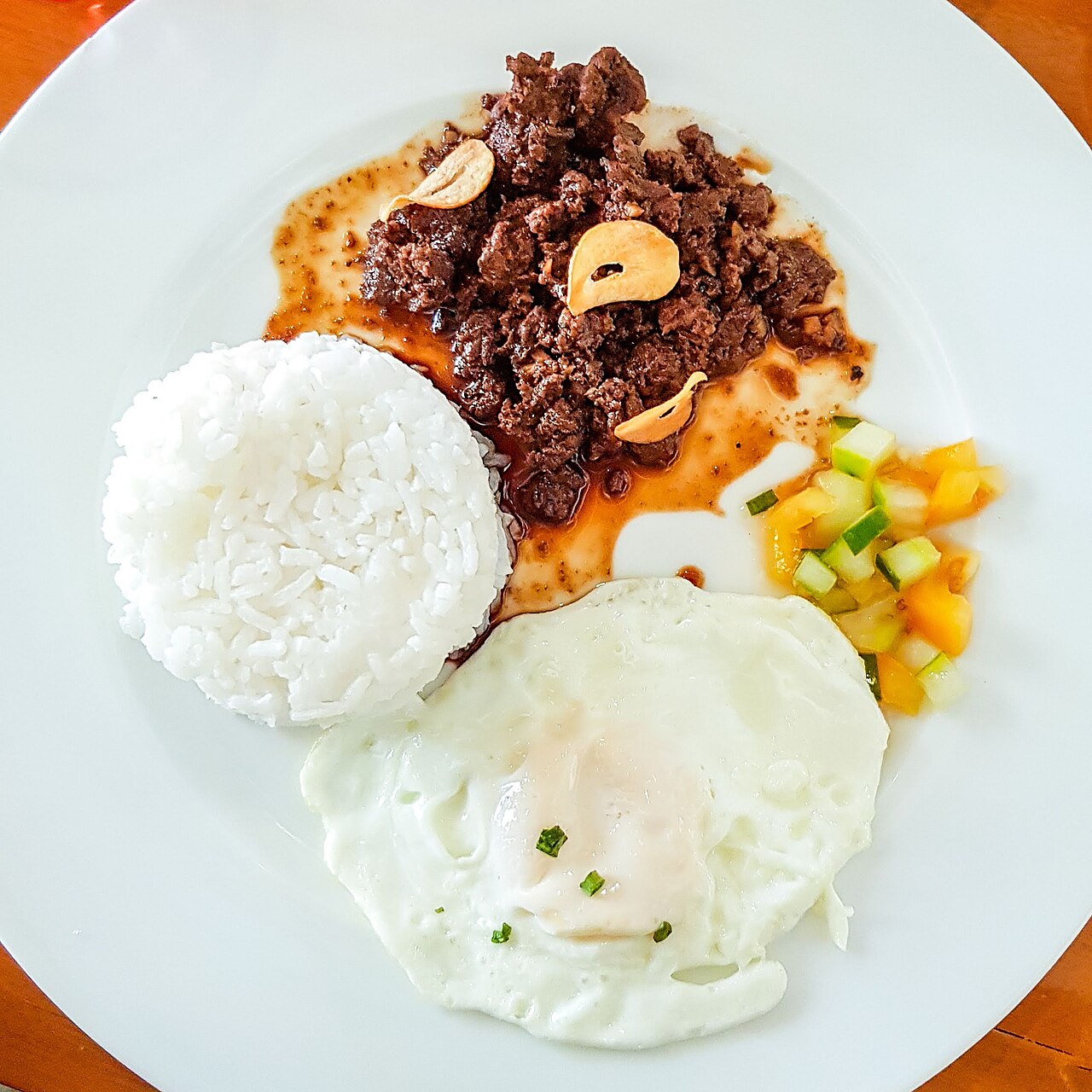
The classic Filipino breakfast: tapa (thin slices of cured, marinated beef, fried), sinangag (garlic fried rice) and a fried egg, with pickled papaya or tomato and a dip of vinegar. Its name joins the three parts: TAPa, SInangag and itLOG, which means egg.
The same pattern gives many other breakfasts, such as longsilog with longganisa sausage and tosilog with sweet cured pork.
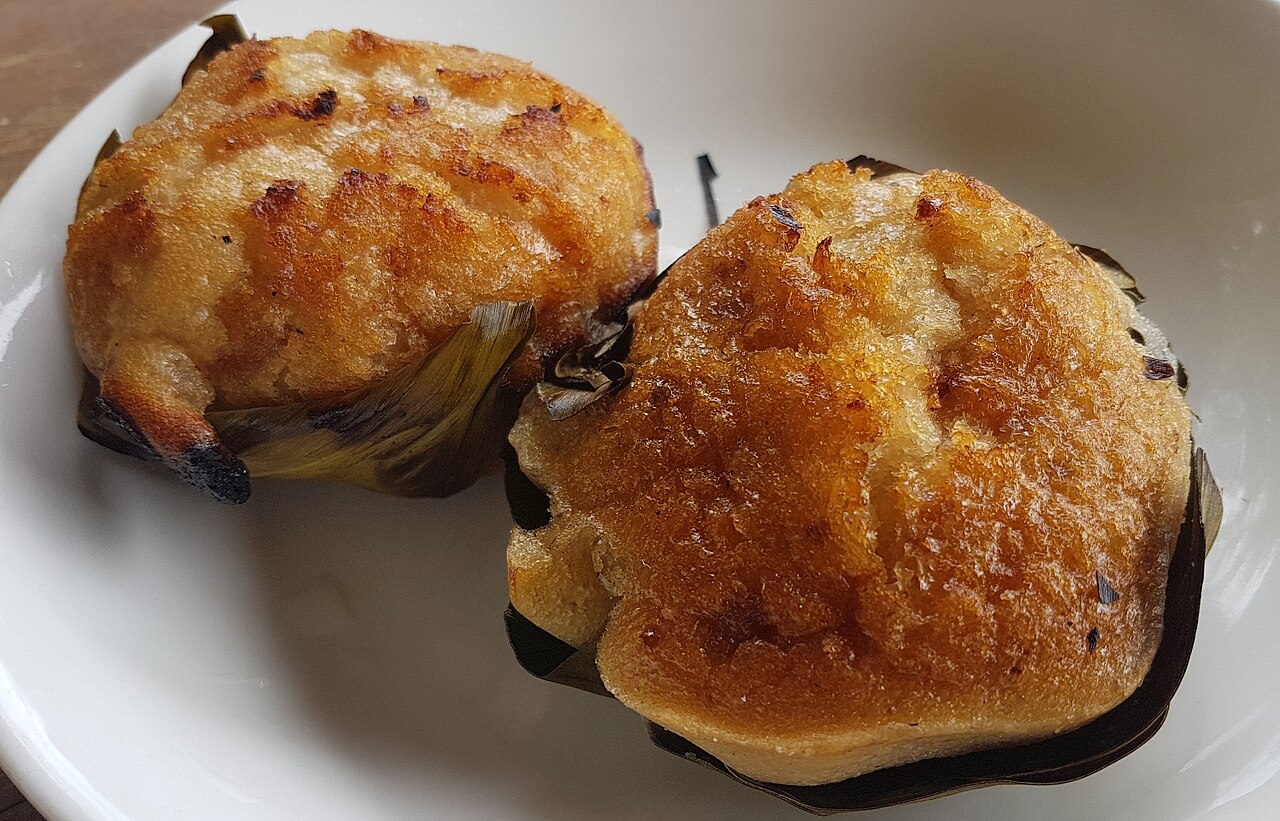
A soft rice cake made with rice flour, coconut milk and egg, baked in a clay dish lined with banana leaves, with hot coals below and on a metal sheet above. It is topped with butter, sugar, grated coconut and sometimes salted egg and cheese.
Bibingka is traditionally eaten outside the church after Simbang Gabi, the nine dawn or night masses before Christmas.
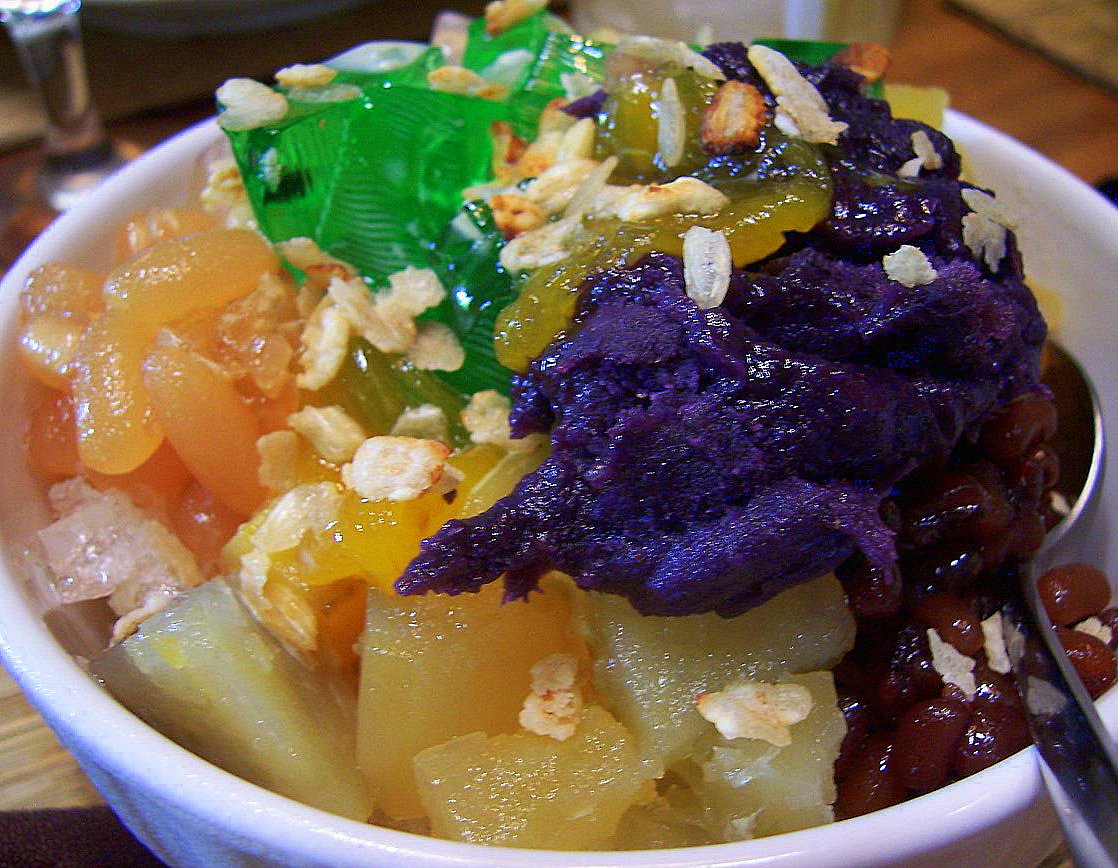
The favourite cold dessert: a tall glass of shaved ice and evaporated milk layered with sweet beans, jellies, coconut strips, sweetened banana and jackfruit, purple yam jam and leche flan, often topped with ube ice cream. Halo-halo means 'mix-mix', and you stir everything together before eating.
It grew from a Japanese shaved-ice dessert sold by Japanese Filipinos before the Second World War.
See the recipe
Serves 2
15 min
Ingredients
4 tablespoons sweetened red beans or chickpeas (from a jar)
4 tablespoons coconut gel (nata de coco) or cubes of jelly
4 tablespoons sweetened jackfruit or banana, in pieces
2 tablespoons ube (purple yam) jam, optional
About 4 cups finely shaved or crushed ice
150 ml evaporated milk
2 small squares of leche flan and 2 scoops of ube or vanilla ice cream (optional)
2 tablespoons toasted flattened rice (pinipig) or cornflakes, for crunch
Method
Divide the beans, jelly and fruit between two tall glasses.
Fill each glass with shaved ice, pressing it down lightly.
Pour the evaporated milk over the ice.
Top with ube jam, leche flan, a scoop of ice cream and the crunchy pinipig.
Serve at once with a long spoon, and mix everything together before eating.
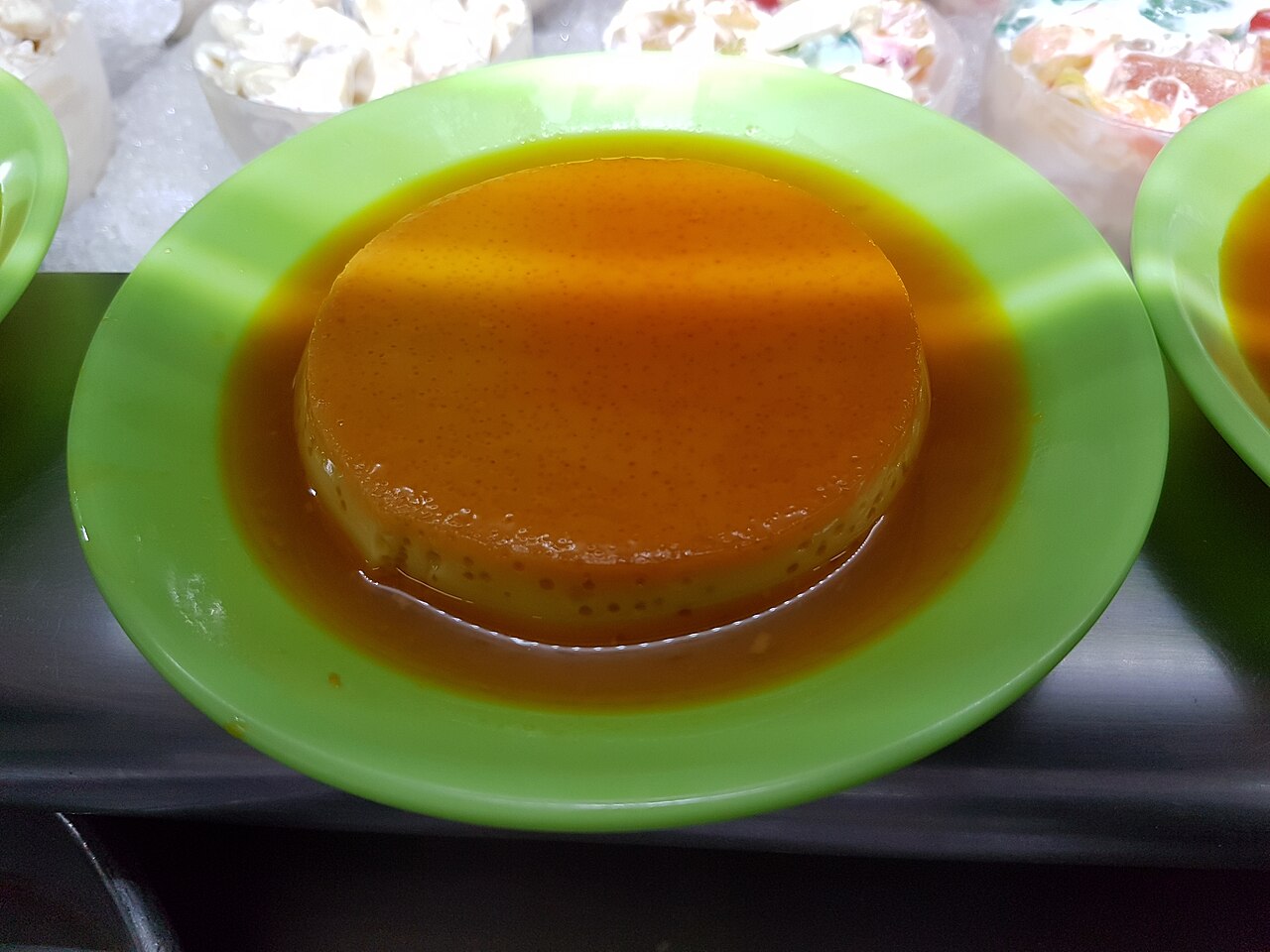
A rich caramel custard made with egg yolks, condensed milk and evaporated milk, steamed in an oval tin called a llanera. It is firmer and richer than a European crème caramel, and no fiesta table is complete without it.
Leche flan uses only egg yolks. A popular story says it began in Spanish times, when egg whites went into the mortar of churches and other buildings and the leftover yolks were turned into desserts.
See the recipe
Serves 6
1 h 15 min
Ingredients
100 g sugar and 2 tablespoons water, for the caramel
8 egg yolks
1 can (about 390 g) sweetened condensed milk
1 can (about 370 ml) evaporated milk
1 teaspoon vanilla extract or grated calamansi or lime zest
Method
Heat the sugar and water in a small pan without stirring until it turns a golden caramel. Pour it at once into a 20 cm round tin or two llaneras and tilt to cover the bottom. Be careful: caramel is very hot.
Gently whisk the egg yolks, condensed milk, evaporated milk and vanilla, without making foam. Strain through a sieve onto the caramel.
Cover the tin with foil and steam over gently simmering water for 40 to 50 minutes, until the custard is set all the way through and a knife in the centre comes out clean.
Let it cool, then chill for at least 4 hours.
Run a knife around the edge, turn it out onto a plate and let the caramel run over the top.
Wait until the host invites everyone to start, often with 'Kain tayo!' ('Let's eat!'). Filipinos also invite anyone who walks in during a meal to join, even if it is only politeness.
Eat with a spoon in the right hand and a fork in the left, using the fork to push food onto the spoon. Knives are rarely used at the table.
Take rice first, then small portions from the shared dishes with the serving spoon, and go back for more later rather than piling up your plate.
At a kamayan or 'boodle fight' feast, food is spread on banana leaves and eaten by hand: wash your hands first and push the food into your mouth with your thumb.
Offer food to elders first and let them start eating before you.
Many Filipinos in Mindanao and the Sulu islands are Muslim and do not eat pork, so check before bringing pork dishes to a shared meal.
Most Filipinos live on Luzon, the largest island, where Metro Manila, the mountain city of Baguio, the old Spanish town of Vigan and Legazpi below Mayon Volcano lie. In the middle, the Visayas have Cebu City, Iloilo City and Tagbilaran on Bohol. Puerto Princesa is on the long western island of Palawan, and Davao City and Zamboanga City are the biggest cities of Mindanao in the south.
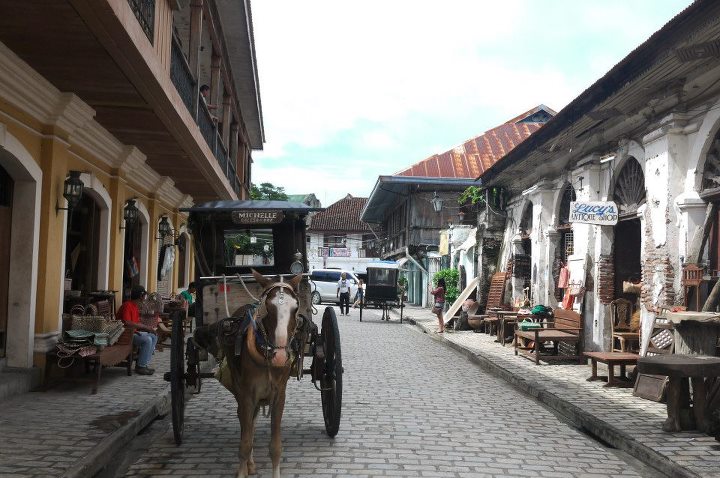
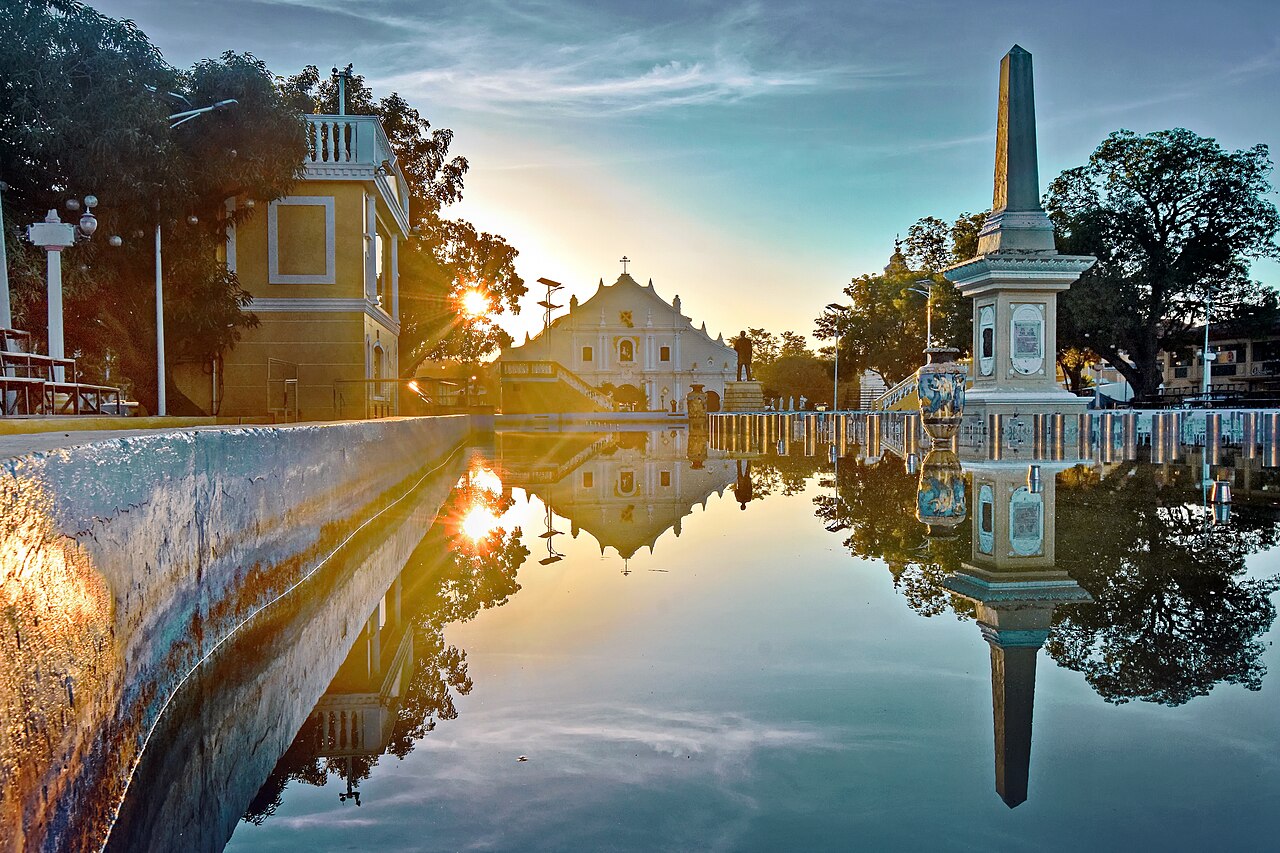
A small city of about 55,000 people on the northwest coast of Luzon, and according to UNESCO the best-preserved example of a planned Spanish colonial town in Asia. Its old quarter of stone-and-wood houses and cobbled streets is a UNESCO World Heritage Site.
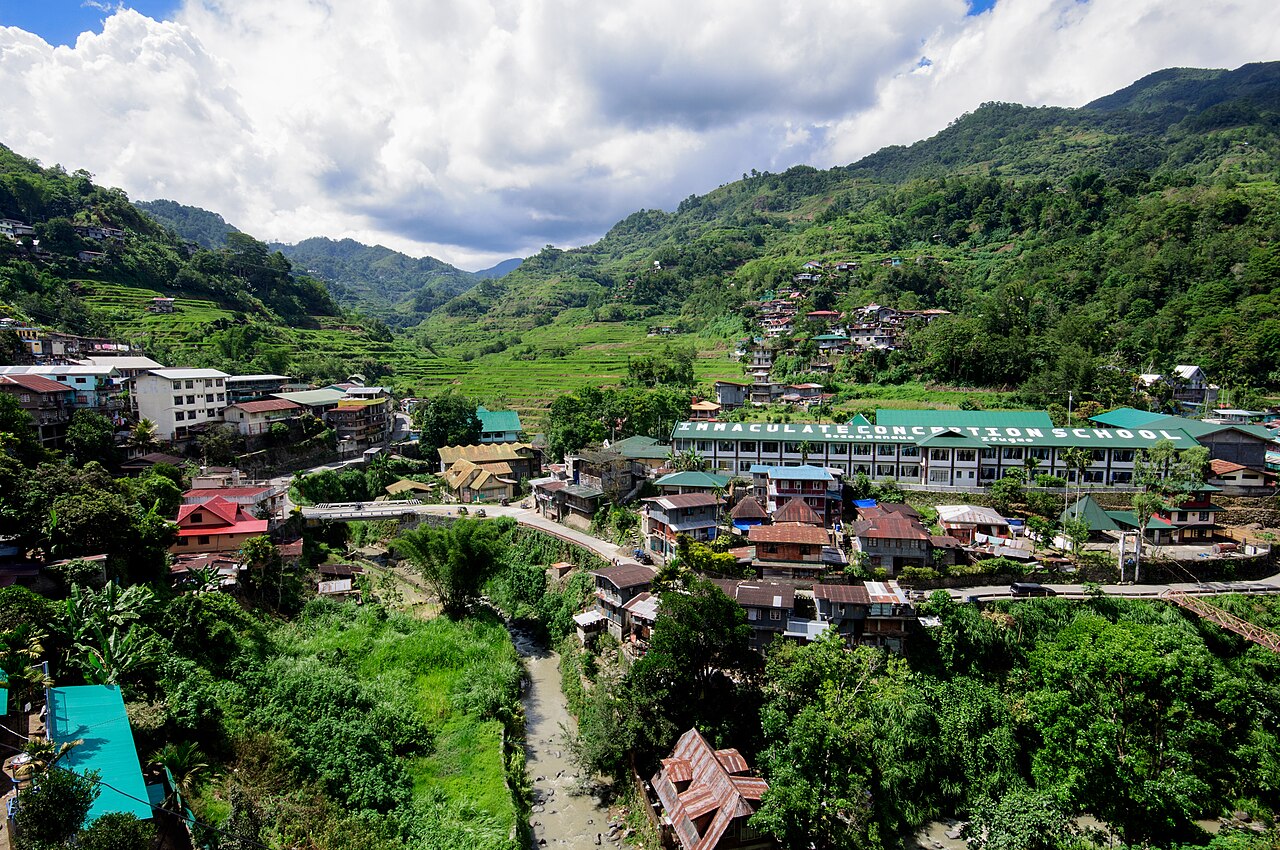
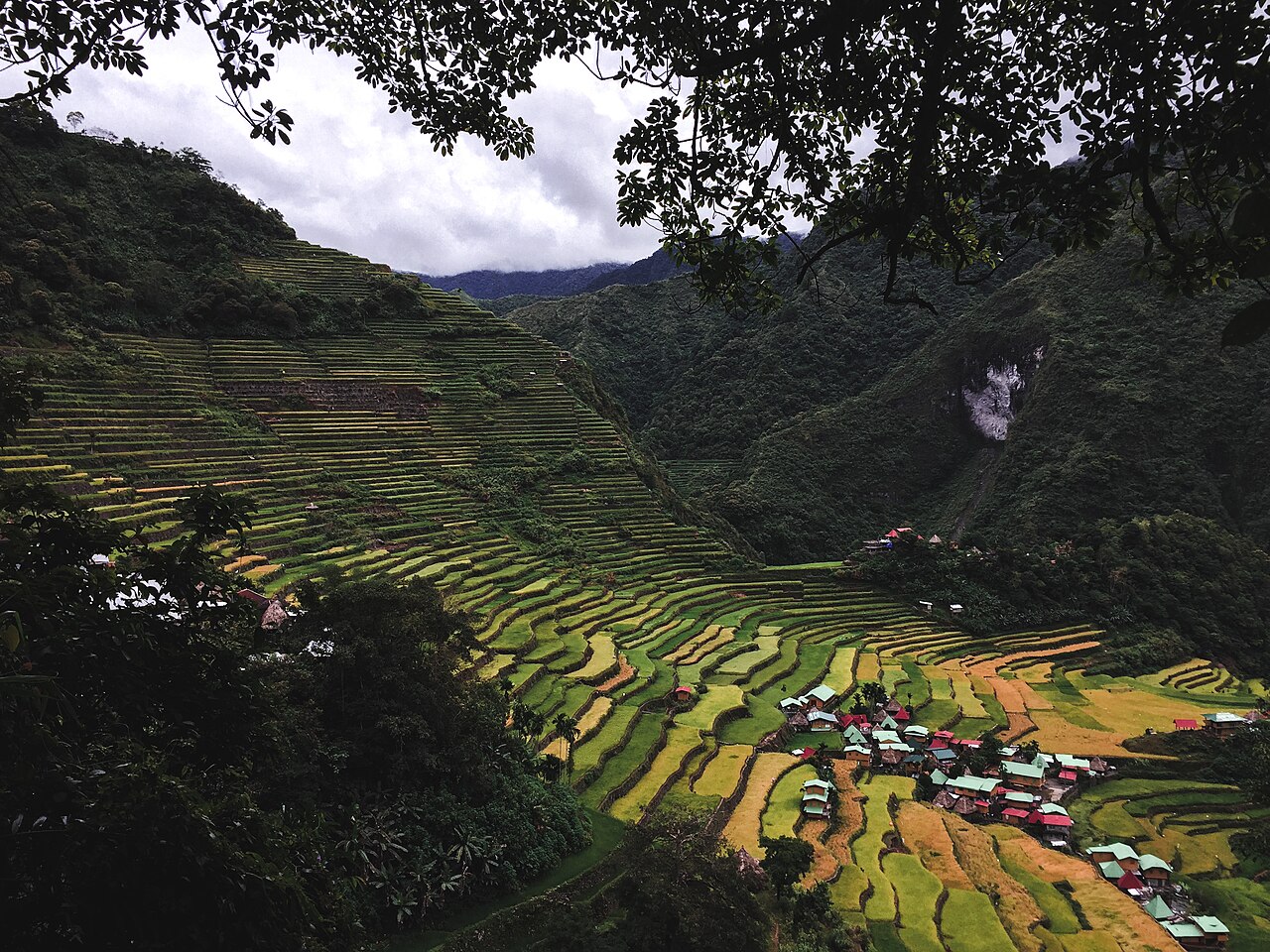
A mountain town of about 20,000 people in the land of the Ifugao people, surrounded by rice terraces built by hand up the steep slopes. The terrace clusters of Batad and Bangaan, both in Banaue, are part of a UNESCO World Heritage Site.
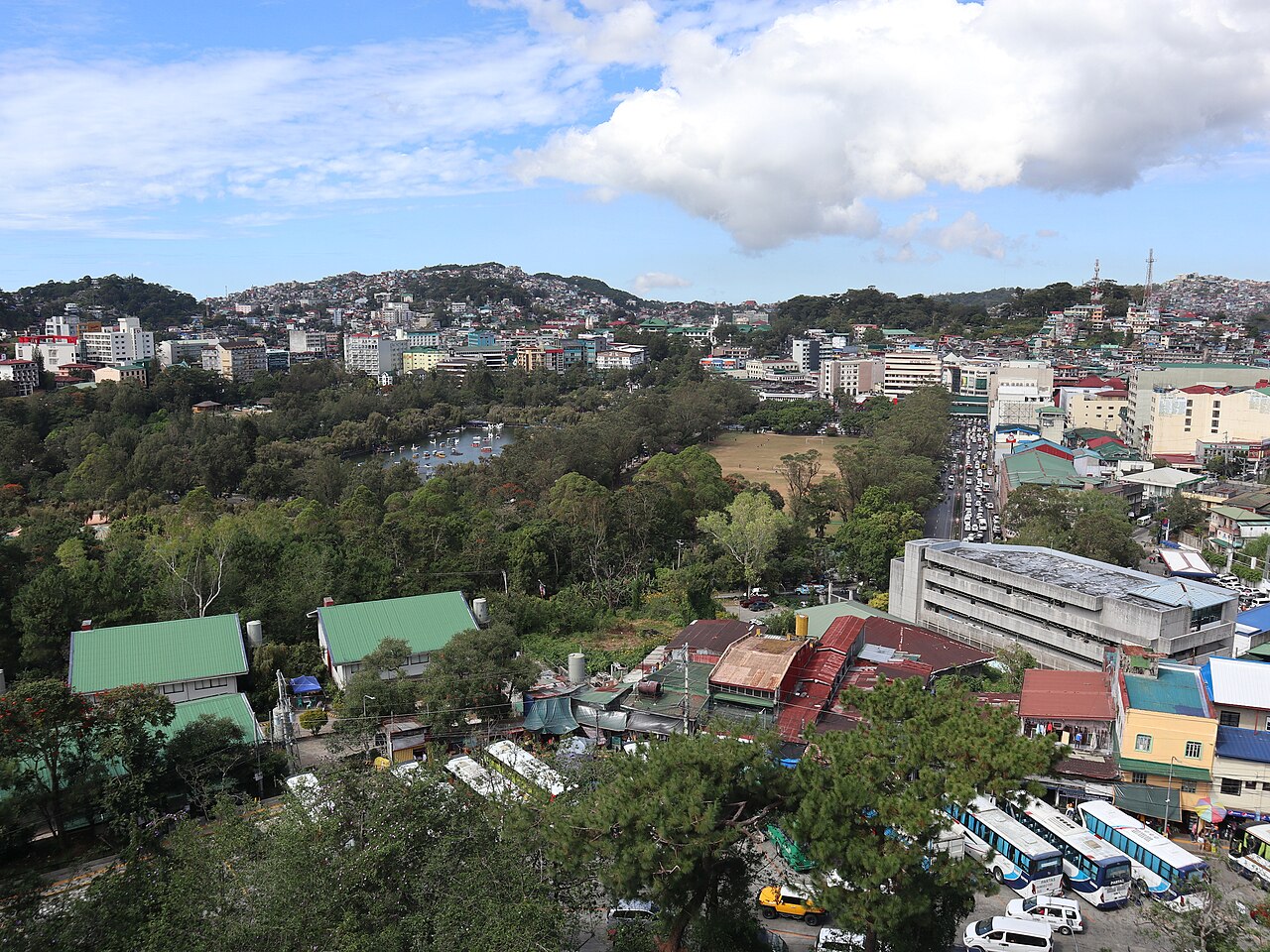
A city of about 370,000 people about 1,500 m up in the pine-covered mountains of northern Luzon. Its cool air made it the 'Summer Capital of the Philippines', where people escape the lowland heat.
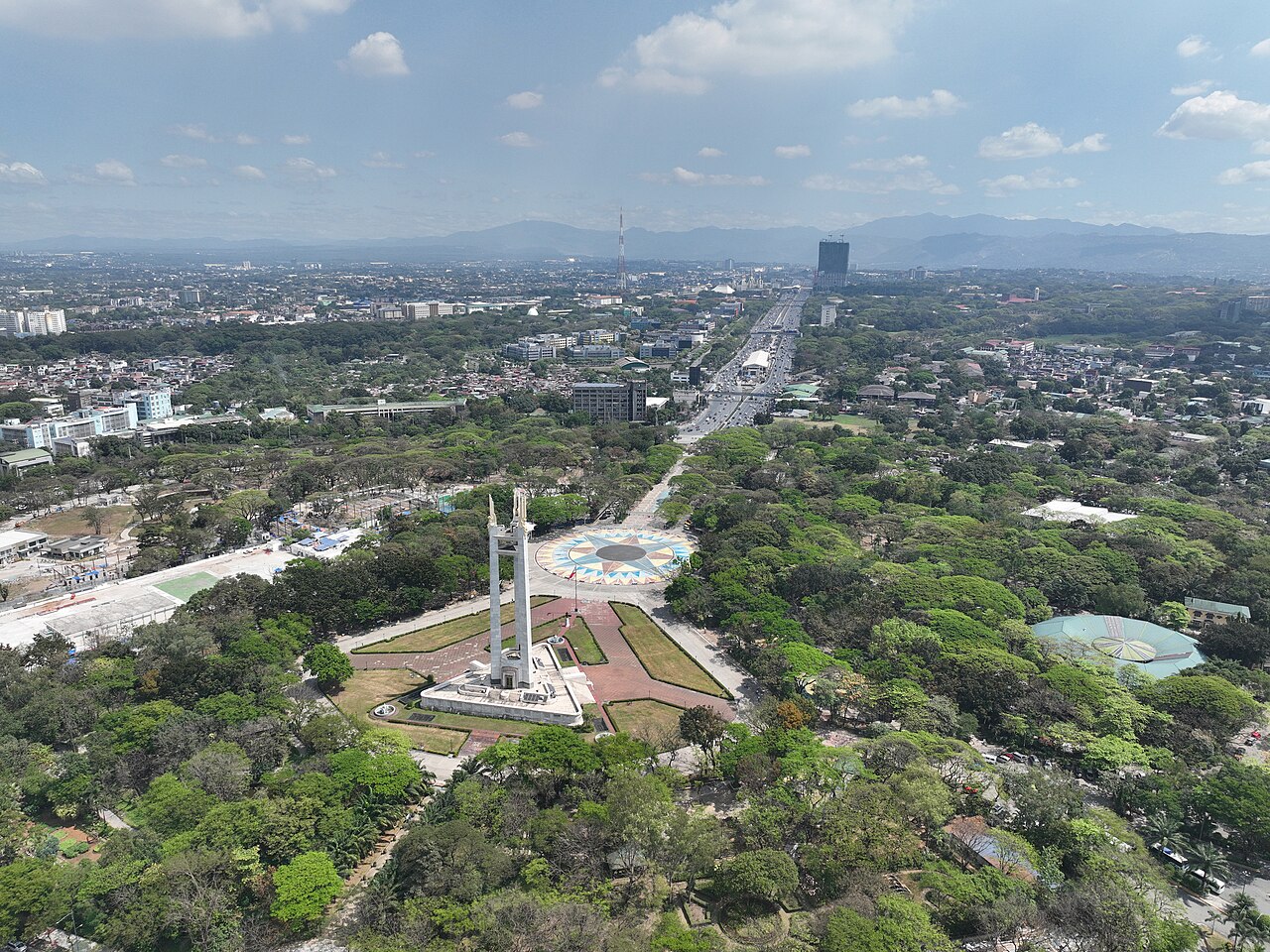
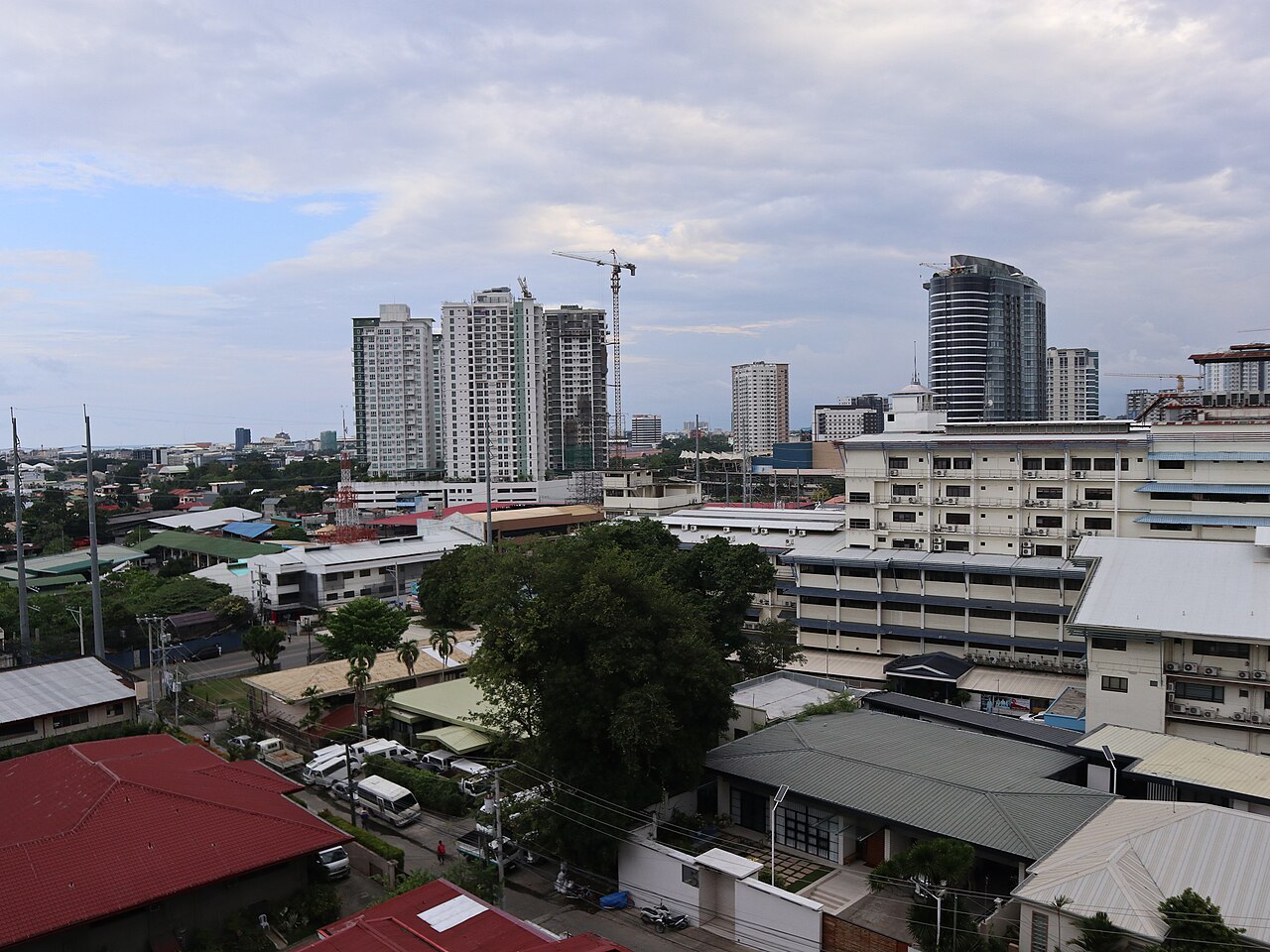
The most populous city in the Philippines, with about 3.1 million people, next to Manila in the same metropolitan area. It was founded in 1939, named after President Manuel L. Quezon, and was the official capital from 1948 to 1976.
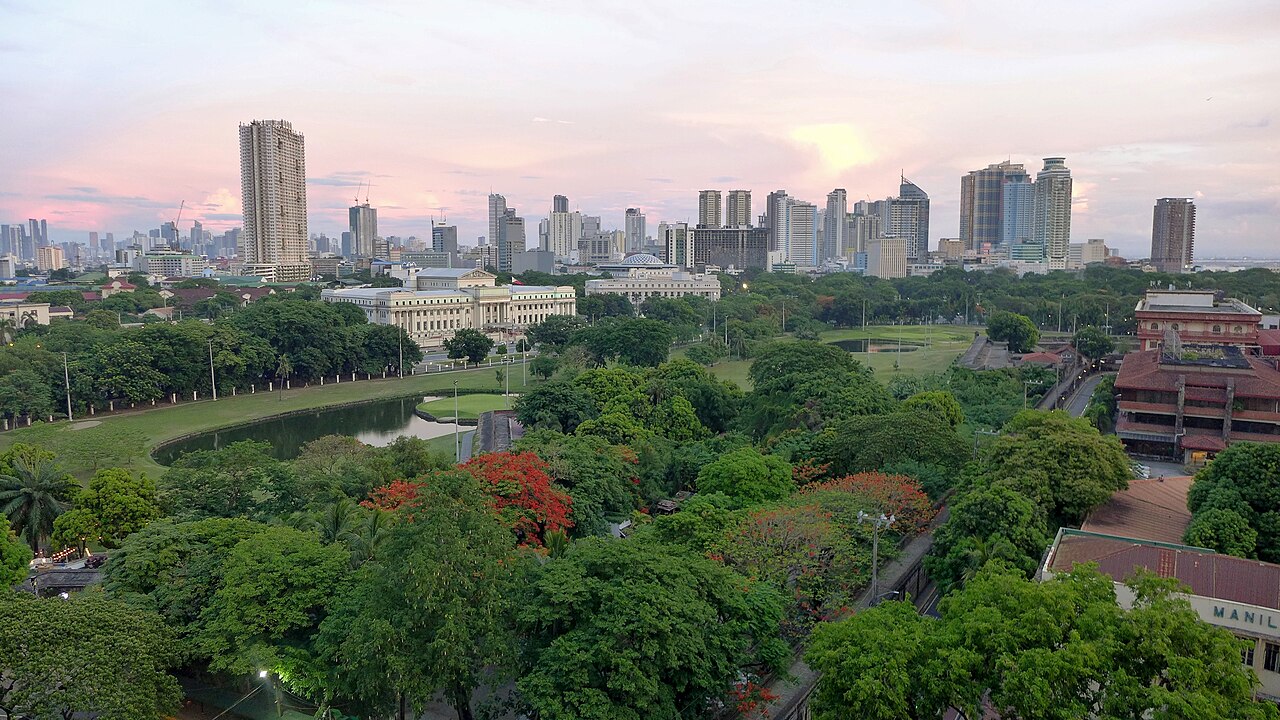
The capital, on the eastern shore of Manila Bay, with about 1.9 million people in the city itself and one of the highest population densities in the world. It is the historic heart of Metro Manila, home to about 14 million people (2024 census). The Spanish walled city of Intramuros stands beside the busy modern districts.
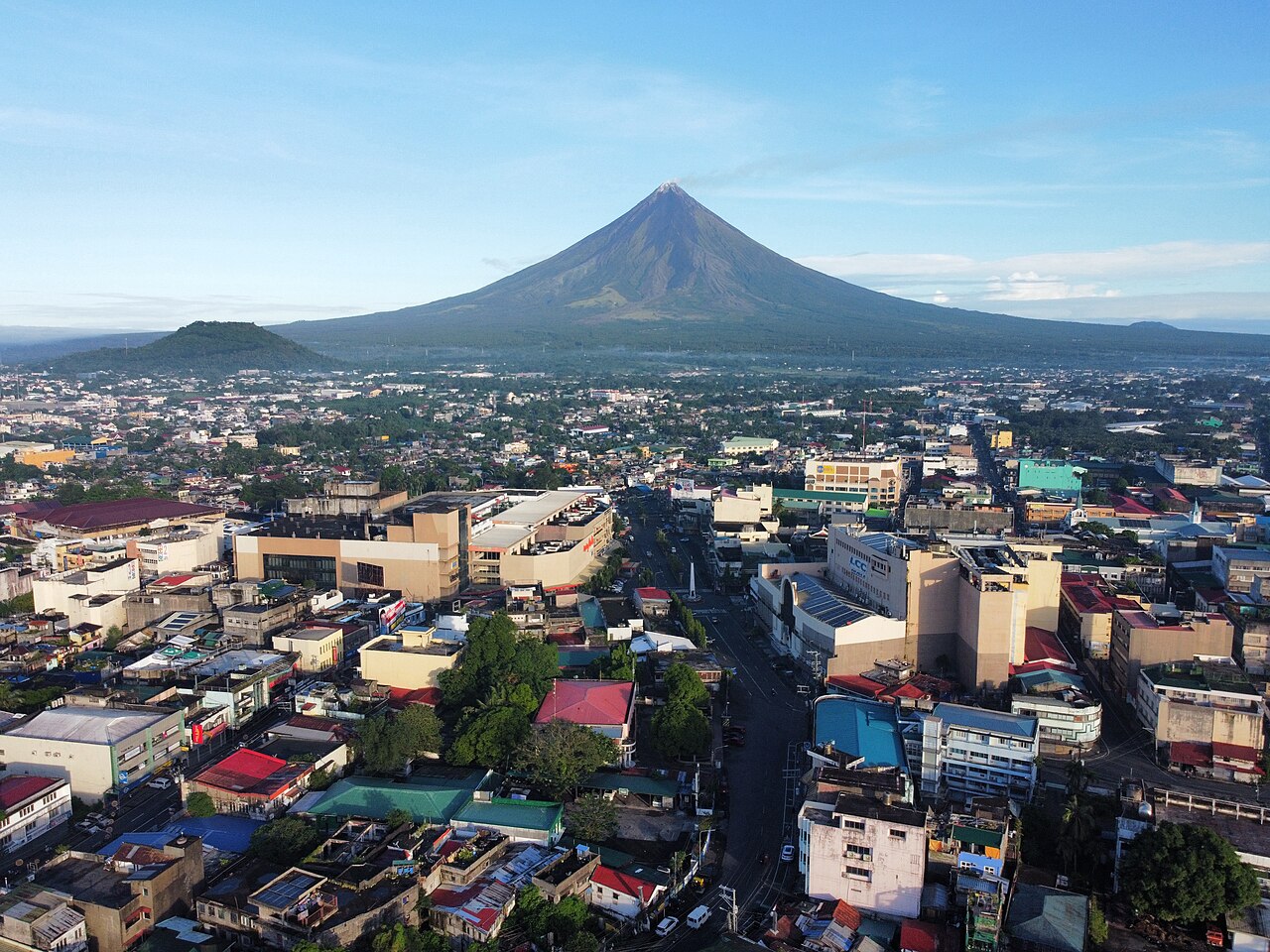
The main city of the Bicol region, with about 210,000 people, on the shore of Albay Gulf. It lies just south of Mayon Volcano and is named after the Spanish commander Miguel López de Legazpi.
A graceful old port city of about 470,000 people on the island of Panay. It grew rich from sugar and textiles in the 1800s and still has grand old mansions, stone churches and a lively riverside.
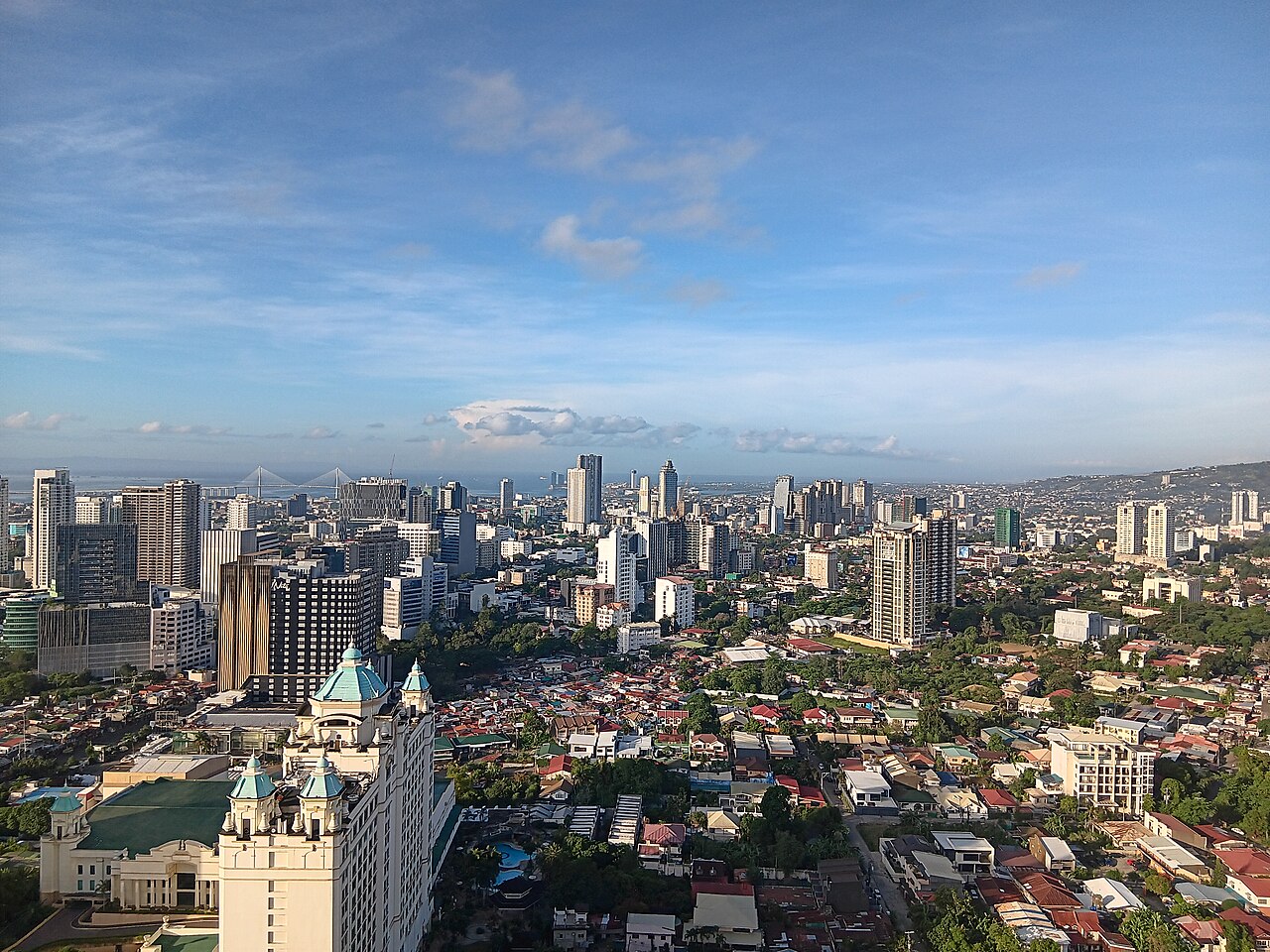
The largest city of the Visayas, with about 965,000 people, and the oldest Spanish settlement in the country, founded by Legazpi in 1565. Its port is one of the busiest in the Philippines.
The capital of the island province of Bohol, with about 106,000 people, and the gateway to the Chocolate Hills, old stone churches and the small tarsiers that live in Bohol's forests.
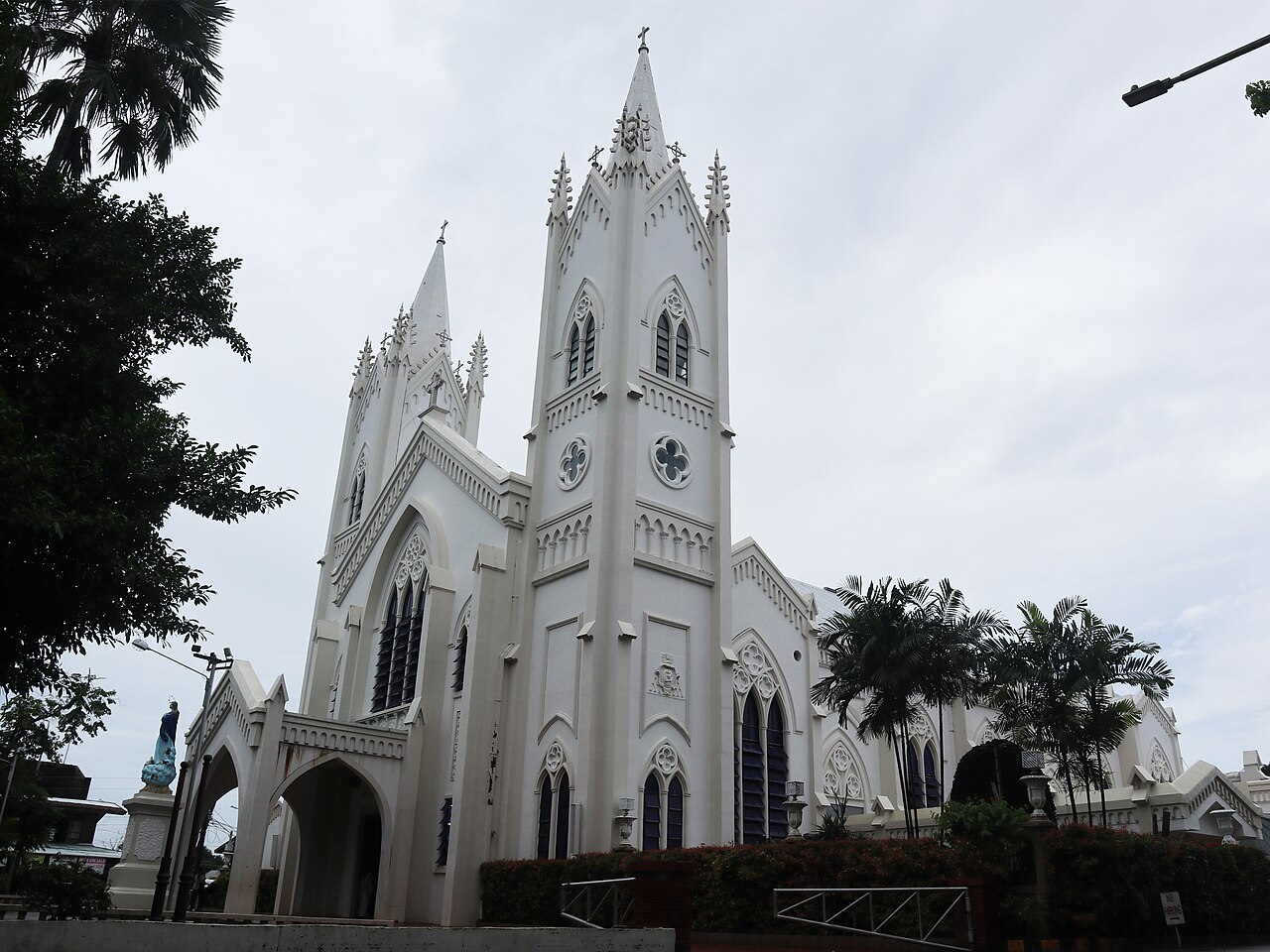
The main city of Palawan, the long island in the west, with about 316,000 people. It is the westernmost city in the Philippines and the starting point for trips to the Underground River and the reefs of the Sulu Sea.
A port city of about one million people at the southwestern tip of Mindanao. Many people here speak Chavacano, a language based on Spanish mixed with local languages.
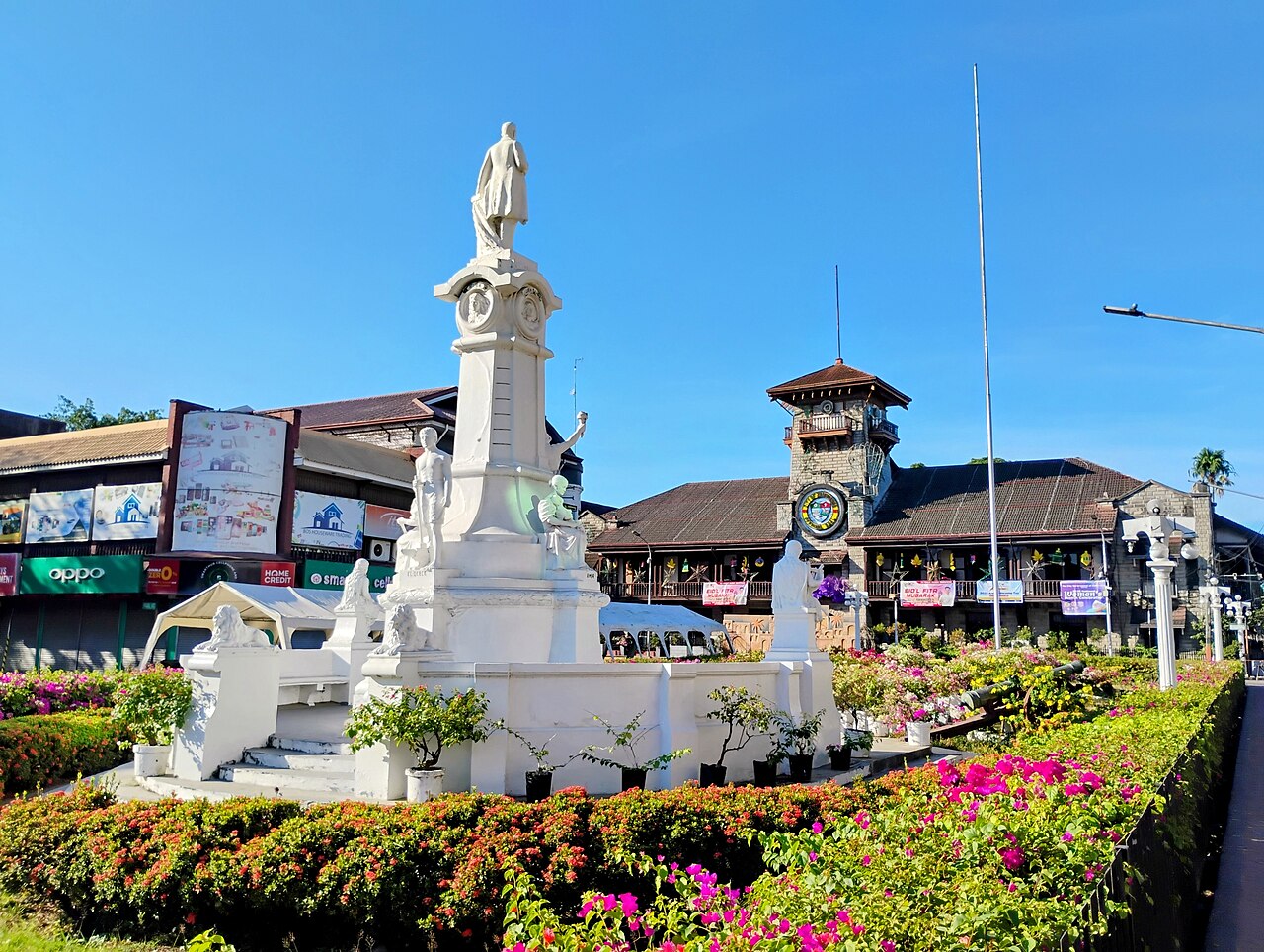
The largest city of Mindanao, with about 1.85 million people, and the largest city in the country by land area. It lies on the Davao Gulf below Mount Apo, the highest mountain in the Philippines.
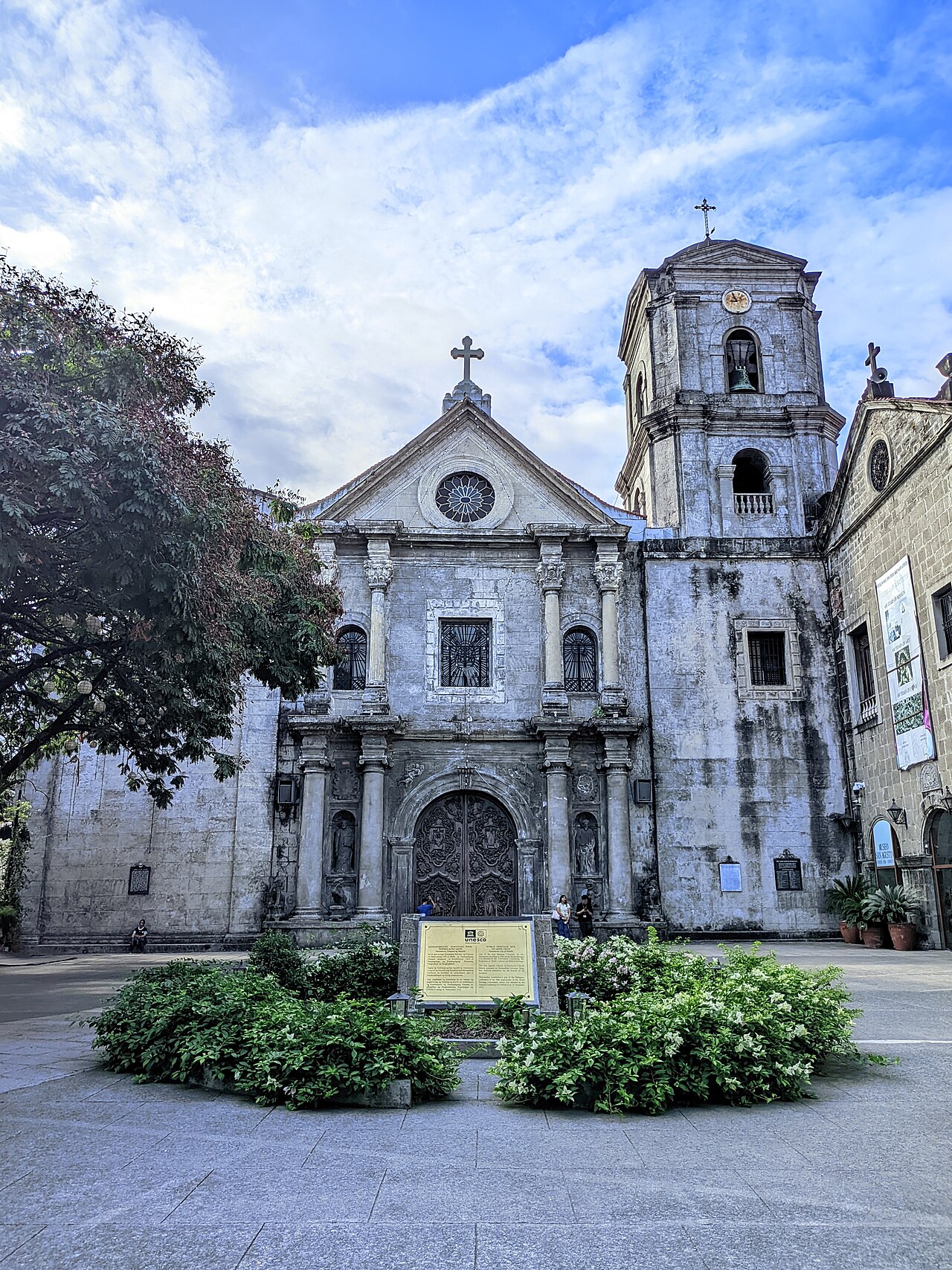
The oldest stone church in the country, built by the Augustinians and completed in 1607. It was the only one of the seven churches of Intramuros to survive the Battle of Manila in 1945, and its 19th-century painted ceiling tricks the eye into seeing carved stone. It is one of the four Baroque Churches of the Philippines listed by UNESCO in 1993.
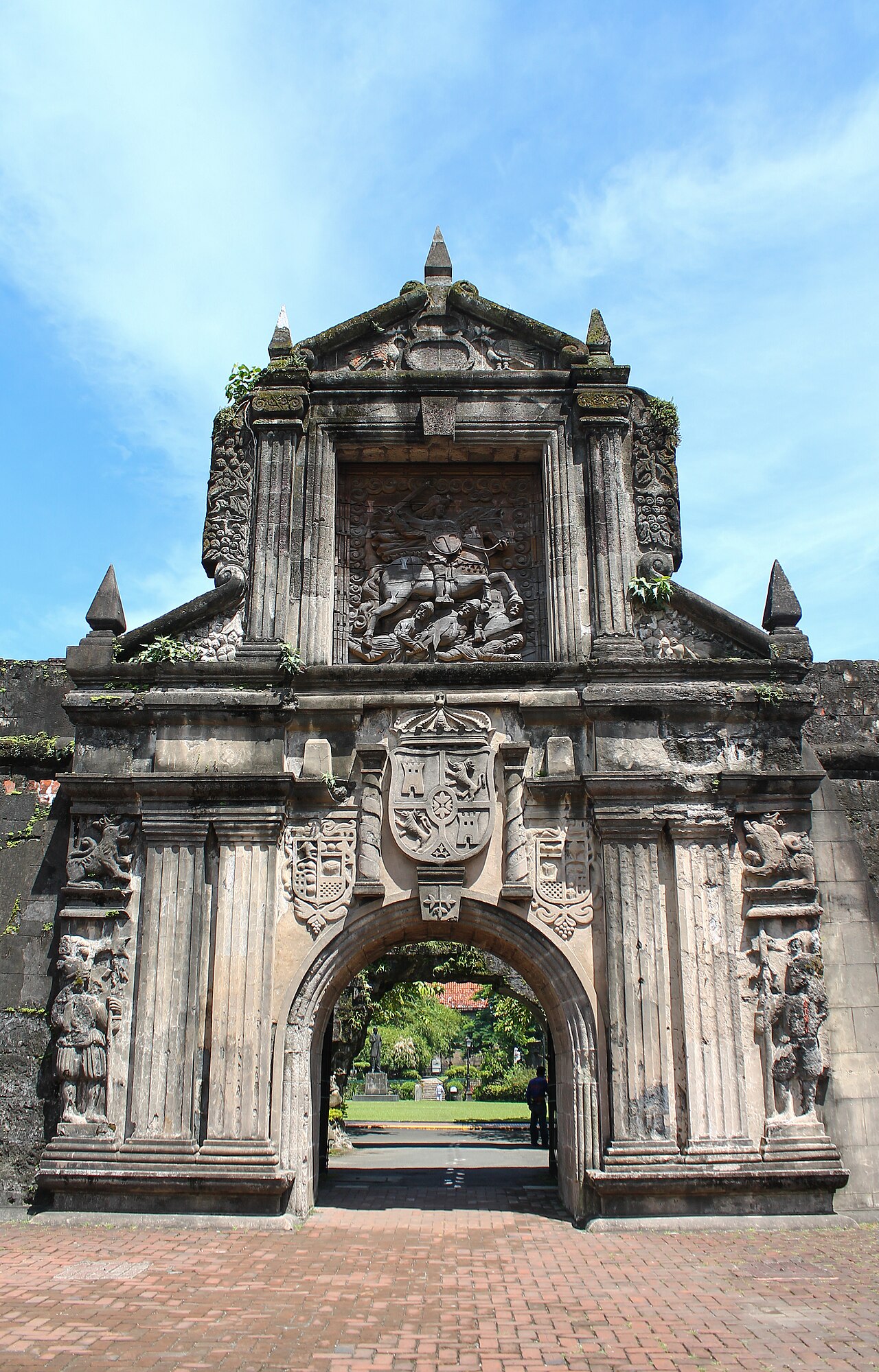
Intramuros, 'within the walls' in Spanish, is the old walled city that was Spanish Manila, founded in 1571. At its northern tip stands Fort Santiago, where José Rizal was held before his execution in 1896; his last walk from his cell to the place of execution is marked by bronze footsteps set into the ground.
The best-known street of Vigan, paved with stone and lined with big colonial houses that have stone ground floors and wooden upper storeys with sliding windows of shell panes. Horse-drawn calesas still carry visitors along it. The Historic City of Vigan was listed by UNESCO in 1999.
A giant amphitheatre of rice terraces built by the Ifugao people, reached only on foot from the road above Banaue. The terraces are fed by water channelled from the mountain forests. Batad is one of five clusters in the Rice Terraces of the Philippine Cordilleras, listed by UNESCO in 1995.
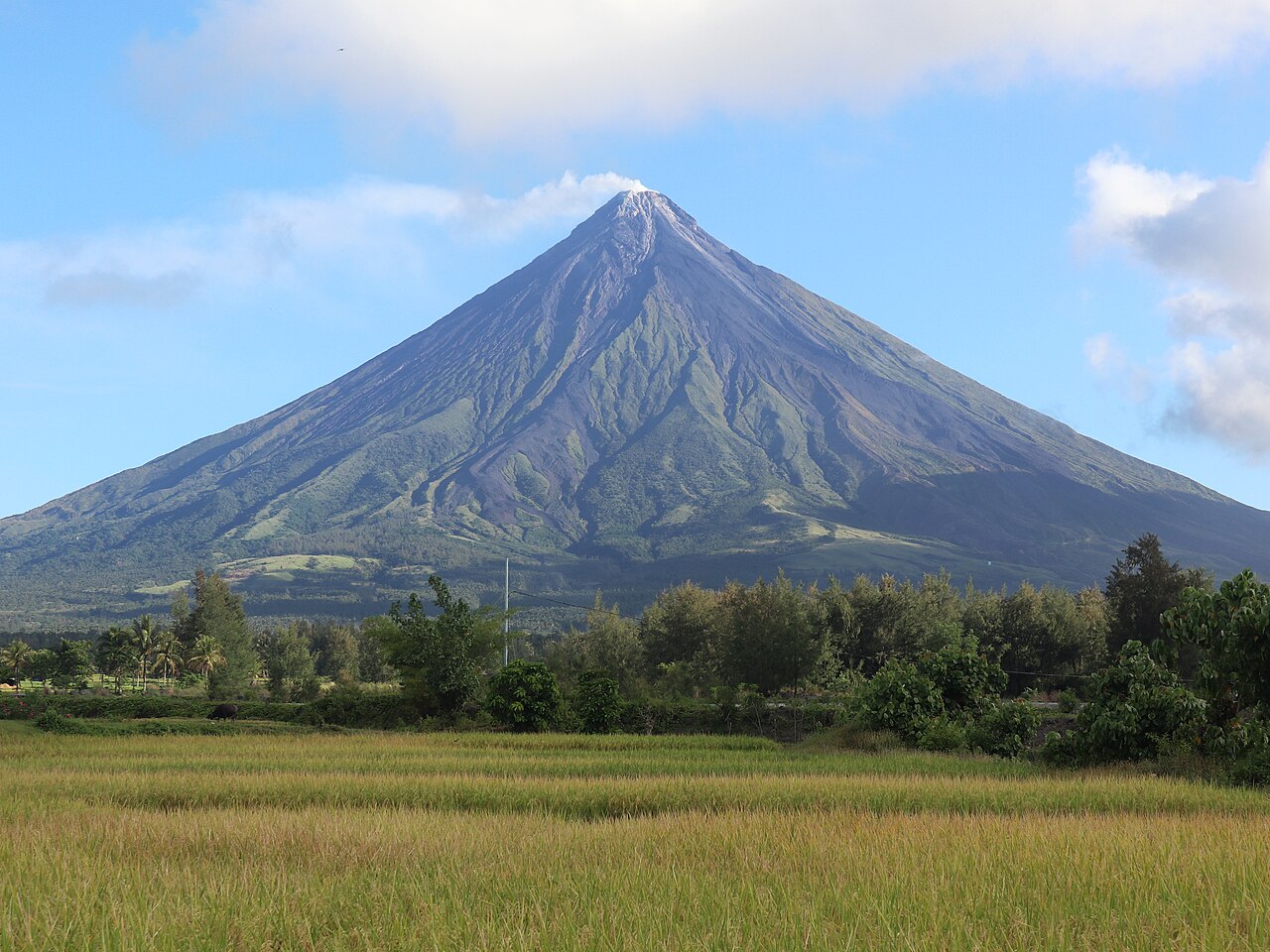
A 2,463 m volcano famous for its almost perfectly symmetrical cone, rising just north of Legazpi. It is the most active volcano in the Philippines, and the area around it was the first national park in the country, declared in 1938.
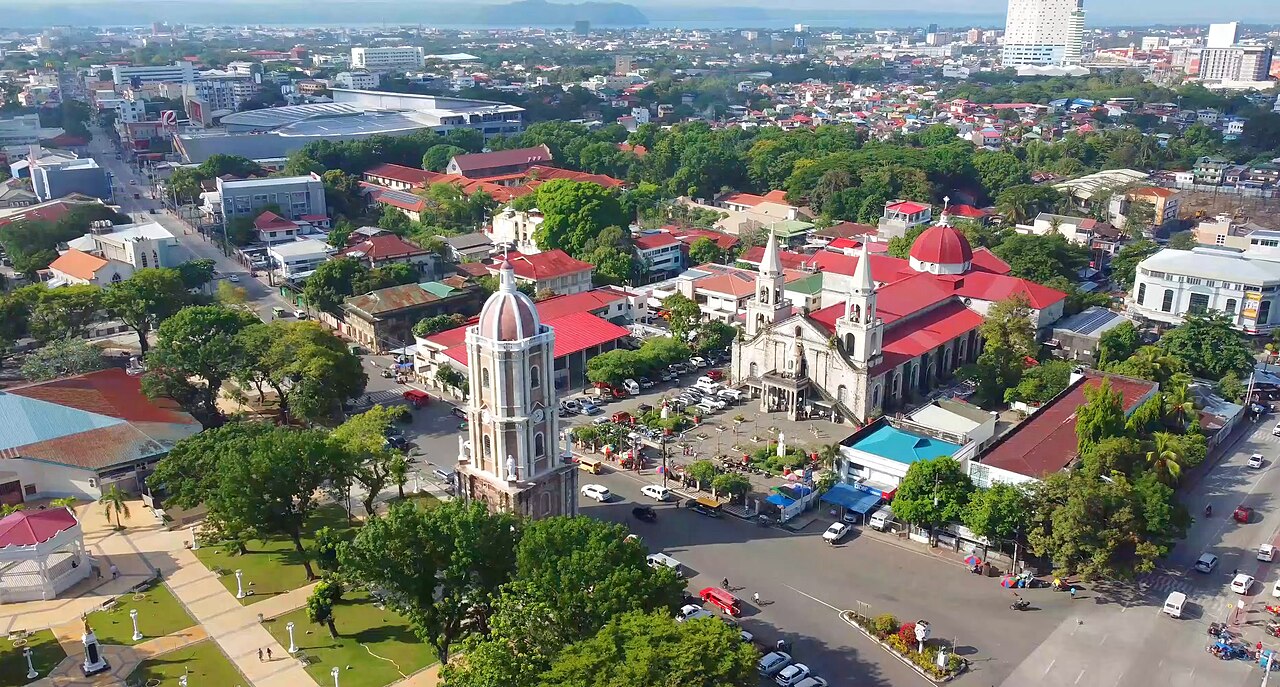
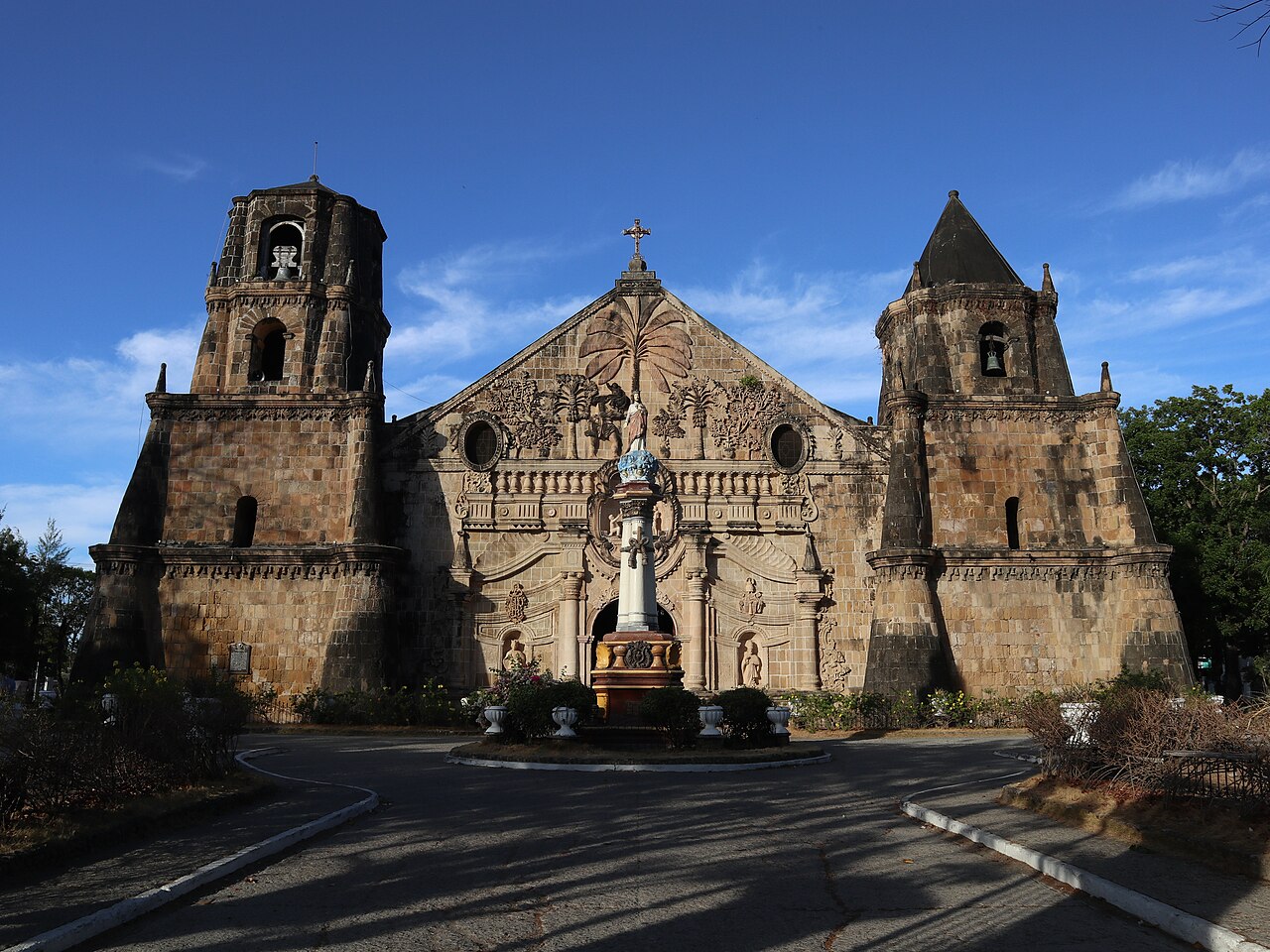
A fortress-like church of golden sandstone, finished in 1797, about 40 km west of Iloilo City. Its front shows a coconut tree and local plants and people, carved in stone around Saint Christopher. It is one of the four Baroque Churches of the Philippines listed by UNESCO in 1993.
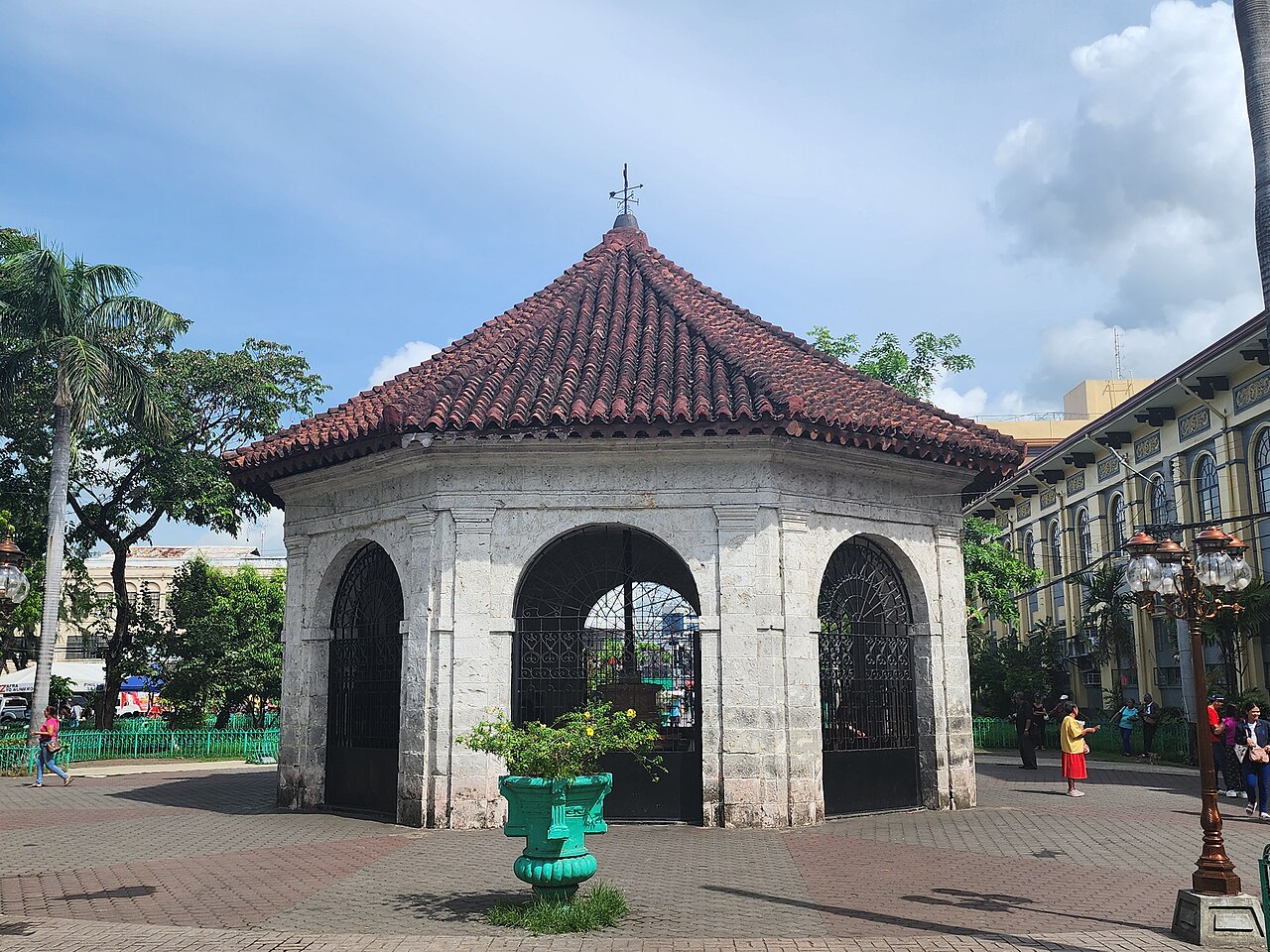
A small pavilion in the centre of Cebu City housing a wooden cross, which stands for the cross planted by Magellan's expedition when it reached Cebu in April 1521. The ceiling is painted with the scene, and the Basilica del Santo Niño is right beside it.
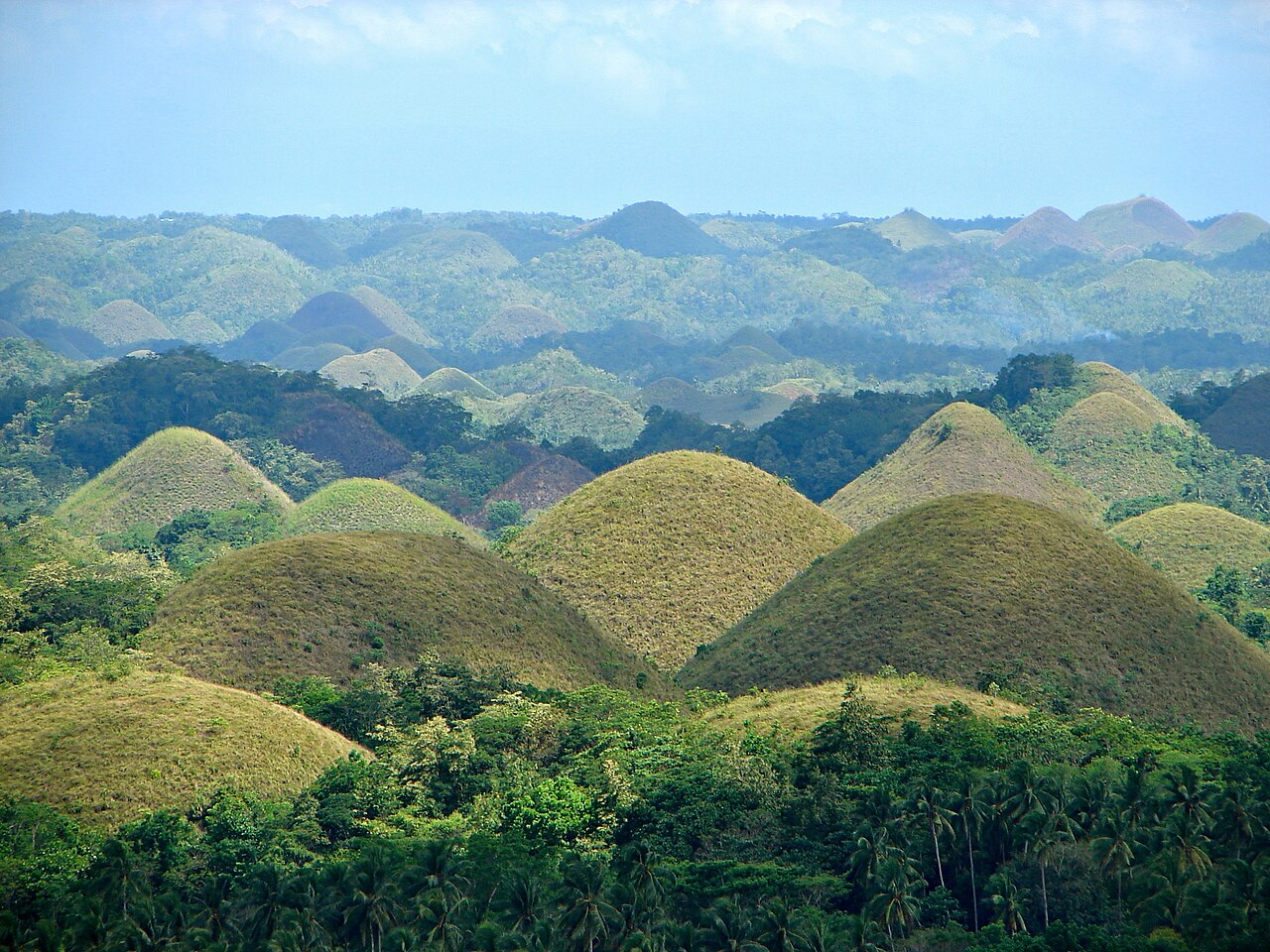
At least 1,260 rounded, grassy hills, and possibly more than 1,700, spread over the middle of Bohol, about 55 km from Tagbilaran. The grass turns chocolate brown in the dry season, which gives them their name. They are a national geological monument.
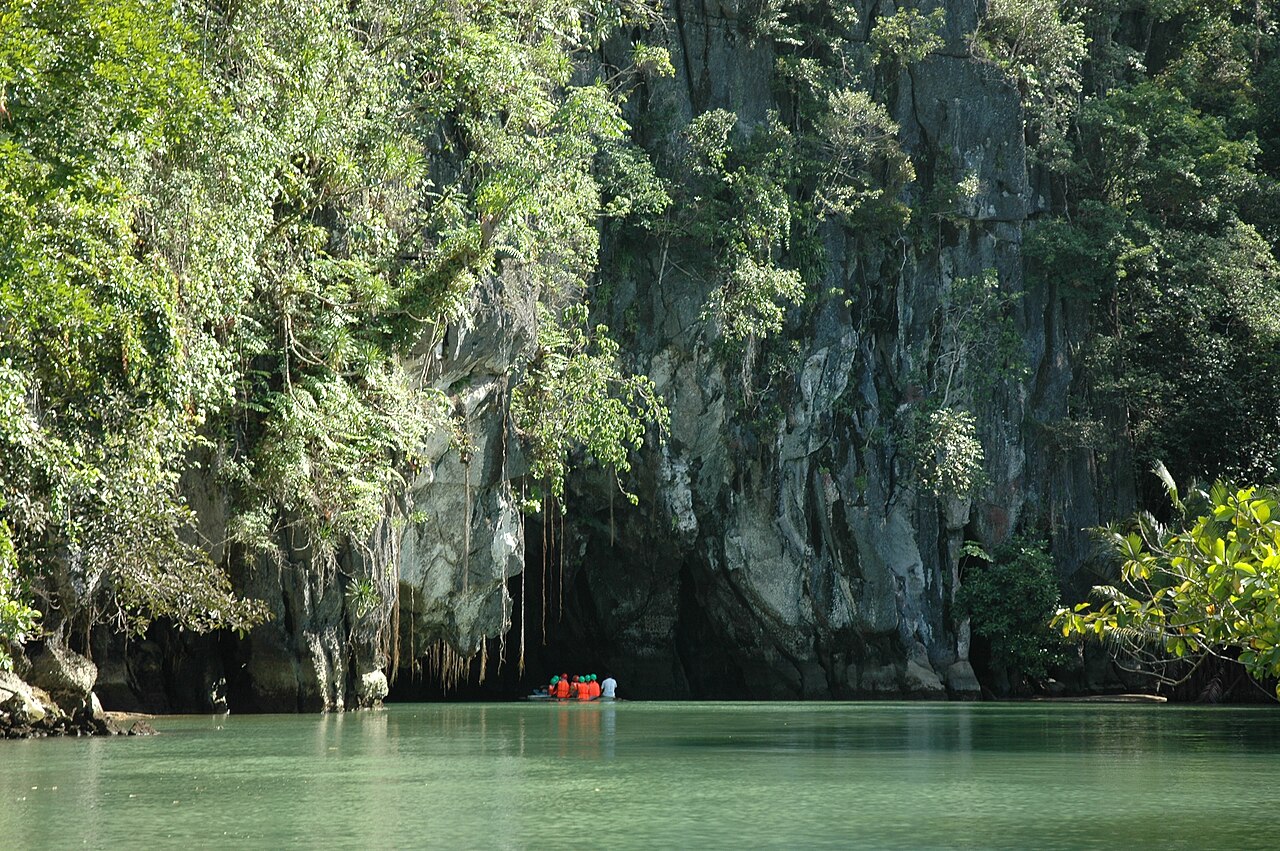
A river that flows through a huge limestone cave straight into the sea, about 80 km north of the city of Puerto Princesa. Visitors enter by small paddle boat to see the caverns and their rock formations. The national park was listed by UNESCO in 1999.
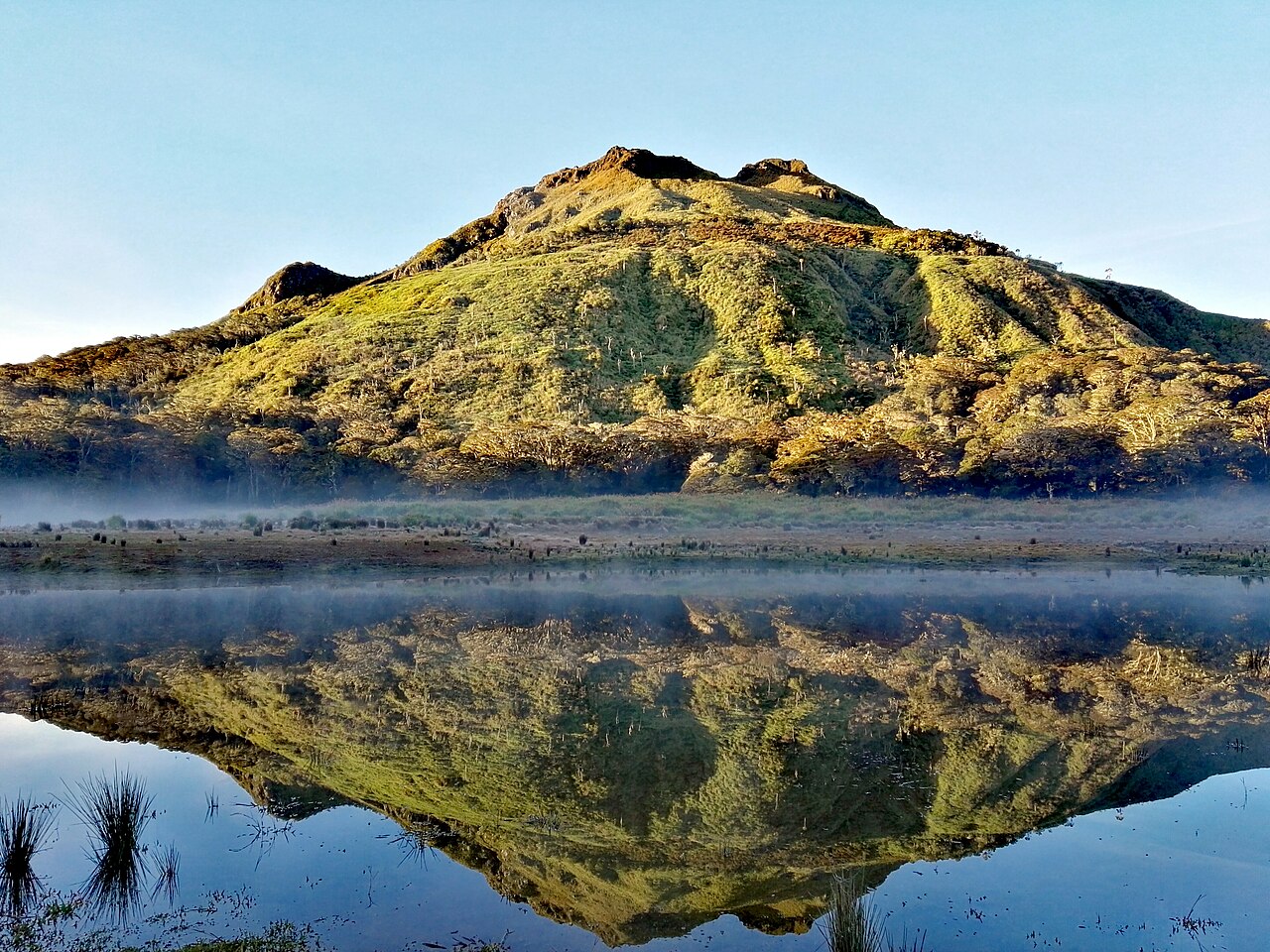
The highest mountain in the Philippines, 2,954 m, a dormant volcano about 40 km west-southwest of Davao City. Its name means 'revered elder' in local languages, and its forests are home to the rare Philippine eagle.
The Philippines has about 7,641 islands. Luzon in the north and Mindanao in the south are by far the largest, and together they make up about two thirds of the land.
02
The country is named after King Philip II of Spain. A Spanish expedition of the 1540s called some of the islands 'Felipinas' after him, when he was still a prince.
03
With all its islands, the Philippines has a coastline of about 36,289 km, the fifth-longest in the world as of 2026.
04
Filipinos start the Christmas season early: carols and decorations can appear as soon as September 1, the start of the 'ber months'.
05
The Philippine tarsier, found on Bohol, Samar, Leyte and Mindanao, is one of the smallest primates, only about 8.5 to 16 cm tall, with huge eyes for hunting insects at night.
06
The national bird is the Philippine eagle, one of the largest eagles in the world by length and wing surface. It is critically endangered, and it appears on the 1,000-peso banknote.
07
The English word 'boondocks', meaning a remote place, comes from the Tagalog word bundok, 'mountain'. It is one of several English words borrowed from Tagalog, along with 'jeepney' and 'yaya'.
08
Jeepneys, the colourful shared minibuses of Filipino streets, grew out of American military jeeps left behind after the Second World War. Their name joins 'jeep' and 'jitney'.
09
Basketball, brought by the Americans in the early 1900s, is the most popular sport in the Philippines, and hoops hang in villages all over the islands.
10
Independence Day is 12 June, the date of the 1898 declaration against Spain, although full independence from the United States came on 4 July 1946. The holiday was moved from 4 July to 12 June in 1962, and a law confirmed the change in 1964.
11
In a typical year about 19 typhoons enter the area watched by the Philippine weather service, most of them between July and October.
12
The Rice Terraces of the Philippine Cordilleras, listed in 1995, were among the first sites UNESCO put on its World Heritage List as a 'cultural landscape'.
13
The Sinulog festival in Cebu City, held on the third Sunday of January in honour of the Santo Niño (the Child Jesus), is one of the biggest festivals in the country; the 2026 festival drew more than 5 million people.
Filipinos show respect by adding po to sentences and saying opo instead of oo for 'yes' when speaking to older people or strangers. Visitors are not expected to know this, but a 'salamat po' is always appreciated.
English goes a long way
English is an official language and is taught in schools, so signs, menus and many conversations are in English. People mix it freely with Filipino, a blend often called Taglish.
Plan around typhoon season
The dry season runs roughly from December to May. Typhoons are most common from July to October, when ferries and flights can be cancelled at short notice, so leave spare days when island-hopping and follow the PAGASA weather bulletins.
Jeepneys and tricycles
Jeepneys follow fixed routes painted on the side; pass your fare forward to the driver and say 'Para po!' to get off. Tricycles, motorbikes with sidecars, cover short trips in towns. Agree the fare before you ride, and carry small notes and coins.
Cash and small notes
The currency is the Philippine peso. Cards work in cities and malls, but markets, jeepneys, tricycles and small islands run on cash, and ATMs can be scarce away from towns.
Emergency number
As of 2026, the national emergency hotline is 911. It replaced the old 117 number in 2016 and connects to police, fire and ambulance services.
Dress for churches and heat
Cover shoulders and knees when visiting churches and mosques. Light cotton clothes, a hat and sun cream help in the tropical heat, and a light jacket is useful in air-conditioned buses and in cool Baguio.
Drink safe water
Drink bottled or filtered water rather than tap water, and be careful with ice from street stalls if you have a sensitive stomach.