World Stroll
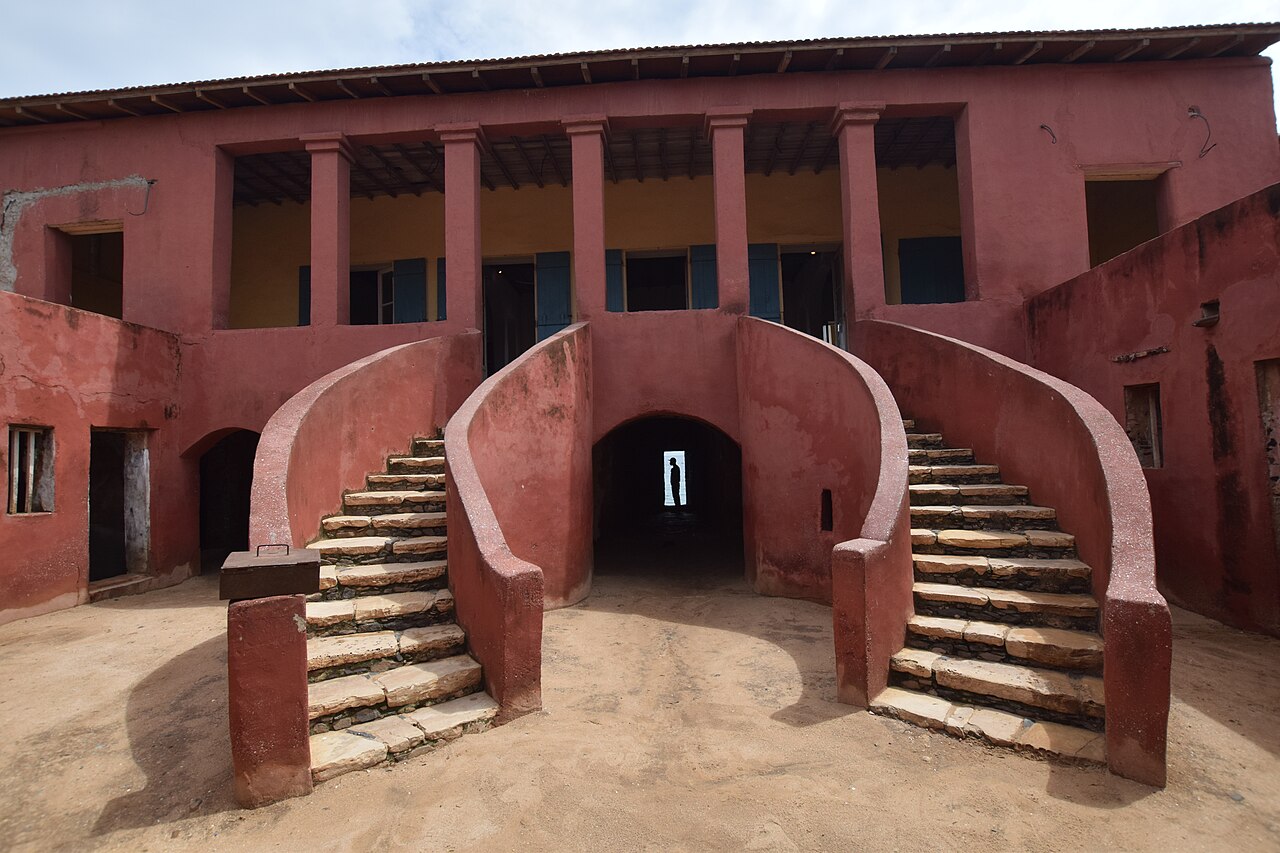
House of Slaves
Photo: Charlottedkr, CC BY-SA 4.0
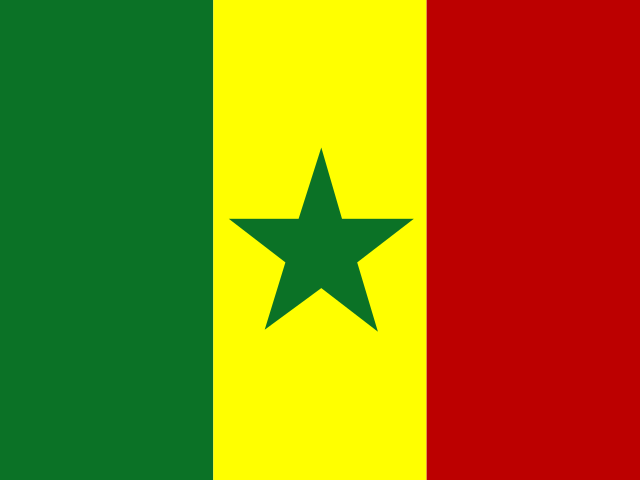
Flag of Senegal
Western Africa

Senegal

The westernmost corner of mainland Africa, where fishing canoes crowd the beaches, a whole family shares one big dish of rice and fish, and every guest is welcomed with teranga.
Your trip to Senegal

Ready for the trip?

10 questionsAbout 3 minutesNo timer
Explore Senegal
You have explored 0 of 9 parts. Scroll on to discover the rest.
AlgeriaBeninBrazilBurkina FasoCameroonCape VerdeDR CongoGambiaGhanaGuineaGuinea-BissauIvory CoastLiberiaLibyaMaliMauritaniaNigerNigeriaSenegalSierra LeoneTogoWestern Sahara

Neighbours

Going to Senegal?Phrases, table manners and local tips on one printable page. Send a postcard from SenegalA free digital postcard for family and friends.
Overview

Senegal at a glance

Senegal lies on the Atlantic coast of West Africa, between the Sahara to the north and the green, rainy south. Its capital, Dakar, sits on the Cap-Vert peninsula, and nearby Pointe des Almadies is the westernmost point of mainland Africa. Most of the country is flat savanna, bordered by the Senegal River in the north and crossed by the Saloum, Gambia and Casamance rivers, and it almost completely surrounds its small neighbour, The Gambia.

For centuries Wolof, Serer, Fula and Mandinka kingdoms ruled here. From the 1400s European traders came to the coast, and small islands such as Gorée and Saint-Louis became part of the Atlantic trade, including the trade in enslaved people. France later ruled the whole territory, and Dakar became the capital of French West Africa. Senegal became independent in 1960, and since then power has always changed hands peacefully, never through a military coup.

Today about 18 million people live in Senegal, most of them Muslim. French is the official language, but Wolof is the everyday language of the streets and markets. The Senegalese are proud of teranga, their word for hospitality, and of their music, wrestling, football and food. Visitors come for Dakar's lively streets, the old island towns, the pink lake, the mangroves of the Saloum Delta, the bird parks of the north and the wildlife of the east.

CapitalDakar
PopulationAbout 18 million (2023 census)
Official languageFrench. Wolof is spoken by most people, and several other languages, including Pulaar, Serer, Jola, Mandinka and Soninke, are recognised national languages
CurrencyWest African CFA franc (XOF)
AreaAbout 196,700 km²
GovernmentSemi-presidential republic with an elected president and a National Assembly
Highest pointA ridge 648 m high near the village of Nepen Diakha, in the southeast
Longest riverThe Senegal River, about 1,640 km long counting its main headwater, the Bafing. It forms much of the northern border with Mauritania
NeighboursMauritania, Mali, Guinea, Guinea-Bissau and The Gambia. Across the sea: Cape Verde
Drives on theRight
Calling code+221
Next: Story

The story

A short history of Senegal

People have lived in Senegal since prehistoric times, and the great stone circles and shell mounds of the Saloum region are more than a thousand years old. From the 1300s the Wolof Jolof Empire united much of the country. Portuguese sailors arrived in the 1400s, followed by the Dutch, the English and the French, who traded from islands along the coast. France conquered the interior in the 1800s, and Senegal became independent in 1960.

  1. 1350

    The Jolof Empire rises

    From the middle of the 1300s the Wolof state of Jolof grew into a loose union: first the kingdoms of Waalo, Cayor and Baol, and later the Serer kingdoms of Sine and Saloum, together covering much of today's Senegal. Tradition names its founder as Ndiadiane Ndiaye.

  2. 1444

    Portuguese sailors reach Cap-Vert

    The Portuguese navigator Dinis Dias sailed past the mouth of the Senegal River and reached the westernmost point of Africa, which he named Cabo Verde, the Green Cape, for its lush vegetation. Portuguese traders soon set up posts along the coast.

  3. 1549

    The Battle of Danki

    Amari Ngoné Fall of Cayor defeated and killed the ruler of Jolof at Danki. After the battle Cayor and the other kingdoms became independent, and the Jolof Empire broke apart into separate states.

  4. 1659

    The French settle at Saint-Louis

    French traders moved their fort to an island near the mouth of the Senegal River, known locally as Ndar, and named the town Saint-Louis. It became the capital of the French colony of Senegal.

  5. 1677

    France takes Gorée

    A French fleet captured the small island of Gorée, off today's Dakar, from the Dutch. Gorée became a French trading post, and one of several places on the Senegalese coast where enslaved Africans were held and shipped across the Atlantic.

  6. 1848

    France abolishes slavery

    After an earlier abolition in 1794 was reversed by Napoleon, France finally abolished slavery in all its colonies in 1848. The same year the people of the old coastal towns elected a deputy to the French parliament for the first time.

  7. 1857

    The French found Dakar

    The French set up a military post at Ndakaaru, a Lebu village on the Cap-Vert peninsula facing Gorée, and called it Dakar. With its deep, sheltered harbour it soon grew into the main port of the region.

  8. 1885

    The Dakar to Saint-Louis railway opens

    The first railway in French West Africa linked Dakar with Saint-Louis. It carried peanuts, the colony's main crop, to the port, and helped Dakar grow.

  9. 1887

    Amadou Bamba founds Touba

    The Sufi teacher Amadou Bamba, founder of the Mouride brotherhood, founded the town of Touba in central Senegal. The French exiled him to Gabon in 1895, and today Touba is a holy city and his burial place.

  10. 1902

    Dakar becomes the capital of French West Africa

    Dakar replaced Saint-Louis as the capital of French West Africa, a vast federation of French colonies that stretched as far as today's Niger and Guinea.

  11. 1914

    Blaise Diagne is elected to Paris

    Blaise Diagne, born on Gorée, was elected to the French Chamber of Deputies for Senegal's Four Communes. He was the first person of full West African descent to sit in the French parliament.

  12. 1960

    Senegal becomes independent

    Senegal and French Sudan became independent together as the Mali Federation on 20 June 1960, but Senegal left the federation two months later and became a separate republic. The poet Léopold Sédar Senghor was its first president. Independence Day is celebrated on 4 April.

  13. 1982

    The Senegambia Confederation

    Senegal and The Gambia formed a loose confederation on 1 February 1982 to work more closely together. It was dissolved in 1989.

  14. 2000

    A peaceful change of party

    The opposition leader Abdoulaye Wade won the presidential election, and the party that had governed since independence handed over power peacefully. It was widely praised as a milestone for democracy in Africa.

  15. 2024

    Senegal starts producing oil

    In June 2024 oil began to flow from the Sangomar field in the Atlantic, about 100 km south of Dakar, making Senegal an oil producer for the first time.

Next: At the table

At the table

What to eat in Senegal

Senegalese cooking is built on rice, millet, fish from the Atlantic, peanuts, onions, lime and chilli. The main meal is lunch, usually one big dish of rice with fish or meat and vegetables, served on a large shared platter in the middle of the family, who eat from it with a spoon or with the right hand. Street food fills the day, from bean sandwiches at breakfast to grilled meat in the evening, and afterwards comes a sweet millet dessert and several small glasses of strong mint tea, called attaya.

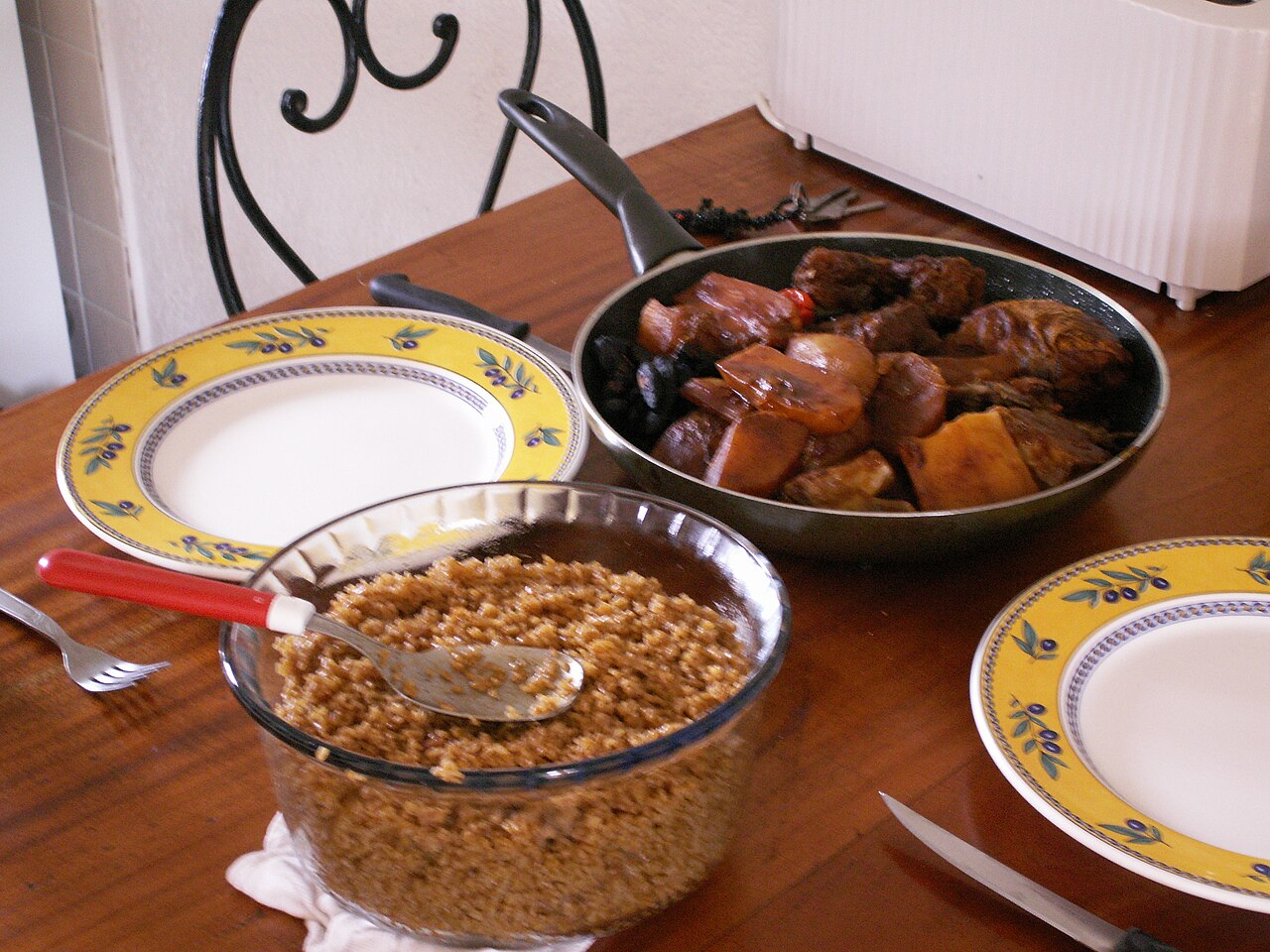
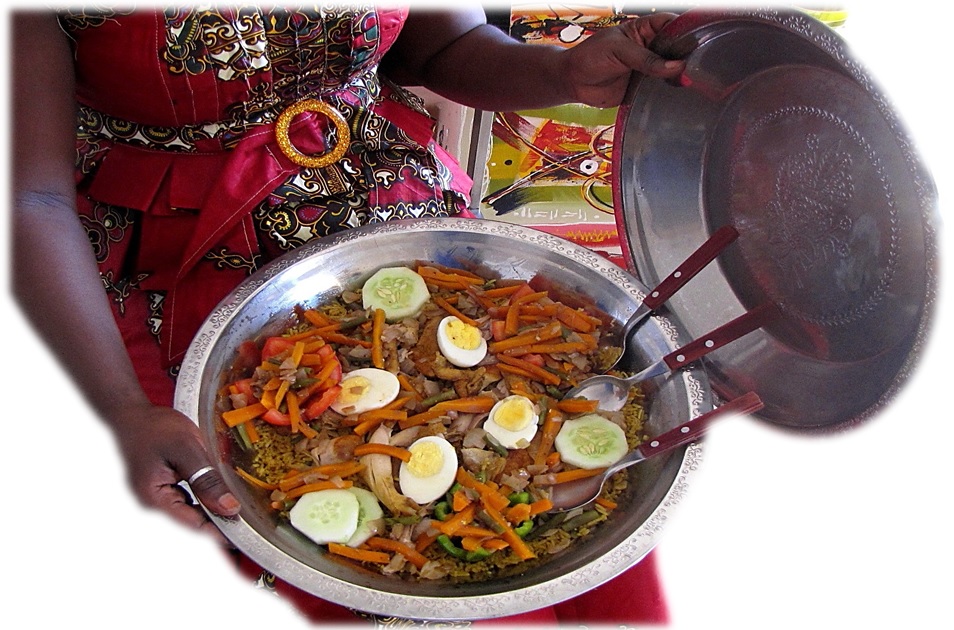
Thieboudienne
Photo: KVDP, Public domain
RiceRecipe

Thieboudienne

ceebu jën
Saint-Louis, now eaten all over Senegal

The national dish: fish stuffed with a paste of parsley, garlic and chilli, cooked in a tomato sauce with vegetables such as cabbage, carrot, cassava, aubergine and sweet potato, and then broken rice cooked in the same rich sauce. The fish and vegetables are piled on top of the red rice.

In 2021 UNESCO added 'Ceebu jën, a culinary art of Senegal' to its list of the Intangible Cultural Heritage of Humanity. Its name simply means 'rice and fish' in Wolof.

See the recipe
Serves 6 2 h

Ingredients

  • 1.2 kg firm white fish steaks, such as grouper, sea bass or hake
  • A large bunch of parsley, 4 cloves garlic, 1 small chilli and 2 spring onions, for the stuffing
  • 100 ml vegetable or peanut oil
  • 2 onions, chopped
  • 140 g tomato paste
  • 1 small cabbage, cut into quarters
  • 2 carrots, 1 small cassava or 1 sweet potato, 1 aubergine and 1 small squash, cut into large pieces
  • 1 whole scotch bonnet chilli (optional)
  • 600 g broken rice (or long-grain rice, rinsed)
  • 1 lime, and salt and black pepper

Method

  1. Blend the parsley, garlic, chilli and spring onions with a pinch of salt and pepper. Cut small slits in the fish and push some of the paste into them.
  2. Heat the oil in a large, heavy pot and brown the fish on both sides for a few minutes. Lift it out and set it aside.
  3. Fry the onions in the same oil until soft, add the tomato paste and any leftover herb paste and fry for 5 minutes, stirring. Add about 2 litres of water and bring to the boil.
  4. Add the harder vegetables (cabbage, carrots, cassava) and the whole chilli, simmer for 20 minutes, then add the fish and softer vegetables and cook for 20 minutes more. Lift out the fish and vegetables, cover and keep warm.
  5. Measure the sauce: you need about 1.2 litres for the rice (add water if needed). Add the rice, cover tightly and cook on a low heat for 25 to 30 minutes, until tender. A crisp layer at the bottom of the pot, called xoon, is a treat.
  6. Spread the red rice on a large platter, arrange the fish and vegetables on top, and serve with lime wedges.
Commons: yassa poulet
Photo: Arnaud 25, CC0
Main courseRecipe

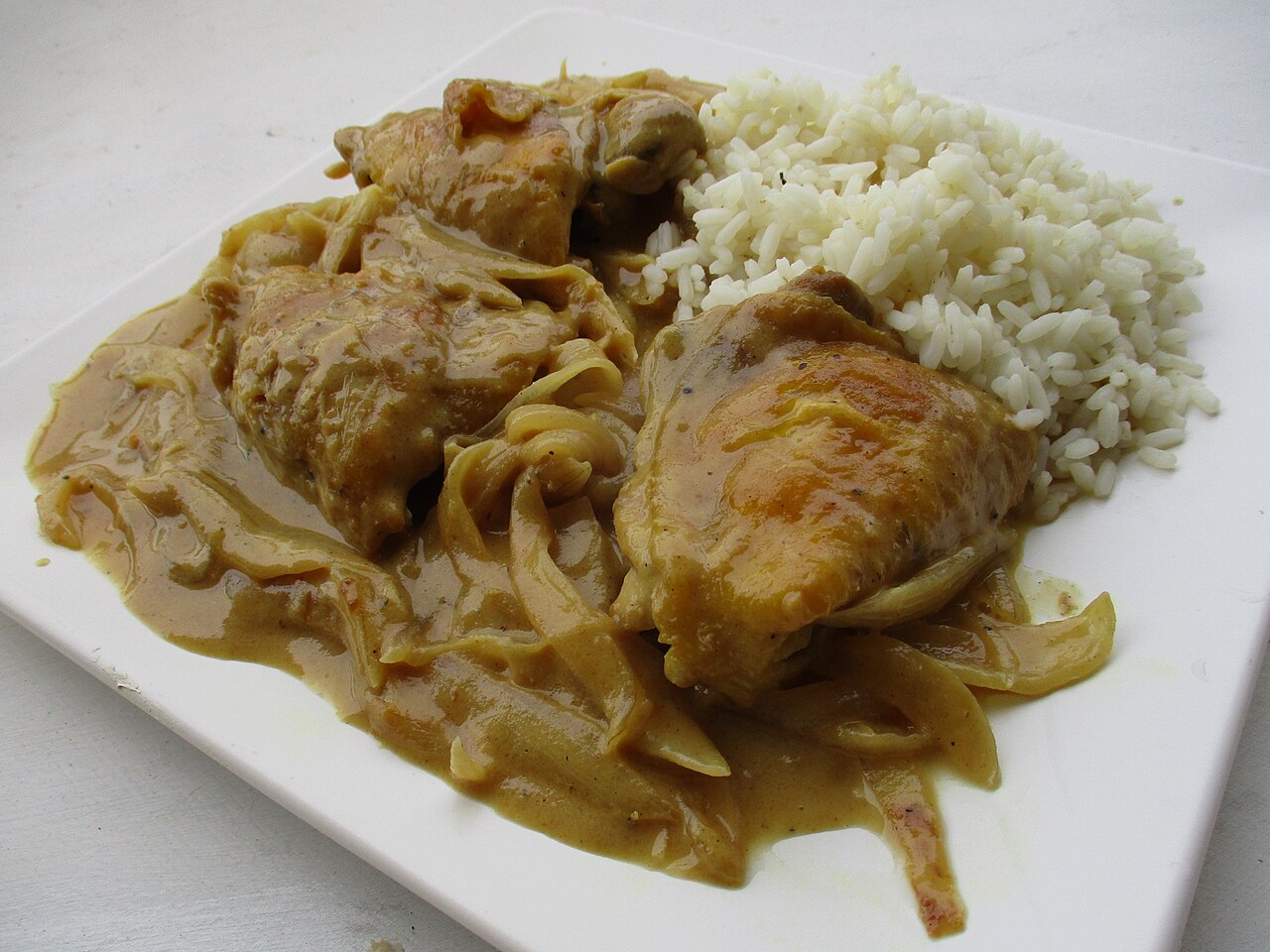
Chicken yassa

yassa ginaar
Senegal, especially Casamance in the south; now eaten all over West Africa

Chicken marinated in lemon or lime juice, mustard and a great heap of sliced onions, grilled or fried, and then simmered with the onions until they turn soft and sweet. It is served with plain white rice. It is also made with fish (yassa jën) or lamb.

'Yassa' is the name of the cooking method, marinating and then stewing, and 'ginaar' is the Wolof word for chicken.

See the recipe
Serves 4 1 h 30 min

Ingredients

  • 1.2 kg chicken pieces (legs and thighs)
  • 5 large onions, thinly sliced
  • Juice of 3 lemons or 4 limes
  • 2 tablespoons Dijon mustard
  • 4 cloves garlic, crushed
  • 1 whole scotch bonnet chilli or a pinch of chilli flakes (optional)
  • 4 tablespoons vegetable oil
  • 1 bay leaf, and salt and black pepper
  • A handful of green olives (optional)
  • White rice to serve

Method

  1. Mix the onions, lemon juice, mustard, garlic, 2 tablespoons of oil, salt and pepper in a large bowl. Add the chicken, turn to coat, cover and leave in the fridge for at least 2 hours, or overnight.
  2. Lift the chicken out of the marinade, keeping the onions and juices. Grill or fry the chicken in a little oil until browned on all sides.
  3. Heat the rest of the oil in a large pot and cook the onions from the marinade over a medium heat for about 15 minutes, until soft and golden.
  4. Add the chicken, the rest of the marinade, the bay leaf, the chilli and a small glass of water. Cover and simmer for 30 to 40 minutes, until the chicken is cooked through and the sauce is thick.
  5. Add the olives if using, taste for salt and serve hot with white rice.
Peanut stew
Photo: Marshiayers, CC0
Main courseRecipe

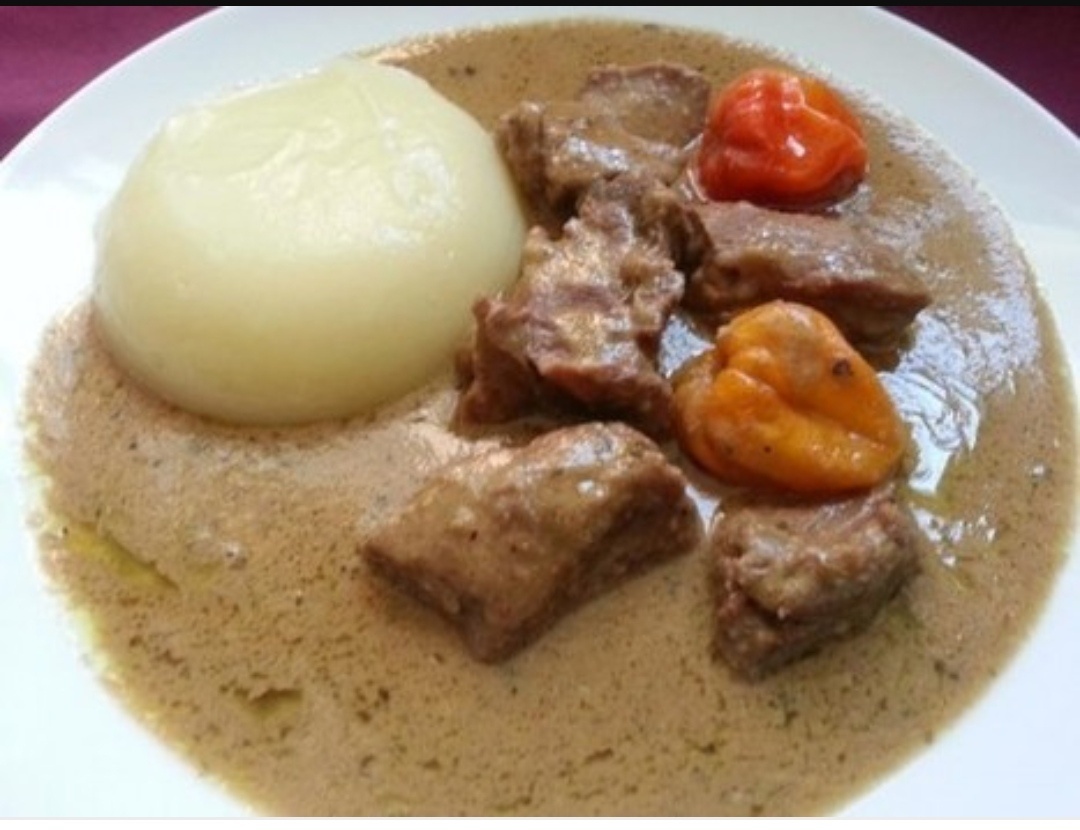
Mafé

maafe
All of Senegal, and across West Africa

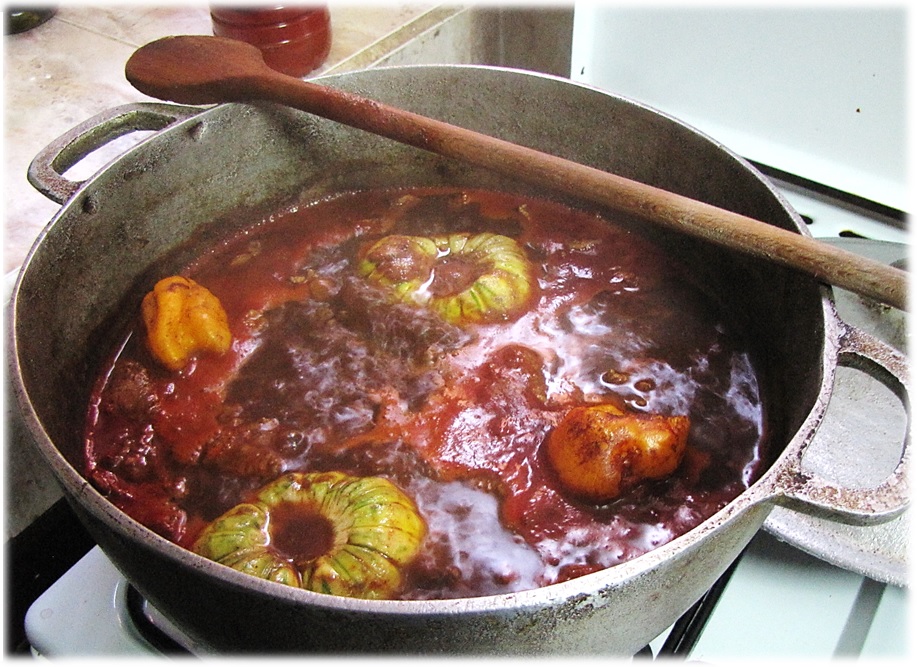
A rich stew of beef, lamb or chicken in a sauce of peanut paste and tomato, with vegetables such as sweet potato, cabbage and carrot. It is served over white rice.

Peanuts are Senegal's main cash crop, and the city of Kaolack is the centre of the peanut trade.

See the recipe
Serves 4 1 h 30 min

Ingredients

  • 700 g beef or lamb, cut into chunks, or chicken pieces
  • 3 tablespoons vegetable oil
  • 2 onions, chopped
  • 3 cloves garlic, crushed
  • 2 tablespoons tomato paste and 2 chopped tomatoes
  • 150 g smooth unsweetened peanut butter
  • 1 litre water or stock
  • 2 sweet potatoes and 2 carrots, cut into chunks
  • A quarter of a small cabbage, in wedges
  • 1 whole scotch bonnet chilli (optional), and salt and black pepper
  • White rice to serve

Method

  1. Heat the oil in a large pot and brown the meat on all sides. Add the onions and garlic and cook until soft.
  2. Stir in the tomato paste and tomatoes and cook for 5 minutes.
  3. Mix the peanut butter with a ladle of hot water until smooth, then stir it into the pot with the rest of the water. Bring to a gentle simmer and cook for 40 minutes, stirring now and then so it does not stick.
  4. Add the vegetables and the whole chilli and simmer for 25 to 30 minutes more, until the meat and vegetables are tender and a little oil rises to the top.
  5. Season with salt and pepper and serve over rice. People with a peanut allergy must not eat this dish.
Commons: Thiébou yapp
Photo: T.K. Naliaka, CC BY-SA 4.0
Rice

Thiébou yapp

ceebu yàpp
All of Senegal

'Rice and meat': beef or lamb fried with onions, garlic and pepper, then simmered with mustard and water until tender, and rice cooked in the same sauce. It is often garnished with green olives or black-eyed peas, and it is a favourite for celebrations.

Along with ceebu jën and ceebu ginaar (rice and chicken), it belongs to a family of one-pot rice dishes; in Wolof 'ceeb' means rice.

Soupe kandia
Photo: T.K. Naliaka, CC BY-SA 4.0
Main course

Soupou kandia

soupe kandia
All of Senegal

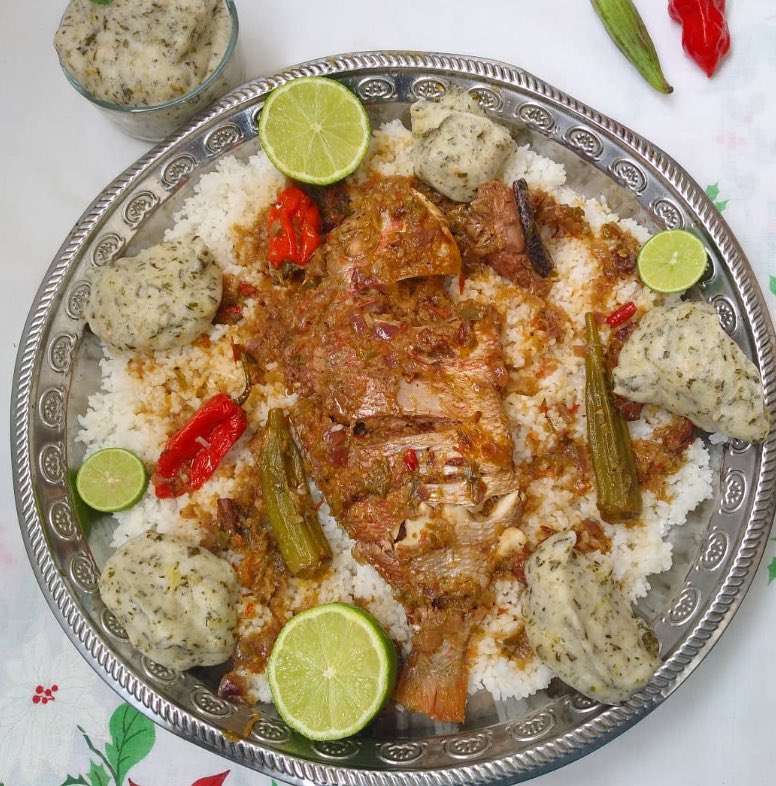
A thick, slippery sauce of okra cooked with red palm oil, fish, dried fish and shellfish, and chilli, served over white rice.

Caldou
Photo: Marshiayers, CC BY-SA 4.0
Main course

Caldou

kaldou
The coastal regions

A light, tangy broth of fresh fish simmered with onions, tomato, chilli and lime juice, served with white rice. It is gentler and more delicate than yassa.

Dibi (food)
Photo: Kalsoum17, CC BY-SA 4.0
Main course

Dibi

All of Senegal, sold at street grills called dibiteries

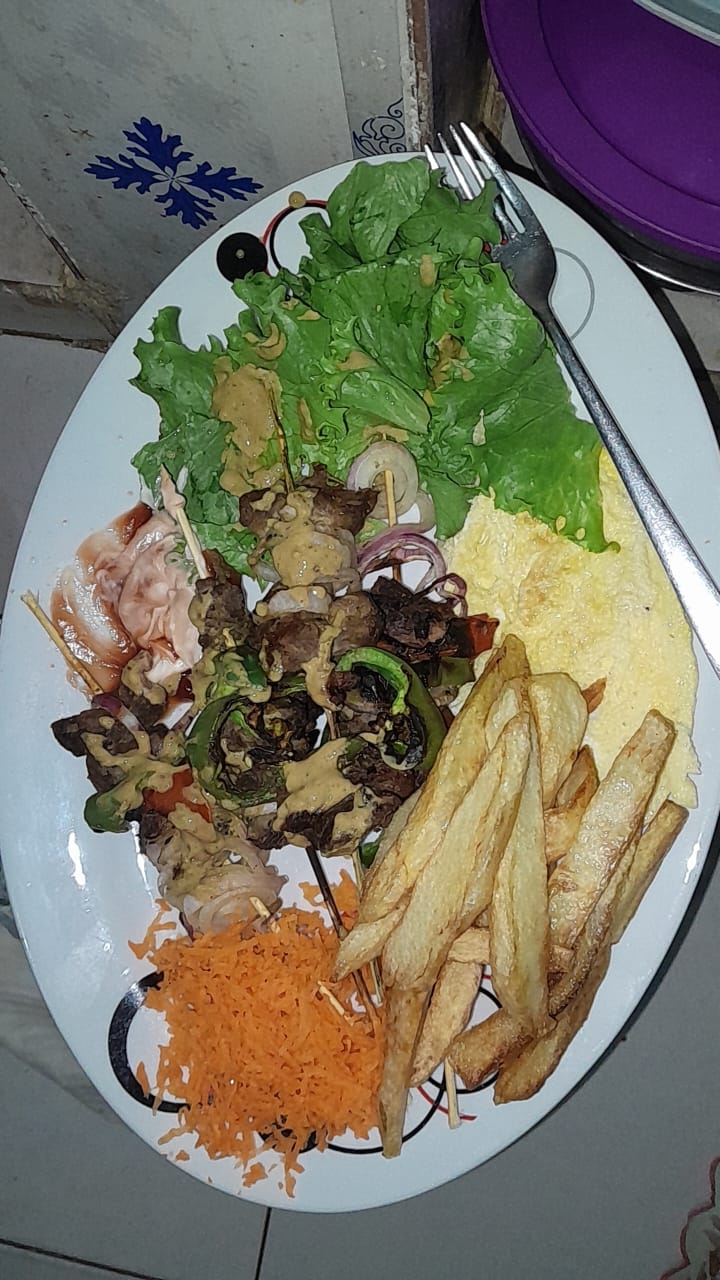
Lamb seasoned and grilled over a fire, then cut into pieces and served on paper with raw or grilled onions, mustard and bread. It is a favourite evening meal.

The word 'dibi' comes from the Soninke language and means barbecue.

Commons: Ndambé
Photo: Laurie Ohlstein, CC BY-SA 4.0
Snack

Ndambé

All of Senegal, a breakfast street food

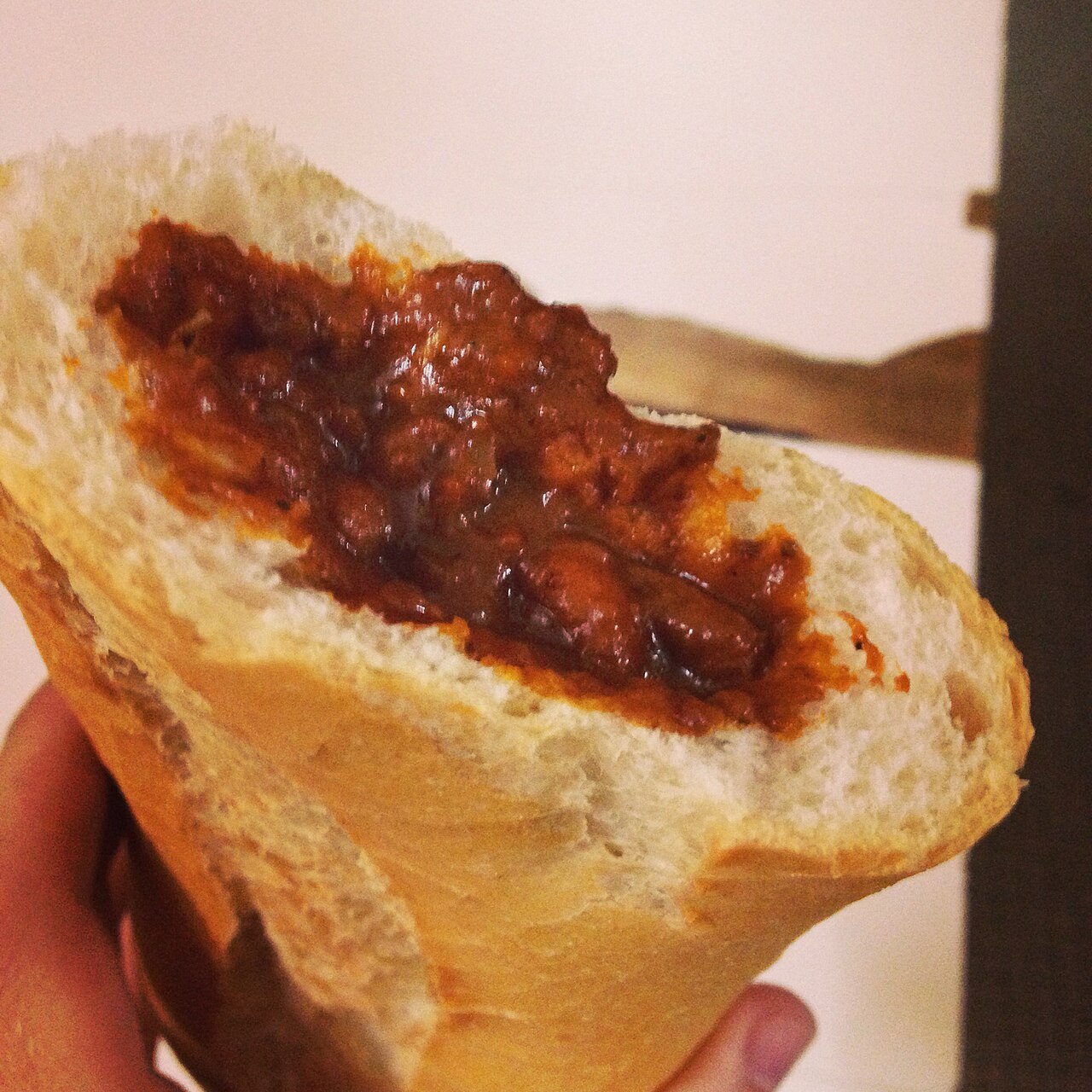
Black-eyed beans slowly cooked in a spicy tomato and onion sauce, spooned into a piece of baguette. It is a filling, cheap breakfast sandwich sold at street stalls.

Commons: fataya senegal
Photo: Ellen.Jedida, CC BY-SA 4.0
Snack

Fataya

Dakar and the towns; similar to the Lebanese fatayer

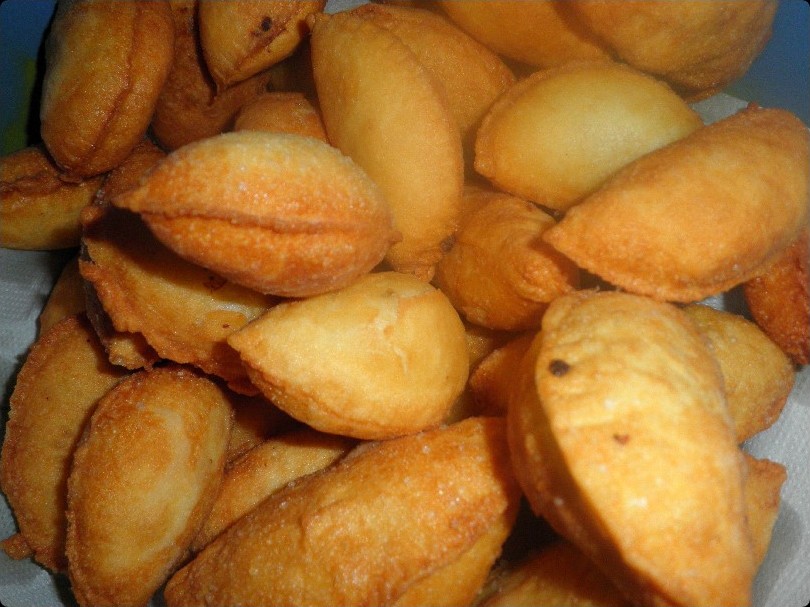
Half-moon turnovers of dough filled with spiced fish or minced meat and deep-fried until golden. They are sold as a snack, often with a sharp onion and chilli sauce.

Senegal has a long-established Lebanese community, and the name matches the Lebanese stuffed pastries called fatayer.

Commons: Thiakry pour un tour de famille
Photo: Yvonneberthe, CC0
DessertRecipe

Thiakry

cakri
All of Senegal and The Gambia

A cool, creamy dessert of small grains of millet couscous stirred into sweetened yogurt or curdled milk, often with a little nutmeg, vanilla and raisins.

See the recipe
Serves 6 30 min

Ingredients

  • 250 g millet couscous (arraw), or fine wheat couscous
  • 500 g plain yogurt
  • 200 g sweetened condensed milk (or sugar to taste)
  • 1 teaspoon vanilla extract
  • A pinch of grated nutmeg
  • 50 g raisins (optional)
  • A pinch of salt

Method

  1. Steam the millet couscous for about 20 minutes (or, with wheat couscous, pour over 250 ml of boiling water with the salt, cover for 5 minutes and fluff with a fork). Leave to cool.
  2. Whisk the yogurt with the condensed milk, vanilla and nutmeg until smooth.
  3. Stir in the cool couscous and the raisins.
  4. Chill for at least an hour and serve cold in small bowls.
Commons: lakh senegal
Photo: T.K. Naliaka, CC BY-SA 4.0
Dessert

Lakh

laax
All of Senegal

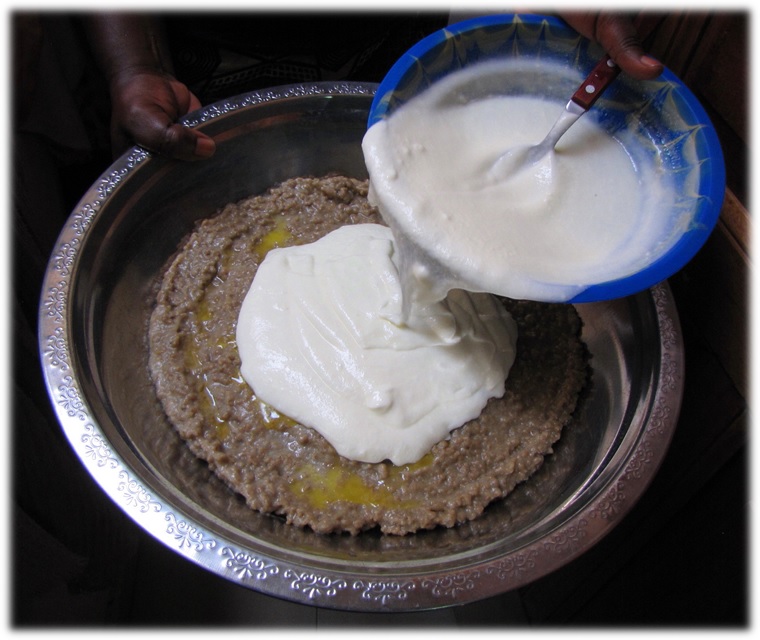
A thick millet porridge topped with a sweet sauce of curdled milk or yogurt, sometimes flavoured with baobab fruit or peanut.

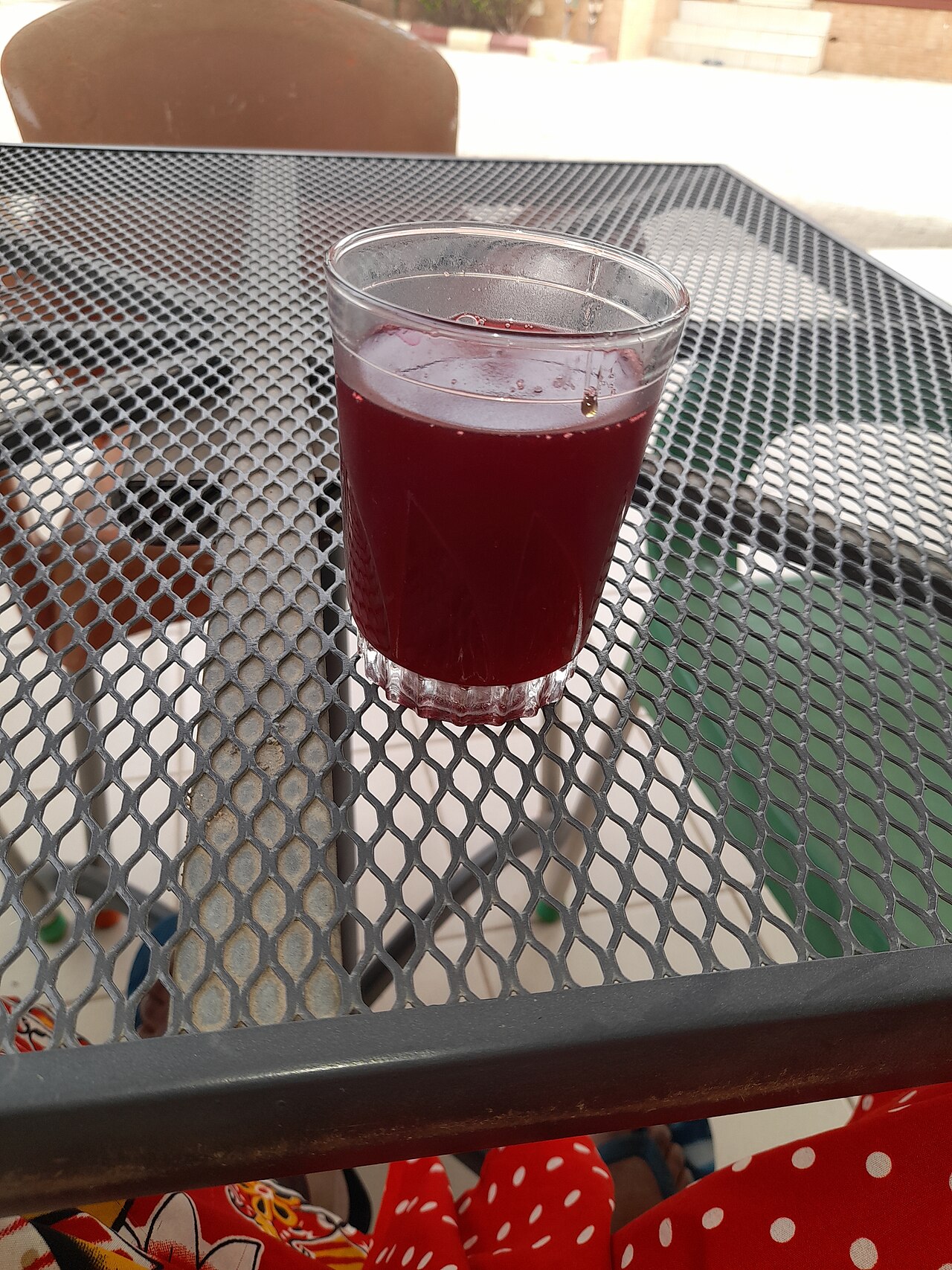
Commons: Bissap
Photo: Lyndadelz, CC BY-SA 4.0
DrinkRecipe

Bissap

bissap
All of Senegal, and much of West Africa

The most popular drink in Senegal: a deep red, sweet and slightly sour juice made from the dried flowers of the roselle hibiscus, often flavoured with mint or orange blossom and served ice cold.

Other favourite homemade juices are bouye, from the fruit of the baobab tree, and a fiery ginger drink called gingembre.

See the recipe
Serves 6 20 min

Ingredients

  • 80 g dried hibiscus flowers (roselle, sold as bissap, sorrel or flor de jamaica)
  • 1.5 litres water
  • 150 to 200 g sugar, to taste
  • A few sprigs of fresh mint
  • 1 teaspoon orange blossom water or vanilla (optional)

Method

  1. Rinse the dried flowers in cold water to remove any dust.
  2. Bring the water to the boil, add the flowers and mint, then turn off the heat and leave to steep for 15 minutes (or soak overnight in cold water for a gentler taste).
  3. Strain through a fine sieve, pressing on the flowers, and stir in the sugar until it dissolves. Add the orange blossom water if you like.
  4. Chill well and serve cold, with ice.
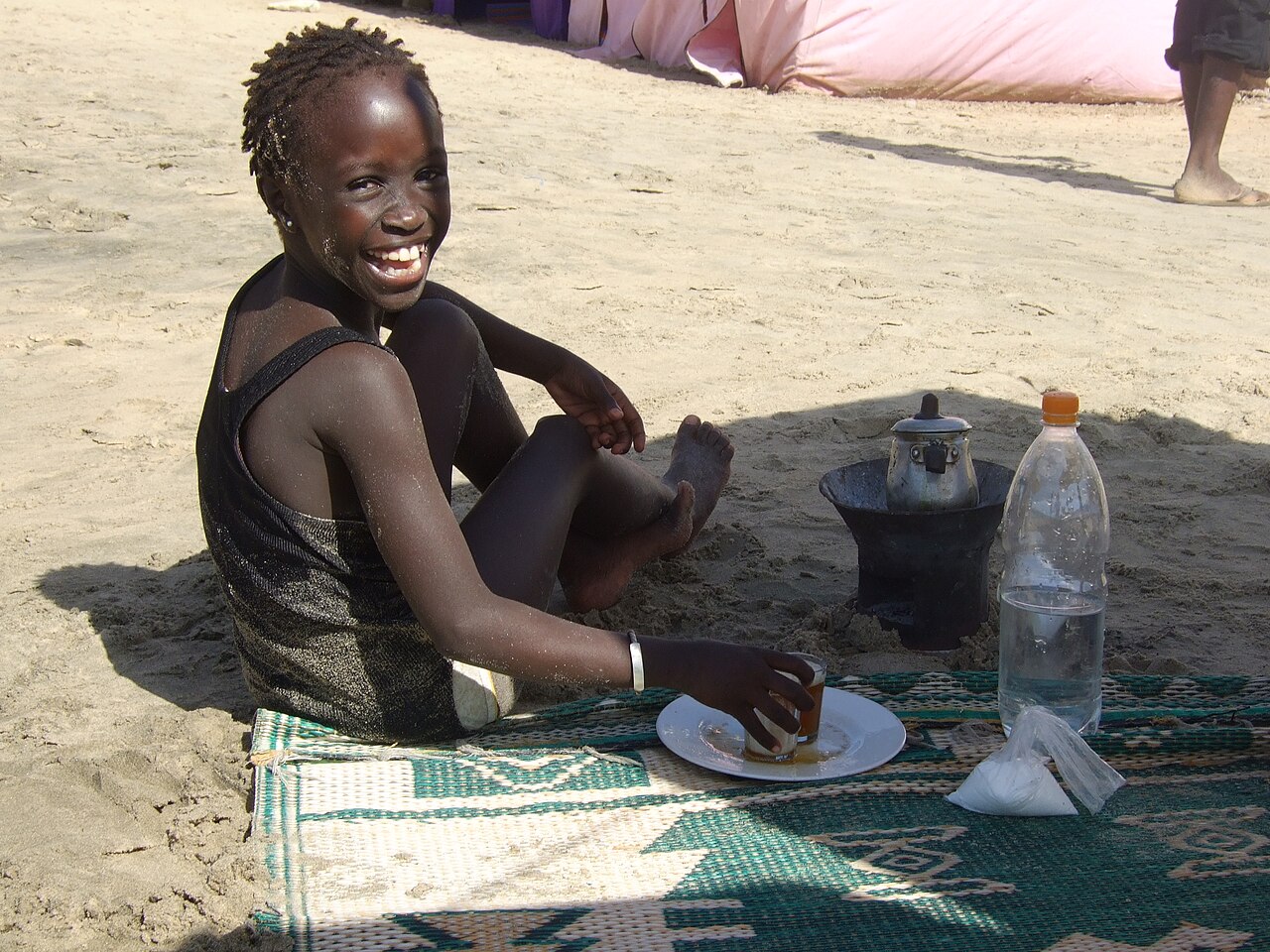
Senegalese tea culture
Photo: Macu Cristófol y Sel, CC BY 2.0
Drink

Attaya

àttaaya
All of Senegal

Chinese green tea boiled with lots of sugar, and often mint, in a small pot over a charcoal stove, then poured from high up between glasses until it has a thick foam. It is served in three rounds, each sweeter than the last.

Making attaya takes a long time, and that is the point: the three rounds are a time to sit, talk and keep friendships going.

Commons: café Touba
Photo: Ibrahima xaalil Ndiaye, CC0
Drink

Café Touba

Named after the holy city of Touba

Coffee roasted and ground together with djar, the peppery seeds of Guinea pepper, and sometimes cloves, then brewed through a filter and served very sweet. It is sold by street vendors all over the country.

Table manners

  • Lunch is usually served on one big platter set on a mat or a low table, and everyone eats from the part of the dish directly in front of them.
  • Wash your hands before eating, and eat with your right hand or a spoon. The left hand is not used for eating or for passing food.
  • Do not reach across the platter. The host or the cook often breaks up the fish or meat and pushes the best pieces towards guests.
  • When the meal is ready, everyone is called with 'kaay lekk', 'come and eat'. When you are full, stop eating and thank the cook.
  • Accept the tea when it is offered and stay for the three rounds if you can; leaving after the first glass can seem hurried.

Next: Cities

Cities

10 cities to know

Most Senegalese live in the west of the country, between Dakar and the old peanut-growing towns of the centre. Dakar and its suburbs are home to more than a fifth of the population. The north follows the Senegal River, the south beyond The Gambia is the green Casamance region, and the east is thinly populated savanna rising to low hills near Mali and Guinea.

DakarThièsToubaSaint-LouisKaolackZiguinchorMbourJoal-FadiouthTambacoundaKédougou
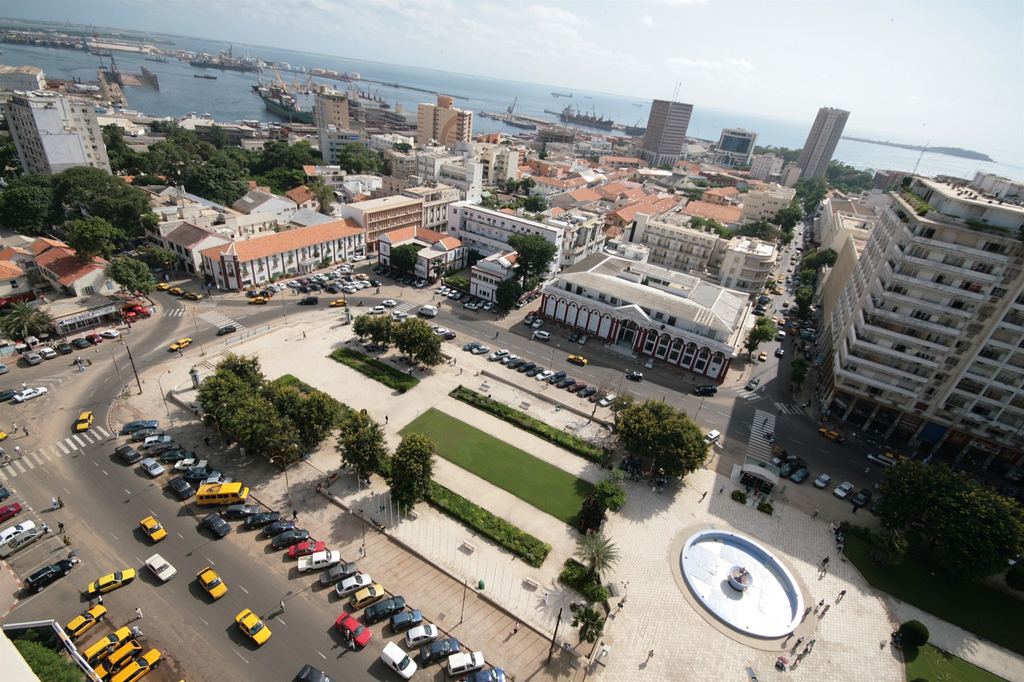
Dakar
Photo: mostroneddo, CC BY 2.0

Dakar Capital

Dakar, on the Cap-Vert peninsula

The capital and largest city, with about 4 million people in the metropolitan area in 2023. It spreads over the Cap-Vert peninsula, the westernmost part of mainland Africa, and is a busy port, a centre of music, art and fashion, and a gateway to the whole of West Africa.

  • The African Renaissance Monument
  • Ferries to Gorée Island
  • Lebu fishing villages such as Yoff and Ngor
  • Live mbalax music
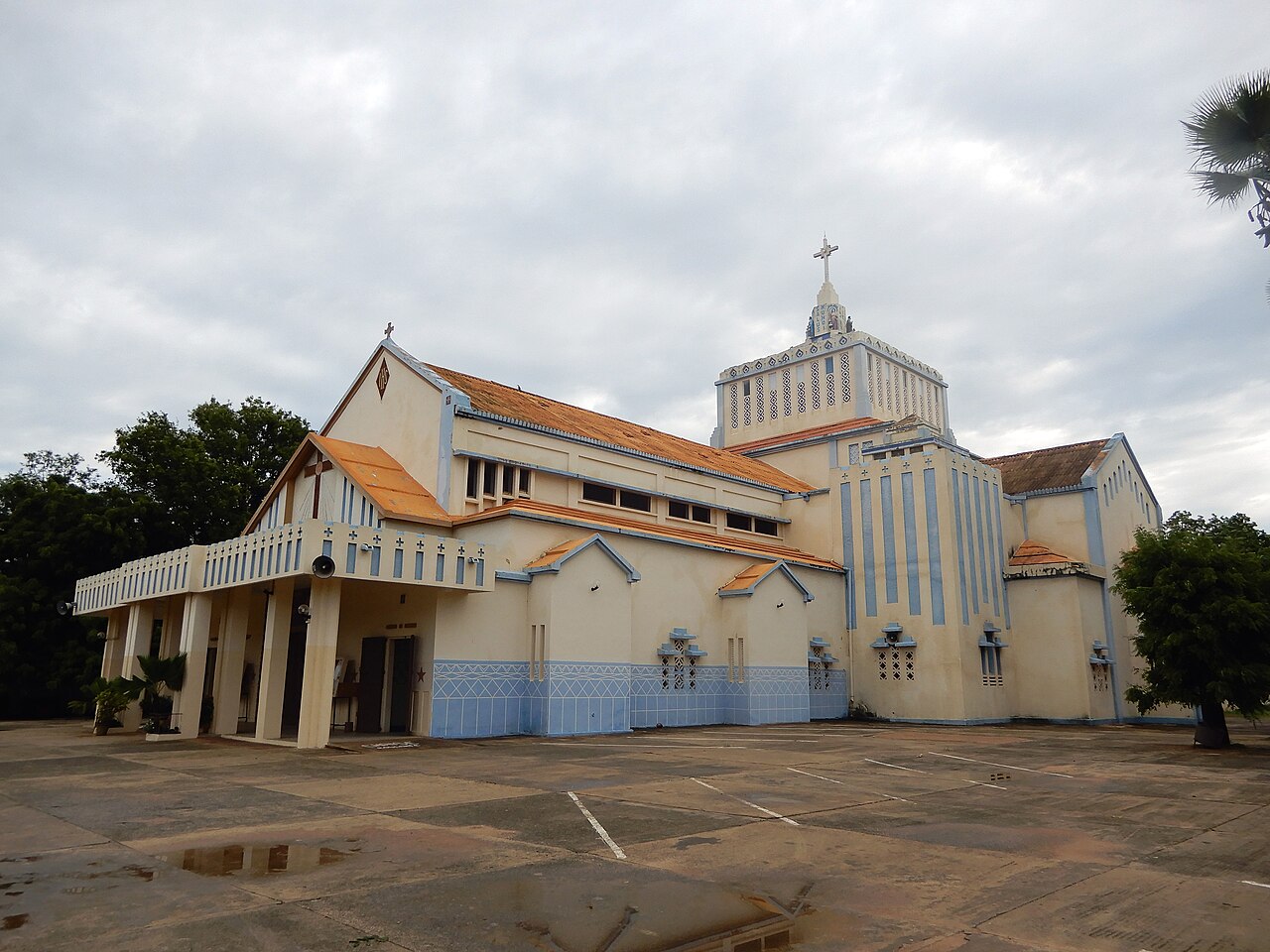
Commons: cathédrale Thiès
Photo: Zythème, CC0

Thiès

Thiès, inland from Dakar

A railway and industrial city about 70 km east of Dakar, at the junction of the old lines to Dakar, Saint-Louis and Mali. It had about 390,000 people in 2023.

  • Its railway junction
  • Industry
  • The roads towards Touba and Saint-Louis
Touba
Photo: John Crane from Prague, Czech Republic, CC BY 2.0

Touba

Diourbel, in the centre

The holy city of the Mouride Sufi brotherhood, founded by Amadou Bamba in 1887. It has grown very fast and counted about 1.1 million people in the 2023 census, second only to Dakar. Every year millions of pilgrims come for the Grand Magal.

  • The Great Mosque
  • The Grand Magal pilgrimage
  • Café Touba
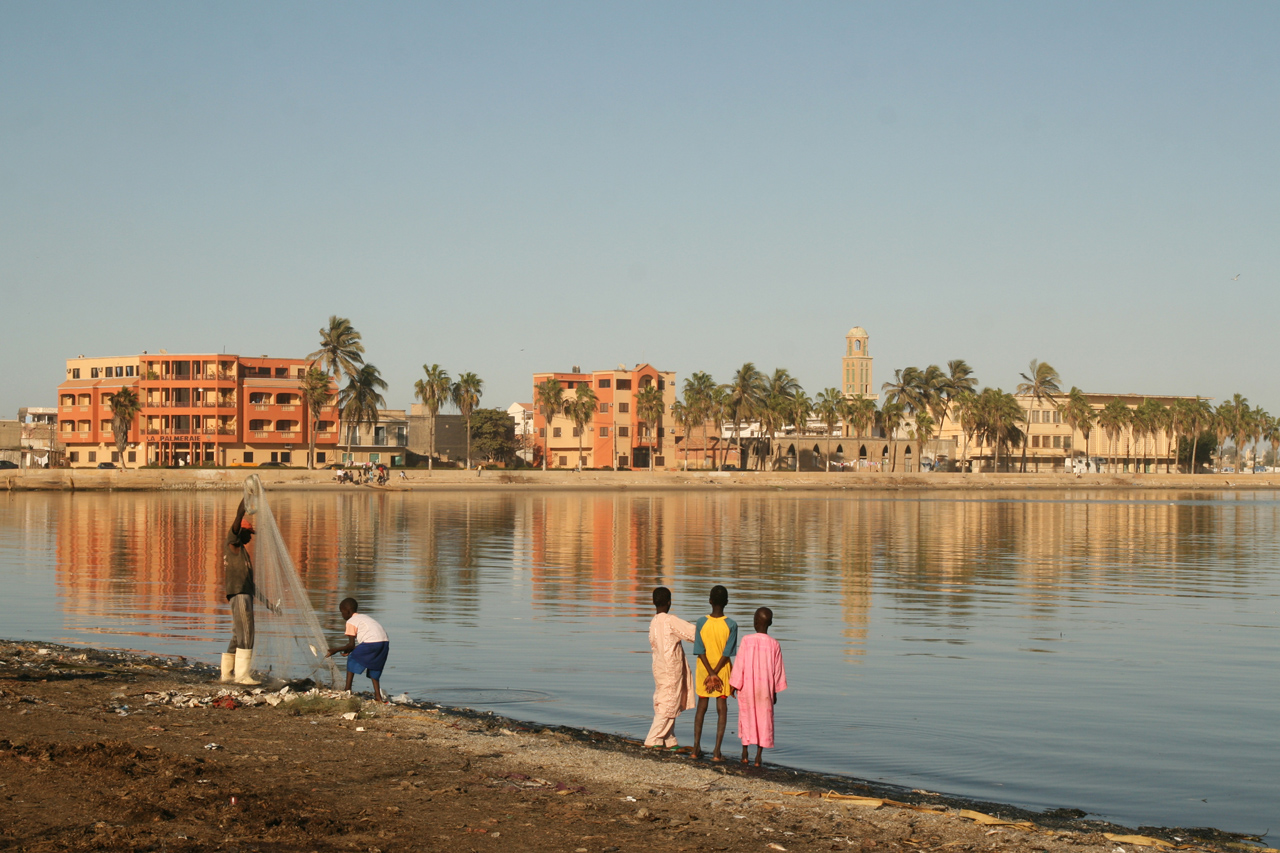
Commons: Saint-Louis city Senegal
Photo: Remi Jouan, CC BY 3.0

Saint-Louis

Saint-Louis, near the mouth of the Senegal River

The old colonial capital, built around a narrow island in the Senegal River near the sea, known in Wolof as Ndar. It was the capital of French West Africa until 1902 and of the colony of Senegal until 1957, and had about 250,000 people in 2023.

  • The Faidherbe Bridge
  • Colonial houses with balconies
  • The Saint-Louis Jazz Festival
  • The Djoudj bird sanctuary nearby
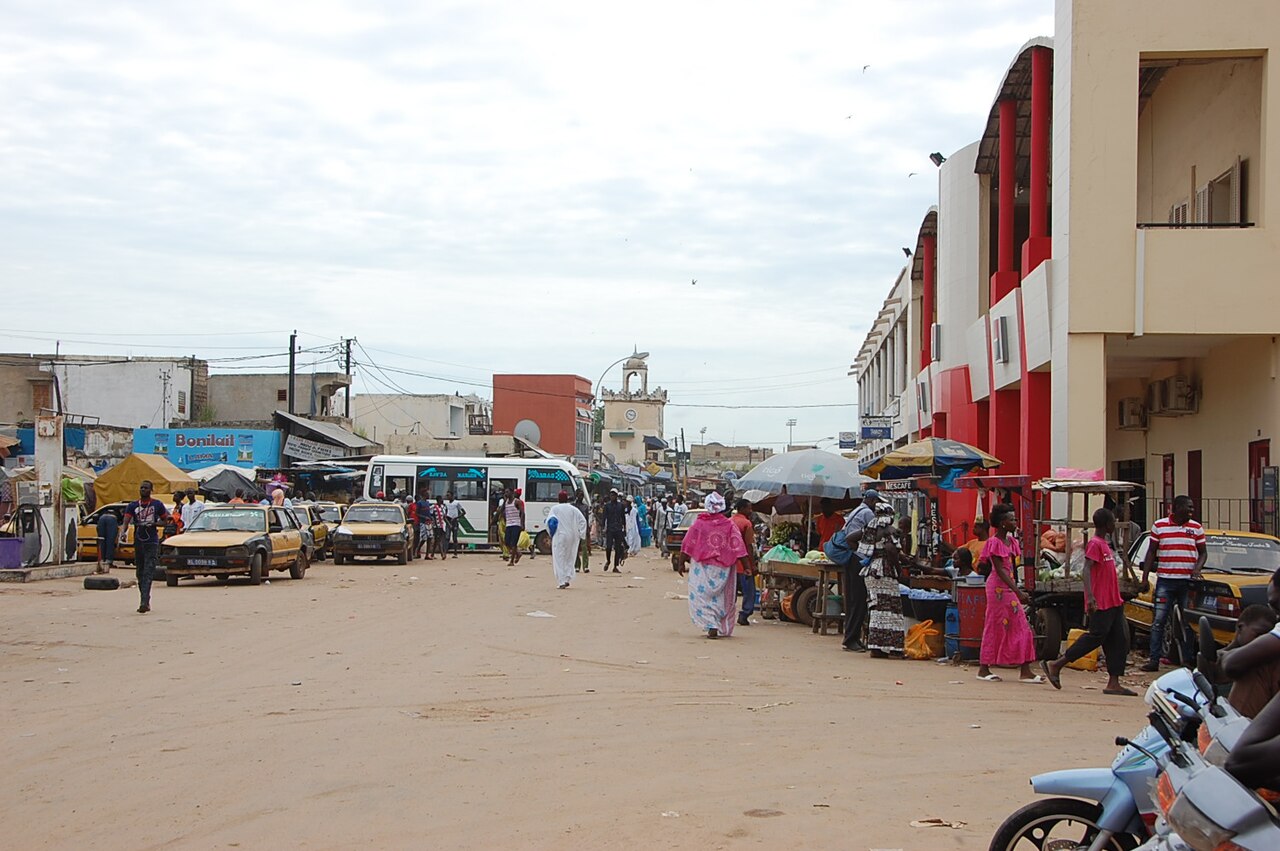
Commons: Kaolack
Photo: Komalick, CC BY-SA 4.0

Kaolack

Kaolack, on the Saloum River

A market town on the Saloum River and Senegal's main centre of the peanut trade. It is also an important centre of Islamic learning for the Tijaniyya brotherhood.

  • The peanut trade
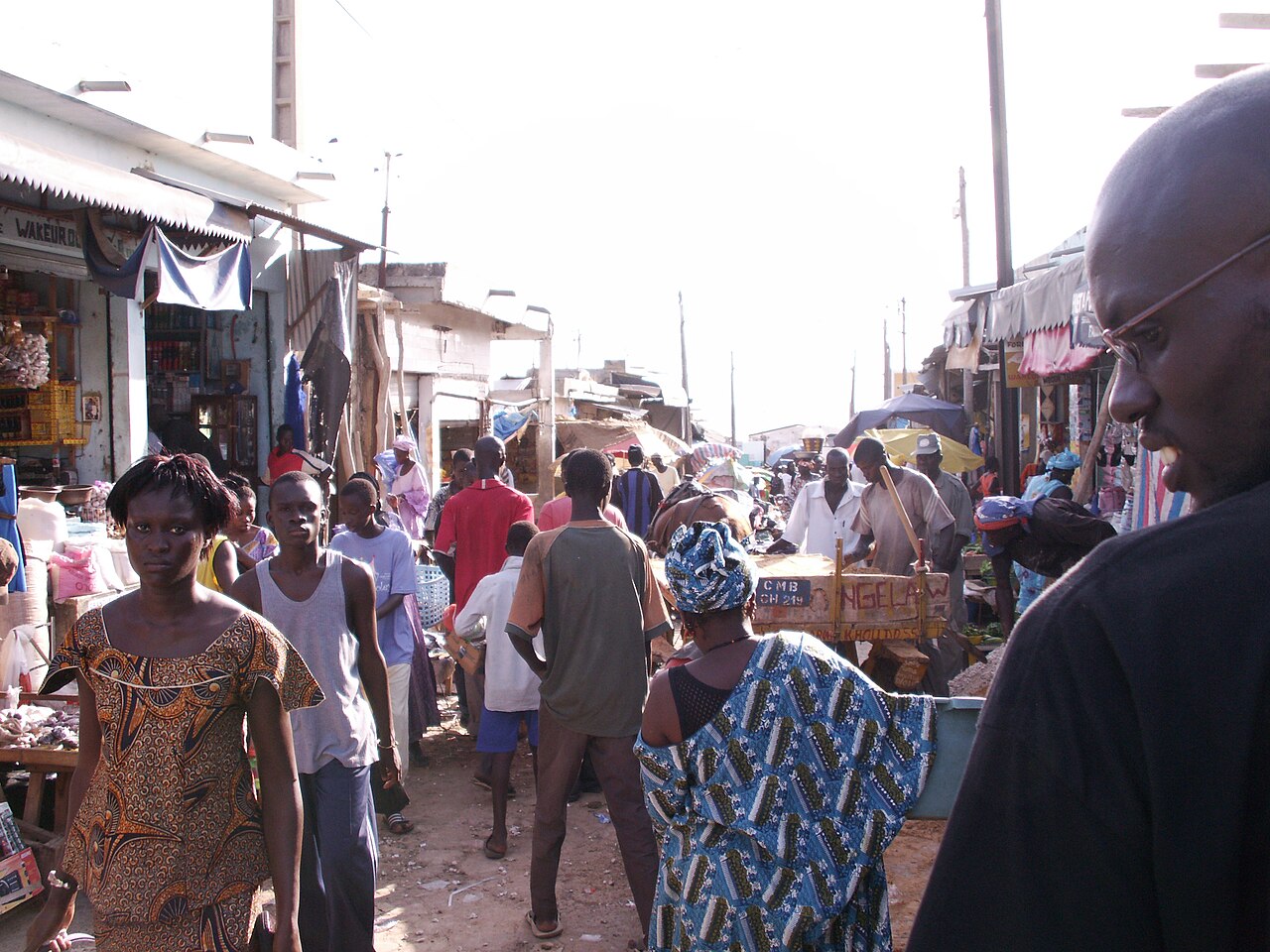
  • A busy regional market
  • Islamic schools and mosques of the Tijaniyya
Ziguinchor
Photo: Ji-Elle, Public domain

Ziguinchor

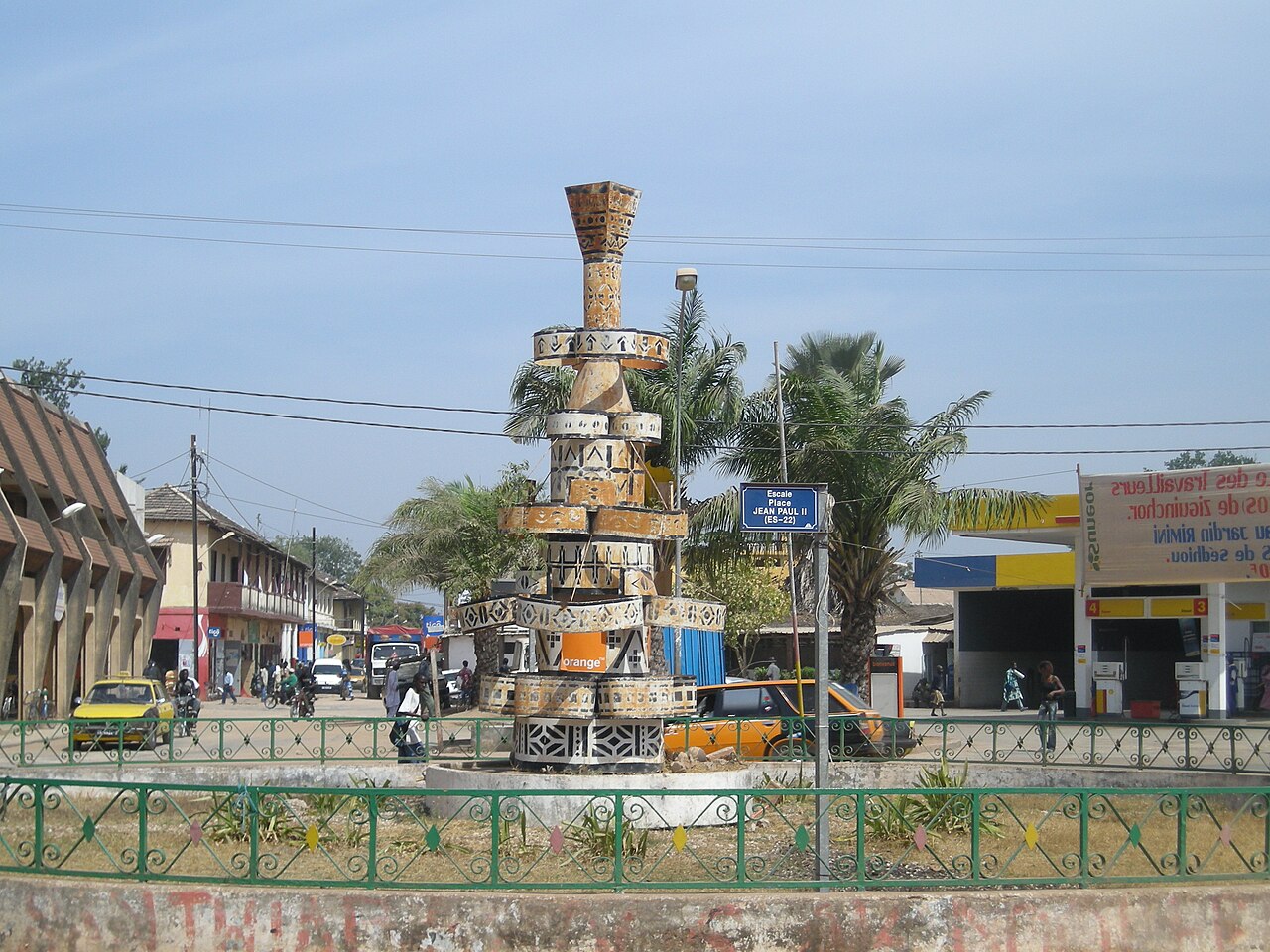
Casamance, in the south

The main town of Casamance, on the Casamance River, founded by the Portuguese in 1645. The region is green and rainy, with rice fields, palm groves and mangroves, and it is cut off from the north of the country by The Gambia.

  • The Casamance River
  • Rice fields and mangroves
  • Jola culture
  • Ferries and flights from Dakar
M'Bour
Photo: KVDP at English Wikipedia, Public domain

Mbour

Thiès, on the Petite Côte

A big fishing town about 80 km south of Dakar on the Petite Côte, the 'little coast' of sandy beaches. Fishing, tourism and peanut processing are its main businesses, and painted wooden canoes line the beach.

  • Fishing
  • Beaches of the Petite Côte
  • Painted fishing canoes
Commons: Joal-Fadiouth pont
Photo: Wuzyprod, CC BY-SA 4.0

Joal-Fadiouth

Thiès, at the southern end of the Petite Côte

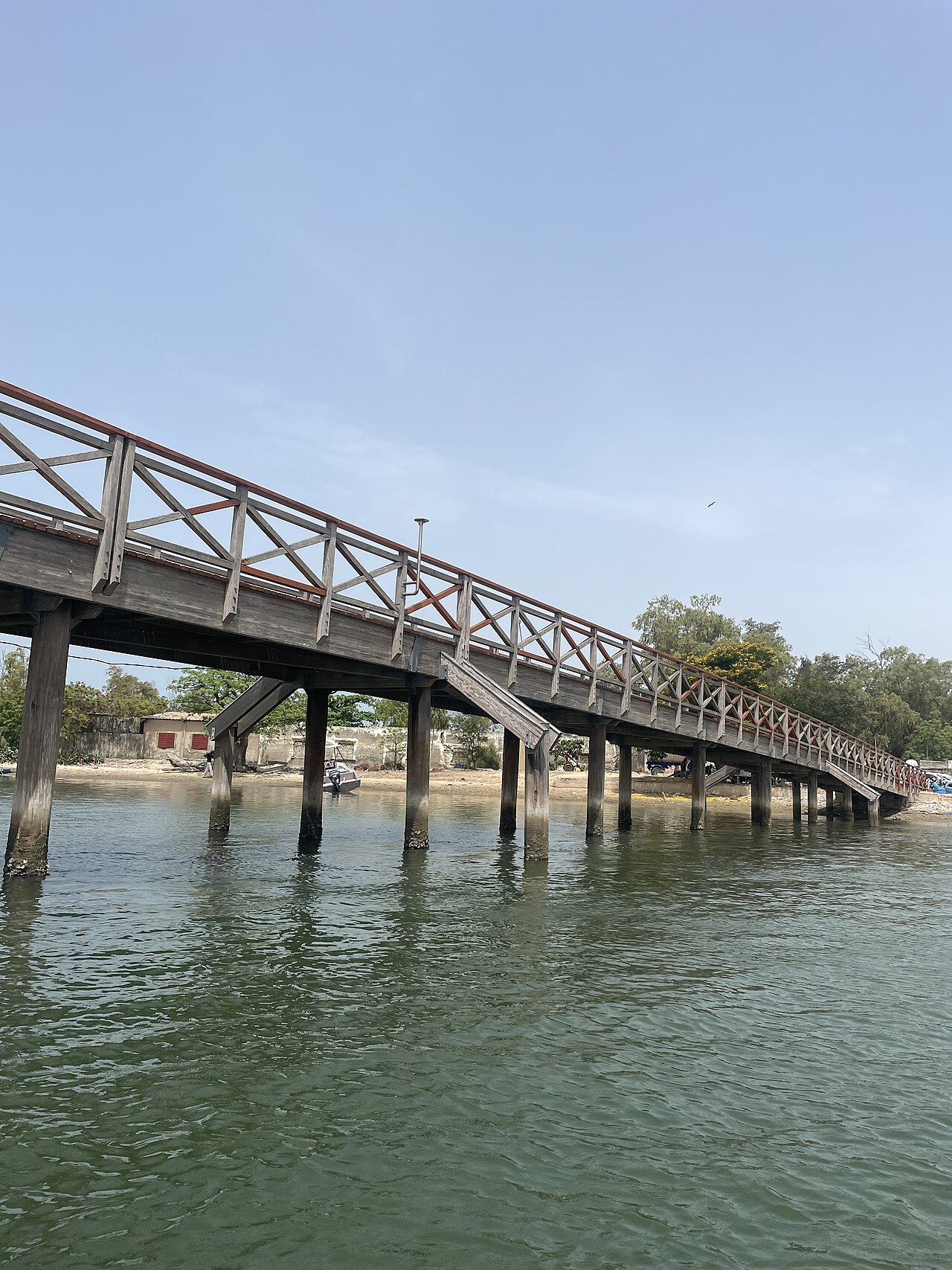
A fishing town in two parts: Joal on the mainland, and Fadiouth, a village on an island made of shells, joined to it by a long wooden footbridge. Léopold Sédar Senghor, the first president, was born in Joal.

  • The shell island of Fadiouth
  • Granaries on stilts
  • A cemetery shared by Christians and Muslims
Commons: Kedougou Senegal
Photo: John Atherton, CC BY-SA 2.0

Kédougou

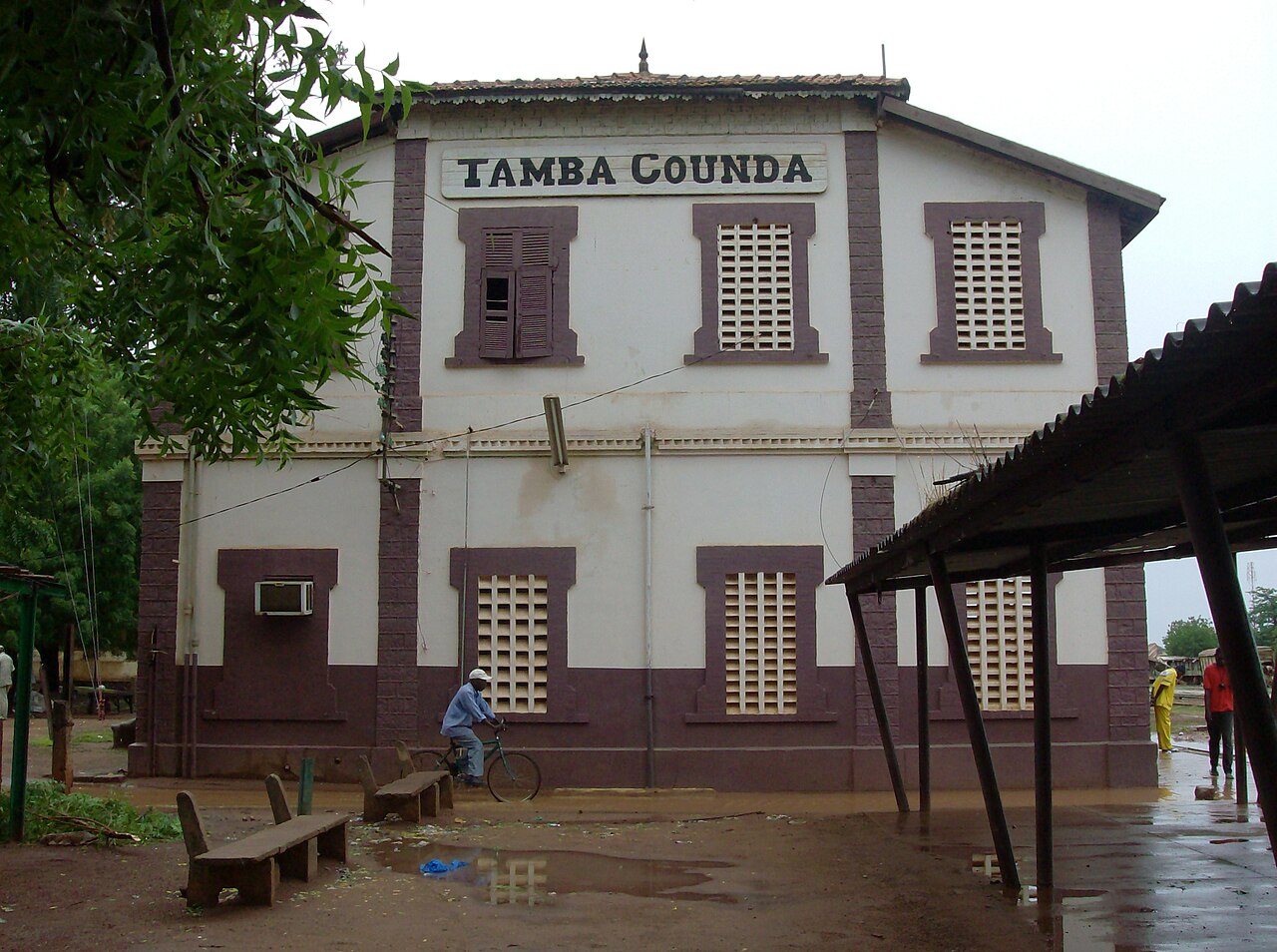
Kédougou, in the far southeast

A small town on the Gambia River among green hills near the borders with Mali and Guinea. Its name means 'land of man' in Malinké, and it is the base for visiting Bassari country and the waterfalls of Dindéfélo.

  • Bassari and Bedik villages
  • Dindéfélo waterfall
  • Gold mining
  • Hills, rare in flat Senegal

Next: Landmarks

Landmarks

Places everyone should see once

House of Slaves
Photo: Charlottedkr, CC BY-SA 4.0
Near Dakar

Gorée Island and the House of Slaves

A small car-free island about 2 km off Dakar, reached by a short ferry ride, with pastel houses, narrow lanes and old forts. From the 1500s to the 1800s it was a European trading post, and enslaved Africans were among the people bought, held and shipped from the island. Historians debate how many people passed through the island and the exact role of the House of Slaves, built around 1780, with its 'Door of No Return', but the house has become one of the world's best-known memorials to the victims of the Atlantic slave trade. The island was among the first 12 World Heritage Sites, in 1978.

UNESCO World Heritage
Commons: African Renaissance Monument Dakar
Photo: Gromane, CC0
Dakar

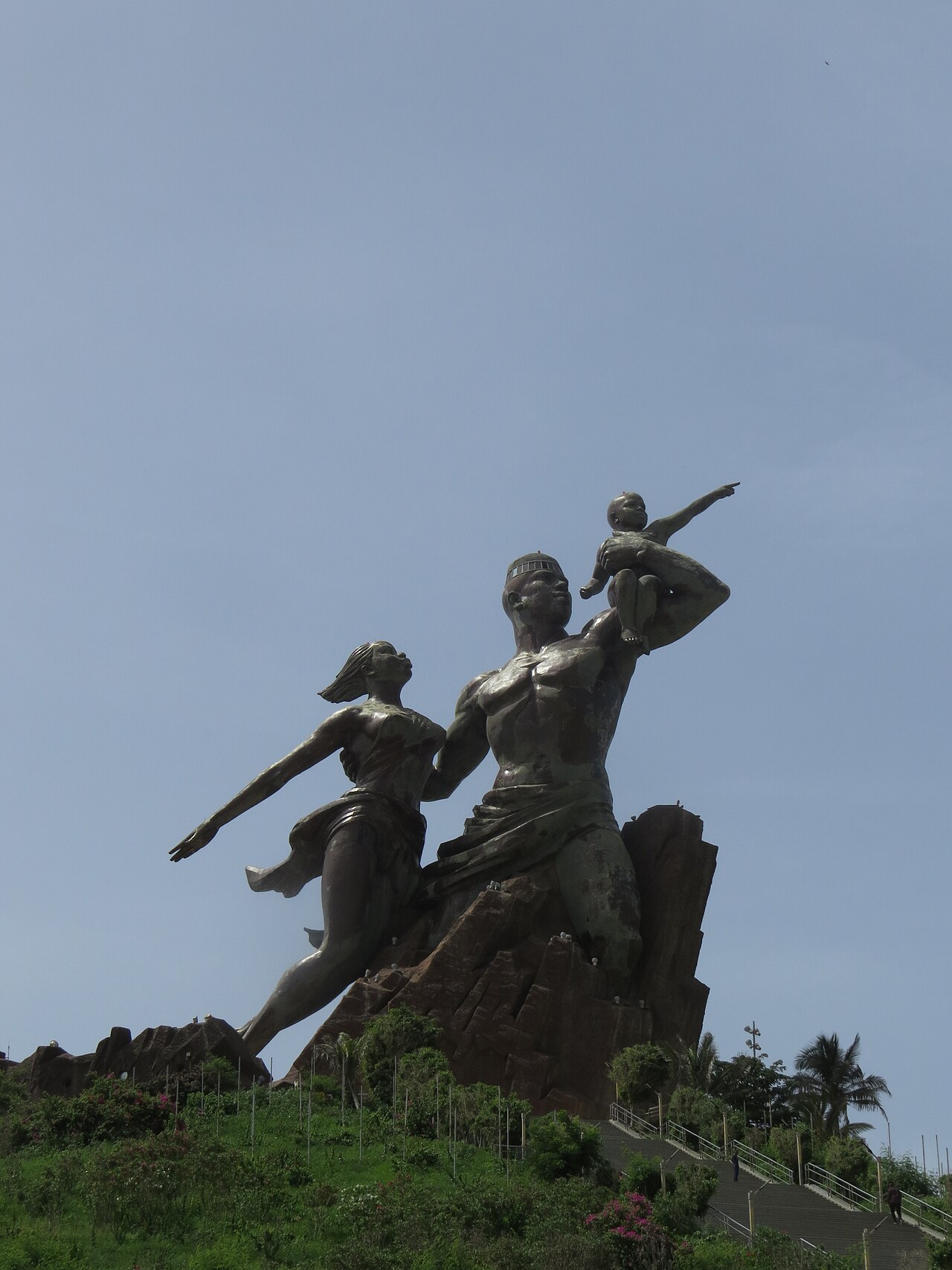
The African Renaissance Monument

A bronze statue about 50 m high of a man, a woman and a child, standing on one of the two Mamelles hills above the Atlantic. It was inaugurated in April 2010, for the 50th anniversary of independence, and as of 2026 it is the tallest statue in Africa.

Commons: Lake Retba, the Pink Lake
Photo: John Crane from Prague, Czech Republic, CC BY 2.0
Near Dakar

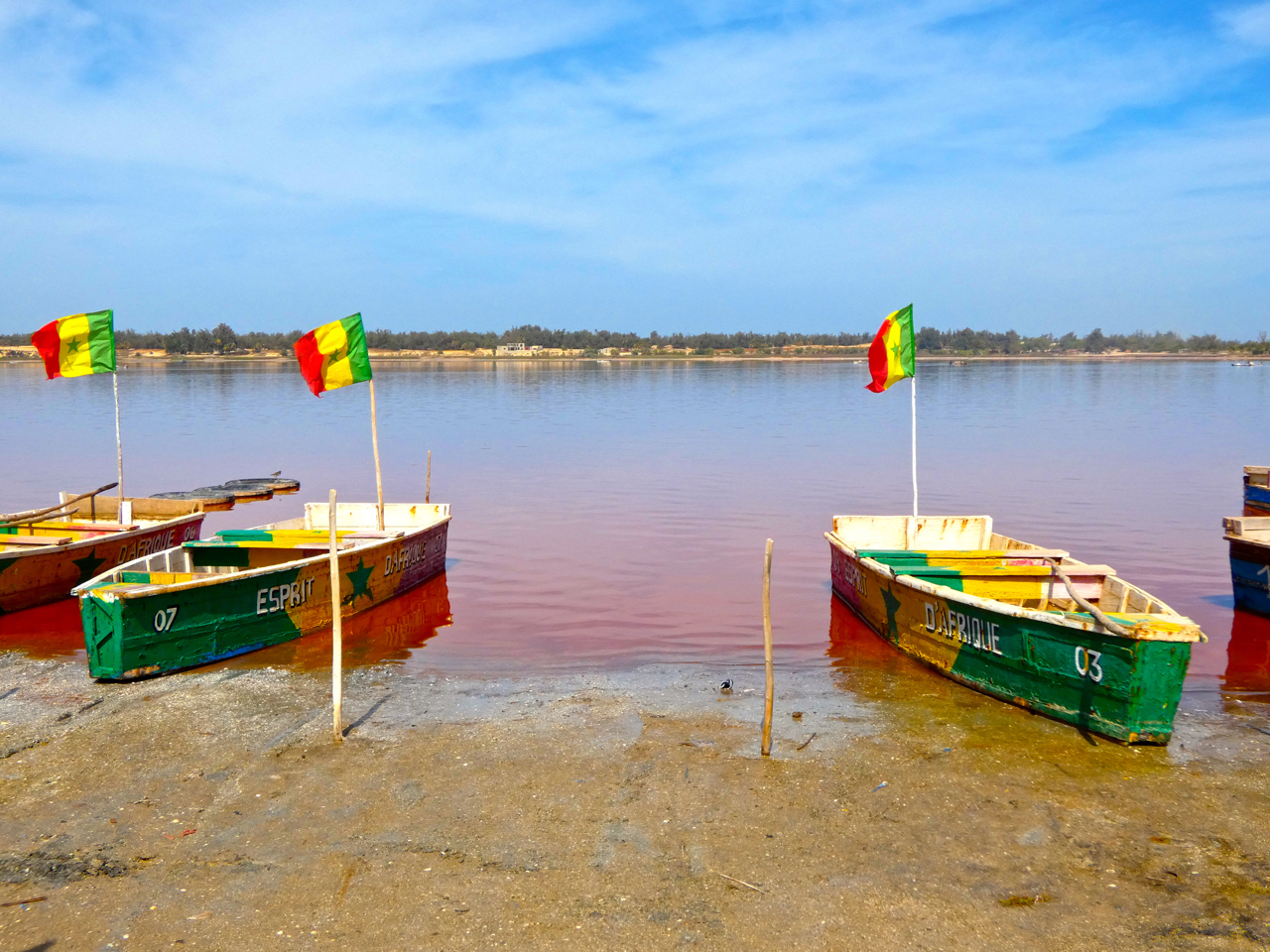
Lake Retba, the Pink Lake

A shallow lake about 35 km northeast of Dakar whose water can turn pink, thanks to tiny salt-loving algae. The water is extremely salty, and workers wade in to scrape salt from the bottom and carry it to shore in boats. The colour is usually strongest in the dry season; it faded after floods in 2022 and has partly returned since.

Faidherbe Bridge
Photo: Manu25, CC BY-SA 4.0
Saint-Louis

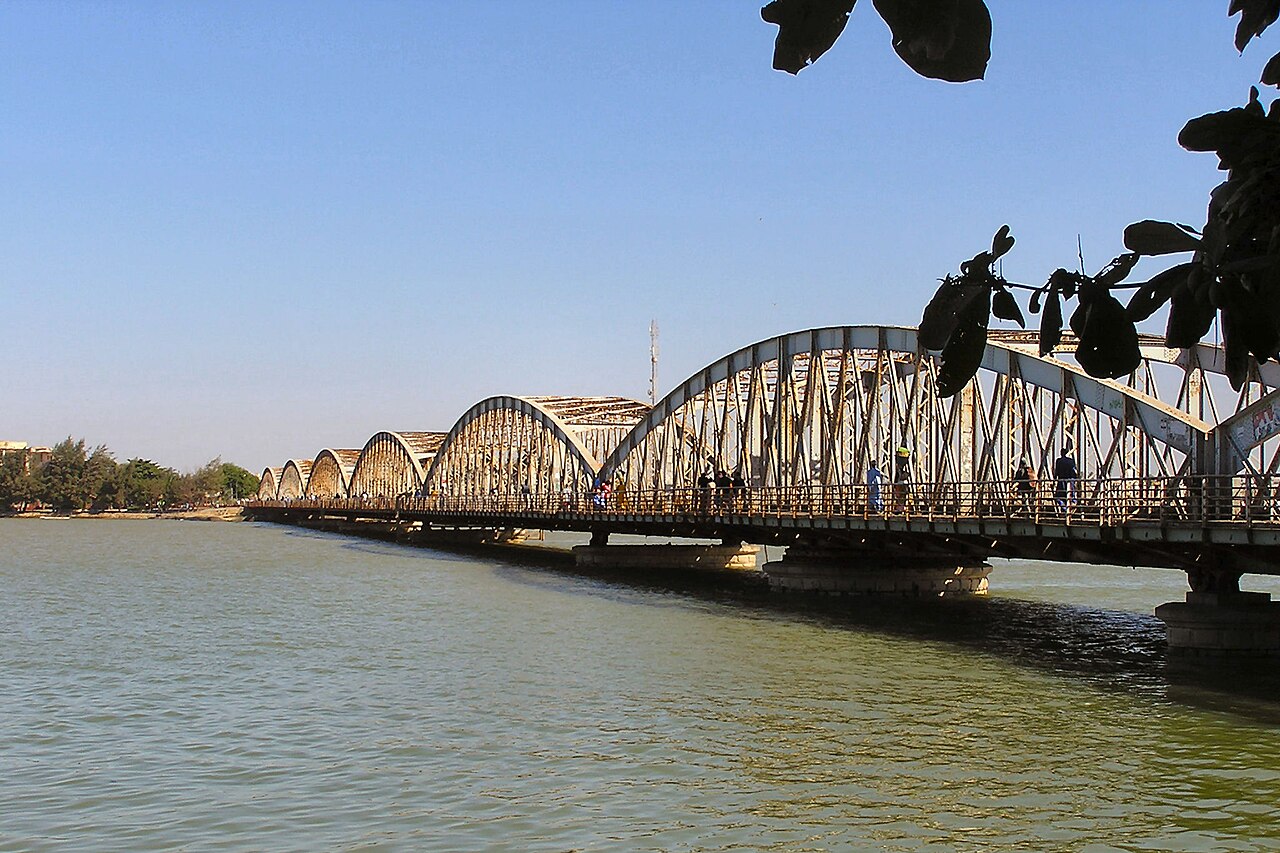
The Island of Saint-Louis and the Faidherbe Bridge

The old colonial town on a narrow island in the Senegal River, with a grid of streets, balconied houses and quays. It is reached by the Faidherbe Bridge, a metal bridge about 507 m long that opened in 1897. The island has been a World Heritage Site since 2000.

UNESCO World Heritage
Djoudj National Bird Sanctuary
Photo: Ji-Elle, Public domain
Near Saint-Louis

Djoudj National Bird Sanctuary

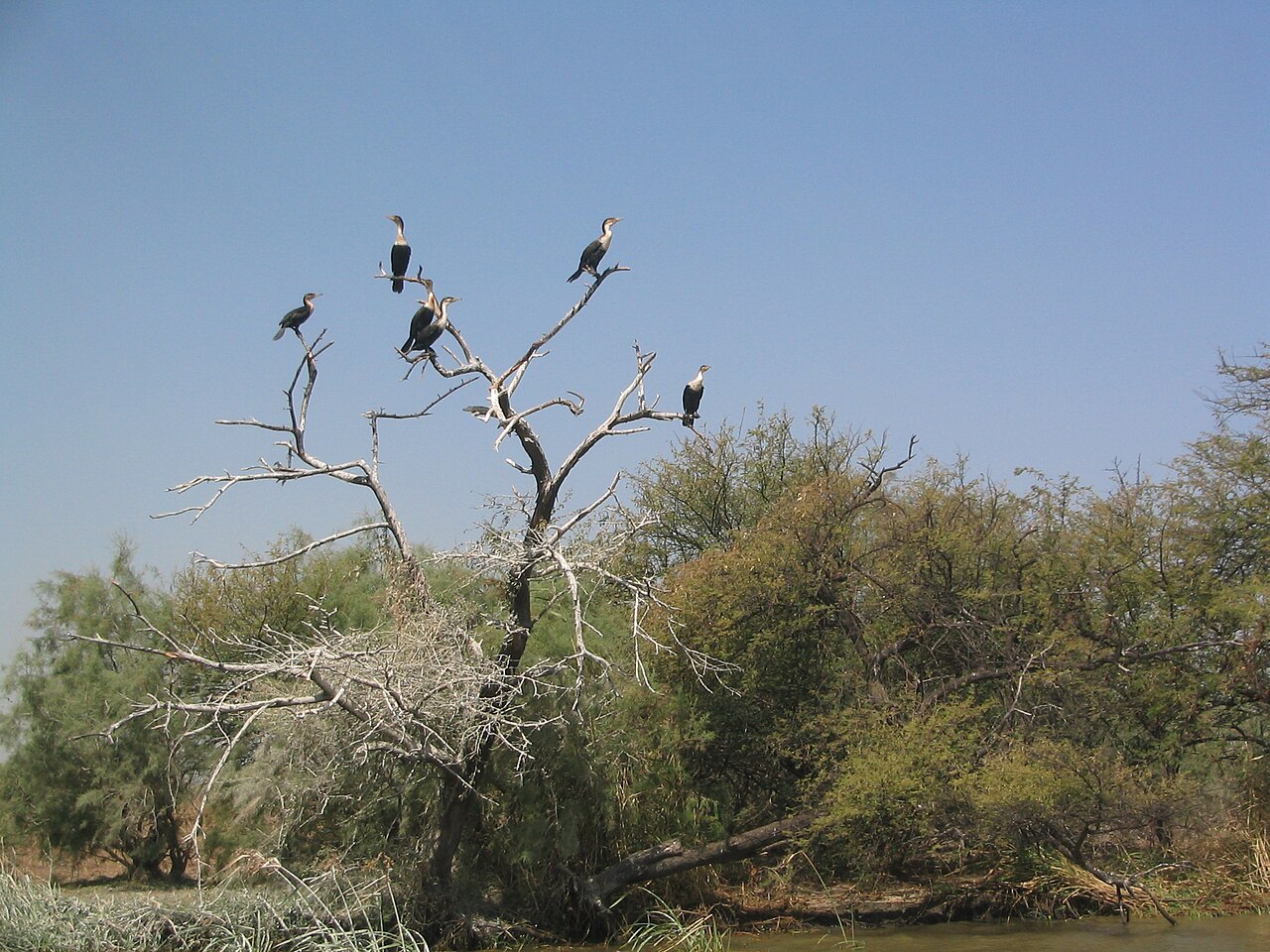
Lakes, creeks and reed beds on the Senegal River delta northeast of Saint-Louis, where huge flocks of birds spend the winter after crossing the Sahara. Almost 400 bird species have been recorded, the most visible being great white pelicans and flamingos. It is a World Heritage Site.

UNESCO World Heritage
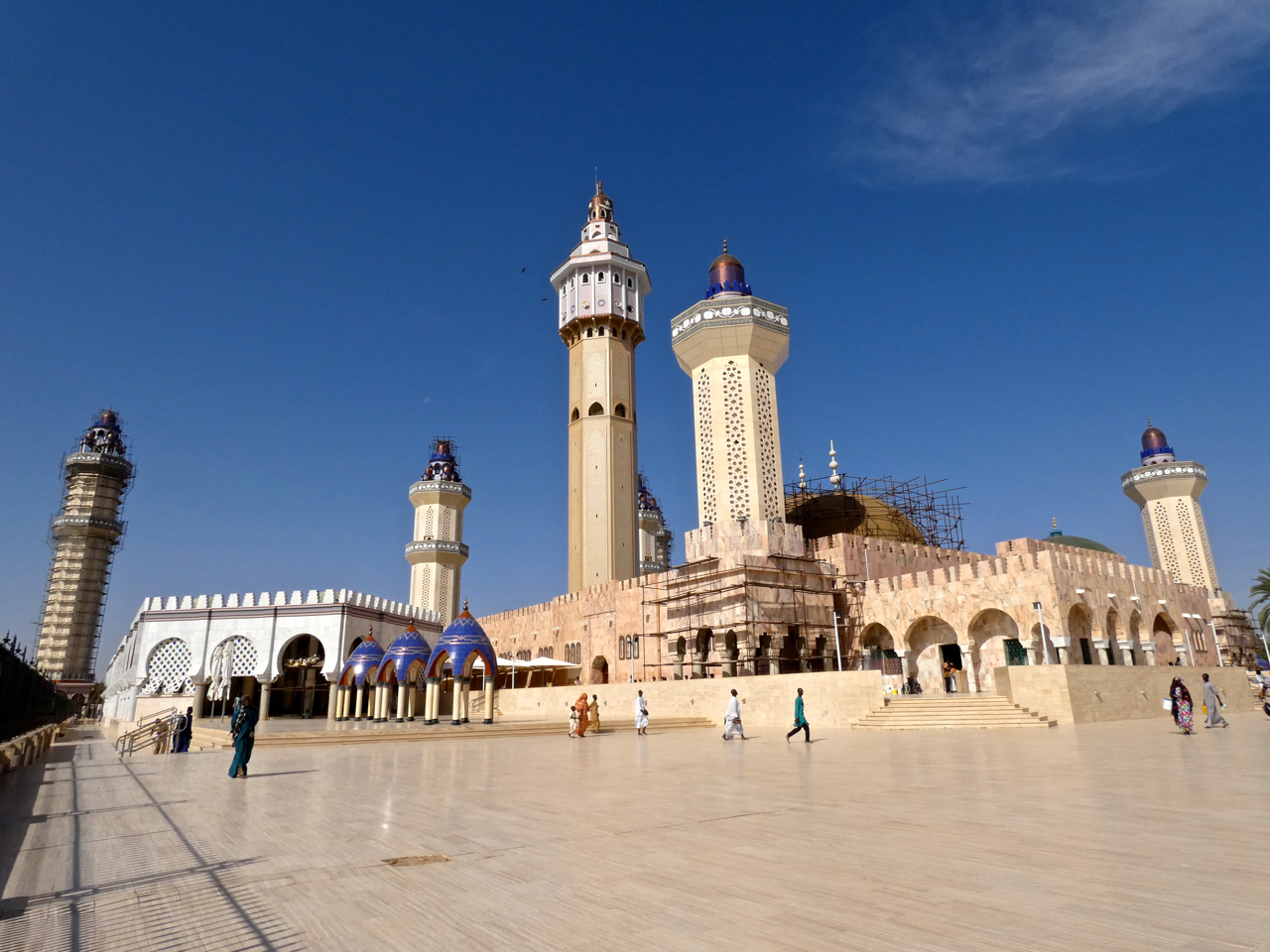
Commons: Great Mosque of Touba
Photo: Malickdieye38, CC BY-SA 4.0
Touba

The Great Mosque of Touba

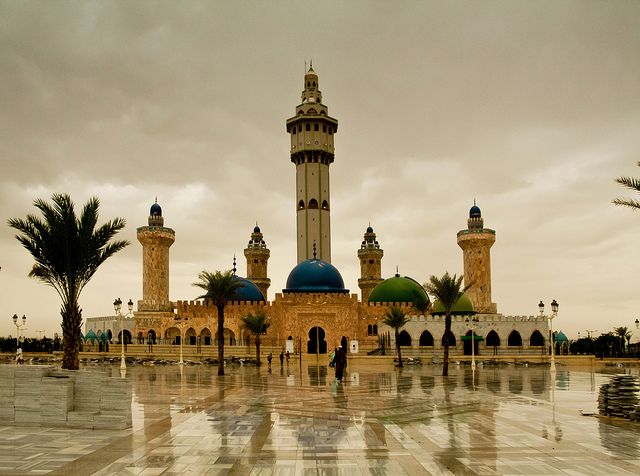
The huge mosque at the heart of Touba, holy city of the Mouride brotherhood, with its tall minarets and domes. It was completed in 1963, and Amadou Bamba, the brotherhood's founder, is buried inside. Visitors should dress modestly, and women cover their hair.

Commons: The shell island of Fadiouth
Photo: Issathiome, CC BY-SA 4.0
Joal-Fadiouth

The shell island of Fadiouth

A village built on an island of piled-up clam and oyster shells, joined to Joal by a long wooden footbridge. Shells cover the lanes and are mixed into the walls. A second shell island holds a cemetery where Christians and Muslims are buried side by side, and granaries stand on stilts in the water.

Commons: The Saloum Delta
Photo: Issiaga0, CC BY-SA 4.0
Near Joal-Fadiouth

The Saloum Delta

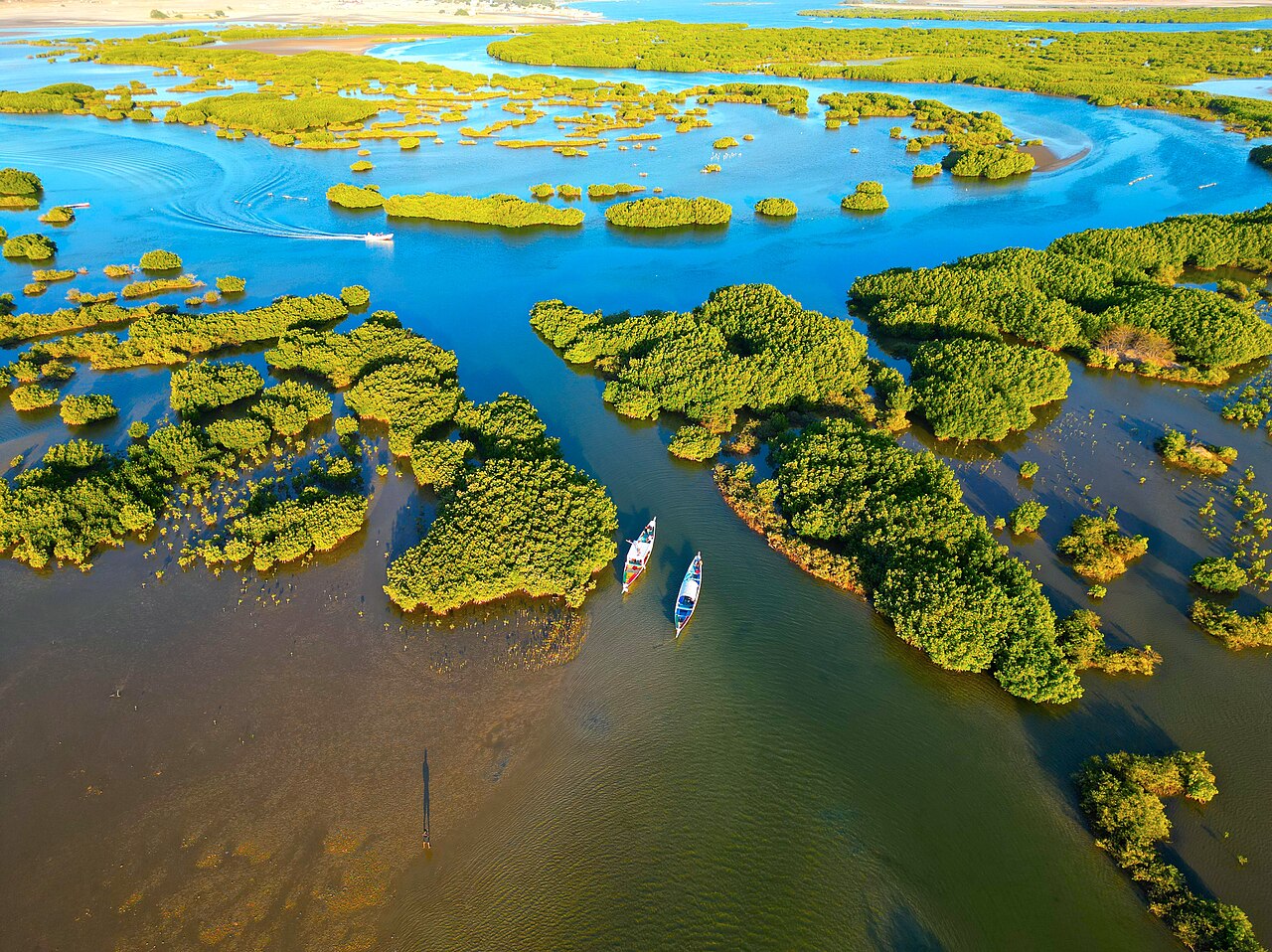
A maze of salty channels, more than 200 islands and mangrove forests where the Saloum River meets the Atlantic, south of Joal-Fadiouth. People have fished and gathered shellfish here for more than two thousand years, leaving over 200 shell mounds, some with burial sites. It became a World Heritage Site in 2011 and is best explored by wooden canoe.

UNESCO World Heritage
Commons: Niokolo-Koba National Park
Photo: COD photographer, CC BY-SA 4.0
Near Kédougou

Niokolo-Koba National Park

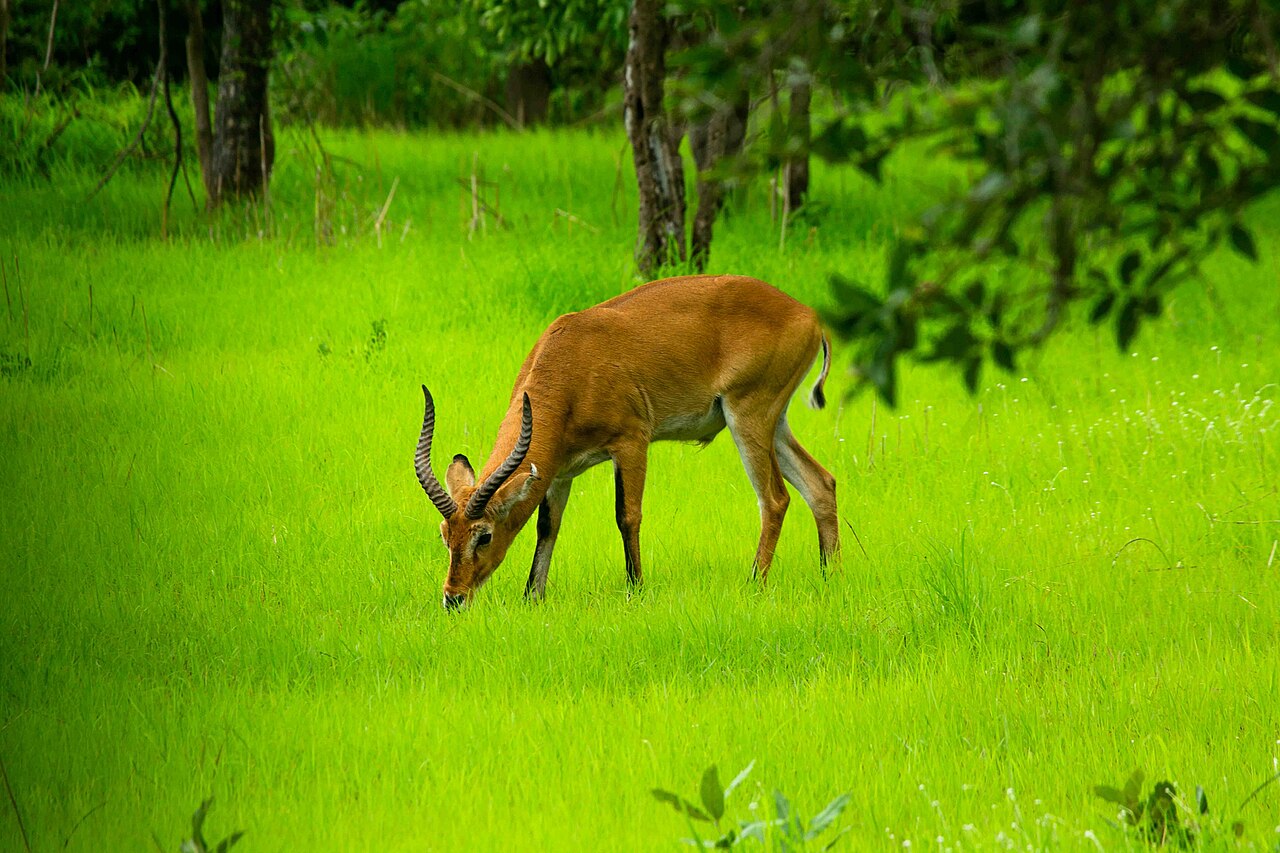
A vast national park of about 9,130 km² of savanna, forest and river banks along the Gambia River in the southeast. It is home to hippos, buffalo, antelopes such as the giant eland, chimpanzees and a small number of lions. It has been a World Heritage Site since 1981.

UNESCO World Heritage
Bassari Country
Photo: gbaku, CC BY-SA 2.0
Near Kédougou

Bassari Country

Green hills near the border with Guinea where the Bassari, Fula and Bedik peoples live in small villages of round thatched huts and keep their own farming traditions, masks and ceremonies. The cultural landscape became a World Heritage Site in 2012.

UNESCO World Heritage

Next: Fun facts

Fun facts

Things you might not know

  1. 01

    Pointe des Almadies, on the edge of Dakar, is the westernmost point of mainland Africa, about 8 degrees of longitude further west than the westernmost point of mainland Europe in Portugal.

  2. 02

    Senegal wraps almost completely around The Gambia, a long, narrow country that follows the Gambia River. The Gambia touches only Senegal and the sea.

  3. 03

    Senegal's first president, Léopold Sédar Senghor, was also a celebrated poet, and in 1983 he became the first African elected to the Académie française.

  4. 04

    The national football team is nicknamed the Lions of Teranga, after the Wolof word for hospitality. In 2022 it won the Africa Cup of Nations for the first time, beating Egypt on penalties in the final.

  5. 05

    At the 2002 World Cup, playing its first World Cup ever, Senegal beat the defending champions France in the opening match and went on to reach the quarter-finals.

  6. 06

    From 1979 until 2007 the famous Paris-Dakar Rally usually ended in Dakar, near the Pink Lake. The last Dakar finish was in 2007, and the rally has since moved to other continents.

  7. 07

    Senegalese wrestling, called laamb in Wolof, is the most popular sport in the country. Unlike most other West African wrestling, it allows blows with the hands, and top wrestlers are national stars.

  8. 08

    Senegal was chosen to host the 2026 Youth Olympic Games, set for 31 October to 13 November 2026 in Dakar, Diamniadio and Saly, the first Olympic event ever held in Africa.

  9. 09

    The baobab tree appears on Senegal's coat of arms next to a lion. Baobabs can live for well over a thousand years, and their fruit is used for bouye, a popular creamy drink.

  10. 10

    Since independence in 1960, power in Senegal has always changed hands peacefully, never through a military coup.

  11. 11

    The singer Youssou N'Dour helped make mbalax, a dance music built on Senegalese sabar drums, famous around the world.

  12. 12

    The pink colour of Lake Retba comes from Dunaliella salina, a tiny alga that thrives in very salty water.

  13. 13

    As of 2026, Senegal has seven UNESCO World Heritage Sites, including the islands of Gorée and Saint-Louis, the Saloum Delta and the stone circles it shares with The Gambia.

  14. 14

    Wolof is the first language of about 40 percent of Senegalese, and about as many again speak it as a second language, so it works as a common language for the whole country.

Next: Words

Wolof words

20 words to start with

Senegal's official language is French, but Wolof is the everyday language of most people. In Wolof spelling 'c' sounds like the ch in 'church', 'x' like the ch in Scottish 'loch', 'ñ' like the ny in 'canyon' and 'ë' like the u in 'but'. Double letters are held a little longer, and the stress usually falls on the first syllable. Pronunciation is written the way it sounds; the capital letters show where the stress goes. Audio is coming soon.

Greetings and values

  • jàmmJAHMpeace (heard in many greetings)
  • teraangaTEH-rahn-gahhospitality, the famous Senegalese welcome
  • waawWAHWyes
  • déedéetDAY-daytno

Food and drink

  • ceebCHEHBrice
  • jënJUHNfish
  • yàppYAHPmeat
  • ndoxn-DOKHwater
  • mburum-BOO-roobread
  • gerteGEHR-tehpeanut
  • lekkLEHKto eat

Family and people

  • yaayYIGH (rhymes with 'eye')mother
  • baayBYEfather
  • xaritKHAH-reetfriend
  • xaleKHAH-lehchild

Home and town

  • kërKUHRhouse, home

Numbers

  • bennBEHNone
  • ñaarNYAHRtwo
  • ñettNYEHTthree
  • fukkFOOKten

Next: Phrases

Say it like a local

Useful phrases

Greetings matter a great deal in Senegal: people ask after each other and their families before any other business. Capital letters in the pronunciation show the stressed syllable.

Salaam aleekum
sah-LAHM ah-LAY-koom
Peace be upon you (hello)
The usual greeting when you arrive or meet someone
Maleekum salaam
mah-LAY-koom sah-LAHM
And upon you be peace
Answering salaam aleekum
Na nga def?
NAHNG-gah DEHF
How are you?
Asking after someone, right after the first greeting
Maa ngi fi
MAHNG-gee FEE
I'm fine (literally 'I am here')
Answering 'na nga def?'
Jàmm nga fanaane?
JAHM ngah fah-NAH-neh
Did you spend the night in peace?
A morning greeting; the answer is 'jàmm rekk', 'peace only'
Nanga tudd?
NAHNG-gah TOOD
What is your name?
Getting to know someone
Maa ngi tudd ...
MAHNG-gee TOOD
My name is ...
Introducing yourself
Jërejëf
JUH-reh-juhf
Thank you
Any time; it is one of the most useful words in Senegal
Amul sólo
AH-mool SOH-loh
You're welcome (literally 'it's nothing')
Answering a thank you
Bu la neexee
boo lah NEH-kheh
Please (literally 'if it pleases you')
Asking politely for something
Baal ma
BAHL mah
Sorry, excuse me
Getting past someone or apologising
Ñaata la?
NYAH-tah lah
How much is it?
Asking the price at the market
Seer na lool!
SAIR nah LOHL
That's very expensive!
Bargaining, with a smile
Dégguma
DEHG-goo-mah
I don't understand
When you do not follow
Ndax dégg nga angale?
n-DAKH DEHG ngah AHN-gah-leh
Do you speak English?
Before asking for help; many people also speak French
Fan mooy seen wanaag?
FAHN mohy SEHN WAH-nahg
Where is the toilet?
Looking for the toilet
Bëgguma kaani
BUHG-goo-mah KAH-nee
I don't like hot pepper
Ordering food, if you prefer it mild
Neexoon na
NEH-khohn nah
It was delicious
Thanking the cook after a meal
Ba beneen yoon
bah BEH-nehn YOHN
Until next time
Saying goodbye
Wóoy!
WOHY
Help!
In an emergency

Next: Local tips

Local tips

Before you go

Always greet first

Greetings are very important in Senegal. Before asking for directions, a price or help, say 'salaam aleekum' or 'bonjour' and ask how the person is. Skipping the greeting is seen as rude, and a few words of Wolof bring big smiles.

Use your right hand

Shake hands, pass things, give money and eat with your right hand. Using the left hand for these is considered disrespectful.

Dress modestly

Clothes that cover the shoulders and knees are best in towns, villages and religious places such as Touba. Take extra care during Ramadan and at the time of Friday prayers, in the early afternoon.

Agree on prices first

Agree on the taxi fare before you get in. In markets prices are usually open to friendly bargaining. Carry small notes and coins in West African CFA francs, because sellers often cannot change large notes.

Protect yourself from mosquitoes

Malaria is present throughout Senegal. Health services such as the CDC advise travellers to take anti-malaria tablets and to be vaccinated against yellow fever, and you may be asked for a yellow fever certificate if you arrive from a country with yellow fever. See a travel clinic at least 8 weeks before you go.

Check travel advice for Casamance and the borders

The southern region of Casamance has seen a low-level separatist conflict for decades, and it has been much calmer in recent years. Remote areas near the borders with Mali and Mauritania also need extra care. Before going, check your government's latest travel advice, travel by day and stay on the main roads.
Take time for tea

If you are offered attaya, accept and stay a while: the three rounds of tea can take an hour or more and are a friendly time for conversation, not a quick drink.

Know the emergency numbers

As of 2026, the number for the police is 17 and for an ambulance 15. Medical care outside Dakar is limited, so travel insurance that covers medical evacuation is wise.

You have seen it all: take the quiz

Sources (78)