World Stroll
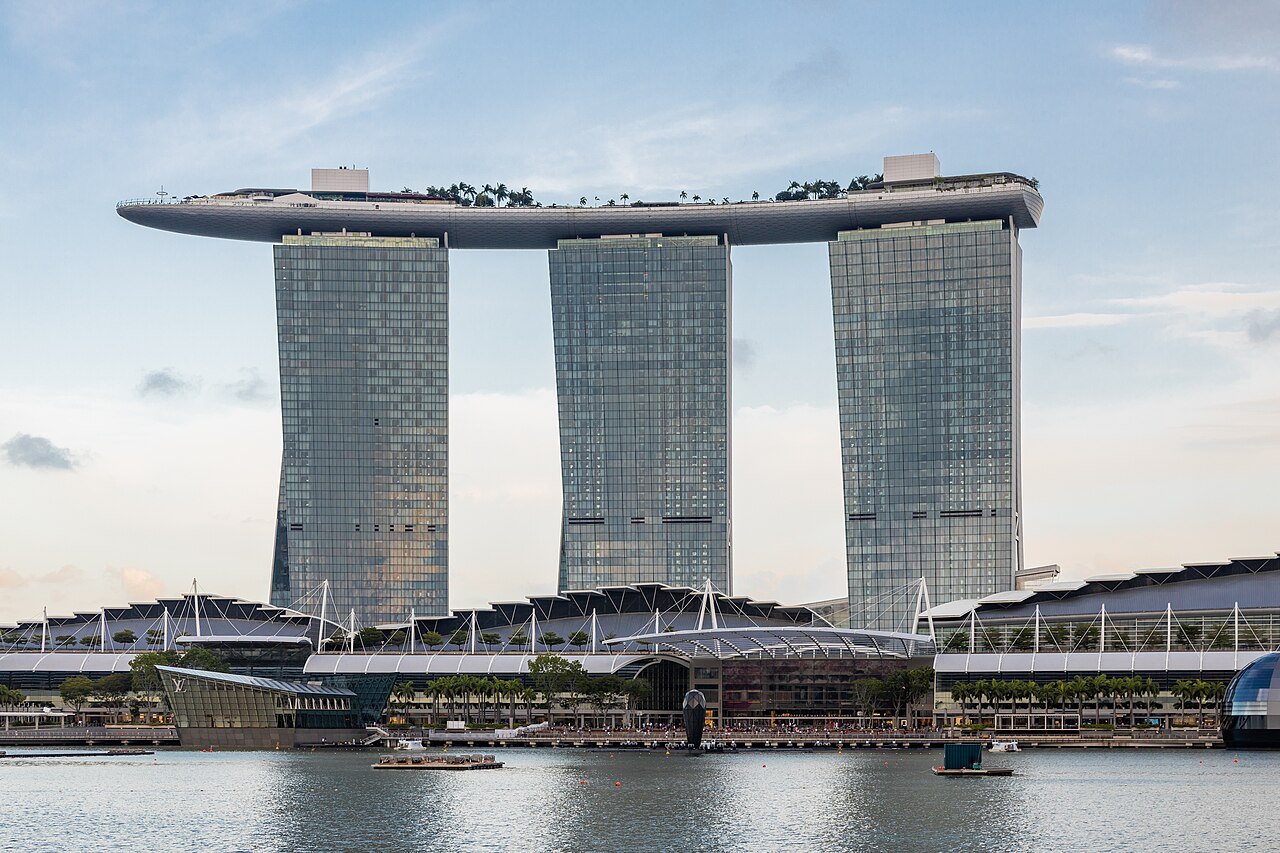
Marina Bay Sands
Photo: Supanut Arunoprayote, CC BY 4.0
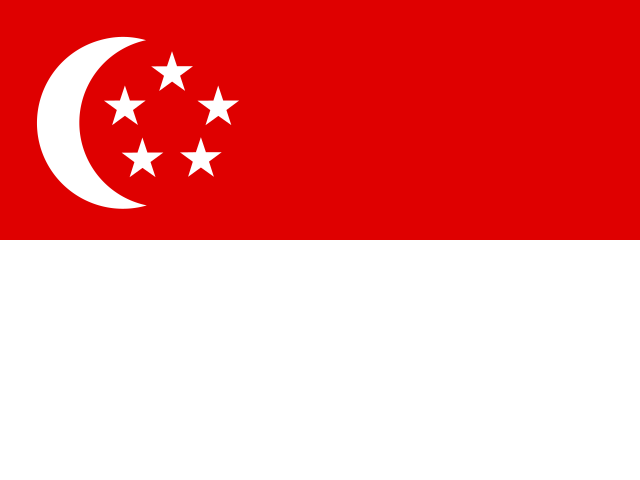
Flag of Singapore
South-Eastern Asia

Singapore

A whole country in one green, gleaming city: hawker stalls and skyscrapers, temples and mosques side by side, and four official languages on signs across town.

Start the trip Skip to the quiz About five relaxed minutes.

Your trip to Singapore

  1. Stroll through nine short parts: the story, the food, the cities and a few words. One at a time, with "Next".
  2. Take the quiz as the last step: 10 friendly questions, no timer.
  3. Get your stamp in your passport.
Explore Singapore
You have explored 0 of 9 parts. Scroll on to discover the rest.
BruneiCambodiaIndiaIndonesiaMalaysiaMyanmarSingaporeSri LankaThailandTimor-LesteVietnam
Going to Singapore?Phrases, table manners and local tips on one printable page.Send a postcard from SingaporeA free digital postcard for family and friends.
Overview

Singapore at a glance

Singapore is an island country and city-state at the southern tip of the Malay Peninsula, only about one degree of latitude, some 137 km, north of the equator. It is made up of one main island and more than 60 smaller islands. The Straits of Johor separate it from Malaysia to the north, crossed by a causeway and a bridge, and the Singapore Strait separates it from the Riau Islands of Indonesia to the south. It is one of the smallest countries in the world, and it keeps growing: land reclamation has added more than 160 km² since the 1960s.

The island was a busy trading port called Temasek in the 14th century. Its modern story began in 1819, when the Briton Stamford Raffles set up a trading post for the East India Company. Singapore grew into one of the great ports of Asia, was occupied by Japan during the Second World War, won self-government in 1959, joined Malaysia in 1963, and became a fully independent republic on 9 August 1965.

As of June 2026, about 6.2 million people live here, including many foreign workers and permanent residents. Most citizens are of Chinese descent, with large Malay and Indian communities and smaller groups such as the Eurasians. English, Malay, Mandarin and Tamil are all official languages: English is the common language of work and school, while Malay is the national language, used in the national anthem. Most people live in tall public housing blocks in new towns spread around the island, linked by a fast train network.

There is no separate capital city: the whole country is one city, and the government, Parliament and the Supreme Court sit in the historic centre around the mouth of the Singapore River. For planning, the island is divided into five regions and 55 planning areas, many of them busy new towns with their own malls, parks and hawker centres.

CapitalSingapore
PopulationAbout 6.2 million (June 2026 official estimate)
Official languagesEnglish, Malay, Mandarin and Tamil; Malay is the national language
CurrencySingapore dollar (SGD)
AreaAbout 744 km², and growing through land reclamation
GovernmentParliamentary republic with an elected president as head of state
Highest pointBukit Timah Hill, about 164 m
Longest riverThe Kallang River, about 10 km
NeighboursNo land borders. Across narrow straits: Malaysia (joined by a causeway and a bridge) and Indonesia
Drives on theLeft
Calling code+65
The story

A short history of Singapore

Long before skyscrapers, the island was a trading port known as Temasek, and later Singapura, the 'lion city', linked to the empires of Java and Siam. After centuries of quiet, the British arrived in 1819 and built a free port that drew traders and settlers from China, India, the Malay world, Arabia and Europe. The 20th century brought the shock of Japanese occupation, then self-government, a brief union with Malaysia and, in 1965, sudden independence. In the decades since, the small island has become one of the richest and busiest trading hubs in the world.

  1. 1330

    A Chinese traveller visits Temasek

    Around 1330, the Chinese traveller Wang Dayuan described a settlement on the island that he called Danmaxi, probably a version of the Malay name Temasek. In the 14th century Temasek was a trading port under the influence of Java's Majapahit Empire and the Siamese kingdoms. The Malay Annals tell that a prince named Sang Nila Utama renamed it Singapura, 'lion city', after seeing a strange beast he took to be a lion, though historians debate how much of that story is true.

  2. 1613

    Portuguese raiders burn the settlement

    By the end of the 14th century the main settlement on today's Fort Canning Hill had been abandoned, and its ruler moved to Malacca. A smaller trading post lived on until 1613, when Portuguese raiders burned it down. For the next two centuries the island was a quiet, thinly populated part of the Johor Sultanate.

  3. 1819

    Raffles founds a British trading post

    Stamford Raffles of the British East India Company landed at the end of January 1819. He backed a rival claimant to the throne of Johor, and on 6 February 1819 a treaty allowed the British to set up a trading post. As a free port without customs duties, Singapore quickly drew merchants from all over Asia.

  4. 1824

    The Anglo-Dutch Treaty

    Britain and the Netherlands divided the Malay world between them, with the area north of the Strait of Malacca, including Singapore, going to Britain. In the same year a further treaty with the sultan and the temenggong placed the whole island in British hands.

  5. 1826

    The Straits Settlements are formed

    The East India Company grouped Singapore with Penang and Malacca as the Straits Settlements. Singapore became their capital in 1832. Many of the early immigrants came from southern China to work on pepper and gambier plantations.

  6. 1859

    The Botanic Gardens are founded

    The Agri-horticultural Society founded the Singapore Botanic Gardens on their present site. Under Henry Ridley, its director from 1888, the gardens perfected a way of tapping rubber trees that helped make Malaya the world's leading rubber producer.

  7. 1867

    Singapore becomes a Crown colony

    On 1 April 1867, the Straits Settlements were taken away from British India and made a Crown colony, run directly from London. Two years later the Suez Canal opened, shortening the voyage to Europe and bringing even more ships to Singapore.

  8. 1942

    The fall of Singapore

    Japanese forces swept down the Malay Peninsula, and on 15 February 1942 the British commander surrendered Singapore. Churchill called it 'the worst disaster and largest capitulation in British history'. During the occupation that followed, the island was renamed Syonan-to, and tens of thousands of Chinese civilians, by most estimates, were killed in the Sook Ching massacre.

  9. 1945

    The Japanese occupation ends

    Japan surrendered in August 1945, and on 12 September 1945 the formal surrender of Japanese forces in Southeast Asia was signed in Singapore. The British returned, and in 1946 Singapore became a separate Crown colony.

  10. 1959

    Singapore gains self-government

    On 3 June 1959, Britain granted Singapore full internal self-government, keeping control only of defence and foreign affairs. The People's Action Party had won the election days before, and Lee Kuan Yew became the first prime minister. 'Majulah Singapura' was chosen as the anthem the same year.

  11. 1963

    Singapore joins Malaysia

    On 16 September 1963, Singapore joined Malaya, Sabah (North Borneo) and Sarawak to form the new Federation of Malaysia. The union soon ran into deep political and economic disagreements, and in 1964 Singapore was shaken by race riots.

  12. 1965
    Singapore becomes independent

    On 9 August 1965, Singapore separated from Malaysia and became the independent Republic of Singapore. The date is now celebrated every year as National Day, with a large parade. With no natural resources, the young country focused on trade, industry, housing and education.

  13. 1967

    ASEAN is founded

    On 8 August 1967, Singapore, Indonesia, Malaysia, the Philippines and Thailand founded the Association of Southeast Asian Nations (ASEAN) in Bangkok. The same year Singapore issued its own currency, the Singapore dollar.

  14. 1981

    Changi Airport opens

    Changi Airport began operations on 1 July 1981, replacing the older airport at Paya Lebar, and was officially opened that December. Its first flight was a Singapore Airlines plane from Kuala Lumpur.

  15. 1987

    The first MRT trains run

    After two decades of planning, the Mass Rapid Transit (MRT) opened in November 1987 with a 6 km stretch and five stations. The network has kept growing ever since, with new lines and stations opening into the 2020s.

  16. 2015
    The Botanic Gardens become a World Heritage Site

    On 4 July 2015, UNESCO inscribed the Singapore Botanic Gardens on the World Heritage List, Singapore's first World Heritage Site. It came in the year Singapore celebrated 50 years of independence.

At the table

What to eat in Singapore

Eating is often called a national pastime in Singapore, and it mixes Chinese, Malay, Indian and Peranakan cooking, with touches of Eurasian and Western food. Many of the best-known dishes are shared with Malaysia, each side with its own versions. Most people eat out often, and the heart of everyday eating is the hawker centre: a large, open-sided food court full of small stalls, each cooking one or two dishes, at low prices and under strict hygiene grading. Meals are informal, with no fixed courses: friends order from different stalls and share at one table. Singapore's hawker culture was added to UNESCO's list of the Intangible Cultural Heritage of Humanity in 2020. A typical day might start with kaya toast and coffee, bring chicken rice or noodles at lunch, and end with satay or chilli crab at night.

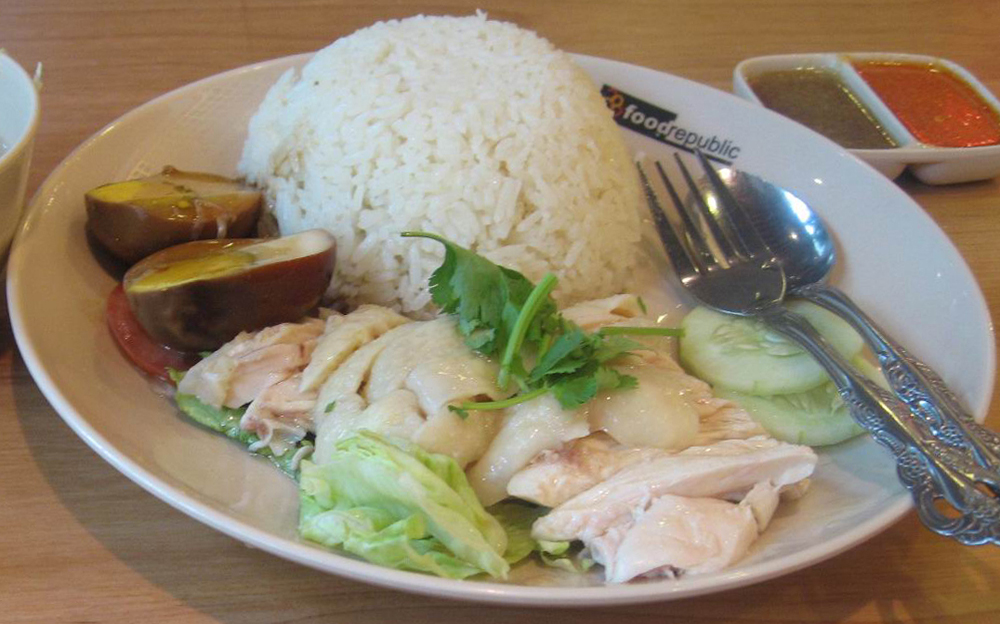
Hainanese chicken rice
Photo: Terence, CC BY 2.5
RiceRecipe

Hainanese chicken rice

Created by Hainanese immigrants, now sold all over Singapore
Read moreShow less

Gently poached chicken, usually served at room temperature, with rice cooked in chicken stock, ginger, garlic and pandan leaf. It comes with cucumber and a chilli and garlic sauce, usually with dark soy sauce and freshly ground ginger. It is widely considered one of Singapore's national dishes and is found in almost every hawker centre.

The dish was adapted from Wenchang chicken, a classic from Hainan island in southern China, by Hainanese people who settled in Southeast Asia.

See the recipe
Serves 41 h 30 min

Ingredients

  • 1 whole chicken, about 1.5 kg
  • 5 cm piece of ginger, sliced, 4 spring onions and 2 tablespoons salt
  • 400 g jasmine rice, rinsed and drained
  • 2 tablespoons chicken fat or vegetable oil, 4 cloves garlic and 2 shallots, finely chopped
  • 2 pandan leaves, knotted (or leave out)
  • For the chilli sauce: 4 red chillies, 3 cloves garlic, 2 cm ginger, the juice of 2 limes, 1 teaspoon sugar and 2 tablespoons hot chicken stock
  • To serve: 1 cucumber, sliced, sweet dark soy sauce, fresh coriander and 1 teaspoon sesame oil

Method

  1. Rub the chicken inside and out with salt, rinse it, and put the ginger and spring onions inside. Put it in a large pot, cover with water and bring just to the boil.
  2. Turn the heat to the lowest setting, cover and poach for about 35 to 40 minutes, until the juices run clear when the thigh is pierced (75 °C inside). Lift the chicken into a bowl of iced water for 10 minutes so the skin turns firm and silky. Keep the stock.
  3. Fry the garlic and shallots in the chicken fat until golden. Add the rice and stir for 2 minutes, then cook it with the pandan and about 600 ml of the stock, with a pinch of salt, in a rice cooker or a covered pot on low heat for about 15 minutes.
  4. Blend the chillies, garlic, ginger, lime juice, sugar and hot stock into a sauce, with a pinch of salt.
  5. Rub the chicken with a little sesame oil, cut it into pieces and serve it on the rice with cucumber, coriander, the chilli sauce, dark soy and a bowl of hot stock.
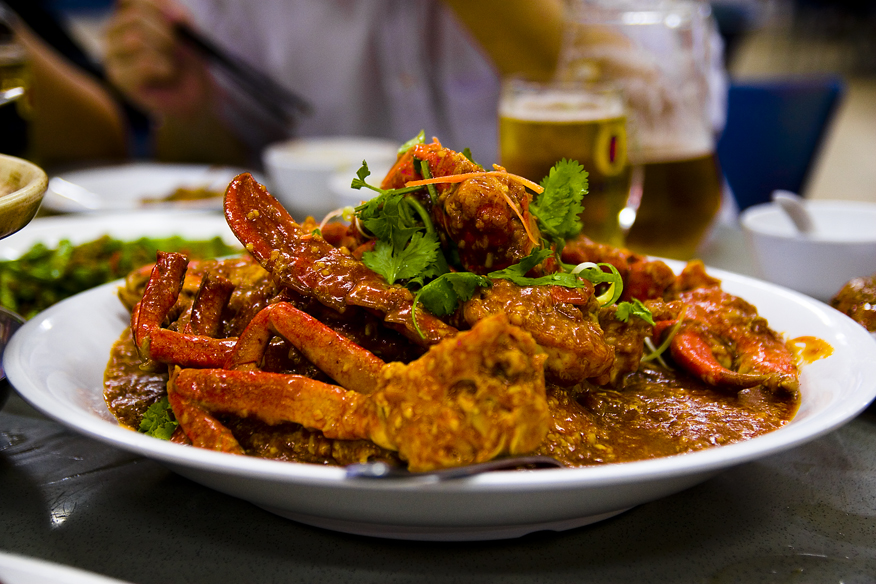
Chilli crab
Photo: megawatts86, CC BY-SA 2.0
Main courseRecipe

Chilli crab

Seafood restaurants, especially along the east coast
Read moreShow less

Mud crabs stir-fried in their shells and served in a thick, sweet, savoury and only mildly hot sauce of tomato and chilli, thickened with swirls of egg. Diners crack the shells by hand and mop up the sauce with fried or steamed buns called mantou. Chilli crab is popular in both Singapore and Malaysia.

In Singapore the dish is credited to Cher Yam Tian, who sold her chilli crab from a pushcart beside the Kallang River from 1956, before she and her husband opened a seafood restaurant.

See the recipe
Serves 41 h

Ingredients

  • 2 live mud crabs, about 1 kg each, or the same weight of other large crabs, cleaned and cut into pieces by your fishmonger
  • 3 tablespoons oil, 5 cloves garlic, 3 shallots and 3 cm ginger, finely chopped
  • 2 to 3 red chillies, chopped, or 2 tablespoons sambal chilli paste
  • 6 tablespoons tomato ketchup, 2 tablespoons sweet chilli sauce and 1 tablespoon sugar
  • 300 ml water and 1 tablespoon cornflour mixed with 2 tablespoons water
  • 2 eggs, lightly beaten, and 1 tablespoon lime juice
  • Fried or steamed mantou buns, or crusty bread, to serve

Method

  1. Crack the claws lightly with the back of a heavy knife so the sauce can get in. Buy the crabs from a trusted fishmonger and cook them the same day; shellfish must be cooked through.
  2. Heat the oil in a wok and fry the garlic, shallots, ginger and chillies for 2 minutes until fragrant.
  3. Add the crab pieces and stir-fry for 2 minutes. Add the ketchup, chilli sauce, sugar, water and a pinch of salt, cover and cook for 8 to 10 minutes, stirring now and then, until the shells are bright orange and the meat is white and firm all through.
  4. Stir in the cornflour mixture and let the sauce thicken. Turn the heat to low, pour in the beaten eggs in a thin stream and stir slowly so they set into soft ribbons, cooking for about a minute until the egg is fully set. Turn off the heat and add the lime juice.
  5. Serve at once with buns or bread for the sauce, finger bowls and plenty of napkins.
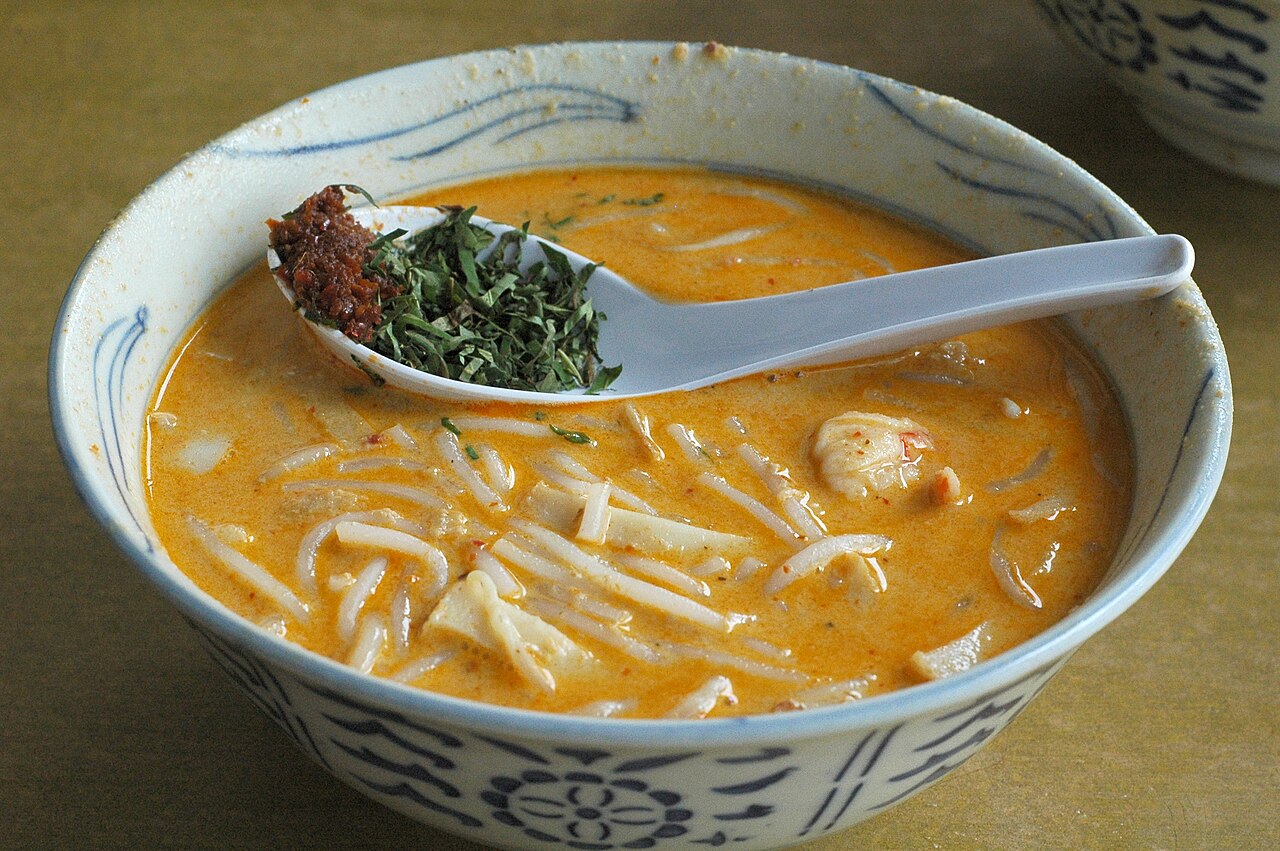
Katong laksa
Photo: Jpatokal, CC BY-SA 4.0
Main course

Katong laksa

Peranakan cooking, named after the Katong neighbourhood in the east
Read moreShow less

Rice noodles in a rich, spicy coconut curry broth made with dried shrimp, usually topped with cockles or prawns. In the Katong style the broth is thickened with ground dried shrimp and the noodles are cut short so the whole bowl can be eaten with just a spoon. Laksa in its many forms is loved across Singapore, Malaysia and Indonesia.

The word 'lemak' in 'laksa lemak' is a Malay cooking term for dishes rich with coconut milk.

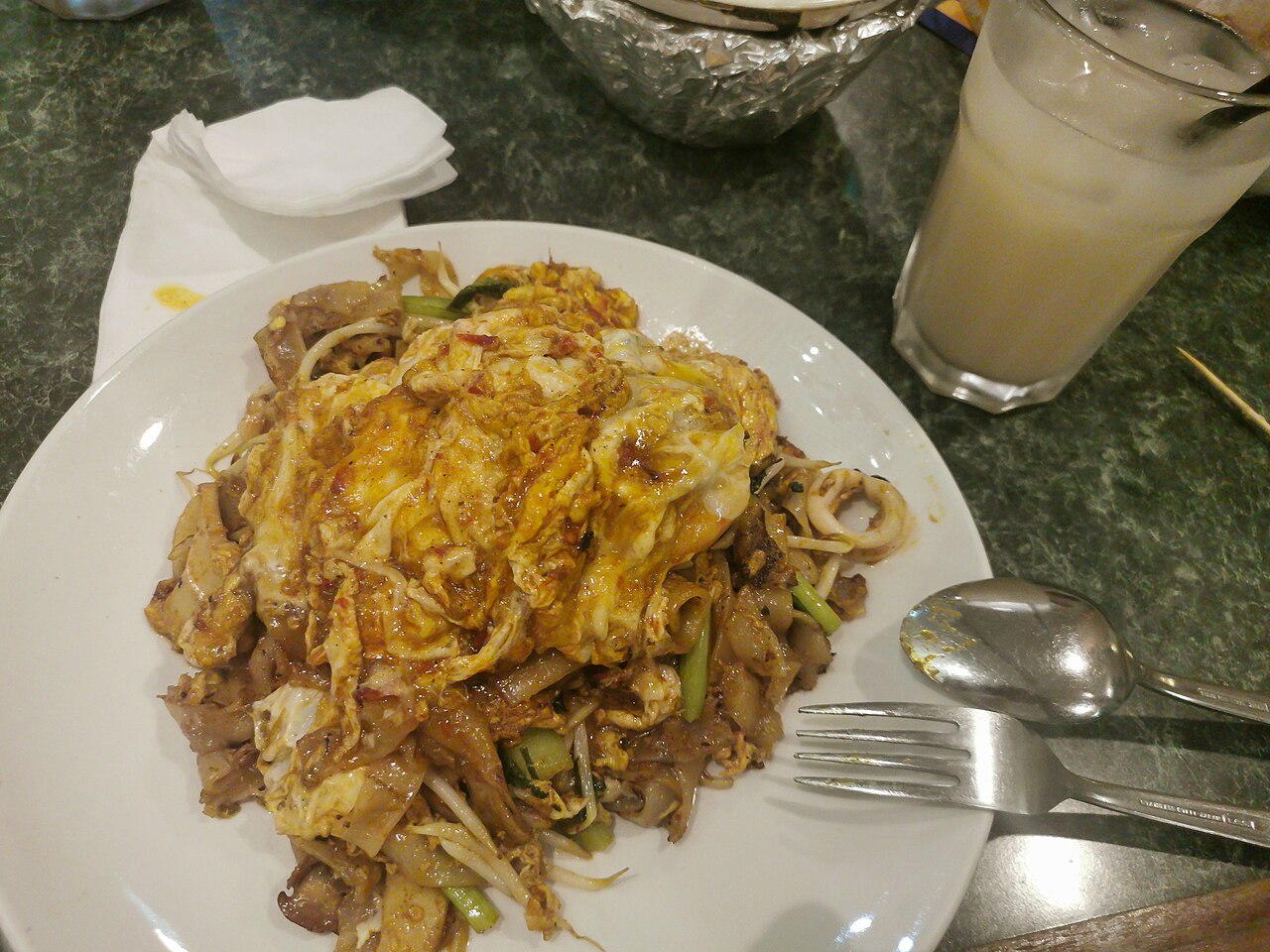
Char kway teow
Photo: Rainer Halama, CC BY-SA 4.0
Main course

Char kway teow

Hokkien and Teochew hawkers, popular in Singapore and Malaysia
Read moreShow less

Flat rice noodles stir-fried over a very high flame with garlic, light and dark soy sauce, chilli, prawns, cockles, Chinese sausage, egg and bean sprouts. It was first cooked as a cheap, filling meal for labourers, and is still a hawker favourite.

In Hokkien and Teochew, 'char' means stir-fried and 'kway teow' means flat rice noodles.

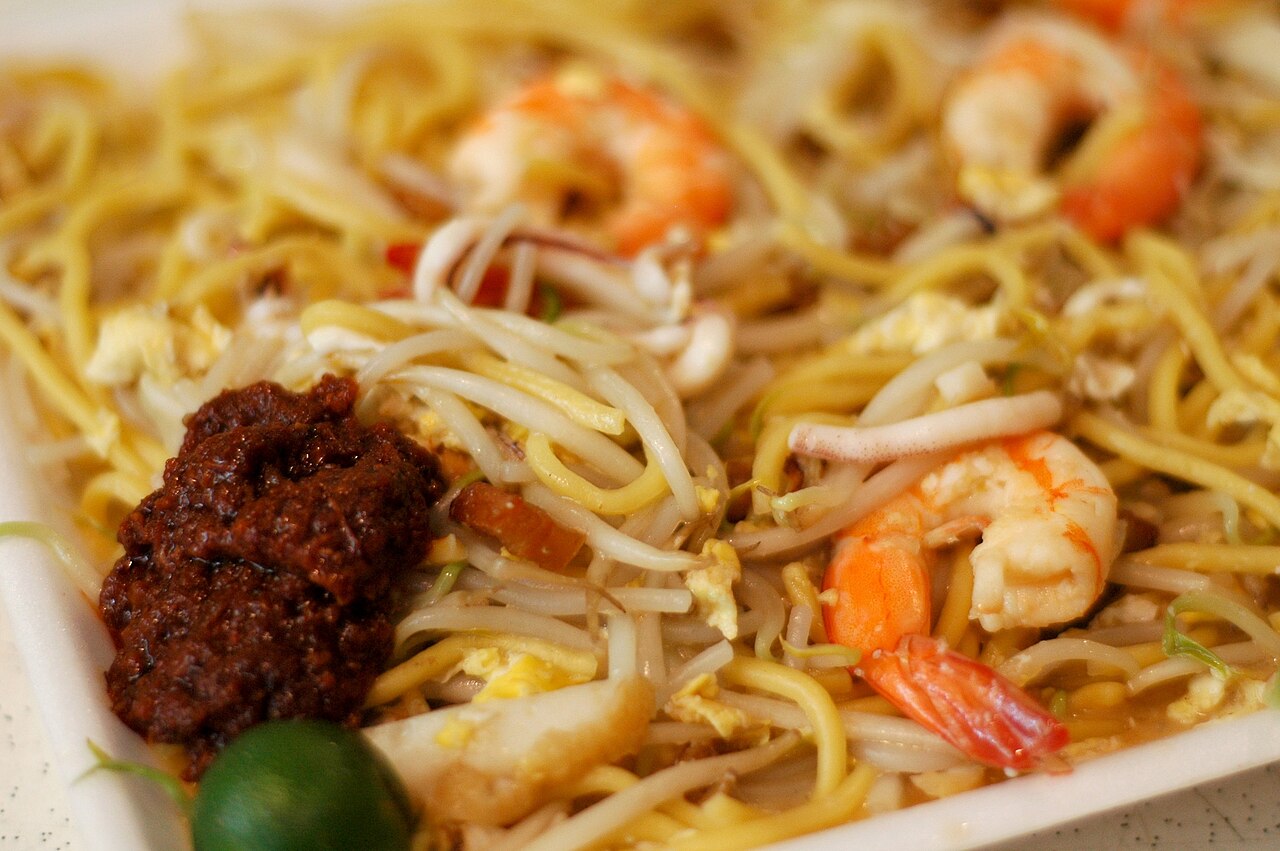
Hokkien mee
Photo: Jpatokal, CC BY-SA 4.0
Main course

Hokkien mee

Created in Singapore after the Second World War
Read moreShow less

Egg noodles and thin rice noodles fried with egg, prawns, squid and pork, then simmered in a rich stock of prawn heads and pork bones until it soaks into the noodles. It comes with sambal chilli and a small calamansi lime to squeeze over. In Singapore it is also called Hokkien prawn mee.

The name means 'Fujian noodles', but this dish is not known in Fujian itself: it grew up in Singapore, reportedly from noodles fried on Rochor Road.

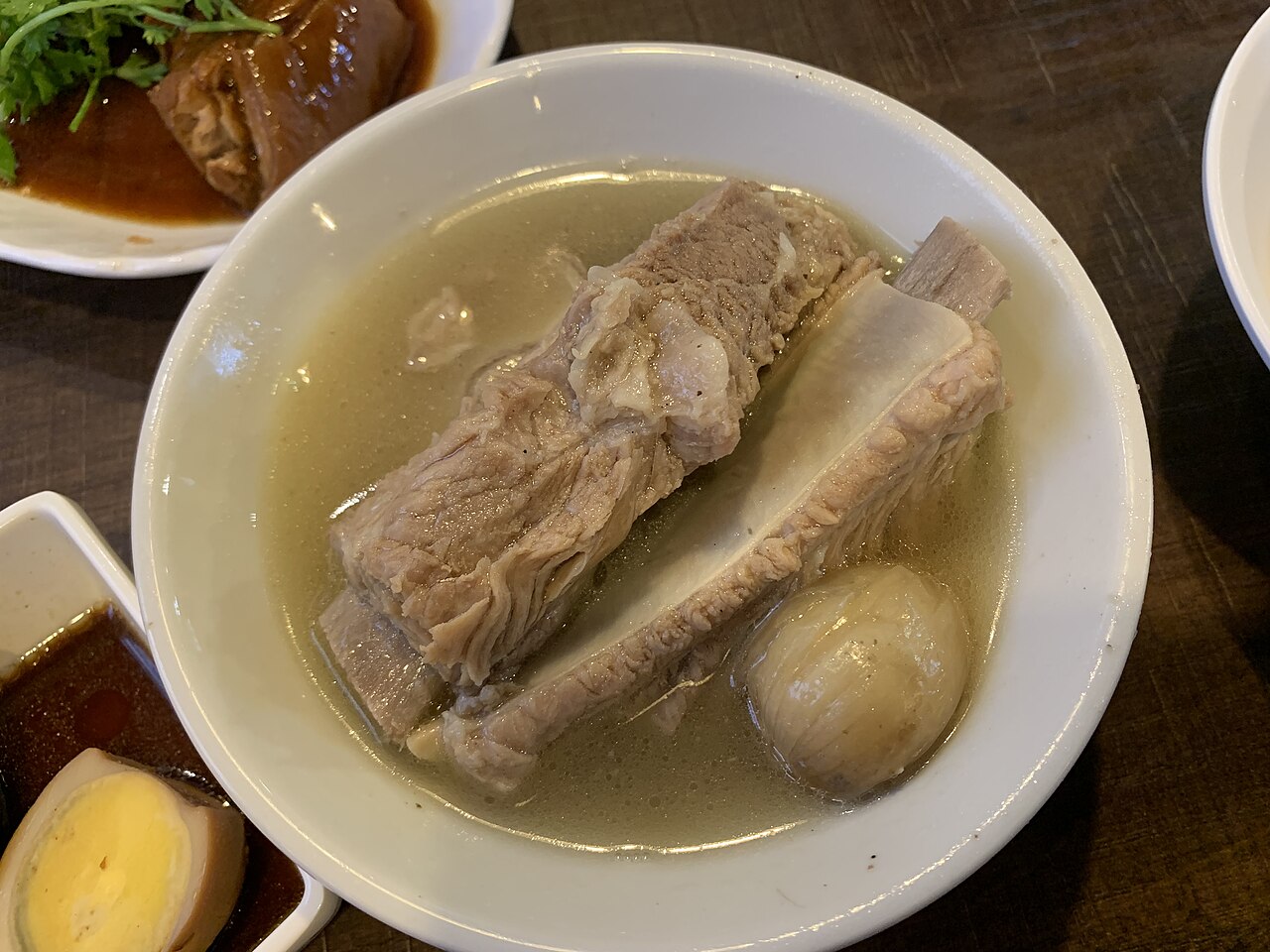
Bak kut teh
Photo: Chainwit, CC BY 4.0
Main course

Bak kut teh

Hokkien and Teochew cooking, popular in Singapore and Malaysia
Read moreShow less

Pork ribs simmered for hours in a broth with garlic and spices. In Singapore the lighter Teochew style is popular, served with rice and pieces of fried dough (youtiao) to dip in the soup. It is usually eaten for breakfast or lunch, with Chinese tea.

The name means 'meat bone tea' in Hokkien, yet there is no tea in the soup: the tea is drunk alongside it.

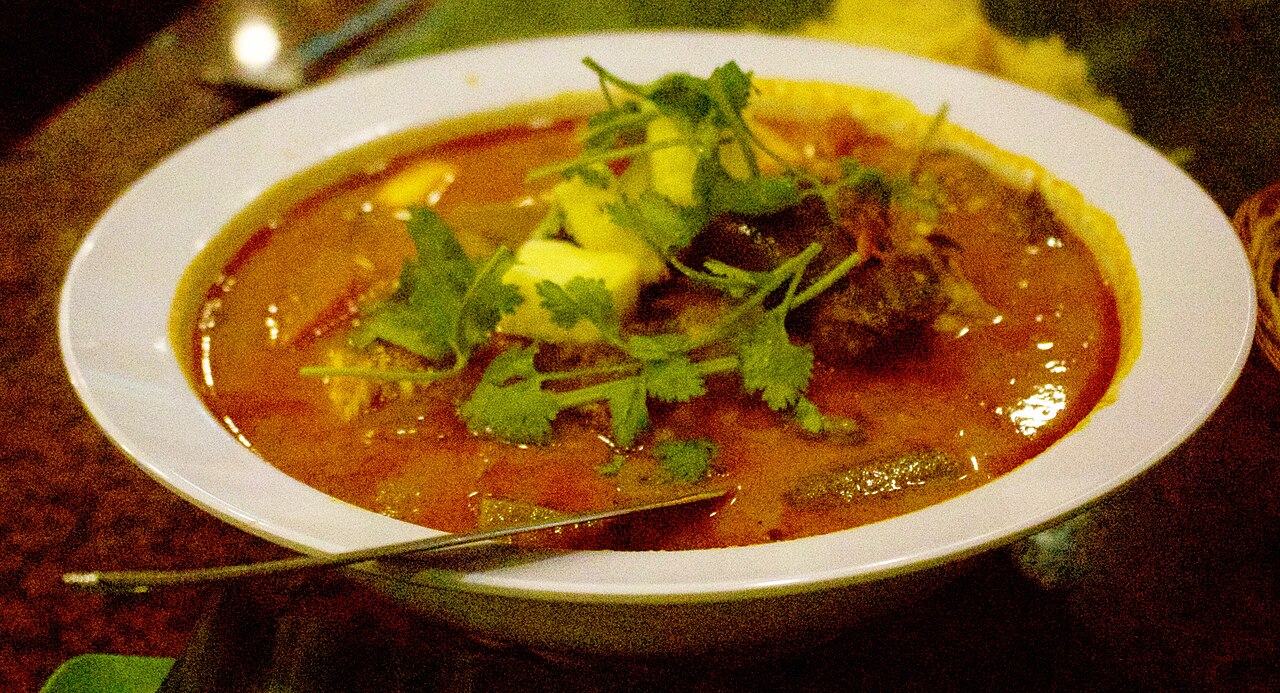
Fish head curry
Photo: EurovisionNim, CC BY-SA 4.0
Main course

Fish head curry

Indian, Chinese and Malay cooks in Singapore and Malaysia
Read moreShow less

A whole head of red snapper stewed in a Kerala-style curry with vegetables such as okra and aubergine. It usually comes to the table in a clay pot and is shared, with rice or bread.

The dish is usually credited to M. J. Gomez, a cook from Kerala in India, who began selling it in Singapore in 1949 because his Chinese customers prized fish heads.

Satay
Photo: Jpatokal, CC BY-SA 4.0
StarterRecipe

Satay

Malay and Javanese cooking, a hawker favourite in the evening
Read moreShow less

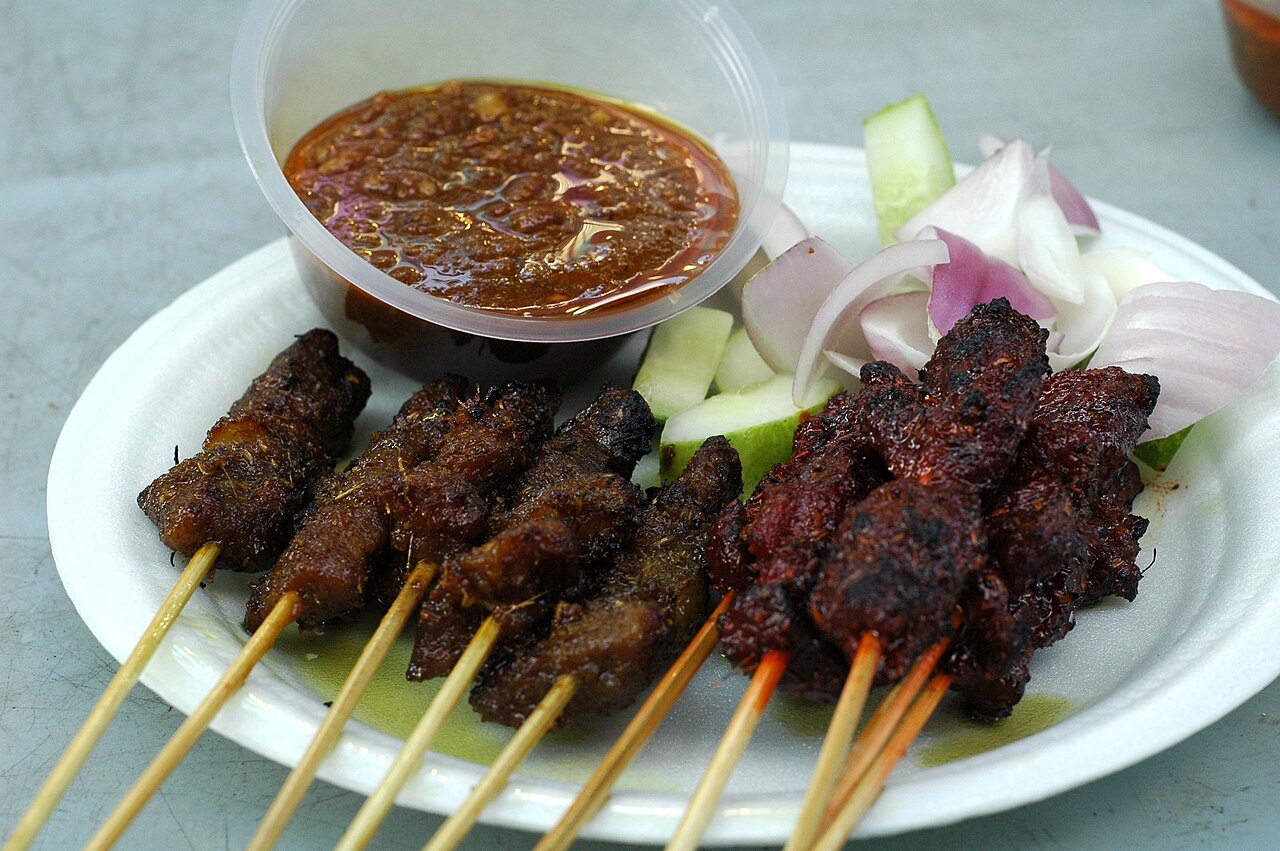
Small skewers of marinated chicken, mutton or beef grilled over charcoal and served with a slightly spicy peanut sauce, cucumber and onion. In Singapore, satay is a classic of the evening hawker scene, and there is also a Hainanese version made with pork and a pineapple sauce. Satay is popular across Southeast Asia and is a national dish in Indonesia and Malaysia.

The satay stalls at Lau Pa Sat, an old market hall among the skyscrapers near Raffles Place, are among the best-known places in Singapore to eat satay.

See the recipe
Serves 41 h

Ingredients

  • 600 g boneless chicken thighs, cut into 2 cm pieces
  • Marinade: 3 shallots, 2 cloves garlic, 1 stalk lemongrass, 1 teaspoon ground turmeric, 2 teaspoons ground coriander, 1 teaspoon ground cumin, 2 tablespoons sugar, 1 teaspoon salt and 2 tablespoons oil
  • About 20 bamboo skewers, soaked in water for 30 minutes
  • Peanut sauce: 150 g roasted peanuts, coarsely ground, 2 tablespoons chilli paste, 2 shallots and 1 clove garlic (blended), 200 ml water, 1 tablespoon tamarind paste, 2 tablespoons sugar and 1 tablespoon oil
  • To serve: 1 cucumber and 1 red onion, cut into chunks

Method

  1. Blend the shallots, garlic and lemongrass with the spices, sugar, salt and oil. Mix with the chicken and leave in the fridge for at least 1 hour, or overnight.
  2. For the sauce, fry the blended shallots, garlic and chilli paste in the oil for 5 minutes. Add the peanuts, water, tamarind and sugar and simmer for 10 minutes, stirring, until thick. Peanuts cause serious allergies, so warn your guests.
  3. Thread 4 or 5 pieces of chicken onto each skewer.
  4. Grill over charcoal or under a hot grill for about 8 to 10 minutes, turning often and brushing with a little oil, until slightly charred and cooked through.
  5. Serve hot with the peanut sauce, cucumber and onion.
Roti prata
Photo: Jpatokal, CC BY-SA 3.0
Bread

Roti prata

roti prata (called roti canai in Malaysia)
Indian Muslim cooking, now eaten across Singapore
Read moreShow less

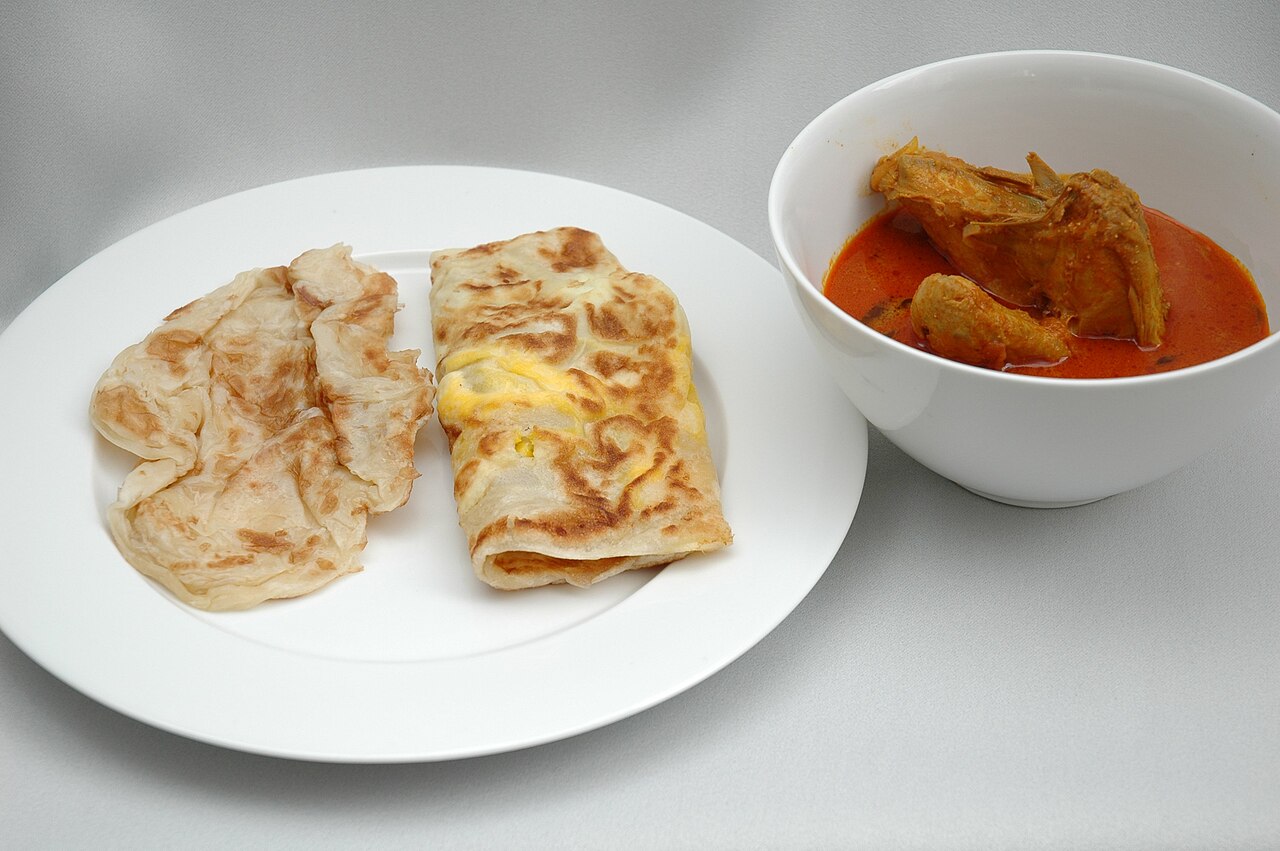
A flaky, chewy flatbread: the dough is tossed and stretched until paper-thin, folded and fried on a hot griddle. It is eaten plain or with egg, onion or cheese folded inside, always with a bowl of curry for dipping. Many prata shops stay open late into the night.

The Singapore name 'prata' comes from the Indian flatbread called paratha or parotta.

Kaya toast
Photo: Pinklily08, CC BY-SA 4.0
SnackRecipe

Kaya toast

Hainanese coffee shops
Read moreShow less

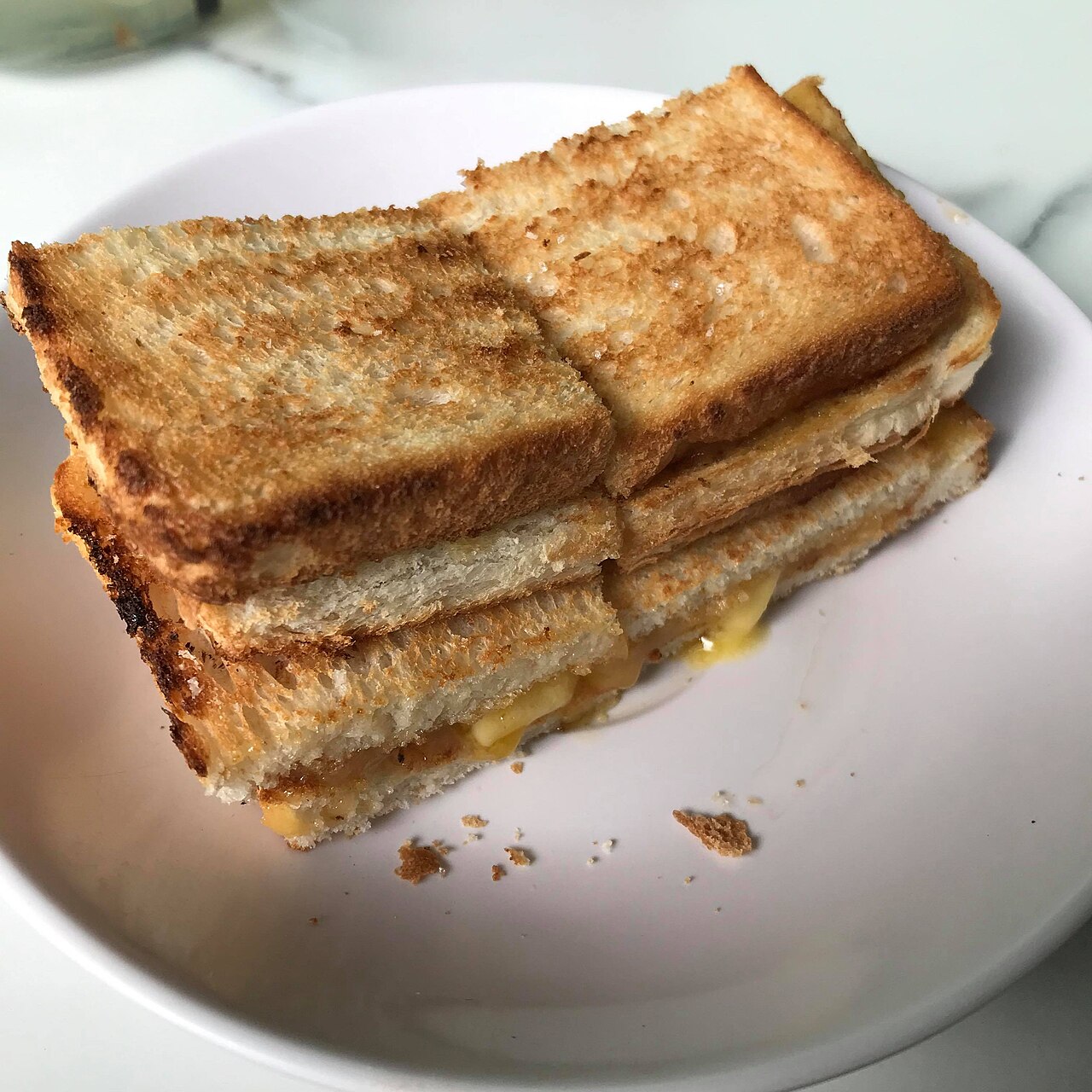
Slices of toasted bread filled with kaya, a sweet jam of coconut milk, eggs and sugar, often flavoured with pandan, and a thick slice of cold butter. It is usually eaten for breakfast with soft-boiled eggs and a cup of strong local coffee called kopi.

Hainanese cooks who worked on British ships are believed to have created kaya as a local stand-in for Western fruit jams.

See the recipe
Serves 41 h 15 min

Ingredients

  • For the kaya: 3 eggs, 150 g sugar (or palm sugar), 200 ml thick coconut milk and 2 pandan leaves, knotted (or a few drops of vanilla)
  • 8 thin slices of white bread
  • Cold salted butter, cut into thin slices
  • To serve: 4 to 8 very fresh eggs, light soy sauce and ground white pepper

Method

  1. For the kaya, whisk the eggs and sugar until the sugar dissolves, then stir in the coconut milk. Pour into a heatproof bowl with the pandan leaves.
  2. Set the bowl over a pan of barely simmering water and stir constantly for 30 to 40 minutes, until the kaya is as thick as custard and coats the spoon (it should reach at least 71 °C). Remove the pandan, cool and keep in the fridge for up to a week.
  3. Toast the bread until crisp and golden. Spread one slice thickly with kaya, add slices of cold butter, top with a second slice and cut into fingers.
  4. For soft-boiled eggs the Singapore way, put the eggs in a pot, pour over boiling water to cover, put the lid on and leave for 6 to 7 minutes. Crack them into a small bowl and season with soy sauce and white pepper.
  5. The eggs stay runny and are not fully cooked: use pasteurised eggs, or cook them until firm, for pregnant women, young children, older people and anyone with a weak immune system.
Chwee kueh
Photo: Ruth Ellison, CC BY 2.0
Snack

Chwee kueh

Teochew cooking, a Singapore hawker breakfast
Read moreShow less

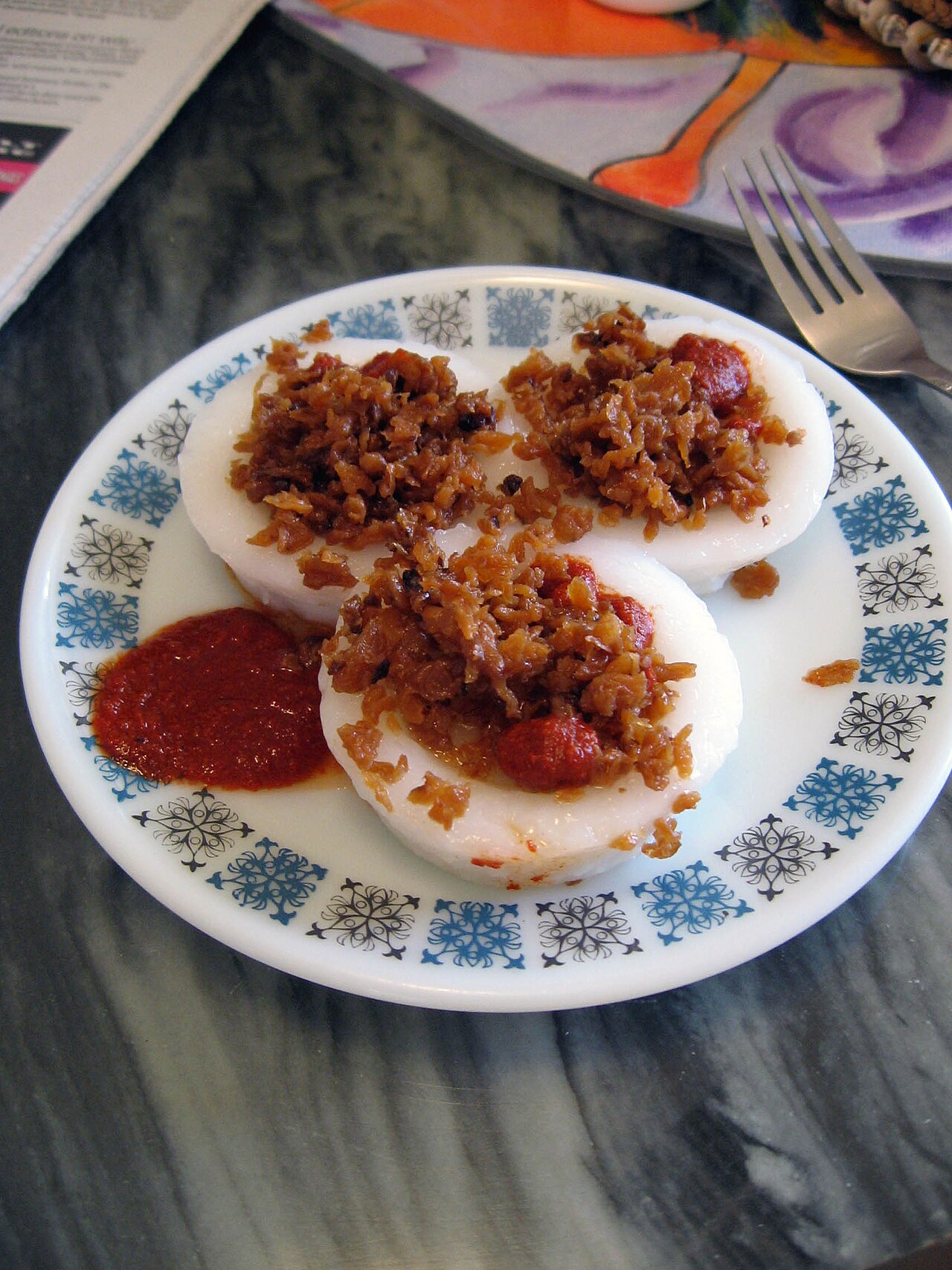
Small, soft, cup-shaped rice cakes, steamed in little moulds and topped with salty preserved radish fried in oil, with chilli sauce on the side. They are a cheap and much-loved breakfast in hawker centres.

The name means 'water rice cake', because the batter is just rice flour and water.

Popiah
Photo: Mimasiki, CC BY-SA 4.0
Snack

Popiah

Hokkien, Teochew and Peranakan cooking
Read moreShow less

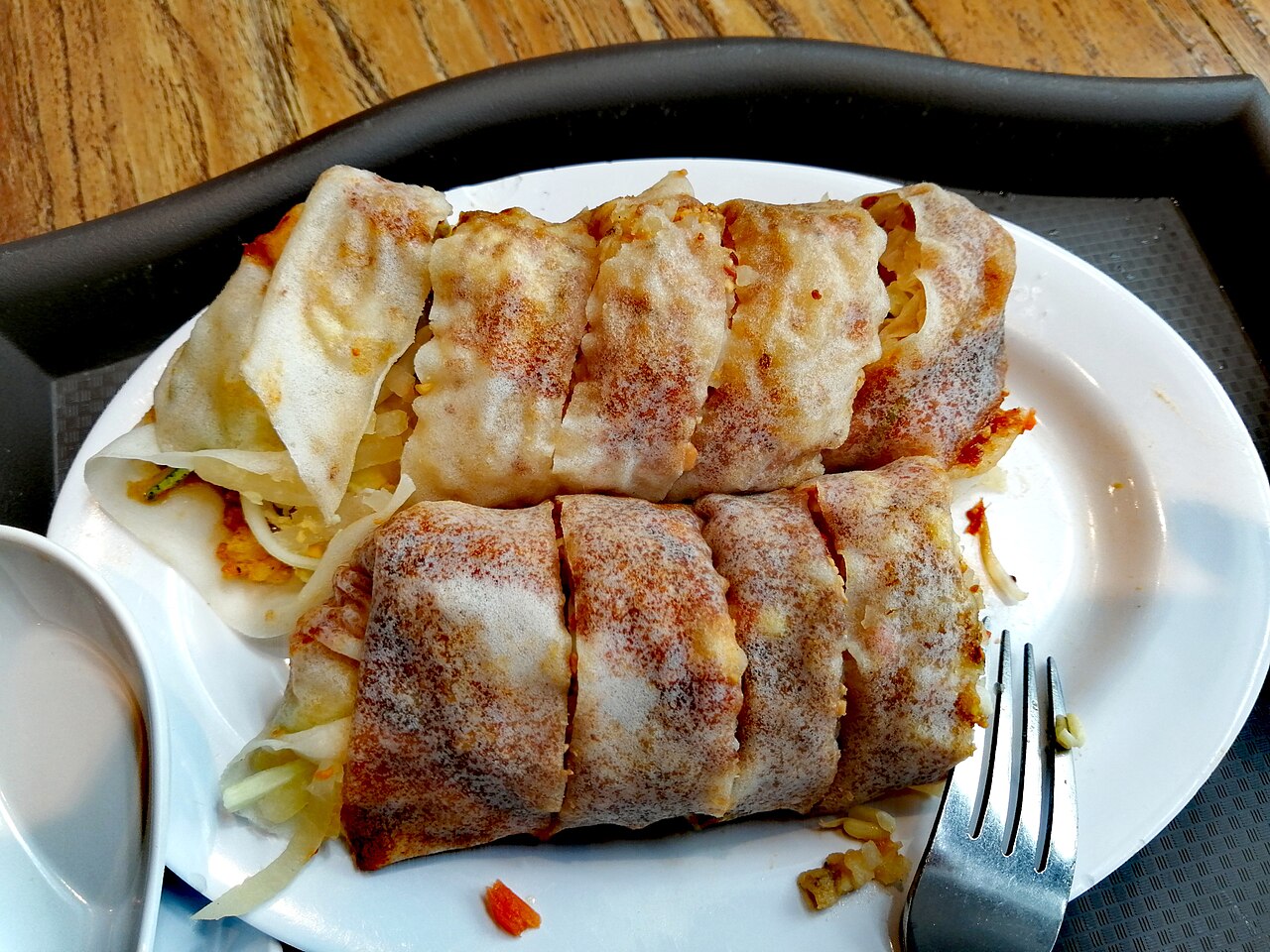
A fresh, unfried spring roll: a paper-thin crepe brushed with sweet sauce and rolled around stewed jicama (a crunchy root also called turnip), bean sprouts, lettuce, egg, peanuts and sometimes prawns or Chinese sausage. In Singapore and Malaysia, families hold 'popiah parties' at home, where everyone rolls their own.

The name means 'thin flatbread' or 'thin pancake' in Hokkien and Teochew.

Oyster omelette
Photo: Archon6812, CC BY-SA 3.0
Snack

Oyster omelette

orh luak
Teochew and Hokkien cooking
Read moreShow less

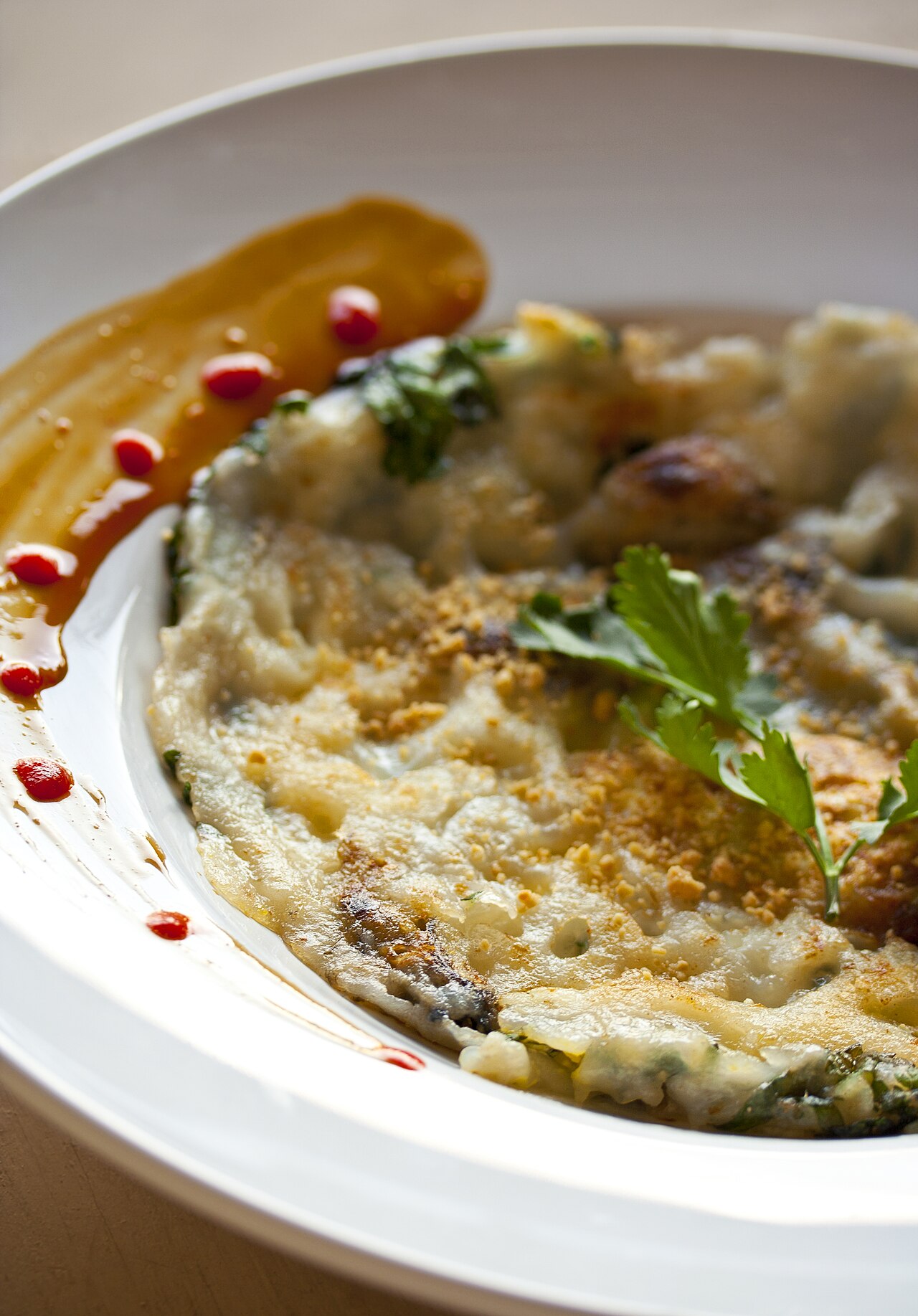
Small oysters fried with egg and a batter of sweet potato starch, which turns crisp at the edges and pleasantly chewy in the middle. It is sprinkled with spring onion and served with chilli sauce mixed with lime juice.

The starch is what gives the omelette its special chewy texture, quite unlike a Western omelette.

Ais kacang
Photo: Andrew Bogott, CC BY-SA 3.0
Dessert

Ice kacang

ais kacang
Hawker stalls in Singapore, Malaysia and Brunei
Read moreShow less

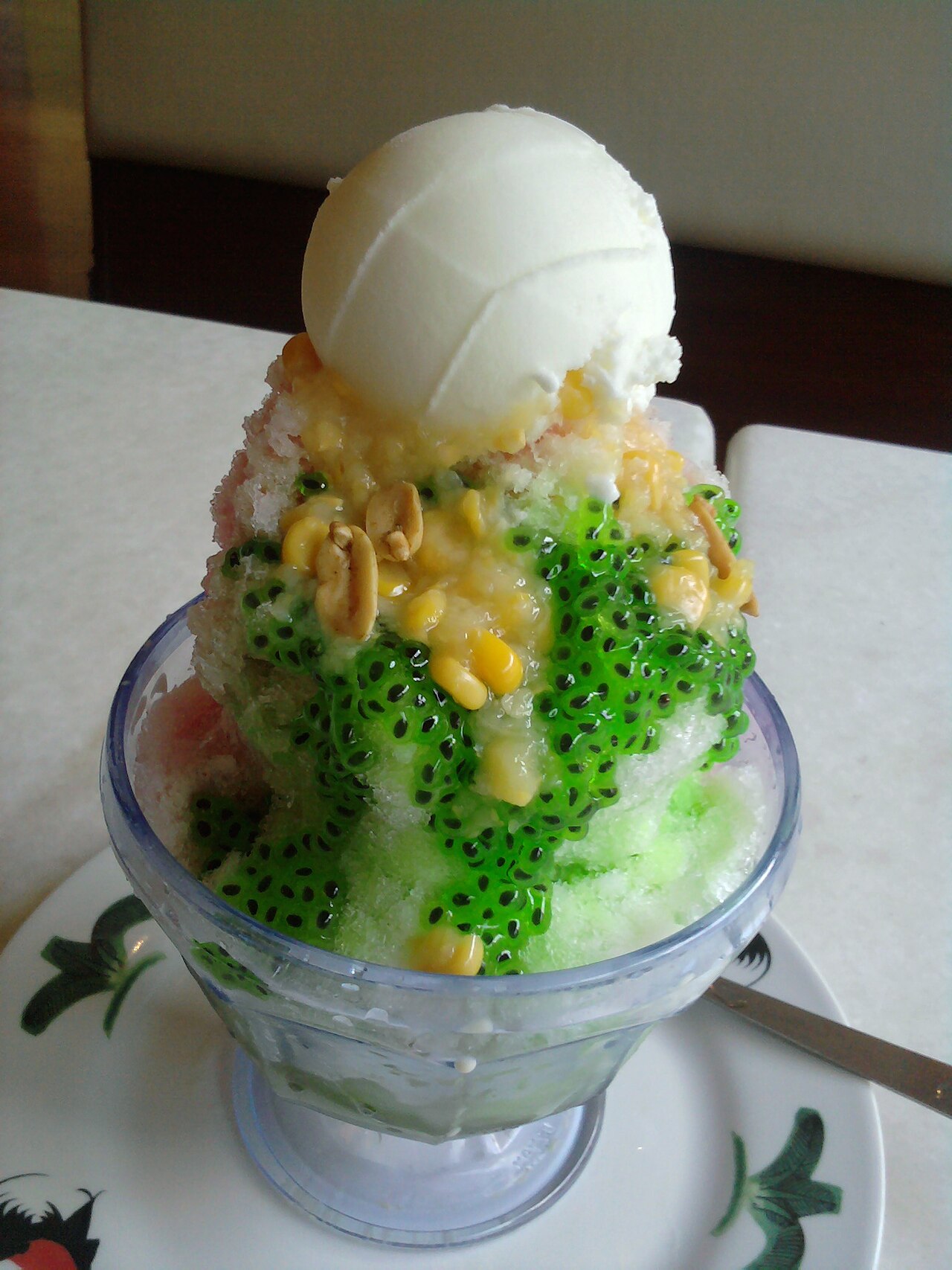
A mountain of shaved ice over red beans, sweet corn and jelly, drenched in brightly coloured syrups and evaporated or condensed milk. In the tropical heat it is one of the most popular hawker desserts.

'Kacang' is Malay for beans, after the red beans hidden under the ice.

Singapore sling
Photo: Paul2520, CC BY 4.0
Drink

Singapore Sling

The Long Bar of Raffles Hotel
Read moreShow less

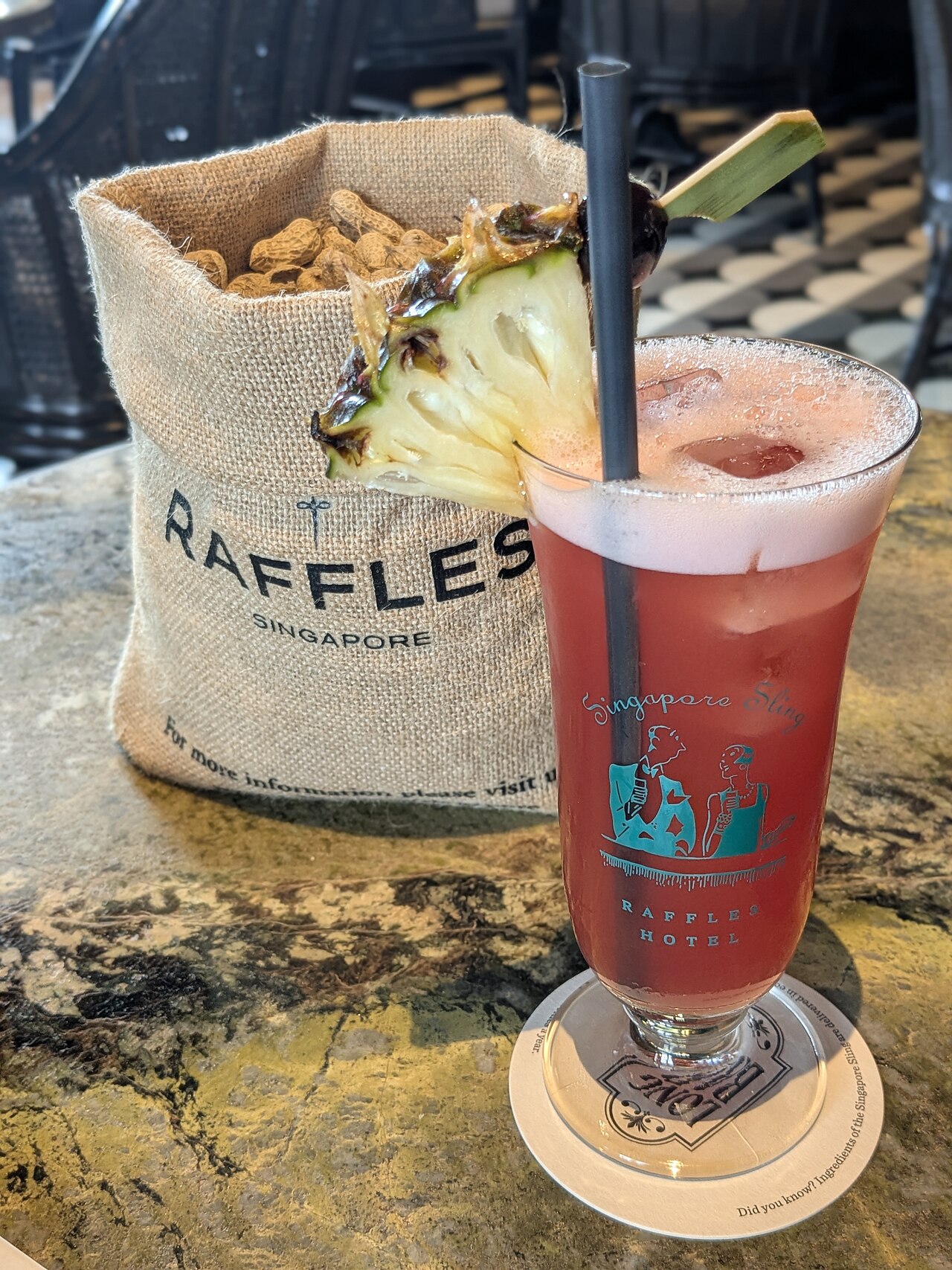
A long, pink cocktail made with gin, cherry liqueur and fruit juices such as pineapple and lime; recipes differ widely. It is usually said to have been created at the Raffles Hotel by the bartender Ngiam Tong Boon around 1915, though the exact date and the original recipe are debated. It contains alcohol.

At the Long Bar, guests traditionally throw their peanut shells on the floor, something not usually allowed anywhere in tidy Singapore.

Table manners

  • At a hawker centre, 'chope' (reserve) your seat first: locals leave a packet of tissues on the table to show it is taken, so do not sit where you see one.
  • Return your tray and plates to the tray return racks when you finish. It is expected, and you can be fined if you do not. Halal and non-halal racks are kept separate.
  • Most food is eaten with a fork in the left hand and a spoon in the right, using the fork to push food onto the spoon. If you eat with your hand, use only the right.
  • At Chinese meals, never stick your chopsticks upright in a bowl of rice: it looks like incense sticks at a funeral.
  • Respect religious food rules: Muslims do not eat pork or drink alcohol, and stalls marked 'halal' serve neither; many Hindus and some Buddhists avoid beef.
  • Tipping is not expected. Restaurants usually add a 10% service charge plus tax to the bill, shown by '++' after the price.
Cities

10 cities to know

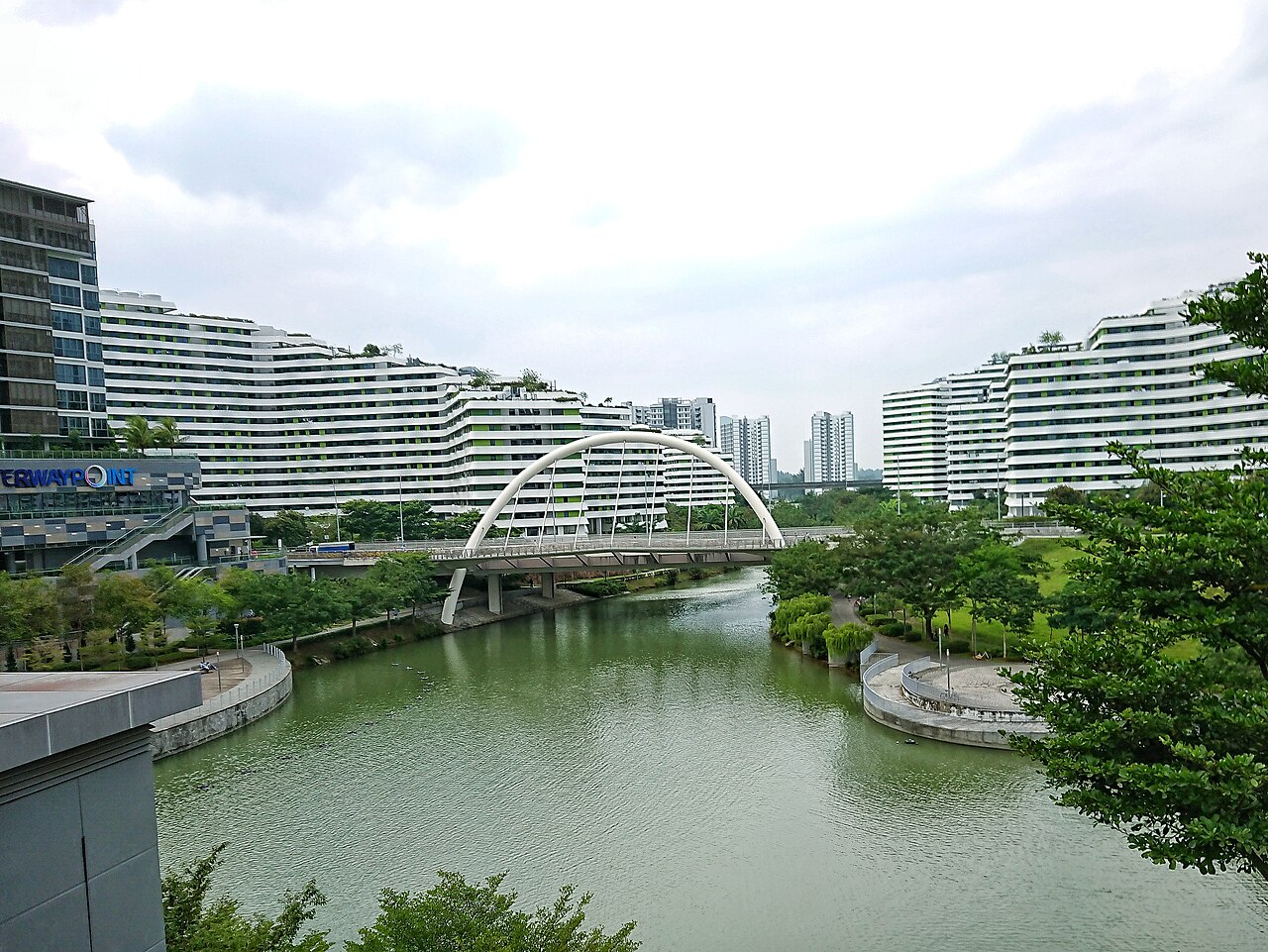
Singapore is a single city that covers almost the whole island, so its 'towns' are districts of one country-sized city. The historic centre and business district lie in the south, around the mouth of the Singapore River. Around it, the government built self-contained new towns from the 1950s onward, such as Queenstown, Toa Payoh, Ang Mo Kio, Bedok, Tampines, Woodlands, Jurong East and Punggol, each with tall public housing blocks, a town centre, a train station, schools, parks and hawker centres.

City centreQueenstownBukit TimahToa PayohAng Mo KioJurong EastTampinesBedok
Singapore
Photo: Diego Delso, CC BY-SA 4.0

SingaporeCapital

Central Region (Downtown Core)
Read moreShow less

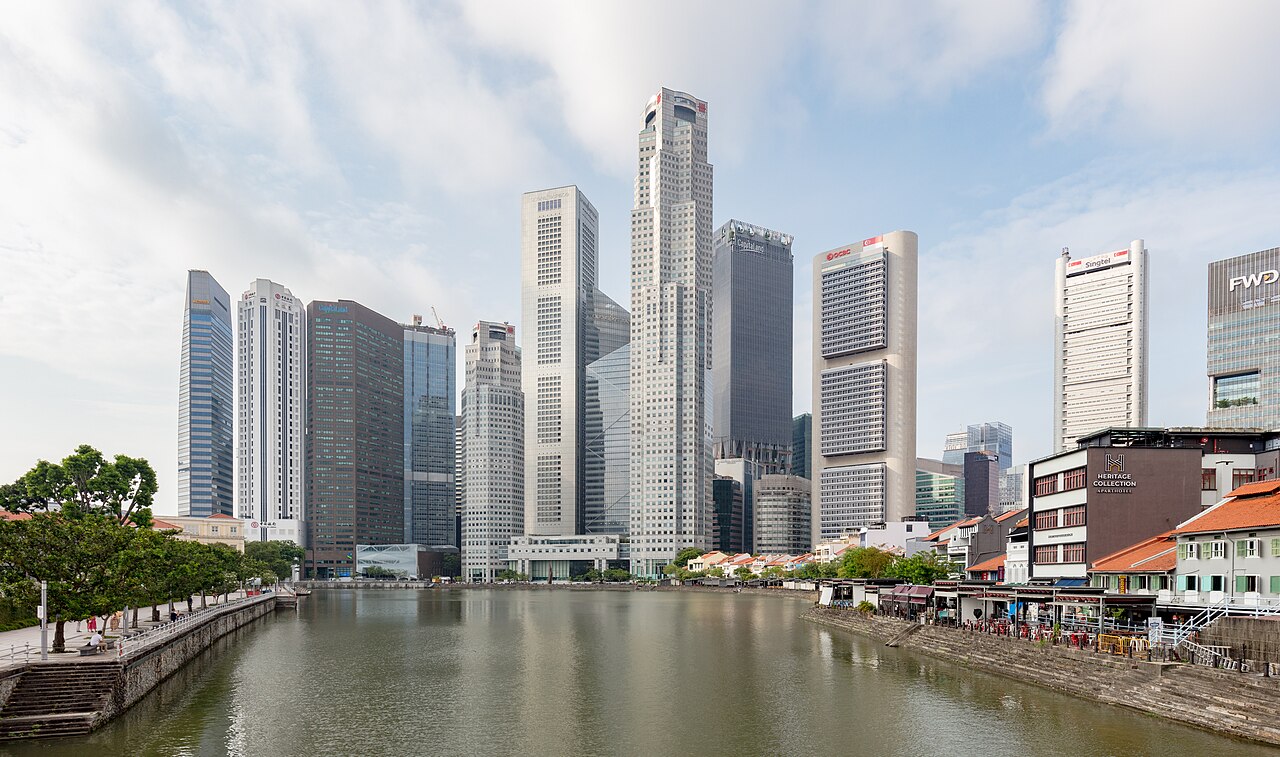
The historic heart of the city-state, around the mouth of the Singapore River, where Raffles landed in 1819. Today it holds Parliament, the Supreme Court, the skyscrapers of Raffles Place and the waterfront of Marina Bay, with Chinatown, Kampong Glam and Little India close by.

  • Marina Bay and the Merlion
  • Colonial buildings and museums
  • Chinatown, Kampong Glam and Little India
Queenstown
Photo: Wzhkevin, CC BY-SA 4.0

Queenstown

Central Region
Read moreShow less

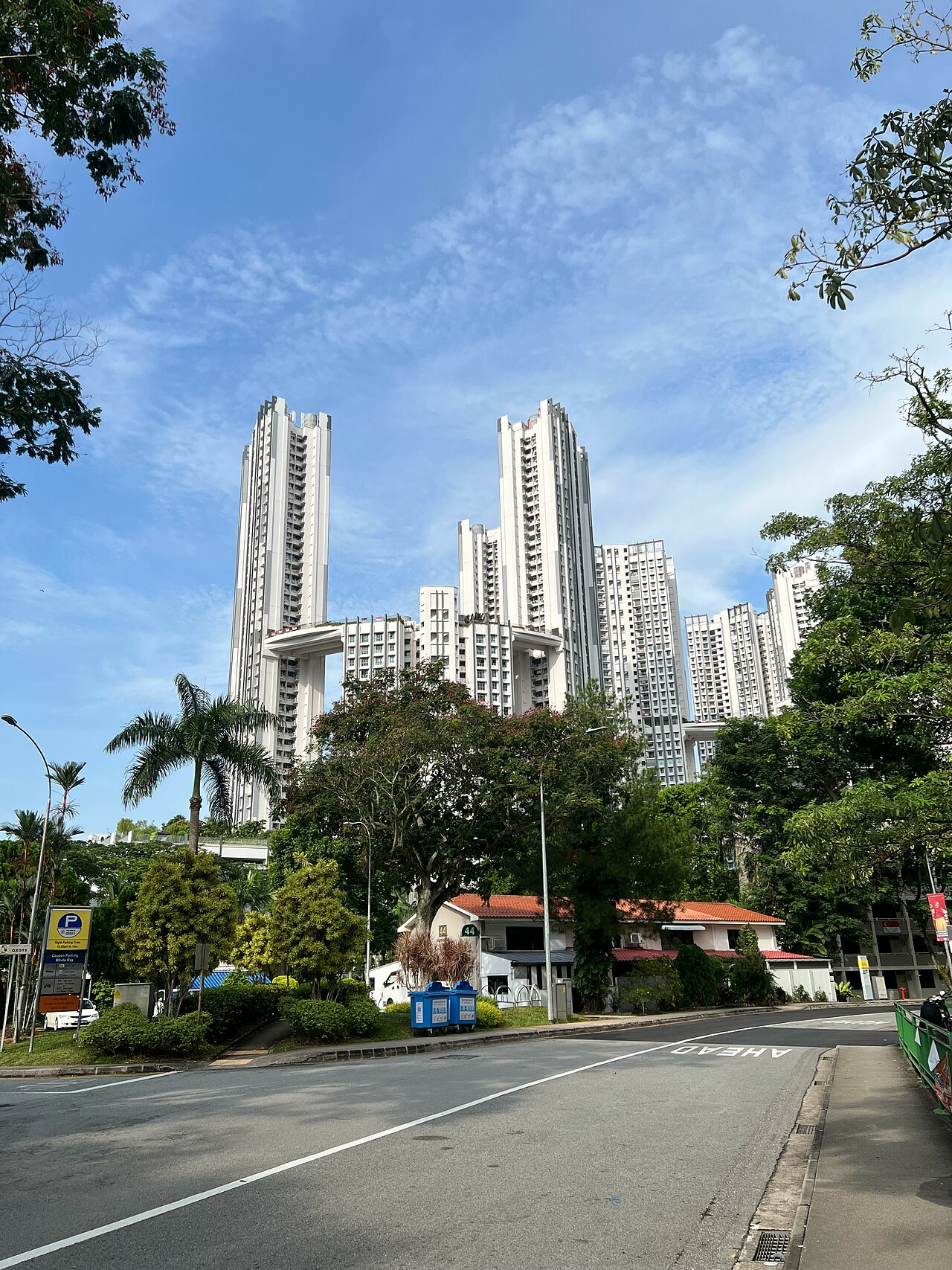
A residential town in the southwest of the Central Region, and Singapore's first satellite town. It was begun in the 1950s by the Singapore Improvement Trust and continued by the Housing and Development Board, and many of its early low-rise flats are part of the country's housing history.

  • Singapore's first satellite town
  • Early public housing blocks
  • Offices of the APEC Secretariat
Bukit Timah Nature Reserve
Photo: Chainwit, CC BY 4.0

Bukit Timah

Central Region
Read moreShow less

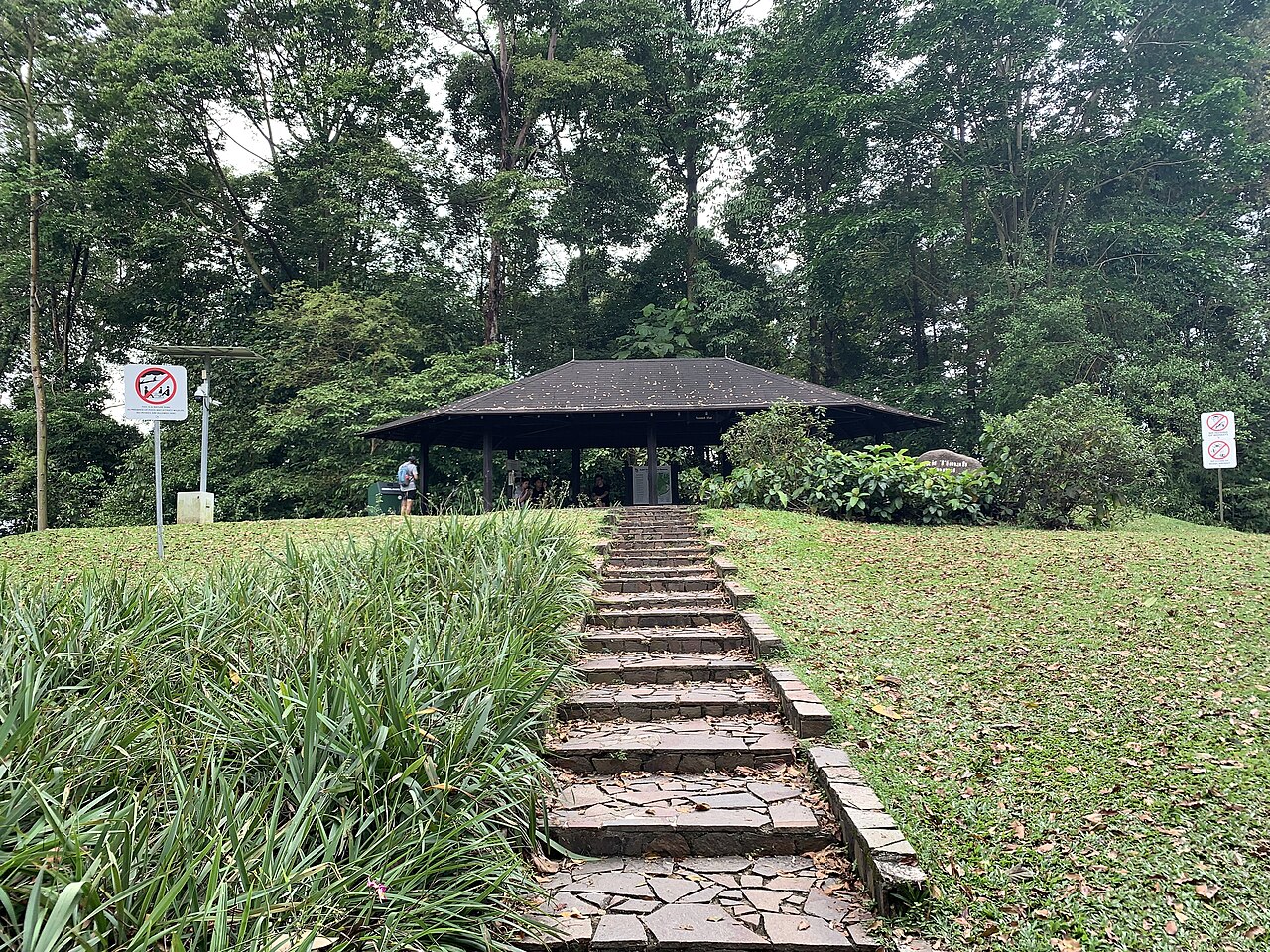
A green, leafy district in the west of the Central Region, about 10 km from the business district. It is known for private houses and condominiums rather than public flats, and for Bukit Timah Road, one of the island's oldest roads, completed in 1843 to reach Bukit Timah Hill, the highest point in Singapore.

  • Private houses and condominiums
  • Bukit Timah Road, one of the oldest roads
  • The way to Bukit Timah Hill
Toa Payoh
Photo: Taken by Terence Ong, CC BY 2.5

Toa Payoh

Central Region
Read moreShow less

A busy residential town north of the centre, built on a former swamp and squatter district. It was the first new town built by the Housing and Development Board, from 1964, and as it was planned while Singapore was part of Malaysia, its streets have Malay names such as 'Lorong'.

  • The first HDB new town
  • A town centre with a mall and a hawker centre
  • The name means 'big swamp' in Hokkien
Ang Mo Kio
Photo: BenTanXiaoMing, CC BY-SA 4.0

Ang Mo Kio

North-East Region
Read moreShow less

A large residential town about 11 km north of the city centre, built by the Housing and Development Board from 1973 on former farmland and forest. The country's first town councils were set up here in 1986.

  • A classic HDB town of the 1970s
  • Bishan-Ang Mo Kio Park nearby
  • Neighbourhood hawker centres
Jurong
Photo: Groyn88 at English Wikipedia, CC BY-SA 3.0

Jurong East

West Region
Read moreShow less

The regional centre of western Singapore, about 20 km west of the Central Area, which began to grow in the 1970s alongside the industrial estates of Jurong. It is a major shopping and transport hub, and it is being developed into the Jurong Lake District, planned as the largest business district outside the city centre.

  • Shopping malls around the MRT station
  • Jurong Lake Gardens and the Chinese Garden
  • The planned Jurong Lake District
Woodlands
Photo: 33Loading, CC BY-SA 4.0

Woodlands

North Region
Read moreShow less

The regional centre of the north, on the Straits of Johor, about 25 km from the city centre. The Johor-Singapore Causeway, opened in 1923, links it to Johor Bahru in Malaysia, and huge numbers of people cross the Woodlands Checkpoint every day.

  • The causeway to Malaysia
  • Woodlands Checkpoint
  • A large new town built from the 1980s
Tampines
Photo: DreamyBeluga, CC BY-SA 4.0

Tampines

East Region
Read moreShow less

The regional centre of the east, about 12 km from the city centre, and, as of 2025, the most populous planning area in Singapore. It was named the country's first regional centre in 1991, to bring offices and shops out of the Central Area.

  • Singapore's most populous planning area (as of 2025)
  • Singapore Expo, the country's largest convention centre
  • Offices near Changi Business Park
Punggol
Photo: Deoma12, CC BY-SA 4.0

Punggol

North-East Region
Read moreShow less

A young waterfront town on a peninsula in the northeast, built mostly since 1998 on land that was once farms and fishing villages. The Punggol Waterway, Singapore's largest man-made waterway, winds through it, and Coney Island, a small nature island, is part of the area.

  • Punggol Waterway
  • Coney Island
  • New public housing by the sea
Bedok
Photo: Wzhkevin, CC BY-SA 4.0

Bedok

East Region
Read moreShow less

A large residential town on the southeast coast, with a history of settlement going back to the 14th century, when it was a fishing village. Today it is one of the most populous towns in the country, close to the long seaside East Coast Park.

  • East Coast Park nearby
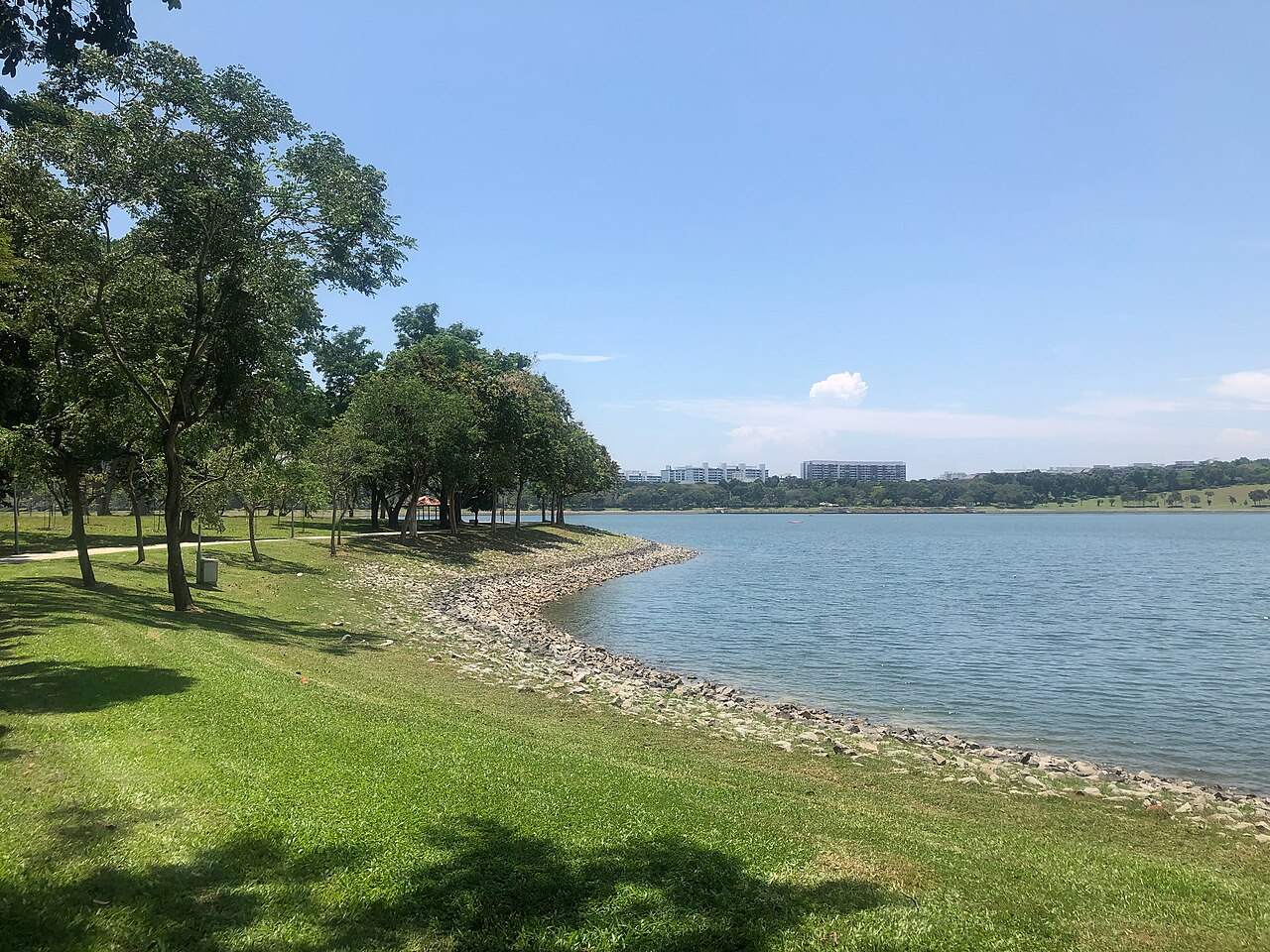
  • Bedok Reservoir Park
  • A former fishing village
Landmarks

Places everyone should see once

Marina Bay Sands
Photo: Supanut Arunoprayote, CC BY 4.0
Singapore

Marina Bay Sands

Read moreShow less

Three hotel towers joined at the top by the SkyPark, a huge platform with a 150 m infinity pool that overhangs the north tower by more than 66 m. Designed by Moshe Safdie and opened in 2010, the resort also holds a convention centre, a shopping mall, theatres and the lotus-shaped ArtScience Museum. It has become the best-known image of modern Singapore.

Gardens by the Bay
Photo: Shiny Things, CC BY 2.0
Singapore

Gardens by the Bay

Read moreShow less

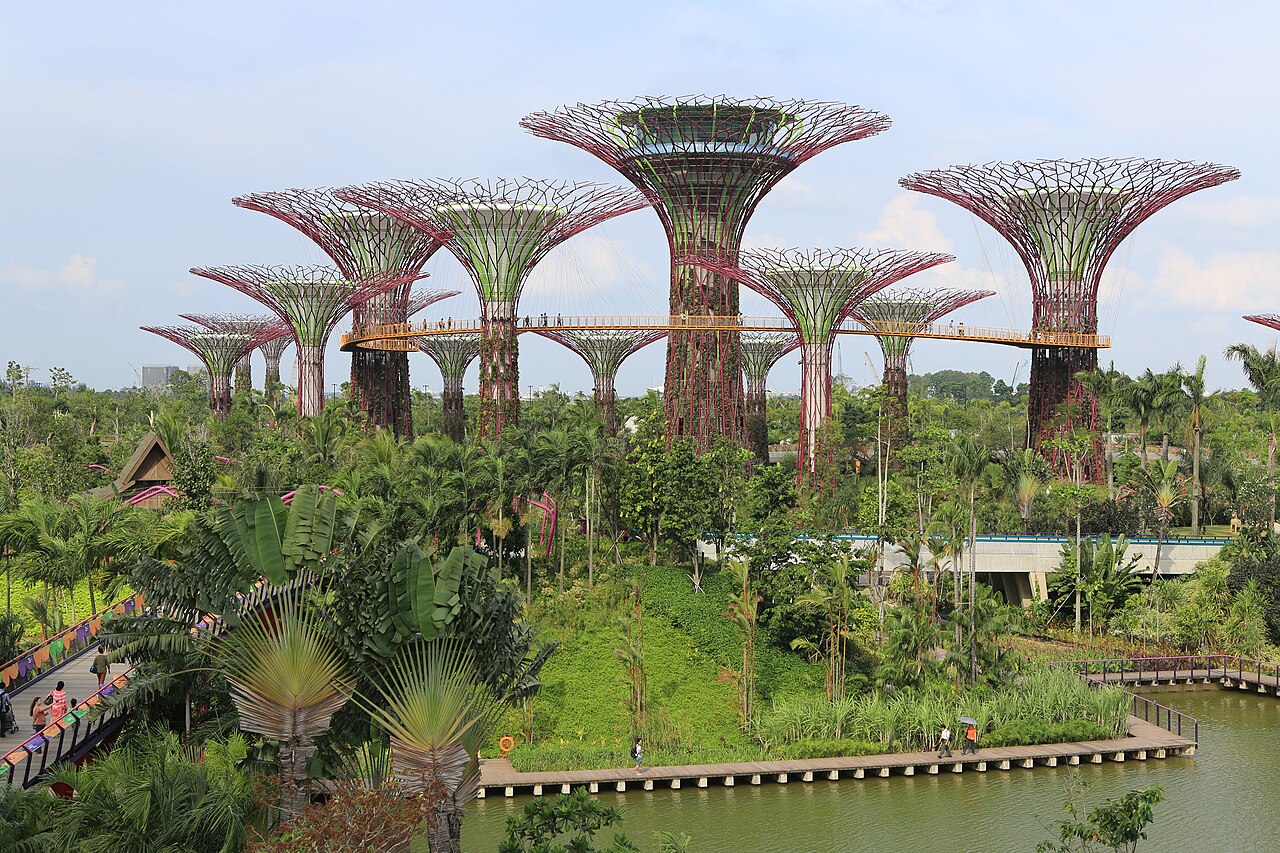
A 105-hectare park on reclaimed land beside Marina Bay. Its Supertrees, tree-like structures 25 to 50 m high covered in living plants, light up in a nightly show, and two huge cooled glasshouses, the Flower Dome and the Cloud Forest, hold plants from cooler climates, including an indoor waterfall.

Merlion Park
Photo: Bjørn Christian Tørrissen, CC BY-SA 3.0
Singapore

The Merlion

Read moreShow less

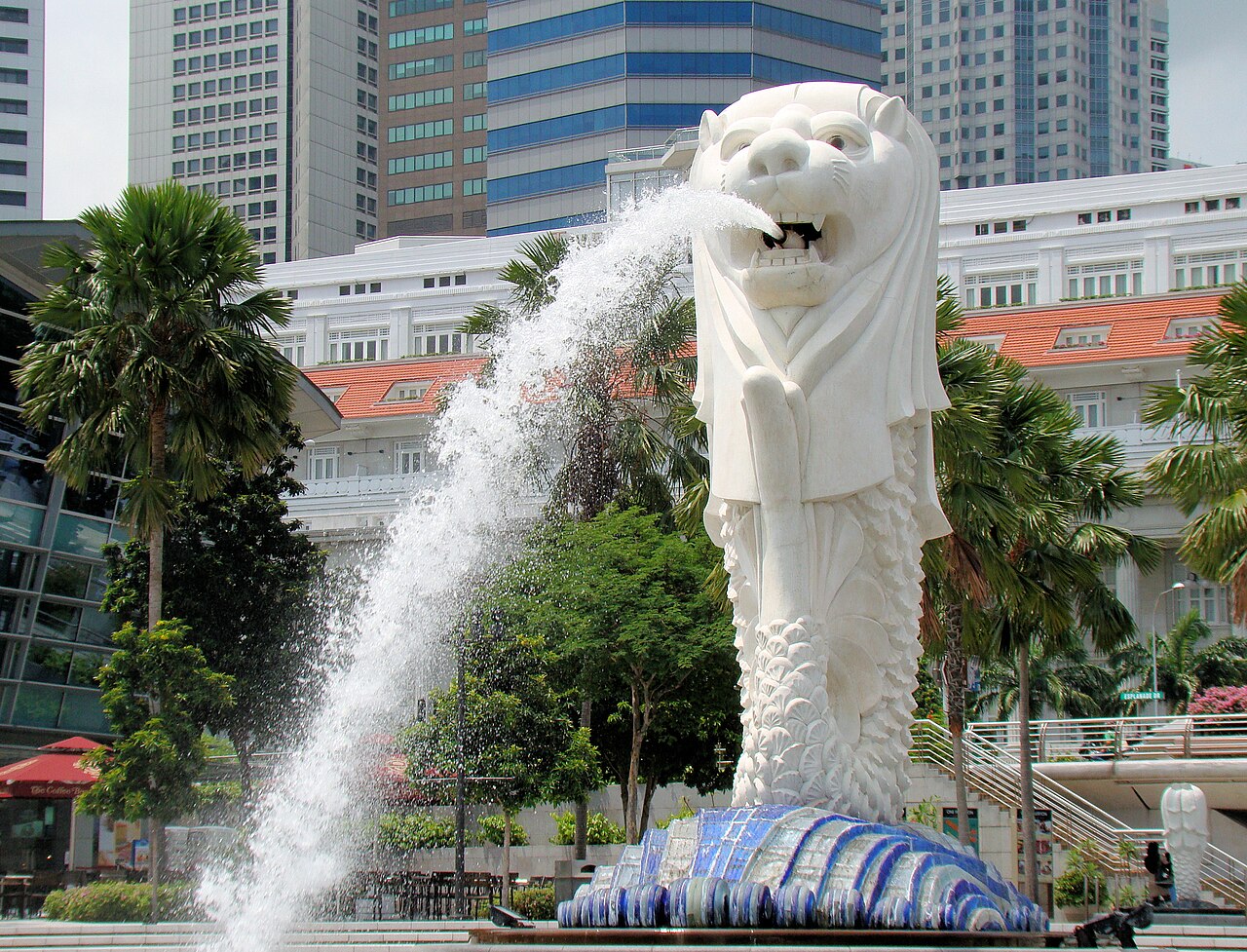
Singapore's mascot, a creature with the head of a lion and the body of a fish, spouting water into Marina Bay. The 8.6 m statue by sculptor Lim Nang Seng was completed in 1972 and moved to its present spot in Merlion Park in 2002. The fish recalls the old sea town of Temasek, and the lion the name Singapura, 'lion city'.

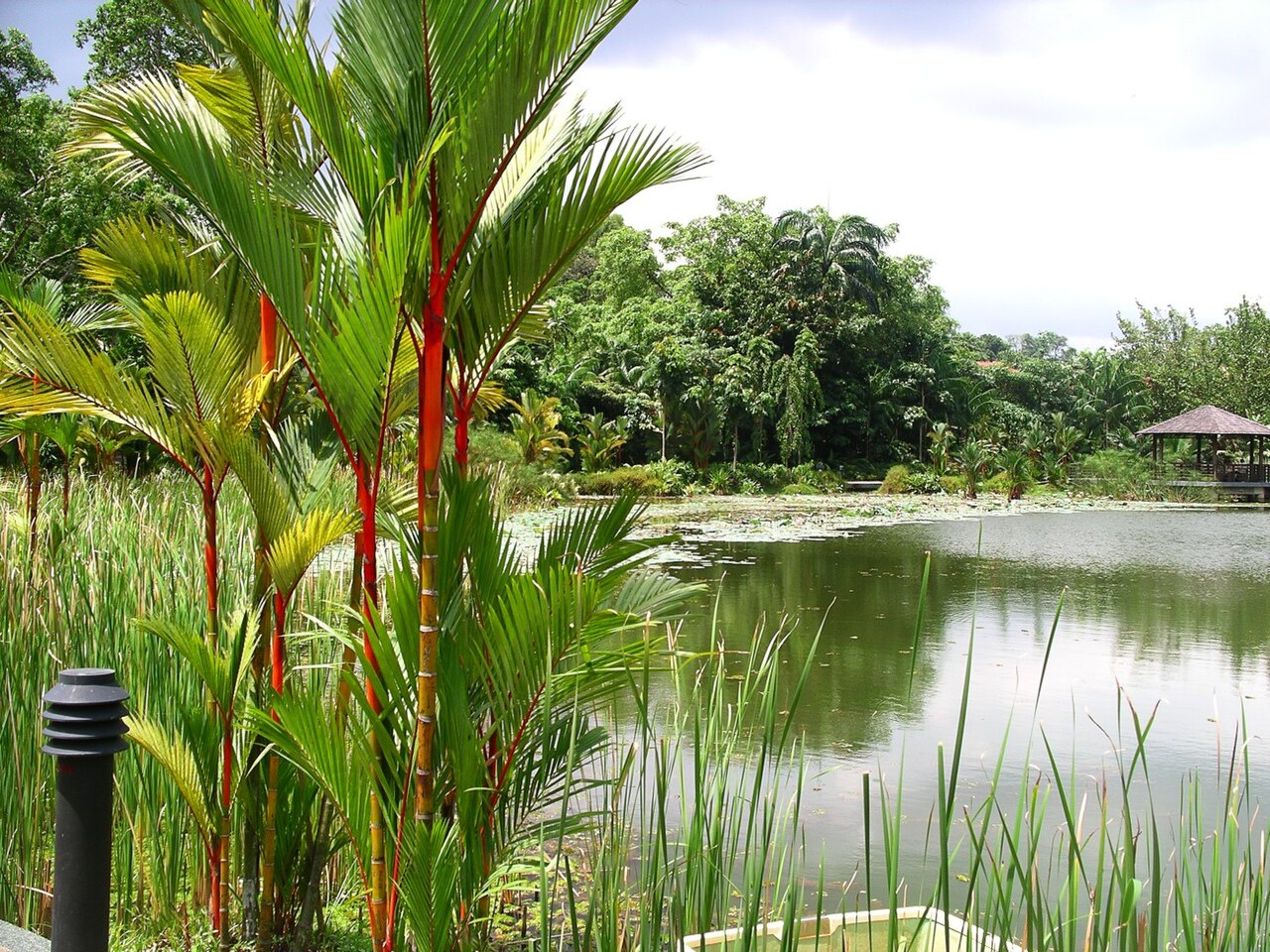
Singapore Botanic Gardens
Photo: Velela, Public domain
Singapore

Singapore Botanic Gardens

UNESCO World Heritage
Read moreShow less

Gardens founded on this site in 1859, at the edge of the Orchard Road shopping district, with lakes, a small patch of rainforest older than the gardens themselves and more than 10,000 kinds of plants. The National Orchid Garden inside holds a vast orchid collection. It became Singapore's first UNESCO World Heritage Site in 2015.

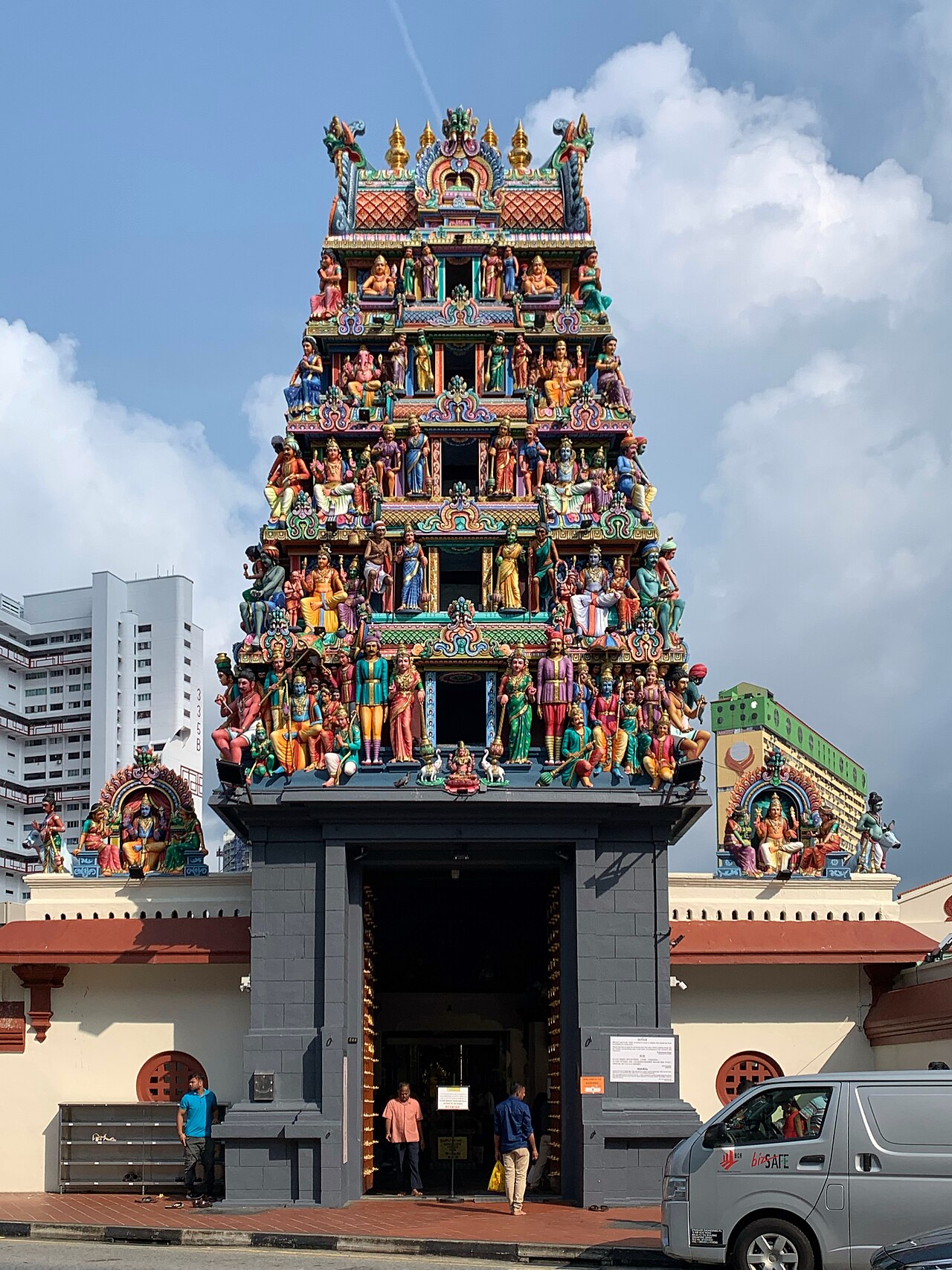
Sri Mariamman Temple, Singapore
Photo: Chainwit, CC BY-SA 4.0
Singapore

Sri Mariamman Temple

Read moreShow less

Singapore's oldest Hindu temple, founded in 1827 by Naraina Pillai, who arrived with Raffles in 1819. It stands in the middle of Chinatown, and its tall gopuram (gate tower) is covered in brightly painted figures of gods. It is a National Monument.

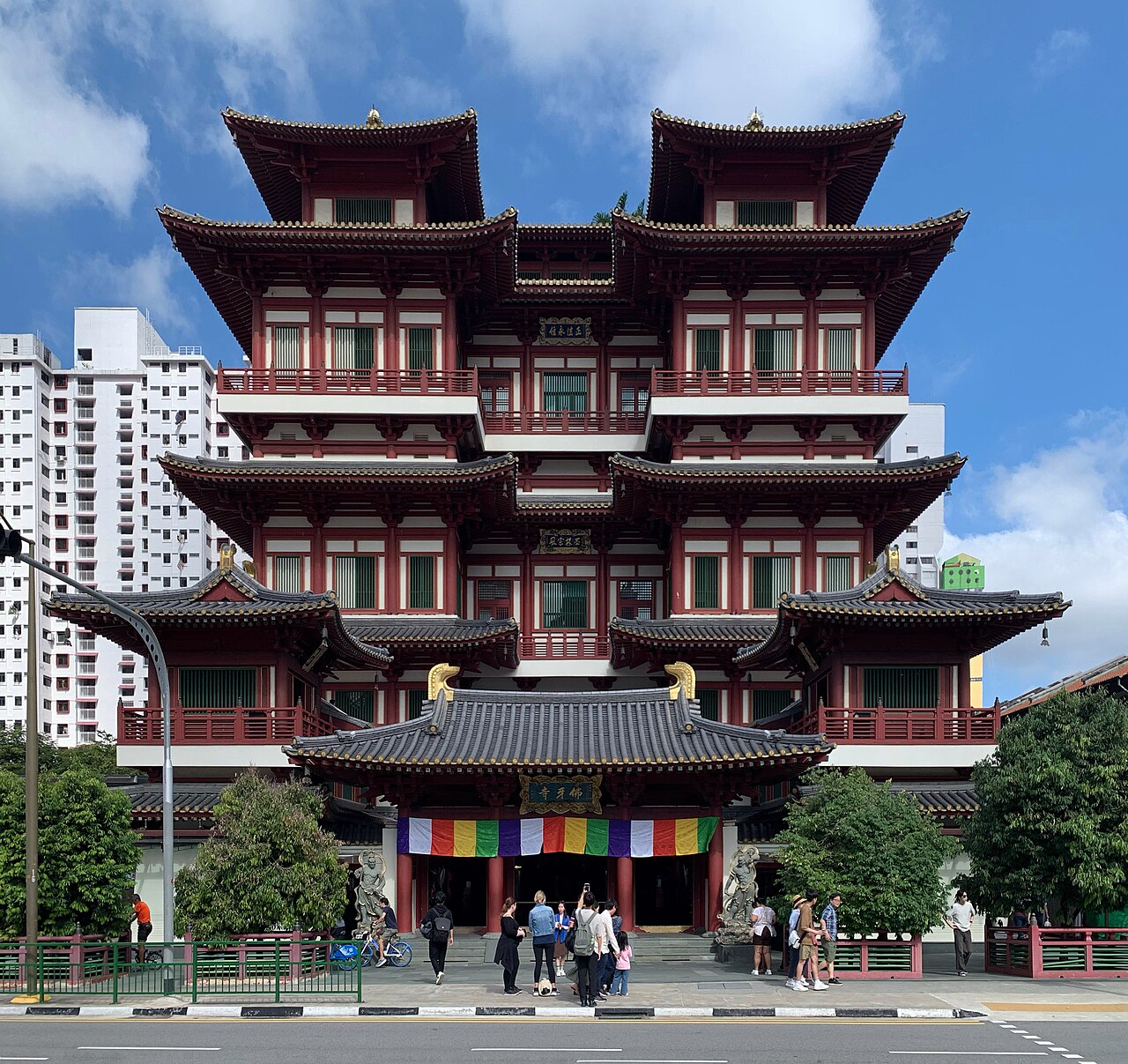
Buddha Tooth Relic Temple and Museum
Photo: Chainwit, CC BY 4.0
Singapore

Buddha Tooth Relic Temple

Read moreShow less

A large Chinese Buddhist temple and museum in Chinatown, built in the style of China's Tang dynasty. It was built to house a relic believed by devotees to be a tooth of the Buddha, which visitors can see on the fourth floor.

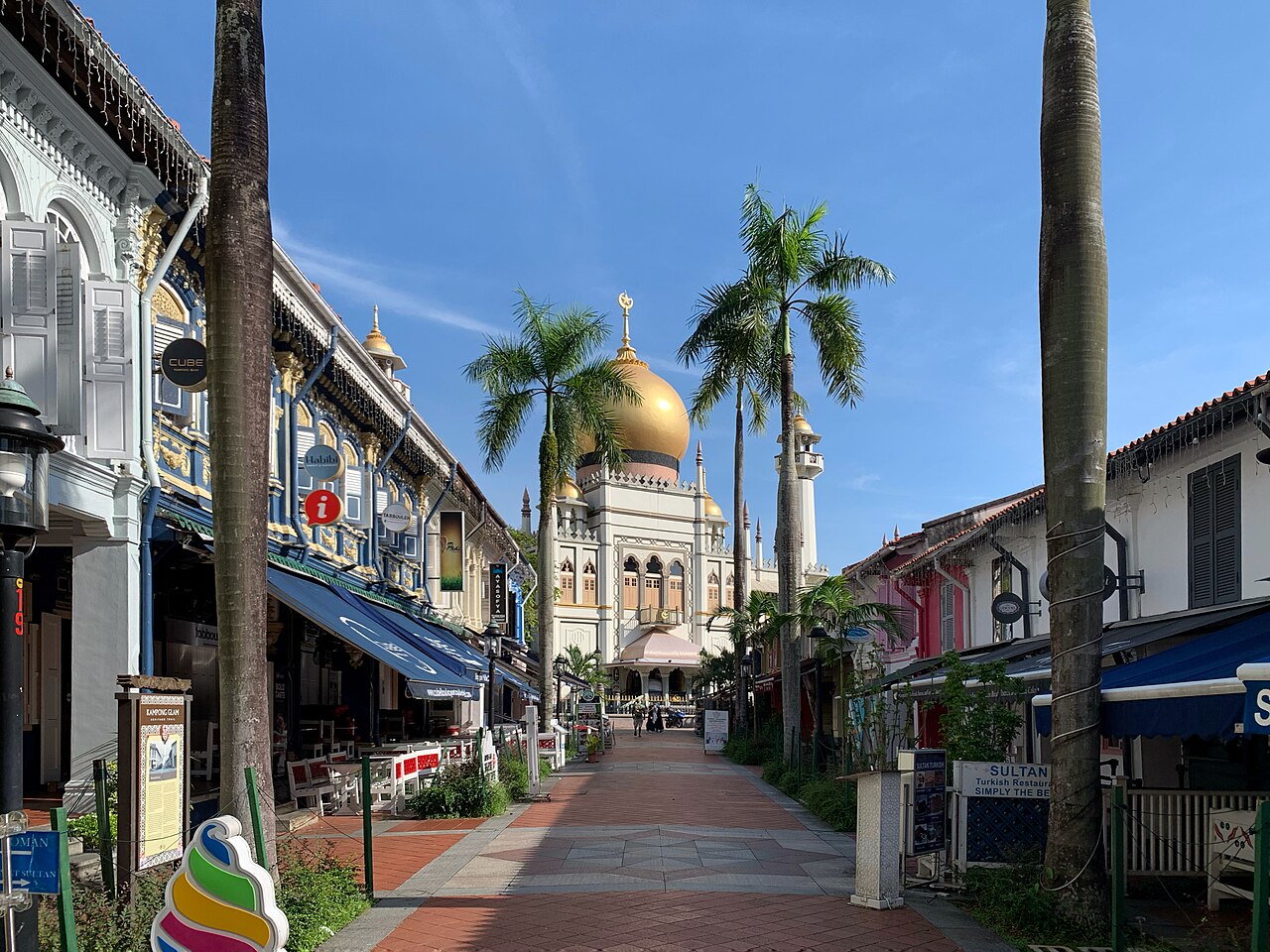
Sultan Mosque
Photo: Chainwit, CC BY-SA 4.0
Singapore

Sultan Mosque

Read moreShow less

The best-known mosque in Singapore, in the old Malay quarter of Kampong Glam, with a great golden dome. The first mosque here was built in 1826 for Sultan Hussein of Johor; the present building dates from 1932. It is a National Monument.

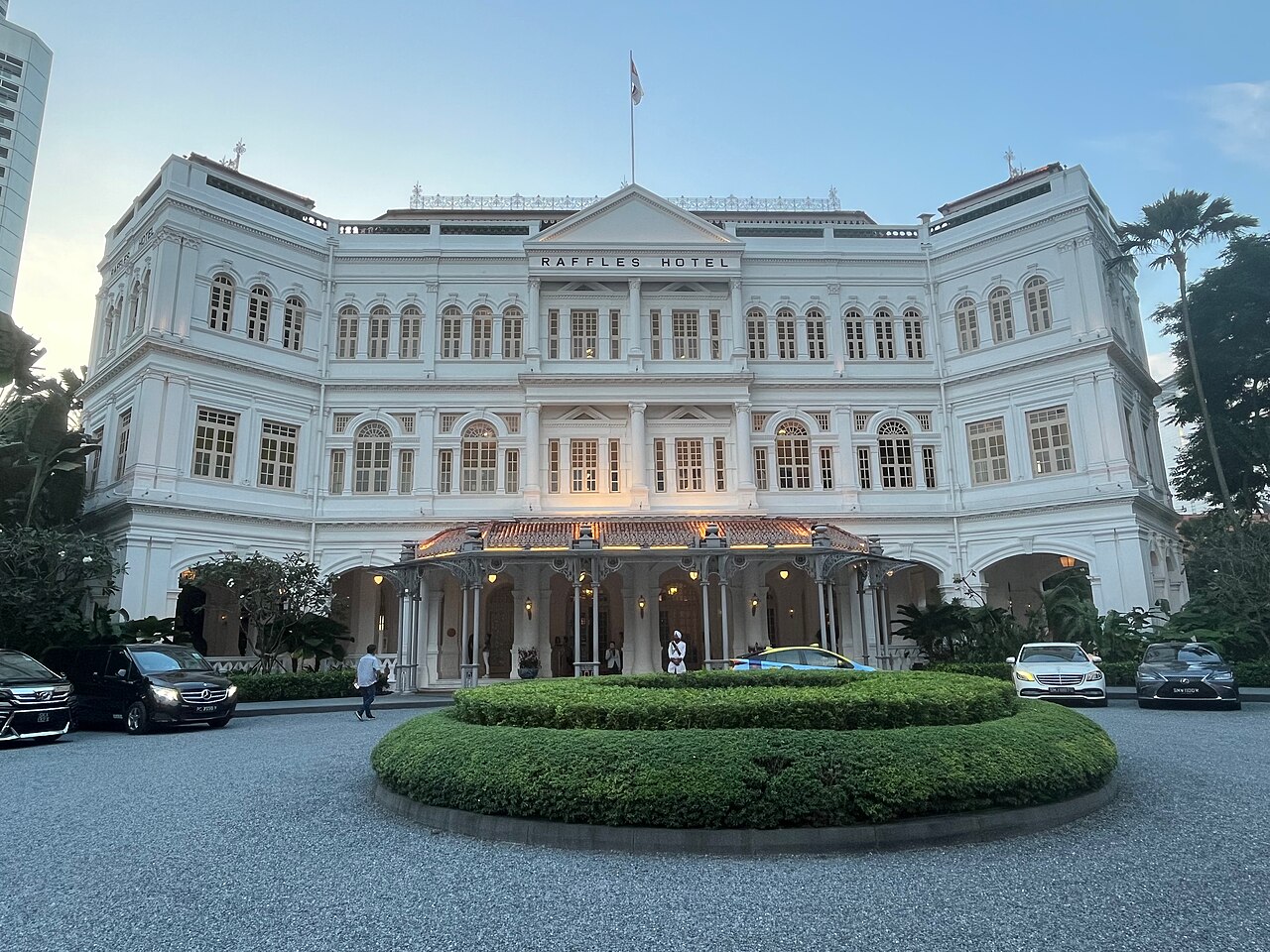
Raffles Hotel
Photo: Anthere, CC BY-SA 4.0
Singapore

Raffles Hotel

Read moreShow less

A grand white colonial hotel opened in 1887 by the Armenian Sarkies brothers and named after Stamford Raffles. Its Long Bar is where the Singapore Sling is said to have been created, and the hotel was declared a National Monument in 1987.

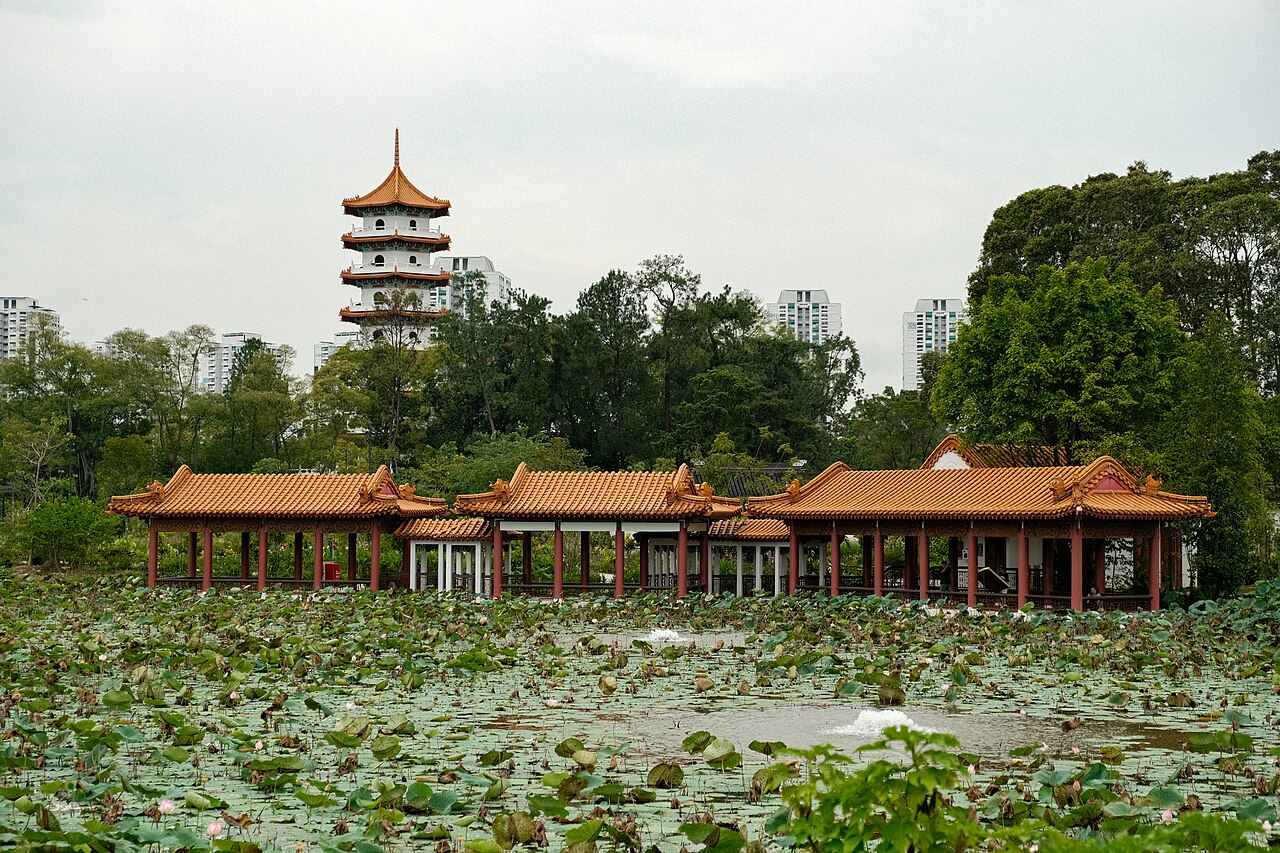
Jurong Lake Gardens
Photo: Brhb25, CC BY-SA 4.0
Jurong East

The Chinese Garden

Read moreShow less

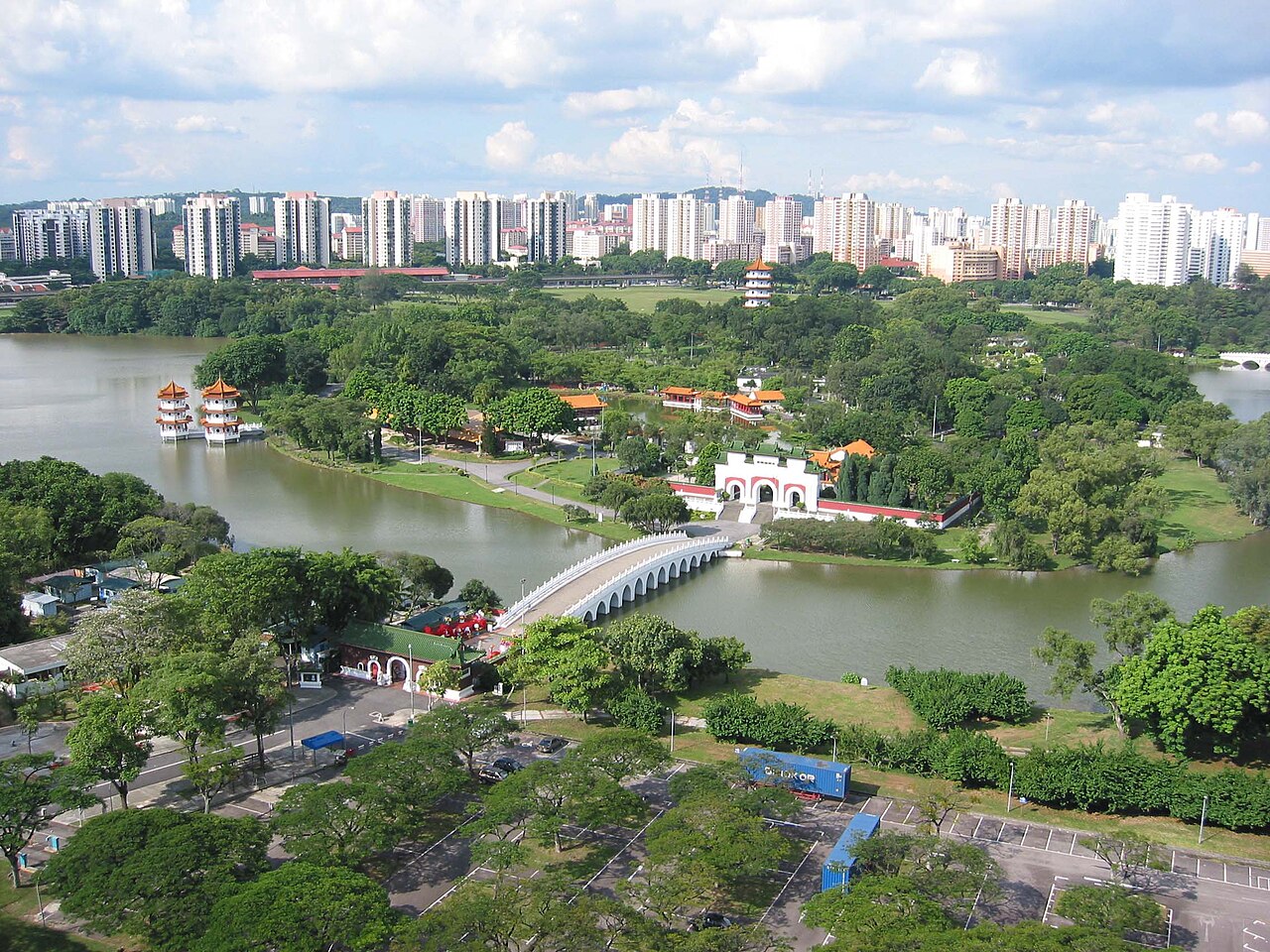
A garden on an island in Jurong Lake, built in the early 1970s in the Peking style. It has a seven-storey pagoda, pavilions, a stone boat and a 13-arch bridge modelled on one at the Summer Palace in Beijing. After a long renovation it reopened in September 2024, together with the neighbouring Japanese Garden, as part of the Jurong Lake Gardens.

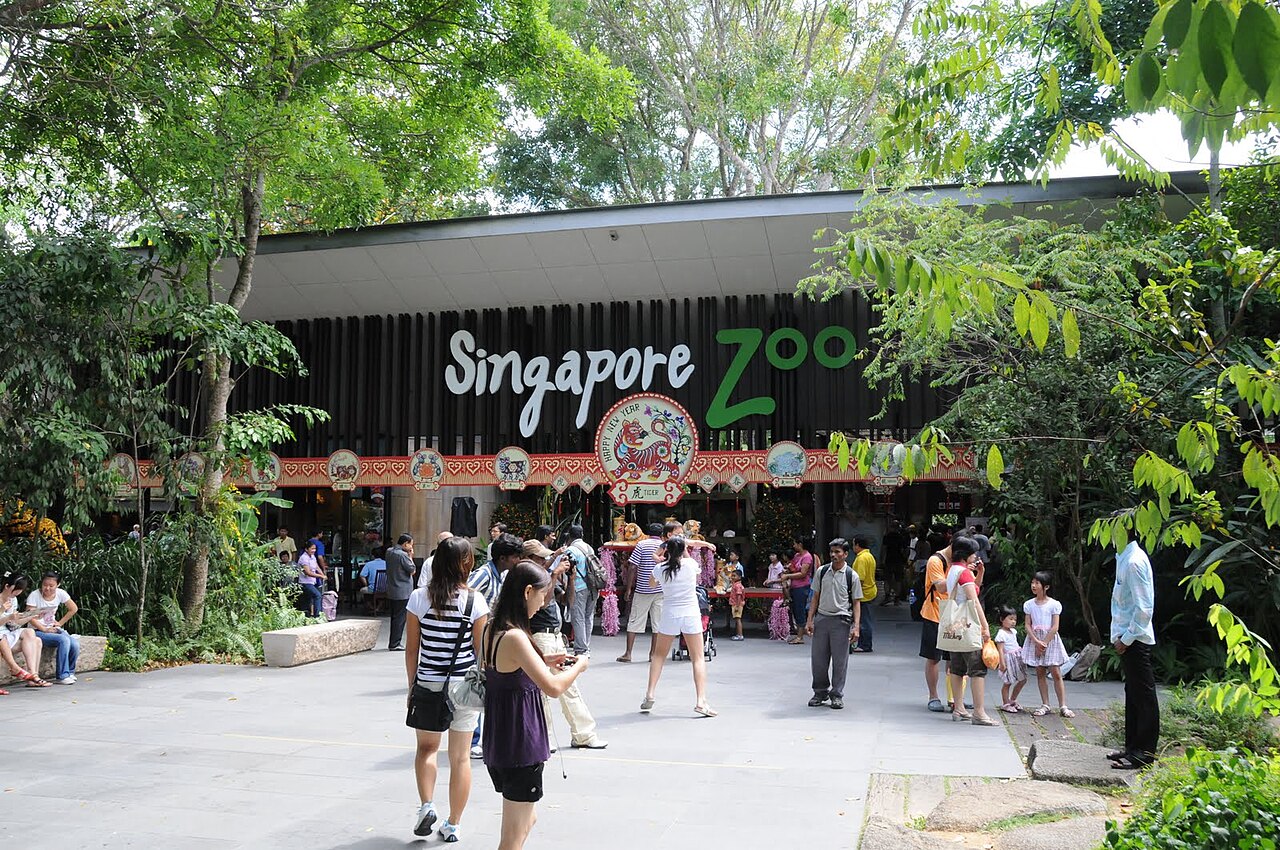
Singapore Zoo
Photo: Drew, CC BY 3.0
Near Woodlands

Singapore Zoo

Read moreShow less

A zoo opened in 1973 on the edge of the Upper Seletar Reservoir, in the forested heart of the island. Animals live in open, natural-looking enclosures separated from visitors by hidden moats and glass, and the zoo is famous for its orangutans. It is part of the Mandai Wildlife Reserve, with the Night Safari and Bird Paradise next door.

Fun facts

Things you might not know

  1. 01

    The name Singapore comes from the Malay Singapura, which goes back to the Sanskrit for 'lion city', even though lions have never lived wild on the island.

  2. 02

    Singapore has grown: through land reclamation its land area has risen from about 580 km² in the 1960s to about 744 km² today, and more land is planned.

  3. 03

    Selling chewing gum has been illegal in Singapore since 1992, partly because used gum was jamming the sensors of train doors. Since 2004, therapeutic and nicotine gum can be bought from a pharmacist.

  4. 04

    The Singapore Grand Prix, first held at Marina Bay in 2008, was the first night race in Formula One history.

  5. 05

    Singapore's national flower, the orchid Vanda Miss Joaquim, is a hybrid bred in Singapore in the 19th century by Agnes Joaquim, a woman of Armenian descent. It was named the national flower in 1981.

  6. 06

    By law the national anthem, 'Majulah Singapura' ('Onward Singapore'), must be sung in Malay, even though English is the main language of daily life.

  7. 07

    About eight in ten resident households live in flats built by the government's Housing and Development Board, and most of them own their homes.

  8. 08

    Singapore's hawker culture was added to UNESCO's list of the Intangible Cultural Heritage of Humanity in 2020.

  9. 09

    The Singapore Botanic Gardens, inscribed in 2015, was the first and only tropical garden on the UNESCO World Heritage List. As of 2026 it is Singapore's only World Heritage Site.

  10. 10

    Singapore's clocks run on GMT+8, about an hour ahead of what its longitude would suggest, so in February the sun does not rise until about 7:15 in the morning.

  11. 11

    The Singapore dollar and the Brunei dollar have been interchangeable at par since 1967, so shops in both countries accept either at the same value.

  12. 12

    Singlish words such as 'shiok', 'lepak' and 'hawker centre' have entered the Oxford English Dictionary, and 'kiasu', 'afraid of losing out', was its Word of the Day on 11 February 2015.

  13. 13

    Since 1998, drivers on busy roads have paid automatically under overhead gantries of the Electronic Road Pricing system, which replaced an older paper-licence scheme from the 1970s.

  14. 14

    As of 2025, Singapore has the second-highest population density of any sovereign country, after Monaco, yet nearly a tenth of its land is set aside for parks and nature reserves.

Singlish (Singapore colloquial English) words

20 words to start with

Singlish is the everyday English of Singapore, mixed with words from Malay, Hokkien, Cantonese and Tamil. It is spoken casually among friends and at hawker stalls; in formal settings people switch to standard English. The pronunciation guides are simple approximations for English speakers Pronunciation is written the way it sounds; the capital letters show where the stress goes.

Everyday talk

  • lahLAHa little word at the end of a sentence that adds emphasis or friendliness ('OK lah')
  • canKENyes, sure, it is possible ('Can or not?' 'Can!')
  • alamakAH-luh-mahkoh no!, oh my goodness! (from Malay)
  • paisehPIE-sehembarrassed, sorry (from Hokkien)
  • shiokSHEE-okwonderful, delicious, a great feeling
  • sianSEE-enbored, fed up (from Hokkien)
  • kiasukee-AH-sooafraid of losing out, always wanting the best deal (from Hokkien)
  • jialatjee-ah-LAHTterrible, in big trouble (from Hokkien)
  • lepakluh-PAHKto relax, to hang out (from Malay)

People

  • uncle / auntieUNG-kul / AHN-teepolite way to address an older man or woman, such as a hawker or taxi driver

Food

  • makanMAH-kahnto eat, food (from Malay)
  • chopeCHOHPto reserve a seat, usually with a packet of tissues
  • da baodah BOWtakeaway, to pack cooked food to go (from Cantonese)
  • kopitiamKOH-pee-tee-ahmtraditional coffee shop with food stalls

Drinks

  • kopiKOH-peecoffee, local style
  • kopi-OKOH-pee OHblack coffee with sugar, no milk
  • kopi-CKOH-pee SEEcoffee with evaporated milk
  • tehTEHtea (from Malay and Hokkien)

Places

  • kampongKAHM-pongvillage, one's home town (from Malay)
  • uluOO-looremote, far out in the countryside (from Malay)
Say it like a local

Useful phrases

In Singlish, Malay, Mandarin and Tamil. English works everywhere in Singapore, but a greeting in someone's own language is warmly received: Malay for Malay Singaporeans, Mandarin for Chinese Singaporeans, Tamil for Tamil Singaporeans. Capital letters show the stressed syllable; Mandarin also has tones, which these simple guides leave out

Can or not?
KEN or NOT
Is that possible? Can you do it? (Singlish)
Asking a favour, in a shop or at a stall
Can lah!
KEN LAH
Sure, no problem! (Singlish)
Agreeing to something in a relaxed way
Shiok!
SHEE-ok
That's great, that's delicious! (Singlish)
After a first bite of good food
Uncle, one kopi-O
UNG-kul, wun KOH-pee OH
One black coffee with sugar, please (Singlish)
Ordering at a coffee stall
Da bao, thank you
dah BOW, THANK yoo
To take away, thanks (Singlish)
When you want your food packed to go
Paiseh!
PIE-seh
Sorry, how embarrassing! (Singlish)
After a small mistake, like bumping into someone
Selamat pagi
suh-LAH-maht PAH-gee
Good morning (Malay)
In the morning
Apa khabar?
AH-puh KAH-bar
How are you? (Malay)
Greeting someone
Terima kasih
TREE-muh KAH-seh
Thank you (Malay)
Any time you are helped or served
Sama-sama
SAH-muh SAH-muh
You're welcome (Malay)
In reply to thanks
Nǐ hǎo
nee HOW
Hello (Mandarin)
Greeting someone
Xièxie
SHYEH-shyeh
Thank you (Mandarin)
Any time you are helped or served
Zàijiàn
dzai-JYEN
Goodbye (Mandarin)
When leaving
Duìbuqǐ
DWAY-boo-chee
Sorry, excuse me (Mandarin)
When you bump into someone or need to pass
Vanakkam
vuh-NUHK-kuhm
Hello, greetings (Tamil)
Greeting someone, often with palms pressed together
Nandri
NUHN-dree
Thank you (Tamil)
Any time you are helped or served
Do you speak English?
doo yoo SPEEK ING-glish
Rarely needed: English is an official language and the language of school and work
Almost never necessary in Singapore
Local tips

Before you go

Tap to ride

The MRT trains and buses are fast, cheap and air-conditioned. You can pay by tapping a contactless bank card or phone at the gates. Eating and drinking, even water, is not allowed in stations, on trains or on buses, and you can be fined for it.

Respect the rules

Singapore is famously tidy, and littering, spitting, jaywalking and smoking in non-smoking areas bring real fines. Vaping is illegal. There is no duty-free allowance for cigarettes: declare every pack on arrival and pay the tax, or you can be fined. Chewing gum is not sold in shops, and bringing it in is officially not allowed, so it is best to leave it at home.

Eat at hawker centres

The best and cheapest food is in hawker centres and coffee shops. Look for long queues of locals, check the hygiene grade displayed at each stall, reserve your seat with a packet of tissues, and return your tray when you are done.

No tipping needed

Tipping is not part of local culture. Restaurants and hotels add a 10% service charge plus tax (GST), shown as '++' after prices. Never offer a tip or gift to a police officer or any government official: it counts as bribery.

Beat the heat and rain

It is hot and humid all year, usually between about 23 and 32 °C, with short, heavy downpours almost every day. Carry water and an umbrella, and use the covered walkways and underground links between malls and stations. Tap water is safe to drink.

Visiting a home

Take off your shoes before entering a home; socks are fine. If you bring a gift, avoid white flowers, knives and clocks, which are linked to funerals and bad luck, and do not expect it to be opened in front of you. Many Muslims and some Hindus do not drink alcohol.

Emergency numbers

As of 2026, the official emergency numbers are 999 for the police and 995 for an ambulance or the fire service. Hospitals and pharmacies are excellent, but healthcare is expensive, so travel insurance is wise.

Plugs and power

Singapore uses the British three-pin plug (type G) at 230 volts. Adapters are sold in hardware stores and at the airport.

Sources (74)
Last step of the trip

Take the quiz, get your Singapore stamp

10 friendly questions about what you just read. No timer, and the ones you miss come back later for review.

Your trip to Singapore

Ready for the quiz?

10 questionsAbout 3 minutesNo timer

My notes on Singapore

Memories, a dish to cook, a place you want to see. Only you can see this. It saves by itself.

Your notes are kept in My collection.

More about Singapore